

ASTM B173-17
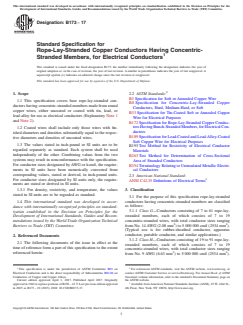
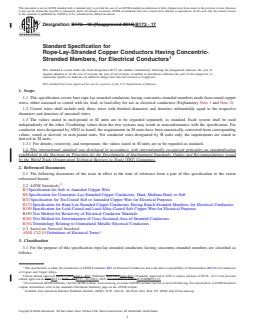
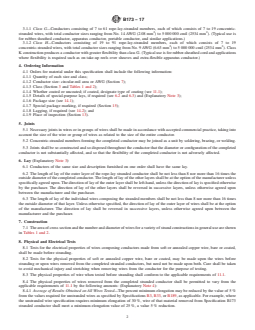
(Specification)Standard Specification for Rope-Lay-Stranded Copper Conductors Having Concentric-Stranded Members, for Electrical Conductors
General Information
- Abstract
ABSTRACT
This specification covers bare rope-lay-stranded conductors having concentric-stranded members made from round copper wires, either uncoated or coated with tin, lead, or lead-alloy for use as electrical conductors. Coated wires shall include only those wires with finished diameters and densities substantially equal to the respective diameters and densities of uncoated wires. The rope-lay-stranded copper conductors under this specification are classified either as Class G or Class H. Requirements for joint construction (by soldering, brazing, or welding), lay length, and strand construction are detailed. Tests for the electrical properties of wires composing conductors made from soft or annealed copper wire, bare or coated, shall be made before stranding, while tests for the physical properties (such as elongation) may be made upon the wires before stranding or upon wires removed from the completed stranded conductors, but need not be made upon both. Elongation tests to determine compliance shall not be made on the conductor as a unit. If a tinning, lead-coating, or lead-alloy-coating test is required, it shall be made on the wires prior to stranding. The method of calculating mass, cross-sections and electrical resistance, and the prescribed density of copper to be taken for calculations are given.
SCOPE
1.1 This specification covers bare rope-lay-stranded conductors having concentric-stranded members made from round copper wires, either uncoated or coated with tin, lead, or lead-alloy for use as electrical conductors (Explanatory Note 1 and Note 2).
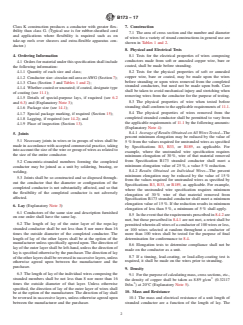
1.2 Coated wires shall include only those wires with finished diameters and densities substantially equal to the respective diameters and densities of uncoated wires.
1.3 The values stated in inch-pound or SI units are to be regarded separately as standard. Each system shall be used independently of the other. Combining values from the two systems may result in nonconformance with the specification. For conductor sizes designated by AWG or kcmil, the requirements in SI units have been numerically converted from corresponding values, stated or derived, in inch-pound units. For conductor sizes designated by SI units only, the requirements are stated or derived in SI units.
1.3.1 For density, resistivity, and temperature, the values stated in SI units are to be regarded as standard.
1.4 This international standard was developed in accordance with internationally recognized principles on standardization established in the Decision on Principles for the Development of International Standards, Guides and Recommendations issued by the World Trade Organization Technical Barriers to Trade (TBT) Committee.
- Status
- Published
- Publication Date
- 31-Mar-2017
- Technical Committee
- B01 - Electrical Conductors
- Drafting Committee
- B01.04 - Conductors of Copper and Copper Alloys
Buy Documents
ASTM B173-17 - Standard Specification for Rope-Lay-Stranded Copper Conductors Having Concentric-Stranded Members, for Electrical Conductors
REDLINE ASTM B173-17 - Standard Specification for Rope-Lay-Stranded Copper Conductors Having Concentric-Stranded Members, for Electrical Conductors
Overview
ASTM B173-17 is a widely recognized standard specification established by ASTM International for rope-lay-stranded copper conductors having concentric-stranded members. This standard covers both bare and coated (tin, lead, or lead-alloy) conductors, made from round copper wires, designed for use as electrical conductors in a variety of applications. The specification outlines requirements for conductor construction, joint formation, coating, physical and electrical properties, and testing methodologies, ensuring consistent quality and performance across electrical installations.
Rope-lay-stranded copper conductors feature enhanced flexibility and durability, making them suitable for demanding environments where vibration, movement, and bending are common. By adhering to ASTM B173-17, manufacturers and users can ensure reliability and safety in electrical systems.
Key Topics
- Material Types: Covers both uncoated (bare) copper wire and copper wire with coatings (tin, lead, or lead-alloy) where coated wires must match the physical characteristics of uncoated wires.
- Strand Construction: Defines two main classes:
- Class G: 7 to 61 rope-lay-stranded members, each composed of 7 to 19 concentric-stranded wires. Typical for general power conductors and apparatus applications.
- Class H: 19 to 91 rope-lay-stranded members, for applications requiring higher flexibility, such as cords used with take-up reels and extra-flexible apparatus.
- Ordering Details: Specifies the information needed for orders, including wire size, class, coating type, lay details, packaging, and inspection location.
- Joints and Lays: Details accepted practices for joining wires, lay lengths, and direction, ensuring that conductor performance is not compromised.
- Physical and Electrical Testing: Outlines:
- Pre-stranding tests for electrical properties.
- Physical property tests (e.g., elongation) before or after stranding (but not both).
- Coating integrity tests before stranding, if required.
- Standard Calculations: Provides guidance on calculating mass, cross-sectional area, and electrical resistance, considering the density of copper used in the industry.
Applications
ASTM B173-17 rope-lay-stranded copper conductors are essential in multiple industries and settings, including:
- Power Distribution: For use in wires and cables that require reliable current-carrying capacity and enhanced flexibility.
- Electrical Equipment and Apparatus: Ideal for connections inside switchgear, transformers, and panelboards, especially where frequent movement occurs.
- Portable Power Cables and Flexible Cords: Used in environments demanding repeated flexing, such as temporary power supplies, industrial machinery, and mobile equipment.
- Construction and Building Wiring: Suitable for installations where high flexibility and resistance to mechanical stress are required.
By following this standard, manufacturers and end-users can ensure that copper conductors deliver consistent performance, durability, and compliance with international requirements.
Related Standards
Several other ASTM and ANSI standards complement and relate to ASTM B173-17:
- ASTM B3: Soft or Annealed Copper Wire specifications.
- ASTM B8: Concentric-Lay-Stranded Copper Conductors.
- ASTM B33: Tin-Coated Soft or Annealed Copper Wire.
- ASTM B172: Rope-Lay-Stranded Copper Conductors with Bunch-Stranded Members.
- ASTM B189: Lead-Coated and Lead-Alloy-Coated Soft Copper Wire.
- ASTM B193: Test Method for Resistivity of Electrical Conductor Materials.
- ASTM B263: Test Method for Determination of Cross-Sectional Area of Stranded Conductors.
- ASTM B354: Terminology for Uninsulated Metallic Electrical Conductors.
- ANSI C42.35: Definitions of Electrical Terms.
These related documents provide detailed supporting guidance for copper wire characteristics, testing, terminology, and application that align with the requirements of ASTM B173-17.
Keywords: ASTM B173, rope-lay-stranded copper conductor, concentric-stranded copper wire, electrical conductors, tin-coated copper, lead-coated copper, flexible copper cable, copper wire standard.
Relations
- Effective Date
- 01-Apr-2017
- Effective Date
- 01-Apr-2024
- Effective Date
- 01-Nov-2023
- Effective Date
- 01-Jan-2020
- Effective Date
- 01-Oct-2018
- Effective Date
- 01-Apr-2017
- Effective Date
- 01-Apr-2017
- Effective Date
- 01-Sep-2016
- Effective Date
- 01-Apr-2016
- Effective Date
- 01-Apr-2015
- Effective Date
- 01-Sep-2014
- Effective Date
- 01-Apr-2014
- Effective Date
- 01-Oct-2013
- Effective Date
- 01-Dec-2012
- Effective Date
- 15-Nov-2012
Buy Documents
ASTM B173-17 - Standard Specification for Rope-Lay-Stranded Copper Conductors Having Concentric-Stranded Members, for Electrical Conductors
REDLINE ASTM B173-17 - Standard Specification for Rope-Lay-Stranded Copper Conductors Having Concentric-Stranded Members, for Electrical Conductors
Get Certified
Connect with accredited certification bodies for this standard

IMQ S.p.A. (Certification)
Italian electrical product certification.

SLG Prüf- und Zertifizierungs GmbH
German testing and certification body.

UL Solutions
Global safety science company with testing, inspection and certification.
Sponsored listings
Frequently Asked Questions
ASTM B173-17 is a technical specification published by ASTM International. Its full title is "Standard Specification for Rope-Lay-Stranded Copper Conductors Having Concentric-Stranded Members, for Electrical Conductors". This standard covers: ABSTRACT This specification covers bare rope-lay-stranded conductors having concentric-stranded members made from round copper wires, either uncoated or coated with tin, lead, or lead-alloy for use as electrical conductors. Coated wires shall include only those wires with finished diameters and densities substantially equal to the respective diameters and densities of uncoated wires. The rope-lay-stranded copper conductors under this specification are classified either as Class G or Class H. Requirements for joint construction (by soldering, brazing, or welding), lay length, and strand construction are detailed. Tests for the electrical properties of wires composing conductors made from soft or annealed copper wire, bare or coated, shall be made before stranding, while tests for the physical properties (such as elongation) may be made upon the wires before stranding or upon wires removed from the completed stranded conductors, but need not be made upon both. Elongation tests to determine compliance shall not be made on the conductor as a unit. If a tinning, lead-coating, or lead-alloy-coating test is required, it shall be made on the wires prior to stranding. The method of calculating mass, cross-sections and electrical resistance, and the prescribed density of copper to be taken for calculations are given. SCOPE 1.1 This specification covers bare rope-lay-stranded conductors having concentric-stranded members made from round copper wires, either uncoated or coated with tin, lead, or lead-alloy for use as electrical conductors (Explanatory Note 1 and Note 2). 1.2 Coated wires shall include only those wires with finished diameters and densities substantially equal to the respective diameters and densities of uncoated wires. 1.3 The values stated in inch-pound or SI units are to be regarded separately as standard. Each system shall be used independently of the other. Combining values from the two systems may result in nonconformance with the specification. For conductor sizes designated by AWG or kcmil, the requirements in SI units have been numerically converted from corresponding values, stated or derived, in inch-pound units. For conductor sizes designated by SI units only, the requirements are stated or derived in SI units. 1.3.1 For density, resistivity, and temperature, the values stated in SI units are to be regarded as standard. 1.4 This international standard was developed in accordance with internationally recognized principles on standardization established in the Decision on Principles for the Development of International Standards, Guides and Recommendations issued by the World Trade Organization Technical Barriers to Trade (TBT) Committee.
ABSTRACT This specification covers bare rope-lay-stranded conductors having concentric-stranded members made from round copper wires, either uncoated or coated with tin, lead, or lead-alloy for use as electrical conductors. Coated wires shall include only those wires with finished diameters and densities substantially equal to the respective diameters and densities of uncoated wires. The rope-lay-stranded copper conductors under this specification are classified either as Class G or Class H. Requirements for joint construction (by soldering, brazing, or welding), lay length, and strand construction are detailed. Tests for the electrical properties of wires composing conductors made from soft or annealed copper wire, bare or coated, shall be made before stranding, while tests for the physical properties (such as elongation) may be made upon the wires before stranding or upon wires removed from the completed stranded conductors, but need not be made upon both. Elongation tests to determine compliance shall not be made on the conductor as a unit. If a tinning, lead-coating, or lead-alloy-coating test is required, it shall be made on the wires prior to stranding. The method of calculating mass, cross-sections and electrical resistance, and the prescribed density of copper to be taken for calculations are given. SCOPE 1.1 This specification covers bare rope-lay-stranded conductors having concentric-stranded members made from round copper wires, either uncoated or coated with tin, lead, or lead-alloy for use as electrical conductors (Explanatory Note 1 and Note 2). 1.2 Coated wires shall include only those wires with finished diameters and densities substantially equal to the respective diameters and densities of uncoated wires. 1.3 The values stated in inch-pound or SI units are to be regarded separately as standard. Each system shall be used independently of the other. Combining values from the two systems may result in nonconformance with the specification. For conductor sizes designated by AWG or kcmil, the requirements in SI units have been numerically converted from corresponding values, stated or derived, in inch-pound units. For conductor sizes designated by SI units only, the requirements are stated or derived in SI units. 1.3.1 For density, resistivity, and temperature, the values stated in SI units are to be regarded as standard. 1.4 This international standard was developed in accordance with internationally recognized principles on standardization established in the Decision on Principles for the Development of International Standards, Guides and Recommendations issued by the World Trade Organization Technical Barriers to Trade (TBT) Committee.
ASTM B173-17 is classified under the following ICS (International Classification for Standards) categories: 29.240.20 - Power transmission and distribution lines. The ICS classification helps identify the subject area and facilitates finding related standards.
ASTM B173-17 has the following relationships with other standards: It is inter standard links to ASTM B173-10(2015), ASTM B3-13(2024), ASTM B8-23, ASTM B33-10(2020)e1, ASTM B3-13(2018), ASTM B172-17, ASTM B8-11(2017), ASTM B354-16, ASTM B193-16, ASTM B172-10(2015), ASTM B33-10(2014), ASTM B193-02(2014), ASTM B3-13, ASTM B354-12, ASTM B3-12. Understanding these relationships helps ensure you are using the most current and applicable version of the standard.
ASTM B173-17 is available in PDF format for immediate download after purchase. The document can be added to your cart and obtained through the secure checkout process. Digital delivery ensures instant access to the complete standard document.
Standards Content (Sample)
This international standard was developed in accordance with internationally recognized principles on standardization established in the Decision on Principles for the
Development of International Standards, Guides and Recommendations issued by the World Trade Organization Technical Barriers to Trade (TBT) Committee.
Designation:B173 −17
Standard Specification for
Rope-Lay-Stranded Copper Conductors Having Concentric-
Stranded Members, for Electrical Conductors
This standard is issued under the fixed designation B173; the number immediately following the designation indicates the year of
original adoption or, in the case of revision, the year of last revision. A number in parentheses indicates the year of last reapproval. A
superscript epsilon (´) indicates an editorial change since the last revision or reapproval.
This standard has been approved for use by agencies of the U.S. Department of Defense.
1. Scope 2.2 ASTM Standards:
B3 Specification for Soft or Annealed Copper Wire
1.1 This specification covers bare rope-lay-stranded con-
B8 Specification for Concentric-Lay-Stranded Copper
ductors having concentric-stranded members made from round
Conductors, Hard, Medium-Hard, or Soft
copper wires, either uncoated or coated with tin, lead, or
B33 Specification for Tin-Coated Soft or Annealed Copper
lead-alloy for use as electrical conductors (Explanatory Note 1
Wire for Electrical Purposes
and Note 2).
B172 Specification for Rope-Lay-Stranded Copper Conduc-
torsHavingBunch-StrandedMembers,forElectricalCon-
1.2 Coated wires shall include only those wires with fin-
ductors
ished diameters and densities substantially equal to the respec-
B189 Specification for Lead-Coated and Lead-Alloy-Coated
tive diameters and densities of uncoated wires.
Soft Copper Wire for Electrical Purposes
1.3 The values stated in inch-pound or SI units are to be
B193 Test Method for Resistivity of Electrical Conductor
regarded separately as standard. Each system shall be used
Materials
independently of the other. Combining values from the two
B263 Test Method for Determination of Cross-Sectional
systems may result in nonconformance with the specification.
Area of Stranded Conductors
For conductor sizes designated byAWG or kcmil, the require-
B354 Terminology Relating to Uninsulated Metallic Electri-
ments in SI units have been numerically converted from
cal Conductors
corresponding values, stated or derived, in inch-pound units.
2.3 American National Standard:
For conductor sizes designated by SI units only, the require-
ANSI C42.35 Definitions of Electrical Terms
ments are stated or derived in SI units.
1.3.1 For density, resistivity, and temperature, the values
3. Classification
stated in SI units are to be regarded as standard.
3.1 For the purpose of this specification rope-lay-stranded
1.4 This international standard was developed in accor- conductors having concentric-stranded members are classified
as follows:
dance with internationally recognized principles on standard-
3.1.1 Class G—Conductors consisting of 7 to 61 rope-lay-
ization established in the Decision on Principles for the
stranded members, each of which consists of 7 to 19
Development of International Standards, Guides and Recom-
concentric-stranded wires, with total conductor sizes ranging
mendations issued by the World Trade Organization Technical
2 2
from No. 14AWG (2.08 mm ) to 5 000 000 cmil (2534 mm ).
Barriers to Trade (TBT) Committee.
(Typical use is for rubber-sheathed conductor, apparatus
conductor, portable conductor, and similar applications.)
2. Referenced Documents
3.1.2 Class H—Conductors consisting of 19 to 91 rope-lay-
2.1 The following documents of the issue in effect at the
stranded members, each of which consists of 7 to 19
time of reference form a part of this specification to the extent
concentric-stranded wires, with total conductor sizes ranging
2 2
referenced herein:
from No. 9 AWG (6.63 mm ) to 5 000 000 cmil (2534 mm ).
1 2
This specification is under the jurisdiction of ASTM Committee B01 on For referenced ASTM standards, visit the ASTM website, www.astm.org, or
Electrical Conductors and is the direct responsibility of Subcommittee B01.04 on contact ASTM Customer Service at service@astm.org. For Annual Book of ASTM
Conductors of Copper and Copper Alloys. Standards volume information, refer to the standard’s Document Summary page on
Current edition approved April 1, 2017. Published April 2017. Originally the ASTM website.
approvedin1942toreplaceportionsofB158 – 41 T.Lastpreviouseditionapproved Available fromAmerican National Standards Institute (ANSI), 25 W. 43rd St.,
in 2015 as B173 – 10 (2015). DOI: 10.1520/B0173-17. 4th Floor, New York, NY 10036, http://www.ansi.org.
Copyright © ASTM International, 100 Barr Harbor Drive, PO Box C700, West Conshohocken, PA 19428-2959. United States
B173−17
Class K construction produces a conductor with greater flex- 7. Construction
ibility than class G. (Typical use is for rubber-sheathed cord
7.1 The area of cross section and the number and diameter
and applications where flexibility is required such as on
of wires for a variety of strand constructions in general use are
take-up reels over sheaves and extra-flexible apparatus con-
shown in Tables 1 and 2.
ductor.)
8. Physical and Electrical Tests
4. Ordering Information
8.1 Tests for the electrical properties of wires composing
conductors made from soft or annealed copper wire, bare or
4.1 Orders for material under this specification shall include
coated, shall be made before stranding.
the following information:
4.1.1 Quantity of each size and class; 8.2 Tests for the physical properties of soft or annealed
copper wire, bare or coated, may be made upon the wires
4.1.2 Conductor size: circular-mil area orAWG (Section 7);
before stranding or upon wires removed from the completed
4.1.3 Class (Section 3 and Tables 1 and 2);
stranded conductors, but need not be made upon both. Care
4.1.4 Whether coated or uncoated; if coated, designate type
shall be taken to avoid mechanical injury and stretching when
of coating (see 11.1);
removing wires from the conductor for the purpose of testing.
4.1.5 Details of special-purpose lays, if required (see 6.2
8.3 The physical properties of wire when tested before
and 6.3) and (Explanatory Note 3);
stranding shall conform to the applicable requirements of 11.1.
4.1.6 Package size (see 14.1);
4.1.7 Special package marking, if required (Section 15); 8.4 The physical properties of wires removed from the
completed stranded conductor shall be permitted to vary from
4.1.8 Lagging, if required (see 14.2); and
the applicable requirements of 11.1 by the following amounts:
4.1.9 Place of inspection (Section 13).
(Explanatory Note 4):
8.4.1 AverageofResultsObtainedonAllWiresTested—The
5. Joints
percent minimum elongation may be reduced by the value of
5.1 Necessary joints in wires or in groups of wires shall be
5 % from the values required for unstranded wires as specified
made in accordance with accepted commercial practice, taking
by Specifications B3, B33,or B189, as applicable. For
into account the size of the wire or group of wires as related to
example, where the unstranded wire specification requires
the size of the entire conductor.
minimum elongation of 30 %, wire of that material removed
from Specification B173 stranded conductor shall meet a
5.2 Concentric-stranded members forming the completed
minimum elongation value of 25 %, a value 5 % reduction.
conductor may be joined as a unit by soldering, brazing, or
8.4.2 Results Obtained on Individual Wires—The percent
welding.
minimum elongation may be reduced by the value of 15 %
5.3 Joints shall be so constructed and so disposed through-
from the values required for unstranded wires as specified by
out the conductor that the diameter or configuration of the
Specifications B3, B33,or B189, as applicable. For example,
completed conductor is not substantially affected, and so that
where the unstranded wire specification requires minimum
the flexibility of the completed conductor is not adversely
elongation of 30 % wire of that material removed from
affected.
Specification B173 stranded conductor shall meet a minimum
elongation value of 15 %. If the reduction results in minimum
6. Lay (Explanatory Note 3)
elongation of less than 5 %, a minimum of 5 % shall apply.
6.1 Conductors of the same size and description furnished
8.5 In the event that the requirements prescribed in 8.4.2 are
on one order shall have the same lay.
met, but those prescribed in 8.4.1 are not met, a retest shall be
6.2 The length of lay of the outer layer of the rope-lay
permittedwhereinallwiresofaconductorof100wiresorless,
stranded conductor shall be not less than 8 nor more than 16
or 100 wires selected at random throughout a conductor of
times the outside diameter of the completed conductor. The
more than 100 wires shall be tested for the purpose of final
length of lay of the other layers shall be at the option of the
determination for conformance to 8.4.
manufacturer unless specifically agreed upon. The direction of
8.6 Elongation tests to determine compliance shall not be
lay of the outer layer shall be left-hand, unless the direction of
made on the conductor as a unit.
lay is specified otherwise by the purchaser.The direction of lay
8.7 If a tinning, lead-coating, or lead-alloy-coating test is
oftheotherlayersshallbereversedinsuccessivelayers,unless
required, it shall be made on the wires prior to stranding.
otherwise agreed upon between the manufacturer and the
purchaser.
9. Density
6.3 The length of lay of the individual wires composing the
9.1 For the purpose of calculating mass, cross sections, etc.,
stranded members shall be not less than 8 nor more than 16
the density of copper shall be taken as 8.89 g/cm (0.32117
times the outside diameter of that layer. Unless otherwise
lb/in. ) at 20°C (Explanatory Note 5).
specified, the direction of lay of the outer layer of wires shall
10. Mass and Resistance
be at the option of the manufacturer. The direction of lay shall
be reversed in successive layers, unless otherwise agreed upon 10.1 The mass and electrical resistance of a unit length of
between the manufacturer and the purchaser. stranded conductor are a function of the length of lay. The
B173−17
A
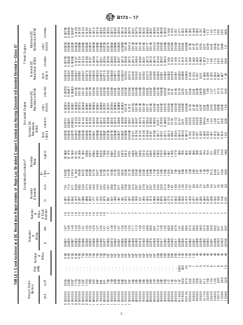
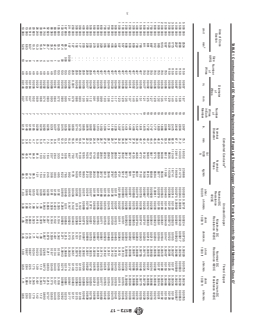
TABLE 1 Constructional and DC Resistance Requirements of Rope-Lay Stranded Copper Conductors Having Concentric-Stranded Members—Class G
B
Completed Conductor Uncoated Copper Tinned Copper
Area of Cross
Diameter Nominal DC
Nominal Nominal Maximum DC Nominal DC Maximum DC
Number
Section
of Resistance
Size Diameter Mass Resistance @20C Resistance @20C Resistance @20C
Number of
Wires @20C
AWG
of Wires
lb/
Wires in Each
ohm/ ohm/ ohm/ ohm/
cmil mm in. mm in. mm 1000 kg/km ohm/km ohm/km ohm/km ohm/km
Member
1000 ft 1000 ft 1000 ft 1000 ft
ft
5 000 000 2534 . . . 1159 0.0657 1.67 19 2.957 75.1 16 052 23 888 0.00220 0.00721 0.00224 0.00735 0.00229 0.00750 0.00234 0.00765
4 500 000 2280 . . . 1159 0.0623 1.58 19 2.804 71.2 14 433 21 479 0.00244 0.00801 0.00249 0.00817 0.00254 0.00833 0.00259 0.00850
4 000 000 2027 . . . 1159 0.0587 1.49 19 2.642 67.1 12 814 19 069 0.00275 0.00902 0.00281 0.00920 0.00286 0.00938 0.00292 0.00957
3 500 000 1773 . . . 1159 0.0550 1.40 19 2.475 62.9 11 249 16 741 0.00314 0.0103 0.00320 0.0105 0.00327 0.0107 0.00334 0.0109
3 000 000 1520 . . . 1159 0.0509 1.29 19 2.291 58.2 9635 14 338 0.00366 0.0120 0.00373 0.0122 0.00381 0.0125 0.00389 0.0128
2 500 000 1267 . . . 703 0.0596 1.51 19 2.086 53.0 8012 11 924 0.00440 0.0144 0.00449 0.0147 0.00457 0.0150 0.00466 0.0153
2 000 000 1013 . . . 703 0.0533 1.35 19 1.866 47.4 6408 9536 0.00550 0.0180 0.00561 0.0184 0.00572 0.0188 0.00583 0.0192
1 900 000 963 . . . 703 0.0520 1.32 19 1.820 46.2 6099 9077 0.00579 0.0190 0.00591 0.0194 0.00602 0.0197 0.00614 0.0201
1 800 000 912 . . . 703 0.0506 1.29 19 1.771 45.0 5775 8594 0.00611 0.0200 0.00623 0.0204 0.00635 0.0208 0.00648 0.0212
1 750 000 887 . . . 703 0.0499 1.27 19 1.747 44.4 5617 8358 0.00628 0.0206 0.00641 0.0210 0.00653 0.0214 0.00666 0.0218
1 700 000 861 . . . 703 0.0492 1.25 19 1.722 43.7 5460 8125 0.00647 0.0212 0.00660 0.0216 0.00672 0.0221 0.00685 0.0225
1 600 000 811 . . . 703 0.0477 1.21 19 1.670 42.4 5132 7638 0.00687 0.0225 0.00701 0.0230 0.00715 0.0234 0.00729 0.0239
1 500 000 760 . . . 427 0.0593 1.51 7 1.601 40.7 4772 7102 0.00726 0.0238 0.00741 0.0243 0.00755 0.0248 0.00770 0.0253
1 400 000 709 . . . 427 0.0573 1.46 7 1.547 39.3 4456 6631 0.00778 0.0255 0.00794 0.0260 0.00809 0.0265 0.00825 0.0270
1 300 000 659 . . . 427 0.0552 1.40 7 1.490 37.8 4135 6154 0.00838 0.0275 0.00855 0.0281 0.00871 0.0286 0.00888 0.0292
1 250 000 633 . . . 427 0.0541 1.37 7 1.461 37.1 3972 5911 0.00871 0.0286 0.00888 0.0292 0.00906 0.0297 0.00924 0.0303
1 200 000 608 . . . 427 0.0530 1.35 7 1.431 36.3 3812 5673 0.00907 0.0298 0.00925 0.0304 0.00944 0.0310 0.00963 0.0316
1 100 000 557 . . . 427 0.0508 1.29 7 1.372 34.8 3502 5212 0.00990 0.0325 0.0101 0.0332 0.0103 0.0338 0.0105 0.0345
1 000 000 507 . . . 427 0.0484 1.23 7 1.307 33.2 3179 4731 0.01090 0.0357 0.0111 0.0364 0.0113 0.0372 0.0115 0.0379
900 000 456 . . . 427 0.0459 1.17 7 1.239 31.5 2859 4255 0.0121 0.0397 0.0123 0.0405 0.0126 0.0413 0.0129 0.0421
800 000 405 . . . 427 0.0433 1.10 7 1.169 29.7 2544 3787 0.0136 0.0447 0.0139 0.0456 0.0142 0.0464 0.0145 0.0473
750 000 380 . . . 427 0.0419 1.06 7 1.131 28.7 2383 3546 0.0145 0.0476 0.0148 0.0486 0.0151 0.0495 0.0154 0.0505
700 000 355 . . . 427 0.0405 1.03 7 1.094 27.8 2226 3313 0.0156 0.0510 0.0159 0.0520 0.0162 0.0531 0.0165 0.0542
650 000 329 . . . 427 0.0390 0.99 7 1.053 26.7 2064 3072 0.0168 0.0550 0.0171 0.0561 0.0174 0.0572 0.0177 0.0583
600 000 304 . . . 427 0.0375 0.95 7 1.013 25.7 1908 2840 0.0181 0.0595 0.0185 0.0607 0.0189 0.0619 0.0193 0.0631
550 000 279 . . . 427 0.0359 0.91 7 0.969 24.6 1749 2603 0.0198 0.0650 0.0202 0.0663 0.0206 0.0676 0.0210 0.0690
500 000 253 . . . 259 0.0439 1.12 7 0.922 23.4 1579 2350 0.0217 0.0711 0.0221 0.0725 0.0225 0.0740 0.0230 0.0755
450 000 228 . . . 259 0.0417 1.06 7 0.876 22.3 1425 2120 0.0241 0.0790 0.0246 0.0806 0.0251 0.0822 0.0255 0.0838
400 000 203 . . . 259 0.0393 1.00 7 0.825 21.0 1265 1883 0.0271 0.0889 0.0276 0.0907 0.0282 0.0924 0.0288 0.0942
350 000 177 . . . 259 0.0368 0.93 7 0.773 19.6 1109 1651 0.0310 0.102 0.0316 0.104 0.0322 0.106 0.0328 0.108
300 000 152 . . . 259 0.0340 0.86 7 0.714 18.1 947 1409 0.0361 0.119 0.0368 0.121 0.0376 0.123 0.0384 0.125
250 000 127 . . . 259 0.0311 0.79 7 0.653 16.6 792 1179 0.0434 0.142 0.0443 0.145 0.0451 0.148 0.0460 0.151
211 600 107 0000 133 0.0399 1.01 7 0.599 15.2 667 992 0.0510 0.167 0.0520 0.170 0.0530 0.174 0.0541 0.177
167 800 85.0 000 133 0.0355 0.90 7 0.533 13.5 528 785 0.0643 0.211 0.0656 0.215 0.0668 0.219 0.0681 0.223
133 100 67.4 00 133 0.0316 0.80 7 0.474 12.0 418 622 0.0810 0.266 0.0826 0.271 0.0843 0.276 0.0860 0.282
105 600 53.5 0 133 0.0282 0.72 7 0.423 10.7 333 495 0.102 0.335 0.104 0.342 0.106 0.348 0.108 0.355
83 690 42.4 1 133 0.0251 0.64 7 0.377 9.6 264 393 0.129 0.423 0.132 0.431 0.134 0.440 0.137 0.449
66 360 33.6 2 49 0.0368 0.93 7 0.331 8.4 207 308 0.161 0.528 0.164 0.539 0.167 0.549 0.170 0.560
52 620 26.7 3 49 0.0328 0.83 7 0.295 7.5 164 245 0.203 0.666 0.207 0.679 0.211 0.693 0.215 0.707
41 740 21.1 4 49 0.0292 0.74 7 0.263 6.7 130 194 0.256 0.840 0.261 0.857 0.266 0.873 0.271 0.890
33 090 16.8 5 49 0.0260 0.66 7 0.234 5.9 103 154 0.323 1.06 0.329 1.08 0.336 1.10 0.343 1.12
26 240 13.3 6 49 0.0231 0.59 7 0.208 5.3 81.5 121 0.407 1.34 0.415 1.37 0.423 1.39 0.431 1.42
20 820 10.5 7 49 0.0206 0.52 7 0.185 4.7 64.8 96.5 0.513 1.68 0.523 1.71 0.534 1.75 0.545 1.79
16 510 8.37 8 49 0.0184 0.47 7 0.166 4.2 51.7 77.0 0.647 2.12 0.660 2.16 0.687 2.25 0.701 2.30
13 090 6.63 9 49 0.0163 0.41 7 0.148 3.8 40.6 60.4 0.816 2.68 0.832 2.73 0.867 2.84 0.884 2.90
10 380 5.26 10 49 0.0146 0.37 7 0.131 3.3 32.6 48.5 1.03 3.38 1.05 3.45 1.09 3.59 1.11 3.66
B173−17
TABLE1 Continued
B
Completed C
...
This document is not an ASTM standard and is intended only to provide the user of an ASTM standard an indication of what changes have been made to the previous version. Because
it may not be technically possible to adequately depict all changes accurately, ASTM recommends that users consult prior editions as appropriate. In all cases only the current version
of the standard as published by ASTM is to be considered the official document.
Designation: B173 − 10 (Reapproved 2015) B173 − 17
Standard Specification for
Rope-Lay-Stranded Copper Conductors Having Concentric-
Stranded Members, for Electrical Conductors
This standard is issued under the fixed designation B173; the number immediately following the designation indicates the year of
original adoption or, in the case of revision, the year of last revision. A number in parentheses indicates the year of last reapproval. A
superscript epsilon (´) indicates an editorial change since the last revision or reapproval.
This standard has been approved for use by agencies of the U.S. Department of Defense.
1. Scope
1.1 This specification covers bare rope-lay-stranded conductors having concentric-stranded members made from round copper
wires, either uncoated or coated with tin, lead, or lead-alloy for use as electrical conductors (Explanatory Note 1 and Note 2).
1.2 Coated wires shall include only those wires with finished diameters and densities substantially equal to the respective
diameters and densities of uncoated wires.
1.3 The values stated in inch-pound or SI units are to be regarded separately as standard. Each system shall be used
independently of the other. Combining values from the two systems may result in nonconformance with the specification. For
conductor sizes designated by AWG or kcmil, the requirements in SI units have been numerically converted from corresponding
values, stated or derived, in inch-pound units. For conductor sizes designated by SI units only, the requirements are stated or
derived in SI units.
1.3.1 For density, resistivity, and temperature, the values stated in SI units are to be regarded as standard.
1.4 This international standard was developed in accordance with internationally recognized principles on standardization
established in the Decision on Principles for the Development of International Standards, Guides and Recommendations issued
by the World Trade Organization Technical Barriers to Trade (TBT) Committee.
2. Referenced Documents
2.1 The following documents of the issue in effect at the time of reference form a part of this specification to the extent
referenced herein:
2.2 ASTM Standards:
B3 Specification for Soft or Annealed Copper Wire
B8 Specification for Concentric-Lay-Stranded Copper Conductors, Hard, Medium-Hard, or Soft
B33 Specification for Tin-Coated Soft or Annealed Copper Wire for Electrical Purposes
B172 Specification for Rope-Lay-Stranded Copper Conductors Having Bunch-Stranded Members, for Electrical Conductors
B189 Specification for Lead-Coated and Lead-Alloy-Coated Soft Copper Wire for Electrical Purposes
B193 Test Method for Resistivity of Electrical Conductor Materials
B263 Test Method for Determination of Cross-Sectional Area of Stranded Conductors
B354 Terminology Relating to Uninsulated Metallic Electrical Conductors
2.3 American National Standard:
ANSI C42.35 Definitions of Electrical Terms
3. Classification
3.1 For the purpose of this specification rope-lay-stranded conductors having concentric-stranded members are classified as
follows:
This specification is under the jurisdiction of ASTM Committee B01 on Electrical Conductors and is the direct responsibility of Subcommittee B01.04 on Conductors
of Copper and Copper Alloys.
Current edition approved April 1, 2015April 1, 2017. Published April 2015April 2017. Originally approved in 1942 to replace portions of B158 – 41 T. Last previous
edition approved in 20102015 as B173 – 10.B173 – 10 (2015). DOI: 10.1520/B0173-10R15.10.1520/B0173-17.
For referenced ASTM standards, visit the ASTM website, www.astm.org, or contact ASTM Customer Service at service@astm.org. For Annual Book of ASTM Standards
volume information, refer to the standard’s Document Summary page on the ASTM website.
Available from American National Standards Institute (ANSI), 25 W. 43rd St., 4th Floor, New York, NY 10036, http://www.ansi.org.
Copyright © ASTM International, 100 Barr Harbor Drive, PO Box C700, West Conshohocken, PA 19428-2959. United States
B173 − 17
3.1.1 Class G—Conductors consisting of 7 to 61 rope-lay-stranded members, each of which consists of 7 to 19 concentric-
2 2
stranded wires, with total conductor sizes ranging from No. 14 AWG (2.08 mm ) to 5 000 000 cmil (2534 mm ). (Typical use is
for rubber-sheathed conductor, apparatus conductor, portable conductor, and similar applications.)
3.1.2 Class H—Conductors consisting of 19 to 91 rope-lay-stranded members, each of which consists of 7 to 19
2 2
concentric-stranded wires, with total conductor sizes ranging from No. 9 AWG (6.63 mm ) to 5 000 000 cmil (2534 mm ). Class
K construction produces a conductor with greater flexibility than class G. (Typical use is for rubber-sheathed cord and applications
where flexibility is required such as on take-up reels over sheaves and extra-flexible apparatus conductor.)
4. Ordering Information
4.1 Orders for material under this specification shall include the following information:
4.1.1 Quantity of each size and class;
4.1.2 Conductor size: circular-mil area or AWG (Section 7);
4.1.3 Class (Section 3 and Tables 1 and 2);
4.1.4 Whether coated or uncoated; if coated, designate type of coating (see 11.1);
4.1.5 Details of special-purpose lays, if required (see 6.2 and 6.3) and (Explanatory Note 3);
4.1.6 Package size (see 14.1);
4.1.7 Special package marking, if required (Section 15);
4.1.8 Lagging, if required (see 14.2); and
4.1.9 Place of inspection (Section 13).
5. Joints
5.1 Necessary joints in wires or in groups of wires shall be made in accordance with accepted commercial practice, taking into
account the size of the wire or group of wires as related to the size of the entire conductor.
5.2 Concentric-stranded members forming the completed conductor may be joined as a unit by soldering, brazing, or welding.
5.3 Joints shall be so constructed and so disposed throughout the conductor that the diameter or configuration of the completed
conductor is not substantially affected, and so that the flexibility of the completed conductor is not adversely affected.
6. Lay (Explanatory Note 3)
6.1 Conductors of the same size and description furnished on one order shall have the same lay.
6.2 The length of lay of the outer layer of the rope-lay stranded conductor shall be not less than 8 nor more than 16 times the
outside diameter of the completed conductor. The length of lay of the other layers shall be at the option of the manufacturer unless
specifically agreed upon. The direction of lay of the outer layer shall be left-hand, unless the direction of lay is specified otherwise
by the purchaser. The direction of lay of the other layers shall be reversed in successive layers, unless otherwise agreed upon
between the manufacturer and the purchaser.
6.3 The length of lay of the individual wires composing the stranded members shall be not less than 8 nor more than 16 times
the outside diameter of that layer. Unless otherwise specified, the direction of lay of the outer layer of wires shall be at the option
of the manufacturer. The direction of lay shall be reversed in successive layers, unless otherwise agreed upon between the
manufacturer and the purchaser.
7. Construction
7.1 The area of cross section and the number and diameter of wires for a variety of strand constructions in general use are shown
in Tables 1 and 2.
8. Physical and Electrical Tests
8.1 Tests for the electrical properties of wires composing conductors made from soft or annealed copper wire, bare or coated,
shall be made before stranding.
8.2 Tests for the physical properties of soft or annealed copper wire, bare or coated, may be made upon the wires before
stranding or upon wires removed from the completed stranded conductors, but need not be made upon both. Care shall be taken
to avoid mechanical injury and stretching when removing wires from the conductor for the purpose of testing.
8.3 The physical properties of wire when tested before stranding shall conform to the applicable requirements of 11.1.
8.4 The physical properties of wires removed from the completed stranded conductor shall be permitted to vary from the
applicable requirements of 11.1 by the following amounts: (Explanatory Note 4):
8.4.1 Average of Results Obtained on All Wires Tested—The percent minimum elongation may be reduced by the value of 5 %
from the values required for unstranded wires as specified by Specifications B3, B33, or B189, as applicable. For example, where
the unstranded wire specification requires minimum elongation of 30 %, wire of that material removed from Specification B173
stranded conductor shall meet a minimum elongation value of 25 %, a value 5 % reduction.
B173 − 17
A
TABLE 1 Constructional and DC Resistance Requirements of Rope-Lay Stranded Copper Conductors Having Concentric-Stranded Members—Class G
B
Completed Conductor Uncoated Copper Tinned Copper
Area of Cross
Diameter Nominal DC
Nominal Nominal Maximum DC Nominal DC Maximum DC
Number
Section
of Resistance
Size Diameter Mass Resistance @20C Resistance @20C Resistance @20C
Number of
Wires @20C
AWG
of Wires
lb/
Wires in Each
ohm/ ohm/ ohm/ ohm/
cmil mm in. mm in. mm 1000 kg/km ohm/km ohm/km ohm/km ohm/km
Member
1000 ft 1000 ft 1000 ft 1000 ft
ft
5 000 000 2534 . . . 1159 0.0657 1.67 19 2.957 75.1 16 052 23 888 0.00220 0.00721 0.00224 0.00735 0.00229 0.00750 0.00234 0.00765
4 500 000 2280 . . . 1159 0.0623 1.58 19 2.804 71.2 14 433 21 479 0.00244 0.00801 0.00249 0.00817 0.00254 0.00833 0.00259 0.00850
4 000 000 2027 . . . 1159 0.0587 1.49 19 2.642 67.1 12 814 19 069 0.00275 0.00902 0.00281 0.00920 0.00286 0.00938 0.00292 0.00957
3 500 000 1773 . . . 1159 0.0550 1.40 19 2.475 62.9 11 249 16 741 0.00314 0.0103 0.00320 0.0105 0.00327 0.0107 0.00334 0.0109
3 000 000 1520 . . . 1159 0.0509 1.29 19 2.291 58.2 9635 14 338 0.00366 0.0120 0.00373 0.0122 0.00381 0.0125 0.00389 0.0128
2 500 000 1267 . . . 703 0.0596 1.51 19 2.086 53.0 8012 11 924 0.00440 0.0144 0.00449 0.0147 0.00457 0.0150 0.00466 0.0153
2 000 000 1013 . . . 703 0.0533 1.35 19 1.866 47.4 6408 9536 0.00550 0.0180 0.00561 0.0184 0.00572 0.0188 0.00583 0.0192
1 900 000 963 . . . 703 0.0520 1.32 19 1.820 46.2 6099 9077 0.00579 0.0190 0.00591 0.0194 0.00602 0.0197 0.00614 0.0201
1 800 000 912 . . . 703 0.0506 1.29 19 1.771 45.0 5775 8594 0.00611 0.0200 0.00623 0.0204 0.00635 0.0208 0.00648 0.0212
1 750 000 887 . . . 703 0.0499 1.27 19 1.747 44.4 5617 8358 0.00628 0.0206 0.00641 0.0210 0.00653 0.0214 0.00666 0.0218
1 700 000 861 . . . 703 0.0492 1.25 19 1.722 43.7 5460 8125 0.00647 0.0212 0.00660 0.0216 0.00672 0.0221 0.00685 0.0225
1 600 000 811 . . . 703 0.0477 1.21 19 1.670 42.4 5132 7638 0.00687 0.0225 0.00701 0.0230 0.00715 0.0234 0.00729 0.0239
1 500 000 760 . . . 427 0.0593 1.51 7 1.601 40.7 4772 7102 0.00726 0.0238 0.00741 0.0243 0.00755 0.0248 0.00770 0.0253
1 400 000 709 . . . 427 0.0573 1.46 7 1.547 39.3 4456 6631 0.00778 0.0255 0.00794 0.0260 0.00809 0.0265 0.00825 0.0270
1 300 000 659 . . . 427 0.0552 1.40 7 1.490 37.8 4135 6154 0.00838 0.0275 0.00855 0.0281 0.00871 0.0286 0.00888 0.0292
1 250 000 633 . . . 427 0.0541 1.37 7 1.461 37.1 3972 5911 0.00871 0.0286 0.00888 0.0292 0.00906 0.0297 0.00924 0.0303
1 200 000 608 . . . 427 0.0530 1.35 7 1.431 36.3 3812 5673 0.00907 0.0298 0.00925 0.0304 0.00944 0.0310 0.00963 0.0316
1 100 000 557 . . . 427 0.0508 1.29 7 1.372 34.8 3502 5212 0.00990 0.0325 0.0101 0.0332 0.0103 0.0338 0.0105 0.0345
1 000 000 507 . . . 427 0.0484 1.23 7 1.307 33.2 3179 4731 0.01090 0.0357 0.0111 0.0364 0.0113 0.0372 0.0115 0.0379
900 000 456 . . . 427 0.0459 1.17 7 1.239 31.5 2859 4255 0.0121 0.0397 0.0123 0.0405 0.0126 0.0413 0.0129 0.0421
800 000 405 . . . 427 0.0433 1.10 7 1.169 29.7 2544 3787 0.0136 0.0447 0.0139 0.0456 0.0142 0.0464 0.0145 0.0473
750 000 380 . . . 427 0.0419 1.06 7 1.131 28.7 2383 3546 0.0145 0.0476 0.0148 0.0486 0.0151 0.0495 0.0154 0.0505
700 000 355 . . . 427 0.0405 1.03 7 1.094 27.8 2226 3313 0.0156 0.0510 0.0159 0.0520 0.0162 0.0531 0.0165 0.0542
650 000 329 . . . 427 0.0390 0.99 7 1.053 26.7 2064 3072 0.0168 0.0550 0.0171 0.0561 0.0174 0.0572 0.0177 0.0583
600 000 304 . . . 427 0.0375 0.95 7 1.013 25.7 1908 2840 0.0181 0.0595 0.0185 0.0607 0.0189 0.0619 0.0193 0.0631
550 000 279 . . . 427 0.0359 0.91 7 0.969 24.6 1749 2603 0.0198 0.0650 0.0202 0.0663 0.0206 0.0676 0.0210 0.0690
500 000 253 . . . 259 0.0439 1.12 7 0.922 23.4 1579 2350 0.0217 0.0711 0.0221 0.0725 0.0225 0.0740 0.0230 0.0755
450 000 228 . . . 259 0.0417 1.06 7 0.876 22.3 1425 2120 0.0241 0.0790 0.0246 0.0806 0.0251 0.0822 0.0255 0.0838
400 000 203 . . . 259 0.0393 1.00 7 0.825 21.0 1265 1883 0.0271 0.0889 0.0276 0.0907 0.0282 0.0924 0.0288 0.0942
350 000 177 . . . 259 0.0368 0.93 7 0.773 19.6 1109 1651 0.0310 0.102 0.0316 0.104 0.0322 0.106 0.0328 0.108
300 000 152 . . . 259 0.0340 0.86 7 0.714 18.1 947 1409 0.0361 0.119 0.0368 0.121 0.0376 0.123 0.0384 0.125
250 000 127 . . . 259 0.0311 0.79 7 0.653 16.6 792 1179 0.0434 0.142 0.0443 0.145 0.0451 0.148 0.0460 0.151
211 600 107 0000 133 0.0399 1.01 7 0.599 15.2 667 992 0.0510 0.167 0.0520 0.170 0.0530 0.174 0.0541 0.177
167 800 85.0 000 133 0.0355 0.90 7 0.533 13.5 528 785 0.0643 0.211 0.0656 0.215 0.0668 0.219 0.0681 0.223
133 100 67.4 00 133 0.0316 0.80 7 0.474 12.0 418 622 0.0810 0.266 0.0826 0.271 0.0843 0.276 0.0860 0.282
105 600 53.5 0 133 0.0282 0.72 7 0.423 10.7 333 495 0.102 0.335 0.104 0.342 0.106 0.348 0.108 0.355
83 690 42.4 1 133 0.0251 0.64 7 0.377 9.6 264 393 0.129 0.423 0.132 0.431 0.134 0.440 0.137 0.449
66 360 33.6 2 49 0.0368 0.93 7 0.331 8.4 207 308 0.161 0.528 0.164 0.539 0.167 0.549 0.170 0.560
52 620 26.7 3 49 0.0328 0.83 7 0.295 7.5 164 245 0.203 0.666 0.207 0.679 0.211 0.693 0.215 0.707
41 740 21.1 4 49 0.0292 0.74 7 0.263 6.7 130 194 0.256 0.840 0.261 0.857 0.266 0.873 0.271 0.890
33 090 16.8 5 49 0.0260 0.66 7 0.234 5.9 103 154 0.323 1.06 0.329 1.08 0.336 1.10 0.343 1.12
26 240 13.3 6 49 0.0231 0.59 7 0.208 5.3 81.5 121 0.407 1.34 0.415 1.37 0.423 1.39 0.431 1.42
20 820 10.5 7 49 0.0206 0.52 7 0.185 4.7 64.8 96.5 0.513 1.68 0.523 1.71 0.534 1.75 0.545 1.79
16 510 8.37 8 49 0.0184 0.47 7 0.166 4.2 51.7 77.0 0.647 2.12 0.660 2.16 0.687 2.25 0.701 2.30
13 090 6.63 9 49 0.0163 0.41 7 0.148 3.8 40.6 60.4 0.816 2.68 0.832 2.73 0.867 2.84 0.884 2.90
10 380 5.26 10 49 0.0146 0.37 7 0.131 3.3 32.6 48.5 1.03 3.38 1.05 3.45 1.09 3.59 1.11 3.66
B173 − 17
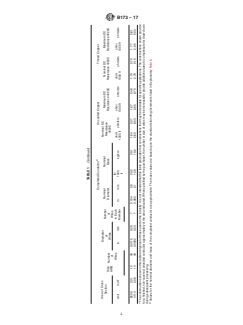
TABLE 1 Continued
B
Completed Conductor Uncoated Copper Tinned Copper
Area of Cross
Diameter Nominal DC
Nominal Nominal Maximum DC Nominal DC Maximum DC
Number
Section
of Resistance
Size Diameter Mass Resistance @20C Resistance @20C Resistance @20C
Number of
Wires @20C
AWG
of Wires
lb/
Wires in Each
ohm/ ohm/ ohm/ ohm/
cmil mm in. mm in. mm 1000 kg/km ohm/km ohm/km ohm/km ohm/km
Member
1000 ft 1000 ft 1000 ft 1000 ft
ft
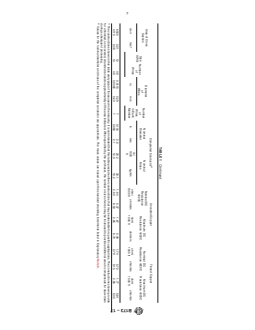
6530 3.31 12 49 0.0115 0.29 7 0.104 2.6 20.2 30.1 1.64 5.37 1.67 5.48 1.74 5.70 1.77 5.81
4110 2.08 14 49 0.0092 0.23 7 0.083 2.1 12.9 19.2 2.60 8.53 2.65 8.70 2.79 9.15 2.85 9.33
A
The constructions shown in this table are typical of those used in the industry. It is not intended that this table preclude other constructions that may be desirable for specific applications. The constructions shown provide
for a finished, non-covered, stranded conductor approximately of the area indicated. When specified by the purchaser, the number or size of wires may be increased to provide additional area to compensate for draw-down
during subsequent processing.
B
Values for the nominal diameter and mass of the completed conductor are approximate. The mass values are based upon the standard stranding increments listed in Explanatory Note 6.
B173 − 17
A
TABLE 2 Constructional and DC Resistance Requirements of Rope-Lay Stranded Copper Conductors Having Concentric-Stranded Members—Class H
B
Completed Conductor Uncoated Copper Tinned Copper
Number
Area of Diameter of
Nominal DC Maximum DC
of Nominal Maximum
...