

ASTM D61-15(2019)
(Test Method)Standard Test Method for Softening Point of Pitches (Cube-in-Water Method)
General Information
- Abstract
SIGNIFICANCE AND USE
5.1 Pitch does not go through a solid-liquid phase change when heated, and therefore it does not have a true melting point. As the temperature rises, pitch softens and becomes less viscous. The softening point is arbitrarily defined and shall be established by a closely controlled method which shall be carefully followed if test results are to be reproducible.
5.2 This test is useful in determining the consistency of pitch as one element in establishing the uniformity of shipments or sources of supply.
SCOPE
1.1 This test method covers the determination of the softening point of pitches below 176 °F (80 °C). Pitches of higher softening point should be tested by Test Method D2319 or Test Method D3104.
1.2 The values stated in inch-pound units are to be regarded as standard. The values given in parentheses are mathematical conversions to SI units that are provided for information only and are not considered standard.
1.3 This standard does not purport to address all of the safety concerns, if any, associated with its use. It is the responsibility of the user of this standard to establish appropriate safety, health, and environmental practices and determine the applicability of regulatory limitations prior to use.
1.4 This international standard was developed in accordance with internationally recognized principles on standardization established in the Decision on Principles for the Development of International Standards, Guides and Recommendations issued by the World Trade Organization Technical Barriers to Trade (TBT) Committee.
- Status
- Published
- Publication Date
- 30-Nov-2019
- Technical Committee
- D02 - Petroleum Products, Liquid Fuels, and Lubricants
- Drafting Committee
- D02.05 - Properties of Fuels, Petroleum Coke and Carbon Material

Overview
ASTM D61-15(2019) - Standard Test Method for Softening Point of Pitches (Cube-in-Water Method) defines a standardized procedure for determining the softening point of pitches with softening points below 176 °F (80 °C). Pitch materials, which do not exhibit a true melting point due to their gradual softening on heating, require a controlled method for reproducible and comparable results. Developed by ASTM International, this test method is widely recognized in the assessment of pitch properties related to consistency and quality control across various industries.
Key Topics
- Softening Point Determination: The method covers the precise measurement of the pitch softening point using the cube-in-water technique, where two pitch cubes are suspended and heated in water until they deform.
- Consistency and Uniformity: Results provide a measure of the consistency for pitch shipments and supplies, making it a key indicator of batch uniformity.
- Method Scope: Applicable specifically to pitches with softening points below 176 °F (80 °C). For higher softening points, alternative ASTM methods (D2319, D3104) are recommended.
- Units and Calibration: Test results are standardized in inch-pound units, with SI conversions provided for informational purposes. Strict calibration of thermometric devices is emphasized to ensure test reliability.
- Safety and Compliance: The standard requires users to adhere to all necessary safety, health, and environmental procedures and to observe regulatory limitations.
Applications
The ASTM D61 Cube-in-Water Method is vital in industries where pitch serves as a raw material, notably in:
- Aluminum Manufacturing: Used as a binder in anode production, where softening point consistency impacts product performance.
- Coal Tar and Petroleum Industries: Facilitates quality control for pitch-derived products used in construction, roofing, and electrical applications.
- Material Supply Validation: Enables suppliers and purchasers to verify shipment quality and maintain supplier consistency through objective softening point assessments.
- Research and Development: Provides a baseline for pitch property alteration studies and performance evaluation in new product formulations.
Consistent use of this method ensures that pitches meet required functional standards, helping manufacturers maintain compliance and achieve desired application performance.
Related Standards
The ASTM D61-15(2019) is part of a suite of relevant industry standards for pitch and related materials, including:
- ASTM D2319: Test Method for Softening Point of Pitch (Cube-in-Air Method) - for pitches with higher softening points.
- ASTM D3104: Test Method for Softening Point of Pitches (Mettler Softening Point Method).
- ASTM D140: Practice for Sampling Asphalt Materials.
- ASTM E1, E2251: Specifications for Liquid-in-Glass Thermometers used in temperature measurement.
- ASTM E2877: Guide for Digital Contact Thermometers.
- ASTM E1137, E563: Additional guidelines for resistance thermometers and ice-point bath preparation.
Practical Value
Using this ASTM softening point test method delivers greater quality assurance throughout the supply chain by:
- Enabling reproducible, precise measurements of pitch softening points
- Supporting supplier and batch validation for consistent material sourcing
- Ensuring conformity to international standards recognized by global trade organizations
This test method remains an essential tool for companies seeking reliable characterization of pitch materials in demanding industrial and R&D environments.
Relations
- Effective Date
- 01-Dec-2019
- Effective Date
- 01-May-2019
- Effective Date
- 01-Dec-2018
- Effective Date
- 01-Oct-2014
- Effective Date
- 01-Jun-2014
- Effective Date
- 01-May-2013
- Effective Date
- 01-Nov-2012
- Effective Date
- 01-Nov-2012
- Effective Date
- 01-May-2011
- Effective Date
- 01-May-2011
- Effective Date
- 01-Nov-2010
- Effective Date
- 01-May-2010
- Effective Date
- 01-Nov-2008
- Effective Date
- 01-Nov-2007
- Effective Date
- 01-Nov-2007
Get Certified
Connect with accredited certification bodies for this standard

Element Materials Technology
Materials testing and product certification.

ABS Group Brazil
ABS Group certification services in Brazil.

ABS Quality Evaluations Inc.
American Bureau of Shipping quality certification.
Sponsored listings
Frequently Asked Questions
ASTM D61-15(2019) is a standard published by ASTM International. Its full title is "Standard Test Method for Softening Point of Pitches (Cube-in-Water Method)". This standard covers: SIGNIFICANCE AND USE 5.1 Pitch does not go through a solid-liquid phase change when heated, and therefore it does not have a true melting point. As the temperature rises, pitch softens and becomes less viscous. The softening point is arbitrarily defined and shall be established by a closely controlled method which shall be carefully followed if test results are to be reproducible. 5.2 This test is useful in determining the consistency of pitch as one element in establishing the uniformity of shipments or sources of supply. SCOPE 1.1 This test method covers the determination of the softening point of pitches below 176 °F (80 °C). Pitches of higher softening point should be tested by Test Method D2319 or Test Method D3104. 1.2 The values stated in inch-pound units are to be regarded as standard. The values given in parentheses are mathematical conversions to SI units that are provided for information only and are not considered standard. 1.3 This standard does not purport to address all of the safety concerns, if any, associated with its use. It is the responsibility of the user of this standard to establish appropriate safety, health, and environmental practices and determine the applicability of regulatory limitations prior to use. 1.4 This international standard was developed in accordance with internationally recognized principles on standardization established in the Decision on Principles for the Development of International Standards, Guides and Recommendations issued by the World Trade Organization Technical Barriers to Trade (TBT) Committee.
SIGNIFICANCE AND USE 5.1 Pitch does not go through a solid-liquid phase change when heated, and therefore it does not have a true melting point. As the temperature rises, pitch softens and becomes less viscous. The softening point is arbitrarily defined and shall be established by a closely controlled method which shall be carefully followed if test results are to be reproducible. 5.2 This test is useful in determining the consistency of pitch as one element in establishing the uniformity of shipments or sources of supply. SCOPE 1.1 This test method covers the determination of the softening point of pitches below 176 °F (80 °C). Pitches of higher softening point should be tested by Test Method D2319 or Test Method D3104. 1.2 The values stated in inch-pound units are to be regarded as standard. The values given in parentheses are mathematical conversions to SI units that are provided for information only and are not considered standard. 1.3 This standard does not purport to address all of the safety concerns, if any, associated with its use. It is the responsibility of the user of this standard to establish appropriate safety, health, and environmental practices and determine the applicability of regulatory limitations prior to use. 1.4 This international standard was developed in accordance with internationally recognized principles on standardization established in the Decision on Principles for the Development of International Standards, Guides and Recommendations issued by the World Trade Organization Technical Barriers to Trade (TBT) Committee.
ASTM D61-15(2019) is classified under the following ICS (International Classification for Standards) categories: 75.140 - Waxes, bituminous materials and other petroleum products. The ICS classification helps identify the subject area and facilitates finding related standards.
ASTM D61-15(2019) has the following relationships with other standards: It is inter standard links to ASTM D61-15, ASTM E2877-12(2019), ASTM D3104-14a(2018), ASTM D3104-14a, ASTM D3104-14, ASTM E1-13, ASTM E2877-12, ASTM E2877-12e1, ASTM E2251-11, ASTM E563-11, ASTM E2251-10, ASTM D3104-99(2010), ASTM E563-08, ASTM E1-07, ASTM E2251-07. Understanding these relationships helps ensure you are using the most current and applicable version of the standard.
ASTM D61-15(2019) is available in PDF format for immediate download after purchase. The document can be added to your cart and obtained through the secure checkout process. Digital delivery ensures instant access to the complete standard document.
Standards Content (Sample)
This international standard was developed in accordance with internationally recognized principles on standardization established in the Decision on Principles for the
Development of International Standards, Guides and Recommendations issued by the World Trade Organization Technical Barriers to Trade (TBT) Committee.
Designation: D61 − 15 (Reapproved 2019)
Standard Test Method for
Softening Point of Pitches (Cube-in-Water Method)
This standard is issued under the fixed designation D61; the number immediately following the designation indicates the year of original
adoption or, in the case of revision, the year of last revision.Anumber in parentheses indicates the year of last reapproval.Asuperscript
epsilon (´) indicates an editorial change since the last revision or reapproval.
1. Scope E2251 Specification for Liquid-in-Glass ASTM Thermom-
eters with Low-Hazard Precision Liquids
1.1 This test method covers the determination of the soft-
E2877 Guide for Digital Contact Thermometers
ening point of pitches below 176 °F (80 °C). Pitches of higher
softening point should be tested by Test Method D2319 or Test
3. Terminology
Method D3104.
3.1 Definitions:
1.2 The values stated in inch-pound units are to be regarded
3.1.1 Digital Contact Thermometer (DCT), n—an electronic
as standard. The values given in parentheses are mathematical
device consisting of a digital display and associated tempera-
conversions to SI units that are provided for information only
ture sensing probe.
and are not considered standard.
3.1.1.1 Discussion—This device consists of a temperature
1.3 This standard does not purport to address all of the
sensor connected to a measuring instrument; this instrument
safety concerns, if any, associated with its use. It is the
measures the temperature-dependent quantity of the sensor,
responsibility of the user of this standard to establish appro-
computes the temperature from the measured quantity, and
priate safety, health, and environmental practices and deter-
providesadigitaloutputordisplay,orboth,ofthetemperature.
mine the applicability of regulatory limitations prior to use.
The temperature sensing probe is in contact with the material
1.4 This international standard was developed in accor-
whose temperature is being measured. This device is some-
dance with internationally recognized principles on standard-
times referred to as a digital thermometer.
ization established in the Decision on Principles for the
NOTE 1—Portable electronic thermometers (PET) is an acronym some-
Development of International Standards, Guides and Recom-
times used to refer to a subset of the devices covered by this definition.
mendations issued by the World Trade Organization Technical
Barriers to Trade (TBT) Committee.
4. Summary of Test Method
4.1 Two cubes of pitch, supported on wire hooks, are heated
2. Referenced Documents
at a controlled rate in water in a glass container. The softening
2.1 ASTM Standards:
point is defined as the mean of the temperatures at which the
D140 Practice for Sampling Asphalt Materials
cubes sag downwards a distance of 25 mm.
D2319 Test Method for Softening Point of Pitch (Cube-in-
Air Method)
5. Significance and Use
D3104 Test Method for Softening Point of Pitches (Mettler
5.1 Pitch does not go through a solid-liquid phase change
Softening Point Method)
when heated, and therefore it does not have a true melting
E1 Specification for ASTM Liquid-in-Glass Thermometers
point.As the temperature rises, pitch softens and becomes less
E563 Practice for Preparation and Use of an Ice-Point Bath
viscous. The softening point is arbitrarily defined and shall be
as a Reference Temperature
established by a closely controlled method which shall be
E1137 SpecificationforIndustrialPlatinumResistanceTher-
carefully followed if test results are to be reproducible.
mometers
5.2 This test is useful in determining the consistency of
pitch as one element in establishing the uniformity of ship-
ments or sources of supply.
This test method is under the jurisdiction of ASTM Committee D02 on
Petroleum Products, Liquid Fuels, and Lubricantsand is the direct responsibility of
SubcommitteeD02.05onPropertiesofFuels,PetroleumCokeandCarbonMaterial.
6. Apparatus
Current edition approved Dec. 1, 2019. Published December 2019. Originally
6.1 Mold—A mold suitable for forming two ⁄2 in.
approved in 1919. Last previous edition approved in 2015 as D61 – 15. DOI:
10.1520/D0061-15R19.
(12.7 mm) cubes of pitch, having cylindrical core pins 12
For referenced ASTM standards, visit the ASTM website, www.astm.org, or
gauge (2.05 mm) in diameter located in the base plate of the
contact ASTM Customer Service at service@astm.org. For Annual Book of ASTM
assembly to produce accurately centered suspension holes in
Standards volume information, refer to the standard’s Document Summary page on
the ASTM website. the cubes. (See Fig. 1.)
Copyright © ASTM International, 100 Barr Harbor Drive, PO Box C700, West Conshohocken, PA 19428-2959. United States
D61 − 15 (2019)
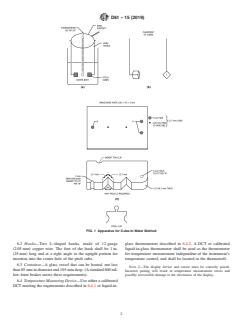
FIG. 1 Apparatus for Cube-in-Water Method
6.2 Hooks—Two L-shaped hooks, made of 12 gauge glass thermometers described in 6.4.2. A DCT or calibrated
(2.05 mm) copper wire. The foot of the hook shall be 1 in. liquid-in-glass thermometer shall be used as the thermometer
(25 mm) long and at a right angle to the upright portion for
for temperature measurement independent of the instrument’s
insertion into the center hole of the pitch cube.
temperature control, and shall be located in the thermowell.
6.3 Container—A glass vessel that can be heated, not less
NOTE 2—The display device and sensor must be correctly paired.
than85 mmindiameterand105 mmdeep.(Astandard600 mL
Incorrect pairing will result in temperature measurement errors and
low-form beaker meets these requirements).
possibly irreversible damage to the electronics of the display.
6.4 Temperature Measuring Device—Use either a calibrated
DCT meeting the requirements described in 6.4.1 or liquid-in-
D61 − 15 (2019)
6.4.1 Digital Contact Thermometer Requirements: ice point by one scale division, or until five years has elapsed
since the last full calibration.
Criteria Requirements
DCT E2877 Class E, Minimum
6.5 Heat Source:
Temperature range –2 °C to 80 °C 6.5.1 Electric Heater—A hot plate or immersion heater
provided with a variable transformer or other device suitable
Display resolution 0.1 °C
for regulating the temperature of the heating element.
6.5.2 Gas Heater—A bunsen-type burner, fitted with a
Sensor type PRT, thermistor, Type E or T thermocouple
chimney.
Sensor, sheath Metal or glass
7. Sampling
Sensor length Less than 12 mm in length
7.1 Samples from shipments shall be taken in accordance
Immersion depth 76 mm
with Practice D140 and shall be free of foreign substances.
Display accuracy ±0.2 °C for combined probe and sensor
Thoroughly mix the sample before removing a representative
portion for the determination or for dehydration.
Response time Less than or equal to 30 s as defined in Specifica-
tion E1137
7.2 If the presence of water is indicated by surface foam on
heating, maintain the sample at a temperature of about 260 °F
Drift Less than 0.2 °C per year
(125 °C) in an open container until the surface is free of foam.
Calibration error Less than 0.2 °C over the range of intended use
Take care not to overheat, and remove from the heat source as
soon as the foam has subsided.
Calibration range –2 °C to 80 °C
8. Test Specimens
Calibration data 4 data points evenly distributed over the range
and included in calibration report
8.1 Coat the inner surfaces and core pins of the mold very
Calibration report From a calibration laboratory with demonstrated lightly with silicone oil or silicone grease. Form the pitch into
competency in temperature calibration which
...