

ASTM B483/B483M-21
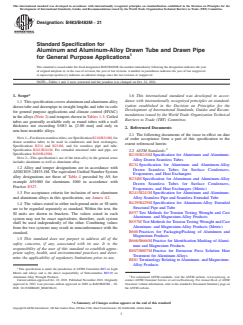
(Specification)Standard Specification for Aluminum and Aluminum-Alloy Drawn Tube and Drawn Pipe for General Purpose Applications
General Information
- Abstract
SCOPE
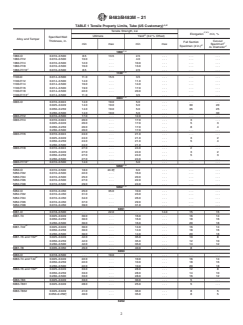
1.1 This specification covers aluminum and aluminum-alloy drawn tube and drawnpipe in straight lengths and tube in coils for general purpose applications and climate control (HVAC) in the alloys (Note 2) and tempers shown in Tables 1-3. Coiled tubes are generally available only as round tubes with a wall thickness not exceeding 0.083 in. [2.00 mm] and only in non-heat-treatable alloys.
Note 1: For drawn seamless tubes, see Specification B210/B210M, for drawn seamless tubes to be used in condensers and heat exchangers, Specifications B234 and B234M, and for seamless pipe and tube, Specification B241/B241M. For extruded structural tube and pipe, see Specification B429/B429M.
Note 2: This specification’s use of the term alloy in the general sense includes aluminum as well as aluminum alloy.
1.2 Alloy and temper designations are in accordance with ANSI H35.1/H35.1M. The equivalent Unified Number System alloy designations are those of Table 4 preceded by A9, for example A91060 for aluminum 1060 in accordance with Practice E527.
1.3 For acceptance criteria for inclusion of new aluminum and aluminum alloys in this specification, see Annex A2.
1.4 The values stated in either inch-pound units or SI units are to be regarded separately as standard. Within the text, the SI units are shown in brackets. The values stated in each system may not be exact equivalents; therefore, each system shall be used independently of the other. Combining values from the two systems may result in nonconformance with the standard.
1.5 This standard does not purport to address all of the safety concerns, if any, associated with its use. It is the responsibility of the user of this standard to establish appropriate safety, health, and environmental practices and determine the applicability of regulatory limitations prior to use.
1.6 This international standard was developed in accordance with internationally recognized principles on standardization established in the Decision on Principles for the Development of International Standards, Guides and Recommendations issued by the World Trade Organization Technical Barriers to Trade (TBT) Committee.
- Status
- Published
- Publication Date
- 21-Oct-2021
- Technical Committee
- B07 - Light Metals and Alloys
- Drafting Committee
- B07.03 - Aluminum Alloy Wrought Products
Overview
ASTM B483/B483M-21 is the standard specification for aluminum and aluminum-alloy drawn tube and drawn pipe used in general purpose and climate control (HVAC) applications. Developed by ASTM International, this standard establishes the requirements for straight lengths and coiled tubes made from a variety of aluminum alloys and tempers, addressing both inch-pound and SI units. The specification covers key aspects like alloy designations, physical and chemical property criteria, tensile properties, heat treatments, and quality assurance-related information for manufacturers, purchasers, and users seeking reliable materials for diverse industrial applications.
Key Topics
Scope of Material: Covers both straight lengths and coils of aluminum and aluminum-alloy drawn tube and drawn pipe for general use, including climate control industries (HVAC). Coiled forms are typically offered in round shapes and specific non-heat-treatable alloys.
Alloy and Temper Designations: Complies with ANSI H35.1/H35.1M standards for alloy and temper. Unified Numbering System (UNS) designations are provided for traceability and consistency.
Chemical and Mechanical Properties: Specifies chemical composition limits, tensile strength, yield strength, and elongation values for a range of alloys and tempers. Ensures products meet minimum mechanical property requirements for defined applications.
Ordering Requirements: Purchasers must specify details such as alloy, temper, size, length, tolerance, and any additional testing or treatment requirements at the time of order to ensure conformance with application needs.
Quality Assurance: Covers inspection criteria, sampling requirements, retest and rejection procedures, and marking for product identification. Includes guidance for source inspection and documentation.
Heat Treatment and Leak Testing: Outlines requirements for solution heat treatment, reheat treatment, and leak testing methods for drawn tubes used in critical applications.
Applications
ASTM B483/B483M-21 is widely referenced in industries that require high-quality, reliable aluminum tube and pipe products. Common application areas include:
- HVAC Systems: Used extensively in heating, ventilation, air conditioning, and refrigeration where corrosion resistance, formability, and consistent wall thickness are crucial.
- General Fabrication: Applicable in manufacturing frameworks, conduits, and housing for consumer and industrial products that demand lightweight, corrosion-resistant materials.
- Automotive and Transportation: Suitable for fluid transfer systems, heat exchangers, and structural components due to its mechanical strength and ease of fabrication.
- Construction: Integrated into building systems for plumbing, electrical conduit, hand railings, and more.
- Aerospace and Defense: Consistent and verifiable quality makes these products suitable for secondary structural and non-flight critical parts.
The versatility of aluminum and aluminum-alloy drawn tubes ensures broad value for any sector demanding durability, corrosion resistance, and customizable manufacturing.
Related Standards
Users and specifiers following ASTM B483/B483M-21 often reference additional related ASTM standards for seamless and extruded tube or pipe, and for applications with specific environments or performance needs:
- ASTM B210/B210M - Drawn seamless tubes (general purpose)
- ASTM B234/B234M - Drawn seamless tubes for condensers and heat exchangers
- ASTM B241/B241M - Seamless pipe and tube
- ASTM B429/B429M - Extruded structural tube and pipe
- ASTM B557/B557M - Tension testing methods for aluminum and magnesium alloys
- ASTM B660 - Packaging and packing practices for shipment
- ASTM B666/B666M - Identification marking for aluminum products
- ANSI H35.1/H35.1M - Alloy and temper designation systems
- EN 14242 - Chemical analysis of aluminum products (for international users)
By adhering to ASTM B483/B483M-21 and its related references, stakeholders ensure the reliability, consistency, and quality of aluminum tubing products in both domestic and global supply chains.
Relations
- Effective Date
- 01-Nov-2023
- Refers
ASTM B210/B210M-19 - Standard Specification for Aluminum and Aluminum-Alloy Drawn Seamless Tubes - Effective Date
- 01-Jan-2019
- Effective Date
- 01-Nov-2017
- Effective Date
- 01-Oct-2017
- Effective Date
- 01-Oct-2017
- Effective Date
- 01-Oct-2017
- Effective Date
- 15-Sep-2017
- Effective Date
- 01-Aug-2017
- Effective Date
- 01-May-2017
- Effective Date
- 15-Jan-2017
- Effective Date
- 01-Nov-2016
- Effective Date
- 15-May-2014
- Effective Date
- 15-May-2014
- Effective Date
- 01-Jun-2013
- Effective Date
- 01-Dec-2012
Get Certified
Connect with accredited certification bodies for this standard

Institut za varilstvo d.o.o. (Welding Institute)
Slovenia's leading welding institute since 1952. ISO 3834, EN 1090, pressure equipment certification, NDT personnel, welder qualification. Only IIW Au
Sponsored listings
Frequently Asked Questions
ASTM B483/B483M-21 is a technical specification published by ASTM International. Its full title is "Standard Specification for Aluminum and Aluminum-Alloy Drawn Tube and Drawn Pipe for General Purpose Applications". This standard covers: SCOPE 1.1 This specification covers aluminum and aluminum-alloy drawn tube and drawnpipe in straight lengths and tube in coils for general purpose applications and climate control (HVAC) in the alloys (Note 2) and tempers shown in Tables 1-3. Coiled tubes are generally available only as round tubes with a wall thickness not exceeding 0.083 in. [2.00 mm] and only in non-heat-treatable alloys. Note 1: For drawn seamless tubes, see Specification B210/B210M, for drawn seamless tubes to be used in condensers and heat exchangers, Specifications B234 and B234M, and for seamless pipe and tube, Specification B241/B241M. For extruded structural tube and pipe, see Specification B429/B429M. Note 2: This specification’s use of the term alloy in the general sense includes aluminum as well as aluminum alloy. 1.2 Alloy and temper designations are in accordance with ANSI H35.1/H35.1M. The equivalent Unified Number System alloy designations are those of Table 4 preceded by A9, for example A91060 for aluminum 1060 in accordance with Practice E527. 1.3 For acceptance criteria for inclusion of new aluminum and aluminum alloys in this specification, see Annex A2. 1.4 The values stated in either inch-pound units or SI units are to be regarded separately as standard. Within the text, the SI units are shown in brackets. The values stated in each system may not be exact equivalents; therefore, each system shall be used independently of the other. Combining values from the two systems may result in nonconformance with the standard. 1.5 This standard does not purport to address all of the safety concerns, if any, associated with its use. It is the responsibility of the user of this standard to establish appropriate safety, health, and environmental practices and determine the applicability of regulatory limitations prior to use. 1.6 This international standard was developed in accordance with internationally recognized principles on standardization established in the Decision on Principles for the Development of International Standards, Guides and Recommendations issued by the World Trade Organization Technical Barriers to Trade (TBT) Committee.
SCOPE 1.1 This specification covers aluminum and aluminum-alloy drawn tube and drawnpipe in straight lengths and tube in coils for general purpose applications and climate control (HVAC) in the alloys (Note 2) and tempers shown in Tables 1-3. Coiled tubes are generally available only as round tubes with a wall thickness not exceeding 0.083 in. [2.00 mm] and only in non-heat-treatable alloys. Note 1: For drawn seamless tubes, see Specification B210/B210M, for drawn seamless tubes to be used in condensers and heat exchangers, Specifications B234 and B234M, and for seamless pipe and tube, Specification B241/B241M. For extruded structural tube and pipe, see Specification B429/B429M. Note 2: This specification’s use of the term alloy in the general sense includes aluminum as well as aluminum alloy. 1.2 Alloy and temper designations are in accordance with ANSI H35.1/H35.1M. The equivalent Unified Number System alloy designations are those of Table 4 preceded by A9, for example A91060 for aluminum 1060 in accordance with Practice E527. 1.3 For acceptance criteria for inclusion of new aluminum and aluminum alloys in this specification, see Annex A2. 1.4 The values stated in either inch-pound units or SI units are to be regarded separately as standard. Within the text, the SI units are shown in brackets. The values stated in each system may not be exact equivalents; therefore, each system shall be used independently of the other. Combining values from the two systems may result in nonconformance with the standard. 1.5 This standard does not purport to address all of the safety concerns, if any, associated with its use. It is the responsibility of the user of this standard to establish appropriate safety, health, and environmental practices and determine the applicability of regulatory limitations prior to use. 1.6 This international standard was developed in accordance with internationally recognized principles on standardization established in the Decision on Principles for the Development of International Standards, Guides and Recommendations issued by the World Trade Organization Technical Barriers to Trade (TBT) Committee.
ASTM B483/B483M-21 is classified under the following ICS (International Classification for Standards) categories: 23.040.15 - Non-ferrous metal pipes. The ICS classification helps identify the subject area and facilitates finding related standards.
ASTM B483/B483M-21 has the following relationships with other standards: It is inter standard links to ASTM B660-23, ASTM B210/B210M-19, ASTM B881-17, ASTM B234-17, ASTM E1251-17a, ASTM B234M-17, ASTM E1251-17, ASTM B918/B918M-17a, ASTM B918/B918M-17, ASTM E3061-17, ASTM B985-12(2016), ASTM B557-14, ASTM B557M-14, ASTM B807/B807M-13, ASTM B985-12. Understanding these relationships helps ensure you are using the most current and applicable version of the standard.
ASTM B483/B483M-21 is available in PDF format for immediate download after purchase. The document can be added to your cart and obtained through the secure checkout process. Digital delivery ensures instant access to the complete standard document.
Standards Content (Sample)
This international standard was developed in accordance with internationally recognized principles on standardization established in the Decision on Principles for the
Development of International Standards, Guides and Recommendations issued by the World Trade Organization Technical Barriers to Trade (TBT) Committee.
Designation: B483/B483M −21
Standard Specification for
Aluminum and Aluminum-Alloy Drawn Tube and Drawn Pipe
for General Purpose Applications
This standard is issued under the fixed designation B483/B483M; the number immediately following the designation indicates the year
of original adoption or, in the case of revision, the year of last revision.Anumber in parentheses indicates the year of last reapproval.
A superscript epsilon (´) indicates an editorial change since the last revision or reapproval.
NOTE—Tables1 and 2 were corrected and the yeardate was changed on Oct. 22, 2021.
1. Scope* 1.6 This international standard was developed in accor-
dance with internationally recognized principles on standard-
1.1 Thisspecificationcoversaluminumandaluminum-alloy
ization established in the Decision on Principles for the
drawn tube and drawnpipe in straight lengths and tube in coils
Development of International Standards, Guides and Recom-
for general purpose applications and climate control (HVAC)
mendations issued by the World Trade Organization Technical
inthealloys(Note2)andtempersshowninTables1-3.Coiled
Barriers to Trade (TBT) Committee.
tubes are generally available only as round tubes with a wall
thickness not exceeding 0.083 in. [2.00 mm] and only in
2. Referenced Documents
non-heat-treatable alloys.
2.1 The following documents of the issue in effect on date
NOTE1—Fordrawnseamlesstubes,seeSpecificationB210/B210M,for
of order acceptance form a part of this specification to the
drawn seamless tubes to be used in condensers and heat exchangers,
extent referenced herein:
Specifications B234 and B234M, and for seamless pipe and tube,
Specification B241/B241M. For extruded structural tube and pipe, see
2.2 ASTM Standards:
Specification B429/B429M.
B210/B210MSpecification for Aluminum and Aluminum-
NOTE 2—This specification’s use of the term alloy in the general sense
Alloy Drawn Seamless Tubes
includes aluminum as well as aluminum alloy.
B234Specification for Aluminum and Aluminum-Alloy
1.2 Alloy and temper designations are in accordance with
Drawn Seamless Tubes for Surface Condensers,
ANSI H35.1/H35.1M.The equivalent Unified Number System
Evaporators, and Heat Exchangers
alloy designations are those of Table 4 preceded by A9, for
B234MSpecification for Aluminum and Aluminum-Alloy
example A91060 for aluminum 1060 in accordance with
Drawn Seamless Tubes for Surface Condensers,
Practice E527.
Evaporators, and Heat Exchangers (Metric)
1.3 For acceptance criteria for inclusion of new aluminum
B241/B241MSpecification for Aluminum and Aluminum-
and aluminum alloys in this specification, see Annex A2.
Alloy Seamless Pipe and Seamless Extruded Tube
B429/B429MSpecification for Aluminum-Alloy Extruded
1.4 The values stated in either inch-pound units or SI units
Structural Pipe and Tube
are to be regarded separately as standard. Within the text, the
B557Test Methods for Tension Testing Wrought and Cast
SI units are shown in brackets. The values stated in each
Aluminum- and Magnesium-Alloy Products
system may not be exact equivalents; therefore, each system
B557MTest Methods forTensionTestingWrought and Cast
shall be used independently of the other. Combining values
Aluminum- and Magnesium-Alloy Products (Metric)
from the two systems may result in nonconformance with the
B660Practices for Packaging/Packing of Aluminum and
standard.
Magnesium Products
1.5 This standard does not purport to address all of the
B666/B666MPractice for Identification Marking of Alumi-
safety concerns, if any, associated with its use. It is the
num and Magnesium Products
responsibility of the user of this standard to establish appro-
B807/B807MPractice for Extrusion Press Solution Heat
priate safety, health, and environmental practices and deter-
Treatment for Aluminum Alloys
mine the applicability of regulatory limitations prior to use.
B881Terminology Relating toAluminum- and Magnesium-
Alloy Products
This specification is under the jurisdiction ofASTM Committee B07 on Light
Metals and Alloys and is the direct responsibility of Subcommittee B07.03 on
Aluminum Alloy Wrought Products. For referenced ASTM standards, visit the ASTM website, www.astm.org, or
Current edition approved Oct. 22, 2021. Published November 2021. Originally contact ASTM Customer Service at service@astm.org. For Annual Book of ASTM
approved in 1983. Last previous edition approved in 2020 as B483/B483M – 20. Standards volume information, refer to the standard’s Document Summary page on
DOI: 10.1520/B0483_B0483M-21. the ASTM website.
*A Summary of Changes section appears at the end of this standard
Copyright © ASTM International, 100 Barr Harbor Drive, PO Box C700, West Conshohocken, PA 19428-2959. United States
B483/B483M − 21
A,B
TABLE 1 Tensile Property Limits, Tube (US Customary)
Tensile Strength, ksi
C,E,I
Elongation min, %
D
Ultimate Yield (0.2 % Offset)
Specified Wall
Alloy and Temper
Cut-out
Thickness, in.
Full Section
F
min max min max
E Specimen
Specimen (2 in.)
C
4× Diameter
F,H
1060-O 0.010–0.500 8.5 13.5 2.5 . . . . . . . . .
1060-H12 0.010–0.500 10.0 . . . 4.0 . . . . . . . . .
1060-H14 0.010–0.500 12.0 . . . 10.0 . . . . . . . . .
1060-H18 0.010–0.500 16.0 . . . 13.0 . . . . . . . . .
J
1060-H113 0.010–0.500 8.5 . . . 2.5 . . . . . . . . .
F,H
1100-O 0.014–0.500 11.0 15.5 3.5 . . . . . . . . .
1100-H12 0.014–0.500 14.0 . . . 11.0 . . . . . . . . .
1100-H14 0.014–0.500 16.0 . . . 14.0 . . . . . . . . .
1100-H16 0.014–0.500 19.0 . . . 17.0 . . . . . . . . .
1100-H18 0.014–0.500 22.0 . . . 20.0 . . . . . . . . .
J
1100-H113 0.014–0.500 11.0 . . . 3.5 . . . . . . . . .
F,H
3003-O 0.010–0.024 14.0 19.0 5.0 . . . . . . . . .
0.025–0.049 14.0 19.0 5.0 . . . 30 20
0.050–0.259 14.0 19.0 5.0 . . . 35 25
0.260–0.500 14.0 19.0 5.0 . . . . . . 30
3003-H12 0.010–0.500 17.0 . . . 12.0 . . . . . . . . .
3003-H14 0.010–0.024 20.0 . . . 17.0 . . . 3 . . .
0.025–0.049 20.0 . . . 17.0 . . . 5 3
0.050–0.259 20.0 . . . 17.0 . . . 8 4
0.260–0.500 20.0 . . . 17.0 . . . . . . . . .
3003-H16 0.010–0.024 24.0 . . . 21.0 . . . . . . . . .
0.025–0.049 24.0 . . . 21.0 . . . 3 2
0.050–0.259 24.0 . . . 21.0 . . . 5 4
0.260–0.500 24.0 . . . 21.0 . . . . . . . . .
3003-H18 0.010–0.024 27.0 . . . 24.0 . . . 2 . . .
0.025–0.049 27.0 . . . 24.0 . . . 3 2
0.050–0.259 27.0 . . . 24.0 . . . 5 3
0.260–0.500 27.0 . . . 24.0 . . . . . . . . .
J
3003-H113 0.010–0.500 14.0 . . . 5.0 . . . . . . . . .
F,H
5050-O 0.010–0.500 18.0 24.0† 6.0 . . . . . . . . .
5050-H32 0.010–0.500 22.0 . . . 16.0 . . . . . . . . .
5050-H34 0.010–0.500 25.0 . . . 20.0 . . . . . . . . .
5050-H36 0.010–0.500 27.0 . . . 22.0 . . . . . . . . .
5050-H38 0.010–0.500 29.0 . . . 24.0 . . . . . . . . .
F,H
5052-O 0.010–0.450 25.0 35.0 10.0 . . . . . . . . .
5052-H32 0.010–0.450 31.0 . . . 23.0 . . . . . . . . .
5052-H34 0.010–0.450 34.0 . . . 26.0 . . . . . . . . .
5052-H36 0.010–0.450 37.0 . . . 29.0 . . . . . . . . .
5052-H38 0.010–0.450 39.0 . . . 31.0 . . . . . . . . .
6061-O 0.018–0.500 . . . 22.0 . . . 14.0 15 15
6061-T4 0.025–0.049 30.0 . . . 16.0 . . . 16 14
0.050–0.259 30.0 . . . 16.0 . . . 18 16
0.260–0.500 30.0 . . . 16.0 . . . 20 18
G
6061-T42 0.025–0.049 30.0 . . . 14.0 . . . 16 14
0.050–0.259 30.0 . . . 14.0 . . . 18 16
0.260–0.500 30.0 . . . 14.0 . . . 20 18
G
6061-T6 and T62 0.025–0.049 42.0 . . . 35.0 . . . 10 8
0.050–0.259 42.0 . . . 35.0 . . . 12 10
0.260–0.500 42.0 . . . 35.0 . . . 14 12
6061-T8 0.035–0.350 45.0 . . . 40.0 . . . 8 . . .
6063-O 0.018–0.500 . . . 19.0 . . . . . . . . . . . .
G
6063-T4 and T42 0.025–0.049 22.0 . . . 10.0 . . . 16 14
0.050–0.259 22.0 . . . 10.0 . . . 18 16
0.260–0.500 22.0 . . . 10.0 . . . 20 18
G
6063-T6 and T62 0.025–0.049 33.0 . . . 28.0 . . . 12 8
0.050–0.259 33.0 . . . 28.0 . . . 14 10
0.260–0.500 33.0 . . . 28.0 . . . 16 12
6063-T83 0.025–0.049 33.0 . . . 30.0 . . . 5 . . .
6063-T831 0.025–0.049 28.0 . . . 25.0 . . . 5 . . .
6063-T832 0.025–0.049 41.0 . . . 36.0 . . . 8 5
0.050–0.259† 40.0 . . . 35.0 . . . 8 5
B483/B483M − 21
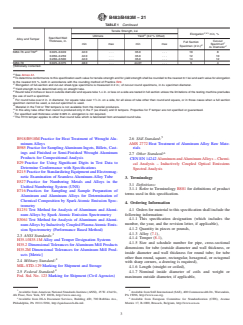
TABLE 1 Continued
Tensile Strength, ksi
C,E,I
Elongation min, %
D
Ultimate Yield (0.2 % Offset)
Specified Wall
Alloy and Temper
Thickness, in. Cut-out
Full Section
F
min max min max
Specimen
E
Specimen (2 in.)
C
4× Diameter
G
6262-T6 and T62 0.025–0.049 42.0 . . . 35.0 . . . 10 8
0.050–0.259 42.0 . . . 35.0 . . . 12 10
0.260–0.500 42.0 . . . 35.0 . . . 14 12
6262-T9 0.025–0.375 48.0 . . . 44.0† . . . 5 4
†Editorially corrected.
A
See Annex A1.
B
Todetermineconformancetothisspecificationeachvaluefortensilestrengthandforyieldstrengthshallberoundedtothenearest0.1ksiandeachvalueforelongation
to the nearest 0.5 %, both in accordance with the rounding method of Practice E29.
C
Elongation of full-section and cut-out sheet-type specimens is measured in 2 in.; of cut-out round specimens, in 4× specimen diameter.
D
Yield strength to be determined only on straight tube.
E
Roundtube2inchesorlessinoutsidediameterandsquaretube1 ⁄2 in.orlessonasidearetestedinfullsectionunlessthelimitationsofthetestingmachineprecludes
the use of such a specimen.
F 1
For round tube over 2 in. in diameter, for square tube over 1 ⁄2 in. on a side, for all sizes of tube other than round and square, or in those cases when a full section
specimen cannot be used, a cut-out specimen is used.
G
Material in the T42 or T62 tempers is not available from the material producers.
H
In this alloy tube other than round is produced only in the F (as drawn) and O tempers. Properties for F temper are not specified or guaranteed.
I
For specified wall thickness under 0.025 in. elongation is not required.
J
The H113 temper applies to other than round tube which is fabricated from annealed round tube.
B918/B918MPractice for Heat Treatment of Wrought Alu- 2.6 SAE Standard:
minum Alloys AMS 2772Heat Treatment of Aluminum Alloy Raw Mate-
B985Practice for SamplingAluminum Ingots, Billets, Cast- rials
ings and Finished or Semi-Finished Wrought Aluminum
2.7 Other Standard:
Products for Compositional Analysis
CENEN14242AluminumandAluminumAlloys–Chemi-
E29Practice for Using Significant Digits in Test Data to
cal Analysis – Inductively Coupled Optical Emissions
Determine Conformance with Specifications
Spectral Analysis
E215PracticeforStandardizingEquipmentandElectromag-
netic Examination of Seamless Aluminum-Alloy Tube
3. Terminology
E527Practice for Numbering Metals and Alloys in the
3.1 Definitions:
Unified Numbering System (UNS)
3.1.1 Refer to Terminology B881 for definitions of product
E716Practices for Sampling and Sample Preparation of
terms used in this specification.
Aluminum and Aluminum Alloys for Determination of
Chemical Composition by Spark Atomic Emission Spec-
4. Ordering Information
trometry
4.1 Ordersformaterialtothisspecificationshallincludethe
E1251Test Method for Analysis of Aluminum and Alumi-
following information:
num Alloys by Spark Atomic Emission Spectrometry
4.1.1 This specification designation (which includes the
E3061Test Method for Analysis of Aluminum and Alumi-
number, the year, and the revision letter, if applicable),
numAlloysbyInductivelyCoupledPlasmaAtomicEmis-
4.1.2 Quantity in pieces or pounds,
sion Spectrometry (Performance Based Method)
3 4.1.3 Alloy (7.1),
2.3 ANSI Standards:
4.1.4 Temper (8.1),
H35.1/H35.1MAlloy and Temper Designation Systems
4.1.5 Size and schedule number for pipe, cross-sectional
H35.2Dimensional Tolerances forAluminum Mill Products
dimensions for tube (outside diameter and wall thickness, or
H35.2MDimensional Tolerances for Aluminum Mill Prod-
inside diameter and wall thickness for round tube; for tube
ucts [Metric]
other than round, square, rectangular, hexagonal, or octagonal
2.4 Military Standard:
with sharp corners, a drawing is required),
MIL-STD-129Marking for Shipment and Storage
4.1.6 Length (straight or coiled),
2.5 Federal Standard:
4.1.7 Nominal inside diameter of coils and weight or
Fed. Std. No. 123Marking for Shipment (Civil Agencies) maximum outside diameter, if applicable,
3 5
Available fromAmerican National Standards Institute (ANSI), 25 W. 43rd St., AvailablefromSAEInternational(SAE),400CommonwealthDr.,Warrendale,
4th Floor, New York, NY 10036, http://www.ansi.org. PA 15096, http://www.sae.org.
4 6
Available from DLA Document Services, Building 4/D, 700 Robbins Ave., Available from European Committee for Standardization (CEN), Avenue
Philadelphia, PA 19111-5094, http://quicksearch.dla.mil. Marnix 17, B-1000, Brussels, Belgium, http://www.cen.eu.
B483/B483M − 21
A,B
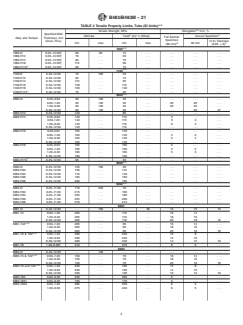
TABLE 2 Tensile Property Limits, Tube (SI Units)
D,I
Tensile Strength, MPa Elongation min, %
Specified Wall
C F
Ultimate Yield (0.2 % Offset) Cut-out Specimen
Full Section
Alloy and Temper Thickness, mm
Specimen
In 5× Diameter
(Over–Thru)
min max min max D 50 mm
F
(50 mm)
(5.65 =A)
E,H
1060-O 0.25–12.50† 60 95 15 . . . . . . . . . . . .
1060-H12 0.25–12.50† 70 . . . 30 . . . . . . . . . . . .
1060-H14 0.25–12.50† 85 . . . 70 . . . . . . . . . . . .
1060-H18 0.25–12.50† 110 . . . 90 . . . . . . . . . . . .
J
1060-H113 0.25–12.50† 60 . . . 15 . . . . . . . . . . . .
E,H
1100-O 0.32–12.50 75 105 25 . . . . . . . . . . . .
1100-H12 0.32–12.50 95 . . . 75 . . . . . . . . . . . .
1100-H14 0.32–12.50 110 . . . 95 . . . . . . . . . . . .
1100-H16 0.32–12.50 130 . . . 115 . . . . . . . . . . . .
1100-H18 0.32–12.50 150 . . . 140 . . . . . . . . . . . .
J
1100-H113 0.32–12.50 75 . . . 25 . . . . . . . . . . . .
E,H
3003-O 0.25–0.63 95 130 35 . . . . . . . . . . . .
0.63–1.20 95 130 35 . . . 30 20 . . .
1.20–6.30 95 130 35 . . . 35 25 . . .
6.30–12.50 95 130 35 . . . . . . 30 27
3003-H12 0.25–12.50 120 . . . 85 . . . . . . . . . . . .
3003-H14 0.25–0.63 140 . . . 115 . . . 3 . . . . . .
0.63-1.20 140 . . . 115 . . . 5 3 . . .
1.20–6.30 140 . . . 115 . . . 8 4 . . .
6.30–12.50 140 . . . 115 . . . . . . . . . . . .
3003-H16 0.25-0.63 165 . . . 145 . . . . . . . . . . . .
0.63–1.20 165 . . . 145 . . . 3 2 . . .
1.20–6.30 165 . . . 145 . . . 5 4 . . .
6.30–12.50 165 . . . 145 . . . . . . . . . . . .
3003-H18 0.25–0.63 185 . . . 165 . . . 2 . . . . . .
0.63–1.20 185 . . . 165 . . . 3 2 . . .
1.20–6.30 185 . . . 165 . . . 5 3 . . .
6.30–12.50 185 . . . 165 . . . . . . . . . . . .
J
3003-H113 0.25–12.50 95 . . . 35 . . . . . . . . . . . .
E,H
5050-O 0.25–12.50 125 165 40 . . . . . . . . . . . .
5050-H32 0.25–12.50 150 . . . 110 . . . . . . . . . . . .
5050-H34 0.25–12.50 170 . . . 140 . . . . . . . . . . . .
5050-H36 0.25–12.50 185 . . . 150 . . . . . . . . . . . .
5050-H38 0.25–12.50 200 . . . 165 . . . . . . . . . . . .
E,H
5052-O 0.25–11.50 170 240 70 . . . . . . . . . . . .
5052-H32 0.25–11.50 215 . . . 160 . . . . . . . . . . . .
5052-H34 0.25–11.50 235 . . . 180 . . . . . . . . . . . .
5052-H36 0.25–11.50 255 . . . 200 . . . . . . . . . . . .
5052-H38 0.25–11.50 270 . . . 215 . . . . . . . . . . . .
6061-O 0.45–12.50 . . . 150 . . . 95 15 15 13
6061-T4 0.63–1.20 205 . . . 110 . . . 16 14 . . .
1.20–6.30 205 . . . 110 . . . 18 16 . . .
6.30–12.50 205 . . . 110 . . . 20 18 16
F,G
6061-T42 0.63–1.20 205 . . . 95 . . . 16 14 . . .
1.20–6.30 205 . . . 95 . . . 18 16 . . .
6.30–12.50 205 . . . 95 . . . 20 18 16
F,G
6061-T6 & T62 0.63–1.20 290 . . . 240 . . . 10 8 . . .
1.20–6.30 290 . . . 240 . . . 12 10 . . .
6.30–12.50 290 . . . 240 . . . 14 12 10
6061-T8 1.00–8.00† 310 . . . 275 . . . 8 6 . . .
6063-O 0.45–12.50 . . . 130 . . . . . . . . . . . . . . .
F,G
6063-T4 & T42 0.63–1.20 150 . . . 70 . . . 16 14 . . .
1.20–6.30 150 . . . 70 . . . 18 16 . . .
6.30–12.50 150 . . . 70 . . . 20 18 16
F,G
6063-T6 and T62 0.63–1.20 230 . . . 195 . . . 12 8 . . .
1.20–6.30 230 . . . 195 . . . 14 10 . . .
6.30–12.50 230 . . . 195 . . . 16 12 10
6063-T83 0.63–6.30 230 . . . 205 . . . 5 . . . . . .
6063-T831 0.63–6.30 195 . . . 170 . . . 5 . . . . . .
6063-T832 0.63–1.20 285 . . . 250 . . . 8 5 . . .
1.20–6.30 275 . . . 240 . . . 8 5 . . .
B483/B483M − 21
TABLE 2 Continued
D,I
Tensile Strength, MPa Elongation min, %
Specified Wall
C F
Ultimate Yield (0.2 % Offset) Cut-out Specimen
Full Section
Alloy and Temper Thickness, mm
Specimen
In 5× Diameter
(Over–Thru)
min max min max D 50 mm
F
(50 mm)
(5.65 =A)
F,G
6262-T6 & T62 0.63–1.20 290 . . . 240 . . . 10 8 . . .
1.20–6.30 290 . . . 240 . . . 12 10 . . .
6.30–12.50 290 . . . 240 . . . 14 12 10
6262-T9 0.63–10.00† 330 . . . 305 . . . 5 4 3
†Editorially corrected.
A
See Annex A1.
B
Todetermineconformancetothisspecificationeachvaluefortensilestrengthandforyieldstrengthshallberoundedtothenearest1MPaandeachvalueforelongation
to the nearest 0.5 %, both in accordance with the rounding method of Practice E29.
C
Yield strength to be determined only on straight tube.
D
Round tube 50 mm or less in outside diameter and square tube 35 mm or less on a side are tested in full section unless the limitations of the testing machine precludes
the use of such a specimen.
E
For round tube over 50 mm in diameter, for square tube over 35 mm on a side, for all sizes of tube other than round and square, or in those cases when a full section
specimen cannot be used, a cut-out specimen is used.
F
Elongationsin50mmapplyfortubetestedinfull-section,forsheettypespecimensfortubeshavingaflatwall,andforsimilarcurvedspecimensfortubeshavingacurved
wall up to a maximum wall thickness of 12.50 mm. Elongations in 5D (5.65 =A), where D andAare diameter and cross-sectional area specimens, respectively, apply to
round test specimens machined from wall thickness over 6.30 mm.
G
Material in the T42 or T62 tempers is not available from the material producers.
H
In this alloy tube other than round is produced only in the F (as drawn) and O tempers. Properties for F temper are not specified or guaranteed.
I
For specified wall thickness under 0.63 mm elongation is not required.
J
The H113 temper applies to other than round tube which is fabricated from annealed round tube.
A,B,C
TABLE 3 Tensile Property Limits, Drawn Pipe
Tensile Strength, ksi [MPa] Elongation, min, %
C
Yield Strength
Elongation
Pipe Size,
(0.2% Offset), In
Temper
in 2 in. or In
Designation ksi [MPa],
min max 5× Diameter
D
50 mm
min 4× Diameter,
E
(5.65 =A)
min, %
Alloy 3003
H18 Under 1 27.0 [185] . 24.0 [165] 4 [4] .
H112 1 and over 14.0 [95] . 5.0 [35] 25 [25] [22]
A
The basis for establishment of tensile property limits is shown in Annex A1.
B
Forpurposesofdeterminingconformancewiththisspecification,eachvaluefortensilestrengthandyieldstrengthshallberoundedtothenearest0.1ksi,andeachvalue
for elongation shall be rounded to the nearest 0.5 %, both in accordance with the rounding-off method of Practice E29.
C
Elongation of full-section and cut-out sheet-type specimens is measured in 2 in.; of round specimens, in 4× specimen diameter.
D
For purposes of determining conformance with this specification, each value for ultimate strength and yield strength shall be rounded to the nearest 1 MPa, and each
value for elongation shall be rounded to the nearest 0.5%, both in accordance with the rounding-off method of Practice E29.
E
Elongation in 50 mm apply for pipe tested in full-section and to sheet type specimens taken from pipes having a wall up to 12.50 mm thick. Elongation in 5D (5.65 =A)
where D and A are diameter and cross-sectional area of the specimens respectively, apply to round test specimens machined from wall thicknesses over 6.30 mm.
4.2 Additionally, orders for materials to this specification 4.2.9 Whethercertificationofthematerialbytheproduceris
shall include the following information when required by the required (Section 19),
purchaser: 4.2.10 Whether threaded ends are required for pipe (14.3),
4.2.1 Whether heat treatment in accordance with Practice and
B807/B807M Extrusion Press Solution Heat Treatment is not 4.2.11 PIN (for Department of Defense only) (Annex A3).
acceptable (9.1),
4.2.2 Whether heat treatment shall be in accordance with 5. Manufacture
Practice B918/B918M (9.2) or AMS2772 (9.3) is required,
5.1 The tube may be produced by drawing tube stock
4.2.3 Whether testing for leaks is required (11.1),
produced by extrusion through a bridge-type die or by die and
4.2.4 Whether specified number of leaks are allowed, and
mandrel methods, at the option of the producer, provided that
the manner of marking leaks (11.1.3.2),
the production method results in material that meets all
4.2.5 Whether inside cleanliness test is required on coiled
requirements of this specification.
tubes (12.2), and frequency of testing required,
5.2 Theendsofcoilsshallbecrimpedorotherwisesealedto
4.2.6 Whether inspection or witness of inspection and tests
avoid contamination during shipment.
by the purchaser’ representative is required prior to material
shipment (15.1),
6. Responsibility For Quality Assurance
4.2.7 Whether marking for identification is required (17.1),
4.2.8 Whether Practices B660 applies, and if so, the levels 6.1 Responsibility for Inspection and Tests—Unless other-
of preservation, packaging, and packing required (18.3), wisespecifiedinthecontractorpurchaseorder,theproduceris
B483/B483M − 21
A,B,C,I
TABLE 4 Chemical Composition Limits
Composition, %
D
Alloy Other Elements
Silicon Iron Copper Manganese Magnesium Chromium Zinc Titanium Aluminum
E
Each Total
F
1060 0.25 0.35 0.05 0.03 0.03 . 0.05 0.03 0.03 . 99.60
G
min
1100 0.95 Si + Fe 0.05–0.20 0.05 . . 0.10 . 0.05 0.15 99.00
G
min
3003 0.6 0.7 0.05–0.20 1.0–1.5 . . 0.10 . 0.05 0.15 rem
5005 0.30 0.7 0.20 0.20 0.50–1.1 0.10 0.25 . 0.05 0.15 rem
5050 0.40 0.7 0.20 0.10 1.1–1.8 0.10 0.25 . 0.05 0.15 rem
5052 0.25 0.40 0.10 0.10 2.2–2.8 0.15–0.35 0.10 . 0.05 0.15 rem
6061 0.40–0.8 0.7 0.15–0.40 0.15 0.8–1.2 0.04–0.35 0.25 0.15 0.05 0.15 rem
6063 0.20–0.6 0.35 0.10 0.10 0.45–0.9 0.10 0.10 0.10 0.05 0.15 rem
H
6262 0.40–0.8 0.7 0.15–0.40 0.15 0.8–1.2 0.04–0.14 0.25 0.15 0.05 0.15 rem
A
Limits are in percent maximum unless shown as a range or otherwise stated.
B
Analysis shall be made for the elements for which limits are shown in this table.
C
For purposes of determining conformance to these limits, an observed value or a calculated value attained from analysis shall be rounded to the nearest unit in the last
right-hand place of figures used in expressing the specified limit, in accordance with the rounding method of Practice E29.
D
Others includes listed elements for which no specific limit is shown as well as unlisted metallic elements. The producer may analyze samples for trace elements not
specifiedinthisspecification.However,suchanalysisisnotrequiredandmaynotcoverallmetallicOtherselements.Shouldanyanalysisbytheproducerorthepurchaser
establish that an Others element exceeds the limit of Each or that the aggregate of several Others elements exceeds the limit of Total, the material shall be considered
nonconforming.
E
Other Elements—Total shall be the sum of unspecified metallic elements 0.010 % or more, rounded to the second decimal before determining the sum.
F
Vanadium 0.05 %, maximum.
G
The aluminum content shall be calculated by subtracting from 100.00 % the sum of all the metallic elements present in amounts of 0.010 % or more, rounded to the
second decimal before determining the sum.
H
Bismuth and lead each 0.40–0.7 %.
I
In case there is a discrepancy in the values listed in Table 4 with those listed in the “International Alloy Designations and Ch
...