

ASTM D4919-23
(Guide)Standard Guide for Testing of Hazardous Materials (Dangerous Goods) Packagings
General Information
- Abstract
ABSTRACT
This guide identifies the key information required to ensure that selected packaging will pass the United Nations (UN) packaging certification at the level that is appropriate for its intended use. This guide covers test procedures for transportation of hazardous material packagings for net masses except those used for infectious substances, radioactive materials, cylinders, and other receptacles for gases and does not replace domestic or international requlatory requirements for hazardous material packagings. The UN performance tests are based on the degree of hazard posed by the proposed materials to be packaged which are also assigned to a specific packing group. Only packaging designs that meet the UN performance standards are to be marked with a UN mark. Tests include drop test, leakproofness test, stack test, vibration test, pressure differential test, hydrostatic pressure test, and cobb water absorption test.
SIGNIFICANCE AND USE
4.1 The UN performance tests are based on the degree of hazard presented by the proposed hazardous material(s) to be packaged.
4.2 Substances and articles which are hazardous are assigned to a specific packing group as defined in 3.8.1 and may be determined by referencing 49 CFR 172.101 hazardous materials table.
4.3 Only packaging designs that have been successfully tested to the UN performance standards as defined in 3.8.2 may have the UN specification mark applied to the outer packaging. Hazardous Materials may not be transported in a packaging that does not bear the appropriate UN specification markings unless otherwise authorized by the applicable competent authority.
4.4 Packages successfully tested to the UN performance standards may or may not withstand the North American distribution environment. To further evaluate the suitability of the package it is strongly recommended that additional tests as detailed in Practice D4169 or other carrier specified test requirements be conducted.
SCOPE
1.1 This guide identifies the key information required for United Nations (UN) packaging certification to ensure the selected packaging will be certified to the appropriate level for its intended use and provides guidance for locating relevant sections of the United States Department of Transportation Title 49 Code of Federal Regulations (CFR). Consult with a regulatory specialist whenever needed.
1.2 This guide provides assistance in determining the appropriate performance tests required to certify packaging designs to the United States Department of Transportation Title 49 Code of Federal Regulations performance oriented packaging standards based on the United Nations Recommendations on the Transport of Dangerous Goods..
1.3 This guide covers the testing for transportation of hazardous materials (dangerous goods) packagings for net masses not exceeding 400 kg (880 lb) or capacities not exceeding 450 L (119 gal), excepting packagings for infectious substances, radioactive materials, cylinders and other receptacles for gases.
1.4 This guide does not replace domestic or international regulatory requirements for hazardous materials packaging but is strongly recommended to be used in conjunction with those regulations.
1.5 The user of this guide must be trained in accordance with the United States Department of Transportation Title 49 Code of Federal Regulations (49 CFR) as required by 172.700 and should be familiar with other applicable hazardous materials regulations such as: International Civil Aviation Organization (ICAO) Technical Instructions for the Safe Transport of Dangerous Goods by Air, and the International Maritime Dangerous Goods Code (IMDG Code) and carrier rules such as International Air Transport Association (IATA) Dangerous Goods Regulations.
1.6 The values stated in inch-pound units are to be regarded as standard. The values given in parentheses are mathematical conversions to SI units that are provided for information only and are not...
- Status
- Published
- Publication Date
- 14-Mar-2023
- Technical Committee
- D10 - Packaging
- Drafting Committee
- D10.22 - Hazardous Materials
Overview
ASTM D4919-23 is the Standard Guide for Testing of Hazardous Materials (Dangerous Goods) Packagings, published by ASTM International. This guide identifies and details the information and test procedures needed to certify packaging used in the transportation of hazardous materials, ensuring compliance with United Nations (UN) packaging certification requirements. While applicable in a broad international context, the guide also references United States Department of Transportation (DOT) Title 49 Code of Federal Regulations (49 CFR) for performance-oriented packaging standards.
ASTM D4919-23 specifies procedures and key considerations for testing packagings designed to transport hazardous materials-excluding those used for infectious substances, radioactive materials, cylinders, and other gas receptacles. It is essential for packaging designs to meet UN performance standards before being marked with a UN certification mark. This standard is used alongside existing domestic or international regulations and does not replace them.
Key Topics
UN Packaging Certification
The standard presents an overview of the UN performance tests required for certifying packaging, which are based on the degree of danger (Packing Group I, II, III) posed by the hazardous materials being shipped.Test Procedures
The guide covers mandatory and recommended tests, including:- Drop Test
- Leakproofness Test
- Stack Test
- Vibration Test
- Hydrostatic Pressure Test
- Pressure Differential Test
- Cobb Water Absorption Test
Packing Group Assignment
Hazardous materials are assigned a specific packing group (I, II, or III) based on hazard severity, dictating which performance standards and tests apply.Regulatory Cross-references
Directs users to relevant sections of 49 CFR for more detailed regulatory guidance and outlines the importance of consulting applicable international regulations (e.g., ICAO, IATA, IMDG).Documentation and Recordkeeping
The standard emphasizes recording packaging configurations, hazardous material properties (such as specific gravity and vapor pressure), transport modes, and assembly instructions to facilitate compliance and certification.
Applications
ASTM D4919-23 is widely used by packaging manufacturers, safety compliance professionals, shippers, and testing laboratories involved in the design, testing, and certification of hazardous materials packagings. Its practical value includes:
Certification Guidance
Assists users in selecting and qualifying packaging that meets UN and DOT requirements, thereby ensuring legal, safe, and efficient transport of hazardous goods.Packaging Design and Verification
Enables manufacturers to design packagings that can pass UN-mandated performance tests for liquids and solids, reducing the risk of non-compliance and costly shipment delays.Risk Reduction
By enforcing rigorous testing, the standard helps minimize the likelihood of leaks, spills, or package failures during handling, reducing hazards to people, property, and the environment.Multimodal Transportation
The guide addresses the requirements for different transportation modes (air, land, maritime), helping ensure that certified packaging is suitable for all intended routes.Training and Regulatory Compliance
Highlights necessary user training under 49 CFR 172.700 and encourages familiarity with key modal and carrier-specific hazardous materials shipping regulations.
Related Standards
Packaging professionals using ASTM D4919-23 should consult these related standards and regulations:
- ASTM D4169 – Performance Testing of Shipping Containers and Systems
- ASTM D5276 – Drop Test of Loaded Containers by Free Fall
- ASTM D999 – Vibration Testing of Shipping Containers
- ASTM D4332 – Conditioning Containers, Packages, or Packaging Components for Testing
- ASTM D8409 – Stacking Tests on UN Packagings
- ISO 535 – Determination of Water Absorption (Cobb Method)
- United Nations Recommendations on the Transport of Dangerous Goods (UN Orange Book)
- 49 CFR Parts 100-199 – U.S. DOT Hazardous Materials Regulations
- IATA Dangerous Goods Regulations, ICAO Technical Instructions, IMDG Code
For full compliance and effective hazardous materials packaging testing, integrate ASTM D4919-23 with these key references and ensure routine updates to reflect regulatory changes.
Relations
- Effective Date
- 01-Dec-2023
- Effective Date
- 01-Dec-2023
- Refers
ASTM D4169-23e1 - Standard Practice for Performance Testing of Shipping Containers and Systems - Effective Date
- 01-Dec-2023
- Effective Date
- 01-Nov-2023
- Effective Date
- 01-Oct-2023
- Effective Date
- 01-Oct-2023
- Effective Date
- 01-Oct-2019
- Refers
ASTM D4359-90(2019) - Standard Test Method for Determining Whether a Material Is a Liquid or a Solid - Effective Date
- 01-Jul-2019
- Refers
ASTM D4577-19 - Standard Test Method for Compression Resistance of a Container Under Constant Load - Effective Date
- 01-Apr-2019
- Effective Date
- 01-Oct-2018
- Effective Date
- 01-May-2018
- Effective Date
- 01-Sep-2017
- Effective Date
- 01-Oct-2015
- Effective Date
- 01-Apr-2015
- Effective Date
- 01-Nov-2014
Get Certified
Connect with accredited certification bodies for this standard

BRCGS (Brand Reputation Compliance Global Standards)
Global food safety and quality standards owner.
Sponsored listings
Frequently Asked Questions
ASTM D4919-23 is a guide published by ASTM International. Its full title is "Standard Guide for Testing of Hazardous Materials (Dangerous Goods) Packagings". This standard covers: ABSTRACT This guide identifies the key information required to ensure that selected packaging will pass the United Nations (UN) packaging certification at the level that is appropriate for its intended use. This guide covers test procedures for transportation of hazardous material packagings for net masses except those used for infectious substances, radioactive materials, cylinders, and other receptacles for gases and does not replace domestic or international requlatory requirements for hazardous material packagings. The UN performance tests are based on the degree of hazard posed by the proposed materials to be packaged which are also assigned to a specific packing group. Only packaging designs that meet the UN performance standards are to be marked with a UN mark. Tests include drop test, leakproofness test, stack test, vibration test, pressure differential test, hydrostatic pressure test, and cobb water absorption test. SIGNIFICANCE AND USE 4.1 The UN performance tests are based on the degree of hazard presented by the proposed hazardous material(s) to be packaged. 4.2 Substances and articles which are hazardous are assigned to a specific packing group as defined in 3.8.1 and may be determined by referencing 49 CFR 172.101 hazardous materials table. 4.3 Only packaging designs that have been successfully tested to the UN performance standards as defined in 3.8.2 may have the UN specification mark applied to the outer packaging. Hazardous Materials may not be transported in a packaging that does not bear the appropriate UN specification markings unless otherwise authorized by the applicable competent authority. 4.4 Packages successfully tested to the UN performance standards may or may not withstand the North American distribution environment. To further evaluate the suitability of the package it is strongly recommended that additional tests as detailed in Practice D4169 or other carrier specified test requirements be conducted. SCOPE 1.1 This guide identifies the key information required for United Nations (UN) packaging certification to ensure the selected packaging will be certified to the appropriate level for its intended use and provides guidance for locating relevant sections of the United States Department of Transportation Title 49 Code of Federal Regulations (CFR). Consult with a regulatory specialist whenever needed. 1.2 This guide provides assistance in determining the appropriate performance tests required to certify packaging designs to the United States Department of Transportation Title 49 Code of Federal Regulations performance oriented packaging standards based on the United Nations Recommendations on the Transport of Dangerous Goods.. 1.3 This guide covers the testing for transportation of hazardous materials (dangerous goods) packagings for net masses not exceeding 400 kg (880 lb) or capacities not exceeding 450 L (119 gal), excepting packagings for infectious substances, radioactive materials, cylinders and other receptacles for gases. 1.4 This guide does not replace domestic or international regulatory requirements for hazardous materials packaging but is strongly recommended to be used in conjunction with those regulations. 1.5 The user of this guide must be trained in accordance with the United States Department of Transportation Title 49 Code of Federal Regulations (49 CFR) as required by 172.700 and should be familiar with other applicable hazardous materials regulations such as: International Civil Aviation Organization (ICAO) Technical Instructions for the Safe Transport of Dangerous Goods by Air, and the International Maritime Dangerous Goods Code (IMDG Code) and carrier rules such as International Air Transport Association (IATA) Dangerous Goods Regulations. 1.6 The values stated in inch-pound units are to be regarded as standard. The values given in parentheses are mathematical conversions to SI units that are provided for information only and are not...
ABSTRACT This guide identifies the key information required to ensure that selected packaging will pass the United Nations (UN) packaging certification at the level that is appropriate for its intended use. This guide covers test procedures for transportation of hazardous material packagings for net masses except those used for infectious substances, radioactive materials, cylinders, and other receptacles for gases and does not replace domestic or international requlatory requirements for hazardous material packagings. The UN performance tests are based on the degree of hazard posed by the proposed materials to be packaged which are also assigned to a specific packing group. Only packaging designs that meet the UN performance standards are to be marked with a UN mark. Tests include drop test, leakproofness test, stack test, vibration test, pressure differential test, hydrostatic pressure test, and cobb water absorption test. SIGNIFICANCE AND USE 4.1 The UN performance tests are based on the degree of hazard presented by the proposed hazardous material(s) to be packaged. 4.2 Substances and articles which are hazardous are assigned to a specific packing group as defined in 3.8.1 and may be determined by referencing 49 CFR 172.101 hazardous materials table. 4.3 Only packaging designs that have been successfully tested to the UN performance standards as defined in 3.8.2 may have the UN specification mark applied to the outer packaging. Hazardous Materials may not be transported in a packaging that does not bear the appropriate UN specification markings unless otherwise authorized by the applicable competent authority. 4.4 Packages successfully tested to the UN performance standards may or may not withstand the North American distribution environment. To further evaluate the suitability of the package it is strongly recommended that additional tests as detailed in Practice D4169 or other carrier specified test requirements be conducted. SCOPE 1.1 This guide identifies the key information required for United Nations (UN) packaging certification to ensure the selected packaging will be certified to the appropriate level for its intended use and provides guidance for locating relevant sections of the United States Department of Transportation Title 49 Code of Federal Regulations (CFR). Consult with a regulatory specialist whenever needed. 1.2 This guide provides assistance in determining the appropriate performance tests required to certify packaging designs to the United States Department of Transportation Title 49 Code of Federal Regulations performance oriented packaging standards based on the United Nations Recommendations on the Transport of Dangerous Goods.. 1.3 This guide covers the testing for transportation of hazardous materials (dangerous goods) packagings for net masses not exceeding 400 kg (880 lb) or capacities not exceeding 450 L (119 gal), excepting packagings for infectious substances, radioactive materials, cylinders and other receptacles for gases. 1.4 This guide does not replace domestic or international regulatory requirements for hazardous materials packaging but is strongly recommended to be used in conjunction with those regulations. 1.5 The user of this guide must be trained in accordance with the United States Department of Transportation Title 49 Code of Federal Regulations (49 CFR) as required by 172.700 and should be familiar with other applicable hazardous materials regulations such as: International Civil Aviation Organization (ICAO) Technical Instructions for the Safe Transport of Dangerous Goods by Air, and the International Maritime Dangerous Goods Code (IMDG Code) and carrier rules such as International Air Transport Association (IATA) Dangerous Goods Regulations. 1.6 The values stated in inch-pound units are to be regarded as standard. The values given in parentheses are mathematical conversions to SI units that are provided for information only and are not...
ASTM D4919-23 is classified under the following ICS (International Classification for Standards) categories: 55.020 - Packaging and distribution of goods in general. The ICS classification helps identify the subject area and facilitates finding related standards.
ASTM D4919-23 has the following relationships with other standards: It is inter standard links to ASTM D999-08(2023), ASTM D4169-23, ASTM D4169-23e1, ASTM D7790-19(2023), ASTM D4577-19(2023), ASTM D5276-19(2023), ASTM D7790-19, ASTM D4359-90(2019), ASTM D4577-19, ASTM D4577-05(2018), ASTM D7660-10(2018), ASTM D5276-98(2017), ASTM D999-08(2015), ASTM D323-15, ASTM D4169-14. Understanding these relationships helps ensure you are using the most current and applicable version of the standard.
ASTM D4919-23 is available in PDF format for immediate download after purchase. The document can be added to your cart and obtained through the secure checkout process. Digital delivery ensures instant access to the complete standard document.
Standards Content (Sample)
This international standard was developed in accordance with internationally recognized principles on standardization established in the Decision on Principles for the
Development of International Standards, Guides and Recommendations issued by the World Trade Organization Technical Barriers to Trade (TBT) Committee.
Designation: D4919 − 23
Standard Guide for
Testing of Hazardous Materials (Dangerous Goods)
Packagings
This standard is issued under the fixed designation D4919; the number immediately following the designation indicates the year of
original adoption or, in the case of revision, the year of last revision. A number in parentheses indicates the year of last reapproval. A
superscript epsilon (´) indicates an editorial change since the last revision or reapproval.
This standard has been approved for use by agencies of the U.S. Department of Defense.
1. Scope* 1.6 The values stated in inch-pound units are to be regarded
as standard. The values given in parentheses are mathematical
1.1 This guide identifies the key information required for
conversions to SI units that are provided for information only
United Nations (UN) packaging certification to ensure the
and are not considered standard.
selected packaging will be certified to the appropriate level for
1.7 This standard does not purport to address all of the
its intended use and provides guidance for locating relevant
safety concerns, if any, associated with its use. It is the
sections of the United States Department of Transportation
responsibility of the user of this standard to establish appro-
Title 49 Code of Federal Regulations (CFR). Consult with a
priate safety, health, and environmental practices and deter-
regulatory specialist whenever needed.
mine the applicability of regulatory limitations prior to use.
1.2 This guide provides assistance in determining the ap-
1.8 This international standard was developed in accor-
propriate performance tests required to certify packaging
dance with internationally recognized principles on standard-
designs to the United States Department of Transportation Title
ization established in the Decision on Principles for the
49 Code of Federal Regulations performance oriented packag-
Development of International Standards, Guides and Recom-
ing standards based on the United Nations Recommendations
mendations issued by the World Trade Organization Technical
on the Transport of Dangerous Goods.
Barriers to Trade (TBT) Committee.
1.3 This guide covers the testing for transportation of
hazardous materials (dangerous goods) packagings for net
2. Referenced Documents
masses not exceeding 400 kg (880 lb) or capacities not 2
2.1 ASTM Standards:
exceeding 450 L (119 gal), excepting packagings for infectious
D323 Test Method for Vapor Pressure of Petroleum Products
substances, radioactive materials, cylinders and other recep-
(Reid Method)
tacles for gases.
D642 Test Method for Determining Compressive Resistance
1.4 This guide does not replace domestic or international
of Shipping Containers, Components, and Unit Loads
regulatory requirements for hazardous materials packaging but
D685 Practice for Conditioning Paper and Paper Products
is strongly recommended to be used in conjunction with those
for Testing
regulations.
D996 Terminology of Packaging and Distribution Environ-
ments
1.5 The user of this guide must be trained in accordance
D999 Test Methods for Vibration Testing of Shipping Con-
with the United States Department of Transportation Title 49
tainers
Code of Federal Regulations (49 CFR) as required by 172.700
D4169 Practice for Performance Testing of Shipping Con-
and should be familiar with other applicable hazardous mate-
tainers and Systems
rials regulations such as: International Civil Aviation Organi-
D4332 Practice for Conditioning Containers, Packages, or
zation (ICAO) Technical Instructions for the Safe Transport of
Packaging Components for Testing
Dangerous Goods by Air, and the International Maritime
D4359 Test Method for Determining Whether a Material Is
Dangerous Goods Code (IMDG Code) and carrier rules such as
a Liquid or a Solid
International Air Transport Association (IATA) Dangerous
D4577 Test Method for Compression Resistance of a Con-
Goods Regulations.
tainer Under Constant Load
This guide is under the jurisdiction of ASTM Committee D10 on Packaging and
is the direct responsibility of Subcommittee D10.22 on Hazardous Materials. For referenced ASTM standards, visit the ASTM website, www.astm.org, or
Current edition approved March 15, 2023. Published April 2023. Originally contact ASTM Customer Service at service@astm.org. For Annual Book of ASTM
approved in 1989. Last previous edition approved in 2017 as D4919 – 17. DOI: Standards volume information, refer to the standard’s Document Summary page on
10.1520/D4919-23. the ASTM website.
*A Summary of Changes section appears at the end of this standard
Copyright © ASTM International, 100 Barr Harbor Drive, PO Box C700, West Conshohocken, PA 19428-2959. United States
D4919 − 23
D4991 Test Method for Leakage Testing of Empty Rigid 3.2 Reference 49 CFR, Part 173, Subpart D: Definitions
Containers by Vacuum Method Classification, Packing Group Assignment and Exceptions for
D5276 Test Method for Drop Test of Loaded Containers by Hazardous Materials other than Class 1 and Class 7 (for
Free Fall example, definition of flammable liquid).
D5570 Test Method for Water Resistance of Tape and
3.3 Reference 49 CFR, Sections 178.503-178.523 for Non-
Adhesives Used as Box Closure
bulk packaging standards (for example, 1A1, 1H2, 4G, etc.).
D7660 Guide for Conducting Internal Pressure Tests on
3.4 Reference 49 CFR, Section 178.601(c): General
United Nations (UN) Packagings
Requirements, Definitions.
D7790 Guide for Preparation of Plastic Packagings Contain-
ing Liquids for United Nations (UN) Drop Testing 3.5 The terms hazardous materials and dangerous goods are
D7887 Guide for Selection of Substitute, Non-hazardous,
considered synonymous.
Liquid Filling Substances for Packagings Subjected to the
3.6 Reference Terminology D996.
United Nations Performance Tests
3.7 Other terms may be found in modal specific regulatory
D8135 Guide for Selection of Substitute, Non-hazardous,
documents listed in 2.4.
Particulate Solid Filling Substances for Packagings Sub-
jected to the United Nations Performance Tests
3.8 Definitions of Terms Specific to This Standard:
D8409 Guide for Conducting Stacking Tests on UN Pack-
3.8.1 Packing Group—Hazardous Materials are assigned to
agings Using Guided or Unguided Loads
a Packing Group based on the degree of danger as follows:
2.2 ISO Standard:
3.8.1.1 Packing Group I—Substances presenting great dan-
ISO 535 Determination of Water Absorption of Paper and
ger.
Board (Cobb Method)
3.8.1.2 Packing Group II—Substances presenting medium
2.3 United Nations Document:
danger.
United Nations Recommendations on the Transport of Dan-
3.8.1.3 Packing Group III—Substances presenting minor
gerous Goods, Model Regulations (UN Orange Book)
danger.
2.4 Regulatory Documents:
3.8.2 Performance Standard—UN certified Packagings are
International Air Transport Association (IATA) Dangerous
authorized to transport hazardous materials and are marked to
Goods Regulations
a performance standard as follows:
International Civil Aviation Organization (ICAO) Technical
3.8.2.1 Performance Standard “X” Packaging—May be
Instructions for the Safe Transport of Dangerous Goods by
used to transport hazardous materials in Packing Groups I, II,
Air
and III.
International Maritime Dangerous Goods Code (IMDG
3.8.2.2 Performance Standard “Y” Packaging—May be
Code)
used to transport hazardous materials in Packing Groups II and
49 CFR United States Department of Transportation Code of
III.
Federal Regulations Title 49, Transportation, Parts 100-
3.8.2.3 Performance Standard “Z” Packaging—May only
be used to transport hazardous materials in Packing Group III.
2.5 Industry Document:
Industrial Steel Drum Institute (ISDI) and Reusable Indus-
4. Significance and Use
trial Packaging Association (RIPA) Hazardous Materials
9 4.1 The UN performance tests are based on the degree of
Packaging Testing Procedures for Steel Drums
hazard presented by the proposed hazardous material(s) to be
packaged.
3. Terminology
3.1 Reference 49 CFR, Section 171.8: Definitions and 4.2 Substances and articles which are hazardous are as-
signed to a specific packing group as defined in 3.8.1 and may
Abbreviations.
be determined by referencing 49 CFR 172.101 hazardous
materials table.
Available from International Organization for Standardization (ISO), ISO
Central Secretariat, Chemin de Blandonnet 8, CP 401, 1214 Vernier, Geneva,
4.3 Only packaging designs that have been successfully
Switzerland, https://www.iso.org.
tested to the UN performance standards as defined in 3.8.2 may
Available from the UN Economic Commission for Europe, Information
have the UN specification mark applied to the outer packaging.
Service, Palais des Nations, CH-1211 Geneva 10, Switzerland, http://
www.unece.org/trans/danger/danger.htm. Hazardous Materials may not be transported in a packaging
Available from International Air Transport Association (IATA), 800 Place
that does not bear the appropriate UN specification markings
Victoria, P.O. Box 113, Montreal, Quebec H4Z 1M1, Canada, http://www.iata.org.
unless otherwise authorized by the applicable competent au-
Available from International Civil Aviation Organization (ICAO), 999 Univer-
thority.
sity St., Montreal, Quebec, H3C H57, Canada, http://www.icao.org.
Available from International Marine Organization, 4 Albert Embankment,
4.4 Packages successfully tested to the UN performance
London, SE1 7SR UK, http://www.imo.org.
standards may or may not withstand the North American
Available from Superintendent of Documents, U.S. Government Printing
Office, Washington, DC 20402-9371 (www.phmsa.dot.gov/phmsa- regulations).
distribution environment. To further evaluate the suitability of
Available from the Industrial Steel Drum Institute (ISDI), P.O. Box 790,
the package it is strongly recommended that additional tests as
Severna Park, MN 21146-0790. www.whysteeldrums.org; and Reusable Industrial
detailed in Practice D4169 or other carrier specified test
Packaging Association (RIPA), 51 Monroe Street Suite 812, Rockville, MD 20850,
Tel. 301.577.3786, www.reusablepackaging.org requirements be conducted.
D4919 − 23
5. Procedure 5.3.2 Hazardous Material Information—Determine what
products are to be shipped in the selected packaging. Consid-
5.1 Introduction—Hazardous materials must be offered for
eration should be given to new or potential products to be
transportation within the United States in packagings autho-
shipped. The type of hazardous materials being shipped will
rized by U.S. DOT 49 CFR. When UN specification packaging
determine the appropriate performance tests.
is required for shipping hazardous materials, this packaging
5.3.2.1 Packing Group—Packagings must be selected based
must first be subjected to and meet the UN performance
on the hazards presented in transportation according to the
standards as outlined in 49 CFR. It is recommended the user of
respective Packing Group assignments of the intended hazard-
this document review key areas of 49 CFR to gain a better
ous materials as defined in 3.8.1.
understanding of the domestic requirements for package certi-
fication. The following are suggested areas to review:
NOTE 1—If different products are intended to be shipped in the selected
5.1.1 49 CFR, 173.24, and 173.24a General Requirements
packaging, keep in mind the product presenting the greatest danger may
for Packagings and Packages—This section of the regulations
not be the product resulting in the highest specific gravity or heaviest gross
mass (for example, a Packing Group I liquid may have a specific gravity
contains information on the following: General applicability
of 1.1, and a Packing Group II liquid may have a specific gravity of 1.9).
requirements, Packagings manufactured outside the U.S.,
This information is important for determining the appropriate performance
Compatibility, Venting of Packagings, Filling Requirements,
tests. The following sections of 49 CFR pertaining to “non-bulk filling
Vibration Requirements, Filling Limits, Vapor Pressure Deter-
limits” provides guidance for the use of UN certified packagings: 49 CFR,
minations and other issues.
173.24a(b)(1), 173.24a(b)(2), and 173.24a(b)(3). Note, these sections only
apply to single and composite packagings and not combination packag-
5.1.2 49 CFR, 173.27 General Requirements for Transpor-
ings.
tation by Aircraft—This section of the regulations contains
information on the following: Pressure capability requirements
5.3.2.2 Hazardous Material Type (Liquid or Solid)—
for packagings transporting liquids, Closure requirements, and
Determine if the selected packaging will be used for shipping
requirements for the use of Absorbent Materials.
liquid or solid hazardous materials or both (see Test Method
5.1.3 49 CFR, 178.601 General Requirements—This section
D4359 for determining whether a material is a liquid or solid).
of the regulations contains information on the following:
The UN test requirements are different for solids and liquids. If
Design Qualification, Periodic Retesting, Production Testing,
the packaging is intended for shipping both liquids and solids,
and Selective Testing for UN packagings.
two separate certification tests may need to be performed.
5.1.4 49 CFR, 178.602 Preparation of Packagings and
Single and composite packagings tested for liquids may be
Packages for Testing—This section of the regulations contains
authorized for solid materials (see 49 CFR 173.24a(b)(3)).
information on filling requirements for liquids and solids
Combination packagings require separate testing for liquids
packaging certification along with conditioning requirements.
and solids. Consult the most recent revision of the hazardous
5.1.4.1 When selecting liquid fill materials for package
materials regulations to determine certification requirements.
testing the user of this guide should consult Guide D7887 for
5.3.2.3 Specific Gravity for Liquids—Using product Mate-
guidance on the selection of the proper liquid fill material for
rial Safety Data Sheets (MSDS) or other acceptable methods,
the test specimens.
obtain information on the maximum specific gravity of the
5.1.4.2 When selecting solids fill materials for package
liquid product(s) to be shipped in the selected packaging.
testing the user of this guide should consult Guide D8135 for
Testing should be conducted based on the highest specific
guidance on the selection of the proper solids fill material for
gravity product for single and composite packagings and the
the test specimens.
highest specific gravity product resulting in the heaviest gross
5.1.4.3 When preparing packages for testing the user of this
mass for combination packagings. This information is needed
guide should consult Practice D4332 and Guide D7790 for
to determine test levels and authorized gross mass of the
guidance on package conditioning prior to testing.
packaging.
5.2 Use of UN Certified Packaging— A UN packaging may
5.3.2.4 Gross Mass for Solids—Using product MSDS or
be used for different products under the same certification
other acceptable methods, obtain information on the maximum
provided the hazardous material and packaging are compatible,
gross mass (based on net fill weight) of the solid product(s) to
the regulations authorize the use of the packaging for the
be shipped in the selected packaging. This information is
intended hazardous material, and the UN packaging certifica-
needed to determine test fill weights and authorized gross mass
tion is appropriate for the intended product.
of the packaging.
5.3 Key Information for Packaging Certification—To ensure 5.3.2.5 Vapor Pressure of Liquid Material—For liquid haz-
the selected packaging will be certified to the appropriate level ardous materials, information on the vapor pressure of the
for its intended use the information outlined in 5.3.1 – 5.3.4 material determined at 50 °C or 55 °C should be obtained using
should be obtained and carefully reviewed. the appropriate ASTM Standard (see Test Method D323) or
5.3.1 Packaging Standard—Determine if the packaging other acceptable methods (see 49 CFR, 173.24a(b)(4)). For
configuration meets the construction and specification require- single and composite packaging this information is required to
ments of one of the UN standards (for example, Fiberboard determine the appropriate hydrostatic test pressure. For inner
Box, Metal Drum, Plastic Drum, etc.) listed in 49 CFR, packagings of a combination packaging intended for shipping
178.504–178.523. If the packaging selected does not meet liquids by air transportation, this information is required to
these requirements, approval may be required from the com- determine the appropriate pressure differential test require-
petent authority for UN certification (49 CFR, 178.601(h)). ments.
D4919 − 23
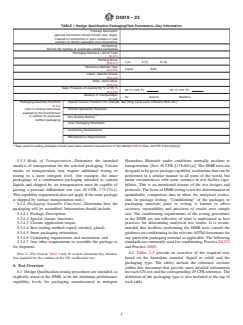
TABLE 1 Design Qualification Packaging/Test Parameters—Key Information
Package Description
(general information should include; size, shape,
material of construction or spec numbers or part
numbers to identify packaging and components)
UN Marking:
Record UN marking on previously certified packagings
Packaging Standard / UN ID Code
(5.3.1)
Packing Group
I (x) II (Y) III (Z)
(5.3.2.1)
Hazardous Material Type
Liquid Solid
(5.3.2.2)
Liquid—Specific Gravity
(5.3.2.3)
Solid—Gross Mass
(5.3.2.4)
Vapor Pressure of Liquid at 50 °C or 55 °C
50 °C (122 °F) 55 °C (131 °F)
(5.3.2.5)
Mode(s) of Transportation
Air Ground Maritime
(5.3.3)
Packaging Assembly Functions Special Closure Functions (for example, Bolt Ring, Lever Lock, Induction Seal, etc.):
(5.3.4)
(refer to closing instructions Closure Application Torque(s):
supplied by the manufacturer
A
or certifier for previously Box Sealing Method:
certified packaging)
Inner Packaging Orientation:
Cushioning Requirements:
Miscellaneous Requirements:
A
Tape used for sealing packages should meet water resistant requirements of Test Method D5570 [See: 49 CFR 178.516(b)(4)].
5.3.3 Mode of Transportation—Determine the intended Hazardous Materials under conditions normally incident to
mode(s) of transportation for the selected packaging. Certain transportation. [See: 49 CFR §178.601(a)]. The HMR tests are
modes of transportation may require additional testing or designed to be gross package capability evaluations that can be
testing to a more stringent level. (for example, the inner performed in a similar manner in all parts of the world, but
packagings of a combination packaging intended to contain under circumstances with some variance in test facility capa-
liquids and shipped by air transportation must be capable of bilities. This is an intentional feature of the test designs and
passing a pressure differential test (see 49 CFR, 173.27(c)). protocols. The focus of HMR testing is not the determination of
This capability requirement does not apply if the same package quantifiable, comparison data to allow for analytical evalua-
is shipped by surface transportation only.) tion. In package testing, “Conditioning” of the packages or
5.3.4 Packaging Assembly Functions—Determine how the packaging materials prior to testing is known to affect
packaging will be assembled. Information should include: accuracy, repeatability and precision of results over sample
5.3.4.1 Package Description, sets. The conditioning requirements of the testing procedures
5.3.4.2 Special closure functions, in the HMR are not reflective of what is understood as best
5.3.4.3 Closure application torque, practices for determining analytical test results. It is recom-
5.3.4.4 Box sealing method (taped, stitched, glued), mended that facilities performing the HMR tests consult the
5.3.4.5 Inner packaging orientation, guidance on conditioning in the relevant ASTM documents for
5.3.4.6 Cushioning requirements and orientation, and any particular packaging material as applicable. The following
5.3.4.7 Any other requirements to assemble the package as standards are commonly used for conditioning: Practice D4332
for shipment. and Practice D685.
6.2 Tables 2-5 provide an overview of the required tests
NOTE 2—The form in Table 1 may be used to document key informa-
tion required for the conduct of the UN certification test. based on the hazardous material (liquid or solid) and the
packaging type. The tables include the reference sections
6. Test Overview
within this document that provide more detailed information
6.1 Design Qualification testing procedures are intended, as for each UN test and the corresponding 49 CFR reference. The
explicitly stated in the HMR, to be the minimum performance
definition of the packaging type is also included at the top of
capability levels for packaging manufactured to transport each table.
D4919 − 23
TABLE 2 Test Overview—Combination Packaging (reference Section 6)
NOTE 1—“X” indicates to conduct the test.
Definition: Combination packagings are a combination of packagings for transport purposes, consisting of one or more inner packagings secured in an
outer packaging.
Section in Required
UN Tests 49 CFR Liquids Solids
Document Samples
5 for Boxes
A,B
Drop 178.603 7 X X
6 for Drums
Leakproofness 178.604 8
Hydrostatic
178.605 9
Pressure
Stacking 178.606 10 X X 3
A,C
Vibration 178.608 11 X X 3
X 3
Pressure
173.27(c) 12 (Air Transport (Inner Packaging
Differential
Only) for Liquid)
X X 5
Cobb Water Combination Packaging
178.516 13 (4G Fiberboard (4G Fiberboard (outer fiberboard
Absorption Example
Box) Box) material samples)
A
Testing must be conducted on the complete package assembled as for shipment except for the Pressure Differential and Cobb Water Absorption Tests.
B
Drop test s
...
This document is not an ASTM standard and is intended only to provide the user of an ASTM standard an indication of what changes have been made to the previous version. Because
it may not be technically possible to adequately depict all changes accurately, ASTM recommends that users consult prior editions as appropriate. In all cases only the current version
of the standard as published by ASTM is to be considered the official document.
Designation: D4919 − 17 D4919 − 23
Standard Guide for
Testing of Hazardous Materials (Dangerous Goods)
Packagings
This standard is issued under the fixed designation D4919; the number immediately following the designation indicates the year of
original adoption or, in the case of revision, the year of last revision. A number in parentheses indicates the year of last reapproval. A
superscript epsilon (´) indicates an editorial change since the last revision or reapproval.
This standard has been approved for use by agencies of the U.S. Department of Defense.
1. Scope*
1.1 The main focus of this guide is to identify This guide identifies the key information required for United Nations (UN)
packaging certification to ensure the selected packaging will be certified to the appropriate level for its intended use. This document
also use and provides guidance for locating relevant sections of the United States Department of Transportation Title 49 Code of
Federal Regulations (CFR). Consult with a regulatory specialist whenever needed.
1.2 This guide is intended to assist provides assistance in determining the appropriate performance tests required to certify
packaging designs to the United States Department of Transportation Title 49 Code of Federal Regulations performance oriented
packaging standards based on the United Nations Recommendations on the Transport of Dangerous Goods.
1.3 This guide covers the testing for transportation of hazardous materials (dangerous goods) packagings for net masses not
exceeding 400 kg (880 lb) or capacities not exceeding 450 L (119 gal), excepting packagings for infectious substances, radioactive
materials, cylinders and other receptacles for gases.
1.4 This guide does not replace domestic or international regulatory requirements for hazardous materials packaging but is
strongly recommended to be used in conjunction with those regulations.
1.5 The user of this guide must be trained in accordance with the United States Department of Transportation Title 49 Code of
Federal Regulations (49 CFR) as required by 172.700 and should be familiar with other applicable hazardous materials regulations
such as: International Civil Aviation Organization (ICAO) Technical Instructions for the Safe Transport of Dangerous Goods by
Air, and the International Maritime Dangerous Goods Code (IMDG Code) and carrier rules such as International Air Transport
Association (IATA) Dangerous Goods Regulations.
1.6 The values stated in inch-pound units are to be regarded as standard. The values given in parentheses are mathematical
conversions to SI units that are provided for information only and are not considered standard.
1.7 This standard does not purport to address all of the safety concerns, if any, associated with its use. It is the responsibility
of the user of this standard to establish appropriate safety and healthsafety, health, and environmental practices and determine
the applicability of regulatory requirementslimitations prior to use.
1.8 This international standard was developed in accordance with internationally recognized principles on standardization
established in the Decision on Principles for the Development of International Standards, Guides and Recommendations issued
by the World Trade Organization Technical Barriers to Trade (TBT) Committee.
This guide is under the jurisdiction of ASTM Committee D10 on Packaging and is the direct responsibility of Subcommittee D10.22 on Hazardous Materials.
Current edition approved April 1, 2017March 15, 2023. Published June 2017April 2023. Originally approved in 1989. Last previous edition approved in 20082017 as
D4919 – 03D4919 – 17.(2008) which was withdrawn January 2017 and reinstated in April 2017. DOI: 10.1520/D4919-17. DOI: 10.1520/D4919-23.
*A Summary of Changes section appears at the end of this standard
Copyright © ASTM International, 100 Barr Harbor Drive, PO Box C700, West Conshohocken, PA 19428-2959. United States
D4919 − 23
2. Referenced Documents
2.1 ASTM Standards:
D323 Test Method for Vapor Pressure of Petroleum Products (Reid Method)
D642 Test Method for Determining Compressive Resistance of Shipping Containers, Components, and Unit Loads
D685 Practice for Conditioning Paper and Paper Products for Testing
D996 Terminology of Packaging and Distribution Environments
D999 Test Methods for Vibration Testing of Shipping Containers
D4169 Practice for Performance Testing of Shipping Containers and Systems
D4332 Practice for Conditioning Containers, Packages, or Packaging Components for Testing
D4359 Test Method for Determining Whether a Material Is a Liquid or a Solid
D4577 Test Method for Compression Resistance of a Container Under Constant Load
D4991 Test Method for Leakage Testing of Empty Rigid Containers by Vacuum Method
D5276 Test Method for Drop Test of Loaded Containers by Free Fall
D5570 Test Method for Water Resistance of Tape and Adhesives Used as Box Closure
D7660 Guide for Conducting Internal Pressure Tests on United Nations (UN) Packagings
D7790 Guide for Preparation of Plastic Packagings Containing Liquids for United Nations (UN) Drop Testing
D7887 Guide for Selection of Substitute, Non-hazardous, Liquid Filling Substances for Packagings Subjected to the United
Nations Performance Tests
D8135 Guide for Selection of Substitute, Non-hazardous, Particulate Solid Filling Substances for Packagings Subjected to the
United Nations Performance Tests
D8409 Guide for Conducting Stacking Tests on UN Packagings Using Guided or Unguided Loads
2.2 ISO Standard:
ISO 535 Determination of Water Absorption of Paper and Board (Cobb Method)
2.3 United Nations Document:
United Nations Recommendations on the Transport of Dangerous GoodsGoods, Model Regulations (UN Orange Book)
2.4 Regulatory Documents:
International Air Transport Association (IATA) Dangerous Goods Regulations
International Civil Aviation Organization (ICAO) Technical Instructions for the Safe Transport of Dangerous Goods by Air
International Maritime Dangerous Goods Code (IMDG Code)
49 CFR United States Department of Transportation Code of Federal Regulations Title 49, Transportation, Parts 100-199
2.5 Industry Document:
Industrial Steel Drum Institute (ISDI) and Reusable Industrial Packaging Association (RIPA) Hazardous Materials Packaging
Testing Procedures for Steel Drums
3. Terminology
3.1 Reference 49 CFR, Section 171.8: Definitions and Abbreviations.
3.2 Reference 49 CFR, Part 173, Subpart D: Definitions Classification, Packing Group Assignment and Exceptions for Hazardous
Materials other than Class 1 and Class 7 (for example, definition of flammable liquid).
3.3 Reference 49 CFR, Sections 178.503-178.523 for Non-bulk packaging standards (for example, 1A1, 1H2, 4G, etc.).
3.4 Reference 49 CFR, Section 178.601(c): General Requirements, Definitions.
For referenced ASTM standards, visit the ASTM website, www.astm.org, or contact ASTM Customer Service at service@astm.org. For Annual Book of ASTM Standards
volume information, refer to the standard’s Document Summary page on the ASTM website.
Available from American National Standards Institute (ANSI), 25 W. 43rd St., 4th Floor, New York, NY 10036, http://www.ansi.org.International Organization for
Standardization (ISO), ISO Central Secretariat, Chemin de Blandonnet 8, CP 401, 1214 Vernier, Geneva, Switzerland, https://www.iso.org.
Available from the UN Economic Commission for Europe, Information Service, Palais des Nations, CH-1211 Geneva 10, Switzerland, http://www.unece.org/trans/
danger/danger.htm.
Available from International Air Transport Association (IATA), 800 Place Victoria, P.O. Box 113, Montreal, Quebec H4Z 1M1, Canada, http://www.iata.org.
Available from International Civil Aviation Organization (ICAO), 999 University St., Montreal, Quebec, H3C H57, Canada, http://www.icao.int.http://www.icao.org.
Available from International Marine Organization, 4 Albert Embankment, London, Ontario 5E1 7SR, Canada, SE1 7SR UK, http://www.imo.org.
Available from Superintendent of Documents, U.S. Government Printing Office, Washington, DC 20402-9371 (website: hazmat.dot.gov).(www.phmsa.dot.gov/phmsa-
regulations).
Available from the Industrial Steel Drum Institute (ISDI), P.O. Box 790, Severna Park, MN 21146-0790. www.whysteeldrums.org; and Reusable Industrial Packaging
Association (RIPA), 51 Monroe Street Suite 812, Rockville, MD 20850, Tel. 301.577.3786, www.reusablepackaging.org
D4919 − 23
3.5 The terms hazardous materials and dangerous goods are considered synonymous.
3.6 Reference Terminology D996.
3.7 Other terms may be found in modal specific regulatory documents listed in 2.4.
3.8 Definitions of Terms Specific to This Standard:
3.8.1 Packing Group—Hazardous Materials are assigned to a Packing Group based on the degree of danger as follows:
3.8.1.1 Packing Group I—Substances presenting great danger.
3.8.1.2 Packing Group II—Substances presenting medium danger.
3.8.1.3 Packing Group III—Substances presenting minor danger.
3.8.2 Performance Standard—UN certified Packagings are authorized to transport hazardous materials and are marked to a
performance standard as follows:
3.8.2.1 Performance Standard “X” Packaging—May be used to transport hazardous materials in Packing Groups I, II, and III.
3.8.2.2 Performance Standard “Y” Packaging—May be used to transport hazardous materials in Packing Groups II and III.
3.8.2.3 Performance Standard “Z” Packaging—May only be used to transport hazardous materials in Packing Group III.
4. Significance and Use
4.1 The UN performance tests are based on the degree of hazard presented by the proposed hazardous material(s) to be packaged.
4.2 Substances and articles which are hazardous are assigned to a specific packing group as defined in 3.8.1 and may be
determined by referencing 49 CFR 172.101 hazardous materials table.
4.3 Only packaging designs that have been successfully tested to the UN performance standards as defined in 3.8.2 may be marked
with a UN mark. have the UN specification mark applied to the outer packaging. Hazardous Materials may not be transported in
a packaging that does not bear the appropriate UN specification markings unless otherwise authorized by the applicable competent
authority.
4.4 Packages successfully tested to the UN performance standards may or may not withstand the North American distribution
environment. To further evaluate the suitability of the package it is strongly recommended that additional tests as detailed in
Practice D4169 or other carrier specified test requirements be conducted.
5. Procedure
5.1 Introduction—Hazardous materials must be offered for transportation within the United States in packagings authorized by
U.S. DOT 49 CFR. When UN specification packaging is required for shipping hazardous materials, this packaging must first be
subjected to and meet the UN performance standards as outlined in 49 CFR. It is recommended the user of this document review
key areas of 49 CFR to gain a better understanding of the domestic requirements for package certification. The following are
suggested areas to review:
5.1.1 49 CFR, 173.24, and 173.24a General Requirements for Packagings and Packages—This section of the regulations contains
information on the following: General applicability requirements, Packagings manufactured outside the U.S., Compatibility,
Venting of Packagings, Filling Requirements, Vibration Requirements, Filling Limits, Vapor Pressure Determinations and other
issues.
D4919 − 23
5.1.2 49 CFR, 173.27 General Requirements for Transportation by Aircraft—This section of the regulations contains information
on the following: Pressure capability requirements for packagings transporting liquids, Closure requirements, and requirements for
the use of Absorbent Materials.
5.1.3 49 CFR, 178.601 General Requirements—This section of the regulations contains information on the following: Design
Qualification, Periodic Retesting, Production Testing, and Selective Testing for UN packagings.
5.1.4 49 CFR, 178.602 Preparation of Packagings and Packages for Testing—This section of the regulations contains information
on filling requirements for liquids and solids packaging certification along with conditioning requirements.
5.1.4.1 When selecting liquid fill materials for package testing the user of this guide should consult Guide D7887 for guidance
on the selection of the proper liquid fill material for the test specimens.
5.1.4.2 When selecting solids fill materials for package testing the user of this guide should consult Guide D8135 for guidance
on the selection of the proper solids fill material for the test specimens.
5.1.4.3 When preparing packages for testing the user of this guide should consult Practice D4332 and Guide D7790 for guidance
on package conditioning prior to testing.
5.2 Use of UN Certified Packaging— A UN packaging may be used for different products under the same certification provided
the hazardous material and packaging are compatible, the regulations authorize the use of the packaging for the intended hazardous
material, and the UN packaging certification is appropriate for the intended product.
5.3 Key Information for Packaging Certification—To ensure the selected packaging will be certified to the appropriate level for
its intended use the information outlined in 5.3.1 – 5.3.4 should be obtained and carefully reviewed.
5.3.1 Packaging Standard—Determine if the packaging configuration meets the construction and specification requirements of one
of the UN standards (for example, Fiberboard Box, Metal Drum, Plastic Drum, etc.) listed in 49 CFR, 178.504–178.523. If the
packaging selected does not meet these requirements, approval may be required from the competent authority for UN certification
(49 CFR, 178.601(h)).
5.3.2 Hazardous Material Information—Determine what products are to be shipped in the selected packaging. Consideration
should be given to new or potential products to be shipped. The type of hazardous materials being shipped will determine the
appropriate performance tests.
5.3.2.1 Packing Group—Packagings must be selected based on the hazards presented in transportation according to the respective
Packing Group assignments of the intended hazardous materials as defined in 3.8.1.
NOTE 1—If different products are intended to be shipped in the selected packaging, keep in mind the product presenting the greatest danger may not be
the product resulting in the highest specific gravity or heaviest gross mass (for example, a Packing Group I liquid may have a specific gravity of 1.1, and
a Packing Group II liquid may have a specific gravity of 1.9). This information is important for determining the appropriate performance tests. The
following sections of 49 CFR pertaining to “non-bulk filling limits” provides guidance for the use of UN certified packagings: 49 CFR, 173.24a(b)(1),
173.24a(b)(2), and 173.24a(b)(3). Note, these sections only apply to single and composite packagings and not combination packagings.
5.3.2.2 Hazardous Material Type (Liquid or Solid)—Determine if the selected packaging will be used for shipping liquid or solid
hazardous materials or both (see Test Method D4359 for determining whether a material is a liquid or solid). The UN test
requirements are different for solids and liquids. If the packaging is intended for shipping both liquids and solids, two separate
certification tests may need to be performed. Single and composite packagings tested for liquids may be authorized for solid
materials (see 49 CFR 173.24a(b)(3)). Combination packagings require separate testing for liquids and solids. Consult the most
recent revision of the hazardous materials regulations to determine certification requirements.
5.3.2.3 Specific Gravity for Liquids—Using product Material Safety Data Sheets (MSDS) or other acceptable methods, obtain
information on the maximum specific gravity of the liquid product(s) to be shipped in the selected packaging. Testing should be
conducted based on the highest specific gravity product for single and composite packagings and the highest specific gravity
product resulting in the heaviest gross mass for combination packagings. This information is needed to determine test levels and
authorized gross mass of the packaging.
D4919 − 23
5.3.2.4 Gross Mass for Solids—Using product MSDS or other acceptable methods, obtain information on the maximum gross
mass (based on net fill weight) of the solid product(s) to be shipped in the selected packaging. This information is needed to
determine test fill weights and authorized gross mass of the packaging.
5.3.2.5 Vapor Pressure of Liquid Material—For liquid hazardous materials, information on the vapor pressure of the material
determined at 50 or 55°C50 °C or 55 °C should be obtained using the appropriate ASTM Standard (see Test Method D323) or other
acceptable methods (see 49 CFR, 173.24a(b)(4)). For single and composite packaging this information is required to determine the
appropriate hydrostatic test pressure. For inner packagings of a combination packaging intended for shipping liquids by air
transportation, this information is required to determine the appropriate pressure differential test requirements.
5.3.3 Mode of Transportation—Determine the intended mode(s) of transportation for the selected packaging. Certain modes of
transportation may require additional testing or testing to a more stringent level. (for example, the inner packagings of a
combination packaging intended to contain liquids and shipped by air transportation must be capable of passing a pressure
differential test (see 49 CFR, 173.27(c)). This capability requirement does not apply if the same package is shipped by surface
transportation only.)
5.3.4 Packaging Assembly Functions—Determine how the packaging will be assembled. Information should include:
5.3.4.1 Package Description,
5.3.4.2 Special closure functions,
5.3.4.3 Closure application torque,
5.3.4.4 Box sealing method (taped, stitched, glued),
5.3.4.5 Inner packaging orientation,
5.3.4.6 Cushioning requirements and orientation, and
5.3.4.7 Any other requirements to assemble the package as for shipment.
NOTE 2—The form in Table 1 may be used to document key information required for the conduct of the UN certification test.
6. Test Overview
6.1 Design Qualification testing procedures are intended, as explicitly stated in the HMR, to be the minimum performance
capability levels for packaging manufactured to transport Hazardous Materials under conditions normally incident to transporta-
tion. [See: 49 CFR §178.601(a)]. The HMR tests are designed to be gross package capability evaluations that can be performed
in a similar manner in all parts of the world, but under circumstances with some variance in test facility capabilities. This is an
intentional feature of the test designs and protocols. The focus of HMR testing is not the determination of quantifiable, comparison
data to allow for analytical evaluation. In package testing, “Conditioning” of the packages or packaging materials prior to testing
is known to affect accuracy, repeatability and precision of results over sample sets. The conditioning requirements of the testing
procedures in the HMR are not reflective of what is understood as best practices for determining analytical test results. It is
recommended that facilities performing the HMR tests consult the guidance on conditioning in the relevant ASTM documents for
any particular packaging material as applicable. The following standards are commonly used for conditioning: Practice D4332 and
Practice D685.
6.2 Tables 2-5 provide an overview of the required tests based on the hazardous material (liquid or solid) and the packaging type.
The tables include the reference sections within this document that provide more detailed information for each UN test and the
corresponding 49 CFR reference. The definition of the packaging type is also included at the top of each table.
D4919 − 23
TABLE 1 Design Qualification Packaging/Test Parameters—Key Information
Package Description
(general information should include; size, shape,
material of construction or spec numbers or part
numbers to identify packaging and components)
UN Marking:
Record UN marking on previously certified packagings
Packaging Standard / UN ID Code
(5.3.1)
Packing Group
I II III
(5.3.2.1)
Packing Group
I (x) II (Y) III (Z)
(5.3.2.1)
Hazardous Material Type
Liquid Solid
(5.3.2.2)
Liquid—Specific Gravity
(5.3.2.3)
Solid—Gross Mass
(5.3.2.4)
Vapor Pressure of Liquid at 50 or 55°C
50°C (122°F) 55°C (131°F)
(5.3.2.5)
Vapor Pressure of Liquid at 50 °C or 55 °C
50 °C (122 °F) 55 °C (131 °F)
(5.3.2.5)
Mode(s) of Transportation
Air Ground Maritime
(5.3.3)
Packaging Assembly Functions Special Closure Functions (for example, Bolt Ring, Lever Lock, Induction Seal, etc.):
(5.3.4)
(refer to closing instructions Packaging Assembly Functions (5.3.4)
Closure Application Torque(s):
supplied by the manufacturer (refer to closing instructions
or certifier for previously supplied by the manufacturer
A
Box Sealing Method:
certified packagings) or certifier for previously
certified packaging)
Inner Packaging Orientation:
Special Closure Functions (for example, Bolt Ring, Lever Lock, Induction Seal, etc.):
Cushioning Requirements:
Miscellaneous Requirements:
A
Tape used for sealing packages should meet water resistant requirements of Test Method D5570 [See: 49 CFR 178.516(b)(4)].
7. Drop Test
7.1 The drop test is typically one of the more difficult parts of the UN certification process and it is recommended the drop test
be conducted first. The user of this guide should review 49 CFR 178.603 for specific test information such as drop orientations
and pass/fail criteria. Drop tests are required for all types of packagings and should be conducted in accordance with Test Method
D5276.
D4919 − 23
TABLE 2 Test Overview—Combination Packaging (reference Section 6)
NOTE 1—“X” indicates to conduct the test.
Definition: Combination packagings are a combination of packagings for transport purposes, consisting of one or more inner packagings secured in an
outer packaging.
Section in Required
UN Tests 49 CFR Liquids Solids
Document Samples
5 for Boxes
A,B
Drop 178.603 7 X X
6 for Drums
Leakproofness 178.604 8
Hydrostatic
178.605 9
Pressure
Stacking 178.606 10 X X 3
A,C
Vibration 178.608 11 X X 3
X 3
Pressure
173.27(c) 12 (Air Transport (Inner Packaging
Differential
Only) for Liquid)
X X 5
Cobb Water Combination Packaging
178.516 13 (4G Fiberboard (4G Fiberboard (outer fiberboard
Absorption Example
Box) Box) material samples)
A
Testing must be conducted on the complete package assembled as for shipment except for the Pressure Differential and Cobb Water Absorption Tests.
B
Drop test samples and orientations are determined by the shape (type) of outer packaging.
C
The vibration test is a capability requirement and not a “required” test. See 11.2.
TABLE 3 Test Overview—Bag (reference Section 6)
NOTE 1—“X” indicates to conduct the test.
Definition: Bags are flexible packagings made of paper, plastics film, textiles, woven material or other suitable materials.
Section in Required
UN Tests 49 CFR Solids
Document Samples
A
Drop 178.603 7 X 3
Leakproofness 178.604 8
Hydrostatic
178.605 9
Pressure
Stacking 178.606 10
B A
Vibration 178.608 11 X 3
Pressure
...