

ASTM E2450-23
(Practice)Standard Practice for Application of CaF2(Mn) Thermoluminescence Dosimeters in Mixed Neutron-Photon Environments
General Information
- Abstract
SIGNIFICANCE AND USE
4.1 Electronic devices are typically tested for device response to gamma radiation in pure gamma-ray fields. Testing electronic device response against neutrons is more complex since there is invariably a gamma-ray component in addition to the neutron field. The gamma-ray response of the electronic device is typically subtracted from the overall response to find the device response to neutrons. This approach to the testing requires a determination of the gamma-ray exposure in the mixed field. To enhance the neutron effects, the radiation field is sometimes selected to have as large a neutron component as possible.
4.2 CaF2(Mn) TLDs are often used to monitor the gamma-ray dose in mixed neutron/gamma radiation fields. Since the dosimeters are exposed along with the device under test to the mixed field, their response must be corrected for neutrons. In a field rich in neutrons, the uncertainty in the interpretation of the TLD response grows. In fields with relatively few neutrons, the total TLD response may be used to make a correction for gamma response of the device under test. Under this condition, the relative uncertainty in the TLD neutron response is not likely to drive the overall uncertainty in the correction to the electronic device response.
4.3 This practice gives a means of estimating the response of CaF2(Mn) TLDs to neutrons. This neutron response is then subtracted from the measured response to determine the TLD response due to gamma rays. The procedure has relatively high uncertainty because the neutron response of CaF2(Mn) TLDs may vary depending on the source of the material, and this procedure is a generic calculation applicable to CaF2(Mn) TLDs independent of their manufacturer/source. The neutron response given in this practice is a summary of CaF2(Mn) TLD responses reported in the literature. The associated uncertainty envelops the range of results reported and includes the variety of CaF2(Mn) TLDs used as well as the uncertainties in the det...
SCOPE
1.1 This practice describes a procedure for correcting a CaF2(Mn) thermoluminescence dosimeter (TLD) reading for its response to neutrons during the irradiation. The neutron response may be subtracted from the total TLD response to give the gamma-ray response. In fields with a large neutron contribution to the total response, this procedure may result in large uncertainties.
1.2 More precise experimental techniques may be applied if the uncertainty derived from this practice is larger than the level that the user can accept. These more precise techniques are not discussed here. The references in Section 8 describe some of these techniques.
1.3 This practice does not discuss effects on the TLD reading from neutron interactions with the material surrounding the TLD and used to ensure a charged particle equilibrium. These effects will depend on the isotopic composition of the surrounding material and its thickness, and on the incident neutron spectrum (1).2
1.4 The values stated in SI units are to be regarded as standard.
1.5 This international standard was developed in accordance with internationally recognized principles on standardization established in the Decision on Principles for the Development of International Standards, Guides and Recommendations issued by the World Trade Organization Technical Barriers to Trade (TBT) Committee.
- Status
- Published
- Publication Date
- 31-Dec-2022
- Technical Committee
- E10 - Nuclear Technology and Applications
Buy Documents
ASTM E2450-23 - Standard Practice for Application of CaF<inf>2</inf>(Mn) Thermoluminescence Dosimeters in Mixed Neutron-Photon Environments
REDLINE ASTM E2450-23 - Standard Practice for Application of CaF<inf>2</inf>(Mn) Thermoluminescence Dosimeters in Mixed Neutron-Photon Environments
Overview
ASTM E2450-23 is the Standard Practice for Application of CaF₂(Mn) Thermoluminescence Dosimeters (TLDs) in Mixed Neutron-Photon Environments, developed by ASTM International. This document provides a recommended procedure for the correction of CaF₂(Mn) TLD readings due to their response to neutrons when used in mixed neutron/gamma radiation fields, particularly during the testing of electronic devices. The standard outlines the significance, use, and limitations of CaF₂(Mn) dosimeters for accurately assessing gamma-ray dose by correcting for neutron influence, thereby supporting reliable radiation hardness testing and dosimetry in complex irradiation environments.
Key Topics
- Mixed Neutron-Photon Environments: Addresses the challenges in dosimetry when neutron and gamma radiation are both present, particularly the impact on electronic device testing.
- CaF₂(Mn) Thermoluminescence Dosimeters: Specifies the use of manganese-doped calcium fluoride TLDs for monitoring gamma-ray dose, with correction methods for their neutron sensitivity.
- Gamma and Neutron Dose Differentiation: Details the subtraction process where the neutron-induced component of the TLD reading is estimated and subtracted to extract gamma-ray dose.
- Uncertainty Management: Highlights that the neutron response correction has significant uncertainty, as CaF₂(Mn) TLDs can vary by manufacturer and batch.
- Procedure Limitations: States that more precise methods may be needed if large uncertainties are not acceptable, and effects from surrounding material are not covered by this practice.
- Reporting Requirements: Emphasizes thorough documentation and reporting of corrections, associated uncertainties, and the conditions under which corrections are not necessary.
Applications
- Radiation Hardness Testing of Electronics: Used widely in environments where devices are exposed simultaneously to neutron and photon (gamma-ray) fields, such as nuclear facilities and aerospace systems.
- Dose Assessment in Mixed Fields: Facilitates accurate gamma dose estimation when electronic components or materials are tested for their response to radiation, where direct gamma field measurements are not possible.
- Quality Assurance in Dosimetry Labs: Supports standardized procedures for laboratories engaged in radiation monitoring, to ensure reliable and reproducible dosimetry results across varying neutron-photon field compositions.
- Regulatory Compliance and Research: Assists industries and research organizations in meeting regulatory and technical requirements for dosimetric assessments in nuclear, medical, and defense applications.
Related Standards
- ASTM E170: Terminology Relating to Radiation Measurements and Dosimetry – provides fundamental definitions.
- ASTM E666: Practice for Calculating Absorbed Dose From Gamma or X Radiation – covers absorbed dose calculations.
- ASTM E668: Practice for Application of Thermoluminescence-Dosimetry (TLD) Systems for Determining Absorbed Dose in Radiation-Hardness Testing of Electronic Devices – principles for TLD calibration and use.
- ASTM E720: Guide for Selection and Use of Neutron Sensors for Determining Neutron Spectra – advice on neutron spectrum measurement.
- ASTM E721: Guide for Determining Neutron Energy Spectra from Neutron Sensors – procedures for characterizing neutron energy.
- ASTM E722: Practice for Characterizing Neutron Fluence Spectra in Terms of an Equivalent Monoenergetic Neutron Fluence – advanced neutron fluence analysis.
- ASTM E1854: Practice for Ensuring Test Consistency in Neutron-Induced Displacement Damage of Electronic Parts.
- ASTM F1190: Guide for Neutron Irradiation of Unbiased Electronic Components.
Practical Value
Adhering to ASTM E2450-23 enables practitioners to apply a consistent and internationally-recognized method for interpreting TLD readings in mixed neutron-photon environments, improving the accuracy of gamma-ray dose measurement under complex conditions. This is critical for ensuring the reliability of electronic devices intended for radiation-rich settings and for upholding quality control in radiation dosimetry laboratories.
Keywords: CaF₂(Mn) TLD, thermoluminescence dosimeter, neutron-photon environments, mixed-field dosimetry, gamma-ray dose correction, electronic device testing, ASTM E2450-23, radiation hardness testing.
Relations
- Effective Date
- 01-Jul-2020
- Effective Date
- 01-Oct-2019
- Effective Date
- 01-Oct-2019
- Effective Date
- 01-Jun-2017
- Effective Date
- 01-Oct-2016
- Effective Date
- 15-Feb-2016
- Effective Date
- 01-Sep-2015
- Effective Date
- 15-Mar-2015
- Effective Date
- 15-Oct-2014
- Effective Date
- 01-Sep-2014
- Effective Date
- 01-Jun-2014
- Effective Date
- 01-Jun-2013
- Effective Date
- 01-Jan-2013
- Effective Date
- 01-Nov-2011
- Effective Date
- 01-Oct-2011
Buy Documents
ASTM E2450-23 - Standard Practice for Application of CaF<inf>2</inf>(Mn) Thermoluminescence Dosimeters in Mixed Neutron-Photon Environments
REDLINE ASTM E2450-23 - Standard Practice for Application of CaF<inf>2</inf>(Mn) Thermoluminescence Dosimeters in Mixed Neutron-Photon Environments
Get Certified
Connect with accredited certification bodies for this standard

BSMI (Bureau of Standards, Metrology and Inspection)
Taiwan's standards and inspection authority.
Sponsored listings
Frequently Asked Questions
ASTM E2450-23 is a standard published by ASTM International. Its full title is "Standard Practice for Application of CaF<inf>2</inf>(Mn) Thermoluminescence Dosimeters in Mixed Neutron-Photon Environments". This standard covers: SIGNIFICANCE AND USE 4.1 Electronic devices are typically tested for device response to gamma radiation in pure gamma-ray fields. Testing electronic device response against neutrons is more complex since there is invariably a gamma-ray component in addition to the neutron field. The gamma-ray response of the electronic device is typically subtracted from the overall response to find the device response to neutrons. This approach to the testing requires a determination of the gamma-ray exposure in the mixed field. To enhance the neutron effects, the radiation field is sometimes selected to have as large a neutron component as possible. 4.2 CaF2(Mn) TLDs are often used to monitor the gamma-ray dose in mixed neutron/gamma radiation fields. Since the dosimeters are exposed along with the device under test to the mixed field, their response must be corrected for neutrons. In a field rich in neutrons, the uncertainty in the interpretation of the TLD response grows. In fields with relatively few neutrons, the total TLD response may be used to make a correction for gamma response of the device under test. Under this condition, the relative uncertainty in the TLD neutron response is not likely to drive the overall uncertainty in the correction to the electronic device response. 4.3 This practice gives a means of estimating the response of CaF2(Mn) TLDs to neutrons. This neutron response is then subtracted from the measured response to determine the TLD response due to gamma rays. The procedure has relatively high uncertainty because the neutron response of CaF2(Mn) TLDs may vary depending on the source of the material, and this procedure is a generic calculation applicable to CaF2(Mn) TLDs independent of their manufacturer/source. The neutron response given in this practice is a summary of CaF2(Mn) TLD responses reported in the literature. The associated uncertainty envelops the range of results reported and includes the variety of CaF2(Mn) TLDs used as well as the uncertainties in the det... SCOPE 1.1 This practice describes a procedure for correcting a CaF2(Mn) thermoluminescence dosimeter (TLD) reading for its response to neutrons during the irradiation. The neutron response may be subtracted from the total TLD response to give the gamma-ray response. In fields with a large neutron contribution to the total response, this procedure may result in large uncertainties. 1.2 More precise experimental techniques may be applied if the uncertainty derived from this practice is larger than the level that the user can accept. These more precise techniques are not discussed here. The references in Section 8 describe some of these techniques. 1.3 This practice does not discuss effects on the TLD reading from neutron interactions with the material surrounding the TLD and used to ensure a charged particle equilibrium. These effects will depend on the isotopic composition of the surrounding material and its thickness, and on the incident neutron spectrum (1).2 1.4 The values stated in SI units are to be regarded as standard. 1.5 This international standard was developed in accordance with internationally recognized principles on standardization established in the Decision on Principles for the Development of International Standards, Guides and Recommendations issued by the World Trade Organization Technical Barriers to Trade (TBT) Committee.
SIGNIFICANCE AND USE 4.1 Electronic devices are typically tested for device response to gamma radiation in pure gamma-ray fields. Testing electronic device response against neutrons is more complex since there is invariably a gamma-ray component in addition to the neutron field. The gamma-ray response of the electronic device is typically subtracted from the overall response to find the device response to neutrons. This approach to the testing requires a determination of the gamma-ray exposure in the mixed field. To enhance the neutron effects, the radiation field is sometimes selected to have as large a neutron component as possible. 4.2 CaF2(Mn) TLDs are often used to monitor the gamma-ray dose in mixed neutron/gamma radiation fields. Since the dosimeters are exposed along with the device under test to the mixed field, their response must be corrected for neutrons. In a field rich in neutrons, the uncertainty in the interpretation of the TLD response grows. In fields with relatively few neutrons, the total TLD response may be used to make a correction for gamma response of the device under test. Under this condition, the relative uncertainty in the TLD neutron response is not likely to drive the overall uncertainty in the correction to the electronic device response. 4.3 This practice gives a means of estimating the response of CaF2(Mn) TLDs to neutrons. This neutron response is then subtracted from the measured response to determine the TLD response due to gamma rays. The procedure has relatively high uncertainty because the neutron response of CaF2(Mn) TLDs may vary depending on the source of the material, and this procedure is a generic calculation applicable to CaF2(Mn) TLDs independent of their manufacturer/source. The neutron response given in this practice is a summary of CaF2(Mn) TLD responses reported in the literature. The associated uncertainty envelops the range of results reported and includes the variety of CaF2(Mn) TLDs used as well as the uncertainties in the det... SCOPE 1.1 This practice describes a procedure for correcting a CaF2(Mn) thermoluminescence dosimeter (TLD) reading for its response to neutrons during the irradiation. The neutron response may be subtracted from the total TLD response to give the gamma-ray response. In fields with a large neutron contribution to the total response, this procedure may result in large uncertainties. 1.2 More precise experimental techniques may be applied if the uncertainty derived from this practice is larger than the level that the user can accept. These more precise techniques are not discussed here. The references in Section 8 describe some of these techniques. 1.3 This practice does not discuss effects on the TLD reading from neutron interactions with the material surrounding the TLD and used to ensure a charged particle equilibrium. These effects will depend on the isotopic composition of the surrounding material and its thickness, and on the incident neutron spectrum (1).2 1.4 The values stated in SI units are to be regarded as standard. 1.5 This international standard was developed in accordance with internationally recognized principles on standardization established in the Decision on Principles for the Development of International Standards, Guides and Recommendations issued by the World Trade Organization Technical Barriers to Trade (TBT) Committee.
ASTM E2450-23 is classified under the following ICS (International Classification for Standards) categories: 17.240 - Radiation measurements. The ICS classification helps identify the subject area and facilitates finding related standards.
ASTM E2450-23 has the following relationships with other standards: It is inter standard links to ASTM E668-20, ASTM E1854-19, ASTM E722-19, ASTM E170-17, ASTM E170-16a, ASTM E170-16, ASTM E170-15a, ASTM E170-15, ASTM E170-14a, ASTM E170-14, ASTM E722-14, ASTM E1854-13, ASTM E668-13, ASTM E721-11, ASTM F1190-11. Understanding these relationships helps ensure you are using the most current and applicable version of the standard.
ASTM E2450-23 is available in PDF format for immediate download after purchase. The document can be added to your cart and obtained through the secure checkout process. Digital delivery ensures instant access to the complete standard document.
Standards Content (Sample)
This international standard was developed in accordance with internationally recognized principles on standardization established in the Decision on Principles for the
Development of International Standards, Guides and Recommendations issued by the World Trade Organization Technical Barriers to Trade (TBT) Committee.
Designation: E2450 − 23
Standard Practice for
Application of CaF (Mn) Thermoluminescence Dosimeters in
Mixed Neutron-Photon Environments
This standard is issued under the fixed designation E2450; the number immediately following the designation indicates the year of
original adoption or, in the case of revision, the year of last revision. A number in parentheses indicates the year of last reapproval. A
superscript epsilon (´) indicates an editorial change since the last revision or reapproval.
1. Scope E170 Terminology Relating to Radiation Measurements and
Dosimetry
1.1 This practice describes a procedure for correcting a
E666 Practice for CalculatingAbsorbed Dose From Gamma
CaF (Mn) thermoluminescence dosimeter (TLD) reading for
or X Radiation
its response to neutrons during the irradiation. The neutron
E668 Practice for Application of Thermoluminescence-
response may be subtracted from the total TLD response to
Dosimetry (TLD) Systems for Determining Absorbed
give the gamma-ray response. In fields with a large neutron
Dose in Radiation-HardnessTesting of Electronic Devices
contribution to the total response, this procedure may result in
E720 Guide for Selection and Use of Neutron Sensors for
large uncertainties.
Determining Neutron Spectra Employed in Radiation-
1.2 More precise experimental techniques may be applied if
Hardness Testing of Electronics
the uncertainty derived from this practice is larger than the
E721 Guide for Determining Neutron Energy Spectra from
level that the user can accept. These more precise techniques
Neutron Sensors for Radiation-Hardness Testing of Elec-
are not discussed here. The references in Section 8 describe
tronics
some of these techniques.
E722 PracticeforCharacterizingNeutronFluenceSpectrain
1.3 This practice does not discuss effects on the TLD Terms of an Equivalent Monoenergetic Neutron Fluence
reading from neutron interactions with the material surround- for Radiation-Hardness Testing of Electronics
ing the TLD and used to ensure a charged particle equilibrium. E1854 Practice for Ensuring Test Consistency in Neutron-
Induced Displacement Damage of Electronic Parts
These effects will depend on the isotopic composition of the
surrounding material and its thickness, and on the incident F1190 Guide for Neutron Irradiation of Unbiased Electronic
Components
neutron spectrum (1).
1.4 The values stated in SI units are to be regarded as
3. Terminology
standard.
3.1 Definitions:
1.5 This international standard was developed in accor-
dance with internationally recognized principles on standard- 3.1.1 absorbed dose—see Terminology E170.
ization established in the Decision on Principles for the
3.1.2 exposure—see Terminology E170.
Development of International Standards, Guides and Recom-
3.1.3 kerma—see Terminology E170.
mendations issued by the World Trade Organization Technical
Barriers to Trade (TBT) Committee.
3.1.4 linear energy transfer (LET)—the energy loss per unit
distance as a charged particle passes through a material.
2. Referenced Documents
3.1.4.1 Discussion—Electrons resulting from gamma-ray
2.1 ASTM Standards:
interactions in a material generally have a low LET. Heavy
charged particles resulting from neutron interactions with a
material generally have a high LET.
This practice is under the jurisdiction of ASTM Committee E10 on Nuclear
Technology and Applications and is the direct responsibility of Subcommittee
3.1.5 neutron sensitivity m(E)—the ratio of the detector
E10.07 on Radiation Dosimetry for Radiation Effects on Materials and Devices.
reading, that is, the effective neutron dose, to the neutron
Current edition approved Jan. 1, 2023. Published January 2023. Originally
approved in 2005. Last previous edition approved in 2016 as E2450 – 16. DOI:
fluence. Thus,
10.1520/E2450-23.
2 M E
~ !
The boldface numbers in parentheses refer to the list of references at the end of
m~E! 5 (1)
this standard.
Φ~E!
For referenced ASTM standards, visit the ASTM website, www.astm.org, or
contact ASTM Customer Service at service@astm.org. For Annual Book of ASTM where:
Standards volume information, refer to the standard’s Document Summary page on
Φ(E) = the neutron fluence, and
the ASTM website.
Copyright © ASTM International, 100 Barr Harbor Drive, PO Box C700, West Conshohocken, PA 19428-2959. United States
E2450 − 23
surements are required for the purpose of documenting the
M(E) = the apparent dose (light output) in the TLD caused
neutron sensitivity of the TLDs.
by neutrons of energy E.
5.2 Expose the TLD along with the device under test (see
4. Significance and Use
Practice E1854 and Guide F1190). If there is a non-negligible
fast-neutron or thermal-neutron response, a fast-neutron moni-
4.1 Electronic devices are typically tested for device re-
tor (for example, nickel) or thermal-neutron monitor (for
sponse to gamma radiation in pure gamma-ray fields. Testing
example, gold) must also be exposed with the device under
electronic device response against neutrons is more complex
test.
since there is invariably a gamma-ray component in addition to
the neutron field. The gamma-ray response of the electronic
5.3 The neutron spectrum must be known (see Guides E720
device is typically subtracted from the overall response to find
and E721). This may be determined in a separate exposure. A
the device response to neutrons. This approach to the testing
neutron monitor should be used on the irradiation along with
requires a determination of the gamma-ray exposure in the
the device under test (see Practice E1854). The device under
mixed field. To enhance the neutron effects, the radiation field
test must not significantly perturb the neutron spectrum.
is sometimes selected to have as large a neutron component as
5.4 Practice E668 provides information on the calibration
possible.
and use of CaF (Mn) dosimeters for use in X-ray and gamma
4.2 CaF (Mn) TLDs are often used to monitor the gamma-
radiation fields as well as for electrons in a designated energy
ray dose in mixed neutron/gamma radiation fields. Since the
range. The guidance in this standard is to adopt, for use in
dosimeters are exposed along with the device under test to the
mixed neutron-gamma radiation fields, these same calibration,
mixed field, their response must be corrected for neutrons. In a
handling, and read-out techniques for CaF (Mn) TLDs. In
fieldrichinneutrons,theuncertaintyintheinterpretationofthe
particular, the CaF (Mn) TLDs that are used in a mixed
TLDresponsegrows.Infieldswithrelativelyfewneutrons,the
neutron photon field should only be calibrated in a well-
total TLD response may be used to make a correction for
characterized gamma-only radiation source. See Section 9 of
gamma response of the device under test. Under this condition,
Practice E668.
the relative uncertainty in the TLD neutron response is not
likely to drive the overall uncertainty in the correction to the
6. Neutron Sensitivity of CaF (Mn)
electronic device response.
6.1 Thermal Neutrons:
4.3 This practice gives a means of estimating the response
6.1.1 Thermal neutron responses of CaF (Mn) ranging from
of CaF (Mn) TLDs to neutrons. This neutron response is then
0.06 to 0.89 Gy[CaF (Mn)] (6 to 89 rad[CaF (Mn)]) per
2 2
subtracted from the measured response to determine the TLD
12 2
10 n⁄cm are reported (2). The sensitivity may depend on
response due to gamma rays.The procedure has relatively high
several factors, one of the most important parameters being the
uncertainty because the neutron response of CaF (Mn) TLDs
manganese doping of the TLD. The sensitivity may also be a
may vary depending on the source of the material, and this
function of dosimeter size, since the dosimeter surface-to-
procedure is a generic calculation applicable to CaF (Mn)
volume ratio affects the portion of the charged particles borne
TLDs independent of their manufacturer/source. The neutron
within the TLD that deposit their dose outside the TLD.
response given in this practice is a summary of CaF (Mn)TLD
Horowitz (3) reported a thermal neutron response of 0.34
responses reported in the literature. The associated uncertainty
12 2
Gy(CaF ) (34 rad[CaF ]) per 10 n/cm for CaF (Mn), with
2 2 2
envelops the range of results reported and includes the variety
2 % Mn by weight, for TLD of dimensions 0.165 by 0.165 by
of CaF (Mn) TLDs used as well as the uncertainties in the
0.083 cm.
determination of the neutron response as reported by various
authors.
NOTE 1—Thermal neutron response is typically reported in terms of
TLD response relative to a Co-60 equivalent Roentgen (R)/(n/cm ). For
4.4 Should the user find the resulting uncertainties too large
Co-60 decay gamma rays, the conversion from Roentgen to Gy(air) is
for his purposes, the neutron response of the CaF (Mn) TLDs
0.00869 Gy(air)/R. For the Co-60 gamma energy, the conversion from
Gy(air)toGy(CaF )is0.975.Thus,inaCo-60source,Gy(CaF )is0.0085
in use during the irradiations must be determined.This practice
2 2
times the exposure in Roentgen.
does not supply guidance on how to determine the neutron
response of a specific batch of TLDs.
6.1.2 A value of 0.45 6 0.45 Gy (45 6 45 rad) (1 σ)
12 2
[CaF (Mn)]per10 thermaln/cm shallbeusedforCaF (Mn)
2 2
4.5 Neutron effects on electronics under test are usually
TLDs.
reported in terms of 1-MeV(Si) equivalent fluence (Practice
E722).NeutroneffectsofTLDs,asdiscussedhere,arereported
NOTE 2—The variation in measured thermal neutron sensitivities for
in units of absorbed dose, since they are corrections to the
CaF (Mn) is as large as the average sensitivity.
gamma-ray dose.
6.2 Fast Neutrons—Arecommended energy-dependent fast-
neutron response is displayed in Fig. 1 and listed in Table 1.
5. Exposure Procedure
Forthepurposeofthispractice,thefast-neutronresponseisthe
5.1 Determine the neutron and gamma-ray environments. response due to a neutron with an energy above 0.4 eV. Table
Calculate the relative neutron response of the TLDs. If this 1 is the Rinard (4) response function multiplied by 1.2. The
response is negligible, document this maximum bound of the factor of 1.2 was used to scale the response function to give an
TLD response to the neutron environment. No further mea- optimal fit to a variety of measured data. See Fig. 2 for the
E2450 − 23
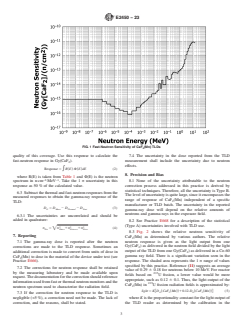
FIG. 1 Fast-Neutron Sensitivity of CaF (Mn) TLDs
quality of this coverage. Use this response to calculate the 7.4 The uncertainty in the dose reported from the
...
This document is not an ASTM standard and is intended only to provide the user of an ASTM standard an indication of what changes have been made to the previous version. Because
it may not be technically possible to adequately depict all changes accurately, ASTM recommends that users consult prior editions as appropriate. In all cases only the current version
of the standard as published by ASTM is to be considered the official document.
Designation: E2450 − 16 E2450 − 23
Standard Practice for
Application of CaF (Mn) Thermoluminescence Dosimeters in
Mixed Neutron-Photon Environments
This standard is issued under the fixed designation E2450; the number immediately following the designation indicates the year of
original adoption or, in the case of revision, the year of last revision. A number in parentheses indicates the year of last reapproval. A
superscript epsilon (´) indicates an editorial change since the last revision or reapproval.
1. Scope
1.1 This practice describes a procedure for correcting a CaF (Mn) thermoluminescence dosimeter (TLD) reading for its response
to neutrons during the irradiation. The neutron response may be subtracted from the total TLD response to give the gamma-ray
response. In fields with a large neutron contribution to the total response, this procedure may result in large uncertainties.
1.2 More precise experimental techniques may be applied if the uncertainty derived from this practice is larger than the level that
the user can accept. These more precise techniques are not discussed here. The references in Section 88 describe some of these
techniques.
1.3 This practice does not discuss effects on the TLD reading from neutron interactions with the material surrounding the TLD
and used to ensure a charged particle equilibrium. These effects will depend on the isotopic composition of the surrounding
material and its thickness, and on the incident neutron spectrum (1).
1.4 The values stated in SI units are to be regarded as standard.
1.5 This international standard was developed in accordance with internationally recognized principles on standardization
established in the Decision on Principles for the Development of International Standards, Guides and Recommendations issued
by the World Trade Organization Technical Barriers to Trade (TBT) Committee.
2. Referenced Documents
2.1 ASTM Standards:
E170 Terminology Relating to Radiation Measurements and Dosimetry
E666 Practice for Calculating Absorbed Dose From Gamma or X Radiation
E668 Practice for Application of Thermoluminescence-Dosimetry (TLD) Systems for Determining Absorbed Dose in
Radiation-Hardness Testing of Electronic Devices
E720 Guide for Selection and Use of Neutron Sensors for Determining Neutron Spectra Employed in Radiation-Hardness
Testing of Electronics
E721 Guide for Determining Neutron Energy Spectra from Neutron Sensors for Radiation-Hardness Testing of Electronics
This practice is under the jurisdiction of ASTM Committee E10 on Nuclear Technology and Applications and is the direct responsibility of Subcommittee E10.07 on
Radiation Dosimetry for Radiation Effects on Materials and Devices.
Current edition approved June 1, 2016Jan. 1, 2023. Published July 2016January 2023. Originally approved in 2005. Last previous edition approved in 20112016 as
E2450 – 11.E2450 – 16. DOI: 10.1520/E2450-16.10.1520/E2450-23.
The boldface numbers in parentheses refer to the list of references at the end of this standard.
For referenced ASTM standards, visit the ASTM website, www.astm.org, or contact ASTM Customer Service at service@astm.org. For Annual Book of ASTM Standards
volume information, refer to the standard’s Document Summary page on the ASTM website.
Copyright © ASTM International, 100 Barr Harbor Drive, PO Box C700, West Conshohocken, PA 19428-2959. United States
E2450 − 23
E722 Practice for Characterizing Neutron Fluence Spectra in Terms of an Equivalent Monoenergetic Neutron Fluence for
Radiation-Hardness Testing of Electronics
E1854 Practice for Ensuring Test Consistency in Neutron-Induced Displacement Damage of Electronic Parts
F1190 Guide for Neutron Irradiation of Unbiased Electronic Components
3. Terminology
3.1 Definitions:
3.1.1 absorbed dose—see Terminology E170.
3.1.2 exposure—see Terminology E170.
3.1.3 kerma—see Terminology E170.
3.1.4 linear energy transfer (LET)—the energy loss per unit distance as a charged particle passes through a material.
3.1.4.1 Discussion—
Electrons resulting from gamma-ray interactions in a material generally have a low LET. Heavy charged particles resulting from
neutron interactions with a material generally have a high LET.
3.1.5 neutron sensitivity m(E)—the ratio of the detector reading, that is, the effective neutron dose, to the neutron fluence. Thus,
M~E!
m~E! 5 (1)
Φ~E!
where:
Φ(E) = the neutron fluence, and
M(E) = the apparent dose (light output) in the TLD caused by neutrons of energy E.
4. Significance and Use
4.1 Electronic devices are typically tested for survivability device response to gamma radiation in pure gamma-ray fields. Testing
electronic device response against neutrons is more complex since there is invariably a gamma-ray component in addition to the
neutron field. The gamma-ray response of the electronic device is typically subtracted from the overall response to find the device
response to neutrons. This approach to the testing requires a determination of the gamma-ray exposure in the mixed field. To
enhance the neutron effects, the radiation field is sometimes selected to have as large a neutron component as possible.
4.2 CaF (Mn) TLDs are often used to monitor the gamma-ray dose in mixed neutron/gamma radiation fields. Since the dosimeters
are exposed along with the device under test to the mixed field, their response must be corrected for neutrons. In a field rich in
neutrons, the uncertainty in the interpretation of the TLD response grows. In fields with relatively few neutrons, the total TLD
response may be used to make a correction for gamma response of the device under test. Under this condition, the relative
uncertainty in the TLD neutron response is not likely to drive the overall uncertainty in the correction to the electronic device
response.
4.3 This practice gives a means of estimating the response of CaF (Mn) TLDs to neutrons. This neutron response is then
subtracted from the measured response to determine the TLD response due to gamma rays. The procedure has relatively high
uncertainty because the neutron response of CaF (Mn) TLDs may vary depending on the source of the material, and this procedure
is a generic calculation applicable to CaF (Mn) TLDs independent of their manufacturer/source. The neutron response given in this
practice is a summary of CaF (Mn) TLD responses reported in the literature. The associated uncertainty envelops the range of
results reported,reported and includes the variety of CaF (Mn) TLDs used as well as the uncertainties in the determination of the
neutron response as reported by various authors.
4.4 Should the user find the resulting uncertainties too large for his purposes, the neutron response of the particular CaF (Mn)
TLDs in use during the irradiations must be determined. This practice does not supply guidance on how to determine the neutron
response of a specific batch of TLDs.
E2450 − 23
4.5 Neutron effects on electronics under test are usually reported in terms of 1-MeV(Si) equivalent fluence ((Practice E722).
Neutron effects of TLDs, as discussed here, are reported in units of absorbed dose, since they are corrections to the gamma-ray
dose.
5. Exposure Procedure
5.1 Determine the neutron and gamma-ray environments. Calculate the relative neutron response of the TLDs. If this response is
negligible, document this maximum bound of the TLD response to the neutron environment. No further measurements are required
for the purpose of documenting the neutron sensitivity of the TLDs.
5.2 Expose the TLD along with the device under test (see Practice E1854 and Guide F1190). If there is a non-negligible
fast-neutron or thermal-neutron response, a fast-neutron monitor (for example, nickel) or thermal-neutron monitor (for example,
gold) must also be exposed with the device under test.
5.3 The neutron spectrum must be known (see Guides E720 and E721). This may be determined in a separate exposure. A neutron
monitor should be used on the irradiation along with the device under test (see Practice E1854). The device under test must not
significantly perturb the neutron spectrum.
5.4 Practice E668 provides information on the calibration and use of CaF (Mn) dosimeters for use in X-ray and gamma radiation
fields as well as for electrons in a designated energy range. The guidance in this standard is to adopt, for use in mixed
neutron-gamma radiation fields, these same calibration, handling, and read-out techniques for CaF (Mn) TLDs. In particular, the
CaF (Mn) TLDs that are used in a mixed neutron photon field should only be calibrated in a well-characterized gamma-only
radiation source. See Section 9 of Practice E668.
6. Neutron Sensitivity of CaF (Mn)
6.1 Thermal Neutrons:
6.1.1 Thermal neutron responses of CaF (Mn) ranging from 0.06 to 0.89 Gy[CaF (Mn)] (6 to 89 rad[CaF (Mn)](Mn)]) per
2 2 2
12 2
10 n ⁄cm are reported (2). The sensitivity may depend on several factors, one of the most important parameters being the
manganese doping of the TLD. The sensitivity may also be a function of dosimeter size, since the dosimeter surface-to-volume
ratio affects the portion of the charged particles bornborne within the TLD that deposit their dose outside the TLD. Horowitz (3)
12 2
reported a thermal neutron response of 0.34 Gy(CaF ) (34 rad[CaF ]) per 10 n/cm for CaF (Mn), with 2 % Mn by weight, for
2 2 2
TLD of dimensions 0.165 by 0.165 by 0.083 cm.
NOTE 1—Thermal neutron response is typically reported in terms of TLD response relative to a Co-60 equivalent Roentgen (R)/(n/cm ). For Co-60 decay
gamma rays, the conversion from Roentgen to Gy(air) is 0.00869 Gy(air)/R. For the Co-60 gamma energy, the conversion from Gy(air) to Gy(CaF ) is
0.975. Thus, in a Co-60 source, Gy(CaF ) is 0.0085 times the exposure in Roentgen.
12 2
6.1.2 A value of 0.45 6 0.45 Gy (45 6 45 rad) (1 σ) [CaF (Mn)] per 10 thermal n/cm shall be used for CaF (Mn) TLDs.
2 2
NOTE 2—The variation in measured thermal neutron sensitivities for CaF (Mn) is as large as the average sensitivity.
6.2 Fast Neutrons—A recommended energy-dependent fast-neutron response is displayed in Fig. 1 and listed in Table 1. For the
purpose of this practice, the fast-neutron response is the response due to a neutron with an energy above 0.4 eV. Table 1 is the
Rinard (4) response function multiplied by 1.2. The factor of 1.2 was used to scale the response function to give an optimal fit to
a variety of measured data. See Fig. 2 for the quality of this coverage. Use this response to calculate the fast neutron fast-neutron
response in Gy(CaF ).
Response 5 R E ·Φ E dE (2)
* ~ ! ~ !
-2–2 -1–1
where R(E) is taken from Table 1 and Φ(E) is the neutron spectrum in n·cm ·MeV . Take the 1 σ uncertainty in this response
as 50 % of the calculated value.
E2450 − 23
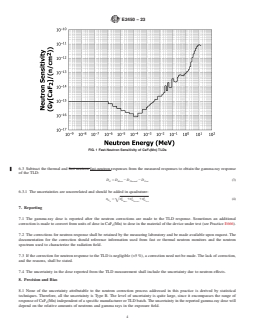
FIG. 1 Fast-Neutron Sensitivity of CaF (Mn) TLDs
6.3 Subtract the thermal and fast neutron fast-neutron responses from the measured responses to obtain the gamma-ray response
of the TLD:
D 5 D 2 D 2 D (3)
G Meas Thermal Fast
6.3.1 The uncertainties
...