

ASTM E3376-23
(Practice)Standard Practice for Calibration and Usage of Germanium Detectors in Radiation Metrology for Reactor Dosimetry
General Information
- Abstract
SIGNIFICANCE AND USE
5.1 High-purity germanium detectors are used for precise gamma-ray spectroscopy for the purpose of determining radioactivity in materials. Typical applications include monitoring, mapping, and characterization of neutron energy spectra in nuclear reactors or isotopic fission sources.
SCOPE
1.1 This standard establishes techniques for calibration, usage, and performance testing of germanium detectors for the measurement of gamma-ray emission rates of radionuclides in radiation metrology for reactor dosimetry. The practice is applicable only to samples of small size, approximating to point sources. It covers the energy and full-energy peak efficiency calibration as well as the determination of gamma-ray energies in the 0.06 MeV to 2 MeV energy region and is designed to yield gamma-ray emission rates with an uncertainty of ±3 % (see Note 1). This technique applies to measurements that do not involve overlapping peaks, and in which peak-to-continuum considerations are not important.
Note 1: Uncertainty U is given at the 68 % confidence level; that is, where δi are the estimated maximum systematic uncertainties, and σi are the random uncertainties at the 68 % confidence level. Other techniques of error analysis are in use (1, 2).2
1.2 Additional information on the setup, calibration, and quality control for radiometric detectors and measurements is given in IEEE/ANSI N42.14 and in Guide C1402 and Practice D7282.
1.3 The values stated in SI units are generally to be regarded as standard. The rad is an exception.
1.4 This standard does not purport to address all of the safety concerns, if any, associated with its use. It is the responsibility of the user of this standard to establish appropriate safety, health, and environmental practices and determine the applicability of regulatory limitations prior to use.
1.5 This international standard was developed in accordance with internationally recognized principles on standardization established in the Decision on Principles for the Development of International Standards, Guides and Recommendations issued by the World Trade Organization Technical Barriers to Trade (TBT) Committee.
- Status
- Published
- Publication Date
- 14-Feb-2023
- Technical Committee
- E10 - Nuclear Technology and Applications
- Drafting Committee
- E10.05 - Nuclear Radiation Metrology
Overview
ASTM E3376-23 provides a comprehensive standard practice for the calibration and use of high-purity germanium (HPGe) detectors in radiation metrology, specifically for reactor dosimetry. HPGe detectors are essential for precise gamma-ray spectroscopy, enabling accurate measurement of radioactivity in materials-an important function for monitoring, mapping, and characterizing neutron energy spectra within nuclear reactors and isotopic fission sources.
This standard describes methodologies for calibrating, testing performance, and utilizing germanium detectors for quantifying gamma-ray emission rates from radionuclides. It applies primarily to small samples approximating point sources and covers calibration for both energy and efficiency across the 0.06 MeV to 2 MeV gamma-ray energy range. The practice is designed to ensure a measurement uncertainty of ±3% under typical conditions.
Key Topics
Gamma-Ray Spectroscopy with HPGe Detectors
- Precise identification and quantification of radionuclides using high-resolution, full-energy peak analysis.
- Suitable for point-like sources; not intended for measurements with overlapping peaks or significant peak-to-continuum ratio considerations.
Calibration Procedures
- Techniques for channel-to-energy calibration, determination of full-energy peak efficiency, and application of calibration curves/functions for interpolating efficiencies between calibration points.
- Use of certified and national radioactivity standard sources for accuracy and traceability.
Performance Testing and Quality Control
- Regular system checks including energy calibration, efficiency verification, and count-rate reproducibility.
- Guidance on background correction, dead time analysis, and correlated photon summing, ensuring reliable and repeatable measurements.
Uncertainty Analysis
- Identification and calculation of systematic and random uncertainties, following internationally recognized metrology guides.
- Emphasis on combining uncertainties from different sources (calibration, positioning, counting, etc.) for transparent error reporting.
Applications
Reactor Dosimetry
- Characterization of neutron fields and quantification of radioisotope production rates in nuclear reactors or neutron sources.
- Measurement of activation products in structural materials, fuels, or dosimetry foils.
Environmental and Safety Monitoring
- Mapping radioactive contamination and verifying compliance with safety standards at nuclear sites.
- Assessing material radioactivity for decommissioning, waste characterization, and clearance.
Nuclear Research and Development
- Fundamental studies in nuclear physics, material science, and reactor engineering that require high-precision gamma spectroscopy.
- Supporting research reactor operations, benchmarking, and validation of neutron transport calculations.
Regulatory Compliance and Traceability
- Supporting the documentation required for regulatory audits, inspections, and quality assurance programs in the nuclear industry.
- Ensures that measurement results are defensible, reproducible, and traceable to national or international standards.
Related Standards
To facilitate the correct application and enhance the reliability of HPGe detector-based measurements, users should also be familiar with the following standards and guides:
- ASTM C1402: Guide for High-Resolution Gamma-Ray Spectrometry of Soil Samples
- ASTM D7282: Practice for Setup, Calibration, and Quality Control of Instruments Used for Radioactivity Measurements
- ASTM E170: Terminology Relating to Radiation Measurements and Dosimetry
- IEEE/ANSI N42.14: Calibration and Usage of Germanium Detectors Spectrometers for Measurement of Gamma-Ray Emission Rates
- Guide to the Expression of Uncertainty in Measurement (GUM)
- Relevant World Trade Organization and ISO guidelines concerning metrology and uncertainty analysis
Summary
ASTM E3376-23 sets forth standardized practices for calibration and application of germanium detectors in radiation metrology-a foundational reference for professionals in reactor dosimetry, nuclear research, and radiological safety. By adhering to these procedures, organizations ensure accurate, consistent, and traceable gamma-ray measurements, supporting both operational excellence and regulatory compliance in the nuclear sector.
Keywords: calibration of germanium detectors, HPGe detector calibration, radiation metrology, reactor dosimetry, gamma-ray spectroscopy, nuclear reactor monitoring, radioactivity measurement, uncertainty analysis, quality control, ASTM E3376-23.
Relations
- Effective Date
- 01-Jun-2017
- Effective Date
- 01-Jun-2017
- Effective Date
- 01-Oct-2016
- Effective Date
- 15-Feb-2016
- Effective Date
- 01-Sep-2015
- Effective Date
- 15-Mar-2015
- Effective Date
- 15-Oct-2014
- Effective Date
- 01-Sep-2014
- Effective Date
- 01-Jun-2010
- Effective Date
- 15-Aug-2009
- Effective Date
- 15-Jun-2009
- Refers
ASTM C1402-04(2009) - Standard Guide for High-Resolution Gamma-Ray Spectrometry of Soil Samples - Effective Date
- 01-Jun-2009
- Effective Date
- 01-Nov-2008
- Effective Date
- 01-Jun-2008
- Effective Date
- 01-May-2008
Get Certified
Connect with accredited certification bodies for this standard

BSMI (Bureau of Standards, Metrology and Inspection)
Taiwan's standards and inspection authority.
Sponsored listings
Frequently Asked Questions
ASTM E3376-23 is a standard published by ASTM International. Its full title is "Standard Practice for Calibration and Usage of Germanium Detectors in Radiation Metrology for Reactor Dosimetry". This standard covers: SIGNIFICANCE AND USE 5.1 High-purity germanium detectors are used for precise gamma-ray spectroscopy for the purpose of determining radioactivity in materials. Typical applications include monitoring, mapping, and characterization of neutron energy spectra in nuclear reactors or isotopic fission sources. SCOPE 1.1 This standard establishes techniques for calibration, usage, and performance testing of germanium detectors for the measurement of gamma-ray emission rates of radionuclides in radiation metrology for reactor dosimetry. The practice is applicable only to samples of small size, approximating to point sources. It covers the energy and full-energy peak efficiency calibration as well as the determination of gamma-ray energies in the 0.06 MeV to 2 MeV energy region and is designed to yield gamma-ray emission rates with an uncertainty of ±3 % (see Note 1). This technique applies to measurements that do not involve overlapping peaks, and in which peak-to-continuum considerations are not important. Note 1: Uncertainty U is given at the 68 % confidence level; that is, where δi are the estimated maximum systematic uncertainties, and σi are the random uncertainties at the 68 % confidence level. Other techniques of error analysis are in use (1, 2).2 1.2 Additional information on the setup, calibration, and quality control for radiometric detectors and measurements is given in IEEE/ANSI N42.14 and in Guide C1402 and Practice D7282. 1.3 The values stated in SI units are generally to be regarded as standard. The rad is an exception. 1.4 This standard does not purport to address all of the safety concerns, if any, associated with its use. It is the responsibility of the user of this standard to establish appropriate safety, health, and environmental practices and determine the applicability of regulatory limitations prior to use. 1.5 This international standard was developed in accordance with internationally recognized principles on standardization established in the Decision on Principles for the Development of International Standards, Guides and Recommendations issued by the World Trade Organization Technical Barriers to Trade (TBT) Committee.
SIGNIFICANCE AND USE 5.1 High-purity germanium detectors are used for precise gamma-ray spectroscopy for the purpose of determining radioactivity in materials. Typical applications include monitoring, mapping, and characterization of neutron energy spectra in nuclear reactors or isotopic fission sources. SCOPE 1.1 This standard establishes techniques for calibration, usage, and performance testing of germanium detectors for the measurement of gamma-ray emission rates of radionuclides in radiation metrology for reactor dosimetry. The practice is applicable only to samples of small size, approximating to point sources. It covers the energy and full-energy peak efficiency calibration as well as the determination of gamma-ray energies in the 0.06 MeV to 2 MeV energy region and is designed to yield gamma-ray emission rates with an uncertainty of ±3 % (see Note 1). This technique applies to measurements that do not involve overlapping peaks, and in which peak-to-continuum considerations are not important. Note 1: Uncertainty U is given at the 68 % confidence level; that is, where δi are the estimated maximum systematic uncertainties, and σi are the random uncertainties at the 68 % confidence level. Other techniques of error analysis are in use (1, 2).2 1.2 Additional information on the setup, calibration, and quality control for radiometric detectors and measurements is given in IEEE/ANSI N42.14 and in Guide C1402 and Practice D7282. 1.3 The values stated in SI units are generally to be regarded as standard. The rad is an exception. 1.4 This standard does not purport to address all of the safety concerns, if any, associated with its use. It is the responsibility of the user of this standard to establish appropriate safety, health, and environmental practices and determine the applicability of regulatory limitations prior to use. 1.5 This international standard was developed in accordance with internationally recognized principles on standardization established in the Decision on Principles for the Development of International Standards, Guides and Recommendations issued by the World Trade Organization Technical Barriers to Trade (TBT) Committee.
ASTM E3376-23 is classified under the following ICS (International Classification for Standards) categories: 17.240 - Radiation measurements. The ICS classification helps identify the subject area and facilitates finding related standards.
ASTM E3376-23 has the following relationships with other standards: It is inter standard links to ASTM C1402-17, ASTM E170-17, ASTM E170-16a, ASTM E170-16, ASTM E170-15a, ASTM E170-15, ASTM E170-14a, ASTM E170-14, ASTM E170-10, ASTM E170-09a, ASTM E170-09, ASTM C1402-04(2009), ASTM E170-08d, ASTM E170-08c, ASTM E170-08b. Understanding these relationships helps ensure you are using the most current and applicable version of the standard.
ASTM E3376-23 is available in PDF format for immediate download after purchase. The document can be added to your cart and obtained through the secure checkout process. Digital delivery ensures instant access to the complete standard document.
Standards Content (Sample)
This international standard was developed in accordance with internationally recognized principles on standardization established in the Decision on Principles for the
Development of International Standards, Guides and Recommendations issued by the World Trade Organization Technical Barriers to Trade (TBT) Committee.
Designation: E3376 − 23
Standard Practice for
Calibration and Usage of Germanium Detectors in Radiation
Metrology for Reactor Dosimetry
This standard is issued under the fixed designation E3376; the number immediately following the designation indicates the year of
original adoption or, in the case of revision, the year of last revision. A number in parentheses indicates the year of last reapproval. A
superscript epsilon (´) indicates an editorial change since the last revision or reapproval.
1. Scope 2. Referenced Documents
1.1 This standard establishes techniques for calibration,
2.1 ASTM Standards:
usage, and performance testing of germanium detectors for the C1402 Guide for High-Resolution Gamma-Ray Spectrom-
measurement of gamma-ray emission rates of radionuclides in
etry of Soil Samples
radiation metrology for reactor dosimetry. The practice is D7282 Practice for Setup, Calibration, and Quality Control
applicable only to samples of small size, approximating to
of Instruments Used for Radioactivity Measurements
point sources. It covers the energy and full-energy peak E170 Terminology Relating to Radiation Measurements and
efficiency calibration as well as the determination of gamma-
Dosimetry
ray energies in the 0.06 MeV to 2 MeV energy region and is 4
2.2 IEEE/ANSI Standard:
designed to yield gamma-ray emission rates with an uncer-
N42.14 Calibration and Usage of Germanium Detectors
tainty of 63 % (see Note 1). This technique applies to
Spectrometers for Measurement of Gamma-Ray Emission
measurements that do not involve overlapping peaks, and in
Rates of Radionuclides
which peak-to-continuum considerations are not important.
NOTE 1—Uncertainty U is given at the 68 % confidence level; that is, 3. Terminology
2 2
=
U5 Σσ 11⁄3Σδ where δ are the estimated maximum systematic
i i i 3.1 Definitions:
uncertainties, and σ are the random uncertainties at the 68 % confidence
i
3.1.1 certified radioactivity standard source—a calibrated
level. Other techniques of error analysis are in use (1, 2).
radioactive source, with stated uncertainties, whose calibration
1.2 Additional information on the setup, calibration, and
is certified by the source supplier as traceable to an interna-
quality control for radiometric detectors and measurements is
tional or national standards laboratory.
given in IEEE/ANSI N42.14 and in Guide C1402 and Practice
3.1.2 check source—a radioactivity source, not necessarily
D7282.
calibrated, that is used to confirm the continuing satisfactory
1.3 The values stated in SI units are generally to be regarded
operation of an instrument.
as standard. The rad is an exception.
3.1.3 correlated photon summing—the simultaneous detec-
1.4 This standard does not purport to address all of the
tion of two or more photons originating from a single nuclear
safety concerns, if any, associated with its use. It is the
disintegration.
responsibility of the user of this standard to establish appro-
3.1.4 dead time—the time after a triggering pulse during
priate safety, health, and environmental practices and deter-
which the system is unable to retrigger.
mine the applicability of regulatory limitations prior to use.
1.5 This international standard was developed in accor- 3.1.5 FWHM—(full width at half maximum) the full width
of a gamma-ray peak distribution measured at half the maxi-
dance with internationally recognized principles on standard-
ization established in the Decision on Principles for the mum ordinate above the continuum.
Development of International Standards, Guides and Recom-
3.1.6 FWTM—(full width at tenth maximum) the full width
mendations issued by the World Trade Organization Technical
of a gamma-ray peak distribution measured at one tenth of the
Barriers to Trade (TBT) Committee.
maximum ordinate above the continuum.
This practice is under the jurisdiction of ASTM Committee E10 on Nuclear
Technology and Applications and is the direct responsibility of Subcommittee For referenced ASTM standards, visit the ASTM website, www.astm.org, or
E10.05 on Nuclear Radiation Metrology. contact ASTM Customer Service at service@astm.org. For Annual Book of ASTM
Current edition approved Feb. 15, 2023. Published April 2023. DOI: 10.1520/ Standards volume information, refer to the standard’s Document Summary page on
E3376-23. the ASTM website.
2 4
The boldface numbers in parentheses refer to a list of references at the end of Available from Institute of Electrical and Electronics Engineers, Inc. (IEEE),
this standard. 445 Hoes Ln., Piscataway, NJ 08854-4141, http://www.ieee.org.
Copyright © ASTM International, 100 Barr Harbor Drive, PO Box C700, West Conshohocken, PA 19428-2959. United States
E3376 − 23
3.1.7 national radioactivity standard source—a calibrated 7. Preparation of Apparatus
radioactive source prepared and distributed as a standard
7.1 Follow the manufacturer’s instructions for setting up
reference material by an international or national standards
and preliminary testing of the equipment. Observe all of the
laboratory.
manufacturer’s limitations and cautions. All tests described in
3.1.7.1 Discussion—In the United States, the national stan-
Section 12 should be performed before starting the
dards laboratory is the U.S. National Institute of Standards and
calibrations, and all corrections made when required. A check
Technology (NIST).
source may be used to check the stability of the system at least
3.1.8 resolution, gamma ray—the measured FWHM, after
before and after the calibration. In cases where electronic
background subtraction, of a gamma-ray peak distribution,
settings are adjustable by the user, it is essential that all the
expressed in units of energy.
settings be the same for calibration and subsequent use.
3.2 Acronyms:
8. Calibration Procedure
3.2.1 GUM—the GUM, Guide to the Expression of Uncer-
tainty in Measurement (2).
8.1 Energy Calibration—Determine the energy calibration
3.2.2 ROI—region of interest.
(channel number versus gamma-ray energy) of the detector
system at a fixed gain by determining the channel numbers
3.3 For other relevant terms, see Terminology E170.
corresponding to full-energy peak centroids from gamma rays
NOTE 2—The terms “standard source” and “radioactivity standard” are
emitted over the full-energy range of interest from multipeaked
general terms used to refer to the sources and standards of National
or multinuclide radioactivity sources, or both. Determine
Radioactivity Standard Source and Certified Radioactivity Standard
nonlinearity correction factors as necessary (3).
Source.
8.1.1 Using suitable gamma-ray compilations (4, 5), plot or
4. Summary of Practice fit to an appropriate mathematical function the values for peak
centroid (in channels) versus gamma energy.
4.1 This practice describes the calibration and usage of
germanium detectors for measurement of gamma-ray emission
8.2 Effıciency Calibration:
rates of radionuclides in radiation metrology for nuclear
8.2.1 Accumulate an energy spectrum using calibrated ra-
reactors. The practice is intended for use by knowledgeable
dioactivity standards at a desired and reproducible source-to-
persons who are responsible for the development of correct
detector distance. Set the ROI for each peak of interest to
procedures for the calibration and usage of germanium detec-
include at least all channels within the FWTM of the peak. At
tors.
least 20 000 net counts should be accumulated in each full-
energy gamma-ray peak of interest using National or Certified
4.2 A source emission rate for a gamma ray of a selected
Radioactivity Standard Sources, or both (see 12.1, 12.5, and
energy is determined from the counting rate in a full-energy
12.6).
peak of a spectrum, together with the measured efficiency of
the spectrometry system for that energy and source location. It 8.2.2 For each standard source, obtain the net count rate
is usually not possible to measure the efficiency directly with (total count rate of region of interest minus the Compton
emission rate standards at all desired energies. Therefore, a continuum count rate and, if applicable, the ambient back-
curve or function is constructed to permit interpolation be- ground count rate within the same region) in the full-energy
tween available calibration points. gamma-ray peak, or peaks, using a method that provides
consistent results (see 12.2, 12.3, and 12.4).
5. Significance and Use
8.2.3 Correct the standard source emission rate for decay to
the date and time of the count in 8.2.2.
5.1 High-purity germanium detectors are used for precise
gamma-ray spectroscopy for the purpose of determining radio-
8.2.4 Calculate the full-energy peak efficiency, E , as fol-
f
activity in materials. Typical applications include monitoring, lows:
mapping, and characterization of neutron energy spectra in
N
p
E 5 (1)
nuclear reactors or isotopic fission sources.
f
N
γ
6. Apparatus
where:
E = full-energy peak efficiency (counts per gamma ray
6.1 A typical gamma-ray spectrometry system used in
f
emitted),
reactor dosimetry consists of a germanium crystal, cooling
N = net gamma-ray count in the full-energy peak (counts
system (cryogenic or electronic), power supply, and either p
per second live time) (Note 3) (see 8.2.2), and
digital or analog signal processing. When gamma rays interact
N = gamma-ray emission rate (gamma rays per second).
γ
with the detector, they produce pulses which must be analyzed
NOTE 3—Any other unit of time is acceptable provided it is used
and counted. Digital processing is often integrated into the
consistently throughout.
detector system with fast analog-to-digital converter, math-
ematical shaping, signal, and amplification followed by the 8.2.5 There are many ways of calculating the net gamma-
binning of the pulses. In analog systems, signal processing ray count. This practice specifies a valid, common technique,
takes place in individual modules. In both cases, the resultant applicable when there are no interferences from photo peaks
channelized data are collected and stored electronically for within an energy range at least equal to the FWTM adjacent to
further analysis. the peak of interest.
E3376 − 23
adjacent to it or have the same size gap between the two regions on both
8.2.5.1 Other net peak area calculation techniques used for
sides. A different equation must be used if the gaps are of a different size.
single peaks when there is interference from adjacent peaks are
not considered in this practice. Other techniques are 8.2.5.5 The peak background, I, is calculated from a sepa-
acceptable, if they are used in a consistent manner and have rate background measurement using the following equation:
been verified to provide accurate results.
T
s
I 5 I (5)
8.2.5.2 Using a simple model, the net peak area for a single
b
T
b
peak can be calculated as follows:
where:
N 5 G 2 B 2 I (2)
A s
T = live time of the sample spectrum,
s
where:
T = live time of the background spectrum, and
b
I = net background peak area in the background spectrum.
G = gross count in the peak region of interest (ROI) in the
b
s
sample spectrum,
8.2.5.6 If a separate background measurement exists, the net
B = continuum, and
background peak area is calculated from the following equa-
I = number of background counts in the region of interest
tion:
(if there is no background peak, or if a background
I 5 G 2 B (6)
b b b
subtraction is not performed, I = 0).
where:
8.2.5.3 The net gamma-ray count, N , is related to the net
p
peak area as follows: G = sum of gross counts in the background peak region (of
b
the background spectrum), and
N 5 N ⁄ T (3)
p A s
B = continuum counts in the background peak region (of
b
where:
the background spectrum).
T = spectrum live time.
s
8.2.5.7 The continuum counts in the background spectrum
8.2.5.4 The continuum, B, is calculated from the sample are calculated from the following equation:
spectrum using the following equation (see Fig. 1):
N
B 5 ~B 1 B ! (7)
b 1b 2b
2n
N
B 5 ~B 1 B ! (4)
1s 2s
2n
where:
where:
N = number of channels in the background peak ROI,
n = number of continuum channels on each side (assumed
N = number of channels in the peak ROI,
to be the same on both sides),
n = number of continuum channels on each side,
B = sum of counts in the low-energy continuum region in
B = sum of counts in the low-energy continuum region in
1b
1s
the background spectrum, and
the sample spectrum, and
B = sum of counts in the high-energy continuum region in
B = sum of counts in the high-energy continuum region in
2b
2s
the sample spectrum. the background spectrum.
NOTE 4—These equations assume that the channels that are used to
8.2.5.8 If the standard source is calibrated in units of
calculate the continuum do not overlap with the peak ROI, and are
Becquerels, the gamma-ray emission rate is given by:
N 5 AP (8)
γ γ
For simplicity of these calculations, n is assumed to be the same on both sides
where:
of the peak. If the continuum is calculated using a different number of channels on
A = number of nuclear decays per second, and
the left of the peak than on the right of the peak, different equations must be used.
P = probability per nuclear decay for the gamma ray (4, 5).
γ
8.2.6 In cases where a calibrated standard source is avail-
able for a particular isotope that is also used in an unknown
sample, the measured efficiency for that isotope is used directly
for the unknown.
8.2.7 Plot, or fit to an appropriate mathematical function,
the values for full-energy peak efficiency (determined in 8.2.4)
versus gamma-ray energy (see 12.5) (6-14).
9. Measurement of Gamma-Ray Emission Rate of the
Sample
9.1 Place the sample to be measured at the source-to-
detector distance used for efficiency calibration (see 12.6).
9.1.1 Accumulate the gamma-ray spectrum, recording the
count duration.
9.1.2 Determine the energy of the gamma rays present by
use of the energy calibration obtained under and at the same
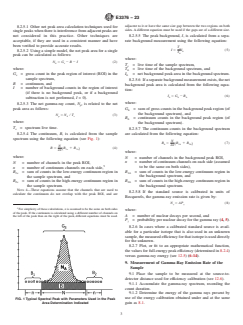
FIG. 1 Typical Spectral Peak with Parameters Used in the Peak
Area Determination Indicated gain as 8.1.
E3376 − 23
9.1.3 Obtain the net count rate in each full-energy gamma- health or safety is involved, more frequent checking may be
ray peak of interest as described in 8.2.2 using the same region appropriate. A range of typical frequencies for noncritical
of interest and continuum regions as were used in the efficiency applications is given below for each test.
measurement. In cases where the width of the region of interest 10.1.1 Check the system energy calibration (typically daily
varies with energy, use a consistent method for choosing the to weekly), using two or more gamma rays whose energies
regions. span at least 50 % of the calibration range of interest. Correct
9.1.4 Determine the full-energy peak efficiency for each the energy calibration, if necessary. Sample counting must be
energy of interest from the curve or function obtained in 8.2.5. halted or redone if the system energy calibration is found to be
9.1.5 Calculate the number of gamma rays emitted per unit inadequate.
live time for each full-energy peak as follows: 10.1.2 Check the system count rate reproducibility (typi-
cally weekly to monthly) using at least one long-lived radio-
N
p
N 5 (9)
nuclide. Correct for radioactive decay if significant decay
γ
E
f
(>1 %) has occurred between checks.
9.1.5.1 When calculating a nuclear transmutation rate from
10.1.3 Check the system resolution (typically weekly to
a gamma-ray emission rate determined for a specific
monthly) using at least one gamma-ray emitting radionuclide.
radionuclide, a knowledge of the gamma-ray probability per
10.1.4 Check the efficiency calibration (typically monthly to
decay is required (4, 5), that is,
yearly) using a National or Certified Radioactivity Standard (or
Standards) emitting gamma rays with energies spanning the
N
γ
A 5 (10)
intended range of use.
P
γ
10.2 Results of all performance checks should be recorded
9.1.6 Calculate the net peak area statistical uncertainty as
in such a way that deviations from the norm will be readily
follows:
observable. Appropriate action, which could include
2 2
N T
confirmation, repair, and recalibration as required, should be
s
S 5 G 1 B 1 B 1 S (11)
ΠS D ~ ! S D ~ !
NA s 1s 2s Ib
2n T
taken when the measured values fall outside the predetermined
b
limits.
where:
10.2.1 In addition, the above performance checks (see 10.1)
N are recommended after an event (such as power failures or
S 5 G 1 B 1 B (12)
ΠS D ~ !
Ib b 1b 2b
2n repairs) which might lead to potential changes in the system.
where:
11. Sources of Uncertainty
S = net peak area statistical uncertainty (at 1σ confidence
NA
11.1 Other than Poisson distribution uncertainties, the prin-
level),
cipal sources of uncertainty (and typical magnitudes) in this
G = gross counts in the peak ROI of the sample spectrum,
s
technique are:
G = gross counts in the peak ROI of the background
b
11.1.1 The calibration of the standard source, including
spectrum,
uncertainties introduced in using a standard radioactivity
N = number of channels in the peak ROI,
solution, or aliquot thereof, to prepare another (working)
n = number of continuum channels on each side (assumed
standard for counting, typically 61 to 2 % (1S %).
to be the same on both sides for these equations to be
11.1.2 The reproducibility in the determination of net full-
valid),
energy peak counts, typically 62 % (1S %).
B = continuum counts left of the peak ROI in the sample
1s
11.1.3 The reproducibility of the positioning of the source
spectrum,
B = continuum counts right of the peak ROI in the sample relative to the detector and the source geometry, typically
2s
spectrum, 61 % (1S %).
B = continuum counts left of the peak ROI in the back- 11.1.4 The accuracy with which the full-energy peak effi-
1b
ground spectrum,
ciency at a given energy can be determined from the calibration
B = continuum counts right of the peak ROI in the
curve or function, typically 61.5 % (1S %).
2b
background spectrum,
11.1.5 The accuracy of the live-time determinations and
T = live time of the sample spectrum, and
s pile-up corrections, typically 61 % (1S %).
T = live time of the background spectrum.
b
12. Precautions and Tests
9.1.6.1 If there is no separate background measurement, or
if no background subtract is performed, S = 0.
12.1 Random Summing and Dead Time:
Ib
9.1.7 For other sources of uncertainty, see Section 11.
12.1.1 Precaution—The shape and length of pulses used can
cause a reduction in peak areas due to random summing of
10. Performance Testing
pulses at rates of over a few hundred per second (15, 16).
10.1 System tests should be performed on a regularly Sample count rates should be low enough to reduce the effect
scheduled basis (or, if infrequently used, preceding the use of of random summing of gamma rays to a level where it may be
the system). The frequency for performing each test will neglected, or one should use pile-up rejectors and live-time
depend on the stability of the particular system as well as on circuits, or reference pulser techniques of verified accuracy at
the accuracy and reliability of the required results. Where the required rates (17-23).
E3376 − 23
NOTE 5—Use of percent dead time to indicate whether random
calculations employed by the analysis technique to be tested to
summing can be neglected may not be appropriate.
correct for dead time losses, pile-up, and background contri-
butions.
12.1.2 Test:
12.1.2.1 Accumulate a Co spectrum with a total count rate 12.2.2.6 Ideally, the deviations of the 12.2.2.5 net peak
of less than 1000 counts per second until at least 25 000 counts
areas from the 12.2.2.2 values will be no more than 2 % 1σ
are collected in the 1.332 MeV and 1.173 MeV full-energy (67 % confidence level) for the evaluation technique to be
peaks. A mixed isotopic point source may be used. Record the
acceptable.
counting live time. The source may be placed at any convenient
12.3 Correlated Photon Summing Correction:
distance from the detector.
60 12.3.1 Correlated photon summing corrections are not
12.1.2.2 Evaluate the activity of Co utilizing first the full
needed when an instrument is calibrated using a standard
photon peak area at 1.332 MeV and then the area at
source of the same radioisotope as the unknown sample.
1.173 MeV, including any techniques employed to correct for
12.3.2 If an energy-dependent efficiency calibration is per-
pile-up and dead time losses.
formed at a large enough source-detector distance, correlated
12.1.2.3 Without moving the Co source, introduce a
photon summing corrections may not be needed for sources
second source, such as Co, having no gamma rays emitted
that produce multiple photons in cascade. In such a case,
with an energy greater than 0.662 MeV. Position the added
isotope-specific calibrations can be obtained at closer distances
source so that the highest count rate used for gamma-ray
by a ratio method using a check source of each isotope at large
emission rate determinations has been achieved.
and small distance.
12.1.2.4 Erase the first spectrum and accumulate another
12.3.3 When another gamma ray or X-ray is emitted in
spectrum for the same length of time as in 12.1.2.1. The same
cascade with the gamma ray being measured, in many cases a
live time may be used, if the use of live time constitutes at least
multiplicative correlated summing correction, C, must be
a part of the correction technique.
applied to the net full-energy-peak count rate if the sample-to-
12.1.2.5 Evaluate the activity of Co utilizing first the full
detector distance less than 1.5 times the diameter of the
photon peak area at 1.332 MeV and then the area at
detector. The correction factor is expressed as:
1.173 MeV, including any techniques employed to correct for
pile-up and dead time losses. For the correction technique to be
C 5 (13)
n
acceptable, the resolution must not have increased beyond the
Π 1 2 q ε
~ !
t i i
range of the technique and the corrected activity will differ
where:
from those in 12.1.2.2 by no more than 2 % 1σ (67 %
C = correlated summing correction to be applied to the
confidence level).
measured count rate,
12.2 Peak Evaluation:
n = number of gamma or X-rays in correlation with gamma
12.2.1 Precaution—Many techniques (24-29) exist for
ray of interest,
specifying the full-energy peak area and removing the contri-
i = identification of correlated photon,
bution of any continuum under the peak. Within the scope of
q = fraction of the gamma ray of interest in correlation with
i
this standard, various techniques give equivalent results if they
the ith photon, and
are applied consistently to the calibration standards and the
ɛ = total detection efficiency of ith correlated photon.
i
sources to be measured, and if they are not sensitive to
12.3.3.1 Correlated summing correction factors for the pri-
moderate amounts of underlying continuum. A test of the latter
60 88 46
mary gamma rays of radionuclides Co, Y, and Sc are
point is a recommended part of this technique.
approximately 1.09 and 1.03 for a 65 cm detector at 1 cm and
12.2.2 Test:
at 4 cm sample-to-detector distances, respectively, and ap-
12.2.2.1 Accumulate a spectrum from a mixed isotopic
proximately 1.01 for a 100 cm detector at a 10 cm sample-
point source until at least 20 000 net counts are recorded in the
to-detector distance. The q must be obtained from the nuclear
i
peaks of interest lower in energy than 0.662 MeV. The source
decay scheme, while the ε , which are slowly varying functions
i
may be placed at any convenient distance from the detector.
of the energy, can be measured or calculated (30-32).
12.2.2.2 Determine the net peak areas of the peaks chosen in
12.3.4
...