

ASTM D7691-23
(Test Method)Standard Test Method for Multielement Analysis of Crude Oils Using Inductively Coupled Plasma Atomic Emission Spectrometry (ICP-AES)
General Information
- Abstract
SIGNIFICANCE AND USE
5.1 Most often determined trace elements in crude oils are nickel and vanadium, which are usually the most abundant; however, as many as 45 elements in crude oils have been reported. Knowledge of trace elements in crude oil is important because they can have an adverse effect on petroleum refining and product quality. These effects can include catalyst poisoning in the refinery and excessive atmospheric emission in combustion of fuels. Trace element concentrations are also useful in correlating production from different wells and horizons in a field. Elements such as iron, arsenic, and lead are catalyst poisons. Vanadium compounds can cause refractory damage in furnaces, and sodium compounds have been found to cause superficial fusion on fire brick. Some organometallic compounds are volatile which can lead to the contamination of distillate fractions, and a reduction in their stability or malfunctions of equipment when they are combusted.
5.2 The value of crude oil can be determined, in part, by the concentrations of nickel, vanadium, and iron.
5.3 Inductively coupled plasma-atomic emission spectrometry (ICP-AES) is a widely used technique in the oil industry. Its advantages over traditional atomic absorption spectrometry (AAS) include greater sensitivity, freedom from molecular interferences, wide dynamic range, and multi-element capability. See Practice D7260.
SCOPE
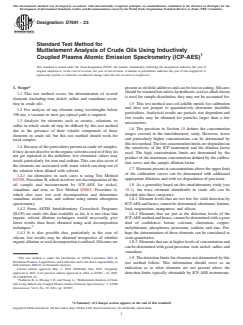
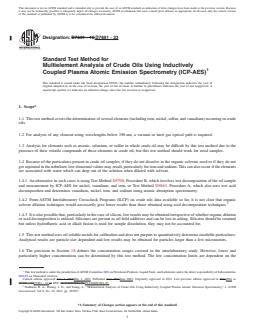
1.1 This test method covers the determination of several elements (including iron, nickel, sulfur, and vanadium) occurring in crude oils.
1.2 For analysis of any element using wavelengths below 190 nm, a vacuum or inert gas optical path is required.
1.3 Analysis for elements such as arsenic, selenium, or sulfur in whole crude oil may be difficult by this test method due to the presence of their volatile compounds of these elements in crude oil; but this test method should work for resid samples.
1.4 Because of the particulates present in crude oil samples, if they do not dissolve in the organic solvents used or if they do not get aspirated in the nebulizer, low elemental values may result, particularly for iron and sodium. This can also occur if the elements are associated with water which can drop out of the solution when diluted with solvent.
1.4.1 An alternative in such cases is using Test Method D5708, Procedure B, which involves wet decomposition of the oil sample and measurement by ICP-AES for nickel, vanadium, and iron, or Test Method D5863, Procedure A, which also uses wet acid decomposition and determines vanadium, nickel, iron, and sodium using atomic absorption spectrometry.
1.4.2 From ASTM Interlaboratory Crosscheck Programs (ILCP) on crude oils data available so far, it is not clear that organic solvent dilution techniques would necessarily give lower results than those obtained using acid decomposition techniques.2
1.4.3 It is also possible that, particularly in the case of silicon, low results may be obtained irrespective of whether organic dilution or acid decomposition is utilized. Silicones are present as oil field additives and can be lost in ashing. Silicates should be retained but unless hydrofluoric acid or alkali fusion is used for sample dissolution, they may not be accounted for.
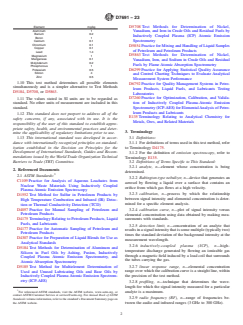
1.5 This test method uses oil-soluble metals for calibration and does not purport to quantitatively determine insoluble particulates. Analytical results are particle size dependent and low results may be obtained for particles larger than a few micrometers.
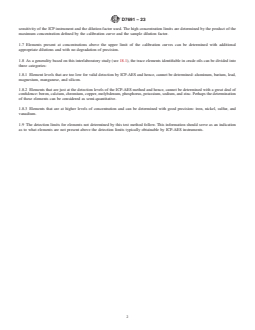
1.6 The precision in Section 18 defines the concentration ranges covered in the interlaboratory study. However, lower and particularly higher concentrations can be determined by this test method. The low concentration limits are dependent on the sensitivity of the ICP instrument and the dilution factor used. The high concentration limits are determined by the product of the maximum concentration defined by the calibration curve and the sample di...
- Status
- Published
- Publication Date
- 30-Apr-2023
- Technical Committee
- D02 - Petroleum Products, Liquid Fuels, and Lubricants
- Drafting Committee
- D02.03 - Elemental Analysis
Buy Documents
ASTM D7691-23 - Standard Test Method for Multielement Analysis of Crude Oils Using Inductively Coupled Plasma Atomic Emission Spectrometry (ICP-AES)
REDLINE ASTM D7691-23 - Standard Test Method for Multielement Analysis of Crude Oils Using Inductively Coupled Plasma Atomic Emission Spectrometry (ICP-AES)
Overview
ASTM D7691-23 defines the standard test method for the multielement analysis of crude oils using Inductively Coupled Plasma Atomic Emission Spectrometry (ICP-AES). Developed by ASTM International, this standard establishes procedures for assessing the concentration of key elements-such as iron, nickel, sulfur, and vanadium-in crude oil samples. Because trace elements in crude oils can significantly impact refining processes and product quality, accurate and reliable elemental analysis is vital for the petroleum industry.
This method leverages the advanced capabilities of ICP-AES, a technique recognized for its precision, multi-element detection, wide dynamic range, and sensitivity. The method primarily utilizes oil-soluble metals for calibration and is most effective for detecting elements that are present at sufficiently high concentrations within crude oils.
Key Topics
Significance of Trace Elements: Nickel, vanadium, iron, arsenic, and lead are commonly found as trace elements in crude oils. Their presence can lead to adverse effects in petroleum refining, including:
- Catalyst poisoning
- Refractory damage in furnaces
- Increased atmospheric emissions
- Equipment malfunctions due to oil contaminants
ICP-AES Technique Advantages:
- Greater sensitivity compared to atomic absorption spectrometry (AAS)
- Ability to analyze multiple elements simultaneously
- Wide linear response and dynamic range
- Reduced interference from molecular species
Limitations and Considerations:
- Certain elements with volatile compounds or present at very low concentrations (e.g., arsenic, selenium, silicon) may not be accurately measured in whole crude, though results improve with residual samples.
- Insoluble particulates in samples can lead to underreporting, especially for elements associated with particulates or water.
- Particle size and sample homogeneity affect analysis accuracy.
Calibration and Quality Control:
- Oil-soluble internal standards (such as cadmium or cobalt) are required for internal standardization.
- Regular calibration using certified multi-element standards is essential for accurate quantitation.
- Quality control procedures, including check standards and interlaboratory crosschecks, support data reliability and reproducibility.
Applications
- Petroleum Refining: Determines levels of catalyst poisons and operational risks. Allows refiners to mitigate catalyst deactivation and maintenance issues.
- Quality Control: Facilitates the valuation of crude oil based on elemental content (notably nickel, vanadium, and iron).
- Environmental Compliance: Supports efforts to minimize emissions linked to hazardous elements by informing refinery processes and blending decisions.
- Reservoir Characterization: Trace element profiles can be used to correlate and differentiate production from various wells, aiding in field optimization and exploration.
Industries and laboratories can apply this standard to ensure product integrity, optimize process efficiency, and support regulatory compliance throughout the crude oil value chain.
Related Standards
- ASTM D5708 – Test Methods for Determination of Nickel, Vanadium, and Iron in Crude Oils by ICP-AES
- ASTM D5863 – Test Methods for Determination of Nickel, Vanadium, Iron, and Sodium in Crude Oils by Atomic Absorption Spectrometry
- ASTM D5184 – Methods for Aluminum and Silicon in Fuel Oils by Ashing and ICP-AES
- ASTM D5185 – Multielement Determination of Lubricating Oils by ICP-AES
- ASTM D7260 – Practice for Optimization, Calibration, and Validation of ICP-AES for Elemental Analysis of Petroleum Products
These related standards provide alternative or complementary test methods for multi-element analysis in petroleum products, supporting a robust analytical framework for the oil industry.
Keywords: ASTM D7691-23, ICP-AES, crude oil analysis, elemental analysis, nickel, vanadium, iron, sulfur, petroleum refining, trace elements, catalyst poisoning, spectral analysis, oil laboratory standards.
Relations
- Refers
ASTM D4175-23a - Standard Terminology Relating to Petroleum Products, Liquid Fuels, and Lubricants - Effective Date
- 15-Dec-2023
- Effective Date
- 01-Dec-2023
- Effective Date
- 01-Dec-2023
- Effective Date
- 01-Nov-2023
- Effective Date
- 01-Oct-2023
- Refers
ASTM D4175-23e1 - Standard Terminology Relating to Petroleum Products, Liquid Fuels, and Lubricants - Effective Date
- 01-Jul-2023
- Effective Date
- 01-Jan-2020
- Effective Date
- 15-May-2019
- Effective Date
- 01-May-2019
- Effective Date
- 01-Apr-2018
- Effective Date
- 15-Dec-2017
- Effective Date
- 15-Nov-2017
- Effective Date
- 01-Jan-2017
- Effective Date
- 01-Jul-2016
- Effective Date
- 15-May-2016
Buy Documents
ASTM D7691-23 - Standard Test Method for Multielement Analysis of Crude Oils Using Inductively Coupled Plasma Atomic Emission Spectrometry (ICP-AES)
REDLINE ASTM D7691-23 - Standard Test Method for Multielement Analysis of Crude Oils Using Inductively Coupled Plasma Atomic Emission Spectrometry (ICP-AES)
Get Certified
Connect with accredited certification bodies for this standard

Element Materials Technology
Materials testing and product certification.

ABS Group Brazil
ABS Group certification services in Brazil.

ABS Quality Evaluations Inc.
American Bureau of Shipping quality certification.
Sponsored listings
Frequently Asked Questions
ASTM D7691-23 is a standard published by ASTM International. Its full title is "Standard Test Method for Multielement Analysis of Crude Oils Using Inductively Coupled Plasma Atomic Emission Spectrometry (ICP-AES)". This standard covers: SIGNIFICANCE AND USE 5.1 Most often determined trace elements in crude oils are nickel and vanadium, which are usually the most abundant; however, as many as 45 elements in crude oils have been reported. Knowledge of trace elements in crude oil is important because they can have an adverse effect on petroleum refining and product quality. These effects can include catalyst poisoning in the refinery and excessive atmospheric emission in combustion of fuels. Trace element concentrations are also useful in correlating production from different wells and horizons in a field. Elements such as iron, arsenic, and lead are catalyst poisons. Vanadium compounds can cause refractory damage in furnaces, and sodium compounds have been found to cause superficial fusion on fire brick. Some organometallic compounds are volatile which can lead to the contamination of distillate fractions, and a reduction in their stability or malfunctions of equipment when they are combusted. 5.2 The value of crude oil can be determined, in part, by the concentrations of nickel, vanadium, and iron. 5.3 Inductively coupled plasma-atomic emission spectrometry (ICP-AES) is a widely used technique in the oil industry. Its advantages over traditional atomic absorption spectrometry (AAS) include greater sensitivity, freedom from molecular interferences, wide dynamic range, and multi-element capability. See Practice D7260. SCOPE 1.1 This test method covers the determination of several elements (including iron, nickel, sulfur, and vanadium) occurring in crude oils. 1.2 For analysis of any element using wavelengths below 190 nm, a vacuum or inert gas optical path is required. 1.3 Analysis for elements such as arsenic, selenium, or sulfur in whole crude oil may be difficult by this test method due to the presence of their volatile compounds of these elements in crude oil; but this test method should work for resid samples. 1.4 Because of the particulates present in crude oil samples, if they do not dissolve in the organic solvents used or if they do not get aspirated in the nebulizer, low elemental values may result, particularly for iron and sodium. This can also occur if the elements are associated with water which can drop out of the solution when diluted with solvent. 1.4.1 An alternative in such cases is using Test Method D5708, Procedure B, which involves wet decomposition of the oil sample and measurement by ICP-AES for nickel, vanadium, and iron, or Test Method D5863, Procedure A, which also uses wet acid decomposition and determines vanadium, nickel, iron, and sodium using atomic absorption spectrometry. 1.4.2 From ASTM Interlaboratory Crosscheck Programs (ILCP) on crude oils data available so far, it is not clear that organic solvent dilution techniques would necessarily give lower results than those obtained using acid decomposition techniques.2 1.4.3 It is also possible that, particularly in the case of silicon, low results may be obtained irrespective of whether organic dilution or acid decomposition is utilized. Silicones are present as oil field additives and can be lost in ashing. Silicates should be retained but unless hydrofluoric acid or alkali fusion is used for sample dissolution, they may not be accounted for. 1.5 This test method uses oil-soluble metals for calibration and does not purport to quantitatively determine insoluble particulates. Analytical results are particle size dependent and low results may be obtained for particles larger than a few micrometers. 1.6 The precision in Section 18 defines the concentration ranges covered in the interlaboratory study. However, lower and particularly higher concentrations can be determined by this test method. The low concentration limits are dependent on the sensitivity of the ICP instrument and the dilution factor used. The high concentration limits are determined by the product of the maximum concentration defined by the calibration curve and the sample di...
SIGNIFICANCE AND USE 5.1 Most often determined trace elements in crude oils are nickel and vanadium, which are usually the most abundant; however, as many as 45 elements in crude oils have been reported. Knowledge of trace elements in crude oil is important because they can have an adverse effect on petroleum refining and product quality. These effects can include catalyst poisoning in the refinery and excessive atmospheric emission in combustion of fuels. Trace element concentrations are also useful in correlating production from different wells and horizons in a field. Elements such as iron, arsenic, and lead are catalyst poisons. Vanadium compounds can cause refractory damage in furnaces, and sodium compounds have been found to cause superficial fusion on fire brick. Some organometallic compounds are volatile which can lead to the contamination of distillate fractions, and a reduction in their stability or malfunctions of equipment when they are combusted. 5.2 The value of crude oil can be determined, in part, by the concentrations of nickel, vanadium, and iron. 5.3 Inductively coupled plasma-atomic emission spectrometry (ICP-AES) is a widely used technique in the oil industry. Its advantages over traditional atomic absorption spectrometry (AAS) include greater sensitivity, freedom from molecular interferences, wide dynamic range, and multi-element capability. See Practice D7260. SCOPE 1.1 This test method covers the determination of several elements (including iron, nickel, sulfur, and vanadium) occurring in crude oils. 1.2 For analysis of any element using wavelengths below 190 nm, a vacuum or inert gas optical path is required. 1.3 Analysis for elements such as arsenic, selenium, or sulfur in whole crude oil may be difficult by this test method due to the presence of their volatile compounds of these elements in crude oil; but this test method should work for resid samples. 1.4 Because of the particulates present in crude oil samples, if they do not dissolve in the organic solvents used or if they do not get aspirated in the nebulizer, low elemental values may result, particularly for iron and sodium. This can also occur if the elements are associated with water which can drop out of the solution when diluted with solvent. 1.4.1 An alternative in such cases is using Test Method D5708, Procedure B, which involves wet decomposition of the oil sample and measurement by ICP-AES for nickel, vanadium, and iron, or Test Method D5863, Procedure A, which also uses wet acid decomposition and determines vanadium, nickel, iron, and sodium using atomic absorption spectrometry. 1.4.2 From ASTM Interlaboratory Crosscheck Programs (ILCP) on crude oils data available so far, it is not clear that organic solvent dilution techniques would necessarily give lower results than those obtained using acid decomposition techniques.2 1.4.3 It is also possible that, particularly in the case of silicon, low results may be obtained irrespective of whether organic dilution or acid decomposition is utilized. Silicones are present as oil field additives and can be lost in ashing. Silicates should be retained but unless hydrofluoric acid or alkali fusion is used for sample dissolution, they may not be accounted for. 1.5 This test method uses oil-soluble metals for calibration and does not purport to quantitatively determine insoluble particulates. Analytical results are particle size dependent and low results may be obtained for particles larger than a few micrometers. 1.6 The precision in Section 18 defines the concentration ranges covered in the interlaboratory study. However, lower and particularly higher concentrations can be determined by this test method. The low concentration limits are dependent on the sensitivity of the ICP instrument and the dilution factor used. The high concentration limits are determined by the product of the maximum concentration defined by the calibration curve and the sample di...
ASTM D7691-23 is classified under the following ICS (International Classification for Standards) categories: 75.040 - Crude petroleum. The ICS classification helps identify the subject area and facilitates finding related standards.
ASTM D7691-23 has the following relationships with other standards: It is inter standard links to ASTM D4175-23a, ASTM C1109-23, ASTM D6299-23a, ASTM D6792-23c, ASTM D6792-23b, ASTM D4175-23e1, ASTM E135-20, ASTM E135-19, ASTM D7260-19, ASTM D5185-18, ASTM D6299-17b, ASTM D6299-17a, ASTM D6299-17, ASTM D1552-16, ASTM E135-16. Understanding these relationships helps ensure you are using the most current and applicable version of the standard.
ASTM D7691-23 is available in PDF format for immediate download after purchase. The document can be added to your cart and obtained through the secure checkout process. Digital delivery ensures instant access to the complete standard document.
Standards Content (Sample)
This international standard was developed in accordance with internationally recognized principles on standardization established in the Decision on Principles for the
Development of International Standards, Guides and Recommendations issued by the World Trade Organization Technical Barriers to Trade (TBT) Committee.
Designation: D7691 − 23
Standard Test Method for
Multielement Analysis of Crude Oils Using Inductively
Coupled Plasma Atomic Emission Spectrometry (ICP-AES)
This standard is issued under the fixed designation D7691; the number immediately following the designation indicates the year of
original adoption or, in the case of revision, the year of last revision. A number in parentheses indicates the year of last reapproval. A
superscript epsilon (´) indicates an editorial change since the last revision or reapproval.
1. Scope* present as oil field additives and can be lost in ashing. Silicates
should be retained but unless hydrofluoric acid or alkali fusion
1.1 This test method covers the determination of several
is used for sample dissolution, they may not be accounted for.
elements (including iron, nickel, sulfur, and vanadium) occur-
ring in crude oils. 1.5 This test method uses oil-soluble metals for calibration
and does not purport to quantitatively determine insoluble
1.2 For analysis of any element using wavelengths below
particulates. Analytical results are particle size dependent and
190 nm, a vacuum or inert gas optical path is required.
low results may be obtained for particles larger than a few
1.3 Analysis for elements such as arsenic, selenium, or
micrometers.
sulfur in whole crude oil may be difficult by this test method
1.6 The precision in Section 18 defines the concentration
due to the presence of their volatile compounds of these
ranges covered in the interlaboratory study. However, lower
elements in crude oil; but this test method should work for
and particularly higher concentrations can be determined by
resid samples.
this test method. The low concentration limits are dependent on
1.4 Because of the particulates present in crude oil samples,
the sensitivity of the ICP instrument and the dilution factor
if they do not dissolve in the organic solvents used or if they do
used. The high concentration limits are determined by the
not get aspirated in the nebulizer, low elemental values may
product of the maximum concentration defined by the calibra-
result, particularly for iron and sodium. This can also occur if
tion curve and the sample dilution factor.
the elements are associated with water which can drop out of
1.7 Elements present at concentrations above the upper limit
the solution when diluted with solvent.
of the calibration curves can be determined with additional
1.4.1 An alternative in such cases is using Test Method
appropriate dilutions and with no degradation of precision.
D5708, Procedure B, which involves wet decomposition of the
oil sample and measurement by ICP-AES for nickel, 1.8 As a generality based on this interlaboratory study (see
vanadium, and iron, or Test Method D5863, Procedure A, 18.1), the trace elements identifiable in crude oils can be
which also uses wet acid decomposition and determines divided into three categories:
vanadium, nickel, iron, and sodium using atomic absorption 1.8.1 Element levels that are too low for valid detection by
spectrometry. ICP-AES and hence, cannot be determined: aluminum, barium,
1.4.2 From ASTM Interlaboratory Crosscheck Programs lead, magnesium, manganese, and silicon.
(ILCP) on crude oils data available so far, it is not clear that 1.8.2 Elements that are just at the detection levels of the
organic solvent dilution techniques would necessarily give ICP-AES method and hence, cannot be determined with a great
lower results than those obtained using acid decomposition deal of confidence: boron, calcium, chromium, copper,
techniques. molybdenum, phosphorus, potassium, sodium, and zinc. Per-
1.4.3 It is also possible that, particularly in the case of haps the determination of these elements can be considered as
silicon, low results may be obtained irrespective of whether semi-quantitative.
organic dilution or acid decomposition is utilized. Silicones are 1.8.3 Elements that are at higher levels of concentration and
can be determined with good precision: iron, nickel, sulfur, and
vanadium.
This test method is under the jurisdiction of ASTM Committee D02 on
1.9 The detection limits for elements not determined by this
Petroleum Products, Liquid Fuels, and Lubricants and is the direct responsibility of
test method follow. This information should serve as an
Subcommittee D02.03 on Elemental Analysis.
indication as to what elements are not present above the
Current edition approved May 1, 2023. Published June 2023. Originally
approved in 2011. Last previous edition approved in 2016 as D7961 – 16. DOI: detection limits typically obtainable by ICP-AES instruments.
10.1520/D7691-23.
Nadkarni, R. A., Hwang, J. D., and Young, L., “Multielement Analysis of Crude
Oils Using Inductively Coupled Plasma Atomic Emission Spectrometry,” J. ASTM
International, Vol 8, No. 10, 2011, pp. 103837.
*A Summary of Changes section appears at the end of this standard
Copyright © ASTM International, 100 Barr Harbor Drive, PO Box C700, West Conshohocken, PA 19428-2959. United States
D7691 − 23
D5708 Test Methods for Determination of Nickel,
Element mg/kg
Aluminum 1
Vanadium, and Iron in Crude Oils and Residual Fuels by
Barium 0.2
Inductively Coupled Plasma (ICP) Atomic Emission
Boron 1
Spectrometry
Calcium 0.1
Chromium 0.1
D5854 Practice for Mixing and Handling of Liquid Samples
Copper 0.1
of Petroleum and Petroleum Products
Lead 1.4
D5863 Test Methods for Determination of Nickel,
Magnesium 1
Manganese 0.1
Vanadium, Iron, and Sodium in Crude Oils and Residual
Molybdenum 0.2
Fuels by Flame Atomic Absorption Spectrometry
Phosphorous 1
Potassium 0.5 D6299 Practice for Applying Statistical Quality Assurance
Silicon 4
and Control Charting Techniques to Evaluate Analytical
Zinc 0.5
Measurement System Performance
1.10 This test method determines all possible elements
D6792 Practice for Quality Management Systems in Petro-
simultaneously and is a simpler alternative to Test Methods
leum Products, Liquid Fuels, and Lubricants Testing
D5184, D5708, or D5863.
Laboratories
D7260 Practice for Optimization, Calibration, and Valida-
1.11 The values stated in SI units are to be regarded as
tion of Inductively Coupled Plasma-Atomic Emission
standard. No other units of measurement are included in this
Spectrometry (ICP-AES) for Elemental Analysis of Petro-
standard.
leum Products and Lubricants
1.12 This standard does not purport to address all of the
E135 Terminology Relating to Analytical Chemistry for
safety concerns, if any, associated with its use. It is the
Metals, Ores, and Related Materials
responsibility of the user of this standard to establish appro-
priate safety, health, and environmental practices and deter-
3. Terminology
mine the applicability of regulatory limitations prior to use.
1.13 This international standard was developed in accor-
3.1 Definitions:
dance with internationally recognized principles on standard- 3.1.1 For definitions of terms used in this test method, refer
ization established in the Decision on Principles for the
to Terminology D4175.
Development of International Standards, Guides and Recom-
3.1.2 For the definition of emission spectroscopy, refer to
mendations issued by the World Trade Organization Technical
Terminology E135.
Barriers to Trade (TBT) Committee.
3.2 Definitions of Terms Specific to This Standard:
3.2.1 analyte, n—element whose concentration is being
2. Referenced Documents
determined.
2.1 ASTM Standards:
3.2.2 Babington-type nebulizer, n—device that generates an
C1109 Practice for Analysis of Aqueous Leachates from
aerosol by flowing a liquid over a surface that contains an
Nuclear Waste Materials Using Inductively Coupled
orifice from which gas flows at a high velocity.
Plasma-Atomic Emission Spectroscopy
3.2.3 calibration, n—process by which the relationship
D1552 Test Method for Sulfur in Petroleum Products by
between signal intensity and elemental concentration is deter-
High Temperature Combustion and Infrared (IR) Detec-
mined for a specific element analysis.
tion or Thermal Conductivity Detection (TCD)
D4057 Practice for Manual Sampling of Petroleum and
3.2.4 calibration curve, n—plot of signal intensity versus
Petroleum Products
elemental concentration using data obtained by making mea-
D4175 Terminology Relating to Petroleum Products, Liquid surements with standards.
Fuels, and Lubricants
3.2.5 detection limit, n—concentration of an analyte that
D4177 Practice for Automatic Sampling of Petroleum and
results in a signal intensity that is some multiple (typically two)
Petroleum Products
times the standard deviation of the background intensity at the
D4307 Practice for Preparation of Liquid Blends for Use as
measurement wavelength.
Analytical Standards
3.2.6 inductively-coupled plasma (ICP), n—high-
D5184 Test Methods for Determination of Aluminum and
temperature discharge generated by flowing an ionizable gas
Silicon in Fuel Oils by Ashing, Fusion, Inductively
through a magnetic field induced by a load coil that surrounds
Coupled Plasma Atomic Emission Spectrometry, and
the tubes carrying the gas.
Atomic Absorption Spectrometry
3.2.7 linear response range, n—elemental concentration
D5185 Test Method for Multielement Determination of
range over which the calibration curve is a straight line, within
Used and Unused Lubricating Oils and Base Oils by
the precision of the test method.
Inductively Coupled Plasma Atomic Emission Spectrom-
etry (ICP-AES)
3.2.8 profiling, n—technique that determines the wave-
length for which the signal intensity measured for a particular
For referenced ASTM standards, visit the ASTM website, www.astm.org, or
analyte is a maximum.
contact ASTM Customer Service at service@astm.org. For Annual Book of ASTM
3.2.9 radio frequency (RF), n—range of frequencies be-
Standards volume information, refer to the standard’s Document Summary page on
the ASTM website. tween the audio and infrared ranges (3 GHz to 300 GHz).
D7691 − 23
A
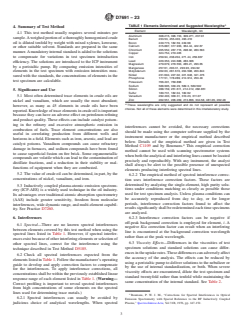
TABLE 1 Elements Determined and Suggested Wavelengths
4. Summary of Test Method
Element Wavelength, nm
4.1 This test method usually requires several minutes per
Aluminum 308.215, 396.153, 309.271, 237.01
sample. A weighed portion of a thoroughly homogenized crude
Barium 233.53, 455.403, 493.410
oil is diluted tenfold by weight with mixed xylenes, kerosene, Boron 249.773, 182.59, 249.68
Calcium 315.887, 317.933, 364.44, 422.67
or other suitable solvent. Standards are prepared in the same
Chromium 205.552, 267.716, 298.92, 283.563
manner. A mandatory internal standard is added to the solutions
Copper 324.754, 219.226
to compensate for variations in test specimen introduction Iron 259.94, 238.204, 271.44, 259.837
Lead 220.353, 224.688, 283.306
efficiency. The solutions are introduced to the ICP instrument
Magnesium 279.079, 279.553, 285.21, 293.65
by a peristaltic pump. By comparing emission intensities of
Manganese 257.61, 293.31, 293.93, 294.92
Molybdenum 202.03, 281.616, 204.598, 203.844
elements in the test specimen with emission intensities mea-
Nickel 231.604, 227.02, 221.648, 341.476
sured with the standards, the concentrations of elements in the
Phosphorus 177.51, 178.289, 214.914, 253.40
test specimen are calculable.
Potassium 766.491, 769.896
Sodium 588.995, 330.29, 589.3, 589.592
Silicon 288.159, 251.611, 212.412, 282.851
5. Significance and Use
Sulfur 180.731, 182.04, 182.62
Vanadium 292.403, 309.31, 310.23, 311.07
5.1 Most often determined trace elements in crude oils are
Zinc 202.551, 206.209, 213.856, 334.58, 481.05, 202.48
nickel and vanadium, which are usually the most abundant;
A
These wavelengths are only suggested and do not represent all possible
however, as many as 45 elements in crude oils have been
choices. Not all of these elements were determined in this interlaboratory study.
reported. Knowledge of trace elements in crude oil is important
because they can have an adverse effect on petroleum refining
and product quality. These effects can include catalyst poison-
ing in the refinery and excessive atmospheric emission in
interferences cannot be avoided, the necessary corrections
combustion of fuels. Trace element concentrations are also
should be made using the computer software supplied by the
useful in correlating production from different wells and
instrument manufacturer or the empirical method described
horizons in a field. Elements such as iron, arsenic, and lead are
below. Details of the empirical method are given in Test
catalyst poisons. Vanadium compounds can cause refractory
Method C1109 and by Boumans. This empirical correction
damage in furnaces, and sodium compounds have been found
method cannot be used with scanning spectrometer systems
to cause superficial fusion on fire brick. Some organometallic
when both the analytical and interfering lines cannot be located
compounds are volatile which can lead to the contamination of
precisely and reproducibly. With any instrument, the analyst
distillate fractions, and a reduction in their stability or mal-
shall always be alert to the possible presence of unexpected
functions of equipment when they are combusted.
elements producing interfering spectral lines.
5.2 The value of crude oil can be determined, in part, by the
6.2.2 The empirical method of spectral interference correc-
concentrations of nickel, vanadium, and iron.
tion uses interference correction factors. These factors are
determined by analyzing the single-element, high purity solu-
5.3 Inductively coupled plasma-atomic emission spectrom-
tions under conditions matching as closely as possible those
etry (ICP-AES) is a widely used technique in the oil industry.
used for test specimen analysis. Unless plasma conditions can
Its advantages over traditional atomic absorption spectrometry
be accurately reproduced from day to day, or for longer
(AAS) include greater sensitivity, freedom from molecular
periods, interference correction factors found to affect the
interferences, wide dynamic range, and multi-element capabil-
results significantly shall be redetermined each time specimens
ity. See Practice D7260.
are analyzed.
6.2.3 Interference correction factors can be negative if
6. Interferences
off-peak background correction is employed for element, i. A
6.1 Spectral—There are no known spectral interferences
negative Kia correction factor can result when an interfering
between elements covered by this test method when using the
line is encountered at the background correction wavelength
spectral lines listed in Table 1. However, if spectral interfer-
rather than at the peak wavelength.
ences exist because of other interfering elements or selection of
6.3 Viscosity Effects—Differences in the viscosities of test
other spectral lines, correct for the interference using the
specimen solutions and standard solutions can cause differ-
technique described in Test Method D5185.
ences in the uptake rates. These differences can adversely affect
6.2 Check all spectral interferences expected from the
the accuracy of the analysis. The effects can be reduced by
elements listed in Table 1. Follow the manufacturer’s operating
using a peristaltic pump to deliver solutions to the nebulizer or
guide to develop and apply correction factors to compensate
by the use of internal standardization, or both. When severe
for the interferences. To apply interference corrections, all
viscosity effects are encountered, dilute the test specimen and
concentrations shall be within the previously established linear
standard twentyfold rather than tenfold while maintaining the
response range of each element listed in Table 1. (Warning—
same concentration of the internal standard. See Table 2.
Correct profiling is important to reveal spectral interferences
from high concentrations of some elements on the spectral
lines used for determining trace metals.)
Boumans, P. W. J. M., “Corrections for Spectral Interferences in Optical
6.2.1 Spectral interferences can usually be avoided by
Emission Spectrometry with Special Reference to the RF Inductively Coupled
judicious choice of analytical wavelengths. When spectral Plasma,” Spectrochimica Acta, Vol 31B, 1976, pp. 147-152.
D7691 − 23
TABLE 2 Suggested Internal Standards
8. Reagents and Materials
A
Element Concentration, mg/kg Wavelength, Nm
8.1 Purity of Reagents—Reagent grade chemicals shall be
Cadmium 10 226.502; 228.802; 214.438
used in all tests. Unless otherwise indicated, it is intended that
Cobalt 10 228.616; 238.892; 237.662
all reagents conform to the specifications of the Committee on
Lanthanum 10 379.48; 379.08
Analytical Reagents of the American Chemical Society where
Scandium 10 255.237; 361.384; 357.253
such specifications are available. Other grades may be used,
Yttrium 10 371.030; 324.228; 360.073
provided it is first ascertained that the reagent is of sufficiently
A
These wavelengths are only suggested and do not represent all possible
high purity to permit its use without lessening the accuracy of
choices.
the determination.
8.2 Internal Standard—Oil-soluble cadmium, cobalt,
lanthanum, scandium, or yttrium (or other suitable metal) is
required for internal standardization.
6.4 Particulates—Particulates can plug the nebulizer
thereby causing low results. Use of a Babington type high-
8.3 Organometallic Standards—Multi-element standards,
solids nebulizer helps to minimize this effect. Also, the
containing 0.0500 % by mass of each element, can be prepared
specimen introduction system can limit the transport of
from the individual concentrates. Refer to Practice D4307 for
particulates, and the plasma can incompletely atomize
a procedure for preparation of multi-component liquid blends.
particulates, thereby causing low results.
When preparing multi-element standards, be certain that proper
mixing is achieved. An ultrasonic bath is recommended.
7. Apparatus
Standard multi-element concentrates, containing 0.0500 % by
mass of each element, are also satisfactory. (Warning—Some
7.1 Balance—Top loading or analytical, with automatic tare,
commercially available organometallic standards are prepared
capable of weighing to 0.001 g or 0.0001 g, with sufficient
from metal sulfonates and therefore contain sulfur. For sulfur
capacity to weigh prepared solutions.
determinations, a separate sulfur standard would be required.)
7.2 Inductively-Coupled Plasma Atomic Emission
8.3.1 More than one multi-element standard can be neces-
Spectrometer—Either a sequential or simultaneous spectrom-
sary to cover all elements, and the user of this test method can
eter is suitable, if equipped with a quartz ICP torch and RF
select the combination of elements and their concentrations in
generator to form and sustain the plasma. Suggested wave-
the multi-element standards. It can be advantageous to select
lengths for the determination of the elements in crude oils are
concentrations that are typical of crude oils. However, it is
given in Table 1. For the analysis of sulfur, the spectrometer
imperative that the concentrations are selected such that the
shall be capable of operating in the wavelength region of
emission intensities measured with the working standards can
180 nm.
be measured precisely (that is, the emission intensities are
5,6
7.3 Nebulizer—A Babington-type high-solids nebulizer is
significantly greater than background) and that these standards
strongly recommended. This type of nebulizer reduces the
represent the linear region of the calibration curve. Frequently,
possibility of clogging and minimizes aerosol particle effects.
the instrument manufacturer publishes guidelines for determin-
ing linear range.
7.4 Peristaltic Pump—A peristaltic pump is strongly recom-
mended to provide a constant flow of solution. The pumping
8.4 Sulfur Standard—To use a metal sulfonate as a sulfur
speed shall be in the range 0.5 mL ⁄min to 3 mL ⁄min. The
standard, analyze the sulfonate by Test Method D1552.
pump tubing shall be able to withstand at least 6 h exposure to
Alternatively, prepare a sulfur standard by diluting NIST SRM
the dilution solvent. Viton tubing is typically used with
1622c in white oil. If sulfur is to be determined, the internal
hydrocarbon solvents, and polyvinyl chloride tubing is typi-
standard compound should not contain sulfur. Use metal
cally used with methyl isobutyl ketone.
napthenate or similar compounds rather than metal sulfonates.
Non-sulfonate oil based sulfur standards are available commer-
7.5 Solvent Dispenser, (Optional)—A solvent dispenser cali-
cially and can be used.
brated to deliver the required weight of dilution solvent for a
tenfold dilution of test specimen is very useful.
8.5 Dilution Solvent—A solvent that is free of analytes and
is capable of completely dissolving all standards and samples.
7.6 Specimen Solution Containers—Of appropriate size,
Mixed xylenes, kerosine, toluene, and ortho-xylene were
glass or plastic vials or bottles, with screw caps.
successfully used as dilution solvents in the interlaboratory
7.7 Ultrasonic Homogenizer, (Recommended)—A bath-type
study on precision.
or probe-type ultrasonic homogenizer to homogenize the
8.6 Base Oil or White Oil.
sample.
7.8 Vortexer, (Optional)—Vortexing the sample is an alter-
ACS Reagent Chemicals, Specifications and Procedures for Reagents and
native to ultrasonic homogenization.
Standard-Grade Reference Materials, American Chemical Society, Washington,
DC. For suggestions on the testing of reagents not listed by the American Chemical
7.9 High Speed Homogenizer, (Optional).
Society, see Analar Standards for Laboratory Chemicals, BDH Ltd., Poole, Dorset,
U.K., and the United States Pharmacopeia and National Formulary, U.S. Pharma-
copeial Convention, Inc. (USPC), Rockville, MD.
5 8
Babington, R. A., Popular Science, May 1973, pp. 102. Available from National Institute of Standards and Technology (NIST), 100
Fry, R. C., and Denton, M. B., Analytical Chemistry, Vol 49, 1977. Bureau Dr., Stop 1070, Gaithersburg, MD 20899-1070, http://www.nist.gov.
D7691 − 23
9. Sampling working standard and by running standards containing higher
concentrations than the working standard. Analyses of test
9.1 It is critical that a representative sample be obtained for
specimen solutions shall be performed within the linear range
analysis from the bulk material. Maintaining compositional
of response.
integrity of these samples from the time of collection until their
11.1.1 The linear range will also be determined by the
analysis requires care and effort. Sampling procedure also
instrument parameters (power, gas flow rates, nebulizer type,
should not introduce any contaminants into the sample or
nebulizer flow rates, etc.). It is likely that this would need to be
otherwise alter the sample composition so that the subsequent
established more than once for each instrument. Correlation
test results are affected.
coefficient should be better than 0.995.
9.2 See Practices D4057 and D4177 for manual and auto-
11.2 Working Standard—At the beginning of the analysis of
matic sampling of petroleum and petroleum products, respec-
each batch of specimens, perform a two-point calibration
tively. In sampling of crude oils, the material may contain a
consisting of the blank and working standard. Use the check
heavy component, such as free water, which tends to separate
standard to determine if each element is in calibration. When
from the main component. Guide D5854 provides a guide for
the results obtained with the
...
This document is not an ASTM standard and is intended only to provide the user of an ASTM standard an indication of what changes have been made to the previous version. Because
it may not be technically possible to adequately depict all changes accurately, ASTM recommends that users consult prior editions as appropriate. In all cases only the current version
of the standard as published by ASTM is to be considered the official document.
Designation: D7691 − 16 D7691 − 23
Standard Test Method for
Multielement Analysis of Crude Oils Using Inductively
Coupled Plasma Atomic Emission Spectrometry (ICP-AES)
This standard is issued under the fixed designation D7691; the number immediately following the designation indicates the year of
original adoption or, in the case of revision, the year of last revision. A number in parentheses indicates the year of last reapproval. A
superscript epsilon (´) indicates an editorial change since the last revision or reapproval.
1. Scope*
1.1 This test method covers the determination of several elements (including iron, nickel, sulfur, and vanadium) occurring in crude
oils.
1.2 For analysis of any element using wavelengths below 190 nm, a vacuum or inert gas optical path is required.
1.3 Analysis for elements such as arsenic, selenium, or sulfur in whole crude oil may be difficult by this test method due to the
presence of their volatile compounds of these elements in crude oil; but this test method should work for resid samples.
1.4 Because of the particulates present in crude oil samples, if they do not dissolve in the organic solvents used or if they do not
get aspirated in the nebulizer, low elemental values may result, particularly for iron and sodium. This can also occur if the elements
are associated with water which can drop out of the solution when diluted with solvent.
1.4.1 An alternative in such cases is using Test Method D5708, Procedure B, which involves wet decomposition of the oil sample
and measurement by ICP-AES for nickel, vanadium, and iron, or Test Method D5863, Procedure A, which also uses wet acid
decomposition and determines vanadium, nickel, iron, and sodium using atomic absorption spectrometry.
1.4.2 From ASTM Interlaboratory Crosscheck Programs (ILCP) on crude oils data available so far, it is not clear that organic
solvent dilution techniques would necessarily give lower results than those obtained using acid decomposition techniques.
1.4.3 It is also possible that, particularly in the case of silicon, low results may be obtained irrespective of whether organic dilution
or acid decomposition is utilized. Silicones are present as oil field additives and can be lost in ashing. Silicates should be retained
but unless hydrofluoric acid or alkali fusion is used for sample dissolution, they may not be accounted for.
1.5 This test method uses oil-soluble metals for calibration and does not purport to quantitatively determine insoluble particulates.
Analytical results are particle size dependent and low results may be obtained for particles larger than a few micrometers.
1.6 The precision in Section 18 defines the concentration ranges covered in the interlaboratory study. However, lower and
particularly higher concentrations can be determined by this test method. The low concentration limits are dependent on the
This test method is under the jurisdiction of ASTM Committee D02 on Petroleum Products, Liquid Fuels, and Lubricants and is the direct responsibility of Subcommittee
D02.03 on Elemental Analysis.
Current edition approved June 1, 2016May 1, 2023. Published June 2016June 2023. Originally approved in 2011. Last previous edition approved in 20112016 as
ɛ1
D7961 – 11D7961 – 16. . DOI: 10.1520/D7691-16.10.1520/D7691-23.
Nadkarni, R. A., Hwang, J. D., and Young, L., “Multielement Analysis of Crude Oils Using Inductively Coupled Plasma Atomic Emission Spectrometry,” J. ASTM
International, Vol 8, No. 10, 2011, pp. 103837.
*A Summary of Changes section appears at the end of this standard
Copyright © ASTM International, 100 Barr Harbor Drive, PO Box C700, West Conshohocken, PA 19428-2959. United States
D7691 − 23
sensitivity of the ICP instrument and the dilution factor used. The high concentration limits are determined by the product of the
maximum concentration defined by the calibration curve and the sample dilution factor.
1.7 Elements present at concentrations above the upper limit of the calibration curves can be determined with additional
appropriate dilutions and with no degradation of precision.
1.8 As a generality based on this interlaboratory study (see 18.1), the trace elements identifiable in crude oils can be divided into
three categories:
1.8.1 Element levels that are too low for valid detection by ICP-AES and hence, cannot be determined: aluminum, barium, lead,
magnesium, manganese, and silicon.
1.8.2 Elements that are just at the detection levels of the ICP-AES method and hence, cannot be determined with a great deal of
confidence: boron, calcium, chromium, copper, molybdenum, phosphorus, potassium, sodium, and zinc. Perhaps the determination
of these elements can be considered as semi-quantitative.
1.8.3 Elements that are at higher levels of concentration and can be determined with good precision: iron, nickel, sulfur, and
vanadium.
1.9 The detection limits for elements not determined by this test method follow. This information should serve as an indication
as to what elements are not present above the detection limits typically obtainable by ICP-AES instruments.
D7691 − 23
Element mg/kg
Aluminum 1
Barium 0.2
Boron 1
Calcium 0.1
Chromium 0.1
Copper 0.1
Lead 1.4
Magnesium 1
Manganese 0.1
Molybdenum 0.2
Phosphorous 1
Potassium 0.5
Silicon 4
Zinc 0.5
1.10 This test method determines all possible elements simultaneously and is a simpler alternative to Test Methods D5184, D5708,
or D5863.
1.11 The values stated in SI units are to be regarded as standard. No other units of measurement are included in this standard.
1.12 This standard does not purport to address all of the safety concerns, if any, associated with its use. It is the responsibility
of the user of this standard to establish appropriate safety and healthsafety, health, and environmental practices and determine
the applicability of regulatory limitations prior to use.
1.13 This international standard was developed in accordance with internationally recognized principles on standardization
established in the Decision on Principles for the Development of International Standards, Guides and Recommendations issued
by the World Trade Organization Technical Barriers to Trade (TBT) Committee.
2. Referenced Documents
2.1 ASTM Standards:
C1109 Practice for Analysis of Aqueous Leachates from Nuclear Waste Materials Using Inductively Coupled Plasma-Atomic
Emission Spectroscopy
D1552 Test Method for Sulfur in Petroleum Products by High Temperature Combustion and Infrared (IR) Detection or Thermal
Conductivity Detection (TCD)
D4057 Practice for Manual Sampling of Petroleum and Petroleum Products
D4175 Terminology Relating to Petroleum Products, Liquid Fuels, and Lubricants
D4177 Practice for Automatic Sampling of Petroleum and Petroleum Products
D4307 Practice for Preparation of Liquid Blends for Use as Analytical Standards
D5184 Test Methods for Determination of Aluminum and Silicon in Fuel Oils by Ashing, Fusion, Inductively Coupled Plasma
Atomic Emission Spectrometry, and Atomic Absorption Spectrometry
D5185 Test Method for Multielement Determination of Used and Unused Lubricating Oils and Base Oils by Inductively
Coupled Plasma Atomic Emission Spectrometry (ICP-AES)
D5708 Test Methods for Determination of Nickel, Vanadium, and Iron in Crude Oils and Residual Fuels by Inductively Coupled
Plasma (ICP) Atomic Emission Spectrometry
D5854 Practice for Mixing and Handling of Liquid Samples of Petroleum and Petroleum Products
D5863 Test Methods for Determination of Nickel, Vanadium, Iron, and Sodium in Crude Oils and Residual Fuels by Flame
Atomic Absorption Spectrometry
D6299 Practice for Applying Statistical Quality Assurance and Control Charting Techniques to Evaluate Analytical Measure-
ment System Performance
D6792 Practice for Quality Management Systems in Petroleum Products, Liquid Fuels, and Lubricants Testing Laboratories
D7260 Practice for Optimization, Calibration, and Validation of Inductively Coupled Plasma-Atomic Emission Spectrometry
(ICP-AES) for Elemental Analysis of Petroleum Products and Lubricants
E135 Terminology Relating to Analytical Chemistry for Metals, Ores, and Related Materials
3. Terminology
3.1 For the definition of emission spectroscopy, refer to Terminology E135.
For referenced ASTM standards, visit the ASTM website, www.astm.org, or contact ASTM Customer Service at service@astm.org. For Annual Book of ASTM Standards
volume information, refer to the standard’s Document Summary page on the ASTM website.
D7691 − 23
3.1 Definitions:
3.1.1 For definitions of terms used in this test method, refer to Terminology D4175.
3.1.2 For the definition of emission spectroscopy, refer to Terminology E135.
3.2 Definitions of Terms Specific to This Standard:
3.2.1 analyte, n—element whose concentration is being determined.
3.2.2 Babington-type nebulizer, n—device that generates an aerosol by flowing a liquid over a surface that contains an orifice from
which gas flows at a high velocity.
3.2.3 calibration, n—process by which the relationship between signal intensity and elemental concentration is determined for a
specific element analysis.
3.2.4 calibration curve, n—plot of signal intensity versus elemental concentration using data obtained by making measurements
with standards.
3.2.5 detection limit, n—concentration of an analyte that results in a signal intensity that is some multiple (typically two) times
the standard deviation of the background intensity at the measurement wavelength.
3.2.6 inductively-coupled plasma (ICP), n—high-temperature discharge generated by flowing an ionizable gas through a magnetic
field induced by a load coil that surrounds the tubes carrying the gas.
3.2.7 linear response range, n—elemental concentration range over which the calibration curve is a straight line, within the
precision of the test method.
3.2.8 profiling, n—technique that determines the wavelength for which the signal intensity measured for a particular analyte is a
maximum.
3.2.9 radio frequency (RF), n—range of frequencies between the audio and infrared ranges (3 GHz to 300 GHz).
4. Summary of Test Method
4.1 This test method usually requires several minutes per sample. A weighed portion of a thoroughly homogenized crude oil is
diluted tenfold by weight with mixed xylenes, kerosene, or other suitable solvent. Standards are prepared in the same manner. A
mandatory internal standard is added to the solutions to compensate for variations in test specimen introduction efficiency. The
solutions are introduced to the ICP instrument by a peristaltic pump. By comparing emission intensities of elements in the test
specimen with emission intensities measured with the standards, the concentrations of elements in the test specimen are calculable.
5. Significance and Use
5.1 Most often determined trace elements in crude oils are nickel and vanadium, which are usually the most abundant; however,
as many as 45 elements in crude oils have been reported. Knowledge of trace elements in crude oil is important because they can
have an adverse effect on petroleum refining and product quality. These effects can include catalyst poisoning in the refinery and
excessive atmospheric emission in combustion of fuels. Trace element concentrations are also useful in correlating production from
different wells and horizons in a field. Elements such as iron, arsenic, and lead are catalyst poisons. Vanadium compounds can
cause refractory damage in furnaces, and sodium compounds have been found to cause superficial fusion on fire brick. Some
organometallic compounds are volatile which can lead to the contamination of distillate fractions, and a reduction in their stability
or malfunctions of equipment when they are combusted.
5.2 The value of crude oil can be determined, in part, by the concentrations of nickel, vanadium, and iron.
5.3 Inductively coupled plasma-atomic emission spectrometry (ICP-AES) is a widely used technique in the oil industry. Its
advantages over traditional atomic absorption spectrometry (AAS) include greater sensitivity, freedom from molecular
interferences, wide dynamic range, and multi-element capability. See Practice D7260.
D7691 − 23
A
TABLE 1 Elements Determined and Suggested Wavelengths
Element Wavelength, nm
Aluminum 308.215, 396.153, 309.271, 237.01
Barium 233.53, 455.403, 493.410
Boron 249.773, 182.59, 249.68
Calcium 315.887, 317.933, 364.44, 422.67
Chromium 205.552, 267.716, 298.92, 283.563
Copper 324.754, 219.226
Iron 259.94, 238.204, 271.44, 259.837
Lead 220.353, 224.688, 283.306
Magnesium 279.079, 279.553, 285.21, 293.65
Manganese 257.61, 293.31, 293.93, 294.92
Molybdenum 202.03, 281.616, 204.598, 203.844
Nickel 231.604, 227.02, 221.648, 341.476
Phosphorus 177.51, 178.289, 214.914, 253.40
Potassium 766.491, 769.896
Sodium 588.995, 330.29, 589.3, 589.592
Silicon 288.159, 251.611, 212.412, 282.851
Sulfur 180.731, 182.04, 182.62
Vanadium 292.403, 309.31, 310.23, 311.07
Zinc 202.551, 206.209, 213.856, 334.58, 481.05, 202.48
A
These wavelengths are only suggested and do not represent all possible
choices. Not all of these elements were determined in this interlaboratory study.
6. Interferences
6.1 Spectral—There are no known spectral interferences between elements covered by this test method when using the spectral
lines listed in Table 1. However, if spectral interferences exist because of other interfering elements or selection of other spectral
lines, correct for the interference using the technique described in Test Method D5185.
6.2 Check all spectral interferences expected from the elements listed in Table 1. Follow the manufacturer’s operating guide to
develop and apply correction factors to compensate for the interferences. To apply interference corrections, all concentrations shall
be within the previously established linear response range of each element listed in Table 1. (Warning—Correct profiling is
important to reveal spectral interferences from high concentrations of some elements on the spectral lines used for determining
trace metals.)
6.2.1 Spectral interferences can usually be avoided by judicious choice of analytical wavelengths. When spectral interferences
cannot be avoided, the necessary corrections should be made using the computer software supplied by the instrument manufacturer
or the empirical method described below. Details of the empirical method are given in Test Method C1109 and by Boumans. This
empirical correction method cannot be used with scanning spectrometer systems when both the analytical and interfering lines
cannot be located precisely and reproducibly. With any instrument, the analyst shall always be alert to the possible presence of
unexpected elements producing interfering spectral lines.
6.2.2 The empirical method of spectral interference correction uses interference correction factors. These factors are determined
by analyzing the single-element, high purity solutions under conditions matching as closely as possible those used for test specimen
analysis. Unless plasma conditions can be accurately reproduced from day to day, or for longer periods, interference correction
factors found to affect the results significantly shall be redetermined each time specimens are analyzed.
6.2.3 Interference correction factors can be negative if off-peak background correction is employed for element, i. A negative Kia
correction factor can result when an interfering line is encountered at the background correction wavelength rather than at the peak
wavelength.
6.3 Viscosity Effects—Differences in the viscosities of test specimen solutions and standard solutions can cause differences in the
uptake rates. These differences can adversely affect the accuracy of the analysis. The effects can be reduced by using a peristaltic
pump to deliver solutions to the nebulizer or by the use of internal standardization, or both. When severe viscosity effects are
encountered, dilute the test specimen and standard twentyfold rather than tenfold while maintaining the same concentration of the
internal standard. See Table 2.
Boumans, P. W. J. M., “Corrections for Spectral Interferences in Optical Emission Spectrometry with Special Reference to the RF Inductively Coupled Plasma,”
Spectrochimica Acta, Vol 31B, 1976, pp. 147-152.
D7691 − 23
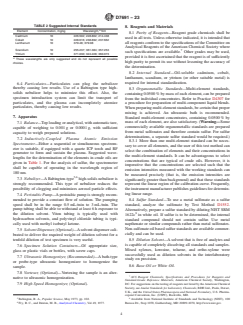
TABLE 2 Suggested Internal Standards
A
Element Concentration, mg/kg Wavelength, Nm
Cadmium 10 226.502; 228.802; 214.438
Cobalt 10 228.616; 238.892; 237.662
Lanthanum 10 379.48; 379.08
Scandium 10 255.237; 361.384; 357.253
Yttrium 10 371.030; 324.228; 360.073
A
These wavelengths are only suggested and do not represent all possible
choices.
6.4 Particulates—Particulates can plug the nebulizer thereby causing low results. Use of a Babington type high-solids nebulizer
helps to minimize this effect. Also, the specimen introduction system can limit the transport of particulates, and the plasma can
incompletely atomize particulates, thereby causing low results.
7. Apparatus
7.1 Balance—Top loading or analytical, with automatic tare, capable of weighing to 0.001 or 0.0001 g, 0.001 g or 0.0001 g, with
sufficient capacity to weigh prepared solutions.
7.2 Inductively-Coupled Plasma Atomic Emission Spectrometer—Either a sequential or simultaneous spectrometer is suitable, if
equipped with a quartz ICP torch and RF generator to form and sustain the plasma. Suggested wavelengths for the determination
of the elements in crude oils are given in Table 1. For the analysis of sulfur, the spectrometer shall be capable of operating in the
wavelength region of 180 nm.
5,6
7.3 Nebulizer—A Babington-type high-solids nebulizer is strongly recommended. This type of nebulizer reduces the possibility
of clogging and minimizes aerosol particle effects.
7.4 Peristaltic Pump—A peristaltic pump is strongly recommended to provide a constant flow of solution. The pumping speed
shall be in the range 0.5 mL ⁄min to 3 mL ⁄min. The pump tubing shall be able to withstand at least 6 h exposure to the dilution
solvent. Viton tubing is typically used with hydrocarbon solvents, and polyvinyl chloride tubing is typically used with methyl
isobutyl ketone.
7.5 Solvent Dispenser, (Optional)—A solvent dispenser calibrated to deliver the required weight of dilution solvent for a tenfold
dilution of test specimen is very useful.
7.6 Specimen Solution Containers—Of appropriate size, glass or plastic vials or bottles, with screw caps.
7.7 Ultrasonic Homogenizer, (Recommended)—A bath-type or probe-type ultrasonic homogenizer to homogenize the sample.
7.8 Vortexer, (Optional)—Vortexing the sample is an alternative to ultrasonic homogenization.
7.9 High Speed Homogenizer, (Optional).
8. Reagents and Materials
8.1 Purity of Reagents—Reagent grade chemicals shall be used in all tests. Unless otherwise indicated, it is intended that all
reagents conform to the specifications of the Committee on Analytical Reagents of the American Chemical Society where such
Babington, R. A., Popular Science, May 1973, pp. 102.
Fry, R. C., and Denton, M. B., Analytical Chemistry, Vol 49, 1977.
D7691 − 23
specifications are available. Other grades may be used, provided it is first ascertained that the reagent is of sufficiently high purity
to permit its use without lessening the accuracy of the determination.
8.2 Internal Standard—Oil-soluble cadmium, cobalt, lanthanum, scandium, or yttrium (or other suitable metal) is required for
internal standardization.
8.3 Organometallic Standards—Multi-element standards, containing 0.0500 mass % 0.0500 % by mass of each element, can be
prepared from the individual concentrates. Refer to Practice D4307 for a procedure for preparation of multi-component liquid
blends. When preparing multi-element standards, be certain that proper mixing is achieved. An ultrasonic bath is recommended.
Standard multi-element concentrates, containing 0.0500 mass % 0.0500 % by mass of each element, are also satisfactory.
(Warning—Some commercially available organometallic standards are prepared from metal sulfonates and therefore contain
sulfur. For sulfur determinations, a separate sulfur standard would be required.)
8.3.1 More than one multi-element standard can be necessary to cover all elements, and the user of this test method can select the
combination of elements and their concentrations in the multi-element standards. It can be advantageous to select concentrations
that are typical of crude oils. However, it is imperative that the concentrations are selected such that the emission intensities
measured with the working standards can be measured precisely (that is, the emission intensities are significantly greater than
background) and that these standards represent the linear region of the calibration curve. Frequently, the instrument manufacturer
publishes guidelines for determining linear range.
8.4 Sulfur Standard—To use a metal sulfonate as a sulfur standard, analyze the sulfonate by Test Method D1552. Alternatively,
prepare a sulfur standard by diluting NIST SRM 1622c in white oil. If sulfur is to be determined, the internal standard compound
should not contain sulfur. Use metal napthenate or similar compounds rather than metal sulfonates. Non-sulfonate oil based sulfur
standards are available commercially and can be used.
8.5 Dilution Solvent—A solvent that is free of analytes and is capable of completely dissolving all standards and samples. Mixed
xylenes, kerosine, toluene, and ortho-xylene were successfully used as dilution solvents in the interlaboratory study on precision.
8.6 Base Oil or White Oil.
9. Sampling
9.1 It is critical that a representative sample be obtained for analysis from the bulk material. Maintaining compositional integrity
of these samples from the time of collection until their analysis requires care and effort. Sampling procedure also should not
introduce any contaminants into the sample or otherwise alter the sample composition so that the subsequent test results are
affected.
9.2 See Practices D4057 and D4177 for manual and automatic sampling of petroleum and petroleum products, respectively. In
sampling of crude oils, the material may contain a heavy component, such as free water, which tends to separate from the main
component. Guide D5854 provides a guide for selecting suitable containers for crude oil samples for various analyses.
10. Preparation of Apparatus
10.1 Instrument—Design differences between instruments, ICP excitation sources, and different selected analytical wavelengths
for individual spectrometers make it impractical to detail the operating conditions. Consult the manufacturer’s instructions for
operating the instrument with organic solvents. Set up the instrument for use with the particular dilution solvent chosen.
10.2 Peristaltic Pump—Before using the peristaltic pump, inspect the pump tubing and replace it, if necessary, before starting each
day. Verify the solution uptake rate and adjust it to the desired rate.
10.3 ICP Excitation Source—Initiate the plasma source at least 30 min before performing analysis. During this warm up period,
Reagent Chemicals, American Chemical Society Specifications,ACS Reagent Chemicals, Specifications and Procedures for Reagents and Standard-Grade Reference
Materials, American Chemical Society, Washington, DC. For Suggestionssuggestions on the testing of reagents not listed by the American Chemical Society, see
AnnualAnalar Standards for Laboratory Chemicals, BDH Ltd., Poole, Dorset, U.K., and the United States Pharmacopeia and National Formulary, U.S. Pharmacopeial
Convention, Inc. (USPC), Rockvil
...