


ASTM C1707-18
(Specification)Standard Specification for Pozzolanic Hydraulic Lime for Structural Purposes
Standard Specification for Pozzolanic Hydraulic Lime for Structural Purposes
ABSTRACT
This specification covers four types of pozzolanic hydraulic lime for structural purposes which include use in mortar, scratch, brown, and finish (stucco) coats of interior or exterior plaster. The four types of pozzolanic hydraulic lime are classified according to the minimum hydrated lime content, maximum hydraulic cement content, and specific performance requirements. Test specimens shall be stored in a moist room or cabinet wherein the storage surface shall be in equilibrium with the space to ensure no moisture loss. The specimens shall be subjected to testing to determine conformance to the following requirements: water soluble alkali, sulfur trioxide content, carbon dioxide content, fineness, maximum time of initial and final set, autoclave expansion, air content, water retention, and compressive strength.
SCOPE
1.1 This standard covers four types of pozzolanic hydraulic lime for structural purposes which include use in mortar, scratch, brown, and finish (stucco) coats of interior or exterior plaster.
1.1.1 PHL—Pozzolanic hydraulic lime for use in mortar, scratch, brown, and finish (stucco) coats of interior or exterior plaster.
1.1.2 PHLc—PHL with a maximum 20 % binder weight of hydraulic cement.
1.1.3 PHL-A—Air-entrained PHL.
1.1.4 PHLc-A—Air-entrained PHLc.
1.2 The values stated in SI units are to be regarded as standard.
1.3 This specification classifies pozzolanic hydraulic lime by minimum hydrated lime content, maximum hydraulic cement content, and specific performance requirements.
1.4 This standard does not purport to address all of the safety concerns, if any, associated with its use. It is the responsibility of the user of this standard to establish appropriate safety, health, and environmental practices and determine the applicability of regulatory limitations prior to use.
1.5 This international standard was developed in accordance with internationally recognized principles on standardization established in the Decision on Principles for the Development of International Standards, Guides and Recommendations issued by the World Trade Organization Technical Barriers to Trade (TBT) Committee.
General Information
- Status
- Published
- Publication Date
- 30-Sep-2018
- Technical Committee
- C07 - Lime and Limestone
- Drafting Committee
- C07.02 - Specifications and Guidelines
Relations
- Effective Date
- 15-Dec-2023
- Effective Date
- 01-Oct-2023
- Effective Date
- 01-Oct-2023
- Effective Date
- 15-Jul-2020
- Effective Date
- 01-Dec-2019
- Effective Date
- 01-May-2019
- Effective Date
- 01-May-2019
- Effective Date
- 01-May-2019
- Effective Date
- 01-Apr-2019
- Effective Date
- 01-Feb-2019
- Effective Date
- 01-Dec-2018
- Effective Date
- 15-Jun-2017
- Effective Date
- 01-Apr-2017
- Refers
ASTM C110-16 - Standard Test Methods for Physical Testing of Quicklime, Hydrated Lime, and Limestone - Effective Date
- 01-Dec-2016
- Effective Date
- 15-Mar-2016
Overview
ASTM C1707-18: Standard Specification for Pozzolanic Hydraulic Lime for Structural Purposes defines requirements for four types of pozzolanic hydraulic lime used in construction. Developed by ASTM International, this standard ensures that pozzolanic hydraulic lime products meet specified performance and chemical criteria when used in mortars, scratch, brown, and finish (stucco) coats for both interior and exterior plaster. The specification is applicable internationally and addresses types of lime blends based on their composition and performance, supporting quality and safety in masonry and plastering applications.
Key Topics
Classification of Lime Types:
The standard identifies four distinct types of pozzolanic hydraulic lime:- PHL: Pozzolanic hydraulic lime for general use in mortars and plaster coats.
- PHLc: Pozzolanic hydraulic lime with up to 20% hydraulic cement by binder weight.
- PHL-A: Air-entrained pozzolanic hydraulic lime.
- PHLc-A: Air-entrained pozzolanic hydraulic lime with up to 20% hydraulic cement.
Performance Requirements:
Pozzolanic hydraulic lime must meet rigorous properties, including:- Limits on water-soluble alkali, sulfur trioxide (SO₃), and carbon dioxide (CO₂) content
- Standards for fineness (particle size distribution)
- Maximum and minimum air content
- Minimum water retention
- Time of initial and final set
- Autoclave expansion limits
- Minimum compressive strength at 28 days
Testing Methods:
Conformance is verified through established ASTM test methods for chemical analysis, physical properties, and mechanical mixing. Test specimens must be stored in controlled moisture conditions to ensure accurate assessment of material performance.Packaging & Marking:
The standard emphasizes proper labeling, requiring clear indication of type, air entrainment, and compressive strength on all shipped or packaged materials.
Applications
Pozzolanic hydraulic lime covered by ASTM C1707-18 is utilized for:
- Mortar in Masonry Construction:
Providing durable, workable bedding for bricks, blocks, and stones in both load-bearing and decorative structures. - Plaster and Stucco Coats:
Suitable for scratch, brown, and finish coats in interior and exterior wall systems, offering breathability and flexibility critical for restoration and conservation projects. - Restoration of Historic Buildings:
Essential for compatible repairs and preservation of historic masonry due to its chemical and mechanical compatibility with original materials. - Air-Entrained Applications:
Products specified as PHL-A and PHLc-A offer improved freeze-thaw resistance and workability in climates with severe environmental exposure.
Related Standards
ASTM C1707-18 references several related standards to ensure comprehensive material assessment:
- ASTM C25 - Chemical Analysis of Limestone, Quicklime, and Hydrated Lime
- ASTM C51 - Terminology Relating to Lime and Limestone
- ASTM C109/C109M - Compressive Strength of Hydraulic Cement Mortars
- ASTM C110 - Physical Testing of Quicklime, Hydrated Lime, and Limestone
- ASTM C150/C150M - Specification for Portland Cement
- ASTM C207 - Specification for Hydrated Lime for Masonry
- ASTM C266 - Time of Setting of Hydraulic-Cement Paste
- ASTM C270 - Mortar for Unit Masonry
- ASTM C511, C595, C778, C1157 - Additional references supporting sampling, mixing, and testing procedures
Practical Value
Implementing ASTM C1707-18 ensures:
- Improved consistency and reliability in mortar and plaster formulations
- Enhanced durability and compatibility, especially in renovation or heritage projects
- Compliance with recognized international quality benchmarks for lime-based binders
Keywords: pozzolanic hydraulic lime, ASTM C1707-18, structural lime, mortar, plaster, stucco, masonry, construction standards, air-entrained lime, restoration, material testing.
Buy Documents
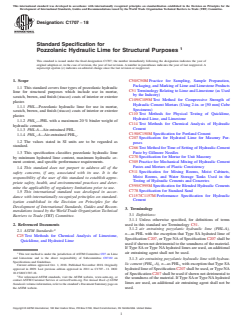
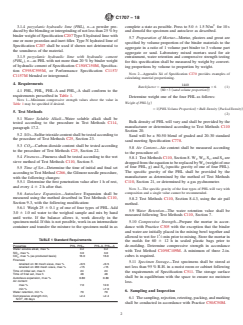


ASTM C1707-18 - Standard Specification for Pozzolanic Hydraulic Lime for Structural Purposes
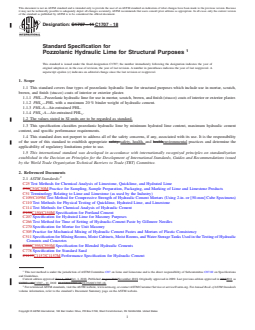
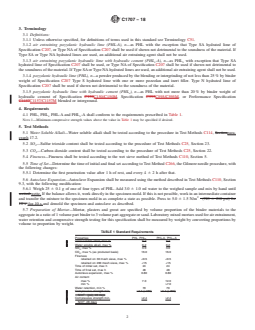


REDLINE ASTM C1707-18 - Standard Specification for Pozzolanic Hydraulic Lime for Structural Purposes
Get Certified
Connect with accredited certification bodies for this standard

ICC Evaluation Service
Building products evaluation and certification.

QAI Laboratories
Building and construction product testing and certification.

Aboma Certification B.V.
Specialized in construction, metal, and transport sectors.
Sponsored listings
Frequently Asked Questions
ASTM C1707-18 is a technical specification published by ASTM International. Its full title is "Standard Specification for Pozzolanic Hydraulic Lime for Structural Purposes". This standard covers: ABSTRACT This specification covers four types of pozzolanic hydraulic lime for structural purposes which include use in mortar, scratch, brown, and finish (stucco) coats of interior or exterior plaster. The four types of pozzolanic hydraulic lime are classified according to the minimum hydrated lime content, maximum hydraulic cement content, and specific performance requirements. Test specimens shall be stored in a moist room or cabinet wherein the storage surface shall be in equilibrium with the space to ensure no moisture loss. The specimens shall be subjected to testing to determine conformance to the following requirements: water soluble alkali, sulfur trioxide content, carbon dioxide content, fineness, maximum time of initial and final set, autoclave expansion, air content, water retention, and compressive strength. SCOPE 1.1 This standard covers four types of pozzolanic hydraulic lime for structural purposes which include use in mortar, scratch, brown, and finish (stucco) coats of interior or exterior plaster. 1.1.1 PHL—Pozzolanic hydraulic lime for use in mortar, scratch, brown, and finish (stucco) coats of interior or exterior plaster. 1.1.2 PHLc—PHL with a maximum 20 % binder weight of hydraulic cement. 1.1.3 PHL-A—Air-entrained PHL. 1.1.4 PHLc-A—Air-entrained PHLc. 1.2 The values stated in SI units are to be regarded as standard. 1.3 This specification classifies pozzolanic hydraulic lime by minimum hydrated lime content, maximum hydraulic cement content, and specific performance requirements. 1.4 This standard does not purport to address all of the safety concerns, if any, associated with its use. It is the responsibility of the user of this standard to establish appropriate safety, health, and environmental practices and determine the applicability of regulatory limitations prior to use. 1.5 This international standard was developed in accordance with internationally recognized principles on standardization established in the Decision on Principles for the Development of International Standards, Guides and Recommendations issued by the World Trade Organization Technical Barriers to Trade (TBT) Committee.
ABSTRACT This specification covers four types of pozzolanic hydraulic lime for structural purposes which include use in mortar, scratch, brown, and finish (stucco) coats of interior or exterior plaster. The four types of pozzolanic hydraulic lime are classified according to the minimum hydrated lime content, maximum hydraulic cement content, and specific performance requirements. Test specimens shall be stored in a moist room or cabinet wherein the storage surface shall be in equilibrium with the space to ensure no moisture loss. The specimens shall be subjected to testing to determine conformance to the following requirements: water soluble alkali, sulfur trioxide content, carbon dioxide content, fineness, maximum time of initial and final set, autoclave expansion, air content, water retention, and compressive strength. SCOPE 1.1 This standard covers four types of pozzolanic hydraulic lime for structural purposes which include use in mortar, scratch, brown, and finish (stucco) coats of interior or exterior plaster. 1.1.1 PHL—Pozzolanic hydraulic lime for use in mortar, scratch, brown, and finish (stucco) coats of interior or exterior plaster. 1.1.2 PHLc—PHL with a maximum 20 % binder weight of hydraulic cement. 1.1.3 PHL-A—Air-entrained PHL. 1.1.4 PHLc-A—Air-entrained PHLc. 1.2 The values stated in SI units are to be regarded as standard. 1.3 This specification classifies pozzolanic hydraulic lime by minimum hydrated lime content, maximum hydraulic cement content, and specific performance requirements. 1.4 This standard does not purport to address all of the safety concerns, if any, associated with its use. It is the responsibility of the user of this standard to establish appropriate safety, health, and environmental practices and determine the applicability of regulatory limitations prior to use. 1.5 This international standard was developed in accordance with internationally recognized principles on standardization established in the Decision on Principles for the Development of International Standards, Guides and Recommendations issued by the World Trade Organization Technical Barriers to Trade (TBT) Committee.
ASTM C1707-18 is classified under the following ICS (International Classification for Standards) categories: 91.100.10 - Cement. Gypsum. Lime. Mortar. The ICS classification helps identify the subject area and facilitates finding related standards.
ASTM C1707-18 has the following relationships with other standards: It is inter standard links to ASTM C109/C109M-23, ASTM C51-23, ASTM C114-23, ASTM C305-20, ASTM C50/C50M-13(2019), ASTM C25-19e1, ASTM C270-19ae1, ASTM C270-19a, ASTM C150/C150M-19, ASTM C270-19, ASTM C51-18, ASTM C1157/C1157M-17, ASTM C595/C595M-17, ASTM C110-16, ASTM C150/C150M-16. Understanding these relationships helps ensure you are using the most current and applicable version of the standard.
ASTM C1707-18 is available in PDF format for immediate download after purchase. The document can be added to your cart and obtained through the secure checkout process. Digital delivery ensures instant access to the complete standard document.
Standards Content (Sample)
This international standard was developed in accordance with internationally recognized principles on standardization established in the Decision on Principles for the
Development of International Standards, Guides and Recommendations issued by the World Trade Organization Technical Barriers to Trade (TBT) Committee.
Designation: C1707 − 18
Standard Specification for
Pozzolanic Hydraulic Lime for Structural Purposes
This standard is issued under the fixed designation C1707; the number immediately following the designation indicates the year of
original adoption or, in the case of revision, the year of last revision. A number in parentheses indicates the year of last reapproval. A
superscript epsilon (´) indicates an editorial change since the last revision or reapproval.
1. Scope C50/C50M Practice for Sampling, Sample Preparation,
Packaging, and Marking of Lime and Limestone Products
1.1 This standard covers four types of pozzolanic hydraulic
C51 Terminology Relating to Lime and Limestone (as Used
lime for structural purposes which include use in mortar,
by the Industry)
scratch, brown, and finish (stucco) coats of interior or exterior
C109/C109M Test Method for Compressive Strength of
plaster.
Hydraulic Cement Mortars (Using 2-in. or [50 mm] Cube
1.1.1 PHL—Pozzolanic hydraulic lime for use in mortar,
Specimens)
scratch, brown, and finish (stucco) coats of interior or exterior
C110 Test Methods for Physical Testing of Quicklime,
plaster.
Hydrated Lime, and Limestone
1.1.2 PHL —PHL with a maximum 20 % binder weight of
c
C114 Test Methods for Chemical Analysis of Hydraulic
hydraulic cement.
Cement
1.1.3 PHL-A—Air-entrained PHL.
C150/C150M Specification for Portland Cement
1.1.4 PHL -A—Air-entrained PHL .
c c
C207 Specification for Hydrated Lime for Masonry Pur-
1.2 The values stated in SI units are to be regarded as
poses
standard.
C266 Test Method for Time of Setting of Hydraulic-Cement
Paste by Gillmore Needles
1.3 This specification classifies pozzolanic hydraulic lime
by minimum hydrated lime content, maximum hydraulic ce- C270 Specification for Mortar for Unit Masonry
C305 Practice for Mechanical Mixing of Hydraulic Cement
ment content, and specific performance requirements.
Pastes and Mortars of Plastic Consistency
1.4 This standard does not purport to address all of the
C511 Specification for Mixing Rooms, Moist Cabinets,
safety concerns, if any, associated with its use. It is the
Moist Rooms, and Water Storage Tanks Used in the
responsibility of the user of this standard to establish appro-
Testing of Hydraulic Cements and Concretes
priate safety, health, and environmental practices and deter-
C595/C595M Specification for Blended Hydraulic Cements
mine the applicability of regulatory limitations prior to use.
C778 Specification for Standard Sand
1.5 This international standard was developed in accor-
C1157/C1157M Performance Specification for Hydraulic
dance with internationally recognized principles on standard-
Cement
ization established in the Decision on Principles for the
Development of International Standards, Guides and Recom-
3. Terminology
mendations issued by the World Trade Organization Technical
3.1 Definitions:
Barriers to Trade (TBT) Committee.
3.1.1 Unless otherwise specified, for definitions of terms
used in this standard see Terminology C51.
2. Referenced Documents
3.1.2 air entraining pozzolanic hydraulic lime (PHL-A),
2.1 ASTM Standards:
n—as PHL with the exception that Type SA hydrated lime of
C25 Test Methods for Chemical Analysis of Limestone,
Specification C207, or Type NA of Specification C207 shall be
Quicklime, and Hydrated Lime
used if shown not detrimental to the soundness of the material.
If Type SA or Type NA hydrated limes are used, an additional
1 air entraining agent shall not be used.
This test method is under the jurisdiction of ASTM Committee C07 on Lime
and Limestone and is the direct responsibility of Subcommittee C07.02 on
3.1.3 air entraining pozzolanic hydraulic lime with hydrau-
Specifications and Guidelines.
lic cement (PHL -A), n—as PHL with exception that Type SA
c c
Current edition approved Oct. 1, 2018. Published November 2018. Originally
hydrated lime of Specification C207 shall be used, or Type NA
approved in 2009. Last previous edition approved in 2011 as C1707 – 11. DOI:
10.1520/C1707-18.
of Specification C207 shall be used if shown not detrimental to
For referenced ASTM standards, visit the ASTM website, www.astm.org, or
the soundness of the material. If Type SA or Type NA hydrated
contact ASTM Customer Service at service@astm.org. For Annual Book of ASTM
limes are used, an additional air entraining agent shall not be
Standards volume information, refer to the standard’s Document Summary page on
the ASTM website. used.
Copyright © ASTM International, 100 Barr Harbor Drive, PO Box C700, West Conshohocken, PA 19428-2959. United States
C1707 − 18
3.1.4 pozzolanic hydraulic lime (PHL), n—a powder pro- complete a state as possible. Press to 5.0 6 1.5 N/m for 10 s
duced by the blending or intergrinding of not less than 25 % by and demold the specimen and autoclave as described.
binder weight of Specification C207 Type S hydrated lime with
5.7 Preparation of Mortar—Mortar, plasters and grout are
one or more pozzolan and inert filler. Type N hydrated lime of
specified by volume proportion of the binder materials to the
Specification C207 shall be used if shown not detrimental to
aggregate in a ratio of 1 volume part binder to 3 volume part
the soundness of the material.
aggregate or sand. Laboratory mixed mortars used for air
3.1.5 pozzolanic hydraulic lime with hydraulic cement
entrainment, water retention and compressive strength testing
(PHL ), n—as PHL with not more than 20 % by binder weight
for this specification shall be measured by weight by convert-
c
of hydraulic cement of Specification C150/C150M, Specifica-
ing proportions by volume to proportion by weight.
tion C595/C595M, or Performance Specification C1157/
NOTE 2—Appendix X4 of Specification C270 provides
...
This document is not an ASTM standard and is intended only to provide the user of an ASTM standard an indication of what changes have been made to the previous version. Because
it may not be technically possible to adequately depict all changes accurately, ASTM recommends that users consult prior editions as appropriate. In all cases only the current version
of the standard as published by ASTM is to be considered the official document.
Designation: C1707 − 11 C1707 − 18
Standard Specification for
Pozzolanic Hydraulic Lime for Structural Purposes
This standard is issued under the fixed designation C1707; the number immediately following the designation indicates the year of
original adoption or, in the case of revision, the year of last revision. A number in parentheses indicates the year of last reapproval. A
superscript epsilon (´) indicates an editorial change since the last revision or reapproval.
1. Scope
1.1 This standard covers four types of pozzolanic hydraulic lime for structural purposes which include use in mortar, scratch,
brown, and finish (stucco) coats of interior or exterior plaster.
1.1.1 PHL—Pozzolanic hydraulic lime for use in mortar, scratch, brown, and finish (stucco) coats of interior or exterior plaster.
1.1.2 PHL —PHL with a maximum 20 % binder weight of hydraulic cement.
c
1.1.3 PHL-A—Air-entrained PHL.
1.1.4 PHL -A—Air-entrained PHL .
c c
1.2 The values stated in SI units are to be regarded as standard.
1.3 This specification classifies pozzolanic hydraulic lime by minimum hydrated lime content, maximum hydraulic cement
content, and specific performance requirements.
1.4 This standard does not purport to address all of the safety concerns, if any, associated with its use. It is the responsibility
of the user of this standard to establish appropriate safety safety, health, and healthenvironmental practices and determine the
applicability of regulatory limitations prior to use.
1.5 This international standard was developed in accordance with internationally recognized principles on standardization
established in the Decision on Principles for the Development of International Standards, Guides and Recommendations issued
by the World Trade Organization Technical Barriers to Trade (TBT) Committee.
2. Referenced Documents
2.1 ASTM Standards:
C25 Test Methods for Chemical Analysis of Limestone, Quicklime, and Hydrated Lime
C50C50/C50M Practice for Sampling, Sample Preparation, Packaging, and Marking of Lime and Limestone Products
C51 Terminology Relating to Lime and Limestone (as used by the Industry)
C109/C109M Test Method for Compressive Strength of Hydraulic Cement Mortars (Using 2-in. or [50-mm] Cube Specimens)
C110 Test Methods for Physical Testing of Quicklime, Hydrated Lime, and Limestone
C114 Test Methods for Chemical Analysis of Hydraulic Cement
C150C150/C150M Specification for Portland Cement
C207 Specification for Hydrated Lime for Masonry Purposes
C266 Test Method for Time of Setting of Hydraulic-Cement Paste by Gillmore Needles
C270 Specification for Mortar for Unit Masonry
C305 Practice for Mechanical Mixing of Hydraulic Cement Pastes and Mortars of Plastic Consistency
C511 Specification for Mixing Rooms, Moist Cabinets, Moist Rooms, and Water Storage Tanks Used in the Testing of Hydraulic
Cements and Concretes
C595C595/C595M Specification for Blended Hydraulic Cements
C778 Specification for Standard Sand
C1157C1157/C1157M Performance Specification for Hydraulic Cement
This test method is under the jurisdiction of ASTM Committee C07 on Lime and Limestone and is the direct responsibility of Subcommittee C07.02 on Specifications
and Guidelines.
Current edition approved June 1, 2011Oct. 1, 2018. Published August 2011November 2018. Originally approved in 2009. Last previous edition approved in 20102011 as
C1707 – 10.C1707 – 11. DOI: 10.1520/C1707-11.10.1520/C1707-18.
For referenced ASTM standards, visit the ASTM website, www.astm.org, or contact ASTM Customer Service at service@astm.org. For Annual Book of ASTM Standards
volume information, refer to the standard’s Document Summary page on the ASTM website.
Copyright © ASTM International, 100 Barr Harbor Drive, PO Box C700, West Conshohocken, PA 19428-2959. United States
C1707 − 18
3. Terminology
3.1 Definitions:
3.1.1 Unless otherwise specified, for definitions of terms used in this standard see Terminology C51.
3.1.2 air entraining pozzolanic hydraulic lime (PHL-A), n—as PHL with the exception that Type SA hydrated lime of
Specification C207, or Type NA of Specification C207 shall be used if shown not detrimental to the soundness of the material. If
Type SA or Type NA hydrated limes are used, an additional air entraining agent shall not be used.
3.1.3 air entraining pozzolanic hydraulic lime with hydraulic cement (PHL -A), n—as PHL with exception that Type SA
c c
hydrated lime of Specification C207 shall be used, or Type NA of Specification C207 shall be used if shown not detrimental to
the soundness of the material. If Type SA or Type NA hydrated limes are used, an additional air entraining agent shall not be used.
3.1.4 pozzolanic hydraulic lime (PHL), n—a powder produced by the blending or intergrinding of not less than 25 % by binder
weight of Specification C207 Type S hydrated lime with one or more pozzolan and inert filler. Type N hydrated lime of
Specification C207 shall be used if shown not detrimental to the soundness of the material.
3.1.5 pozzolanic hydraulic lime with hydraulic cement (PHL ), n—as PHL with not more than 20 % by binder weight of
c
hydraulic cement of Specification C150C150/C150M, Specification C595C595/C595M, or Performance Specification
C1157C1157/C1157M blended or interground.
4. Requirements
4.1 PHL, PHL PHL-A and PHL -A shall conform to the requirements prescribed in Table 1.
c c
NOTE 1—Minimum compressive strength values above the value in Table 1 may be specified if desired.
5. Test Methods
5.1 Water Soluble Alkali—Water soluble alkali shall be tested according to the procedure in Test Methods C114, Sectionpara-
graph 17.2.
5.2 SO —Sulfur trioxide content shall be tested according to the procedure of Test Methods C25, Section 23.
5.3 CO —Carbon dioxide content shall be tested acco
...
Questions, Comments and Discussion
Ask us and Technical Secretary will try to provide an answer. You can facilitate discussion about the standard in here.
Loading comments...