

ASTM C1164-22
(Practice)Standard Practice for Evaluation of Limestone or Lime Uniformity From a Single Source
General Information
- Abstract
SIGNIFICANCE AND USE
4.1 This practice is designed to present in a standardized format information on the variability of limestone or lime from a single source over a period of time. It can be applied to all materials covered in Test Methods C25, C110, C1271, and C1301, and Specification C141.
SCOPE
1.1 This practice is intended for use in instances where the purchaser desires information on the uniformity of limestone or lime produced at a single source. It is intended that this test method normally be used for the predominant material manufactured at a plant. Guidelines for sampling, testing and presentation of results (Table 1) are given.
1.2 This standard does not purport to address all of the safety concerns, if any, associated with its use. It is the responsibility of the user of this standard to establish appropriate safety, health, and environmental practices and determine the applicability of regulatory limitations prior to use.
1.3 This international standard was developed in accordance with internationally recognized principles on standardization established in the Decision on Principles for the Development of International Standards, Guides and Recommendations issued by the World Trade Organization Technical Barriers to Trade (TBT) Committee.
- Status
- Published
- Publication Date
- 30-Jun-2022
- Technical Committee
- C07 - Lime and Limestone
- Drafting Committee
- C07.02 - Specifications and Guidelines
Buy Documents


ASTM C1164-22 - Standard Practice for Evaluation of Limestone or Lime Uniformity From a Single Source

REDLINE ASTM C1164-22 - Standard Practice for Evaluation of Limestone or Lime Uniformity From a Single Source
Overview
ASTM C1164-22: Standard Practice for Evaluation of Limestone or Lime Uniformity From a Single Source is an international standard developed by ASTM International. This practice provides systematic procedures for assessing the uniformity and variability of limestone or lime products originating from a single production source over time. Its primary focus is ensuring reliable, consistent quality information for consumers and producers by outlining standardized methods for sampling, testing, and reporting results. ASTM C1164-22 applies to all materials covered in related ASTM testing and specification standards, making it a crucial reference in the manufacture, procurement, and quality assurance of limestone, quicklime, and hydrated lime.
Key Topics
- Uniformity Evaluation: The standard guides users on how to evaluate the consistency of limestone or lime products from one source, helping purchasers assess quality and performance over time.
- Sampling Procedures: Clear guidelines are provided for qualified personnel to collect samples, as defined in ASTM C50, ensuring consistent and representative sampling practices.
- Test Methods: Chemical, physical, and spectrometric analyses are to be performed in accordance with ASTM C25, C110, C1271, and C1301, as well as specification C141 for hydraulic hydrated lime.
- Presentation of Results: Detailed requirements ensure that test results, including averages and standard deviations, are reported clearly, enabling stakeholders to make informed decisions based on standardized data.
- Scope of Use: Typically employed when purchasers require detailed information about the quality consistency of the predominant material produced at a plant.
- Responsibility for Safety: Users must establish appropriate safety, health, and environmental practices and comply with regulatory requirements.
Applications
ASTM C1164-22 is widely used in industries that rely on the consistent quality of lime and limestone products. Its practical applications include:
- Manufacturing Quality Control: Plant operators and manufacturers use this standard to monitor process stability, identify production inconsistencies, and maintain high product quality.
- Supplier Auditing and Qualification: Purchasers and auditors utilize data generated through this practice to evaluate the reliability of suppliers, ensuring consistent performance, especially for large-scale or long-term supply contracts.
- Regulatory Compliance: Organizations may reference ASTM C1164-22 as part of their strategies for meeting regulatory or customer-specific requirements regarding raw material uniformity.
- Construction and Structural Applications: Ensuring uniformity in lime or limestone is critical in structural applications, such as mortar production or chemical processing, where fluctuations in raw material can affect safety and performance.
- Research and Development: Laboratories employ this standard as a foundation for research on product optimization and to compare materials from different sources or production periods.
Related Standards
ASTM C1164-22 is intended to be used in conjunction with several other key ASTM standards. These related documents provide guidance on testing methods, terminology, and sampling techniques:
- ASTM C25: Test Methods for Chemical Analysis of Limestone, Quicklime, and Hydrated Lime.
- ASTM C50: Practice for Sampling, Sample Preparation, Packaging, and Marking of Lime and Limestone Products.
- ASTM C51: Terminology Relating to Lime and Limestone.
- ASTM C110: Test Methods for Physical Testing of Quicklime, Hydrated Lime, and Limestone.
- ASTM C1271: Test Method for X-ray Spectrometric Analysis of Lime and Limestone.
- ASTM C1301: Test Method for Major and Trace Elements in Limestone and Lime.
- ASTM C141: Specification for Hydrated Hydraulic Lime for Structural Purposes.
By adhering to ASTM C1164-22, organizations can confidently evaluate and communicate the uniformity and quality of their lime or limestone products, thereby supporting informed purchasing decisions and maintaining industry best practices.
Relations
- Effective Date
- 01-Oct-2023
- Effective Date
- 01-May-2019
- Effective Date
- 01-Dec-2018
- Refers
ASTM C110-16 - Standard Test Methods for Physical Testing of Quicklime, Hydrated Lime, and Limestone - Effective Date
- 01-Dec-2016
- Refers
ASTM C110-15 - Standard Test Methods for Physical Testing of Quicklime, Hydrated Lime, and Limestone - Effective Date
- 01-Jun-2015
- Effective Date
- 01-Jun-2015
- Refers
ASTM C110-14 - Standard Test Methods for Physical Testing of Quicklime, Hydrated Lime, and Limestone - Effective Date
- 01-Dec-2014
- Effective Date
- 01-Dec-2014
- Refers
ASTM C110-11 - Standard Test Methods for Physical Testing of Quicklime, Hydrated Lime, and Limestone - Effective Date
- 01-Jun-2011
- Effective Date
- 01-Jun-2011
- Effective Date
- 01-Jun-2011
- Refers
ASTM C110-10 - Standard Test Methods for Physical Testing of Quicklime, Hydrated Lime, and Limestone - Effective Date
- 01-Dec-2010
- Effective Date
- 15-Jun-2009
- Effective Date
- 01-Jun-2009
- Refers
ASTM C110-09 - Standard Test Methods for Physical Testing of Quicklime, Hydrated Lime, and Limestone - Effective Date
- 01-Mar-2009
Buy Documents
ASTM C1164-22 - Standard Practice for Evaluation of Limestone or Lime Uniformity From a Single Source
REDLINE ASTM C1164-22 - Standard Practice for Evaluation of Limestone or Lime Uniformity From a Single Source
Get Certified
Connect with accredited certification bodies for this standard

DIBt (Deutsches Institut für Bautechnik)
German Institute for Building Technology.
DIN CERTCO
DIN Group product certification.

Aboma Certification B.V.
Specialized in construction, metal, and transport sectors.
Sponsored listings
Frequently Asked Questions
ASTM C1164-22 is a standard published by ASTM International. Its full title is "Standard Practice for Evaluation of Limestone or Lime Uniformity From a Single Source". This standard covers: SIGNIFICANCE AND USE 4.1 This practice is designed to present in a standardized format information on the variability of limestone or lime from a single source over a period of time. It can be applied to all materials covered in Test Methods C25, C110, C1271, and C1301, and Specification C141. SCOPE 1.1 This practice is intended for use in instances where the purchaser desires information on the uniformity of limestone or lime produced at a single source. It is intended that this test method normally be used for the predominant material manufactured at a plant. Guidelines for sampling, testing and presentation of results (Table 1) are given. 1.2 This standard does not purport to address all of the safety concerns, if any, associated with its use. It is the responsibility of the user of this standard to establish appropriate safety, health, and environmental practices and determine the applicability of regulatory limitations prior to use. 1.3 This international standard was developed in accordance with internationally recognized principles on standardization established in the Decision on Principles for the Development of International Standards, Guides and Recommendations issued by the World Trade Organization Technical Barriers to Trade (TBT) Committee.
SIGNIFICANCE AND USE 4.1 This practice is designed to present in a standardized format information on the variability of limestone or lime from a single source over a period of time. It can be applied to all materials covered in Test Methods C25, C110, C1271, and C1301, and Specification C141. SCOPE 1.1 This practice is intended for use in instances where the purchaser desires information on the uniformity of limestone or lime produced at a single source. It is intended that this test method normally be used for the predominant material manufactured at a plant. Guidelines for sampling, testing and presentation of results (Table 1) are given. 1.2 This standard does not purport to address all of the safety concerns, if any, associated with its use. It is the responsibility of the user of this standard to establish appropriate safety, health, and environmental practices and determine the applicability of regulatory limitations prior to use. 1.3 This international standard was developed in accordance with internationally recognized principles on standardization established in the Decision on Principles for the Development of International Standards, Guides and Recommendations issued by the World Trade Organization Technical Barriers to Trade (TBT) Committee.
ASTM C1164-22 is classified under the following ICS (International Classification for Standards) categories: 91.100.10 - Cement. Gypsum. Lime. Mortar. The ICS classification helps identify the subject area and facilitates finding related standards.
ASTM C1164-22 has the following relationships with other standards: It is inter standard links to ASTM C51-23, ASTM C25-19e1, ASTM C51-18, ASTM C110-16, ASTM C110-15, ASTM C110-15e1, ASTM C110-14, ASTM C110-14e1, ASTM C110-11, ASTM C51-11, ASTM C25-11e1, ASTM C110-10, ASTM C110-09a, ASTM C1301-95(2009)e1, ASTM C110-09. Understanding these relationships helps ensure you are using the most current and applicable version of the standard.
ASTM C1164-22 is available in PDF format for immediate download after purchase. The document can be added to your cart and obtained through the secure checkout process. Digital delivery ensures instant access to the complete standard document.
Standards Content (Sample)
This international standard was developed in accordance with internationally recognized principles on standardization established in the Decision on Principles for the
Development of International Standards, Guides and Recommendations issued by the World Trade Organization Technical Barriers to Trade (TBT) Committee.
Designation: C1164 − 22
Standard Practice for
Evaluation of Limestone or Lime Uniformity From a Single
Source
This standard is issued under the fixed designation C1164; the number immediately following the designation indicates the year of
original adoption or, in the case of revision, the year of last revision. A number in parentheses indicates the year of last reapproval. A
superscript epsilon (´) indicates an editorial change since the last revision or reapproval.
1. Scope Lime and Limestone
C1301 Test Method for Major and Trace Elements in Lime-
1.1 This practice is intended for use in instances where the
stone and Lime by Inductively Coupled Plasma-Atomic
purchaserdesiresinformationontheuniformityoflimestoneor
Emission Spectroscopy (ICP) and Atomic Absorption
lime produced at a single source. It is intended that this test
(AA)
method normally be used for the predominant material manu-
factured at a plant. Guidelines for sampling, testing and
3. Terminology
presentation of results (Table 1) are given.
3.1 Definitions:
1.2 This standard does not purport to address all of the
3.1.1 Fordefinitionsoftermsrelatingtothispracticereferto
safety concerns, if any, associated with its use. It is the
Terminology C51.
responsibility of the user of this standard to establish appro-
priate safety, health, and environmental practices and deter-
4. Significance and Use
mine the applicability of regulatory limitations prior to use.
4.1 This practice is designed to present in a standardized
1.3 This international standard was developed in accor-
format information on the variability of limestone or lime from
dance with internationally recognized principles on standard-
a single source over a period of time. It can be applied to all
ization established in the Decision on Principles for the
materials covered in Test Methods C25, C110, C1271, and
Development of International Standards, Guides and Recom-
C1301, and Specification C141.
mendations issued by the World Trade Organization Technical
Barriers to Trade (TBT) Committee.
5. Sampling
2. Referenced Documents
5.1 The sampling shall be done in accordance with Methods
C50.
2.1 ASTM Standards:
C25 Test Methods for Chemical Analysis of Limestone,
5.2 All sampling shall be performed by personnel qualified
Quicklime, and Hydrated Lime
by specific training for this purpose.
C50 Practice for Sampling, Sample Preparation, Packaging,
5.3 Datapointsshallbeanaverageofthreeormoreseparate
and Marking of Lime and Limestone Products
determinationsrelativetoaspecifiedunitoftime.Forexample:
C51 Terminology Relating to Lime and Limestone (as Used
(1) n determinations for daily average, (2) daily determinations
by the Industry)
for weekly average.
C110 Test Methods for Physical Testing of Quicklime,
5.4 The samples shall be identified by the date or dates that
Hydrated Lime, and Limestone
the represented material was obtained.
C141 Specification for Hydrated Hydraulic Lime for Struc-
tural Purposes
6. Procedure
C1271 Test Method for X-ray Spectrometric Analysis of
6.1 The minimum amount of testing (see 5.3) and the type
of test(s) to be performed should be agreed upon by the
This practice is under the jurisdiction of ASTM Committee C07 on Lime and
purchaser and producer.
Limestone and is the direct responsibility of Subcommittee C07.02 on Specifica-
tions and Guidelines. NOTE 1—A single daily analysis does not necessarily characterize a
Current edition approved July 1, 2022. Published July 2022. Originally approved product. A minimum of three analyses is more reasonable.
in 1990. Last previous edition approved in 2014 as C1164 – 14. DOI: 10.1520/
6.2 It is desirable that all tests used in a single evaluation be
C1164-22.
performed in the same laboratory, preferably by the same
For referenced ASTM standards, visit the ASTM website, www.astm.org, or
contact ASTM Customer Service at service@astm.org. For Annual Book of ASTM
person, in order for the results to be comparable.
Standards volume information, refer to the standard’s Document Summary page on
the ASTM website. NOTE 2—In order to obtain comparable results when exchanging
Copyright © ASTM International, 100 Barr Harbor Drive, PO Box C700, West Conshohocken, PA 19428-2959. United States
C1164 −
...
This document is not an ASTM standard and is intended only to provide the user of an ASTM standard an indication of what changes have been made to the previous version. Because
it may not be technically possible to adequately depict all changes accurately, ASTM recommends that users consult prior editions as appropriate. In all cases only the current version
of the standard as published by ASTM is to be considered the official document.
Designation: C1164 − 14 C1164 − 22
Standard Practice for
Evaluation of Limestone or Lime Uniformity From a Single
Source
This standard is issued under the fixed designation C1164; the number immediately following the designation indicates the year of
original adoption or, in the case of revision, the year of last revision. A number in parentheses indicates the year of last reapproval. A
superscript epsilon (´) indicates an editorial change since the last revision or reapproval.
1. Scope*Scope
1.1 This practice is intended for use in instances where the purchaser desires information on the uniformity of limestone or lime
produced at a single source. It is intended that this test method normally be used for the predominant material manufactured at a
plant. Guidelines for sampling, testing and presentation of results (Table 1) are given.
1.2 The values stated in inch-pound units are to be regarded as standard. The values given in parentheses are mathematical
conversions to SI units that are provided for information only and are not considered standard.
1.2 This standard does not purport to address all of the safety concerns, if any, associated with its use. It is the responsibility
of the user of this standard to establish appropriate safety safety, health, and healthenvironmental practices and determine the
applicability of regulatory limitations prior to use.
1.3 This international standard was developed in accordance with internationally recognized principles on standardization
established in the Decision on Principles for the Development of International Standards, Guides and Recommendations issued
by the World Trade Organization Technical Barriers to Trade (TBT) Committee.
2. Referenced Documents
2.1 ASTM Standards:
C25 Test Methods for Chemical Analysis of Limestone, Quicklime, and Hydrated Lime
C50 Practice for Sampling, Sample Preparation, Packaging, and Marking of Lime and Limestone Products
C51 Terminology Relating to Lime and Limestone (as Used by the Industry)
C110 Test Methods for Physical Testing of Quicklime, Hydrated Lime, and Limestone
C141 Specification for Hydrated Hydraulic Lime for Structural Purposes
C1271 Test Method for X-ray Spectrometric Analysis of Lime and Limestone
C1301 Test Method for Major and Trace Elements in Limestone and Lime by Inductively Coupled Plasma-Atomic Emission
Spectroscopy (ICP) and Atomic Absorption (AA)
3. Terminology
3.1 Definitions:
3.1.1 For definitions of terms relating to this practice refer to Terminology C51.
This practice is under the jurisdiction of ASTM Committee C07 on Lime and Limestone and is the direct responsibility of Subcommittee C07.02 on Specifications and
Guidelines.
Current edition approved Dec. 1, 2014July 1, 2022. Published December 2014July 2022. Originally approved in 1990. Last previous edition approved in 20092014 as
C1164 – 92 (2009).C1164 – 14. DOI: 10.1520/C1164-14.10.1520/C1164-22.
For referenced ASTM standards, visit the ASTM website, www.astm.org, or contact ASTM Customer Service at service@astm.org. For Annual Book of ASTM Standards
volume information, refer to the standard’s Document Summary page on the ASTM website.
*A Summary of Changes section appears at the end of this standard
Copyright © ASTM International, 100 Barr Harbor Drive, PO Box C700, West Conshohocken, PA 19428-2959. United States
C1164 − 22
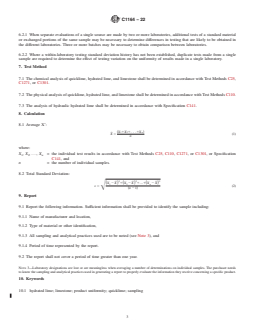
TABLE 1 High Calcium Quicklime January 1989
NOTE 1—This data is presented only as a sample of the correct method
for presentation. Other tests can be substituted and others omitted.
Test
Day
% Acid % Available
% CaO % MgO
Insoluble CaO
1 0.66 95.85 2.27 94.90
2 0.84 95.03 2.87 94.08
3 1.24 95.85 1.57 94.90
4 1.22 96.67 1.49 95.71
5 1.22 96.26 1.32 95.31
8 0.68 95.85 2.06 94.69
9 0.96 95.54 2.27 94.89
10 1.26 96.15 1.74 95.20
11 1.04 96.04 2.00 95.11
13 1.26 96.26 1.51 95.31
15 1.34 95.23 2.09 94.28
16 1.28 95.44 2.34 94.69
19 0.68 96.15 1.46 95.20
20 1.42 95.85 1.27 94.90
22 1.06 95.85 1.86 94.90
23 0.58 96.15 2.09 95.31
24 0.84 95.03 2.61 94.08
26 1.28 95.64 1.39 94.69
27 1.48 95.54 1.58 94.39
29 0.98 94.82 2.71 93.67
30 1.24 94.41 3.42 93.67
Avg 1.07 95.70 2.00 94.76
Range 0.90 2.26 2.15 2.04
Std Dev 0.26 0.54 0.56 0.54
4. Significance and Use
4.1 This practice is designed to present in a standardized format information on the variability of limestone or lime from a single
source over a period of time. It can be applied to all materials covered in Test Methods C25, C110, C1271, and C1301, and
Specification C141.
5. Sampling
5.1 The sampling shall be done in accordance with Methods C50.
5.2 All sampling shall be performed by personnel
...