

ASTM B1020/B1020M-22
(Specification)Standard Specification for Seamless Nickel Alloy Mechanical Tubing and Hollow Bar
General Information
- Abstract
SCOPE
1.1 This specification covers seamless nickel alloy tubing for use in mechanical applications or as hollow bar for use in the production of hollow components such as, but not limited to, nozzles, reducers, and couplings by machining where corrosion-resistant or high-temperature strength is needed. The grades covered are listed in Table 1.
1.2 This specification covers seamless cold-finished mechanical tubing and hollow bar, and seamless hot-finished mechanical tubing and hollow bar in sizes up to 123/4 in. [325 mm] in outside nominal diameter (for round tubing) with wall thicknesses or inside diameters as required.
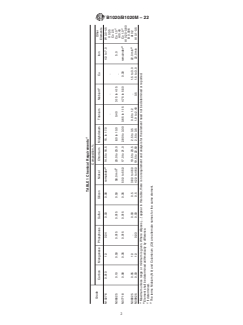
1.3 Optional supplementary requirements are provided and when desired, shall be stated in the order.
1.4 The values stated in either SI units or inch-pound units are to be regarded separately as standard. The values stated in each system are not necessarily exact equivalents; therefore, to ensure conformance with the standard, each system shall be used independently of the other, and values from the two systems shall not be combined.
1.5 This international standard was developed in accordance with internationally recognized principles on standardization established in the Decision on Principles for the Development of International Standards, Guides and Recommendations issued by the World Trade Organization Technical Barriers to Trade (TBT) Committee.
- Status
- Published
- Publication Date
- 30-Sep-2022
- Technical Committee
- B02 - Nonferrous Metals and Alloys
- Drafting Committee
- B02.07 - Refined Nickel and Cobalt and Their Alloys
Buy Documents
ASTM B1020/B1020M-22 - Standard Specification for Seamless Nickel Alloy Mechanical Tubing and Hollow Bar
REDLINE ASTM B1020/B1020M-22 - Standard Specification for Seamless Nickel Alloy Mechanical Tubing and Hollow Bar
Overview
ASTM B1020/B1020M-22 is the globally recognized standard specification for seamless nickel alloy mechanical tubing and hollow bar. Developed by ASTM International, this standard provides comprehensive requirements for producing seamless nickel alloy tubing intended for mechanical applications or machining into hollow components where high corrosion resistance or elevated temperature strength is essential. It addresses both cold-finished and hot-finished seamless products in a wide range of sizes, making it pivotal in industries where robust performance and durability are non-negotiable.
Key Topics
- Product Scope: Covers seamless nickel alloy mechanical tubing and hollow bar for use in nozzles, reducers, couplings, and similar components produced by machining.
- Grades Included: Specifies several nickel alloy grades, including N10276, N06625, N07718, N08825, and N09925, chosen for their corrosion resistance and mechanical properties.
- Manufacturing Methods: Permits both hot-finished and cold-finished processes, ensuring flexibility in achieving the required mechanical characteristics and surface finishes.
- Dimensional Tolerances: Outlines detailed tolerances for outside diameter, wall thickness, length, straightness, and squareness, ensuring precise dimensional control for end-use requirements.
- Mechanical and Chemical Requirements: Dictates the necessary hardness, tensile strength, and chemical composition for each alloy grade; supplementary tests and reporting are also addressed.
- Heat Treatment: Requires and specifies solution heat treatments and, where applicable, precipitation hardening steps to attain optimal performance properties.
- Testing and Inspection: Includes guidelines for required mechanical tests (tensile, hardness), non-destructive testing, and product analysis to verify conformance.
- Ordering and Marking: Details essential ordering information, including dimensions, grade, heat treatment condition, finish, and packaging, as well as guidelines on marking for civilian and government procurement.
Applications
Seamless nickel alloy mechanical tubing and hollow bar governed by ASTM B1020/B1020M-22 is extensively used in:
- Aerospace Manufacturing: For high-strength, corrosion-resistant hollow parts such as precision couplings and nozzles.
- Chemical Processing Equipment: Where tubing and components must withstand aggressive chemicals and elevated temperatures.
- Power Generation: In turbine components and heat exchangers requiring high temperature and oxidation resistance.
- Oil and Gas Industry: For downhole tools, drilling equipment, or piping where durability in harsh environments is critical.
- Marine Engineering: In machinery parts exposed to corrosive seawater and mechanical stress.
- Precision Machining: As hollow bar stock for manufacturing engineered components with strict dimensional and metallurgical requirements.
The standard’s stringent requirements on chemical composition, mechanical properties, and dimensional tolerances ensure the final products meet the demanding specifications of advanced engineering industries.
Related Standards
For enhanced understanding and proper application, ASTM B1020/B1020M-22 should be considered in relation to the following standards:
- ASTM B829: General requirements for nickel and nickel alloys seamless pipe and tube.
- ASTM E112: Test methods for determining average grain size in metallic materials.
- Fed. Std. No. 123 & MIL-STD-129/163: Guidelines for marking, packaging, and storage of shipments, pertinent for both civilian and military procurement.
Practical Value
Adhering to ASTM B1020/B1020M-22 ensures manufacturers, engineers, and end-users receive seamless nickel alloy tubing and hollow bar with consistent quality, mechanical reliability, and suitability for use in high-performance, high-risk industrial environments. This standard helps to minimize risk, streamline supply chain communication, support global trade compliance, and underpin the manufacture of advanced components critical to infrastructure, safety, and technology worldwide.
Keywords: seamless nickel alloy tubing, nickel alloy hollow bar, mechanical tubing, ASTM B1020, corrosion-resistant tubing, high-temperature tubing, precision hollow bar.
Relations
- Effective Date
- 01-Apr-2019
- Effective Date
- 01-Nov-2018
- Effective Date
- 01-Apr-2017
- Effective Date
- 15-Nov-2012
- Effective Date
- 01-Nov-2010
- Effective Date
- 15-Apr-2009
- Effective Date
- 23-Oct-2006
- Effective Date
- 01-Nov-2004
- Effective Date
- 01-Nov-2004
- Effective Date
- 01-Oct-2004
- Effective Date
- 01-Feb-2004
- Effective Date
- 10-May-1999
- Effective Date
- 01-Jan-1996
- Effective Date
- 01-Jan-1996
- Effective Date
- 01-Jan-1996
Buy Documents
ASTM B1020/B1020M-22 - Standard Specification for Seamless Nickel Alloy Mechanical Tubing and Hollow Bar
REDLINE ASTM B1020/B1020M-22 - Standard Specification for Seamless Nickel Alloy Mechanical Tubing and Hollow Bar
Get Certified
Connect with accredited certification bodies for this standard

Institut za varilstvo d.o.o. (Welding Institute)
Slovenia's leading welding institute since 1952. ISO 3834, EN 1090, pressure equipment certification, NDT personnel, welder qualification. Only IIW Au
Sponsored listings
Frequently Asked Questions
ASTM B1020/B1020M-22 is a technical specification published by ASTM International. Its full title is "Standard Specification for Seamless Nickel Alloy Mechanical Tubing and Hollow Bar". This standard covers: SCOPE 1.1 This specification covers seamless nickel alloy tubing for use in mechanical applications or as hollow bar for use in the production of hollow components such as, but not limited to, nozzles, reducers, and couplings by machining where corrosion-resistant or high-temperature strength is needed. The grades covered are listed in Table 1. 1.2 This specification covers seamless cold-finished mechanical tubing and hollow bar, and seamless hot-finished mechanical tubing and hollow bar in sizes up to 123/4 in. [325 mm] in outside nominal diameter (for round tubing) with wall thicknesses or inside diameters as required. 1.3 Optional supplementary requirements are provided and when desired, shall be stated in the order. 1.4 The values stated in either SI units or inch-pound units are to be regarded separately as standard. The values stated in each system are not necessarily exact equivalents; therefore, to ensure conformance with the standard, each system shall be used independently of the other, and values from the two systems shall not be combined. 1.5 This international standard was developed in accordance with internationally recognized principles on standardization established in the Decision on Principles for the Development of International Standards, Guides and Recommendations issued by the World Trade Organization Technical Barriers to Trade (TBT) Committee.
SCOPE 1.1 This specification covers seamless nickel alloy tubing for use in mechanical applications or as hollow bar for use in the production of hollow components such as, but not limited to, nozzles, reducers, and couplings by machining where corrosion-resistant or high-temperature strength is needed. The grades covered are listed in Table 1. 1.2 This specification covers seamless cold-finished mechanical tubing and hollow bar, and seamless hot-finished mechanical tubing and hollow bar in sizes up to 123/4 in. [325 mm] in outside nominal diameter (for round tubing) with wall thicknesses or inside diameters as required. 1.3 Optional supplementary requirements are provided and when desired, shall be stated in the order. 1.4 The values stated in either SI units or inch-pound units are to be regarded separately as standard. The values stated in each system are not necessarily exact equivalents; therefore, to ensure conformance with the standard, each system shall be used independently of the other, and values from the two systems shall not be combined. 1.5 This international standard was developed in accordance with internationally recognized principles on standardization established in the Decision on Principles for the Development of International Standards, Guides and Recommendations issued by the World Trade Organization Technical Barriers to Trade (TBT) Committee.
ASTM B1020/B1020M-22 is classified under the following ICS (International Classification for Standards) categories: 23.040.01 - Pipeline components and pipelines in general. The ICS classification helps identify the subject area and facilitates finding related standards.
ASTM B1020/B1020M-22 has the following relationships with other standards: It is inter standard links to ASTM B829-19, ASTM B829-18, ASTM B829-04a(2017), ASTM E112-12, ASTM E112-10, ASTM B829-04a(2009), ASTM E112-96(2004)e2, ASTM E112-96(2004), ASTM E112-96(2004)e1, ASTM B829-04a, ASTM B829-04, ASTM B829-99, ASTM E112-96e1, ASTM E112-96e3, ASTM E112-96e2. Understanding these relationships helps ensure you are using the most current and applicable version of the standard.
ASTM B1020/B1020M-22 is available in PDF format for immediate download after purchase. The document can be added to your cart and obtained through the secure checkout process. Digital delivery ensures instant access to the complete standard document.
Standards Content (Sample)
This international standard was developed in accordance with internationally recognized principles on standardization established in the Decision on Principles for the
Development of International Standards, Guides and Recommendations issued by the World Trade Organization Technical Barriers to Trade (TBT) Committee.
Designation:B1020/B1020M −22
Standard Specification for
Seamless Nickel Alloy Mechanical Tubing and Hollow Bar
This standard is issued under the fixed designation B1020/B1020M; the number immediately following the designation indicates the
year of original adoption or, in the case of revision, the year of last revision. A number in parentheses indicates the year of last
reapproval. A superscript epsilon (´) indicates an editorial change since the last revision or reapproval.
1. Scope* 2.2 Federal Standard:
Fed. Std. No. 123Marking for Shipments (Civil Agencies)
1.1 This specification covers seamless nickel alloy tubing
2.3 Military Standards:
for use in mechanical applications or as hollow bar for use in
MIL-STD-129Marking for Shipment and Storage
the production of hollow components such as, but not limited
MIL-STD-163SteelMillProductsPreparationforShipment
to, nozzles, reducers, and couplings by machining where
and Storage
corrosion-resistantorhigh-temperaturestrengthisneeded.The
grades covered are listed in Table 1.
3. Terminology
1.2 This specification covers seamless cold-finished me-
3.1 Definitions:
chanical tubing and hollow bar, and seamless hot-finished
3.1.1 hollow bar, n—round tubing that is intended to pro-
mechanical tubing and hollow bar in sizes up to 12 ⁄4 in.
duce engineering components by machining, generally speci-
[325 mm] in outside nominal diameter (for round tubing) with
fied by minimum outside diameter and maximum inside
wall thicknesses or inside diameters as required.
diameter.
1.3 Optional supplementary requirements are provided and
3.1.2 mechanical tubing, n—tubing of various shapes used
when desired, shall be stated in the order.
for mechanical and general engineering purposes, specified by
1.4 The values stated in either SI units or inch-pound units
nominal outside dimension and nominal wall.
are to be regarded separately as standard. The values stated in
each system are not necessarily exact equivalents; therefore, to 4. Ordering Information
ensure conformance with the standard, each system shall be
4.1 Orders for material under this specification should
used independently of the other, and values from the two
include the following as required to describe the desired
systems shall not be combined.
material adequately:
1.5 This international standard was developed in accor-
4.1.1 Quantity (feet, mass, or number of pieces),
dance with internationally recognized principles on standard-
4.1.2 Name of material (seamless mechanical tubing or
ization established in the Decision on Principles for the
hollow bar),
Development of International Standards, Guides and Recom-
4.1.3 Mechanical tubing form only (round, square,
mendations issued by the World Trade Organization Technical
rectangular, special, see 6.6),
Barriers to Trade (TBT) Committee.
4.1.4 Dimensions (round, nominal outside diameter and
nominal wall thickness, (see 8.1 and 8.2) or minimum outside
2. Referenced Documents
diameter and maximum inside diameter (see 8.3); square and
rectangular, nominal outside dimensions and nominal wall
2.1 ASTM Standards:
thickness, see Section 12; other, specify),
B829SpecificationforGeneralRequirementsforNickeland
4.1.5 Length (specific or random, see 8.4),
Nickel Alloys Seamless Pipe and Tube
4.1.6 Manufacture (cold- or hot-finished, see 6.5),
E112Test Methods for Determining Average Grain Size
4.1.7 Grade (Section 7),
4.1.8 Condition (solution heat-treated, as cold worked, or
with special heat treatment, controlled microstructural
This specification is under the jurisdiction of ASTM Committee B02 on
characteristics, or other condition as required, see 6.7 – 6.10),
Nonferrous Metals and Alloys and is the direct responsibility of Subcommittee
4.1.8.1 Forprecipitation-hardeninggrades,unlessotherwise
B02.07 on Refined Nickel and Cobalt and Their Alloys.
Current edition approved Oct. 1, 2022. Published October 2022. Originally
specified, the material will be supplied in the solution heat-
approved in 2021. Last previous edition approved in 2021 as B1020/B1020M–21.
treated condition.
DOI: 10.1520/B1020_B1020M-22.
For referenced ASTM standards, visit the ASTM website, www.astm.org, or
contact ASTM Customer Service at service@astm.org. For Annual Book of ASTM
Standards volume information, refer to the standard’s Document Summary page on AvailablefromStandardizationDocumentsOrderDesk,Bldg.4SectionD,700
the ASTM website. Robbins Ave., Philadelphia, PA 19111-5094, Attn: NPODS.
*A Summary of Changes section appears at the end of this standard
Copyright © ASTM International, 100 Barr Harbor Drive, PO Box C700, West Conshohocken, PA 19428-2959. United States
B1020/B1020M−22
A
TABLE 1 Chemical Requirements
Composition, %
Grade
Other
D
Carbon Manganese Phosphorus Sulfur Silicon Nickel Chromium Molybdenum Titanium Niobium Cu Iron
Elements
B
N10276 0.010 1.0 0.04 0.03 0.08 remainder 14.5 to 16.5 15. to 17.0 4.0 to 7.0 W 3.0-4.5
{{{ V 0.35
Co 2.5
B C
N06625 0.10 0.50 0.015 0.015 0.50 58.0 min 20.0 to 23.0 8.0 to 10.0 0.40 3.15 to 4.15 5.0 Co 1.0
{
Al 0.40
B C
N07718 0.08 0.35 0.015 0.015 0.35 50.0 to 55.0 17.0 to 21.0 2.80 to 3.30 0.65 to 1.15 4.75 to 5.50 0.30 remainder Co 1.0
Al 0.20-0.80
B 0.006
B
N08825 0.05 1.0 { 0.03 0.5 38.0 to 46.0 19.5 to 23.5 2.5 to 3.5 0.6 to 1.2 { 1.5to3.0 22.0min Al 0.2
N09925 0.03 1.0 0.03 0.03 0.5 42.0 to 46.0 19.5 to 22.50 2.5 to 3.5 1.9 to 2.40 0.5 1.5 to 3.0 22.0 min Al 0.1-0.5
A
Maximum unless range or minimum is given. Where ellipses (.) appear in this table, there is no requirement and analysis for the element need not be determined or reported.
B
Element shall be determined arithmetically by difference.
C
If determined.
D
The terms Niobium (Nb) and Columbium (Cb) are alternate names for the same element.
B1020/B1020M−22
4.1.8.2 IfneithergradeofN06625isspecified,Grade2will producer shall remove the transition material by an established
be supplied. procedure that positively separates the grades.
4.1.9 Surface finish (special pickling, shot blasting, or
6.5 The tubes shall be made by a seamless process and by
polishing, as required, see Supplementary Requirement S4),
either cold working or hot working as specified. Seamless
4.1.10 Specification designation,
tubing is a tubular product made without a welded seam. It is
4.1.11 Report of chemical analysis, if required (see 7.2 –
usually manufactured by hot working and then cold finishing
7.4),
the hotworked tubing to produce the desired shape,
4.1.12 Individual supplementary requirements, if required,
dimensions, and properties.
NOTE 1—Supplementary requirements S1 and S2 are required for
6.6 Tubes for mechanical applications shall be furnished in
hollow bar only (see Section 10).
one of the following shapes, as specified by the purchaser:
4.1.13 End use,
round, square, rectangular, or special. Tubes to be used as
4.1.14 Packaging,
hollow bar shall be furnished in round shape.
4.1.15 Special marking (see 14.2),
4.1.16 Special packing (see 15.2), and
6.7 Roundseamlessmechanicaltubingisgenerallysupplied
4.1.17 Special requirements.
in the cold-worked and solution heat-treated condition (see 6.8
through 6.9). Square, rectangular, or other shapes of tubing are
5. General Requirements
generally supplied solution heat-treated prior to final cold
5.1 Material furnished under this specification shall con-
shaping. If some other condition is desired, details shall be
form to the applicable requirements of the current edition of
included in the order. Round seamless hollow bar is generally
Specification B829 unless otherwise provided herein.
applied in the hot-worked and solution heat-treated condition.
6.8 The thermal treatment for precipitation-hardening
6. Materials and Manufacture
grades shall be performed by a method and at a temperature
6.1 The material may be made by any process.
selected by the manufacturer unless otherwise specified by the
6.2 Ifaspecifictypeofmeltingisrequiredbythepurchaser,
purchaser.
it shall be as stated on the purchase order.
6.9 Unless otherwise specified, all mechanical tubing and
6.3 The primary melting may incorporate separate degas-
hollow bar shall be furnished in the solution heat-treated
sing or refining and may be followed by secondary melting,
condition as specified in Table 2. Alternatively, immediately
such as electroslag remelting or vacuum-arc remelting. If
followinghotformingwhilethetemperatureofthemechanical
secondary melting is employed, the heat shall be defined as all
tubing or hollow bar is not less than the specified minimum
of the ingots remelted from a single primary heat.
solution treatment temperature, tubes may be individually
6.4 The nickel alloy may be cast in ingots or may be strand quenched in water or rapidly cooled by other means. This
cast. When different grades are sequentially strand cast, iden- solution heat treatment shall precede final cold work, when
tification of the resultant transition material is required. The cold-worked tempers are required.
TABLE 2 Heat Treatment
Grade Recommended Solution Quench Recommended Precipitation Hardening
Treatment/Anneal Treatment
B
N10276 solution heat-treated at quenched in water or rapidly cooled by
2050 °F [1121 °C] other means
B
N06625 Grade 1 annealed 1600 °F [871 °C] min quenched in water or rapidly cooled by
other means
B
N06625 Grade 2 solution heat-treated at 2000 °F quenched in water or rapidly cooled by
[1093 °C] min, with or without
other means
subsequent stabilization anneal at
1800 °F [982 °C] min to increase
resistance to sensitization
A
N07718 solution heat-treated at 1700 to 1850 °F cool at rate equivalent to air cool or 1325 ± 25 °F [718 ± 14 °C], hold at temperature
[924 to 1010 °C], hold ⁄2 hmin faster for 8 h, furnace cool to 1150 ± 25 °F [621 ±
14 °C], hold until total precipitation heat
treatment time has reached 18 h, air cool
B
N08825 solution heat-treated at 1725 °F [940 °C] quenched in water or rapidly cooled by
to 1750 °F [980 °C] other means
A
N09925 solution heat-treated at 1825 to 1875 °F cool at rate equivalent to air cool or 1365 ± 25 °F [740 ± 14 °C], hold at temperature
[996 to 1024 °C], hold ⁄2 min, and 4 h faster for 6 to 9 h, furnace cool to 1150 ± 25 °F [621
max ± 14 °C], hold until total precipitation heat
treatment time has reached 18 h, air cool or
faster
A
The purchaser shall designate on the purchase order or inquiry any partial stage of heat treatment required on material to be shipped.
B
Material is supplied solution heat-treated/annealed condition as indicated.
B1020/B1020M−22
6.10 If any controlled microstructural characteristics are tubemaybeindividuallytestedforacceptance.Billetsortubes
required,theseshallbespecifiedsoastobeaguidetothemost which do not meet the requirements of this specification shall
suitable heat treatment. be rejected.
7. Chemical Composition 8. Permissible Variations in Dimensions of Round
Mechanical Tubing and Hollow Bar
7.1 The material shall conform to the requirements as to
chemical composition prescribed in Table 1. 8.1 Nominal Outside Diameter and Nominal Wall Thickness
(Cold Finished Mechanical Tubing and Hollow Bar)—
7.2 An analysis of each heat shall be made by the manufac-
Variations in outside diameter and wall thickness shall not
turer to determine the percentages of the elements specified. If
exceed the amounts prescribed in Table 3.
secondary melting processes are employed, the heat analysis
shallbeobtainedfromoneremeltedingotortheproductofone 8.2 Nominal Diameter and Nominal Wall Thickness (Hot
remelted ingot of each primary melt. The chemical composi- Finished Mechanical Tubing and Hollow Bar)—Variations in
tion thus determined, or that determined from a product outside diameter and wall thickness shall not exceed the
analysis made by the tubular product manufacturer, shall be amounts prescribed in Table 4.
reported to the purchaser or the purchaser’s representative and
8.3 Minimum Outside Diameter and Maximum Inside Di-
shallconformtotherequirementsspecified.Whenrequestedin
ameter (Cold-Finished and Hot-Finished Hollow Bar)—
theorderorcontract,areportofthisanalysisshallbefurnished
Variations in outside diameter and wall thickness shall not
to the purchaser.
exceed the amounts prescribed in Table 5.
7.3 Aproduct analysis of either one billet or one tube shall
8.4 Lengths (Cold Finished or Hot Finished)—Mechanical
be made for each heat.
tubing and hollow bar are commonly furnished in mill lengths
7.4 If the original test for product analysis fails, retests of 5 ft [1.5 m] and over. When random lengths are ordered,
two additional billets or tubes shall be made. Both retests, for mechanical tubing and hollow bar lengths may vary by an
the elements in question, shall meet the requirements of the amount up to 7 ft [2.1 m]. Definite cut lengths are furnished,
specification,otherwiseallremainingmaterialintheheatorlot when specified, to the length tolerances shown in Table 3 or
shall be rejected or, at the option of the producer, each billet or Table 4. For mechanical tubing and hollow bar ordered in
TABLE 3 Permissible Variations in Outside Diameter, Ovality, Wall Thickness, and Cut-Length Variations
A
(Cold-Finished Round Mechanical Tubing and Hollow Bar)
C,D
Prevailing Range B Wall Thickness in % Permissible Variations in Cut Length,
Outside Diameter,
Ovality, Double
E
B
Outside Nominal of Commercially in. [mm]
Tolerance, Outside Diameter
Diameter, in. [mm] Available Metric in. [mm] Tolerance when
Over Under Over Under
Over and Under wall is:
Sizes, mm
1 1
Under ⁄2 [13] Under 12.7 0.005 [0.1] less than 0.015 in. 15 15 ⁄8 [3] 0
[0.4 mm]
1 1 1
⁄2 [13] to 1 ⁄2 [38], 12.7 to 38.1, excl 0.005 [0.1] less than 0.065 in. 10 10 ⁄8 [3] 0
excl [1.6 mm]
1 1 3
1 ⁄2 [38] to 3 ⁄2 38.1 to 88.9 excl 0.010 [0.3] less than 0.095 in. 10 10 ⁄16 [5] 0
[90], excl [2.4 mm]
1 1 3
3 ⁄2 [90] to 5 ⁄2 88.9 to 139.7, excl 0.015 [0.4] less than 0.150 in. 10 10 ⁄16 [5] 0
[140], excl [3.8 mm]
1 3
5 ⁄2 [140] to 8 139.7 to 203.2, 0.030 [0.8] less than 0.240 in. 10 10 ⁄16 [5] 0
[200], excl excl [6.1 mm]
5 3
8 [200] to 8 ⁄8 203.2 to 219.1, 0.045 [1.1] less than 0.300 in. 10 10 ⁄16 [5] 0
[220], excl excl [7.6 mm]
5 3 3
8 ⁄8 [220] to 12 ⁄4 219.1 to 323.9, 0.062 [1.6] less than 0.350 in. 10 10 ⁄16 [5] 0
[325], incl incl [8.9 mm]
A 1 5
Tolerances of tubes produced by the rod or bar mandrel process and which have an inside diameter under ⁄2 in. [12.7 mm] (or an inside diameter under ⁄8 in. [15.8 mm]
when the wall thickness is more than 20 % of the outside diameter) are as shown in this table, except that wall thickness tolerances are 10 % over and under the specified
wall thickness.
B
For ovality values, the tolerance for average outside diameter at any one cross section does not exceed the outside diameter tolerance value for the applicable outside
diameter.
C
Many tubes with wall thicknesses more than 25 % of outside diameter or with wall thicknesses over 1 ⁄4 in. [31.7 mm], or weighing more than 90 lb/ft [60.5 kg/m], are
difficult to draw over a mandrel. Therefore, the wall thickness can vary 12 ⁄2 % over and under that specified. Also see Footnote (B).
D
1 5
For those tubes with inside diameter under ⁄2 in. [12.7 mm] (or under ⁄8 in. [15.8 mm] when the wall thickness is more than 20 % of the outside diameter) which are
not commonly drawn over a mandrel, Footnote (A) is not applicable. Therefore, the wall thickness can vary 15 % over and under that specified, and the inside diameter
is governed by both the outside diameter and wall thickness tolerances.
E
These tolerances apply to cut lengths up to and including 24 ft [7.3 m]. For lengths over 24 ft [7.3 m], an additional over tolerance of ⁄8 in. [3 mm] for each 10 ft [3 m]
or fraction thereof shall be permissible, up to a maximum tolerance of ⁄2 in. [13 mm].
B1020/B1020M−22
TABLE 4 Permissible Variations in Outside Diameter, Wall Thickness, and Cut-Length Variations (Hot-Finished Round Mechanical Tubing and Hollow Bar)
Prevailing Outside Diameter and Wall Thickness Tolerances Permissible Variations in
Specified
A
Range of Ratio of Cut Length, in. [mm]
Nominal
Commerc- Wall
Wall Thickness, %
Inch Size,
ially Thickness Outside Diameter, in.
Outside 0.109 in. 0.109 [2.77] to Over 0.172 [4.37] to Over 0.203 in. [5.16 mm]
Available to Outside [mm]
Diameter, [2.77 mm] and under 0.172 in. [4.37 mm], incl 0.203 in. [5.16 mm], incl
+–
Metric Diameter
in. [mm]
Over Under Over Under Over Under Over Under Over Under
Sizes, mm
Under 3 Under All wall 0.023 [0.6] 0.023 [0.6] 16.5 16.5 15 15 14 14 12.5 12.5 ⁄16 [4.8] 0
[75] 76.1 thicknesses
3 [75] to 76.1 to All wall 0.031 [0.8] 0.031 [0.8] 16.5 16.5 15 15 14 14 12.5 12.5 ⁄16 [4.8] 0
5 ⁄2 [140], 139.7, thicknesses
excl excl
1 3
5 ⁄2 [140] 139.7 to All wall 0.047 [1.2] 0.047 [1.2] . . . . 14 14 12.5 12.5 ⁄16 [4.8] 0
to 8 [200], 203.2, thicknesses
excl excl
8 [200] to 203.2 to 5 % and 0.047 [1.2] 0.047 [1.2] . . . . . . 12.5 12.5 ⁄16 [4.8] 0
10 ⁄4 273.1, over
[275], excl excl
3 3
10 ⁄4 [275] 273.1 to Under 5 0.063 [1.6] 0.063 [1.6] . . . . . . 12.5 12.5 ⁄16 [4.8] 0
to 12 ⁄4 323.9, incl %
[325], incl
A
These tolerances apply to cut lengths up to and including 24 ft [7.3 m]. For lengths over 24 ft [7.3 m], an additional over tolerance of ⁄8 in. [3 mm] for each 10 ft [3 m] or faction thereof shall be permissible, up to a
maximum tolerance of ⁄2 in. [13 mm].
B1020/B1020M−22
TABLE 5 Permissible Variations in Minimum Outside Diameter
9. Permissible Variations in Dimensions of Square and
and Maximum Inside Diameter
Rectangular Mechanical Tubing
(Cold-Finished and Hot-Finished Round Hollow Bar)
9.1 Square and rectangular seamless mechanical tubing is
Minimum Tolerance on Outside Maximum Tolerance on Inside
supplied as cold worked unless otherwise specified. For this
Outside Diameter in. [mm] Inside Diameter
Diameter Diameter in. [mm]
tubing, variations in dimensions from those specified shall not
(D) (d)
exceedtheamountsprescribedinTable7,Table8,Table9,and
in. [mm] in. [mm]
Table 10.
Over Under Over Under
9.2 Thesquarenessofsidesiscommonlydeterminedbyone
D<2[50] 0.04 [1] 0.00[0] d<2[50] 0.00 [0] 0.04[1]
A
D$ 2 [50] 0.02 D 0.00 [0] d<2[50] 0.00 [0] 0.04[1]
of the following methods.
A B
D$ 2 [50] 0.02 D 0.00 [0] d$ 2 [50] 0.00 [0] 0.02 d
9.2.1 A square, with two adjustable contact points on each
A
Calculate value: 2 % × Specified Minimum Outside Diameter.
arm, is placed on two sides. A fixed feeler gauge is then used
B
Calculate value: 2 % × Specified Maximum Inside Diameter.
to measure the maximum distance between the free contact
point and the surface of the tubing.
9.2.2 Asquare, equipped with a direct reading vernier, may
be used to determine the angular deviation which, in turn, may
multiple lengths, it is common practice to allow a definite
be related to distance in inches.
amount over for each multiple for the purchaser’s cutting
9.3 The squareness of sides varies in accordance with the
operations. This amount depends on the type of purchaser’s
following equation:
cutting and varies with differing wall thickness. The cutting
allowance should be specified on the purchase order. When it 6b 5 c 30.006 (1)
is not specified, mechanical tubing and hollow bar are custom-
where:
arily supplied with the following allowance for each multiple:
b = tolerance for out-of-square, and
Wall Thickness, Excess Length per Multiple,
c = length of longest side.
in. [mm] in. [mm]
1 1
Up to ⁄8 [3.2] ⁄8 [3]
Example:Rectangulartubes2by1mayhavesidesfailtobe
1 1 3
Over ⁄8 to ⁄2 [3.2 to 12.7] ⁄16 [5]
90° to each other by 60.012 in. [0.3 mm].
1 1
Over ⁄2 [12.7] ⁄4 [6]
9.4 The twist in square and rectangular tubing may be
8.5 Straightness Tolerances (Cold Finished or Hot Finished
measured by holding one end of the tubing on a surface plate
Mechanical Tubing)—Thedeviationfromstraightnessshallnot
andnotingtheheightabovethesurfaceplateofeithercornerof
exceed the amounts shown in Table 6 when measured with a
the opposite end of the same side.Twist may also be measured
3-ft [1m] straightedge and feeler gauge. If determined by the
by the use of a beveled protractor, equipped with a level, and
dial indicator method, the values obtained will be approxi-
noting the angular deviation on opposite ends, or at any point
matelytwicethosedeterminedbythestraightedgefeelergauge
throughout the length.
method.
10. Mechanical Properties – Hollow Bar
8.6 Straightness Tolerances (Cold Finished or Hot Finished
Hollow Bar)—The deviation from straightness of any hollow 10.1 Tensile Requirements:
bar length (L) shall not exceed 0.0015 L, and not exceeding 10.1.1 Thematerialshallconformtotherequirementsofthe
0.072 in. per 3 ft [2 mm per 1 m] when measured with a 3-ft tensile properties given in Table S2.1.
[1m] straight edge and feeler gage. If determined by the dial 10.1.2 One tension test shall be made on a specimen from
indicator method, the values
...
This document is not an ASTM standard and is intended only to provide the user of an ASTM standard an indication of what changes have been made to the previous version. Because
it may not be technically possible to adequately depict all changes accurately, ASTM recommends that users consult prior editions as appropriate. In all cases only the current version
of the standard as published by ASTM is to be considered the official document.
Designation: B1020/B1020M − 21 B1020/B1020M − 22
Standard Specification for
Seamless Nickel Alloy Mechanical Tubing and Hollow Bar
This standard is issued under the fixed designation B1020/B1020M; the number immediately following the designation indicates the
year of original adoption or, in the case of revision, the year of last revision. A number in parentheses indicates the year of last
reapproval. A superscript epsilon (´) indicates an editorial change since the last revision or reapproval.
1. Scope Scope*
1.1 This specification covers seamless nickel alloy tubing for use in mechanical applications or as hollow bar for use in the
production of hollow components such as, but not limited to, nozzles, reducers, and couplings by machining where
corrosion-resistant or high-temperature strength is needed. The grades covered are listed in Table 1.
1.2 This specification covers seamless cold-finished mechanical tubing and hollow bar, and seamless hot-finished mechanical
tubing and hollow bar in sizes up to 12 ⁄4 in.
[325 mm] in outside nominal diameter (for round tubing) with wall thicknesses or inside diameters as required.
1.3 Optional supplementary requirements are provided and when desired, shall be stated in the order.
1.4 The values stated in either SI units or inch-pound units are to be regarded separately as standard. The values stated in each
system are not necessarily exact equivalents; therefore, to ensure conformance with the standard, each system shall be used
independently of the other, and values from the two systems shall not be combined.
1.5 This international standard was developed in accordance with internationally recognized principles on standardization
established in the Decision on Principles for the Development of International Standards, Guides and Recommendations issued
by the World Trade Organization Technical Barriers to Trade (TBT) Committee.
2. Referenced Documents
2.1 ASTM Standards:
B829 Specification for General Requirements for Nickel and Nickel Alloys Seamless Pipe and Tube
E112 Test Methods for Determining Average Grain Size
2.2 Federal Standard:
Fed. Std. No. 123 Marking for Shipments (Civil Agencies)
2.3 Military Standards:
MIL-STD-129 Marking for Shipment and Storage
MIL-STD-163 Steel Mill Products Preparation for Shipment and Storage
3. Terminology
3.1 Definitions:
This specification is under the jurisdiction of ASTM Committee B02 on Nonferrous Metals and Alloys and is the direct responsibility of Subcommittee B02.07 on Refined
Nickel and Cobalt and Their Alloys.
Current edition approved Nov. 1, 2021Oct. 1, 2022. Published November 2021October 2022. Originally approved in 2021. Last previous edition approved in 2021 as
B1020/B1020M – 21. DOI: 10.1520/B1020_B1020M-21.10.1520/B1020_B1020M-22.
For referenced ASTM standards, visit the ASTM website, www.astm.org, or contact ASTM Customer Service at service@astm.org. For Annual Book of ASTM Standards
volume information, refer to the standard’s Document Summary page on the ASTM website.
Available from Standardization Documents Order Desk, Bldg. 4 Section D, 700 Robbins Ave., Philadelphia, PA 19111-5094, Attn: NPODS.
*A Summary of Changes section appears at the end of this standard
Copyright © ASTM International, 100 Barr Harbor Drive, PO Box C700, West Conshohocken, PA 19428-2959. United States
B1020/B1020M − 22
TABLE 1 Chemical Requirements
Composition, %
Phos-
Grade
Sulfur, Silicon, Other
C
Carbon Manganese phorus, Nickel Chromium Molybdenum Titanium Niobium Cu Iron
max max Elements
max
A
N10276 0.010 max 1.0 max 0.04 0.03 0.08 remainder 14.5 to 16.5 15. to 17.0 4.0 to 7.0 W 3.0-4.5
{ { { V 0.35
max
A B
N06625 0.10 max 0.50 max 0.015 0.015 0.50 58.0 min 20.0 to 23.0 8.0 to 10.0 0.40 max 3.15 to 4.15 5.0 max Co 1.0 max
{
Al 0.40 max
A B
N07718 0.08 max 0.35 max 0.015 0.015 0.35 50.0 to 55.0 17.0 to 21.0 2.80 to 3.30 0.65 to 1.15 4.75 to 5.50 0.30 max remainder Co 1.0 max
Al 0.20-0.80
B 0.006 max
A
N08825 0.05 max 1.0 max { 0.03 0.5 38.0 to 46.0 19.5 to 23.5 2.5 to 3.5 0.6 to 1.2 { 1.5 to 3.0 22.0 min {
N09925 0.03 max 1.0 max 0.03 0.03 0.5 42.0 to 46.0 19.5 to 22.50 2.5 to 3.5 1.9 to 2.40 0.5 max 1.5 to 3.0 22.0 min Al 0.1-0.5
A
TABLE 1 Chemical Requirements
Composition, %
Grade
Other
D
Carbon Manganese Phosphorus Sulfur Silicon Nickel Chromium Molybdenum Titanium Niobium Cu Iron
Elements
B
N10276 0.010 1.0 0.04 0.03 0.08 remainder 14.5 to 16.5 15. to 17.0 4.0 to 7.0 W 3.0-4.5
{ { { V 0.35
Co 2.5
B C
N06625 0.10 0.50 0.015 0.015 0.50 58.0 min 20.0 to 23.0 8.0 to 10.0 0.40 3.15 to 4.15 5.0 Co 1.0
{
Al 0.40
B C
N07718 0.08 0.35 0.015 0.015 0.35 50.0 to 55.0 17.0 to 21.0 2.80 to 3.30 0.65 to 1.15 4.75 to 5.50 0.30 remainder Co 1.0
Al 0.20-0.80
B 0.006
B
N08825 0.05 1.0 { 0.03 0.5 38.0 to 46.0 19.5 to 23.5 2.5 to 3.5 0.6 to 1.2 { 1.5 to 3.0 22.0 min Al 0.2
N09925 0.03 1.0 0.03 0.03 0.5 42.0 to 46.0 19.5 to 22.50 2.5 to 3.5 1.9 to 2.40 0.5 1.5 to 3.0 22.0 min Al 0.1-0.5
A
Maximum unless range or minimum is given. Where ellipses (.) appear in this table, there is no requirement and analysis for the element need not be determined or reported.
B
Element shall be determined arithmetically by difference.
C
If determined.
D
The terms Niobium (Nb) and Columbium (Cb) are alternate names for the same element.
B1020/B1020M − 22
3.1.1 hollow bar, n—round tubing that is intended to produce engineering components by machining, generally specified by
minimum outside diameter and maximum inside diameter.
3.1.2 mechanical tubing, n—tubing of various shapes used for mechanical and general engineering purposes, specified by nominal
outside dimension and nominal wall.
4. Ordering Information
4.1 Orders for material under this specification should include the following as required to describe the desired material
adequately:
4.1.1 Quantity (feet, mass, or number of pieces),
4.1.2 Name of material (seamless mechanical tubing or hollow bar),
4.1.3 Mechanical tubing form only (round, square, rectangular, special, see 6.6),
4.1.4 Dimensions (round, nominal outside diameter and nominal wall thickness, (see 8.1 and 8.2) or minimum outside diameter
and maximum inside diameter (see 8.3); square and rectangular, nominal outside dimensions and nominal wall thickness, see
Section 12; other, specify),
4.1.5 Length (specific or random, see 8.4),
4.1.6 Manufacture (cold- or hot-finished, see 6.5),
4.1.7 Grade (Section 7),
4.1.8 Condition (solution heat-treated, as cold worked, or with special heat treatment, controlled microstructural characteristics,
or other condition as required, see 6.7 – 6.10),
4.1.8.1 For precipitation-hardening grades, unless otherwise specified, the material will be supplied in the solution heat-treated
condition.
4.1.8.2 If neither grade of N06625 is specified, Grade 2 will be supplied.
4.1.9 Surface finish (special pickling, shot blasting, or polishing, as required, see Supplementary Requirement S4),
4.1.10 Specification designation,
4.1.11 Report of chemical analysis, if required (see 7.2 – 7.4),
4.1.12 Individual supplementary requirements, if required,
NOTE 1—Supplementary requirements S1 and S2 are required for hollow bar only (see Section 10).
4.1.13 End use,
4.1.14 Packaging,
4.1.15 Special marking (see 14.2),
4.1.16 Special packing (see 15.2), and
4.1.17 Special requirements.
B1020/B1020M − 22
5. General Requirements
5.1 Material furnished under this specification shall conform to the applicable requirements of the current edition of Specification
B829 unless otherwise provided herein.
6. Materials and Manufacture
6.1 The material may be made by any process.
6.2 If a specific type of melting is required by the purchaser, it shall be as stated on the purchase order.
6.3 The primary melting may incorporate separate degassing or refining and may be followed by secondary melting, such as
electroslag remelting or vacuum-arc remelting. If secondary melting is employed, the heat shall be defined as all of the ingots
remelted from a single primary heat.
6.4 The nickel alloy may be cast in ingots or may be strand cast. When different grades are sequentially strand cast, identification
of the resultant transition material is required. The producer shall remove the transition material by an established procedure that
positively separates the grades.
6.5 The tubes shall be made by a seamless process and by either cold working or hot working as specified. Seamless tubing is
a tubular product made without a welded seam. It is usually manufactured by hot working and then cold finishing the hotworked
tubing to produce the desired shape, dimensions, and properties.
6.6 Tubes for mechanical applications shall be furnished in one of the following shapes, as specified by the purchaser: round,
square, rectangular, or special. Tubes to be used as hollow bar shall be furnished in round shape.
6.7 Round seamless mechanical tubing is generally supplied in the cold-worked and solution heat-treated condition (see 6.8
through 6.9). Square, rectangular, or other shapes of tubing are generally supplied solution heat-treated prior to final cold shaping.
If some other condition is desired, details shall be included in the order. Round seamless hollow bar is generally applied in the
hot-worked and solution heat-treated condition.
6.8 The thermal treatment for precipitation-hardening grades shall be performed by a method and at a temperature selected by the
manufacturer unless otherwise specified by the purchaser.
6.9 Unless otherwise specified, all mechanical tubing and hollow bar shall be furnished in the solution heat-treated condition as
specified in Table 2. Alternatively, immediately following hot forming while the temperature of the mechanical tubing or hollow
bar is not less than the specified minimum solution treatment temperature, tubes may be individually quenched in water or rapidly
cooled by other means. This solution heat treatment shall precede final cold work, when cold-worked tempers are required.
6.10 If any controlled microstructural characteristics are required, these shall be specified so as to be a guide to the most suitable
heat treatment.
7. Chemical Composition
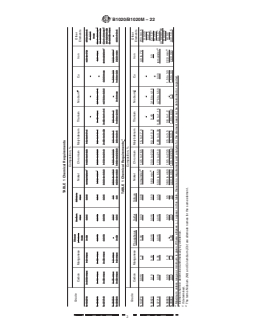
7.1 The material shall conform to the requirements as to chemical composition prescribed in Table 1.
7.2 An analysis of each heat shall be made by the manufacturer to determine the percentages of the elements specified. If
secondary melting processes are employed, the heat analysis shall be obtained from one remelted ingot or the product of one
remelted ingot of each primary melt. The chemical composition thus determined, or that determined from a product analysis made
by the tubular product manufacturer, shall be reported to the purchaser or the purchaser’s representative and shall conform to the
requirements specified. When requested in the order or contract, a report of this analysis shall be furnished to the purchaser.
7.3 A product analysis of either one billet or one tube shall be made for each heat.
B1020/B1020M − 22
TABLE 2 Heat Treatment
Grade Recommended Solution Quench Recommended Precipitation Hardening
Treatment/Anneal Treatment
B
N10276 solution heat-treated at quenched in water or rapidly cooled by
2050 °F [1121 °C] other means
B
N06625 Grade 1 annealed 1600 °F [871 °C] min quenched in water or rapidly cooled by
other means
B
N06625 Grade 2 solution heat-treated at 2000 °F quenched in water or rapidly cooled by
[1093 °C] min, with or without other means
subsequent stabilization anneal at
1800 °F [982 °C] min to increase
resistance to sensitization
A
N07718 solution heat-treated at 1700 to 1850 °F cool at rate equivalent to air cool or 1325 ± 25 °F [718 ± 14 °C], hold at temperature
[924 to 1010 °C], hold ⁄2 h min faster for 8 h, furnace cool to 1150 ± 25 °F [621 ±
14 °C], hold until total precipitation heat
treatment time has reached 18 h, air cool
B
N08825 solution heat-treated at 1725 °F [940 °C] quenched in water or rapidly cooled by
to 1750 °F [980 °C] other means
A
N09925 solution heat-treated at 1825 to 1875 °F cool at rate equivalent to air cool or 1365 ± 25 °F [740 ± 14 °C], hold at temperature
[996 to 1024 °C], hold ⁄2 min, and 4 h faster for 6 to 9 h, furnace cool to 1150 ± 25 °F [621
max ± 14 °C], hold until total precipitation heat
treatment time has reached 18 h, air cool or
faster
A
The purchaser shall designate on the purchase order or inquiry any partial stage of heat treatment required on material to be shipped.
B
Material is supplied solution heat-treated/annealed condition as indicated.
7.4 If the original test for product analysis fails, retests of two additional billets or tubes shall be made. Both retests, for the
elements in question, shall meet the requirements of the specification, otherwise all remaining material in the heat or lot shall be
rejected or, at the option of the producer, each billet or tube may be individually tested for acceptance. Billets or tubes which do
not meet the requirements of this specification shall be rejected.
8. Permissible Variations in Dimensions of Round Mechanical Tubing and Hollow Bar
8.1 Nominal Outside Diameter and Nominal Wall Thickness (Cold Finished Mechanical Tubing and Hollow Bar)—Variations in
outside diameter and wall thickness shall not exceed the amounts prescribed in Table 3.
8.2 Nominal Diameter and Nominal Wall Thickness (Hot Finished Mechanical Tubing and Hollow Bar)—Variations in outside
diameter and wall thickness shall not exceed the amounts prescribed in Table 4.
8.3 Minimum Outside Diameter and Maximum Inside Diameter (Cold-Finished and Hot-Finished Hollow Bar)—Variations in
outside diameter and wall thickness shall not exceed the amounts prescribed in Table 5.
8.4 Lengths (Cold Finished or Hot Finished)—Mechanical tubing and hollow bar are commonly furnished in mill lengths 5 ft [1.5
m] and over. When random lengths are ordered, mechanical tubing and hollow bar lengths may vary by an amount up to 7 ft [2.1
m]. Definite cut lengths are furnished, when specified, to the length tolerances shown in Table 3 or Table 4. For mechanical tubing
and hollow bar ordered in multiple lengths, it is common practice to allow a definite amount over for each multiple for the
purchaser’s cutting operations. This amount depends on the type of purchaser’s cutting and varies with differing wall thickness.
The cutting allowance should be specified on the purchase order. When it is not specified, mechanical tubing and hollow bar are
customarily supplied with the following allowance for each multiple:
Wall Thickness, Excess Length per Multiple,
in. [mm] in. [mm]
1 1
Up to ⁄8 [3.2] ⁄8 [3]
1 1 3
Over ⁄8 to ⁄2 [3.2 to 12.7] ⁄16 [5]
1 1
Over ⁄2 [12.7] ⁄4 [6]
8.5 Straightness Tolerances (Cold Finished or Hot Finished Mechanical Tubing)—The deviation from straightness shall not
exceed the amounts shown in Table 6 when measured with a 3-ft [1 m] straightedge and feeler gauge. If determined by the dial
indicator method, the values obtained will be approximately twice those determined by the straightedge feeler gauge method.
B1020/B1020M − 22
TABLE 3 Permissible Variations in Outside Diameter, Ovality, Wall Thickness, and Cut-Length Variations
A
(Cold-Finished Round Mechanical Tubing and Hollow Bar)
C,D
B
Prevailing Range Wall Thickness in % Permissible Variations in Cut Length,
Outside Diameter,
Ovality, Double
E
B
Outside Nominal of Commercially in. [mm]
Outside Diameter
Tolerance,
Tolerance when
Diameter, in. [mm] Available Metric in. [mm]
Over Under Over Under
wall is:
Over and Under
Sizes, mm
1 1
Under ⁄2 [13] Under 12.7 0.005 [0.1] less than 0.015 in. 15 15 ⁄8 [3] 0
[0.4 mm]
1 1 1
⁄2 [13] to 1 ⁄2 [38], 12.7 to 38.1, excl 0.005 [0.1] less than 0.065 in. 10 10 ⁄8 [3] 0
excl [1.6 mm]
1 1 3
1 ⁄2 [38] to 3 ⁄2 38.1 to 88.9 excl 0.010 [0.3] less than 0.095 in. 10 10 ⁄16 [5] 0
[90], excl [2.4 mm]
1 1 3
3 ⁄2 [90] to 5 ⁄2 88.9 to 139.7, excl 0.015 [0.4] less than 0.150 in. 10 10 ⁄16 [5] 0
[140], excl [3.8 mm]
1 3
5 ⁄2 [140] to 8 139.7 to 203.2, 0.030 [0.8] less than 0.240 in. 10 10 ⁄16 [5] 0
[200], excl excl [6.1 mm]
5 3
8 [200] to 8 ⁄8 203.2 to 219.1, 0.045 [1.1] less than 0.300 in. 10 10 ⁄16 [5] 0
[220], excl excl [7.6 mm]
5 3 3
8 ⁄8 [220] to 12 ⁄4 219.1 to 323.9, 0.062 [1.6] less than 0.350 in. 10 10 ⁄16 [5] 0
[325], incl incl [8.9 mm]
A
1 5
Tolerances of tubes produced by the rod or bar mandrel process and which have an inside diameter under ⁄2 in. [12.7 mm] (or an inside diameter under ⁄8 in. [15.8 mm]
when the wall thickness is more than 20 % of the outside diameter) are as shown in this table, except that wall thickness tolerances are 10 % over and under the specified
wall thickness.
B
For ovality values, the tolerance for average outside diameter at any one cross section does not exceed the outside diameter tolerance value for the applicable outside
diameter.
C
Many tubes with wall thicknesses more than 25 % of outside diameter or with wall thicknesses over 1 ⁄4 in. [31.7 mm], or weighing more than 90 lb/ft [60.5 kg/m], are
difficult to draw over a mandrel. Therefore, the wall thickness can vary 12 ⁄2 % over and under that specified. Also see Footnote (B).
D
1 5
For those tubes with inside diameter under ⁄2 in. [12.7 mm] (or under ⁄8 in. [15.8 mm] when the wall thickness is more than 20 % of the outside diameter) which are
not commonly drawn over a mandrel, Footnote (A) is not applicable. Therefore, the wall thickness can vary 15 % over and under that specified, and the inside diameter
is governed by both the outside diameter and wall thickness tolerances.
E
These tolerances apply to cut lengths up to and including 24 ft [7.3 m]. For lengths over 24 ft [7.3 m], an additional over tolerance of ⁄8 in. [3 mm] for each 10 ft [3 m]
or fraction thereof shall be permissible, up to a maximum tolerance of ⁄2 in. [13 mm].
8.6 Straightness Tolerances (Cold Finished or Hot Finished Hollow Bar)—The deviation from straightness of any hollow bar
length (L) shall not exceed 0.0015 L, and not exceeding 0.072 in. per 3 ft [2 mm per 1 m] when measured with a 3-ft [1 m] straight
edge and feeler gage. If determined by the dial indicator method, the values obtained will be approximately twice those determined
by the straightedge feeler gauge method.
9. Permissible Variations in Dimensions of Square and Rectangular Mechanical Tubing
9.1 Square and rectangular seamless mechanical tubing is supplied as cold worked unless otherwise specified. For this tubing,
variations in dimensions from those specified shall not exceed the amounts prescribed in Table 7, Table 8, Table 9, and Table 10.
9.2 The squareness of sides is commonly determined by one of the following methods.
9.2.1 A square, with two adjustable contact points on each arm, is placed on two sides. A fixed feeler gauge is then used to measure
the maximum distance between the free contact point and the surface of the tubing.
9.2.2 A square, equipped with a direct reading vernier, may be used to determine the angular deviation which, in turn, may be
related to distance in inches.
9.3 The squareness of sides varies in accordance with the following equation:
6b 5 c 30.006 (1)
where:
b = tolerance for out-of-square, and
c = length of longest side.
Example: Rectangular tubes 2 by 1 may have sides fail to be 90° to each other by 60.012 in. [0.3 mm].
B1020/B1020M − 22
TABLE 4 Permissible Variations in Outside Diameter, Wall Thickness, and Cut-Length Variations (Hot-Finished Round Mechanical Tubing and Hollow Bar)
Prevailing Outside Diameter and Wall Thickness Tolerances Permissible Variations in
Specified
A
Range of Ratio of Cut Length, in. [mm]
Nominal
Commerc- Wall
Wall Thickness, %
Inch Size,
ially Thickness Outside Diameter, in.
Outside 0.109 in. 0.109 [2.77] to Over 0.172 [4.37] to Over 0.203 in. [5.16 mm]
Available to Outside [mm]
Diameter, [2.77 mm] and under 0.172 in. [4.37 mm], incl 0.203 in. [5.16 mm], incl
+ –
Metric Diameter
in. [mm]
Over Under Over Under Over Under Over Under Over Under
Sizes, mm
Under 3 Under All wall 0.023 [0.6] 0.023 [0.6] 16.5 16.5 15 15 14 14 12.5 12.5 ⁄16 [4.8] 0
[75] 76.1 thicknesses
3 [75] to 76.1 to All wall 0.031 [0.8] 0.031 [0.8] 16.5 16.5 15 15 14 14 12.5 12.5 ⁄16 [4.8] 0
5 ⁄2 [140], 139.7, thicknesses
excl excl
1 3
5 ⁄2 [140] 139.7 to All wall 0.047 [1.2] 0.047 [1.2] . . . . 14 14 12.5 12.5 ⁄16 [4.8] 0
to 8 [200], 203.2, thicknesses
excl excl
8 [200] to 203.2 to 5 % and 0.047 [1.2] 0.047 [1.2] . . . . . . 12.5 12.5 ⁄16 [4.8] 0
10 ⁄4 273.1, over
[275], excl excl
3 3
10 ⁄4 [275] 273.1 to Under 5 0.063 [1.6] 0.063 [1.6] . . . . . . 12.5 12.5 ⁄16 [4.8] 0
to 12 ⁄4 323.9, incl %
[325], incl
A
These tolerances apply to cut lengths up to and including 24 ft [7.3 m]. For lengths over 24 ft [7.3 m], an additional over tolerance of ⁄8 in. [3 mm] for each 10 ft [3 m] or faction thereof shall be permissible, up to a
maximum tolerance of ⁄2 in. [13 mm].
B1020/B1020M − 22
TABLE 5 Permissible Variations in Minimum Outside Diameter
and Maximum Inside Diameter
(Cold-Finished and Hot-Finished Round Hollow Bar)
Minimum Tolerance on Outside Maximum Tolerance on Inside
Outside Diameter in. [mm] Inside Diameter
Diameter Diameter in. [mm]
(D) (d)
in. [mm] in. [mm]
Over Under Over Under
D < 2 [50] 0.04 [1] 0.00 [0] d < 2 [50] 0.00 [0] 0.04 [1]
A
D $ 2 [50] 0.02 D 0.00 [0] d < 2 [50] 0.00 [0] 0.04 [1]
A B
D $ 2 [50] 0.02 D 0.00 [0] d $ 2 [50] 0.00 [0] 0.02 d
A
Calculate value: 2 % × Specified Minimum Outside Diameter.
B
Calculate value: 2 % × Specified Maximum Inside Diamete
...