

ASTM E2322-22
(Test Method)Standard Test Method for Conducting Transverse and Concentrated Load Tests on Panels used in Floor and Roof Construction
General Information
- Abstract
SIGNIFICANCE AND USE
4.1 Transverse Load—The procedures outlined will serve to evaluate the performance of floor and roof segments for deflection, permanent set and ultimate capacity. Performance criteria based on data from these procedures can ensure structural adequacy and effective service.
4.2 Concentrated Load—This concentrated load test shall be used to evaluate surface indentation of structural framing members.
4.3 These procedures will serve to evaluate performance of roof and floor segments under simulated service conditions. Diaphragm shear loading of roof and floor segments shall be evaluated under Test Method E455. Impact loading shall be evaluated under Test Methods E661 or E695.
SCOPE
1.1 This test method covers the following procedures for determining the structural properties of segments of floor and roof constructions:
Section
Test Specimens
5
Loading
6
Deformation Measurements
7
Report
8
Precision and Bias
9
Testing Floors
Transverse Load
10
Concentrated Load
11
Testing Roofs
Transverse Load
12
Concentrated Load
13
1.2 This test method serves to evaluate the performance of floors and roofs panels subjected to (1) Uniform loading, and (2) Concentrated static loading, which represent conditions sustained in the actual performance of the element. The standard is not intended for the evaluation of individual structural framing or supporting members (floor joist, rafters, and trusses), or both.
1.3 The text of this standard references notes and footnotes which provide explanatory material. These notes and footnotes, excluding those in tables and figures, shall not be considered as requirements of the standard.
1.4 This standard is not intended to cover concrete floor slabs.
1.5 The values stated in SI units are to be regarded as standard. No other units of measurement are included in this standard.
1.6 This standard does not purport to address all of the safety concerns, if any, associated with its use. It is the responsibility of the user of this standard to establish appropriate safety, health, and environmental practices and determine the applicability of regulatory limitations prior to use.
1.7 This international standard was developed in accordance with internationally recognized principles on standardization established in the Decision on Principles for the Development of International Standards, Guides and Recommendations issued by the World Trade Organization Technical Barriers to Trade (TBT) Committee.
- Status
- Published
- Publication Date
- 30-Sep-2022
- Technical Committee
- E06 - Performance of Buildings
Buy Documents
ASTM E2322-22 - Standard Test Method for Conducting Transverse and Concentrated Load Tests on Panels used in Floor and Roof Construction
REDLINE ASTM E2322-22 - Standard Test Method for Conducting Transverse and Concentrated Load Tests on Panels used in Floor and Roof Construction
Overview
ASTM E2322-22: Standard Test Method for Conducting Transverse and Concentrated Load Tests on Panels Used in Floor and Roof Construction provides a comprehensive methodology for evaluating the structural performance of panels integrated in floor and roof assemblies. By focusing on both transverse (uniform) and concentrated static loading scenarios, this ASTM test method assesses critical behaviors such as deflection, permanent set, load capacity, and surface indentation under simulated service conditions. The procedure is essential for ensuring the adequacy, safety, and long-term serviceability of floor and roof segments used in building construction.
Introduced by ASTM Committee E06, ASTM E2322-22 is applicable internationally and aligns with recognized principles for the development of technical standards. It is important to note this standard does not cover individual structural framing members or concrete floor slabs.
Key Topics
Core Test Methods and Measurements:
- Transverse (Uniform) Load Test: Simulates loads distributed across the entire surface, evaluating the panel’s stiffness, deflection, and load-carrying capacity.
- Concentrated Load Test: Applies localized, static pressure to assess surface indentation and potential damage at points of contact or load.
- Procedures govern construction of representative test specimens, systematic load application, and precise measurement of deformation and set.
- Results are reported through load-deflection curves, graphical data representation, and comprehensive documentation for performance analysis.
Scope and Limitations:
- Focuses on assemblies of floors and roofs, not individual joists, rafters, or trusses.
- Designed for non-concrete construction panels.
- Utilizes only SI units for measurements and reporting.
Interpreting Results:
- Load-deformation relationships are central to evaluating panel performance under real-world conditions.
- Measurements help determine allowable load and deformation criteria, ensuring construction elements meet safety and serviceability requirements.
- The test process provides comparative performance data for different panel designs, benefiting architects, engineers, and builders.
Applications
The ASTM E2322-22 test method is widely used across:
- Building Design and Construction: Ensuring that floor and roof panels meet required load-bearing and serviceability standards before installation.
- Quality Control and Product Development: Manufacturers apply these tests for panel certification, material comparison, and improvement.
- Structural Assessment and Engineering: Provides a systematic approach for evaluating new or existing floor and roof segments during project approval or renovation.
- Code Compliance and Inspection: Supports building code adherence by offering standardized structural performance data.
The standard is particularly valuable for projects involving timber, composite, or sheet materials in residential, commercial, and industrial buildings, where ensuring the structural integrity of horizontal surfaces is critical.
Related Standards
ASTM E2322-22 references and complements several related ASTM standards for structural testing and terminology, including:
- ASTM E72: Test Methods of Conducting Strength Tests of Panels for Building Construction
- ASTM E455: Static Load Testing of Framed Floor or Roof Diaphragm Constructions for Buildings
- ASTM E661 & E695: Performance of Floor and Roof Sheathing, and Resistance to Impact Loading
- ASTM E575: Reporting Data from Structural Tests of Building Constructions, Elements, Connections, and Assemblies
- ASTM E196: Gravity Load Testing of Floors and Low Slope Roofs
- ASTM E631: Terminology of Building Constructions
Together, these standards form a robust framework for evaluating and reporting structural performance across a wide range of construction elements, supporting quality, consistency, and safety in the built environment.
Keywords: transverse load, concentrated load, floor panels, roof panels, structural performance, ASTM E2322-22, load testing, building construction, deflection, serviceability.
Relations
- Effective Date
- 01-Apr-2019
- Effective Date
- 01-Jul-2018
- Effective Date
- 01-Jul-2018
- Effective Date
- 01-Apr-2016
- Effective Date
- 01-Mar-2015
- Effective Date
- 01-Nov-2014
- Effective Date
- 01-Jul-2014
- Effective Date
- 01-Jun-2014
- Refers
ASTM E72-14 - Standard Test Methods of Conducting Strength Tests of Panels for Building Construction - Effective Date
- 01-Jun-2014
- Effective Date
- 01-Nov-2013
- Refers
ASTM E72-13 - Standard Test Methods of Conducting Strength Tests of Panels for Building Construction - Effective Date
- 01-Oct-2013
- Effective Date
- 01-Oct-2012
- Effective Date
- 15-Apr-2011
- Effective Date
- 01-Apr-2011
- Effective Date
- 01-Jun-2010
Buy Documents
ASTM E2322-22 - Standard Test Method for Conducting Transverse and Concentrated Load Tests on Panels used in Floor and Roof Construction
REDLINE ASTM E2322-22 - Standard Test Method for Conducting Transverse and Concentrated Load Tests on Panels used in Floor and Roof Construction
Get Certified
Connect with accredited certification bodies for this standard

DIBt (Deutsches Institut für Bautechnik)
German Institute for Building Technology.
DIN CERTCO
DIN Group product certification.

Aboma Certification B.V.
Specialized in construction, metal, and transport sectors.
Sponsored listings
Frequently Asked Questions
ASTM E2322-22 is a standard published by ASTM International. Its full title is "Standard Test Method for Conducting Transverse and Concentrated Load Tests on Panels used in Floor and Roof Construction". This standard covers: SIGNIFICANCE AND USE 4.1 Transverse Load—The procedures outlined will serve to evaluate the performance of floor and roof segments for deflection, permanent set and ultimate capacity. Performance criteria based on data from these procedures can ensure structural adequacy and effective service. 4.2 Concentrated Load—This concentrated load test shall be used to evaluate surface indentation of structural framing members. 4.3 These procedures will serve to evaluate performance of roof and floor segments under simulated service conditions. Diaphragm shear loading of roof and floor segments shall be evaluated under Test Method E455. Impact loading shall be evaluated under Test Methods E661 or E695. SCOPE 1.1 This test method covers the following procedures for determining the structural properties of segments of floor and roof constructions: Section Test Specimens 5 Loading 6 Deformation Measurements 7 Report 8 Precision and Bias 9 Testing Floors Transverse Load 10 Concentrated Load 11 Testing Roofs Transverse Load 12 Concentrated Load 13 1.2 This test method serves to evaluate the performance of floors and roofs panels subjected to (1) Uniform loading, and (2) Concentrated static loading, which represent conditions sustained in the actual performance of the element. The standard is not intended for the evaluation of individual structural framing or supporting members (floor joist, rafters, and trusses), or both. 1.3 The text of this standard references notes and footnotes which provide explanatory material. These notes and footnotes, excluding those in tables and figures, shall not be considered as requirements of the standard. 1.4 This standard is not intended to cover concrete floor slabs. 1.5 The values stated in SI units are to be regarded as standard. No other units of measurement are included in this standard. 1.6 This standard does not purport to address all of the safety concerns, if any, associated with its use. It is the responsibility of the user of this standard to establish appropriate safety, health, and environmental practices and determine the applicability of regulatory limitations prior to use. 1.7 This international standard was developed in accordance with internationally recognized principles on standardization established in the Decision on Principles for the Development of International Standards, Guides and Recommendations issued by the World Trade Organization Technical Barriers to Trade (TBT) Committee.
SIGNIFICANCE AND USE 4.1 Transverse Load—The procedures outlined will serve to evaluate the performance of floor and roof segments for deflection, permanent set and ultimate capacity. Performance criteria based on data from these procedures can ensure structural adequacy and effective service. 4.2 Concentrated Load—This concentrated load test shall be used to evaluate surface indentation of structural framing members. 4.3 These procedures will serve to evaluate performance of roof and floor segments under simulated service conditions. Diaphragm shear loading of roof and floor segments shall be evaluated under Test Method E455. Impact loading shall be evaluated under Test Methods E661 or E695. SCOPE 1.1 This test method covers the following procedures for determining the structural properties of segments of floor and roof constructions: Section Test Specimens 5 Loading 6 Deformation Measurements 7 Report 8 Precision and Bias 9 Testing Floors Transverse Load 10 Concentrated Load 11 Testing Roofs Transverse Load 12 Concentrated Load 13 1.2 This test method serves to evaluate the performance of floors and roofs panels subjected to (1) Uniform loading, and (2) Concentrated static loading, which represent conditions sustained in the actual performance of the element. The standard is not intended for the evaluation of individual structural framing or supporting members (floor joist, rafters, and trusses), or both. 1.3 The text of this standard references notes and footnotes which provide explanatory material. These notes and footnotes, excluding those in tables and figures, shall not be considered as requirements of the standard. 1.4 This standard is not intended to cover concrete floor slabs. 1.5 The values stated in SI units are to be regarded as standard. No other units of measurement are included in this standard. 1.6 This standard does not purport to address all of the safety concerns, if any, associated with its use. It is the responsibility of the user of this standard to establish appropriate safety, health, and environmental practices and determine the applicability of regulatory limitations prior to use. 1.7 This international standard was developed in accordance with internationally recognized principles on standardization established in the Decision on Principles for the Development of International Standards, Guides and Recommendations issued by the World Trade Organization Technical Barriers to Trade (TBT) Committee.
ASTM E2322-22 is classified under the following ICS (International Classification for Standards) categories: 91.060.30 - Ceilings. Floors. Stairs. The ICS classification helps identify the subject area and facilitates finding related standards.
ASTM E2322-22 has the following relationships with other standards: It is inter standard links to ASTM E455-19, ASTM E575-05(2018), ASTM E196-06(2018), ASTM E455-16, ASTM E631-15, ASTM E631-14, ASTM E72-14a, ASTM E4-14, ASTM E72-14, ASTM E72-13a, ASTM E72-13, ASTM E196-06(2012), ASTM E455-11, ASTM E575-05(2011), ASTM E4-10. Understanding these relationships helps ensure you are using the most current and applicable version of the standard.
ASTM E2322-22 is available in PDF format for immediate download after purchase. The document can be added to your cart and obtained through the secure checkout process. Digital delivery ensures instant access to the complete standard document.
Standards Content (Sample)
This international standard was developed in accordance with internationally recognized principles on standardization established in the Decision on Principles for the
Development of International Standards, Guides and Recommendations issued by the World Trade Organization Technical Barriers to Trade (TBT) Committee.
Designation: E2322 − 22
Standard Test Method for
Conducting Transverse and Concentrated Load Tests on
Panels used in Floor and Roof Construction
This standard is issued under the fixed designation E2322; the number immediately following the designation indicates the year of
original adoption or, in the case of revision, the year of last revision. A number in parentheses indicates the year of last reapproval. A
superscript epsilon (´) indicates an editorial change since the last revision or reapproval.
1. Scope 1.7 This international standard was developed in accor-
dance with internationally recognized principles on standard-
1.1 This test method covers the following procedures for
ization established in the Decision on Principles for the
determining the structural properties of segments of floor and
Development of International Standards, Guides and Recom-
roof constructions:
mendations issued by the World Trade Organization Technical
Section
Barriers to Trade (TBT) Committee.
Test Specimens 5
Loading 6
Deformation Measurements 7
2. Referenced Documents
Report 8
2.1 ASTM Standards:
Precision and Bias 9
Testing Floors
E4 Practices for Force Calibration and Verification of Test-
Transverse Load 10
ing Machines
Concentrated Load 11
Testing Roofs E72 Test Methods of Conducting Strength Tests of Panels
Transverse Load 12
for Building Construction
Concentrated Load 13
E196 Practice for Gravity Load Testing of Floors and Low
1.2 This test method serves to evaluate the performance of
Slope Roofs
floors and roofs panels subjected to (1) Uniform loading, and
E455 Test Method for Static Load Testing of Framed Floor
(2) Concentrated static loading, which represent conditions
or Roof Diaphragm Constructions for Buildings
sustained in the actual performance of the element. The
E575 Practice for Reporting Data from Structural Tests of
standard is not intended for the evaluation of individual
Building Constructions, Elements, Connections, and As-
structural framing or supporting members (floor joist, rafters,
semblies
and trusses), or both.
E631 Terminology of Building Constructions
1.3 The text of this standard references notes and footnotes E661 Test Method for Performance of Wood and Wood-
Based Floor and Roof Sheathing Under Concentrated
whichprovideexplanatorymaterial.Thesenotesandfootnotes,
excludingthoseintablesandfigures,shallnotbeconsideredas Static and Impact Loads
E695 Test Method of Measuring Relative Resistance of
requirements of the standard.
Wall, Floor, and Roof Construction to Impact Loading
1.4 This standard is not intended to cover concrete floor
slabs.
3. Terminology
1.5 The values stated in SI units are to be regarded as
3.1 Definitions—Refer to Terminology E631 for definitions
standard. No other units of measurement are included in this
of terms used in these test methods.
standard.
1.6 This standard does not purport to address all of the
4. Significance and Use
safety concerns, if any, associated with its use. It is the
4.1 Transverse Load—The procedures outlined will serve to
responsibility of the user of this standard to establish appro-
evaluate the performance of floor and roof segments for
priate safety, health, and environmental practices and deter-
deflection, permanent set and ultimate capacity. Performance
mine the applicability of regulatory limitations prior to use.
criteria based on data from these procedures can ensure
structural adequacy and effective service.
This test method is under the jurisdiction of ASTM Committee E06 on
Performance of Buildings and is the direct responsibility of Subcommittee E06.11
on Horizontal and Vertical Structures/Structural Performance of Completed Struc-
tures. For referenced ASTM standards, visit the ASTM website, www.astm.org, or
Current edition approved Oct. 1, 2022. Published October 2022. Originally contactASTM Customer Service at service@astm.org. ForAnnual Book ofASTM
approved in 2003. Last previous edition approved in 2015 as E2322 – 03 (2015). Standards volume information, refer to the standard’s Document Summary page on
DOI: 10.1520/E2322-22. the ASTM website.
Copyright © ASTM International, 100 Barr Harbor Drive, PO Box C700, West Conshohocken, PA 19428-2959. United States
E2322 − 22
4.2 Concentrated Load—This concentrated load test shall end of the 5-min period after any partial or complete load
be used to evaluate surface indentation of structural framing release. Plot initial and 5-min readings in the form of load-
members. deformation curves. Maintain complete load-deformation time
records throughout the test. If application of a given load is
4.3 These procedures will serve to evaluate performance of
required for a certain period, such as 24 h, take deformation
roof and floor segments under simulated service conditions.
readings at the end of this period, to allow the satisfactory
Diaphragm shear loading of roof and floor segments shall be
plotting of a time-deformation curve for the complete period.
evaluated under Test Method E455. Impact loading shall be
NOTE 1—Reason for the 5-min application of constant-level increment
evaluated under Test Methods E661 or E695.
loads are as follows:
(1) To permit the assembly to come to a substantial rest prior to taking
5. Test Specimens
the second set of readings. (Depending on the method employed for
applying the test load, it may be necessary to continue, at a reduced rate,
5.1 Specimens—There shall be at least three replicate speci-
the motion of the loading device in order to maintain the constant load
mens for each test. Specimens shall be constructed to represent
level during the 5-min period.)
sections of the floor, or roof assembly including the means of
(2) To observe any time-dependent deformation or load redistribution,
the attachment when the load direction is away from the or both, and to record accurately the load level when time-dependent
deformation starts, that is, at the divergence of the immediate and delayed
supports. The specimens shall be representative in width and
load-deformation curves. This load level may, under certain conditions,
length as to the material and workmanship. The test specimen
have an important bearing on the design load.
shall not be less than the width and length of the tributary load
(3) To be able to stop the test, if this should be desirable, prior to total
area under actual conditions. If the tributary load area for the
failure, after initial failure has been anticipated as a result of the
test specimen exceeds the test equipment, a reduced specimen observations.
(4) To assure uniformity in test performance and consistency in test
that is representative in proportional width and length shall be
results.
tested. Unsymmetrical assemblies shall be tested in each axis.
If the structural properties of a particular construction are to be
7. Deformation Measurements
compared with another construction, widths of the specimens
7.1 Measure the deformations with sufficient precision to
shall be of comparable size.
define the load-deformation relationship, and report at least to
5.2 Age—Constructions, which include concrete and ma-
the nearest 0.25 mm.
sonry for which the structural properties depend upon the age
of the specimen, shall be aged not less than what is indicated
8. Report
by the manufacturer or national standard, or both. The age of
the specimen shall be recorded in the report. 8.1 Prepare the report in accordance with Recommended
Practice E575.
6. Loading
9. Precision and Bias
6.1 Apparatus—The testing machine or load-measuring ap-
paratus shall comply with the requirements prescribed in
9.1 It is not possible to specify the precision of the proce-
Practices E4.
dure in this standard for measuring these test methods because
of the variety of materials and combinations of materials
6.2 Application of Load—Apply the load to each individual
involved.
specimen in increments so that a sufficient number of readings
will be obtained to determine definitely the load-deformation
TESTING FLOORS
curve (see 6.3) using the following sequence:
6.2.1 Prior to testing, apply a small initial load not greater
10. Transverse Load—Floor
than 5 % of the ultimate capacity load expected and hold for
5 min (61 min) and then release. Zero all measuring devices 10.1 Test Specimen(s)—Test specimen(s) shall be con-
structed in accordance with Section 5.
and begin the test.
6.2.2 Record the initial load and deformation reading of the
10.2 Apparatus—Theapparatusshallbecapableofapplying
specimenandthenincreasetheloadonthespecimentothefirst
a uniform load (such as air bag load or vacuum load), gravity
predetermined increment.
load or two point load and shall conform to the requirements
6.2.3 Record the load and deformation reading and release
prescribed in 10.2.1 through 10.2.3 or the equivalent.
the load back to the initial load and then record the set of the
10.2.1 Uniform Load—Uniformly distributed loading is a
specimen.
satisfactory test method. Uniformly distributed load shall be
6.2.4 Increase the load to the next predetermined increment
appliedbyairpressure,eitherinabagorinavacuumchamber.
and record the information as indicated in the first load
10.2.1.1 The bag method of loading is schematically shown
increment above. Follow this sequence of loading and reading
in Fig. 1. Connect a reaction platform parallel to the face to be
for all predetermined load increment(s).
loaded and wider than the specimen to the supports by tie rods.
6.3 Duration of Load Application—After each increment of Placeanairtightbagaswideasthespecimenandaslongasthe
load is applied, maintain the load level as constant as possible span between the specimen and the reaction platform. Apply
for a period of 5 min (see Note 1). Take deformation readings transverse load to the specimen by increasing the air pressure
as soon as practical after load application, at the end of the in the bag. Measure the difference in pressure by means of a
5-min period under constant load, and immediately and at the manometer or other pressure measuring device. The error of
E2322 − 22
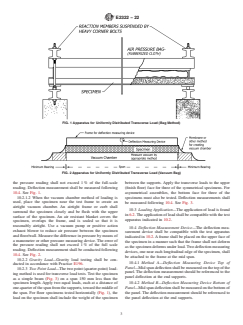
FIG. 1 Apparatus for Uniformly Distributed Transverse Load (Bag Method)
FIG. 2 Apparatus for Uniformly Distributed Transverse Load (Vacuum Bag)
the pressure reading shall not exceed 1 % of the full-scale between the supports. Apply the transverse loads to the upper
reading. Deflection measurement shall be measured following
(finish floor) face for three of the symmetrical specimens. For
10.4. See Fig. 1. asymmetrical assemblies, the bottom face for three of the
10.2.1.2 When the vacuum chamber method of loading is
specimens must also be tested. Deflection measurements shall
used, place the specimen near the test frame to create an
be measured following 10.4. See Fig. 3.
airtight vacuum chamber. An airtight frame or curb shall
10.3 Loading Application—The application of load is found
surround the specimen closely and be flush with the upper
in 6.2.The application of load shall be compatible with the test
surface of the specimen. An air resistant blanket covers the
apparatus indicated in 10.2.
specimen, overlaps the frame, and is sealed so that it is
reasonably airtight. Use a vacuum pump or positive action
10.4 Deflection Measurement Device—The deflection mea-
exhaust blower to reduce air pressure between the specimen
surement device shall be compatible with the test apparatus
and floor/wall. Measure the
...
This document is not an ASTM standard and is intended only to provide the user of an ASTM standard an indication of what changes have been made to the previous version. Because
it may not be technically possible to adequately depict all changes accurately, ASTM recommends that users consult prior editions as appropriate. In all cases only the current version
of the standard as published by ASTM is to be considered the official document.
Designation: E2322 − 03 (Reapproved 2015) E2322 − 22
Standard Test Method for
Conducting Transverse and Concentrated Load Tests on
Panels used in Floor and Roof Construction
This standard is issued under the fixed designation E2322; the number immediately following the designation indicates the year of
original adoption or, in the case of revision, the year of last revision. A number in parentheses indicates the year of last reapproval. A
superscript epsilon (´) indicates an editorial change since the last revision or reapproval.
1. Scope
1.1 This test method covers the following procedures for determining the structural properties of segments of floor and roof
constructions:
Section
Test Specimens 5
Loading 6
Deformation Measurements 7
Report 8
Precision and Bias 9
Testing Floors
Transverse Load 10
Concentrated Load 11
Testing Roofs
Transverse Load 12
Concentrated Load 13
1.2 This test method serves to evaluate the performance of floors and roofs panels subjected to (1) Uniform loading, and (2)
Concentrated static loading, which represent conditions sustained in the actual performance of the element. The standard is not
intended for the evaluation of individual structural framing or supporting members (floor joist, rafters, and trusses), or both.
1.3 The text of this standard references notes and footnotes which provide explanatory material. These notes and footnotes,
excluding those in tables and figures, shall not be considered as requirements of the standard.
1.4 This standard is not intended to cover concrete floor slabs.
1.5 The values stated in SI units are to be regarded as standard. No other units of measurement are included in this standard.
1.6 This standard does not purport to address all of the safety concerns, if any, associated with its use. It is the responsibility
of the user of this standard to establish appropriate safety safety, health, and healthenvironmental practices and determine the
applicability of regulatory limitations prior to use.
1.7 This international standard was developed in accordance with internationally recognized principles on standardization
established in the Decision on Principles for the Development of International Standards, Guides and Recommendations issued
by the World Trade Organization Technical Barriers to Trade (TBT) Committee.
This test method is under the jurisdiction of ASTM Committee E06 on Performance of Buildings and is the direct responsibility of Subcommittee E06.11 on Horizontal
and Vertical Structures/Structural Performance of Completed Structures.
Current edition approved March 1, 2015Oct. 1, 2022. Published March 2015October 2022. Originally approved in 2003. Last previous edition approved in 20092015 as
E2322 – 03 (2009).(2015). DOI: 10.1520/E2322-03R15.10.1520/E2322-22.
Copyright © ASTM International, 100 Barr Harbor Drive, PO Box C700, West Conshohocken, PA 19428-2959. United States
E2322 − 22
2. Referenced Documents
2.1 ASTM Standards:
C109/C109M Test Method for Compressive Strength of Hydraulic Cement Mortars (Using 2-in. or [50 mm] Cube Specimens)
E4 Practices for Force Calibration and Verification of Testing Machines
E72 Test Methods of Conducting Strength Tests of Panels for Building Construction
E73 Practice for Static Load Testing of Truss Assemblies
E196 Practice for Gravity Load Testing of Floors and Low Slope Roofs
E455 Test Method for Static Load Testing of Framed Floor or Roof Diaphragm Constructions for Buildings
E575 Practice for Reporting Data from Structural Tests of Building Constructions, Elements, Connections, and Assemblies
E631 Terminology of Building Constructions
E661 Test Method for Performance of Wood and Wood-Based Floor and Roof Sheathing Under Concentrated Static and Impact
Loads
E695 Test Method of Measuring Relative Resistance of Wall, Floor, and Roof Construction to Impact Loading
E1592 Test Method for Structural Performance of Sheet Metal Roof and Siding Systems by Uniform Static Air Pressure
Difference
3. Terminology
3.1 Definitions—Refer to Terminology E631 for definitions of terms used in these test methods.
4. Significance and Use
4.1 Transverse Load—The procedures outlined will serve to evaluate the performance of floor and roof segments for deflection,
permanent set and ultimate capacity. Performance criteria based on data from these procedures can ensure structural adequacy and
effective service.
4.2 Concentrated Load—This concentrated load test shall be used to evaluate surface indentation of structural framing members.
4.3 These procedures will serve to evaluate performance of roof and floor segments under simulated service conditions.
Diaphragm shear loading of roof and floor segments shall be evaluated under Test Method E455. Impact loading shall be evaluated
under Test Methods E661 or E695.
5. Test Specimens
5.1 Specimens—There shall be at least three replicate specimens for each test. Specimens shall be constructed to represent sections
of the floor, or roof assembly including the means of the attachment when the load direction is away from the supports. The
specimens shall be representative in width and length as to the material and workmanship. The test specimen shall not be less than
the width and length of the tributary load area under actual conditions. If the tributary load area for the test specimen exceeds the
test equipment, a reduced specimen that is representative in proportional width and length shall be tested. Unsymmetrical
assemblies shall be tested in each axis. If the structural properties of a particular construction are to be compared with another
construction, widths of the specimens shall be of comparable size.
5.2 Age—Constructions, which include concrete and masonry for which the structural properties depend upon the age of the
specimen, shall be aged not less than what is indicated by the manufacturer or national standard, or both. The age of the specimen
shall be recorded in the report.
6. Loading
6.1 Apparatus—The testing machine or load-measuring apparatus shall comply with the requirements prescribed in Practices E4.
6.2 Application of Load—Apply the load to each individual specimen in increments so that a sufficient number of readings will
be obtained to determine definitely the load-deformation curve (see 6.3) using the following sequence:
For referenced ASTM standards, visit the ASTM website, www.astm.org, or contact ASTM Customer Service at service@astm.org. For Annual Book of ASTM Standards
volume information, refer to the standard’sstandard’s Document Summary page on the ASTM website.
E2322 − 22
6.2.1 Prior to testing, apply a small initial load not greater than 5 % of the ultimate capacity load expected and hold for 5 min (61
min) and then release. Zero all measuring devices and begin the test.
6.2.2 Record the initial load and deformation reading of the specimen and then increase the load on the specimen to the first
predetermined increment.
6.2.3 Record the load and deformation reading and release the load back to the initial load and then record the set of the specimen.
6.2.4 Increase the load to the next predetermined increment and record the information as indicated in the first load increment
above. Follow this sequence of loading and reading for all predetermined load increment(s).
6.3 Duration of Load Application—After each increment of load is applied, maintain the load level as constant as possible for a
period of 5 min (see Note 1). Take deformation readings as soon as practical after load application, at the end of the 5-min period
under constant load, and immediately and at the end of the 5-min period after any partial or complete load release. Plot initial and
5-min readings in the form of load-deformation curves. Maintain complete load-deformation time records throughout the test. If
application of a given load is required for a certain period, such as 24 h, take deformation readings at the end of this period, to
allow the satisfactory plotting of a time-deformation curve for the complete period.
NOTE 1—Reason for the 5-min application of constant-level increment loads are as follows:
(1) To permit the assembly to come to a substantial rest prior to taking the second set of readings. (Depending on the method employed for applying
the test load, it may be necessary to continue, at a reduced rate, the motion of the loading device in order to maintain the constant load level during the
5-min period.)
(1) To permit the assembly to come to a substantial rest prior to taking the second set of readings. (Depending on the method employed for applying
the test load, it may be necessary to continue, at a reduced rate, the motion of the loading device in order to maintain the constant load level during the
5-min period.)
(2) To observe any time-dependent deformation or load redistribution, or both, and to record accurately the load level when time-dependent
deformation starts, that is, at the divergence of the immediate and delayed load-deformation curves. This load level may, under certain conditions, have
an important bearing on the design load.
(3) To be able to stop the test, if this should be desirable, prior to total failure, after initial failure has been anticipated as a result of the observations.
(4) To assure uniformity in test performance and consistency in test results.
(2) To observe any time-dependent deformation or load redistribution, or both, and to record accurately the load level when time-dependent
deformation starts, that is, at the divergence of the immediate and delayed load-deformation curves. This load level may, under certain conditions, have
an important bearing on the design load.
(3) To be able to stop the test, if this should be desirable, prior to total failure, after initial failure has been anticipated as a result of the observations.
(4) To assure uniformity in test performance and consistency in test results.
7. Deformation Measurements
7.1 Measure the deformations with sufficient precision to define the load-deformation relationship, and report at least to the nearest
0.25 mm.
8. Report
8.1 Prepare the report in accordance with Recommended Practice E575.
9. Precision and Bias
9.1 It is not possible to specify the precision of the procedure in this standard for measuring these test methods because of the
variety of materials and combinations of materials involved.
TESTING FLOORS
10. Transverse Load—Floor
10.1 Test Specimen(s)—Test specimen(s) shall be constructed in accordance with Section 5.
10.2 Apparatus—The apparatus shall be capable of applying a uniform load (such as air bag load or vacuum load), gravity load
or two point load and shall conform to the requirements prescribed in 10.2.1 through 10.2.3 or the equivalent.
E2322 − 22
10.2.1 Uniform Load—Uniformly distributed loading is a satisfactory test method. Uniformly distributed load shall be applied by
air pressure, either in a bag or in a vacuum chamber.
10.2.1.1 The bag method of loading is schematically shown in Fig. 1. Connect a reaction platform parallel to the face to be loaded
and wider than the specimen to the supports by tie rods. Place an airtight bag as wide as the specimen and as long as the span
between the specimen and the reaction platform. Apply transverse load to the specimen by increasing the air pressure in the bag.
Measure the difference in pressure by means of a manometer or other pressure measuring device. The error of the pressure reading
shall not exceed 1 % of the full-scale reading. Deflection measurement shall be measured following 10.4. See Fig. 1.
10.2.1.2 When the vacuum chamber method of loading is used, place the specimen near the test frame to create an airtight vacuum
chamber. An airtight frame or curb shall surround the specimen closely and be flush with the upper surface of the specimen. An
air resistant blanket covers the specimen, overlaps the frame, and is sealed so that it is reasonably airtight. Use a vacuum pump
or positive action exhaust blower to reduce air pressure between the specimen and floor/wall. Measure the difference in pressure
by means of a manometer or other pressure
...