

ASTM D1619-22
(Test Method)Standard Test Methods for Carbon Black-Sulfur Content
General Information
- Abstract
SIGNIFICANCE AND USE
3.1 The total sulfur content of a carbon black is useful in determining whether a material meets a customer’s specifications, providing data for performing a sulfur material balance around a process for environmental monitoring and reporting, and in calculations for reconstructing a rubber composition from analytical data.
SCOPE
1.1 These test methods cover the determination of the sulfur content of carbon black. The following test methods are included:
Sections
Test Method A
High-Temperature Combustion With In-
frared Absorption Detection Procedures
6 to 13
Test Method B
X-Ray Fluorescence
14 to 19
1.2 The values stated in SI units are to be regarded as standard. No other units of measurement are included in this standard.
1.3 This standard does not purport to address all of the safety concerns, if any, associated with its use. It is the responsibility of the user of this standard to establish appropriate safety, health, and environmental practices and determine the applicability of regulatory limitations prior to use.
1.4 This international standard was developed in accordance with internationally recognized principles on standardization established in the Decision on Principles for the Development of International Standards, Guides and Recommendations issued by the World Trade Organization Technical Barriers to Trade (TBT) Committee.
- Status
- Published
- Publication Date
- 31-Oct-2022
- Technical Committee
- D24 - Carbon Black
- Drafting Committee
- D24.66 - Environment, Health, and Safety
Overview
ASTM D1619-22, Standard Test Methods for Carbon Black–Sulfur Content, issued by ASTM International, provides standardized methods for determining the sulfur content in carbon black materials. The sulfur content is a critical quality and environmental compliance factor, serving as a specification for end users, a tool for process monitoring, and a method in reconstructing rubber formulations. This standard ensures reliable, repeatable results through defined procedures, supporting both quality assurance and regulatory requirements within the carbon black and rubber manufacturing sectors.
Key Topics
Test Methods:
- Test Method A: High-Temperature Combustion with Infrared Absorption Detection
- Involves combusting a carbon black sample in an oxygen stream at high temperature (typically above 1350°C). The produced sulfur dioxide gas is detected by an infrared (IR) absorption sensor, allowing quantification of sulfur content.
- Test Method B: X-Ray Fluorescence (XRF)
- Uses X-ray excitation to cause the sample to emit characteristic energy signatures. The sulfur atoms in carbon black are identified and quantified by the instrument’s detection system. Both energy dispersive and wavelength dispersive XRF instruments are suitable for this application.
Sample Measurement and Reporting:
- Results are reported as percent sulfur to the nearest 0.01%.
- The test methods require sample drying, calibration with reference materials, and standardized operation procedures to ensure accuracy and reproducibility.
Precision and Quality:
- The standard details repeatability and reproducibility performance, ensuring results can be trusted across laboratories and time frames.
- Adherence to specified practices for reagent purity and sample handling is required for reliable outcomes.
Applications
Carbon Black Manufacturing:
- Monitoring sulfur levels to meet customer specifications and maintain consistent product quality.
- Assuring feedstock and finished goods comply with industry standards.
Rubber and Tire Industry:
- Sulfur content data informs recipe reconstruction and ensures the final material meets design and safety requirements for applications like tires, seals, and hoses.
Environmental Monitoring:
- Sulfur balance calculations around manufacturing processes support environmental compliance, reporting, and controls for emissions.
Quality Assurance and Control Laboratories:
- Utilizes ASTM D1619-22 methods to provide manufacturers, suppliers, and customers with standardized, comparable sulfur testing results.
Regulatory Compliance:
- Demonstrating conformity with environmental regulations and internal standards on maximum permissible sulfur content in materials and processes.
Related Standards
- ASTM D1509: Test Methods for Carbon Black-Heating Loss
- ASTM D1799: Practice for Carbon Black-Sampling Packaged Shipments
- ASTM D1900: Practice for Carbon Black-Sampling Bulk Shipments
- ASTM D4483: Practice for Evaluating Precision for Test Method Standards in the Rubber and Carbon Black Manufacturing Industries
These related ASTM standards provide useful guidance on sampling procedures, analytical precision, and additional testing relevant to carbon black analysis.
Keywords: ASTM D1619, carbon black, sulfur content, high temperature combustion, infrared detection, X-ray fluorescence, sulfur analysis, quality control, environmental monitoring, rubber manufacturing, reproducibility, standardized test methods.
Relations
- Effective Date
- 01-Nov-2015
- Effective Date
- 01-Nov-2015
- Effective Date
- 01-Jun-2014
- Effective Date
- 01-Jun-2012
- Effective Date
- 01-May-2011
- Effective Date
- 01-Sep-2008
- Effective Date
- 01-May-2007
- Effective Date
- 01-Oct-2006
- Effective Date
- 01-Nov-2003
- Effective Date
- 10-Jun-2003
- Effective Date
- 10-Nov-2002
- Effective Date
- 10-May-2000
- Effective Date
- 10-Nov-1997
- Effective Date
- 15-Aug-1994
Get Certified
Connect with accredited certification bodies for this standard

DIN CERTCO
DIN Group product certification.

Smithers Quality Assessments
US management systems and product certification.
Sponsored listings
Frequently Asked Questions
ASTM D1619-22 is a standard published by ASTM International. Its full title is "Standard Test Methods for Carbon Black-Sulfur Content". This standard covers: SIGNIFICANCE AND USE 3.1 The total sulfur content of a carbon black is useful in determining whether a material meets a customer’s specifications, providing data for performing a sulfur material balance around a process for environmental monitoring and reporting, and in calculations for reconstructing a rubber composition from analytical data. SCOPE 1.1 These test methods cover the determination of the sulfur content of carbon black. The following test methods are included: Sections Test Method A High-Temperature Combustion With In- frared Absorption Detection Procedures 6 to 13 Test Method B X-Ray Fluorescence 14 to 19 1.2 The values stated in SI units are to be regarded as standard. No other units of measurement are included in this standard. 1.3 This standard does not purport to address all of the safety concerns, if any, associated with its use. It is the responsibility of the user of this standard to establish appropriate safety, health, and environmental practices and determine the applicability of regulatory limitations prior to use. 1.4 This international standard was developed in accordance with internationally recognized principles on standardization established in the Decision on Principles for the Development of International Standards, Guides and Recommendations issued by the World Trade Organization Technical Barriers to Trade (TBT) Committee.
SIGNIFICANCE AND USE 3.1 The total sulfur content of a carbon black is useful in determining whether a material meets a customer’s specifications, providing data for performing a sulfur material balance around a process for environmental monitoring and reporting, and in calculations for reconstructing a rubber composition from analytical data. SCOPE 1.1 These test methods cover the determination of the sulfur content of carbon black. The following test methods are included: Sections Test Method A High-Temperature Combustion With In- frared Absorption Detection Procedures 6 to 13 Test Method B X-Ray Fluorescence 14 to 19 1.2 The values stated in SI units are to be regarded as standard. No other units of measurement are included in this standard. 1.3 This standard does not purport to address all of the safety concerns, if any, associated with its use. It is the responsibility of the user of this standard to establish appropriate safety, health, and environmental practices and determine the applicability of regulatory limitations prior to use. 1.4 This international standard was developed in accordance with internationally recognized principles on standardization established in the Decision on Principles for the Development of International Standards, Guides and Recommendations issued by the World Trade Organization Technical Barriers to Trade (TBT) Committee.
ASTM D1619-22 is classified under the following ICS (International Classification for Standards) categories: 83.040.20 - Rubber compounding ingredients. The ICS classification helps identify the subject area and facilitates finding related standards.
ASTM D1619-22 has the following relationships with other standards: It is inter standard links to ASTM D1509-15, ASTM D1900-06(2015), ASTM D1799-03a(2014), ASTM D1509-95(2012), ASTM D1900-06(2011), ASTM D1799-03a(2008), ASTM D1509-95(2007), ASTM D1900-06, ASTM D1799-03a, ASTM D1799-03, ASTM D1799-02, ASTM D1509-95(2000), ASTM D1799-93(1997), ASTM D1900-94(2002). Understanding these relationships helps ensure you are using the most current and applicable version of the standard.
ASTM D1619-22 is available in PDF format for immediate download after purchase. The document can be added to your cart and obtained through the secure checkout process. Digital delivery ensures instant access to the complete standard document.
Standards Content (Sample)
This international standard was developed in accordance with internationally recognized principles on standardization established in the Decision on Principles for the
Development of International Standards, Guides and Recommendations issued by the World Trade Organization Technical Barriers to Trade (TBT) Committee.
Designation: D1619 − 22
Standard Test Methods for
Carbon Black—Sulfur Content
This standard is issued under the fixed designation D1619; the number immediately following the designation indicates the year of
original adoption or, in the case of revision, the year of last revision. A number in parentheses indicates the year of last reapproval. A
superscript epsilon (´) indicates an editorial change since the last revision or reapproval.
This standard has been approved for use by agencies of the U.S. Department of Defense.
1. Scope 3. Significance and Use
1.1 These test methods cover the determination of the sulfur 3.1 The total sulfur content of a carbon black is useful in
content of carbon black. The following test methods are determining whether a material meets a customer’s
included: specifications, providing data for performing a sulfur material
balance around a process for environmental monitoring and
Sections
Test Method A High-Temperature Combustion With In- 6 to 13
reporting, and in calculations for reconstructing a rubber
frared Absorption Detection Procedures
composition from analytical data.
Test Method B X-Ray Fluorescence 14 to 19
1.2 The values stated in SI units are to be regarded as
4. Reagents
standard. No other units of measurement are included in this
4.1 Purity of Reagents—Reagent grade chemicals shall be
standard.
used in all tests. Unless otherwise indicated, it is intended that
1.3 This standard does not purport to address all of the
all reagents shall conform to the specifications of the Commit-
safety concerns, if any, associated with its use. It is the
tee onAnalytical Reagents of theAmerican Chemical Society,
responsibility of the user of this standard to establish appro-
where such specifications are available. Other grades may be
priate safety, health, and environmental practices and deter-
used, provided it is first ascertained that the reagent is of
mine the applicability of regulatory limitations prior to use.
sufficiently high purity to permit its use without lessening the
1.4 This international standard was developed in accor-
accuracy of the determination.
dance with internationally recognized principles on standard-
ization established in the Decision on Principles for the
5. Sampling
Development of International Standards, Guides and Recom-
5.1 Samples of packaged materials shall be taken in accor-
mendations issued by the World Trade Organization Technical
dance with Practice D1799 or Practice D1900.
Barriers to Trade (TBT) Committee.
TEST METHOD A HIGH-TEMPERATURE
2. Referenced Documents
COMBUSTION WITH INFRARED ABSORPTION
2.1 ASTM Standards: DETECTION PROCEDURES
D1509 Test Methods for Carbon Black—Heating Loss
6. Summary of Test Method
D1799 Practice for Carbon Black—Sampling Packaged
Shipments
6.1 The specimen is burned in a tube furnace at a minimum
D1900 Practice for Carbon Black—Sampling Bulk Ship-
operating temperature of 1350°C in a stream of oxygen to
ments
oxidize the sulfur. Moisture and particulates are removed from
D4483 Practice for Evaluating Precision for Test Method
the gas by traps filled with anhydrous magnesium perchlorate.
Standards in the Rubber and Carbon Black Manufacturing
The gas stream is passed through a cell in which sulfur dioxide
Industries
is measured by an infrared (IR) absorption detector. Sulfur
dioxide absorbs IR energy at a precise wavelength within the
IR spectrum. Energy is absorbed as the gas passes through the
These test methods are under the jurisdiction of ASTM Committee D24 on
cell body in which the IR energy is being transmitted. Thus, at
Carbon Black and are the direct responsibility of Subcommittee D24.66 on
Environment, Health, and Safety.
Current edition approved Nov. 1, 2022. Published December 2022. Originally
approved in 1958. Last previous edition approved in 2020 as D1619 – 20. DOI: Reagent Chemicals, American Chemical Society Specifications, American
10.1520/D1619-22. Chemical Society, Washington, DC. For suggestions on the testing of reagents not
For referenced ASTM standards, visit the ASTM website, www.astm.org, or listed by the American Chemical Society, see Analar Standards for Laboratory
contact ASTM Customer Service at service@astm.org. For Annual Book of ASTM Chemicals, BDH Ltd., Poole, Dorset, U.K., and the United States Pharmacopeia
Standards volume information, refer to the standard’s Document Summary page on and National Formulary, U.S. Pharmaceutical Convention, Inc. (USPC), Rockville,
the ASTM website. MD.
Copyright © ASTM International, 100 Barr Harbor Drive, PO Box C700, West Conshohocken, PA 19428-2959. United States
D1619 − 22
the detector, less energy is received. All other IR energy is the procedure. Then weigh out and analyze two specimens,
eliminated from reaching the detector by a precise wavelength each of the other calibration standards. Record the results after
filter. Thus, the absorption of IR energy can be attributed only each analysis. Compare the results obtained to the known
to sulfur dioxide whose concentration is proportional to the sulfur values of the specimens. They should be within the
change in energy at the detector. One cell is used as both a allowable limits of the known value of the respective speci-
reference and a measurement chamber. Total sulfur as sulfur men. If not, refer to the manufacturer’s instructions for
dioxide is detected on a continuous basis. This test method is checking linearity of the analyzer.
empirical. Therefore, the apparatus must be calibrated by the
11. Procedure
use of standard reference materials (SRM).
11.1 Sample Preparation—Dry an adequate sample of the
6.2 This test method is for use with commercially available
carbon black for at least1hina gravity-convection oven set at
sulfur analyzers equipped to carry out the preceding operations
125 65°C,inanopencontainerofsuitabledimensions,sothat
automatically and must be calibrated using standard reference
the depth of black is no more than 10 mm. Cool to room
material (carbon black) of known sulfur content based on the
temperature in a desiccator before use.
range of sulfur in each carbon black specimen analyzed.
11.2 Stabilize and calibrate the analyzer (see 10.1 through
7. Apparatus
10.3).
7.1 Measurement Apparatus, equipped to automatically
11.3 Raise the furnace temperature as recommended by the
combust the specimen.
manufacturer to at least 1350°C. Weigh the specimen not to
7.2 Combustion Tube, made of mullite, porcelain, or zircon, exceed more than 0.5 g of carbon black. Spread the specimen
evenly in a combustion boat and use a boat puller to position
approximately 40- to 45-mm inside diameter with a 3-mm
thickwall,atleast450-mmlongwithprovisionsforroutingthe the specimen in the hot zone of the furnace for at least 2 min,
or until completely combusted.
gasses produced by combustion through the infrared cell.
7.3 Boat Puller—Rod of a heat-resistant material with a
NOTE 1—The analytical cycle should begin automatically as soon as
sulfur is detected.
bent or disk end to insert and remove boats from the combus-
tion tube.
11.4 When the analysis is complete, the instrument should
indicate the sulfur value. Refer to the manufacturer’s recom-
7.4 Gravity Convection Drying Oven, capable of maintain-
mended procedure.
ing 125 6 5°C.
12. Report
8. Reagents
12.1 The percent sulfur value is obtained directly from the
8.1 Purity of Reagents—See 4.1.
apparatus.
8.2 Magnesium Perchlorate.
12.2 Report results to the nearest 0.01 %.
9. Preparation of Apparatus
13. Precision and Bias
9.1 Assemble the apparatus according to the manufacturer’s
13.1 These precision statements have been prepared in
instructions. Make a minimum of two determinations (see
accordance with Practice D4483-99. Refer to this practice for
10.3) to condition the equipment prior to calibrating the
terminology and other statistical details.
system.
13.2 The precision results in this precision and bias section
10. Calibration
give an estimate of the precision of this test method with the
materials used in the particular interlaboratory programs de-
10.1 Select standards having sulfur values of approximately
scribedinTable1.Theprecisionparametersshouldnotbeused
0.5, 1.0, and 1.5 % sulfur .
for acceptance or rejection testing of any group of materials
10.2 Adjustment of Response of Measurement System—
without documentation that they are applicable to those par-
Weigh out approximately 0.5 g of the 1.0 % sulfur standard.
ticular materials and the specific testing protocols of the test
Analyze the specimen (see Section 11). Repeat this procedure.
method. Any appropriate value may be used from Table 1.
Adjust instrument as recommended by the manufacturer until
13.3 Type 1 inter-laboratory precision programs were con-
the absence of drift is indicated.
ducted as detailed in Table 1. Both repeatability and reproduc-
10.3 Calibration Procedure—Weigh out four specimens of
ibility represent short term (daily) testing conditions. The
the 1.0 % sulfur standard. Follow the calibration procedure
testing was performed using two operators in each laboratory
recommended by the manufacturer. Confirm the calibration by
performing the test once on each of two days (total of four
analyzing the 1.0 % sulfur standard. The value should be
tests). A test result is the value obtained from a single
within the allowable limits of the known value. If not, repeat
determination. Acceptable difference values were not mea-
sured. The between operator component of variation is in-
Coal standards have been found to be suitable standards and are usually cluded in the calculated values for r, (r), R, and (R).
availablefromtheinstrumentmanufacturerormaybeobtainedfromAlphaProducts
13.4 Theresultsoftheprecisioncalculationsforthistestare
for Analysis, 3090 Johnson Road, Stevensville, MI 49127, www.alpha-
resources.com. given in Table 1. The materials are arranged in ascending
D1619 − 22
A
TABLE 1 Precision Parameters for Test Methods D1619, Sulfur Content of Carbon Black (Type 1 Precision), Method A: Combustion
Units are percent
Number of
Material Period Laboratories Mean Level Sr r (r) SR R (R)
B
(M/H/L)
STRM-A (SRB-8G) Aug 2017 14(0/1/0) 0.022 0.002 0.007 30 0.021 0.060 270
STRM-B (SRB-8F2) Mar 2015 11(0/2/0) 0.357 0.008 0.023 6.6 0.023 0.065 18
STRM-C (SRB-8B2) Mar/Apr 2014 12(1/0/1) 0.791 0.010 0.029 3.6 0.026 0.074 9.3
STRM-D (SRB-8E2) Aug 2016 17(0/1/0) 1.248 0.012 0.034 2.8 0.057 0.161 13
STRM-E (SRB-8D) Mar 2017 15(0/0/1) 1.850 0.020 0.056 3.0 0.133 0.376 20
Average 0.854
Pooled Values 0.012 0.034 4.0 0.067 0.190 22
A
Preferred precision shown in bold text. Statistically, relative precision is preferred. However, the increase in relative precision limits when dealing with a mean value near
zero, such as the SRB-8G material, makes the use of absolute precision more practical, so it is the preferred precision.
B
M = number of outliers for Laboratory Mean as identified by Mandel h-value; H = number of outliers for High Laboratory variation as identified by a 2-sided test using
the Mandel k-value; L= number of outliers for Low Laboratory variation as identified by a 2-sided test using the Mandel k-value. Low variation laboratories have variation
that is less than expected based on the stati
...
This document is not an ASTM standard and is intended only to provide the user of an ASTM standard an indication of what changes have been made to the previous version. Because
it may not be technically possible to adequately depict all changes accurately, ASTM recommends that users consult prior editions as appropriate. In all cases only the current version
of the standard as published by ASTM is to be considered the official document.
Designation: D1619 − 20 D1619 − 22
Standard Test Methods for
Carbon Black—Sulfur Content
This standard is issued under the fixed designation D1619; the number immediately following the designation indicates the year of
original adoption or, in the case of revision, the year of last revision. A number in parentheses indicates the year of last reapproval. A
superscript epsilon (´) indicates an editorial change since the last revision or reapproval.
This standard has been approved for use by agencies of the U.S. Department of Defense.
1. Scope
1.1 These test methods cover the determination of the sulfur content of carbon black. The following test methods are included:
Sections
Test Method A High-Temperature Combustion With In- 6 to 13
frared Absorption Detection Procedures
Test Method B X-Ray Fluorescence 14 to 19
1.2 The values stated in SI units are to be regarded as standard. No other units of measurement are included in this standard.
1.3 This standard does not purport to address all of the safety concerns, if any, associated with its use. It is the responsibility
of the user of this standard to establish appropriate safety, health, and environmental practices and determine the applicability of
regulatory limitations prior to use.
1.4 This international standard was developed in accordance with internationally recognized principles on standardization
established in the Decision on Principles for the Development of International Standards, Guides and Recommendations issued
by the World Trade Organization Technical Barriers to Trade (TBT) Committee.
2. Referenced Documents
2.1 ASTM Standards:
D1509 Test Methods for Carbon Black—Heating Loss
D1799 Practice for Carbon Black—Sampling Packaged Shipments
D1900 Practice for Carbon Black—Sampling Bulk Shipments
D4483 Practice for Evaluating Precision for Test Method Standards in the Rubber and Carbon Black Manufacturing Industries
3. Significance and Use
3.1 The total sulfur content of a carbon black is useful in determining whether a material meets a customer’s specifications,
providing data for performing a sulfur material balance around a process for environmental monitoring and reporting, and in
calculations for reconstructing a rubber composition from analytical data.
These test methods are under the jurisdiction of ASTM Committee D24 on Carbon Black and are the direct responsibility of Subcommittee D24.66 on Environment,
Health, and Safety.
Current edition approved Nov. 1, 2020Nov. 1, 2022. Published December 2020December 2022. Originally approved in 1958. Last previous edition approved in 20162020
as D1619 – 16a.D1619 – 20. DOI: 10.1520/D1619-20.10.1520/D1619-22.
For referenced ASTM standards, visit the ASTM website, www.astm.org, or contact ASTM Customer Service at service@astm.org. For Annual Book of ASTM Standards
volume information, refer to the standard’s Document Summary page on the ASTM website.
Copyright © ASTM International, 100 Barr Harbor Drive, PO Box C700, West Conshohocken, PA 19428-2959. United States
D1619 − 22
4. Reagents
4.1 Purity of Reagents—Reagent grade chemicals shall be used in all tests. Unless otherwise indicated, it is intended that all
reagents shall conform to the specifications of the Committee on Analytical Reagents of the American Chemical Society, where
such specifications are available. Other grades may be used, provided it is first ascertained that the reagent is of sufficiently high
purity to permit its use without lessening the accuracy of the determination.
5. Sampling
5.1 Samples of packaged materials shall be taken in accordance with Practice D1799 or Practice D1900.
TEST METHOD A HIGH-TEMPERATURE COMBUSTION WITH INFRARED ABSORPTION DETECTION
PROCEDURES
6. Summary of Test Method
6.1 The specimen is burned in a tube furnace at a minimum operating temperature of 1350°C in a stream of oxygen to oxidize
the sulfur. Moisture and particulates are removed from the gas by traps filled with anhydrous magnesium perchlorate. The gas
stream is passed through a cell in which sulfur dioxide is measured by an infrared (IR) absorption detector. Sulfur dioxide absorbs
IR energy at a precise wavelength within the IR spectrum. Energy is absorbed as the gas passes through the cell body in which
the IR energy is being transmitted. Thus, at the detector, less energy is received. All other IR energy is eliminated from reaching
the detector by a precise wavelength filter. Thus, the absorption of IR energy can be attributed only to sulfur dioxide whose
concentration is proportional to the change in energy at the detector. One cell is used as both a reference and a measurement
chamber. Total sulfur as sulfur dioxide is detected on a continuous basis. This test method is empirical. Therefore, the apparatus
must be calibrated by the use of standard reference materials (SRM).
6.2 This test method is for use with commercially available sulfur analyzers equipped to carry out the preceding operations
automatically and must be calibrated using standard reference material (carbon black) of known sulfur content based on the range
of sulfur in each carbon black specimen analyzed.
7. Apparatus
7.1 Measurement Apparatus, equipped to automatically combust the specimen.
7.2 Combustion Tube, made of mullite, porcelain, or zircon, approximately 40- to 45-mm inside diameter with a 3-mm thick wall,
at least 450-mm long with provisions for routing the gasses produced by combustion through the infrared cell.
7.3 Boat Puller—Rod of a heat-resistant material with a bent or disk end to insert and remove boats from the combustion tube.
7.4 Gravity Convection Drying Oven, capable of maintaining 125 6 5°C.
8. Reagents
8.1 Purity of Reagents—See 4.1.
8.2 Magnesium Perchlorate.
9. Preparation of Apparatus
9.1 Assemble the apparatus according to the manufacturer’s instructions. Make a minimum of two determinations (see 10.3) to
condition the equipment prior to calibrating the system.
Reagent Chemicals, American Chemical Society Specifications, American Chemical Society, Washington, DC. For suggestions on the testing of reagents not listed by
the American Chemical Society, see Analar Standards for Laboratory Chemicals, BDH Ltd., Poole, Dorset, U.K., and the United States Pharmacopeia and National
Formulary, U.S. Pharmaceutical Convention, Inc. (USPC), Rockville, MD.
D1619 − 22
10. Calibration
10.1 Select standards having sulfur values of approximately 0.5, 1.0, and 1.5 % sulfur .
10.2 Adjustment of Response of Measurement System—Weigh out approximately 0.5 g of the 1.0 % sulfur standard. Analyze the
specimen (see Section 11). Repeat this procedure. Adjust instrument as recommended by the manufacturer until the absence of drift
is indicated.
10.3 Calibration Procedure—Weigh out four specimens of the 1.0 % sulfur standard. Follow the calibration procedure
recommended by the manufacturer. Confirm the calibration by analyzing the 1.0 % sulfur standard. The value should be within the
allowable limits of the known value. If not, repeat the procedure. Then weigh out and analyze two specimens, each of the other
calibration standards. Record the results after each analysis. Compare the results obtained to the known sulfur values of the
specimens. They should be within the allowable limits of the known value of the respective specimen. If not, refer to the
manufacturer’s instructions for checking linearity of the analyzer.
11. Procedure
11.1 Sample Preparation—Dry an adequate sample of the carbon black for at least 1 h in a gravity-convection oven set at 125 6
5°C, in an open container of suitable dimensions, so that the depth of black is no more than 10 mm. Cool to room temperature
in a desiccator before use.
11.2 Stabilize and calibrate the analyzer (see 10.1 through 10.3).
11.3 Raise the furnace temperature as recommended by the manufacturer to at least 1350°C. Weigh the specimen not to exceed
more than 0.5 g of carbon black. Spread the specimen evenly in a combustion boat and use a boat puller to position the specimen
in the hot zone of the furnace for at least 2 min, or until completely combusted.
NOTE 1—The analytical cycle should begin automatically as soon as sulfur is detected.
11.4 When the analysis is complete, the instrument should indicate the sulfur value. Refer to the manufacturer’s recommended
procedure.
12. Report
12.1 The percent sulfur value is obtained directly from the apparatus.
12.2 Report results to the nearest 0.01 %.
13. Precision and Bias
13.1 These precision statements have been prepared in accordance with Practice D4483-99. Refer to this practice for terminology
and other statistical details.
13.2 The precision results in this precision and bias section give an estimate of the precision of this test method with the materials
used in the particular interlaboratory programs described in Table 1. The precision parameters should not be used for acceptance
or rejection testing of any group of materials without documentation that they are applicable to those particular materials and the
specific testing protocols of the test method. Any appropriate value may be used from Table 1.
13.3 Type 1 inter-laboratory precision programs were conducted as detailed in Table 1. Both repeatability and reproducibility
represent short term (daily) testing conditions. The testing was performed using two operators in each laboratory performing the
test once on each of two days (total of four tests). A test result is the value obtained from a single determination. Acceptable
difference values were not measured. The between operator component of variation is included in the calculated values for r, (r),
R, and (R).
Coal standards have been found to be suitable standards and are usually available from the instrument manufacturer or may be obtained from Alpha Products for Analysis,
3090 Johnson Road, Stevensville, MI 49127, www.alpha-resources.com.
D1619 − 22
A
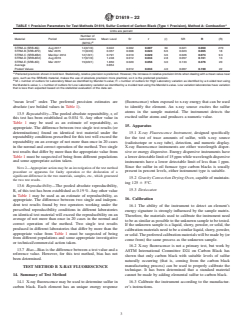
TABLE 1 Precision Parameters for Test Methods D1619, Sulfur Content of Carbon Black (Type 1 Precision), Method A: Combustion
Units are percent
Number of
Material Period Laboratories Mean Level Sr r (r) SR R (R)
B
(M/H/L)
STRM-A (SRB-8G) Aug 2017 14(0/1/0) 0.022 0.002 0.007 29.791 0.021 0.060 269.841
STRM-A (SRB-8G) Aug 2017 14(0/1/0) 0.022 0.002 0.007 30 0.021 0.060 270
STRM-B (SRB-8F2) Mar 2015 11(0/2/0) 0.357 0.008 0.023 6.580 0.023 0.065 18.357
STRM-B (SRB-8F2) Mar 2015 11(0/2/0) 0.357 0.008 0.023 6.6 0.023 0.065 18
STRM-C (SRB-8B2) Mar/Apr 2014 12(1/0/1) 0.791 0.010 0.029 3.646 0.026 0.074 9.343
STRM-C (SRB-8B2) Mar/Apr 2014 12(1/0/1) 0.791 0.010 0.029 3.6 0.026 0.074 9.3
STRM-D (SRB-8E2) Aug 2016 17(0/1/0) 1.248 0.012 0.034 2.760 0.057 0.161 12.879
STRM-D (SRB-8E2) Aug 2016 17(0/1/0) 1.248 0.012 0.034 2.8 0.057 0.161 13
STRM-E (SRB-8D) Mar 2017 15(0/0/1) 1.850 0.020 0.056 3.009 0.133 0.376 20.298
STRM-E (SRB-8D) Mar 2017 15(0/0/1) 1.850 0.020 0.056 3.0 0.133 0.376 20
Average 0.854
Pooled Values 0.012 0.034 3.959 0.067 0.190 22.242
Pooled Values 0.012 0.034 4.0 0.067 0.190 22
A
Preferred precision shown in bold text. Statistically, relative precision is preferred. However, the increase in relative precision limits when dealing with a mean value near
zero, such as the SRB-8G material, makes the use of absolute precision more practical, so it is the preferred precision.
B
M = number of outliers for Laboratory Mean as identified by Mandel h-value; H = number of outliers for High Laboratory variation as identified by a 2-sided test using
the Mandel k-value; L = number of outliers for Low Laboratory variation as identified by a 2-sided test using the Mandel k-value. Low variation laboratories have variation
that is less than expected based on the statistical evaluation of the data set.
13.4 The res
...