

ASTM C1383-23
(Test Method)Standard Test Method for Measuring the P-Wave Speed and the Thickness of Concrete Plates Using the Impact-Echo Method
General Information
- Abstract
SIGNIFICANCE AND USE
4.1 This test method may be used as a substitute for, or in conjunction with, coring to determine the thickness of slabs, pavements, decks, walls, or other plate structures. There is a certain level of systematic error in the calculated thickness due to the discrete nature of the digital records that are used. The absolute systematic error depends on the plate thickness, the sampling interval, and the sampling period.
4.2 Because the wave speed can vary from point-to-point in the structure due to differences in concrete age or batch-to-batch variability, the wave speed is measured (Procedure A) at each point where a thickness determination (Procedure B) is required.
4.3 This test method is a pplicable to plate-like structures with lateral dimensions at least six times the thickness. These minimum lateral dimensions are necessary to prevent other modes3 of vibration from interfering with the identification of the thickness mode frequency in the amplitude spectrum. As explained in Note 12, the minimum lateral dimensions and acceptable sampling period are related.
4.4 The maximum and minimum thickness that can be measured is limited by the details of the testing apparatus (transducer response characteristics and the specific impactor). The limits shall be specified by manufacturer of the apparatus, and the apparatus shall not be used beyond these limits. If test equipment is assembled by the user, thickness limitations shall be established and documented.
4.5 This test method is not applicable to plate structures with overlays, such as a concrete bridge deck with an asphalt or portland cement concrete overlay. The method is based on the assumption that the concrete plate has the same P-wave speed throughout its depth.
4.6 Procedure A is performed on concrete that is air dry as high surface moisture content may affect the results.
4.7 Procedure B is applicable to a concrete plate resting on a subgrade of soil, gravel, permeable asphalt concrete, or lea...
SCOPE
1.1 This test method covers procedures for determining the thickness of concrete slabs, pavements, bridge decks, walls, or other plate-like structures using the impact-echo method.
1.2 The following two procedures are covered in this test method:
1.2.1 Procedure A: P-Wave Speed Measurement—This procedure measures the time it takes for the P-wave generated by a short-duration, point impact to travel between two transducers positioned a known distance apart along the surface of a structure. The P-wave speed is calculated by dividing the distance between the two transducers by the travel time.
1.2.2 Procedure B: Impact-Echo Test—This procedure measures the frequency at which the P-wave generated by a short-duration, point impact is reflected between the parallel (opposite) surfaces of a plate. The thickness is calculated from this measured frequency and the P-wave speed obtained from Procedure A.
1.2.3 Unless specified otherwise, both Procedure A and Procedure B must be performed at each point where a thickness determination is made.
1.3 The values stated in SI units are to be regarded as standard. No other units of measurement are included in this standard.
1.4 The text of this standard refers to notes and footnotes that provide explanatory material. These notes and footnotes (excluding those in tables and figures) shall not be considered as requirements of the standard.
1.5 This standard does not purport to address all of the safety concerns, if any, associated with its use. It is the responsibility of the user of this standard to establish appropriate safety, health, and environmental practices and determine the applicability of regulatory limitations prior to use.
1.6 This international standard was developed in accordance with internationally recognized principles on standardization established in the Decision on Principles for the Development of International Standards, Guides and Recommendatio...
- Status
- Published
- Publication Date
- 14-Dec-2023
- Technical Committee
- C09 - Concrete and Concrete Aggregates
- Drafting Committee
- C09.64 - Nondestructive and In-Place Testing
Buy Documents
ASTM C1383-23 - Standard Test Method for Measuring the P-Wave Speed and the Thickness of Concrete Plates Using the Impact-Echo Method
REDLINE ASTM C1383-23 - Standard Test Method for Measuring the P-Wave Speed and the Thickness of Concrete Plates Using the Impact-Echo Method
Overview
ASTM C1383-23, issued by ASTM International, outlines a standardized test method for measuring both the P-wave speed and the thickness of concrete plates using the impact-echo method. This non-destructive testing (NDT) approach is highly valued in the construction and civil engineering sectors for its ability to assess the integrity and dimensions of concrete slabs, pavements, bridge decks, and similar plate-like structures without damaging the material.
The impact-echo method offers a reliable alternative or supplement to traditional coring, providing rapid and repeatable measurements in situ. By focusing on the measurement of stress wave propagation (P-wave) and resonance frequencies, this method enables efficient determination of plate thickness and evaluation of structural conditions.
Key Topics
P-Wave Speed Measurement (Procedure A): Measures the time it takes for a P-wave, generated by a controlled impact, to travel between two surface-mounted transducers. The P-wave speed is essential for accurate thickness calculations and is measured at every location where thickness determination occurs.
Impact-Echo Test (Procedure B): Involves generating an impact to create P-waves that reflect between parallel surfaces of the concrete plate. The resulting resonance frequency, combined with the locally measured P-wave speed, allows for precise calculation of the plate's thickness.
Applicable Structures: Suitable for concrete plates with lateral dimensions at least six times their thickness, ensuring measurement accuracy and minimizing interference from other vibrational modes.
Systematic Error Considerations: The method accounts for systematic errors due to digital signal sampling and analysis. Error magnitude depends on variables such as plate thickness, sampling interval, and equipment capabilities.
Limitations: Not applicable to plates with overlays (like asphalt on concrete), nor for use where high surface moisture may affect results. The concrete should also have uniform properties through its depth for accurate measurements.
Applications
ASTM C1383-23 plays a crucial role in:
- Quality Control: Verifying the thickness of newly constructed or existing concrete elements during or after construction.
- Structural Assessment: Providing valuable data for integrity assessments in bridges, roads, parking structures, and buildings.
- Rehabilitation Planning: Helping engineers evaluate existing thickness before planning repairs or upgrades.
- Non-destructive Evaluation: Reducing the need for destructive coring, saving time and resources while maintaining structural integrity.
Specific uses include assessing slabs on grade, elevated decks, tunnel linings, and thick walls, provided they meet the dimensional and material requirements of the standard.
Related Standards
ASTM C1383-23 references and complements several other ASTM and industry standards, including:
- ASTM C125: Terminology Relating to Concrete and Concrete Aggregates
- ASTM C597: Test Method for Ultrasonic Pulse Velocity Through Concrete - another key NDT technique for evaluating concrete properties
- ASTM E1316: Terminology for Nondestructive Examinations - standardizing terms across NDT methods
Other related documents may involve standards for surface preparation, NDT methodology, and calibration procedures for measuring devices.
By leveraging the impact-echo method outlined in ASTM C1383-23, professionals gain an efficient, accurate, and non-destructive solution for determining the thickness and assessing the condition of concrete plates across a wide range of civil infrastructure applications. Compliance with this standard ensures higher reliability, data consistency, and optimized structural evaluation in the field of concrete testing.
Relations
- Effective Date
- 15-Dec-2023
- Effective Date
- 01-Feb-2024
- Effective Date
- 01-Sep-2023
- Effective Date
- 15-Dec-2023
Buy Documents
ASTM C1383-23 - Standard Test Method for Measuring the P-Wave Speed and the Thickness of Concrete Plates Using the Impact-Echo Method
REDLINE ASTM C1383-23 - Standard Test Method for Measuring the P-Wave Speed and the Thickness of Concrete Plates Using the Impact-Echo Method
Get Certified
Connect with accredited certification bodies for this standard

DIBt (Deutsches Institut für Bautechnik)
German Institute for Building Technology.
DIN CERTCO
DIN Group product certification.

Aboma Certification B.V.
Specialized in construction, metal, and transport sectors.
Sponsored listings
Frequently Asked Questions
ASTM C1383-23 is a standard published by ASTM International. Its full title is "Standard Test Method for Measuring the P-Wave Speed and the Thickness of Concrete Plates Using the Impact-Echo Method". This standard covers: SIGNIFICANCE AND USE 4.1 This test method may be used as a substitute for, or in conjunction with, coring to determine the thickness of slabs, pavements, decks, walls, or other plate structures. There is a certain level of systematic error in the calculated thickness due to the discrete nature of the digital records that are used. The absolute systematic error depends on the plate thickness, the sampling interval, and the sampling period. 4.2 Because the wave speed can vary from point-to-point in the structure due to differences in concrete age or batch-to-batch variability, the wave speed is measured (Procedure A) at each point where a thickness determination (Procedure B) is required. 4.3 This test method is a pplicable to plate-like structures with lateral dimensions at least six times the thickness. These minimum lateral dimensions are necessary to prevent other modes3 of vibration from interfering with the identification of the thickness mode frequency in the amplitude spectrum. As explained in Note 12, the minimum lateral dimensions and acceptable sampling period are related. 4.4 The maximum and minimum thickness that can be measured is limited by the details of the testing apparatus (transducer response characteristics and the specific impactor). The limits shall be specified by manufacturer of the apparatus, and the apparatus shall not be used beyond these limits. If test equipment is assembled by the user, thickness limitations shall be established and documented. 4.5 This test method is not applicable to plate structures with overlays, such as a concrete bridge deck with an asphalt or portland cement concrete overlay. The method is based on the assumption that the concrete plate has the same P-wave speed throughout its depth. 4.6 Procedure A is performed on concrete that is air dry as high surface moisture content may affect the results. 4.7 Procedure B is applicable to a concrete plate resting on a subgrade of soil, gravel, permeable asphalt concrete, or lea... SCOPE 1.1 This test method covers procedures for determining the thickness of concrete slabs, pavements, bridge decks, walls, or other plate-like structures using the impact-echo method. 1.2 The following two procedures are covered in this test method: 1.2.1 Procedure A: P-Wave Speed Measurement—This procedure measures the time it takes for the P-wave generated by a short-duration, point impact to travel between two transducers positioned a known distance apart along the surface of a structure. The P-wave speed is calculated by dividing the distance between the two transducers by the travel time. 1.2.2 Procedure B: Impact-Echo Test—This procedure measures the frequency at which the P-wave generated by a short-duration, point impact is reflected between the parallel (opposite) surfaces of a plate. The thickness is calculated from this measured frequency and the P-wave speed obtained from Procedure A. 1.2.3 Unless specified otherwise, both Procedure A and Procedure B must be performed at each point where a thickness determination is made. 1.3 The values stated in SI units are to be regarded as standard. No other units of measurement are included in this standard. 1.4 The text of this standard refers to notes and footnotes that provide explanatory material. These notes and footnotes (excluding those in tables and figures) shall not be considered as requirements of the standard. 1.5 This standard does not purport to address all of the safety concerns, if any, associated with its use. It is the responsibility of the user of this standard to establish appropriate safety, health, and environmental practices and determine the applicability of regulatory limitations prior to use. 1.6 This international standard was developed in accordance with internationally recognized principles on standardization established in the Decision on Principles for the Development of International Standards, Guides and Recommendatio...
SIGNIFICANCE AND USE 4.1 This test method may be used as a substitute for, or in conjunction with, coring to determine the thickness of slabs, pavements, decks, walls, or other plate structures. There is a certain level of systematic error in the calculated thickness due to the discrete nature of the digital records that are used. The absolute systematic error depends on the plate thickness, the sampling interval, and the sampling period. 4.2 Because the wave speed can vary from point-to-point in the structure due to differences in concrete age or batch-to-batch variability, the wave speed is measured (Procedure A) at each point where a thickness determination (Procedure B) is required. 4.3 This test method is a pplicable to plate-like structures with lateral dimensions at least six times the thickness. These minimum lateral dimensions are necessary to prevent other modes3 of vibration from interfering with the identification of the thickness mode frequency in the amplitude spectrum. As explained in Note 12, the minimum lateral dimensions and acceptable sampling period are related. 4.4 The maximum and minimum thickness that can be measured is limited by the details of the testing apparatus (transducer response characteristics and the specific impactor). The limits shall be specified by manufacturer of the apparatus, and the apparatus shall not be used beyond these limits. If test equipment is assembled by the user, thickness limitations shall be established and documented. 4.5 This test method is not applicable to plate structures with overlays, such as a concrete bridge deck with an asphalt or portland cement concrete overlay. The method is based on the assumption that the concrete plate has the same P-wave speed throughout its depth. 4.6 Procedure A is performed on concrete that is air dry as high surface moisture content may affect the results. 4.7 Procedure B is applicable to a concrete plate resting on a subgrade of soil, gravel, permeable asphalt concrete, or lea... SCOPE 1.1 This test method covers procedures for determining the thickness of concrete slabs, pavements, bridge decks, walls, or other plate-like structures using the impact-echo method. 1.2 The following two procedures are covered in this test method: 1.2.1 Procedure A: P-Wave Speed Measurement—This procedure measures the time it takes for the P-wave generated by a short-duration, point impact to travel between two transducers positioned a known distance apart along the surface of a structure. The P-wave speed is calculated by dividing the distance between the two transducers by the travel time. 1.2.2 Procedure B: Impact-Echo Test—This procedure measures the frequency at which the P-wave generated by a short-duration, point impact is reflected between the parallel (opposite) surfaces of a plate. The thickness is calculated from this measured frequency and the P-wave speed obtained from Procedure A. 1.2.3 Unless specified otherwise, both Procedure A and Procedure B must be performed at each point where a thickness determination is made. 1.3 The values stated in SI units are to be regarded as standard. No other units of measurement are included in this standard. 1.4 The text of this standard refers to notes and footnotes that provide explanatory material. These notes and footnotes (excluding those in tables and figures) shall not be considered as requirements of the standard. 1.5 This standard does not purport to address all of the safety concerns, if any, associated with its use. It is the responsibility of the user of this standard to establish appropriate safety, health, and environmental practices and determine the applicability of regulatory limitations prior to use. 1.6 This international standard was developed in accordance with internationally recognized principles on standardization established in the Decision on Principles for the Development of International Standards, Guides and Recommendatio...
ASTM C1383-23 is classified under the following ICS (International Classification for Standards) categories: 91.100.30 - Concrete and concrete products. The ICS classification helps identify the subject area and facilitates finding related standards.
ASTM C1383-23 has the following relationships with other standards: It is inter standard links to ASTM C1383-15(2022), ASTM E1316-24, ASTM E1316-23b, ASTM C1740-16. Understanding these relationships helps ensure you are using the most current and applicable version of the standard.
ASTM C1383-23 is available in PDF format for immediate download after purchase. The document can be added to your cart and obtained through the secure checkout process. Digital delivery ensures instant access to the complete standard document.
Standards Content (Sample)
This international standard was developed in accordance with internationally recognized principles on standardization established in the Decision on Principles for the
Development of International Standards, Guides and Recommendations issued by the World Trade Organization Technical Barriers to Trade (TBT) Committee.
Designation: C1383 − 23
Standard Test Method for
Measuring the P-Wave Speed and the Thickness of
Concrete Plates Using the Impact-Echo Method
This standard is issued under the fixed designation C1383; the number immediately following the designation indicates the year of
original adoption or, in the case of revision, the year of last revision. A number in parentheses indicates the year of last reapproval. A
superscript epsilon (´) indicates an editorial change since the last revision or reapproval.
1. Scope* ization established in the Decision on Principles for the
Development of International Standards, Guides and Recom-
1.1 This test method covers procedures for determining the
mendations issued by the World Trade Organization Technical
thickness of concrete slabs, pavements, bridge decks, walls, or
Barriers to Trade (TBT) Committee.
other plate-like structures using the impact-echo method.
1.2 The following two procedures are covered in this test
2. Referenced Documents
method:
2.1 ASTM Standards:
1.2.1 Procedure A: P-Wave Speed Measurement—This pro-
C125 Terminology Relating to Concrete and Concrete Ag-
cedure measures the time it takes for the P-wave generated by
gregates
a short-duration, point impact to travel between two transduc-
C597 Test Method for Ultrasonic Pulse Velocity Through
ers positioned a known distance apart along the surface of a
Concrete
structure. The P-wave speed is calculated by dividing the
E1316 Terminology for Nondestructive Examinations
distance between the two transducers by the travel time.
1.2.2 Procedure B: Impact-Echo Test—This procedure mea-
3. Terminology
sures the frequency at which the P-wave generated by a
3.1 Definitions:
short-duration, point impact is reflected between the parallel
3.1.1 For definitions of terms used in this test method, refer
(opposite) surfaces of a plate. The thickness is calculated from
to Terminology C125 and Terminology E1316.
this measured frequency and the P-wave speed obtained from
3.2 Definitions of Terms Specific to This Standard:
Procedure A.
3.2.1 acoustic impedance, n—the product of P-wave speed
1.2.3 Unless specified otherwise, both Procedure A and
and density that is used in computations of characteristics of
Procedure B must be performed at each point where a thickness
stress wave reflection at boundaries.
determination is made.
3.2.2 P-wave, n—the dilatational (longitudinal or primary)
1.3 The values stated in SI units are to be regarded as
stress wave that causes particle displacement parallel to the
standard. No other units of measurement are included in this
direction of wave propagation: this wave produces normal
standard.
stresses (tensile or compressive) as it propagates.
1.4 The text of this standard refers to notes and footnotes
3.2.3 P-wave speed, n—the speed with which the P-wave
that provide explanatory material. These notes and footnotes
propagates through a semi-infinite solid.
(excluding those in tables and figures) shall not be considered
3.2.3.1 Discussion—The P-wave speed is the same as the
as requirements of the standard.
compressional pulse velocity measured according to Test
1.5 This standard does not purport to address all of the
Method C597.
safety concerns, if any, associated with its use. It is the
3,4
3.2.4 apparent P-wave speed in a plate , n—a wave speed
responsibility of the user of this standard to establish appro-
that is equal to 0.96 of the P-wave speed:
priate safety, health, and environmental practices and deter-
mine the applicability of regulatory limitations prior to use.
1.6 This international standard was developed in accor- 2
For referenced ASTM standards, visit the ASTM website, www.astm.org, or
dance with internationally recognized principles on standard- contact ASTM Customer Service at service@astm.org. For Annual Book of ASTM
Standards volume information, refer to the standard’s Document Summary page on
the ASTM website.
1 3
This test method is under the jurisdiction of ASTM Committee C09 on Sansalone, M. and Streett, W.B., Impact-Echo: Nondestructive Evaluation of
Concrete and Concrete Aggregates and is the direct responsibility of Subcommittee Concrete and Masonry, Bullbrier Press, Ithaca, NY and Jersey Shore, PA, 1997.
C09.64 on Nondestructive and In-Place Testing. Sansalone, M., Lin, J. M., and Streett, W. B., “A Procedure for Determining
Current edition approved Dec. 15, 2023. Published February 2024. Originally P-wave Speed in Concrete for Use in Impact-Echo Testing Using P-wave Speed
approved in 1998. Last previous edition approved in 2022 as C1383 – 15(2022). Measurement Technique,” ACI Journal, Vol. 94, No. 6, November–December 1997,
DOI: 10.1520/C1383-23. pp. 531–539.
*A Summary of Changes section appears at the end of this standard
Copyright © ASTM International, 100 Barr Harbor Drive, PO Box C700, West Conshohocken, PA 19428-2959. United States
C1383 − 23
C 5 0.96 C (1) the assumption that the concrete plate has the same P-wave
p, plate p
speed throughout its depth.
where:
4.6 Procedure A is performed on concrete that is air dry as
C = the apparent P-wave speed in a plate, m/s, and
p, plate
high surface moisture content may affect the results.
C = the P-wave speed in concrete that is obtained from
p
Procedure A, m/s. 4.7 Procedure B is applicable to a concrete plate resting on
a subgrade of soil, gravel, permeable asphalt concrete, or lean
3.2.4.1 Discussion—The apparent P-wave speed is used in
portland cement concrete provided there is sufficient difference
thickness calculations in impact-echo measurements on plates.
in acoustic impedance between the concrete and subgrade or
The P-wave speed measured using Procedure A is converted to
there are enough air voids at the interface to produce measur-
the apparent P-wave speed in a plate by multiplying by 0.96 as
able reflections. If these conditions are not satisfied, the
shown in Eq 1. The alternative procedure in 9.6 can also be
waveform will be of low amplitude and the amplitude spectrum
used to determine the apparent P-wave speed in a plate.
will not include a dominant peak at the thickness frequency. If
the interface between the concrete and subgrade is rough, the
amplitude spectrum will have a rounded peak instead of a sharp
3.2.5 surface wave, n—a stress wave in which the particle
peak associated with a flat surface.
motion is elliptical and the amplitude of particle motion
decreases rapidly with depth: also known as Rayleigh wave (or
4.8 The procedures described are not influenced by traffic
R-wave).
noise or low frequency structural vibrations set up by normal
movement of traffic across a structure.
3.2.6 thickness frequency, n—the frequency of the high
amplitude peak in the amplitude spectrum obtained from an
4.9 The procedures are not applicable in the presence of
impact-echo test of a plate that corresponds to the thickness
mechanical noise created by equipment impacting (jack
resonance due to multiple reflections of the P-wave between
hammers, sounding with a hammer, mechanical sweepers, and
the opposite surfaces of the plate.
so forth) on the structure.
3.2.6.1 Discussion—See Section 10 for additional informa-
4.10 Procedure A is not applicable in the presence of high
tion.
amplitude electrical noise, such as may produced by a genera-
tor or some other source, that is transmitted to the data-
4. Significance and Use
acquisition system.
4.1 This test method may be used as a substitute for, or in
conjunction with, coring to determine the thickness of slabs,
PROCEDURE A—P-WAVE SPEED MEASUREMENT
pavements, decks, walls, or other plate structures. There is a
certain level of systematic error in the calculated thickness due
5. Summary of Procedure
to the discrete nature of the digital records that are used. The
5.1 An impact on the concrete surface is used to generate
absolute systematic error depends on the plate thickness, the
transient stress waves. These waves propagate along the
sampling interval, and the sampling period.
surface of the concrete past two transducers, placed on a line
4.2 Because the wave speed can vary from point-to-point in
through the impact point and at a known distance apart.
the structure due to differences in concrete age or batch-to-
5.2 The time difference between the arrival of the P-wave
batch variability, the wave speed is measured (Procedure A) at
(stress wave with highest speed) at each transducer is used to
each point where a thickness determination (Procedure B) is
determine the P-wave speed by dividing the time difference
required.
(travel time) by the known distance between the transducers.
4.3 This test method is a pplicable to plate-like structures
with lateral dimensions at least six times the thickness. These
6. Apparatus
minimum lateral dimensions are necessary to prevent other
6.1 Impactor—The impactor shall be spherical or spheri-
modes of vibration from interfering with the identification of
cally tipped. It shall produce an impact duration of 30 μs 6 10
the thickness mode frequency in the amplitude spectrum. As
μs with sufficient energy to produce surface displacements due
explained in Note 12, the minimum lateral dimensions and
to the P-wave that can be recorded by the two transducers (see
acceptable sampling period are related.
Note 1). The impactor shall be positioned to strike on the
centerline passing through the two transducers at a distance of
4.4 The maximum and minimum thickness that can be
measured is limited by the details of the testing apparatus 150 mm 6 10 mm from the first transducer.
(transducer response characteristics and the specific impactor).
NOTE 1—Hardened steel balls ranging from 5 mm to 8 mm in diameter
The limits shall be specified by manufacturer of the apparatus,
and attached to steel spring rods have been found to produce suitable
and the apparatus shall not be used beyond these limits. If test impacts.
equipment is assembled by the user, thickness limitations shall
6.2 Transducers—Two broadband transducers that respond
be established and documented.
to displacements normal to the surface. These transducers must
4.5 This test method is not applicable to plate structures
with overlays, such as a concrete bridge deck with an asphalt
or portland cement concrete overlay. The method is based on Suitable apparatus is available commercially.
C1383 − 23
be capable of detecting the small displacements that corre- 6.5 Cables and Connectors—To connect the transducers to
spond to the arrival of the impact-generated P-wave traveling the data acquisition system. Connectors shall be high quality
along the surface. A small contact area between the piezoelec- and tightly connected to the cables. The cables shall be
tric element and the concrete surface is required to record shielded to reduce electrical noise.
accurately the arrival of the P-wave (see Note 2). Use a suitable
6.6 Functionality Check Apparatus—Apparatus to verify
material to couple the transducer to the concrete.
that all components of test system are functioning properly
prior to the start of testing.
NOTE 2—A commercially available displacement transducer made from
a conical piezoelectric element with a tip diameter of 1.5 mm and the NOTE 6—This may include a reference test specimen whose impact
larger end attached to a brass backing block has been found suitable. A response has been determined and can be compared with the output of the
lead sheet approximately 0.25 mm thick is a suitable coupling material for test system.
such a transducer.
7. Preparation of Test Surface
6.2.1 Acceptable transducers shall be previously docu-
mented to produce accurate results for plate thicknesses similar
7.1 The test surface shall be dry. Remove dirt and debris
to those being measured by this test method. from the surface where the P-wave speed is to be determined.
6.3 Spacer Device—A spacer device shall be provided to
7.2 If the test surface is extremely rough so that it is difficult
hold the transducers a fixed distance apart. It shall not interfere
to achieve good contact between the transducer tips and the
with the ability of the transducers to measure surface displace-
concrete, grind the surface so that good contact is achieved.
ment. It shall be manufactured to minimize the possibility of
Remove loose material prior to coupling the transducers to the
P-wave transmission through it so as to prevent interference surface.
with measurement of the P-wave travel time. The transducer
NOTE 7—Surface roughness may be a problem when testing highway
tips shall be placed about 300 mm apart. Measure and record to
pavements with roughly textured or grooved surfaces. On new
the nearest 1 mm the actual distance between the centers of the
construction, curing compounds may have to be removed at test locations
to permit proper coupling of the transducers and to obtain short duration
transducer tips.
impacts.
NOTE 3—The accuracy of the measurement is affected if the distance
between the tips of the two transducers is not known accurately. The
8. Procedure
materials and design of the spacer device should be chosen to minimize
the change in separation of the transducers due to changes in temperature. 8.1 Fig. 1 shows a schematic of the test set-up for Procedure
A.
6.4 Data-Acquisition System—Hardware and software for
acquiring, recording, and processing the output of the two
8.2 Assemble the apparatus (transducers, spacer device,
transducers. This system can be a portable computer with a
impactor). Verify that the test system is functioning properly.
two-channel data-acquisition card, or it can be a portable
Position the apparatus on the concrete surface, and position the
two-channel waveform analyzer.
impactor to strike on the line passing through the two trans-
6.4.1 The sampling frequency for each channel shall be
ducers and at a distance of 150 mm 6 10 mm from the first
500 kHz or higher (sampling interval of 2 μs or less). The
(triggering) transducer. If testing on a grooved surface, test
system shall be capable of triggering on the signal from one of
parallel to the grooves, so that the line through the transducers
the recording channels.
and the impactor does not cross a groove. If cracks are present,
6.4.2 The voltage range and voltage resolution of the data
position the apparatus so that no cracks intersect the line
acquisition system shall be matched with the sensitivity of the
passing through the impact point and the two transducers.
transducers so that the arrival of the P-wave is determined
8.3 Ready the data-acquisition system with correct data
accurately.
acquisition parameters (sampling frequency, voltage range,
NOTE 4—For example, a computer data acquisition card with a voltage triggering level, delay, and so forth).
range of 62.5 V and 12-bit resolution has been found to be suitable for the
NOTE 8—For some systems, it is advisable to set the data acquisition
transducer described in Note 2.
parameters so that about 100 points are recorded before the trigger point.
This pre-trigger information permits an assessment of the baseline value
6.4.3 The display system shall include cursors, including a
in the waveform before P-wave arrival. Due to electrical noise, the signal
corresponding readout of time and voltage, that can be posi-
may fluctuate before P-wave arrival, and knowing the amplitude of those
tioned at the point in each waveform corresponding to the
fluctuations assists in identifying P-wave arrival.
P-wave arrival.
8.4 Perform the impact. Examine the acquired waveforms.
6.4.4 The data-acquisition system shall be operated by a
If the waveforms from both transducers are valid, store the data
power source that does not produce electrical noise detectable
for subsequent analysis. If the P-wave arrivals cannot be
by the transducers and data acquisition system when the system
identified with certainty, repeat the test at the same position or
is set at the voltage sensitivity required to detect the arrivals of
move to a different position to achieve good coupling between
the P-wave.
the transducers and concrete.
NOTE 5—Battery-powered data acquisition systems have been found
NOTE 9—Fig. 2 is an example to illustrate a valid set of waveforms with
suitable.
the arrows positioned at the points corresponding to the P-wave arrivals in
each waveform. In this case the arrivals of the P-wave at the transducer
locations are clearly identified by the rise of the waveforms above
Proctor, T.M., Jr., “Some Details on the NBS Conical Transducer,” J. of background levels. The calculated P-wave speed is 0.3/(0.000076) =
Acoustic Emission, Vol 1, No. 3, pp. 173–178. 3950 m ⁄s, which is a reasonable value.
C1383 − 23
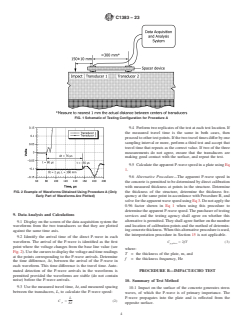
FIG. 1 Schematic of Testing Configuration for Procedure A
9.4 Perform two replicates of the test at each test location. If
the measured travel time is the same in both cases, then
proceed to other test points. If the two travel times differ by one
sampling interval or more, perform a third test and accept that
travel time that repeats as the correct value. If two of the three
measurements do not agree, ensure that the transducers are
making good contact with the surface, and repeat the test.
9.5 Calculate the apparent P-wave speed in a plate using Eq
1.
9.6 Alternative Procedure—The apparent P-wave speed in
the concrete is permitted to be determined by direct calibration
with measured thickness at points in the structure. Determine
FIG. 2 Example of Waveforms Obtained Using Procedure A (Only the thickness of the structure, determine the thickness fre-
Early Part of Waveforms Are Plotted)
quency at the same point in accordance with Procedure B, and
solve for the apparent wave speed using Eq 3. Do not apply the
0.96 factor shown in Eq 1 when using this procedure to
determine the apparent P-wave speed. The purchaser of testing
9. Data Analysis and Calculations
services and the testing agency shall agree on whether this
alternative is permitted. They shall agree further on the number
9.1 Display on the screen of the data acquisition system the
and location of calibration points and the method of determin-
waveforms from the two transducers so that they are plotted
ing concrete thickness. When this alternative procedure is used,
against the same time axis.
the interpretation procedure in Section 15 is not applicable.
9.2 Identify the arrival time of the direct P-wave in each
C 5 2fT (3)
waveform. The arrival of the P-wave is identified as the first p,plate
point where the voltage changes from the base line value (see
where:
Fig. 2). Use the cursors to display the voltage and time readings
T = the thickness of the plate, m, and
at the points corresponding to the P-wave arrivals. Determine
f = the thickness frequency, Hz
the time difference, Δt, between the arrival of the P-wave in
each waveform. This time difference is the travel time. Auto-
mated detection of the P-wave arrivals in the waveforms is
PROCEDURE B—IMPACT-ECHO TEST
permitted provided the waveforms are stable (do not contain
noise) before the P-wave arrivals.
10. Summary of Test Method
9.3 Use the measured travel time, Δt, and measured spacing
10.1 Impact on the surface of the concrete generates stress
between the transducers, L, to calculate the P-wave speed:
waves, of which the P-wave is of primary importance. The
L
P-wave propagates into the plate and is reflected from the
C 5 (2)
p
Δt opposite surface.
C1383 − 23
10.2 Multiple reflections of the P-wave between the plate 11.3 Data-Acquisition System—For acquiring, recording
surfaces give rise to a transient thickness resonance with a
...
This document is not an ASTM standard and is intended only to provide the user of an ASTM standard an indication of what changes have been made to the previous version. Because
it may not be technically possible to adequately depict all changes accurately, ASTM recommends that users consult prior editions as appropriate. In all cases only the current version
of the standard as published by ASTM is to be considered the official document.
Designation: C1383 − 15 (Reapproved 2022) C1383 − 23
Standard Test Method for
Measuring the P-Wave Speed and the Thickness of
Concrete Plates Using the Impact-Echo Method
This standard is issued under the fixed designation C1383; the number immediately following the designation indicates the year of
original adoption or, in the case of revision, the year of last revision. A number in parentheses indicates the year of last reapproval. A
superscript epsilon (´) indicates an editorial change since the last revision or reapproval.
1. Scope*
1.1 This test method covers procedures for determining the thickness of concrete slabs, pavements, bridge decks, walls, or other
plate-like structurestructures using the impact-echo method.
1.2 The following two procedures are covered in this test method:
1.2.1 Procedure A: P-Wave Speed Measurement—This procedure measures the time it takes for the P-wave generated by a
short-duration, point impact to travel between two transducers positioned a known distance apart along the surface of a structure.
The P-wave speed is calculated by dividing the distance between the two transducers by the travel time.
1.2.2 Procedure B: Impact-Echo Test—This procedure measures the frequency at which the P-wave generated by a short-duration,
point impact is reflected between the parallel (opposite) surfaces of a plate. The thickness is calculated from this measured
frequency and the P-wave speed obtained from Procedure A.
1.2.3 Unless specified otherwise, both Procedure A and Procedure B must be performed at each point where a thickness
determination is made.
1.3 The values stated in SI units are to be regarded as standard. No other units of measurement are included in this standard.
1.4 The text of this standard references refers to notes and footnotes that provide explanatory material. These notes and footnotes
(excluding those in tables and figures) shall not be considered as requirements of the standard.
1.5 This standard does not purport to address all of the safety concerns, if any, associated with its use. It is the responsibility
of the user of this standard to establish appropriate safety, health, and environmental practices and determine the applicability of
regulatory limitations prior to use.
1.6 This international standard was developed in accordance with internationally recognized principles on standardization
established in the Decision on Principles for the Development of International Standards, Guides and Recommendations issued
by the World Trade Organization Technical Barriers to Trade (TBT) Committee.
This test method is under the jurisdiction of ASTM Committee C09 on Concrete and Concrete Aggregates and is the direct responsibility of Subcommittee C09.64 on
Nondestructive and In-Place Testing.
Current edition approved June 1, 2022Dec. 15, 2023. Published June 2022February 2024. Originally approved in 1998. Last previous edition approved in 20152022 as
C1383 – 15.C1383 – 15(2022). DOI: 10.1520/C1383-15R22.10.1520/C1383-23.
*A Summary of Changes section appears at the end of this standard
Copyright © ASTM International, 100 Barr Harbor Drive, PO Box C700, West Conshohocken, PA 19428-2959. United States
C1383 − 23
2. Referenced Documents
2.1 ASTM Standards:
C125 Terminology Relating to Concrete and Concrete Aggregates
C597 Test Method for Ultrasonic Pulse Velocity Through Concrete
E1316 Terminology for Nondestructive Examinations
3. Terminology
3.1 Definitions:
3.1.1 For definitions of terms used in this test method, refer to Terminology C125 and Terminology E1316.
3.2 Definitions of Terms Specific to This Standard:
3.2.1 acoustic impedance, n—the product of P-wave speed and density that is used in computations of characteristics of stress
wave reflection at boundaries.
3.2.2 P-wave, n—the dilatational (longitudinal or primary) stress wave that causes particle displacement parallel to the direction
of wave propagation: this wave produces normal stresses (tensile or compressive) as it propagates.
3.2.3 P-wave speed, n—the speed with which the P-wave propagates through a semi-infinite solid.
3.2.3.1 Discussion—
The P-wave speed is the same as the compressional pulse velocity measured according to Test Method C597.
3,4
3.2.4 apparent P-wave speed in a plate , n—a wave speed that is equal to 0.96 of the P-wave speed:
C 5 0.96 C (1)
p, plate p
where:
C = the apparent P-wave speed in a plate, m/s, and
p, plate
C = the P-wave speed in concrete that is obtained from Procedure A, m/s.
p
3.2.4.1 Discussion—
This wave The apparent P-wave speed is used in thickness calculations in impact-echo measurements on plates. The P-wave speed
measured using Procedure A is converted to the apparent P-wave speed in a plate that is by multiplying by 0.96 as shown in Eq
1. The alternative procedure in 9.6 can also be used to calculate the plate thickness by the following equation:determine the
apparent P-wave speed in a plate.
C
p, plate
T 5 (2)
2f
where:
T = the thickness of the plate, m, and
f = the frequency of the P-wave thickness mode of the plate obtained from the amplitude spectrum, Hz.
If the alternative procedure in 9.6 is used to determine the apparent P-wave speed, the 0.96 factor is not applied to the determined
P-wave speed for calculating the thickness.
3.2.5 surface wave, n—a stress wave in which the particle motion is elliptical and the amplitude of particle motion decreases
rapidly with depth: also known as Rayleigh wave (or R-wave).
For referenced ASTM standards, visit the ASTM website, www.astm.org, or contact ASTM Customer Service at service@astm.org. For Annual Book of ASTM Standards
volume information, refer to the standard’s Document Summary page on the ASTM website.
Sansalone, M. and Streett, W.B., Impact-Echo: Nondestructive Evaluation of Concrete and Masonry, Bullbrier Press, Ithaca, NY and Jersey Shore, PA, 1997.
Sansalone, M., Lin, J. M., and Streett, W. B., “A Procedure for Determining P-wave Speed in Concrete for Use in Impact-Echo Testing Using P-wave Speed Measurement
Technique,” ACI Journal, Vol. 94, No. 6, November–December 1997, pp. 531–539.
C1383 − 23
3.2.6 thickness frequency, n—the frequency of the high amplitude peak in the amplitude spectrum obtained from an impact-echo
test of a plate that corresponds to the thickness resonance due to multiple reflections of the P-wave between the opposite surfaces
of the plate.
3.2.6.1 Discussion—
See Section 10 for additional information.
4. Significance and Use
4.1 This test method may be used as a substitute for, or in conjunction with, coring to determine the thickness of slabs, pavements,
decks, walls, or other plate structures. There is a certain level of systematic error in the calculated thickness due to the discrete
nature of the digital records that are used. The absolute systematic error depends on the plate thickness, the sampling interval, and
the sampling period.
4.2 Because the wave speed can vary from point-to-point in the structure due to differences in concrete age or batch-to-batch
variability, the wave speed is measured (Procedure A) at each point where a thickness determination (Procedure B) is required.
4.3 This test method is a pplicable to plate-like structures with lateral dimensions at least six times the thickness. These minimum
lateral dimensions are necessary to prevent other modes of vibration from interfering with the identification of the thickness mode
frequency in the amplitude spectrum. As explained in Note 12, the minimum lateral dimensions and acceptable sampling period
are related.
4.4 The maximum and minimum thickness that can be measured is limited by the details of the testing apparatus (transducer
response characteristics and the specific impactor). The limits shall be specified by manufacturer of the apparatus, and the apparatus
shall not be used beyond these limits. If test equipment is assembled by the user, thickness limitations shall be established and
documented.
4.5 This test method is not applicable to plate structures with overlays, such as a concrete bridge deck with an asphalt or portland
cement concrete overlay. The method is based on the assumption that the concrete plate has the same P-wave speed throughout
its depth.
4.6 Procedure A is performed on concrete that is air dry as high surface moisture content may affect the results.
4.7 Procedure B is applicable to a concrete plate resting on a subgrade of soil, gravel, permeable asphalt concrete, or lean portland
cement concrete provided there is sufficient difference in acoustic impedance between the concrete and subgrade or there are
enough air voids at the interface to produce measurable reflections. If these conditions are not satisfied, the waveform will be of
low amplitude and the amplitude spectrum will not include a dominant peak at the frequency corresponding to the thickness
(thickness frequency.Eq 2). If the interface between the concrete and subgrade is rough, the amplitude spectrum will have a
rounded peak instead of a sharp peak associated with a flat surface.
4.8 The procedures described are not influenced by traffic noise or low frequency structural vibrations set up by normal movement
of traffic across a structure.
4.9 The procedures are not applicable in the presence of mechanical noise created by equipment impacting (jack hammers,
sounding with a hammer, mechanical sweepers, and so forth) on the structure.
4.10 Procedure A is not applicable in the presence of high amplitude electrical noise, such as may produced by a generator or some
other source, that is transmitted to the data-acquisition system.
C1383 − 23
PROCEDURE A—P-WAVE SPEED MEASUREMENT
5. Summary of Procedure
5.1 An impact on the concrete surface is used to generate transient stress waves. These waves propagate along the surface of the
concrete past two transducers, placed on a line through the impact point and at a known distance apart.
5.2 The time difference between the arrival of the P-wave (stress wave with highest speed) at each transducer is used to determine
the P-wave speed by dividing the time difference (travel time) by the known distance between the transducers.
6. Apparatus
6.1 Impactor—The impactor shall be spherical or spherically tipped. It shall produce an impact duration of 30 μs 6 10 μs with
sufficient energy to produce surface displacements due to the P-wave that can be recorded by the two transducers (see Note 1).
The impactor shall be positioned to strike on the centerline passing through the two transducers at a distance of 150 mm 6 10 mm
from the first transducer.
NOTE 1—Hardened steel balls ranging from 5 mm to 8 mm in diameter and attached to steel spring rods have been found to produce suitable impacts.
6.2 Transducers—Two broadband transducers that respond to displacements normal to the surface. These transducers must be
capable of detecting the small displacements that correspond to the arrival of the impact-generated P-wave traveling along the
surface. A small contact area between the piezoelectric element and the concrete surface is required to record accurately the arrival
of the P-wave (see Note 2). Use a suitable material to couple the transducer to the concrete.
NOTE 2—A commercially available displacement transducer made from a conical piezoelectric element with a tip diameter of 1.5 mm and the larger end
attached to a brass backing block has been found suitable. A lead sheet approximately 0.25 mm thick is a suitable coupling material for such a transducer.
6.2.1 Acceptable transducers shall be previously documented to produce accurate results for plate thicknesses similar to those
being measured by this test method.
6.3 Spacer Device—A spacer device shall be provided to hold the transducers a fixed distance apart. It shall not interfere with the
ability of the transducers to measure surface displacement. It shall be manufactured to minimize the possibility of P-wave
transmission through it so as to prevent interference with measurement of the P-wave travel time. The transducer tips shall be
placed about 300 mm apart. Measure and record to the nearest 1 mm the actual distance between the centers of the transducer tips.
NOTE 3—The accuracy of the measurement is affected if the distance between the tips of the two transducers is not known accurately. The materials and
design of the spacer device should be chosen to minimize the change in separation of the transducers due to changes in temperature.
6.4 Data-Acquisition System—Hardware and software for acquiring, recording, and processing the output of the two transducers.
This system can be a portable computer with a two-channel data-acquisition card, or it can be a portable two-channel waveform
analyzer.
6.4.1 The sampling frequency for each channel shall be 500 kHz or higher (sampling interval of 2 μs or less). The system shall
be capable of triggering on the signal from one of the recording channels.
6.4.2 The voltage range and voltage resolution of the data acquisition system shall be matched with the sensitivity of the
transducers so that the arrival of the P-wave is determined accurately.
NOTE 4—For example, a computer data acquisition card with a voltage range of 62.5 V and 12-bit resolution has been found to be suitable for the
transducer described in Note 2.
Suitable apparatus is available commercially.
Proctor, T.M., Jr., “Some Details on the NBS Conical Transducer,” J. of Acoustic Emission, Vol 1, No. 3, pp. 173–178.
C1383 − 23
6.4.3 The display system shall include cursors, including a corresponding readout of time and voltage, that can be positioned at
the point in each waveform corresponding to the P-wave arrival.
6.4.4 The data-acquisition system shall be operated by a power source that does not produce electrical noise detectable by the
transducers and data acquisition system when the system is set at the voltage sensitivity required to detect the arrivals of the
P-wave.
NOTE 5—Battery-powered data acquisition systems have been found suitable.
6.5 Cables and Connectors—To connect the transducers to the data acquisition system. Connectors shall be high quality and
tightly connected to the cables. The cables shall be shielded to reduce electrical noise.
6.6 Functionality Check Apparatus—Apparatus to verify that all components of test system are functioning properly prior to the
start of testing.
NOTE 6—This may include a reference test specimen whose impact response has been determined and can be compared with the output of the test system.
7. Preparation of Test Surface
7.1 The test surface shall be dry. Remove dirt and debris from the surface where the P-wave speed is to be determined.
7.2 If the test surface is extremely rough so that it is difficult to achieve good contact between the transducer tips and the concrete,
grind the surface so that good contact is achieved. Remove loose material prior to coupling the transducers to the surface.
NOTE 7—Surface roughness may be a problem when testing highway pavements with roughly textured or grooved surfaces. On new construction, curing
compounds may have to be removed at test locations to permit proper coupling of the transducers and to obtain short duration impacts.
8. Procedure
8.1 Fig. 1 shows a schematic of the test set-up for Procedure A.
8.2 Assemble the apparatus (transducers, spacer device, impactor). Verify that the test system is functioning properly. Position the
apparatus on the concrete surface, and position the impactor to strike on the line passing through the two transducers and at a
distance of 150 mm 6 10 mm from the first (triggering) transducer. If testing on a grooved surface, test parallel to the grooves,
FIG. 1 Schematic of Testing Configuration for Procedure A
C1383 − 23
so that the line through the transducers and the impactor does not cross a groove. If cracks are present, position the apparatus so
that no cracks intersect the line passing through the impact point and the two transducers.
8.3 Ready the data-acquisition system with correct data acquisition parameters (sampling frequency, voltage range, triggering
level, delay, and so forth).
NOTE 8—For some systems, it is advisable to set the data acquisition parameters so that about 100 points are recorded before the trigger point. This
pre-trigger information permits an assessment of the baseline value in the waveform before P-wave arrival. Due to electrical noise, the signal may
fluctuate before P-wave arrival, and knowing the amplitude of those fluctuations assists in identifying P-wave arrival.
8.4 Perform the impact. Examine the acquired waveforms. If the waveforms from both transducers are valid, store the data for
subsequent analysis. If the P-wave arrivals cannot be identified with certainty, repeat the test at the same position or move to a
different position to achieve good coupling between the transducers and concrete.
NOTE 9—Fig. 2 is an example to illustrate a valid set of waveforms with the arrows positioned at the points corresponding to the P-wave arrivals in each
waveform. In this case the arrivals of the P-wave at the transducer locations are clearly identified by the rise of the waveforms above background levels.
The calculated P-wave speed is 0.3/(0.000076) = 3950 m ⁄s, which is a reasonable value.
9. Data Analysis and Calculations
9.1 Display on the screen of the data acquisition system the waveforms from the two transducers so that they are plotted against
the same time axis.
9.2 Identify the arrival time of the direct P-wave in each waveform. The arrival of the P-wave is identified as the first point where
the voltage changes from the base line value (see Fig. 2). Use the cursors to display the voltage and time readings at the points
corresponding to the P-wave arrivals. Determine the time difference, Δt, between the arrival of the P-wave in each waveform. This
time difference is the travel time. Automated detection of the P-wave arrivals in the waveforms is permitted provided the
waveforms are stable (do not contain noise) before the P-wave arrivals.
9.3 Use the measured travel time, Δt, and measured spacing between the transducers, L, to calculate the P-wave speed:
L
C 5 (2)
p
Δt
9.4 Perform two replicates of the test at each test location. If the measured travel time is the same in both cases, then proceed to
other test points. If the two travel times differ by one sampling interval or more, perform a third test and accept that travel time
that repeats as the correct value. If two of the three measurements do not agree, ensure that the transducers are making good contact
with the surface, and repeat the test.
9.5 Calculate the apparent P-wave speed in a plate using Eq 1.
9.6 Alternative Procedure—Under circumstances where maximum accuracy in measured thickened is not critical, the The apparent
FIG. 2 Example of Waveforms Obtained Using Procedure A (Only Early Part of Waveforms Are Plotted)
C1383 − 23
P-wave speed in the concrete is permitted to be determined by direct calibration with measured thickness at points in the structure.
Determine the thickness of the structure, determine the thickness frequency at the same point in accordance with Procedure B, and
use solve for the apparent wave speed using Eq 23. Do not apply the 0.96 factor shown in Eq 1to solve for the apparent wave when
using this procedure to determine the apparent P-wave speed. The purchaser of testing services and the testing agency shall agree
on whether this alternative is permitted. They shall agree further on the number and location of calibration points and the method
of determining concrete thickness. When this alternative procedure is used, the interpretation procedure in Section 15 is not
applicable.
C 5 2fT (3)
p,plate
where:
T = the thickness of the plate, m, and
f = the thickness frequency, Hz
PROCEDURE B—IMPACT-ECHO TEST
10. Summary of Test Method
10.1 Impact on the surface of the concrete generates stress waves, of which the P-wave is of primary importance. The P-wave
propagates into the plate and is reflected from the opposite surface.
10.2 Multiple reflections of t
...