

ASTM E3143-18b(2023)
(Practice)Standard Practice for Performing Cryo-Transmission Electron Microscopy of Liposomes
General Information
- Abstract
SIGNIFICANCE AND USE
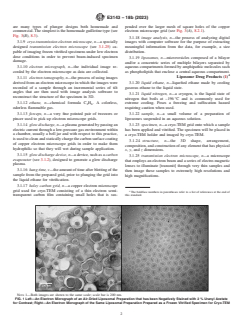
5.1 Cryo-TEM is a technique used to record high resolution images of samples that are frozen and embedded in a thin layer of vitrified, amorphous ice (2-5). Because vitrification occurs so rapidly, the resultant specimen is almost instantly frozen, yielding a very accurate representation of the specimen at the moment of freezing, without the distortions typically associated with air drying delicate wet samples. Once frozen, images of the specimen are recorded at low temperature using a specially designed electron microscope equipped with a cryo-holder capable of operating under low dose conditions in order to prevent beam induced structural damage to the specimen. The cryo-TEM technique is the consensus choice to directly observe, analyze and accurately measure liposomes suspended in aqueous solutions. Fig. 1 illustrates this by comparing an electron micrograph from an air-dried negatively stained liposomal preparation with an electron micrograph of the same solution imaged by cryo-TEM.
FIG. 1 Left—An Electron Micrograph of an Air-Dried Liposomal Preparation that has been Negatively Stained with 2 % Uranyl Acetate for Contrast; Right—An Electron Micrograph of the Same Liposomal Preparation Prepared as a Frozen Vitrified Specimen for Cryo-TEM
Note 1: Both images are shown to the same scale; scale bar is 200 nm.
5.1.1 Fig. 1 demonstrates that liposomes may become distorted and are difficult to measure and analyze when they are air-dried, while the same liposomal preparation is clearly easier to analyze when the specimen is near-instantly preserved by vitrification.
5.1.2 Cryo-TEM involves applying a small volume of sample to a specially prepared holey, ultra-thin or continuous carbon grid suspended in a cryo-TEM plunger over a cup of liquid ethane cooled in a container filled with liquid nitrogen (2, 3). These grids can be purchased or prepared in the laboratory using a carbon evaporator with glow discharge capabilities. Once the sample has wet the surface o...
SCOPE
1.1 This practice covers procedures for vitrifying and recording images of a suspension of liposomes with a cryo-transmission electron microscope (cryo-TEM) for the purpose of evaluating their shape, size distribution and lamellarity for quality assessment. The sample is vitrified in liquid ethane onto specially prepared holey, ultra-thin, or continuous carbon TEM grids, and imaged in a cryo-holder placed in a cryo-TEM.
1.2 The values stated in SI units are to be regarded as standard. No other units of measurement are included in this standard.
1.3 This standard does not purport to address all of the safety concerns, if any, associated with its use. It is the responsibility of the user of this standard to establish appropriate safety, health, and environmental practices and determine the applicability of regulatory limitations prior to use.
1.4 This international standard was developed in accordance with internationally recognized principles on standardization established in the Decision on Principles for the Development of International Standards, Guides and Recommendations issued by the World Trade Organization Technical Barriers to Trade (TBT) Committee.
- Status
- Published
- Publication Date
- 31-Aug-2023
- Technical Committee
- E56 - Nanotechnology
- Drafting Committee
- E56.02 - Physical and Chemical Characterization
Overview
ASTM E3143-18b(2023): Standard Practice for Performing Cryo-Transmission Electron Microscopy of Liposomes provides established procedures for vitrifying and imaging liposomal suspensions using cryo-transmission electron microscopy (cryo-TEM). This standardized methodology enables laboratories to evaluate the shape, size distribution, and lamellarity of liposomes with high accuracy and minimal structural distortion.
Cryo-TEM involves rapid freezing of aqueous samples in vitrified, amorphous ice, ensuring near-instant preservation of liposome morphology. This avoids alterations caused by air drying, making cryo-TEM the preferred technique for direct observation and measurement of liposomes in solution. The standard outlines critical steps such as grid selection, sample preparation, vitrification, imaging, and statistical analysis, ensuring reliable and reproducible results in liposome research and quality assessment.
Key Topics
Cryo-TEM Principles
- Use of rapid freezing to preserve liposome structure without crystallization or drying artifacts.
- Embedding liposomes in thin vitrified ice films on specially prepared grids.
- Low electron dose imaging to prevent beam-induced damage.
Sample Preparation
- Selection and preparation of TEM grids (holey, ultra-thin, or continuous carbon).
- Glow discharge procedures for preparing grid surfaces.
- Critical blotting and vitrification steps for optimal sample thickness and distribution.
Imaging and Analysis
- Transfer and maintenance of vitrified grids at cryogenic temperatures.
- Use of anti-contaminator and cryo-holder devices.
- Image recording at calibrated magnifications and controlled dose rates.
- Digital image analysis for liposome size, shape, and lamellarity.
Reporting and Statistical Methods
- Documentation of experimental parameters (plunger type, grid type, relative humidity, pixel size, electron dose).
- Statistical analysis of liposome measurements, including mean, standard deviation, and confidence intervals.
Applications
Pharmaceutical and Biotech Quality Control
- Verification of liposome size distribution and morphology in drug delivery formulations.
- Assessment of lamellarity for consistency and efficacy in liposome-based therapeutics.
Nanotechnology and Research
- Detailed structural analysis of nanoscale vesicles and bilayer systems.
- Comparison of air-dried versus vitrified sample preparation effects on soft material imaging.
Academic Studies
- Reliable documentation of liposome characteristics in fundamental membrane biophysics research.
- Statistically robust size and distribution analyses for publication and regulatory submissions.
Regulatory Compliance
- Meeting international standards for the evaluation of particle size and shape as required in product development and approval processes.
Related Standards
ASTM E456 - Terminology Relating to Quality and Statistics
This standard provides definitions and statistical terms relevant to quality assessment in scientific measurement, aiding in the consistent interpretation of results.ISO 13322-1 - Particle Size Analysis – Image Analysis Methods – Static Image Analysis Methods
Provides general principles and recommended practices for particle size and structure analysis using image-based methods, supporting detailed and accurate measurement reporting for liposomes and similar particulate systems.
Summary
ASTM E3143-18b(2023) assures that laboratories and researchers can implement best practices for cryo-TEM of liposomes. The standard ensures robust sample preparation, minimizes distortion, and enables highly accurate quantitative analysis. By following this practice, organizations can produce traceable, reproducible data critical for quality control, regulatory submissions, and advancing liposome-based applications in pharmaceuticals and nanotechnology.
Keywords: cryo-TEM, liposomes, vitrification, electron microscopy, quality assessment, size distribution, lamellarity, grid preparation, image analysis, ASTM standards.
Relations
- Effective Date
- 01-Apr-2022
- Effective Date
- 01-Oct-2017
- Effective Date
- 01-Oct-2017
- Effective Date
- 15-Nov-2013
- Effective Date
- 15-Nov-2013
- Effective Date
- 15-Nov-2013
- Effective Date
- 15-Nov-2013
- Effective Date
- 15-Aug-2013
- Effective Date
- 01-May-2012
- Effective Date
- 01-May-2012
- Effective Date
- 01-Apr-2008
- Effective Date
- 01-Apr-2008
- Effective Date
- 01-Apr-2008
- Effective Date
- 01-Apr-2008
- Effective Date
- 01-Apr-2008
Get Certified
Connect with accredited certification bodies for this standard

BSMI (Bureau of Standards, Metrology and Inspection)
Taiwan's standards and inspection authority.
Sponsored listings
Frequently Asked Questions
ASTM E3143-18b(2023) is a standard published by ASTM International. Its full title is "Standard Practice for Performing Cryo-Transmission Electron Microscopy of Liposomes". This standard covers: SIGNIFICANCE AND USE 5.1 Cryo-TEM is a technique used to record high resolution images of samples that are frozen and embedded in a thin layer of vitrified, amorphous ice (2-5). Because vitrification occurs so rapidly, the resultant specimen is almost instantly frozen, yielding a very accurate representation of the specimen at the moment of freezing, without the distortions typically associated with air drying delicate wet samples. Once frozen, images of the specimen are recorded at low temperature using a specially designed electron microscope equipped with a cryo-holder capable of operating under low dose conditions in order to prevent beam induced structural damage to the specimen. The cryo-TEM technique is the consensus choice to directly observe, analyze and accurately measure liposomes suspended in aqueous solutions. Fig. 1 illustrates this by comparing an electron micrograph from an air-dried negatively stained liposomal preparation with an electron micrograph of the same solution imaged by cryo-TEM. FIG. 1 Left—An Electron Micrograph of an Air-Dried Liposomal Preparation that has been Negatively Stained with 2 % Uranyl Acetate for Contrast; Right—An Electron Micrograph of the Same Liposomal Preparation Prepared as a Frozen Vitrified Specimen for Cryo-TEM Note 1: Both images are shown to the same scale; scale bar is 200 nm. 5.1.1 Fig. 1 demonstrates that liposomes may become distorted and are difficult to measure and analyze when they are air-dried, while the same liposomal preparation is clearly easier to analyze when the specimen is near-instantly preserved by vitrification. 5.1.2 Cryo-TEM involves applying a small volume of sample to a specially prepared holey, ultra-thin or continuous carbon grid suspended in a cryo-TEM plunger over a cup of liquid ethane cooled in a container filled with liquid nitrogen (2, 3). These grids can be purchased or prepared in the laboratory using a carbon evaporator with glow discharge capabilities. Once the sample has wet the surface o... SCOPE 1.1 This practice covers procedures for vitrifying and recording images of a suspension of liposomes with a cryo-transmission electron microscope (cryo-TEM) for the purpose of evaluating their shape, size distribution and lamellarity for quality assessment. The sample is vitrified in liquid ethane onto specially prepared holey, ultra-thin, or continuous carbon TEM grids, and imaged in a cryo-holder placed in a cryo-TEM. 1.2 The values stated in SI units are to be regarded as standard. No other units of measurement are included in this standard. 1.3 This standard does not purport to address all of the safety concerns, if any, associated with its use. It is the responsibility of the user of this standard to establish appropriate safety, health, and environmental practices and determine the applicability of regulatory limitations prior to use. 1.4 This international standard was developed in accordance with internationally recognized principles on standardization established in the Decision on Principles for the Development of International Standards, Guides and Recommendations issued by the World Trade Organization Technical Barriers to Trade (TBT) Committee.
SIGNIFICANCE AND USE 5.1 Cryo-TEM is a technique used to record high resolution images of samples that are frozen and embedded in a thin layer of vitrified, amorphous ice (2-5). Because vitrification occurs so rapidly, the resultant specimen is almost instantly frozen, yielding a very accurate representation of the specimen at the moment of freezing, without the distortions typically associated with air drying delicate wet samples. Once frozen, images of the specimen are recorded at low temperature using a specially designed electron microscope equipped with a cryo-holder capable of operating under low dose conditions in order to prevent beam induced structural damage to the specimen. The cryo-TEM technique is the consensus choice to directly observe, analyze and accurately measure liposomes suspended in aqueous solutions. Fig. 1 illustrates this by comparing an electron micrograph from an air-dried negatively stained liposomal preparation with an electron micrograph of the same solution imaged by cryo-TEM. FIG. 1 Left—An Electron Micrograph of an Air-Dried Liposomal Preparation that has been Negatively Stained with 2 % Uranyl Acetate for Contrast; Right—An Electron Micrograph of the Same Liposomal Preparation Prepared as a Frozen Vitrified Specimen for Cryo-TEM Note 1: Both images are shown to the same scale; scale bar is 200 nm. 5.1.1 Fig. 1 demonstrates that liposomes may become distorted and are difficult to measure and analyze when they are air-dried, while the same liposomal preparation is clearly easier to analyze when the specimen is near-instantly preserved by vitrification. 5.1.2 Cryo-TEM involves applying a small volume of sample to a specially prepared holey, ultra-thin or continuous carbon grid suspended in a cryo-TEM plunger over a cup of liquid ethane cooled in a container filled with liquid nitrogen (2, 3). These grids can be purchased or prepared in the laboratory using a carbon evaporator with glow discharge capabilities. Once the sample has wet the surface o... SCOPE 1.1 This practice covers procedures for vitrifying and recording images of a suspension of liposomes with a cryo-transmission electron microscope (cryo-TEM) for the purpose of evaluating their shape, size distribution and lamellarity for quality assessment. The sample is vitrified in liquid ethane onto specially prepared holey, ultra-thin, or continuous carbon TEM grids, and imaged in a cryo-holder placed in a cryo-TEM. 1.2 The values stated in SI units are to be regarded as standard. No other units of measurement are included in this standard. 1.3 This standard does not purport to address all of the safety concerns, if any, associated with its use. It is the responsibility of the user of this standard to establish appropriate safety, health, and environmental practices and determine the applicability of regulatory limitations prior to use. 1.4 This international standard was developed in accordance with internationally recognized principles on standardization established in the Decision on Principles for the Development of International Standards, Guides and Recommendations issued by the World Trade Organization Technical Barriers to Trade (TBT) Committee.
ASTM E3143-18b(2023) is classified under the following ICS (International Classification for Standards) categories: 17.180.30 - Optical measuring instruments. The ICS classification helps identify the subject area and facilitates finding related standards.
ASTM E3143-18b(2023) has the following relationships with other standards: It is inter standard links to ASTM E456-13a(2022)e1, ASTM E456-13A(2017)e1, ASTM E456-13A(2017)e3, ASTM E456-13ae3, ASTM E456-13ae2, ASTM E456-13ae1, ASTM E456-13a, ASTM E456-13, ASTM E456-12e1, ASTM E456-12, ASTM E456-08e4, ASTM E456-08, ASTM E456-08e2, ASTM E456-08e3, ASTM E456-08e1. Understanding these relationships helps ensure you are using the most current and applicable version of the standard.
ASTM E3143-18b(2023) is available in PDF format for immediate download after purchase. The document can be added to your cart and obtained through the secure checkout process. Digital delivery ensures instant access to the complete standard document.
Standards Content (Sample)
This international standard was developed in accordance with internationally recognized principles on standardization established in the Decision on Principles for the
Development of International Standards, Guides and Recommendations issued by the World Trade Organization Technical Barriers to Trade (TBT) Committee.
Designation: E3143 − 18b (Reapproved 2023)
Standard Practice for
Performing Cryo-Transmission Electron Microscopy of
Liposomes
This standard is issued under the fixed designation E3143; the number immediately following the designation indicates the year of
original adoption or, in the case of revision, the year of last revision. A number in parentheses indicates the year of last reapproval. A
superscript epsilon (´) indicates an editorial change since the last revision or reapproval.
1. Scope 3. Terminology
1.1 This practice covers procedures for vitrifying and re- 3.1 Definitions:
cording images of a suspension of liposomes with a cryo-
3.1.1 anti-contaminator, n—a specially designed device
transmission electron microscope (cryo-TEM) for the purpose
built into the column of a cryo-transmission electron micro-
of evaluating their shape, size distribution and lamellarity for
scope designed to pull contamination produced by outgassing
quality assessment. The sample is vitrified in liquid ethane onto
within the column away from the frozen specimen during
specially prepared holey, ultra-thin, or continuous carbon TEM
imaging. The device is cooled with liquid nitrogen to a
grids, and imaged in a cryo-holder placed in a cryo-TEM.
temperature below that of the specimen creating a colder
surface for contamination to build on.
1.2 The values stated in SI units are to be regarded as
standard. No other units of measurement are included in this
3.1.2 carbon evaporator, n—a device used to evaporate
standard.
carbon in a high vacuum chamber generally by applying
current through two carbon rods pressed against one another,
1.3 This standard does not purport to address all of the
with one rod being sharpened in order to provide resistance to
safety concerns, if any, associated with its use. It is the
the current; this causes the rods to heat up and evaporate
responsibility of the user of this standard to establish appro-
carbon. The same device can also be used as a glow discharge
priate safety, health, and environmental practices and deter-
device (3.1.15) in order to glow discharge surfaces.
mine the applicability of regulatory limitations prior to use.
1.4 This international standard was developed in accor-
3.1.3 continuous carbon grid, n—a copper electron micro-
dance with internationally recognized principles on standard-
scope grid coated with a self-supporting layer of continuous
ization established in the Decision on Principles for the
carbon over the square mesh of the grid.
Development of International Standards, Guides and Recom-
3.1.4 copper electron microscope grid, n—commonly re-
mendations issued by the World Trade Organization Technical
ferred to as an “EM grid,” a thin 3 mm diameter copper foil
Barriers to Trade (TBT) Committee.
disk, usually manufactured with a pattern of square holes
called a ‘mesh’ through which imaging is conducted in an
2. Referenced Documents
electron microscope. The number, pattern, and shape of the
2.1 ASTM Standards:
holes can vary depending on imaging conditions and sample
E456 Terminology Relating to Quality and Statistics
requirements.
2.2 ISO Standards:
3.1.5 cryo-grid storage device, n—any device used to store
13322-1 Particle Size Analysis – Image Analysis Methods –
cryo-EM grids indefinitely in a liquid nitrogen dewar.
Static Image Analysis Methods
3.1.6 cryo-TEM, n—also referred to simply as cryo-EM, or
cryo electron microscopy, the process of imaging frozen
hydrated, vitrified nanomaterial using a cryo-transmission
This practice is under the jurisdiction of ASTM Committee E56 on Nanotech-
electron microscope.
nology and is the direct responsibility of Subcommittee E56.02 on Physical and
Chemical Characterization.
3.1.7 cryo-TEM holder, n—a liquid nitrogen refrigerated
Current edition approved Sept. 1, 2023. Published September 2023. Originally
device specifically designed to hold and maintain a prepared
approved in 2018. Last previous edition approved in 2018 as E3143 – 18b. DOI:
10.1520/E1343-18BR23.
grid containing a frozen, hydrated, vitrified specimen in a
For referenced ASTM standards, visit the ASTM website, www.astm.org, or
cryo-TEM while imaging is conducted.
contact ASTM Customer Service at service@astm.org. For Annual Book of ASTM
Standards volume information, refer to the standard’s Document Summary page on
3.1.8 cryo-TEM plunger, n—a device used to vitrify a
the ASTM website.
sample onto a holey, ultra-thin, or continuous carbon grid for
Available from International Organization for Standardization (ISO), ISO
cryo-TEM by plunging the grid containing a thin layer of
Central Secretariat, BIBC II, Chemin de Blandonnet 8, CP 401, 1214 Vernier,
Geneva, Switzerland, http://www.iso.org. aqueous sample into an ethane slush or other cryogen(s). There
Copyright © ASTM International, 100 Barr Harbor Drive, PO Box C700, West Conshohocken, PA 19428-2959. United States
E3143 − 18b (2023)
are many types of plunger designs both homemade and pended over the larger mesh of square holes of the copper
commercial. The simplest is the homemade guillotine type (see electron microscope grid (see Fig. 3(A), 8.2.1).
Fig. 3(B), 8.3).
3.1.18 image analysis, n—the process of analyzing digital
3.1.9 cryo-transmission electron microscope, n—a specially images with computer software for the purpose of extracting
designed transmission electron microscope (see 3.1.25) ca- meaningful information from the data, for example, a size
pable of imaging frozen vitrified specimens under low electron distribution.
dose conditions in order to prevent beam-induced specimen
3.1.19 liposomes, n—microvesicles composed of a bilayer
damage.
and/or a concentric series of multiple bilayers separated by
3.1.10 electron micrograph, n—the individual image re- aqueous compartments formed by amphipathic molecules such
corded by the electron microscope as data are collected. as phospholipids that enclose a central aqueous compartment.
Liposome Drug Products (1)
3.1.11 electron tomography, n—the process of using images
derived from an electron microscope in which the images were 3.1.20 liquid ethane, n—liquefied ethane made by cooling
recorded of a sample through an incremental series of tilt gaseous ethane to the liquid state.
angles that are then used with image analysis software to
3.1.21 liquid nitrogen, n—a cryogen, is the liquid state of
reconstruct the structure of the specimen in 3D.
nitrogen that boils at –196 °C and is commonly used for
3.1.12 ethane, n—chemical formula C H . A colorless,
extreme cooling. Poses a freezing and suffocation hazard
2 6
odorless flammable gas. requiring caution when used.
3.1.13 forceps, n—a very fine pointed pair of tweezers or
3.1.22 sample, n—a small volume of a preparation of
pincer used to pick up electron microscope grids. liposomes suspended in an aqueous solution.
3.1.14 glow discharge, n—a plasma generated by passing an
3.1.23 specimen, n—a cryo-TEM grid onto which a sample
electric current through a low-pressure gas environment within has been applied and vitrified. The specimen will be placed in
a chamber, usually a bell jar and with respect to this practice,
a cryo-TEM holder and imaged by cryo-TEM.
is used to clean and statically charge the carbon surface coating
3.1.24 structure, n—the 3D shape, arrangement,
of copper electron microscope grids in order to make them
composition, and construction of any element that has physical
hydrophilic so that they will wet during sample application.
x, y, and z dimensions.
3.1.15 glow discharge device, n—a device, such as a carbon
3.1.25 transmission electron microscope, n—a microscope
evaporator (see 3.1.2), designed to generate a glow discharge
that employs an electron beam and a series of electro-magnetic
plasma.
lenses to illuminate [transmit] through very thin samples and
3.1.16 hang time, v—the amount of time after blotting of the
then image these samples to extremely high resolutions and
sample from the prepared grid, prior to plunging the grid into
high magnifications.
the liquid ethane for vitrification.
3.1.17 holey carbon grid, n—a copper electron microscope
grid used for cryo-TEM consisting of a thin electron semi- 4
The boldface numbers in parentheses refer to a list of references at the end of
transparent carbon film containing small holes that is sus- this standard.
NOTE 1—Both images are shown to the same scale; scale bar is 200 nm.
FIG. 1 Left—An Electron Micrograph of an Air-Dried Liposomal Preparation that has been Negatively Stained with 2 % Uranyl Acetate
for Contrast; Right—An Electron Micrograph of the Same Liposomal Preparation Prepared as a Frozen Vitrified Specimen for Cryo-TEM
E3143 − 18b (2023)
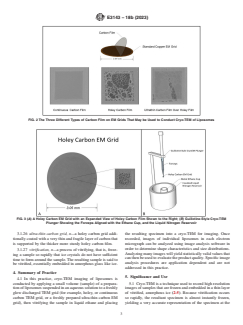
FIG. 2 The Three Different Types of Carbon Film on EM Grids That May be Used to Conduct Cryo-TEM of Liposomes
FIG. 3 (A) A Holey Carbon EM Grid with an Expanded View of Holey Carbon Film Shown to the Right; (B) Guillotine-Style Cryo-TEM
Plunger Showing the Forceps Aligned with the Ethane Cup, and the Liquid Nitrogen Reservoir
3.1.26 ultra-thin carbon grid, n—a holey carbon grid addi- the resulting specimen into a cryo-TEM for imaging. Once
tionally coated with a very thin and fragile layer of carbon that recorded, images of individual liposomes in each electron
is supported by the thicker more sturdy holey carbon film. micrograph can be analyzed using image analysis software in
order to determine shape characteristics and size distributions.
3.1.27 vitrification, n—a process of vitrifying, that is, freez-
Analyzing many images will yield statistically valid values that
ing a sample so rapidly that ice crystals do not have sufficient
can then be used to evaluate the product quality. Specific image
time to form around the sample. The resulting sample is said to
analysis procedures are application dependent and are not
be vitrified, essentially embedded in amorphous glass like ice.
addressed in this practice.
4. Summary of Practice
5. Significance and Use
4.1 In this practice, cryo-TEM imaging of liposomes is
conducted by applying a small volume (sample) of a prepara- 5.1 Cryo-TEM is a technique used to record high resolution
tion of liposomes suspended in an aqueous solution to a freshly images of samples that are frozen and embedded in a thin layer
glow discharged TEM grid (for example, holey, or continuous of vitrified, amorphous ice (2-5). Because vitrification occurs
carbon TEM grid, or a freshly prepared ultra-thin carbon EM so rapidly, the resultant specimen is almost instantly frozen,
grid), then vitrifying the sample in liquid ethane and placing yielding a very accurate representation of the specimen at the
E3143 − 18b (2023)
moment of freezing, without the distortions typically associ- liposomes that are left behind on the EM grid, are often
ated with air drying delicate wet samples. Once frozen, images embedded in thicker ice that is too thick for the electron beam
of the specimen are recorded at low temperature using a to either penetrate or, if it does, results in images that are too
specially designed electron microscope equipped with a cryo- low in quality to provide adequate signal for image processing.
5.1.2.3 Liposomal Distortion—Because liposomes are es-
holder capable of operating under low dose conditions in order
to prevent beam induced structural damage to the specimen. sentially loose membrane bounded fluid compartments, freez-
ing them within a layer of vitrified ice that is thinner than their
The cryo-TEM technique is the consensus choice to directly
observe, analyze and accurately measure liposomes suspended diameter may cause the surface tension on both sides of the
specimen to compress some of the liposomes leading to various
in aqueous solutions. Fig. 1 illustrates this by comparing an
levels of flattening distortions. Accurate size measurements of
electron micrograph from an air-dried negatively stained lipo-
such distorted liposomes would require volumetric measure-
somal preparation with an electron micrograph of the same
ments of all the liposomes within a field of view through a
solution imaged by cryo-TEM.
three-dimensional analysis using electron tomography.
5.1.1 Fig. 1 demonstrates that liposomes may become dis-
torted and are difficult to measure and analyze when they are
6. Reagents and Equipment
air-dried, while the same liposomal preparation is clearly easier
to analyze when the specimen is near-instantly preserved by 6.1 Purified preparation of liposomes suspended in an
vitrification. aqueous solution.
5.1.2 Cryo-TEM involves applying a small volume of
6.2 Cryo-TEM plunger, commercial or homemade.
sample to a specially prepared holey, ultra-thin or continuous
6.3 Ethane gas, research or higher purity grade.
carbon grid suspended in a cryo-TEM plunger over a cup of
6.4 Pipetter, set to 3–4 μL.
liquid ethane cooled in a container filled with liquid nitrogen
(2, 3). These grids can be purchased or prepared in the
6.5 Pipette tips.
laboratory using a carbon evaporator with glow discharge
6.6 Four brass or copper rods, approximately 5 mm (diam-
capabilities. Once the sample has wet the surface of the grid,
eter) × 12 cm.
and sufficient time allowed for the solution to equilibrate with
6.7 Liquid nitrogen.
regard to liposome spreading over the grid surface, the excess
is wicked off (blotted) with filter paper and the grid plunged
6.8 Filter paper, cut into wedges approximately 2 cm in
into the liquid ethane, vitrifying the sample. Once frozen, the
length.
sample is maintained at a liquid nitrogen temperature while it
6.9 A suitable number of 200 to 400 mesh holey, such as
is imaged in a cryo-TEM operating under low electron dose
lacey, continuous, or ultra-thin carbon-coated TEM copper
conditions. There are several limitations associated with imple-
grids. These grids contain hole patterns etched into the carbon
menting this technique to analyze liposomes:
that come in specific hole size, pattern, and frequency. These
5.1.2.1 Thick Ice—The vitrified ice thickness is often deter-
grids are commercially available from electron microscopy
mined by the sample or the cryo-TEM procedure itself. Large
supply companies.
liposomes, defined to include larger structure and sizes with
6.10 Glow discharge device.
respect to this practice, are generally associated with thicker
ice, while smaller liposomes (structure and sizes) are associ-
6.11 Cryo-TEM, capable of low dose imaging and with an
ated with thinner ice. Generally, thick ice occurs when either
anti-contaminator.
excess water forms a thicker ice layer or samples containing
6.12 Cryo-TEM holder.
larger liposomes are fully covered with water making the ice
6.13 Liquid nitrogen grid storage device.
thicker around the sample. Thicker ice tends to block the
electron beam either completely or partially which compro-
7. Hazards
mises image quality.
5.1.2.2 Larger liposomes (structure and sizes) are preferen- 7.1 An independent hazard assessment should be conducted
tially lost during sample preparation. Larger liposomes, de- by the user of this practice in order to establish the proper
fined to include larger structures and sizes with respect to this safety protocols necessary to implement this standard. The
practice, are more difficult to image for two reasons. The first known hazards include, but are not limited to, the following:
is the cryo-TEM procedure itself. This procedure requires the 7.1.1 Ethane Gas:
use of filter paper to blot away excess aqueous solution from 7.1.1.1 Is an extremely flammable gas.
the EM grid just prior to vitrification. The larger liposomes 7.1.1.2 May displace oxygen and cause suffocation.
suspended within the sample preferentially wash away from 7.1.1.3 Will be used as a cryogen with a heat capacity of
the grid and into the filter paper, ending up in the filter paper. 68.5 J/(mol K) at −179 °C, which may cause frostbite on
This is perhaps because the larger liposomes have larger contact with bare skin.
surface areas that expose them to relatively larger forces during 7.1.1.4 Will be dispensed from a high pressure tank and may
the rapid flow of the water to the filter paper. This makes them be an explosion hazard if heated.
difficult to find and measure in electron micrographs when their 7.1.1.5 May form explosive mixtures with air.
relative concentration in the specimen is low, meaning that few 7.1.1.6 Use suitable personal protective equipment (latex
are left behind after blotting. The second reason is that larger gloves, safety glasses with side-shields, and a laboratory coat)
E3143 − 18b (2023)
as established by a hazard assessment when working with may be less randomly oriented over holes due to liposome
ethane. Work must be conducted in a ventilated space. interaction with the surface of the water prior to vitrification.
8.1.1.3 Ultrathin Carbon Grids—This type of grid provides
7.1.2 Liquid Nitrogen:
a very thin layer of carbon for the sample to adhere to. This
7.1.2.1 May displace oxygen and cause suffocation.
carbon layer is too delicate and fragile to be placed unsup-
7.1.2.2 Is a refrigerant and may cause frostbite.
ported over plain 200–400 mesh copper grids. Instead the thin
7.1.2.3 Use suitable personal protective equipment (insu-
carbon is placed over previously prepared holey carbon grids.
lated protective gloves, safety glasses with side- shields, and a
These ultrathin carbon grids may be prepared in the lab or
laboratory coat) as established by a hazard assessment when
purchased from a manufacturer. If purchased from a
working with liquid nitrogen. Work must be conducted in a
manufacturer, they must be used according to the original
ventilated space.
equipment manufacturer (OEM) instructions as the glow dis-
7.1.3 Liposomes:
charge procedure has been shown to damage ultrathin carbon.
7.1.3.1 Some liposomes to be examined by this practice
If made in the lab, they must be prepared with a fresh, ultrathin
may be toxic.
carbon layer to skip the glow discharging step which damages
7.1.3.2 Use suitable personal protective equipment (latex
thin films. This type of grid should be used for cryo-TEM when
gloves, safety glasses, properly fitted respirator, and a labora-
the concentration of liposomes is low or when the liposomes
tory coat) as established by a hazard assessment when working
prefer carbon to empty holes. Other advantages of ultrathin
with liposomes, and handle liposomes in a fume hood when
carbon grids include less beam-i
...