

ISO/TR 22676:2006
(Main)Prosthetics — Testing of ankle-foot devices and foot units — Guidance on the application of the test loading conditions of ISO 22675 and on the design of appropriate test equipment
General Information
- Abstract
ISO/TR 22676:2006 offers guidance on: the specification of the test loading conditions of ISO 22675; the design of appropriate test equipment. Most of the text of ISO/TR 22676:2006 relates to the theoretical and technical background and the design of the equipment.
- Status
- Published
- Publication Date
- 13-Sep-2006
- Technical Committee
- ISO/TC 168 - Prosthetics and orthotics
- Drafting Committee
- ISO/TC 168/WG 3 - Testing
- Current Stage
- 6060 - International Standard published
- Start Date
- 14-Sep-2006
- Completion Date
- 29-Aug-2026
Buy Documents
ISO/TR 22676:2006 - Prosthetics — Testing of ankle-foot devices and foot units — Guidance on the application of the test loading conditions of ISO 22675 and on the design of appropriate test equipment Released:9/14/2006
ISO/TR 22676:2006 - Prosthetics — Testing of ankle-foot devices and foot units — Guidance on the application of the test loading conditions of ISO 22675 and on the design of appropriate test equipment Released:9/30/2009
Overview
ISO/TR 22676:2006 is a Technical Report that provides guidance for testing ankle-foot prosthetic devices and foot units in conjunction with ISO 22675. It focuses on the specification of test loading conditions defined in ISO 22675 and on the design of appropriate test equipment, supplying the theoretical background and practical design considerations that would otherwise lengthen the main standard.
Key Topics
This guidance document addresses the technical elements required to implement reproducible prosthetics testing:
Application of ISO 22675 test loading conditions
- Guidance on directions and magnitudes of heel and forefoot reference loading for static and cyclic tests.
- Clarification of force components, their lines of action, and time profiles used to simulate gait loading.
- Reference test loading levels (e.g., P3–P5) and associated profiles for test reproducibility.
Test equipment design and mechanics
- Detailed recommendations for foot platform kinematics, including the role of the tilting axis (TA), elevation (E) and anterior–posterior (A–P) displacement (Δf), and their effect on the applied loads.
- Design variants for load application, with practical examples such as asymmetrical (60:40) and symmetrical (50:50) crank gear drives to generate tilting angle profiles γ(t).
- Consideration of top load application point P, its dependence on foot length (L), and methods to transpose P to compensate geometry differences.
- Analysis of moments, driving torque, and effects of deviations from specified tilting profiles on test forces.
Analytical and illustrative material
- Figures and tables illustrate force profiles, crank geometries, positional effects, and numerical examples (e.g., Table 1 for resultant force magnitudes).
Applications
ISO/TR 22676 is practical for professionals involved in prosthetics testing and development:
- Prosthetic device manufacturers - to design test rigs and verify ankle-foot devices and foot units under standardized loading conditions.
- Biomechanical test laboratories - to implement ISO 22675 tests with properly designed machinery and reproducible loading profiles.
- Design engineers and R&D teams - for understanding how platform kinematics and load application influence test results.
- Regulatory and conformity assessment bodies - to interpret test methods and ensure consistent application of ISO 22675.
Related Standards
- ISO 22675 - Primary standard specifying test methods for ankle-foot devices and foot units (ISO/TR 22676 is guidance for applying ISO 22675).
- ISO 10328 - Related prosthetics structural testing standard referenced for comparative values and concepts.
- Developed under ISO/TC 168 (Prosthetics and orthotics).
Keywords: ISO TR 22676, prosthetics testing, ankle-foot devices, foot units, test loading conditions, ISO 22675, test equipment design, heel and forefoot loading, cyclic and static tests, crank gear, tilting axis.
Buy Documents
ISO/TR 22676:2006 - Prosthetics — Testing of ankle-foot devices and foot units — Guidance on the application of the test loading conditions of ISO 22675 and on the design of appropriate test equipment Released:9/14/2006
ISO/TR 22676:2006 - Prosthetics — Testing of ankle-foot devices and foot units — Guidance on the application of the test loading conditions of ISO 22675 and on the design of appropriate test equipment Released:9/30/2009
Get Certified
Connect with accredited certification bodies for this standard

BSI Group
BSI (British Standards Institution) is the business standards company that helps organizations make excellence a habit.

TÜV Rheinland
TÜV Rheinland is a leading international provider of technical services.

TÜV SÜD
TÜV SÜD is a trusted partner of choice for safety, security and sustainability solutions.
Sponsored listings
Frequently Asked Questions
ISO/TR 22676:2006 is a technical report published by the International Organization for Standardization (ISO). Its full title is "Prosthetics — Testing of ankle-foot devices and foot units — Guidance on the application of the test loading conditions of ISO 22675 and on the design of appropriate test equipment". This standard covers: ISO/TR 22676:2006 offers guidance on: the specification of the test loading conditions of ISO 22675; the design of appropriate test equipment. Most of the text of ISO/TR 22676:2006 relates to the theoretical and technical background and the design of the equipment.
ISO/TR 22676:2006 offers guidance on: the specification of the test loading conditions of ISO 22675; the design of appropriate test equipment. Most of the text of ISO/TR 22676:2006 relates to the theoretical and technical background and the design of the equipment.
ISO/TR 22676:2006 is classified under the following ICS (International Classification for Standards) categories: 11.040.40 - Implants for surgery, prosthetics and orthotics. The ICS classification helps identify the subject area and facilitates finding related standards.
ISO/TR 22676:2006 is available in PDF format for immediate download after purchase. The document can be added to your cart and obtained through the secure checkout process. Digital delivery ensures instant access to the complete standard document.
Standards Content (Sample)
TECHNICAL ISO/TR
REPORT 22676
First edition
2006-10-01
Prosthetics — Testing of ankle-foot
devices and foot units — Guidance on the
application of the test loading conditions
of ISO 22675 and on the design of
appropriate test equipment
Prothèses — Essais de mécanismes cheville-pied et unités de pied —
Directives d'application des conditions de force d'essai selon
l'ISO 22675 et de la conception d'équipement d'essai approprié
Reference number
©
ISO 2006
PDF disclaimer
This PDF file may contain embedded typefaces. In accordance with Adobe's licensing policy, this file may be printed or viewed but
shall not be edited unless the typefaces which are embedded are licensed to and installed on the computer performing the editing. In
downloading this file, parties accept therein the responsibility of not infringing Adobe's licensing policy. The ISO Central Secretariat
accepts no liability in this area.
Adobe is a trademark of Adobe Systems Incorporated.
Details of the software products used to create this PDF file can be found in the General Info relative to the file; the PDF-creation
parameters were optimized for printing. Every care has been taken to ensure that the file is suitable for use by ISO member bodies. In
the unlikely event that a problem relating to it is found, please inform the Central Secretariat at the address given below.
© ISO 2006
All rights reserved. Unless otherwise specified, no part of this publication may be reproduced or utilized in any form or by any means,
electronic or mechanical, including photocopying and microfilm, without permission in writing from either ISO at the address below or
ISO's member body in the country of the requester.
ISO copyright office
Case postale 56 • CH-1211 Geneva 20
Tel. + 41 22 749 01 11
Fax + 41 22 749 09 47
E-mail copyright@iso.org
Web www.iso.org
Published in Switzerland
ii © ISO 2006 – All rights reserved
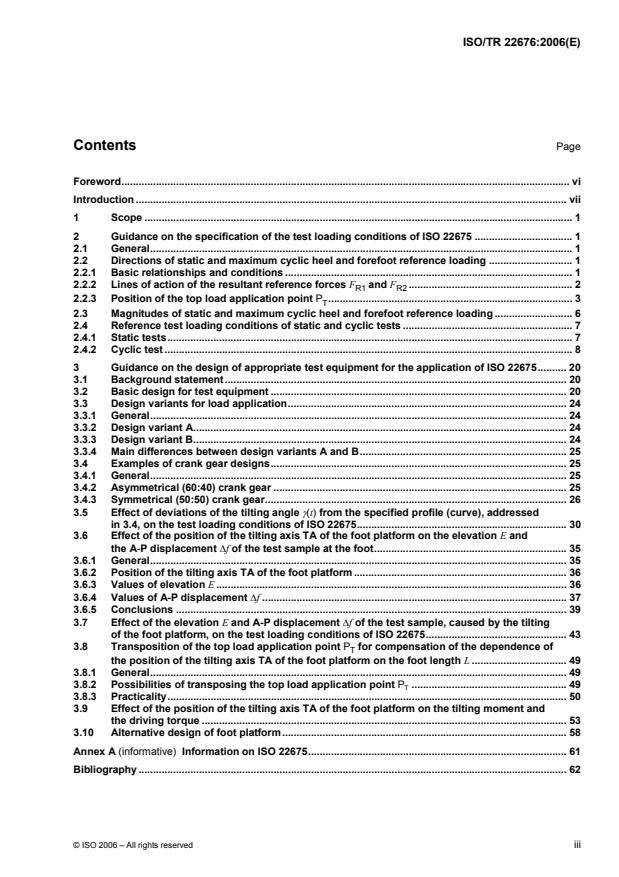
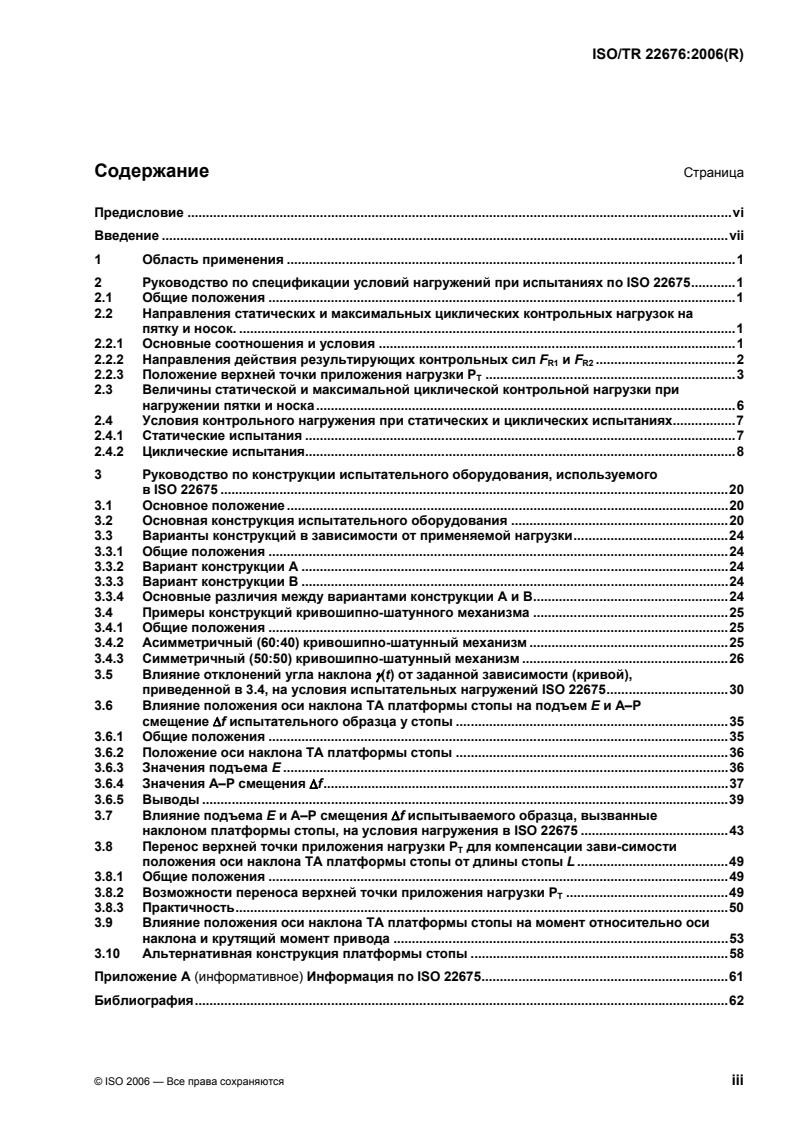
Contents Page
Foreword. vi
Introduction . vii
1 Scope . 1
2 Guidance on the specification of the test loading conditions of ISO 22675 . 1
2.1 General. 1
2.2 Directions of static and maximum cyclic heel and forefoot reference loading . 1
2.2.1 Basic relationships and conditions . 1
2.2.2 Lines of action of the resultant reference forces F and F . 2
R1 R2
2.2.3 Position of the top load application point P . 3
T
2.3 Magnitudes of static and maximum cyclic heel and forefoot reference loading . 6
2.4 Reference test loading conditions of static and cyclic tests . 7
2.4.1 Static tests. 7
2.4.2 Cyclic test . 8
3 Guidance on the design of appropriate test equipment for the application of ISO 22675. 20
3.1 Background statement. 20
3.2 Basic design for test equipment . 20
3.3 Design variants for load application. 24
3.3.1 General. 24
3.3.2 Design variant A. 24
3.3.3 Design variant B. 24
3.3.4 Main differences between design variants A and B. 25
3.4 Examples of crank gear designs. 25
3.4.1 General. 25
3.4.2 Asymmetrical (60:40) crank gear . 25
3.4.3 Symmetrical (50:50) crank gear. 26
3.5 Effect of deviations of the tilting angle γ(t) from the specified profile (curve), addressed
in 3.4, on the test loading conditions of ISO 22675. 30
3.6 Effect of the position of the tilting axis TA of the foot platform on the elevation E and
the A-P displacement ∆f of the test sample at the foot. 35
3.6.1 General. 35
3.6.2 Position of the tilting axis TA of the foot platform . 36
3.6.3 Values of elevation E . 36
3.6.4 Values of A-P displacement ∆f . 37
3.6.5 Conclusions . 39
3.7 Effect of the elevation E and A-P displacement ∆f of the test sample, caused by the tilting
of the foot platform, on the test loading conditions of ISO 22675. 43
3.8 Transposition of the top load application point P for compensation of the dependence of
T
the position of the tilting axis TA of the foot platform on the foot length L . 49
3.8.1 General. 49
3.8.2 Possibilities of transposing the top load application point P . 49
T
3.8.3 Practicality. 50
3.9 Effect of the position of the tilting axis TA of the foot platform on the tilting moment and
the driving torque . 53
3.10 Alternative design of foot platform. 58
Annex A (informative) Information on ISO 22675. 61
Bibliography . 62
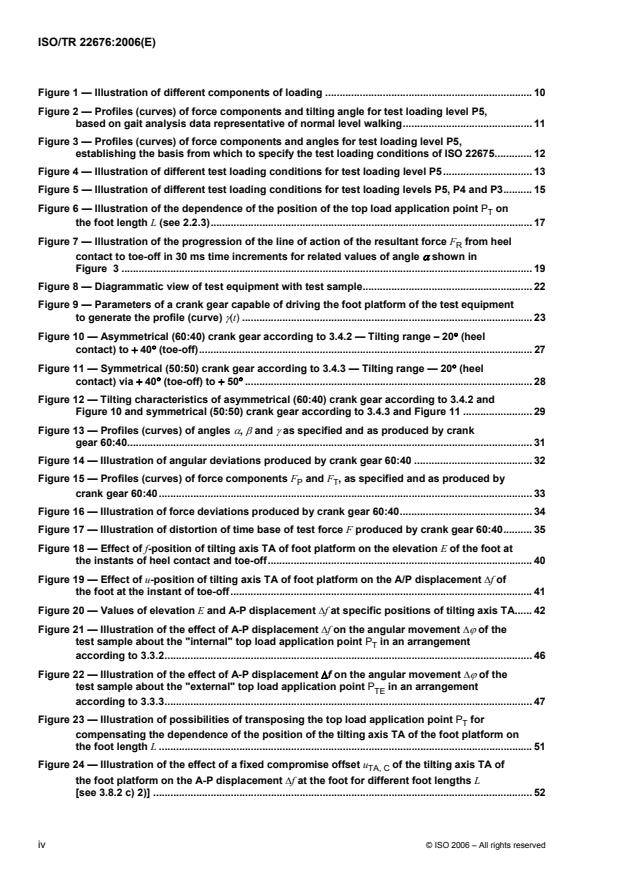
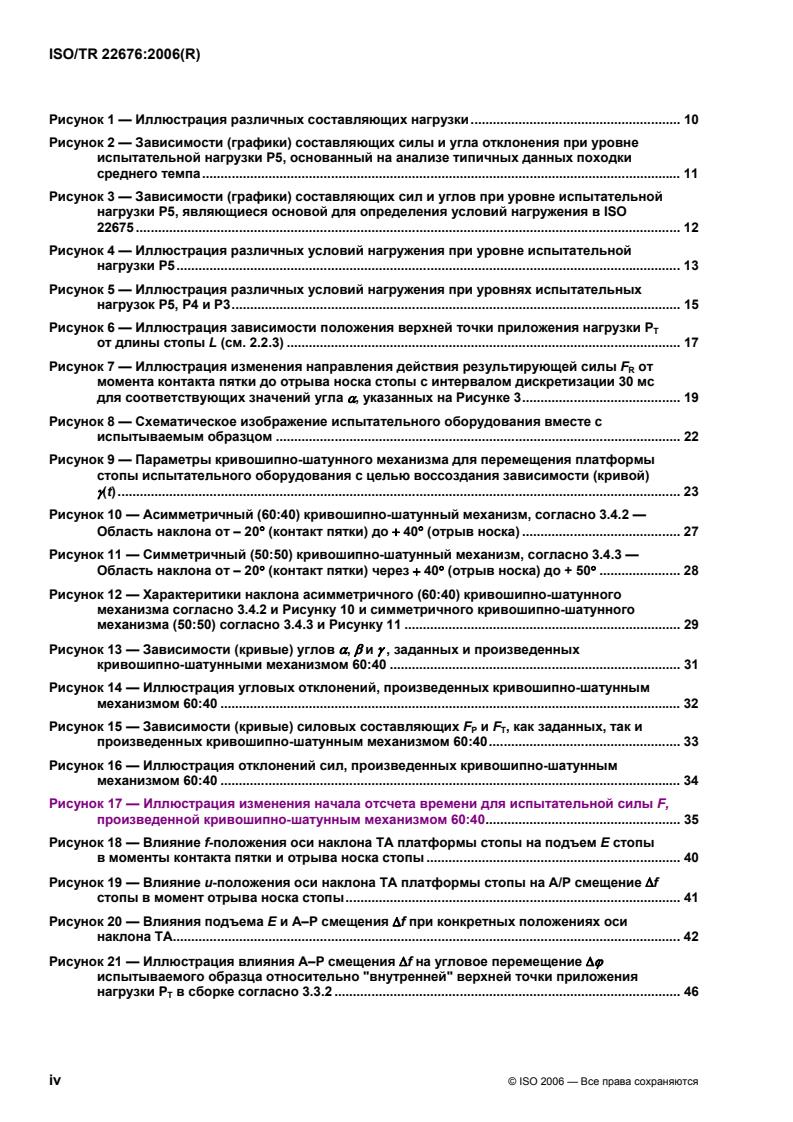
Figure 1 — Illustration of different components of loading . 10
Figure 2 — Profiles (curves) of force components and tilting angle for test loading level P5,
based on gait analysis data representative of normal level walking. 11
Figure 3 — Profiles (curves) of force components and angles for test loading level P5,
establishing the basis from which to specify the test loading conditions of ISO 22675. 12
Figure 4 — Illustration of different test loading conditions for test loading level P5. 13
Figure 5 — Illustration of different test loading conditions for test loading levels P5, P4 and P3. 15
Figure 6 — Illustration of the dependence of the position of the top load application point P on
T
the foot length L (see 2.2.3). 17
Figure 7 — Illustration of the progression of the line of action of the resultant force F from heel
R
contact to toe-off in 30 ms time increments for related values of angle α shown in
Figure 3 . 19
Figure 8 — Diagrammatic view of test equipment with test sample. 22
Figure 9 — Parameters of a crank gear capable of driving the foot platform of the test equipment
to generate the profile (curve) γ(t) . 23
Figure 10 — Asymmetrical (60:40) crank gear according to 3.4.2 — Tilting range – 20° (heel
contact) to + 40° (toe-off). 27
Figure 11 — Symmetrical (50:50) crank gear according to 3.4.3 — Tilting range — 20° (heel
contact) via + 40° (toe-off) to + 50° . 28
Figure 12 — Tilting characteristics of asymmetrical (60:40) crank gear according to 3.4.2 and
Figure 10 and symmetrical (50:50) crank gear according to 3.4.3 and Figure 11 . 29
Figure 13 — Profiles (curves) of angles α, β and γ as specified and as produced by crank
gear 60:40. 31
Figure 14 — Illustration of angular deviations produced by crank gear 60:40 . 32
Figure 15 — Profiles (curves) of force components F and F , as specified and as produced by
P T
crank gear 60:40. 33
Figure 16 — Illustration of force deviations produced by crank gear 60:40. 34
Figure 17 — Illustration of distortion of time base of test force F produced by crank gear 60:40. 35
Figure 18 — Effect of f-position of tilting axis TA of foot platform on the elevation E of the foot at
the instants of heel contact and toe-off. 40
Figure 19 — Effect of u-position of tilting axis TA of foot platform on the A/P displacement ∆f of
the foot at the instant of toe-off. 41
Figure 20 — Values of elevation E and A-P displacement ∆f at specific positions of tilting axis TA. 42
Figure 21 — Illustration of the effect of A-P displacement ∆f on the angular movement ∆ϕ of the
test sample about the "internal" top load application point P in an arrangement
T
according to 3.3.2. 46
Figure 22 — Illustration of the effect of A-P displacement ∆f on the angular movement ∆ϕ of the
test sample about the "external" top load application point P in an arrangement
TE
according to 3.3.3. 47
Figure 23 — Illustration of possibilities of transposing the top load application point P for
T
compensating the dependence of the position of the tilting axis TA of the foot platform on
the foot length L . 51
Figure 24 — Illustration of the effect of a fixed compromise offset u of the tilting axis TA of
TA, C
the foot platform on the A-P displacement ∆f at the foot for different foot lengths L
[see 3.8.2 c) 2)] . 52
iv © ISO 2006 – All rights reserved
Figure 25 — Illustration of effective lever arms. 55
Figure 26 — Force transmission by asymmetrical (60:40) crank gear drive according to 3.4.2 and
Figure 10 . 56
Figure 27 — Force transmission by symmetrical (50:50) crank gear drive according to 3.4.3 and
Figure 11 . 57
Figure 28 — Tilting characteristic of foot platform of polycentric (four-bar-linkage) design. 59
Figure 29 — Horizontal displacement of instantaneous centre IC of foot platform of polycentric
(four-bar-linkage) design . 60
Table 1 — Magnitudes of resultant reference forces F and F . 7
R1x R2x
Table 2 — Coordinates f and u of the tilting axis TA of the foot platform and related values of
TA TA
elevation E and A-P displacement ∆f for foot length L = 30 cm. 43
Table 3 — Specific values demonstrating the effect of A-P displacement ∆f on the angular
movement ∆ϕ of the test sample about the top load application point P for foot length
T
L = 30 cm . 48
Table 4 — Possibilities of transposing the top load application point P for compensating the
T
dependence of the position of the tilting axis TA of the foot platform on the foot length L. 53
Table 5 — Moments at tilting axis TA and crankshaft CS, generated by test force F(t) at test
loading level P5, applied to test sample of foot length L = 30 cm. 58
Table A.1 — Excerpt from contents of Annexes A and E of ISO 22675:2006 and list of
corresponding clause/s of this Technical Report, in which selected items are dealt with. 61
Foreword
ISO (the International Organization for Standardization) is a worldwide federation of national standards bodies
(ISO member bodies). The work of preparing International Standards is normally carried out through ISO
technical committees. Each member body interested in a subject for which a technical committee has been
established has the right to be represented on that committee. International organizations, governmental and
non-governmental, in liaison with ISO, also take part in the work. ISO collaborates closely with the
International Electrotechnical Commission (IEC) on all matters of electrotechnical standardization.
International Standards are drafted in accordance with the rules given in the ISO/IEC Directives, Part 2.
The main task of technical committees is to prepare International Standards. Draft International Standards
adopted by the technical committees are circulated to the member bodies for voting. Publication as an
International Standard requires approval by at least 75 % of the member bodies casting a vote.
In exceptional circumstances, when a technical committee has collected data of a different kind from that
which is normally published as an International Standard (“state of the art”, for example), it may decide by a
simple majority vote of its participating members to publish a Technical Report. A Technical Report is entirely
informative in nature and does not have to be reviewed until the data it provides are considered to be no
longer valid or useful.
Attention is drawn to the possibility that some of the elements of this document may be the subject of patent
rights. ISO shall not be held responsible for identifying any or all such patent rights.
ISO/TR 22676 was prepared by Technical Committee ISO/TC 168, Prosthetics and orthotics.
vi © ISO 2006 – All rights reserved
Introduction
This Technical Report is exclusively intended for use in connection with ISO 22675.
This Technical Report offers information that is closely related to the above International Standard but is not
necessarily required for its application.
In order to confine the volume of ISO 22675 to the necessary, information with guidance character has been
separated from it and compiled in this Technical Report.
TECHNICAL REPORT ISO/TR 22676:2006(E)
Prosthetics — Testing of ankle-foot devices and foot units —
Guidance on the application of the test loading conditions of
ISO 22675 and on the design of appropriate test equipment
1 Scope
This Technical Report offers guidance on:
a) the specification of the test loading conditions of ISO 22675;
b) the design of appropriate test equipment.
The analytical work related to these items would have expanded the length of ISO 22675 without being
directly required for its application. Most of the text of this Technical Report relates to the theoretical and
technical background and the design of the equipment.
2 Guidance on the specification of the test loading conditions of ISO 22675
2.1 General
Although the concept of the tests on ankle-foot devices and foot units of ISO 22675 differs from that of the
corresponding tests of ISO 10328, the relevant values of loads and dimensions are adopted where possible.
Nevertheless, a few adaptations are unavoidable.
In order to confine the volume of ISO 22675 to the necessary, these and other matters relevant to the
specification of the test loading conditions and test loading levels of ISO 22675 are dealt with in detail in this
Technical Report.
2.2 Directions of static and maximum cyclic heel and forefoot reference loading
NOTE For the meaning of “reference” see also statements under “IMPORTANT” at the end of 2.4.1 and 2.4.2.
2.2.1 Basic relationships and conditions
The specification of the directions of static and maximum cyclic heel and forefoot reference loading is based
on the relationships of a) and the conditions of b) and c) below.
a) According to Figure 1, for any instant of the loading period shown in Figure 2 there is a given relationship
between the test force F and the forces at the foot platform, comprising the tangential (A-P) force
component F , the perpendicular force component F and their resultant F . This relationship is
T P R
determined by the angles α, β and γ.
The following Equations apply:
α + β = γ (1)
β = arctan (F /F ) (2)
T P
b) The values of the tilting angles γ and γ of the foot platform for static and maximum cyclic heel and
1 2
forefoot reference loading are consistent with those specified in ISO 10328 for the separate structural
tests on ankle-foot devices and foot units. These values are γ = − 15° for heel loading and γ = 20° for
1 2
forefoot loading (see Table 10, Figure 7 and 17.2 of ISO 10328:2006 and Table 8 of ISO 22675:2006).
c) The ratio F /F of the values of the tangential and perpendicular force components at the foot platform
T P
according to Figures 1 and 2 for static and maximum cyclic heel and forefoot reference loading at the
tilting angles according to b) is roughly ± 0,15.
NOTE The ratio addressed in c) is based on gait analysis data representative of normal level walking.
2.2.2 Lines of action of the resultant reference forces F and F
R1 R2
The relationships of 2.2.1 a) and the conditions of 2.2.1 b) and c) allow the inclination of the lines of action of
the resultant reference forces F and F of static and maximum cyclic heel and forefoot reference loading to
R1 R2
be specified as follows:
⎯ from Equation (2) and the condition according to 2.2.1 c) β = arctan (F /F ) = arctan (± 0,15) = ± 8,5°;
T P
⎯ from Equation (1) and the conditions according to 2.2.1 b) α = γ − β = − 15° + 8,5° = − 6,5° and
1 1 1
α = γ − β = 20° − 8,5° = 11,5°.
2 2 2
The inclinations of the load lines of test loading conditions I and II of the principal structural tests of ISO 10328
do not correspond to these values, as the following calculation demonstrates. The inclination of their
projection on the f-u-plane is defined by Equation (3).
α = − arctan [(f − f )/(u − u)] (3)
I, II K A K A
The specific values of α calculated with the f- and u-coordinates specified for test loading level P5 (see
I, II
Tables 5 and 6 of ISO 10328:2006) are α = − 11,31° and α = 6,52°. Together with the values β = − 3,69°
I II I
and β = 13,48° calculated using Equation (1) and the values of γ according to 2.2.1 b) they determine the
II
ratio of horizontal and vertical ground reaction force as
(F /F ) = tan β (4)
T P I, II I, II
giving the values (F /F ) = − 0,064 and (F /F ) = 0,24, which differ considerably from the ratio according to
T P I T P II
2.2.1 c).
In order to approach the conditions illustrated in Figures 1 and 2, the inclination of the lines of action of the
resultant reference forces F and F of static and maximum cyclic heel and forefoot reference loading
R1 R2
according to ISO 22675 need to be determined by values of the angles α and α close to those calculated in
1 2
the above.
This has been taken into account when establishing the full set of parameters required to specify the test
loading conditions of the tests on ankle-foot devices and foot units of ISO 22675.
Figure 3 illustrates the profiles (curves) of the forces F , F , F and F as well as the profiles (curves) of the
P T R
angles α, β and γ as a function of stance phase time.
Apparently, the values of the angles α and β for static heel reference loading or maximum cyclic heel
reference loading at 150 ms after heel contact (α = − 6,18°; β = − 8,82°) and for static forefoot reference
1 1
loading or maximum cyclic forefoot reference loading at 450 ms after heel contact (α = 11,14°; β = 8,86°)
2 2
are close to the values of the angles α , α and β calculated in the above (α = − 6,5°; α = 11,5° and
1 2 1 2
β = ± 8,5°).
2 © ISO 2006 – All rights reserved
Based on these values, the directions of static and maximum cyclic heel and forefoot reference loading
according to ISO 22675 can be specified in part as follows:
⎯ The direction of static and maximum cyclic heel reference loading is defined as a straight line inclined to
the u-axis by α = − 6,18°.
⎯ The direction of static and maximum cyclic forefoot reference loading is defined as a straight line inclined
to the u-axis by α = 11,14°.
NOTE The angles α and α only determine the inclination to the u-axis of the lines of action of the resultant
1 2
reference forces F and F of static and maximum cyclic heel and forefoot reference loading according to ISO 22675. In
R1 R2
order to also determine their position, further parameters need to be specified, as for example the coordinates of specific
reference points, through which they pass, as follows.
The different test loading conditions applicable to or particularly developed for ankle-foot devices and foot
units, specified in ISO 10328 and ISO 22675, are illustrated in Figure 4 for test loading level P5. This figure
illustrates:
1) the test loading conditions I and II of the principal structural tests of ISO 10328 (their projection on
the f-u-plane);
2) the loading conditions of the separate structural tests on ankle-foot devices and foot units of
ISO 10328;
3) the directions of static and maximum cyclic heel and forefoot reference loading of the tests on ankle-
foot devices and foot units of ISO 22675.
The directions of static and maximum cyclic heel and forefoot reference loading according to ISO 22675 are
specified in Cartesian coordinates as in test loading conditions I and II of the principal structural tests of
ISO 10328.
For consistency at test loading level P5, the lines of action of the resultant reference forces F and F of
R1 R2
static and maximum cyclic heel and forefoot reference loading according to ISO 22675 have the same
f -offsets as in test loading conditions I and II of ISO 10328 (see Figure 4).
A
With the values of the f -offsets at test loading level P5 specified in Table 7 of ISO 10328:2006 the above
A
requirement allows the complete specification of the directions of static and maximum cyclic heel and forefoot
reference loading according to ISO 22675 at test loading level P5 as follows:
⎯ the direction of static and maximum cyclic heel reference loading at test loading level P5 is defined as a
straight line which passes the ankle level at f = f = − 32 mm and is inclined to the u-axis by
A1 AI
α = − 6,18°;
⎯ the direction of static and maximum cyclic forefoot reference loading at test loading level P5 is defined as
a straight line which passes the ankle level at f = f = 120 mm and is inclined to the u-axis by
A2 AII
α = 11,14°.
2.2.3 Position of the top load application point P
T
NOTE 1 The following is in accordance with Clause 6 and Figure 1 of ISO 22675:2006.
For the tests on ankle-foot devices and foot units of ISO 22675, the top load application point P is the point of
T
intersection P of the lines of action of the resultant reference forces F and F of static and maximum cyclic
i R1 R2
heel and forefoot reference loading specified in 2.2.2.
The coordinates f and u of the top load application point P are calculated by determining at first the
T T T
functions u (f) and u (f) of these lines of action from Equation (5)
1 2
u(f) = f × tan (90 − α) + u (5)
and then determining their point of intersection P by putting u (f) = u (f).
i 1 2
This method provides the following results:
⎯ the functions of the lines of action of the resultant reference forces F and F are
R1 R2
u (f) = 9,24 × f + 375,53 and u (f) = − 5,08 × f + 689,39;
1 P5 2 P5
⎯ their point of intersection is located at P (f = 22; u = 578).
i, P5 i, P5 i, P5
The method for determining the functions u (f) and u (f) of the lines of action of the resultant reference forces
1 2
F and F and their point of intersection P relates to test loading level P5. To apply this method to test
R1 R2 i
loading levels P4 and P3, adaptations concerning the specific f -offsets are necessary, as described in the
A
following.
According to 10.1.2.1 of ISO 10328:2006, “For the principal structural tests on samples of prosthetic structures
including an ankle-foot device or a foot unit […], the size of the foot selected shall allow the application of load
in accordance with the combined bottom offset S specified for the test.”
B
NOTE 2 The combined bottom offset S determines the distance from the u-axis of the bottom load application point
BII
P on the forefoot.
BII
The selection of the correct size of foot providing the correct distance from the u-axis of the bottom load
application point P on the forefoot determines also the correct distance from the u-axis of the bottom load
BII
application point P on the heel.
BI
Assuming standard proportions for different sizes of feet, the values of S and S should show a similar
BII BI
scaling. According to the dimensions specified in Table 8 of ISO 10328:2006, this is, however, not the case.
While the values of S decrease from test loading level P5 to test loading level P3, as to be expected, the
BII
corresponding values of S have the opposite trend. (Hence, for test loading levels P4 and P3, the bottom
BI
load application point P of test loading condition I is likely to be located outside the heel portion of an ankle-
BI
foot device or foot unit of the size that provides the correct combined bottom offset S of the load application
BII
point P on the forefoot.)
BII
The same applies, in principle, to the values of the offsets f ; f and f ; f .
BII BI AII AI
For the determination of the reference test loading conditions for static and maximum cyclic heel and forefoot
reference loading according to ISO 22675 adapted values of f - and f -offsets, identified by suffixes “1” and
A B
“2”, can be established by the following conditions, which take account of the configurations described in 2.2.2
and illustrated in Figure 4.
NOTE 3 The offsets f and f of test loading level P5 and the offset f of test loading levels P4/P3 of
AI AII AII
ISO 10328:2006 have been adopted as f and f of P5 and f of P4/P3 without adaptation of their values.
A1 A2 A2
(f − f )/(u − u ) = (f − f )/(u − u) (6)
A, P5 i, P5 i, P5 A, P5 B, P5 i, P5 i, P5 B, P5
f /f = f /f (7)
A1, P5 A2, P5 A1, P4/P3 A2, P4/P3
f /f = f /f (8)
B1, P5 B2, P5 B1, P4/P3 B2, P4/P3
(f − f )/(f − f ) = (f − f )/(f − f) (9)
B2, P5 B1, P5 A2, P5 A1, P5 B2, P4/P3 B1, P4/P3 A2, P4/P3 A1 P4/P3
4 © ISO 2006 – All rights reserved
using Equation (6) f = (− 32 − 22)/(578 − 80) × (578 − 0) + 22 = − 41 and
B1, P5
f = (120 − 22)/(578 − 80) × (578 − 0) + 22 = 136.
B2, P5
using Equation (7) f = − 32/120 × 115 = − 31.
A1, P4/P3
using Equation (8) f /f = − 41/136 = − 0,3 or
B1, P4/P3 B2, P4/P3
f = − 0,3 × f .
B1, P4/P3 B2, P4/P3
using Equation (9) f − f = (136 + 41)/(120 + 32) × (115 + 31) = 170 or
B2, P4/P3 B1, P4/P3
f + 0,3 × f = 1,3 × f = 170, giving
B2, P4/P3 B2, P4/P3 B2, P4/P3
f = 170/1,3 = 131 and
B2, P4/P3
f = − 0,3 × f = 39.
B1, P4/P3 B2, P4/P3
Since it is desired that for static and maximum cyclic heel and forefoot reference loading the ratio F :F of the
T P
values of the tangential and perpendicular force components (see 2.2.1) is the same for all test loading levels,
the inclinations of the lines of action of the resultant reference forces F and F , determined by the angles
R1 R2
α = − 6,18° and α = 11,14° (see 2.2.2) also need to be the same for all test loading levels.
1 2
The point of intersection P of the lines of action of the resultant reference forces F and F for the
i, P4/P3 R1 R2
specific f -offsets related to test loading levels P4 and P3 illustrated in Figure 5 in the style applied to Figure 4
A
can, therefore, be calculated in the manner described in the above for test loading level P5, using the
functions determined by application of Equation (5), modified by a coordinate transformation that regards
parallel shifting determined by the differences
(f − f ) for u (f) and (f − f ) for u (f).
A1, P5 A1, P4/P3 1 A2, P5 A2, P4/P3 2
The resulting coordinates of the point of intersection P are
i, P4/P3
P (f = 21; u = 554).
i, P4/P3 i, P4/P3 i, P4/P3
The different positions of the point of intersection P of the lines of action of the resultant reference forces F
i R1
and F determined in the above are dependent on the size of foot determined by the foot length L rather than
R2
on the test loading level. This can be shown as follows.
Assuming again, standard proportions for different sizes of feet, the values of f , f or (f + f ) can be
A2 A1 A2 A1
expected to show a scaling that is proportional to the size of foot.
Indeed, the scaling of the f- and u-coordinates of P by the quotient f /f = 115/120 gives exactly
i, P5 A2, P4/P3 A2, P5
the same position of P as calculated in the above.
i, P4/P3
For test loading level P5 test loading condition II the most appropriate size of foot meeting the condition of
10.1.2.1 of ISO 10328:2006 quoted in the above is size 26 (foot length L = 26 cm).
Consequently, the most appropriate size of foot meeting this condition for test loading levels P4 and P3 shall
be size 26 scaled by either of the quotients
(f − f )/(f − f ) = (115 + 31)/(120 + 32) or
A2, P4/P3 A1, P4/P3 A2, P5 A1, P5
(f − f )/(f − f ) = (131 + 39)/(136 + 41),
B2, P4/P3 B1, P4/P3 B2, P5 B1, P5
which give identical values (0,96) indicating size 25 (foot length L = 25 cm).
In this relation it is important to realize that straight lines drawn from the points of intersection P or P
i, P5 i, P4/P3
to the points on the f-axis at f and f or f and f determine reference triangles of
B1, P5 B2, P5 B1, P4/P3 B2, P4/P3
identical proportions (see Figure 5).
Since the ratio of f-offsets/foot length L is identical for both sizes of foot, triangles determined by straight lines
drawn from the points of intersection P or P to the points on the f-axis determined by the posterior
i, P5 i, P4/P3
heel edge and the point of foot of the reference feet of sizes 26 (foot length L = 26 cm) and 25 (foot
length L = 25 cm) will also have identical proportions (see Figure 6).
The dependence of the position of the point of intersection P of the lines of action of the resultant reference
i
forces F and F on the foot length L described in the above has been established in the concept of the
R1 R2
tests of ISO 22675 in the following manner.
⎯ The point of intersection P of the lines of action of the resultant reference forces F and F of static
i R1 R2
and maximum cyclic heel and forefoot reference loading is referred to as top load application point P . If
T
appropriate, the dependence of the position of the top load application point P (f , u ) on the foot length L
T T T
is indicated by the additional suffix 'L' in the form P (f , u ). If appropriate, general suffix 'L' is
T, L T, L T, L
replaced by specific values.
⎯ The f- and u-coordinates determining the position of the top load application point P are specified in
T
Table 8 of ISO 22675:2006 for a wide range of foot lengths L. In addition, that table includes the
Equations that determine these coordinates for any other foot length.
⎯ As is illustrated in Figure 6, the proportion of the reference triangle described in the above uniformly
applies to all sizes of foot, independent of the test loading level. In principle, this allows ankle-foot devices
and foot units of any size of foot to be tested at any of the test loading levels specified.
For feet of different lengths L, positioned within the coordinate system as illustrated in Figure 6, the related top
load application points P are located on a straight line directed to the origin of the coordinate system. The
T, L
distance D between load application points P relating to two successive values of foot length L has a
PT T, L
fixed value determined by the Equation
fu+
()T,26 T,26
D = (10)
PT
which gives a value of D = 22,2.
PT
2.3 Magnitudes of static and maximum cyclic heel and forefoot reference loading
The specification of the magnitudes of static and maximum cyclic heel and forefoot reference loading is based
on the following general condition.
The specific values F and F of the resultant reference forces F and F (see Figure 1) are consistent
R1x R2x R1 R2
with the corresponding values F and F of the test forces F and F specified in ISO 10328 for the separate
1x 2x 1 2
tests on ankle-foot devices and foot units (see Tables 12 and D.3 of ISO 10328:2006). The specific values
F and F of the resultant reference forces F and F are listed in Table 1.
R1x R2x R1 R2
The specific values F and F of the test forces F and F related to the specific values F and F of the
1x 2x 1 2 R1x R2x
resultant reference forces F and F (see Figure 1) are determined by the following Equation, derived from
R1 R2
the relationship described in 2.2.1 a):
F = F × cos α (11)
1, 2 R1, R2 1, 2
The specific values F and F of the test forces F and F calculated using Equation (11) for α = − 6,18°
1x 2x 1 2 1
and α = 11,14° (see 2.2.2) are listed in Tables 10 and C.2 of ISO 22675:2006.
6 © ISO 2006 – All rights reserved
Table 1 — Magnitudes of resultant reference forces F and F
R1x R2x
Resultant force Related test forces F and F of the separate tests on ankle-foot devices and foot units
1x 2x
F , F specified in ISO 10328 (see Tables 12 and D.3 of ISO 10328:2006)
R1x R2x
Symbol Numerical values for heel and forefoot loading F and F
1x 2x
at test loading level P
y
P6 P5 P4 P3
Heel Forefoot Heel Forefoot Heel Forefoot Heel Forefoot
N
F F 2 800 — 2 240 — 2 065 — 1 610 —
R1sp, 1sp,
F F — 2 800 — 2 240 — 2 065 — 1 610
R2sp 2sp
F F 4 200 — 3 360 — 3 098 — 2 415 —
R1su, lower level, 1su, lower level,
F F — 4 200 — 3 360 — 3 098 — 2 415
R2su, lower level, 2su, lower level
F F 5 600 — 4 480 — 4 130 — 3 220 —
R1su, upper level, 1su, upper level,
F F — 5 600 — 4 480 — 4 130 — 3 220
R2su, upper level 2su, upper level
F F 1 600 — 1 280 — 1 180 — 920 —
R1cmax, 1cr,
F F — 1 600 — 1 280 — 1 180 — 920
R2cmax 2cr
F F 2 800 — 2 240 — 2 065 — 1 610 —
R1fin, 1fin,
F F — 2 800 — 2 240 — 2 065 — 1 610
R2fin 2fin
2.4 Reference test loading conditions of static and cyclic tests
2.4.1 Static tests
According to the statements of 2.2 and 2.3, the reference test loading conditions for static (and maximum
cyclic; see NOTE) heel and forefoot loading according to ISO 22675 are determined by the parameters listed
in a) to d). (For the meaning of “reference” see IMPORTANT.)
a) The position of the top load application point P , determined by the coordinates f and u relevant to the
T T T
foot length L of the test sample (see 2.2.3); these are specified as offsets f and u in Table 8 of
T, L T, L
ISO 22675.
b) The direction of the lines of action of the resultant reference forces F and F , determined by the
R1 R2
coordinates of the top load application point P [see a)] and their inclinations to the u-axis, determined by
T
the angles α = − 6,18° and α = 11,14° (see 2.2.2).
1 2
c) The magnitudes of the resultant reference forces F and F , specified in Table 1, and the related test
R1 R2
forces F and F to be applied in the top load application point P [see a)] as illustrated in Figure 1,
1 2 T
determined by Equation (11) for α = − 6,18° and α = 11,14°. These are specified in Table 10 of
1 2
ISO 22675:2006.
d) The tilting angles γ = − 15° and γ = 20° of the foot platform for static (and maximum cyclic; see NOTE)
1 2
heel and forefoot loading. These are specified in Table 9 of ISO 22675:2006.
IMPORTANT — The inclinations of the lines of action of the resultant reference forces F and F to the
R1 R2
u-axis addressed in b) are only relevant to the reference test loading conditions of the static (and cyclic; see
NOTE) tests, since the concept of the tests of ISO 22675 allows each sample of ankle-foot device or foot unit
to develop its individual performance under load corresponding to its individual design.
This will automatically determine the individual position of the bottom load application point P on the heel or
B1
P on the forefoot of the test sample (and with it the individual inclination of the load line) relating to the tilting
B2
position of the foot platform at γ or γ [see d)] and the individual magnitude of the resultant reference
1 2
force F or F .
R1 R2
For this reason the configuration of the test set-up for the preparation of test loading [see 16.1.1 a) of
ISO 22675:2006] is determined only by the position of the top load application point P relevant to the foot
T
length L of the test sample according to a) and the tilting angles γ and γ of the foot platform according to d).
1 2
NOTE References (in parentheses) to the cyclic tests take into account that the linear and angular dimensions
determining the reference test loading conditions for static heel and forefoot loading are identical to those for determining
the reference test loading conditions for maximum cyclic heel and forefoot loading [see 2.4.2 a)].
2.4.2 Cyclic test
According to the statements of 2.2 and 2.3, the reference test loading conditions for cyclic loading according
to ISO 22675 are determined by the parameters listed in a) and b). [For the meaning of “reference” in a)
see IMPORTANT of 2.4.1 and for the meaning of “reference” in b) see IMPORTANT of this subclause.]
a) The reference test loading conditions for maximum cyclic heel and forefoot loading are determined by the
same linear and angular dimensions as the reference test loading conditions for static heel and forefoot
loading (see 2.4.1).
b) The reference test loading conditions for repeated foot loading progressing from heel contact to toe-off
are determined by the parameters listed in 1) to 4).
1) The position of the top load application point P [see 2.4.1 a)].
T
2) The progression of the resultant force F , characterized by the sequence of the instantaneous
R
directions of its line of action, which are determined by the coordinates of the top load application
point P [see 2.4.1 a)] and the inclinations of the line of action to the u-axis at the related
T
instantaneous values of angle α (see Figures 1 and 3).
Figure 7 illustrates the progression of the line of action of the resultant force F from heel contact to
R
toe-off in 30 ms time increments for related values of angle α shown in Figure 3.
3) The profile (curve) of the pulsating test force F , to be applied in the top load application point P
c T
[see 2.4.1 a)] as illustrated in Figure 1 as a function of time F (t) as illustrated in Figure 3 and in
c
Figure 6 of ISO 22675 or as a function of tilting angle of the foot platform F (γ) as illustrated in Figure
c
7 of ISO 22675. The instantaneous values of F are determined by Equation (11) for the related
c
instantaneous values of the resultant force F and the angle α (see Figures 1 and 3).
R
The description and specification of the profile of the test force F (t) or F (γ) is primarily based on the
c c
values F (1st maximum of loading profile), F (intermediate minimum of loading profile) and
1cmax cmin
F (2nd maximum of loading profile), specified in Table 10 of ISO 22675.
2cmax
Further guidance on the description and specification of the profile of the test force F is given in
Figure 3 and Tables 11 and 12 and also by Equation (2) of 13.4.2.9 of ISO 22675.
4) The profile (curve) of the tilting angle γ(t) of the foot platform, determining its periodical oscillation
within the range of − 20° u γ u 40° specified for the period between the instants of heel contact and
toe-off (see Figure 3).
The description and specification of the profile of the tilting angle γ(t) of the foot platform is primarily
based on the values γ = − 15° (instant of
...
ТЕХНИЧЕСКИЙ ISO/TR
ОТЧЕТ 22676
Первое издание
2006-10-01
Протезирование. Испытания
голеностопных узлов и узлов стоп.
Руководство по применению условий
нагружения при испытаниях по
ISO 22675 и конструкции
используемого испытательного
оборудования
Prosthetics — Testing of ankle-foot devices and food units — Guidance
on the application of the test loading conditions of ISO 22675 and on
the design of appropriate test equipment
Ответственность за подготовку русской версии несёт GOST R
(Российская Федерация) в соответствии со статьёй 18.1 Устава ISO
Ссылочный номер
©
ISO 2006
Отказ от ответственности при работе в PDF
Настоящий файл PDF может содержать интегрированные шрифты. В соответствии с условиями лицензирования, принятыми
фирмой Adobe, этот файл можно распечатать или смотреть на экране, но его нельзя изменить, пока не будет получена
лицензия на интегрированные шрифты и они не будут установлены на компьютере, на котором ведется редактирование. В
случае загрузки настоящего файла заинтересованные стороны принимают на себя ответственность за соблюдение
лицензионных условий фирмы Adobe. Центральный секретариат ISO не несет никакой ответственности в этом отношении.
Adobe — торговый знак фирмы Adobe Systems Incorporated.
Подробности, относящиеся к программным продуктам, использованные для создания настоящего файла PDF, можно найти в
рубрике General Info файла; параметры создания PDF были оптимизированы для печати. Были приняты во внимание все
меры предосторожности с тем, чтобы обеспечить пригодность настоящего файла для использования комитетами-членами
ISO. В редких случаях возникновения проблемы, связанной со сказанным выше, просьба проинформировать Центральный
секретариат по адресу, приведенному ниже.
ДОКУМЕНТ ЗАЩИЩЕН АВТОРСКИМ ПРАВОМ
Все права сохраняются. Если не указано иное, никакую часть настоящей публикации нельзя копировать или использовать в
какой-либо форме или каким-либо электронным или механическим способом, включая фотокопии и микрофильмы, без
предварительного письменного согласия ISO, которое должно быть получено после запроса о разрешении, направленного по
адресу, приведенному ниже, или в комитет-член ISO в стране запрашивающей стороны.
ISO copyright office
Case postale 56 • CH-1211 Geneva 20
Tel. + 41 22 749 01 11
Fax + 41 22 749 09 47
E-mail copyright@iso.org
Web www.iso.org
Опубликовано в Швейцарии
ii © ISO 2006 — Все права сохраняются
Содержание Страница
Предисловие .vi
Введение .vii
1 Область применения .1
2 Руководство по спецификации условий нагружений при испытаниях по ISO 22675.1
2.1 Общие положения .1
2.2 Направления статических и максимальных циклических контрольных нагрузок на
пятку и носок. .1
2.2.1 Основные соотношения и условия .1
2.2.2 Направления действия результирующих контрольных сил F и F .2
R1 R2
2.2.3 Положение верхней точки приложения нагрузки P .3
T
2.3 Величины статической и максимальной циклической контрольной нагрузки при
нагружении пятки и носка.6
2.4 Условия контрольного нагружения при статических и циклических испытаниях.7
2.4.1 Статические испытания .7
2.4.2 Циклические испытания.8
3 Руководство по конструкции испытательного оборудования, используемого
в ISO 22675 .20
3.1 Основное положение.20
3.2 Основная конструкция испытательного оборудования .20
3.3 Варианты конструкций в зависимости от применяемой нагрузки.24
3.3.1 Общие положения .24
3.3.2 Вариант конструкции A .24
3.3.3 Вариант конструкции B .24
3.3.4 Основные различия между вариантами конструкции A и B.24
3.4 Примеры конструкций кривошипно-шатунного механизма .25
3.4.1 Общие положения .25
3.4.2 Асимметричный (60:40) кривошипно-шатунный механизм .25
3.4.3 Симметричный (50:50) кривошипно-шатунный механизм .26
3.5 Влияние отклонений угла наклона γ(t) от заданной зависимости (кривой),
приведенной в 3.4, на условия испытательных нагружений ISO 22675.30
3.6 Влияние положения оси наклона TA платформы стопы на подъем E и A–P
смещение Δf испытательного образца у стопы .35
3.6.1 Общие положения .35
3.6.2 Положение оси наклона TA платформы стопы .36
3.6.3 Значения подъема E .36
3.6.4 Значения A–P смещения Δf.37
3.6.5 Выводы .39
3.7 Влияние подъема E и A–P смещения Δf испытываемого образца, вызванные
наклоном платформы стопы, на условия нагружения в ISO 22675 .43
3.8 Перенос верхней точки приложения нагрузки P для компенсации зави-симости
T
положения оси наклона TA платформы стопы от длины стопы L .49
3.8.1 Общие положения .49
3.8.2 Возможности переноса верхней точки приложения нагрузки P .49
T
3.8.3 Практичность.50
3.9 Влияние положения оси наклона TA платформы стопы на момент относительно оси
наклона и крутящий момент привода .53
3.10 Альтернативная конструкция платформы стопы .58
Приложение А (информативное) Информация по ISO 22675.61
Библиография.62
Рисунок 1 — Иллюстрация различных составляющих нагрузки. 10
Рисунок 2 — Зависимости (графики) составляющих силы и угла отклонения при уровне
испытательной нагрузки P5, основанный на анализе типичных данных походки
среднего темпа. 11
Рисунок 3 — Зависимости (графики) составляющих сил и углов при уровне испытательной
нагрузки P5, являющиеся основой для определения условий нагружения в ISO
22675 . 12
Рисунок 4 — Иллюстрация различных условий нагружения при уровне испытательной
нагрузки P5. 13
Рисунок 5 — Иллюстрация различных условий нагружения при уровнях испытательных
нагрузок P5, P4 и P3. 15
Рисунок 6 — Иллюстрация зависимости положения верхней точки приложения нагрузки P
T
от длины стопы L (см. 2.2.3) . 17
Рисунок 7 — Иллюстрация изменения направления действия результирующей силы F от
R
момента контакта пятки до отрыва носка стопы с интервалом дискретизации 30 мс
для соответствующих значений угла α, указанных на Рисунке 3. 19
Рисунок 8 — Схематическое изображение испытательного оборудования вместе с
испытываемым образцом . 22
Рисунок 9 — Параметры кривошипно-шатунного механизма для перемещения платформы
стопы испытательного оборудования с целью воссоздания зависимости (кривой)
γ(t). 23
Рисунок 10 — Асимметричный (60:40) кривошипно-шатунный механизм, согласно 3.4.2 —
Область наклона от – 20° (контакт пятки) до + 40° (отрыв носка) . 27
Рисунок 11 — Симметричный (50:50) кривошипно-шатунный механизм, согласно 3.4.3 —
Область наклона от – 20° (контакт пятки) через + 40° (отрыв носка) до + 50° . 28
Рисунок 12 — Характеритики наклона асимметричного (60:40) кривошипно-шатунного
механизма согласно 3.4.2 и Рисунку 10 и симметричного кривошипно-шатунного
механизма (50:50) согласно 3.4.3 и Рисунку 11 . 29
Рисунок 13 — Зависимости (кривые) углов α, β и γ , заданных и произведенных
кривошипно-шатунными механизмом 60:40 . 31
Рисунок 14 — Иллюстрация угловых отклонений, произведенных кривошипно-шатунным
механизмом 60:40 . 32
Рисунок 15 — Зависимости (кривые) силовых составляющих F и F , как заданных, так и
P T
произведенных кривошипно-шатунным механизмом 60:40. 33
Рисунок 16 — Иллюстрация отклонений сил, произведенных кривошипно-шатунным
механизмом 60:40 . 34
Рисунок 17 — Иллюстрация изменения начала отсчета времени для испытательной силы F,
произведенной кривошипно-шатунным механизмом 60:40. 35
Рисунок 18 — Влияние f-положения оси наклона TA платформы стопы на подъем E стопы
в моменты контакта пятки и отрыва носка стопы . 40
Рисунок 19 — Влияние u-положения оси наклона TA платформы стопы на A/P смещение Δf
стопы в момент отрыва носка стопы. 41
Рисунок 20 — Влияния подъема E и A–P смещения Δf при конкретных положениях оси
наклона TA. 42
Рисунок 21 — Иллюстрация влияния A–P смещения Δf на угловое перемещение Δϕ
испытываемого образца относительно "внутренней" верхней точки приложения
нагрузки P в сборке согласно 3.3.2 . 46
T
iv © ISO 2006 — Все права сохраняются
Рисунок 22 — Иллюстрация влияния A–P смещения Δf на угловое перемещение Δϕ
испытываемого образца относительно "внешней" верхней точки приложения
нагрузки P в сборке согласно 3.3.3 .47
TЕ
Рисунок 23 — Иллюстрация возможностей переноса верхней точки приложения нагрузки P
T
для компенсации зависимости положения оси наклона TA платформы стопы от
длины стопы L .51
Рисунок 24 — Иллюстрация влияния выбранного смещения u оси наклона TA платформы
TA, C
стопы на A–P смещение Δf у стопы для разных длин стопы L [см. 3.8.2 c) 2)].52
Рисунок 25 — Иллюстрация плеч рычага.55
Рисунок 26 — Распределение нагрузки при асимметричном (60:40) приводе кривошипно-
шатунного механизма согласно 3.4.2 и Рисунку 10 .56
Рисунок 27 — Распределение нагрузки при симметричном (50:50) приводе кривошипно-
шатунного механизма согласно 3.4.3 и Рисунку 11 .57
Рисунок 28 — Параметры наклона платформы стопы полицентрической (четырех-
элементной рычажной) конструкции.59
Рисунок 29 — Горизонтальное смещение мгновенного центра МЦ платформы стопы
полицентрической (четырех-элементной рычажной) конструкции .60
Таблица 1 — Значения результирующих контрольных сил F и F .7
R1x R2x
Таблица 2 — Координаты f и u оси наклона TA платформы стопы и соответствующие
TA TA
значения подъема E и A–P смещения Δf для длины стопы L = 30 см .43
Таблица 3 — Конкретные значения, демонстрирующие влияние A–P смещения Δf на
угловое перемещение Δϕ испытываемого образца относительно верхней точки
приложения нагрузки P для длины стопы L = 30 см.48
T
Таблица 4 — Возможности переноса верхней точки приложения нагрузки P для
T
компенсации зависимости положения оси наклона TA платформы стопы от длины
стопы L .53
Таблица 5 — Моменты относительно оси наклона TA и коленвала КВ, создаваемые
испытательной силой F(t) при уровне нагрузки P5, приложенной к испытываемому
образцу с длиной стопы L = 30 см .58
Таблица А.1 — Выборка из содержания Приложений A и E ISO 22675:2006 и положений в
соответствующем(их) пункте/ах настоящего Технического Отчета, в которой
выбранные пункты имеют дело с соответствующим(и) пунктом/ами настоящего
Технического Отчета.61
Предисловие
Международная организация по стандартизации (ISO) это всемирная федерация, состоящая из
национальных представительств по стандартизации (членов ISO). Работа по подготовке
международных стандартов обычно осуществляется через технические комитеты ISO. Каждый член
организации, заинтересованный в вопросе, который является областью компетенции некоего
технического комитета, имеет право представительства в этом комитете. Любые правительственные и
неправительственные международные организации, связанные с ISO, также принимают участие в этой
работе. ISO тесно сотрудничает с Международной Электротехнической Комиссией (IEC) по всем
вопросам стандартизации в области электротехники.
Международные стандарты разрабатываются в соответствии с заданными в ISO/IEC Директивами,
Часть 2.
Главной задачей технических комитетов является подготовка международных стандартов. Проект
международных стандартов, принятый техническими комитетами распространяется среди членов
организации для утверждения. Публикация в качестве международного стандарта требует одобрения,
по крайней мере, 75 % голосов участвующих в голосовании.
В исключительных случаях, когда технический комитет имеет набор данных разного вида, каждый из
которого обычно издается как международный стандарт (например, «современное положение»), может
быть принято решение простым большинством голосов ассоциированных членов издать Технический
Отчет. Технический Отчет имеет полностью информативный характер, и не может быть пересмотрен
до тех пор, пока входящие в него данные не будут признаны далее неверными или бесполезными.
Следует обратить внимание на тот факт, что некоторые элементы международного стандарта могут
являться объектом авторских прав. ISO не берет на себя ответственность за идентификацию любых
авторских прав.
ISO/TR 22676 подготовлен Техническим комитетом ISO/TC 168, Протезирование и ортезирование.
vi © ISO 2006 — Все права сохраняются
Введение
Этот Технический отчет предназначен для использования исключительно в связи с ISO 22675.
Этот Технический отчет представляет данные, тесно связанные с выше упомянутым международным
стандартом, но не содержит обязательных требований для своего применения.
Для того, чтобы ограничить объем ISO 22675 до приемлемого, информация, носящая характер
рекомендации, была выделена из него и скомпилирована в этом Техническом отчете.
ТЕХНИЧЕСКИЙ ОТЧЕТ ISO/TR 22676:2006(R)
Протезирование. Испытания голеностопных узлов и узлов
стоп. Руководство по применению условий нагружения при
испытаниях по ISO 22675 и конструкции используемого
испытательного оборудования
1 Область применения
Этот Технический отчет предлагается в качестве руководства по:
а) спецификации условий нагружений по ISO 22675;
b) конструкции соответствующего испытательного оборудования.
Аналитическая работа, связанная с этими пунктами увеличила бы объем ISO 22675,без обязательных
требований по их применению. Большая часть этого Технического Отчета относится к теоретическим и
техническим предпосылкам и конструкции оборудования.
2 Руководство по спецификации условий нагружений при испытаниях
по ISO 22675
2.1 Общие положения
Хотя концепция испытаний голеностопных узлов и узлов стоп по ISO 22675 и отличается от
соответствующих испытаний по ISO 10328, наиболее важные значения нагрузок и размеров могут быть
применены, где это возможно. А некоторые заимствования просто неизбежны.
Для того, чтобы ограничить объем ISO 22675 до приемлемого, эти и другие материалы, важные для
спецификации условий нагружений и уровней испытательных нагрузок по ISO 22675, подробно
приведены в этом Техническом Отчете.
2.2 Направления статических и максимальных циклических контрольных нагрузок на пятку и
носок.
ПРИМЕЧАНИЕ По поводу смысла слова «контрольных» см. «ВАЖНО» в конце 2.4.1 и 2.4.2.
2.2.1 Основные соотношения и условия
Определение направлений статических и максимальных циклических контрольных нагружений на
пятку и носок основано на соотношениях подпункта a) и условиях подпунктов b) и c) приведенных ниже.
a) Согласно Рисунку 1 в любой момент времени приложения нагрузки, показанный на Рисунке 2,
существует соотношение между испытательной силой F и силами, действующими на платформу
стопы, являющимися результатом тангенциальной составляющей (A–P) силы F ,
T
перпендикулярной составляющей F и их результирущей F . Это соотношение определяется
P R
углами α, β и γ.
Используются следующие Уравнения:
α + β = γ (1)
β = arctan (F /F ) (2)
T P
b) Значения углов наклона платформы стопы γ и γ для статических и максимальных циклических
1 2
контрольных нагружений на пятку и носок согласуются с теми, которые определены в ISO 10328
для отдельных испытаний конструкций голеностопных узлов и узлов стоп. Эти значения равны
γ = − 15° для нагружения пятки и γ = 20° для нагружения носка (см. Таблицу 10, Рисунок 7 и 17.2
1 2
ISO 10328:2006 и Таблицу 8 ISO 22675:2006).
c) Отношение F /F тангенциальной и перпендикулярной составляющих силы платформы стопы,
T P
согласно Рисункам 1 и 2, для статической и максимальной циклической контрольной нагрузки на
пятку и насок при углах наклона соответсвующих b), приблизительно равны ± 0,15.
ПРИМЕЧАНИЕ Отношение, приведенное в с), основано на анализе данных походки при нормальном темпе
ходьбы.
2.2.2 Направления действия результирующих контрольных сил F и F
R1 R2
Соотношения 2.2.1 a) и условия 2.2.1 b) и c) позволяют определить наклон линий направления
действия результирующих контрольных сил F и F при статическом и максимальном циклическом
R1 R2
нагружении на пятку и носок следующим образом:
⎯ из Уравнения (2) и условия в соответствии с 2.2.1 c) β = arctan (F /F ) = arctan (± 0,15) = ± 8,5°;
T P
⎯ из Уравнения (1) и условия в соответствии с 2.2.1 b) α = γ − β = − 15° + 8,5° = − 6,5 и
1 1 1
α = γ − β = 20° − 8,5° = 11,5°.
2 2 2
Наклоны линий направления действия нагрузки при условиях нагружения I и II в испытаниях основных
элементов конструкции по ISO 10328 не соответствуют этим значениям, что и показывают следующие
вычисления. Наклон их проекции на f-u-плоскость определен Уравнением (3).
α = − arctan [(f − f )/(u − u)] (3)
I, II K A K A
Точные значения α , вычисленные по координатам f- и u-, определенным для уровня испытательных
I, II
нагрузок P5 (см Таблицы 5 и 6 ISO 10328:2006) равны α = − 11,31° и α = 6,52°. Вместе со
I II
значениями β = − 3,69° и β = 13,48° вычисленными с использованием Уравнения (1) и значением γ
I II
согласно 2.2.1 b), они определяют отношение горизонтальной и вертикальной силы реакции опоры
(F /F ) = tan β (4)
T P I, II I, II
которые дают значения (F /F ) = − 0,064 и (F /F ) = 0,24, существенно отличающиеся от отношения
T P I T P II
согласно 2.2.1 c).
Для того чтобы приблизиться к условиям, проиллюстрированным на Рисунках 1 и 2, наклон
направления действия результирующих контрольных сил F и F статической и максимальной
R1 R2
циклической нагрузки согласно ISO 22675, необходимо задать значения углов α и α как можно ближе
1 2
к значениям, вычисленным выше.
Это было принято во внимание при выборе полного набора параметров, требуемых для определения
условий нагружения при испытаниях голеносатопного узла и узлов стоп по ISO 22675.
Рисунок 3 иллюстрирует зависимости (кривые) сил F , F , F и F, так же как и зависимости (кривые)
P T R
углов α, β и γ как функции времени.
При этом очевидно, что значения углов α и β при статическом контрольном нагружении пятки или
максимальной циклической контрольной нагрузке на пятку через 150 мс после контакта пятки
(α = − 6,18°; β = − 8,82°) и при статическом контрольном нагружении носка или максимальной
1 1
циклической контрольной нагрузке на носок через 450 мс после контакта пятки (α = 11,14°; β = 8,86°)
2 2
близки к значениям углов α , α и β вычисленных выше (α = − 6,5°; α = 11,5° и β = ± 8,5°).
1 2 1 2
2 © ISO 2005 — Все права сохраняются
Основанные на этих данных, направления статической и максимальной конрольной циклической
нагрузки на пятку и носок, согласно ISO 22675, могут быть частично определены как:
⎯ Направление статической и максимальной контрольной циклической нагрузки на пятку
определено как прямая линия, наклоненная к u-оси под углом α = 11,14°.
⎯ Направление статической и максимальной конрольной циклической нагрузки на носок
определено как прямая линия, наклоненная к u-оси под углом α = − 6,18°.
ПРИМЕЧАНИЕ Углы α и α определяют только наклон относительно u-оси линий действия результирующих
1 2
контрольных сил F и F статической и максимальной циклической контрольной нагрузки на пятку и носок в
R1 R2
соответствии с ISO 22675. Для того чтобы определить их положение, должны быть определены дополнительные
параметры, например координаты конкретных контрольных точек, через которые они проходят.
Разные условия нагружений, применяемые или специально приспособленные при испытаниях
голеностопных узлов и узлов стоп, определенные в ISO 10328 и ISO 22675, проиллюстрированы на
Рисунке 4 для уровня испытательных нагрузок P5. Этот рисунок иллюстрирует:
1) условия нагружения I и II при основных испытаниях конструкции по ISO 10328 (их проекция на
f-u-плоскость);
2) условия нагружения при отдельных испытаниях конструкции голеностопных узлов и узлов
стоп по ISO 10328;
3) направления статических и максимальных циклических контрольных нагрузок на пятку и носок
при испытаниях голеностопных узлов и узлов стоп по ISO 22675.
Направления статических и максимальных циклических контрольных нагрузок на пятку и носок при
испытаниях голеностопных узлов и узлов стоп согласно ISO 22675 определены в декартовых
координатах, как и при условиях нагружения I и II основных испытаний конструкции по ISO 10328.
Для соответствия уровня испытательных нагрузок P5, линии действия результирующих контрольных
сил F и F статических и максимальных циклических контрольных нагружений на пятку и носок
R1 R2
согласно ISO 22675 имеют те же самые f -смещения, что и при условиях нагружения I и II по ISO 10328
A
(см. Рисунок 4).
Вместе со значениями f -смещений при уровне испытательных нагрузок P5, определенных в Таблице 7
A
ISO 10328:2006, выше упомянутые требования позволяют полностью определить направления
статической и максимальной циклической контрольных нагрузок на пятку и носок согласно ISO 22675
при уровне ипытательной нагрузки P5 следующим образом:
⎯ направление статического и максимального циклического контрольного нагружения на носок при
уровне нагрузки P5 определяется как прямая линия, которая проходит через голеностопный
сустав при f = = f = 120 mm наклоненная к u-оси под α = − 6,18°;
A1 AII 1
⎯ направление статического и максимального циклического контрольного нагружения на пятку при
уровне нагрузки P5 определяется как прямая линия, которая проходит через голеностопный узел
при f = f = − 32 мм и наклоненная к u-оси под α = 11,14°.
A1 AI 2
2.2.3 Положение верхней точки приложения нагрузки P
T
ПРИМЕЧАНИЕ 1 Приведенные ниже данные находятся в соответствии с Разделом 6 и Рисунком 1
ISO 22675:2006.
Для испытаний голеностопных узлов и узлов стоп по ISO 22675 верхней точкой приложения нагрузки
P является точка пересечения P линий действия результирующих контрольных сил F и F
T i R1 R2
статических и максимальных циклических контрольных нагрузок на пятку и носок, определенных в 2.2.2.
Координаты f и u верхней точки приложения нагрузки P вычислены, прежде всего, путем
T T T
определения функции u (f) и u (f) на этих линиях действия из Уравнения (5)
1 2
u(f) = f × tan (90 − α) + u (5)
и затем определяя точку их пересечения P подстановкой u (f) = u (f).
i 1 2
Применение этого метода приводит к следующим результатам:
⎯ функции на линиях действия результирующих контрольных сил F и F равны
R1 R2
u (f) = 9,24 × f + 375,53 и u (f) = − 5,08 × f + 689,39;
1 P5 2 P5
⎯ их точка пересечения расположена в P (f = 22; u = 578).
i, P5 i, P5 i, P5
Метод определения функций u (f) и u (f) на линиях действия результирующих контрольных сил F и
1 2 R1
F и их точки пересечения P относится к уровню испытательных нагрузок P5. Для того чтобы
R2 i
применить этот метод к уровням нагрузок P4 и P3, необходимы изменения отдельных f -смещений, как
A
описано ниже.
Согласно 10.1.2.1 ISO 10328:2006, “Для основных испытаний конструкции образцов протезов,
включая голеностопные узлы и узлы стоп […], выбранный размер ступни должен позволять
применять нагрузку в соответствии с сумарным смещением подошвы S , заданным для
B
испытания.”
ПРИМЕЧАНИЕ 2 Суммарное смещение подошвы S определяет расcтояние от u-оси до точки приложения
BII
нагрузки P к основанию пятки.
BII
Выбор надлежащего размера стопы, обеспечивая надлежащее расстояние от u-оси до точки
приложения нагрузки P к основанию носка, определяет также надлежащее расстояние от u-оси до
BII
точки приложения нагрузки P к основанию пятки.
BI
Принимая установленные соотношения для разных размеров ноги, мы дожны были получить
подобные значения S и S . Однако, согласно измерениям, приведенным в Таблице 8 10328:2006, это
BII BI
не происходит. В то время как значения S уменьшаются от уровня испытательной нагрузки P5 к
BII
уровню P3, соответствующие значения S имеют противоположную тенденцию. (Следовательно, для
BI
уровней испытательных нагрузок P4 и P3, нижняя точка приложения нагрузки P при условии
BI
нагружения I, вероятней всего расположена вне той части пятки голеностопного узла или узла стопы,
которая обеспечивает правильное сочетание смещения подошвы S от точки приложения нагрузки P
BII BII
на носок.)
В принципе, тоже применимо к значениям смещений f ; f и f ; f .
BII BI AII AI
Для определения условий контрольных испытательных нагружений для статических и максимальных
циклических контрольных нагружений на пятку и носок согласно ISO 22675 примененные значения f - и
A
f -смещений, помеченные индексами “1” и “2”, могут быть установлены из следующих условий, которые
B
принимают во внимание компановки, описанные в 2.2.2 и изображенные на Рисунке 4.
ПРИМЕЧАНИЕ 3 Смещения f и f при уровне испытательной нагрузки P5 и смещение f при уровнях P4/P3 по
AI AII AII
ISO 10328:2006 должны быть использованы как f и f при P5 и f при P4/P3 без адаптации их значений.
A1 A2 A2
(f − f )/(u − u ) = (f − f )/(u − u) (6)
A, P5 i, P5 i, P5 A, P5 B, P5 i, P5 i, P5 B, P5
f /f = f /f (7)
A1, P5 A2, P5 A1, P4/P3 A2, P4/P3
f /f = f /f (8)
B1, P5 B2, P5 B1, P4/P3 B2, P4/P3
(f − f )/(f − f ) = (f − f )/(f − f) (9)
B2, P5 B1, P5 A2, P5 A1, P5 B2, P4/P3 B1, P4/P3 A2, P4/P3 A1 P4/P3
4 © ISO 2005 — Все права сохраняются
используя Уравнение (6) f = (− 32 − 22)/(578 − 80) × (578 − 0) + 22 = − 41 и
B1, P5
f = (120 − 22)/(578 − 80) × (578 − 0) + 22 = 136.
B2, P5
используя Уравнение (7) f = − 32/120 × 115 = − 31.
A1, P4/P3
используя Уравнение (8) f /f = − 41/136 = − 0,3 или
B1, P4/P3 B2, P4/P3
f = − 0,3 × f .
B1, P4/P3 B2, P4/P3
используя Уравнение (9) f − f = (136 + 41)/(120 + 32) × (115 + 31) = 170 или
B2, P4/P3 B1, P4/P3
f + 0,3 × f = 1,3 × f = 170, давая
B2, P4/P3 B2, P4/P3 B2, P4/P3
f = 170/1,3 = 131 и
B2, P4/P3
f = − 0,3 × f = 39.
B1, P4/P3 B2, P4/P3
Так как желательно, чтобы при статических и максимальных циклических контрольных нагружениях на
пятку и носок, отношение F :F тангенциальной и перпендикулярной составляющей силы (см.2.2.1)
T P
было одно и тоже для всех уровней испытательных нагрузок, наклон линий действия результирующих
контрольных сил F и F , определеный углами α = − 6,18° и α = 11,14° (см. 2.2.2), также должен
R1 R2 1 2
быть одинаков для всех уровней испытательных нагрузок.
Точка пересечения P линий действия результирующих контрольных сил F и F для конкретных
i, P4/P3 R1 R2
f -смещений, относящихся к уровням испытательных нагрузок P4 и P3, изображеная на Рисунке 5 в
A
стиле, примененном на Рисунке 4, тем не менее, может быть вычислена тем же образом, что описано
выше для уровня испытательных нагрузок P5, используя функции определенные из Уравнения (5), с
измененными координатами, полученными путем параллельного переноса, заданного разностями
(f − f ) для u (f) и (f − f ) для u (f).
A1, P5 A1, P4/P3 1 A2, P5 A2, P4/P3 2
В результате координаты точки пересечения P равны
i, P4/P3
P (f = 21; u = 554).
i, P4/P3 i, P4/P3 i, P4/P3
Разные положения точки пересечения P линий действия результирующих контрольных сил F и F ,
i R1 R2
определенных выше, зависят от размера ноги, определяемого длиной стопы L в большей степени, чем
от уровня нагрузок. Это может быть продемонстрировано следующим образом.
Снова принимая стандартные пропорции для разных размеров ноги, значения f , f или (f + f ), как
A2 A1 A2 A1
следует ожидать, продемонстрируют пропорциональную зависимость от размера стопы.
Действительно, изменение f- и u-координат P в f /f = 115/120 раз дает то же самое
i, P5 A2, P4/P3 A2, P5
положение P , как вычислено выше.
i, P4/P3
Для уровня испытательных нагрузок P5 при условии нагружения II самый подходящий размер стопы,
перечисленный в условии 10.1.2.1 ISO 10328:2006, на который ссылаются выше, является 26 размер
(длина стопы L = 26 см).
Следовательно, самый подходящий размер стопы для этого условия при уровнях испытательных
нагрузок P4 и P3 должен быть 26 размера, маштабированный с коэфициентами
(f − f )/(f − f ) = (115 + 31)/(120 + 32) или
A2, P4/P3 A1, P4/P3 A2, P5 A1, P5
(f − f )/(f − f ) = (131 + 39)/(136 + 41),
B2, P4/P3 B1, P4/P3 B2, P5 B1, P5
что дает одинаковый результат (0,96), при 25 размере (длина стопы L = 25 см).
Из этого соотношения важно понять, что прямые, проведенные из точек пересечения P или P в
i, P5 i, P4/P3
точки f и f или f и f на f-оси определяют подобные контрольные треугольники (см.
B1, P5 B2, P5 B1, P4/P3 B2, P4/P3
Рисунок 5).
Так как отношение f-смещение/длина стопы L одинаково для обоих размеров стопы, треугольники,
образованные прямыми, проведенными через точки пересечения P и P в точки f-оси, заданных
i, P5 i, P4/P3
задней кромкой пятки и точкой на стопе, соответствующей размеру ноги 26 (длина стопы L = 26 см) и
25 (длина стопы L = 25 см), должны быть подобны (см. Рисунок 6).
Зависимость положения точки пересечения P линий действия результирующих контрольных сил F и
i R1
F от длины стопы L, описанная выше, была установлена исходя из концепции испытаний ISO 22675
R2
следующим образом.
⎯ Точка пересечения P линий действия результирующих контрольных сил F и F при
i R1 R2
статических и максимальных циклических нагрузках на пятку и носок отождествляется с верхней
точкой приложения нагрузки P . Где это уместно, зависимость положения верхней точки
T
приложения нагрузки P (f , u ) от длины стопы L указывается дополнительным индексом 'L' в
T T T
виде P (f , u ). В соответствующих местах индекс 'L' заменен конкретными значениями.
T, L T, L T, L
⎯ f- и u-координаты, определяющие положение верхней точки приложения нагрузки P , определены
T
в Таблице 8 ISO 22675:2006 для широкой области значений длин стопы L. Кроме того, эта таблица
включает в себя уравнения, которые определяют эти координаты для любой другой длины стопы.
⎯ Как изображено на Рисунке 6, соотношение сторон контрольного треугольника, описанное выше,
применимо для всех размеров стопы, независимо от уровня испытательной нагрузки. В принципе,
это позволяет проводить испытания голеностопных узлов и узлов стоп при любых уровнях
выбранных испытательных нагрузок.
Для разных длин ног L, расположенных в системе координат, как это изображено на Рисунке 6,
соответствующие верхние точки приложения нагрузки P расположены на прямой, направленной в
T, L
начало системы координат. Расстояние D между точками приложения нагрузки P при двух
PT T, L
последовательных значениях длины стопы L имеет фиксированное значение, определенное
Уравнением
fu+
()T,26 T,26
D = (10)
PT
что дает значение of D = 22,2.
PT
2.3 Величины статической и максимальной циклической контрольной нагрузки при
нагружении пятки и носка
Определение величин статической и максимальной циклической контрольной нагрузки при нагружении
пятки и носка основано на следующих общих соображениях.
Конкретные значения F и F результирующих контрольных сил F и F (см. Рисунок 1) согласуются
R1x R2x R1 R2
с соответствующими значениями F и F испытательных сил F и F определенных по ISO 10328 для
1x 2x 1 2
раздельных испытаний голеностопных узлов и узлов стоп (см. Таблицы 12 и D.3 ISO 10328:2006).
Конкретные значения F и F результирующих контрольных сил F и F преведены в Таблице 1.
R1x R2x R1 R2
Конкретные значения F и F испытательных сил F и F , связанные со значениями F и F
1x 2x 1 2 R1x R2x
результирующих контрольных сил F и F (см. Рисунок 1) определяются следующим Уравнением,
R1 R2
выведенным из соотношения описанного в 2.2.1 a):
F = F × cos α (11)
1, 2 R1, R2 1, 2
Конкретные значения F и F испытательных сил F и F , вычисленные с использованием Уравнения
1x 2x 1 2
(11) для α = − 6,18° и α = 11,14° (см. 2.2.2) приведены в Таблицах 10 и C.2 ISO 22675:2006.
1 2
6 © ISO 2005 — Все права сохраняются
Таблица 1 — Значения результирующих контрольных сил F и F
R1x R2x
Соответствующие испытательные силы F и F раздельных испытаний
1x 2x
голеностопных узлов и узлов стоп, определенных в ISO 10328
(см. Таблицы 12 и D.3 ISO 10328:2006)
Результирующая
Значения нагрузки F и F на пятку и носок
1x 2x
сила
при уровне нагрузки P
y
F , F
R1x R2x
P6 P5 P4 P3
Обозначение
Пятка Носок Пятка Носок Пятка Носок Пятка Носок
N
F F 2 800 — 2 240 — 2 065 — 1 610 —
R1sp 1sp
, ,
— 2 800 — 2 240 — 2 065 — 1 610
F F
R2sp 2sp
F F 4 200 — 3 360 — 3 098 — 2 415 —
R1su, lower level 1su, lower level
, ,
— 4 200 — 3 360 — 3 098 — 2 415
F F
R2su, lower level 2su, lower level
,
F F 5 600 — 4 480 — 4 130 — 3 220 —
R1su, upper level 1su, upper level
, ,
— 5 600 — 4 480 — 4 130 — 3 220
F F
R2su, upper level 2su, upper level
F F 1 600 — 1 280 — 1 180 — 920 —
R1смax 1cr
, ,
— 1 600 — 1 280 — 1 180 — 920
F F
R2смax 2cr
F F 2 800 — 2 240 — 2 065 — 1 610 —
R1fin 1fin
, ,
— 2 800 — 2 240 — 2 065 — 1 610
F F
R2fin 2fin
2.4 Условия контрольного нагружения при статических и циклических испытаниях
2.4.1 Статические испытания
Согласно утверждениям 2.2 и 2.3, условия контрольного нагружения при статических (и максимальных
циклических; см. ПРИМЕЧАНИЕ) нагрузках на пятку и носок согласно ISO 22675 определены
параметрами, перечисленными в пунктах от a) до d). (По поводу “контрольного” см. ВАЖНО.)
a) Положение верхней точки приложение нагрузки P , определено координатами f и u ,
T T T
соответствующими длине стопы L испытываемого образца (см. 2.2.3); они заданы как смещения
f и u в Таблице 8 ISO 22675.
T, L T, L
b) Направление линий действия результирующих контрольных сил F и F , определено
R1 R2
координатами верхней точки приложения нагрузки P [см. a)] и их наклон к u-оси, определен
T
углами α = − 6,18° и α = 11,14° (см. 2.2.2).
1 2
c) Значения результирующих контрольных сил F и F , определены в Таблице 1, и
R1 R2
соответствующие испытательные силы F и F , которые приложены в верхней точке приложения
1 2
[см. a)] как это изображено на Рисунок 1, определены Уравнением (11) для α = − 6,18°
нагрузки P
T 1
и α = 11,14°. Они определены в Таблице 10 ISO 22675:2006.
d) Углы отклонения γ = − 15° и γ = 20° платформы стопы при статическом (и максимальном
1 2
циклическом; см.ПРИМЕЧАНИЕ) нагружении пятки и носка. Они определены в Таблице 9 ISO
22675:2006.
ВАЖНО — Отклонения линий действия результирующих контрольных сил F и F к
R1 R2
u-оси, упомянутые в b) соответствуют только условиям контрольного нагружения при статических (и
циклических; см. ПРИМЕЧАНИЕ) испытаниях, так как общая концепция испытаний ISO 22675
позволяет выявить для каждого образца голеностопного узла или узла стопы индивидуальные
характеристики при нагрузках соответствующих их индивидуальной конструкции.
Это автоматически определяет положение нижней точки приложения нагрузки P на пятку или P на
B1 B2
носок испытуемого образца (с индивидуальным наклоном линии нагружения), соотнося наклон
платформа стопы γ или γ [см. d)], и значение результирующей контрольной силы F или F .
1 2 R1 R2
По этой причине конфигурация испытательного оборудования при подготовке испытательного
нагружения [см. 16.1.1 a) ISO 22675:2006] определяется только положением верхней точки приложения
нагрузки P при соответствующей длине стопы L испытываемого образца согласно a) и углами наклона
T
γ и γ платформы стопы согласно d).
1 2
ПРИМЕЧАНИЕ Ссылки (в круглых скобках) на циклические испытания принимают во внимание тот факт, что
линейные и угловые размеры, определяющие условия контрольного испытательного нагружения при статическом
нагружении пятки и носка аналогичны тем, что определены условиями контрольного испытательного нагружения
при максимальной циклической нагрузке на пятку и носок [см. 2.4.2 a)].
2.4.2 Циклические испытания
Согласно утверждениям 2.2 и 2.3, условия контрольного испытательного нагружения при циклическом
нагружении в соответствии с ISO 22675 определены параметрами, приведенными в a) и b). [Понятие
“контрольного” в a) см. ВАЖНО в 2.4.1, а понятие “контрольного” в пункте b) см. ВАЖНО этого
подраздела.]
a) Условия контрольного испытательного нагружения для максимальной циклической нагрузки на
пятку и носок определены теми же самыми линейными и угловыми размерами, что и условия
контрольного испытательного нагружения при статическом нагружении пятки и носка (см. 2.4.1).
b) Условия контрольного испытательного нагружения при многократном нагружении, изменяющиеся
от момента контакта пятки до отрыва носка стопы, определены параметрами, приведенными в 1)
до 4).
1) Положением верхней точки приложения нагрузки P [см. 2.4.1 a)].
T
2) Ходом изменения результирующей силы F , который характеризуется последовательностью
R
мгновенных направлений ее линии действия и определен координатами верхней точки
приложения нагрузки P [см. 2.4.1 a)] и наклоном линии действия этой силы к u-оси, в
T
зависимости от мгновенного значения угла α (см. Рисунки 1 и 3).
Рисунок 7 иллюстрирует ход изменения направления действия результирующей силы F с
R
интервалом 30 мс, от момента контакта пятки до отрыва носка стопы в зависимости от
значения угла α, показанного на Рисунке 3.
3) Зависимостью (кривой) периодической испытательной силы F , которая приложена к
c
верхней точке приложения нагрузки P [см. 2.4.1 a)], как показано на Рисунке 1 и которая
T
является функцией времени F (t), показанной на Рисунке 3 и Рисунке 6 ISO 22675 или
c
функцией угла наклона платформы стопы F (γ), как показано на Рисунке 7 ISO 22675.
c
Мгновенные значения F определены Уравнением (11), устанавливающим связь между
c
мгновенным значением результирующей силы F и углом α (см. Рисунки 1 и 3).
R
Описание и определение зависимости испытательной силы F (t) или F (γ) прежде всего,
c c
основаны на значениях F (1ый максимум нагрузки), F (средний минимум нагрузки) и
1смax смin
F (2ой максимум нагрузки), заданных в Таблице 10 ISO 22675.
2смax
Более подробное руково
...