

ISO/DTS 24883
(Main)In vitro diagnostic medical devices — General guidance for manufacturers of lateral flow immunoassay (LFIA) for rapid diagnostic testing (RDT)
- Abstract
This document provides the general principles and guideline for the rapid diagnostic testing (RDT) of LFIA used for the In vitro diagnostics as follows: — Design and development of LFIA — General guideline for test performance of LFIA — Recommendations for the use of LFIA This document is specific to the RDT of LFIA, which employ the gold nanoparticle as the conjugate and read the signal either with naked eye or through reader devices. This document does not apply to other types of LFIA such as automatic devices and microfluidic chips. This document should be expected to be helpful to increase efficiency and reduce trials and errors when manufacturing LFIA RDT products to the industries and/or manufacturers.
- Status
- Not Published
- Technical Committee
- ISO/TC 212 - Medical laboratories and in vitro diagnostic systems
- Drafting Committee
- ISO/TC 212/WG 3 - In vitro diagnostic products
- Current Stage
- 5020 - Proof sent to secretariat or FDIS ballot initiated: 8 weeks - 50 Approval
- Start Date
- 30-Sep-2026
- Due Date
- 30-Sep-2026
- Completion Date
- 30-Sep-2026
Buy Documents


ISO/DTS 24883 - In vitro diagnostic medical devices — General guidance for manufacturers of lateral flow immunoassay (LFIA) for rapid diagnostic testing (RDT)
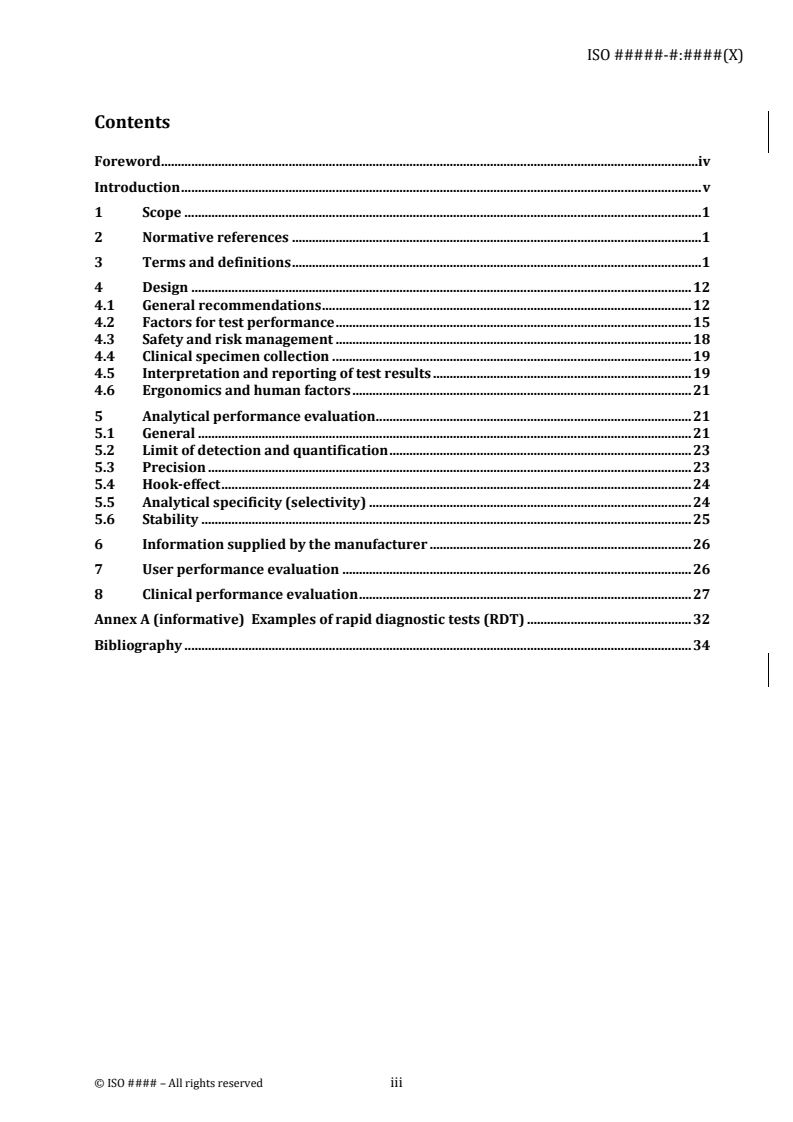
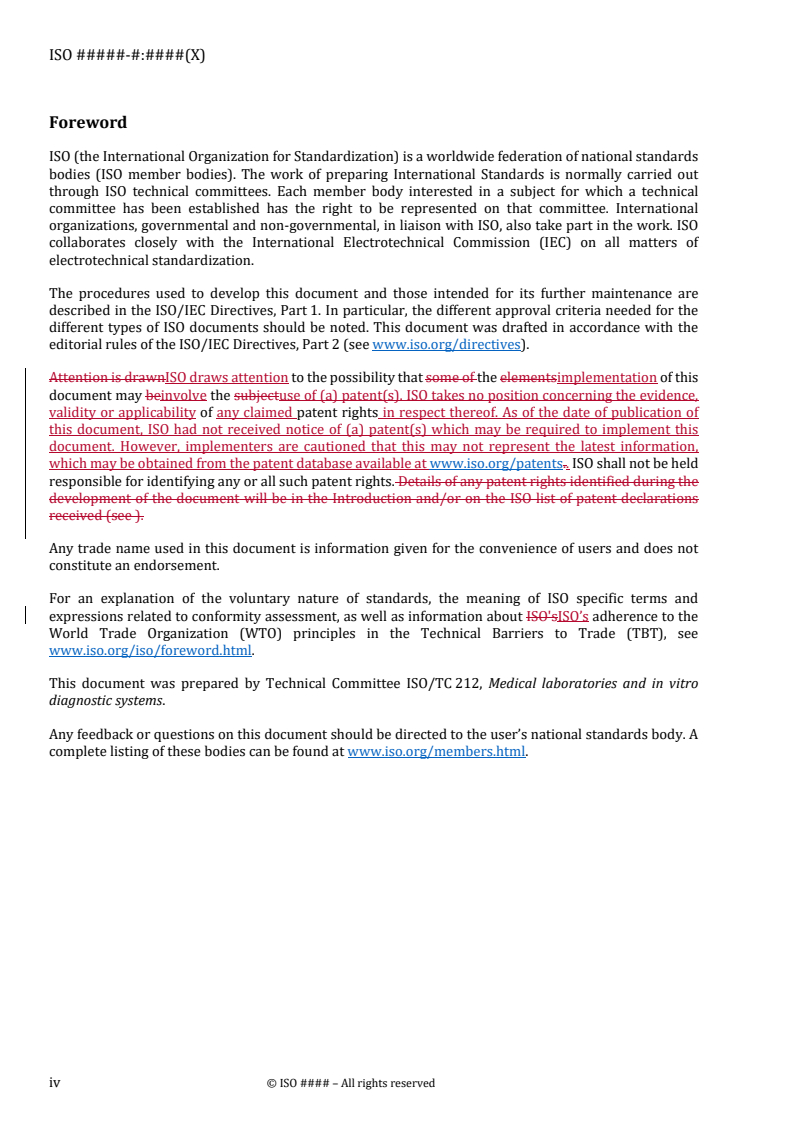
REDLINE ISO/DTS 24883 - In vitro diagnostic medical devices — General guidance for manufacturers of lateral flow immunoassay (LFIA) for rapid diagnostic testing (RDT)
ISO/DTS 24883 is an ISO document for manufacturers of lateral flow immunoassay (LFIA) rapid diagnostic testing (RDT) in in vitro diagnostic medical devices (IVDs). It gives guidance on how to design LFIA RDTs, evaluate their performance, and describe their use when the signal is read by the naked eye or with reader devices. The document is written for developers, manufacturers, and others who need a practical basis for building and validating these tests.
What does ISO/DTS 24883 specify?
ISO/DTS 24883 specifies general guidance for LFIA used in rapid diagnostic testing, with a focus on nanoparticle conjugates, especially gold, and visual or instrument-assisted reading. It is specific to LFIA RDT and does not apply to automatic devices or microfluidic chip formats.
The document is organized into these main parts:
- Clause 1 - Scope
- Clause 2 - Normative references
- Clause 3 - Terms and definitions
- Clause 4 - Design
- Clause 5 - Analytical performance evaluation
- Clause 6 - Information supplied by the manufacturer
- Clause 7 - User performance evaluation
- Clause 8 - Clinical performance evaluation
- Annex A - Informative examples of rapid diagnostic tests
That structure matters in practice because it moves from design choices, to analytical evidence, to user and clinical evidence, and then to what manufacturers must communicate in the product information.
What are the key requirements of ISO/DTS 24883?
ISO/DTS 24883 focuses on getting the strip chemistry, flow, interpretation, and evidence package right. The main message is that an LFIA RDT should be designed as a controlled system, not as a single reagent strip.
Design of the LFIA system
Clause 4 says the LFIA should be designed around the analyte, the antibody or antigen pair, the conjugate, the membrane, the pads, and the buffers. The document notes that monoclonal antibodies are generally preferred, and that recombinant antigens often give better purity and specificity. In practice, this affects lot-to-lot consistency and the risk of non-specific reactions.
Clause 4 also treats the conjugate as a critical performance element. The conjugate should be stable in sample, reproducible to manufacture, easy to scale, and should minimize non-specific binding. The document also expects the conjugation process and storage conditions to be validated, because poor conjugation or poor storage can weaken the visible signal.
Membrane, pad, and specimen choices
Clause 4 describes the importance of membrane pore size, capillary flow time, sample pad behavior, conjugate release, and absorbent pad capacity. It also notes that the flow rate influences interaction time and therefore sensitivity, while the absorbent pad helps prevent backflow. For a manufacturer, this means strip materials and geometry have to match the intended specimen type and read time.
Clause 4.4 addresses specimen collection and equivalency. The document points to different matrices such as whole blood, serum, plasma, swabs, urine, and other fluids, and it links this topic to CLSI EP14, CLSI EP35, and ISO/TS 20658. This matters when one assay is claimed for more than one specimen type.
Risk, interpretation, and human factors
Clause 4.3 requires a risk-based approach consistent with ISO 14971. The considerations include intended user, use environment, misuse, expired reagents, specimen volume, flow failure, improper preparation, temperature, humidity, and disposal. In practice, this is the basis for the hazard analysis and risk control file.
Clause 4.5 requires clear instructions for reading, interpreting, and reporting results. The manufacturer should define how to handle faint lines, invalid results, result timing, and any result that falls outside the valid measurement range. For visually read tests, scoring guides and pictorial examples help reduce interpretation errors.
Clause 4.6 links the document to ergonomics and human factors. The LFIA should be easy to use in the intended context, especially for point-of-care use and self-testing. That means the layout, sample application area, result window, and user instructions should support correct use without extra assistance.
Analytical performance evaluation
Clause 5 requires evaluation of the main analytical performance characteristics: limit of detection, precision, hook effect, analytical specificity, inclusivity, and stability. It also discusses matrix effects and the use of contrived, synthetic, or derived matrices when natural samples are limited. This is the evidence base behind the performance claims on the label and in the instructions.
Clause 5.5 treats precision for qualitative methods through repeatability and reproducibility, often using agreement measures such as kappa statistics. Clause 5.6 warns about the hook effect, where very high analyte concentrations can give falsely low or negative results. Clause 5.7 covers cross-reactivity, interference, and inclusivity, so the test is checked against likely false-positive and false-negative causes as well as target variants.
User and clinical performance
Clause 7 calls for user performance evaluation before commercial distribution. Representative users should perform the test using only the supplied instructions and training material, so the manufacturer can see whether the product is understandable in real use.
Clause 8 requires clinical performance evaluation in the intended target population. The document uses diagnostic accuracy studies and comparative diagnostic accuracy studies, with predefined result calling and analysis using measures such as clinical sensitivity, clinical specificity, positive predictive value, and negative predictive value. That is what shows whether the assay performs as claimed in the clinical setting.
What terms does ISO/DTS 24883 define?
- Lateral flow immunoassay (LFIA) - A membrane-based in vitro diagnostic that uses horizontal flow to detect analytes in liquid samples.
- In vitro diagnostic medical device (IVD medical device) - A product intended to provide information from specimens taken from the human body for a medical purpose.
- Clinical performance - The ability of an IVD to produce results correlated with a particular clinical condition or state.
- Analytical specificity - The ability of a measurement procedure to measure the intended measurand without dependence on other quantities in the system.
- Hook effect - A negative bias at high analyte concentrations that can make a very strong sample look weak or negative.
- Limit of detection (LOD) - The lowest measured quantity value for which absence of the component is not falsely claimed too often.
- Target condition (TC) - The disease, disease stage, health status, or other identifiable condition that the test is meant to detect or support.
- Specimen - A discrete portion of body fluid, tissue, or another human sample taken for examination.
Who uses ISO/DTS 24883?
ISO/DTS 24883 is used by LFIA developers and manufacturers, especially teams working on rapid diagnostic tests for point-of-care and self-testing applications. It is also relevant to quality, regulatory, and clinical evaluation teams that need to plan verification, validation, usability work, and clinical studies.
In practice, it helps people choose reagents, define strip materials, write instructions for use, plan analytical and clinical studies, and judge whether an LFIA RDT is suitable for a given specimen type or user group. Buyers and technical evaluators can also use it to compare whether a product’s performance claims are backed by the right types of evidence.
Which standards are used with ISO/DTS 24883?
| Standard | What it contributes |
|---|---|
| ISO 17511 | Requirements for metrological traceability of values assigned to calibrators, trueness control materials, and human samples. |
| ISO 18113-1 | Terms, definitions, and general requirements for manufacturer information and labelling. |
| ISO 14971 | The risk management framework used for identifying hazards and controlling risks. |
| ISO/TS 20658 | Requirements for collecting, transporting, receiving, and handling samples. |
| ISO 20916 | Good study practice for clinical performance studies using human specimens. |
| ISO 23640 | Stability evaluation of in vitro diagnostic reagents. |
| ISO 18113-2, ISO 18113-3, ISO 18113-4, ISO 18113-5 | Manufacturer information for professional use and self-testing. |
| IEC 62366-1 | Usability engineering for medical devices, relevant to ergonomic design and human factors. |
| ISO 24884 | Requirements for electronic instructions for use for IVD medical devices. |
What does the ISO/DTS 24883 document contain?
The document includes a figure showing a typical LFIA strip structure and several tables that support design and validation decisions. Table 1 links gold nanoparticle size to visible color, while Table 2 shows how positive, negative, and invalid results can be presented.
It also contains Table 3, which links intended purpose to study design and statistical measures, and Table 4, which gives the 2 x 2 contingency table used for diagnostic accuracy analysis. Clause 5 uses these ideas for analytical studies, while Clause 8 uses them for clinical performance evaluation.
Annex A gives informative examples of RDTs, including HIV, syphilis, malaria, cholera, hepatitis B, hepatitis C, SARS-CoV-2, tuberculosis/LAM, and influenza A/B, with references to the associated WHO technical specifications.
Buy Documents
ISO/DTS 24883 - In vitro diagnostic medical devices — General guidance for manufacturers of lateral flow immunoassay (LFIA) for rapid diagnostic testing (RDT)
REDLINE ISO/DTS 24883 - In vitro diagnostic medical devices — General guidance for manufacturers of lateral flow immunoassay (LFIA) for rapid diagnostic testing (RDT)
Get Certified
Connect with accredited certification bodies for this standard

BSI Group
BSI (British Standards Institution) is the business standards company that helps organizations make excellence a habit.

TÜV Rheinland
TÜV Rheinland is a leading international provider of technical services.

TÜV SÜD
TÜV SÜD is a trusted partner of choice for safety, security and sustainability solutions.
Sponsored listings
Frequently Asked Questions
ISO/DTS 24883 is a draft published by the International Organization for Standardization (ISO). Its full title is "In vitro diagnostic medical devices — General guidance for manufacturers of lateral flow immunoassay (LFIA) for rapid diagnostic testing (RDT)". This standard covers: This document provides the general principles and guideline for the rapid diagnostic testing (RDT) of LFIA used for the In vitro diagnostics as follows: — Design and development of LFIA — General guideline for test performance of LFIA — Recommendations for the use of LFIA This document is specific to the RDT of LFIA, which employ the gold nanoparticle as the conjugate and read the signal either with naked eye or through reader devices. This document does not apply to other types of LFIA such as automatic devices and microfluidic chips. This document should be expected to be helpful to increase efficiency and reduce trials and errors when manufacturing LFIA RDT products to the industries and/or manufacturers.
This document provides the general principles and guideline for the rapid diagnostic testing (RDT) of LFIA used for the In vitro diagnostics as follows: — Design and development of LFIA — General guideline for test performance of LFIA — Recommendations for the use of LFIA This document is specific to the RDT of LFIA, which employ the gold nanoparticle as the conjugate and read the signal either with naked eye or through reader devices. This document does not apply to other types of LFIA such as automatic devices and microfluidic chips. This document should be expected to be helpful to increase efficiency and reduce trials and errors when manufacturing LFIA RDT products to the industries and/or manufacturers.
ISO/DTS 24883 is classified under the following ICS (International Classification for Standards) categories: 11.100.10 - In vitro diagnostic test systems. The ICS classification helps identify the subject area and facilitates finding related standards.
ISO/DTS 24883 is available in PDF format for immediate download after purchase. The document can be added to your cart and obtained through the secure checkout process. Digital delivery ensures instant access to the complete standard document.
Standards Content (Sample)
Contents
- Introduction
- 1 Scope
- 2 Normative references
- 3 Terms and definitions
- 3.1 absorbent pad
- 3.2 analytical specificity
- 3.3 antibody
- 3.4 antigen
- 3.5 capture reagent
- 3.6 clinical specificity
- 3.7 clinical performance
- 3.8 conjugate
- 3.9 conjugate pad
- 3.10 cross-reactivity
- 3.11 cut-off value
- 3.12 detector reagent
- 3.13 diagnostic accuracy
- 3.14 epitope
- 3.15 false negative result
- 3.16 false positive result
- 3.17 hook effect
- 3.18 immunoassay
- 3.19 in vitro diagnostic medical device
- 3.20 inclusivity
- 3.21 lateral flow immunoassay
- 3.22 level
- 3.23 limit of detection
- 3.24 matrix
- 3.25 measurand
- 3.26 membrane
- 3.27 performance characteristic
- 3.28 performance evaluation
- 3.29 qualitative examination
- 3.30 reference value
- 3.31 repeatability
- 3.32 reproducibility
- 3.33 specimen
- 3.34 sample pad
- 3.35 strip
- 3.36 subjective evaluation
- 3.37 target condition
- 3.38 test result
- 3.39 validation
- 4 Design
- 4.1 General recommendations
- 4.2 Factors for test performance
- 4.3 Safety and risk management
- 4.4 Clinical specimen collection
- 4.5 Interpretation and reporting of test results
- 4.6 Ergonomics and human factors
- 5 Analytical performance evaluation
- 5.1 General
- 5.2 Limit of detection and quantification
- 5.3 Precision
- 5.4 Hook-effect
- 5.5 Analytical specificity (selectivity)
- 5.6 Stability
- 6 Information supplied by the manufacturer
- 7 User performance evaluation
- 8 Clinical performance evaluation
- Annex A
- Bibliography
Introduction
Lateral flow immunoassay (LFIA) is a well-established technology used widely in the development of in vitro diagnostic medical devices (IVDs) (see Annex A for examples). It utilises immunochemical reactions between antibodies and antigens, typically on a membrane, to detect analytes in a variety of clinical specimens, including serum, plasma, whole blood, urine, sweat, saliva and others. The use of LFIA-based IVDs has expanded rapidly due to their relative simplicity, low manufacturing cost, and rapid turnaround time. They offer advantages in diagnostic testing across a range of medical conditions including infectious diseases, cardio metabolic disease, thyroid disease, anaemia, allergies, pregnancy, cancer and substance [40,41,43] abuse .
One of the most significant applications of LFIAs is in rapid diagnostic tests (RDT). RDTs are typically designed for use by healthcare professionals at the point-of-care (POC), or by lay individuals for self-testing. They are well suited to such applications as they are easy to use and can provide rapid results, typically within 15 to 30 minutes, enabling timely medical decisions in settings where laboratory-based testing can be unfeasible. These characteristics make RDTs particularly valuable in remote or resource-limited environments where the conditions, facilities and personnel needed can make more complex methods, like nucleic acid amplification testing (NAAT), challenging. However, their use should be guided by careful consideration of their performance in specific clinical contexts and the risks of false positives and false negatives, as RDT performance (sensitivity and specificity) is often lower than more complex laboratorybased methods or instrumented POC systems. During infectious disease outbreaks, such as the COVID-19 pandemic, LFIA RDTs can play a crucial role in surveillance, screening and triage of populations. Their use enables the timely detection and investigation of outbreaks, as well as the rapid identification and isolation of infected individuals in communities, institutions, and other high-risk settings. Their relative simplicity, low cost and scalability also make them well suited to manufacture in low- and middle-income countries, facilitating timely access to affordable diagnostics and reducing dependency on global supply chains.
This document provides manufacturers of LFIA-based IVDs with general guidance on the design and performance evaluation of such technologies. Through the provision of this standardised guidance, it aims to improve the safety, quality and availability of such devices for use in a wide variety of clinical and resourcelimited settings, especially during infectious disease outbreaks. In this document, the following verbal forms are used - “shall” indicates a requirement; - “should” indicates a recommendation; - “may “indicates a permission; - “can” indicates a possibility or a capability.
FINAL DRAFT Technical Specification ISO/DTS 24883:2026(en) In vitro diagnostic medical devices — General guidance for manufacturers of lateral flow immunoassay (LFIA) for rapid diagnostic testing (RDT)
1 Scope
The document specifies recommendations for the design and performance evaluation of lateral flow immunoassay (LFIA). It applies to rapid diagnostic testing (RDT) of LFIA, which employ a nanoparticle (e.g. gold) as the conjugate and read with the naked eye. This document does not apply to other types of LFIA such as any instrument-based device with microfluidic chip or other reader device. This document applies to developers and manufactures of LFIA RDT. NOTE Other materials, such as dye, microsphere, quantum dot, magnetic bead, and others, can be used as nanoparticles depending on the intended detection method.
2 Normative references
The following documents are referred to in the text in such a way that some or all of their content constitutes requirements of this document. For dated references, only the edition cited applies. For undated references, the latest edition of the referenced document (including any amendments) applies. ISO 17511, In vitro diagnostic medical devices — Requirements for establishing metrological traceability of values assigned to calibrators, trueness control materials and human samples ISO 18113-1, In vitro diagnostic medical devices — Information supplied by the manufacturer (labelling) — Part 1: Terms, definitions, and general requirements
3 Terms and definitions
For the purposes of this document, the terms and definitions given in given in ISO 17511, ISO 18113-1 and the following apply.
ISO and IEC maintain terminology databases for use in standardization at the following addresses:
- ISO Online browsing platform: available at https:// www .iso .org/ obp
- IEC Electropedia: available at https:// www .electropedia .org/
3.1 absorbent pad
layer located at the end of strip that collects the treated liquid, allowing the specimen to flow along the strip and preventing back flow
3.2 analytical specificity
relative specificity capability of a measuring system, using a specified measurement procedure, to provide measurement results for one or more measurands (3.25) which do not depend on each other nor on any other quantity in the system undergoing measurement Note 1 to entry: Lack of analytical specificity in immunochemistry measurement procedures can be due to crossreactivity (3.10).
ISO/DTS 24883:2026(en) Note 2 to entry: Specificity of a measurement procedure should not be confused with diagnostic specificity (3.10). Note 3 to entry: ISO/IEC Guide 99:2007 uses the term selectivity for this concept instead of specificity. Note 4 to entry: ISO/IEC Guide 99:2007 (VIM3, 4.13) defines selectivity as the independence of measured quantity values from other measurands or quantities. While this definition is valid for general measurement science, it does not fully address immunochemical cross-reactivity and interference phenomena, which are critical in IVD performance evaluation. Therefore, the ISO/IVD definition, aligned with CLSI EP07, is retained for clarity and regulatory consistency. [SOURCE: ISO 18113-1:2022, 3.2.5, modified — The example and notes 1 and 5 were deleted; Note 4 was added.]
3.3 antibody
host proteins produced in response to the presence of foreign molecules, organisms or other agents in the organism [SOURCE: ISO 16577:2022, 3.2.1, modified — The notes to entry were removed.]
3.4 antigen
substance that simulates the production of antibodies (3.3) and reacts with them [SOURCE: ISO 20166-4:2021, 3.4]
3.5 capture reagent
biorecognition molecules with specific affinity toward the analyte of interest to diagnosis Note 1 to entry: In immunoassay, the capture reagent is the primary antibody (3.3) which is capable of binding with analytes of interest.
EXAMPLE Primary antibodies, Fab fragments, nanobodies, single-chain variable fragments.
3.6 clinical specificity
ability of an in vitro diagnostics (IVD) examination procedure to have negative results associated with an absence of particular disease or condition Note 1 to entry: Also defined as percent negativity in samples where the target marker is known to be absent. Note 2 to entry: Diagnostic specificity is expressed as a percentage (number fraction multiplied by 100), calculated as 100 × the number of true negative values (TN) divided by the sum of the number of true negative plus the number of false positive (FP) values, or 100 × TN/(TN + FP). This calculation is based on a study design where only one sample is taken from each subject.
Note 3 to entry: The target condition (3.37) is defined by criteria independent of the examination procedure under consideration.
Note 4 to entry: Diagnostic specificity should not be confused with analytical specificity (3.2). [SOURCE: ISO 18113-1:2022, 3.2.18, modified — Note 4 to entry was added.]
3.7 clinical performance
ability of an in vitro diagnostic (IVD) medical device (3.19) to yield results that are correlated with a particular clinical condition or physiological or pathological process or state in accordance with the intended use Note 1 to entry: In accordance with intended use, clinical performance can include expected values, diagnostic sensitivity and diagnostic specificity based on the known clinical condition or physiological/pathological process/ state of the individual, and negative and positive predictive values based on the prevalence of the disease. [SOURCE: ISO 18113-1:2022, 3.2.10, modified — Note 2 to entry was deleted.]
ISO/DTS 24883:2026(en)
3.8 conjugate
material produced by attaching two or more substances together by covalent bond via chemical groups Note 1 to entry: Conjugates of antibodies (3.3) with fluorochromes (e.g. chemical entity, such as a molecule or group, that emits light in response to excitation by absorbed incident light), radiolabelled substances, gold or enzymes are often used in immunoassays (3.18).
[SOURCE: ISO 21572:2019, 3.1]
3.9 conjugate pad
layer of the strip (3.35) where detector reagents (3.12) are dispensed
3.10 cross-reactivity
degree to which a substance other than the analyte binds to a reagent in a competitive binding immunochemical measurement procedure EXAMPLE Antibody (3.3) binding to metabolites of the analyte, structurally similar drugs or proteins of related pathogens.
Note 1 to entry: Analytical specificity (3.2) is a related concept. Note 2 to entry: Cross-reactivity of metabolites can be a desirable attribute of certain examination procedures, such as for screening for the presence of illegal drugs.
Note 3 to entry: ISO/IEC Guide 99:2007 (VIM3, 2.52) defines “influence quantity” in broad metrological terms. In IVD testing, however, “cross-reactivity” and “interference” must be operationally defined to design and interpret interference studies. These sector-specific concepts, already standardized in ISO and CLSI documents, are preferred in this document.
[SOURCE: ISO 18113-1:2022, 3.2.14, modified — the original Note 3 to entry was deleted and a new one was added; in the example, “proteins of related pathogens” was added.]
3.11 cut-off value
relative cut-off value quantity value used as a decision limit to identify samples that indicate the presence or the absence of a specific disease, condition or measurand (3.25) Note 1 to entry: Measurement results higher than the cut-off value are considered positive and those lower than the cut-off are considered negative.
Note 2 to entry: Measurement results near the cut-off value (3.11) can be considered inconclusive. Note 3 to entry: The selection of the cut-off value determines the diagnostic specificity and diagnostic sensitivity of the examination.
Note 4 to entry: In case of qualitative examination (3.29), the relative cut-off can be determined using an accepted reference value (3.30).
[SOURCE: ISO 18113-1:2022, 3.2.15, modified — “relative cut-off (value)” was added as an alternative preferred term; Note 4 to entry was added.]
3.12 detector reagent
recognition molecules toward analytes or the capture reagents (3.5) with the conjugates (3.8) allowing generation of the detection signal Note 1 to entry: In lateral flow assay, the detection would be made by appearing the lines caused by binding of detector reagents toward analytes and antibodies (3.3) immobilized on the control line.
ISO/DTS 24883:2026(en)
3.13 diagnostic accuracy
extent of agreement between the information from the test under evaluation and applicable performance attributes as measured by a reference method Note 1 to entry: Diagnostic accuracy can be expressed in different ways, including sensitivity-specificity pairs, likelihood ratio pairs, and the area under a receiver operating characteristic curve. Note 2 to entry: Diagnostic accuracy shall be interpreted in context with the condition of interest and the combination of specific criteria and methods used.
Note 3 to entry: Diagnostic accuracy is not the same as measurement accuracy, which is the closeness of a single result of a measurement and a true value.
[SOURCE: ISO 5649:2024, 3.14]
3.14 epitope
antigenic determinant antibody (3.3) binding site on a biomolecule that is an antigen (3.4) [SOURCE: ISO 20166-4:2021, 3.14, modified — The admitted term “antigenic determinant” was added.]
3.15 false negative result
negative result by the tested method that is actually confirmed as a positive result [SOURCE: ISO 16140-1:2016, 2.23]
3.16 false positive result
positive result by the tested method that is actually confirmed as a negative result [SOURCE: ISO 16140-1:2016, 2.24]
3.17 hook effect
high dose hook effect negative bias in some measurement procedures observed at high concentrations EXAMPLE An immunochemical measurement procedure caused by impairment of antigen (3.4)-antibody (3.3) cross-linking when the antigen concentration is in excess relative to the antibody concentration or when the antibody concentration is in excess relative to the antigen concentration. [SOURCE: ISO 18113-1:2022, 3.2.19, modified — Note 1 to entry was deleted.]
3.18 immunoassay
immunochemical detection procedure based on specific antibody (3.6)-antigen (3.7) binding theory often using a tracer for the detection of a free or bound antibody [SOURCE: ISO 23256:2023, 3.1.9, modified — Note 1 to entry was deleted.]
3.19 in vitro diagnostic medical device
IVD medical device instrument, apparatus, implement, machine, appliance, implant, reagent for in vitro use, software, material or other similar or related article, intended by the manufacturer to be used, alone or in combination, for human beings for one or more of the specific purpose(s) of:
- diagnosis, prevention, monitoring, treatment or alleviation of disease;
- diagnosis, monitoring, treatment, alleviation of, or compensation for, an injury;
ISO/DTS 24883:2026(en) - investigation, replacement, modification or support of the anatomy or of a physiological or pathological process or state; - supporting or sustaining life; - control of conception; - disinfection of medical devices; - providing information for medical purposes by means of in vitro examination of specimens derived from the human body; and does not achieve its primary intended action by pharmacological, immunological or metabolic means, in or on the human body but which can be assisted in its intended function by such means Note 1 to entry: Products which may be considered medical devices in some jurisdictions but not in others include:
- disinfection substances;
- aids for persons with disabilities;
- devices incorporating animal and/or human tissues;
- devices for in vitro fertilization or assisted reproduction technologies. [SOURCE: ISO 18113-1:2022, 3.1.53 modified — The term “medical device” was changed to “in vitro diagnostic medical device”; Notes 2 and 3 to entry were deleted.]
3.20 inclusivity
capacity of an assay to detect several strains or serovars of a species, several species of a genus, or a similar grouping of closely related organisms, antibodies (3.3), or other analytes Note 1 to entry: Adapted from ISO 5725-1:2023.
3.21 lateral flow immunoassay
LFIA membrane (3.26)-based in vitro diagnostics employing horizontal flow intended to identify the presence or absence of analytes of interest in liquid samples Note 1 to entry: LFIAs are varied according to formats, biorecognition molecules, conjugates (3.8), detection systems, and applications. They can be applied to the diagnosis of disease, determination of the presence of antibodies (3.3) produced by infection or allergy, detection of toxins, microorganism, or hazardous chemicals. Note 2 to entry: Vertical flow immunoassay (VFI) is a type of immunoassay (3.18) used for rapid diagnostic testing, similar to lateral flow immunoassay. However, instead of capillary flow in a horizontal format, VFI relies on vertical fluid flow through stacked membrane layers.
3.22 level
general average of the test results (3.38) or test results from all laboratories for one particular test item or test item tested Note 1 to entry: The accuracy of a measurement method is defined at each level and can be different. Note 2 to entry: In the case of qualitative methods, different levels can be defined by quantitative reference values (3.30).
[SOURCE: ISO 5725-1:2023, 3.3, modified — Note 2 to entry was added.]
ISO/DTS 24883:2026(en)
3.23 limit of detection
LOD measured quantity value, obtained by a given measurement procedure, for which the probability of falsely claiming the absence of a component in a material is β, given a probability α of falsely claiming its presence Note 1 to entry: The term analytical sensitivity is sometimes used to mean detection limit, but such usage is now discouraged. See ISO 18113-1:2022, A.2.7 and A.2.8 for further information. [SOURCE: ISO 18113-1:2022, 3.2.16, modified — Notes 1 and 3 to entry were deleted.]
3.24 matrix
system matrix components of a material system, except the analyte [SOURCE: ISO 17511:2020, 3.24, modified — Note 1 to entry was deleted.]
3.25 measurand
quantity intended to be measured Note 1 to entry: The specification of a measurand in laboratory medicine requires knowledge of the kind of quantity (e.g., mass concentration), a description of the matrix (3.24) carrying the quantity (e.g. blood plasma), and the chemical entities involved, e.g. the analyte.
Note 2 to entry: The measurand can be a biological activity.
Note 3 to entry: In chemistry, “analyte”, or the name of a substance or compound, are terms sometimes used for “measurand. This usage is erroneous because these terms do not refer to quantities. Note 4 to entry: In qualitative examination (3.29), the measurand is the analyte in the sample (target marker in its matrix).
Note 5 to entry: ISO/IEC Guide 99:2007 (VIM3, 2.3) defines measurand as the “quantity intended to be measured”. While accurate within metrology, this abstraction is insufficient for clinical practice. ISO 15189 therefore introduces the concept of “examination”, defined as the set of laboratory operations performed on a clinical specimen to produce results. This operational perspective is essential for accreditation and regulatory conformity and is adopted here accordingly.
[SOURCE: ISO 18113-1:2022, 3.1.45, modified — Note 3 to entry was removed; Notes 4 and 5 were added.]
3.26 membrane
thin, often pliable, sheet or layer EXAMPLE Nitrocellulose, cellulose, glass fiber, polystyrene, and etc. Note 1 to entry: In lateral flow immunoassay (LFIA) (3.21), antigen (3.4)–antibody (3.3) interaction occurs at the membrane.
Note 2 to entry: Since pads of LFIA require various specifications depending on their roles, the different (various) kinds of membranes can be employed for a strip (3.35).
3.27 performance characteristic
one of the parameters used to define the analytical and/or clinical performance (3.7) of an in vitro diagnostic (IVD) medical device (3.19) EXAMPLE Diagnostic sensitivity, diagnostic specificity, predictive values, measurement accuracy, reproducibility (3.32), repeatability (3.31), stability, limits of detection (3.23) and measurement range, earliest clinical detection in comparison with tests of reference.
ISO/DTS 24883:2026(en) Note 1 to entry: Information about more than one performance characteristic is usually required to evaluate the suitability of an IVD medical device for its intended use.
Note 2 to entry: ISO/IEC Guide 99:2007 (VIM3) does not define “performance characteristic” in a form applicable to IVDs. In contrast, ISO standards specific to IVDs define performance characteristics as parameters used to demonstrate measurement and/or clinical performance. This definition aligns with regulatory performance evaluation reports (e.g. IVDR Annex XIII) and is therefore adopted here.
...
Contents
- Introduction
- 1 Scope
- 2 Normative references
- 3 Terms and definitions
- 3.1 3.1
- 3.2 analytical specificity
- 3.4 3.4
- 3.5 3.5
- 3.6 clinical specificity
- 3.7 3.7
- 3.9 3.9
- 3.10 3.10
- 3.12 3.12
- 3.14 3.14
- 3.16 false positive result
- 3.17 [SOURCE: ISO 16140-1:2016, 2.24]
- 3.17 hook effect
- 3.18 immunoassay
- 3.19 in vitro diagnostic medical device
- 3.21 lateral flow immunoassay
- 3.22 level
- 3.23 limit of detection
- 3.24 matrix
- 3.25 measurand
- 3.31 repeatability
- 3.32 reproducibility
- 3.34 sample pad
- 3.35 strip
- 3.36 subjective evaluation
- 3.37 target condition
- 3.38 test result
- 3.39 validation
- 4 Design
- 4.1 General recommendations
- 4.2 Factors for test performance
- 4.3 Safety and risk management
- 5 Analytical performance evaluation
- 5.1 General
- 5.6 Hook-effect
- 5.4 Hook-effect
- 5.6 Stability
- 5.8 Stability
- 6 Information supplied by the manufacturer
- 7 User performance evaluation
- 8 Clinical performance evaluation
- Annex A
- Bibliography
Introduction
Lateral flow immunoassay (LFIA) is a well-established technology used widely in the development of in vitro diagnostic medical devices (IVDs) (see Annex AAnnex A for examples). It utilises immunochemical reactions between antibodies and antigens, typically on a membrane, to detect analytes in a variety of clinical specimens, including serum, plasma, whole blood, urine, sweat, saliva and others. The use of LFIA- based IVDs has expanded rapidly due to their relative simplicity, low manufacturing cost, and rapid turnaround time. They offer advantages in diagnostic testing across a range of medical conditions including infectious diseases, cardio metabolic disease, thyroid disease, anaemia, allergies, pregnancy, [40], [41], [43] cancer and substance abuse [40, 41, 43]..
One of the most significant applications of LFIAs is in rapid diagnostic tests (RDT). RDTs are typically designed for use by healthcare professionals at the point-of-care (POC), or by lay individuals for selftesting. They are well suited to such applications as they are easy to use and can provide rapid results, typically within 15 to 30 minutes, enabling timely medical decisions in settings where laboratory-based testing can be unfeasible. These characteristics make RDTs particularly valuable in remote or resourcelimited environments where the conditions, facilities and personnel needed can make more complex methods, like nucleic acid amplification testing (NAAT), challenging. However, their use should be guided by careful consideration of their performance in specific clinical contexts and the risks of false positives and false negatives, as RDT performance (sensitivity and specificity) is often lower than more complex laboratory-based methods or instrumented POC systems.
During infectious disease outbreaks, such as the COVID-19 pandemic, LFIA RDTs can play a crucial role in surveillance, screening and triage of populations. Their use enables the timely detection and investigation of outbreaks, as well as the rapid identification and isolation of infected individuals in communities, institutions, and other high-risk settings. Their relative simplicity, low cost and scalability also make them well suited to manufacture in low- and middle-income countries, facilitating timely access to affordable diagnostics and reducing dependency on global supply chains. This document provides manufacturers of LFIA-based IVDs with general guidance on the design and performance evaluation of such technologies. Through the provision of thesethis standardised guidelinesguidance, it aims to improve the safety, quality and availability of such devices for use in a wide variety of clinical and resource-limited settings, especially during infectious disease outbreaks. In this document, the following verbal forms are used - “shall” indicates a requirement; - “should” indicates a recommendation; - “may “indicates a permission; - “can” indicates a possibility or a capability.
ISO #####-#:####(X/DTS 24883:(en) In Vitro Diagnostic Medical Devices: Lateral Flow Immunoassay for Rapid Diagnostic Testing– General Guidance for Manufacturers
ISO/DTS 24883:(en) In vitro diagnostic medical devices — General guidance for manufacturers of lateral flow immunoassay (LFIA) for rapid diagnostic testing (RDT)
1 Scope
The document specifies recommendations for the design and performance evaluation of lateral flow immunoassay (LFIA). It applies to rapid diagnostic testing (RDT) of LFIA, which employ a nanoparticle (e.g. gold) as the conjugate and read with the naked eye. This document does not apply to other types of LFIA such as any instrument-based device with microfluidic chip or other reader device. This document applies to developers and manufactures of LFIA RDT. NOTE Other materials, such as dye, microsphere, quantum dot, magnetic bead, and others, can be used as nanoparticles depending on the intended detection method.
2 Normative references
The following documents are referred to in the text in such a way that some or all of their content constitutes requirements of this document. For dated references, only the edition cited applies. For undated references, the latest edition of the referenced document (including any amendments) applies. ISO 17511, In vitro diagnostic medical devices — Requirements for establishing metrological traceability of values assigned to calibrators, trueness control materials and human samples ISO 18113-1, In vitro diagnostic medical devices — Information supplied by the manufacturer (labelling) — Part 1: Terms, definitions, and general requirements
3 Terms and definitions
For the purposes of this document, the terms and definitions given in given in ISO 17511:2020, ISO 18113- 1:2022 and the following terms and definitions apply.
ISO and IEC maintain terminology databases for use in standardization at the following addresses:
- ISO Online browsing platform: available at https://www.iso.org/obp
- IEC Electropedia: available at https://www.electropedia.org/
3.1 3.1
absorbent pad layer located at the end of strip () that collects the treated liquid, allowing the specimen (3.43) to flow along the strip and preventpreventing back flow 3.2
ISO/DTS 24883:(en)
3.2 analytical specificity
(relative) specificity capability of a measuring system, using a specified measurement procedure, to provide measurement results for one or more measurands ((3.25) which do not depend on each other nor on any other quantity in the system undergoing measurement Note 1 to entry: Lack of analytical specificity in immunochemistry measurement procedures can be due to cross-reactivity ((3.10).
Note 2 to entry: Specificity of a measurement procedure should not be confused with diagnostic specificity ((3.10). Note 3 to entry: ISO/IEC Guide 99:2007 uses the term selectivity for this concept instead of specificity. Note 4 to entry: ISO/IEC Guide 99:2007 (VIM3 (, 4.13) defines selectivity as the independence of measured quantity values from other measurands or quantities. While this definition is valid for general measurement science, it does not fully address immunochemical cross-reactivity and interference phenomena, which are critical in IVD performance evaluation. Therefore, the ISO/IVD definition, aligned with CLSI EP07, is retained for clarity and regulatory consistency. [SOURCE: ISO 18113-1:2022, 3.2.5, modified – Example, Note 1,— The example and Note notes 1 and 5 were deleted; Note 4 was added].]
3.3 3.3 antibody host proteins produced in response to the presence of foreign molecules, organisms or other agents in the organism [SOURCE: ISO 16577:2022, 3.2.1], modified — The notes to entry were removed.]
3.4 3.4
antigen substance that simulates the production of antibodies (3.3) and reacts with them [SOURCE: ISO 20166-4:2021, 3.4]
3.5 3.5
capture reagent biorecognition molecules with specific affinity toward the analyte (3.3) of interest to diagnosis Note 1 to entry: In immunoassay, the capture reagent is the primary antibody (3.3) which is capable of binding with analytes () of interest.
EXAMPLE Primary antibodies, Fab fragments, nanobodies, single-chain variable fragments, etc. . 3.6
3.6 clinical specificity
ability of an in vitro diagnostics (IVD) examination procedure to have negative results associated with an absence of particular disease or condition
ISO/DTS 24883:(en) Note 1 to entry: Also defined as percent negativity in samples where the target marker is known to be absent. For information regarding description of the diagnostic performance characteristics of an IVD medical device (3.23). Note 2 to entry: Diagnostic specificity is expressed as a percentage (number fraction multiplied by 100), calculated as 100 × the number of true negative values (TN) divided by the sum of the number of true negative plus the number of false positive (FP) values, or 100 × TN/(TN + FP). This calculation is based on a study design where only one sample is taken from each subject.
Note 3 to entry: The target condition (3.37(3.49)) is defined by criteria independent of the examination procedure under consideration.
Note 4 to entry: diagnostic Diagnostic specificity should not be confused with analytical specificity (3.2.). [SOURCE: ISO18113ISO 18113-1:2022, 3.2.18, modified -— Note 4 to entry was added].]
3.7 3.7
clinical performance ability of an in vitro diagnostic (IVD) medical device (3.19(3.23)) to yield results that are correlated with a particular clinical condition or physiological or pathological process or state in accordance with the intended use.
Note 1 to entry: In accordance with intended use, clinical performance can include expected values, diagnostic sensitivity () and diagnostic specificity () based on the known clinical condition or physiological/pathological process/state of the individual, and negative and positive predictive values based on the prevalence of the disease. [SOURCE: ISO 18113-1:2022, 3.2.10, modified — Note 2 to entry was deleted].]
3.8 3.8 conjugate material produced by attaching two or more substances together by covalent bond via chemical groups Note 1 to entry: Conjugates of antibodies (3.(3.3) with fluorochromes (e.g. chemical entity, such as a molecule or group, that emits light in response to excitation by absorbed incident light), radiolabelled substances, gold or enzymes are often used in immunoassays (3.18(). ).
[SOURCE: ISO 21572:2019, 3.1]
3.9 3.9
conjugate pad layer of the strip ((3.35) where detector reagents (3.12(3.16)) are dispensed
3.10 3.10
cross-reactivity degree to which a substance other than the analyte () binds to a reagent in a competitive binding immunochemical measurement procedure EXAMPLE Antibody (3.3(3.6)) binding to metabolites of the analyte (),, structurally similar drugs or proteins of related pathogens etc.
Note 1 to entry: Analytical specificity ((3.2) is a related concept.
ISO/DTS 24883:(en) Note 2 to entry: Cross-reactivity (3.14) of metabolites can be a desirable attribute of certain examination procedures, such as for screening for the presence of illegal drugs.
Note 3 to entry: ISO/IEC Guide 99:2007 (VIM3 (, 2.52) defines 'influence quantity'“influence quantity” in broad metrological terms. In IVD testing, however, 'cross-reactivity'“cross-reactivity” and 'interference'“interference” must be operationally defined to design and interpret interference studies. These sector-specific concepts, already standardized in ISO and CLSI documents, are preferred in this Technical Specificationdocument. [SOURCE: ISO 18113-1:2022, 3.2.14, modified — the original Note 3 to entry was deleted; EXAMPLE and a new one was added; in the example, “proteins of related pathogens” was added].]
3.11 3.11 cut-off value relative cut-off value quantity value used as a decision limit to identify samples that indicate the presence or the absence of a specific disease, condition or measurand ((3.25) Note 1 to entry: Measurement () results higher than the cut-off value are considered positive and those lower than the cut-off are considered negative.
Note 2 to entry: Measurement () results near the cut-off value (3.11) can be considered inconclusive. Note 3 to entry: The selection of the cut-off value (3.15) determines the diagnostic specificity () and diagnostic sensitivity () of the examination.
Note 4 to entry: In case of qualitative examination ((3.29), the relative cut-off (3.15) can be determined using an accepted reference value (3.30(). ).
[SOURCE: ISO 18113-1:2022, 3.2.15, modified — Note 4 to entry added, “relative cut-off (value)” was added as an alternative preferred term; Note 4 to entry was added.]
3.12 3.12
detector reagent recognition molecules toward analytes (3.3) or the capture reagents (3.5(3.8)) with the conjugates (3.8(3.12)) allowing generatinggeneration of the detection signal Note 1 to entry: In lateral flow assay, the detection would be made by appearing the lines caused by binding of detector reagents toward analytes (3.3) and antibodies (3.3(3.6)) immobilized on the control line.
3.13 3.13 diagnostic accuracy extent of agreement between the information from the test under evaluation and applicable performance attributes as measured by a reference method Note 1 to entry: Diagnostic accuracy can be expressed in different ways, including sensitivity-specificity pairs, likelihood ratio pairs, and the area under a receiver operating characteristic curve. Note 2 to entry: Diagnostic accuracy shall be interpreted in context with the condition of interest and the combination of specific criteria and methods used.
Note 3 to entry: Diagnostic accuracy is not the same as measurement accuracy, which is the closeness of a single result of a measurement and a true value.
ISO/DTS 24883:(en) [SOURCE: ISO 5649:2024, 3.14]
3.14 3.14
epitope antigenic determinant antibody (3.3(3.6)) binding site on a biomolecule that is an antigen (3.4(3.7)) [SOURCE: ISO 20166-4:2021, 3.14], modified — The admitted term “antigenic determinant” was added.]
3.15 3.15 false negative result negative result by the tested method that is actually confirmed as a positive result [SOURCE:ISO 16140- 1:2016, 2.23]
3.16 [SOURCE: ISO 16140-1:2016, 2.23]
3.16 false positive result
positive result by the tested method that is actually confirmed as a negative result [SOURCE: ISO 16140- 1:2016, 2.24
3.17 [SOURCE: ISO 16140-1:2016, 2.24]
3.17 hook effect
high dose hook effect negative bias in some measurement () procedures observed at high concentrations EXAMPLE anAn immunochemical measurement () procedure caused by impairment of antigen (3.4(3.7)-)-antibody (3.3(3.6)) cross-linking when the antigen (3.7) concentration is in excess relative to the antibody (3.6) concentration or when the antibody (3.6) concentration is in excess relative to the antigen (3.7) concentration. [SOURCE: ISO 18113-1:2022, 3.2.19, modified — Note 1 to entry was deleted].] 3.173.18
3.18 immunoassay
immunochemical detection procedure based on specific antibody (3.6(3.6)-)-antigen (3.7(3.7)) binding theory often using a tracer for the detection of a free or bound antibody [SOURCE: ISO 23256:2023, 3.1.9], modified — Note 1 to entry was deleted.]
ISO/DTS 24883:(en) 3.183.19
3.19 in vitro diagnostic medical device
IVD medical device instrument, apparatus, implement, machine, appliance, implant, reagent for in vitro use, software, material or other similar or related article, intended by the manufacturer (3.27) to be used, alone or in combination, for human beings for one or more of the specific purpose(s) of:
- — diagnosis, prevention, monitoring, treatment or alleviation of disease;
- — diagnosis, monitoring, treatment, alleviation of, or compensation for, an injury;
- — investigation, replacement, modification or support of the anatomy or of a physiological or pathological process or state;
- — supporting or sustaining life;
- — control of conception;
- — disinfection of medical devices;
- — providing information for medical purposes by means of in vitro examination of specimens derived from the human body; and does not achieve its primary intended action by pharmacological, immunological or metabolic means, in or on the human body but which can be assisted in its intended function by such means Note 1 to entry: Products which may be considered medical devices in some jurisdictions but not in others include:
- — disinfection substances;
- — aids for persons with disabilities;
- — devices incorporating animal and/or human tissues;
- — devices for in vitro fertilization or assisted reproduction technologies. Note 2 to entry: [SOURCE: ISO 18113-1:2022, 3.1.53 modified — The term “medical device includes ” was changed to “in vitro diagnostic medical devices (3.23).
[SOURCE: ISO 18113-1:2022, 3.55 modified — Notedevice”; Notes 2 and 3 to entry were deleted].]
3.193.20 3.20 inclusivity capacity of an assay to detect several strains or serovars of a species, several species of a genus, or a similar grouping of closely related organisms, antibodies (3.3(3.6),), or other analytes (3.3) Note 1 to entry: Adapted from Reference [14].ISO 5725-1:2023.
ISO/DTS 24883:(en) 3.203.21
3.21 lateral flow immunoassay
LFIA membrane (3.26(3.32)-)-based IVDin vitro diagnostics employing horizontal flow intended to identify the presence or absence of analytes () of interest in liquid samples Note 1 to entry: LFIAs are varied according to formats, biorecognition molecules, conjugates ((3.8), detection systems, and applications. They can be applied to the diagnosis of disease, determination of the presence of antibodies ((3.3) produced by infection or allergy, detection of toxins, microorganism, or hazardous chemicals. Note 2 to entry: Vertical flow immunoassay (VFI) is a type of immunoassay (3.18(3.22)) used for rapid diagnostic testing, similar to lateral flow immunoassay. However, instead of capillary flow in a horizontal format, VFI relies on vertical fluid flow through stacked membrane (3.32) layers.
3.213.22
3.22 level
) or test results (3.50) from all laboratories for one particular test item general average of the test results ((3.38 or test item tested Note 1 to entry: The accuracy (3.2) of a measurement (3.30) method is defined at each level and can be different. Note 2 to entry: In the case of qualitative methods, different levels can be defined by quantitative reference values (3.30().
[SOURCE: ISO 5725-1:2023, 3.3, modified — Note 2 to entry was added].] 3.223.23
3.23 limit of detection
LOD measured quantity value, obtained by a given measurement () procedure, for which the probability of falsely claiming the absence of a component in a material is β, given a probability α of falsely claiming its presence. Note 1 to entry: The term analytical sensitivity () is sometimes used to mean detection limit, but such usage is now discouraged. See ISO 18113-1:2022, A.2.7 and A.2.8 for further information. [SOURCE;: ISO 18113-1:2022, 3.2.16, modified — Note Notes 1 and 3 to entry were deleted and new Note 3 to entry added,] .] 3.233.24
3.24 matrix
system matrix components of a material system, except the analyte [SOURCE: ISO 17511:2020, 3.24, modified — Note 1 to entry was deleted] .] 3.243.25
3.25 measurand
quantity intended to be measured
ISO/DTS 24883:(en) Note 1 to entry: The specification of a measurand in laboratory medicine requires knowledge of the kind of quantity (e.g., mass concentration), a description of the matrix ((3.24) carrying the quantity (e.g. blood plasma), and the chemical entities involved, e.g. the analyte ()..
Note 2 to entry: The measurand () can be a biological activity. Note 3 to entry: See for other examples of IVD measurands.
Note 4 to entry: In chemistry, “analyte” (),”, or the name of a substance or compound, are terms sometimes used for “measurand (3.30)”.. This usage is erroneous because these terms do not refer to quantities. Note 5 4 to entry: In qualitative examination (3.29(,), the measurand (3.30) is the analyte () in the sample (target marker in its matrix ())).
Note 6 5 to entry: ISO/IED IEC Guide 99:2007 (VIM3, 2.3) defines measurand as the 'quantity“quantity intended to be measured.'”. While accurate within metrology, this abstraction is insufficient for clinical practice. ISO 15189 therefore introduces the concept of 'examination',“examination”, defined as the set of laboratory operations performed on a clinical specimen to produce results. This operational perspective is essential for accreditation and regulatory conformity, and is adopted here accordingly.
[SOURCE: ISO 18113-1:2022, 3.1.45, modified — Note 5 3 to entry was removed; Notes 4 and 6 5 were added].]
...