

ISO 55002:2018
(Main)Asset management — Management systems — Guidelines for the application of ISO 55001
General Information
- Abstract
This document gives guidelines for the application of an asset management system, in accordance with the requirements of ISO 55001. This document can be applied to all types of assets and by all types and sizes of organizations. NOTE 1 This document is intended to be used for managing physical assets in particular, but it can also be applied to other asset types. NOTE 2 This document does not provide financial, accounting or technical guidance for managing specific asset types, however, in Annex F information is provided on the relationship between the financial and non-financial asset management functions. NOTE 3 For the purposes of ISO 55000, ISO 55001 and this document, the term "asset management system" is used to refer to a management system for asset management.
- Status
- Published
- Publication Date
- 18-Nov-2018
- Technical Committee
- ISO/TC 251 - Asset management
- Drafting Committee
- ISO/TC 251 - Asset management
- Current Stage
- 9092 - International Standard to be revised
- Start Date
- 30-Jan-2024
- Completion Date
- 29-Aug-2026
Buy Documents


ISO 55002:2018 - Asset management — Management systems — Guidelines for the application of ISO 55001 Released:11/19/2018
ISO 55002:2018 - Gestion d'actifs — Systemes de management — Lignes directrices relatives a l'application de l'ISO 55001 Released:11/19/2018
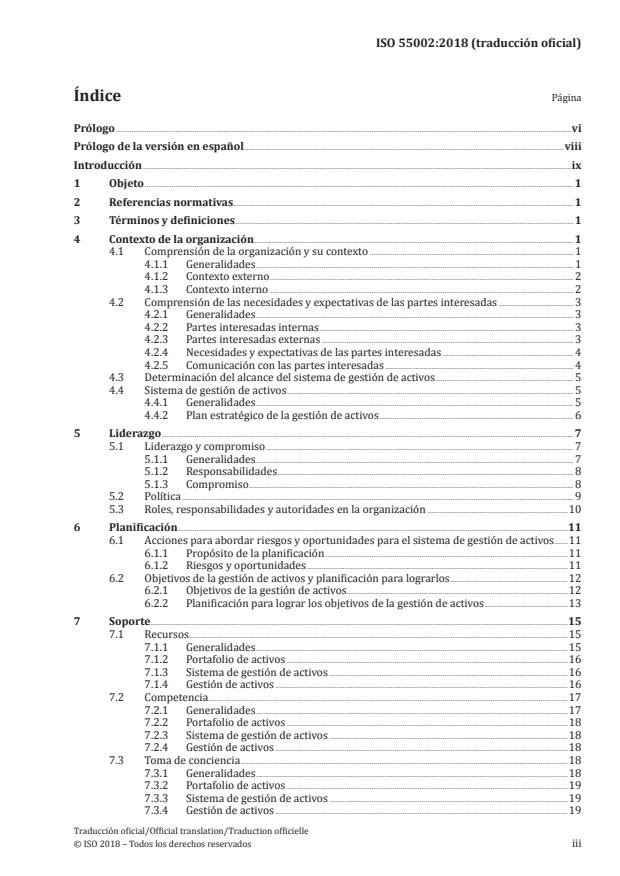
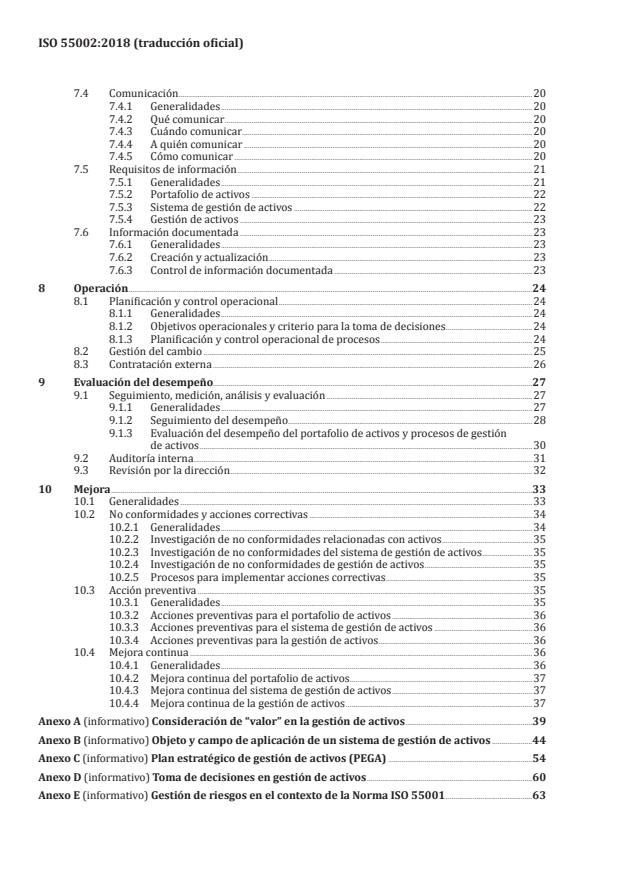
ISO 55002:2018 - Asset management — Management systems — Guidelines for the application of ISO 55001 Released:6/12/2020
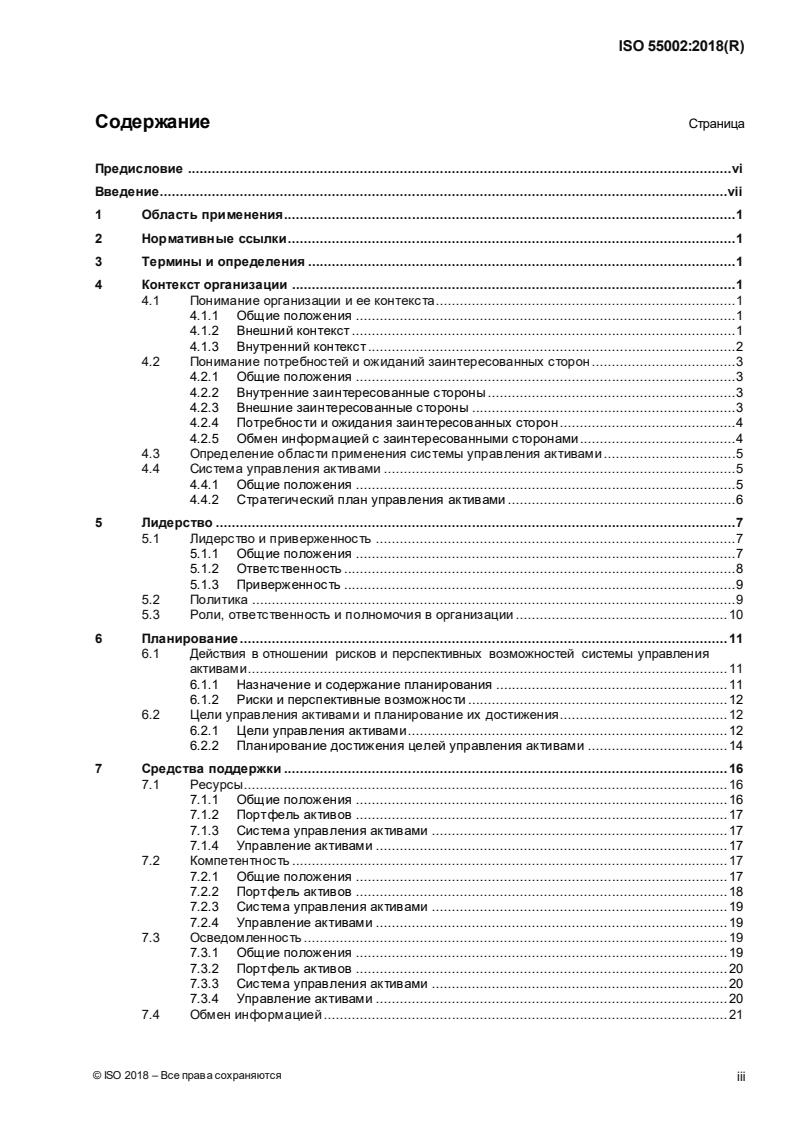
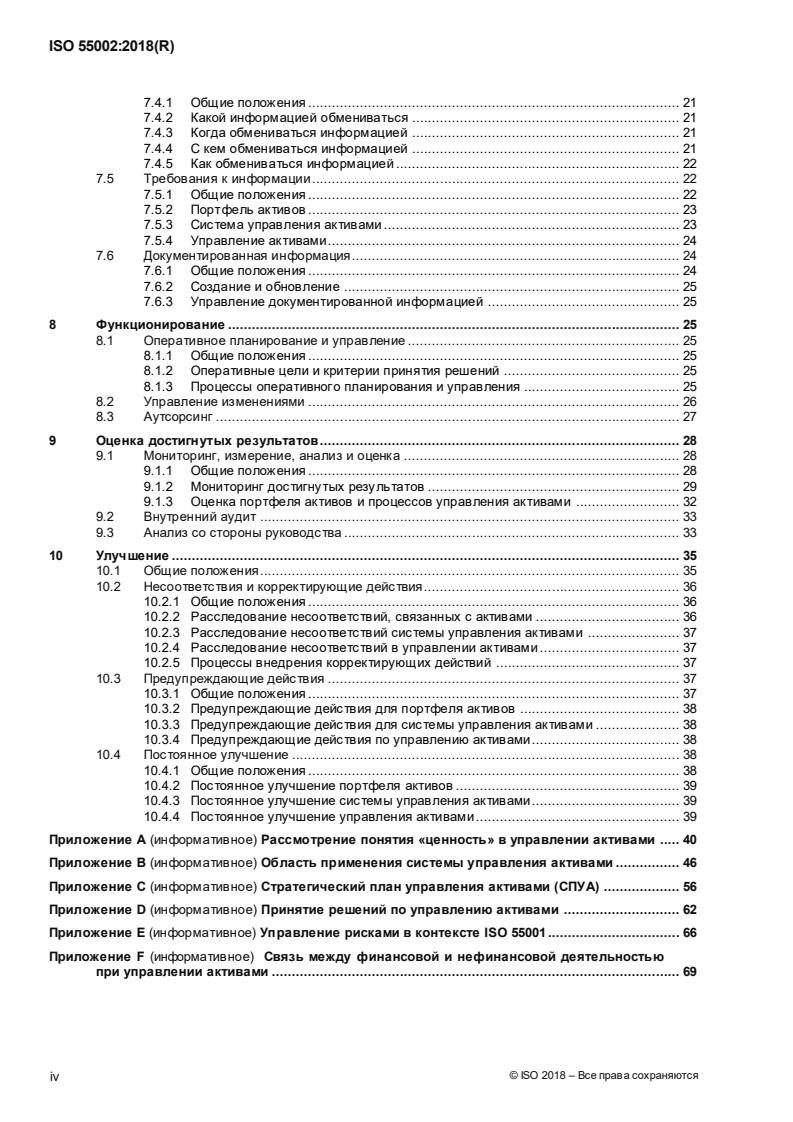
ISO 55002:2018 - Asset management — Management systems — Guidelines for the application of ISO 55001 Released:4/21/2020
Overview
ISO 55002:2018 (identical to ISO 55002:2018) provides practical guidelines for applying ISO 55001 - the international standard for an asset management system. It explains how organizations of any type or size can establish, implement, maintain and improve an asset management system aligned with ISO 55001 requirements. The document is intended primarily for physical assets but is applicable to other asset types. It does not offer financial, accounting or detailed technical instructions for specific assets (see Annex F for relationships between financial and non‑financial asset management functions).
Key topics and technical requirements
ISO 55002:2018 expands on ISO 55001 by clarifying expectations across the asset management lifecycle. Major technical topics include:
- Context of the organization: understanding internal/external context, stakeholder needs, and defining the scope of the asset management system.
- Leadership and governance: top management commitment, policy setting and organizational roles and responsibilities.
- Planning: identifying risks and opportunities, setting asset management objectives and planning to achieve them.
- Support: resource allocation, competence, awareness, communication, information requirements and documented information.
- Operation: operational planning and control, management of change, outsourcing and decision‑making criteria.
- Performance evaluation: monitoring, measurement, analysis, internal audit and management review.
- Improvement: nonconformity handling, corrective and preventive actions, and continual improvement.
- Strategic Asset Management Plan (SAMP): guidance for developing and aligning strategic plans with asset portfolio objectives (detailed in Annex C).
- Value considerations and scope: guidance on “value” in asset management (Annex A) and defining asset portfolio boundaries (Annex B).
Practical applications and who should use it
ISO 55002:2018 is practical for organizations seeking to adopt or improve a formal asset management system consistent with ISO 55001. Typical users:
- Asset managers, maintenance and reliability teams
- Infrastructure owners (utilities, transport, water, energy)
- Facility managers and property owners
- Manufacturing and process industries
- Public sector and municipalities
- C-suite, risk managers and finance functions seeking alignment between technical and financial asset decisions
- Consultants and auditors implementing or assessing ISO 55001 systems
Use cases:
- Establishing a consistent approach to lifecycle management of assets
- Integrating asset decisions with business objectives and risk management
- Improving performance measurement, planning and resource allocation
- Guiding management of change, outsourcing and supplier relationships
Related standards
- ISO 55001 - Requirements for an asset management system (primary normative reference)
- ISO 55000 - Overview, principles and terminology for asset management
Keywords: ISO 55002:2018, ISO 55002, asset management, ISO 55001, asset management system, strategic asset management plan, asset portfolio, lifecycle management, performance evaluation.
Relations
- Revises
ISO 55002:2014 - Asset management — Management systems — Guidelines for the application of ISO 55001 - Effective Date
- 12-Dec-2015
Buy Documents
ISO 55002:2018 - Asset management — Management systems — Guidelines for the application of ISO 55001 Released:11/19/2018
ISO 55002:2018 - Gestion d'actifs — Systemes de management — Lignes directrices relatives a l'application de l'ISO 55001 Released:11/19/2018
ISO 55002:2018 - Asset management — Management systems — Guidelines for the application of ISO 55001 Released:6/12/2020
ISO 55002:2018 - Asset management — Management systems — Guidelines for the application of ISO 55001 Released:4/21/2020
Related Packages

Get Certified
Connect with accredited certification bodies for this standard

BSI Group
BSI (British Standards Institution) is the business standards company that helps organizations make excellence a habit.

Bureau Veritas
Bureau Veritas is a world leader in laboratory testing, inspection and certification services.

DNV
DNV is an independent assurance and risk management provider.
Sponsored listings
Frequently Asked Questions
ISO 55002:2018 is a standard published by the International Organization for Standardization (ISO). Its full title is "Asset management — Management systems — Guidelines for the application of ISO 55001". This standard covers: This document gives guidelines for the application of an asset management system, in accordance with the requirements of ISO 55001. This document can be applied to all types of assets and by all types and sizes of organizations. NOTE 1 This document is intended to be used for managing physical assets in particular, but it can also be applied to other asset types. NOTE 2 This document does not provide financial, accounting or technical guidance for managing specific asset types, however, in Annex F information is provided on the relationship between the financial and non-financial asset management functions. NOTE 3 For the purposes of ISO 55000, ISO 55001 and this document, the term "asset management system" is used to refer to a management system for asset management.
This document gives guidelines for the application of an asset management system, in accordance with the requirements of ISO 55001. This document can be applied to all types of assets and by all types and sizes of organizations. NOTE 1 This document is intended to be used for managing physical assets in particular, but it can also be applied to other asset types. NOTE 2 This document does not provide financial, accounting or technical guidance for managing specific asset types, however, in Annex F information is provided on the relationship between the financial and non-financial asset management functions. NOTE 3 For the purposes of ISO 55000, ISO 55001 and this document, the term "asset management system" is used to refer to a management system for asset management.
ISO 55002:2018 is classified under the following ICS (International Classification for Standards) categories: 03.100.01 - Company organization and management in general; 03.100.70 - Management systems. The ICS classification helps identify the subject area and facilitates finding related standards.
ISO 55002:2018 has the following relationships with other standards: It is inter standard links to ISO 55002:2014. Understanding these relationships helps ensure you are using the most current and applicable version of the standard.
ISO 55002:2018 is available in PDF format for immediate download after purchase. The document can be added to your cart and obtained through the secure checkout process. Digital delivery ensures instant access to the complete standard document.
Standards Content (Sample)
SLOVENSKI STANDARD
01-januar-2019
Nadomešča:
SIST ISO 55002:2017
Obvladovanje premoženja - Sistemi vodenja - Smernice za uporabo ISO 55001
Asset management - Management systems - Guidelines for the application of ISO 55001
Gestion d'actifs - Systèmes de management - Lignes directrices relatives à l'application
de l'ISO 55001
Ta slovenski standard je istoveten z: ISO 55002:2018
ICS:
03.100.10 Nabava. Dobava. Logistika Purchasing. Procurement.
Logistics
03.100.70 Sistemi vodenja Management systems
2003-01.Slovenski inštitut za standardizacijo. Razmnoževanje celote ali delov tega standarda ni dovoljeno.
INTERNATIONAL ISO
STANDARD 55002
Second edition
2018-11
Asset management — Management
systems — Guidelines for the
application of ISO 55001
Gestion d'actifs — Systèmes de management — Lignes directrices
relatives à l'application de l'ISO 55001
Reference number
©
ISO 2018
© ISO 2018
All rights reserved. Unless otherwise specified, or required in the context of its implementation, no part of this publication may
be reproduced or utilized otherwise in any form or by any means, electronic or mechanical, including photocopying, or posting
on the internet or an intranet, without prior written permission. Permission can be requested from either ISO at the address
below or ISO’s member body in the country of the requester.
ISO copyright office
CP 401 • Ch. de Blandonnet 8
CH-1214 Vernier, Geneva
Phone: +41 22 749 01 11
Fax: +41 22 749 09 47
Email: copyright@iso.org
Website: www.iso.org
Published in Switzerland
ii © ISO 2018 – All rights reserved
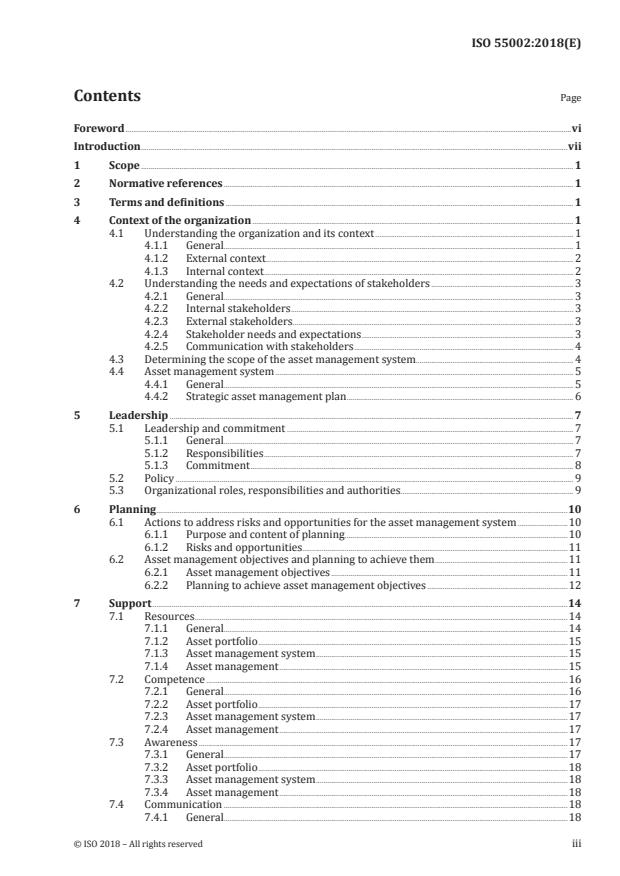
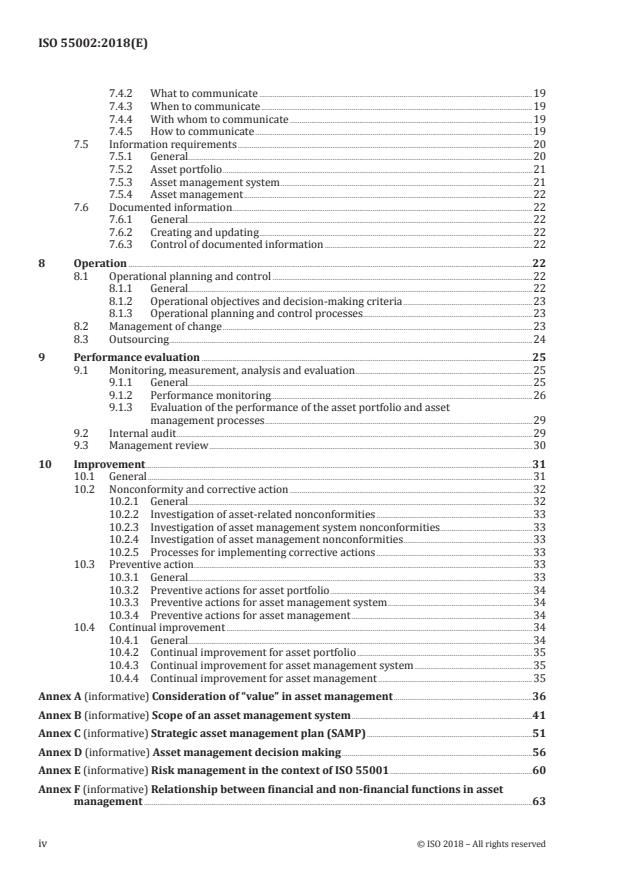
Contents Page
Foreword .vi
Introduction .vii
1 Scope . 1
2 Normative references . 1
3 Terms and definitions . 1
4 Context of the organization . 1
4.1 Understanding the organization and its context . 1
4.1.1 General. 1
4.1.2 External context . . . 2
4.1.3 Internal context . 2
4.2 Understanding the needs and expectations of stakeholders . 3
4.2.1 General. 3
4.2.2 Internal stakeholders . 3
4.2.3 External stakeholders . 3
4.2.4 Stakeholder needs and expectations . 3
4.2.5 Communication with stakeholders . 4
4.3 Determining the scope of the asset management system. 4
4.4 Asset management system . 5
4.4.1 General. 5
4.4.2 Strategic asset management plan . 6
5 Leadership . 7
5.1 Leadership and commitment . 7
5.1.1 General. 7
5.1.2 Responsibilities . 7
5.1.3 Commitment . 8
5.2 Policy . 9
5.3 Organizational roles, responsibilities and authorities. 9
6 Planning .10
6.1 Actions to address risks and opportunities for the asset management system .10
6.1.1 Purpose and content of planning .10
6.1.2 Risks and opportunities .11
6.2 Asset management objectives and planning to achieve them .11
6.2.1 Asset management objectives .11
6.2.2 Planning to achieve asset management objectives .12
7 Support .14
7.1 Resources .14
7.1.1 General.14
7.1.2 Asset portfolio .15
7.1.3 Asset management system .15
7.1.4 Asset management .15
7.2 Competence .16
7.2.1 General.16
7.2.2 Asset portfolio .17
7.2.3 Asset management system .17
7.2.4 Asset management .17
7.3 Awareness .17
7.3.1 General.17
7.3.2 Asset portfolio .18
7.3.3 Asset management system .18
7.3.4 Asset management .18
7.4 Communication .18
7.4.1 General.18
7.4.2 What to communicate .19
7.4.3 When to communicate .19
7.4.4 With whom to communicate .19
7.4.5 How to communicate .19
7.5 Information requirements .20
7.5.1 General.20
7.5.2 Asset portfolio .21
7.5.3 Asset management system .21
7.5.4 Asset management .22
7.6 Documented information .22
7.6.1 General.22
7.6.2 Creating and updating .22
7.6.3 Control of documented information .22
8 Operation .22
8.1 Operational planning and control .22
8.1.1 General.22
8.1.2 Operational objectives and decision-making criteria .23
8.1.3 Operational planning and control processes .23
8.2 Management of change .23
8.3 Outsourcing.24
9 Performance evaluation .25
9.1 Monitoring, measurement, analysis and evaluation .25
9.1.1 General.25
9.1.2 Performance monitoring.26
9.1.3 Evaluation of the performance of the asset portfolio and asset
management processes .29
9.2 Internal audit .29
9.3 Management review .30
10 Improvement .31
10.1 General .31
10.2 Nonconformity and corrective action .32
10.2.1 General.32
10.2.2 Investigation of asset-related nonconformities .33
10.2.3 Investigation of asset management system nonconformities.33
10.2.4 Investigation of asset management nonconformities .33
10.2.5 Processes for implementing corrective actions .33
10.3 Preventive action .33
10.3.1 General.33
10.3.2 Preventive actions for asset portfolio .34
10.3.3 Preventive actions for asset management system .34
10.3.4 Preventive actions for asset management .34
10.4 Continual improvement .34
10.4.1 General.34
10.4.2 Continual improvement for asset portfolio .35
10.4.3 Continual improvement for asset management system .35
10.4.4 Continual improvement for asset management .35
Annex A (informative) Consideration of “value” in asset management .36
Annex B (informative) Scope of an asset management system .41
Annex C (informative) Strategic asset management plan (SAMP) .51
Annex D (informative) Asset management decision making .56
Annex E (informative) Risk management in the context of ISO 55001 .60
Annex F (informative) Relationship between financial and non-financial functions in asset
management .63
iv © ISO 2018 – All rights reserved
Annex G (informative) Scalability — ISO 55001 for small businesses .67
Annex H (informative) Information on asset management activities .69
Bibliography .71
Foreword
ISO (the International Organization for Standardization) is a worldwide federation of national standards
bodies (ISO member bodies). The work of preparing International Standards is normally carried out
through ISO technical committees. Each member body interested in a subject for which a technical
committee has been established has the right to be represented on that committee. International
organizations, governmental and non-governmental, in liaison with ISO, also take part in the work.
ISO collaborates closely with the International Electrotechnical Commission (IEC) on all matters of
electrotechnical standardization.
The procedures used to develop this document and those intended for its further maintenance are
described in the ISO/IEC Directives, Part 1. In particular, the different approval criteria needed for the
different types of ISO documents should be noted. This document was drafted in accordance with the
editorial rules of the ISO/IEC Directives, Part 2 (see www .iso .org/directives).
Attention is drawn to the possibility that some of the elements of this document may be the subject of
patent rights. ISO shall not be held responsible for identifying any or all such patent rights. Details of
any patent rights identified during the development of the document will be in the Introduction and/or
on the ISO list of patent declarations received (see www .iso .org/patents).
Any trade name used in this document is information given for the convenience of users and does not
constitute an endorsement.
For an explanation of the voluntary nature of standards, the meaning of ISO specific terms and
expressions related to conformity assessment, as well as information about ISO’s adherence to the
World Trade Organization (WTO) principles in the Technical Barriers to Trade (TBT) see www .iso
.org/iso/foreword .html.
This document was prepared by Technical Committee ISO/TC 251, Asset management.
This second edition cancels and replaces the first edition (ISO 55002:2014), which has been technically
revised to improve the guidance on the development and application of an asset management system.
The following changes have been made:
— the ISO 55000 “fundamentals” (value, alignment, leadership and assurance) have been addressed
in each clause, whenever applicable, stating the contribution of the requirements specified in
ISO 55001 to achieving the fundamentals;
— the application of the requirements of ISO 55001 to the domains of asset management identified in
ISO 55000 (see ISO 55000:2014, Figure 1) have been clarified, i.e. to the asset portfolio, to the asset
management system and to asset management, stating the adequacy of the requirements to each
domain, whenever applicable;
— linkages between clauses have been provided, by stating the relevant interconnections (e.g. “see
6.2.1”);
— annexes have been added on cross cutting concepts, present in the main text of this document to
provide a combined guidance for specific themes in asset management that were identified as being
addressed in several clauses.
Any feedback or questions on this document should be directed to the user’s national standards body. A
complete listing of these bodies can be found at www .iso .org/members .html.
vi © ISO 2018 – All rights reserved
Introduction
0.1 General
This document provides guidance for the application of a management system for asset management,
referred to as an “asset management system”, in accordance with the requirements of ISO 55001.
This document provides explanatory text intended to clarify the requirements specified in ISO 55001
and provides examples to support implementation of these requirements. It does not provide guidance
for managing specific asset types.
This document provides guidance for use by:
a) those involved in the establishment, implementation, operation, maintenance and improvement of
an asset management system;
b) those involved in delivering asset management activities, including service providers.
General information on asset management, and information on the terminology applicable to this
document, is provided in ISO 55000.
0.2 Assets, asset management and the asset management system
An asset is something that has potential or actual value to an organization. Asset management enables
an organization to realize value from assets in the achievement of its organizational objectives. An asset
management system is used by the organization to direct, coordinate and control asset management
activities.
NOTE An asset management system can be established by any organization, which can be a sole-trader,
company, corporation, firm, enterprise, authority, partnership, charity or institution, or part or combination
thereof, whether incorporated or not, public or private. The organization, for example, can be an asset owner,
custodian, operator, service provider, subsidiary, alliance or joint venture.
The asset management system, asset management and the asset portfolio should be aligned to, and
support delivery of, the organizational objectives and the organizational plan.
Organizational objectives are generally developed as part of the organization’s strategic level planning
activities and are given in documented information within an organizational plan. The organizational
objectives form a key part of the context of the asset management system and are the starting point for
establishing the asset management objectives.
Understanding the context of the organization enables the organization to design, implement and
maintain its asset management system, asset management and the assets, in alignment with the
purpose of the organization, its objectives and its stakeholder needs and requirements.
The asset management system includes:
a) the asset management policy (see 5.2);
b) the asset management objectives (see 6.2);
c) the strategic asset management plan (SAMP);
d) the asset management plan(s) (see 6.2.2);
e) supporting activities (see Clause 7);
f) operational planning and control (see Clause 8), including the processes and procedures employed
to manage assets in the asset portfolio throughout their life cycle;
g) performance evaluation (see Clause 9);
h) improvement activities (see Clause 10);
i) guidance on how it relates to or interfaces with other relevant policies and processes and
management systems.
Figure 1 shows the relationship between the key elements of an asset management system, together
with the related clauses in ISO 55001.
NOTE 1 Only the primary connections are shown to avoid over-complexity.
NOTE 2 This does not aim to repeat the distinction between asset management and an asset management
system: it is a connections view showing directions of influence.
NOTE 3 The grey highlighted box designates the boundary of the asset management system.
Figure 1 — Relationship between key elements of an asset management system
0.3 Structure of this document
This document provides guidance on the implementation of the requirements for an asset management
system specified in ISO 55001. By doing so, this document follows a similar structure and sequence
of clauses and subclauses as in ISO 55001 (the subclauses in Clause 6 and Clause 10 are not in strict
alignment). Throughout this document distinction is made, where relevant, between assets and
asset portfolio, asset management and the asset management system. In ISO 55000:2014, 2.4.3, the
relationship between these three concepts is clarified. An asset management system is used by the
organization to direct, coordinate and control asset management activities to realize value from its
assets for the organization and for its stakeholders. When applying ISO 55001, it is relevant to be
aware of this relationship. An organization should, for example, distinguish between monitoring and
viii © ISO 2018 – All rights reserved
evaluating the performance of its asset portfolio, its asset management and its asset management
system and the use of results of these different types of monitoring and evaluation in the processes for
continual improvement at various levels. Where relevant, this document details how an organization
should distinguish between assets and asset portfolio, asset management and the asset management
system to ensure that the application of ISO 55001 promotes realization of value from its asset portfolio.
In addition, this document also addresses several subjects that are relevant for the effective
implementation of asset management, but that are not related to one specific (sub)clause of ISO 55001.
Asset management is the coordinated activity of an organization to realize value from assets (see the
definition in ISO 55000:2014, 3.3.1) and although the requirements in ISO 55001 cover the overall
approach of comprehensive asset management, there are elements that are linked to several clauses.
As special care should be given to the alignment of these cross-cutting elements, these subjects are
addressed in annexes to this document.
In the design and improvement of the asset management system and execution of asset management,
four pathways are of key importance:
— the line of sight from context of the organization to asset management policy to the SAMP to asset
management plans to operation;
— objectives, derived from the organizational objectives to strategic asset management objectives,
to asset management objectives; these are often translated into a hierarchy of key performance
indicators;
— decision-making criteria and decision-making processes;
— risk management is developed at all levels, from the top level in the organization (down) to daily
operations; the risk management framework is aligned with the design and improvement of the
asset management system and the risk management process with the asset management execution.
The concurrence of these four elements is one of the key aspects of asset management. In particular,
the alignment of decision making and setting of objectives is not straightforward. These are developed
together and can need several iterations before they are fully aligned and mature.
To support this overall alignment, Annexes A to H provide information on:
a) the concept of value as a fundamental in asset management (Annex A);
b) defining the scope of an asset management system (Annex B);
c) the objectives and structure of the SAMP (Annex C);
d) the principles behind asset management decision making (Annex D);
e) addressing risk management in asset management (Annex E);
f) the relationship between the financial and non-financial functions in asset management (Annex F);
g) scalability of asset management systems for varying organization sizes and complexity (Annex G);
h) information on asset management activities (Annex H).
0.4 Language applied in this document
In this document, the following verbal forms are used:
— “shall” indicates a requirement;
— “should” indicates a recommendation;
— “may” indicates a permission;
— “can” indicates a possibility or a capability.
Information marked as “NOTE” is for guidance in understanding or clarifying the associated text.
x © ISO 2018 – All rights reserved
INTERNATIONAL STANDARD ISO 55002:2018(E)
Asset management — Management systems — Guidelines
for the application of ISO 55001
1 Scope
This document gives guidelines for the application of an asset management system, in accordance with
the requirements of ISO 55001.
This document can be applied to all types of assets and by all types and sizes of organizations.
NOTE 1 This document is intended to be used for managing physical assets in particular, but it can also be
applied to other asset types.
NOTE 2 This document does not provide financial, accounting or technical guidance for managing specific
asset types, however, in Annex F information is provided on the relationship between the financial and non-
financial asset management functions.
NOTE 3 For the purposes of ISO 55000, ISO 55001 and this document, the term “asset management system” is
used to refer to a management system for asset management.
2 Normative references
The following documents are referred to in the text in such a way that some or all of their content
constitutes requirements of this document. For dated references, only the edition cited applies. For
undated references, the latest edition of the referenced document (including any amendments) applies.
ISO 55000:2014, Asset management — Overview, principles and terminology
3 Terms and definitions
For the purposes of this document, the terms and definitions given in ISO 55000 apply.
ISO and IEC maintain terminological databases for use in standardization at the following addresses:
— ISO Online browsing platform: available at https: //www .iso .org/obp
— IEC Electropedia: available at http: //www .electropedia .org/
4 Context of the organization
4.1 Understanding the organization and its context
4.1.1 General
When establishing or reviewing an asset management system, it is important to ensure that its design,
scope and implementation are consistent and aligned with the external and internal context of the
organization.
4.1.2 External context
Understanding the organization’s external context can include, but is not limited to, consideration of
the following:
a) the social and cultural, political, legal, regulatory, financial, technological, economic, competitive
and natural environment factors, whether international, national, regional or local;
b) key drivers and trends in factors that are identified as potentially having an impact on the objectives
of the organization;
c) relationships with, and perceptions and values of, external stakeholders.
NOTE “Stakeholder” can also be referred to as an “interested party”.
4.1.3 Internal context
Understanding the organization’s internal context can include, but is not limited to, consideration of the
following:
a) governance requirements;
b) policies, objectives and the strategies that are in place to achieve them;
c) the organization’s culture and values;
d) organizational structure, roles, accountabilities and authorities;
e) the size and complexity of the organization;
f) capabilities, understood in terms of resources and knowledge (e.g. capital, time, people, systems
and technologies);
g) information systems, information flows and decision-making processes (both formal and informal);
h) standards, guidelines and models adopted by the organization;
i) relationships with, and perceptions and values of, internal stakeholders;
j) the form and extent of contractual relationships;
k) the organization’s risk management plans including tolerance limits, risk attitude and capacity;
l) asset management practices and other management systems, plans, process(es) and procedure(s);
m) integrity and performance of the assets and asset systems, and the outputs of consequent
evaluations or reviews;
n) the size, complexity and criticality of the assets;
o) feedback from the investigation of previous asset and asset system failures, incidents, accidents
and emergencies, and any systemic or statistical analyses and evaluations;
p) assessments of the ability of the asset management system to achieve the intended outcomes of the
organizational objectives;
q) feedback from previous self-assessments, internal audits, third party and certification reviews.
At the strategic level, tools such as Strengths, Weaknesses, Opportunities and Threats (SWOT) analysis
and Political, Economic, Social, Technological, Legal, Environmental (PESTLE) analysis may be used for
identification and evaluation of contextual issues. A simpler approach, such as brainstorming, can be
useful for organizations, depending on the size and complexity of their operations.
2 © ISO 2018 – All rights reserved
The processes and associated outputs used for evaluating the organization’s context can be considered
necessary for the effectiveness of the asset management system, and may, therefore, be maintained as
documented information (see ISO 55001:2014, 7.6.1). The triggers and review frequency for conducting
these processes should also be defined in documented information.
4.2 Understanding the needs and expectations of stakeholders
4.2.1 General
The organization should identify and review the stakeholders that are relevant to the asset management
system, asset management and the assets, and the needs and expectations of these stakeholders. The
identification and review of the stakeholders’ needs and expectations will enable the identification of
the value the stakeholders could receive from the organization’s assets (see Annex A for a discussion on
the concept of value in asset management).
4.2.2 Internal stakeholders
Internal stakeholders can include the following:
a) employees of the organization;
b) groups within the organization, i.e. functional groups (e.g. engineering, finance, accounting,
maintenance, operations, purchasing, receiving, logistics, communications and information
management) or other groups (e.g. safety representatives);
c) shareholders, management consortiums, owners.
4.2.3 External stakeholders
External stakeholders can include the following:
a) customers, users;
b) suppliers, service providers and contractors;
c) non-governmental organizations, including civil society organizations, consumer organizations
and the media with an interest in issues related to asset management;
d) government organizations, government agencies, regulatory authorities, and politicians at all levels
of government;
e) taxpayers;
f) local communities;
g) those in society interested in social, financial, environmental or other forms of sustainability;
h) investors, financial institutions, rating agencies, brokers and insurers;
i) external employee representatives (e.g. an employee of an industry body/union).
4.2.4 Stakeholder needs and expectations
Stakeholders’ needs and expectations should be defined in documented information and be
communicated. This may be captured in a high-level statement of stakeholder needs within the SAMP,
recognizing that more detailed statements will follow in the asset management plans to specifically
address the expectations of different stakeholder groups. These statements should reference any
mandatory requirements.
The organization should consider a means of tracking how current the information collected is, and
the methods involved for its collection. When engaging with stakeholders to determine their needs
and expectations, the organization can use the list of context-related issues given in 4.1 to frame the
discussions.
One objective of asset management is to enable the organization to meet the service needs of the
customers and users of its asset(s). The organization should measure the levels of service (see 6.2.1)
that its assets deliver, and evaluate these against the needs and expectations of its customers and users.
A level of service review process can be a useful approach to understand the expectations of customers
and users.
Stakeholders are likely to make judgements about the organization’s asset management and its asset
management outputs and outcomes based on their perceptions. These can vary due to differences in
values, needs, assumptions, concepts and concerns, as they relate to the issues under discussion. Since
the views of stakeholders can have a significant impact on the organization’s asset-related decisions, it is
important that their perceptions are determined, recorded and taken into account in the organization’s
decision-making process (see also Annex D).
Defining how asset-related decisions are made, and ensuring understanding of the process, are an
important part of asset management. The criteria for decision making are influenced by the needs
of external and internal stakeholders, by the asset management policy and by the risk attitude of the
organization (see Annex D). The external and internal stakeholders’ input to establishing decision-
making criteria is important for setting priorities and resolving conflicting requirements. Decision-
making criteria should be appropriate to the importance and complexity of the decisions being made.
These criteria should be used to evaluate competing options to meet asset management objectives
and develop asset management plans. The criteria can be expressed in a number of ways, to support
quantitative, semi-quantitative or qualitative decisions. The processes to establish the decision-making
criteria that guide asset management should be clear and be defined in documented information.
4.2.5 Communication with stakeholders
The level of detail needed when reporting to stakeholders will vary from one stakeholder to another,
depending on the scope of the organization’s activities, the complexity of the assets being managed
and the importance of the stakeholder to the organization. The details reported should only disclose
proprietary information as appropriate for the stakeholders receiving the information. The organization
should be aware that there can be legal and regulatory requirements associated with reporting to
specific stakeholders.
Stakeholders generally should be informed about the decisions that can affect them and should
be given an opportunity to provide input into decisions that can have an impact on them. Failure to
both communicate and consult in an appropriate way about asset management activities can in itself
constitute a risk, because it could later prevent an organization from fulfilling its objectives.
It is important that the terminology used in communicating with stakeholders is consistent and aligned
with other functions in the organization; this is particularly necessary when communicating financial
information (See Annex F).
Organizations could manage their communication needs through registers or matrices identifying with
whom, what, when, how and why they need to communicate.
4.3 Determining the scope of the asset management system
Based on the outcomes of reviews of its context and stakeholders (see 4.1 and 4.2), the organization
should define (or review) the boundaries of the asset management system, and establish its scope. It
should be communicated to all relevant stakeholders, both internal and external to the organization.
The scope should:
a) consider the range, grouping and functional connectivity of the assets involved in delivering an
output or outcome to the customers or other stakeholders;
4 © ISO 2018 – All rights reserved
b) addres
...
INTERNATIONAL ISO
STANDARD 55002
Second edition
2018-11
Asset management — Management
systems — Guidelines for the
application of ISO 55001
Gestion d'actifs — Systèmes de management — Lignes directrices
relatives à l'application de l'ISO 55001
Reference number
©
ISO 2018
© ISO 2018
All rights reserved. Unless otherwise specified, or required in the context of its implementation, no part of this publication may
be reproduced or utilized otherwise in any form or by any means, electronic or mechanical, including photocopying, or posting
on the internet or an intranet, without prior written permission. Permission can be requested from either ISO at the address
below or ISO’s member body in the country of the requester.
ISO copyright office
CP 401 • Ch. de Blandonnet 8
CH-1214 Vernier, Geneva
Phone: +41 22 749 01 11
Fax: +41 22 749 09 47
Email: copyright@iso.org
Website: www.iso.org
Published in Switzerland
ii © ISO 2018 – All rights reserved
Contents Page
Foreword .vi
Introduction .vii
1 Scope . 1
2 Normative references . 1
3 Terms and definitions . 1
4 Context of the organization . 1
4.1 Understanding the organization and its context . 1
4.1.1 General. 1
4.1.2 External context . . . 2
4.1.3 Internal context . 2
4.2 Understanding the needs and expectations of stakeholders . 3
4.2.1 General. 3
4.2.2 Internal stakeholders . 3
4.2.3 External stakeholders . 3
4.2.4 Stakeholder needs and expectations . 3
4.2.5 Communication with stakeholders . 4
4.3 Determining the scope of the asset management system. 4
4.4 Asset management system . 5
4.4.1 General. 5
4.4.2 Strategic asset management plan . 6
5 Leadership . 7
5.1 Leadership and commitment . 7
5.1.1 General. 7
5.1.2 Responsibilities . 7
5.1.3 Commitment . 8
5.2 Policy . 9
5.3 Organizational roles, responsibilities and authorities. 9
6 Planning .10
6.1 Actions to address risks and opportunities for the asset management system .10
6.1.1 Purpose and content of planning .10
6.1.2 Risks and opportunities .11
6.2 Asset management objectives and planning to achieve them .11
6.2.1 Asset management objectives .11
6.2.2 Planning to achieve asset management objectives .12
7 Support .14
7.1 Resources .14
7.1.1 General.14
7.1.2 Asset portfolio .15
7.1.3 Asset management system .15
7.1.4 Asset management .15
7.2 Competence .16
7.2.1 General.16
7.2.2 Asset portfolio .17
7.2.3 Asset management system .17
7.2.4 Asset management .17
7.3 Awareness .17
7.3.1 General.17
7.3.2 Asset portfolio .18
7.3.3 Asset management system .18
7.3.4 Asset management .18
7.4 Communication .18
7.4.1 General.18
7.4.2 What to communicate .19
7.4.3 When to communicate .19
7.4.4 With whom to communicate .19
7.4.5 How to communicate .19
7.5 Information requirements .20
7.5.1 General.20
7.5.2 Asset portfolio .21
7.5.3 Asset management system .21
7.5.4 Asset management .22
7.6 Documented information .22
7.6.1 General.22
7.6.2 Creating and updating .22
7.6.3 Control of documented information .22
8 Operation .22
8.1 Operational planning and control .22
8.1.1 General.22
8.1.2 Operational objectives and decision-making criteria .23
8.1.3 Operational planning and control processes .23
8.2 Management of change .23
8.3 Outsourcing.24
9 Performance evaluation .25
9.1 Monitoring, measurement, analysis and evaluation .25
9.1.1 General.25
9.1.2 Performance monitoring.26
9.1.3 Evaluation of the performance of the asset portfolio and asset
management processes .29
9.2 Internal audit .29
9.3 Management review .30
10 Improvement .31
10.1 General .31
10.2 Nonconformity and corrective action .32
10.2.1 General.32
10.2.2 Investigation of asset-related nonconformities .33
10.2.3 Investigation of asset management system nonconformities.33
10.2.4 Investigation of asset management nonconformities .33
10.2.5 Processes for implementing corrective actions .33
10.3 Preventive action .33
10.3.1 General.33
10.3.2 Preventive actions for asset portfolio .34
10.3.3 Preventive actions for asset management system .34
10.3.4 Preventive actions for asset management .34
10.4 Continual improvement .34
10.4.1 General.34
10.4.2 Continual improvement for asset portfolio .35
10.4.3 Continual improvement for asset management system .35
10.4.4 Continual improvement for asset management .35
Annex A (informative) Consideration of “value” in asset management .36
Annex B (informative) Scope of an asset management system .41
Annex C (informative) Strategic asset management plan (SAMP) .51
Annex D (informative) Asset management decision making .56
Annex E (informative) Risk management in the context of ISO 55001 .60
Annex F (informative) Relationship between financial and non-financial functions in asset
management .63
iv © ISO 2018 – All rights reserved
Annex G (informative) Scalability — ISO 55001 for small businesses .67
Annex H (informative) Information on asset management activities .69
Bibliography .71
Foreword
ISO (the International Organization for Standardization) is a worldwide federation of national standards
bodies (ISO member bodies). The work of preparing International Standards is normally carried out
through ISO technical committees. Each member body interested in a subject for which a technical
committee has been established has the right to be represented on that committee. International
organizations, governmental and non-governmental, in liaison with ISO, also take part in the work.
ISO collaborates closely with the International Electrotechnical Commission (IEC) on all matters of
electrotechnical standardization.
The procedures used to develop this document and those intended for its further maintenance are
described in the ISO/IEC Directives, Part 1. In particular, the different approval criteria needed for the
different types of ISO documents should be noted. This document was drafted in accordance with the
editorial rules of the ISO/IEC Directives, Part 2 (see www .iso .org/directives).
Attention is drawn to the possibility that some of the elements of this document may be the subject of
patent rights. ISO shall not be held responsible for identifying any or all such patent rights. Details of
any patent rights identified during the development of the document will be in the Introduction and/or
on the ISO list of patent declarations received (see www .iso .org/patents).
Any trade name used in this document is information given for the convenience of users and does not
constitute an endorsement.
For an explanation of the voluntary nature of standards, the meaning of ISO specific terms and
expressions related to conformity assessment, as well as information about ISO’s adherence to the
World Trade Organization (WTO) principles in the Technical Barriers to Trade (TBT) see www .iso
.org/iso/foreword .html.
This document was prepared by Technical Committee ISO/TC 251, Asset management.
This second edition cancels and replaces the first edition (ISO 55002:2014), which has been technically
revised to improve the guidance on the development and application of an asset management system.
The following changes have been made:
— the ISO 55000 “fundamentals” (value, alignment, leadership and assurance) have been addressed
in each clause, whenever applicable, stating the contribution of the requirements specified in
ISO 55001 to achieving the fundamentals;
— the application of the requirements of ISO 55001 to the domains of asset management identified in
ISO 55000 (see ISO 55000:2014, Figure 1) have been clarified, i.e. to the asset portfolio, to the asset
management system and to asset management, stating the adequacy of the requirements to each
domain, whenever applicable;
— linkages between clauses have been provided, by stating the relevant interconnections (e.g. “see
6.2.1”);
— annexes have been added on cross cutting concepts, present in the main text of this document to
provide a combined guidance for specific themes in asset management that were identified as being
addressed in several clauses.
Any feedback or questions on this document should be directed to the user’s national standards body. A
complete listing of these bodies can be found at www .iso .org/members .html.
vi © ISO 2018 – All rights reserved
Introduction
0.1 General
This document provides guidance for the application of a management system for asset management,
referred to as an “asset management system”, in accordance with the requirements of ISO 55001.
This document provides explanatory text intended to clarify the requirements specified in ISO 55001
and provides examples to support implementation of these requirements. It does not provide guidance
for managing specific asset types.
This document provides guidance for use by:
a) those involved in the establishment, implementation, operation, maintenance and improvement of
an asset management system;
b) those involved in delivering asset management activities, including service providers.
General information on asset management, and information on the terminology applicable to this
document, is provided in ISO 55000.
0.2 Assets, asset management and the asset management system
An asset is something that has potential or actual value to an organization. Asset management enables
an organization to realize value from assets in the achievement of its organizational objectives. An asset
management system is used by the organization to direct, coordinate and control asset management
activities.
NOTE An asset management system can be established by any organization, which can be a sole-trader,
company, corporation, firm, enterprise, authority, partnership, charity or institution, or part or combination
thereof, whether incorporated or not, public or private. The organization, for example, can be an asset owner,
custodian, operator, service provider, subsidiary, alliance or joint venture.
The asset management system, asset management and the asset portfolio should be aligned to, and
support delivery of, the organizational objectives and the organizational plan.
Organizational objectives are generally developed as part of the organization’s strategic level planning
activities and are given in documented information within an organizational plan. The organizational
objectives form a key part of the context of the asset management system and are the starting point for
establishing the asset management objectives.
Understanding the context of the organization enables the organization to design, implement and
maintain its asset management system, asset management and the assets, in alignment with the
purpose of the organization, its objectives and its stakeholder needs and requirements.
The asset management system includes:
a) the asset management policy (see 5.2);
b) the asset management objectives (see 6.2);
c) the strategic asset management plan (SAMP);
d) the asset management plan(s) (see 6.2.2);
e) supporting activities (see Clause 7);
f) operational planning and control (see Clause 8), including the processes and procedures employed
to manage assets in the asset portfolio throughout their life cycle;
g) performance evaluation (see Clause 9);
h) improvement activities (see Clause 10);
i) guidance on how it relates to or interfaces with other relevant policies and processes and
management systems.
Figure 1 shows the relationship between the key elements of an asset management system, together
with the related clauses in ISO 55001.
NOTE 1 Only the primary connections are shown to avoid over-complexity.
NOTE 2 This does not aim to repeat the distinction between asset management and an asset management
system: it is a connections view showing directions of influence.
NOTE 3 The grey highlighted box designates the boundary of the asset management system.
Figure 1 — Relationship between key elements of an asset management system
0.3 Structure of this document
This document provides guidance on the implementation of the requirements for an asset management
system specified in ISO 55001. By doing so, this document follows a similar structure and sequence
of clauses and subclauses as in ISO 55001 (the subclauses in Clause 6 and Clause 10 are not in strict
alignment). Throughout this document distinction is made, where relevant, between assets and
asset portfolio, asset management and the asset management system. In ISO 55000:2014, 2.4.3, the
relationship between these three concepts is clarified. An asset management system is used by the
organization to direct, coordinate and control asset management activities to realize value from its
assets for the organization and for its stakeholders. When applying ISO 55001, it is relevant to be
aware of this relationship. An organization should, for example, distinguish between monitoring and
viii © ISO 2018 – All rights reserved
evaluating the performance of its asset portfolio, its asset management and its asset management
system and the use of results of these different types of monitoring and evaluation in the processes for
continual improvement at various levels. Where relevant, this document details how an organization
should distinguish between assets and asset portfolio, asset management and the asset management
system to ensure that the application of ISO 55001 promotes realization of value from its asset portfolio.
In addition, this document also addresses several subjects that are relevant for the effective
implementation of asset management, but that are not related to one specific (sub)clause of ISO 55001.
Asset management is the coordinated activity of an organization to realize value from assets (see the
definition in ISO 55000:2014, 3.3.1) and although the requirements in ISO 55001 cover the overall
approach of comprehensive asset management, there are elements that are linked to several clauses.
As special care should be given to the alignment of these cross-cutting elements, these subjects are
addressed in annexes to this document.
In the design and improvement of the asset management system and execution of asset management,
four pathways are of key importance:
— the line of sight from context of the organization to asset management policy to the SAMP to asset
management plans to operation;
— objectives, derived from the organizational objectives to strategic asset management objectives,
to asset management objectives; these are often translated into a hierarchy of key performance
indicators;
— decision-making criteria and decision-making processes;
— risk management is developed at all levels, from the top level in the organization (down) to daily
operations; the risk management framework is aligned with the design and improvement of the
asset management system and the risk management process with the asset management execution.
The concurrence of these four elements is one of the key aspects of asset management. In particular,
the alignment of decision making and setting of objectives is not straightforward. These are developed
together and can need several iterations before they are fully aligned and mature.
To support this overall alignment, Annexes A to H provide information on:
a) the concept of value as a fundamental in asset management (Annex A);
b) defining the scope of an asset management system (Annex B);
c) the objectives and structure of the SAMP (Annex C);
d) the principles behind asset management decision making (Annex D);
e) addressing risk management in asset management (Annex E);
f) the relationship between the financial and non-financial functions in asset management (Annex F);
g) scalability of asset management systems for varying organization sizes and complexity (Annex G);
h) information on asset management activities (Annex H).
0.4 Language applied in this document
In this document, the following verbal forms are used:
— “shall” indicates a requirement;
— “should” indicates a recommendation;
— “may” indicates a permission;
— “can” indicates a possibility or a capability.
Information marked as “NOTE” is for guidance in understanding or clarifying the associated text.
x © ISO 2018 – All rights reserved
INTERNATIONAL STANDARD ISO 55002:2018(E)
Asset management — Management systems — Guidelines
for the application of ISO 55001
1 Scope
This document gives guidelines for the application of an asset management system, in accordance with
the requirements of ISO 55001.
This document can be applied to all types of assets and by all types and sizes of organizations.
NOTE 1 This document is intended to be used for managing physical assets in particular, but it can also be
applied to other asset types.
NOTE 2 This document does not provide financial, accounting or technical guidance for managing specific
asset types, however, in Annex F information is provided on the relationship between the financial and non-
financial asset management functions.
NOTE 3 For the purposes of ISO 55000, ISO 55001 and this document, the term “asset management system” is
used to refer to a management system for asset management.
2 Normative references
The following documents are referred to in the text in such a way that some or all of their content
constitutes requirements of this document. For dated references, only the edition cited applies. For
undated references, the latest edition of the referenced document (including any amendments) applies.
ISO 55000:2014, Asset management — Overview, principles and terminology
3 Terms and definitions
For the purposes of this document, the terms and definitions given in ISO 55000 apply.
ISO and IEC maintain terminological databases for use in standardization at the following addresses:
— ISO Online browsing platform: available at https: //www .iso .org/obp
— IEC Electropedia: available at http: //www .electropedia .org/
4 Context of the organization
4.1 Understanding the organization and its context
4.1.1 General
When establishing or reviewing an asset management system, it is important to ensure that its design,
scope and implementation are consistent and aligned with the external and internal context of the
organization.
4.1.2 External context
Understanding the organization’s external context can include, but is not limited to, consideration of
the following:
a) the social and cultural, political, legal, regulatory, financial, technological, economic, competitive
and natural environment factors, whether international, national, regional or local;
b) key drivers and trends in factors that are identified as potentially having an impact on the objectives
of the organization;
c) relationships with, and perceptions and values of, external stakeholders.
NOTE “Stakeholder” can also be referred to as an “interested party”.
4.1.3 Internal context
Understanding the organization’s internal context can include, but is not limited to, consideration of the
following:
a) governance requirements;
b) policies, objectives and the strategies that are in place to achieve them;
c) the organization’s culture and values;
d) organizational structure, roles, accountabilities and authorities;
e) the size and complexity of the organization;
f) capabilities, understood in terms of resources and knowledge (e.g. capital, time, people, systems
and technologies);
g) information systems, information flows and decision-making processes (both formal and informal);
h) standards, guidelines and models adopted by the organization;
i) relationships with, and perceptions and values of, internal stakeholders;
j) the form and extent of contractual relationships;
k) the organization’s risk management plans including tolerance limits, risk attitude and capacity;
l) asset management practices and other management systems, plans, process(es) and procedure(s);
m) integrity and performance of the assets and asset systems, and the outputs of consequent
evaluations or reviews;
n) the size, complexity and criticality of the assets;
o) feedback from the investigation of previous asset and asset system failures, incidents, accidents
and emergencies, and any systemic or statistical analyses and evaluations;
p) assessments of the ability of the asset management system to achieve the intended outcomes of the
organizational objectives;
q) feedback from previous self-assessments, internal audits, third party and certification reviews.
At the strategic level, tools such as Strengths, Weaknesses, Opportunities and Threats (SWOT) analysis
and Political, Economic, Social, Technological, Legal, Environmental (PESTLE) analysis may be used for
identification and evaluation of contextual issues. A simpler approach, such as brainstorming, can be
useful for organizations, depending on the size and complexity of their operations.
2 © ISO 2018 – All rights reserved
The processes and associated outputs used for evaluating the organization’s context can be considered
necessary for the effectiveness of the asset management system, and may, therefore, be maintained as
documented information (see ISO 55001:2014, 7.6.1). The triggers and review frequency for conducting
these processes should also be defined in documented information.
4.2 Understanding the needs and expectations of stakeholders
4.2.1 General
The organization should identify and review the stakeholders that are relevant to the asset management
system, asset management and the assets, and the needs and expectations of these stakeholders. The
identification and review of the stakeholders’ needs and expectations will enable the identification of
the value the stakeholders could receive from the organization’s assets (see Annex A for a discussion on
the concept of value in asset management).
4.2.2 Internal stakeholders
Internal stakeholders can include the following:
a) employees of the organization;
b) groups within the organization, i.e. functional groups (e.g. engineering, finance, accounting,
maintenance, operations, purchasing, receiving, logistics, communications and information
management) or other groups (e.g. safety representatives);
c) shareholders, management consortiums, owners.
4.2.3 External stakeholders
External stakeholders can include the following:
a) customers, users;
b) suppliers, service providers and contractors;
c) non-governmental organizations, including civil society organizations, consumer organizations
and the media with an interest in issues related to asset management;
d) government organizations, government agencies, regulatory authorities, and politicians at all levels
of government;
e) taxpayers;
f) local communities;
g) those in society interested in social, financial, environmental or other forms of sustainability;
h) investors, financial institutions, rating agencies, brokers and insurers;
i) external employee representatives (e.g. an employee of an industry body/union).
4.2.4 Stakeholder needs and expectations
Stakeholders’ needs and expectations should be defined in documented information and be
communicated. This may be captured in a high-level statement of stakeholder needs within the SAMP,
recognizing that more detailed statements will follow in the asset management plans to specifically
address the expectations of different stakeholder groups. These statements should reference any
mandatory requirements.
The organization should consider a means of tracking how current the information collected is, and
the methods involved for its collection. When engaging with stakeholders to determine their needs
and expectations, the organization can use the list of context-related issues given in 4.1 to frame the
discussions.
One objective of asset management is to enable the organization to meet the service needs of the
customers and users of its asset(s). The organization should measure the levels of service (see 6.2.1)
that its assets deliver, and evaluate these against the needs and expectations of its customers and users.
A level of service review process can be a useful approach to understand the expectations of customers
and users.
Stakeholders are likely to make judgements about the organization’s asset management and its asset
management outputs and outcomes based on their perceptions. These can vary due to differences in
values, needs, assumptions, concepts and concerns, as they relate to the issues under discussion. Since
the views of stakeholders can have a significant impact on the organization’s asset-related decisions, it is
important that their perceptions are determined, recorded and taken into account in the organization’s
decision-making process (see also Annex D).
Defining how asset-related decisions are made, and ensuring understanding of the process, are an
important part of asset management. The criteria for decision making are influenced by the needs
of external and internal stakeholders, by the asset management policy and by the risk attitude of the
organization (see Annex D). The external and internal stakeholders’ input to establishing decision-
making criteria is important for setting priorities and resolving conflicting requirements. Decision-
making criteria should be appropriate to the importance and complexity of the decisions being made.
These criteria should be used to evaluate competing options to meet asset management objectives
and develop asset management plans. The criteria can be expressed in a number of ways, to support
quantitative, semi-quantitative or qualitative decisions. The processes to establish the decision-making
criteria that guide asset management should be clear and be defined in documented information.
4.2.5 Communication with stakeholders
The level of detail needed when reporting to stakeholders will vary from one stakeholder to another,
depending on the scope of the organization’s activities, the complexity of the assets being managed
and the importance of the stakeholder to the organization. The details reported should only disclose
proprietary information as appropriate for the stakeholders receiving the information. The organization
should be aware that there can be legal and regulatory requirements associated with reporting to
specific stakeholders.
Stakeholders generally should be informed about the decisions that can affect them and should
be given an opportunity to provide input into decisions that can have an impact on them. Failure to
both communicate and consult in an appropriate way about asset management activities can in itself
constitute a risk, because it could later prevent an organization from fulfilling its objectives.
It is important that the terminology used in communicating with stakeholders is consistent and aligned
with other functions in the organization; this is particularly necessary when communicating financial
information (See Annex F).
Organizations could manage their communication needs through registers or matrices identifying with
whom, what, when, how and why they need to communicate.
4.3 Determining the scope of the asset management system
Based on the outcomes of reviews of its context and stakeholders (see 4.1 and 4.2), the organization
should define (or review) the boundaries of the asset management system, and establish its scope. It
should be communicated to all relevant stakeholders, both internal and external to the organization.
The scope should:
a) consider the range, grouping and functional connectivity of the assets involved in delivering an
output or outcome to the customers or other stakeholders;
4 © ISO 2018 – All rights reserved
b) address the relevance of the assets considered for inclusion in the scope to be appropriate to the
context and purpose of the organization and include all significant assets;
c) identify the organization’s units, locations and contractual boundaries.
Annex B provides further guidance in establishing the scope of the asset management system in various
situations, including where different organizations are involved in managing a specific asset portfolio
(e.g. where an asset owner outsources most or all of the asset management activities).
4.4 Asset management system
4.4.1 General
In the initial development of the asset management system, the organization should outline how it
will establish, implement, operate, maintain and improve the asset management system. An initial
review of the organization’s current processes and capability against the requirements of ISO 55001
will determine the areas that should be developed to support the functioning of a compliant asset
management system and any corresponding improvements of capability required.
The asset management system should n
...
NORME ISO
INTERNATIONALE 55002
Deuxième édition
2018-11
Gestion d'actifs — Systèmes de
management — Lignes directrices
relatives à l'application de l'ISO 55001
Asset management — Management systems — Guidelines for the
application of ISO 55001
Numéro de référence
©
ISO 2018
DOCUMENT PROTÉGÉ PAR COPYRIGHT
© ISO 2018
Tous droits réservés. Sauf prescription différente ou nécessité dans le contexte de sa mise en œuvre, aucune partie de cette
publication ne peut être reproduite ni utilisée sous quelque forme que ce soit et par aucun procédé, électronique ou mécanique,
y compris la photocopie, ou la diffusion sur l’internet ou sur un intranet, sans autorisation écrite préalable. Une autorisation peut
être demandée à l’ISO à l’adresse ci-après ou au comité membre de l’ISO dans le pays du demandeur.
ISO copyright office
Case postale 401 • Ch. de Blandonnet 8
CH-1214 Vernier, Genève
Tél.: +41 22 749 01 11
Fax: +41 22 749 09 47
E-mail: copyright@iso.org
Web: www.iso.org
Publié en Suisse
ii © ISO 2018 – Tous droits réservés
Sommaire Page
Avant-propos .vi
Introduction .vii
1 Domaine d’application . 1
2 Références normatives . 1
3 Termes et définitions . 1
4 Contexte de l’organisme . 1
4.1 Connaissances de l’organisme et de son contexte . 1
4.1.1 Généralités . 1
4.1.2 Contexte externe . 2
4.1.3 Contexte interne . 2
4.2 Compréhension des besoins et attentes des parties prenantes . 3
4.2.1 Généralités . 3
4.2.2 Parties prenantes internes . 3
4.2.3 Parties prenantes externes . 3
4.2.4 Besoins et attentes des parties prenantes . 4
4.2.5 Communication avec les parties prenantes . 4
4.3 Détermination du périmètre du système de gestion d’actifs . 5
4.4 Système de gestion d’actifs . 5
4.4.1 Généralités . 5
4.4.2 Plan stratégique pour la gestion d’actifs . 6
5 Leadership . 7
5.1 Leadership et engagement. 7
5.1.1 Généralités . 7
5.1.2 Responsabilités . 8
5.1.3 Engagement . . 9
5.2 Politique . 9
5.3 Rôles, responsabilités et autorités au sein de l’organisme .10
6 Planification .11
6.1 Actions pour faire face aux risques et opportunités dans le système de gestion d’actifs .11
6.1.1 Objectif et contenu de la planification .11
6.1.2 Risques et opportunités . .11
6.2 Objectifs de la gestion d’actifs et plans pour les atteindre .12
6.2.1 Objectifs de la gestion d’actifs .12
6.2.2 Planification pour atteindre les objectifs de la gestion d’actifs .13
7 Soutien .15
7.1 Ressources .15
7.1.1 Généralités .15
7.1.2 Portefeuille d’actifs .16
7.1.3 Système de gestion d’actifs .16
7.1.4 Gestion d’actifs .16
7.2 Compétences .17
7.2.1 Généralités .17
7.2.2 Portefeuille d’actifs .18
7.2.3 Système de gestion d’actifs .18
7.2.4 Gestion d’actifs .18
7.3 Sensibilisation .18
7.3.1 Généralités .18
7.3.2 Portefeuille d’actifs .19
7.3.3 Système de gestion d’actifs .19
7.3.4 Gestion d’actifs .19
7.4 Communication .20
7.4.1 Généralités .20
7.4.2 Éléments à communiquer .20
7.4.3 Fréquence des communications .20
7.4.4 Interlocuteurs .20
7.4.5 Méthode de communication .21
7.5 Exigences relatives aux informations .21
7.5.1 Généralités .21
7.5.2 Portefeuille d’actifs .22
7.5.3 Système de gestion d’actifs .22
7.5.4 Gestion d’actifs .23
7.6 Informations documentées .23
7.6.1 Généralités .23
7.6.2 Création et mise à jour .23
7.6.3 Maîtrise des informations documentées .24
8 Fonctionnement .24
8.1 Planification et maîtrise opérationnelles .24
8.1.1 Généralités .24
8.1.2 Objectifs opérationnels et critères de prise de décision .24
8.1.3 Processus de planification et de maîtrise opérationnelles .24
8.2 Gestion du changement .25
8.3 Externalisation .26
9 Évaluation de la performance .27
9.1 Surveillance, mesure, analyse et évaluation .27
9.1.1 Généralités .27
9.1.2 Surveillance de la performance .28
9.1.3 Évaluation de la performance du portefeuille d’actifs et des processus de
gestion d’actifs .30
9.2 Audit interne .31
9.3 Revue de direction .32
10 Amélioration .33
10.1 Généralités .33
10.2 Non-conformité et actions correctives .34
10.2.1 Généralités .34
10.2.2 Recherche des non-conformités liées aux actifs .35
10.2.3 Recherche des non-conformités liées au système de gestion d’actifs.35
10.2.4 Recherche des non-conformités liées à la gestion d’actifs .35
10.2.5 Processus pour la mise en œuvre des actions correctives .35
10.3 Actions préventives .36
10.3.1 Généralités .36
10.3.2 Actions préventives portant sur le portefeuille d’actifs .36
10.3.3 Actions préventives portant sur le système de gestion d’actifs .36
10.3.4 Actions préventives concernant la gestion d’actifs .36
10.4 Amélioration continue .37
10.4.1 Généralités .37
10.4.2 Amélioration continue du portefeuille d’actifs .37
10.4.3 Amélioration continue du système de gestion d’actifs .38
10.4.4 Amélioration continue de la gestion d’actifs .38
Annexe A (informative) Notion de «valeur» dans la gestion d’actifs .39
Annexe B (informative) Périmètre d’un système de gestion d’actifs .45
Annexe C (informative) Plan stratégique pour la gestion d’actifs (PSGA) .55
Annexe D (informative) Prise de décisions concernant la gestion d’actifs .61
Annexe E (informative) Management des risques dans le contexte de l’ISO 55001 .65
Annexe F (informative) Relation entre les fonctions financières et non financières dans la
gestion d’actifs .68
iv © ISO 2018 – Tous droits réservés
Annexe G (Informative) Adaptabilité de l’ISO 55001 pour les petites entreprises .72
Annexe H (informative) Informations concernant les activités de gestion d’actifs .74
Bibliographie .76
Avant-propos
L'ISO (Organisation internationale de normalisation) est une fédération mondiale d'organismes
nationaux de normalisation (comités membres de l'ISO). L'élaboration des Normes internationales est
en général confiée aux comités techniques de l'ISO. Chaque comité membre intéressé par une étude
a le droit de faire partie du comité technique créé à cet effet. Les organisations internationales,
gouvernementales et non gouvernementales, en liaison avec l'ISO participent également aux travaux.
L'ISO collabore étroitement avec la Commission électrotechnique internationale (IEC) en ce qui
concerne la normalisation électrotechnique.
Les procédures utilisées pour élaborer le présent document et celles destinées à sa mise à jour sont
décrites dans les Directives ISO/IEC, Partie 1. Il convient, en particulier, de prendre note des différents
critères d'approbation requis pour les différents types de documents ISO. Le présent document a été
rédigé conformément aux règles de rédaction données dans les Directives ISO/IEC, Partie 2 (voir www
.iso .org/directives).
L'attention est attirée sur le fait que certains des éléments du présent document peuvent faire l'objet de
droits de propriété intellectuelle ou de droits analogues. L'ISO ne saurait être tenue pour responsable
de ne pas avoir identifié de tels droits de propriété et averti de leur existence. Les détails concernant
les références aux droits de propriété intellectuelle ou autres droits analogues identifiés lors de
l'élaboration du document sont indiqués dans l'Introduction et/ou dans la liste des déclarations de
brevets reçues par l'ISO (voir www .iso .org/brevets).
Les appellations commerciales éventuellement mentionnées dans le présent document sont données
pour information, par souci de commodité, à l’intention des utilisateurs et ne sauraient constituer un
engagement.
Pour une explication de la nature volontaire des normes, la signification des termes et expressions
spécifiques de l'ISO liés à l'évaluation de la conformité, ou pour toute information au sujet de l'adhésion
de l'ISO aux principes de l’Organisation mondiale du commerce (OMC) concernant les obstacles
techniques au commerce (OTC), voir www .iso .org/avant -propos.
Le présent document a été élaboré par le comité technique ISO/TC 251, Gestion des actifs.
Cette seconde édition annule et remplace la première édition (ISO 55002:2014) qui a fait l’objet d’une
révision technique afin d’améliorer les recommandations relatives à l’élaboration et à la mise en œuvre
d’un système de gestion d’actifs.
Les modifications suivantes ont été apportées:
— les «principes essentiels» de l’ISO 55000 (valeur, alignement, leadership et garantie) sont abordés
dans chaque article, le cas échéant, en indiquant la contribution des exigences spécifiées dans
l’ISO 55001 au respect des principes essentiels;
— l’application des exigences de l’ISO 55001 aux domaines de la gestion d’actifs identifiés dans
l’ISO 55000 (voir ISO 55000:2014, Figure 1), c’est-à-dire au portefeuille d’actifs, au système de
gestion d’actifs et à la gestion d’actifs, a été clarifiée en indiquant l’adéquation des exigences dans
chaque domaine, le cas échéant;
— les relations entre les paragraphes sont indiquées, en précisant les liens pertinents (par exemple
«voir 6.2.1»);
— des annexes relatives aux concepts transversaux traités dans le corps principal du présent document
ont été ajoutées pour fournir des recommandations combinées sur des thèmes spécifiques de la
gestion d’actifs qui ont été identifiés comme ayant été traités dans plusieurs paragraphes.
Il convient que l’utilisateur adresse tout retour d’information ou toute question concernant le présent
document à l’organisme national de normalisation de son pays. Une liste exhaustive desdits organismes
se trouve à l’adresse www .iso .org/fr/members .html.
vi © ISO 2018 – Tous droits réservés
Introduction
0.1 Généralités
Le présent document fournit des recommandations pour la mise en œuvre d’un système de management
pour la gestion d’actifs, c’est-à-dire un «système de gestion d’actifs», conformément aux exigences de
l’ISO 55001.
Le présent document contient un texte explicatif destiné à clarifier les exigences spécifiées dans
l’ISO 55001 et donne des exemples visant à faciliter la mise en œuvre de ces exigences. Il ne fournit pas
de recommandations pour la gestion de types d’actifs spécifiques.
Le présent document fournit des recommandations destinées à être utilisées:
a) par les personnes physiques ou morales impliquées dans l’élaboration, la mise en œuvre,
l’exploitation, la maintenance et l’amélioration d’un système de gestion d’actifs;
b) par les personnes physiques ou morales impliquées dans des activités de gestion d’actifs, y compris
les prestataires de services.
L’ISO 55000 fournit des informations générales sur la gestion d’actifs ainsi que des informations sur la
terminologie applicable au présent document.
0.2 Actifs, gestion d’actifs et système de gestion d’actifs
Un actif représente un item, une chose ou une entité qui a une valeur potentielle ou réelle pour
un organisme. La gestion d’actifs permet à un organisme de réaliser de la valeur à partir d’actifs en
atteignant les objectifs qu’il s’est fixé. Un système de gestion d’actifs est utilisé par l’organisme pour
diriger, coordonner et maîtriser les activités de gestion d’actifs.
NOTE Un système de gestion d’actifs peut être établi par tout organisme qui peut être un travailleur
indépendant, une compagnie, une société, une firme, une entreprise, une administration, un partenariat, une
organisation caritative ou une institution, ou bien une partie ou une combinaison des entités précédentes, à
responsabilité limitée ou ayant un autre statut, de droit public ou privé. L’organisme peut par exemple être un
propriétaire d’actifs, un dépositaire, un opérateur, un prestataire de services, une filiale, une alliance ou une co-
entreprise.
Il convient que le système de gestion d’actifs, la gestion d’actifs et le portefeuille d’actifs soient alignés
sur, et soutiennent, la réalisation des objectifs et du plan de l’organisme.
Les objectifs de l’organisme sont généralement développés dans le cadre des activités de planification
au niveau stratégique de l’organisme et sont indiqués dans les informations documentées d’un plan de
l’organisme. Les objectifs de l’organisme constituent un élément clé du contexte du système de gestion
d’actifs et le point de départ de l’établissement des objectifs de la gestion d’actifs.
La connaissance du contexte de l’organisme permet à cet organisme de concevoir, mettre en œuvre et
tenir à jour son système de gestion d’actifs, la gestion d’actifs et les actifs, en conformité avec la finalité
de l’organisme, ses objectifs et les besoins et exigences des parties prenantes.
Le système de gestion d’actifs comprend:
a) la politique de gestion d’actifs (voir 5.2);
b) les objectifs de la gestion d’actifs (voir 6.2);
c) le plan stratégique pour la gestion d’actifs (PSGA);
d) le(s) plan(s) de gestion d’actifs (voir 6.2.2);
e) les activités de soutien (voir l’Article 7);
f) la planification et la maîtrise opérationnelles (voir l’Article 8), y compris les processus et procédures
utilisés pour gérer les actifs contenus dans le portefeuille d’actifs tout au long de leur cycle de vie;
g) l’évaluation de la performance (voir l’Article 9);
h) les activités d’amélioration (voir l’Article 10);
i) les recommandations relatives aux interactions ou interfaces avec d’autres politiques, processus et
systèmes de management pertinents.
La Figure 1 illustre la relation entre les éléments clés d’un système de gestion d’actifs, ainsi que les
paragraphes correspondants de l’ISO 55001.
NOTE 1 Seules les principales connexions sont illustrées pour éviter une complexité excessive.
NOTE 2 Cette illustration ne vise pas à répéter la distinction entre la gestion d’actifs et un système de gestion
d’actifs: il s’agit d’une représentation des connexions montrant les directions d’influence.
NOTE 3 La partie grisée indique les limites du système de gestion d’actifs.
Figure 1 — Relation entre les éléments clés d’un système de gestion d’actifs
viii © ISO 2018 – Tous droits réservés
0.3 Structure du présent document
Le présent document fournit des recommandations pour la mise en œuvre des exigences relatives
à un système de gestion d’actifs spécifiées dans l’ISO 55001. La structure et l’ordre des articles et
paragraphes de ce document sont similaires à ceux de l’ISO 55001 (seuls les paragraphes de l’Article 6 et
de l’Article 10 ne correspondent pas parfaitement). Dans le présent document, une distinction est faite,
lorsque cela est pertinent, entre portefeuille d’actifs, la gestion d’actifs et le système de gestion d’actifs.
L’ISO 55000:2014, 2.4.3, clarifie la relation entre ces trois concepts. Un système de gestion d’actifs
est utilisé par l’organisme pour diriger, coordonner et maîtriser les activités de gestion d’actifs afin
de réaliser de la valeur à partir de ses actifs à destination de l’organisme et de ses parties prenantes.
Lors de l’application de l’ISO 55001, il est pertinent d’avoir conscience de cette relation. Il convient par
exemple pour un organisme de faire la distinction entre la surveillance et l’évaluation des performances
de son portefeuille d’actifs, de sa gestion d’actifs et de son système de gestion d’actifs et l’utilisation
des résultats de ces différents types de surveillance et d’évaluation dans les processus d’amélioration
continue à divers niveaux. Lorsque cela est pertinent, le présent document détaille comment il convient
pour un organisme de faire la distinction entre les actifs et le portefeuille d’actifs, la gestion d’actifs et
le système de gestion d’actifs pour s’assurer que l’application de l’ISO 55001 favorise la réalisation de
valeur à partir de son portefeuille d’actifs.
De plus, le présent document traite de plusieurs thèmes qui sont pertinents pour la mise en œuvre
efficace de la gestion d’actifs, mais qui ne sont pas liés à un article ou paragraphe spécifique de
l’ISO 55001.
La gestion d’actifs représente les activités coordonnées d’un organisme dans le but de réaliser de la
valeur à partir d’actifs (voir la définition de l’ISO 55000:2014, 3.3.1), et même si les exigences de
l’ISO 55001 couvrent l’approche globale d’une gestion complète d’actifs, certains éléments sont liés à
plusieurs articles. Étant donné qu’il convient d’accorder une attention particulière à l’alignement de ces
éléments transversaux, ces sujets sont abordés dans les annexes du présent document.
Au cours de la conception et de l’amélioration du système de gestion d’actifs et de l’exécution de la
gestion d’actifs, quatre chemins sont d’une importance capitale:
— la ligne de visée allant du contexte de l’organisme jusqu’à l’exploitation en passant par la politique
de gestion d’actifs, le PSGA et les plans de gestion d’actifs;
— les objectifs, découlant des objectifs de l’organisme aux objectifs stratégiques de la gestion d’actifs
et aux objectifs de la gestion d’actifs; ceux-ci se traduisent souvent par une hiérarchie d’indicateurs
clés de performance;
— les critères de prise de décision et les processus de prise de décision;
— le management des risques est développé à différents niveaux, en partant du sommet de l’organisme
et en allant jusqu’aux opérations quotidiennes; le cadre de management des risques est aligné sur
la conception et l’amélioration du système de gestion d’actifs et le processus de management des
risques sur l’exécution de la gestion d’actifs.
La concurrence de ces quatre éléments est l’un des aspects essentiels de la gestion d’actifs. En
particulier, l’alignement entre la prise de décision et la définition des objectifs n’est pas simple. Ceux-ci
sont élaborés ensemble et peuvent nécessiter plusieurs itérations avant qu’ils ne soient parfaitement
alignés et mâtures.
Afin de faciliter cet alignement global, les Annexes A à H fournissent des informations sur:
a) le concept de valeur en tant que principe essentiel de la gestion d’actifs (Annexe A);
b) la définition du périmètre d’un système de gestion d’actifs (Annexe B);
c) les objectifs et la structure du PSGA (Annexe C);
d) les principes sous-jacents à la prise de décisions pour la gestion d’actifs (Annexe D);
e) le traitement du management des risques dans la gestion d’actifs (Annexe E);
f) la relation entre les fonctions financières et non financières dans la gestion d’actifs (Annexe F);
g) l’adaptabilité des systèmes de gestion d’actifs en fonction de la taille et de la complexité des
organismes (Annexe G);
h) les activités de gestion d’actifs (Annexe H).
0.4 Formulations utilisées dans ce document
Dans le présent document, les formes verbales suivantes sont utilisées:
— «doit» indique une exigence;
— «il convient de» indique une recommandation;
— «peut» indique parfois («may» en anglais) une autorisation, ou encore («can» en anglais) une
possibilité ou une capacité.
Les informations sous forme de «NOTE» sont fournies pour clarifier le texte associé ou en faciliter la
compréhension.
x © ISO 2018 – Tous droits réservés
NORME INTERNATIONALE ISO 55002:2018(F)
Gestion d'actifs — Systèmes de management — Lignes
directrices relatives à l'application de l'ISO 55001
1 Domaine d’application
Le présent document fournit des lignes directrices pour la mise en œuvre d’un système de gestion
d’actifs, conformément aux exigences de l’ISO 55001.
Ce document peut être appliqué à tous les types d’actifs ainsi que par tous les types et tailles
d’organismes.
NOTE 1 Le présent document est destiné à la gestion d’actifs physiques en particulier, mais il peut aussi
s’appliquer à d’autres types d’actifs.
NOTE 2 Le présent document ne donne aucune recommandation de nature financière, comptable ou technique
concernant la gestion de types d’actifs spécifiques. Toutefois, l’Annexe F fournit des informations sur la relation
entre les fonctions financières et non financières dans la gestion d’actifs.
NOTE 3 Pour les besoins de l’ISO 55000, de l’ISO 55001 et du présent document, le terme «système de gestion
d’actifs» est utilisé pour désigner un système de management pour la gestion d’actifs.
2 Références normatives
Les documents suivants cités dans le texte constituent, pour tout ou partie de leur contenu, des
exigences du présent document. Pour les références datées, seule l’édition citée s’applique. Pour les
références non datées, la dernière édition du document de référence s’applique (y compris les éventuels
amendements).
ISO 55000:2014, Gestion d'actifs — Aperçu général, principes et terminologie
3 Termes et définitions
Pour les besoins du présent document, les termes et définitions de l’ISO 55000 s’appliquent.
L’ISO et l’IEC tiennent à jour des bases de données terminologiques destinées à être utilisées en
normalisation, consultables aux adresses suivantes:
— ISO Online browsing platform: disponible à l’adresse https: //www .iso .org/obp
— IEC Electropedia: disponible à l’adresse http: //www .electropedia .org/
4 Contexte de l’organisme
4.1 Connaissances de l’organisme et de son contexte
4.1.1 Généralités
Lors de l’établissement ou de la revue d’un système de gestion d’actifs, il est important de s’assurer que
la conception, le périmètre et la mise en œuvre de ce système sont cohérents et alignés sur les contextes
externe et interne de l’organisme.
4.1.2 Contexte externe
La compréhension du contexte externe de l’organisme peut comprendre, mais sans s’y limiter, la
considération des éléments suivants:
a) les facteurs liés à l’environnement socioculturel, politique, juridique, réglementaire, financier,
technologique, économique, concurrentiel et naturel, au niveau international, national, régional
ou local;
b) les éléments clés et les tendances des facteurs qui sont identifiés comme étant susceptibles d’avoir
un impact sur les objectifs de l’organisme;
c) les relations avec les parties prenantes externes ainsi que leurs perceptions et valeurs.
NOTE Une «partie prenante» peut également être désignée par le terme de «partie intéressée».
4.1.3 Contexte interne
La compréhension du contexte interne de l’organisme peut comprendre, mais sans s’y limiter, la
considération des éléments suivants:
a) les exigences en matière de gouvernance;
b) les politiques, les objectifs et les stratégies mises en place pour atteindre ces derniers;
c) la culture et les valeurs de l’organisme;
d) la structure organisationnelle, les rôles, les responsabilités et les autorités;
d) la taille et la complexité de l’organisme;
f) les capacités en termes de ressources et de connaissances (par exemple, capital, temps, personnel,
systèmes et technologies);
g) les systèmes d’information, les flux d’information et les processus de prise de décision (à la fois
formels et informels);
h) les normes, lignes directrices et modèles adoptés par l’organisme;
i) les relations avec les parties prenantes internes, ainsi que leurs perceptions et valeurs;
j) la forme et l’étendue des relations contractuelles;
k) les plans de management des risques de l’organisme, y compris les limites de tolérance, l’attitude
face au risque et les capacités;
l) les pratiques en matière de gestion d’actifs et autres systèmes, plans, processus et procédure(s) de
gestion;
m) l’intégrité et la performance des actifs et des systèmes d’actifs, et les résultats des évaluations ou
revues qui s’ensuivent;
n) la taille, la complexité et la criticité des actifs;
o) les retours d’expérience sur des défaillances, incidents, accidents et situations d’urgence antérieurs
concernant les actifs et les systèmes d’actifs, ainsi que les éventuelles analyses et évaluations
systémiques ou statistiques;
p) les évaluations de la capacité du système de gestion d’actifs à obtenir les résultats escomptés des
objectifs de l’organisme;
q) les retours d’informations suite à des auto-évaluations antérieures, des audits internes, des revues
effectuées par des tiers et des revues de certification.
2 © ISO 2018 – Tous droits réservés
Au niveau stratégique, des outils tels qu’une analyse des forces, faiblesses, opportunités et menaces
(SWOT) et une analyse politique, économique, sociologique, technologique, écologique et légale
(PESTEL) peuvent être utilisés pour l’identification et l’évaluation des enjeux contextuels. Selon
l’étendue et la complexité de leurs activités, les organismes peuvent adopter une approche plus simple
telle que le brainstorming.
Les processus et les résultats des processus utilisés pour évaluer le contexte de l’organisme peuvent
être jugés nécessaires pour l’efficacité du système de gestion d’actifs, et peuvent donc être tenus à jour
sous forme d’informations documentées (voir l’ISO 55001:2014, 7.6.1). Il convient également de définir,
dans les informations documentées, les facteurs déclencheurs et la fréquence de revue pour la conduite
de ces processus.
4.2 Compréhension des besoins et attentes des parties prenantes
4.2.1 Généralités
Il convient que l’organisme procède à l’identification et à la revue des parties prenantes pertinentes
pour le système de gestion d’actifs, la gestion d’actifs et les actifs, ainsi que des besoins et attentes de ces
parties prenantes. L’identification et la revue des besoins et attentes des parties prenantes permettront
d’identifier la valeur que les parties prenantes pourraient tirer des actifs de l’organisme (voir l’Annexe A
pour obtenir des détails sur la notion de valeur dans la gestion d’actifs).
4.2.2 Parties prenantes internes
Les parties prenantes internes peuvent être:
a) des salariés de l’organisme;
b) des groupes au sein de l’organisme, c’est-à-dire des groupes fonctionnels (ingénierie, finance,
comptabilité, maintenance, exploitation, achats, réception, logistique, communication et
management des informations, par exemple) ou d’autres groupes (représentants en sécurité, par
exemple);
c) des actionnaires, des administrateurs et des propriétaires.
4.2.3 Parties prenantes externes
Les parties prenantes externes peuvent être:
a) des clients, des utilisateurs;
b) des fournisseurs, des prestataires de services et des sous-traitants;
c) des organisations non gouvernementales, y compris des organismes de la société civile, des
organisations de consommateurs et les médias concernés par les enjeux liés à la gestion d’actifs;
d) des organisations gouvernementales, des organismes du secteur public, des autorités de régulation
et des responsables politiques à tous niveaux;
e) des contribuables;
f) des communautés locales;
g) des personnes qui, au sein de la société, s’intéressent aux questions d’ordre social, financier,
environnemental ou d’autres formes de développement durable;
h) des investisseurs, des institutions financières, des agences de notation, des courtiers et des
assureurs;
i) des représentants externes des salariés (par exemple un salarié d’une instance ou d’un syndicat
professionnel).
4.2.4 Besoins et attentes des parties prenantes
Il convient que les besoins et attentes des parties prenantes soient définis dans les informations
documentées et soient communiqués. Ils peuvent être stipulés dans une déclaration générale des
besoins des parties prenantes dans le cadre du PSGA, en mentionnant que des déclarations plus
détaillées suivront dans les plans de gestion d’actifs afin de traiter spécifiquement les attentes des
différents groupes de parties prenantes. Il convient que ces déclarations mentionnent toute exigence
obligatoire.
Il convient que l’organisme prévoie un dispositif permettant de surveiller le niveau d’actualité des
informations collectées ainsi que les méthodes de collecte utilisées. Lorsque l’organisme dialogue avec
les parties prenantes pour déterminer leurs besoins et attentes, il peut utiliser la liste des enjeux liés au
contexte donnée en 4.1 comme cadre de discussion.
L’un des objectifs de la gestion d’actifs est de permettre à l’organisme de répondre aux besoins de
service des clients et utilisateurs de son ou ses actifs. Il convient que l’organisme mesure les niveaux
de service (voir 6.2.1) fournis par ses actifs, et les évalue par rapport aux besoins et attentes de ses
clients et utilisateurs. Un processus de revue des niveaux de service peut être une approche utile pour
comprendre les attentes des clients et des utilisateurs.
Les parties prenantes sont à même de porter des jugements sur la gestion d’actifs de l’organisme ainsi
que sur les produits et résultats de sa gestion d’actifs, en se fondant sur leurs propres perceptions. Ces
jugements peuvent varier en raison de différences en termes de valeurs, besoins, hypothèses, concepts
et préoccupations, dans la mesure où ils se rapportent aux questions en cours de discussion. Comme
les points de vue des parties prenantes peuvent avoir un impact significatif sur les décisions liées aux
actifs de l’organisme, il est important que leurs perceptions soient déterminées, consignées et prises en
compte dans le processus de prise de décision de l’organisme (voir également l’Annexe D).
Définir la manière dont les décisions liées aux actifs sont prises, et s’assurer de la compréhension de ce
processus, constituent une partie importante de la gestion d’actifs. Les critères de prise de décision sont
influencés par les besoins des parties prenantes externes et internes, par la politique de gestion d’actifs
et par l’attitude de l’organisme face au risque (voir l’Annexe D). Les points de vue des parties prenantes
externes et internes pour la détermination des critères de prise de décision sont importants car ils
contribuent à établir des priorités et à trouver des compromis entre des exigences contradictoires. Il
convient d’adapter les critères de prise de décision à l’importance et à la complexité des décisions prises.
Il convient d’utiliser ces critères pour évaluer des options concurrentes afin d’atteindre les objectifs
de la gestion d’actifs et d’
...
NORMA ISO
INTERNACIONAL 55002
Segunda edición
Traducción oficial
2018-11
Official translation
Traduction officielle
Gestión de activos — Sistemas
de gestión — Directrices para la
aplicación de la ISO 55001
Asset management — Management systems — Guidelines for the
application of ISO 55001
Gestion d'actifs — Systèmes de management — Lignes directrices
relatives à l'application de l'ISO 55001
Управление активами — Системы менеджмента —
Руководство по применению ISO 55001
Publicado por la Secretaría Central de ISO en Ginebra, Suiza, como
traducción oficial en español avalada por el Grupo de Trabajo Spanish
Translation Task Force (STTF), que ha certificado la conformidad en
relación con las versiones inglesa y francesa.
Número de referencia
©
ISO 2018
DOCUMENTO PROTEGIDO POR COPYRIGHT
© ISO 2018
Reservados los derechos de reproducción. Salvo prescripción diferente, o requerido en el contexto de su implementación, no podrá
reproducirse ni utilizarse ninguna parte de esta publicación bajo ninguna forma y por ningún medio, electrónico o mecánico,
incluidos el fotocopiado, o la publicación en Internet o una Intranet, sin la autorización previa por escrito. La autorización puede
solicitarse a ISO en la siguiente dirección o al organismo miembro de ISO en el país solicitante.
ISO copyright office
CP 401 • Ch. de Blandonnet 8
CH-1214 Vernier, Ginebra, Suiza
Phone: +41 22 749 01 11
Fax: +41 22 749 09 47
Email: copyright@iso.org
Website: www.iso.org
Publicada en Suiza
Versión española publicada en 2019
Traducción oficial/Official translation/Traduction officielle
ii © ISO 2018 – Todos los derechos reservados
Índice Página
Prólogo .vi
Prólogo de la versión en español .viii
Introducción .ix
1 Objeto . 1
2 Referencias normativas . 1
3 Términos y definiciones . 1
4 Contexto de la organización . 1
4.1 Comprensión de la organización y su contexto . 1
4.1.1 Generalidades . 1
4.1.2 Contexto externo . 2
4.1.3 Contexto interno . 2
4.2 Comprensión de las necesidades y expectativas de las partes interesadas . 3
4.2.1 Generalidades . 3
4.2.2 Partes interesadas internas . 3
4.2.3 Partes interesadas externas . 3
4.2.4 Necesidades y expectativas de las partes interesadas . 4
4.2.5 Comunicación con las partes interesadas . 4
4.3 Determinación del alcance del sistema de gestión de activos . 5
4.4 Sistema de gestión de activos . 5
4.4.1 Generalidades . 5
4.4.2 Plan estratégico de la gestión de activos . 6
5 Liderazgo . 7
5.1 Liderazgo y compromiso . 7
5.1.1 Generalidades . 7
5.1.2 Responsabilidades . 8
5.1.3 Compromiso. 8
5.2 Política . 9
5.3 Roles, responsabilidades y autoridades en la organización .10
6 Planificación.11
6.1 Acciones para abordar riesgos y oportunidades para el sistema de gestión de activos .11
6.1.1 Propósito de la planificación .11
6.1.2 Riesgos y oportunidades .11
6.2 Objetivos de la gestión de activos y planificación para lograrlos .12
6.2.1 Objetivos de la gestión de activos .12
6.2.2 Planificación para lograr los objetivos de la gestión de activos .13
7 Soporte .15
7.1 Recursos.15
7.1.1 Generalidades .15
7.1.2 Portafolio de activos .16
7.1.3 Sistema de gestión de activos .16
7.1.4 Gestión de activos .16
7.2 Competencia .17
7.2.1 Generalidades .17
7.2.2 Portafolio de activos .18
7.2.3 Sistema de gestión de activos .18
7.2.4 Gestión de activos .18
7.3 Toma de conciencia .18
7.3.1 Generalidades .18
7.3.2 Portafolio de activos .19
7.3.3 Sistema de gestión de activos .19
7.3.4 Gestión de activos .19
Traducción oficial/Official translation/Traduction officielle
7.4 Comunicación .20
7.4.1 Generalidades .20
7.4.2 Qué comunicar .20
7.4.3 Cuándo comunicar.20
7.4.4 A quién comunicar .20
7.4.5 Cómo comunicar .20
7.5 Requisitos de información .21
7.5.1 Generalidades .21
7.5.2 Portafolio de activos .22
7.5.3 Sistema de gestión de activos .22
7.5.4 Gestión de activos .23
7.6 Información documentada .23
7.6.1 Generalidades .23
7.6.2 Creación y actualización .23
7.6.3 Control de información documentada .23
8 Operación .24
8.1 Planificación y control operacional .24
8.1.1 Generalidades .24
8.1.2 Objetivos operacionales y criterio para la toma de decisiones .24
8.1.3 Planificación y control operacional de procesos .24
8.2 Gestión del cambio .25
8.3 Contratación externa .26
9 Evaluación del desempeño.27
9.1 Seguimiento, medición, análisis y evaluación .27
9.1.1 Generalidades .27
9.1.2 Seguimiento del desempeño .28
9.1.3 Evaluación del desempeño del portafolio de activos y procesos de gestión
de activos .30
9.2 Auditoría interna .31
9.3 Revisión por la dirección .32
10 Mejora .33
10.1 Generalidades .33
10.2 No conformidades y acciones correctivas .34
10.2.1 Generalidades .34
10.2.2 Investigación de no conformidades relacionadas con activos .35
10.2.3 Investigación de no conformidades del sistema de gestión de activos .35
10.2.4 Investigación de no conformidades de gestión de activos .35
10.2.5 Procesos para implementar acciones correctivas .35
10.3 Acción preventiva .35
10.3.1 Generalidades .35
10.3.2 Acciones preventivas para el portafolio de activos .36
10.3.3 Acciones preventivas para el sistema de gestión de activos .36
10.3.4 Acciones preventivas para la gestión de activos .36
10.4 Mejora continua .36
10.4.1 Generalidades .36
10.4.2 Mejora continua del portafolio de activos .37
10.4.3 Mejora continua del sistema de gestión de activos .37
10.4.4 Mejora continua de la gestión de activos .37
Anexo A (informativo) Consideración de “valor” en la gestión de activos .39
Anexo B (informativo) Objeto y campo de aplicación de un sistema de gestión de activos .44
Anexo C (informativo) Plan estratégico de gestión de activos (PEGA) .54
Anexo D (informativo) Toma de decisiones en gestión de activos .60
Anexo E (informativo) Gestión de riesgos en el contexto de la Norma ISO 55001 .63
Anexo F (informativo) Relación entre funciones financieras y no-financieras en la gestión
de activos .66
Anexo G (informativo) Escalabilidad — ISO 55001 para pequeñas empresas.70
Anexo H (informativo) Información sobre las actividades de gestión de activos .72
Bibliografía .74
Traducción oficial/Official translation/Traduction officielle
Prólogo
ISO (Organización Internacional de Normalización) es una federación mundial de organismos
nacionales de normalización (organismos miembros de ISO). El trabajo de elaboración de las Normas
Internacionales se lleva a cabo normalmente a través de los comités técnicos de ISO. Cada organismo
miembro interesado en una materia para la cual se haya establecido un comité técnico, tiene el derecho
de estar representado en dicho comité. Las organizaciones internacionales, gubernamentales y no
gubernamentales, vinculadas con ISO, también participan en el trabajo. ISO colabora estrechamente
con la Comisión Electrotécnica Internacional (IEC) en todos los temas de normalización electrotécnica.
En la Parte 1 de las Directivas ISO/IEC se describen los procedimientos utilizados para desarrollar este
documento y aquellos previstos para su mantenimiento posterior. En particular debería tomarse nota
de los diferentes criterios de aprobación necesarios para los distintos tipos de documentos ISO. Este
documento ha sido redactado de acuerdo con las reglas editoriales de la Parte 2 de las Directivas ISO/
IEC (véase www .iso .org/ directives).
Se llama la atención sobre la posibilidad de que algunos de los elementos de este documento puedan
estar sujetos a derechos de patente. ISO no asume la responsabilidad por la identificación de alguno
o todos los derechos de patente. Los detalles sobre cualquier derecho de patente identificado durante
el desarrollo de este documento se indicarán en la Introducción y/o en la lista ISO de declaraciones de
patente recibidas (véase www .iso .org/ patents).
Cualquier nombre comercial utilizado en este documento es información que se proporciona para
comodidad del usuario y no constituye una recomendación.
Para una explicación de la naturaleza voluntaria de las normas, el significado de los términos específicos
de ISO y las expresiones relacionadas con la evaluación de la conformidad, así como la información
acerca de la adhesión de ISO a los principios de la Organización Mundial del Comercio (OMC) respecto a
los Obstáculos Técnicos al Comercio (OTC), véase www .iso .org/ iso/ foreword .html.
Este documento ha sido elaborado por el Comité Técnico ISO/TC 251, Gestión de activos.
Esta segunda edición anula y sustituye a la primera edición (ISO 55002:2014), que ha sido revisada
técnicamente para mejorar la orientación sobre el desarrollo y la aplicación de un sistema de gestión de
activos.
Se han realizado los siguientes cambios:
— los "fundamentos" ISO 55000 (valor, alineación, liderazgo y seguridad) se han abordado en cada
capítulo, siempre que sea aplicable, indicando la contribución de los requisitos especificados en la
Norma ISO 55001 para lograr los fundamentos;
— se ha aclarado la aplicación de los requisitos de la Norma ISO 55001 a los dominios de gestión de
activos identificados en la Norma ISO 55000 (véase la Norma ISO 55000:2014, Figura 1), es decir,
portafolio de activos, al sistema de gestión de activos y a la gestión de activos, indicando la adecuación
de los requisitos a cada dominio, cuando corresponda;
— se han proporcionado vínculos entre capítulos, indicando las interconexiones pertinentes (por
ejemplo, "véase 6.2.1");
— se han agregado anexos sobre conceptos transversales, presentes en el texto principal de este
documento para proporcionar una orientación combinada para temas específicos en la gestión de
activos que se identificaron como abordados en varios capítulos;
Cualquier comentario o pregunta sobre este documento deberían dirigirse al organismo nacional de
normalización del usuario. En www .iso .org/ members .html se puede encontrar un listado completo de
estos organismos.
Esta versión corregida de la versión en español de la Norma ISO 55002:2018 incorpora las siguientes
correcciones:
Traducción oficial/Official translation/Traduction officielle
vi © ISO 2018 – Todos los derechos reservados
— Se ha realizado una actualización editorial del texto del documento de carácter meramente editorial,
en referencia a actualización de vocabulario para alinearlo a vocabulario de común uso en el resto
de versiones oficiales en español de las normas ISO.
— Se han sustituido los debería por debe en las siguientes frases:
A.3
— La Norma ISO 55001:2014, 4.2, determina: “La organización debe determinar los criterios para
la toma de decisiones en la gestión de activos”.
— La Norma ISO 55001:2014, 6.2.1, determina: “Los objetivos de la gestión de activos deben: … —
ser coherentes con los objetivos organizacionales y estar alineados con los mismos;.” y “— ser
establecidos y actualizados utilizando criterios de toma de decisiones de gestión de activos”;
— Al planificar cómo lograr sus objetivos de gestión de activos, la organización debe determinar
y documentar:
B.2.11
— (particularmente como requiere la Norma ISO 55001:2014, 8.3 “…la organización debe asegurar
que … el desempeño de las actividades contratadas externamente se controle de acuerdo con el
apartado 9.1”).
Traducción oficial/Official translation/Traduction officielle
Prólogo de la versión en español
Este documento ha sido traducido por el Grupo de Trabajo Spanish Translation Task Force (STTF) del
Comité Técnico ISO/TC 251, Gestión de activos en el que participan representantes de los organismos
nacionales de normalización y representantes del sector empresarial de los siguientes países:
Argentina, Chile, Colombia, Costa Rica, Cuba, España, México y Perú.
Esta traducción es parte del resultado del trabajo que el Grupo ISO/TC 251/STTF viene desarrollando
desde su creación en el año 2014 para lograr la unificación de la terminología en lengua española en el
ámbito de la gestión de activos.
Traducción oficial/Official translation/Traduction officielle
viii © ISO 2018 – Todos los derechos reservados
Introducción
0.1 Generalidades
Este documento proporciona directrices para la implementación de un sistema de gestión para la
administración de activos, llamado “sistema de gestión de activos”, de acuerdo con los requisitos de la
Norma ISO 55001.
Este documento contiene el texto explicativo necesario para clarificar los requisitos especificados en
la Norma ISO 55001 y proporciona ejemplos para apoyar la implementación de estos requisitos. No
proporciona directrices para la gestión de tipos específicos de activos.
Este documento proporciona orientación para su uso por parte de:
a) aquellos involucrados en establecer, implementar, operar, mantener y mejorar un sistema de gestión
de activos;
b) aquellos involucrados en desarrollar actividades de gestión de activos, incluyendo proveedores de
servicios.
En la Norma ISO 55000 se proporciona información de carácter general sobre la gestión de activos y
sobre la terminología aplicable a este documento.
0.2 Activos, gestión de activos y el sistema de gestión de activos
Un activo es algo que tiene un valor potencial o real para una organización. La gestión de activos permite
a una organización obtener el valor de los activos en el logro de sus objetivos organizacionales. La
organización utiliza un sistema de gestión de activos para dirigir, coordinar y controlar las actividades
de gestión de activos.
NOTA Un sistema de gestión de activos puede establecerse por cualquier organización, que puede ser un
operador único, compañía, corporación, firma, empresa, autoridad, sociedad, organización caritativa o institución
, o una parte o combinación de estas, ya sea de responsabilidad limitada o compartida o de otra índole, públicas
o privadas. La organización, por ejemplo, puede ser propietaria de activos, custodio u operador, proveedor de
servicios, subsidiaria, alianza o unión transitoria de empresas.
El sistema de gestión de activos, la gestión de activos y los activos deberían alinearse y apoyar la entrega
de los objetivos organizacionales y el plan organizacional.
Los objetivos organizacionales generalmente se desarrollan como parte de las actividades de
planificación de nivel estratégico de la organización y se proporcionan en información documentada de
un plan organizacional. Los objetivos de la organización forman una parte clave del contexto del sistema
de gestión de activos y son el punto de partida para establecer los objetivos de gestión de activos.
Comprender el contexto de la organización permite a la organización diseñar, implementar y mantener
su sistema de gestión de activos, la gestión de activos y los activos, en alineación con el propósito de la
organización, sus objetivos y las necesidades y requisitos de las partes interesadas.
El sistema de gestión de activos incluye:
a) la política de gestión de activos (véase 5.2);
b) los objetivos de gestión de activos (véase 6.2);
c) el plan estratégico de gestión de activos (PEGA);
d) los planes de gestión de activos (véase 6.2.2);
e) las actividades de apoyo (véase el Capítulo 7);
f) la planificación y control operacional (véase el Capítulo 8), incluidos los procesos y procedimientos
empleados para gestionar los activos a lo largo de su ciclo de vida;
Traducción oficial/Official translation/Traduction officielle
g) la evaluación del desempeño (véase el Capítulo 9);
h) las actividades de mejora (véase el Capítulo 10);
i) cómo se relaciona o interactúa con otras políticas y procesos pertinentes y sistemas de gestión.
La Figura 1 muestra la relación entre los elementos clave de un sistema de gestión de activos, junto con
los capítulos relacionados en la Norma ISO 55001.
NOTA 1 Solo se muestran las conexiones principales para evitar una complejidad excesiva.
NOTA 2 No pretende repetir la distinción entre gestión de activos y un sistema de gestión de activos:
es una vista de conexiones que muestra las direcciones de influencia.
NOTA 3 El recuadro resaltado en gris designa el límite del sistema de gestión de activos.
Figura 1 — Relación entre los elementos clave de un sistema de gestión de activos
Traducción oficial/Official translation/Traduction officielle
x © ISO 2018 – Todos los derechos reservados
0.3 Estructura de este documento
Este documento proporciona orientación sobre la implementación de los requisitos para un sistema
de gestión de activos especificado en la Norma ISO 55001. Al hacerlo, este documento sigue una
estructura y secuencia de capítulos y apartados similares a las de la Norma ISO 55001 (los apartados
del Capítulo 6 y el Capítulo 10 no están en estricta alineación). En todo este documento se hace una
distinción, cuando corresponde, entre los activos y la cartera de activos, la gestión de activos y el
sistema de gestión de activos. En la Norma ISO 55000:2014, 2.4.3, se aclara la relación entre estos tres
conceptos. La organización utiliza un sistema de gestión de activos para dirigir, coordinar y controlar
las actividades de gestión de activos a fin de obtener el valor de sus activos para la organización y sus
partes interesadas. Al aplicar la Norma ISO 55001, es importante tener en cuenta esta relación. Una
organización debería, por ejemplo, distinguir entre hacer seguimiento y evaluar el desempeño de su
cartera de activos, su administración de activos y su sistema de administración de activos y el uso de
los resultados de estos diferentes tipos de seguimiento y evaluación en los procesos para la mejora
continua en varios niveles. Cuando sea pertinente, este documento detalla cómo una organización
debería distinguir entre activos y cartera de activos, gestión de activos y el sistema de gestión de
activos para garantizar que la aplicación de la Norma ISO 55001 promueva la realización del valor de su
cartera de activos.
Además, este documento también aborda varios temas que son pertinentes para la implementación
eficaz de la gestión de activos, pero que no están relacionados con un apartado específico de la Norma
ISO 55001.
La gestión de activos es la actividad coordinada de una organización para obtener valor de los activos
(véase la definición en la Norma ISO 55000:2014, 3.3.1) y aunque los requisitos en la Norma ISO 55001
cubren el enfoque general de la gestión integral de activos, hay elementos que están vinculados a varios
capítulos. Como se debería prestar especial atención a la alineación de estos elementos transversales,
estos temas se abordan en anexos a este documento.
En el diseño y la mejora del sistema de gestión de activos y la ejecución de la gestión de activos, cuatro
vías son de importancia clave:
— la línea de visión desde el contexto de la organización hasta la política de gestión de activos, el SAMP
y los planes de gestión de activos para la operación;
— objetivos, derivados de los objetivos organizacionales a objetivos estratégicos de gestión de activos,
a objetivos de gestión de activos; a menudo se traducen en una jerarquía de indicadores clave de
desempeño;
— criterios de toma de decisiones y procesos de toma de decisiones;
— la gestión de riesgos se desarrolla en todos los niveles, desde el nivel superior de la organización
(abajo) hasta las operaciones diarias; el marco de gestión de riesgos está alineado con el diseño y
la mejora del sistema de gestión de activos y el proceso de gestión de riesgos con la ejecución de la
gestión de activos.
La concurrencia de estos cuatro elementos es uno de los aspectos clave de la gestión de activos. En
particular, la alineación de la toma de decisiones y el establecimiento de objetivos no es sencillo. Estos
se desarrollan juntos y pueden necesitar varias iteraciones antes de que estén completamente alineados
y maduros.
Para apoyar esta alineación general, los anexos de A a H proporcionan información sobre:
a) el concepto de valor como un fundamento en la gestión de activos (Anexo A);
b) la definición del alcance de un sistema de gestión de activos (Anexo B);
c) los objetivos y la estructura del PEGA (Anexo C);
d) los principios detrás de la toma de decisiones de gestión de activos (Anexo D);
e) el abordaje de la gestión de riesgos en la gestión de activos (Anexo E);
Traducción oficial/Official translation/Traduction officielle
f) la relación entre las funciones financieras y no financieras en la gestión de activos (Anexo F);
g) la escalabilidad de los sistemas de gestión de activos para organizaciones de diferentes tamaños y
complejidad (Anexo G);
h) la información sobre actividades de gestión de activos (Anexo H).
0.4 Lenguaje aplicado en este documento
En este documento, se usan las siguientes formas verbales:
— “debe” indica un requisito;
— “debería” indica una recomendación;
— “puede” indica un permiso, una posibilidad o una capacidad.
La información marcada como "NOTA" es una orientación para comprender o aclarar el texto asociado.
Traducción oficial/Official translation/Traduction officielle
xii © ISO 2018 – Todos los derechos reservados
NORMA INTERNACIONAL ISO 55002:2018 (traducción oficial)
Gestión de activos — Sistemas de gestión — Directrices
para la aplicación de la ISO 55001
1 Objeto
Este documento da orientación para la implementación de un sistema de gestión de activos de acuerdo
con los requisitos de la Norma ISO 55001.
Este documento puede aplicarse a todo tipo de activos y por organizaciones de todo tipo y tamaño.
NOTA 1 Este documento está destinado a utilizarse en particular para la gestión de activos físicos, pero
también puede aplicarse a otros tipos de activos.
NOTA 2 Este documento no proporciona orientación financiera, contable o técnica para la gestión de tipos de
activos específicos, sin embargo, en el Anexo F se proporciona información sobre la relación entre la gestión de
activos de las funciones financieras y no financieras.
NOTA 3 A los efectos de las Normas ISO 55000, ISO 55001 y este documento, el término "sistema de gestión de
activos" se utiliza para referirse a un sistema de gestión para la gestión de activos.
2 Referencias normativas
Los siguientes documentos se referencian en el texto de tal forma que parte o la totalidad de su
contenido constituyen requisitos de este documento. Para las referencias con fecha, sólo aplica la
edición citada. Para las referencias sin fecha se aplica la última edición del documento de referencia
(incluyendo cualquier modificación).
ISO 55000:2014, Gestión de activos — Aspectos generales, principios y terminología
3 Términos y definiciones
Para los fines de este documento, se aplican los términos y definiciones incluidos en la Norma ISO 55000
además de los siguientes.
ISO e IEC mantienen bases de datos terminológicas para su utilización en normalización en las siguientes
direcciones:
— Plataforma de búsqueda en línea de ISO: disponible en https:// www .iso .org/ obp
— Electropedia de IEC: disponible en http:// www .electropedia .org/
4 Contexto de la organización
4.1 Comprensión de la organización y su contexto
4.1.1 Generalidades
Al establecer o revisar un sistema de gestión de activos, es importante asegurarse de que su diseño y
alcance sean coherentes y estén alineados con el contexto externo e interno de la organización.
Traducción oficial/Official translation/Traduction officielle
4.1.2 Contexto externo
Comprender el contexto externo de la organización puede incluir, entre otros, la consideración de lo
siguiente:
a) los factores sociales y culturales, políticos, legales, reglamentarios, financieros, tecnológicos,
económicos, competitivos y del entorno natural, ya sean internacionales, nacionales, regionales o
locales;
b) impulsores clave y tendencias en los factores que se identifican como potencialmente impactantes
en los objetivos de la organización;
c) las relaciones, las percepciones y los valores de las partes interesadas externas.
4.1.3 Contexto interno
Comprender el contexto interno de la organización puede incluir, entre otros, la consideración de lo
siguiente:
a) los requisitos de gobernanza;
b) las políticas, los objetivos y las estrategias para alcanzarlos;
c) la cultura y los valores de la organización;
d) la estructura organizativa, los roles, las responsabilidades y las autoridades;
e) el tamaño y la complejidad de la organización;
f) las capacidades, entendidas en términos de recursos y conocimiento (por ejemplo, capital, tiempo,
personas, sistemas y tecnologías);
g) los sistemas de información, los flujos de información y los procesos de toma de decisiones (tanto
formales como informales);
h) las normas, las orientaciones y los modelos adoptados por la organización;
i) las relaciones con las partes interesadas internas, y sus percepciones y valores;
j) la forma y el alcance de las relaciones contractuales;
k) los planes de gestión de riesgos de la organización, incluidos los límites de tolerancia, la actitud y
capacidad de riesgo;
l) las prácticas de gestión de activos y otros sistemas de gestión, planes, procesos y procedimientos;
m) la integridad y el desempeño de los activos y sistemas de activos, y los resultados de las evaluaciones
o revisiones consecuentes;
n) el tamaño, la complejidad y la criticidad de los activos;
o) la retroalimentación de la investigación de fallas, los incidentes, los accidentes y las emergencias
previos, del sistema de activos y activos;
p) las evaluaciones de la capacidad del sistema de gestión de activos para lograr los resultados
previstos en los objetivos de la organización;
q) la retroalimentación de autoevaluaciones previas, auditorías internas, revisiones de tercera parte y
certificación.
En el nivel estratégico, se pueden usar herramientas tales como análisis de Fortalezas, Debilidades,
Oportunidades y Amenazas y análisis político, económico, social, tecnológico, legal y ambiental
Traducción oficial/Official translation/Traduction officielle
2 © ISO 2018 – Todos los derechos reservados
(PESTLE). Un enfoque más simple, como lluvia de ideas o las preguntas “qué si pasa” puede ser utilizado
por una organización, dependiendo de su tamaño y de la complejidad de sus operaciones.
Los procesos y resultados de los mismos que se utilizan para evaluar el contexto de la organización
pueden considerarse necesarios para la eficacia del sistema de gestión de activos y, por lo tanto,
constituyen información documentada (véase la Norma ISO 55001:2014, 7.6.1). Los factores
desencadenantes y la frecuencia de revisión para llevar a cabo estos procesos también se deberían
definir en la información documentada.
4.2 Comprensión de las necesidades y expectativas de las partes interesadas
4.2.1 Generalidades
La organización debería identificar y revisar las partes interesadas que son pertinentes para el
sistema de gestión de activos, la gestión de activos y los activos, y las necesidades y expectativas de
estas partes interesadas. La identificación y revisión de las necesidades y expectativas de las partes
interesadas permitirán identificar el valor que las partes interesadas podrían recibir de los activos de
la organización (véase el Anexo A para una discusión sobre el valor conceptual en la gestión de activos).
4.2.2 Partes interesadas internas
Las partes interesadas internas pueden incluir lo siguiente:
a) los empleados de la organización;
b) los grupos dentro de la organización, es decir, grupos funcionales (por ejemplo, ingeniería, finanzas,
contabilidad, mantenimiento, operaciones, compras, recepción, logística) u otros grupos (por
ejemplo, representantes de seguridad);
c) los accionistas, consorcios de gestión, propietarios.
4.2.3 Partes interesadas externas
Las partes interesadas externas pueden incluir lo siguiente:
a) los clientes, usuarios;
b) los proveedores, prestadores de servicios y contratistas;
c) las organizaciones no gubernamentales, incluidas las organizaciones de la sociedad civil, las
organizaciones de consumidores y los medios interesados en cuestiones relacionadas con la gestión
de activos;
d) las organizaciones gubernamentales, agencias gubernamentales, autoridades reglamentarias y
políticos de todos los niveles del gobierno;
e) los inversores o contribuyentes;
f) la comunidad local;
g) aquellos en la sociedad interesados en la sostenibilidad social, financiera, ambiental u otras formas
de sostenibilidad;
h) las instituciones financieras, agencias de calificación, corredores y aseguradores;
i) los representantes de los empleados (por ejemplo, un empleado de un organismo/sindicato de la
industria).
Traducción oficial/Official translation/Traduction officielle
4.2.4 Necesidades y expectativas de las partes interesadas
Las necesidades y expectativas de las partes interesadas deberían definirse en información
documentada y comunicarse. Esto puede registrarse en una declaración de las necesidades de las
partes interesadas dentro del PEGA y debería hacer referencia a los requisitos obligatorios, así
...
ISO
МЕЖДУНАРОДНЫЙ
СТАНДАРТ 55002
Первое издание
2018-11
Управление активами. Системы
менеджмента. Руководство по
применению ISO 55001
Asset management — Management systems — Guidelines for the
application of ISO 55001
Ответственность за подготовку русской версии несёт GOST R (Российская
Федерация) в соответствии со статьёй 18.1 Устава ISO
Ссылочный номер
©
ISO 2018
ДОКУМЕНТ ЗАЩИЩЕН АВТОРСКИМ ПРАВОМ
Все права сохраняются. Если не указано иное, никакую часть настоящей публикации нельзя копировать или использовать в какой-
либо форме или каким-либо электронным или механическим способом, включая фотокопии и записи в интернете или во
внутрисетевых электронных системах, без предварительного письменного согласия. Соответствующее разрешение может быть
получено либо от ISO по запросу, направленному по приведенному ниже адресу, или от комитета-члена ISO в стране
запрашивающего лица.
ISO copyright office
Ch. De Blandonnet 8 CP 401
CH-1214 Vernier, Geneva, Sw itzerland
Tel. + 41 22 749 01 11
Fax + 41 22 749 09 47
copyright@iso.org
www.iso.org
Опубликовано в Швейцарии
ii
Содержание Страница
Предисловие .vi
Введение.vii
1 Область применения.1
2 Нормативные ссылки.1
3 Термины и определения .1
4 Контекст организации .1
4.1 Понимание организации и ее контекста.1
4.1.1 Общие положения .1
4.1.2 Внешний контекст .1
4.1.3 Внутренний контекст .2
4.2 Понимание потребностей и ожиданий заинтересованных сторон.3
4.2.1 Общие положения .3
4.2.2 Внутренние заинтересованные стороны .3
4.2.3 Внешние заинтересованные стороны .3
4.2.4 Потребности и ожидания заинтересованных сторон.4
4.2.5 Обмен информацией с заинтересованными сторонами.4
4.3 Определение области применения системы управления активами.5
4.4 Система управления активами .5
4.4.1 Общие положения .5
4.4.2 Стратегический план управления активами .6
5 Лидерство .7
5.1 Лидерство и приверженность .7
5.1.1 Общие положения .7
5.1.2 Ответственность .8
5.1.3 Приверженность .9
5.2 Политика .9
5.3 Роли, ответственность и полномочия в организации . 10
6 Планирование . 11
6.1 Действия в отношении рисков и перспективных возможностей системы управления
активами. 11
6.1.1 Назначение и содержание планирования . 11
6.1.2 Риски и перспективные возможности . 12
6.2 Цели управления активами и планирование их достижения. 12
6.2.1 Цели управления активами. 12
6.2.2 Планирование достижения целей управления активами . 14
7 Средства поддержки . 16
7.1 Ресурсы . 16
7.1.1 Общие положения . 16
7.1.2 Портфель активов . 17
7.1.3 Система управления активами . 17
7.1.4 Управление активами . 17
7.2 Компетентность . 17
7.2.1 Общие положения . 17
7.2.2 Портфель активов . 18
7.2.3 Система управления активами . 19
7.2.4 Управление активами . 19
7.3 Осведомленность . 19
7.3.1 Общие положения . 19
7.3.2 Портфель активов . 20
7.3.3 Система управления активами . 20
7.3.4 Управление активами . 20
7.4 Обмен информацией . 21
iii
7.4.1 Общие положения . 21
7.4.2 Какой информацией обмениваться . 21
7.4.3 Когда обмениваться информацией . 21
7.4.4 С кем обмениваться информацией . 21
7.4.5 Как обмениваться информацией . 22
7.5 Требования к информации. 22
7.5.1 Общие положения . 22
7.5.2 Портфель активов . 23
7.5.3 Система управления активами . 23
7.5.4 Управление активами. 24
7.6 Документированная информация. 24
7.6.1 Общие положения . 24
7.6.2 Создание и обновление . 25
7.6.3 Управление документированной информацией . 25
8 Функционирование . 25
8.1 Оперативное планирование и управление . 25
8.1.1 Общие положения . 25
8.1.2 Оперативные цели и критерии принятия решений . 25
8.1.3 Процессы оперативного планирования и управления . 25
8.2 Управление изменениями . 26
8.3 Аутсорсинг . 27
9 Оценка достигнутых результатов. 28
9.1 Мониторинг, измерение, анализ и оценка . 28
9.1.1 Общие положения . 28
9.1.2 Мониторинг достигнутых результатов . 29
9.1.3 Оценка портфеля активов и процессов управления активами . 32
9.2 Внутренний аудит . 33
9.3 Анализ со стороны руководства . 33
10 Улучшение . 35
10.1 Общие положения. 35
10.2 Несоответствия и корректирующие действия. 36
10.2.1 Общие положения . 36
10.2.2 Расследование несоответствий, связанных с активами . 36
10.2.3 Расследование несоответствий системы управления активами . 37
10.2.4 Расследование несоответствий в управлении активами . 37
10.2.5 Процессы внедрения корректирующих действий . 37
10.3 Предупреждающие действия . 37
10.3.1 Общие положения . 37
10.3.2 Предупреждающие действия для портфеля активов . 38
10.3.3 Предупреждающие действия для системы управления активами . 38
10.3.4 Предупреждающие действия по управлению активами. 38
10.4 Постоянное улучшение . 38
10.4.1 Общие положения . 38
10.4.2 Постоянное улучшение портфеля активов . 39
10.4.3 Постоянное улучшение системы управления активами. 39
10.4.4 Постоянное улучшение управления активами. 39
Приложение A (информативное) Рассмотрение понятия «ценность» в управлении активами . 40
Приложение B (информативное) Область применения системы управления активами . 46
Приложение С (информативное) Стратегический план управления активами (СПУА) . 56
Приложение D (информативное) Принятие решений по управлению активами . 62
Приложение E (информативное) Управление рисками в контексте ISO 55001. 66
Приложение F (информативное) Связь между финансовой и нефинансовой деятельностью
при управлении активами . 69
iv
Приложение G (информативное) Масштабируемость - ISO 55001 для малых предприятий . 73
Приложение Н (информативное) Информация о видах деятельности по управлению
активами . 75
Библиография . 77
v
Предисловие
ISO (Международная организация по стандартизации) является всемирной федерацией национальных
органов по стандартизации (органов-членов ISO). Работа по подготовке международных стандартов
обычно осуществляется техническими комитетами ISO. Каждый член ISO, заинтересованный в
предмете, по которому был создан технический комитет, имеет право быть представленным в этом
комитете. Международные организации, правительственные и неправительственные, имеющие связи с
ISO, также принимают участие в работе. ISO тесно сотрудничает с Международной электротехнической
комиссией (IEC) по всем вопросам стандартизации в области электротехники.
Процедуры, используемые при разработке настоящего стандарта и направленные на поддержание его
в рабочем состоянии приведены в Директивах ISO/IEC, Часть 1. В частности, следует отметить, что
имеются различия в критериях утверждения, необходимых для различных типов документов ISO.
Настоящий стандарт был составлен в соответствии с редакционными правилами Директив ISO / IEC,
Часть 2 (см. www.ISO.org/directives ).
Обращается внимание на то, что некоторые элементы настоящего стандарта могут являться предметом
авторских прав. ISO не несет ответственности за идентификацию отдельных или всех таких авторских
прав. Сведения об авторских правах, идентифицированных при разработке стандарта будут изложены
во Введении и/или списке ISO полученных свидетельств об авторских правах (см. www.ISO.org/patents).
Любые товарные знаки, используемые в настоящем стандарте, носят информационный характер, и
указаны для удобства пользователей стандарта и не требуют подтверждения.
Для объяснения добровольного характера стандартов, определения значения специфических терминов
ISO и выражений, относящихся к оценке соответствия, а также информации о приверженности ISO
принципам Всемирной Торговой Организации (WTO), относящихся к Техническим Барьерам в Торговле
(TBT) следует обращаться к http://www.ISO.org/ISO/foreword.html.
Настоящий стандарт был подготовлен Техническим комитетом ISO/TC 251, Asset management.
Настоящее второе издание отменяет и заменяет первое издание (ISO 55002:2014), которое было
технически пересмотрено для улучшения руководства по разработке и применению системы управления
активами.
Были внесены следующие изменения:
— «принципы» ISO 55000 (ценность, согласованность, лидерство и гарантирование) были
рассмотрены в каждом разделе, где это применимо, с указанием вклада требований, указанных в
ISO 55001, в достижение принципов;
— уточнено применение требований ISO 55001 к областям управления активами, определенным в ISO
55000 (см. ISO 55000: 2014, рисунок 1) то есть к портфелю активов, к системе управления активами
и управлению активами, посредством указания соответствия между требованиями и каждой из
областей, когда это применимо;
— предоставлены связи между разделами путем указания соответствующих взаимосвязей (например,
«см. 6.2.1»);
— были добавлены приложения по сквозным концептуальным понятиям, представленным в основном
тексте настоящего стандарта, чтобы обеспечить общие руководящие указания по одним и тем же
вопросам управления активами, которые рассматривались в нескольких разделах.
Любые отзывы или вопросы по настоящему стандарту следует направлять представителям
национального органа по стандартизации. Полный список этих органов можно найти на сайте
www.ISO.org/members.html.
vi
Введение
0.1 Общие положения
Настоящий стандарт содержит рекомендации по применению системы менеджмента для управления
активами, именуемую в дальнейшем как “система управления активами”, в соответствии с требованиями
ISO 55001.
Настоящий стандарт содержит поясняющий текст, предназначенный для уточнения требований,
указанных в ISO 55001, и предоставляет примеры, способствующие внедрению этих требований.
Настоящий стандарт не содержит указаний по управлению конкретными типами активов.
Настоящий стандарт предоставляет руководство для использования теми, кто:
a) участвует в разработке, внедрении, использовании, поддержании в рабочем состоянии и
улучшении системы управления активами;
b) участвует в осуществлении деятельности по управлению активами, в том числе поставщик ами
услуг.
Общая информация об управлении активами и информация о терминологии, применимой к настоящему
стандарту, представлена в ISO 55000.
0.2 Активы, управление активами и система управления активами
Актив - это то, что имеет потенциальную или реальную ценность для организации. Управление активами
позволяет организации реализовывать ценность от активов при достижении своих целей. Система
управления активами используется организацией для руководства, координации и контролирования
всей деятельности по управлению активами.
ПРИМЕЧАНИЕ Система управления активами может быть создана любой организацией, которая может быть
индивидуальным предпринимателем, компанией, корпорацией, фирмой, предприятием, органом власти,
партнерством, благотворительной организацией или учреждением, или их частью или комбинацией, независимо от
того, являются они акционерными, государственными или частными. Например, организация может быть
владельцем активов, попечителем или оператором, поставщиком услуг, дочерней компанией, альянсом или
совместным предприятием.
Систему управления активами, управление активами и портфель активов следует ориентировать на
способствование достижению целей организации и организационного плана.
Цели организации обычно разрабатываются как часть деятельности по планированию на
стратегическом уровне организации и приводятся в документированной информации плана
организации. Цели организации составляют ключевую часть контекста системы управления активами и
являются отправной точкой для установления целей управления активами.
Понимание своего контекста позволяет организации разработать, внедрить и поддерживать в рабочем
состоянии свою систему управления активами, деятельность по управлению активами и активы в
соответствии с назначением организации, ее целями, потребностями и требованиями ее
заинтересованных сторон.
Система управления активами включает в себя:
a) политику управления активами (см. 5.2);
b) цели управления активами (см. 6.2);
c) стратегический план управления активами (СПУА);
d) план (ы) управления активами (см. 6.2.2);
vii
e) деятельность, обеспечивающую средствами поддержки (Раздел 7);
f) оперативное планирование и управление (Раздел 8), включая процессы и процедуры,
применяемые, чтобы воздействовать непосредственно на активы портфеля активов в течение их
жизненного цикла;
g) оценку достигнутых результатов (Раздел 9);
h) деятельность по улучшению (Раздел 10);
i) руководящие указания о том, как системе управления активами следует быть связанной или
взаимодействовать с другими политиками, процессами и системами управления.
На Рисунке 1 показана взаимосвязь между ключевыми элементами системы управления активами, а
также соответствующими разделами в ISO 55001.
ПРИМЕЧАНИЕ 1 Во избежание чрезмерной сложности показаны только основные связи.
ПРИМЕЧАНИЕ 2 Целью этого рисунка не является указание различий между управлением активами и системой
управления активами: рисунок изображает общие направления связей элементов друг с другом.
ПРИМЕЧАНИЕ 3 Утолщенной линией обозначены границы системы управления активами.
Рисунок 1 — Связь между ключевыми элементами системы управления активами
viii
0.3 Структура настоящего стандарта
Настоящий стандарт содержит рекомендации по внедрению требований к системе управления
активами, указанных в ISO 55001. Для этого, Настоящий стандарт повторяет структуру и
последовательность разделов и подразделов ISO 55001 (разделы 6 и 10 содержат подразделы не в
строгом соответствии с ISO 55001). В настоящем стандарте, там, где это необходимо, даны
рекомендации отдельно для активов и портфеля активов, для деятельности по управлению активами и
для системы управления активами. В ISO 55000: 2014, 2.4.3, поясняется взаимосвязь между этими тремя
понятиями. Система управления активами используется организацией для руководства, координации и
управления мероприятиями по управлению активами, чтобы реализовать ценность от активов для
организации и ее заинтересованных сторон. При применении ISO 55001 важно знать об этой
взаимосвязи. Например, организации следует проводить мониторинг и оценку результатов как
функционирования своего портфеля активов, так и деятельности по управлению активами, так и
применения системы управления активами и отдельно использовать эти результаты в процессах
постоянного улучшения на различных уровнях. Там, где необходимо, Настоящий стандарт уточняет, в
каких случая организации следует обеспечивать выполнение требований отдельно применительно к
активам и портфелю активов, к деятельности по управлению активами и к системе управления активами,
чтобы обеспечить, что применение ISO 55001 способствует реализации ценности от ее портфеля
активов.
Кроме того, в настоящем стандарте также рассматриваются несколько вопросов, которые имеют
отношение к эффективному внедрению управления активами, но которые не связаны с одним
конкретным разделом ISO 55001.
Управление активами - это скоординированная деятельность организации по реализации ценности от
активов (см. Определение в ISO 55000: 2014, 3.3.1), и, несмотря на то, что требования ISO 55001
охватывают общий подход к комплексному управлению активами, существуют элементы, которые
относятся к нескольким разделам. Поскольку особое внимание следует уделить точному пониманию
этих сквозных элементов, они рассматриваются в приложениях к настоящему стандарту
При разработке и улучшении системы управления активами и осуществлении управления активами
следующие четыре направления имеют ключевое значение:
— линия прямой видимости от контекста организации к политике управления активами, к
стратегическому плану управления активами, к планам управления активами, к непосредственной
деятельности;
— от целей, вытекающих из целей организации, как стратегических целей управления активами, к
целям управления активами; это часто претворяется в жизнь посредством иерархии ключевых
показателей эффективности;
— критерии принятия решений и процессы принятия решений;
— управление рисками применяется на всех уровнях, от верхнего уровня в организации (вниз) до
повседневных операций; общий подход к управлению рисками применяется при разработке и
улучшении системы управления активами, а процесс управления рисками - с осуществлением
управления активами.
Совместное применение этих четырех элементов является одним из ключевых аспектов управления
активами. В частности, согласованность принятия решений и постановки целей не является простой
задачей. Они разрабатываются совместно, и это может потребовать несколько итераций, прежде чем
они будут полностью согласованы и зрелы.
Чтобы поддержать эту общую согласованность, в Приложениях A-H представлена следующая
информация:
a) концепция ценности как фундаментального понятия управления активами (Приложение А);
b) определение области применения системы управления активами (Приложение B);
ix
c) цели и структура стратегического плана управления активами (СПУА) (Приложение C);
d) принципы принятия решений по управлению активами (Приложение D);
e) вопросы управления рисками в управлении активами (Приложение E);
f) связь между финансовыми и нефинансовыми видами деятельности в управлении активами
(Приложение F);
g) масштабируемость систем управления активами для организаций различных размеров и степени
интеграции (Приложение G);
h) информация о видах деятельности по управлению активами (Приложение H).
0.4 Применяемый в настоящем стандарте язык:
В настоящем стандарте используются следующие словесные формы:
— «должен (shall)» означает требование;
— «следует (should)» означает рекомендацию;
— «может (may)» означает разрешение;
— «быть в состоянии (can)» указывает на возможность или способность.
Информация, помеченная как «Примечание», предназначена для понимания или уточнения
соответствующего текста.
x
МЕЖДУНАРОДНЫЙ СТАНДАРТ ISO 55002:2018(R)
Управление активами. Системы менеджмента. Руководство по
применению ISO 55001
1 Область применения
Настоящий стандарт предоставляет руководство по применению системы управления активами в
соответствии с требованиями ISO 55001.
Настоящий стандарт может быть применен к любым типам активов и может использоваться
организациями любого типа и размера.
ПРИМЕЧАНИЕ 1 Настоящий стандарт предназначен в большей степени для использования при управлении
физическими активами, однако он может применяться к другим типам активов.
ПРИМЕЧАНИЕ 2 Настоящий стандарт не содержит финансовые, бухгалтерские или технические рекомендации
по управлению активами определенного типа, тем не менее, Приложение F предоставляет информацию о
взаимосвязи между финансовыми и нефинансовыми видами деятельности при управлении активами.
ПРИМЕЧАНИЕ 3 В ISO 55000, ISO 55001 и настоящем стандарте термин «система управления активами»
используется как понятие «система менеджмента для управления активами».
2 Нормативные ссылки
Настоящий стандарт содержит ссылки на следующие стандарты, фрагменты текста которых частично
или полностью составляют содержание настоящего стандарта. Для ссылок, которые имеют дату,
применяется только цитируемая редакция. Для ссылок, не имеющих даты, применяются последние по
времени редакции стандарта (включая любые поправки).
ISO 55000:2014, Управление активами. Общее представление, принципы и терминология
3 Термины и определения
В настоящем стандарте применяются термины и определения по ISO 55000.
ISO и IEC поддерживают в рабочем состоянии терминологические базы данных для целей
стандартизации доступные по следующим ссылкам:
— ISO онлайн интернет ресурс: https://www.ISO.org/obp
— IEC электропедия: http://www.electropedia.org/
4 Контекст организации
4.1 Понимание организации и ее контекста
4.1.1 Общие положения
При разработке или пересмотре системы управления активами важно обеспечить, что ее модель,
область применения и реализация были согласованы и выстроены в соответствии с внешним и
внутренним контекстом организации.
4.1.2 Внешний контекст
Понимание внешнего контекста организации может включать, но не ограничивается рассмотрением
следующего:
a) социальные и культурные, политические, правовые, нормативные, финансовые, технологические,
экономические, конкурентные, экологические факторы, будь то международные, национальные,
региональные или местные;
b) ключевые движущие силы и тенденции в факторах, которые определены как потенциально
влияющие на цели организации;
c) отношения с внешними заинтересованными сторонами, понимание их устремлений и ценностей.
ПРИМЕЧАНИЕ «Заинтересованные лица» могут также называться «заинтересованные стороны».
4.1.3 Внутренний контекст
Понимание внутреннего контекста организации может включать, но не ограничивается рассмотрением
следующего:
a) требования к управлению;
b) политики, цели и стратегии, которые существуют для их достижения;
c) культура и ценности организации;
d) организационная структура, роли, ответственность и полномочия;
e) размер и степень интегрированности организации;
f) средства и возможности, понимаемые с точки зрения ресурсов и знаний (например, капитал,
время, люди, системы и технологии);
g) информационные системы, информационные потоки и процессы принятия решений (как
формальные, так и неформальные);
h) стандарты, руководства и модели, принятые организацией;
i) отношения с внутренними заинтересованными сторонами, понимание их устремлений и
ценностей;
j) форма и объем договорных отношений;
k) планы организации по управлению рисками, включая допустимые уровни, отношение к рискам и
возможности для управления ими;
l) практики управления активами и другие системы управления, планы, процессы и процедуры;
m) целостность и производительность активов и систем активов, а также результаты
соответствующих оценок или обзоров;
n) размер, сложность и критичность активов;
o) обратная связь от расследования предыдущих отказов активов и систем активов, инцидентов,
аварий и аварийных ситуаций, а также любых системных или статистических анализов и оценок;
p) оценки способности системы управления активами достигать намеченных целей организации;
q) обратная связь от предыдущих самооценок, внутренних аудитов, сертификационных проверок и
проверок третьих сторон.
На стратегическом уровне такие инструменты, как анализ сильных и слабых сторон, перспектив и угроз
(SWOT) и политический, экономический, социальный, технологический, правовой, экологический анализ
(PESTLE), могут использоваться для выявления и оценки контекстных проблем. Более простой подход,
такой как мозговой штурм, может быть полезен для организаций, в зависимости от размера и сложности
их операций.
Процессы и результаты процессов, используемые для оценки контекста организации, могут считаться
необходимыми для обеспечения результативности системы управления активами и, следовательно,
могут вестись как документированная информация (см. ISO 55001: 2014, 7.6.1). Поводы и периодичность
для проведения оценок контекста также следует определить в документированной информации.
4.2 Понимание потребностей и ожиданий заинтересованных сторон
4.2.1 Общие положения
Организации следует определить и проанализировать заинтересованные стороны, которые имеют
отношение к системе управления активами, управлению активами и активам, а также потребности и
ожидания этих заинтересованных сторон. Выявление и анализ потребностей и ожиданий
заинтересованных сторон позволит определить ценность, которую заинтересованные стороны могут
получить от активов организации (см. Приложение А для рассмотрения концепции ценности в
управлении активами).
4.2.2 Внутренние заинтересованные стороны
Внутренние заинтересованные стороны могут составлять:
a) работники организации;
b) группы внутри организации, то есть функциональные группы (например, проектные, финансовые,
бухгалтерские, ремонтные, производственные, закупочные, складские, логистические,
коммуникационные и информационные)) или другие группы (например, уполномоченные по
безопасности);
c) акционеры, консорциумы управления, собственники.
4.2.3 Внешние заинтересованные стороны
Внешние заинтересованные стороны могут составлять:
a) клиенты, потребители;
b) поставщики, сервисные организации и подрядчики;
c) неправительственные организации, включая социальные организации, организации потребителей
и средства массовой информации, заинтересованные в вопросах, связанных с управлением
активами;
d) правительственные организации, правительственные учреждения, регулирующие органы и
политики на всех уровнях правительства;
e) налогоплательщики;
f) местные сообщества;
g) граждане и общественные организации, заинтересованные в социальной, финансовой,
экологической или других формах устойчивости;
h) инвесторы, финансовые учреждения, рейтинговые агентства, брокеры и страховщики;
i) внешние уполномоченные (например, работники отраслевого органа / профсоюза).
4.2.4 Потребности и ожидания заинтересованных сторон
Потребности и ожидания заинтересованных сторон следует определить в документированной
информации и распространить внутри организации. Это может быть отражено в высокоуровневом
описании потребностей заинтересованных сторон в рамках стратегического плана управления
активами, в котором указывается, что в планах управления активами будут содержаться более
подробные формулировки, специально предназначенные для удовлетворения ожиданий различных
групп заинтересованных сторон. В этих формулировках следует отражать любые обязательные
требования.
Организации следует рассмотреть способы отслеживания того, насколько актуальна собранная
информация и какие методы используются для ее сбора. При взаимодействии с заинтересованными
сторонами для определения их потребностей и ожиданий организация может использовать список тем,
связанных с контекстом, приведенный в 4.1, для формирования рамок обсуждений.
Одной из целей управления активами является предоставление возможности организации
удовлетворять потребности клиентов и пользователей ее активов. Организации следует измерять
уровни услуг (см. 6.2.1), которые предоставляют ее активы, и сравнить их с потребностями и ожиданиями
своих клиентов и пользователей. Процесс проверки уровня услуг может быть полезным подходом для
понимания ожиданий клиентов и пользователей.
Заинтересованные стороны могут выносить суждения о деятельности организации по управлении
активами, а также о результатах ее управления активами на основе своего восприятия. Их оценка может
варьироваться в зависимости от различий в их ценностях, потребностях, предположениях, концепциях
и проблемах, в зависимости от их отношения к обсуждаемыми вопросами. Поскольку мнения
заинтересованных сторон могут оказать существенное влияние на решения организации, связанные с
активами, важно, чтобы их восприятие выявлялось, регистрировалось и учитывалось в процессе
принятия решений организации (см. также Приложение D).
Определение того, как принимаются решения, связанные с активами, и обеспечение понимания этого
процесса, являются важной частью управления активами. На критерии принятия решений влияют
потребности внешних и внутренних заинтересованных сторон, политика управления активами и
отношение организации к риску (см. приложение D). Получаемая информация от внешних и внутренних
заинтересованных сторон в процесс выработки критериев принятия решений является важной для
установления приоритетов и разрешения противоречивых требований. Критерии принятия решений
должны соответствовать важности и сложности принимаемых решений. Эти критерии следует
использовать для оценки конкурирующих вариантов решений для достижения целей управления
активами и разработки планов управления активами. Критерии могут быть выражены разными
способами, чтобы обеспечить применение как количественных, так и качественных методов принятия
решения. Процессы выработки критериев принятия решений, которыми руководствуется управление
активами, должны быть четкими и определяться в документированной информации.
4.2.5 Обмен информацией с заинтересованными сторонами
Уровень детализации, необходимый при представлении отчетности различным заинтересованным
сторонам, варьируется в зависимости от области деятельности организации, сложности управляемых
активов и важности заинтересованной стороны для организации. В предоставляемых отчетных данных
следует раскрывать только ту информацию, которая касается заинтересованной стороны, получающей
эту информацию. Организации следует быть осведомленной, что могут существовать законодательные
и нормативные требования, связанные с отчетностью для конкретных заинтересованных сторон.
Заинтересованные стороны, как правило, должны быть проинформировать о тех решениях, которые
могут повлиять на них, и должны предоставлять исходную информацию для выработки решений,
которые могут оказать на них влияние. Неспособность надлежащим образом информировать и
консультироваться о деятельности по управлению активами может представлять риск, поскольку
впоследствии это может помешать организации выполнить свои цели.
Важно, чтобы терминология, используемая при общении с заинтересованными сторонами,
соответствовала и согласовывалась с другими видами деятельности в организации, что особенно
необходимо при передаче финансовой информации (см. Приложение F).
Организации могут управлять своими потребностями в обмене информацией с помощью реестров или
матриц, определяющих, с кем, что, когда, как и почему им следует общаться.
4.3 Определение области применения системы управления активами
Основываясь на результатах анализа своего контекста и заинтересованных сторон (см. 4.1 и 4.2),
организации следует определить (или пересмотреть) границы системы управления активами и
установить ее область применения. Область применения должна быть доведена до сведения всех
заинтересованных сторон, имеющих отношение к управлению активами, как внутренних, так и внешних
по отношению к организации.
При определении области применения организации следует:
a) рассмотреть масштабы, компоновку и функциональные связи активов, участвующих в
предоставлении сервиса клиентам или другим заинтересованным сторонам;
b) рассмотреть основания для исключения некоторых активов из области применения, для того
чтобы продолжать соответствовать своему контексту и предназначению и обеспечить включение
в область применения всех нужных активов;
c) определить структурные части организации, местоположение активов и договорные условия.
Приложение B содержит дальнейшие указания по определению области применения системы
управления активами в различных ситуациях, в том числе в тех случаях, когда различные организации
участвуют в управлении конкретным портфелем активов (например, когда владелец актива передает на
аутсорсинг большую часть или все виды деятельности по управлению активами)
4.4 Система управления активами
4.4.1 Общие положения
При первоначальной разработке системы управления активами организации следует наметить, как она
будет создавать, внедрять, эксплуатировать, поддерживать в рабочем состоянии и улучшать систему
управления активами. Первоначальный анализ текущих процессов организации, а также ее средств и
возможностей для управления активами на соответствие требованиям ISO 55001 определит области,
которые следует развивать для обеспечения соответствия действующей системы управления активами,
и выявит необходимость в улучшениях средств и возможностей для управления активами.
Система управления активами не должна быть изолированной от других систем менеджмента. Частью
успешного управления активами является способность интегрировать процессы управления активами,
мероприятия и данные с процессами, мероприятиями и данными других областей деятельности или
систем менеджмента организации; например, обеспечение качества, финансы, бухгалтерский учет,
безопасность, управление рисками и человеческими ресурсами. Там, где это возможно, следует
использовать существующие бизнес-процессы, чтобы избежать ненужной новой работы и дублирования
существующей работы и данных. Эти взаимодействия с существующими процессами следует четко
довести до сведения всех участников.
Менеджерам, управляющим активами, следует обеспечить, чтобы в организации были продуманные
методологии управления затратами и выгодами таким образом, чтобы они (или организация) могли
принимать наиболее подходящие решения о том, как максимизировать ценность, получаемую от
активов, как для организации, так и для ее различных заинтересованных сторон.
Следует учитывать приоритетность развития элементов системы управления активами, поскольку
обычно существуют ограничения в доступных ресурсах. Такой анализ может помочь организации в
разработке плана(ов) внедрения и определения приоритетов улучшений в ее системе управления
активами.
Подходящей отправной точкой может быть установление политики управления активами, которая часто
помогает сосредоточиться на определении намерений всей организации. После этого организации
следует разработать свой стратегический план управления активами в соответствии с политикой. В
некоторых случаях организация может расставить приоритеты совершенствования элементов,
обеспечивающих средствами и возможностями для управления активами, (в соответствии с ISO 55001:
2014, раздел 7) и внедрения средств оперативного управления (в соответствии с ISO 55001: 2014,
раздел 8). Организации следует описать систему управления активами в документированной
информации. Процессы развития системы управления активами, стратегический план управления
активами и планы управления активами (в соответствии с ISO 55001: 2014, 7.5 и 7.6) также следует
описать в документированной информации в той степени, которая необходима для обеспечения того,
чтобы система управления активами была результативной.
Важно знать и прояснить любые различия в терминологии ISO 55000 и терминологией, используемой в
обычной практике организации.
Соответствие требованиям ISO 55001 следует рассматривать как достижение только минимальной
отправной точки для результативной системы управления активами и не следует рассматривать как
конечную цель. Продвижение выше рамок соответствия также требует принятия основ управления
активами, описанных в ISO 55000 (то есть согласованность, гарантирование, лидерство и ценность).
Система управления активами и мероприятия по управлению активами должны масштабироваться с
учетом размера и сложности организации, ее активов и их критичности. Например, для небольших
организаций план организации может представлять собой единый документ, который включает
отдельные разделы, описывающие:
a) цели организации;
b) стратегический план управления активами;
c) план(ы) управления активами.
Несмотря на то, что необходимо различать стратегический план управления активами и план (ы)
управления активами, в соответствии с ISO 55001 не требуется создавать отдельные документы для
каждого из них.
Приложение G содержит дополнительную информацию о масштабируемости управления активами.
4.4.2 Стратегический план управления активами
Принципы, с помощью которых организация намерена применять управление активами для достижения
целей своей организации, следует изложить в политике управления активами. Подход к реализации этих
принципов следует опи
...