

IEC 60601-2-27:2011
(Main)Medical electrical equipment - Part 2-27: Particular requirements for the basic safety and essential performance of electrocardiographic monitoring equipment
General Information
- Abstract
IEC 60601-2-27:2011 applies to electrocardiographic monitoring equipments used in a hospital environment as well as when used outside the hospital environment, such as in ambulances and air transport. This particular standard also applies to ECG telemetry systems used in a hospital environment. Electrocardiographic monitoring equipments intended for use under extreme or uncontrolled environmental conditions outside the hospital environment, such as in ambulances and air transport, shall comply with this particular standard. Additional standards may apply for those environments of use. This standard is not applicable to electrocardiographic monitors for home use. However, manufacturers should consider using relevant clauses of this standard as appropriate for their intended use. Ambulatory ("Holter") monitors, fetal heart rate monitoring, pulse plethysmographic devices, and other ECG recording equipment are outside the scope of this particular standard. The aim of this third edition is to bring this particular standard up to date with reference to the third edition of the general standard through reformatting and technical changes. The contents of the corrigendum of May 2012 have been included in this copy.
- Status
- Published
- Publication Date
- 29-Mar-2011
- Technical Committee
- SC 62D - Particular medical equipment, software, and systems
- Current Stage
- PPUB - Publication issued
- Start Date
- 30-Mar-2011
- Completion Date
- 30-Apr-2011
Buy Documents
IEC 60601-2-27:2011 - Medical electrical equipment - Part 2-27: Particular requirements for the basic safety and essential performance of electrocardiographic monitoring equipment Released:3/30/2011
Overview
IEC 60601-2-27:2011 establishes particular requirements for the basic safety and essential performance of electrocardiographic (ECG) monitoring equipment. Developed by the International Electrotechnical Commission (IEC), this standard applies to ECG monitoring equipment used primarily in hospital environments and specialized transport situations, such as ambulances and air transport. This includes ECG telemetry systems within hospitals but specifically excludes devices intended for home use, Holter monitors, fetal heart rate monitors, and certain recording-only ECG equipment.
The purpose of IEC 60601-2-27:2011 is to ensure that ECG monitors deliver reliable and safe performance across a range of professional medical settings. The third edition aligns requirements with the updated structure of IEC 60601-1:2005 and incorporates technical changes addressing recent clinical practices and advancements in healthcare technology.
Key Topics
Basic Safety and Essential Performance
Defines requirements for electrical safety, protection against mechanical hazards, accuracy, and operational reliability. Emphasizes patient protection, particularly during scenarios involving external devices such as defibrillators.Electrocardiographic (ECG) Monitoring Equipment
Applies to equipment designed to monitor and display heart activity from a single patient, including associated electrodes, cables, and lead wires. Includes provisions for ECG telemetry within hospitals.Identification and Marking
Specifies standardized marking for electrodes and cables to minimize connection errors, using clear identifiers and color codes.Documentation and Instructions for Use
Requires comprehensive instructions covering intended use, connection protocols, use with defibrillators, alarm systems, testing procedures, and error handling.Performance under Adverse Conditions
Addresses equipment operation under extreme or uncontrolled environments, such as ambulances and aircraft, ensuring continued safety and functionality.Testing Procedures and Compliance
Provides guidelines for verifying essential performance measures, such as defibrillation protection, alarm systems, and responses to electrical disturbances.
Applications
Implementing IEC 60601-2-27:2011 is essential for manufacturers, engineers, and healthcare institutions that develop, select, or use ECG monitoring equipment in professional medical environments. Key applications include:
Hospital-Based Patient Monitoring
Ensures reliable operation of bedside monitors, critical care units, and specialized cardiac centers.Ambulance and Air Transport
Supports the design of robust ECG equipment capable of functioning under variable and demanding conditions encountered during patient transport.ECG Telemetry Systems
Guides the safe deployment of wireless monitoring systems within hospitals for continuous, remote patient surveillance.Product Design and Certification
Assists manufacturers in demonstrating compliance for international market access and meeting regulatory requirements. The standard provides a framework for testing, labeling, and user documentation critical for device approval and safe integration in healthcare workflows.
Related Standards
Understanding and applying IEC 60601-2-27:2011 often involves consideration of related International Standards, including:
- IEC 60601-1:2005: General requirements for basic safety and essential performance of medical electrical equipment
- IEC 60601-1-2:2007: Collateral standard for electromagnetic compatibility
- IEC 60601-1-8:2006: Collateral standard for alarm systems in medical electrical equipment and medical electrical systems
- IEC 60601-2-25: Particular requirements for the safety and performance of electrocardiographs
- IEC 60601-2-49: Particular requirements for multifunction patient monitoring equipment
Practical Value
Adhering to IEC 60601-2-27:2011 promotes patient safety, improves device interoperability, and enhances the reliability of electrocardiographic monitoring in healthcare settings. Compliance with this standard streamlines regulatory approvals and supports healthcare facilities in delivering high-quality, standardized patient care with advanced medical electrical equipment. Using IEC 60601-2-27:2011 as a foundation for ECG monitor design and evaluation contributes to better clinical outcomes and reduced risk for both patients and healthcare professionals.
Relations
- Effective Date
- 25-Aug-2026
- Effective Date
- 05-Sep-2023
- Effective Date
- 05-Sep-2023
Buy Documents
IEC 60601-2-27:2011 - Medical electrical equipment - Part 2-27: Particular requirements for the basic safety and essential performance of electrocardiographic monitoring equipment Released:3/30/2011
Get Certified
Connect with accredited certification bodies for this standard

BSI Group
BSI (British Standards Institution) is the business standards company that helps organizations make excellence a habit.

TÜV Rheinland
TÜV Rheinland is a leading international provider of technical services.

TÜV SÜD
TÜV SÜD is a trusted partner of choice for safety, security and sustainability solutions.
Sponsored listings
Frequently Asked Questions
IEC 60601-2-27:2011 is a standard published by the International Electrotechnical Commission (IEC). Its full title is "Medical electrical equipment - Part 2-27: Particular requirements for the basic safety and essential performance of electrocardiographic monitoring equipment". This standard covers: IEC 60601-2-27:2011 applies to electrocardiographic monitoring equipments used in a hospital environment as well as when used outside the hospital environment, such as in ambulances and air transport. This particular standard also applies to ECG telemetry systems used in a hospital environment. Electrocardiographic monitoring equipments intended for use under extreme or uncontrolled environmental conditions outside the hospital environment, such as in ambulances and air transport, shall comply with this particular standard. Additional standards may apply for those environments of use. This standard is not applicable to electrocardiographic monitors for home use. However, manufacturers should consider using relevant clauses of this standard as appropriate for their intended use. Ambulatory ("Holter") monitors, fetal heart rate monitoring, pulse plethysmographic devices, and other ECG recording equipment are outside the scope of this particular standard. The aim of this third edition is to bring this particular standard up to date with reference to the third edition of the general standard through reformatting and technical changes. The contents of the corrigendum of May 2012 have been included in this copy.
IEC 60601-2-27:2011 applies to electrocardiographic monitoring equipments used in a hospital environment as well as when used outside the hospital environment, such as in ambulances and air transport. This particular standard also applies to ECG telemetry systems used in a hospital environment. Electrocardiographic monitoring equipments intended for use under extreme or uncontrolled environmental conditions outside the hospital environment, such as in ambulances and air transport, shall comply with this particular standard. Additional standards may apply for those environments of use. This standard is not applicable to electrocardiographic monitors for home use. However, manufacturers should consider using relevant clauses of this standard as appropriate for their intended use. Ambulatory ("Holter") monitors, fetal heart rate monitoring, pulse plethysmographic devices, and other ECG recording equipment are outside the scope of this particular standard. The aim of this third edition is to bring this particular standard up to date with reference to the third edition of the general standard through reformatting and technical changes. The contents of the corrigendum of May 2012 have been included in this copy.
IEC 60601-2-27:2011 is classified under the following ICS (International Classification for Standards) categories: 11.040.55 - Diagnostic equipment. The ICS classification helps identify the subject area and facilitates finding related standards.
IEC 60601-2-27:2011 has the following relationships with other standards: It is inter standard links to EN ISO 18778:2022, IEC 60601-2-27:2011/COR1:2012, IEC 60601-2-27:2005. Understanding these relationships helps ensure you are using the most current and applicable version of the standard.
IEC 60601-2-27:2011 is available in PDF format for immediate download after purchase. The document can be added to your cart and obtained through the secure checkout process. Digital delivery ensures instant access to the complete standard document.
Standards Content (Sample)
IEC 60601-2-27 ®
Edition 3.0 2011-03
INTERNATIONAL
STANDARD
NORME
INTERNATIONALE
Medical electrical equipment –
Part 2-27: Particular requirements for the basic safety and essential performance
of electrocardiographic monitoring equipment
Appareils électromédicaux –
Partie 2-27: Exigences particulières pour la sécurité de base et les performances
essentielles des appareils de surveillance d’électrocardiographie
All rights reserved. Unless otherwise specified, no part of this publication may be reproduced or utilized in any form or by
any means, electronic or mechanical, including photocopying and microfilm, without permission in writing from either IEC or
IEC's member National Committee in the country of the requester.
If you have any questions about IEC copyright or have an enquiry about obtaining additional rights to this publication,
please contact the address below or your local IEC member National Committee for further information.
Droits de reproduction réservés. Sauf indication contraire, aucune partie de cette publication ne peut être reproduite
ni utilisée sous quelque forme que ce soit et par aucun procédé, électronique ou mécanique, y compris la photocopie
et les microfilms, sans l'accord écrit de la CEI ou du Comité national de la CEI du pays du demandeur.
Si vous avez des questions sur le copyright de la CEI ou si vous désirez obtenir des droits supplémentaires sur cette
publication, utilisez les coordonnées ci-après ou contactez le Comité national de la CEI de votre pays de résidence.
IEC Central Office
3, rue de Varembé
CH-1211 Geneva 20
Switzerland
Email: inmail@iec.ch
Web: www.iec.ch
About the IEC
The International Electrotechnical Commission (IEC) is the leading global organization that prepares and publishes
International Standards for all electrical, electronic and related technologies.
About IEC publications
The technical content of IEC publications is kept under constant review by the IEC. Please make sure that you have the
latest edition, a corrigenda or an amendment might have been published.
Catalogue of IEC publications: www.iec.ch/searchpub
The IEC on-line Catalogue enables you to search by a variety of criteria (reference number, text, technical committee,…).
It also gives information on projects, withdrawn and replaced publications.
IEC Just Published: www.iec.ch/online_news/justpub
Stay up to date on all new IEC publications. Just Published details twice a month all new publications released. Available
on-line and also by email.
Electropedia: www.electropedia.org
The world's leading online dictionary of electronic and electrical terms containing more than 20 000 terms and definitions
in English and French, with equivalent terms in additional languages. Also known as the International Electrotechnical
Vocabulary online.
Customer Service Centre: www.iec.ch/webstore/custserv
If you wish to give us your feedback on this publication or need further assistance, please visit the Customer Service
Centre FAQ or contact us:
Email: csc@iec.ch
Tel.: +41 22 919 02 11
Fax: +41 22 919 03 00
A propos de la CEI
La Commission Electrotechnique Internationale (CEI) est la première organisation mondiale qui élabore et publie des
normes internationales pour tout ce qui a trait à l'électricité, à l'électronique et aux technologies apparentées.
A propos des publications CEI
Le contenu technique des publications de la CEI est constamment revu. Veuillez vous assurer que vous possédez
l’édition la plus récente, un corrigendum ou amendement peut avoir été publié.
Catalogue des publications de la CEI: www.iec.ch/searchpub/cur_fut-f.htm
Le Catalogue en-ligne de la CEI vous permet d’effectuer des recherches en utilisant différents critères (numéro de référence,
texte, comité d’études,…). Il donne aussi des informations sur les projets et les publications retirées ou remplacées.
Just Published CEI: www.iec.ch/online_news/justpub
Restez informé sur les nouvelles publications de la CEI. Just Published détaille deux fois par mois les nouvelles
publications parues. Disponible en-ligne et aussi par email.
Electropedia: www.electropedia.org
Le premier dictionnaire en ligne au monde de termes électroniques et électriques. Il contient plus de 20 000 termes et
définitions en anglais et en français, ainsi que les termes équivalents dans les langues additionnelles. Egalement appelé
Vocabulaire Electrotechnique International en ligne.
Service Clients: www.iec.ch/webstore/custserv/custserv_entry-f.htm
Si vous désirez nous donner des commentaires sur cette publication ou si vous avez des questions, visitez le FAQ du
Service clients ou contactez-nous:
Email: csc@iec.ch
Tél.: +41 22 919 02 11
Fax: +41 22 919 03 00
IEC 60601-2-27 ®
Edition 3.0 2011-03
INTERNATIONAL
STANDARD
NORME
INTERNATIONALE
Medical electrical equipment –
Part 2-27: Particular requirements for the basic safety and essential performance
of electrocardiographic monitoring equipment
Appareils électromédicaux –
Partie 2-27: Exigences particulières pour la sécurité de base et les performances
essentielles des appareils de surveillance d’électrocardiographie
INTERNATIONAL
ELECTROTECHNICAL
COMMISSION
COMMISSION
ELECTROTECHNIQUE
PRICE CODE
INTERNATIONALE
XB
CODE PRIX
ICS 11.040.50 ISBN 978-2-88912-430-5
– 2 – 60601-2-27 IEC:2011
CONTENTS
FOREWORD. 4
INTRODUCTION . 6
201.1 Scope, object and related standards . 7
201.2 Normative references . 8
201.3 Terms and definitions . 9
201.4 General requirements . 10
201.5 General requirements for testing of ME EQUIPMENT . 11
201.6 Classification of ME EQUIPMENT and ME SYSTEMS . 12
201.7 ME EQUIPMENT identification, marking and documents . 12
201.8 Protection against electrical HAZARDS from ME EQUIPMENT . 17
201.9 Protection against MECHANICAL HAZARDS of ME EQUIPMENT and ME SYSTEMS . 22
201.10 Protection against unwanted and excessive radiation HAZARDS . 22
201.11 Protection against excessive temperatures and other HAZARDS . 22
201.12 Accuracy of controls and instruments and protection against hazardous
outputs . 24
201.13 HAZARDOUS SITUATIONS and fault conditions . 41
201.14 PROGRAMMABLE ELECTRICAL MEDICAL SYSTEMS (PEMS) . 41
201.15 Construction of ME EQUIPMENT . 41
201.16 ME SYSTEMS . 42
201.17 Electromagnetic compatibility of ME EQUIPMENT and ME SYSTEMS . 42
202 Electromagnetic compatibility – Requirements and tests . 42
208 General requirements, tests and guidance for alarm systems in medical
electrical equipment and medical electrical systems . 47
Annexes . 53
Annex AA (informative) Particular guidance and rationale . 54
Annex BB (informative) Alarm diagrams of Clause 208/IEC 60601-1-8:2006 . 65
Bibliography . 68
Index of defined terms used in this particular standard . 69
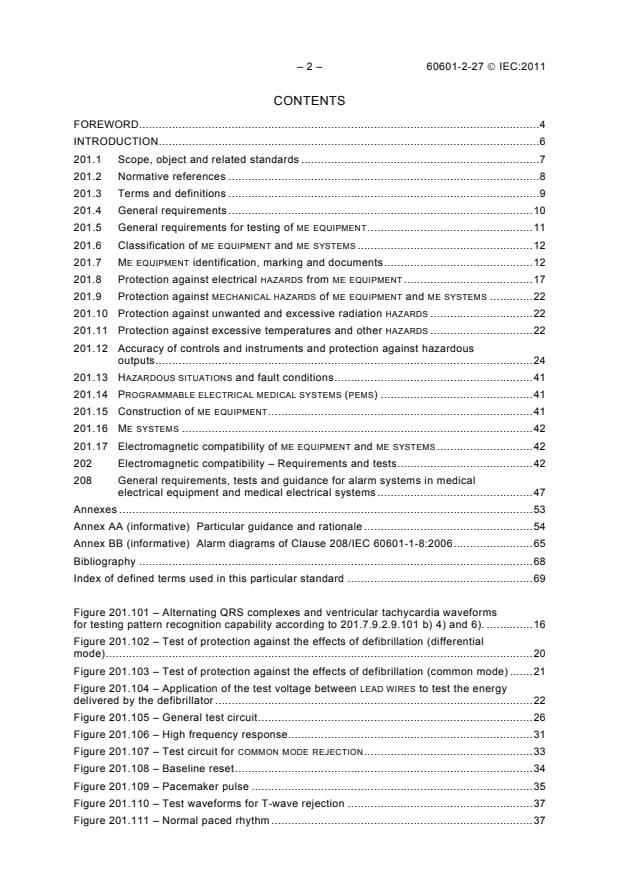
Figure 201.101 – Alternating QRS complexes and ventricular tachycardia waveforms
for testing pattern recognition capability according to 201.7.9.2.9.101 b) 4) and 6). . 16
Figure 201.102 – Test of protection against the effects of defibrillation (differential
mode) . 20
Figure 201.103 – Test of protection against the effects of defibrillation (common mode) . 21
Figure 201.104 – Application of the test voltage between LEAD WIRES to test the energy
delivered by the defibrillator . 22
Figure 201.105 – General test circuit . 26
Figure 201.106 – High frequency response . 31
Figure 201.107 – Test circuit for COMMON MODE REJECTION . 33
Figure 201.108 – Baseline reset . 34
Figure 201.109 – Pacemaker pulse . 35
Figure 201.110 – Test waveforms for T-wave rejection . 37
Figure 201.111 – Normal paced rhythm . 37
60601-2-27 IEC:2011 – 3 –
Figure 201.112 – Ineffective pacing (heart rate at 30 1/min, pacemaker pulse at
80 1/min) . 38
Figure 201.113 – Simulated QRS complex . 38
Figure 201.114 – Pacemaker test circuit . 38
Figure 202.101 – Test layout for radiated and conducted EMISSION test and radiated
immunity test . 43
Figure 202.102 – Set-up for radiated IMMUNITY test . 44
Figure 202.103 – Test circuit for HF surgery protection measurement . 46
Figure 202.104 – Test setup for HF surgery protection measurement . 47
Figure AA.1 – APPLIED PART with multiple PATIENT CONNECTIONS . 56
Figure BB.101 – NON-LATCHING ALARM SIGNALS without ALARM RESET . 65
Figure BB.102 – NON-LATCHING ALARM SIGNALS with ALARM RESET . 65
Figure BB.103 – LATCHING ALARM SIGNALS with ALARM RESET . 66
Figure BB.104 – Two ALARM CONDITIONS with ALARM RESET . 66
Table 201.101 – ESSENTIAL PERFORMANCE requirements . 11
Table 201.102 – ELECTRODES and NEUTRAL ELECTRODE, their position, identification and
colour . 13
Table 201.103 – Protection against the effect of defibrillation (test conditions) . 19
Table 208.101 – ALARM CONDITION priorities . 48
Table 208.102 – Characteristics of the BURST of auditory ALARM SIGNALS . 49
Table AA.1 – Electrode positions and electrical strength requirements . 55
– 4 – 60601-2-27 IEC:2011
INTERNATIONAL ELECTROTECHNICAL COMMISSION
____________
MEDICAL ELECTRICAL EQUIPMENT –
Part 2-27: Particular requirements for the basic safety and essential
performance of electrocardiographic monitoring equipment
FOREWORD
1) The International Electrotechnical Commission (IEC) is a worldwide organization for standardization comprising
all national electrotechnical committees (IEC National Committees). The object of IEC is to promote
international co-operation on all questions concerning standardization in the electrical and electronic fields. To
this end and in addition to other activities, IEC publishes International Standards, Technical Specifications,
Technical Reports, Publicly Available Specifications (PAS) and Guides (hereafter referred to as “IEC
Publication(s)”). Their preparation is entrusted to technical committees; any IEC National Committee interested
in the subject dealt with may participate in this preparatory work. International, governmental and non-
governmental organizations liaising with the IEC also participate in this preparation. IEC collaborates closely
with the International Organization for Standardization (ISO) in accordance with conditions determined by
agreement between the two organizations.
2) The formal decisions or agreements of IEC on technical matters express, as nearly as possible, an international
consensus of opinion on the relevant subjects since each technical committee has representation from all
interested IEC National Committees.
3) IEC Publications have the form of recommendations for international use and are accepted by IEC National
Committees in that sense. While all reasonable efforts are made to ensure that the technical content of IEC
Publications is accurate, IEC cannot be held responsible for the way in which they are used or for any
misinterpretation by any end user.
4) In order to promote international uniformity, IEC National Committees undertake to apply IEC Publications
transparently to the maximum extent possible in their national and regional publications. Any divergence
between any IEC Publication and the corresponding national or regional publication shall be clearly indicated in
the latter.
5) IEC itself does not provide any attestation of conformity. Independent certification bodies provide conformity
assessment services and, in some areas, access to IEC marks of conformity. IEC is not responsible for any
services carried out by independent certification bodies.
6) All users should ensure that they have the latest edition of this publication.
7) No liability shall attach to IEC or its directors, employees, servants or agents including individual experts and
members of its technical committees and IEC National Committees for any personal injury, property damage or
other damage of any nature whatsoever, whether direct or indirect, or for costs (including legal fees) and
expenses arising out of the publication, use of, or reliance upon, this IEC Publication or any other IEC
Publications.
8) Attention is drawn to the Normative references cited in this publication. Use of the referenced publications is
indispensable for the correct application of this publication.
9) Attention is drawn to the possibility that some of the elements of this IEC Publication may be the subject of
patent rights. IEC shall not be held responsible for identifying any or all such patent rights.
International standard IEC 60601-2-27 has been prepared by IEC subcommittee 62D:
Electromedical equipment of IEC technical committee 62: Electrical equipment in medical
practice.
This third edition cancels and replaces the second edition of IEC 60601-2-27 published in
2005. This edition constitutes a technical revision to the new structure of IEC 60601-1:2005
(third edition).
The text of this particular standard is based on the following documents:
FDIS Report on voting
62D/900/FDIS 62D/913/RVD
Full information on the voting for the approval of this particular standard can be found in the
report on voting indicated in the above table.
60601-2-27 IEC:2011 – 5 –
This publication has been drafted in accordance with the ISO/IEC Directives, Part 2.
In this standard, the following print types are used:
– Requirements and definitions: roman type.
– Test specifications: italic type.
– Informative material appearing outside of tables, such as notes, examples and references: in smaller type.
Normative text of tables is also in a smaller type.
– TERMS DEFINED IN CLAUSE 3 OF THE GENERAL STANDARD, IN THIS PARTICULAR STANDARD OR AS
NOTED: SMALL CAPITALS.
In referring to the structure of this standard, the term
– “clause” means one of the seventeen numbered divisions within the table of contents,
inclusive of all subdivisions (e.g. Clause 7 includes subclauses 7.1, 7.2, etc.);
– “subclause” means a numbered subdivision of a clause (e.g. 7.1, 7.2 and 7.2.1 are all
subclauses of Clause 7).
References to clauses within this standard are preceded by the term “Clause” followed by the
clause number. References to subclauses within this particular standard are by number only.
In this standard, the conjunctive “or” is used as an “inclusive or” so a statement is true if any
combination of the conditions is true.
The verbal forms used in this standard conform to usage described in Annex H of the ISO/IEC
Directives, Part 2. For the purposes of this standard, the auxiliary verb:
– “shall” means that compliance with a requirement or a test is mandatory for compliance
with this standard;
– “should” means that compliance with a requirement or a test is recommended but is not
mandatory for compliance with this standard;
– “may” is used to describe a permissible way to achieve compliance with a requirement or
test.
An asterisk (*) as the first character of a title or at the beginning of a paragraph or table title
indicates that there is guidance or rationale related to that item in Annex AA.
A list of all parts of the IEC 60601 series, published under the general title Medical electrical
equipment, can be found on the IEC website.
The committee has decided that the contents of this publication will remain unchanged until
the stability date indicated on the IEC web site under "http://webstore.iec.ch" in the data
related to the specific publication. At this date, the publication will be
• reconfirmed,
• withdrawn,
• replaced by a revised edition, or
• amended.
The contents of the corrigendum of May 2012 have been included in this copy.
– 6 – 60601-2-27 IEC:2011
INTRODUCTION
This particular standard concerns the BASIC SAFETY and ESSENTIAL PERFORMANCE of
ELECTROCARDIOGRAPHIC MONITORING EQUIPMENT. It amends and supplements IEC 60601-1
(third edition, 2005): Medical electrical equipment – Part 1: General requirements for basic
safety and essential performance hereinafter referred to as the general standard.
The aim of this third edition is to bring this particular standard up to date with reference to the
third edition of the general standard through reformatting and technical changes.
The requirements of this particular standard take priority over those of the general standard.
A “General guidance and rationale” for the more important requirements of this particular
standard is included in Annex AA. It is considered that knowledge of the reasons for these
requirements will not only facilitate the proper application of the standard but will, in due
course, expedite any revision necessitated by changes in clinical practice or as a result of
developments in technology. However, Annex AA does not form part of the requirements of
this standard.
60601-2-27 IEC:2011 – 7 –
MEDICAL ELECTRICAL EQUIPMENT –
Part 2-27: Particular requirements for the basic safety and essential
performance of electrocardiographic monitoring equipment
201.1 Scope, object and related standards
1)
Clause 1 of the general standard applies, except as follows:
201.1.1 *Scope
Replacement:
This particular standard applies to BASIC SAFETY and ESSENTIAL PERFORMANCE of
ELECTROCARDIOGRAPHIC (ECG) MONITORING EQUIPMENT as defined in 201.3.63 and hereinafter
also referred to as ME EQUIPMENT. This particular standard applies to ME EQUIPMENT used in a
hospital environment as well as when used outside the hospital environment, such as in
ambulances and air transport. This particular standard also applies to ECG telemetry systems
used in a hospital environment.
ME EQUIPMENT intended for use under extreme or uncontrolled environmental conditions
outside the hospital environment, such as in ambulances and air transport, shall comply with
this particular standard. Additional standards may apply to ME EQUIPMENT for those
environments of use.
This standard is not applicable to electrocardiographic monitors for home use. However,
MANUFACTURERS should consider using relevant clauses of this standard as appropriate for
their INTENDED USE.
Ambulatory ("Holter") monitors, fetal heart rate monitoring, pulse plethysmographic devices,
and other ECG recording equipment are outside the scope of this particular standard.
201.1.2 Object
Replacement:
The object of this particular standard is to establish BASIC SAFETY and ESSENTIAL PERFORMANCE
requirements for ELECTROCARDIOGRAPHIC (ECG) MONITORING EQUIPMENT as defined in 201.3.63.
201.1.3 Collateral standards
Addition:
This particular standard refers to those applicable collateral standards that are listed in
Clause 2 of the general standard and Clause 201.2 of this particular standard.
IEC 60601-1-2:2007 and IEC 60601-1-8:2006 apply as modified in Clauses 202 and 208
respectively. IEC 60601-1-3 does not apply. All other published collateral standards in the
IEC 60601-1 series apply as published.
—————————
1)
The general standard is IEC 60601-1:2005, Medical electrical equipment – Part 1: General requirements for
basic safety and essential performance
– 8 – 60601-2-27 IEC:2011
201.1.4 Particular standards
Replacement:
In the IEC 60601 series, particular standards may modify, replace or delete requirements
contained in the general standard and collateral standards as appropriate for the particular
ME EQUIPMENT under consideration, and may add other BASIC SAFETY and ESSENTIAL
PERFORMANCE requirements.
A requirement of a particular standard takes priority over the general standard.
For brevity, IEC 60601-1 is referred to in this particular standard as the general standard.
Collateral standards are referred to by their document number.
The numbering of clauses and subclauses of this particular standard corresponds to that of
the general standard with the prefix “201” (e.g. 201.1 in this standard addresses the content
of Clause 1 of the general standard) or applicable collateral standard with the prefix “20x”
where x is the final digit(s) of the collateral standard document number (e.g. 202.4 in this
particular standard addresses the content of Clause 4 of the IEC 60601-1-2 collateral
standard, 203.4 in this particular standard addresses the content of Clause 4 of the
IEC 60601-1-3 collateral standard, etc.). The changes to the text of the general standard are
specified by the use of the following words:
“Replacement” means that the clause or subclause of the general standard or applicable
collateral standard is replaced completely by the text of this particular standard.
“Addition” means that the text of this particular standard is additional to the requirements of
the general standard or applicable collateral standard.
“Amendment” means that the clause or subclause of the general standard or applicable
collateral standard is amended as indicated by the text of this particular standard.
Subclauses, figures or tables which are additional to those of the general standard are
numbered starting from 201.101. However due to the fact that definitions in the general
standard are numbered 3.1 through 3.139, additional definitions in this standard are
numbered beginning from 201.3.201. Additional annexes are lettered AA, BB, etc., and
additional items aa), bb), etc.
Subclauses, figures or tables which are additional to those of a collateral standard are
numbered starting from 20x, where “x” is the number of the collateral standard, e.g. 202 for
IEC 60601-1-2, 203 for IEC 60601-1-3, etc.
The term “this standard” is used to make reference to the general standard, any applicable
collateral standards and this particular standard taken together.
Where there is no corresponding clause or subclause in this particular standard, the clause or
subclause of the general standard or applicable collateral standard, although possibly not
relevant, applies without modification; where it is intended that any part of the general
standard or applicable collateral standard, although possibly relevant, is not to be applied, a
statement to that effect is given in this particular standard.
201.2 Normative references
Clause 2 of the general standard applies, except as follows:
Replacement:
60601-2-27 IEC:2011 – 9 –
IEC 60601-1-2:2007, Medical electrical equipment – Part 1-2: General requirements for basic
safety and essential performance – Collateral standard: Electromagnetic compatibility –
Requirements and tests
IEC 60601-1-8:2008, Medical electrical equipment – Part 1-8: General requirements for basic
safety and essential performance – Collateral standard: General requirements, tests and
guidance for alarm systems in medical electrical equipment and medical electrical systems
Addition:
IEC 60601-2-2:2009, Medical electrical equipment – Part 2-2: Particular requirements for the
basic safety and essential performance of high frequency surgical equipment and high
frequency surgical accessories
2)
IEC 60601-2-25:___ Medical electrical equipment – Part 2-25: Particular requirements for
the basic safety and essential performance of electrocardiographs
3)
IEC 60601-2-49___ , Medical electrical equipment - Part 2-49: Particular requirements for
the basic safety and essential performance of multifunction patient monitoring equipment
NOTE Informative references are listed in the bibliography beginning on page 68.
201.3 Terms and definitions
NOTE An index of defined terms is found beginning on page 69.
For the purposes of this document, the terms and definitions given in IEC 60601-1:2005
apply, except as follows:
Replacement:
201.3.63
ELECTROCARDIOGRAPHIC (ECG) MONITORING EQUIPMENT
ME EQUIPMENT
device including ELECTRODES, LEAD WIRES and interconnecting means for the monitoring
and/or recording of heart action potentials from one PATIENT and displaying the resultant data
NOTE An ECG telemetry transmitter and receiver including its associated display of one PATIENT’S data forms an
ME EQUIPMENT. ECG telemetry is typically used to display that data of a PATIENT at a remote location.
Implementations of these remote displays frequently display data from several PATIENTS at the same time, but
logically separate the data of each PATIENT on such a display.
Additional definitions:
201.3.201
COMMON MODE REJECTION (CMR)
ability of the ME EQUIPMENT including the PATIENT CABLE and ELECTRODES, high frequency
filters, protection networks, amplifier input, etc., to discriminate between signals with
differences between amplifier inputs (differential signal) and signals common to the amplifier
inputs (common signal), in the presence of an ELECTRODE impedance imbalance
201.3.202
ELECTRODE
sensor in contact with a specified part of the body to detect electrical cardiac activity
—————————
2)
Second edition, to be published.
3)
Second edition, to be published.
– 10 – 60601-2-27 IEC:2011
201.3.203
ELECTROCARDIOGRAM (ECG)
graphical presentation of one or more LEADS over time
201.3.204
GAIN
ratio of the amplitude of the output signal to the amplitude of the input signal
NOTE GAIN is expressed in mm/mV
201.3.205
GAIN INDICATOR
graphical indication on a PERMANENT DISPLAY or NON-PERMANENT DISPLAY that allows the
clinical OPERATOR to visually estimate the amplitude of the ECG input signal
201.3.206
LEAD
voltage between ELECTRODES
201.3.207
LEAD SELECTOR
system to select certain LEADS
201.3.208
LEAD WIRE
cable connected between an ELECTRODE and either a PATIENT CABLE or the ME EQUIPMENT
201.3.209
NEUTRAL ELECTRODE
reference point for differential amplifiers and/or interference suppression circuits, not intended
to be used to calculate any LEAD
NOTE A NEUTRAL ELECTRODE is sometimes referred to as a reference ELECTRODE.
201.3.210
NOISE
unwanted signals of any frequency present in the ELECTROCARDIOGRAM
201.3.211
NON-PERMANENT DISPLAY
a non-persistent presentation of an ELECTROCARDIOGRAM (ECG)
NOTE An example of NON-PERMANENT DISPLAY is a LCD screen across which an ECG waveform is moving or a
transient presentation of an ECG waveform.
201.3.212
PATIENT CABLE
multiwire cable used to connect LEAD WIRES to ME EQUIPMENT
201.3.213
PERMANENT DISPLAY
a persistent presentation of an ELECTROCARDIOGRAM (ECG)
NOTE Examples of PERMANENT DISPLAYS are hardcopy printouts of an ECG.
201.4 General requirements
Clause 4 of the general standard applies, except as follows:
60601-2-27 IEC:2011 – 11 –
201.4.3 ESSENTIAL PERFORMANCE
Addition:
201.4.3.101 Additional ESSENTIAL PERFORMANCE requirements
Additional ESSENTIAL PERFORMANCE requirements for ELECTROCARDIOGRAPHIC MONITORING
EQUIPMENT are found in the subclauses listed in Table 201.101
Table 201.101 – ESSENTIAL PERFORMANCE requirements
Requirement Subclause
Defibrillator protection 201.8.5.5.1
Interruption of the power supply / SUPPLY MAINS to ME EQUIPMENT 201.11.8
Protection against depletion of battery 201.11.8.101
ESSENTIAL PERFORMANCE of ME EQUIPMENT 201.12.1.101
Electrosurgery interference 202.6.2.101
Time to alarm for heart rate ALARM CONDITIONS 208.6.6.2.103
TECHNICAL ALARM CONDITIONS indicating inoperable ME EQUIPMENT 208.6.6.2.104
201.5 General requirements for testing of ME EQUIPMENT
Clause 5 of the general standard applies, except as follows:
201.5.4 Other conditions
Addition:
Unless otherwise stated, tests shall be carried out with the ACCESSORIES and the recording
materials specified by the MANUFACTURER.
For ME EQUIPMENT with an INTERNAL ELECTRICAL POWER SOURCE, if the test result is affected by
the INTERNAL ELECTRICAL POWER SOURCE voltage, then the test shall be performed using the
least favourable INTERNAL ELECTRICAL POWER SOURCE voltage specified by the MANUFACTURER.
If necessary for the purpose of conducting the test, an external battery or d.c. power supply
may be used to provide the necessary test voltage.
The values used in test circuits, unless otherwise specified, shall have at least an accuracy as
given below:
– resistors: ±1 %;
– capacitors: ±10 %;
– inductors: ±10 %;
– test voltages: ±1 %
201.5.8 *Sequence of tests
Amendment:
Tests called for in 201.8.5.5.1 of this particular standard and in 8.5.5 of the general standard
shall be carried out prior to the LEAKAGE CURRENT and dielectric strength tests described in
subclauses 8.7 and 8.8 of the general standard and prior to the tests specified in subclauses
201.11.6.5 and 201.12.1.101 of this particular standard. The tests for subclauses
201.12.1.101.7, 201.12.1.101.9 and 201.12.1.101.16 b) shall be performed (in that order)
before the tests for the remaining subclauses of 201.12.1.101 are performed.
– 12 – 60601-2-27 IEC:2011
201.6 Classification of ME EQUIPMENT and ME SYSTEMS
Clause 6 of the general standard applies, except as follows:
201.6.2 *Protection against electric shock
Replacement of the last paragraph:
APPLIED PARTS shall be classified as TYPE CF APPLIED PARTS (see 7.2.10 and 8.3 of the general
standard). APPLIED PARTS shall be classified as DEFIBRILLATION-PROOF APPLIED PARTS (see
8.5.5 of the general standard).
201.6.6 Mode of operation
Replacement:
ME EQUIPMENT shall be classified for CONTINUOUS OPERATION (see 7.2.11 of the general
standard).
201.7 ME EQUIPMENT identification, marking and documents
Clause 7 of the general standard applies, except as follows:
201.7.2.4 ACCESSORIES
Addition:
201.7.2.4.101 Marking of LEAD WIRES
In order to minimize the possibility of incorrect connections the PATIENT CABLE where the LEAD
WIRES are connected shall be permanently marked with at least one of the identifiers
(ELECTRODE identifier and/or colour code) specified in Table 201.102. Both ends of detachable
LEAD WIRES shall be permanently marked with the same identifiers.
60601-2-27 IEC:2011 – 13 –
Table 201.102 – ELECTRODES and NEUTRAL ELECTRODE,
their position, identification and colour
Code 1 (usually European) Code 2 (usually American) ELECTRODE position on body surface
LEAD ELECTRODE ELECTRODE ELECTRODE ELECTRODE
System Identifier Colour code Identifier Colour code
R Red RA White Right arm
Limb L Yellow LA Black Left arm
F Green LL Red Left leg
C White V Brown Single movable chest electrode
C1 White/red V1 Brown/Red Fourth intercostal space at right border
of sternum
C2 White/yellow V2 Brown/Yellow Fourth intercostal space at left border
of sternum
Chest
accord- C3 White/green V3 Brown/Green Fifth rib between C2 and C4
ing to
C4 White/brown V4 Brown/Blue Fifth intercostal space on left
Wilson
midclavicular line
C5 White/black V5 Brown/Orange Left anterior axillary line at the
horizontal level of C4
C6 White/violet V6 Brown/Violet Left midaxillary line at the horizontal
level of C4
a
I Light blue/red I Orange/Red At the right midaxillary line
a
E Light E Orange/Yellow At the front midline
blue/yellow
C Light blue/green C Orange/Green Between the front midline and left
Position
midaxillary line of 45 degrees
accor-
ding to
a
A Light blue/brown A Orange/Brown At the left midaxillary line
Frank
a
M Light blue/black M Orange/Black At the back midline
H Light blue/violet H Orange/Violet On the back of the neck
F Green F Red On the left leg
N or RF Black RL Green Right leg (NEUTRAL ELECTRODE)
a
Located at the transverse level of the ventricles, if known, or otherwise at the fifth intercostal space
201.7.9.2.9 Operating instructions
Addition:
201.7.9.2.9.101 Additional instructions for use
a) The operating instructions shall include the following:
1) the INTENDED USE including the environment of use;
2) that conductive parts of ELECTRODES and associated connectors for APPLIED PARTS,
including the NEUTRAL ELECTRODE, should not contact any other conductive parts
including earth;
3) instructions for connecting a POTENTIAL EQUALIZATION CONDUCTOR, if applicable;
4) * precautions to take when using a defibrillator on a PATIENT; a description of how the
discharge of a defibrillator affects the ME EQUIPMENT; a warning that defibrillator
protection requires use of MANUFACTURER specified ACCESSORIES including
ELECTRODES, LEAD WIRES and PATIENT CABLES. The specification (or type-number) of
such ACCESSORIES (see 201.8.5.5.1) shall be disclosed;
5) advice to the clinical OPERATOR regarding whether the ME EQUIPMENT incorporates
means to protect the PATIENT against burns when used with HIGH-
FREQUENCY (HF) SURGICAL EQUIPMENT. Advice shall be given regarding the location of
– 14 – 60601-2-27 IEC:2011
ELECTRODES and LEAD WIRES etc, to reduce the hazards of burns in the event of a
defect in the neutral electrode connection of the HF SURGICAL EQUIPMENT;
NOTE ‘Neutral electrode’ here refers to a term defined in 201.3.227 of IEC 60601-2-2.
6) the choice and application of specified PATIENT CABLES and LEAD WIRES; the choice
and application of ELECTRODES;
7) * advice regarding testing of the ME EQUIPMENT and ACCESSORIES on a daily basis (by
the clinical OPERATOR) and on a scheduled basis (as a service activity). Emphasis
should be placed on how the clinician may test visual and auditory ALARM SIGNALS;
8) explanation of TECHNICAL ALARM CONDITIONS (see 208.6.8.101);
9) explanation of how the heart-rate value may be affected by the operation of cardiac
pacemaker pulses or by cardiac arrhythmias;
10 the default settings (e.g. ALARM SETTINGS, modes, and filter);
11) the configuration procedure that allows the ALARM SIGNAL inactivation states (ALARM
PAUSED, AUDIO PAUSED, ALARM OFF, AUDIO OFF) and the function ALARM RESET to be
controlled remotely (see 208.6.11.101), if provided;
12) simple fault finding methods for troubleshooting problems by which the clinical
OPERATOR can locate problems if the ME EQUIPMENT appears to be functioning
incorrectly;
NOTE This relates to simple difficulties, not to technical malfunctions.
13) the amplitude, pulse width, and overshoot of pacemaker pulses that are rejected by
the ME EQUIPMENT (see 201.12.1.101.13);
14) the subsequent operation of the ME EQUIPMENT after interruption of SUPPLY MAINS
exceeding 30 s (see 201.11.8);
15) description of how to disable ALARM SIGNALS for TECHNICAL ALARM CONDITIONS if LEAD
WIRES or modules are intentionally disconnected by the clinical OPERATOR;
16) advice on the preferred ALARM SETTINGS and configurations of the ALARM SYSTEM
when its INTENDED USE includes the monitoring of PATIENTS that are not continuously
attended by a clinical OPERATOR.
b) The following performance characteristics shall be disclosed.
1) Respiration, leads-off sensing and active NOISE suppression. For ME EQUIPMENT
designed to intentionally apply a current to the PATIENT for the purpose of respiration
sensing, leads-off sensing or active NOISE suppression, the MANUFACTURER shall
disclose the waveforms (in the form of voltage, current, frequency, or other
appropriate electrical parameters) which are applied to the PATIENT.
2) Tall T-wave rejection capability. Disclosure shall be made of the maximum T-wave
amplitude that can be rejected, according to subclause 201.12.1.101.17.
3) Heart rate averaging. The type of averaging done to compute the minute heart rate
and, if applicable, the updating rate of the display shall be disclosed.
4) Heart rate meter accuracy and response to irregular rhythm. Disclosure shall be
made of the indicated heart rate, after a 20 s ME EQUIPMENT stabilization period, for
the four types of alternating ECG complexes A1 to A4 described in Figure 201.101.
5) Response time of heart rate meter to change in heart rate. Disclosure shall be
made of the maximum time, to the nearest second and including the update time of
the ME EQUIPMENT, required for the heart rate meter to indicate a new heart rate for a
step increase from 80 1/min to 120 1/min and a step decrease from 80 1/min to
40 1/min. The response time is measured from the time of the first QRS complex of
the new rate to the time the heart rate meter first reads 37 % of the heart rate
indication at 80 1/min plus (a) for the step increase, 63 % of the steady state
indication at 120 1/min or greater, and (b) for the step decrease, 63 % of the steady
state indication at 40 1/min or less.
6) Time to alarm for tachycardia. Disclosure shall be made of the time to alarm for the
two ventricular tachycardia waveforms B1 and B2 shown in Figure 201.101, following
60601-2-27 IEC:2011 – 15 –
a normal 80 1/min rate with the upper ALARM LIMIT set closest to 100 1/min and the
lower ALARM LIMIT set closest to 60 1/min. Disclosure shall also be made of
ME EQUIPMENT failure to alarm on either of these waveforms. In addition, the time to
alarm shall be disclosed for these waveforms when their amplitudes are one-half and
twice the indicated amplitudes.
7) Pacemaker pulse rejection warning label. The following or a similar warning shall
be displayed in the instructions for use: “WARNING—PACEMAKER PATIENTS. Rate
meters may continue to count the pacemaker rate during occurrences of cardiac
arrest or some arrhythmias. Do not rely entirely upon heart rate meter ALARM
SIGNALS. Keep pacemaker PATIENTS under close surveillance. See this manual for
disclosure of the pacemaker pulse rejection capability of this instrument” (see
201.12.1.101.13).
8) Visual and auditory ALARM SIGNAL disclosure. The MANUFACTURER shall disclose
the location where ALARM SIGNALS are displayed (i.e., central station, bedside, or
both), colour, size, and modulation (flashing), and the frequency or other descriptive
characteristics of the sounds.
9) INTERNALLY POWERED ME EQUIPMENT. The minimum operating time of the
ME EQUIPMENT shall be disclosed, provided that the battery is new and fully charged.
If rechargeable batteries are used, the MANUFACTURER shall disclose the battery
charge time from depletion to 90 % charge in NORMAL USE and battery conditioning, if
applicable. Specific advice shall be given on how to determine when the battery
needs to be replaced. In addition, the function of the indicator of subclause
201.15.4.4.101 and the battery charging procedure shall also be disclosed.
10) Auxiliary output. Disclosure shall be made regarding proper connection of other
devices to the auxiliary ECG signal output, if provided. The MANUFACTURER shall also
disclose the bandwidth, GAIN and propagation delay time of all auxiliary outputs.
MANUFACTURERS also shall disclose how internal pacemaker pulses are represented
in the auxiliary output (their inclusion or absence, and whether enhanced pacemaker
pulses are summed with the ECG signal).
11) Pacemaker pulse rejection disabling. If clinical OPERATOR accessible controls are
provided that disable the pacemaker pulse rejection capability of the ME EQUIPMENT,
the mode selection and whether the pacemaker pulse rejection (see
201.12.1.101.12/13) of the cardiotach is affected by this mode shall be disclosed.
12) Sweep speeds. The available time bases of PERMANENT and NON-PERMANENT
DISPLAYS of the ME EQUIPMENT shall be disclosed.
– 16 – 60601-2-27 IEC:2011
Grid intervals: 0,2 s, 0,5 mV
A1
IEC 603/11
Ventricular bigeminy; the total duration for the double complex is 1 500 ms; the
rate is 80 1/min if all QRS complexes are counted and 40 1/min if only the larger R
waves or S waves are counted.
A2
IEC 604/11
Slow alternating ventricular bigeminy; the rate is 60 1/min if all QRS complexes
are counted and 30 1/min if only the large complexes are counted.
A3
IEC 605/11
Rapid alternating ventricular bigeminy; the rate is 120 1/min if all QRS complexes
are counted.
A4
IEC 606/11
Bidirectional systoles; the rate is 90 1/min if all QRS complexes are counted and
45 1/min if only the large complexes are counted.
B1
IEC 607/11
Ventricular tachycardia; the amplitude is 1 mV peak-to-valley (p-v) and heart rate
is 206 1/min.
B2
IEC 608/11
Ventricular tachycardia; the amplitude is 2 mV p-v and heart rate is 195 1/min.
NOTE These ECG test patterns (A1-B2) with defined amplitudes and time scale are available from
http://www.physionet.org. GAIN or GAIN controls may be adjusted for each waveform.
Figure 201.101 – Alternating QRS complexes and ventricular tachycardia waveforms for
testing patt
...