

EN 649:1996/A1:2003
(Amendment)Resilient floor coverings - Homogeneous and heterogeneous polyvinyl chloride floor coverings - Specification
- Abstract
This European Standard specifies the characteristics of homogeneous and heterogeneous floor coverings, based on polyvinyl chloride and modifications thereof, supplied in either tile or roll form. To encourage the consumer to make an informed choice, the standard includes a classification system (see EN 685) based on intensity of use, which shows where these floor coverings should give satisfactory service. It also specifies requirements for marking.
- Status
- Withdrawn
- Publication Date
- 28-Oct-2003
- Withdrawal Date
- 08-Mar-2011
- Technical Committee
- CEN/TC 134 - Resilient and textile floor coverings
- Drafting Committee
- CEN/TC 134/WG 3 - Plastics floor coverings
- Current Stage
- 9960 - Withdrawal effective - Withdrawal
- Start Date
- 09-Mar-2011
- Completion Date
- 09-Mar-2011

Relations
- Effective Date
- 27-Jun-2009
- Effective Date
- 08-Jun-2022
Frequently Asked Questions
EN 649:1996/A1:2003 is a amendment published by the European Committee for Standardization (CEN). Its full title is "Resilient floor coverings - Homogeneous and heterogeneous polyvinyl chloride floor coverings - Specification". This standard covers: This European Standard specifies the characteristics of homogeneous and heterogeneous floor coverings, based on polyvinyl chloride and modifications thereof, supplied in either tile or roll form. To encourage the consumer to make an informed choice, the standard includes a classification system (see EN 685) based on intensity of use, which shows where these floor coverings should give satisfactory service. It also specifies requirements for marking.
This European Standard specifies the characteristics of homogeneous and heterogeneous floor coverings, based on polyvinyl chloride and modifications thereof, supplied in either tile or roll form. To encourage the consumer to make an informed choice, the standard includes a classification system (see EN 685) based on intensity of use, which shows where these floor coverings should give satisfactory service. It also specifies requirements for marking.
EN 649:1996/A1:2003 is classified under the following ICS (International Classification for Standards) categories: 97.150 - Floor coverings. The ICS classification helps identify the subject area and facilitates finding related standards.
EN 649:1996/A1:2003 has the following relationships with other standards: It is inter standard links to EN 649:2011, EN 649:1996. Understanding these relationships helps ensure you are using the most current and applicable version of the standard.
EN 649:1996/A1:2003 is associated with the following European legislation: EU Directives/Regulations: 305/2011, 89/106/EEC; Standardization Mandates: M/BC/CEN/91/6. When a standard is cited in the Official Journal of the European Union, products manufactured in conformity with it benefit from a presumption of conformity with the essential requirements of the corresponding EU directive or regulation.
EN 649:1996/A1:2003 is available in PDF format for immediate download after purchase. The document can be added to your cart and obtained through the secure checkout process. Digital delivery ensures instant access to the complete standard document.
Standards Content (Sample)
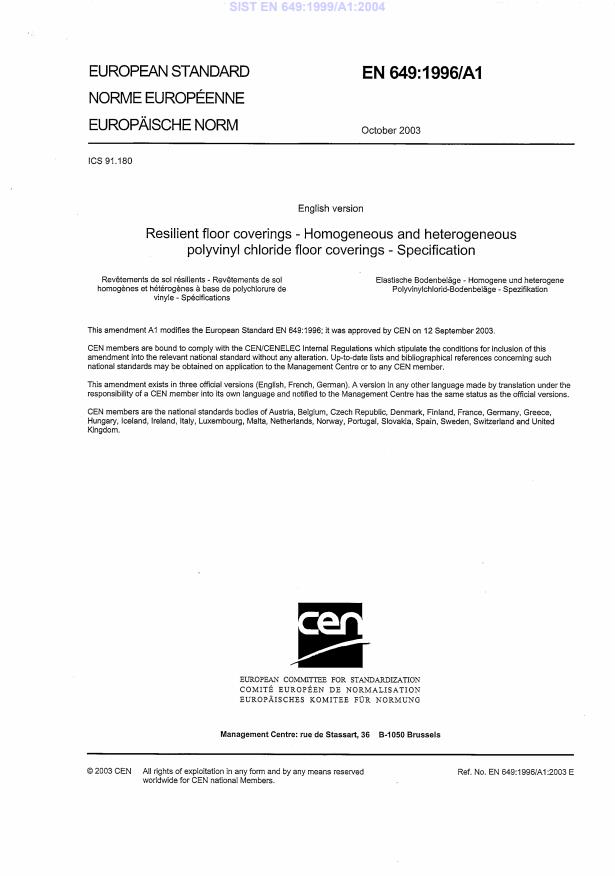
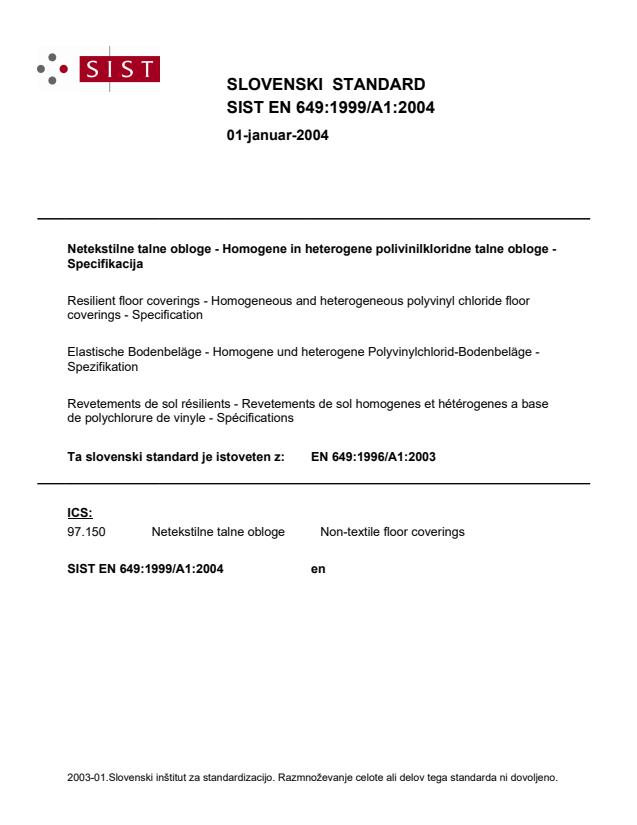
SLOVENSKI STANDARD
01-januar-2004
Netekstilne talne obloge - Homogene in heterogene polivinilkloridne talne obloge -
Specifikacija
Resilient floor coverings - Homogeneous and heterogeneous polyvinyl chloride floor
coverings - Specification
Elastische Bodenbeläge - Homogene und heterogene Polyvinylchlorid-Bodenbeläge -
Spezifikation
Revetements de sol résilients - Revetements de sol homogenes et hétérogenes a base
de polychlorure de vinyle - Spécifications
Ta slovenski standard je istoveten z: EN 649:1996/A1:2003
ICS:
97.150 Netekstilne t
...