

EN 145:1997
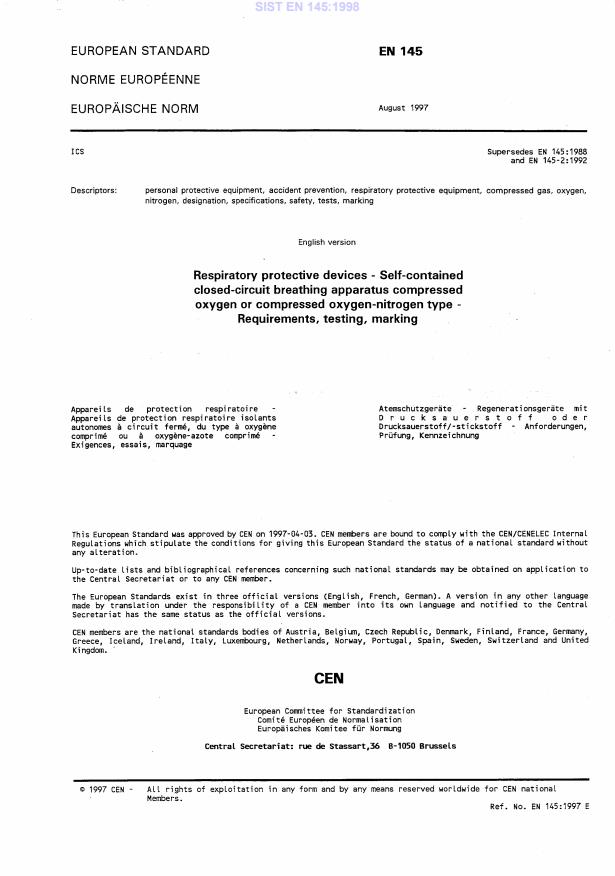
(Main)Respiratory protective devices - Self-contained closed-circuit breathing apparatus compressed oxygen or compressed oxygen-nitrogen type - Requirements, testing, marking
- Abstract
This European Standard specifies minimum requirements for self-contained closed-circuit breathing apparatus, compressed oxygen (O2) and compressed oxygen-nitrogen (O2 - N2) types, used as respiratory protective devices, except escape apparatus and diving apparatus. Laboratory and practical performance tests are included for the assessment of compliance with the requirements.
- Status
- Published
- Publication Date
- 19-Aug-1997
- Technical Committee
- CEN/TC 79 - Respiratory protective devices
- Drafting Committee
- CEN/TC 79/WG 6 - Self-contained breathing apparatus
- Current Stage
- 9093 - Decision to confirm - Review Enquiry
- Start Date
- 03-Dec-2021
- Completion Date
- 30-Sep-2026
- Directive
- 2016/425 - Regulation (EU) 2016/425 of the European Parliament and of the Council of 9 March 2016 on personal protective equipment and repealing Council Directive 89/686/EECOJ Ref: C, C 113 OJ Date: 27-Mar-2018
89/686/EEC - Personal protective equipment (PPE)OJ Ref: C 203, C 247, C 306, C 46, C 52, C 91 OJ Date: 19-Feb-1998

Overview
EN 145:1997 (CEN) - Respiratory protective devices - Self-contained closed-circuit breathing apparatus compressed oxygen or compressed oxygen‑nitrogen type - Requirements, testing, marking - specifies minimum requirements for self-contained closed‑circuit breathing apparatus (closed‑circuit SCBA) of the compressed oxygen (O2) and compressed oxygen‑nitrogen (O2–N2) types. The standard applies to respiratory protective devices used for work and rescue operations, excluding escape apparatus and diving apparatus. EN 145:1997 includes provisions for design, performance and laboratory and practical performance tests to verify compliance, and sets requirements for marking and documentation.
Key Topics
- Scope and definitions relevant to closed‑circuit self‑contained breathing apparatus (SCBA closed‑circuit).
- Minimum performance requirements for devices using compressed oxygen or oxygen‑nitrogen mixtures.
- Compliance testing: the standard requires laboratory and practical performance tests to assess conformity with requirements.
- Marking and documentation obligations to ensure traceability, user safety information and conformity evidence.
- Design and safety considerations covering functional reliability, user interface and maintenance aspects (as required for respiratory protective devices).
Applications and Users
EN 145:1997 is primarily used by organizations involved in the specification, manufacture, testing and procurement of closed‑circuit breathing apparatus:
- Manufacturers and designers of closed‑circuit SCBA who need to demonstrate compliance with European minimum requirements.
- Testing and certification bodies that perform laboratory and practical assessments against standard criteria.
- Procurement officers and safety managers in emergency services, industrial plants, rescue teams and hazardous materials operations selecting respiratory protective devices.
- Regulatory and compliance teams ensuring that supplied equipment meets European standardization requirements.
This standard helps ensure that self‑contained closed‑circuit breathing apparatus perform reliably, are properly marked, and can be assessed through standardized testing - supporting safer use in professional respiratory protection applications.
Related Standards
- EN 145-2:1996 (referenced/adopted national versions cited in some national standards catalogs)
- National adoptions (e.g., SIST EN 145:1998) reflect CEN adoption across member countries.
Keywords: EN 145:1997, respiratory protective devices, closed‑circuit breathing apparatus, compressed oxygen, oxygen‑nitrogen, SCBA closed‑circuit, requirements testing marking, CEN standard.
Relations
- Effective Date
- 22-Dec-2008
- Effective Date
- 22-Dec-2008
- Effective Date
- 28-Jan-2026
- Effective Date
- 28-Jan-2026
- Effective Date
- 28-Jan-2026
- Effective Date
- 28-Jan-2026
- Effective Date
- 22-Dec-2008
Get Certified
Connect with accredited certification bodies for this standard

CIS Institut d.o.o.
Personal Protective Equipment (PPE) certification body. Notified Body NB-2890 for EU Regulation 2016/425 PPE.

Kiwa BDA Testing
Building and construction product certification.
Kmetijski inštitut Slovenije
Agricultural Institute of Slovenia. Soil testing, plant health, agricultural product analysis.
Sponsored listings
Frequently Asked Questions
EN 145:1997 is a standard published by the European Committee for Standardization (CEN). Its full title is "Respiratory protective devices - Self-contained closed-circuit breathing apparatus compressed oxygen or compressed oxygen-nitrogen type - Requirements, testing, marking". This standard covers: This European Standard specifies minimum requirements for self-contained closed-circuit breathing apparatus, compressed oxygen (O2) and compressed oxygen-nitrogen (O2 - N2) types, used as respiratory protective devices, except escape apparatus and diving apparatus. Laboratory and practical performance tests are included for the assessment of compliance with the requirements.
This European Standard specifies minimum requirements for self-contained closed-circuit breathing apparatus, compressed oxygen (O2) and compressed oxygen-nitrogen (O2 - N2) types, used as respiratory protective devices, except escape apparatus and diving apparatus. Laboratory and practical performance tests are included for the assessment of compliance with the requirements.
EN 145:1997 is classified under the following ICS (International Classification for Standards) categories: 13.340.30 - Respiratory protective devices. The ICS classification helps identify the subject area and facilitates finding related standards.
EN 145:1997 has the following relationships with other standards: It is inter standard links to EN 145-2:1992, EN 145:1988, EN 1860-3:2003, EN 133:2001, EN 132:1998, EN 134:1998, EN 145:1997/A1:2000. Understanding these relationships helps ensure you are using the most current and applicable version of the standard.
EN 145:1997 is associated with the following European legislation: EU Directives/Regulations: 2016/425, 89/686/EEC; Standardization Mandates: M/031. When a standard is cited in the Official Journal of the European Union, products manufactured in conformity with it benefit from a presumption of conformity with the essential requirements of the corresponding EU directive or regulation.
EN 145:1997 is available in PDF format for immediate download after purchase. The document can be added to your cart and obtained through the secure checkout process. Digital delivery ensures instant access to the complete standard document.
Standards Content (Sample)
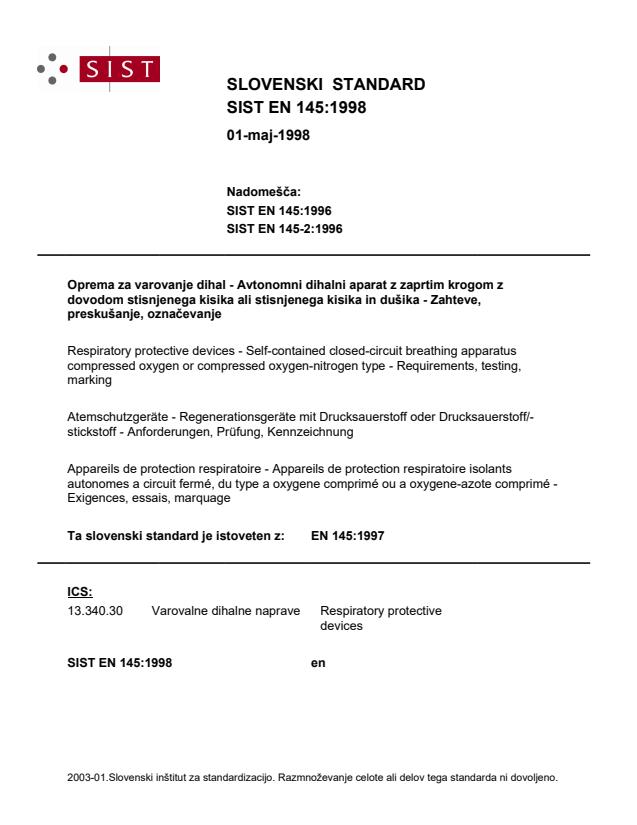
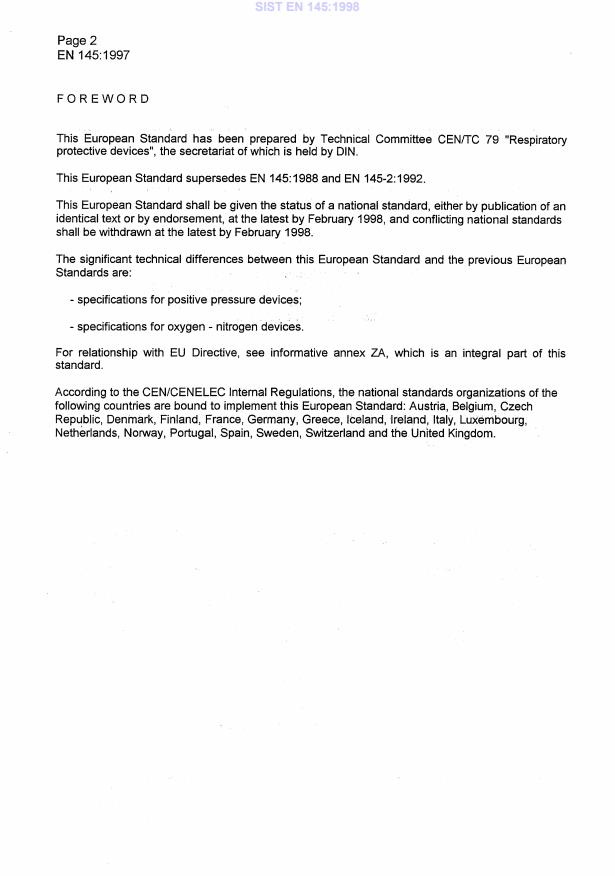
2003-01.Slovenski inštitut za standardizacijo. Razmnoževanje celote ali delov tega standarda ni dovoljeno.WHYHAtemschutzgeräte - Regenerationsgeräte mit Drucksauerstoff oder Drucksauerstoff/-stickstoff - Anforderungen, Prüfung, KennzeichnungAppareils de protection respiratoire - Appareils de protection respiratoire isolants autonomes a circuit fermé, du type a oxygene comprimé ou a oxygene-azote comprimé - Exigences, essais, marquageRespiratory protective devices - Self-contained closed-circuit breathing apparatus compressed oxygen or compressed oxygen-nitrogen type - Requirements, testing, marking13.340.30Varovalne dihalne napraveRespiratory protective devicesICS:Ta slovenski standard je istoveten z:EN 145:1997SIST EN 145:1998en01-maj-1998SIST EN 145:1998SLOVENSKI
STANDARDSIST EN 145-2:1996SIST EN 145:19961DGRPHãþD
S
...