

ASTM E648-23
(Test Method)Standard Test Method for Critical Radiant Flux of Floor-Covering Systems Using a Radiant Heat Energy Source
General Information
- Abstract
SIGNIFICANCE AND USE
5.1 This fire test response standard is designed to provide a basis for estimating one aspect of the fire exposure behavior of a floor-covering system installed in a building corridor. The test environment is intended to simulate conditions that have been observed and defined in full scale corridor experiments.
5.2 The test is intended to be suitable for regulatory statutes, specification acceptance, design purposes, or development and research.
5.3 The fundamental assumption inherent in the test is that critical radiant flux is one measure of the sensitivity to flame spread of floor-covering systems in a building corridor.
5.4 The test is applicable to floor-covering system specimens that follow or simulate accepted installation practice. Tests on the individual elements of a floor system are of limited value and not valid for evaluation of the flooring system.
5.5 In this procedure, the specimens are subjected to one or more specific sets of laboratory test conditions. If different test conditions are substituted or the end-use conditions are changed, it is not always possible by or from this test method to predict changes in the fire-test-response characteristics measured. Therefore, the results are valid only for the fire test exposure conditions described in this procedure.
SCOPE
1.1 This fire-test-response standard covers a procedure for measuring the critical radiant flux of horizontally mounted floor-covering systems exposed to a flaming ignition source in a graded radiant heat energy environment in a test chamber. A specimen is mounted over underlayment, a simulated concrete structural floor, bonded to a simulated structural floor, or otherwise mounted in a typical and representative way.
1.2 This fire-test-response standard measures the critical radiant flux at flame-out. It provides a basis for estimating one aspect of fire exposure behavior for floor-covering systems. The imposed radiant flux simulates the thermal radiation levels likely to impinge on the floors of a building whose upper surfaces are heated by flames or hot gases, or both, from a fully developed fire in an adjacent room or compartment. The standard was developed to simulate an important fire exposure component of fires that develop in corridors or exitways of buildings and is not intended for routine use in estimating flame spread behavior of floor covering in building areas other than corridors or exitways. See Appendix X1 for information on proper application and interpretation of experimental results from use of this test.
1.3 The values stated in SI units are to be regarded as standard. No other units of measurement are included in this standard.
1.4 The text of this standard references notes and footnotes that provide explanatory information. These notes and footnotes, excluding those in tables and figures, shall not be considered as requirements of this standard.
1.5 This standard is used to measure and describe the response of materials, products, or assemblies to heat and flame under controlled conditions but does not by itself incorporate all factors required for fire-hazard or fire-risk assessment of materials, products, or assemblies under actual fire conditions.
1.6 This standard does not purport to address all of the safety concerns, if any, associated with its use. It is the responsibility of the user of this standard to establish appropriate safety, health, and environmental practices and determine the applicability of regulatory limitations prior to use.Specific hazard statements are given in Section 7.
1.7 This international standard was developed in accordance with internationally recognized principles on standardization established in the Decision on Principles for the Development of International Standards, Guides and Recommendations issued by the World Trade Organization Technical Barriers to Trade (TBT) Committee.
- Status
- Published
- Publication Date
- 31-Oct-2023
- Technical Committee
- E05 - Fire Standards
- Drafting Committee
- E05.22 - Surface Burning
Buy Documents
ASTM E648-23 - Standard Test Method for Critical Radiant Flux of Floor-Covering Systems Using a Radiant Heat Energy Source
REDLINE ASTM E648-23 - Standard Test Method for Critical Radiant Flux of Floor-Covering Systems Using a Radiant Heat Energy Source
Overview
ASTM E648-23, Standard Test Method for Critical Radiant Flux of Floor-Covering Systems Using a Radiant Heat Energy Source, is a key fire test standard developed by ASTM International. This test method evaluates the fire exposure behavior of floor-covering systems, specifically their sensitivity to flame spread when installed in building corridors. By measuring the critical radiant flux at flame-out under controlled laboratory conditions, the standard provides valuable data for estimating one aspect of fire risk for flooring materials in buildings.
This standard is widely used for regulatory compliance, building specifications, safety design, and product research. Its procedure simulates radiant heat exposure conditions commonly seen in full-scale corridor fire incidents, making it especially relevant for flooring installations in corridors and exitways.
Key Topics
- Critical Radiant Flux Measurement: The standard focuses on determining the minimum radiant heat energy (measured in watts per square centimeter) necessary to sustain the spread of flame across a horizontally mounted floor-covering system under a radiant heat energy source.
- Fire Exposure Simulation: The test environment mimics thermal radiation conditions typically encountered when a corridor floor's upper surface is exposed to heat from a fully developed fire in an adjacent building compartment.
- Applicability: The method applies to floor-covering systems installed according to standard practices, including composites and assemblies such as carpets, hardwood, or laminate floors.
- Test Limitations: Results are valid specifically for the fire test exposure described in the procedure and may not predict behavior under different conditions or building areas outside corridors and exitways.
- Safety and Repeatability: The standard outlines safety precautions for laboratory procedures and includes guidance for repeatability and reproducibility of test results, ensuring consistent and reliable data.
Applications
ASTM E648-23 serves several practical purposes for industries and regulatory bodies:
- Regulatory Compliance: Many building codes and fire safety regulations cite ASTM E648 as a critical requirement for floor-covering products, especially for installations in corridors and means of egress.
- Product Development and Quality Control: Flooring manufacturers use this standard during R&D and production to ensure new and existing products meet required fire performance criteria.
- Specification Acceptance: Architects, specifiers, and builders use test results to select compliant floor-covering systems for safety-critical applications in commercial, educational, healthcare, and public buildings.
- Performance Benchmarking: Independent laboratories test products using this method to provide verified data on radiant flux performance, aiding in product certification and market positioning.
Related Standards
For comprehensive fire testing and material safety, the following ASTM standards are commonly referenced alongside ASTM E648:
- ASTM E136: Test Method for Assessing Combustibility of Materials
- ASTM E662: Test Method for Specific Optical Density of Smoke Generated by Solid Materials
- ASTM E84: Test Method for Surface Burning Characteristics of Building Materials
- ASTM E119: Test Methods for Fire Tests of Building Construction and Materials
- ASTM E662: Standard Test Method for Smoke Density
Compliance with ASTM E648-23, in conjunction with these related standards, ensures higher safety in building design and aids in regulatory approvals across global markets.
Keywords: ASTM E648, critical radiant flux, floor-covering fire test, radiant heat panel, flame spread, building corridors, fire safety standard, flooring systems, regulatory compliance, fire performance testing
Relations
- Effective Date
- 01-Nov-2023
- Effective Date
- 01-Mar-2024
- Effective Date
- 01-Feb-2024
- Effective Date
- 01-Jan-2024
- Effective Date
- 01-Oct-2022
- Effective Date
- 01-Nov-2023
- Effective Date
- 01-Nov-2023
- Effective Date
- 01-Nov-2023
- Effective Date
- 01-Nov-2023
- Effective Date
- 01-Nov-2023
- Effective Date
- 01-Nov-2023
- Effective Date
- 01-Nov-2023
- Referred By
ASTM E1321-18 - Standard Test Method for Determining Material Ignition and Flame Spread Properties - Effective Date
- 01-Nov-2023
- Referred By
ASTM D5144-08(2021) - Standard Guide for Use of Protective Coating Standards in Nuclear Power Plants - Effective Date
- 01-Nov-2023
- Effective Date
- 01-Nov-2023
Buy Documents
ASTM E648-23 - Standard Test Method for Critical Radiant Flux of Floor-Covering Systems Using a Radiant Heat Energy Source
REDLINE ASTM E648-23 - Standard Test Method for Critical Radiant Flux of Floor-Covering Systems Using a Radiant Heat Energy Source
Frequently Asked Questions
ASTM E648-23 is a standard published by ASTM International. Its full title is "Standard Test Method for Critical Radiant Flux of Floor-Covering Systems Using a Radiant Heat Energy Source". This standard covers: SIGNIFICANCE AND USE 5.1 This fire test response standard is designed to provide a basis for estimating one aspect of the fire exposure behavior of a floor-covering system installed in a building corridor. The test environment is intended to simulate conditions that have been observed and defined in full scale corridor experiments. 5.2 The test is intended to be suitable for regulatory statutes, specification acceptance, design purposes, or development and research. 5.3 The fundamental assumption inherent in the test is that critical radiant flux is one measure of the sensitivity to flame spread of floor-covering systems in a building corridor. 5.4 The test is applicable to floor-covering system specimens that follow or simulate accepted installation practice. Tests on the individual elements of a floor system are of limited value and not valid for evaluation of the flooring system. 5.5 In this procedure, the specimens are subjected to one or more specific sets of laboratory test conditions. If different test conditions are substituted or the end-use conditions are changed, it is not always possible by or from this test method to predict changes in the fire-test-response characteristics measured. Therefore, the results are valid only for the fire test exposure conditions described in this procedure. SCOPE 1.1 This fire-test-response standard covers a procedure for measuring the critical radiant flux of horizontally mounted floor-covering systems exposed to a flaming ignition source in a graded radiant heat energy environment in a test chamber. A specimen is mounted over underlayment, a simulated concrete structural floor, bonded to a simulated structural floor, or otherwise mounted in a typical and representative way. 1.2 This fire-test-response standard measures the critical radiant flux at flame-out. It provides a basis for estimating one aspect of fire exposure behavior for floor-covering systems. The imposed radiant flux simulates the thermal radiation levels likely to impinge on the floors of a building whose upper surfaces are heated by flames or hot gases, or both, from a fully developed fire in an adjacent room or compartment. The standard was developed to simulate an important fire exposure component of fires that develop in corridors or exitways of buildings and is not intended for routine use in estimating flame spread behavior of floor covering in building areas other than corridors or exitways. See Appendix X1 for information on proper application and interpretation of experimental results from use of this test. 1.3 The values stated in SI units are to be regarded as standard. No other units of measurement are included in this standard. 1.4 The text of this standard references notes and footnotes that provide explanatory information. These notes and footnotes, excluding those in tables and figures, shall not be considered as requirements of this standard. 1.5 This standard is used to measure and describe the response of materials, products, or assemblies to heat and flame under controlled conditions but does not by itself incorporate all factors required for fire-hazard or fire-risk assessment of materials, products, or assemblies under actual fire conditions. 1.6 This standard does not purport to address all of the safety concerns, if any, associated with its use. It is the responsibility of the user of this standard to establish appropriate safety, health, and environmental practices and determine the applicability of regulatory limitations prior to use.Specific hazard statements are given in Section 7. 1.7 This international standard was developed in accordance with internationally recognized principles on standardization established in the Decision on Principles for the Development of International Standards, Guides and Recommendations issued by the World Trade Organization Technical Barriers to Trade (TBT) Committee.
SIGNIFICANCE AND USE 5.1 This fire test response standard is designed to provide a basis for estimating one aspect of the fire exposure behavior of a floor-covering system installed in a building corridor. The test environment is intended to simulate conditions that have been observed and defined in full scale corridor experiments. 5.2 The test is intended to be suitable for regulatory statutes, specification acceptance, design purposes, or development and research. 5.3 The fundamental assumption inherent in the test is that critical radiant flux is one measure of the sensitivity to flame spread of floor-covering systems in a building corridor. 5.4 The test is applicable to floor-covering system specimens that follow or simulate accepted installation practice. Tests on the individual elements of a floor system are of limited value and not valid for evaluation of the flooring system. 5.5 In this procedure, the specimens are subjected to one or more specific sets of laboratory test conditions. If different test conditions are substituted or the end-use conditions are changed, it is not always possible by or from this test method to predict changes in the fire-test-response characteristics measured. Therefore, the results are valid only for the fire test exposure conditions described in this procedure. SCOPE 1.1 This fire-test-response standard covers a procedure for measuring the critical radiant flux of horizontally mounted floor-covering systems exposed to a flaming ignition source in a graded radiant heat energy environment in a test chamber. A specimen is mounted over underlayment, a simulated concrete structural floor, bonded to a simulated structural floor, or otherwise mounted in a typical and representative way. 1.2 This fire-test-response standard measures the critical radiant flux at flame-out. It provides a basis for estimating one aspect of fire exposure behavior for floor-covering systems. The imposed radiant flux simulates the thermal radiation levels likely to impinge on the floors of a building whose upper surfaces are heated by flames or hot gases, or both, from a fully developed fire in an adjacent room or compartment. The standard was developed to simulate an important fire exposure component of fires that develop in corridors or exitways of buildings and is not intended for routine use in estimating flame spread behavior of floor covering in building areas other than corridors or exitways. See Appendix X1 for information on proper application and interpretation of experimental results from use of this test. 1.3 The values stated in SI units are to be regarded as standard. No other units of measurement are included in this standard. 1.4 The text of this standard references notes and footnotes that provide explanatory information. These notes and footnotes, excluding those in tables and figures, shall not be considered as requirements of this standard. 1.5 This standard is used to measure and describe the response of materials, products, or assemblies to heat and flame under controlled conditions but does not by itself incorporate all factors required for fire-hazard or fire-risk assessment of materials, products, or assemblies under actual fire conditions. 1.6 This standard does not purport to address all of the safety concerns, if any, associated with its use. It is the responsibility of the user of this standard to establish appropriate safety, health, and environmental practices and determine the applicability of regulatory limitations prior to use.Specific hazard statements are given in Section 7. 1.7 This international standard was developed in accordance with internationally recognized principles on standardization established in the Decision on Principles for the Development of International Standards, Guides and Recommendations issued by the World Trade Organization Technical Barriers to Trade (TBT) Committee.
ASTM E648-23 is classified under the following ICS (International Classification for Standards) categories: 97.150 - Floor coverings. The ICS classification helps identify the subject area and facilitates finding related standards.
ASTM E648-23 has the following relationships with other standards: It is inter standard links to ASTM E648-19ae1, ASTM E136-24a, ASTM E136-24, ASTM E176-24, ASTM E136-22, ASTM F1551-09(2017), ASTM E1317-19, ASTM E3020-22, ASTM F2970-22, ASTM E2280-21, ASTM D6719-22e1, ASTM F3214-23, ASTM E1321-18, ASTM D5144-08(2021), ASTM C1486-18(2023). Understanding these relationships helps ensure you are using the most current and applicable version of the standard.
ASTM E648-23 is available in PDF format for immediate download after purchase. The document can be added to your cart and obtained through the secure checkout process. Digital delivery ensures instant access to the complete standard document.
Standards Content (Sample)
This international standard was developed in accordance with internationally recognized principles on standardization established in the Decision on Principles for the
Development of International Standards, Guides and Recommendations issued by the World Trade Organization Technical Barriers to Trade (TBT) Committee.
Designation: E648 − 23 An American National Standard
Standard Test Method for
Critical Radiant Flux of Floor-Covering Systems Using a
Radiant Heat Energy Source
This standard is issued under the fixed designation E648; the number immediately following the designation indicates the year of
original adoption or, in the case of revision, the year of last revision. A number in parentheses indicates the year of last reapproval. A
superscript epsilon (´) indicates an editorial change since the last revision or reapproval.
This standard has been approved for use by agencies of the U.S. Department of Defense.
1. Scope* incorporate all factors required for fire-hazard or fire-risk
assessment of materials, products, or assemblies under actual
1.1 This fire-test-response standard covers a procedure for
fire conditions.
measuring the critical radiant flux of horizontally mounted
1.6 This standard does not purport to address all of the
floor-covering systems exposed to a flaming ignition source in
safety concerns, if any, associated with its use. It is the
a graded radiant heat energy environment in a test chamber. A
responsibility of the user of this standard to establish appro-
specimen is mounted over underlayment, a simulated concrete
priate safety, health, and environmental practices and deter-
structural floor, bonded to a simulated structural floor, or
mine the applicability of regulatory limitations prior to us-
otherwise mounted in a typical and representative way.
e.Specific hazard statements are given in Section 7.
1.2 This fire-test-response standard measures the critical
1.7 This international standard was developed in accor-
radiant flux at flame-out. It provides a basis for estimating one
dance with internationally recognized principles on standard-
aspect of fire exposure behavior for floor-covering systems.
ization established in the Decision on Principles for the
The imposed radiant flux simulates the thermal radiation levels
Development of International Standards, Guides and Recom-
likely to impinge on the floors of a building whose upper
mendations issued by the World Trade Organization Technical
surfaces are heated by flames or hot gases, or both, from a fully
Barriers to Trade (TBT) Committee.
developed fire in an adjacent room or compartment. The
2. Referenced Documents
standard was developed to simulate an important fire exposure
component of fires that develop in corridors or exitways of
2.1 ASTM Standards:
buildings and is not intended for routine use in estimating
C1186 Specification for Flat Fiber-Cement Sheets
flame spread behavior of floor covering in building areas other
C1288 Specification for Fiber-Cement Interior Substrate
than corridors or exitways. See Appendix X1 for information
Sheets
on proper application and interpretation of experimental results
E122 Practice for Calculating Sample Size to Estimate, With
from use of this test.
Specified Precision, the Average for a Characteristic of a
Lot or Process
1.3 The values stated in SI units are to be regarded as
E136 Test Method for Assessing Combustibility of Materials
standard. No other units of measurement are included in this
Using a Vertical Tube Furnace at 750 °C
standard.
E171/E171M Practice for Conditioning and Testing Flexible
1.4 The text of this standard references notes and footnotes
Barrier Packaging
that provide explanatory information. These notes and
E176 Terminology of Fire Standards
footnotes, excluding those in tables and figures, shall not be
3. Terminology
considered as requirements of this standard.
3.1 Definitions—See Terminology E176 for additional defi-
1.5 This standard is used to measure and describe the
nitions.
response of materials, products, or assemblies to heat and
3.2 Definitions of Terms Specific to This Standard:
flame under controlled conditions but does not by itself
3.2.1 blackbody temperature, n—the temperature of a per-
fect radiator—a surface with an emissivity of unity and,
therefore, a reflectivity of zero.
This test method is under the jurisdiction of ASTM Committee E05 on Fire
Standards and is the direct responsibility of Subcommittee E05.22 on Surface
Burning. For referenced ASTM standards, visit the ASTM website, www.astm.org, or
Current edition approved Nov. 1, 2023. Published December 2023. Originally contact ASTM Customer Service at service@astm.org. For Annual Book of ASTM
ɛ1
approved in 1978. Last previous edition approved in 2019 as E648 –19a . DOI: Standards volume information, refer to the standard’s Document Summary page on
10.1520/E0648-23. the ASTM website.
*A Summary of Changes section appears at the end of this standard
Copyright © ASTM International, 100 Barr Harbor Drive, PO Box C700, West Conshohocken, PA 19428-2959. United States
E648 − 23
3.2.2 corridor, n—an enclosed space connecting a room or 4. Summary of Test Method
compartment with an exit. The corridor includes normal
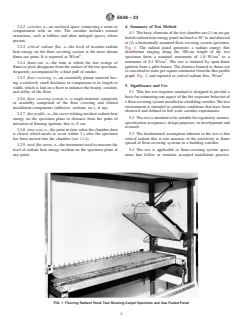
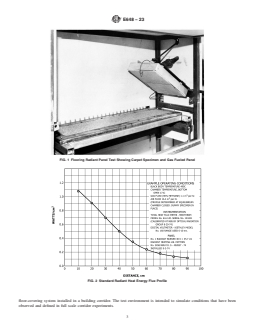
4.1 The basic elements of the test chamber are (1) an air-gas
extensions, such as lobbies and other enlarged spaces, where
fueled radiant heat energy panel inclined at 30° to and directed
present.
at (2) a horizontally mounted floor covering system specimen,
3.2.3 critical radiant flux, n—the level of incident radiant
Fig. 1. The radiant panel generates a radiant energy flux
heat energy on the floor covering system at the most distant
distribution ranging along the 100 cm length of the test
flame-out point. It is reported as W/cm .
specimen from a nominal maximum of 1.0 W/cm to a
minimum of 0.1 W/cm . The test is initiated by open-flame
3.2.4 flame-out, n—the time at which the last vestige of
ignition from a pilot burner. The distance burned to flame-out
flame or glow disappears from the surface of the test specimen,
is converted to watts per square centimeter from the flux profile
frequently accompanied by a final puff of smoke.
graph, Fig. 2, and reported as critical radiant flux, W/cm .
3.2.5 floor covering, n—an essentially planar material hav-
ing a relatively small thickness in comparison to its length or
5. Significance and Use
width, which is laid on a floor to enhance the beauty, comfort,
and utility of the floor. 5.1 This fire test response standard is designed to provide a
basis for estimating one aspect of the fire exposure behavior of
3.2.6 floor covering system, n—a single material, composite
a floor-covering system installed in a building corridor. The test
or assembly comprised of the floor covering and related
environment is intended to simulate conditions that have been
installation components (adhesive, cushion, etc.), if any.
observed and defined in full scale corridor experiments.
3.2.7 flux profile, n—the curve relating incident radiant heat
5.2 The test is intended to be suitable for regulatory statutes,
energy on the specimen plane to distance from the point of
specification acceptance, design purposes, or development and
initiation of flaming ignition, that is, 0 cm.
research.
3.2.8 time zero, n—the point in time when the chamber door
5.3 The fundamental assumption inherent in the test is that
is closed, which needs to occur within 3 s after the specimen
critical radiant flux is one measure of the sensitivity to flame
has been moved into the chamber (see 12.4).
spread of floor-covering systems in a building corridor.
3.2.9 total flux meter, n—the instrument used to measure the
level of radiant heat energy incident on the specimen plane at 5.4 The test is applicable to floor-covering system speci-
any point. mens that follow or simulate accepted installation practice.
FIG. 1 Flooring Radiant Panel Test Showing Carpet Specimen and Gas Fueled Panel
E648 − 23
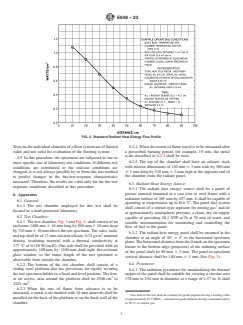
FIG. 2 Standard Radiant Heat Energy Flux Profile
Tests on the individual elements of a floor system are of limited 6.2.4 When the extent of flame travel is to be measured after
value and not valid for evaluation of the flooring system. a prescribed burning period, for example, 15 min, the metal
scale described in 6.2.3 shall be used.
5.5 In this procedure, the specimens are subjected to one or
6.2.5 The top of the chamber shall have an exhaust stack
more specific sets of laboratory test conditions. If different test
with interior dimensions of 102 mm 6 3 mm wide by 380 mm
conditions are substituted or the end-use conditions are
6 3 mm deep by 318 mm 6 3 mm high at the opposite end of
changed, it is not always possible by or from this test method
the chamber from the radiant panel.
to predict changes in the fire-test-response characteristics
measured. Therefore, the results are valid only for the fire test
6.3 Radiant Heat Energy Source:
exposure conditions described in this procedure.
6.3.1 The radiant heat energy source shall be a panel of
porous material mounted in a cast iron or steel frame with a
6. Apparatus
radiation surface of 305 mm by 457 mm. It shall be capable of
6.1 General:
operating at temperatures up to 816 °C. The panel fuel system
6.1.1 The test chamber employed for this test shall be
shall consist of a venturi-type aspirator for mixing gas and air
located in a draft-protected laboratory.
at approximately atmospheric pressure, a clean, dry air supply
6.2 Test Chamber:
capable of providing 28.3 NTP m /h at 76 mm of water, and
6.2.1 The test chamber, Fig. 3 and Fig. 4, shall consist of an
suitable instrumentation for monitoring and controlling the
enclosure 1400 mm 6 10 mm long by 500 mm 6 10 mm deep
flow of fuel to the panel.
by 710 mm 6 10 mm above the test specimen. The sides, ends,
6.3.2 The radiant heat energy panel shall be mounted in the
and top shall be of 13 mm calcium silicate, 0.74 g/cm nominal
chamber at an angle of 30° 6 5° to the horizontal specimen
density, insulating material with a thermal conductivity at
plane. The horizontal distance from the 0 mark on the specimen
177 °C of 0.128 W/(m·K). One side shall be provided with an
fixture to the bottom edge (projected) of the radiating surface
approximately 100 mm by 1100 mm draft-tight fire-resistant
of the panel shall be 89 mm 6 3 mm. The panel-to-specimen
glass window so the entire length of the test specimen is
vertical distance shall be 140 mm 6 3 mm (See Fig. 3).
observable from outside the chamber.
6.4 Pyrometer:
6.2.2 The bottom of the test chamber shall consist of a
sliding steel platform that has provisions for rigidly securing 6.4.1 The radiation pyrometer for standardizing the thermal
the test specimen holder in a fixed and level position. The free,
output of the panel shall be suitable for viewing a circular area
or air access, area around the platform shall be 2300 cm to 178 mm to 254 mm in diameter at a range of 1.37 m. It shall
3225 cm .
6.2.3 When the rate of flame front advance is to be
measured, a metal scale marked with 10-mm intervals shall be
Gas used in this test shall be commercial grade propane having a heating value
installed on the back of the platform or on the back wall of the
of approximately 83.1 MJ/m , commercial grade methane having a minimum purity
chamber. of 96 %, or natural gas.
E648 − 23
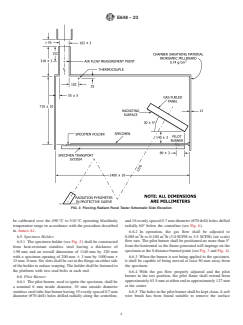
FIG. 3 Flooring Radiant Panel Tester Schematic Side Elevation
be calibrated over the 490 °C to 510 °C operating blackbody and 16 evenly spaced 0.7 mm diameter (#70 drill) holes drilled
temperature range in accordance with the procedure described radially 60° below the centerline (see Fig. 6).
in Annex A1.
6.6.2 In operation, the gas flow shall be adjusted to
3 3
0.085 m /h to 0.100 m /h (3.0 SCFH to 3.5 SCFH) (air scale)
6.5 Specimen Holder:
flow rate. The pilot burner shall be positioned no more than 5°
6.5.1 The specimen holder (see Fig. 5) shall be constructed
from the horizontal so the flame generated will impinge on the
from heat-resistant stainless steel having a thickness of
specimen at the 0 distance burned point (see Fig. 3 and Fig. 4).
1.98 mm and an overall dimension of 1140 mm by 320 mm
with a specimen opening of 200 mm 6 3 mm by 1000 mm + 6.6.3 When the burner is not being applied to the specimen,
15 mm -0 mm. Six slots shall be cut in the flange on either side it shall be capable of being moved at least 50 mm away from
of the holder to reduce warping. The holder shall be fastened to the specimen.
the platform with two stud bolts at each end.
6.6.4 With the gas flow properly adjusted and the pilot
burner in the test position, the pilot flame shall extend from
6.6 Pilot Burner:
approximately 63.5 mm at either end to approximately 127 mm
6.6.1 The pilot burner, used to ignite the specimen, shall be
at the center.
a nominal 6 mm inside diameter, 10 mm outside diameter
stainless steel tube line burner having 19 evenly spaced 0.7 mm 6.6.5 The holes in the pilot burner shall be kept clean. A soft
diameter (#70 drill) holes drilled radially along the centerline, wire brush has been found suitable to remove the surface
E648 − 23
FIG. 4 Flooring Radiant Panel Tester Schematic Low Flux End, Elevation
contaminants. Nickel-chromium or stainless steel wire with an specimen platform in the out position is used to remove
outside diameter of 0.5 mm is suitable for opening the holes. combustion products from the chamber.
6.8.1.1 Before igniting the panel, but with the exhaust hood
6.7 Thermocouples:
operating and the dummy specimen in place, the air flow rate
6.7.1 A 3.2 mm stainless steel sheathed grounded junction
through the stack shall be 76.2 m ⁄min 6 15.2 m/min when
Chromel-Alumel thermocouple shall be located in the flooring
measured with a hot wire anemometer at least 30 s after
radiant panel test chamber (see Fig. 3 and Fig. 4). The chamber
insertion of the probe into the center of the stack opening at a
thermocouple is located in the longitudinal central vertical
distance of 152 mm down from the top of the stack opening.
plane of the chamber 25 mm down from the top and 102 mm
6.8.1.2 The hot wire anemometer shall have an accuracy of
back from inside the exhaust stack.
60.1 m/s.
6.7.1.1 The thermocouple shall be kept clean to ensure
accuracy of readout.
6.9 Dummy Specimen:
6.8 Exhaust System: 6.9.1 The dummy specimen that is used in the flux profile
3 3
6.8.1 An exhaust duct with a capacity of 28.3 NTP m /min determination shall be made of 19 mm inorganic 0.74 g/cm
to 85 NTP m /min decoupled from the chamber stack by at nominal density calcium silicate board (see Fig. 5). It shall be
least 76 mm on all sides and with an effective area of the 250 mm wide by 1070 mm long with 27 mm diameter holes
canopy slightly larger than plane area of the chamber with the centered on and along the centerline at the 100 mm, 200 mm,
E648 − 23
FIG. 5 Dummy Specimen in Specimen Holder (Bottom View)
300 mm, . , 900 mm locations, measured from the maximum accordance with the procedure outlined in Annex A1. A source
flux end of the specimen. To provide proper and consistent of 15 °C to 25 °C cooling water shall be provided for this
seating of the flux meter in the hole openings, a stainless or instrument.
galvanized steel bearing plate shall be mounted and firmly
6.10.2 The heat flux transducer output shall be measured
secured to the underside of the calcium silicate board with
with a data acquisition system or a high impedance or
holes corresponding to those previously specified. The bearing
potentiometric voltmeter with a range from 0 mV to 10 mV and
plate shall run the length of the dummy specimen and have a
reading to 0.01 mV.
width of 76 mm. The thickness of the bearing plate shall be
6.11 Timing Device:
varied as necessary to maintain the flux meter height specified
6.11.1 A timing device with a minimum resolution of
in 10.5 up to 3.2 mm maximum.
0.10 min shall be used to measure preheat, pilot contact, and
6.10 Heat Flux Transducer:
flame-out times.
6.10.1 The total heat flux transducer used to determine the
flux profile of the chamber in conjunction with the dummy
7. Hazards
specimen shall be of the Schmidt-Boelter type, have a range
2 2
7.1 Suitable safeguards following sound engineering prac-
from 0 W ⁄cm to 1.5 W/cm , and shall be calibrated over the
2 2
tices shall be installed in the panel fuel supply to guard against
operating flux level range from 0.10 W ⁄cm to 1.5 W/cm in
a gas-air fuel explosion in the test chamber. Consideration shall
be given, but not limited to the following: (1) a gas feed cut-off
The sole source of supply of the apparatus known to the committee at this time
activated when the air supply fails, (2) a fire sensor directed at
is Medtherm Corp., P.O. Box 412, Huntsville, AL 35804. If you are aware of
the panel surface that stops fuel flow when the panel flame goes
alternative suppliers, please provide this information to ASTM Headquarters. Your
out, (3) a commercial gas water heater or gas-fired furnace
comments will receive careful consideration at a meeting of the responsible
technical committee, which you may attend. pilot burner control thermostatic shut-off that is activated when
E648 − 23
FIG. 6 Pilot Burner
the gas supply fails or other suitable and approved device. 9.2 The floor-covering system is to be specified by the test
Manual reset is a requirement of any safeguard system used. sponsor. In the absence of a specified floor-covering system,
select one of the following:
7.2 In view of the potential hazard from products of
9.2.1 A carpet mounted over the cushion proposed for use,
combustion, the exhaust system must be so designed and
or over the cushion recommended by the carpet manufacturer
operated that the laboratory environment is protected from
for use in the installation, tested over the standard simulated
smoke and gas. The operator shall be instructed to minimize
concrete subfloor (see A2.2.1).
the exposure to combustion products by following sound safety
9.2.2 A carpet with or without integral cushion pad bonded
practice, for example, ensure that the exhaust system is
to the standard simulated concrete subfloor (see A2.2.2).
working properly, wear appropriate clothing including gloves,
9.2.3 A resilient floor bonded to the standard simulated
etc.
concrete subfloor (see A2.3.1).
8. Sampling 9.2.4 A hardwood floor nailed to a plywood subfloor,
sanded, and finished in accordance with standard practice (see
8.1 The samples selected for testing shall be representative
A2.4.1).
of the product.
9.2.5 A laminate floor mounted over the proposed cushion
8.2 Standard ASTM sampling practice shall be followed
or simulated concrete subfloor (see A2.5).
where applicable; see Practice E122 for choice of sample size
9.3 For tiles, samples shall be representative of the largest
to estimate the average quality of a lot or process.
dimension tile manufactured. The specimen shall be mounted
so that the first joint is located the farthest possible distance
9. Test Specimens
from the zero point. As an alternative, select samples from roll
9.1 The test specimen shall be the floor-covering system
or sheet goods prior to cutting into tiles. The test results are
sized to provide for adequate clamping in the mounting frame.
applicable to identical tiles of smaller dimensions.
Its minimum dimensions shall exceed the frame width
9.3.1 If the tiles are not glued, the edges shall be mechani-
(200 mm nominal) and length (1000 mm nominal) by approxi-
cally secured to the substrate.
mately 50 mm.
9.1.1 Holes shall be made in the specimen to accommodate 9.4 A flooring material intended for installation in the form
the bolts when required to secure the specimen to the mounting of planks, tiles, cove, or base shall include at least one
frame (see Fig. 5). longitudinal joint located at the approximate centerline of the
E648 − 23
specimen holder. For materials having a production width less 10.7 Insert the flux meter in the 100 mm opening following
than the opening of the specimen holder, 200 mm, one the procedure given in 10.5. Read the output at 30 s 6 10 s and
longitudinal joint shall be located at the approximate centerline proceed to the 200 mm point. Repeat the 100 mm procedure.
of the specimen holder and all other joints shall be located as Determine the 300 mm to 900 mm flux levels in the same
necessary to complete the specimen assembly. manner. Following the 900 mm measurement, make a check
reading at 400 mm. If this is within the limits set forth in 10.6,
9.5 Three specimens per sample shall be tested.
the test chamber is in calibration and the profile determination
is completed. If not, adjust fuel flow, allow 0.5 h for
10. Radiant Heat Energy Flux Profile Standardization
equilibrium, and repeat the procedure.
10.1 In a continuing program of tests, the flux profile shall
10.8 Plot the radiant heat energy flux data as a function of
be determined not less than once a week. Where the time
distance along the specimen plane on rectangular coordinate
interval between tests is greater than one week, the flux profile
graph paper. Draw a smooth curve through the data points. This
shall be determined at the start of the test series.
curve shall hereafter be referred to as the flux profile curve.
10.2 Mount the dummy specimen in the mounting frame
10.9 Determine the open chamber temperature and radiant
and attach the assembly to the sliding platform.
panel blackbody temperature identified with the standard flux
10.3 With the sliding platform out of the chamber, ignite the
profile by opening the door and moving the specimen platform
radiant panel. Allow the unit to heat for 1.5 h. The pilot burner
out. Allow 0.5 h for the chamber to equilibrate. Read and
is off during this determination. Adjust the fuel mixture to give
record, in degrees Celsius, the chamber temperature and the
an air-rich flame. Make fuel flow settings to bring the panel
optical pyrometer output that gives the panel blackbody
blackbody temperature to approximately 500 °C and record the
temperature.
chamber temperature. When equilibrium has been established,
10.10 Once per test day, prior to testing, ignite the panel and
move the specimen platform into the chamber and close the
allow the unit to heat for 1.5 h. If less than one week has passed
door.
since the heat flux profile was established, the heat flux at the
10.4 Allow 0.5 h for the closed chamber to equilibrate.
200 mm, 400 mm, and 600 mm positions shall be verified. If
10.5 Measure the radiant heat energy flux level at the
the values do not fall in the ranges specified in 10.6, a complete
400 mm point with the total flux meter instrumentation. This is
heat flux profile shall be performed prior to testing.
done by inserting the flux meter in the opening so its detecting
11. Conditioning
plane is 1.6 mm to 3.2 mm above and parallel to the plane of
the dummy specimen and reading its output after 30 s 6 10 s.
11.1 Condition test specimens at 21 °C 6 3 °C and a
If the level is within the limits specified in 10.6, start the flux
relative humidity of 50 % 6 5 % horizontally or vertically in
profile determination. If it is not, adjust the panel fuel flow as
open racks for optimum air circulation for a minimum of 48 h;
required to bring the level within the limits specified in 10.6. A
carpet specimens that have been glued down shall be condi-
suggested flux profile data log format is shown in Fig. 7.
tioned for a minimum of 96 h. (See Specification E171/
E171M.)
10.6 Run the test under chamber operating conditions that
give a flux profile as shown in Fig. 2. The radiant heat energy
2 12. Procedure
incident on the dummy specimen shall be between 0.87 W ⁄cm
2 2
and 0.95 W/cm at the 200 mm point, between 0.48 W ⁄cm 12.1 Invert the sample holder on a workbench and insert the
and 0.52 W/cm at the 400 mm point, and between flooring system specimen. The specimen shall be backed by a
2 2 3
0.22 W ⁄cm and 0.26 W/cm at the 600 mm point. nominal 13 mm thick 0.58 g/cm inorganic millboard. Place
FIG. 7 Flux Profile Data Log Format
E648 − 23
the steel bar clamps across the back of the specimen/millboard 12.11 Remove the specimen and its mounting frame from
assembly and tighten the nuts firmly. Return the sample holder the movable platform.
to its upright position, clean the test surface with a vacuum, and
12.12 Before each test, verify that the blackbody tempera-
mount it on the specimen platform. Carpet specimens shall be
ture and chamber temperature are within 610 °C of the values
brushed to raise the pile to its normal position.
recorded in 10.9. The test assembly shall be at ro
...
This document is not an ASTM standard and is intended only to provide the user of an ASTM standard an indication of what changes have been made to the previous version. Because
it may not be technically possible to adequately depict all changes accurately, ASTM recommends that users consult prior editions as appropriate. In all cases only the current version
of the standard as published by ASTM is to be considered the official document.
´1
Designation: E648 − 19a E648 − 23 An American National Standard
Standard Test Method for
Critical Radiant Flux of Floor-Covering Systems Using a
Radiant Heat Energy Source
This standard is issued under the fixed designation E648; the number immediately following the designation indicates the year of
original adoption or, in the case of revision, the year of last revision. A number in parentheses indicates the year of last reapproval. A
superscript epsilon (´) indicates an editorial change since the last revision or reapproval.
This standard has been approved for use by agencies of the U.S. Department of Defense.
1 3 3
ε NOTE—In A2.2.1(1) (b), the value for density was corrected editorially from 1333 kg/m to 1442 kg/m in January
2020.
1. Scope*
1.1 This fire-test-response standard covers a procedure for measuring the critical radiant flux of horizontally mounted
floor-covering systems exposed to a flaming ignition source in a graded radiant heat energy environment in a test chamber. A
specimen is mounted over underlayment, a simulated concrete structural floor, bonded to a simulated structural floor, or otherwise
mounted in a typical and representative way.
1.2 This fire-test-response standard measures the critical radiant flux at flame-out. It provides a basis for estimating one aspect of
fire exposure behavior for floor-covering systems. The imposed radiant flux simulates the thermal radiation levels likely to impinge
on the floors of a building whose upper surfaces are heated by flames or hot gases, or both, from a fully developed fire in an
adjacent room or compartment. The standard was developed to simulate an important fire exposure component of fires that develop
in corridors or exitways of buildings and is not intended for routine use in estimating flame spread behavior of floor covering in
building areas other than corridors or exitways. See Appendix X1 for information on proper application and interpretation of
experimental results from use of this test.
1.3 The values stated in SI units are to be regarded as standard. No other units of measurement are included in this standard.
1.4 The text of this standard references notes and footnotes that provide explanatory information. These notes and footnotes,
excluding those in tables and figures, shall not be considered as requirements of this standard.
1.5 This standard is used to measure and describe the response of materials, products, or assemblies to heat and flame under
controlled conditions but does not by itself incorporate all factors required for fire-hazard or fire-risk assessment of materials,
products, or assemblies under actual fire conditions.
1.6 This standard does not purport to address all of the safety concerns, if any, associated with its use. It is the responsibility
of the user of this standard to establish appropriate safety, health, and environmental practices and determine the applicability of
regulatory limitations prior to use.Specific hazard statements are given in Section 7.
1.7 This international standard was developed in accordance with internationally recognized principles on standardization
established in the Decision on Principles for the Development of International Standards, Guides and Recommendations issued
by the World Trade Organization Technical Barriers to Trade (TBT) Committee.
This test method is under the jurisdiction of ASTM Committee E05 on Fire Standards and is the direct responsibility of Subcommittee E05.22 on Surface Burning.
Current edition approved Dec. 1, 2019Nov. 1, 2023. Published December 2019December 2023. Originally approved in 1978. Last previous edition approved in 2019 as
ɛ1
E648 –19. –19a . DOI: 10.1520/E0648-19AE01.10.1520/E0648-23.
*A Summary of Changes section appears at the end of this standard
Copyright © ASTM International, 100 Barr Harbor Drive, PO Box C700, West Conshohocken, PA 19428-2959. United States
E648 − 23
2. Referenced Documents
2.1 ASTM Standards:
C1186 Specification for Flat Fiber-Cement Sheets
C1288 Specification for Fiber-Cement Interior Substrate Sheets
E122 Practice for Calculating Sample Size to Estimate, With Specified Precision, the Average for a Characteristic of a Lot or
Process
E136 Test Method for Assessing Combustibility of Materials Using a Vertical Tube Furnace at 750 °C
E171E171/E171M Practice for Conditioning and Testing Flexible Barrier Packaging
E176 Terminology of Fire Standards
3. Terminology
3.1 Definitions—See Terminology E176 for additional definitions.
3.2 Definitions of Terms Specific to This Standard:
3.2.1 blackbody temperature, n—the temperature of a perfect radiator—a surface with an emissivity of unity and, therefore, a
reflectivity of zero.
3.2.2 corridor, n—an enclosed space connecting a room or compartment with an exit. The corridor includes normal extensions,
such as lobbies and other enlarged spaces, where present.
3.2.3 critical radiant flux, n—the level of incident radiant heat energy on the floor covering system at the most distant flame-out
point. It is reported as W/cm .
3.2.4 flame-out, n—the time at which the last vestige of flame or glow disappears from the surface of the test specimen, frequently
accompanied by a final puff of smoke.
3.2.5 floor covering, n—an essentially planar material having a relatively small thickness in comparison to its length or width,
which is laid on a floor to enhance the beauty, comfort, and utility of the floor.
3.2.6 floor covering system, n—a single material, composite or assembly comprised of the floor covering and related installation
components (adhesive, cushion, etc.), if any.
3.2.7 flux profile, n—the curve relating incident radiant heat energy on the specimen plane to distance from the point of initiation
of flaming ignition, that is, 0 cm.
3.2.8 time zero, n—the point in time when the chamber door is closed, which needs to occur within 3 s after the specimen has been
moved into the chamber (see 12.4).
3.2.9 total flux meter, n—the instrument used to measure the level of radiant heat energy incident on the specimen plane at any
point.
4. Summary of Test Method
4.1 The basic elements of the test chamber are (1) an air-gas fueled radiant heat energy panel inclined at 30° to and directed at
(2) a horizontally mounted floor covering system specimen, Fig. 1. The radiant panel generates a radiant energy flux distribution
2 2
ranging along the 100-cm100 cm length of the test specimen from a nominal maximum of 1.0 W/cm to a minimum of 0.1 W/cm .
The test is initiated by open-flame ignition from a pilot burner. The distance burned to flame-out is converted to watts per square
centimeter from the flux profile graph, Fig. 2, and reported as critical radiant flux, W/cm .
5. Significance and Use
5.1 This fire test response standard is designed to provide a basis for estimating one aspect of the fire exposure behavior of a
For referenced ASTM standards, visit the ASTM website, www.astm.org, or contact ASTM Customer Service at service@astm.org. For Annual Book of ASTM Standards
volume information, refer to the standard’s Document Summary page on the ASTM website.
E648 − 23
FIG. 1 Flooring Radiant Panel Test Showing Carpet Specimen and Gas Fueled Panel
FIG. 2 Standard Radiant Heat Energy Flux Profile
floor-covering system installed in a building corridor. The test environment is intended to simulate conditions that have been
observed and defined in full scale corridor experiments.
E648 − 23
5.2 The test is intended to be suitable for regulatory statutes, specification acceptance, design purposes, or development and
research.
5.3 The fundamental assumption inherent in the test is that critical radiant flux is one measure of the sensitivity to flame spread
of floor-covering systems in a building corridor.
5.4 The test is applicable to floor-covering system specimens that follow or simulate accepted installation practice. Tests on the
individual elements of a floor system are of limited value and not valid for evaluation of the flooring system.
5.5 In this procedure, the specimens are subjected to one or more specific sets of laboratory test conditions. If different test
conditions are substituted or the end-use conditions are changed, it is not always possible by or from this test method to predict
changes in the fire-test-response characteristics measured. Therefore, the results are valid only for the fire test exposure conditions
described in this procedure.
6. Apparatus
6.1 General:
6.1.1 The test chamber employed for this test shall be located in a draft-protected laboratory.
6.2 Test Chamber:
6.2.1 The test chamber, Fig. 3 and Fig. 4, shall consist of an enclosure 14001400 mm 6 10 mm long by 500500 mm 6 10 mm
deep by 710710 mm 6 10 mm above the test specimen. The sides, ends, and top shall be of 13-mm13 mm calcium silicate, 0.74
g/cm nominal density, insulating material with a thermal conductivity at 177°C177 °C of 0.128 W/(m·K). One side shall be
provided with an approximately 100 by 1100-mm100 mm by 1100 mm draft-tight fire-resistant glass window so the entire length
of the test specimen is observable from outside the chamber.
6.2.2 The bottom of the test chamber shall consist of a sliding steel platform that has provisions for rigidly securing the test
2 2
specimen holder in a fixed and level position. The free, or air access, area around the platform shall be 23002300 cm to 3225 cm .
6.2.3 When the rate of flame front advance is to be measured, a metal scale marked with 10-mm intervals shall be installed on
the back of the platform or on the back wall of the chamber.
6.2.4 When the extent of flame travel is to be measured after a prescribed burning period, for example, 15 min, the metal scale
described in 6.2.3 shall be used.
6.2.5 The top of the chamber shall have an exhaust stack with interior dimensions of 102102 mm 6 3 mm wide by 380380 mm
6 3 mm deep by 318318 mm 6 3 mm high at the opposite end of the chamber from the radiant panel.
6.3 Radiant Heat Energy Source:
6.3.1 The radiant heat energy source shall be a panel of porous material mounted in a cast iron or steel frame with a radiation
surface of 305305 mm by 457 mm. It shall be capable of operating at temperatures up to 816°C.816 °C. The panel fuel system shall
consist of a venturi-type aspirator for mixing gas and air at approximately atmospheric pressure, a clean, dry air supply capable
of providing 28.3 NTP m /h at 76 mm of water, and suitable instrumentation for monitoring and controlling the flow of fuel to
the panel.
6.3.2 The radiant heat energy panel shall be mounted in the chamber at an angle of 3030° 6 5° to the horizontal specimen plane.
The horizontal distance from the 0 mark on the specimen fixture to the bottom edge (projected) of the radiating surface of the panel
shall be 8989 mm 6 3 mm. The panel-to-specimen vertical distance shall be 140140 mm 6 3 mm (See Fig. 3).
Gas used in this test shall be commercial grade propane having a heating value of approximately 83.1 MJ/m , commercial grade methane having a minimum purity of
96 %, or natural gas.
E648 − 23
FIG. 3 Flooring Radiant Panel Tester Schematic Side Elevation
6.4 Pyrometer:
6.4.1 The radiation pyrometer for standardizing the thermal output of the panel shall be suitable for viewing a circular area
178-254 178 mm to 254 mm in diameter at a range of 1.37 m. It shall be calibrated over the 490 to 510°C490 °C to 510 °C
operating blackbody temperature range in accordance with the procedure described in Annex A1.
6.5 Specimen Holder:
6.5.1 The specimen holder (see Fig. 5) shall be constructed from heat-resistant stainless steel having a thickness of 1.98 mm
1.98 mm and an overall dimension of 11401140 mm by 320 mm with a specimen opening of 200200 mm 6 3 mm by 1000 + 15
mm -0 mm. 1000 mm + 15 mm -0 mm. Six slots shall be cut in the flange on either side of the holder to reduce warping. The holder
shall be fastened to the platform with two stud bolts at each end.
6.6 Pilot Burner:
6.6.1 The pilot burner, used to ignite the specimen, shall be a nominal 6 mm inside diameter, 10 mm outside diameter stainless
E648 − 23
FIG. 4 Flooring Radiant Panel Tester Schematic Low Flux End, Elevation
steel tube line burner having 19 evenly spaced 0.7 mm diameter (#70 drill) holes drilled radially along the centerline, and 16 evenly
spaced 0.7 mm diameter (#70 drill) holes drilled radially 60° below the centerline (see Fig. 6).
3 3
6.6.2 In operation, the gas flow shall be adjusted to 0.0850.085 m /h to 0.100 m /h (3.0(3.0 SCFH to 3.5 SCFH) (air scale) flow
rate. The pilot burner shall be positioned no more than 5° from the horizontal so the flame generated will impinge on the specimen
at the 0 distance burned point (see Fig. 3 and Fig. 4).
6.6.3 When the burner is not being applied to the specimen, it shall be capable of being moved at least 50 mm away from the
specimen.
6.6.4 With the gas flow properly adjusted and the pilot burner in the test position, the pilot flame shall extend from approximately
63.5 mm at either end to approximately 127 mm at the center.
6.6.5 The holes in the pilot burner shall be kept clean. A soft wire brush has been found suitable to remove the surface
contaminants. Nickel-chromium or stainless steel wire with an outside diameter of 0.5 mm is suitable for opening the holes.
6.7 Thermocouples:
E648 − 23
FIG. 5 Dummy Specimen in Specimen Holder (Bottom View)
6.7.1 A 3.2-mm3.2 mm stainless steel sheathed grounded junction Chromel-Alumel thermocouple shall be located in the flooring
radiant panel test chamber (see Fig. 3 and Fig. 4). The chamber thermocouple is located in the longitudinal central vertical plane
of the chamber 25 mm down from the top and 102 mm back from inside the exhaust stack.
6.7.1.1 The thermocouple shall be kept clean to ensure accuracy of readout.
6.8 Exhaust System:
3 3
6.8.1 An exhaust duct with a capacity of 28.3 28.3 NTP m /min to 85 NTP m /min decoupled from the chamber stack by at least
76 mm on all sides and with an effective area of the canopy slightly larger than plane area of the chamber with the specimen
platform in the out position is used to remove combustion products from the chamber.
6.8.1.1 Before igniting the panel, but with the exhaust hood operating and the dummy specimen in place, the air flow rate through
the stack shall be 76.276.2 m ⁄min 6 15.2 m/min when measured with a hot wire anemometer at least 30 s after insertion of the
probe into the center of the stack opening at a distance of 152 mm down from the top of the stack opening.
6.8.1.2 The hot wire anemometer shall have an accuracy of 60.1 m/s.
6.9 Dummy Specimen:
6.9.1 The dummy specimen that is used in the flux profile determination shall be made of 19-mm19 mm inorganic 0.74 g/cm
E648 − 23
FIG. 6 Pilot Burner
nominal density calcium silicate board (see Fig. 5). It shall be 250 mm wide by 1070 mm long with 27-mm27 mm diameter holes
centered on and along the centerline at the 100, 200, 300,100 mm, 200 mm, 300 mm, . , 900 mm locations, measured from the
maximum flux end of the specimen. To provide proper and consistent seating of the flux meter in the hole openings, a stainless
or galvanized steel bearing plate shall be mounted and firmly secured to the underside of the calcium silicate board with holes
corresponding to those previously specified. The bearing plate shall run the length of the dummy specimen and have a width of
76 mm. The thickness of the bearing plate shall be varied as necessary to maintain the flux meter height specified in 10.5 up to
3.2 mm maximum.
6.10 Heat Flux Transducer:
6.10.1 The total heat flux transducer used to determine the flux profile of the chamber in conjunction with the dummy specimen
4 2 2
shall be of the Schmidt-Boelter type, have a range from 00 W ⁄cm to 1.5 W/cm , and shall be calibrated over the operating flux
2 2
level range from 0.100.10 W ⁄cm to 1.5 W/cm in accordance with the procedure outlined in Annex A1. A source of 15 to
25°C15 °C to 25 °C cooling water shall be provided for this instrument.
6.10.2 The heat flux transducer output shall be measured with a data acquisition system or a high impedance or potentiometric
voltmeter with a range from 00 mV to 10 mV and reading to 0.01 mV.
6.11 Timing Device:
6.11.1 A timing device with a minimum resolution of 0.10 min 0.10 min shall be used to measure preheat, pilot contact, and
flame-out times.
The sole source of supply of the apparatus known to the committee at this time is Medtherm Corp., P.O. Box 412, Huntsville, AL 35804. If you are aware of alternative
suppliers, please provide this information to ASTM Headquarters. Your comments will receive careful consideration at a meeting of the responsible technical committee,
which you may attend.
E648 − 23
7. Hazards
7.1 Suitable safeguards following sound engineering practices shall be installed in the panel fuel supply to guard against a gas-air
fuel explosion in the test chamber. Consideration shall be given, but not limited to the following: (1) a gas feed cut-off activated
when the air supply fails, (2) a fire sensor directed at the panel surface that stops fuel flow when the panel flame goes out, (3) a
commercial gas water heater or gas-fired furnace pilot burner control thermostatic shut-off that is activated when the gas supply
fails or other suitable and approved device. Manual reset is a requirement of any safeguard system used.
7.2 In view of the potential hazard from products of combustion, the exhaust system must be so designed and operated that the
laboratory environment is protected from smoke and gas. The operator shall be instructed to minimize the exposure to combustion
products by following sound safety practice, for example, ensure that the exhaust system is working properly, wear appropriate
clothing including gloves, etc.
8. Sampling
8.1 The samples selected for testing shall be representative of the product.
8.2 Standard ASTM sampling practice shall be followed where applicable; see Practice E122 for choice of sample size to estimate
the average quality of a lot or process.
9. Test Specimens
9.1 The test specimen shall be the floor-covering system sized to provide for adequate clamping in the mounting frame. Its
minimum dimensions shall exceed the frame width (200 mm (200 mm nominal) and length (1000 mm (1000 mm nominal) by
approximately 50 mm.50 mm.
9.1.1 Holes shall be made in the specimen to accommodate the bolts when required to secure the specimen to the mounting frame
(see Fig. 5).
9.1.2 For tiles, samples shall be representative of the largest dimension tile manufactured. The specimen shall be mounted so that
the first joint is located the farthest possible distance from the zero point. As an alternative, select samples from roll or sheet goods
prior to cutting into tiles. The test results are applicable to identical tiles of smaller dimensions.
9.1.2.1 If the tile is not sufficiently wide to cover the width of the specimen holder, the tile shall be mounted to include a
longitudinal joint at the center line of the specimen holder.
9.1.2.2 If the tiles are not glued, the edges shall be mechanically secured to the substrate.
9.2 The floor-covering system is to be specified by the test sponsor. In the absence of a specified floor-covering system, select one
of the following:
9.2.1 A carpet mounted over the cushion proposed for use, or over the cushion recommended by the carpet manufacturer for use
in the installation, tested over the standard simulated concrete subfloor (see A2.2.1).
9.2.2 A carpet with or without integral cushion pad bonded to the standard simulated concrete subfloor (see A2.2.2).
9.2.3 A resilient floor bonded to the standard simulated concrete subfloor (see A2.3.1).
9.2.4 A hardwood floor nailed to a plywood subfloor, sanded, and finished in accordance with standard practice (see A2.4.1).
9.2.5 A laminate floor mounted over the proposed cushion or simulated concrete subfloor (see A2.5).
9.3 For tiles, samples shall be representative of the largest dimension tile manufactured. The specimen shall be mounted so that
the first joint is located the farthest possible distance from the zero point. As an alternative, select samples from roll or sheet goods
prior to cutting into tiles. The test results are applicable to identical tiles of smaller dimensions.
9.3.1 If the tiles are not glued, the edges shall be mechanically secured to the substrate.
E648 − 23
9.4 A flooring material intended for installation in the form of planks, tiles, cove, or base having an overall width greater than the
opening in the specimen holder, 200 mm shall include at least one longitudinal joint located at the approximate centerline of the
specimen holder. For materials having a production width less than the opening of the specimen holder, 200 mm, the one
longitudinal joint shall be located at the approximate centerline of the specimen holder and all other joints shall be located as
necessary to complete the specimen assembly.
9.5 Three specimens per sample shall be tested.
10. Radiant Heat Energy Flux Profile Standardization
10.1 In a continuing program of tests, the flux profile shall be determined not less than once a week. Where the time interval
between tests is greater than one week, the flux profile shall be determined at the start of the test series.
10.2 Mount the dummy specimen in the mounting frame and attach the assembly to the sliding platform.
10.3 With the sliding platform out of the chamber, ignite the radiant panel. Allow the unit to heat for 1.5 h. The pilot burner is
off during this determination. Adjust the fuel mixture to give an air-rich flame. Make fuel flow settings to bring the panel blackbody
temperature to approximately 500°C500 °C and record the chamber temperature. When equilibrium has been established, move
the specimen platform into the chamber and close the door.
10.4 Allow 0.5 h for the closed chamber to equilibrate.
10.5 Measure the radiant heat energy flux level at the 400-mm400 mm point with the total flux meter instrumentation. This is done
by inserting the flux meter in the opening so its detecting plane is 1.61.6 mm to 3.2 mm above and parallel to the plane of the
dummy specimen and reading its output after 3030 s 6 10 s. If the level is within the limits specified in 10.6, start the flux profile
determination. If it is not, adjust the panel fuel flow as required to bring the level within the limits specified in 10.6. A suggested
flux profile data log format is shown in Fig. 7.
10.6 Run the test under chamber operating conditions that give a flux profile as shown in Fig. 2. The radiant heat energy incident
2 2
on the dummy specimen shall be between 0.870.87 W ⁄cm and 0.95 W/cm at the 200-mm200 mm point, between
2 2 2 2
0.480.48 W ⁄cm and 0.52 W/cm at the 400-mm400 mm point, and between 0.220.22 W ⁄cm and 0.26 W/cm at the
600-mm600 mm point.
10.7 Insert the flux meter in the 100-mm100 mm opening following the procedure given in 10.5. Read the output at 3030 s 6 10
s and proceed to the 200-mm200 mm point. Repeat the 100-mm100 mm procedure. Determine the 300 to 900-mm300 mm to
900 mm flux levels in the same manner. Following the 900-mm900 mm measurement, make a check reading at 400-mm.400 mm.
FIG. 7 Flux Profile Data Log Format
E648 − 23
If this is within the limits set forth in 10.6, the test chamber is in calibration and the profile determination is completed. If not,
adjust fuel flow, allow 0.5 h for equilibrium, and repeat the procedure.
10.8 Plot the radiant heat energy flux data as a function of distance along the specimen plane on rectangular coordinate graph
paper. Draw a smooth curve through the data points. This curve shall hereafter be referred to as the flux profile curve.
10.9 Determine the open chamber temperature and radiant panel blackbody temperature identified with the standard flux profile
by opening the door and moving the specimen platform out. Allow 0.5 h for the chamber to equilibrate. Read and record, in degrees
Celsius, the chamber temperature and the optical pyrometer output that gives the panel blackbody temperature.
10.10 Once per test day, prior to testing, ignite the panel and allow the unit to heat for 1.5 h. If less than one week has passed
since the heat flux profile was established, the heat flux at the 200, 400,200 mm, 400 mm, and 600 mm positions shall be verified.
If the values do not fall in the ranges specified in 10.6, a complete heat flux profile shall be performed prior to testing.
11. Conditioning
11.1 Condition test specimens at 21 6 3°C21 °C 6 3 °C and a relative humidity of 5050 % 6 5 % horizontally or vertically in
open racks for optimum air circulation for a minimum of 48 h; carpet specimens that have been glued down shall be conditioned
for a minimum of 96 h. (See Specification E171E171/E171M.)
12. Procedure
12.1 Invert the sample holder on a workbench and insert the flooring system specimen. The specimen shall be backed by a nominal
13-mm13 mm thick 0.58 g/cm inorganic millboard. Place the steel bar clamps across the back of the specimen/millboard assembly
and tighten the nuts firmly. Return the sample holder to its upright position, clean the test surface with a vacuum, and mount it
on the specimen platform. Carpet specimens shall be brushed to raise the pile to
...