

ASTM E1306-22
(Practice)Standard Practice for Preparation of Metal and Alloy Samples by Electric Arc Melting for Spectrochemical Analysis
General Information
- Abstract
SIGNIFICANCE AND USE
5.1 This sampling practice is useful for converting material taken from ingots or other solid materials into a homogeneous solid sample suitable for direct excitation on a spark atomic emission or X-ray fluorescence spectrometer. The resultant button may itself be chipped to provide specimens for test methods requiring solutions or chips.
5.2 This practice has been used extensively for the preparation of zirconium, zirconium alloy, titanium, and titanium alloy materials, and is applicable to other reactive, refractory, ferrous and nonferrous alloys, such as cobalt, cobalt alloys, niobium, nickel, nickel alloys, cast irons, steels, stainless steels, tantalum, tool steels, and tungsten.
SCOPE
1.1 This practice covers the preparation of solid samples of reactive and refractory metals and alloys by electric arc remelting. The samples for melting may be in the form of drillings, chunks, chips, turnings, wire, sponge, powder briquettes, and powdered metals.
1.1.1 This practice is also suitable for preparation of solid samples of other metals, such as cast irons, steels, stainless steels, tool steels, nickel, nickel alloys, cobalt, and cobalt alloys.
1.2 Units—The values stated in SI units are to be regarded as standard. The values given in parentheses after SI units are provided for information only and are not considered standard.
1.3 This standard does not purport to address all of the safety concerns, if any, associated with its use. It is the responsibility of the user of this standard to establish appropriate safety, health, and environmental practices and determine the applicability of regulatory limitations prior to use. Specific hazard statements are given in Section 9.
1.4 This international standard was developed in accordance with internationally recognized principles on standardization established in the Decision on Principles for the Development of International Standards, Guides and Recommendations issued by the World Trade Organization Technical Barriers to Trade (TBT) Committee.
- Status
- Published
- Publication Date
- 14-Jun-2022
- Technical Committee
- E01 - Analytical Chemistry for Metals, Ores, and Related Materials
- Drafting Committee
- E01.20 - Fundamental Practices
Buy Documents
ASTM E1306-22 - Standard Practice for Preparation of Metal and Alloy Samples by Electric Arc Melting for Spectrochemical Analysis
REDLINE ASTM E1306-22 - Standard Practice for Preparation of Metal and Alloy Samples by Electric Arc Melting for Spectrochemical Analysis
Overview
ASTM E1306-22: Standard Practice for Preparation of Metal and Alloy Samples by Electric Arc Melting for Spectrochemical Analysis provides a standardized method for producing homogeneous metal and alloy samples suitable for spectrochemical analysis. This practice is essential for laboratories and industrial facilities that require precise, reliable chemical analysis of metals, alloys, and related materials, particularly those that are reactive or refractory in nature. The process involves electric arc remelting to create a uniform solid "button" sample, which can then be used directly for analysis or further processed.
Key Topics
- Sample Preparation: Covers procedures for converting various forms of raw metallurgy materials (such as drillings, chips, turnings, wires, powder briquettes) into solid samples. This is accomplished by electric arc melting.
- Material Applicability: Extensively used for zirconium, titanium, their alloys, and is also applicable to a wide range of reactive, refractory, ferrous, and nonferrous alloys like cobalt, nickel, stainless steels, tool steels, tantalum, tungsten, and cast irons.
- Homogeneity and Suitability: The arc melting technique produces samples suitable for direct excitation in spark atomic emission spectrometers and X-ray fluorescence spectrometers. Resultant samples can also be chipped for methods requiring solutions or chips.
- Safety Considerations: Addresses the requirement for safety practices when handling high-temperature equipment and materials, highlighting the importance of appropriate personal protective equipment and the need to account for hazardous fumes or electrical hazards.
Applications
ASTM E1306-22 is used in multiple settings where accurate spectrochemical analysis of metals and alloys is required:
- Quality Control: In metallurgy and manufacturing, ensuring alloys and metals meet composition specifications.
- Materials Research: Preparing homogeneous samples for research into new metal or alloy compositions or properties.
- Analytical Laboratories: Creating consistent, reproducible specimens for chemical analysis by spectrometry methods.
- Process Verification: Used to monitor and verify processes such as alloy production, refining, and recycling, ensuring material consistency.
- Industrial Sectors: Widely applicable in industries including aerospace (for titanium and its alloys), nuclear (zirconium alloys), automotive, and specialty manufacturing.
Related Standards
When implementing or referencing ASTM E1306-22, consider these important related standards:
- ASTM E135 - Terminology Relating to Analytical Chemistry for Metals, Ores, and Related Materials: Defines terminology for consistency.
- ASTM E876 - Practice for Use of Statistics in the Evaluation of Spectrometric Data: Guides statistical treatment of spectrometric data (withdrawn 2003, but still referenced for background).
- ASTM E1010 - Practice for Preparation of Disk Specimens of Steel and Iron by Remelting for Spectrochemical Analysis: Specific to ferrous alloys and now withdrawn but provided foundational procedures.
Practical Value
Implementing ASTM E1306-22 ensures:
- Consistent Analytical Results: Homogenizes sample composition, reducing segregation and element loss, which improves reproducibility in spectrochemical analyses.
- Broad Applicability: Can standardize sample preparation across diverse metal and alloy types, simplifying workflows in multi-material laboratories.
- Improved Laboratory Safety: Promotes responsible handling of hazardous chemicals and high-voltage, high-temperature technologies.
- International Compliance: Developed according to internationally recognized standardization principles, supporting global trade and regulatory acceptance.
Keywords
electric arc melting, sample preparation, spectrochemical analysis, arc remelting, metals and alloys, analytical chemistry, ASTM E1306-22, sample homogeneity, quality control, metallurgical analysis
Relations
- Effective Date
- 01-Jan-2020
- Effective Date
- 15-May-2019
- Effective Date
- 15-May-2016
- Effective Date
- 01-Jul-2015
- Effective Date
- 15-May-2015
- Effective Date
- 15-Aug-2014
- Effective Date
- 01-Apr-2014
- Effective Date
- 15-Feb-2014
- Effective Date
- 01-Dec-2013
- Effective Date
- 15-Sep-2011
- Effective Date
- 15-Jun-2011
- Effective Date
- 15-Jan-2011
- Effective Date
- 01-Jul-2010
- Effective Date
- 15-Jan-2010
- Effective Date
- 15-Jan-2010
Buy Documents
ASTM E1306-22 - Standard Practice for Preparation of Metal and Alloy Samples by Electric Arc Melting for Spectrochemical Analysis
REDLINE ASTM E1306-22 - Standard Practice for Preparation of Metal and Alloy Samples by Electric Arc Melting for Spectrochemical Analysis
Get Certified
Connect with accredited certification bodies for this standard

Element Materials Technology
Materials testing and product certification.

Inštitut za kovinske materiale in tehnologije
Institute of Metals and Technology. Materials testing, metallurgical analysis, NDT.
Sponsored listings
Frequently Asked Questions
ASTM E1306-22 is a standard published by ASTM International. Its full title is "Standard Practice for Preparation of Metal and Alloy Samples by Electric Arc Melting for Spectrochemical Analysis". This standard covers: SIGNIFICANCE AND USE 5.1 This sampling practice is useful for converting material taken from ingots or other solid materials into a homogeneous solid sample suitable for direct excitation on a spark atomic emission or X-ray fluorescence spectrometer. The resultant button may itself be chipped to provide specimens for test methods requiring solutions or chips. 5.2 This practice has been used extensively for the preparation of zirconium, zirconium alloy, titanium, and titanium alloy materials, and is applicable to other reactive, refractory, ferrous and nonferrous alloys, such as cobalt, cobalt alloys, niobium, nickel, nickel alloys, cast irons, steels, stainless steels, tantalum, tool steels, and tungsten. SCOPE 1.1 This practice covers the preparation of solid samples of reactive and refractory metals and alloys by electric arc remelting. The samples for melting may be in the form of drillings, chunks, chips, turnings, wire, sponge, powder briquettes, and powdered metals. 1.1.1 This practice is also suitable for preparation of solid samples of other metals, such as cast irons, steels, stainless steels, tool steels, nickel, nickel alloys, cobalt, and cobalt alloys. 1.2 Units—The values stated in SI units are to be regarded as standard. The values given in parentheses after SI units are provided for information only and are not considered standard. 1.3 This standard does not purport to address all of the safety concerns, if any, associated with its use. It is the responsibility of the user of this standard to establish appropriate safety, health, and environmental practices and determine the applicability of regulatory limitations prior to use. Specific hazard statements are given in Section 9. 1.4 This international standard was developed in accordance with internationally recognized principles on standardization established in the Decision on Principles for the Development of International Standards, Guides and Recommendations issued by the World Trade Organization Technical Barriers to Trade (TBT) Committee.
SIGNIFICANCE AND USE 5.1 This sampling practice is useful for converting material taken from ingots or other solid materials into a homogeneous solid sample suitable for direct excitation on a spark atomic emission or X-ray fluorescence spectrometer. The resultant button may itself be chipped to provide specimens for test methods requiring solutions or chips. 5.2 This practice has been used extensively for the preparation of zirconium, zirconium alloy, titanium, and titanium alloy materials, and is applicable to other reactive, refractory, ferrous and nonferrous alloys, such as cobalt, cobalt alloys, niobium, nickel, nickel alloys, cast irons, steels, stainless steels, tantalum, tool steels, and tungsten. SCOPE 1.1 This practice covers the preparation of solid samples of reactive and refractory metals and alloys by electric arc remelting. The samples for melting may be in the form of drillings, chunks, chips, turnings, wire, sponge, powder briquettes, and powdered metals. 1.1.1 This practice is also suitable for preparation of solid samples of other metals, such as cast irons, steels, stainless steels, tool steels, nickel, nickel alloys, cobalt, and cobalt alloys. 1.2 Units—The values stated in SI units are to be regarded as standard. The values given in parentheses after SI units are provided for information only and are not considered standard. 1.3 This standard does not purport to address all of the safety concerns, if any, associated with its use. It is the responsibility of the user of this standard to establish appropriate safety, health, and environmental practices and determine the applicability of regulatory limitations prior to use. Specific hazard statements are given in Section 9. 1.4 This international standard was developed in accordance with internationally recognized principles on standardization established in the Decision on Principles for the Development of International Standards, Guides and Recommendations issued by the World Trade Organization Technical Barriers to Trade (TBT) Committee.
ASTM E1306-22 is classified under the following ICS (International Classification for Standards) categories: 77.040.30 - Chemical analysis of metals. The ICS classification helps identify the subject area and facilitates finding related standards.
ASTM E1306-22 has the following relationships with other standards: It is inter standard links to ASTM E135-20, ASTM E135-19, ASTM E135-16, ASTM E135-15a, ASTM E135-15, ASTM E135-14b, ASTM E135-14a, ASTM E135-14, ASTM E135-13a, ASTM E135-11b, ASTM E135-11a, ASTM E135-11, ASTM E135-10b, ASTM E135-10a, ASTM E135-10. Understanding these relationships helps ensure you are using the most current and applicable version of the standard.
ASTM E1306-22 is available in PDF format for immediate download after purchase. The document can be added to your cart and obtained through the secure checkout process. Digital delivery ensures instant access to the complete standard document.
Standards Content (Sample)
This international standard was developed in accordance with internationally recognized principles on standardization established in the Decision on Principles for the
Development of International Standards, Guides and Recommendations issued by the World Trade Organization Technical Barriers to Trade (TBT) Committee.
Designation: E1306 − 22
Standard Practice for
Preparation of Metal and Alloy Samples by Electric Arc
Melting for Spectrochemical Analysis
This standard is issued under the fixed designation E1306; the number immediately following the designation indicates the year of
original adoption or, in the case of revision, the year of last revision. A number in parentheses indicates the year of last reapproval. A
superscript epsilon (´) indicates an editorial change since the last revision or reapproval.
1. Scope Spectrometric Data (Withdrawn 2003)
E1010 Practice for Preparation of Disk Specimens of Steel
1.1 This practice covers the preparation of solid samples of
and Iron by Remelting for Spectrochemical Analysis
reactive and refractory metals and alloys by electric arc
(Withdrawn 2022)
remelting. The samples for melting may be in the form of
drillings, chunks, chips, turnings, wire, sponge, powder
3. Terminology
briquettes, and powdered metals.
3.1 Definitions—For definitions of terms used in this
1.1.1 This practice is also suitable for preparation of solid
practice, refer to Terminology E135.
samples of other metals, such as cast irons, steels, stainless
steels, tool steels, nickel, nickel alloys, cobalt, and cobalt
4. Summary of Practice
alloys.
4.1 Various forms are melted into a button approximately
1.2 Units—The values stated in SI units are to be regarded
32 mm (1.25 in.) in diameter and approximately 6 mm
as standard. The values given in parentheses after SI units are
(0.25 in.) thick using an electric arc furnace. The action of the
provided for information only and are not considered standard.
arc creates agitation and mixing of the molten metal which
1.3 This standard does not purport to address all of the
produces a homogeneous sample.
safety concerns, if any, associated with its use. It is the
5. Significance and Use
responsibility of the user of this standard to establish appro-
priate safety, health, and environmental practices and deter-
5.1 This sampling practice is useful for converting material
mine the applicability of regulatory limitations prior to use.
taken from ingots or other solid materials into a homogeneous
Specific hazard statements are given in Section 9.
solid sample suitable for direct excitation on a spark atomic
1.4 This international standard was developed in accor-
emission or X-ray fluorescence spectrometer. The resultant
dance with internationally recognized principles on standard-
button may itself be chipped to provide specimens for test
ization established in the Decision on Principles for the
methods requiring solutions or chips.
Development of International Standards, Guides and Recom-
5.2 This practice has been used extensively for the prepa-
mendations issued by the World Trade Organization Technical
ration of zirconium, zirconium alloy, titanium, and titanium
Barriers to Trade (TBT) Committee.
alloy materials, and is applicable to other reactive, refractory,
ferrous and nonferrous alloys, such as cobalt, cobalt alloys,
2. Referenced Documents
niobium, nickel, nickel alloys, cast irons, steels, stainless
2.1 ASTM Standards:
steels, tantalum, tool steels, and tungsten.
E135 Terminology Relating to Analytical Chemistry for
6. Interferences
Metals, Ores, and Related Materials
E876 Practice for Use of Statistics in the Evaluation of
6.1 The user should carefully consider the impact of using
meltedsamplesforanalysisasthesemaybesubjecttoselective
volatilization or segregation of various elements. Elements
1 known to volatilize are bismuth, cadmium, chlorine, lead,
This practice is under the jurisdiction of ASTM Committee E01 on Analytical
Chemistry for Metals, Ores, and Related Materials and is the direct responsibility of magnesium, sodium, tellurium, thallium, uranium, and zinc.
Subcommittee E01.20 on Fundamental Practices.
Other elements that may change in content are the interstitial
Current edition approved June 15, 2022. Published July 2022. Originally
gases, oxygen, nitrogen, and hydrogen. Carbon content may
approved in 1989. Last previous edition approved in 2017 as E1306 – 17. DOI:
increase if a graphite anode is used. A tungsten anode may be
10.1520/E1306-22.
For referenced ASTM standards, visit the ASTM website, www.astm.org, or
contact ASTM Customer Service at service@astm.org. For Annual Book of ASTM
Standards volume information, refer to the standard’s Document Summary page on The last approved version of this historical standard is referenced on
the ASTM website. www.astm.org.
Copyright © ASTM International, 100 Barr Harbor Drive, PO Box C700, West Conshohocken, PA 19428-2959. United States
E1306 − 22
substituted if carbon contamination is a concern; however, 7.1.3.3 Outlet Fitting—(5), for connecting to a vacuum
tungsten contamination may occur. Copper contamination may pump.
be introduced from the melting crucible. 7.1.4 Water-Cooled Lower Housing (6), approximately
146 mm (5.75 in.) in diameter and 140 mm (5.5 in.) in height
7. Apparatus
containing the copper melting crucible. Its upper surface shall
befittedwithaneopreneO-ringtosealagainsttheupperanode
7.1 Electric Arc Melting Furnace —This section describes
housing.
the various components of an electric arc melting furnace.
7.1.4.1 Thelowerhousingshallbecapableofbeinginverted
Refer to Fig. 1 for component arrangement. The number
for removal of the button after it has cooled.
assigned to each component in 7.1.1 through 7.8 corresponds
7.1.5 Jack—(7), to raise the lower housing against the upper
to the number in Fig. 1.Asafety interlock shall be provided to
anode housing, compressing the O-ring and sealing the cru-
prevent electrical shock when the melting furnace is open.
7.1.1 Water-Cooled Upper Housing (1), approximately cible chamber.
152 mm (6 in.) in diameter and 159 mm (6.25 in.) in height,
7.2 DC Electric Welder—(8), to provide an arc current of
and having a smooth, flat sealing surface.
400 A to 800 A.
7.1.1.1 This upper housing may be equipped with a viewing
7.3 Pressure Regulator—(9), two-stage, for argon gas.
window composed of dark welding-type glass with an inner
7.4 Vacuum Pump—(10), having an initial pumping rate of
protective glass that is impervious to heat and splatter from the
molten sample. 50 L⁄min or more.
7.1.2 Rubber Boot—(2), shall cover the anode manipulator
7.5 Wire Brushes, to clean the crucible.
assembly to prevent electrical shock.
7.6 Tamping Rod, suitable for packing the sample into the
7.1.2.1 The anode manipulator assembly (or electrode
crucible.
holder) can typically be moved up and down and in a circular
motion to facilitate spacing between the anode and the sample 7.7 Foot Switch, Optional, to provide low and high power
to enable the arc to effectively melt the sample. See 12.5. settings. If a foot switch is not provided, the low to high and
7.1.3 The top of the housing shall be fabricated from an high to low power transition can be performed with a rheostat
electricalandthermalinsulatingmaterial,suchasBakelite,and designed for adjusting the current.
shall support the following items:
7.8 Control Panel (11), containing the master power switch
7.1.3.1 Relief Valve—(3), to relieve excessive pressure dur-
and rheostat for adjusting the current.
ing the melting process.
8. Reagents and Materials
7.1.3.2 Inlet Fitting—(4), for argon.
8.1 Argon Gas,99.99 %purity,suppliedfromagasorliquid
tank.
Melting furnaces, manufactured by Cianflone Scientific, 135 Industry Drive,
Pittsburgh, PA 15275, www.cianflone.com, have been found suitable for this
8.2 Anode, graphite or tungsten, approximately 13 mm
purpose.
(0.5 in.) in diameter and 64 mm (2.5 in.) in length with a
tapered tip.
9. Hazards
9.1 Wear safety glasses with side shields, or full face shield.
9.2 Wearinsulatedgloveswhenchanginghotelectrodesand
handling hot buttons.
9.3 An electrical shock hazard exists if the rubber boot is
removed from around the anode manipulator assembly at the
top of the furnace.
9.4 If fumes evolved during melting are determined to be
hazardous, then an exhaust vent should be installed over the
furnace.
9.5 Follow the manufacturer’s instructions to avoid electri-
cal shock and harm from light and heat.
10. Sample Preparation
Legend:
10.1 Removeanyorganiccontaminationanddrythoroughly
(1) Anode Housing (7) Jack
before melting. Compacting fine powders, chips, drillings,
(2) Rubber Boot (8) DC Electrical Welder
turnings, or wire into a briquette may provide more consistent
(3) Relief Valve (9) Pressure Regulator
(4) Inlet Fittings for Argon (10) Vacuum Pump
melting.
(5) Outlet Fitting for Vacuum (11) Control Panel
(6) Crucible Housing (12) Power Cable
11. Preparation of Apparatus
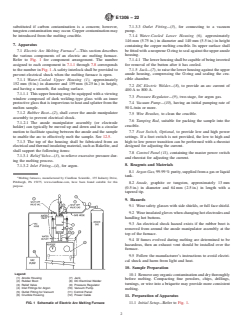
FIG. 1 Schematic of Electric Arc Melting Furnace 11.1 Initial Setup—Refer to Fig. 1.
E1306 − 22
NOTE 1—The pump will become quiet when a partial pressure of
11.1.1 Attach the cooling water to the apparatus and adjust
approximately 300 millitorr is reached.
the flow rate per manufacturer’s instructions.
11.1.2 Attach the argon supply and adjust the two-stage 12.4.2 Close the vacuum valve and open the argon valve
regulator output per manufacturer’s instructions. until the anode manipulator assembly has returned to its fully
extended position.
11.1.3 Attach the vacuum pump.
11.1.4 Attach the dc electric welder to the apparatus at the 12.4.3 Repeat the evacuation and argon flushing procedure
if desired.
control panel.
11.1.5 Attach the graphite anode to the manipulator assem- 12.4.4 Leave the argon valve open after the last flush to
maintain a positive pressure during the melting process.
bly.
12.4.5 Turn off the vacuum pump or close vacuum shut off
11.2 Preparation of Anode—The lifetime of the anode can
valve.
be extended significantly by dipping it into the molten metal.
When this procedure is used, it is imperative that there be a 12.5 Melting the Sample:
12.5.1 Placebothhandsontheanodemanipulatorassembly.
separate anode for each type of metal or alloy to prevent cross
contamination of the samples. Energize the welder. Lower the manipulator assembly until the
arc is initiated. Continue to lower the manipulator assembly,
without touching the sample, until the charge is completely
12. Procedure
melted.
12.1 Turn on the water valve and the master power switch.
12.5.2 After maximum power is attained, hold melt for
Adjust the current at
...
This document is not an ASTM standard and is intended only to provide the user of an ASTM standard an indication of what changes have been made to the previous version. Because
it may not be technically possible to adequately depict all changes accurately, ASTM recommends that users consult prior editions as appropriate. In all cases only the current version
of the standard as published by ASTM is to be considered the official document.
Designation: E1306 − 17 E1306 − 22
Standard Practice for
Preparation of Metal and Alloy Samples for Chemical
Analysis by Electric Arc RemeltingMelting for
Spectrochemical Analysis
This standard is issued under the fixed designation E1306; the number immediately following the designation indicates the year of
original adoption or, in the case of revision, the year of last revision. A number in parentheses indicates the year of last reapproval. A
superscript epsilon (´) indicates an editorial change since the last revision or reapproval.
1. Scope
1.1 This practice covers the preparation of solid samples of reactive and refractory metals and alloys by electric arc remelting. The
samples for melting may be in the form of drillings, chunks, chips, turnings, wires, sponge wire, sponge, powder briquettes, and
powdered metals.
1.1.1 This practice is also suitable for preparation of solid samples of other metals, such as cast irons, steels, stainless steels, tool
steels, nickel, nickel alloys, cobalt, and cobalt alloys.
1.2 Units—The values stated in SI units are to be regarded as standard. The values given in parentheses after SI units are provided
for information only and are not considered standard.
1.3 This standard does not purport to address all of the safety concerns, if any, associated with its use. It is the responsibility
of the user of this standard to establish appropriate safety safety, health, and healthenvironmental practices and determine the
applicability of regulatory limitations prior to use. Specific hazard statements are given in Section 9.
1.4 This international standard was developed in accordance with internationally recognized principles on standardization
established in the Decision on Principles for the Development of International Standards, Guides and Recommendations issued
by the World Trade Organization Technical Barriers to Trade (TBT) Committee.
2. Referenced Documents
2.1 ASTM Standards:
E135 Terminology Relating to Analytical Chemistry for Metals, Ores, and Related Materials
E876 Practice for Use of Statistics in the Evaluation of Spectrometric Data (Withdrawn 2003)
E1010 Practice for Preparation of Disk Specimens of Steel and Iron by Remelting for Spectrochemical Analysis (Withdrawn
2022)
3. Terminology
3.1 Definitions—For definitions of terms used in this practice, refer to Terminology E135.
This practice is under the jurisdiction of ASTM Committee E01 on Analytical Chemistry for Metals, Ores, and Related Materials and is the direct responsibility of
Subcommittee E01.20 on Fundamental Practices.
Current edition approved May 15, 2017June 15, 2022. Published June 2017July 2022. Originally approved in 1989. Last previous edition approved in 20112017 as
E1306 – 11.E1306 – 17. DOI: 10.1520/E1306-17.10.1520/E1306-22.
For referenced ASTM standards, visit the ASTM website, www.astm.org, or contact ASTM Customer Service at service@astm.org. For Annual Book of ASTM Standards
volume information, refer to the standard’s Document Summary page on the ASTM website.
The last approved version of this historical standard is referenced on www.astm.org.
Copyright © ASTM International, 100 Barr Harbor Drive, PO Box C700, West Conshohocken, PA 19428-2959. United States
E1306 − 22
4. Summary of Practice
1 1
4.1 Various forms are melted into a button approximately 132 mm ⁄4 inches(1.25 in.) in diameter and approximately ⁄4
inches6 mm (0.25 in.) thick using an electric arc furnace. The action of the arc creates agitation and mixing of the molten metal
which produces a homogeneous sample.
5. Significance and Use
5.1 This sampling practice is useful for converting material taken from ingots or other solid materials into a homogeneous solid
sample suitable for direct excitation on a spark atomic emission or X-ray fluorescence spectrometer. The resultant button may itself
be chipped to provide specimens for test methods requiring solutions or chips.
5.2 This practice has been used extensively for the preparation of zirconium, zirconium alloy, titanium, and titanium alloy
materials, and is applicable to other reactive, refractory, ferrous and nonferrous alloys, such as cobalt, cobalt alloys, niobium,
nickel, nickel alloys, cast irons, steels, stainless steels, tantalum, tool steels, and tungsten.
6. Interferences
6.1 The user should carefully consider the impact of using remeltedmelted samples for analysis as remelted samples these may
be subject to selective volatilization or segregation of anyvarious elements. Elements known to volatilize are bismuth, cadmium,
chlorine, lead, magnesium, sodium, tellurium, thallium, uranium, and zinc. Other elements that may change in content are the
interstitial gases, oxygen, nitrogen, and hydrogen, plus carbon, which may be added hydrogen. Carbon content may increase if a
graphite anode is used. A tungsten anode may be substituted if carbon pickupcontamination is a concern. Tungsten contamination
may occur if this electrode is used. Copper contamination also concern; however, tungsten contamination may occur. Copper
contamination may be introduced from the melting crucible.
7. Apparatus
7.1 Electric Arc Remit Furnace—Melting Furnace —This section describes the various components of an electric arc
remeltmelting furnace. Refer to Fig. 1 to see how each component is arranged. for component arrangement. The number assigned
Legend:
(1) Anode Housing (7) Jack
(2) Rubber Boot (8) DC Electrical Welder
(3) Relief Valve (9) Pressure Regulator
(4) Inlet Fittings for Argon (10) Vacuum Pump
(5) Outlet Fitting for Vacuum (11) Control Panel
(6) Crucible Housing (12) Power Cable
FIG. 1 Schematic of Electric Arc RemeltMelting Furnace
Melting furnaces, manufactured by Cianflone Scientific, 135 Industry Drive, Pittsburgh, PA 15275, www.cianflone.com, have been found suitable for this purpose.
E1306 − 22
to each component in the7.1.1 following descriptionthrough 7.8 corresponds to the number in Fig. 1the schematic. A safety
interlock shall be provided to prevent electrical shock when the melting furnace is open.
7.1.1 Water-Cooled Upper Housing (1), (1), approximately 6 inches152 mm (6 in.) in diameter and 6159 mm ⁄4 inches(6.25 in.)
in height, and having a smooth, flat sealing surface.
7.1.1.1 This upper housing may be equipped with a viewing window composed of dark welding-type glass with an inner protective
glass that is impervious to heat and splatter from the molten sample.
7.1.2 Rubber Boot—(2), shall cover the anode manipulator assembly to prevent electrical shock.
7.1.2.1 The anode manipulator assembly (or electrode holder) can typically be moved up and down and in a circular motion to
facilitate spacing between the anode and the sample to enable the arc to effectively melt the sample. See 12.5.
7.1.3 The top of the housing shall be fabricated from an electrical and thermal insulating material, such as Bakelite, and shall
support the following items:
7.1.3.1 Relief Valve—(3), to relieve excessive pressure during the melting process.
7.1.3.2 Inlet Fitting—(4), for argon.
7.1.3.3 Outlet Fitting—(5), for connecting to a vacuum pump.
3 1
7.1.4 Water-Cooled Lower Housing (6), (6), approximately 5146 mm ⁄4 inches(5.75 in.) in diameter and 5140 mm ⁄2
inches(5.5 in.) in height containing the copper melting crucible. Its upper surface shall be fitted with a neoprene O-ring to seal
against the upper anode housing.
7.1.4.1 The lower housing shall be capable of being inverted for removal of the button after it has cooled.
7.1.5 Jack—(7), to raise the lower housing against the upper anode housing, compressing the O-ring and sealing the crucible
chamber.
7.2 DC Electric Welder—(8), to provide an arc current of 400 A to 800 A.
7.3 Pressure Regulator—(9), two-stage, for argon gas.
7.4 Vacuum Pump—(10), having an initial pumping rate of 5050 L L/min ⁄min or more.
7.5 Wire Brushes, to clean the crucible.
7.6 Tamping Rod, suitable for packing the sample into the crucible.
7.7 Foot Switch, Optional, to provide low and high power settings (optional). settings. If a foot switch is not available,provided,
the low to high power and the high to low power transition can be performed with thea rheostat designed for adjusting the current.
7.8 Control Panel (11), (11), containing the master power switch and rheostat for adjusting the current.
8. Reagents and Materials
8.1 Argon Gas, 99.99 %, 99.99 % purity, supplied from a gas or liquid tank.
1 1
8.2 Anode, graphite or tungsten, ⁄2 inches approximately 13 mm (0.5 in.) in diameter and 264 mm ⁄2 inches(2.5 in.) in length with
a tapered tip.
E1306 − 22
9. Hazards
9.1 Wear safety glasses with side shields, or full face shield.
9.2 Wear insulated gloves when changing hot electrodes and handling hot buttons.
9.3 An electrical shock hazard exists if the rubber boot is removed from around the anode manipulator assembly at the top of the
furnace.
9.4 If fumes evolved off during melting have been are determined to be hazardous, then an exhaust vent should be installed over
the furnace.
9.5 Follow the manufacturer’s instructions to avoid electrical shock and harm from light and heat.
10. Sample Preparation
10.1 Remove any organic contamination and dry thoroughly before melting. Compacting fine powders, chips, drillings, turnings,
or wire into a briquette may provide more consistent melting.
11. Preparation of Apparatus
11.1 Initial Setup—Refer to Fig. 1.
11.1.1 Attach the cooling water to the apparatus and adjust the flow rate per manufacturer’s recommendations.instructions.
11.1.2 Attach the argon supply and adjust the two-stage regulator output per manufacturer’s recommendations.instructions.
11.1.3 Attach the vacuum pump.
11.1.4 Attach the dc electric welder to the apparatus at the control panel.
11.1.5 Attach the graphite anode to the manipulator assembly.
11.2 Preparation of Anode—The lifetime of the anode can be extended significantly by dipping it into the molten metal. When
this procedure is used, it is imperative that there be a separate anode for each type of metal or alloy to prevent cross contamination
of the samples.
12. Procedure
12.1 Turn on the water valve and the master power switch. Adjust the current at the control box so that the low power setting will
be 400 A and the high power setting will be 800 A. 800 A. A fixed power between 400 A and 800 A 400 A and 800 A can also
be used.
Caution—When melting fine powders, use an initial current of 100 A until the powder appears to be well fused. Raise the
current to 300 A and complete the melting. This will help prevent loss of sample due to splattering of the powder when the arc
is first struck.
12.2 Clean the melting crucible with a wire brush before each melt.
12.3 Charging the Crucible:
12.3.1 Weigh sufficient sample to fill the crucible. Material density and the form and size of th
...