

ASTM B505/B505M-23
(Specification)Standard Specification for Copper Alloy Continuous Castings
General Information
- Abstract
ABSTRACT
This specification establishes requirements for continuously cast rod, bar, tube, and shapes produced from copper alloys with nominal compositions. Castings produced to this specification may be manufactured for and supplied from stock. Mechanical tests are required only when specified by the purchaser in the purchase order. Continuous castings shall not be mechanically repaired, plugged, or burned in. Weld repairs may be made at the manufacturer's discretion. For sampling purposes, a lot shall consist of castings of the same composition and same cross-sectional dimensions, produced during the continuous operation of one casting machine, and submitted for inspection at one time unless specified otherwise. The specimen shall be comprised of the following major elements: copper, tin, lead, zinc, iron, aluminum, manganese, and nickel including cobalt. Residual elements may be present in cast copper-base alloys. The fractured bars shall be retained for chemical verification. Both the Brinell hardness reading and Rockwell hardness reading shall be taken on the grip end of the tension test bar. At the request of the purchaser castings shall be marked with the alloy number.
SCOPE
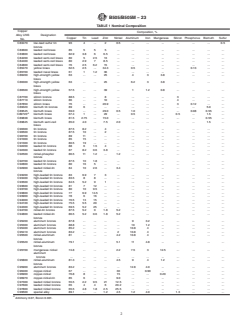
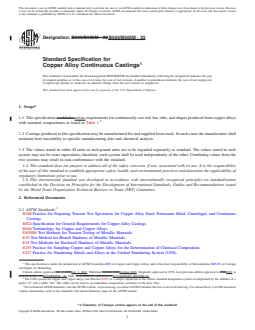
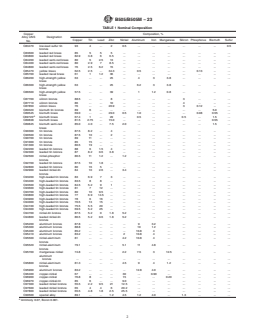
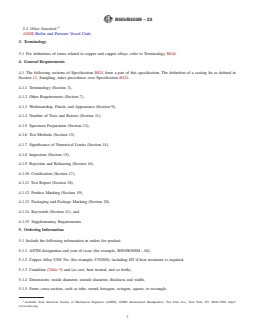
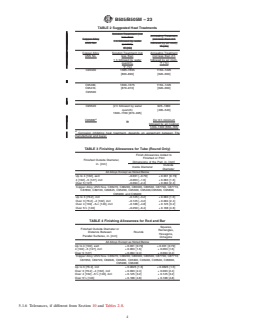
1.1 This specification covers requirements for continuously cast rod, bar, tube, and shapes produced from copper alloys with nominal compositions as listed in Table 1.2
1.2 Castings produced to this specification may be manufactured for and supplied from stock. In such cases the manufacturer shall maintain heat traceability to specific manufacturing date and chemical analysis.
1.3 The values stated in either SI units or inch-pound units are to be regarded separately as standard. The values stated in each system may not be exact equivalents; therefore, each system shall be used independently of the other. Combining values from the two systems may result in non-conformance with the standard.
1.4 This standard does not purport to address all of the safety concerns, if any, associated with its use. It is the responsibility of the user of this standard to establish appropriate safety, health, and environmental practices and determine the applicability of regulatory limitations prior to use.
1.5 This international standard was developed in accordance with internationally recognized principles on standardization established in the Decision on Principles for the Development of International Standards, Guides and Recommendations issued by the World Trade Organization Technical Barriers to Trade (TBT) Committee.
- Status
- Published
- Publication Date
- 30-Sep-2023
- Technical Committee
- B05 - Copper and Copper Alloys
- Drafting Committee
- B05.05 - Castings and Ingots for Remelting
Buy Documents
ASTM B505/B505M-23 - Standard Specification for Copper Alloy Continuous Castings
REDLINE ASTM B505/B505M-23 - Standard Specification for Copper Alloy Continuous Castings
Overview
ASTM B505/B505M-23: Standard Specification for Copper Alloy Continuous Castings defines the requirements for continuously cast rods, bars, tubes, and shapes made from copper alloys. Tailored to ensure material quality, dimensional accuracy, and traceability, this standard supports manufacturers and purchasers in producing and sourcing copper alloy castings suitable for a wide range of industrial applications. It covers a variety of alloy compositions, product forms, and provides options for mechanical testing, chemical analysis, and product marking when specified by the purchaser.
Key Topics
- Scope of Products: Applies to rods, bars, tubes, and shapes produced from a wide selection of copper alloys, as listed by nominal composition.
- Traceability and Stock Supply: Castings supplied from stock must maintain heat traceability and corresponding chemical analysis.
- Dimensional Standards: Permissible variations, finishing allowances, and relevant tolerances for length, diameter, roundness, and straightness are established to ensure consistency and fit-for-purpose components.
- Mechanical and Chemical Testing:
- Mechanical property testing (such as tensile strength and hardness tests) is conducted only when requested in the purchase order.
- Chemical composition requirements are detailed, covering major alloying elements like copper, tin, lead, zinc, nickel, aluminum, manganese, and iron.
- Repair and Acceptance:
- Mechanical repairs, plugging, or burning-in are not allowed.
- Weld repairs are permitted for certain alloys and must adhere to specified criteria or purchaser approval.
- Inspection and sampling procedures are defined to ensure product consistency.
- Marking and Certification: Castings can be marked with the alloy number and other identifiers as required. Documentation such as certification and test reports may be included upon request.
Applications
ASTM B505/B505M-23 is essential for industries requiring high-quality, reliable copper alloy products where shape consistency and alloy integrity are critical. Typical applications include:
- Manufacturing of Components: Bearings, bushings, fittings, and parts subject to demanding operating conditions.
- Fluid Handling Systems: Tubes and shapes used in pumps, valves, heat exchangers, and marine hardware due to corrosion resistance.
- Heavy Equipment: Components for pressure vessels, hydraulic systems, and machinery needing durable and traceable materials.
- Stock Supply: Enables manufacturers and distributors to provide standardized copper alloy castings from available inventory with documented properties.
This standard also supports compliance with the ASME Boiler and Pressure Vessel Code when required, making it relevant for safety-critical applications.
Related Standards
ASTM B505/B505M-23 references several related standards to support comprehensive quality assurance in copper alloy casting:
- ASTM B824: General Requirements for Copper Alloy Castings.
- ASTM B208: Preparation of tension test specimens for copper alloy castings.
- ASTM B846: Terminology for copper and copper alloys.
- ASTM E8/E8M: Test methods for tension testing of metallic materials.
- ASTM E10 and E18: Methods for Brinell and Rockwell hardness testing of metallic materials.
- ASTM E255: Sampling of copper and copper alloys for chemical composition determination.
- ASTM E527: Numbering metals and alloys in the Unified Numbering System (UNS).
- ASME Boiler and Pressure Vessel Code: Additional requirements for pressure-retaining applications.
By adhering to ASTM B505/B505M-23, manufacturers and purchasers ensure the consistent quality, traceability, and performance of copper alloy continuous castings for diverse industrial uses. This specification also facilitates global trade compliance through alignment with internationally recognized standards and practices.
Relations
- Effective Date
- 01-Oct-2023
- Effective Date
- 01-Jan-2024
- Effective Date
- 01-May-2022
- Effective Date
- 01-Oct-2023
- Referred By
ASTM F1718-01(2019) - Standard Specification for Rotary Positive Displacement Distillate Fuel Pumps - Effective Date
- 01-Oct-2023
- Effective Date
- 01-Oct-2023
- Referred By
ASTM F1511-18(2023) - Standard Specification for Mechanical Seals for Shipboard Pump Applications - Effective Date
- 01-Oct-2023
- Effective Date
- 01-Oct-2023
- Referred By
ASTM B584-22 - Standard Specification for Copper Alloy Sand Castings for General Applications - Effective Date
- 01-Oct-2023
- Effective Date
- 01-Oct-2023
Buy Documents
ASTM B505/B505M-23 - Standard Specification for Copper Alloy Continuous Castings
REDLINE ASTM B505/B505M-23 - Standard Specification for Copper Alloy Continuous Castings
Get Certified
Connect with accredited certification bodies for this standard

Element Materials Technology
Materials testing and product certification.

Inštitut za kovinske materiale in tehnologije
Institute of Metals and Technology. Materials testing, metallurgical analysis, NDT.
Sponsored listings
Frequently Asked Questions
ASTM B505/B505M-23 is a technical specification published by ASTM International. Its full title is "Standard Specification for Copper Alloy Continuous Castings". This standard covers: ABSTRACT This specification establishes requirements for continuously cast rod, bar, tube, and shapes produced from copper alloys with nominal compositions. Castings produced to this specification may be manufactured for and supplied from stock. Mechanical tests are required only when specified by the purchaser in the purchase order. Continuous castings shall not be mechanically repaired, plugged, or burned in. Weld repairs may be made at the manufacturer's discretion. For sampling purposes, a lot shall consist of castings of the same composition and same cross-sectional dimensions, produced during the continuous operation of one casting machine, and submitted for inspection at one time unless specified otherwise. The specimen shall be comprised of the following major elements: copper, tin, lead, zinc, iron, aluminum, manganese, and nickel including cobalt. Residual elements may be present in cast copper-base alloys. The fractured bars shall be retained for chemical verification. Both the Brinell hardness reading and Rockwell hardness reading shall be taken on the grip end of the tension test bar. At the request of the purchaser castings shall be marked with the alloy number. SCOPE 1.1 This specification covers requirements for continuously cast rod, bar, tube, and shapes produced from copper alloys with nominal compositions as listed in Table 1.2 1.2 Castings produced to this specification may be manufactured for and supplied from stock. In such cases the manufacturer shall maintain heat traceability to specific manufacturing date and chemical analysis. 1.3 The values stated in either SI units or inch-pound units are to be regarded separately as standard. The values stated in each system may not be exact equivalents; therefore, each system shall be used independently of the other. Combining values from the two systems may result in non-conformance with the standard. 1.4 This standard does not purport to address all of the safety concerns, if any, associated with its use. It is the responsibility of the user of this standard to establish appropriate safety, health, and environmental practices and determine the applicability of regulatory limitations prior to use. 1.5 This international standard was developed in accordance with internationally recognized principles on standardization established in the Decision on Principles for the Development of International Standards, Guides and Recommendations issued by the World Trade Organization Technical Barriers to Trade (TBT) Committee.
ABSTRACT This specification establishes requirements for continuously cast rod, bar, tube, and shapes produced from copper alloys with nominal compositions. Castings produced to this specification may be manufactured for and supplied from stock. Mechanical tests are required only when specified by the purchaser in the purchase order. Continuous castings shall not be mechanically repaired, plugged, or burned in. Weld repairs may be made at the manufacturer's discretion. For sampling purposes, a lot shall consist of castings of the same composition and same cross-sectional dimensions, produced during the continuous operation of one casting machine, and submitted for inspection at one time unless specified otherwise. The specimen shall be comprised of the following major elements: copper, tin, lead, zinc, iron, aluminum, manganese, and nickel including cobalt. Residual elements may be present in cast copper-base alloys. The fractured bars shall be retained for chemical verification. Both the Brinell hardness reading and Rockwell hardness reading shall be taken on the grip end of the tension test bar. At the request of the purchaser castings shall be marked with the alloy number. SCOPE 1.1 This specification covers requirements for continuously cast rod, bar, tube, and shapes produced from copper alloys with nominal compositions as listed in Table 1.2 1.2 Castings produced to this specification may be manufactured for and supplied from stock. In such cases the manufacturer shall maintain heat traceability to specific manufacturing date and chemical analysis. 1.3 The values stated in either SI units or inch-pound units are to be regarded separately as standard. The values stated in each system may not be exact equivalents; therefore, each system shall be used independently of the other. Combining values from the two systems may result in non-conformance with the standard. 1.4 This standard does not purport to address all of the safety concerns, if any, associated with its use. It is the responsibility of the user of this standard to establish appropriate safety, health, and environmental practices and determine the applicability of regulatory limitations prior to use. 1.5 This international standard was developed in accordance with internationally recognized principles on standardization established in the Decision on Principles for the Development of International Standards, Guides and Recommendations issued by the World Trade Organization Technical Barriers to Trade (TBT) Committee.
ASTM B505/B505M-23 is classified under the following ICS (International Classification for Standards) categories: 77.150.30 - Copper products. The ICS classification helps identify the subject area and facilitates finding related standards.
ASTM B505/B505M-23 has the following relationships with other standards: It is inter standard links to ASTM B505/B505M-22, ASTM E8/E8M-24, ASTM E8/E8M-22, ASTM F998-12(2022), ASTM F1718-01(2019), ASTM B824-17, ASTM F1511-18(2023), ASTM B30-23, ASTM B584-22, ASTM F2798-09(2023). Understanding these relationships helps ensure you are using the most current and applicable version of the standard.
ASTM B505/B505M-23 is available in PDF format for immediate download after purchase. The document can be added to your cart and obtained through the secure checkout process. Digital delivery ensures instant access to the complete standard document.
Standards Content (Sample)
This international standard was developed in accordance with internationally recognized principles on standardization established in the Decision on Principles for the
Development of International Standards, Guides and Recommendations issued by the World Trade Organization Technical Barriers to Trade (TBT) Committee.
Designation: B505/B505M − 23
Standard Specification for
Copper Alloy Continuous Castings
This standard is issued under the fixed designation B505/B505M; the number immediately following the designation indicates the year
of original adoption or, in the case of revision, the year of last revision. A number in parentheses indicates the year of last reapproval.
A superscript epsilon (´) indicates an editorial change since the last revision or reapproval.
This standard has been approved for use by agencies of the U.S. Department of Defense.
1. Scope* B208 Practice for Preparing Tension Test Specimens for
Copper Alloy Sand, Permanent Mold, Centrifugal, and
1.1 This specification covers requirements for continuously
Continuous Castings
cast rod, bar, tube, and shapes produced from copper alloys
2 B824 Specification for General Requirements for Copper
with nominal compositions as listed in Table 1.
Alloy Castings
1.2 Castings produced to this specification may be manu-
B846 Terminology for Copper and Copper Alloys
factured for and supplied from stock. In such cases the
E8/E8M Test Methods for Tension Testing of Metallic Ma-
manufacturer shall maintain heat traceability to specific manu-
terials
facturing date and chemical analysis.
E10 Test Method for Brinell Hardness of Metallic Materials
E18 Test Methods for Rockwell Hardness of Metallic Ma-
1.3 The values stated in either SI units or inch-pound units
are to be regarded separately as standard. The values stated in terials
E255 Practice for Sampling Copper and Copper Alloys for
each system may not be exact equivalents; therefore, each
system shall be used independently of the other. Combining the Determination of Chemical Composition
E527 Practice for Numbering Metals and Alloys in the
values from the two systems may result in non-conformance
with the standard. Unified Numbering System (UNS)
2.2 Other Standard:
1.4 This standard does not purport to address all of the
ASME Boiler and Pressure Vessel Code
safety concerns, if any, associated with its use. It is the
responsibility of the user of this standard to establish appro-
3. Terminology
priate safety, health, and environmental practices and deter-
3.1 For definitions of terms related to copper and copper
mine the applicability of regulatory limitations prior to use.
alloys, refer to Terminology B846.
1.5 This international standard was developed in accor-
dance with internationally recognized principles on standard-
4. General Requirements
ization established in the Decision on Principles for the
4.1 The following sections of Specification B824 form a
Development of International Standards, Guides and Recom-
part of this specification. The definition of a casting lot as
mendations issued by the World Trade Organization Technical
defined in Section 12, Sampling, takes precedence over Speci-
Barriers to Trade (TBT) Committee.
fication B824.
4.1.1 Terminology (Section 3),
2. Referenced Documents
4.1.2 Other Requirements (Section 7),
2.1 ASTM Standards:
4.1.3 Workmanship, Finish, and Appearance (Section 9),
4.1.4 Number of Tests and Retests (Section 11),
4.1.5 Specimen Preparation (Section 12),
This specification is under the jurisdiction of ASTM Committee B05 on Copper
4.1.6 Test Methods (Section 13),
and Copper Alloys and is the direct responsibility of Subcommittee B05.05 on
4.1.7 Significance of Numerical Limits (Section 14),
Castings and Ingots for Remelting.
4.1.8 Inspection (Section 15),
Current edition approved Oct. 1, 2023. Published October 2023. Originally
approved in 1970. Last previous edition approved in 2022 as B505/B505M – 22.
4.1.9 Rejection and Rehearing (Section 16),
DOI: 10.1520/B0505_B0505M-23.
4.1.10 Certification (Section 17),
The UNS system for copper and copper alloys (see Practice E527) is a simple
4.1.11 Test Report (Section 18),
expansion of the former standard designation system accomplished by the addition
of a prefix “C” and a suffix “00.” The suffix can be used to accommodate 4.1.12 Product Marking (Section 19),
composition variations of the base alloy.
For referenced ASTM standards, visit the ASTM website, www.astm.org, or
contact ASTM Customer Service at service@astm.org. For Annual Book of ASTM Available from American Society of Mechanical Engineers (ASME), ASME
Standards volume information, refer to the standard’s Document Summary page on International Headquarters, Two Park Ave., New York, NY 10016-5990, http://
the ASTM website. www.asme.org.
*A Summary of Changes section appears at the end of this standard
Copyright © ASTM International, 100 Barr Harbor Drive, PO Box C700, West Conshohocken, PA 19428-2959. United States
B505/B505M − 23
TABLE 1 Nominal Composition
Copper
Composition, %
Alloy UNS Designation
Copper Tin Lead Zinc Nickel Aluminum Iron Manganese Silicon Phosphorus Bismuth Sulfur
No.
C83470 low-lead sulfur tin 93 4 . 2 0.5 . . . . . . 0.5
bronze
C83600 leaded red brass 85 5 5 5 . . . . . . . .
C83800 leaded red brass 82.9 3.8 6 6.5 . . . . . . . .
C84200 leaded semi-red brass 80 5 2.5 13 . . . . . . . .
C84400 leaded semi-red brass 80 2.9 7 8.5 . . . . . . . .
C84800 leaded semi-red brass 76 2.5 6.2 15 . . . . . . . .
C85470 yellow brass 62.5 2.5 . 34.3 . 0.5 . . . 0.13 . .
C85700 leaded naval brass 61 1 1.2 36 . . . . . . . .
C86200 high-strength yellow 63 . . 25 . 4 3 3.8 . . . .
brass
C86300 high-strength yellow 63 . . 25 . 6.2 3 3.8 . . . .
brass
C86500 high-strength yellow 57.5 . . 39 . 1 1.2 0.8 . . . .
brass
C87700 silicon bronze 88.5 . . 8 . . . . 3 . . .
C87710 silicon bronze 86 . . 10 . . . . 4 . . .
C87850 silicon brass 76 . . 20.9 . . . . 3 0.12 . .
C89320 bismuth tin bronze 89 6 . . . . . . . . 5.0 .
C89545 bismuth brass 69.0 . . 29.0 0.5 1.0 . . . 0.08 0.55 .
A
C89720 bismuth brass 67.4 1 . 29 . 0.5 . . 0.5 . 1.5 .
C89838 bismuth brass 81.5 2.75 . 15.0 . . . . . . 0.55 .
C89845 bismuth semi-red 85.0 4.0 . 7.5 2.0 . . . . . 1.5 .
brass
C90300 tin bronze 87.5 8.2 . 4 . . . . . . . .
C90500 tin bronze 87.5 10 . 2 . . . . . . . .
C90700 tin bronze 89 11 . . . . . . . . . .
C91000 tin bronze 85 15 . . . . . . . . . .
C91300 tin bronze 80.5 19 . . . . . . . . . .
C92200 leaded tin bronze 88 6 1.5 4 . . . . . . . .
C92300 leaded tin bronze 87 8.2 0.6 3.8 . . . . . . . .
C92500 nickel-phosphor 86.5 11 1.2 . 1.2 . . . . . . .
bronze
C92700 leaded tin bronze 87.5 10 1.8 . . . . . . . . .
C92800 leaded tin bronze 80 16 5 . . . . . . . . .
C92900 leaded nickel-tin 84 10 2.6 . 3.4 . . . . . . .
bronze
C93200 high-leaded tin bronze 83 6.9 7 3 . . . . . . . .
C93400 high-leaded tin bronze 83.5 8 8 . . . . . . . . .
C93500 high-leaded tin bronze 84.5 5.2 9 1 . . . . . . . .
C93600 high-leaded tin bronze 81 7 12 . . . . . . . . .
C93700 high-leaded tin bronze 80 10 9.5 . . . . . . . . .
C93800 high-leaded tin bronze 77 6.9 14.5 . . . . . . . . .
C93900 high-leaded tin bronze 78 6 16 . . . . . . . . .
C94000 high-leaded tin bronze 70.5 13 15 . . . . . . . . .
C94100 high-leaded tin bronze 75.5 5.5 20 . . . . . . . . .
C94300 high-leaded tin bronze 69.5 5.2 25 . . . . . . . . .
C94700 nickel-tin bronze 87.5 5.2 0 1.8 5.2 . . . . . . .
C94800 leaded nickel-tin 86.5 5.2 0.6 1.8 5.2 . . . . . . .
bronze
C95200 aluminum bronze 87.8 . . . . 9 3.2 . . . . .
C95300 aluminum bronze 88.8 . . . . 10 1.2 . . . . .
C95400 aluminum bronze 85.2 . . . . 10.8 4 . . . . .
C95410 aluminum bronze 83.2 . . . 2 10.8 4 . . . . .
C95500 nickel-aluminum 81 . . . 4.2 10.8 4 . . . . .
bronze
C95520 nickel-aluminum 79.1 . . . 5.1 11 4.8 . . . . .
bronze
C95700 manganese nickel 74.8 . . . 2.2 7.5 3 12.5 . . . .
aluminum
bronze . . . . . . . . . . . .
C95800 nickel-aluminum 81.3 . . . 4.5 9 4 1.2 . . . .
bronze
C95900 aluminum bronze 83.2 . . . . 12.8 4.0 . . . . .
C96400 copper-nickel 67 . . . 30 . 0.90 . . . . .
C96900 copper-nickel 76.8 8 . . 15 . . 0.20 . . . .
C96970 copper-nickel-tin 85 6 . . 9.0 . . . . . . .
C97300 leaded nickel bronze 55.5 2.2 9.5 21 12.5 . . . . . . .
C97600 leaded nickel bronze 65 4 4 6 20.2 . . . . . . .
C97800 leaded nickel bronze 65.5 4.8 1.8 2.5 25.5 . . . . . . .
C99500 special alloy 89.1 . . 1.2 4.5 1.2 4.0 . 1.3 . . .
A
Antimony 0.07, Boron 0.001.
B505/B505M − 23
TABLE 3 Finishing Allowances for Tube (Round Only)
4.1.13 Packaging and Package Marking (Section 20),
4.1.14 Keywords (Section 21), and Finish Allowances Added to
Finished or Print
4.1.15 Supplementary Requirements.
Finished Outside Diameter,
Dimensions of the Part, in. [mm]
in. [mm]
Outside
Inside Diameter
5. Ordering Information
Diameter
All Alloys Except as Noted Below
5.1 Include the following information in orders for product:
Up to 4 [102], excl −0.031 [−0.79] + 0.031 [0.79]
4 [102] –5 [127], incl −0.063 [−1.6] + 0.063 [1.6]
5.1.1 ASTM designation and year of issue (for example,
Over 5 [127] −0.094 [−2.4] + 0.094 [2.4]
B505/B505M – 04),
Copper Alloy UNS Nos. C85470, C86200, C86300, C86500, C87700, C87710,
5.1.2 Copper Alloy UNS No. (for example, C93200), in-
C87850, C89720, C89845, C95200, C95300, C95400,C95500, C95800,
cluding HT if heat treatment is required. C95900, and C96400
Up to 3 [76.2], incl −0.125 [−3.2] + 0.063 [1.6]
5.1.3 Condition (Table 9) and (as cast, heat treated, and so
Over 3 [76.2] –4 [102], incl −0.125 [−3.2] + 0.094 [2.4]
forth), 1
Over 4 [102] –5 ⁄2 [140], incl −0.188 [−4.8] + 0.125 [3.2]
Over 5 ⁄2 [140] −0.250 [−6.4] + 0.188 [4.8]
5.1.4 Dimensions: inside diameter, outside diameter, thick-
ness and width,
5.1.5 Form: cross-section, such as tube, round, hexagon,
TABLE 4 Finishing Allowances for Rod and Bar
octagon, square, or rectangle,
Squares,
5.1.6 Tolerances, if different from Section 10 and Tables
Finished Outside Diameter or
Rectangles,
Distance Between Rounds
2-8.
Hexagons,
Parallel Surfaces, in. [mm]
5.1.7 Length (including length tolerance if other than mill Octagons
lengths),
All Alloys Except as Noted Below
Up to 4 [102], excl + 0.031 [0.79] + 0.031 [0.79]
5.1.8 Number of castings or total weight, for each size and
4 [102] –5 [127], incl + 0.063 [1.6] + 0.063 [1.6]
form,
Over 5 [127] + 0.094 [2.4] + 0.094 [2.4]
5.1.9 ASME Boiler and Pressure Vessel Code requirements
Copper Alloy UNS Nos. C85470, C86200, C86300, C86500, C87700, C87710,
C87850, C89720, C89845, C95200, C95300, C95400, C95500, C95800,
(if required see Section 9),
C95900, C96400
5.1.10 When castings are purchased for agencies of the U.S.
Up to 3 [76.2], incl + 0.0625 [1.6] + 0.0625 [1.6]
Government, the Supplementary Requirements of Specifica- Over 3 [76.2] –4 [102], incl + 0.093 [2.4] + 0.093 [2.4]
Over 4 [102] –5 ⁄2 [140], incl + 0.125 [3.2] + 0.125 [3.2]
tion B824 may be specified.
Over 5 ⁄2 [140] + 0.188 [4.8] + 0.188 [4.8]
5.2 The following requirements are optional and should be
specified in the purchase order when required:
TABLE 5 Diameter Tolerances for Rod and Bar
5.2.1 Chemical analysis of residual elements (Section 7 and
A A
Specification B824),
Tolerances, Plus and Minus, in. [mm]
Diameter or Distance Be-
Squares, Rectangles,
5.2.2 Mechanical requirements, (Section 8 Test Methods
tween Parallel Surfaces,
Rounds Hexagons,
in. [mm]
E8/E8M),
Octagons
5.2.3 Witness inspection (Specification B824), All Alloys Except as Noted Below
Up to 4 [102], excl 0.005 [0.13] 0.016 [0.41]
5.2.4 Certification (Specification B824),
4 [102] –5 [127], incl 0.008 [0.20] 0.016 [0.41]
5.2.5 Foundry test report (Specification B824),
Over 5 [127] 0.016 [0.41] 0.016 [0.41]
5.2.6 Product marking (Specification B824), Copper Alloy UNS Nos. C85470, C86200, C86300, C86500, C87700, C87710,
C87850, C89720, C89845, C95200, C95300, C95400, C95500, C95800,
5.2.7 Castings for seawater service (Section 6), and
C95900, and C96400
Up to 3 [76.2], incl 0.010 [0.25] 0.020 [0.51]
Over 3 [76.2] –4 [102], incl 0.015 [0.38] 0.020 [0.51]
Over 4 [102] –5 ⁄2 [140], incl 0.020 [0.51] 0.020 [0.51]
TABLE 2 Suggested Heat Treatments
Over 5 ⁄2 [140] 0.025 [0.64] 0.025 [0.64]
Copper Alloy Solution Treatment (not Annealing Treatment
A
When tolerances are specified as all plus or all minus, double the values given.
UNS No. less than (not less than 2 h
1 h followed by water followed by air cool),
quench), °F [°C]
°F [°C]
5.2.8 Approval of weld repair and records of repair (Section
C95300 1585–1635 1150–1225
[860–890] [620–660]
11).
C95400, 1600–1675 1150–1225
6. Materials and Manufacture
C95410, [870–910] [620–660]
C95500
6.1 For better corrosion resistance in seawater applications,
castings in Copper Alloy UNS No. C95800 shall be given a
C95520 (2 h followed by water 925–1000
temperature anneal heat treatment at 1200 °F to 1300 °F
quench) [495–540]
1600–1700 [870–925]
[650 °C to 705 °C] for 6 h minimum. Cooling shall be by the
fastest means possible that will not cause excessive distortion
A
C95800 . (for 6 h minimum
followed by air cooling) or cracking. Propeller castings shall be exempt from this
1200–1300 [650–705]
requirement.
A
Corrosion inhibiting heat treatment, depends on agreement between The
6.2 Copper Alloy UNS Nos. C95300, C95400, C95410, and
manufacturer and buyer.
C95500 may be supplied in the heat-treated condition to obtain
B505/B505M − 23
TABLE 6 Diameter Tolerances for Tube (Round Only)
ous castings before heat treatment, the coupons shall be heat
Tolerances, in. [mm] treated with the continuous castings.
Outside
Average Outside Diameter,
Inside Diameter
Diameter
in. [mm] 7. Chemical Composition
A
Plus or
B B
Plus Minus
A
Minus
7.1 The continuous castings shall conform to the require-
All Alloys Except as Noted Below
ments for elements shown in Table 10.
Up to 4 [102], excl 0.005 [0.13] 0.012 [0.30] 0.033 [0.84]
4 [102] –5 [127], incl 0.008 [0.20] 0.016 [0.41] 0.046 [1.2]
7.2 These composition limits do not preclude the presence
Over 5 [127] 0.016 [0.41] 0.032 [0.81] 0.064 [1.6]
of other elements. By agreement between the manufacturer and
Copper Alloy UNS Nos. C85470, C86200, C86300, C86500, C87700, C87710,
C87850, C89720, C89845, C95200, C95300, C95400, C95500, C95800,
purchaser, limits may be established and analysis required for
C95900, and C96400
unnamed elements.
Up to 3 [76], incl 0.010 [0.25] 0.012 [0.32] 0.033 [0.84]
Over 3 [76] –4 [102], incl 0.015 [0.38] 0.015 [0.38] 0.050 [1.3]
7.3 For alloys in which copper is listed as “remainder,”
Over 4 [102] –5 ⁄2 [140], incl 0.020 [0.51] 0.025 [0.64] 0.070 [1.8]
copper is the difference between the sum of results of all
Over 5 ⁄2 [140] 0.025 [0.64] 0.035 [0.86] 0.090 [2.3]
A elements determined and 100 %.
When tolerances are specified as all plus or all minus double the values given.
B
When tolerances are specified as all plus or all minus, total the values given.
7.4 For alloys in which zinc is listed as “remainder,” either
copper or zinc may be taken as the difference between the sum
of results of all other elements determined and 100 %.
TABLE 7 Roundness Tolerances
7.5 When all named elements in Table 10 with values are
A
Maximum Out-of-Roundness,
Outside Diameter, in. [mm]
in. [mm]
analyzed, their sum shall be as specified in Table 11.
Up to 4 [102], excl 0.020 [0.51]
7.6 Analysis shall be made for Other Elements only when
4 [102] –5 [127], incl 0.032 [0.81]
Over 5 [127] 0.064 [1.6] specified in the purchase order, and shall be considered outside
Copper Alloy UNS Nos. C85470, C86200, C86300, C86500, C87700, C87710,
the limits specified in Table 11.
C87850, C89720, C89845, C95200, C95300, C95400, C95500, C95800,
C95900, and C96400
8. Mechanical Property Requirements
Up to 3 [76.2], incl 0.025 [0.64]
Over 3 [76.2] –4 [102], incl 0.040 [1.0]
8.1 Reference should be made to Table 9 for minimum
Over 4 [102] –5 ⁄2 [140], incl 0.060 [1.5]
mechanical requirements.
Over 5 ⁄2 [140] 0.075 [1.9]
A
The deviation from roundness is measured as the difference between major and
8.2 Mechanical tests are required only when specified by the
minor diameters as determined at any one cross section of the tube.
purchaser in the purchase order.
8.3 Exceptions to mechanical property requirements may be
TABLE 8 Tolerances for Shapes taken in the case of small diameter solids or castings having
A B
section thicknesses less than the ⁄2 in. [12.7 mm] diameter of
Outside Dimension, in. [mm] Inside Dimension, in. [mm]
All Alloys Except as Noted Below
the standard tension test specimen. In these cases, mechanical
Plus Minus Plus Minus
property requirements shall be subject to agreement between
0.016 [0.41] 0.016 [0.41] 0.032 [0.81] 0.064 [1.6]
the purchaser and the manufacturer. For suggested dimensions
Copper Alloy UNS Nos. C85470, C86200, C86300, C86500, C87700, C87710,
C87850, C89720, C89845, C95200, C95300, C95400, C95500, C95800,
of substandard test bars, see Test Methods E8/E8M.
C95900, and C96400
Dimensional tolerances shall be subject to agreement between purchaser
9. ASME Requirements
and manufacturer.
A
9.1 When specified in the purchase order to meet ASME
When tolerances are specified as all plus or all minus, double the values given.
B
When tolerances are specified as all plus or all minus, total the values given.
Boiler and Pressure Vessel Code requirements, continuous
castings shall comply with the following:
9.1.1 Certification requirements of Specification B824.
9.1.2 Foundry test report requirements of Specification
the higher mechanical properties shown in Table 9. Suggested B824.
heat treatments for these alloys and Copper Alloy UNS No.
9.1.3 Continuous castings shall be marked with the manu-
C95520 are given in Table 2. Actual practice may vary by facturer’s name, the Copper Alloy UNS No., and the casting
manufacturer.
quality factor. In addition, heat numbers, or serial numbers that
are traceable to heat numbers, shall be marked on all pressure-
6.3 Copper Alloy UNS No. C95520 is used only in the
containing castings individually weighing 50 lb [22.7 kg] or
quench-hardened and tempered (TQ30) condition, see Table 2.
more. Pressure-containing castings weighing less than 50
...
This document is not an ASTM standard and is intended only to provide the user of an ASTM standard an indication of what changes have been made to the previous version. Because
it may not be technically possible to adequately depict all changes accurately, ASTM recommends that users consult prior editions as appropriate. In all cases only the current version
of the standard as published by ASTM is to be considered the official document.
Designation: B505/B505M − 22 B505/B505M − 23
Standard Specification for
Copper Alloy Continuous Castings
This standard is issued under the fixed designation B505/B505M; the number immediately following the designation indicates the year
of original adoption or, in the case of revision, the year of last revision. A number in parentheses indicates the year of last reapproval.
A superscript epsilon (´) indicates an editorial change since the last revision or reapproval.
This standard has been approved for use by agencies of the U.S. Department of Defense.
1. Scope*
1.1 This specification establishescovers requirements for continuously cast rod, bar, tube, and shapes produced from copper alloys
with nominal compositions as listed in Table 1.
1.2 Castings produced to this specification may be manufactured for and supplied from stock. In such cases the manufacturer shall
maintain heat traceability to specific manufacturing date and chemical analysis.
1.3 The values stated in either SI units or inch-pound units are to be regarded separately as standard. The values stated in each
system may not be exact equivalents; therefore, each system shall be used independently of the other. Combining values from the
two systems may result in non-conformance with the standard.
1.4 This standard does not purport to address all of the safety concerns, if any, associated with its use. It is the responsibility
of the user of this standard to establish appropriate safety, health, and environmental practices and determine the applicability of
regulatory limitations prior to use.
1.5 This international standard was developed in accordance with internationally recognized principles on standardization
established in the Decision on Principles for the Development of International Standards, Guides and Recommendations issued
by the World Trade Organization Technical Barriers to Trade (TBT) Committee.
2. Referenced Documents
2.1 ASTM Standards:
B208 Practice for Preparing Tension Test Specimens for Copper Alloy Sand, Permanent Mold, Centrifugal, and Continuous
Castings
B824 Specification for General Requirements for Copper Alloy Castings
B846 Terminology for Copper and Copper Alloys
E8/E8M Test Methods for Tension Testing of Metallic Materials
E10 Test Method for Brinell Hardness of Metallic Materials
E18 Test Methods for Rockwell Hardness of Metallic Materials
E255 Practice for Sampling Copper and Copper Alloys for the Determination of Chemical Composition
E527 Practice for Numbering Metals and Alloys in the Unified Numbering System (UNS)
This specification is under the jurisdiction of ASTM Committee B05 on Copper and Copper Alloys and is the direct responsibility of Subcommittee B05.05 on Castings
and Ingots for Remelting.
Current edition approved Oct. 1, 2022Oct. 1, 2023. Published October 2022October 2023. Originally approved in 1970. Last previous edition approved in 20182022 as
B505/B505M – 18.B505/B505M – 22. DOI: 10.1520/B0505_B0505M-22.10.1520/B0505_B0505M-23.
The UNS system for copper and copper alloys (see Practice E527) is a simple expansion of the former standard designation system accomplished by the addition of a
prefix “C” and a suffix “00.” The suffix can be used to accommodate composition variations of the base alloy.
For referenced ASTM standards, visit the ASTM website, www.astm.org, or contact ASTM Customer Service at service@astm.org. For Annual Book of ASTM Standards
volume information, refer to the standard’s Document Summary page on the ASTM website.
*A Summary of Changes section appears at the end of this standard
Copyright © ASTM International, 100 Barr Harbor Drive, PO Box C700, West Conshohocken, PA 19428-2959. United States
B505/B505M − 23
TABLE 1 Nominal Composition
Copper
Composition, %
Alloy UNS Designation
Copper Tin Lead Zinc Nickel Aluminum Iron Manganese Silicon Phosphorus Bismuth Sulfur
No.
C83470 low-lead sulfur tin 93 4 . 2 0.5 . . . . . . 0.5
bronze
C83600 leaded red brass 85 5 5 5 . . . . . . . .
C83800 leaded red brass 82.9 3.8 6 6.5 . . . . . . . .
C84200 leaded semi-red brass 80 5 2.5 13 . . . . . . . .
C84400 leaded semi-red brass 80 2.9 7 8.5 . . . . . . . .
C84800 leaded semi-red brass 76 2.5 6.2 15 . . . . . . . .
C85470 yellow brass 62.5 2.5 . 34.3 . 0.5 . . . 0.13 . .
C85700 leaded naval brass 61 1 1.2 36 . . . . . . . .
C86200 high-strength yellow 63 . . 25 . 4 3 3.8 . . . .
brass
C86300 high-strength yellow 63 . . 25 . 6.2 3 3.8 . . . .
brass
C86500 high-strength yellow 57.5 . . 39 . 1 1.2 0.8 . . . .
brass
C87700 silicon bronze 88.5 . . 8 . . . . 3 . . .
C87710 silicon bronze 86 . . 10 . . . . 4 . . .
C87850 silicon brass 76 . . 20.9 . . . . 3 0.12 . .
C89320 bismuth tin bronze 89 6 . . . . . . . . 5.0 .
C89545 bismuth brass 69.0 . . 29.0 0.5 1.0 . . . 0.08 0.55 .
A
C89720 bismuth brass 67.4 1 . 29 . 0.5 . . 0.5 . 1.5 .
C89838 bismuth brass 81.5 2.75 . 15.0 . . . . . . 0.55 .
C89845 bismuth semi-red 85.0 4.0 . 7.5 2.0 . . . . . 1.5 .
brass
C90300 tin bronze 87.5 8.2 . 4 . . . . . . . .
C90500 tin bronze 87.5 10 . 2 . . . . . . . .
C90700 tin bronze 89 11 . . . . . . . . . .
C91000 tin bronze 85 15 . . . . . . . . . .
C91300 tin bronze 80.5 19 . . . . . . . . . .
C92200 leaded tin bronze 88 6 1.5 4 . . . . . . . .
C92300 leaded tin bronze 87 8.2 0.6 3.8 . . . . . . . .
C92500 nickel-phosphor 86.5 11 1.2 . 1.2 . . . . . . .
bronze
C92700 leaded tin bronze 87.5 10 1.8 . . . . . . . . .
C92800 leaded tin bronze 80 16 5 . . . . . . . . .
C92900 leaded nickel-tin 84 10 2.6 . 3.4 . . . . . . .
bronze
C93200 high-leaded tin bronze 83 6.9 7 3 . . . . . . . .
C93400 high-leaded tin bronze 83.5 8 8 . . . . . . . . .
C93500 high-leaded tin bronze 84.5 5.2 9 1 . . . . . . . .
C93600 high-leaded tin bronze 81 7 12 . . . . . . . . .
C93700 high-leaded tin bronze 80 10 9.5 . . . . . . . . .
C93800 high-leaded tin bronze 77 6.9 14.5 . . . . . . . . .
C93900 high-leaded tin bronze 78 6 16 . . . . . . . . .
C94000 high-leaded tin bronze 70.5 13 15 . . . . . . . . .
C94100 high-leaded tin bronze 75.5 5.5 20 . . . . . . . . .
C94300 high-leaded tin bronze 69.5 5.2 25 . . . . . . . . .
C94700 nickel-tin bronze 87.5 5.2 0 1.8 5.2 . . . . . . .
C94800 leaded nickel-tin 86.5 5.2 0.6 1.8 5.2 . . . . . . .
bronze
C95200 aluminum bronze 87.8 . . . . 9 3.2 . . . . .
C95300 aluminum bronze 88.8 . . . . 10 1.2 . . . . .
C95400 aluminum bronze 85.2 . . . . 10.8 4 . . . . .
C95410 aluminum bronze 83.2 . . . 2 10.8 4 . . . . .
C95500 nickel-aluminum 81 . . . 4.2 10.8 4 . . . . .
bronze
C95520 nickel-aluminum 79.1 . . . 5.1 11 4.8 . . . . .
bronze
C95700 manganese nickel 74.8 . . . 2.2 7.5 3 12.5 . . . .
aluminum
bronze . . . . . . . . . . . .
C95800 nickel-aluminum 81.3 . . . 4.5 9 4 1.2 . . . .
bronze
C95900 aluminum bronze 83.2 . . . . 12.8 4.0 . . . . .
C96400 copper-nickel 67 . . . 30 . 0.90 . . . . .
C96900 copper-nickel 76.8 8 . . 15 . . 0.20 . . . .
C96970 copper-nickel-tin 85 6 . . 9.0 . . . . . . .
C97300 leaded nickel bronze 55.5 2.2 9.5 21 12.5 . . . . . . .
C97600 leaded nickel bronze 65 4 4 6 20.2 . . . . . . .
C97800 leaded nickel bronze 65.5 4.8 1.8 2.5 25.5 . . . . . . .
C99500 special alloy 89.1 . . 1.2 4.5 1.2 4.0 . 1.3 . . .
A
Antimony 0.07, Boron 0.001.
B505/B505M − 23
2.2 Other Standard:
ASME Boiler and Pressure Vessel Code
3. Terminology
3.1 For definitions of terms related to copper and copper alloys, refer to Terminology B846.
4. General Requirements
4.1 The following sections of Specification B824 form a part of this specification. The definition of a casting lot as defined in
Section 12, Sampling, takes precedence over Specification B824.
4.1.1 Terminology (Section 3),
4.1.2 Other Requirements (Section 7),
4.1.3 Workmanship, Finish, and Appearance (Section 9),
4.1.4 Number of Tests and Retests (Section 11),
4.1.5 Specimen Preparation (Section 12),
4.1.6 Test Methods (Section 13),
4.1.7 Significance of Numerical Limits (Section 14),
4.1.8 Inspection (Section 15),
4.1.9 Rejection and Rehearing (Section 16),
4.1.10 Certification (Section 17),
4.1.11 Test Report (Section 18),
4.1.12 Product Marking (Section 19),
4.1.13 Packaging and Package Marking (Section 20),
4.1.14 Keywords (Section 21), and
4.1.15 Supplementary Requirements.
5. Ordering Information
5.1 Include the following information in orders for product:
5.1.1 ASTM designation and year of issue (for example, B505/B505M – 04),
5.1.2 Copper Alloy UNS No. (for example, C93200), including HT if heat treatment is required.
5.1.3 Condition (Table 9) and (as cast, heat treated, and so forth),
5.1.4 Dimensions: inside diameter, outside diameter, thickness and width,
5.1.5 Form: cross-section, such as tube, round, hexagon, octagon, square, or rectangle,
Available from American Society of Mechanical Engineers (ASME), ASME International Headquarters, Two Park Ave., New York, NY 10016-5990, http://
www.asme.org.
B505/B505M − 23
TABLE 2 Suggested Heat Treatments
Solution Treatment (not
Annealing Treatment
less than
Copper Alloy (not less than 2 h
1 h followed by water
UNS No. followed by air cool),
quench),
°F [°C]
°F [°C]
Copper Alloy Solution Treatment (not Annealing Treatment
UNS No. less than (not less than 2 h
1 h followed by water followed by air cool),
quench), °F [°C]
°F [°C]
C95300 1585–1635 1150–1225
[860–890] [620–660]
C95400, 1600–1675 1150–1225
C95410, [870–910] [620–660]
C95500
C95520 (2 h followed by water 925–1000
quench) [495–540]
1600–1700 [870–925]
A
C95800 . (for 6 h minimum
followed by air cooling)
1200–1300 [650–705]
A
Corrosion inhibiting heat treatment, depends on agreement between The
manufacturer and buyer.
TABLE 3 Finishing Allowances for Tube (Round Only)
Finish Allowances Added to
Finished or Print
Finished Outside Diameter,
Dimensions of the Part, in. [mm]
in. [mm]
Outside
Inside Diameter
Diameter
All Alloys Except as Noted Below
Up to 4 [102], excl −0.031 [−0.79] + 0.031 [0.79]
4 [102] –5 [127], incl −0.063 [−1.6] + 0.063 [1.6]
Over 5 [127] −0.094 [−2.4] + 0.094 [2.4]
Copper Alloy UNS Nos. C85470, C86200, C86300, C86500, C87700, C87710,
C87850, C89720, C89845, C95200, C95300, C95400,C95500, C95800,
C95900, and C96400
Up to 3 [76.2], incl −0.125 [−3.2] + 0.063 [1.6]
Over 3 [76.2] –4 [102], incl −0.125 [−3.2] + 0.094 [2.4]
Over 4 [102] –5 ⁄2 [140], incl −0.188 [−4.8] + 0.125 [3.2]
Over 5 ⁄2 [140] −0.250 [−6.4] + 0.188 [4.8]
TABLE 4 Finishing Allowances for Rod and Bar
Squares,
Finished Outside Diameter or
Rectangles,
Distance Between Rounds
Hexagons,
Parallel Surfaces, in. [mm]
Octagons
All Alloys Except as Noted Below
Up to 4 [102], excl + 0.031 [0.79] + 0.031 [0.79]
4 [102] –5 [127], incl + 0.063 [1.6] + 0.063 [1.6]
Over 5 [127] + 0.094 [2.4] + 0.094 [2.4]
Copper Alloy UNS Nos. C85470, C86200, C86300, C86500, C87700, C87710,
C87850, C89720, C89845, C95200, C95300, C95400, C95500, C95800,
C95900, C96400
Up to 3 [76.2], incl + 0.0625 [1.6] + 0.0625 [1.6]
Over 3 [76.2] –4 [102], incl + 0.093 [2.4] + 0.093 [2.4]
Over 4 [102] –5 ⁄2 [140], incl + 0.125 [3.2] + 0.125 [3.2]
Over 5 ⁄2 [140] + 0.188 [4.8] + 0.188 [4.8]
5.1.6 Tolerances, if different from Section 10 and Tables 2-8.
B505/B505M − 23
TABLE 5 Diameter Tolerances for Rod and Bar
A A
Tolerances, Plus and Minus, in. [mm]
Diameter or Distance Be-
Squares, Rectangles,
tween Parallel Surfaces,
Rounds Hexagons,
in. [mm]
Octagons
All Alloys Except as Noted Below
Up to 4 [102], excl 0.005 [0.13] 0.016 [0.41]
4 [102] –5 [127], incl 0.008 [0.20] 0.016 [0.41]
Over 5 [127] 0.016 [0.41] 0.016 [0.41]
Copper Alloy UNS Nos. C85470, C86200, C86300, C86500, C87700, C87710,
C87850, C89720, C89845, C95200, C95300, C95400, C95500, C95800,
C95900, and C96400
Up to 3 [76.2], incl 0.010 [0.25] 0.020 [0.51]
Over 3 [76.2] –4 [102], incl 0.015 [0.38] 0.020 [0.51]
Over 4 [102] –5 ⁄2 [140], incl 0.020 [0.51] 0.020 [0.51]
Over 5 ⁄2 [140] 0.025 [0.64] 0.025 [0.64]
A
When tolerances are specified as all plus or all minus, double the values given.
TABLE 6 Diameter Tolerances for Tube (Round Only)
Tolerances, in. [mm]
Outside
Average Outside Diameter,
Inside Diameter
Diameter
in. [mm]
A
Plus or
B B
Plus Minus
A
Minus
All Alloys Except as Noted Below
Up to 4 [102], excl 0.005 [0.13] 0.012 [0.30] 0.033 [0.84]
4 [102] –5 [127], incl 0.008 [0.20] 0.016 [0.41] 0.046 [1.2]
Over 5 [127] 0.016 [0.41] 0.032 [0.81] 0.064 [1.6]
Copper Alloy UNS Nos. C85470, C86200, C86300, C86500, C87700, C87710,
C87850, C89720, C89845, C95200, C95300, C95400, C95500, C95800,
C95900, and C96400
Up to 3 [76], incl 0.010 [0.25] 0.012 [0.32] 0.033 [0.84]
Over 3 [76] –4 [102], incl 0.015 [0.38] 0.015 [0.38] 0.050 [1.3]
Over 4 [102] –5 ⁄2 [140], incl 0.020 [0.51] 0.025 [0.64] 0.070 [1.8]
Over 5 ⁄2 [140] 0.025 [0.64] 0.035 [0.86] 0.090 [2.3]
A
When tolerances are specified as all plus or all minus double the values given.
B
When tolerances are specified as all plus or all minus, total the values given.
TABLE 7 Roundness Tolerances
A
Maximum Out-of-Roundness,
Outside Diameter, in. [mm]
in. [mm]
Up to 4 [102], excl 0.020 [0.51]
4 [102] –5 [127], incl 0.032 [0.81]
Over 5 [127] 0.064 [1.6]
Copper Alloy UNS Nos. C85470, C86200, C86300, C86500, C87700, C87710,
C87850, C89720, C89845, C95200, C95300, C95400, C95500, C95800,
C95900, and C96400
Up to 3 [76.2], incl 0.025 [0.64]
Over 3 [76.2] –4 [102], incl 0.040 [1.0]
Over 4 [102] –5 ⁄2 [140], incl 0.060 [1.5]
Over 5 ⁄2 [140] 0.075 [1.9]
A
The deviation from roundness is measured as the difference between major and
minor diameters as determined at any one cross section of the tube.
5.1.7 Length (including length tolerance if other than mill lengths),
5.1.8 Number of castings or total weight, for each size and form,
5.1.9 ASME Boiler and Pressure Vessel Code requirements (if required see Section 9),
5.1.10 When castings are purchased for agencies of the U.S. Government, the Supplementary Requirements of Specification B824
may be specified.
5.2 The following requirements are optional and should be specified in the purchase order when required:
B505/B505M − 23
TABLE 8 Tolerances for Shapes
A B
Outside Dimension, in. [mm] Inside Dimension, in. [mm]
All Alloys Except as Noted Below
Plus Minus Plus Minus
0.016 [0.41] 0.016 [0.41] 0.032 [0.81] 0.064 [1.6]
Copper Alloy UNS Nos. C85470, C86200, C86300, C86500, C87700, C87710,
C87850, C89720, C89845, C95200, C95300, C95400, C95500, C95800,
C95900, and C96400
Dimensional tolerances shall be subject to agreement between purchaser
and manufacturer.
A
When tolerances are specified as all plus or all minus, double the values given.
B
When tolerances are specified as all plus or all minus, total the values given.
5.2.1 Chemical analysis of residual elements (Section 7 and Specification B824),
5.2.2 Mechanical requirements, (Section 8 Test Methods E8/E8M),
5.2.3 Witness inspection (Specification B824),
5.2.4 Certification (Specification B824),
5.2.5 Foundry test report (Specification B824),
5.2.6 Product marking (Specification B824),
5.2.7 Castings for seawater service (Section 6), and
5.2.8 Approval of weld repair and records of repair (Section 11).
6. Materials and Manufacture
6.1 For better corrosion resistance in seawater applications, castings in Copper Alloy UNS No. C95800 shall be given a
temperature anneal heat treatment at 1250 °F 6 50 °F [675 °C 6 10 °C]1200 °F to 1300 °F [650 °C to 705 °C] for 6 h minimum.
Cooling shall be by the fastest means possible that will not cause excessive distortion or cracking. Propeller castings shall be
exempt from this requirement.
6.2 Copper Alloy UNS Nos. C95300, C95400, C95410, and C95500 may be supplied in the heat-treated condition to obtain the
higher mechanical properties shown in Table 9. Suggested heat treatments for these alloys and Copper Alloy UNS No. C95520
are given in Table 2. Actual practice may vary by manufacturer.
6.3 Copper Alloy UNS No. C95520 is used only in the quench-hardened and tempered (TQ30) condition, see Table 2.
6.4 Copper Alloy UNS No. C96900 is normally supplied heat treated at 1520 °F [825 °C] for 1 h followed by a water quench, then
aged at 800 °F [425 °C] for 4 h followed by a water quench.
6.5 If test bar coupons representing castings made in Copper Alloy UNS Nos. C94700HT, C95300HT, C95400HT, C95410HT,
C95500HT, C95520HT, C95800 temper annealed, C95900 annealed, and C96900 are removed from the continuous castings before
heat treatment, the coupons shall be heat treated with the continuous castings.
7. Chemical Composition
7.1 The continuous castings shall conform to the requirements for elements shown in Table 10.
7.2 These composition limits do not preclude the presence of other elements. By agreement between the manufacturer and
purchaser, limits may be established and analysis required for unnamed elements.
B505/B505M − 23
TABLE 9 Mechanical Requirements
Yield Strength, at 0.5 % Extension
A Elongation in
Tensile Strength, min
Copper Alloy A Brinell Hardness,
Under Load, min
4D or 2 in. or Remarks
UNS No. min
B C B C
50 mm, min, %
ksi MPa ksi MPa
C83470 36 248 15 103 15
C83600 36 248 19 131 15
C83800 30 207 15 97 16
C84200 32 221 16 110 13
C84400 30 207 15 103 16
C84800 30 207 15 103 16
C85470 50 345 21 150 15
C85700 40 276 14 97 15
C86200 90 621 45 310 18
C86300 110 758 62 427 14
C86500 70 483 25 172 25
C87700 25 172 17 117 18
C87710 64 441 22 152 20
C87850 65 448 25 172 8 103 [500 kg]
C89320 35 241 18 124 15
C89545 36 248 15 103 20
C89720 36 250 16 110 18 70 [1000 kg]
C89838 36 248 15 103 20
C89845 36 248 15 103 15
C90300 44 303 22 152 18
C90500 44 303 25 172 10
C90700 40 276 25 172 10
C91000 30 207 . . .
C91300 . . . . . 160 [3000 kg]
C92200 38 262 19 131 18
C92300 40 276 19 131 16
C92500 40 276 24 165 10
C92700 38 252 20 138 8 . Rockwell
C92800 . . . . . B72–82
C92900 45 310 25 172 8
C93200 35 241 20 138 10
C93400 34 234 20 138 8
C93500 30 207 16 110 12
C93600 33 227 20 138 10
C93700 35 241 20 138 6
C93800 25 172 16 110 5
C93900 25 172
...