

ASTM D4914/D4914M-16
(Test Method)Standard Test Methods for Density of Soil and Rock in Place by the Sand Replacement Method in a Test Pit
General Information
- Abstract
SIGNIFICANCE AND USE
5.1 These test methods are used to determine the in-place density of compacted materials in construction of earth embankments, road fills, and structure backfill. For construction control, these test methods are often used as the bases for acceptance of material compacted to a specified density or to a percentage of a maximum unit weight determined by a standard laboratory test method (such as determined from Test Method D698 or D1557), subject to the limitations discussed in 1.4.
5.2 These test methods can be used to determine the in-place density of natural soil deposits, aggregates, soil mixtures, or other similar material.
Note 1: The quality of the result produced by this standard is dependent on the competence of the personnel performing it, and the suitability of the equipment and facilities used. Agencies that meet the criteria of Practice D3740 are generally considered capable of competent and objective testing. Users of these test methods are cautioned that compliance with Practice D3740 does not in itself ensure reliable results. Reliable testing depends on many factors; Practice D3740 provides a means of evaluating some of those factors.
SCOPE
1.1 These test methods cover the determination of the in-place density of soil and rock using a pouring device and calibrated sand to determine the volume of a test pit. The word “rock” in these test methods is used to imply that the material being tested will typically contain particles larger than 3 in. [75 mm].
1.2 These test methods are best suited for test pits with a volume from 0.03 to 0.17 m3 [1 to 6 ft3]. In general, the materials tested would have a maximum particle size of 75 to 125 mm [3 to 5 in.].
1.2.1 For larger sized excavations and soil containing larger particles, Test Method D5030 is preferred.
1.2.2 Test Method D1556 or D2167 are usually used to determine the volume of test holes smaller than 0.03 m3 [1 ft3]. While the equipment illustrated in these test methods is used for volumes less than 0.03 m3 [1 ft3], the test methods allow larger versions of the equipment to be used when necessary.
1.3 Two test methods are provided as follows:
1.3.1 Test Method A—In-Place Density of Total Material (Section 10).
1.3.2 Test Method B—In-Place Density of Control Fraction (Section 11).
1.4 Selection of Test Methods:
1.4.1 Test Method A is used when the in-place density of total material is to be determined. Test Method A can also be used to determine percent compaction or percent relative density when the maximum particle size present in the in-place material being tested does not exceed the maximum particle size allowed in the laboratory compaction test (refer to Test Methods D698, D1557, D4253, D4254, and D7382). For Test Methods D698 and D1557 only, the dry density determined in the laboratory compaction test may be corrected for larger particle sizes in accordance with, and subject to the limitations of Practice D4718.
1.4.2 Test Method B is used when percent compaction or percent relative density is to be determined and the in-place material contains particles larger than the maximum particle size allowed in the laboratory compaction test or when Practice D4718 is not applicable for the laboratory compaction test. Then the material is considered to consist of two fractions, or portions. The material from the in-place dry density test is physically divided into a control fraction and an oversize fraction based on a designated sieve size (see Section 3). The dry density of the control fraction is calculated and compared with the dry density(s) established by the laboratory compaction test(s).
1.5 Any materials that can be excavated with hand tools can be tested provided that the void or pore openings in the mass are small enough (or a liner is used) to prevent the calibrated sand used in the test from entering the natural voids. The material being tested should have sufficient cohesion or partic...
- Status
- Published
- Publication Date
- 29-Feb-2016
- Technical Committee
- D18 - Soil and Rock
- Drafting Committee
- D18.08 - Special and Construction Control Tests
Buy Documents
ASTM D4914/D4914M-16 - Standard Test Methods for Density of Soil and Rock in Place by the Sand Replacement Method in a Test Pit
REDLINE ASTM D4914/D4914M-16 - Standard Test Methods for Density of Soil and Rock in Place by the Sand Replacement Method in a Test Pit
Overview
ASTM D4914/D4914M-16 – Standard Test Methods for Density of Soil and Rock in Place by the Sand Replacement Method in a Test Pit is a widely used standard developed by ASTM International. This standard outlines reliable procedures for determining the in-place density and unit weight of soils, soil mixtures, aggregates, and rock materials in the field using the sand replacement method. Essential for construction quality control, this test method is particularly relevant for earth embankments, road fills, structural backfills, and similar civil engineering applications where field compaction and density verification are critical.
By providing standardized methods, ASTM D4914/D4914M-16 supports the uniform assessment of construction materials, ensuring engineering reliability and safety in varied soil and aggregate conditions.
Key Topics
- Scope: The standard covers test methods applicable to both soil and rock (with particles typically larger than 75 mm), suited for test pits with volumes from 0.03 to 0.17 m³ (1 to 6 ft³).
- Test Methods: Two variations are included:
- Method A: Measures in-place density of the total material.
- Method B: Focuses on the in-place density of the "control fraction," accounting for materials with oversize particles.
- Material Suitability: The methods are valid for materials that can be excavated with hand tools and have voids small enough that the calibrated sand will not penetrate. Materials tested should sustain stable excavation and not deform or crumble under minor pressures.
- Units: Both SI and inch-pound units are supported; users should not mix unit systems in applications.
- Limitations: Not recommended for very soft, friable, or saturated soils where water seeps into the hole. Practice D4718 is recommended for density corrections involving oversize particles.
Applications
The standardized sand replacement method described in ASTM D4914/D4914M-16 is vital for:
- Construction Control: Verifying that compacted soil and rock in embankments, road subgrades, and backfill meet design density criteria.
- Quality Assurance: Providing the basis for acceptance of compacted fill by comparing achieved field density to laboratory maximum density (commonly determined by standards such as ASTM D698 or D1557).
- Geotechnical Investigations: Determining the in-place density of natural soil deposits or engineered fills for analysis and design verification.
- Material Versatility: Applicable to a broad range of materials, including natural soils, crushed aggregates, soil mixtures, and granular fills, by adjusting control fractions according to particle size distributions.
This method is particularly beneficial for projects where accurate compaction and density control directly impact structure performance, such as highway construction, dam building, and foundational earthworks.
Related Standards
ASTM D4914/D4914M-16 integrates and complements a range of other ASTM standards essential for soil and rock testing, compaction control, and related quality management, including:
- ASTM D698: Laboratory Compaction Characteristics of Soil Using Standard Effort
- ASTM D1556: Density of Soil in Place by Sand-Cone Method (for smaller volume test pits)
- ASTM D1557: Laboratory Compaction Characteristics of Soil Using Modified Effort
- ASTM D2167: Density of Soil in Place by Rubber Balloon Method (for small holes)
- ASTM D5030: Density of Soil and Rock in Place by Water Replacement Method (for larger pits)
- ASTM D4718: Correction of Unit Weight and Water Content for Soils With Oversize Particles
- ASTM D4253/D4254: Maximum and Minimum Index Density of Soils
- ASTM D2216: Laboratory Water Content Determination of Soil and Rock
Utilizing ASTM D4914/D4914M-16 in conjunction with these related references allows professionals to select the most suitable procedures for accurate field compaction testing and density verification.
Keywords: ASTM D4914, sand replacement method, in-place density, soil compaction, field density test, construction quality control, geotechnical testing, embankment fill, aggregate density, compaction acceptance, ASTM soil standards.
Relations
- Effective Date
- 01-Mar-2016
- Effective Date
- 01-Feb-2024
- Effective Date
- 01-Nov-2023
- Effective Date
- 01-Jul-2020
- Effective Date
- 01-Oct-2019
- Effective Date
- 01-Mar-2019
- Effective Date
- 01-Mar-2016
- Effective Date
- 01-Mar-2016
- Effective Date
- 01-Mar-2016
- Effective Date
- 01-Jul-2015
- Effective Date
- 01-May-2015
- Effective Date
- 15-Dec-2014
- Effective Date
- 01-Aug-2014
- Effective Date
- 01-Oct-2013
- Refers
ASTM C566-13 - Standard Test Method for Total Evaporable Moisture Content of Aggregate by Drying - Effective Date
- 01-Feb-2013
Buy Documents
ASTM D4914/D4914M-16 - Standard Test Methods for Density of Soil and Rock in Place by the Sand Replacement Method in a Test Pit
REDLINE ASTM D4914/D4914M-16 - Standard Test Methods for Density of Soil and Rock in Place by the Sand Replacement Method in a Test Pit
Get Certified
Connect with accredited certification bodies for this standard

Zavod za gradbeništvo Slovenije (ZAG) - Inšpekcija
ZAG inspection body for construction products, structures, and materials.
Sponsored listings
Frequently Asked Questions
ASTM D4914/D4914M-16 is a standard published by ASTM International. Its full title is "Standard Test Methods for Density of Soil and Rock in Place by the Sand Replacement Method in a Test Pit". This standard covers: SIGNIFICANCE AND USE 5.1 These test methods are used to determine the in-place density of compacted materials in construction of earth embankments, road fills, and structure backfill. For construction control, these test methods are often used as the bases for acceptance of material compacted to a specified density or to a percentage of a maximum unit weight determined by a standard laboratory test method (such as determined from Test Method D698 or D1557), subject to the limitations discussed in 1.4. 5.2 These test methods can be used to determine the in-place density of natural soil deposits, aggregates, soil mixtures, or other similar material. Note 1: The quality of the result produced by this standard is dependent on the competence of the personnel performing it, and the suitability of the equipment and facilities used. Agencies that meet the criteria of Practice D3740 are generally considered capable of competent and objective testing. Users of these test methods are cautioned that compliance with Practice D3740 does not in itself ensure reliable results. Reliable testing depends on many factors; Practice D3740 provides a means of evaluating some of those factors. SCOPE 1.1 These test methods cover the determination of the in-place density of soil and rock using a pouring device and calibrated sand to determine the volume of a test pit. The word “rock” in these test methods is used to imply that the material being tested will typically contain particles larger than 3 in. [75 mm]. 1.2 These test methods are best suited for test pits with a volume from 0.03 to 0.17 m3 [1 to 6 ft3]. In general, the materials tested would have a maximum particle size of 75 to 125 mm [3 to 5 in.]. 1.2.1 For larger sized excavations and soil containing larger particles, Test Method D5030 is preferred. 1.2.2 Test Method D1556 or D2167 are usually used to determine the volume of test holes smaller than 0.03 m3 [1 ft3]. While the equipment illustrated in these test methods is used for volumes less than 0.03 m3 [1 ft3], the test methods allow larger versions of the equipment to be used when necessary. 1.3 Two test methods are provided as follows: 1.3.1 Test Method A—In-Place Density of Total Material (Section 10). 1.3.2 Test Method B—In-Place Density of Control Fraction (Section 11). 1.4 Selection of Test Methods: 1.4.1 Test Method A is used when the in-place density of total material is to be determined. Test Method A can also be used to determine percent compaction or percent relative density when the maximum particle size present in the in-place material being tested does not exceed the maximum particle size allowed in the laboratory compaction test (refer to Test Methods D698, D1557, D4253, D4254, and D7382). For Test Methods D698 and D1557 only, the dry density determined in the laboratory compaction test may be corrected for larger particle sizes in accordance with, and subject to the limitations of Practice D4718. 1.4.2 Test Method B is used when percent compaction or percent relative density is to be determined and the in-place material contains particles larger than the maximum particle size allowed in the laboratory compaction test or when Practice D4718 is not applicable for the laboratory compaction test. Then the material is considered to consist of two fractions, or portions. The material from the in-place dry density test is physically divided into a control fraction and an oversize fraction based on a designated sieve size (see Section 3). The dry density of the control fraction is calculated and compared with the dry density(s) established by the laboratory compaction test(s). 1.5 Any materials that can be excavated with hand tools can be tested provided that the void or pore openings in the mass are small enough (or a liner is used) to prevent the calibrated sand used in the test from entering the natural voids. The material being tested should have sufficient cohesion or partic...
SIGNIFICANCE AND USE 5.1 These test methods are used to determine the in-place density of compacted materials in construction of earth embankments, road fills, and structure backfill. For construction control, these test methods are often used as the bases for acceptance of material compacted to a specified density or to a percentage of a maximum unit weight determined by a standard laboratory test method (such as determined from Test Method D698 or D1557), subject to the limitations discussed in 1.4. 5.2 These test methods can be used to determine the in-place density of natural soil deposits, aggregates, soil mixtures, or other similar material. Note 1: The quality of the result produced by this standard is dependent on the competence of the personnel performing it, and the suitability of the equipment and facilities used. Agencies that meet the criteria of Practice D3740 are generally considered capable of competent and objective testing. Users of these test methods are cautioned that compliance with Practice D3740 does not in itself ensure reliable results. Reliable testing depends on many factors; Practice D3740 provides a means of evaluating some of those factors. SCOPE 1.1 These test methods cover the determination of the in-place density of soil and rock using a pouring device and calibrated sand to determine the volume of a test pit. The word “rock” in these test methods is used to imply that the material being tested will typically contain particles larger than 3 in. [75 mm]. 1.2 These test methods are best suited for test pits with a volume from 0.03 to 0.17 m3 [1 to 6 ft3]. In general, the materials tested would have a maximum particle size of 75 to 125 mm [3 to 5 in.]. 1.2.1 For larger sized excavations and soil containing larger particles, Test Method D5030 is preferred. 1.2.2 Test Method D1556 or D2167 are usually used to determine the volume of test holes smaller than 0.03 m3 [1 ft3]. While the equipment illustrated in these test methods is used for volumes less than 0.03 m3 [1 ft3], the test methods allow larger versions of the equipment to be used when necessary. 1.3 Two test methods are provided as follows: 1.3.1 Test Method A—In-Place Density of Total Material (Section 10). 1.3.2 Test Method B—In-Place Density of Control Fraction (Section 11). 1.4 Selection of Test Methods: 1.4.1 Test Method A is used when the in-place density of total material is to be determined. Test Method A can also be used to determine percent compaction or percent relative density when the maximum particle size present in the in-place material being tested does not exceed the maximum particle size allowed in the laboratory compaction test (refer to Test Methods D698, D1557, D4253, D4254, and D7382). For Test Methods D698 and D1557 only, the dry density determined in the laboratory compaction test may be corrected for larger particle sizes in accordance with, and subject to the limitations of Practice D4718. 1.4.2 Test Method B is used when percent compaction or percent relative density is to be determined and the in-place material contains particles larger than the maximum particle size allowed in the laboratory compaction test or when Practice D4718 is not applicable for the laboratory compaction test. Then the material is considered to consist of two fractions, or portions. The material from the in-place dry density test is physically divided into a control fraction and an oversize fraction based on a designated sieve size (see Section 3). The dry density of the control fraction is calculated and compared with the dry density(s) established by the laboratory compaction test(s). 1.5 Any materials that can be excavated with hand tools can be tested provided that the void or pore openings in the mass are small enough (or a liner is used) to prevent the calibrated sand used in the test from entering the natural voids. The material being tested should have sufficient cohesion or partic...
ASTM D4914/D4914M-16 is classified under the following ICS (International Classification for Standards) categories: 93.020 - Earthworks. Excavations. Foundation construction. Underground works. The ICS classification helps identify the subject area and facilitates finding related standards.
ASTM D4914/D4914M-16 has the following relationships with other standards: It is inter standard links to ASTM D4914-08, ASTM D4753-24, ASTM D3740-23, ASTM D7382-20, ASTM D3740-19, ASTM D2216-19, ASTM D4253-16e1, ASTM D4254-16, ASTM D4253-16, ASTM D2167-15, ASTM D4753-15, ASTM D4253-14, ASTM D653-14, ASTM E11-13, ASTM C566-13. Understanding these relationships helps ensure you are using the most current and applicable version of the standard.
ASTM D4914/D4914M-16 is available in PDF format for immediate download after purchase. The document can be added to your cart and obtained through the secure checkout process. Digital delivery ensures instant access to the complete standard document.
Standards Content (Sample)
This international standard was developed in accordance with internationally recognized principles on standardization established in the Decision on Principles for the
Development of International Standards, Guides and Recommendations issued by the World Trade Organization Technical Barriers to Trade (TBT) Committee.
Designation: D4914/D4914M − 16
Standard Test Methods for
Density of Soil and Rock in Place by the Sand Replacement
Method in a Test Pit
This standard is issued under the fixed designation D4914/D4914M; the number immediately following the designation indicates the
year of original adoption or, in the case of revision, the year of last revision. A number in parentheses indicates the year of last
reapproval. A superscript epsilon (´) indicates an editorial change since the last revision or reapproval.
1. Scope* 1.4.2 Test Method B is used when percent compaction or
percent relative density is to be determined and the in-place
1.1 These test methods cover the determination of the
material contains particles larger than the maximum particle
in-place density of soil and rock using a pouring device and
sizeallowedinthelaboratorycompactiontestorwhenPractice
calibrated sand to determine the volume of a test pit. The word
D4718 is not applicable for the laboratory compaction test.
“rock” in these test methods is used to imply that the material
Then the material is considered to consist of two fractions, or
beingtestedwilltypicallycontainparticleslargerthan3in.[75
portions. The material from the in-place dry density test is
mm].
physically divided into a control fraction and an oversize
1.2 These test methods are best suited for test pits with a
fraction based on a designated sieve size (see Section 3). The
3 3
volume from 0.03 to 0.17 m [1 to 6 ft ]. In general, the
dry density of the control fraction is calculated and compared
materials tested would have a maximum particle size of 75 to
with the dry density(s) established by the laboratory compac-
125 mm [3 to 5 in.].
tion test(s).
1.2.1 For larger sized excavations and soil containing larger
1.5 Any materials that can be excavated with hand tools can
particles, Test Method D5030 is preferred.
be tested provided that the void or pore openings in the mass
1.2.2 Test Method D1556 or D2167 are usually used to
3 3
are small enough (or a liner is used) to prevent the calibrated
determine the volume of test holes smaller than 0.03 m [1 ft ].
sand used in the test from entering the natural voids. The
While the equipment illustrated in these test methods is used
3 3
materialbeingtestedshouldhavesufficientcohesionorparticle
for volumes less than 0.03 m [1 ft ], the test methods allow
interlocking to maintain stable sides during excavation of the
larger versions of the equipment to be used when necessary.
test pit and through completion of this test. It should also be
1.3 Two test methods are provided as follows:
firmenoughnottodeformorsloughduetotheminorpressures
1.3.1 Test Method A—In-Place Density of Total Material
exerted in digging the hole and pouring the sand.
(Section 10).
1.6 These test methods are generally limited to material in
1.3.2 Test Method B—In-Place Density of Control Fraction
an unsaturated condition and are not recommended for mate-
(Section 11).
rials that are soft or friable (crumble easily) or in a water
1.4 Selection of Test Methods:
condition such that water seeps into the hand-excavated hole.
1.4.1 Test Method A is used when the in-place density of
The accuracy of the test methods may be affected for materials
total material is to be determined. Test Method A can also be
that deform easily or that may undergo volume change in the
used to determine percent compaction or percent relative
excavated hole from standing or walking near the hole during
density when the maximum particle size present in the in-place
the test.
material being tested does not exceed the maximum particle
1.7 The values stated in either SI units or inch-pound
size allowed in the laboratory compaction test (refer to Test
Methods D698, D1557, D4253, D4254, and D7382). For Test presented in brackets are to be regarded separately as standard.
The values stated in each system may not be exact equivalents;
Methods D698 and D1557 only, the dry density determined in
the laboratory compaction test may be corrected for larger therefore each system shall be used independently of the other.
Combining values from the two systems may result in non-
particle sizes in accordance with, and subject to the limitations
of Practice D4718. conformance with the standard.
1.8 All observed and calculated values shall conform to the
1 guidelines for significant digits and rounding established in
These test methods are under the jurisdiction ofASTM Committee D18 on Soil
and Rock and are the direct responsibility of Subcommittee D18.08 on Special and Practice D6026.
Construction Control Tests.
1.8.1 Theproceduresusedtospecifyhowdataarecollected,
Current edition approved March 1, 2016. Published March 2016. Originally
recorded or calculated in this standard are regarded as the
approved in 1989. Last previous edition approved in 2008 as D4914 – 08. DOI:
10.1520/D4914_D4914M-16. industry standard. In addition they are representative of the
*A Summary of Changes section appears at the end of this standard
Copyright © ASTM International, 100 Barr Harbor Drive, PO Box C700, West Conshohocken, PA 19428-2959. United States
D4914/D4914M − 16
significant digits that generally should be retained. The proce- Compaction of Granular Soils Using a Vibrating Hammer
dures used do not consider material variation, purpose for E11 Specification for Woven Wire Test Sieve Cloth and Test
obtaining the data, special purpose studies, or any consider- Sieves
ations for the user’s objectives; it is common practice to
3. Terminology
increase or reduce significant digits of reported data to be
commensuratewiththeseconsiderations.Itisbeyondthescope
3.1 Definitions:
of this standard to consider significant digits used in analytical
3.1.1 For definitions of terms related to this standard, refer
methods for engineering design.
to Terminology D653.
1.9 This standard does not purport to address all of the
3.2 Definitions of Terms Specific to This Standard:
safety concerns, if any, associated with its use. It is the
3.2.1 control fraction, n—the portion of a soil sample
responsibility of the user of this standard to establish appro-
consisting of particles smaller than a designated sieve size.
priate safety and health practices and determine the applica-
3.2.1.1 Discussion—This fraction is used to compare in-
bility of regulatory limitations prior to use.Forspecifichazards
place density with density obtained from standard laboratory
statements, see Sections 8 and A1.5.
tests. The control sieve size depends on the laboratory test
used. Normally, the control fraction is the minus 4.75 mm, or
2. Referenced Documents
No. 4 [0.187 in.] sieve size material for cohesive or non-free
2.1 ASTM Standards: draining materials and the minus 75 mm [3-in.] sieve size
C127 Test Method for Relative Density (Specific Gravity)
material for cohesionless, free-draining materials. While other
3 3
and Absorption of Coarse Aggregate sizesareusedforthecontrolfraction,9.5or19mm[ ⁄8, ⁄4-in.],
C566 Test Method forTotal Evaporable Moisture Content of
thesetestmethodshavebeenpreparedusingonlytheNo.4and
Aggregate by Drying the 75 mm [3 in.] sieve sizes for clarity.
D653 Terminology Relating to Soil, Rock, and Contained
3.2.2 oversize particles, n—the portion of a soil sample
Fluids
consisting of the particles larger than the designated sieve size
D698 Test Methods for Laboratory Compaction Character-
for the control fraction selected.
istics of Soil Using Standard Effort (12,400 ft-lbf/ft (600
3.2.3 sand pouring device(s), n—handheld pouring de-
kN-m/m ))
vice(s) that holds the density sand equipped with a long
D1556 Test Method for Density and Unit Weight of Soil in
pouring spout for placing the sand with unobstructed flow at a
Place by Sand-Cone Method
constant drop height.
D1557 Test Methods for Laboratory Compaction Character-
3.2.3.1 Discussion—Multiple cans may be used but they
istics of Soil Using Modified Effort (56,000 ft-lbf/ft
must be of the same design and calibrated.
(2,700 kN-m/m ))
D2167 Test Method for Density and Unit Weight of Soil in
4. Summary of Test Method
Place by the Rubber Balloon Method
4.1 The ground surface at the test location is prepared and a
D2216 Test Methods for Laboratory Determination of Water
template (metal frame) is placed and fixed into position. The
(Moisture) Content of Soil and Rock by Mass
volume of the space between the top of the template and the
D3740 Practice for Minimum Requirements for Agencies
ground surface is determined by filling the space with cali-
Engaged in Testing and/or Inspection of Soil and Rock as
brated sand using a pouring device. The mass of the sand
Used in Engineering Design and Construction
required to fill the template in place is determined and the sand
D4253 Test Methods for Maximum Index Density and Unit
removed. Material from within the boundaries of the template
Weight of Soils Using a Vibratory Table
is excavated forming a pit. Calibrated sand is then poured into
D4254 Test Methods for Minimum Index Density and Unit
the pit and template; the mass of sand within the pit and the
Weight of Soils and Calculation of Relative Density
volume of the hole are determined. The wet density of the
D4718 Practice for Correction of Unit Weight and Water
in-place material is calculated from the mass of material
Content for Soils Containing Oversize Particles
removed and the measured volume of the test pit. The water
D4753 Guide for Evaluating, Selecting, and Specifying Bal-
content is determined and the dry density of the in-place
ances and Standard Masses for Use in Soil, Rock, and
material is calculated.
Construction Materials Testing
D5030 TestMethodforDensityofSoilandRockinPlaceby
4.2 The density of a control fraction of the material can be
the Water Replacement Method in a Test Pit
determinedbysubtractingthemassandvolumeofanyoversize
D6026 Practice for Using Significant Digits in Geotechnical
particles from the initial values and recalculating the density.
Data
D7382 Test Methods for Determination of Maximum Dry 5. Significance and Use
Unit Weight and Water Content Range for Effective
5.1 These test methods are used to determine the in-place
density of compacted materials in construction of earth
embankments, road fills, and structure backfill. For construc-
For referenced ASTM standards, visit the ASTM website, www.astm.org, or
tion control, these test methods are often used as the bases for
contact ASTM Customer Service at service@astm.org. For Annual Book of ASTM
acceptance of material compacted to a specified density or to a
Standards volume information, refer to the standard’s Document Summary page on
the ASTM website. percentage of a maximum unit weight determined by a
D4914/D4914M − 16
standard laboratory test method (such as determined from Test
MethodD698orD1557),subjecttothelimitationsdiscussedin
1.4.
5.2 These test methods can be used to determine the
in-place density of natural soil deposits, aggregates, soil
mixtures, or other similar material.
NOTE 1—The quality of the result produced by this standard is
dependent on the competence of the personnel performing it, and the
suitability of the equipment and facilities used. Agencies that meet the
criteria of Practice D3740 are generally considered capable of competent
and objective testing. Users of these test methods are cautioned that
compliance with Practice D3740 does not in itself ensure reliable results.
Reliable testing depends on many factors; Practice D3740 provides a
means of evaluating some of those factors.
6. Interferences
6.1 Because of possible lower densities created when there
is particle interference (see Practice D4718), the percent
compaction of the control fraction should not be assumed to
represent the percent compaction of the total material in the
field when using method B with oversize corrections.
6.2 Acareful assessment must be made as to whether or not
the volume determined is representative of the in-place condi-
tion when this test method is used for clean, relatively
uniform-sized particles. The disturbance during excavation,
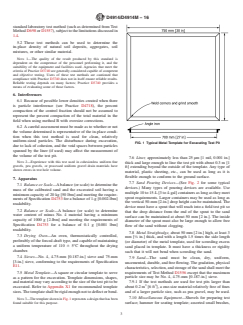
FIG. 1 Typical Metal Template for Excavating Test Pit
due to lack of cohesion, and the void spaces between particles
spanned by the liner (if used) may affect the measurement of
the volume of the test pit.
7.6 Liner, approximately less than 25 µm [1 mil, 0.001 in.]
NOTE 2—Experience with this test used in cohesionless uniform fine thick and large enough to line the test pit with about 0.3 m [1
gravels, pea gravels, or processed uniform gravel drain materials have
ft] extending beyond the outside of the template. Any type of
shown errors in test hole volume.
material, plastic sheeting, etc., can be used as long as it is
flexible enough to conform to the ground surface.
7. Apparatus
7.7 Sand Pouring Devices—(See Fig. 2 for some typical
7.1 Balance or Scale—Abalance (or scale) to determine the
devices.) Many types of pouring devices are available. Use
mass of the calibrated sand and the excavated soil having a
multiple 10 to 15-L[3 to 4-gal] containers as long as they meet
minimum capacity of 20 kg [50 lbm] and meeting the require-
spout requirements. Larger containers may be used as long as
ments of Specification D4753 for a balance of 1-g [0.002-lbm]
the vertical 50-mm [2-in.] drop height can be maintained. The
readability.
device must have a spout that will reach into a field test pit so
7.2 Balance or Scale—A balance (or scale) to determine
that the drop distance from the end of the spout to the sand
water content of minus No. 4 material having a minimum
surface can be maintained at about 50 mm [2 in.]. The inside
capacity of 1000 g [2-lbm] and meeting the requirements of
diameter of the spout must also be large enough to allow free
Specification D4753 for a balance of 0.1 g [0.001 lbm]
flow of the sand without clogging.
readability.
7.8 Metal Straightedge, about 50 mm [2 in.] high, at least 3
7.3 Drying Oven—An oven, thermostatically controlled, 1
mm [ ⁄8 in.] thick, and with a length 1.5 times the side length
preferably of the forced-draft type, and capable of maintaining
(or diameter) of the metal template, used for screeding excess
a uniform temperature of 110 6 5°C throughout the drying
sand placed in template. It must have a thickness or rigidity
chamber.
such that it will not bend when screeding the sand.
7.4 Sieves—No. 4, 4.75-mm [0.187-in.] sieve and 75-mm
7.9 Sand—The sand must be clean, dry, uniform,
[3-in.] sieve, conforming to the requirements of Specification
uncemented, durable, and free flowing.The gradation, physical
E11.
characteristics, selection, and storage of the sand shall meet the
requirements of Test Method D1556 except that the maximum
7.5 Metal Template—A square or circular template to serve
particle size may be No. 4, 4.75-mm [0.187-in.] sieve.
as a pattern for the excavation. Template dimensions, shapes,
7.9.1 If the test methods are used for test pits larger than
and material may vary according to the size of the test pit to be
3 3
about 0.2 m [6 ft ], a one-size material relatively free of fines
excavated. Refer to Appendix X1 for recommended template
and of a larger particle size, such as pea gravel, may be used.
sizes.The template shall be rigid enough not to deflect or bend.
7.10 Miscellaneous Equipment—Shovels for preparing test
NOTE3—ThetemplateshowninFig.1representsadesignthathasbeen
found suitable for this purpose. surface; hammer for seating template; assorted small brushes,
D4914/D4914M − 16
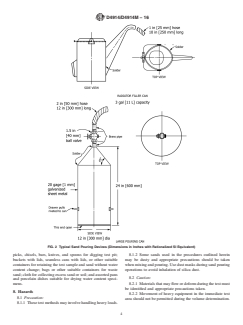
FIG. 2 Typical Sand Pouring Devices (Dimensions in Inches with Rationalized SI Equivalent)
picks, chisels, bars, knives, and spoons for digging test pit; 8.1.2 Some sands used in the procedures outlined herein
buckets with lids, seamless cans with lids, or other suitable may be dusty and appropriate precautions should be taken
containers for retaining the test sample and sand without water
whenmixingandpouring.Usedustmasksduringsandpouring
content change; bags or other suitable containers for waste
operations to avoid inhalation of silica dust.
sand; cloth for collecting excess sand or soil; and assorted pans
8.2 Caution:
and porcelain dishes suitable for drying water content speci-
8.2.1 Materialsthatmayflowordeformduringthetestmust
mens.
be identified and appropriate precautions taken.
8. Hazards
8.2.2 Movement of heavy equipment in the immediate test
8.1 Precaution:
area should not be permitted during the volume determination.
8.1.1 Thesetestmethodsmayinvolvehandlingheavyloads.
D4914/D4914M − 16
8.2.3 Errors may arise in the computed density of material 9. Calibration and Standardization
due to the influence of excessive water in the soil. These errors
9.1 Calibrate the sand pouring equipment and sand in
may be significant in materials with high permeability, such as
accordance with Annex A1.
sands and gravels, where the bottom of the test hole is close to
or below the water table. Errors may also arise due to change
10. Test Method A, Procedure—In-Place Density of Total
in density of the calibrated sand as it becomes wetted from
Material
capillary or freestanding water while performing the test. This
10.1 UseTestMethodAtodetermineatotalin-placedensity
problem becomes evident when removing the calibrated sand
(see 1.4).
from the test hole and wet sand is observed on the bottom or
sides of the test hole. When a liner is used, the buoyant forces
10.2 Determinetherecommendedsamplevolumeandselect
of free water beneath or behind the liner may adversely affect
the appropriate template for the anticipated material gradation
the volume determination.
in accordance with Annex A2. Assemble the remainder of the
8.2.4 Suitably protect the test area and equipment during
required equipment.
periods of inclement weather such as rain, snowfall, or high
10.3 Determine the mass of each combination of empty
wind. If the in-place water content value is required, it may be
container, lid, and container liner (if used) that will contain the
necessary to protect the area from direct sunlight.
excavated material. Number the containers and mark as to use.
8.2.5 Numerous containers may be required during perfor-
Write the mass on the container or prepare a separate list.
mance of these test methods. Properly label all containers to
10.4 Prepare the quantity of calibrated sand to be used.
avoid a possible mix-up.
10.4.1 Two sets of calibrated sand are necessary. Determin-
8.2.6 The total mass of the calibrated sand, or the soil
ing the volume of the test pit requires two separate sand pours
sample, or both, may exceed the capacity of the scale used,
to (1) measure the mass of sand used to fill the space between
requiring cumulative determinations of mass. Take care to
thesoilsurfaceandthetopofthetemplate,and(2)measurethe
ensure that the total mass is properly determined.
mass of sand used to fill the test pit up to the top of the
8.2.7 Pouring devices with valves provide consistent sand
template. The difference between the two gives the mass of
flow from test to test only if the valve is opened completely
sand in the test pit.
each time. A valve that is only partially open can significantly
10.4.2 Estimate the mass of calibrated sand and the number
alter the flow characteristics of the device. Each individual
of containers required to fill the space between the soil surface
pouring device has unique characteristics which may cause the
and the top of the template. Calculate the estimated mass by
sand to flow from it differently. The final calibration values are
multiplying the template volume by the density of the cali-
affectedbychangesintheseflowcharacteristics.Consequently,
brated sand. Number the containers to be used and mark as to
calibration values are not interchangeable, even for devices
use, for example, “template correction.” Fill the containers
which may appear to be identical.
with sand. Determine and record on a separate list the mass of
8.2.8 Donotallowpouringdevicestorunoutofsandduring
the containers and sand.
the pouring operation. The size of the stream of poured sand
10.4.3 From the anticipated volume of the test pit, estimate
from the pouring device should be constant. If the reservoir
the mass of calibrated sand required to fill the test pit. Increase
capacity of the pouring device is too small to fill the test pit
this amount by about 25 % to make sure that a sufficient sand
withonepour,usetwoormorepourstofillthetestpit.Stopthe
supply is available at the site, and then add to it the mass of
stream of sand when the reservoir is about three-fourths empty
sand calculated in 10.4.2. Calculate the estimated mass to be
and before the size of the stream diminishes. Refill the
used for the test pit by multiplying the anticipated volume of
reservoir and resume pouring.
the test pit by the density of the calibrated sand. Determine the
8.2.9 Pouring devices permit a varied sand drop distance
number of containers required, number them, and mark as to
that must be carefully controlled if consistent results are to be
use, for example, “test pit.” Fill the containers with sand.
achieved.Adistance of 50 mm [2 in.] from the end of the spout
Determine and record on a separate list the mass of the
to the surface being poured is recommended. Variations in the
containers and sand.
drop distance can significantly affect results. The drop distance
10.5 Select a representative area for the test, avoiding
is directly affected by the operator’s ability to control the
locations where removal of large particles would undermine
pouring device and by the operator’s judgment of the drop
the template.
distance while doing so. This involves stooping while holding
apouringdevicewithaninitialmassof20kg[50lbm]ormore
10.6 Prepare the surface of the area to be tested.
that is constantly changing in mass as the sand flows into the
10.6.1 Remove all loose material from an area large enough
test pit. Calibration values are not interchangeable from device
on which to place the template. Prepare the exposed surface so
todeviceandarenotnecessarilyinterchangeablefromoperator
that it is a firm, level plane.
to operator. Individual operators must demonstrate that they
10.6.2 Personnel should not step on the area selected for
can duplicate the calibration values for a device before they
testing. Provide a working platform when testing materials
may use them, preferably within 1 % of the average value for
which may flow or deform.
another operator. Otherwise, separate calibrations for the
various operators are required. 10.7 Place and seat the template on the prepared surface.
D4914/D4914M − 16
10.7.1 Use a hammer to firmly seat the template to avoid
movement of the template while the test is performed. The use
of nails, weights, or other means may be necessary to maintain
the position.
10.7.2 Remove any material loosened while placing and
seating the template, taking care to avoid leaving any void
space under the template. If necessary, fill voids under the
template with plastic soil, modeling clay, or other suitable
material, provided that this material is not subsequently exca-
vated as part of the material removed from the test pit.
10.8 Determine the mass of sand used to fill the space
between the soil surface and the top of the template.
FIG. 4 Sand Being Poured Into the Template
10.8.1 Irregularities of the soil surface within the template
must be taken into account. To do this, determine the mass of
sand required to fill the space between the soil surface and the
10.9.2 Place all material removed from the test pit in the
top of the template.
container(s) (see Fig. 5), being careful to avoid losing any
10.8.2 It is recommended that a cloth with a hole slightly
material (see 10.8.2).
largerthanthetemplatecenterholebeplacedoverthetemplate
10.9.3 Avoid water loss by keeping the container covered
to facilitate locating and collecting any excess sand, or loose
while material is not being placed in it. Use a sealable plastic
material, or both.
bag inside the container to hold the material.
10.8.3 Place a liner over the template and shape it by hand
10.9.4 Carefully trim the sides of the excavation so that the
to conform to the irregular soil surface and the template. The
dimensions of the test pit at the soil-template contact are as
liner should extend approximately 0.3 m [1 ft] outside the
close as possible to that of the template hole.Avoid disturbing
template. The liner should not be stretched too taut or contain
the template or the material beneath or outside the template.
excessive folds or wrinkles (see Fig. 3).
10.9.5 Continue the excavation to the required depth, care-
10.8.4 Pour the calibrated sand onto the liner inside the
fully removing any material that has been compacted or
template using a sand pouring device (see Fig. 4). Slightly
loosened in the process.
overfill the template (see 8.2.7 – 8.2.9). Return any sand
10.9.5.1 If during excavation of material from within the
remaining in the pouring device to the original container.
test pit, a particle(s) is found that is about 1 ⁄2 times, or more,
10.8.5 Carefully level the calibrated sand by screeding with
larger than the maximum particle size used to establish the
the steel straightedge across the top edges of the template.
dimensions and minimum volume of the test pit (see Annex
Return all screeded excess sand to the original container. Take
A2), set the particle(s) aside and mark appropriately. Deter-
care to avoid the loss of any excess sand.
mine the mass and volume of the particle(s) and then subtract
10.8.6 Remove the calibrated sand in the template and, if
them from the mass and volume of the material removed from
the sand is to be reclaimed, place it in a specially marked
the test pit. Consider the larger particle(s) as “oversize” and
container. Remove the liner.
follow the procedure outlined in Section 11, except that the
“total”density,whichwouldincludethelargerparticle(s),need
10.9 Excavate the test pit.
not be calculated. The “control fraction” values determined
10.9.1 Using hand tools (chisel, knife, bar, etc.), excavate
then become the values for the total material from the test pit.
the center portion of the test pit.
If enough of these particles are found so that their mass is
10.9.1.1 Do not permit any movement of heavy equipment
determined to be about 5 % or more of the mass of the
in the area of the test pit as deformation of the soil within the
excavated material, repeat the test with a larger test pit in
test pit may occur.
accordance with the guidelines in Annex A2.
FIG. 3 Plastic Liner Placed Over the Template FIG. 5 Excavation of the Test Pit
D4914/D4914M − 16
10.9.6 The sides of the pit should slope inward slightly. 10.11.5 Calculate the volume of the test pit and record.
Materials that do not exhibit much cohesion may require a 10.11.6 Determine the total mass of the excavated material
more conical-shaped test hole.
and containers.
10.9.7 The profile of the finished pit must be such that
10.11.7 Calculateandrecordthetotalmassofthecontainers
poured sand will completely fill the excavation. The sides of used to hold the excavated material. Record the container
the test pit should be as smooth as possible and free of pockets
numbers.
or overhangs or anything that might interfere with the free flow
10.11.8 Calculate the mass of the excavated material and
of the sand.
record.
10.9.8 Clean the bottom of the test pit of all loosened
10.11.9 Calculate the wet density of the excavated material.
material.
10.11.10 If the excavated material contains oversize par-
ticles (normally larger than the 4.75-mm (No. 4) sieve for
10.10 Determine the volume of the test pit.
cohesive materials and 75-mm [3-in.] sieve for cohesionless
NOTE 4—Aliner may be required to prevent migration of the calibrated
materials), separate the material using the appropriate size
sand into the natural voids of the material mass. The liner, approximately
sieve. If the material contains about 3 % (wet basis) or more
⁄2-mil thick, should be large enough to extend approximately 0.3 m (1 ft)
oversize particles, Test Method B should be used.
outside of the template after having been carefully pl
...
This document is not an ASTM standard and is intended only to provide the user of an ASTM standard an indication of what changes have been made to the previous version. Because
it may not be technically possible to adequately depict all changes accurately, ASTM recommends that users consult prior editions as appropriate. In all cases only the current version
of the standard as published by ASTM is to be considered the official document.
Designation: D4914 − 08 D4914/D4914M − 16
Standard Test Methods for
Density and Unit Weight of Soil and Rock in Place by the
Sand Replacement Method in a Test Pit
This standard is issued under the fixed designation D4914;D4914/D4914M; the number immediately following the designation indicates
the year of original adoption or, in the case of revision, the year of last revision. A number in parentheses indicates the year of last
reapproval. A superscript epsilon (´) indicates an editorial change since the last revision or reapproval.
1. Scope*
1.1 These test methods cover the determination of the in-place density and unit weight of soil and rock using a pouring device
and calibrated sand to determine the volume of a test pit. The word “rock’’“rock” in these test methods is used to imply that the
material being tested will typically contain particles larger than 3 in. (75 mm). [75 mm].
3 3
1.2 These test methods are best suited for test pits with a volume from 0.03 to 0.17 m (1[1 to 6 ft ).]. In general, the materials
tested would have a maximum particle size of 75 to 125 mm (3[3 to 5 in.).in.].
1.2.1 These test methods may be used for For larger sized excavations if desirable. However, for larger sized excavations, and
soil containing larger particles, Test Method D5030 is preferred.
3 3
1.2.2 Test Method D1556 or D2167 are usually used to determine the volume of test holes smaller than 0.03 m (1[1 ft ).]. While
3 3
the equipment illustrated in these test methods is used for volumes less than 0.03 m (1[1 ft ),], the test methods allow larger
versions of the equipment to be used when necessary.
1.3 Two test methods are provided as follows:
1.3.1 Test Method A—In-Place Density and Unit Weight of Total Material (Section 910).
1.3.2 Test Method B—In-Place Density and Unit Weight of Control Fraction (Section 1011).
1.4 Selection of Test Methods:
1.4.1 Test Method A is used when the in-place unit weight density of total material is to be determined. Test Method A can also
be used to determine percent compaction or percent relative density when the maximum particle size present in the in-place
material being tested does not exceed the maximum particle size allowed in the laboratory compaction test (refer to Test Methods
D698, D1557, D4253, D4254and , and D4254D7382). For Test Methods D698 and D1557 only, the unit weightdry density
determined in the laboratory compaction test may be corrected for larger particle sizes in accordance with, and subject to the
limitations of Practice D4718.
1.4.2 Test Method B is used when percent compaction or percent relative density is to be determined and the in-place material
contains particles larger than the maximum particle size allowed in the laboratory compaction test or when Practice D4718 is not
applicable for the laboratory compaction test. Then the material is considered to consist of two fractions, or portions. The material
from the in-place unit weightdry density test is physically divided into a control fraction and an oversize fraction based on a
designated sieve size. size (see Section 3). The unit weightdry density of the control fraction is calculated and compared with the
unit weight(s)dry density(s) established by the laboratory compaction test(s).
1.4.2.1 Because of possible lower densities created when there is particle interference (see Practice D4718), the percent
compaction of the control fraction should not be assumed to represent the percent compaction of the total material in the field.
1.4.3 Normally, the control fraction is the minus No. 4 sieve size material for cohesive or nonfree draining materials and the
minus 3-in. sieve size material for cohesionless, free-draining materials. While other sizes are used for the control fraction
3 3
( ⁄8, ⁄4-in.), these test methods have been prepared using only the No. 4 and the 3-in. sieve sizes for clarity.
1.5 Any materials that can be excavated with hand tools can be tested provided that the void or pore openings in the mass are
small enough (or a liner is used) to prevent the calibrated sand used in the test from entering the natural voids. The material being
tested should have sufficient cohesion or particle interlocking to maintain stable sides during excavation of the test pit and through
completion of this test. It should also be firm enough not to deform or slough due to the minor pressures exerted in digging the
hole and pouring the sand.
These test methods are under the jurisdiction of ASTM Committee D18 on Soil and Rock and are the direct responsibility of Subcommittee D18.08 on Special and
Construction Control Tests.
Current edition approved March 1, 2008March 1, 2016. Published March 2008March 2016. Originally approved in 1989. Last previous edition approved in 19992008 as
D4914 – 99.D4914 – 08. DOI: 10.1520/D4914-08.10.1520/D4914_D4914M-16.
*A Summary of Changes section appears at the end of this standard
Copyright © ASTM International, 100 Barr Harbor Drive, PO Box C700, West Conshohocken, PA 19428-2959. United States
D4914/D4914M − 16
1.6 These test methods are generally limited to material in an unsaturated condition and are not recommended for materials that
are soft or friable (crumble easily) or in a moisturewater condition such that water seeps into the hand-excavated hole. The
accuracy of the test methods may be affected for materials that deform easily or that may undergo volume change in the excavated
hole from standing or walking near the hole during the test.
1.7 These test methods use SI units with converted inch-pounds in parentheses.The values stated in either SI units or inch-pound
presented in brackets are to be regarded separately as standard. The values stated in each system may not be exact equivalents;
therefore each system shall be used independently of the other. Combining values from the two systems may result in
non-conformance with the standard.
1.7.1 In the engineering profession it is customary to use units representing both mass and force interchangeably, unless
dynamic calculations are involved. This implicitly combines two separate systems of units, that is, the absolute system and the
gravimetric system. It is undesirable to combine the use of two separate systems within a single standard. These test methods have
been written using inch-pound units (gravimetric system) where the pound (lbf) represents a unit of force (weight). However,
conversions are given in the SI system. The use of balances or scales recording pounds of mass (lbm), or the recording of density
in lbm/ft should not be regarded as nonconformance with these test methods.
1.8 All observed and calculated values shall conform to the guidelines for significant digits and rounding established in Practice
D6026 unless superseded by this standard.
1.8.1 The procedures used to specify how data are collected, recorded or calculated in this standard are regarded as the industry
standard. In addition they are representative of the significant digits that generally should be retained. The procedures used do not
consider material variation, purpose for obtaining the data, special purpose studies, or any considerations for the user’s objectives;
it is common practice to increase or reduce significant digits of reported data to be commensurate with these considerations. It is
beyond the scope of this standard to consider significant digits used in analytical methods for engineering design.
1.9 This standard does not purport to address all of the safety concerns, if any, associated with its use. It is the responsibility
of the user of this standard to establish appropriate safety and health practices and determine the applicability of regulatory
limitations prior to use. For specific hazards statements, see Sections 78 and A1.5.
2. Referenced Documents
2.1 ASTM Standards:
C127 Test Method for Relative Density (Specific Gravity) and Absorption of Coarse Aggregate
C566 Test Method for Total Evaporable Moisture Content of Aggregate by Drying
D653 Terminology Relating to Soil, Rock, and Contained Fluids
3 3
D698 Test Methods for Laboratory Compaction Characteristics of Soil Using Standard Effort (12 400 ft-lbf/ft (600 kN-m/m ))
D1556 Test Method for Density and Unit Weight of Soil in Place by Sand-Cone Method
D1557 Test Methods for Laboratory Compaction Characteristics of Soil Using Modified Effort (56,000 ft-lbf/ft (2,700
kN-m/m ))
D2167 Test Method for Density and Unit Weight of Soil in Place by the Rubber Balloon Method
D2216 Test Methods for Laboratory Determination of Water (Moisture) Content of Soil and Rock by Mass
D3740 Practice for Minimum Requirements for Agencies Engaged in Testing and/or Inspection of Soil and Rock as Used in
Engineering Design and Construction
D4253 Test Methods for Maximum Index Density and Unit Weight of Soils Using a Vibratory Table
D4254 Test Methods for Minimum Index Density and Unit Weight of Soils and Calculation of Relative Density
D4718 Practice for Correction of Unit Weight and Water Content for Soils Containing Oversize Particles
D4753 Guide for Evaluating, Selecting, and Specifying Balances and Standard Masses for Use in Soil, Rock, and Construction
Materials Testing
D5030 Test Method for Density of Soil and Rock in Place by the Water Replacement Method in a Test Pit
D6026 Practice for Using Significant Digits in Geotechnical Data
D7382 Test Methods for Determination of Maximum Dry Unit Weight and Water Content Range for Effective Compaction of
Granular Soils Using a Vibrating Hammer
E11 Specification for Woven Wire Test Sieve Cloth and Test Sieves
3. Terminology
3.1 Definitions:
3.1.1 Except as follows in 3.2, all definitions are in accordance with Terminology D653.
3.1 Definitions:
3.1.1 For definitions of terms related to this standard, refer to Terminology D653.
For referenced ASTM standards, visit the ASTM website, www.astm.org, or contact ASTM Customer Service at service@astm.org. For Annual Book of ASTM Standards
volume information, refer to the standard’s Document Summary page on the ASTM website.
D4914/D4914M − 16
3.2 Definitions of Terms Specific to This Standard:
3.2.1 control fraction—fraction, n—the portion of a soil sample consisting of particles smaller than a designated sieve size.
3.2.1.1 Discussion—
This fraction is used to compare in-place unit weights with unit weights density with density obtained from standard laboratory
tests. The control sieve size depends on the laboratory test used. Normally, the control fraction is the minus 4.75 mm, or No. 4
[0.187 in.] sieve size material for cohesive or non-free draining materials and the minus 75 mm [3-in.] sieve size material for
3 3
cohesionless, free-draining materials. While other sizes are used for the control fraction, 9.5 or 19 mm [ ⁄8, ⁄4-in.], these test
methods have been prepared using only the No. 4 and the 75 mm [3 in.] sieve sizes for clarity.
3.2.2 oversize particles—particles, n—the portion of a soil sample consisting of the particles larger than athe designated sieve
size. size for the control fraction selected.
3.2.3 sand pouring device(s), n—handheld pouring device(s) that holds the density sand equipped with a long pouring spout for
placing the sand with unobstructed flow at a constant drop height.
3.2.3.1 Discussion—
Multiple cans may be used but they must be of the same design and calibrated.
4. Summary of Test Method
4.1 The ground surface at the test location is prepared and a template (metal frame) is placed and fixed into position. The volume
of the space between the top of the template and the ground surface is determined by filling the space with calibrated sand using
a pouring device. The mass of the sand required to fill the template in place is determined and the sand removed. Material from
within the boundaries of the template is excavated forming a pit. Calibrated sand is then poured into the pit and template; the mass
of sand within the pit and the volume of the hole are determined. The wet density of the in-place material is calculated from the
mass of material removed and the measured volume of the test pit. The water content is determined and the dry unit weight density
of the in-place material is calculated.
4.2 The unit weight density of a control fraction of the material can be determined by subtracting the mass and volume of any
oversize particles from the initial values and recalculating the unit weight.density.
5. Significance and Use
5.1 These test methods are used to determine the in-place density of compacted materials in construction of earth embankments,
road fills, and structure backfill. For construction control, these test methods are often used as the bases for acceptance of material
compacted to a specified density or to a percentage of a maximum unit weight determined by a standard laboratory test method
(such as determined from Test Method D698 or D1557), subject to the limitations discussed in 1.4.
5.2 These test methods can be used to determine the in-place density of natural soil deposits, aggregates, soil mixtures, or other
similar material.
NOTE 1—Notwithstanding the statements on precision and bias contained in this test method, the precision of this test method The quality of the result
produced by this standard is dependent on the competence of the personnel performing it, and the suitability of the equipment and facilities used. Agencies
that meet the criteria of Practice D3740 are generally considered capable of competent and objective testing. Users of these test methods are cautioned
that compliance with Practice D3740 does not in itself ensure reliable results. Reliable testing depends on many factors; Practice D3740 provides a means
of evaluating some of those factors.
6. Interferences
6.1 Because of possible lower densities created when there is particle interference (see Practice D4718), the percent compaction
of the control fraction should not be assumed to represent the percent compaction of the total material in the field when using
method B with oversize corrections.
6.2 A careful assessment must be made as to whether or not the volume determined is representative of the in-place condition
when this test method is used for clean, relatively uniform-sized particles. The disturbance during excavation, due to lack of
cohesion, and the void spaces between particles spanned by the liner (if used) may affect the measurement of the volume of the
test pit.
NOTE 2—Experience with this test used in cohesionless uniform fine gravels, pea gravels, or processed uniform gravel drain materials have shown
errors in test hole volume.
7. Apparatus
7.1 Balance or Scale—A balance (or scale) to determine the mass of the calibrated sand and the excavated soil having a
minimum capacity of 20 kg (44 lbm)[50 lbm] and meeting the requirements of Specification D4753 for a balance of 1-g
(0.002-lbm)[0.002-lbm] readability.
D4914/D4914M − 16
7.2 Balance or Scale—A balance (or scale) to determine moisturewater content of minus No. 4 material having a minimum
capacity of 1000 g (2.2-lbm)[2-lbm] and meeting the requirements of Specification D4753 for a balance of 0.1 g readability. [0.001
lbm] readability.
7.3 Drying Oven—An oven, thermostatically controlled, preferably of the forced-draft type, and capable of maintaining a
uniform temperature of 110 6 5°C throughout the drying chamber.
7.4 Sieves—No. 4 (4.75-mm) 4, 4.75-mm [0.187-in.] sieve and 75-mm (3-in.)[3-in.] sieve, conforming to the requirements of
Specification E11.
7.5 Metal Template—A square or circular template to serve as a pattern for the excavation. Template dimensions, shapes, and
material may vary according to the size of the test pit to be excavated. Refer to Appendix X1 for recommended template sizes.
The template shall be rigid enough not to deflect or bend.
NOTE 3—The template shown in Fig. 1 represents a design that has been found suitable for this purpose.
7.6 Liner, approximately 0.013 mm (0.0005 in.) less than 25 μm [1 mil, 0.001 in.] thick and large enough to line the test pit with
about 0.3 m (1 ft)[1 ft] extending beyond the outside of the template. Any type of material, plastic sheeting, etc., can be used as
long as it is flexible enough to conform to the ground surface.
7.7 Sand Pouring Devices—(See Fig. 2 for some typical devices.) Many types of pouring devices are available. Use multiple
10 to 15-L [3 to 4-gal] containers as long as they meet spout requirements. Larger containers may be used as long as the vertical
50-mm [2-in.] drop height can be maintained. The device must have a spout that will reach into a field test pit so that the drop
distance from the end of the spout to the sand surface can be maintained at about 2 in. (50 mm).50 mm [2 in.]. The inside diameter
of the spout must also be large enough to allow free flow of the sand without clogging.
7.8 Metal Straightedge, about 50 mm (2 in.)[2 in.] high, at least 3 mm ([ ⁄8 in.)in.] thick, and with a length 1.5 times the side
length (or diameter) of the metal template, used for screeding excess sand placed in template. It must have a thickness or rigidity
such that it will not bend when screeding the sand.
7.9 Sand—The sand must be clean, dry, uniform, uncemented, durable, and free flowing. The gradation, physical characteristics,
selection, and storage of the sand shall meet the requirements of Test Method D1556 except that the maximum particle size may
be No. 4 (4.75-mm) 4, 4.75-mm [0.187-in.] sieve.
3 3
7.9.1 If the test methods are used for test pits larger than about 0.170.2 m (6[6 ft ),], a one-size material relatively free of fines
and of a larger particle size, such as pea gravel, may be used.
7.10 Miscellaneous Equipment—Shovels for preparing test surface; hammer for seating template; assorted small brushes, picks,
chisels, bars, knives, and spoons for digging test pit; buckets with lids, seamless cans with lids, or other suitable containers for
FIG. 1 Typical Metal Template for Excavating Test Pit (Dimensions in Inches)
D4914/D4914M − 16
FIG. 2 Typical Sand Pouring Devices (Dimensions in Inches)Inches with Rationalized SI Equivalent)
retaining the test sample and sand without moisture water content change; bags or other suitable containers for waste sand; cloth
for collecting excess sand or soil; and assorted pans and porcelain dishes suitable for drying moisturewater content specimens.
8. Hazards
8.1 Precaution:
8.1.1 These test methods may involve handling heavy loads.
8.1.2 Some sands used in the procedures outlined herein may be dusty and appropriate precautions should be taken when mixing
and pouring. Use dust masks during sand pouring operations to avoid inhalation of silica dust.
8.2 Caution:
8.2.1 Materials that may flow or deform during the test must be identified and appropriate precautions taken.
D4914/D4914M − 16
8.2.2 Movement of heavy equipment in the immediate test area should not be permitted during the volume determination.
8.2.3 Errors may arise in the computed unit weight density of material due to the influence of excessive moisturewater in the
soil. These errors may be significant in materials with high permeability, such as sands and gravels, where the bottom of the test
hole is close to or below the water table. Errors may also arise due to change in density of the calibrated sand as it becomes wetted
from capillary or freestanding water while performing the test. This problem becomes evident when removing the calibrated sand
from the test hole and wet sand is observed on the bottom or sides of the test hole. When a liner is used, the buoyant forces of
free water beneath or behind the liner may adversely affect the volume determination.
8.2.4 Suitably protect the test area and equipment during periods of inclement weather such as rain, snowfall, or high wind. If
the in-place moisturewater content value is required, it may be necessary to protect the area from direct sunlight.
8.2.5 Numerous containers may be required during performance of these test methods. Properly label all containers to avoid a
possible mix-up.
8.2.6 The total mass of the calibrated sand, or the soil sample, or both, may exceed the capacity of the scale used, requiring
cumulative determinations of mass. Take care to ensure that the total mass is properly determined.
8.2.7 Pouring devices with valves provide consistent sand flow from test to test only if the valve is opened completely each time.
A valve that is only partially open can significantly alter the flow characteristics of the device. Each individual pouring device has
unique characteristics which may cause the sand to flow from it differently. The final calibration values are affected by changes
in these flow characteristics. Consequently, calibration values are not interchangeable, even for devices which may appear to be
identical.
8.2.8 Do not allow pouring devices to run out of sand during the pouring operation. The size of the stream of poured sand from
the pouring device should be constant. If the reservoir capacity of the pouring device is too small to fill the test pit with one pour,
use two or more pours to fill the test pit. Stop the stream of sand when the reservoir is about three-fourths empty and before the
size of the stream diminishes. Refill the reservoir and resume pouring.
8.2.9 Pouring devices permit a varied sand drop distance that must be carefully controlled if consistent results are to be
achieved. A distance of 50 mm (2 in.)[2 in.] from the end of the spout to the surface being poured is recommended. Variations in
the drop distance can significantly affect results. The drop distance is directly affected by the operator’soperator’s ability to control
the pouring device and by the operator’s judgment of the drop distance while doing so. This involves stooping while holding a
pouring device with an initial mass of 20 kg (44 lbm)[50 lbm] or more that is constantly changing in mass as the sand flows into
the test pit. Calibration values are not interchangeable from device to device and are not necessarily interchangeable from operator
to operator. Individual operators must demonstrate that they can duplicate the calibration values for a device before they may use
them, preferably within 1 % of the average value for another operator. Otherwise, separate calibrations for the various operators
are required.
9. Calibration and Standardization
9.1 Calibrate the sand pouring equipment and sand in accordance with Annex A1.
10. Test Method A, Procedure—In-Place Density and Unit Weight of Total Material
10.1 Use Test Method A to determine a total unit weightin-place density (see 1.4).
10.2 Determine the recommended sample volume and select the appropriate template for the anticipated material gradation in
accordance with Annex A2. Assemble the remainder of the required equipment.
10.3 Determine the mass of each combination of empty container, lid, and container liner (if used) that will contain the
excavated material. Number the containers and mark as to use. Write the mass on the container or prepare a separate list.
10.4 Prepare the quantity of calibrated sand to be used.
10.4.1 Two sets of calibrated sand are necessary. Determining the volume of the test pit requires two separate sand pours to (1)
measure the mass of sand used to fill the space between the soil surface and the top of the template, and (2) measure the mass of
sand used to fill the test pit up to the top of the template. The difference between the two gives the mass of sand in the test pit.
10.4.2 Estimate the mass of calibrated sand and the number of containers required to fill the space between the soil surface and
the top of the template. Calculate the estimated mass by multiplying the template volume by the density of the calibrated sand.
Number the containers to be used and mark as to use, for example, “template correction.” Fill the containers with sand. Determine
and record on a separate list the mass of the containers and sand.
10.4.3 From the anticipated volume of the test pit, estimate the mass of calibrated sand required to fill the test pit. Increase this
amount by about 25 % to ensure make sure that a sufficient sand supply is available at the site, and then add to it the mass of sand
calculated in 9.4.210.4.2. Calculate the estimated mass to be used for the test pit by multiplying the anticipated volume of the test
pit by the density of the calibrated sand. Determine the number of containers required, number them, and mark as to use, for
example, “test pit.’’pit.” Fill the containers with sand. Determine and record on a separate list the mass of the containers and sand.
10.5 Select a representative area for the test, avoiding locations where removal of large particles would undermine the template.
10.6 Prepare the surface of the area to be tested.
D4914/D4914M − 16
10.6.1 Remove all loose material from an area large enough on which to place the template. Prepare the exposed surface so that
it is a firm, level plane.
10.6.2 Personnel should not step on the area selected for testing. Provide a working platform when testing materials which may
flow or deform.
10.7 Place and seat the template on the prepared surface.
10.7.1 Use a hammer to firmly seat the template to avoid movement of the template while the test is performed. The use of nails,
weights, or other means may be necessary to maintain the position.
10.7.2 Remove any material loosened while placing and seating the template, taking care to avoid leaving any void space under
the template. If necessary, fill voids under the template with plastic soil, modeling clay, or other suitable material, provided that
this material is not subsequently excavated as part of the material removed from the test pit.
10.8 Determine the mass of sand used to fill the space between the soil surface and the top of the template.
10.8.1 Irregularities of the soil surface within the template must be taken into account. To do this, determine the mass of sand
required to fill the space between the soil surface and the top of the template.
10.8.2 It is recommended that a cloth with a hole slightly larger than the template center hole be placed over the template to
facilitate locating and collecting any excess sand, or loose material, or both.
10.8.3 Place a liner (approximately ⁄2-mil thick) over the template and shape it by hand to conform to the irregular soil surface
and the template. The liner should extend approximately 0.3 m (1 ft)[1 ft] outside the template. The liner should not be stretched
too taut or contain excessive folds or wrinkles (see Fig. 3).
10.8.4 Pour the calibrated sand onto the liner inside the template using a sand pouring device (see Fig. 4). Slightly overfill the
template (see 7.2.78.2.7 – 7.2.98.2.9). Return any sand remaining in the pouring device to the original container.
10.8.5 Carefully level the calibrated sand by screeding with the steel straightedge across the top edges of the template. Return
all screeded excess sand to the original container. Take care to avoid the loss of any excess sand.
10.8.6 Remove the calibrated sand in the template and, if the sand is to be reclaimed, place it in a specially marked container.
Remove the liner.
10.9 Excavate the test pit.
10.9.1 Using hand tools (chisel, knife, bar, etc.), excavate the center portion of the test pit.
10.9.1.1 Do not permit any movement of heavy equipment in the area of the test pit as deformation of the soil within the test
pit may occur.
10.9.2 Place all material removed from the test pit in the container(s) (see Fig. 5), being careful to avoid losing any material
(see 9.8.210.8.2).
10.9.3 Avoid moisturewater loss by keeping the container covered while material is not being placed in it. Use a sealable plastic
bag inside the container to hold the material.
10.9.4 Carefully trim the sides of the excavation so that the dimensions of the test pit at the soil-template contact are as close
as possible to that of the template hole. Avoid disturbing the template or the material beneath or outside the template.
10.9.5 Continue the excavation to the required depth, carefully removing any material that has been compacted or loosened in
the process.
10.9.5.1 If during excavation of material from within the test pit, a particle(s) is found that is about 1 ⁄2 times, or more, larger
than the maximum particle size used to establish the dimensions and minimum volume of the test pit (see Annex A2), set the
particle(s) aside and mark appropriately. Determine the mass and volume of the particle(s) and then subtract them from the mass
and volume of the material removed from the test pit. Consider the larger particle(s) as “oversize’’“oversize” and follow the
procedure outlined in Section 1011, except that the “total’’ unit weight, “total” density, which would include the larger particle(s),
need not be calculated. The “control fraction’’fraction” values determined then become the values for the total material from the
test pit. If enough of these particles are found so that their mass is determined to be about 5 % or more of the mass of the excavated
material, repeat the test with a larger test pit in accordance with the guidelines in Annex A2.
FIG. 3 Plastic Liner Placed Over the Template
D4914/D4914M − 16
FIG. 4 Sand Being Poured Into the Template
FIG. 5 Excavation of the Test Pit
10.9.6 The sides of the pit should slope inward slightly. Materials that do not exhibit much cohesion may require a more
conical-shaped test hole.
10.9.7 The profile of the finished pit must be such that poured sand will completely fill the excavation. The sides of the test pit
should be as smooth as possible and free of pockets or overhangs or anything that might interfere with the free flow of the sand.
10.9.8 Clean the bottom of the test pit of all loosened material.
10.10 Determine the volume of the test pit.
NOTE 4—A liner may be required to prevent migration of the calibrated sand into the natural voids of the material mass. The liner, approximately ⁄2-mil
thick, should be large enough to extend approximately 0.3 m (1 ft) outside of the template after having been carefully placed and shaped to the soil surface
within the pit. Allowances must be made for slack. The liner should not be stretched too taut nor contain excessive folds or wrinkles. Inspect the linear
for punctures before use.
10.10.1 Pour the calibrated sand using the sand pouring device. Use the same pouring technique as used in the calibration
procedure described in Annex A1. Slightly overfill the template. Return any sand remaining in the pouring device to the original
container.
10.10.1.1 While the sand is being poured, avoid any vibrations in the test area.
10.10.2 Carefully level the calibrated sand by screeding with the steel straightedge across the top edges of the template. Return
all screeded excess sand to the original container. Take care to avoid the loss of any excess sand.
10.10.3 If the calibrated sand is to be reclaimed, remove the used sand and place it into a specially marked container. Remove
the liner and template.
10.11 Determine the dry unit weight.density. Equations for calcu
...