

ASTM F1182-07(2023)
(Specification)Standard Specification for Anodes, Sacrificial Zinc Alloy
General Information
- Abstract
ABSTRACT
This specification covers the requirements for sacrificial anodes of zinc alloy in the form of slabs, plates, discs, and rods for corrosion protection (cathodic protection) of metals and alloys. These anodes are primarily intended to reduce corrosion of surface ship and submarine hulls, steel and aluminum equipment and structures, sea chests, sonar domes, and the seawater side of condensers and other heat exchangers. The anodes are available either as cast-in cores (Class 1) or plain with no cores (Class 2). Class 1 anodes shall be of the following types: Type ZHS—hull slabs with steel straps; Type ZHB—hull slabs with brass straps; Type ZHC—hull slabs with core straps; Type ZSS—submarine slabs with steel straps; Type ZTS—teardrop shapes with steel straps; Type ZEP—heat exchanger or fair water discs (pipe core or pipe bushing core) that are in the form of square slabs (Style A), circular slabs (Style B), and semicircular slabs (Style C); Type ZBP—bars with pipe cores; and Type ZDM—segmented discs with machine formed interlocking cores. Conversely, Class 2 anodes shall be of the following types: Type ZRN—extruded, drawn or rolled rods; and Type ZPN—rolled plates. Anodes shall conform to material and manufacture, chemical composition, mechanical property, and dimensional requirements specified uniquely for each type.
SCOPE
1.1 This specification covers the requirements for zinc anodes in the form of slabs, plates, discs, and rods for corrosion protection (cathodic protection) of metals and alloys.
1.2 The anodes are primarily intended to reduce corrosion of surface ship and submarine hulls, steel and aluminum equipment and structures, sea chests, sonar domes, and the seawater side of condensers and other heat exchangers.
1.3 The values stated in inch-pound units are to be regarded as standard. The values given in parentheses are mathematical conversions to SI units that are provided for information only and are not considered standard.
1.4 This standard does not purport to address all of the safety concerns, if any, associated with its use. It is the responsibility of the user of this standard to establish appropriate safety, health, and environmental practices and determine the applicability of regulatory limitations prior to use.
1.5 This international standard was developed in accordance with internationally recognized principles on standardization established in the Decision on Principles for the Development of International Standards, Guides and Recommendations issued by the World Trade Organization Technical Barriers to Trade (TBT) Committee.
- Status
- Published
- Publication Date
- 30-Apr-2023
- Technical Committee
- F25 - Ships and Marine Technology
- Drafting Committee
- F25.07 - General Requirements
Overview
ASTM F1182-07(2023) Standard Specification for Anodes, Sacrificial Zinc Alloy sets requirements for sacrificial zinc alloy anodes supplied as slabs, plates, discs, and rods, primarily supporting corrosion protection (cathodic protection) of metals and alloys in marine and industrial applications. This international standard defines the chemical composition, manufacturing, mechanical properties, and dimensional requirements for various classes and types of zinc alloy anodes designed to protect structures operating in corrosive environments, especially where seawater is present.
Developed in accordance with globally recognized standardization principles, this specification enables industry stakeholders to select and use reliable zinc anodes for prolonging the lifespan of valuable marine and industrial equipment.
Key Topics
- Product Forms: The standard covers zinc anodes delivered as slabs, plates, discs, rods, and bars, both with cast-in cores (Class 1) and without cores (Class 2).
- Classification:
- Class 1: Includes types such as hull slabs with steel or brass straps, submarine slabs, teardrop shapes, segmented discs, and bars with pipe cores.
- Class 2: Covers plain rods and rolled plates without core inserts.
- Application Scope:
- Surface ships, submarine hulls
- Steel and aluminum equipment and structural elements
- Sea chests and sonar domes
- Seawater sides of condensers and heat exchangers
- Material Properties:
- Specifies required chemical composition, including limits on lead, iron, cadmium, copper, and aluminum content
- Mechanical integrity and dimensional tolerances must be verified
- Manufacturing & Testing:
- Outlines sampling procedures, mechanical testing (e.g., torsional shear and bend tests), and core bond tests to ensure product quality
- Quality assurance and inspection requirements
- Marking and Packaging:
- Anodes must be clearly marked, including "DO NOT PAINT" on certain forms, and packaged to protect against shipment damage
Applications
Sacrificial zinc alloy anodes specified under ASTM F1182-07(2023) play a crucial role in protecting metal components in harsh, corrosive environments by providing cathodic protection. Principal application areas include:
- Marine Vessels: Zinc anodes are crucial for surface ships and submarines, safeguarding hulls from galvanic corrosion, thereby extending vessel life and reducing maintenance needs.
- Industrial Equipment: Used on steel and aluminum structures, heat exchangers, sea chests, and sonar domes, where exposure to seawater can cause rapid corrosion.
- Infrastructure: Supports the protection of submerged pipelines, piers, and other metallic structures in marine or saline service.
- Power Plants: Provides corrosion resistance on the seawater side of condensers in power generation, helping prevent costly equipment failures.
Selection of anode type (shape, size, and core) depends on the specific application, mounting requirements, and environmental exposure. The standard ensures that anodes match design expectations and comply with industry best practices for corrosion control.
Related Standards
Several standards are referenced within ASTM F1182-07(2023), providing supporting guidance for materials, testing, packaging, and inspection:
- ASTM A36/A36M: Specification for Carbon Structural Steel, relevant for steel core materials.
- ASTM B21/B21M: Specification for Naval Brass Rod, Bar, and Shapes.
- ASTM B103/B103M: Specification for Phosphor Bronze Plate, Sheet, Strip, and Rolled Bar.
- ASTM E290: Test Methods for Bend Testing of Material for Ductility.
- ASTM E536: Test Methods for Chemical Analysis of Zinc and Zinc Alloys.
- ASME B1.20.1: Pipe Threads, General Purpose.
- ASQ/ANSI Z1.4: Sampling Procedures and Tables for Inspection by Attributes.
- MIL-STD-129, MIL-STD-1186, and others: Military standards for marking, packaging, and bracing during shipping.
Conclusion
ASTM F1182-07(2023) provides a detailed, internationally harmonized framework for selecting and deploying sacrificial zinc alloy anodes for effective cathodic protection. Adhering to this standard maximizes equipment longevity, ensures regulatory compliance, and reduces risk of corrosion-related failure in marine and industrial operations.
Keywords: ASTM F1182, sacrificial zinc anodes, cathodic protection, marine corrosion, zinc alloy, heat exchanger protection, ship hull corrosion, industrial anodes, corrosion standards, marine industry standards.
Relations
- Refers
ASTM B103/B103M-23 - Standard Specification for Phosphor Bronze Plate, Sheet, Strip, and Rolled Bar - Effective Date
- 01-Oct-2023
- Effective Date
- 01-Oct-2023
- Effective Date
- 01-Apr-2020
- Refers
ASTM B103/B103M-19 - Standard Specification for Phosphor Bronze Plate, Sheet, Strip, and Rolled Bar - Effective Date
- 01-Oct-2019
- Effective Date
- 01-Apr-2019
- Effective Date
- 01-Oct-2018
- Effective Date
- 01-May-2018
- Effective Date
- 01-Dec-2015
- Effective Date
- 01-Jun-2015
- Refers
ASTM B103/B103M-15 - Standard Specification for Phosphor Bronze Plate, Sheet, Strip, and Rolled Bar - Effective Date
- 15-May-2015
- Effective Date
- 01-Sep-2014
- Effective Date
- 01-Apr-2013
- Effective Date
- 01-Nov-2012
- Effective Date
- 01-Apr-2012
- Effective Date
- 15-Aug-2010
Get Certified
Connect with accredited certification bodies for this standard

Element Materials Technology
Materials testing and product certification.

Inštitut za kovinske materiale in tehnologije
Institute of Metals and Technology. Materials testing, metallurgical analysis, NDT.
Sponsored listings
Frequently Asked Questions
ASTM F1182-07(2023) is a technical specification published by ASTM International. Its full title is "Standard Specification for Anodes, Sacrificial Zinc Alloy". This standard covers: ABSTRACT This specification covers the requirements for sacrificial anodes of zinc alloy in the form of slabs, plates, discs, and rods for corrosion protection (cathodic protection) of metals and alloys. These anodes are primarily intended to reduce corrosion of surface ship and submarine hulls, steel and aluminum equipment and structures, sea chests, sonar domes, and the seawater side of condensers and other heat exchangers. The anodes are available either as cast-in cores (Class 1) or plain with no cores (Class 2). Class 1 anodes shall be of the following types: Type ZHS—hull slabs with steel straps; Type ZHB—hull slabs with brass straps; Type ZHC—hull slabs with core straps; Type ZSS—submarine slabs with steel straps; Type ZTS—teardrop shapes with steel straps; Type ZEP—heat exchanger or fair water discs (pipe core or pipe bushing core) that are in the form of square slabs (Style A), circular slabs (Style B), and semicircular slabs (Style C); Type ZBP—bars with pipe cores; and Type ZDM—segmented discs with machine formed interlocking cores. Conversely, Class 2 anodes shall be of the following types: Type ZRN—extruded, drawn or rolled rods; and Type ZPN—rolled plates. Anodes shall conform to material and manufacture, chemical composition, mechanical property, and dimensional requirements specified uniquely for each type. SCOPE 1.1 This specification covers the requirements for zinc anodes in the form of slabs, plates, discs, and rods for corrosion protection (cathodic protection) of metals and alloys. 1.2 The anodes are primarily intended to reduce corrosion of surface ship and submarine hulls, steel and aluminum equipment and structures, sea chests, sonar domes, and the seawater side of condensers and other heat exchangers. 1.3 The values stated in inch-pound units are to be regarded as standard. The values given in parentheses are mathematical conversions to SI units that are provided for information only and are not considered standard. 1.4 This standard does not purport to address all of the safety concerns, if any, associated with its use. It is the responsibility of the user of this standard to establish appropriate safety, health, and environmental practices and determine the applicability of regulatory limitations prior to use. 1.5 This international standard was developed in accordance with internationally recognized principles on standardization established in the Decision on Principles for the Development of International Standards, Guides and Recommendations issued by the World Trade Organization Technical Barriers to Trade (TBT) Committee.
ABSTRACT This specification covers the requirements for sacrificial anodes of zinc alloy in the form of slabs, plates, discs, and rods for corrosion protection (cathodic protection) of metals and alloys. These anodes are primarily intended to reduce corrosion of surface ship and submarine hulls, steel and aluminum equipment and structures, sea chests, sonar domes, and the seawater side of condensers and other heat exchangers. The anodes are available either as cast-in cores (Class 1) or plain with no cores (Class 2). Class 1 anodes shall be of the following types: Type ZHS—hull slabs with steel straps; Type ZHB—hull slabs with brass straps; Type ZHC—hull slabs with core straps; Type ZSS—submarine slabs with steel straps; Type ZTS—teardrop shapes with steel straps; Type ZEP—heat exchanger or fair water discs (pipe core or pipe bushing core) that are in the form of square slabs (Style A), circular slabs (Style B), and semicircular slabs (Style C); Type ZBP—bars with pipe cores; and Type ZDM—segmented discs with machine formed interlocking cores. Conversely, Class 2 anodes shall be of the following types: Type ZRN—extruded, drawn or rolled rods; and Type ZPN—rolled plates. Anodes shall conform to material and manufacture, chemical composition, mechanical property, and dimensional requirements specified uniquely for each type. SCOPE 1.1 This specification covers the requirements for zinc anodes in the form of slabs, plates, discs, and rods for corrosion protection (cathodic protection) of metals and alloys. 1.2 The anodes are primarily intended to reduce corrosion of surface ship and submarine hulls, steel and aluminum equipment and structures, sea chests, sonar domes, and the seawater side of condensers and other heat exchangers. 1.3 The values stated in inch-pound units are to be regarded as standard. The values given in parentheses are mathematical conversions to SI units that are provided for information only and are not considered standard. 1.4 This standard does not purport to address all of the safety concerns, if any, associated with its use. It is the responsibility of the user of this standard to establish appropriate safety, health, and environmental practices and determine the applicability of regulatory limitations prior to use. 1.5 This international standard was developed in accordance with internationally recognized principles on standardization established in the Decision on Principles for the Development of International Standards, Guides and Recommendations issued by the World Trade Organization Technical Barriers to Trade (TBT) Committee.
ASTM F1182-07(2023) is classified under the following ICS (International Classification for Standards) categories: 77.150.60 - Lead, zinc and tin products. The ICS classification helps identify the subject area and facilitates finding related standards.
ASTM F1182-07(2023) has the following relationships with other standards: It is inter standard links to ASTM B103/B103M-23, ASTM D3951-18(2023), ASTM B21/B21M-20, ASTM B103/B103M-19, ASTM B21/B21M-18(2019), ASTM B21/B21M-18, ASTM D3951-18, ASTM D3951-15, ASTM E536-15, ASTM B103/B103M-15, ASTM B21/B21M-14, ASTM E290-13, ASTM A36/A36M-12, ASTM B21/B21M-12, ASTM D3951-10. Understanding these relationships helps ensure you are using the most current and applicable version of the standard.
ASTM F1182-07(2023) is available in PDF format for immediate download after purchase. The document can be added to your cart and obtained through the secure checkout process. Digital delivery ensures instant access to the complete standard document.
Standards Content (Sample)
This international standard was developed in accordance with internationally recognized principles on standardization established in the Decision on Principles for the
Development of International Standards, Guides and Recommendations issued by the World Trade Organization Technical Barriers to Trade (TBT) Committee.
Designation: F1182 − 07 (Reapproved 2023) An American National Standard
Standard Specification for
Anodes, Sacrificial Zinc Alloy
This standard is issued under the fixed designation F1182; the number immediately following the designation indicates the year of
original adoption or, in the case of revision, the year of last revision. A number in parentheses indicates the year of last reapproval. A
superscript epsilon (´) indicates an editorial change since the last revision or reapproval.
1. Scope B103/B103M Specification for Phosphor Bronze Plate,
Sheet, Strip, and Rolled Bar
1.1 This specification covers the requirements for zinc
D3951 Practice for Commercial Packaging
anodes in the form of slabs, plates, discs, and rods for corrosion
E290 Test Methods for Bend Testing of Material for Ductil-
protection (cathodic protection) of metals and alloys.
ity
1.2 The anodes are primarily intended to reduce corrosion
E536 Test Methods for Chemical Analysis of Zinc and Zinc
of surface ship and submarine hulls, steel and aluminum
Alloys
equipment and structures, sea chests, sonar domes, and the
2.3 Military Standards:
seawater side of condensers and other heat exchangers.
MIL-STD-129 Marking for Shipment and Storage
1.3 The values stated in inch-pound units are to be regarded
MIL-STD-1186 Cushioning, Anchoring, Bracing, Blocking,
as standard. The values given in parentheses are mathematical
and Waterproofing; With Appropriate Test Methods
conversions to SI units that are provided for information only
2.4 Military Specification:
and are not considered standard.
MIL-P-15011 Pallets Material Handling, Wood Post
1.4 This standard does not purport to address all of the Construction, 4-Way Entry
safety concerns, if any, associated with its use. It is the
2.5 Federal Specifications:
responsibility of the user of this standard to establish appro-
PPP-B-601 Boxes, Wood, Cleated Plywood
priate safety, health, and environmental practices and deter-
PPP-B-621 Boxes, Wood, Nailed and Lock-Corner
mine the applicability of regulatory limitations prior to use.
PPP-B-636 Boxes, Shipping, Fiberboard
1.5 This international standard was developed in accor-
2.6 ASME Standard:
dance with internationally recognized principles on standard-
B1.20.1 Pipe Threads, General Purpose, Inch
ization established in the Decision on Principles for the
2.7 ASQ Standard:
Development of International Standards, Guides and Recom-
ASQ/ANSI Z1.4 Sampling Procedures and Tables for In-
mendations issued by the World Trade Organization Technical
spection by Attributes
Barriers to Trade (TBT) Committee.
3. Classification
2. Referenced Documents
3.1 The anodes shall be of the following classes and types,
2.1 Order of Precedence—In the event of a conflict between
as specified (see 4.1.2):
the text of this specification and the references cited herein, the
3.1.1 Class 1—Cast-in cores:
text of this specification shall take precedence.
3.1.1.1 Type ZHS—Zinc, hull slab, steel straps, 23 lb and
42 lb (10kg and 19 kg) sizes.
2.2 ASTM Standards:
3.1.1.2 Type ZHB—Zinc, hull slab, brass straps, 23 lb
A36/A36M Specification for Carbon Structural Steel
(10 kg) size.
B21/B21M Specification for Naval Brass Rod, Bar, and
3.1.1.3 Type ZHC—Zinc, hull slab, core strap, 23 lb and
Shapes
42 lb (10 kg and 19 kg) sizes.
3.1.1.4 Type ZSS—Zinc, submarine slab, steel strap, 12 lb
and 24 lb (5 kg and 11 kg) sizes.
This specification is under the jurisdiction of ASTM Committee F25 on Ships
and Marine Technology and is the direct responsibility of Subcommittee F25.07 on
General Requirements.
Current edition approved May 1, 2023. Published June 2023. Originally Available from DLA Document Services, Building 4/D, 700 Robbins Ave.,
approved in 1988. Last previous edition approved in 2019 as F1182 – 07 (2019). Philadelphia, PA 19111-5094, http://quicksearch.dla.mil.
DOI: 10.1520/F1182-07R23. Available from American Society of Mechanical Engineers (ASME), ASME
For referenced ASTM standards, visit the ASTM website, www.astm.org, or International Headquarters, Two Park Ave., New York, NY 10016-5990, http://
contact ASTM Customer Service at service@astm.org. For Annual Book of ASTM www.asme.org.
Standards volume information, refer to the standard’s Document Summary page on Available from American Society for Quality (ASQ), 600 N. Plankinton Ave.,
the ASTM website. Milwaukee, WI 53203, http://www.asq.org.
Copyright © ASTM International, 100 Barr Harbor Drive, PO Box C700, West Conshohocken, PA 19428-2959. United States
F1182 − 07 (2023)
3.1.1.5 Type ZTS—Zinc, teardrop shape, steel strap, 5 lb
H hull slab
S submarine slab
(2 kg) size.
T teardrop shape
3.1.1.6 Type ZEP—Zinc, heat exchanger or fair water disc,
E heat exchanger slab
(pipe core or pipe bushing core):
R rod, cylindrical
P plate
Style A square slab, 9 lb (4 kg) size
B bar, square
Style B circular slab, various sizes
D disc, segmented
Style C semicircular slab, 23 lb (10 kg) size
3.2.3 The third letter designates the core:
3.1.1.7 Type ZBP—Zinc, bar, pipe core, 8 lb (4 kg) size.
B brass straps
3.1.1.8 Type ZDM—Zinc, segmented disc, machine formed
S steel straps
interlocking core, various sizes.
C core strap
P pipe core
3.1.2 Class 2—Plain, no cores;
M machine formed interlocking core
3.1.2.1 Type ZRN—Zinc, rod, no core, extruded, drawn or
N no core
rolled.
3.1.2.2 Type ZPN—Zinc, plate, no core, rolled.
4. Ordering Information
3.2 The letter designations of types of anodes have the
4.1 Orders for material under this specification shall include
following meanings:
the following information:
3.2.1 The first letter designates anode metal:
4.1.1 ASTM designation and year of issue,
Z zinc
4.1.2 Class and type (see 3.1),
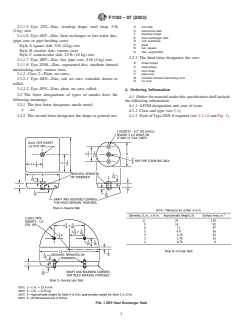
3.2.2 The second letter designates the shape or general use: 4.1.3 Style of Type ZEP, if required (see 3.1.1.6 and Fig. 1),
FIG. 1 ZEP Heat Exchanger Slab
F1182 − 07 (2023)
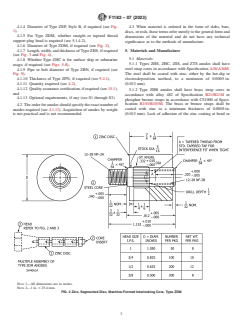
4.1.4 Diameter of Type ZEP, Style B, if required (see Fig. 4.3 When material is ordered in the form of slabs, bars,
1), discs, or rods, these terms refer merely to the general form and
4.1.5 For Type ZDM, whether straight or tapered thread
dimensions of the material and do not have any technical
support plug head is required (see 5.1.4.2),
significance as to the methods of manufacture.
4.1.6 Diameter of Type ZDM, if required (see Fig. 2),
4.1.7 Length, width, and thickness of Type ZHS, if required
5. Materials and Manufacture
(see Fig. 3 and Fig. 4),
5.1 Materials:
4.1.8 Whether Type ZHC is for surface ship or submarine
5.1.1 Types ZHS, ZHC, ZSS, and ZTS anodes shall have
usage, if required (see Figs. 5-8),
steel strap cores in accordance with Specification A36/A36M.
4.1.9 Pipe or bolt diameter of Type ZRN, if required (see
Fig. 9), The steel shall be coated with zinc, either by the hot-dip or
electrodeposition method, to a minimum of 0.0005 in.
4.1.10 Thickness of Type ZPN, if required (see 9.2.1),
4.1.11 Quantity required (see 4.2), (0.013 mm).
4.1.12 Quality assurance certification, if required (see 15.1),
5.1.2 Type ZHB anodes shall have brass strap cores in
and
accordance with alloy 482 of Specification B21/B21M or
4.1.13 Optional requirements, if any (see S1 through S3).
phosphor bronze straps in accordance with C51000 of Speci-
fication B103/B103M. The brass or bronze straps shall be
4.2 The order for anodes should specify the exact number of
anodes required (see 4.1.11). Acquisition of anodes by weight coated with zinc to a minimum thickness of 0.0005 in.
is not practical and is not recommended. (0.013 mm). Lack of adhesion of the zinc coating at bend or
NOTE 1—All dimensions are in inches.
NOTE 2—1 in. = 25.4 mm.
FIG. 2 Zinc, Segmented Disc, Machine-Formed Interlocking Core, Type ZDM
F1182 − 07 (2023)
NOTE 1—Anode may be cast with strap in the up or down position. All
NOTE 1—Anode may be cast with strap in the up or down position. All
dimensions (inches) refer to the wider and longer edges of the anode.
dimensions (inches) refer to the wider and longer edges of the anodes.
NOTE 2—Tolerance 6 ⁄8 in.
NOTE 2—Tolerance 6 ⁄8 in.
NOTE 3—1 in. = 25.4 mm.
NOTE 3—1 in. = 25.4 mm.
NOTE 4—Minimum weight 41 lb (18.6 kg).
NOTE 4—Minimum weight 21.5 lb (9.7 kg).
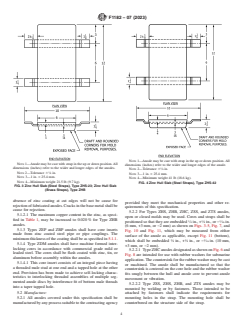
FIG. 4 Zinc Hull Slab (Steel Straps), Type ZHS-42
FIG. 3 Zinc Hull Slab (Steel Straps), Type ZHS-23; Zinc Hull Slab
(Brass Straps), Type ZHB
absence of zinc coating at cut edges will not be cause for
provided they meet the mechanical properties and other re-
rejection of fabricated anodes. Cracks in the base metal shall be
quirements of this specification.
cause for rejection.
5.2.2 For Types ZHS, ZHB, ZHC, ZSS, and ZTS anodes,
5.1.2.1 The maximum copper content in the zinc, as speci-
open or closed molds may be used. Cores and straps shall be
fied in Table 1, may be increased to 0.020 % for Type ZHB
1 1 1
positioned so that they are embedded ⁄4 in., + ⁄8 in., or − ⁄16 in.
anodes.
(6 mm, +3 mm, or −2 mm) as shown on Figs. 3-5, Fig. 7, and
5.1.3 Types ZEP and ZBP anodes shall have core inserts
Fig. 10 and Fig. 11, which may be measured from either
made from zinc coated steel pipe or pipe couplings. The
surface of the anode as applicable, except Fig. 11 (bottom),
minimum thickness of the coating shall be as specified in 5.1.1.
3 1 1
which shall be embedded ⁄8 in., + ⁄8 in., or − ⁄16 in. (10 mm,
5.1.4 Type ZDM anodes shall have machine formed inter-
+3 mm, or −2 mm).
locking cores in accordance with commercial grade mild or
5.2.2.1 Type ZHC anodes designated as shown on Fig. 6 and
leaded steel. The cores shall be flash coated with zinc, tin, or
Fig. 8 are intended for use with rubber washers for submarine
aluminum before assembly within the anodes.
application. The countersink for the rubber washer may be cast
5.1.4.1 This core insert consists of an integral piece having
or machined. The anode shall be manufactured so that the
a threaded male stud at one end and a tapped hole at the other
countersink is centered on the core hole and the rubber washer
end. Provision has been made to achieve self-locking charac-
fits snugly between the hull and anode core to prevent anode
teristics to interlocking threaded assemblies of multiple seg-
movement or vibration.
mented anode discs by interference fit of bottom male threads
5.2.2.2 Type ZSS, ZHS, ZHB, and ZTS anodes may be
into a taper tapped hole.
mounted by welding or by fasteners. Those intended to be
5.2 Manufacture: attached by fasteners shall indicate the requirements for
5.2.1 All anodes covered under this specification shall be mounting holes in the strap. The mounting hole shall be
manufactured by any process suitable to the contracting agency counterbored on the structure side of the strap.
F1182 − 07 (2023)
NOTE 1—Anode may be cast with exposed face in the up or down
position. All dimensions are in inches.
NOTE 2—Tolerance 6 ⁄8 in.
NOTE 3—1 in. = 25.4 mm.
NOTE 4—Minimum weight 21.5 lb (9.7 kg).
FIG. 5 Zinc Hull Slab (Core Strap), Type ZHC-23
5.2.3 The pipe core inserts for Type ZEP anodes shall
NOTE 1—Anode may be cast with exposed face in the up or down
conform to 5.1.3. The position of the pipe core insert shall not
position. All dimensions are in inches.
vary more than 6 ⁄8 in. (3 mm) from the center as shown on
NOTE 2—Tolerance 6 ⁄8 in.
Fig. 1.
NOTE 3—1 in. = 25.4 mm.
5.2.4 The position of the pipe core insert for Type ZBP NOTE 4—Minimum weight 21.5 lb (9.7 kg).
FIG. 6 Zinc Hull Slab (Core Strap), Type ZHC-23, Submarine Ap-
anodes specified in 5.1.3 shall not vary more than 6 ⁄4 in.
plication
(6 mm) from the center as shown on Fig. 12.
5.2.5 Metallic bonding or an interference fit of the core into
Type ZDM anode (see Fig. 2) shall be required so that an axial
force applied from the stud end to remove the core insert is a 8. Other Requirements
minimum of 750 lb (340 kg) (see 13.1.3).
8.1 When tested in accordance with 13.1.1 or 13.1.2, Types
5.2.6 The machine formed core insert specified in 5.1.4
ZHS, ZHB, ZHC, ZSS, ZTS, ZEP, and ZBP anodes shall obtain
shall be manufactured in accordance with details and toler-
a sound metallurgical bond between the zinc and core for at
ances shown for Piece 2 on Fig. 1 and ASME B1.20.1.
least 30 % of the total surface area of each core in contact with
5.2.6.1 The pieces shown on Fig. 1 shall screw together very
the anode.
snugly by hand tightening or by using simple hand tools such
8.2 During the manufacturing process, certain toxic com-
as pliers or pipe wrenches.
pounds (such as zinc phosphide) may become by-products.
6. Chemical Composition
Caution should be taken in disposal of process wastewater to
ensure that the composition of the water meets with local, state,
6.1 The anodes shall conform to the composition specified
and federal regulations.
in Table 1. Total of elemental constituents not specified in
Table 1 shall not exceed 0.10 %. Metallic elements not
9. Dimensions, Mass, and Permissible Variations
specified in Table 1 are considered contaminants.
9.1 Types ZHS, ZHB, ZHC, ZTS, ZSS, ZEP, ZBP, ZDM,
7. Mechanical Properties
and ZRN anodes shall be in accordance with the dimensions
7.1 When tested in accordance with 13.2, Types ZRN rods shown in Figs. 1-11, inclusive.
and ZPN plates shall not fracture or show signs of cracking.
9.2 Type ZPN anode shall be 48 in. (1220 mm) in length by
7.2 When tested in accordance with 13.2.1, ZRN anodes 24 in. (610 cm) in width.
shall have a minimum torsional shear strength of 12 000 psi 9.2.1 The thickness shall be either ⁄2 in. or 1 in. (13 mm or
(83 MPa). 25 mm) as specified (see 4.1.10).
F1182 − 07 (2023)
NOTE 1—Anode may be cast with exposed face in the up or down position. All dimensions are in inches.
NOTE 2—Tolerance 6 ⁄8 in.
NOTE 3—1 in. = 25.4 mm.
NOTE 4—Minimum weight 39 lb (17.7 kg).
FIG. 7 Zinc Hull Slab (Core Strap), Type ZHC-42
9.3 Types ZSS-12, ZSS-24, ZHC-23, ZHC-42, ZHS-23, and 9.8 The diameter of the ZRN anode shall not vary more than
ZHS-42 shall have the following minimum weight require- 6 ⁄32 in. (1 mm) from the specified diameter.
ments:
9.9 The thickness of Types ZHS, ZHB, ZHC, ZTS, ZPN,
Anode Weight, min, lb (kg)
ZSS, ZEP, and ZBP anodes shall not vary more than 6 ⁄8 in. (3
mm). Thickness measurements shall be taken at random 1 in.
ZSS-12 11.0 (5)
(25 mm) from any edge of the anode by means of a suitable
ZSS-24, ZHC-23, ZHS-23 21.5 (10)
ZHC-42 39.0 (18)
caliper avoiding any surface irregularities which would inter-
ZHS-42 41.0 (19)
fere with a representative measurement.
9.3.1 The total weight of the specified type of anode
9.10 The thickness of Type ZDN anodes shall not vary more
received divided by the total number of anodes of that type
than 6 ⁄64 in. (0.4 mm).
shall be equal to or greater than the minimum weight (11.0,
9.10.1 The cores of Type ZDM anodes shall be positioned
21.5, 39.0, 41.0) lb ((5, 10, 18, 19) kg)) of the anode type
axially and concentrically in the zinc disc. Eccentricity greater
specified. If the weight is less than the minimum weight for the
than 0.005 in. (0.13 mm) will not be permitted.
type of anode specified, it shall be cause for rejection of the
entire lot.
10. Workmanship, Finish, and Appearance
9.4 The length and width of Types ZHS, ZHB, ZHC, ZTS,
10.1 The zinc anodes shall be free of flash burrs, cracks,
ZPN, ZSS, and ZBP anodes shall not vary more than 6 ⁄8 in. (3 blow holes, pipes, and surface slag consistent with good
mm), measured at the widest surface of the tapered (for mold
commercial practice.
release) anode. 10.1.1 For anodes less than 2 in. (50 mm) thick, when
measured with a straightedge placed diagonally across the
9.5 The length of Type ZRN anodes will be permitted to
opposite edges of the cast anode, the anode shall be free of
have a variation of 61 in. (25 mm) based on nominal lengths
shrinkage cavities exceeding ⁄4 in. (6 mm) in depth. Anodes
of 3 ft and 6 ft (914 mm and 1829 mm).
2 in. (50 mm) thick or more shall be free of shrinkage cavities
9.6 The diameter or width, whichever is the larger, of Type
exceeding ⁄8 in. (10 mm) in depth.
ZEP anodes shall not vary from the specified dimension by
10.1.1.1 For Type ZPN anodes, shrinkage cavities shall be
more than 6 ⁄8 in. (3 mm).
measured over a 12 in. by 12 in. (305 mm by 305 mm) area and
9.7 The diameter of Type ZDM anodes shall not vary more shall not exceed the dimensions specified in 10.1.1.
than +0.025 in. (1 mm) or −0.005 in. (0.13 mm) from the 10.1.2 Surface irregularities of the anode exceeding ⁄8 in.
specified diameter. (3 mm) in depth shall not be permitted on either face of slab or
F1182 − 07 (2023)
10.3 Metal core extensions from the anodes shall be smooth
and free of sharp burrs. The cast-in cores shall have metallur-
gical bonds specified herein free of air pockets and inclusions
consistent with good commercial practice.
10.4 The coatings specified in 5.1.1 shall be adherent and
free from flaking. The coating shall adhere tenaciously to the
surface of the base metal. When the coating is cut or pried into,
such as with a stout knife applied with considerable pressure in
a manner tending to remove a portion of the coating, it shall
only be possible to remove small particles of the coating by
paring or whittling, and it shall not be possible to peel any
portion of the coating so as to expose the steel. Lack of
adhesion of the zinc coating at bends or absence of zinc coating
at cut edges shall not be cause for rejection of fabricated
anodes.
11. Sampling
11.1 For the purposes of sampling, a lot shall consist of all
zinc anodes of the same class and type, poured or cast from one
homogeneous heat or melt of a single charge of raw materials.
The addition of any material to the heat or melt at any time
constitutes a new lot.
11.2 Select a random sample of anodes from each lot in
accordance with ASQ/ANSI Z1.4 at Inspection Level II for the
examination specified in 14.1. In terms of defects per 100 units,
the acceptable quality level (AQL) shall be 4.0 for total defects.
11.3 From each lot specified in 11.1, select two anodes at
NOTE 1—All dimensions are in inches. random of Types ZHS, ZHB, ZHC, ZSS, ZTS, ZEP, and ZBP
NOTE 2—Tolerance 6 ⁄8 in.
and five anode discs of Type ZDM for the core bond tests
NOTE 3—1 in. = 25.4 mm.
specified in 13.1.1 or 13.1.2.
NOTE 4—Minimum weight 39 lb (18 kg).
11.3.1 In cases in which one of the two anodes specified in
FIG. 8 Zinc Hull Slab (Core Strap), Type ZHC-42, Submarine Ap-
13.1.1 or 13.1.2 fails to pass the bond test, select four
plication
additional anodes for retest at the request of the manufacturer.
11.4 Select at random from the lot at least five each of both
Type ZRN and ZPN anodes for the sampling for the physical
testing described in 13.2.
11.5 The sampling for the chemical analysis described in
13.3 shall consist of anodes being selected at random in
accordance with 11.3, except that sufficient number of Type
ZDM anodes shall be selected to comply with 12.1.5.
Nominal Iron Pipe Approximate
Diameter, Size, in. Weight per 11.6 Discard sample anodes, except the remaining lengths
D, in. Foot, lb (kg)
of Type ZRN anodes, and do not include them in the delivery
0.405 ⁄8 0.39 (0.17)
of material after the core bond tests specified in 13.1.1 and
0.540 ⁄4 0.70 (0.31)
13.1.2 are performed. Perform sampling for chemical analysis
0.675
...