

ASTM D3013-13(2021)
(Specification)Standard Specification for Epoxy Molding Compounds
General Information
- Abstract
ABSTRACT
This specification covers the requirements for epoxy thermosetting molding compounds and provides for their identification, quality control, and purchase. Material covered in this specification consists of mixtures or blends of epoxy resins and curing agents intimately combined with fillers, reinforcements, colorants, and other chemical agents. The epoxy molding compounds are classified into grades based on physical properties, which may be further classified into classes (dielectric or flame retardant) according to special requirements. The molding compounds shall be manufactured with uniform composition and with the apparent density, bulk factor, flow, particle size, and Au: Pls. note that although caption make reference to color online, figures in print will appear in black and white. In conformity with the requirements specified. Tests for water absorption, flexural strength, impact resistance, tensile strength, deflection temperature under load, permittivity and dissipation factor, wet and dry dielectric strength, arc resistance, and flammability shall be performed and shall conform to the requirements specified.
SCOPE
1.1 This specification covers requirements for epoxy thermosetting molding compounds. It provides for their identification, quality control, and purchase in such a manner that the purchaser and the seller can agree on the substantial similarity of different commercial lots or shipments.
1.2 The compounds covered under this specification consist of mixtures or blends of epoxy resins and curing agents intimately combined, in an unreacted or partially reacted condition, with fillers, reinforcements, colorants, and other chemical agents.
1.3 The values stated in SI units are to be regarded as the standard.
Note 1: The properties included in this specification are those required to identify the kinds of molding compounds covered. There may be other requirements necessary to define particular characteristics. These will be added to the specification as their inclusion becomes generally desirable and the necessary test data and methods become available.
Note 2: There is no known ISO equivalent to this standard.
1.4 This international standard was developed in accordance with internationally recognized principles on standardization established in the Decision on Principles for the Development of International Standards, Guides and Recommendations issued by the World Trade Organization Technical Barriers to Trade (TBT) Committee.
- Status
- Published
- Publication Date
- 30-Jun-2021
- Technical Committee
- D20 - Plastics
- Drafting Committee
- D20.16 - Thermosetting Materials


Overview
ASTM D3013-13(2021): Standard Specification for Epoxy Molding Compounds details the requirements for epoxy thermosetting molding compounds. Developed by ASTM International, this standard provides a framework for the identification, quality control, and procurement of epoxy molding compounds used in a range of industrial and commercial applications. Comprising blends of epoxy resins, curing agents, fillers, reinforcements, colorants, and other additives, these compounds are classified by physical properties and can be further designated for dielectric or flame-retardant performance. The standard outlines key tests and uniformity requirements to ensure consistent quality between suppliers and buyers.
Key Topics
- Material Composition: Epoxy molding compounds consist of epoxy resins and curing agents, combined with fillers, reinforcements, colorants, and specialty additives to enhance specific properties.
- Classification System: The standard provides a system of grades based on properties such as water absorption, flexural strength, impact resistance, tensile strength, and deflection temperature. Compounds may be further classified into classes for dielectric or flame-retardant requirements.
- Quality Control and Identification: Procedures ensure each batch or shipment conforms to the agreed specifications, promoting consistency across commercial lots.
- Physical and Electrical Testing: Includes methods for assessing water absorption, mechanical strength, impact resistance, dielectric properties, arc resistance, and flammability.
- Uniform Manufacturing: Requires that epoxy molding compounds possess uniform composition, appropriate density, particle size, and flow characteristics.
Applications
Epoxy molding compounds specified by ASTM D3013-13(2021) are widely utilized due to their excellent mechanical strength, robust electrical insulation, and customizable properties. Key application areas include:
- Electronics and Electrical Equipment: Used for encapsulating electronic components such as semiconductors, transformers, and circuit boards, providing insulation and environmental protection.
- Automotive Industry: Applied in under-the-hood components, connectors, and relay housings where mechanical and electrical performance are critical.
- Aerospace and Defense: Used in components that demand high reliability, flame retardance, and superior dielectric properties.
- Industrial Manufacturing: Found in structural parts, moldings, and housings requiring tailored strength, heat resistance, and chemical durability.
- Consumer Goods: Utilized in durable goods such as appliance parts and protective casings where molded detail and integrity are essential.
This standard is particularly important for manufacturers, material suppliers, and procurement officers seeking to ensure product consistency, regulatory compliance, and reliable material performance across multiple production batches.
Related Standards
Professionals referencing ASTM D3013-13(2021) may also consider the following related ASTM and IEC standards:
- ASTM D149 - Dielectric Breakdown Voltage and Dielectric Strength of Solid Electrical Insulating Materials
- ASTM D150 - AC Loss Characteristics and Permittivity (Dielectric Constant) of Solid Electrical Insulation
- ASTM D256 - Impact Resistance of Plastics (Izod Method)
- ASTM D570 - Water Absorption of Plastics
- ASTM D638 - Tensile Properties of Plastics
- ASTM D648 - Deflection Temperature of Plastics Under Flexural Load
- ASTM D790 - Flexural Properties of Unreinforced and Reinforced Plastics
- ASTM D883 - Terminology Relating to Plastics
- ASTM D2863 - Oxygen Index for Flammability of Plastics
- IEC 61621 - Resistance of Dry Solid Insulating Materials to High-Voltage, Low-Current Arc Discharges
ASTM D3013-13(2021) does not have an ISO equivalent but aligns with recognized international principles for standardization and is suitable for global procurement and production environments.
Keywords: epoxy molding compounds, thermosetting plastics, dielectric properties, flame retardant, ASTM standards, mechanical strength, quality control, industrial molding, electrical insulation.
Relations
- Effective Date
- 01-Feb-2024
- Effective Date
- 01-Nov-2023
- Effective Date
- 01-Oct-2023
- Effective Date
- 29-Sep-2023
- Effective Date
- 01-Jan-2020
- Effective Date
- 01-Jan-2020
- Effective Date
- 01-Oct-2019
- Effective Date
- 01-Aug-2019
- Effective Date
- 15-Apr-2019
- Effective Date
- 01-Feb-2019
- Effective Date
- 01-Dec-2018
- Effective Date
- 01-Nov-2018
- Effective Date
- 01-Apr-2018
- Effective Date
- 01-Dec-2017
- Effective Date
- 15-Aug-2017
Get Certified
Connect with accredited certification bodies for this standard

DIN CERTCO
DIN Group product certification.

Smithers Quality Assessments
US management systems and product certification.
Sponsored listings
Frequently Asked Questions
ASTM D3013-13(2021) is a technical specification published by ASTM International. Its full title is "Standard Specification for Epoxy Molding Compounds". This standard covers: ABSTRACT This specification covers the requirements for epoxy thermosetting molding compounds and provides for their identification, quality control, and purchase. Material covered in this specification consists of mixtures or blends of epoxy resins and curing agents intimately combined with fillers, reinforcements, colorants, and other chemical agents. The epoxy molding compounds are classified into grades based on physical properties, which may be further classified into classes (dielectric or flame retardant) according to special requirements. The molding compounds shall be manufactured with uniform composition and with the apparent density, bulk factor, flow, particle size, and Au: Pls. note that although caption make reference to color online, figures in print will appear in black and white. In conformity with the requirements specified. Tests for water absorption, flexural strength, impact resistance, tensile strength, deflection temperature under load, permittivity and dissipation factor, wet and dry dielectric strength, arc resistance, and flammability shall be performed and shall conform to the requirements specified. SCOPE 1.1 This specification covers requirements for epoxy thermosetting molding compounds. It provides for their identification, quality control, and purchase in such a manner that the purchaser and the seller can agree on the substantial similarity of different commercial lots or shipments. 1.2 The compounds covered under this specification consist of mixtures or blends of epoxy resins and curing agents intimately combined, in an unreacted or partially reacted condition, with fillers, reinforcements, colorants, and other chemical agents. 1.3 The values stated in SI units are to be regarded as the standard. Note 1: The properties included in this specification are those required to identify the kinds of molding compounds covered. There may be other requirements necessary to define particular characteristics. These will be added to the specification as their inclusion becomes generally desirable and the necessary test data and methods become available. Note 2: There is no known ISO equivalent to this standard. 1.4 This international standard was developed in accordance with internationally recognized principles on standardization established in the Decision on Principles for the Development of International Standards, Guides and Recommendations issued by the World Trade Organization Technical Barriers to Trade (TBT) Committee.
ABSTRACT This specification covers the requirements for epoxy thermosetting molding compounds and provides for their identification, quality control, and purchase. Material covered in this specification consists of mixtures or blends of epoxy resins and curing agents intimately combined with fillers, reinforcements, colorants, and other chemical agents. The epoxy molding compounds are classified into grades based on physical properties, which may be further classified into classes (dielectric or flame retardant) according to special requirements. The molding compounds shall be manufactured with uniform composition and with the apparent density, bulk factor, flow, particle size, and Au: Pls. note that although caption make reference to color online, figures in print will appear in black and white. In conformity with the requirements specified. Tests for water absorption, flexural strength, impact resistance, tensile strength, deflection temperature under load, permittivity and dissipation factor, wet and dry dielectric strength, arc resistance, and flammability shall be performed and shall conform to the requirements specified. SCOPE 1.1 This specification covers requirements for epoxy thermosetting molding compounds. It provides for their identification, quality control, and purchase in such a manner that the purchaser and the seller can agree on the substantial similarity of different commercial lots or shipments. 1.2 The compounds covered under this specification consist of mixtures or blends of epoxy resins and curing agents intimately combined, in an unreacted or partially reacted condition, with fillers, reinforcements, colorants, and other chemical agents. 1.3 The values stated in SI units are to be regarded as the standard. Note 1: The properties included in this specification are those required to identify the kinds of molding compounds covered. There may be other requirements necessary to define particular characteristics. These will be added to the specification as their inclusion becomes generally desirable and the necessary test data and methods become available. Note 2: There is no known ISO equivalent to this standard. 1.4 This international standard was developed in accordance with internationally recognized principles on standardization established in the Decision on Principles for the Development of International Standards, Guides and Recommendations issued by the World Trade Organization Technical Barriers to Trade (TBT) Committee.
ASTM D3013-13(2021) is classified under the following ICS (International Classification for Standards) categories: 83.140.99 - Other rubber and plastics products. The ICS classification helps identify the subject area and facilitates finding related standards.
ASTM D3013-13(2021) has the following relationships with other standards: It is inter standard links to ASTM D883-24, ASTM D883-23, ASTM D2863-23, ASTM D2863-95, ASTM D149-20, ASTM D883-20, ASTM D2863-19, ASTM D883-19c, ASTM D883-19a, ASTM D883-19, ASTM D883-18a, ASTM D883-18, ASTM D648-18, ASTM D2863-17a, ASTM D883-17. Understanding these relationships helps ensure you are using the most current and applicable version of the standard.
ASTM D3013-13(2021) is available in PDF format for immediate download after purchase. The document can be added to your cart and obtained through the secure checkout process. Digital delivery ensures instant access to the complete standard document.
Standards Content (Sample)
This international standard was developed in accordance with internationally recognized principles on standardization established in the Decision on Principles for the
Development of International Standards, Guides and Recommendations issued by the World Trade Organization Technical Barriers to Trade (TBT) Committee.
Designation:D3013 −13 (Reapproved 2021)
Standard Specification for
Epoxy Molding Compounds
This standard is issued under the fixed designation D3013; the number immediately following the designation indicates the year of
original adoption or, in the case of revision, the year of last revision. A number in parentheses indicates the year of last reapproval. A
superscript epsilon (´) indicates an editorial change since the last revision or reapproval.
This standard has been approved for use by agencies of the U.S. Department of Defense.
1. Scope tivity (Dielectric Constant) of Solid Electrical Insulation
D256 Test Methods for Determining the Izod Pendulum
1.1 This specification covers requirements for epoxy ther-
Impact Resistance of Plastics
mosetting molding compounds. It provides for their
D570 Test Method for Water Absorption of Plastics
identification, quality control, and purchase in such a manner
D618 Practice for Conditioning Plastics for Testing
that the purchaser and the seller can agree on the substantial
D638 Test Method for Tensile Properties of Plastics
similarity of different commercial lots or shipments.
D648 Test Method for Deflection Temperature of Plastics
1.2 The compounds covered under this specification consist
Under Flexural Load in the Edgewise Position
of mixtures or blends of epoxy resins and curing agents
D790 Test Methods for Flexural Properties of Unreinforced
intimately combined, in an unreacted or partially reacted
and Reinforced Plastics and Electrical Insulating Materi-
condition, with fillers, reinforcements, colorants, and other
als
chemical agents.
D883 Terminology Relating to Plastics
1.3 The values stated in SI units are to be regarded as the D1896 Practice for Transfer Molding Test Specimens of
Thermosetting Compounds
standard.
D2863 Test Method for Measuring the Minimum Oxygen
NOTE1—Thepropertiesincludedinthisspecificationarethoserequired
Concentration to Support Candle-Like Combustion of
to identify the kinds of molding compounds covered. There may be other
Plastics (Oxygen Index)
requirements necessary to define particular characteristics. These will be
added to the specification as their inclusion becomes generally desirable D3892 Practice for Packaging/Packing of Plastics
and the necessary test data and methods become available.
2.2 IEC Standards:
NOTE 2—There is no known ISO equivalent to this standard.
IEC 61621 Dry Solid Insulating Materials—Resistance Test
1.4 This international standard was developed in accor-
to High-Voltage, Low-Current Arc Discharges
dance with internationally recognized principles on standard-
ization established in the Decision on Principles for the
3. Terminology
Development of International Standards, Guides and Recom-
3.1 Definitions—Definitions of terms used in this specifica-
mendations issued by the World Trade Organization Technical
tion are in accordance with Terminology D883.
Barriers to Trade (TBT) Committee.
4. Classification
2. Referenced Documents
4.1 Grades—This specification is subdivided into various
2.1 ASTM Standards:
grades of epoxy molding compounds based on physical prop-
D149 Test Method for Dielectric Breakdown Voltage and
erties. This specification provides for a system of characteriza-
DielectricStrengthofSolidElectricalInsulatingMaterials
tion and identification which enables coverage for all commer-
at Commercial Power Frequencies
ciallyavailablegradeshavingpropertieswithintherangeofthe
D150 Test Methods forAC Loss Characteristics and Permit-
possible combinations as may be selected from Table 1.A
gradeisdesignatedbythecellnumbersforeachpropertyinthe
orderinwhichtheyarelistedinTable1.Whenapropertyisnot
This specification is under the jurisdiction of ASTM Committee D20 on
specified, a “0” is entered as the cell number.
Plastics and is the direct responsibility of Subcommittee D20.16 on Thermosetting
Materials.
4.2 Classes—Each of the grades of epoxy molding com-
Current edition approved July 1, 2021. Published July 2021. Originally approved
pound may be further subdivided into classes according to
in 1972. Last previous edition approved in 2013 as D3013 - 13. DOI: 10.1520/
special requirements. A class is designated by a capital letter
D3013-13R21.
For referenced ASTM standards, visit the ASTM website, www.astm.org, or
contact ASTM Customer Service at service@astm.org. For Annual Book of ASTM
Standards volume information, refer to the standard’s Document Summary page on Available from American National Standards Institute (ANSI), 25 W. 43rd St.,
the ASTM website. 4th Floor, New York, NY 10036, http://www.ansi.org.
*A Summary of Changes section appears at the end of this standard
Copyright © ASTM International, 100 Barr Harbor Drive, PO Box C700, West Conshohocken, PA 19428-2959. United States
D3013−13 (2021)
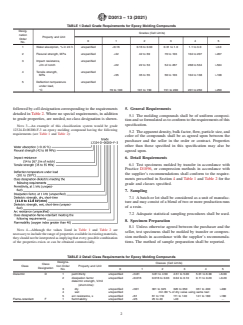
TABLE 1 Detail Grade Requirements for Epoxy Molding Compounds
Desig-
Grades (Cell Limits)
nation
Property and Unit
Order
01 2 3 4 5
No.
1 Water absorption, % in 24 h unspecified <0.16 0.16 to 0.30 0.31 to 1.0 1.1 to 3.0 >3.0
2 Flexural strength, MPa unspecified <42 42 to 69 70 to 103 104 to 207 >207
3 Impact resistance, unspecified
J/m of notch <22 22 to 53 54 to 267 268 to 534 >534
4 Tensile strength, unspecified
MPa <35 35 to 55 56 to 103 104 to 138 >138
5 Deflection temperature unspecified
under load,
°C 70 to 100 101 to 150 151 to 200 201 to 250 >250
followedbycelldesignationcorrespondingtotherequirements 5. General Requirements
detailed in Table 2. Where no special requirements, in addition
5.1 The molding compounds shall be of uniform composi-
to grade properties, are needed, no class designation is shown.
tionandsoformulatedastoconformtotherequirementsofthis
specification.
NOTE 3—An example of this classification system would be grade
12324-D-00200-F-3 an epoxy molding compound having the following
5.2 The apparent density, bulk factor, flow, particle size, and
requirements (see Table 1 and Table 2):
color of the compounds shall be as agreed upon between the
purchaser and the seller in the order or contract. Properties
other than those specifi
...