

ASTM D6598-19
(Guide)Standard Guide for Installing and Operating Settlement Points for Monitoring Vertical Deformations
General Information
- Abstract
SIGNIFICANCE AND USE
5.1 Earthen fills are often constructed as engineered structures, for example, dams, or to support engineered structures, for examples, roads or buildings. The weight of the fill may compress or deform the supporting soil or rock foundation resulting in settlement of the soil throughout and beneath the embankment. Temporary embankments or surcharge fills are constructed to increase the strength and/or reduce the compressibility of foundation soils prior to placement of the actual foundation or structure. The designers often monitor the settlement of the earth structure as a function of time to document the magnitude and rate of settlement, to evaluate the potential for future settlement, or to confirm the effectiveness of the surcharge and the schedule for its removal. The monitoring is performed using settlement points installed prior to or during the embankment construction. A settlement point provides an accessible survey point that settles with a selected soil horizon within or below the embankment. Careful design and installation of the settlement point can isolate the survey point from extraneous sources of movement such as frost-induced heave, compression within the embankment, or volume changes caused by moisture gain or loss.
5.2 Various settlement point designs have been developed by the agencies and practitioners that use them. This standard guide provides designs and procedures that can be referred to in design guidelines, specifications and reports.
5.3 This standard guide is not meant to restrict the use of other equally appropriate designs and procedures for the fabrication, installation, operation, and reading of settlement points to monitor deformations in earthen deposits during and after construction.
Note 2: Notwithstanding the statements on precision and bias contained in this guide, the precision of this guide is dependent on the competence of the personnel performing it and the suitability of the equipment and facilities used. Agencie...
SCOPE
1.1 This guide provides recommended designs and procedures for the fabrication, installation, operation, and reading of settlement point(s) to determine the magnitude and rate of foundation, fill settlements, or both generally under a fill or embankment load. Two types of settlement points are described – those being monitored by elevation surveys from an external bench mark and those that include an internal reference system supported on unyielding soil or rock beneath the compressible layer(s) of interest.
1.2 Units—The values stated in SI units are to be regarded as standard. No other units of measurement are included in this standard.
1.3 This guide offers an organized collection of information or a series of options and does not recommend a specific course of action. This document cannot replace education or experience and should be used in conjunction with professional judgement. Not all aspects of this guide may be applicable in all circumstances. This ASTM standard is not intended to represent or replace the standard of care by which the adequacy of a given professional service must be judged, nor should this document be applied without consideration of a project's many unique aspects. The word “standard” in the title of this document means only that the document has been approved through the ASTM consensus process.
1.4 This standard does not purport to address all of the safety concerns, if any, associated with its use. It is the responsibility of the user of this standard to establish appropriate safety, health, and environmental practices and determine the applicability of regulatory limitations prior to use.
1.5 This international standard was developed in accordance with internationally recognized principles on standardization established in the Decision on Principles for the Development of International Standards, Guides and Recommendations issued by the World Trade Organization Technical Barrie...
- Status
- Published
- Publication Date
- 31-Oct-2019
- Technical Committee
- D18 - Soil and Rock
- Drafting Committee
- D18.23 - Field Instrumentation
Buy Documents
ASTM D6598-19 - Standard Guide for Installing and Operating Settlement Points for Monitoring Vertical Deformations
REDLINE ASTM D6598-19 - Standard Guide for Installing and Operating Settlement Points for Monitoring Vertical Deformations
Overview
ASTM D6598-19: Standard Guide for Installing and Operating Settlement Points for Monitoring Vertical Deformations offers comprehensive guidance for the monitoring of vertical settlement and deformation in earthen fills such as embankments, dams, and structural foundations. Developed by ASTM International, this guide covers recommended designs and procedures for the fabrication, installation, operation, and reading of settlement points. These points are essential for evaluating soil settlement caused by construction and ensuring the stability, performance, and long-term safety of engineered earth structures.
Key Topics
Purpose of Monitoring Settlement:
- Documenting the magnitude and rate of vertical deformation in soil and fill materials during and after construction.
- Confirming the effectiveness of surcharge fills or embankments in improving foundation soil characteristics.
- Supporting design validation, long-term structure performance, and construction schedule optimization.
Types of Settlement Points:
- Externally Referenced: Uses elevation surveys from an external benchmark.
- Internally Referenced: Utilizes an internal reference anchored to unyielding soil or rock beneath compressible layers.
Design and Installation Options:
- Multiple settlement point configurations to accommodate various project requirements.
- Use of riser pipes, base platforms, isolation casings, and protective monuments.
- Installation methods suitable for traditional fills and borehole-based monitoring.
Operation and Data Collection:
- Procedures for routine monitoring, including scheduling of readings to capture key deformation events.
- Reporting requirements that capture reference elevations, instrument details, and environmental data.
Safety and Best Practices:
- Importance of professional judgment and adapting procedures to project conditions.
- Adherence to proper safety, health, and environmental protocols in compliance with regulatory requirements.
Applications
Settlement points, as described in ASTM D6598-19, are widely used in construction and geotechnical engineering:
- Embankment and Dam Construction: Monitor foundation settlement during filling and post-construction phases.
- Roads and Building Foundations: Verify ground stability and predict future settlement under operational loads.
- Soil Improvement Projects: Measure the success of surcharge preloading to increase soil strength and decrease compressibility.
- Temporary Earthworks: Guide decisions on the timing of surcharge removal and subsequent construction activities.
- Quality Control and Assurance: Provide data to assess conformance with project specifications and design criteria.
These practices help mitigate geotechnical hazards, optimize construction processes, and ensure compliance with engineering standards.
Related Standards
For comprehensive field instrumentation and geotechnical monitoring programs, ASTM D6598-19 references several related ASTM standards:
- ASTM D653 – Terminology Relating to Soil, Rock, and Contained Fluids
- ASTM D3740 – Minimum Requirements for Agencies Engaged in Testing and/or Inspection of Soil and Rock
- ASTM D5092 – Design and Installation of Groundwater Monitoring Wells
- ASTM D5782, D5872, D5876, D6914 – Guides on drilling and installation methods for subsurface monitoring devices
These referenced documents provide additional context for terminology, quality practices, and instrumentation installation methods relevant to settlement monitoring.
Keywords: settlement points, vertical deformation monitoring, embankment settlement, ASTM D6598-19, field instrumentation, geotechnical monitoring, soil settlement measurement, construction monitoring, foundation stability.
Relations
- Effective Date
- 01-Nov-2019
- Effective Date
- 01-Nov-2023
- Effective Date
- 01-Oct-2019
- Effective Date
- 01-Jan-2018
- Effective Date
- 01-Aug-2014
- Effective Date
- 15-Sep-2012
- Effective Date
- 01-May-2012
- Effective Date
- 01-Mar-2012
- Effective Date
- 15-Feb-2012
- Effective Date
- 01-Sep-2011
- Effective Date
- 01-Sep-2011
- Effective Date
- 01-Jul-2010
- Effective Date
- 01-Mar-2010
- Effective Date
- 01-Jan-2009
- Effective Date
- 01-Dec-2008
Buy Documents
ASTM D6598-19 - Standard Guide for Installing and Operating Settlement Points for Monitoring Vertical Deformations
REDLINE ASTM D6598-19 - Standard Guide for Installing and Operating Settlement Points for Monitoring Vertical Deformations
Get Certified
Connect with accredited certification bodies for this standard

Zavod za gradbeništvo Slovenije (ZAG) - Inšpekcija
ZAG inspection body for construction products, structures, and materials.
Sponsored listings
Frequently Asked Questions
ASTM D6598-19 is a guide published by ASTM International. Its full title is "Standard Guide for Installing and Operating Settlement Points for Monitoring Vertical Deformations". This standard covers: SIGNIFICANCE AND USE 5.1 Earthen fills are often constructed as engineered structures, for example, dams, or to support engineered structures, for examples, roads or buildings. The weight of the fill may compress or deform the supporting soil or rock foundation resulting in settlement of the soil throughout and beneath the embankment. Temporary embankments or surcharge fills are constructed to increase the strength and/or reduce the compressibility of foundation soils prior to placement of the actual foundation or structure. The designers often monitor the settlement of the earth structure as a function of time to document the magnitude and rate of settlement, to evaluate the potential for future settlement, or to confirm the effectiveness of the surcharge and the schedule for its removal. The monitoring is performed using settlement points installed prior to or during the embankment construction. A settlement point provides an accessible survey point that settles with a selected soil horizon within or below the embankment. Careful design and installation of the settlement point can isolate the survey point from extraneous sources of movement such as frost-induced heave, compression within the embankment, or volume changes caused by moisture gain or loss. 5.2 Various settlement point designs have been developed by the agencies and practitioners that use them. This standard guide provides designs and procedures that can be referred to in design guidelines, specifications and reports. 5.3 This standard guide is not meant to restrict the use of other equally appropriate designs and procedures for the fabrication, installation, operation, and reading of settlement points to monitor deformations in earthen deposits during and after construction. Note 2: Notwithstanding the statements on precision and bias contained in this guide, the precision of this guide is dependent on the competence of the personnel performing it and the suitability of the equipment and facilities used. Agencie... SCOPE 1.1 This guide provides recommended designs and procedures for the fabrication, installation, operation, and reading of settlement point(s) to determine the magnitude and rate of foundation, fill settlements, or both generally under a fill or embankment load. Two types of settlement points are described – those being monitored by elevation surveys from an external bench mark and those that include an internal reference system supported on unyielding soil or rock beneath the compressible layer(s) of interest. 1.2 Units—The values stated in SI units are to be regarded as standard. No other units of measurement are included in this standard. 1.3 This guide offers an organized collection of information or a series of options and does not recommend a specific course of action. This document cannot replace education or experience and should be used in conjunction with professional judgement. Not all aspects of this guide may be applicable in all circumstances. This ASTM standard is not intended to represent or replace the standard of care by which the adequacy of a given professional service must be judged, nor should this document be applied without consideration of a project's many unique aspects. The word “standard” in the title of this document means only that the document has been approved through the ASTM consensus process. 1.4 This standard does not purport to address all of the safety concerns, if any, associated with its use. It is the responsibility of the user of this standard to establish appropriate safety, health, and environmental practices and determine the applicability of regulatory limitations prior to use. 1.5 This international standard was developed in accordance with internationally recognized principles on standardization established in the Decision on Principles for the Development of International Standards, Guides and Recommendations issued by the World Trade Organization Technical Barrie...
SIGNIFICANCE AND USE 5.1 Earthen fills are often constructed as engineered structures, for example, dams, or to support engineered structures, for examples, roads or buildings. The weight of the fill may compress or deform the supporting soil or rock foundation resulting in settlement of the soil throughout and beneath the embankment. Temporary embankments or surcharge fills are constructed to increase the strength and/or reduce the compressibility of foundation soils prior to placement of the actual foundation or structure. The designers often monitor the settlement of the earth structure as a function of time to document the magnitude and rate of settlement, to evaluate the potential for future settlement, or to confirm the effectiveness of the surcharge and the schedule for its removal. The monitoring is performed using settlement points installed prior to or during the embankment construction. A settlement point provides an accessible survey point that settles with a selected soil horizon within or below the embankment. Careful design and installation of the settlement point can isolate the survey point from extraneous sources of movement such as frost-induced heave, compression within the embankment, or volume changes caused by moisture gain or loss. 5.2 Various settlement point designs have been developed by the agencies and practitioners that use them. This standard guide provides designs and procedures that can be referred to in design guidelines, specifications and reports. 5.3 This standard guide is not meant to restrict the use of other equally appropriate designs and procedures for the fabrication, installation, operation, and reading of settlement points to monitor deformations in earthen deposits during and after construction. Note 2: Notwithstanding the statements on precision and bias contained in this guide, the precision of this guide is dependent on the competence of the personnel performing it and the suitability of the equipment and facilities used. Agencie... SCOPE 1.1 This guide provides recommended designs and procedures for the fabrication, installation, operation, and reading of settlement point(s) to determine the magnitude and rate of foundation, fill settlements, or both generally under a fill or embankment load. Two types of settlement points are described – those being monitored by elevation surveys from an external bench mark and those that include an internal reference system supported on unyielding soil or rock beneath the compressible layer(s) of interest. 1.2 Units—The values stated in SI units are to be regarded as standard. No other units of measurement are included in this standard. 1.3 This guide offers an organized collection of information or a series of options and does not recommend a specific course of action. This document cannot replace education or experience and should be used in conjunction with professional judgement. Not all aspects of this guide may be applicable in all circumstances. This ASTM standard is not intended to represent or replace the standard of care by which the adequacy of a given professional service must be judged, nor should this document be applied without consideration of a project's many unique aspects. The word “standard” in the title of this document means only that the document has been approved through the ASTM consensus process. 1.4 This standard does not purport to address all of the safety concerns, if any, associated with its use. It is the responsibility of the user of this standard to establish appropriate safety, health, and environmental practices and determine the applicability of regulatory limitations prior to use. 1.5 This international standard was developed in accordance with internationally recognized principles on standardization established in the Decision on Principles for the Development of International Standards, Guides and Recommendations issued by the World Trade Organization Technical Barrie...
ASTM D6598-19 is classified under the following ICS (International Classification for Standards) categories: 93.020 - Earthworks. Excavations. Foundation construction. Underground works. The ICS classification helps identify the subject area and facilitates finding related standards.
ASTM D6598-19 has the following relationships with other standards: It is inter standard links to ASTM D6598-11, ASTM D3740-23, ASTM D3740-19, ASTM D5782-18, ASTM D653-14, ASTM D5782-95(2012), ASTM D3740-12a, ASTM D3740-12, ASTM D5876-95(2012)e1, ASTM D3740-11, ASTM D653-11, ASTM D6914-04(2010), ASTM D3740-10, ASTM D653-09, ASTM D653-08a. Understanding these relationships helps ensure you are using the most current and applicable version of the standard.
ASTM D6598-19 is available in PDF format for immediate download after purchase. The document can be added to your cart and obtained through the secure checkout process. Digital delivery ensures instant access to the complete standard document.
Standards Content (Sample)
This international standard was developed in accordance with internationally recognized principles on standardization established in the Decision on Principles for the
Development of International Standards, Guides and Recommendations issued by the World Trade Organization Technical Barriers to Trade (TBT) Committee.
Designation:D6598 −19
Standard Guide for
Installing and Operating Settlement Points for Monitoring
Vertical Deformations
This standard is issued under the fixed designation D6598; the number immediately following the designation indicates the year of
original adoption or, in the case of revision, the year of last revision. A number in parentheses indicates the year of last reapproval. A
superscript epsilon (´) indicates an editorial change since the last revision or reapproval.
1. Scope* 2. Referenced Documents
1.1 This guide provides recommended designs and proce-
2.1 ASTM Standards:
dures for the fabrication, installation, operation, and reading of
D653 Terminology Relating to Soil, Rock, and Contained
settlement point(s) to determine the magnitude and rate of
Fluids
foundation, fill settlements, or both generally under a fill or
D3740 Practice for Minimum Requirements for Agencies
embankmentload.Twotypesofsettlementpointsaredescribed
Engaged in Testing and/or Inspection of Soil and Rock as
– those being monitored by elevation surveys from an external
Used in Engineering Design and Construction
bench mark and those that include an internal reference system
D5092 Practice for Design and Installation of Groundwater
supported on unyielding soil or rock beneath the compressible
Monitoring Wells
layer(s) of interest.
D5782 Guide for Use of Direct Air-Rotary Drilling for
Geoenvironmental Exploration and the Installation of
1.2 Units—The values stated in SI units are to be regarded
Subsurface Water-Quality Monitoring Devices
as standard. No other units of measurement are included in this
D5872 Guide for Use of Casing Advancement Drilling
standard.
Methods for Geoenvironmental Exploration and Installa-
1.3 This guide offers an organized collection of information
tion of Subsurface Water Quality Monitoring Devices
or a series of options and does not recommend a specific
D5876 Guide for Use of Direct Rotary Wireline Casing
course of action. This document cannot replace education or
Advancement Drilling Methods for Geoenvironmental
experience and should be used in conjunction with professional
Exploration and Installation of Subsurface Water-Quality
judgement. Not all aspects of this guide may be applicable in
Monitoring Devices
all circumstances. This ASTM standard is not intended to
D6914 Practice for Sonic Drilling for Site Characterization
represent or replace the standard of care by which the
and the Installation of Subsurface Monitoring Devices
adequacy of a given professional service must be judged, nor
should this document be applied without consideration of a
3. Terminology
project’s many unique aspects. The word “standard” in the
title of this document means only that the document has been 3.1 Definitions:
approved through the ASTM consensus process.
3.1.1 For definitions of common technical terms in this
standard, refer to Terminology D653.
1.4 This standard does not purport to address all of the
safety concerns, if any, associated with its use. It is the
3.2 Definitions of Terms Specific to This Standard:
responsibility of the user of this standard to establish appro-
3.2.1 anchor, n—a device that holds the settlement point
priate safety, health, and environmental practices and deter-
systeminplaceandservesasafixedreferencepointatthebase
mine the applicability of regulatory limitations prior to use.
of a settlement point system.
1.5 This international standard was developed in accor-
3.2.2 extendible riser, n—a metal shaft or pipe that can be
dance with internationally recognized principles on standard-
incrementally lengthened using sections of the same material
ization established in the Decision on Principles for the
and appropriate couplings as fill is placed and compacted to
Development of International Standards, Guides and Recom-
ensure that the top of the riser remains above the level of the
mendations issued by the World Trade Organization Technical
surrounding ground surface.
Barriers to Trade (TBT) Committee.
This guide is under the jurisdiction ofASTM Committee D18 on Soil and Rock
and is the direct responsibility of Subcommittee D18.23 on Field Instrumentation. For referenced ASTM standards, visit the ASTM website, www.astm.org, or
Current edition approved Nov. 1, 2019. Published November 2019. Originally contact ASTM Customer Service at service@astm.org. For Annual Book of ASTM
approved in 2000. Last previous edition approved in 2011 as D6598–11. DOI: Standards volume information, refer to the standard’s Document Summary page on
10.1520/D6598-19. the ASTM website.
*A Summary of Changes section appears at the end of this standard
Copyright © ASTM International, 100 Barr Harbor Drive, PO Box C700, West Conshohocken, PA 19428-2959. United States
D6598−19
3.2.3 external reference point system, n—system for deter- frost-induced heave, compression within the embankment, or
mining the amount of settlement by referencing the elevation volume changes caused by moisture gain or loss.
of the settlement point to an outside elevation benchmark.
5.2 Various settlement point designs have been developed
3.2.4 internal reference point system, n—system for deter-
by the agencies and practitioners that use them. This standard
mining the amount of settlement by measuring the relative
guide provides designs and procedures that can be referred to
displacement of two co-axial riser pipes moving relative to
in design guidelines, specifications and reports.
each other, the outer riser pipe being attached to the base
5.3 This standard guide is not meant to restrict the use of
platform and the inner riser pipe being fixed to an unyielding
other equally appropriate designs and procedures for the
stratum.
fabrication, installation, operation, and reading of settlement
3.2.5 isolation casing, n—a casing of a larger diameter than
points to monitor deformations in earthen deposits during and
the extendible risers is used in some installations to prevent
after construction.
down-drag of soil on the extendible riser that would otherwise
NOTE 2—Notwithstanding the statements on precision and bias con-
be in contact with the soil from placing additional load on the
tained in this guide, the precision of this guide is dependent on the
platform and thereby leading to overestimates of deformations.
competence of the personnel performing it and the suitability of the
equipment and facilities used. Agencies that meet the criteria of Practice
3.2.6 settlement point, n—a system consisting of an anchor
D3740 are generally considered capable of competent and objective
at the depth of interest, at or below surface, with an extendible
testing. Users of this guide are cautioned that compliance with Practice
riser pipe of known length
D3740 does not itself ensure reliable testing. Reliable testing depends on
many factors; Practice D3740 provides a means of evaluating some of
4. Summary of Standard Guide these factors.
4.1 The standard guide presents recommended designs for
6. Materials
settlement points along with procedures to install, operate and
6.1 A variety of materials are used in combination to
monitor them. The standard guide focuses on methods that
provide a cost-effective, modular system. Depending on the
permit (i) the effect of fill placement on underlying strata and
anticipated operational life of the settlement points, the long
(ii) the assessment of the relative deformation within a fill.The
term durability of the components may have to be considered.
guideaddresseswaysinwhichtheinstrumentisprotectedfrom
Additionally, issues such as component weight, the ease with
downdrag effects from the fill soils as well as measures to
which the riser pipe can be extended and cost need to factor
protect the instrument from damage by earth moving equip-
into material selection decisions. The entire settlement point
ment. Standard survey procedures are used to assess the
system consists of 4 or 5 distinct components depending on the
magnitude of deformations. Recommended procedures for
specific design.Typical alternative configurations are shown in
reporting the details of an installation and the recorded
Figs. 1-4. Key distinctions between these different configura-
deformations are presented.
tions are summarized in Table 1. Additional considerations
NOTE 1—These systems in practice are commonly referred to as
regarding materials for each of these components are provided
settlement platforms because they have historically utilized base plat-
below.
forms. Recent developments in technology have expanded settlement
TABLE 1 Suitability and Use of Various Settlement Point
observation systems to those which do not require base platforms in
Configurations
certain applications. This led to a modification in terminology to include
the various systems. Fill Foundation External Internal
Configuration Deformations Deformations Reference Reference
A
Fig. 1 No Yes Yes No
5. Significance and Use
A
Fig. 2 No Yes Yes No
A B
5.1 Earthen fills are often constructed as engineered
Fig. 3 No Yes No Yes
A B
Fig. 4 No Yes No Yes
structures, for example, dams, or to support engineered
A
Fill settlements could be determined with this configuration if base platform
structures, for examples, roads or buildings. The weight of the
placed at higher elevation.
fill may compress or deform the supporting soil or rock
B
External reference (control) could be used with these configurations also.
foundation resulting in settlement of the soil throughout and
6.2 Base Platform—a square base platform typically rang-
beneath the embankment. Temporary embankments or sur-
ing between 0.3 m to 1.0 m on side is placed at the elevation
charge fills are constructed to increase the strength and/or
for which the vertical deformation is required. In some cases,
reduce the compressibility of foundation soils prior to place-
a steel platform 5 mm to 15 mm thick is used. Alternatively, a
ment of the actual foundation or structure. The designers often
platform 25 mm to 50 mm thick fabricated from plywood is
monitor the settlement of the earth structure as a function of
sometimes used. This may be particularly desirable in short
time to document the magnitude and rate of settlement, to
term applications where degradation of the wood is not a
evaluate the potential for future settlement, or to confirm the
concern. Other materials such as concrete can be used for the
effectiveness of the surcharge and the schedule for its removal.
base platform. In all cases, the thickness of the base platform
The monitoring is performed using settlement points installed
should be selected giving consideration to the area of the
prior to or during the embankment construction. A settlement
platform to ensure that its rigidity is sufficient to avoid local
point provides an accessible survey point that settles with a
bending.
selected soil horizon within or below the embankment. Careful
design and installation of the settlement point can isolate the 6.3 Riser Pipe—a rigid metal shaft or an assembly of a rigid
survey point from extraneous sources of movement such as metal shaft and a rigid metal pipe, typically 25 mm to 50 mm
D6598−19
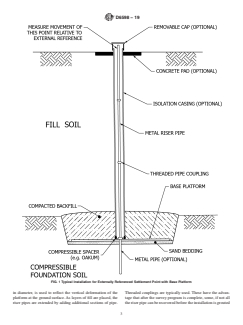
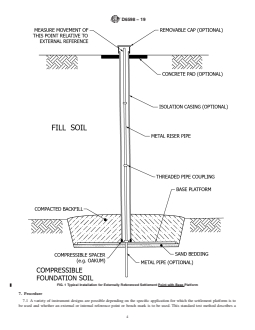
FIG. 1Typical Installation for Externally Referenced Settlement Point with Base Platform
in diameter, is used to reflect the vertical deformation of the Threaded couplings are typically used. These have the advan-
platform at the ground surface.As layers of fill are placed, the tage that after the survey program is complete, some, if not all
riser pipes are extended by adding additional sections of pipe. theriserpipecanberecoveredbeforetheinstallationisgrouted
D6598−19
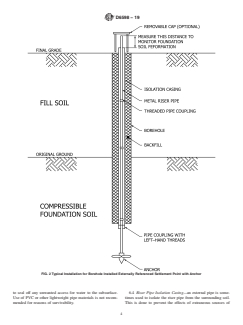
FIG. 2Typical Installation for Borehole Installed Externally Referenced Settlement Point with Anchor
to seal off any unwanted access for water to the subsurface. 6.4 Riser Pipe Isolation Casing—an external pipe is some-
Use of PVC or other lightweight pipe materials is not recom- times used to isolate the riser pipe from the surrounding soil.
mended for reasons of survivability. This is done to prevent the effects of extraneous sources of
D
...
This document is not an ASTM standard and is intended only to provide the user of an ASTM standard an indication of what changes have been made to the previous version. Because
it may not be technically possible to adequately depict all changes accurately, ASTM recommends that users consult prior editions as appropriate. In all cases only the current version
of the standard as published by ASTM is to be considered the official document.
Designation: D6598 − 11 D6598 − 19
Standard Guide for
Installing and Operating Settlement PlatformsPoints for
Monitoring Vertical Deformations
This standard is issued under the fixed designation D6598; the number immediately following the designation indicates the year of
original adoption or, in the case of revision, the year of last revision. A number in parentheses indicates the year of last reapproval. A
superscript epsilon (´) indicates an editorial change since the last revision or reapproval.
1. Scope*
1.1 This guide provides recommended designs and procedures for the fabrication, installation, operation, and reading of
settlement platformpoint(s) to determine the magnitude and rate of foundation, fill settlements, or both generally under a fill or
embankment load. Two types of settlement platformspoints are described – those being monitored by elevation surveys from an
external bench mark and those that include an internal reference system supported on unyielding soil or rock beneath the
compressible layer(s) of interest.
1.2 Units—The values stated in SI units are to be regarded as standard. No other units of measurement are included in this
standard.
1.3 This guide offers an organized collection of information or a series of options and does not recommend a specific course
of action. This document cannot replace education or experience and should be used in conjunction with professional judgement.
Not all aspects of this guide may be applicable in all circumstances. This ASTM standard is not intended to represent or replace
the standard of care by which the adequacy of a given professional service must be judged, nor should this document be applied
without consideration of a project’s many unique aspects. The word “standard” in the title of this document means only that the
document has been approved through the ASTM consensus process.
1.4 This guidestandard does not purport to address all of the safety concerns, if any, associated with its use. It is the
responsibility of the user of this guidestandard to establish appropriate safety safety, health, and healthenvironmental practices and
determine the applicability of regulatory limitations prior to use.
1.4 This guide offers an organized collection of information or a series of options and does not recommend a specific course
of action. This document cannot replace education or experience and should be used in conjunction with professional judgement.
Not all aspects of this guide may be applicable in all circumstances. This ASTM standard is not intended to represent or replace
the standard of care by which the adequacy of a given professional service must be judged, nor should this document be applied
without consideration of a project’s many unique aspects. The word “standard” in the title of this document means only that the
document has been approved through the ASTM consensus process.
1.5 This international standard was developed in accordance with internationally recognized principles on standardization
established in the Decision on Principles for the Development of International Standards, Guides and Recommendations issued
by the World Trade Organization Technical Barriers to Trade (TBT) Committee.
2. Referenced Documents
2.1 ASTM Standards:
D653 Terminology Relating to Soil, Rock, and Contained Fluids
D3740 Practice for Minimum Requirements for Agencies Engaged in Testing and/or Inspection of Soil and Rock as Used in
Engineering Design and Construction
D5092 Practice for Design and Installation of Groundwater Monitoring Wells
D5782 Guide for Use of Direct Air-Rotary Drilling for Geoenvironmental Exploration and the Installation of Subsurface
Water-Quality Monitoring Devices
D5872 Guide for Use of Casing Advancement Drilling Methods for Geoenvironmental Exploration and Installation of
Subsurface Water Quality Monitoring Devices
This guide is under the jurisdiction of ASTM Committee D18 on Soil and Rock and is the direct responsibility of Subcommittee D18.23 on Field Instrumentation.
Current edition approved Nov. 1, 2011Nov. 1, 2019. Published January 2012November 2019. Originally approved in 2000. Last previous edition approved in 20072011
as D6598–07.–11. DOI: 10.1520/D6598-11.10.1520/D6598-19.
For referenced ASTM standards, visit the ASTM website, www.astm.org, or contact ASTM Customer Service at service@astm.org. For Annual Book of ASTM Standards
volume information, refer to the standard’s Document Summary page on the ASTM website.
*A Summary of Changes section appears at the end of this standard
Copyright © ASTM International, 100 Barr Harbor Drive, PO Box C700, West Conshohocken, PA 19428-2959. United States
D6598 − 19
D5876 Guide for Use of Direct Rotary Wireline Casing Advancement Drilling Methods for Geoenvironmental Exploration and
Installation of Subsurface Water-Quality Monitoring Devices
D6914 Practice for Sonic Drilling for Site Characterization and the Installation of Subsurface Monitoring Devices
3. Terminology
3.1 Definitions:
3.1.1 For definitions of common technical terms in this standard, refer to Terminology D653.
3.2 Definitions of Terms Specific to This Standard:
3.2.1 anchor, n—a device that holds the settlement point system in place and serves as a fixed reference point at the base of a
settlement point system.
3.2.2 settlement platform—extendible riser, n—a system consisting of a square base platform with an extendible riser pipe of
known length which is used to monitor vertical deformations at the elevation of the base platform by survey measurements made
of the top of the riser pipe.metal shaft or pipe that can be incrementally lengthened using sections of the same material and
appropriate couplings as fill is placed and compacted to ensure that the top of the riser remains above the level of the surrounding
ground surface.
3.2.3 external reference point system, n—system for determining the amount of settlement by referencing the elevation of the
settlement point to an outside elevation benchmark.
3.2.4 external and internal reference point system—system, n—with an external system, system for determining the amount of
settlement is determined by referencing the elevation of the settlement platform to an outside elevation benchmark; with an internal
system, the amount of settlement is determined by by measuring the relative displacement of two co-axial riser pipes moving
relative to each other, the outer riser pipe being attached to the base platform and the inner riser pipe being fixed to an unyielding
stratum.
3.2.3 anchor—an anchor system that provides an internal fixed reference point below the base of the settlement platform system.
3.2.4 extendible riser—a metal shaft or pipe which can be incrementally lengthened using sections of the same material and
appropriate couplings as fill is placed and compacted to ensure that the top of the riser remains above the level of the surrounding
ground surface. Depending on whether an external or internal reference point is being used, there may be one or two risers.
3.2.5 isolation casing—casing, n—a casing of a larger diameter than the extendible risers is used in some installations to prevent
down-drag of soil on the extendible riser that would otherwise be in contact with the soil from placing additional load on the
platform and thereby leading to overestimates of deformations.
3.2.6 For definitions of other terms used in this guide see Terminology D653.
3.2.6 settlement point, n—a system consisting of an anchor at the depth of interest, at or below surface, with an extendible riser
pipe of known length
4. Summary of Standard Guide
4.1 The standard guide presents recommended designs for settlement platformspoints along with procedures to install, operate
and monitor them. The standard guide focuses on methods that permit (i) the effect of fill placement on underlying strata and (ii)
the determinationassessment of the relative deformation within a fill. The guide addresses ways in which the instrument is
protected from downdrag effects from the fill soils as well as measures to protect the instrument from damage by earth moving
equipment. Standard survey procedures are used to determineassess the magnitude of deformations. Recommended procedures for
reporting the details of an installation and the recorded deformations are presented.
NOTE 1—These systems in practice are commonly referred to as settlement platforms because they have historically utilized base platforms. Recent
developments in technology have expanded settlement observation systems to those which do not require base platforms in certain applications. This led
to a modification in terminology to include the various systems.
5. Significance and Use
5.1 Earthen fills are often constructed as engineered structures, for example, dams, or to support engineered structures, for
examples, roads or buildings. The weight of the fill may compress or deform the supporting soil or rock foundation resulting in
settlement of the soil throughout and beneath the embankment. Temporary embankments or surcharge fills are constructed to
increase the strength and/or reduce the compressibility of foundation soils prior to placement of the actual foundation or structure.
The designers often monitor the settlement of the earth structure as a function of time to document the magnitude and rate of
settlement, to evaluate the potential for future settlement, or to confirm the effectiveness of the surcharge and the schedule for its
removal. The monitoring is performed using settlement platformspoints installed prior to or during the embankment construction.
A platform settlement point provides an accessible survey point that settles with a selected soil horizon within or below the
embankment. Careful design and installation of the settlement platformpoint can isolate the survey point from extraneous sources
of movement such as frost-induced heave, compression within the embankment, or volume changes caused by moisture gain or
loss.
D6598 − 19
5.2 Various settlement platformpoint designs have been developed by the agencies and practitioners that use them. This standard
guide provides designs and procedures that can be referred to in design guidelines, specifications and reports.
5.3 This standard guide is not meant to restrict the use of other equally appropriate designs and procedures for the fabrication,
installation, operation, and reading of settlement platformspoints to monitor deformations in earthen deposits during and after
construction.
NOTE 2—Notwithstanding the statements on precision and bias contained in this guide, the precision of this guide is dependent on the competence of
the personnel performing it and the suitability of the equipment and facilities used. Agencies that meet the criteria of Practice D3740 are generally
considered capable of competent and objective testing. Users of this guide are cautioned that compliance with Practice D3740 does not itself ensure
reliable testing. Reliable testing depends on many factors; Practice D3740 provides a means of evaluating some of these factors.
6. Materials
6.1 A variety of materials are used in combination to provide a cost-effective, modular system. Given thatDepending on the
anticipated operational life of settlement platforms is typically relatively short, concerns about the settlement points, the long term
durability are generally negligible. Accordinglyof the components may have to be considered. Additionally, issues such as
component weight, the ease with which the riser pipe can be extended and cost tendneed to dominate factor into material selection
decisions. The entire settlement platformpoint system consists of 4 or 5 distinct components depending on the specific design.
Typical alternative configurations are shown in Figs. 1-34. Key distinctions between these different configurations are summarized
in Table 1. Additional considerations regarding materials for each of these components are provided below.
TABLE 1 Suitability and Use of Various Platform Settlement Point Configurations
Fill Foundation External Internal
Configuration Deformations Deformations Reference Reference
A
Fig. 1 No Yes Yes No
A B
Fig. 2 No Yes No Yes
A
Fig. 2 No Yes Yes No
A B
Fig. 3 No Yes No Yes
A B
Fig. 3 No Yes No Yes
A B
Fig. 4 No Yes No Yes
A
Fill settlements could be determined with this configuration if base platform placed at higher elevation.
B
External reference (control) could be used with these configurations also.
6.2 Base Platform—a square base platform typically ranging between 0.3 to 1.0 m 0.3 m to 1.0 m on side is placed at the
elevation for which the vertical deformation is required. In some cases, a steel platform 5 to 15 mm 5 mm to 15 mm thick is used.
Alternatively, a platform 25 to 50 mm 25 mm to 50 mm thick fabricated from plywood is sometimes used. This may be particularly
desirable in short term applications where degradation of the wood is not a concern. Other materials such as concrete can be used
for the base platform. In all cases, the thickness of the base platform should be selected giving consideration to the area of the
platform to ensure that its rigidity is sufficient to avoid local bending.
6.3 Riser Pipe—a rigid metal shaft or an assembly of a rigid metal shaft and a rigid metal pipe, typically 25 to 50 mm
25 mm to 50 mm in diameter, is used to reflect the vertical deformation of the platform at the ground surface. As layers of fill are
placed, the riser pipes are extended by adding additional sections of pipe. Threaded couplings are typically used. These have the
advantage that after the survey program is complete, some, if not all the riser pipe can be recovered before the installation is
grouted to seal off any unwanted access for water to the subsurface. Use of PVC
...