

ASTM F1776-22
(Specification)Standard Specification for Eye Protective Devices for Paintball Sports
General Information
- Abstract
ABSTRACT
This specification applies to eye protective devices, designed for use by players of the sport of paintball that minimize or significantly reduce injury to the eye and adnexa due to impact and penetration of paintballs. Field of view, refractive tolerances, astigmatism, power imbalance, prism imbalance, vertical imbalance, horizontal imbalances, luminous transmittance, haze, optical quality, and physical lens defects of the eye protective devices shall be tested to meet the requirements prescribed.
SCOPE
1.1 This specification applies to eye, face, and head protective devices, designed for use by players of the sport of paintball, which minimize or significantly reduce injury to the eye, adnexa of eye, face, and head due to paintball impact or penetration, or both.
1.2 EHPDs by nature provide three types of protection. The first type of protection is for the eyes and adnexa of eye and not necessarily for any other parts of the face or head. The second type of protection adds coverage for the ears and face. The third type of coverage adds cranial coverage in addition to that provided to types II and III. These coverage types are defined in Section 8.
1.3 This specification does not limit the wearing of eyeglasses or contact lenses when used in conjunction with the EHPD.
1.4 The values stated in SI units are to be regarded as the standard. The values given in parentheses are for information only.
1.5 This standard does not purport to address all of the safety concerns, if any, associated with its use. It is the responsibility of the user of this standard to establish appropriate safety, health, and environmental practices and determine the applicability of regulatory limitations prior to use.
1.6 This international standard was developed in accordance with internationally recognized principles on standardization established in the Decision on Principles for the Development of International Standards, Guides and Recommendations issued by the World Trade Organization Technical Barriers to Trade (TBT) Committee.
- Status
- Published
- Publication Date
- 30-Apr-2022
- Technical Committee
- F08 - Sports Equipment, Playing Surfaces, and Facilities
- Drafting Committee
- F08.57 - Eye Safety for Sports
Buy Documents
ASTM F1776-22 - Standard Specification for Eye Protective Devices for Paintball Sports
REDLINE ASTM F1776-22 - Standard Specification for Eye Protective Devices for Paintball Sports
Overview
ASTM F1776-22: Standard Specification for Eye Protective Devices for Paintball Sports establishes essential requirements for protective eyewear, face shields, and headgear used by paintball players. Developed by ASTM International, this standard outlines performance, optical, and mechanical criteria to ensure that eye protective devices (EHPDs) effectively minimize or significantly reduce the risk of impact and penetration injuries from paintballs. The specification applies to various types of protection, addressing not only the eyes but also the full face, ears, and head, as required by different models.
Key Topics
Protection Levels: Defines three types of EHPD coverage:
- Eye and adnexa only
- Eyes, ears, and face
- Eyes, face, ears, and cranial coverage
Performance Requirements:
- Impact Resistance: Devices must withstand standardized impacts from paintballs without lens fracture, lens dislodgment, frame damage, or penetration.
- Optical Quality: Prescribes acceptable levels for field of view, refractive tolerances (including astigmatism and power imbalance), prismatic deviation, luminous transmittance, haze, and absence of lens defects.
- Mechanical Tests: Includes impact, retention, shell fragment, and chin strap strength tests conducted under various temperature conditions to replicate real play environments.
Field of View and Visual Acuity:
- Devices must not excessively restrict peripheral or direct vision.
- Lenses undergo rigorous assessment to ensure minimal distortion and high definition.
Compatibility:
- Does not restrict the concurrent use of eyeglasses or contact lenses with EHPDs.
Quality and Safety Evaluation:
- Physical inspection of lenses for defects such as cracks, bubbles, scratches, or haze that could impair vision or reduce protection.
Standardized Testing:
- Utilizes precise test methods for optical and mechanical evaluation, referencing recognized ASTM and ISO procedures.
Applications
The practical value of ASTM F1776-22 extends across the paintball sports industry:
- Manufacturers: Guiding design, material selection, and quality control to ensure that eyewear and full-face protective gear meet stringent safety and performance criteria.
- Testing Laboratories: Providing procedures for impact and optical testing of samples, ensuring compliance before products reach consumers.
- Paintball Field Operators and Pro Shops: Ensuring protective equipment used and sold on premises is certified to reduce liability and enhance player safety.
- Players: Giving confidence that equipment labeled as compliant with ASTM F1776-22 offers tested protection against typical paintball-related hazards.
Meeting the requirements in this standard is fundamental for reducing injuries from high-speed paintball impacts, enhancing visibility and comfort, and promoting safer gameplay environments.
Related Standards
ASTM F1776-22 references and is closely aligned with several key standards for eye and face protection:
- ASTM D1003: Test Method for Haze and Luminous Transmittance of Transparent Plastics
- ASTM F1979: Specification for Projectiles Used in the Sport of Paintball
- ASTM F2272: Specification for Paintball Markers
- ASTM F2879: Specification for Eye Protective Devices for Airsoft Sports
- ANSI Z80.3: Requirements for Nonprescription Sunglasses and Fashion Eyewear
- ANSI Z87.1: Occupational and Educational Eye and Face Protectors
- CSA Z262.6-02/14: Specifications for Facially Featured Headforms
- EN 168: Personal Eye Protection Non-Optical Test Methods
Adhering to ASTM F1776-22, along with these related standards, ensures that protective equipment for paintball sports meets internationally recognized safety and performance expectations.
Relations
- Effective Date
- 01-Apr-2018
- Effective Date
- 01-Nov-2016
- Effective Date
- 01-Dec-2014
- Effective Date
- 01-May-2014
- Effective Date
- 01-May-2013
- Effective Date
- 01-Jul-2012
- Effective Date
- 01-May-2011
- Refers
ASTM D1003-11e1 - Standard Test Method for Haze and Luminous Transmittance of Transparent Plastics - Effective Date
- 15-Apr-2011
- Refers
ASTM D1003-11 - Standard Test Method for Haze and Luminous Transmittance of Transparent Plastics - Effective Date
- 15-Apr-2011
- Effective Date
- 01-Jul-2010
- Effective Date
- 01-Jul-2010
- Effective Date
- 01-Nov-2009
- Effective Date
- 01-Jun-2009
- Effective Date
- 15-Jul-2008
- Refers
ASTM D1003-07 - Standard Test Method for Haze and Luminous Transmittance of Transparent Plastics - Effective Date
- 01-Nov-2007
Buy Documents
ASTM F1776-22 - Standard Specification for Eye Protective Devices for Paintball Sports
REDLINE ASTM F1776-22 - Standard Specification for Eye Protective Devices for Paintball Sports
Get Certified
Connect with accredited certification bodies for this standard

CIS Institut d.o.o.
Personal Protective Equipment (PPE) certification body. Notified Body NB-2890 for EU Regulation 2016/425 PPE.

Kiwa BDA Testing
Building and construction product certification.
Kmetijski inštitut Slovenije
Agricultural Institute of Slovenia. Soil testing, plant health, agricultural product analysis.
Sponsored listings
Frequently Asked Questions
ASTM F1776-22 is a technical specification published by ASTM International. Its full title is "Standard Specification for Eye Protective Devices for Paintball Sports". This standard covers: ABSTRACT This specification applies to eye protective devices, designed for use by players of the sport of paintball that minimize or significantly reduce injury to the eye and adnexa due to impact and penetration of paintballs. Field of view, refractive tolerances, astigmatism, power imbalance, prism imbalance, vertical imbalance, horizontal imbalances, luminous transmittance, haze, optical quality, and physical lens defects of the eye protective devices shall be tested to meet the requirements prescribed. SCOPE 1.1 This specification applies to eye, face, and head protective devices, designed for use by players of the sport of paintball, which minimize or significantly reduce injury to the eye, adnexa of eye, face, and head due to paintball impact or penetration, or both. 1.2 EHPDs by nature provide three types of protection. The first type of protection is for the eyes and adnexa of eye and not necessarily for any other parts of the face or head. The second type of protection adds coverage for the ears and face. The third type of coverage adds cranial coverage in addition to that provided to types II and III. These coverage types are defined in Section 8. 1.3 This specification does not limit the wearing of eyeglasses or contact lenses when used in conjunction with the EHPD. 1.4 The values stated in SI units are to be regarded as the standard. The values given in parentheses are for information only. 1.5 This standard does not purport to address all of the safety concerns, if any, associated with its use. It is the responsibility of the user of this standard to establish appropriate safety, health, and environmental practices and determine the applicability of regulatory limitations prior to use. 1.6 This international standard was developed in accordance with internationally recognized principles on standardization established in the Decision on Principles for the Development of International Standards, Guides and Recommendations issued by the World Trade Organization Technical Barriers to Trade (TBT) Committee.
ABSTRACT This specification applies to eye protective devices, designed for use by players of the sport of paintball that minimize or significantly reduce injury to the eye and adnexa due to impact and penetration of paintballs. Field of view, refractive tolerances, astigmatism, power imbalance, prism imbalance, vertical imbalance, horizontal imbalances, luminous transmittance, haze, optical quality, and physical lens defects of the eye protective devices shall be tested to meet the requirements prescribed. SCOPE 1.1 This specification applies to eye, face, and head protective devices, designed for use by players of the sport of paintball, which minimize or significantly reduce injury to the eye, adnexa of eye, face, and head due to paintball impact or penetration, or both. 1.2 EHPDs by nature provide three types of protection. The first type of protection is for the eyes and adnexa of eye and not necessarily for any other parts of the face or head. The second type of protection adds coverage for the ears and face. The third type of coverage adds cranial coverage in addition to that provided to types II and III. These coverage types are defined in Section 8. 1.3 This specification does not limit the wearing of eyeglasses or contact lenses when used in conjunction with the EHPD. 1.4 The values stated in SI units are to be regarded as the standard. The values given in parentheses are for information only. 1.5 This standard does not purport to address all of the safety concerns, if any, associated with its use. It is the responsibility of the user of this standard to establish appropriate safety, health, and environmental practices and determine the applicability of regulatory limitations prior to use. 1.6 This international standard was developed in accordance with internationally recognized principles on standardization established in the Decision on Principles for the Development of International Standards, Guides and Recommendations issued by the World Trade Organization Technical Barriers to Trade (TBT) Committee.
ASTM F1776-22 is classified under the following ICS (International Classification for Standards) categories: 13.340.20 - Head protective equipment; 97.220.40 - Outdoor and water sports equipment. The ICS classification helps identify the subject area and facilitates finding related standards.
ASTM F1776-22 has the following relationships with other standards: It is inter standard links to ASTM F2879-18, ASTM F2879-16, ASTM F2879-14, ASTM F1979-10(2014), ASTM F2272-13, ASTM F2272-12, ASTM F2272-11, ASTM D1003-11e1, ASTM D1003-11, ASTM F1979-10, ASTM F2272-10, ASTM F2272-09, ASTM F1979-09, ASTM F2272-08, ASTM D1003-07. Understanding these relationships helps ensure you are using the most current and applicable version of the standard.
ASTM F1776-22 is available in PDF format for immediate download after purchase. The document can be added to your cart and obtained through the secure checkout process. Digital delivery ensures instant access to the complete standard document.
Standards Content (Sample)
This international standard was developed in accordance with internationally recognized principles on standardization established in the Decision on Principles for the
Development of International Standards, Guides and Recommendations issued by the World Trade Organization Technical Barriers to Trade (TBT) Committee.
Designation:F1776 −22 An American National Standard
Standard Specification for
Eye Protective Devices for Paintball Sports
This standard is issued under the fixed designation F1776; the number immediately following the designation indicates the year of
original adoption or, in the case of revision, the year of last revision.Anumber in parentheses indicates the year of last reapproval.A
superscript epsilon (´) indicates an editorial change since the last revision or reapproval.
INTRODUCTION
Thisisthespecificationforeye,face,andheadprotectivedevices,orEHPD,tobeusedinthesport
ofpaintball.Paintballisasportthat,likeallsports,hasintrinsichazards.Thesehazardsincludebeing
hit by paintballs. Protective equipment cannot eliminate all injuries but will substantially reduce their
severity and frequency. Participation in this sport by a player implies acceptance of injury risk. The
goal of protective equipment is to minimize the risk of injury.
Performance requirements are presented and are intended to minimize injury with minimal
impairment of the form and appeal of the sport. This specification is subject to revision as indicated
by subsequent injury statistics.
The impact requirements are designed to give eye, adnexa of eye, and head protection from
paintball impacts likely to be encountered under game conditions. While the EHPD also may protect
the user from other potential impacts, such as running into tree branches, there are many conceivable
impacts, including falls from heights, which could exceed the specification and result in eye injury
despite the use of the EHPD.
1. Scope responsibility of the user of this standard to establish appro-
priate safety, health, and environmental practices and deter-
1.1 This specification applies to eye, face, and head protec-
mine the applicability of regulatory limitations prior to use.
tive devices, designed for use by players of the sport of
1.6 This international standard was developed in accor-
paintball, which minimize or significantly reduce injury to the
dance with internationally recognized principles on standard-
eye, adnexa of eye, face, and head due to paintball impact or
ization established in the Decision on Principles for the
penetration, or both.
Development of International Standards, Guides and Recom-
1.2 EHPDs by nature provide three types of protection.The
mendations issued by the World Trade Organization Technical
firsttypeofprotectionisfortheeyesandadnexaofeyeandnot
Barriers to Trade (TBT) Committee.
necessarily for any other parts of the face or head. The second
type of protection adds coverage for the ears and face. The
2. Referenced Documents
third type of coverage adds cranial coverage in addition to that
2.1 ASTM Standards:
provided to types II and III. These coverage types are defined
D1003Test Method for Haze and Luminous Transmittance
in Section 8.
of Transparent Plastics
1.3 This specification does not limit the wearing of eye-
F1979Specification for Projectiles Used in the Sport of
glasses or contact lenses when used in conjunction with the
Paintball
EHPD.
F2272Specification for Paintball Markers
F2879Specification for Eye Protective Devices for Airsoft
1.4 The values stated in SI units are to be regarded as the
Sports
standard. The values given in parentheses are for information
2.2 ANSI Standards:
only.
ANSI Z80.3Requirements for Nonprescription Sunglasses
1.5 This standard does not purport to address all of the
and Fashion Eyewear
safety concerns, if any, associated with its use. It is the
1 2
This specification is under the jurisdiction ofASTM Committee F08 on Sports For referenced ASTM standards, visit the ASTM website, www.astm.org, or
Equipment, Playing Surfaces, and Facilities and is the direct responsibility of contact ASTM Customer Service at service@astm.org. For Annual Book of ASTM
Subcommittee F08.57 on Eye Safety for Sports. Standards volume information, refer to the standard’s Document Summary page on
Current edition approved May 1, 2022. Published May 2022. Originally the ASTM website.
approved in 1997. Last previous edition approved in 2021 as F1776–21. DOI: Available fromAmerican National Standards Institute (ANSI), 25 W. 43rd St.,
10.1520/F1776-22. 4th Floor, New York, NY 10036, http://www.ansi.org.
Copyright © ASTM International, 100 Barr Harbor Drive, PO Box C700, West Conshohocken, PA 19428-2959. United States
F1776−22
ANSI Z87.1Practice for Occupational and Educational Eye 3.1.11 definition, optical, n—the characteristic of a lens that
and Face Protectors allows separate distinct points in close proximity to be dis-
4 cerned when looking through the lens.
2.3 CSA Standard:
CSA Z262.6-02Specifications for Facially Featured Head- 3.1.12 dislodge, v—remove or force an object from its
forms original position.
CSA Z262.6-14Specifications for Facially Featured Head
3.1.13 eye, n—relatingtotheeyeoftheheadformortheeye
Forms
ofapersonwearinganEHPDorthatpartofanEHPDthrough
which a wearer’s eye would normally look.
2.4 EN Standard:
EN168PersonalEyeProtection–Non-OpticalTestMethod
3.1.14 eye of the headform, n—all structures contained
- Section 17 Headforms
within the orbital rim of the specified headform.
2.5 Federal Standards:
3.1.15 EHPD, n—device that provides protection to the
No. 406
wearer’s eyes, face, and head against paintball impact or
No. 3022
penetration, or both.
3.1.16 fracture, n—separation, as a result of impact, of any
3. Terminology
part of a protector resulting either in two completely separate
3.1 Definitions of Terms Specific to This Standard:
pieces or the separation of a protector or part of a protector,
3.1.1 adnexa, n—adjunct parts of the eye, including the
intended as a continuous single piece.
orbit, orbital contents, eyelids, and the lacrimal apparatus.
3.1.16.1 Discussion—Asappliedtoalensofaprotector,any
breach, rupture, or visible crack through the entire thickness in
3.1.2 astigmatism, n—a condition in a lens that creates two
the lens.
axially separated line foci of each object point, the lines being
mutually perpendicular. In other words, the lens has two
3.1.17 haze, n—the fraction of the total transmitted light
different refractive powers in meridians that are 90° apart.
from a normally incident beam that is not transmitted in a
focused condition but scattered by inclusions or surface de-
3.1.3 base-in, adj—relating to the type of prism imbalance
fects. Excessive haze will reduce contrast and visibility.
that tends to cause parallel rays of light passing through an
EHPD, spaced apart by the interpupillary distance, to con-
3.1.18 headform, n—as utilized within this standard for the
verge.
as-wornassessmentofEHPDs,keydimensionsofwhichareas
3.1.4 base-out, adj—relating to the type of prism imbalance provided in CSA Z262.6-02, EN 168, or CSA Z262.6-14
except with an adjusted durometer (hardness) of 50 6 5.5
that tends to cause parallel rays of light passing through an
EHPD, spaced apart by the interpupillary distance, to diverge. Shore A.
3.1.5 binocular, adj—relating to the field of view that is 3.1.19 lens, n—transparent part of an EHPD through which
shared by both eyes simultaneously. the wearer normally sees.
3.1.19.1 Discussion—The most common configurations for
3.1.6 caliber, n—the term used to refer to the size of a
lenses are single pane and thermal double pane. Thermal
paintball projectile. Related to the measurement of the diam-
double pane lenses are usually constructed from a single pane
eter of the paintball.
lenswhichhasasecondclearairtightthermalbarrieraffixedto
3.1.7 central viewing zone, n—that part of a lens that has its
it to reduce the effects of lens fogging. Some lenses also are
center in line with the wearer’s line of sight when looking
treated with chemical solutions to reduce lens fogging.
straightahead.Thezoneiscircularinshape.Forthepurposeof
3.1.20 lens retention component(s), n—components, sepa-
this specification, it shall be considered to be 38 mm in
rate from the lens, that are designed to retain the lens in the
diameter. The center of the central viewing zone shall be the
frame or body of the EHPD.
point of intersection of the line of sight with the lens as
mounted on the headform, specified by the manufacturer.
3.1.21 luminous transmittance, n—luminous transmittance
is a function of the spectral transmittance of the lens weighted
3.1.8 cleanable, adj—the ability of an EHPD to be made
by the corresponding ordinates of the photopic luminous
readily free of dirt or grime without being damaged during an
efficiency distribution of the CIE (1931) standard colorimetric
appropriatecleaningprocess,suchastheuseofsoapandwater.
observer and by the spectral intensity of standard Illumination
3.1.9 cornealapex,n—Themostanteriorpointofthecornea
C (see ANSI Z80.3).
when the eye is in the primary position.
3.1.22 paintball, n—projectilecomprisedofashellandafill
3.1.10 coverage,n—thoseareasoftheeye,face,andheadas
manufactured in accordance with the requirements of Specifi-
covered by the EHPD as defined in 8.3.
cation F1979 and designed to be expelled from a paintball
marker.
3.1.23 paintball fragment, n—a part of the shell of the
Available from Canadian Standards Association (CSA), 5060 Spectrum Way,
paintball that will not be surrounded completely bya3by
Mississauga, ON L4W 5N6, Canada, http://www.csa.ca.
Available from European Committee for Standardization (CEN), Avenue
5-mm rectangle.
Marnix 17, B-1000, Brussels, Belgium, http://www.cen.eu.
3.1.24 paintball marker, n—device specifically designed to
AvailablefromStandardizationDocumentsOrderDesk,Bldg.4SectionD,700
Robbins Ave., Philadelphia, PA 19111-5094, Attn: NPODS. dischargepaintballswhichconformswithSpecificationF2272.
F1776−22
3.1.25 orbital area, n—the area contained in a circle r = 4.1.8 Haze—When tested in accordance with 6.5, the haze
20-mm centered on the pupil of the specified headform. of the EHPD lens shall not exceed 3%.
4.1.9 Optical Quality—Within the central viewing zone,
3.1.26 powerimbalance,n—aconditionthatexistswhenthe
striae, warpage, surface ripples, or other defects that are
refractive power created by the right lens of the EHPD is
apparent under the optical inspection test conditions of 6.2
different from that of the left lens.
shall be considered a failure. An exception is when small
3.1.27 prism, n—the angular deviation of a ray of light as it
specks or inclusions, which are not seen when the lens is held
passes through a lens resulting from the angle at which the ray
close to the eye in the as-worn position, shall not be a cause of
strikes each surface of the lens and the index of refraction of
rejection.
the material from which it is made.
4.1.10 Physical Lens Defects—Within the central viewing
3.1.28 prism imbalance:
zone,pits,scratches,grayness,bubbles,cracks,watermarks,or
3.1.28.1 horizontal imbalance, n—the difference in pris-
other defects that are apparent under the visible inspection test
maticdeviationofincidentparallellightbeamsonthetwoeyes
conditions of 6.7 shall be considered a failure. An exception
of an EHPD in the horizontal meridian (see base-in and
that small specks or inclusions, which are not seen when the
base-out).
lens is held close to the eye in the as-worn position, shall not
3.1.28.2 vertical imbalance, n—the difference in prismatic
be cause of rejection.
deviationbetweenparallellightbeamsincidentonthetwoeyes
4.2 Mechanical Requirements:
of an EHPD in the vertical meridian.
4.2.1 When tested in accordance with Section 7, the basic
3.1.29 refractive power, n—the focusing effect of a lens
EHPD, without any accessories such as a sun visor installed:
expressed in diopters.
4.2.1.1 NocontactbycomponentsoftheEHPDorpaintball
3.1.30 spherical power, n—the average of the maximum
fragments is allowed with the orbital area of the selected
meridional astigmatic power and the minimum meridional
headform.
astigmatic power of a lens.
4.2.1.2 Any visible fracture of the lens, frame, or EHPD
constitutes a failure.
4. Performance Requirements
4.2.1.3 Any dislodging of the lens from the frame consti-
tutes a failure.
4.1 Optical Requirements:
4.2.1.4 Any dislodging of a lens retention component from
4.1.1 Field of View—When tested in accordance with 6.1,
the EHPD constitutes a failure.
the basic EHPD, without any accessories such as a sun visor
4.2.1.5 Any dislodging of a component of the EHPD that
installed, shall have a field of view equal to or exceeding the
would permit free passage and contact of a 5-mm diameter
following:
probe (6 0.1 mm) to the orbital area of the selected headform
4.1.1.1 Temporal Field—50°.
constitutes failure.
4.1.1.2 Nasal Field—30°.
4.2.1.6 Any contact of an intact paintball, on the portion of
4.1.1.3 Superior Field—30°.
the selected headform protected by the EHPD, after said
4.1.1.4 Inferior Field—30°.
paintballpenetratedorpassedthroughtheprotectiveportionof
4.1.2 Refractive Tolerances—When tested in accordance
the EHPD, constitutes failure.
with 6.6, the spherical power shall not be less than −0.37
4.2.1.7 Any rotation of the headgear system on the selected
diopters and shall not exceed +0.06 diopters.
headform that would permit free passage and contact of a
4.1.3 Astigmatism—Whentestedinaccordancewith6.6,the
5-mm diameter probe (6 0.1 mm) to the orbital area of the
astigmatism shall not exceed 0.25 diopters.
selected headform constitutes failure.
4.1.4 Power Imbalance—When tested in accordance with
6.6, the power imbalance in corresponding meridians between
5. Sample Preparation
the two eyes for straight ahead seeing shall not exceed 0.18
diopters.
5.1 Eye and Head Protective Devices:
4.1.5 Prism—Whentestedinaccordancewith6.4or6.8,the
5.1.1 Only new and complete EHPDs as offered for sale
primary viewing position of either eye of a shield shall not
shall be tested.
exceed 0.5 prism diopters.
5.1.2 EHPDs shall be subjected to a single impact test.
4.1.6 Prism Imbalance—When tested in accordance with
5.1.3 The EHPD shall be conditioned for a minimum of 4 h
6.4 or 6.8, the prism imbalance shall meet the following
at the specified temperature prior to each test.
criteria:
5.2 Test Temperatures:
4.1.6.1 Vertical Imbalance, shall not exceed +0.25 diopters.
5.2.1 Cold Test, −12.2°C6 2°C (10°F 6 3.5°F).
4.1.6.2 Horizontal Imbalances—Negative values (base-in)
5.2.2 Room Temp, 23°C6 2°C (73°F 6 3.5°F).
shall not be less than −0.25 prism diopters, and positive values
5.2.3 Hot Test, 37.8°C6 2°C (100°F 6 3.5°F).
(base-out) shall not be more than +1.0 prism diopters.
4.1.7 Luminous Transmittance—When tested in accordance 5.3 Paintballs:
with 6.3, the luminous transmittance shall not be less than 60 5.3.1 All impact testing shall be done using 68 caliber
% for clear lenses and not less than 17 % for tinted lenses paintballs manufactured in accordance with the requirements
unless labeled very dark in which case the minimum transmit- of Specification F1979 and obtained within 270 days of the
tance shall be no less than 8 %. testing date. The paintball bulk container shall be resealed
F1776−22
immediately after each group of paintballs is removed. Paint- indicate the position of B. Item B comprises the main carriage
ball storage and nontest handling shall be done at a relative ofthegimbal.ItemCcomprisestheverticallyrotatingmember.
humidity below 55% and at a temperature between 12.7 and SectionsCRandCLaretherightandleftverticalsupports.Fig.
29°C (55 and 85°F). 2 shows the horizontal view. A window in the left of the
5.3.2 Paintballs used for impact testing shall be conditioned verticalBsupportmakestheprotractormarkingsonsectionCL
in a sealed packet (bag) for at least 4h at the specified visible for accurate setting. Section CL can be pie-shaped,
temperature for each test. Impact testing shall be completed providingthata60°anglecanberead.Themarkingsshouldbe
within 3 min after removal of the paintballs from their made every 5° and marked every ten. A set screw should be
temperature conditioning atmosphere. threaded into the B section or a ⁄4-20 nut can be inlayed if
section B is wooden. Ensure that ⁄4-20 thumb screws are
5.4 Headform—The manufacturer shall normally specify to
available readily for use as the set screw. The location of the
the testing facility the type and size of headform to be used for
standard head should be planned to obtain a good balance for
testing within this standard.This selection shall be based upon
vertical rotations. The horizontal rotation axis shall be in the
the design and size of the EHPD. In the case where the
plane of the corneas. The axis themselves can be 12-mm
manufacturer does not specify a specific headform or size the
1 1
( ⁄2-in.) dowels or 6-mm ( ⁄4-in.) metal rods. Fig. 3 shows the
testing lab may select the headform based on the best fit as
location of the pivots for their respective rotations. Fig. 4
would normally be worn by the user and secure in accordance
shows an example of a test setup. The total path from gimbal
with the manufacturer’s instructions.
totheeye,camera,orlightsourceshouldbeatleast7.31m(24
TEST METHODS ft). Using a mirror facilitates adjusting the gimbal while
observing the position of the corneas in the protector. A low
6. Optical Test Methods
power telescope or simply a monocular eye locating ring or
washer can be substituted for the video camera. The corneas
6.1 Field of View (Angle of Vision):
should be painted white or covered with white or reflecting
6.1.1 Purpose—This test method is intended to determine
tape in the form of an 8-mm disk.Ahigh level ambient light is
the relative unobstructed angle visually available to the user.
desirable. Visual optics may be replaced with photo detectors
WiththeEHPDmountedonthestandardheadform,thecorneal
in the corneas having separate readout means for the two eyes.
apex should be visible to an observer when sighted from the
Astrong light source would replace the video camera in which
required field angles in accordance with 4.1.1. Any sighting
case a low level of ambient light is desirable. A collimating
method may be used. Paragraphs 6.1.2 – 6.1.4 give one
lens would increase the signal to noise ratio of the photo-
method.
detectors. The set up as indicated in the drawing introduces a
6.1.2 Apparatus—The concept is to mount a headform, size
horizontal angle of error of −0.2° and a vertical angle of error
specified by the manufacturer or chosen by the test lab, in a
of approximately −0.6° at 60°. The location of the vertical
gimbal. Any gimbal that is sufficiently large and sturdy and
angle of tip is centered in the headform to help balance the
properly inscribed with horizontal and vertical protractor
gimbal. These errors can be accounted for in the decision
markings is acceptable. Figs. 1-3 show front and side vertical
process. A longer path between the input and output devices
schematic views of a wooden gimbal that can be constructed
will decrease the errors proportionately.
withsimpletools.ItemAisthebaseandsupportforhorizontal
rotation. A protractor should be marked on the base with its 6.1.3 Test Procedure—Mount the EHPD to be tested on the
center coincident with the axis of rotation. Base A should headform in the intended wearing position. Set the gimbal in
protrude forward to allow for the protractor markings. These the straight ahead position and verify the visibility of metered
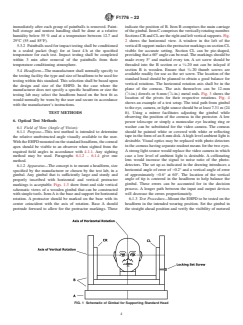
FIG. 1 Schematic of Gimbal for Supporting Standard Head
F1776−22
FIG. 2 Side View of Gimbal
FIG. 3 Top View Showing Base for Horizontal Rotation
FIG. 4 Bench-Top Field-of-View Setup
response of the two eyes. The gimbal then is rotated to target distortion or blur is found when the localized area is
determinethehorizontalandverticalextremeanglesofviewin examined with an instrument as indicated in 6.2.2.
all four directions along which the appropriate corneas can be
6.2.1 Inspection Procedure—One method of optical inspec-
seen monocularly.
tion is to view a high-contrast grid pattern of dark and white
6.1.4 Report—Record and report the maximum angles of
lines through the lens, scanning it area by area and moving it
view in all four directions.
about.The grid pattern shall be at least 45 by 45 cm (18 by 18
6.2 Optical Quality—Localized power errors or aberrations in.) and constructed of high contrast black lines on a white
background (the white separations being equal to the black
thataredetectedbythevisualinspectionprocedureof6.2.1are
permissible if no measurable or gross foci meter or telescope lines,bothbeingapproximately6mm[ ⁄4in.]wide).Thetarget
F1776−22
shall be at least 1.8 to 2.5 m (6 to 8 ft) from the observer, and zero. The right side of the target shall be labeled plus (+) and
the lens shall be held at least 45 to 60 cm (18 to 24 in.) from the left side minus (−) and vertical top plus (+) and bottom
the eye. Any ripples in the lens detected by this test method minus (−).
shall be further examined in accordance with 6.2.2.
6.4.3 Test Procedure—The normal wearing position can be
6.2.2 The referee method of detecting optical defects and
definedasthelineofsightthroughthelenses,whichisparallel
localaberrationsistoscanthecentralviewingzone,especially
withthetempleswhenthelensesareheldinanormalexpected
areasofsuspicionarisingformthevisualtestof6.2.1.Thelens
wearing position. Mount the lenses on a fixture such that the
of shield shall be scanned with a precision foci meter or an 8
right and left eye positions for the testing line of sight are 64
to 10× telescope using the targets and arrangements described
mm apart. One such device is a board with four dowel sticks
in 6.6.2 – 6.6.3.2. The aperture shall be 5 to 7 mm for this
inserted so that the device can be supported in front of the
examination.Areas outside the central viewing zone or within
telescopeonasuitablebenchortable.Asingletelescopecanbe
6mmoftheedgeneednotbetested.Whenthecentralviewing
used for straight ahead monocular readings. The fixturing
area is scanned, there shall be no sudden jump, doubling, or
device, for example the block of wood, can be slotted to move
blurring of the image greater than 0.08 diopters change in
64 mm transversely to easily measure the prism and prism
power. Gradual variations in the central viewing zone shall be
imbalance. The telescope shall be focused on the target at 4 m
within the power imbalance tolerances. An optical foci meter
and be aligned carefully with the cross hairs on the zero
with electronic readout repeatable to 0.02 diopters is a satis-
position of the target. A two meridian screw-adjusted support
factory alternate method. These scanning procedures may be
will help. The readings for the right and left eyes must be
madebyscanningacrossthelenssurfacenotnecessarilyinthe
recordedbyusingthegraphpapertarget.Themonocularprism
“as worn” mode.
testisachievedbynotingwhetherthecrosshairsremaininthe
20-mm radius circle. Each 5 mm equals 0.125 prism diopters.
6.3 Luminous Transmittance—Use a suitable photometer,
For the prism imbalance test, readings in prism diopters for
such as a Gardner Hazemeter, or other device comprised of a
each eye must be taken. This is done by recording the amount
light source of CIE Illuminant C at 6774° K color temperature
and direction of displacement of the cross hairs on the target.
and a photometric probe and meter capable of reading trans-
Apparent movement of the cross hairs in the plus direction is
missioninpercentoverarangefrom1to100%.Useasuitable
base-out for the right eye and base-in for the left eye whether
enclosure to block against stray light and contain the test
or not reversed by the telescope. The same is true for vertical
samples.Followingthemanufacturersinstructionfortheuseof
measurements. Record the apparent position of the cross hairs
theinstrument,measurethespecimenforpercenttransmittance
on the target with plus and minus signs, in terms of prism
within each of the two central viewing zones. The measured
diopters. Subtract the left eye readings from the right eye
values shall meet the established criteria for the device. A
readings. For vertical prism imbalance, the absolute value of
spectrophotometer, followed by appropriate photometric
the resulting figure is the imbalance. For horizontal prism
calculation, also may be used.
imbalance, a net positive value indicates the base-out prism
6.3.1 For the purposes of this specification, luminance
imbalance.Anet negative value indicates base-in prism imbal-
transmittance may be measured with inexpensive photometers.
ance.
A fixturing device shall be devised to exclude ambient
...
This document is not an ASTM standard and is intended only to provide the user of an ASTM standard an indication of what changes have been made to the previous version. Because
it may not be technically possible to adequately depict all changes accurately, ASTM recommends that users consult prior editions as appropriate. In all cases only the current version
of the standard as published by ASTM is to be considered the official document.
Designation: F1776 − 21 F1776 − 22 An American National Standard
Standard Specification for
Eye Protective Devices for Paintball Sports
This standard is issued under the fixed designation F1776; the number immediately following the designation indicates the year of
original adoption or, in the case of revision, the year of last revision. A number in parentheses indicates the year of last reapproval. A
superscript epsilon (´) indicates an editorial change since the last revision or reapproval.
INTRODUCTION
This is the specification for eye, face, and head protective devices, or EHPD, to be used in the sport
of paintball. Paintball is a sport that, like all sports, has intrinsic hazards. These hazards include being
hit by paintballs. Protective equipment cannot eliminate all injuries but will substantially reduce their
severity and frequency. Participation in this sport by a player implies acceptance of injury risk. The
goal of protective equipment is to minimize the risk of injury.
Performance requirements are presented and are intended to minimize injury with minimal
impairment of the form and appeal of the sport. This specification is subject to revision as indicated
by subsequent injury statistics.
The impact requirements are designed to give eye, adnexa of eye, and head protection from
paintball impacts likely to be encountered under game conditions. While the EHPD also may protect
the user from other potential impacts, such as running into tree branches, there are many conceivable
impacts, including falls from heights, which could exceed the specification and result in eye injury
despite the use of the EHPD.
1. Scope
1.1 This specification applies to eye, face, and head protective devices, designed for use by players of the sport of paintball, which
minimize or significantly reduce injury to the eye, adnexa of eye, face, and head due to paintball impact or penetration, or both.
1.2 EHPDs by nature provide three types of protection. The first type of protection is for the eyes and adnexa of eye and not
necessarily for any other parts of the face or head. The second type of protection adds coverage for the ears and face. The third
type of coverage adds cranial coverage in addition to that provided to types II and III. These coverage types are defined in Section
8.
1.3 This specification does not limit the wearing of eyeglasses or contact lenses when used in conjunction with the EHPD.
1.4 The values stated in SI units are to be regarded as the standard. The values given in parentheses are for information only.
1.5 This standard does not purport to address all of the safety concerns, if any, associated with its use. It is the responsibility
of the user of this standard to establish appropriate safety, health, and environmental practices and determine the applicability of
regulatory limitations prior to use.
1.6 This international standard was developed in accordance with internationally recognized principles on standardization
established in the Decision on Principles for the Development of International Standards, Guides and Recommendations issued
by the World Trade Organization Technical Barriers to Trade (TBT) Committee.
This specification is under the jurisdiction of ASTM Committee F08 on Sports Equipment, Playing Surfaces, and Facilities and is the direct responsibility of
Subcommittee F08.57 on Eye Safety for Sports.
Current edition approved Dec. 1, 2021May 1, 2022. Published December 2021May 2022. Originally approved in 1997. Last previous edition approved in 20192021 as
F1776 – 19.F1776 – 21. DOI: 10.1520/F1776-21.10.1520/F1776-22.
Copyright © ASTM International, 100 Barr Harbor Drive, PO Box C700, West Conshohocken, PA 19428-2959. United States
F1776 − 22
2. Referenced Documents
2.1 ASTM Standards:
D1003 Test Method for Haze and Luminous Transmittance of Transparent Plastics
F1979 Specification for Projectiles Used in the Sport of Paintball
F2272 Specification for Paintball Markers
F2879 Specification for Eye Protective Devices for Airsoft Sports
2.2 ANSI Standards:
ANSI Z80.3 Requirements for Nonprescription Sunglasses and Fashion Eyewear
ANSI Z87.1 Practice for Occupational and Educational Eye and Face Protectors
2.3 CSA Standard:
CSA Z262.6-02 Specifications for Facially Featured Headforms
CSA Z262.6-14 Specifications for Facially Featured Head Forms
2.4 EN Standard:
EN 168 Personal Eye Protection – Non-Optical Test Method - Section 17 Headforms
2.5 Federal Standards:
No. 406
No. 3022
3. Terminology
3.1 Definitions of Terms Specific to This Standard:
3.1.1 adnexa, n—adjunct parts of the eye, including the orbit, orbital contents, eyelids, and the lacrimal apparatus.
3.1.2 astigmatism, n—a condition in a lens that creates two axially separated line foci of each object point, the lines being mutually
perpendicular. In other words, the lens has two different refractive powers in meridians that are 90° apart.
3.1.3 base-in, adj—relating to the type of prism imbalance that tends to cause parallel rays of light passing through an EHPD,
spaced apart by the interpupillary distance, to converge.
3.1.4 base-out, adj—relating to the type of prism imbalance that tends to cause parallel rays of light passing through an EHPD,
spaced apart by the interpupillary distance, to diverge.
3.1.5 binocular, adj—relating to the field of view that is shared by both eyes simultaneously.
3.1.6 caliber, n—the term used to refer to the size of a paintball projectile. Related to the measurement of the diameter of the
paintball.
3.1.7 central viewing zone, n—that part of a lens that has its center in line with the wearer’s line of sight when looking straight
ahead. The zone is circular in shape. For the purpose of this specification, it shall be considered to be 38 mm in diameter. The center
of the central viewing zone shall be the point of intersection of the line of sight with the lens as mounted on the headform, specified
by the manufacturer.
3.1.8 cleanable, adj—the ability of an EHPD to be made readily free of dirt or grime without being damaged during an appropriate
cleaning process, such as the use of soap and water.
3.1.9 corneal apex, n—The most anterior point of the cornea when the eye is in the primary position.
3.1.10 coverage, n—those areas of the eye, face, and head as covered by the EHPD as defined in 8.3.
For referenced ASTM standards, visit the ASTM website, www.astm.org, or contact ASTM Customer Service at service@astm.org. For Annual Book of ASTM Standards
volume information, refer to the standard’s Document Summary page on the ASTM website.
Available from American National Standards Institute (ANSI), 25 W. 43rd St., 4th Floor, New York, NY 10036, http://www.ansi.org.
Available from Canadian Standards Association (CSA), 5060 Spectrum Way, Mississauga, ON L4W 5N6, Canada, http://www.csa.ca.
Available from European Committee for Standardization (CEN), Avenue Marnix 17, B-1000, Brussels, Belgium, http://www.cen.eu.
Available from Standardization Documents Order Desk, Bldg. 4 Section D, 700 Robbins Ave., Philadelphia, PA 19111-5094, Attn: NPODS.
F1776 − 22
3.1.11 definition, optical, n—the characteristic of a lens that allows separate distinct points in close proximity to be discerned when
looking through the lens.
3.1.12 dislodge, v—remove or force an object from its original position.
3.1.13 eye, n—relating to the eye of the headform or the eye of a person wearing an EHPD or that part of an EHPD through which
a wearer’s eye would normally look.
3.1.14 eye of the headform, n—all structures contained within the orbital rim of the specified headform.
3.1.15 EHPD, n—device that provides protection to the wearer’s eyes, face, and head against paintball impact or penetration, or
both.
3.1.16 fracture, n—separation, as a result of impact, of any part of a protector resulting either in two completely separate pieces
or the separation of a protector or part of a protector, intended as a continuous single piece.
3.1.16.1 Discussion—
As applied to a lens of a protector, any breach, rupture, or visible crack through the entire thickness in the lens.
3.1.17 haze, n—the fraction of the total transmitted light from a normally incident beam that is not transmitted in a focused
condition but scattered by inclusions or surface defects. Excessive haze will reduce contrast and visibility.
3.1.18 headform, n—as utilized within this standard for the as-worn assessment of EHPDs, key dimensions of which are as
provided in CSA Z262.6-02, EN 168, or CSA Z262.6-14 except with an adjusted durometer (hardness) of 50 6 5.5 Shore A.
3.1.19 lens, n—transparent part of an EHPD through which the wearer normally sees.
3.1.19.1 Discussion—
The most common configurations for lenses are single pane and thermal double pane. Thermal double pane lenses are usually
constructed from a single pane lens which has a second clear airtight thermal barrier affixed to it to reduce the effects of lens
fogging. Some lenses also are treated with chemical solutions to reduce lens fogging.
3.1.20 lens retention component(s), n—components, separate from the lens, that are designed to retain the lens in the frame or body
of the EHPD.
3.1.21 luminous transmittance, n—luminous transmittance is a function of the spectral transmittance of the lens weighted by the
corresponding ordinates of the photopic luminous efficiency distribution of the CIE (1931) standard colorimetric observer and by
the spectral intensity of standard Illumination C (see ANSI Z80.3).
3.1.22 paintball, n—projectile comprised of a shell and a fill manufactured in accordance with the requirements of Specification
F1979 and designed to be expelled from a paintball marker.
3.1.23 paintball fragment, n—a part of the shell of the paintball that will not be surrounded completely by a 3 by 5-mm rectangle.
3.1.24 paintball marker, n—device specifically designed to discharge paintballs which conforms with Specification F2272.
3.1.25 orbital area, n—the area contained in a circle r = 20-mm centered on the pupil of the specified headform.
3.1.26 power imbalance, n—a condition that exists when the refractive power created by the right lens of the EHPD is different
from that of the left lens.
3.1.27 prism, n—the angular deviation of a ray of light as it passes through a lens resulting from the angle at which the ray strikes
each surface of the lens and the index of refraction of the material from which it is made.
3.1.28 prism imbalance:
F1776 − 22
3.1.28.1 horizontal imbalance, n—the difference in prismatic deviation of incident parallel light beams on the two eyes of an
EHPD in the horizontal meridian (see base-in and base-out).
3.1.28.2 vertical imbalance, n—the difference in prismatic deviation between parallel light beams incident on the two eyes of an
EHPD in the vertical meridian.
3.1.29 refractive power, n—the focusing effect of a lens expressed in diopters.
3.1.30 spherical power, n—the average of the maximum meridional astigmatic power and the minimum meridional astigmatic
power of a lens.
4. Performance Requirements
4.1 Optical Requirements:
4.1.1 Field of View—When tested in accordance with 6.1, the basic EHPD, without any accessories such as a sun visor installed,
shall have a field of view equal to or exceeding the following:
4.1.1.1 Temporal Field—50°.
4.1.1.2 Nasal Field—30°.
4.1.1.3 Superior Field—30°.
4.1.1.4 Inferior Field—30°.
4.1.2 Refractive Tolerances—When tested in accordance with 6.6, the spherical power shall not be less than −0.37 diopters and
shall not exceed +0.06 diopters.
4.1.3 Astigmatism—When tested in accordance with 6.6, the astigmatism shall not exceed 0.25 diopters.
4.1.4 Power Imbalance—When tested in accordance with 6.6, the power imbalance in corresponding meridians between the two
eyes for straight ahead seeing shall not exceed 0.18 diopters.
4.1.5 Prism—When tested in accordance with 6.4 or 6.8, the primary viewing position of either eye of a shield shall not exceed
0.5 prism diopters.
4.1.6 Prism Imbalance—When tested in accordance with 6.4 or 6.8, the prism imbalance shall meet the following criteria:
4.1.6.1 Vertical Imbalance, shall not exceed +0.25 diopters.
4.1.6.2 Horizontal Imbalances—Negative values (base-in) shall not be less than −0.25 prism diopters, and positive values
(base-out) shall not be more than +1.0 prism diopters.
4.1.7 Luminous Transmittance—When tested in accordance with 6.3, the luminous transmittance shall not be less than 60 % for
clear lenses and not less than 17 % for tinted lenses unless labeled very dark in which case the minimum transmittance shall be
no less than 8 %.
4.1.8 Haze—When tested in accordance with 6.5, the haze of the EHPD lens shall not exceed 3 %.
4.1.9 Optical Quality—Within the central viewing zone, striae, warpage, surface ripples, or other defects that are apparent under
the optical inspection test conditions of 6.2 shall be considered a failure. An exception is when small specks or inclusions, which
are not seen when the lens is held close to the eye in the as-worn position, shall not be a cause of rejection.
4.1.10 Physical Lens Defects—Within the central viewing zone, pits, scratches, grayness, bubbles, cracks, water marks, or other
F1776 − 22
defects that are apparent under the visible inspection test conditions of 6.7 shall be considered a failure. An exception that small
specks or inclusions, which are not seen when the lens is held close to the eye in the as-worn position, shall not be cause of
rejection.
4.2 Mechanical Requirements:
4.2.1 When tested in accordance with Section 7, the basic EHPD, without any accessories such as a sun visor installed:
4.2.1.1 No contact by components of the EHPD or paintball fragments is allowed with the orbital area of the selected headform.
4.2.1.2 Any visible fracture of the lens, frame, or EHPD constitutes a failure.
4.2.1.3 Any dislodging of the lens from the frame constitutes a failure.
4.2.1.4 Any dislodging of a lens retention component from the EHPD constitutes a failure.
4.2.1.5 Any dislodging of a component of the EHPD that would permit free passage and contact of a 5-mm diameter probe (6
0.1 mm) to the orbital area of the selected headform constitutes failure.
4.2.1.6 Any contact of an intact paintball, on the portion of the selected headform protected by the EHPD, after said paintball
penetrated or passed through the protective portion of the EHPD, constitutes failure.
4.2.1.7 Any rotation of the headgear system on the selected headform that would permit free passage and contact of a 5-mm
diameter probe (6 0.1 mm) to the orbital area of the selected headform constitutes failure.
5. Sample Preparation
5.1 Eye and Head Protective Devices:
5.1.1 Only new and complete EHPDs as offered for sale shall be tested.
5.1.2 EHPDs shall be subjected to a single impact test.
5.1.3 The EHPD shall be conditioned for a minimum of 4 h at the specified temperature prior to each test.
5.2 Test Temperatures:
5.2.1 Cold Test, −12.2°C6 2°C (10°F 6 3.5°F).
5.2.2 Room Temp, 23°C6 2°C (73°F 6 3.5°F).
5.2.3 Hot Test, 37.8°C6 2°C (100°F 6 3.5°F).
5.3 Paintballs:
5.3.1 All impact testing shall be done using 68 caliber paintballs manufactured in accordance with the requirements of
Specification F1979 and obtained within 270 days of the testing date. The paintball bulk container shall be resealed immediately
after each group of paintballs is removed. Paintball storage and nontest handling shall be done at a relative humidity below 55 %
and at a temperature between 12.7 and 29°C (55 and 85°F).
5.3.2 Paintballs used for impact testing shall be conditioned in a sealed packet (bag) for at least 4 h at the specified temperature
for each test. Impact testing shall be completed within 3 min after removal of the paintballs from their temperature conditioning
atmosphere.
5.4 Headform—The manufacturer shall normally specify to the testing facility the type and size of headform to be used for testing
within this standard. This selection shall be based upon the design and size of the EHPD. In the case where the manufacturer does
F1776 − 22
not specify a specific headform or size the testing lab may select the headform based on the best fit as would normally be worn
by the user and secure in accordance with the manufacturer’s instructions.
TEST METHODS
6. Optical Test Methods
6.1 Field of View (Angle of Vision):
6.1.1 Purpose—This test method is intended to determine the relative unobstructed angle visually available to the user. With the
EHPD mounted on the standard headform, the corneal apex should be visible to an observer when sighted from the required field
angles in accordance with 4.1.1. Any sighting method may be used. Paragraphs 6.1.2 – 6.1.4 give one method.
6.1.2 Apparatus—The concept is to mount a headform, size specified by the manufacturer or chosen by the test lab, in a gimbal.
Any gimbal that is sufficiently large and sturdy and properly inscribed with horizontal and vertical protractor markings is
acceptable. Figs. 1-3 show front and side vertical schematic views of a wooden gimbal that can be constructed with simple tools.
Item A is the base and support for horizontal rotation. A protractor should be marked on the base with its center coincident with
the axis of rotation. Base A should protrude forward to allow for the protractor markings. These indicate the position of B. Item
B comprises the main carriage of the gimbal. Item C comprises the vertically rotating member. Sections CR and CL are the right
and left vertical supports. Fig. 2 shows the horizontal view. A window in the left of the vertical B support makes the protractor
markings on section CL visible for accurate setting. Section CL can be pie-shaped, providing that a 60° angle can be read. The
markings should be made every 5° and marked every ten. A set screw should be threaded into the B section or a ⁄4-20 nut can
be inlayed if section B is wooden. Ensure that ⁄4-20 thumb screws are available readily for use as the set screw. The location of
the standard head should be planned to obtain a good balance for vertical rotations. The horizontal rotation axis shall be in the plane
1 1
of the corneas. The axis themselves can be 12-mm ( ⁄2-in.) dowels or 6-mm ( ⁄4-in.) metal rods. Fig. 3 shows the location of the
pivots for their respective rotations. Fig. 4 shows an example of a test setup. The total path from gimbal to the eye, camera, or
light source should be at least 7.31 m (24 ft). Using a mirror facilitates adjusting the gimbal while observing the position of the
corneas in the protector. A low power telescope or simply a monocular eye locating ring or washer can be substituted for the video
camera. The corneas should be painted white or covered with white or reflecting tape in the form of an 8-mm disk. A high level
ambient light is desirable. Visual optics may be replaced with photo detectors in the corneas having separate readout means for
the two eyes. A strong light source would replace the video camera in which case a low level of ambient light is desirable. A
collimating lens would increase the signal to noise ratio of the photo-detectors. The set up as indicated in the drawing introduces
a horizontal angle of error of −0.2° and a vertical angle of error of approximately −0.6° at 60°. The location of the vertical angle
of tip is centered in the headform to help balance the gimbal. These errors can be accounted for in the decision process. A longer
path between the input and output devices will decrease the errors proportionately.
6.1.3 Test Procedure—Mount the EHPD to be tested on the headform in the intended wearing position. Set the gimbal in the
FIG. 1 Schematic of Gimbal for Supporting Standard Head
F1776 − 22
FIG. 2 Side View of Gimbal
FIG. 3 Top View Showing Base for Horizontal Rotation
FIG. 4 Bench-Top Field-of-View Setup
straight ahead position and verify the visibility of metered response of the two eyes. The gimbal then is rotated to determine the
horizontal and vertical extreme angles of view in all four directions along which the appropriate corneas can be seen monocularly.
6.1.4 Report—Record and report the maximum angles of view in all four directions.
6.2 Optical Quality—Localized power errors or aberrations that are detected by the visual inspection procedure of 6.2.1 are
permissible if no measurable or gross foci meter or telescope target distortion or blur is found when the localized area is examined
with an instrument as indicated in 6.2.2.
F1776 − 22
6.2.1 Inspection Procedure—One method of optical inspection is to view a high-contrast grid pattern of dark and white lines
through the lens, scanning it area by area and moving it about. The grid pattern shall be at least 45 by 45 cm (18 by 18 in.) and
constructed of high contrast black lines on a white background (the white separations being equal to the black lines, both being
approximately 6 mm [ ⁄4 in.] wide). The target shall be at least 1.8 to 2.5 m (6 to 8 ft) from the observer, and the lens shall be held
at least 45 to 60 cm (18 to 24 in.) from the eye. Any ripples in the lens detected by this test method shall be further examined in
accordance with 6.2.2.
6.2.2 The referee method of detecting optical defects and local aberrations is to scan the central viewing zone, especially areas
of suspicion arising form the visual test of 6.2.1. The lens of shield shall be scanned with a precision foci meter or an 8 to 10×
telescope using the targets and arrangements described in 6.6.2 – 6.6.3.2. The aperture shall be 5 to 7 mm for this examination.
Areas outside the central viewing zone or within 6 mm of the edge need not be tested. When the central viewing area is scanned,
there shall be no sudden jump, doubling, or blurring of the image greater than 0.08 diopters change in power. Gradual variations
in the central viewing zone shall be within the power imbalance tolerances. An optical foci meter with electronic readout repeatable
to 0.02 diopters is a satisfactory alternate method. These scanning procedures may be made by scanning across the lens surface
not necessarily in the “as worn” mode.
6.3 Luminous Transmittance—Use a suitable photometer, such as a Gardner Hazemeter, or other device comprised of a light
source of CIE Illuminant C at 6774° K color temperature and a photometric probe and meter capable of reading transmission in
percent over a range from 1 to 100 %. Use a suitable enclosure to block against stray light and contain the test samples. Following
the manufacturers instruction for the use of the instrument, measure the specimen for percent transmittance within each of the two
central viewing zones. The measured values shall meet the established criteria for the device. A spectrophotometer, followed by
appropriate photometric calculation, also may be used.
6.3.1 For the purposes of this specification, luminance transmittance may be measured with inexpensive photometers. A fixturing
device shall be devised to exclude ambient light. The source need not be strictly Illuminate C. A tungsten lamp or a screw-in
fluorescent lamp provides adequate simulation of the use environment.
6.4 Prismatic Deviation Measurements:
6.4.1 Purpose—This test is intended to measure the angular deviation of light rays created by the EHPD as they pass through the
lens(es).
6.4.2 Apparatus—A telescope, equipped with a cross hair reticule having a magnification of 8× to 10× and an aperture 19 mm in
diameter shall be used. The test method outlined in ANSI Z87.1 has been found satisfactory for this purpose. Other methods that
yield comparable results may be used. For this test method, the target distance is 4 m. This target is easier to achieve than longer
distances. The target can be metric graph paper divided into 1-cm and 5-mm squares or constructed with a ruler and compass. A
circle with a 2-cm radius and a center dot about 1.5 mm in diameter will provide the tolerance for overall prism in one eye. If the
1-cm and 5-mm grids are darkened for 20 mm in each direction from center, with the center lines emphasized, measurements will
be easier. Each 5 mm of the scale represents 0.125 prism diopters. The prism values off-center can be labeled along one edge of
the 4-cm square vertically and horizontally departing from the central zero. The right side of the target shall be labeled plus (+)
and the left side minus (−) and vertical top plus (+) and bottom minus (−).
6.4.3 Test Procedure—The normal wearing position can be defined as the line of sight through the lenses, which is parallel with
the temples when the lenses are held in a normal expected wearing position. Mount the lenses on a fixture such that the right and
left eye positions for the testing line of sight are 64 mm apart. One such device is a board with four dowel sticks inserted so that
the device can be supported in front of the telescope on a suitable bench or table. A single telescope can be used for straight ahead
monocular readings. The fixturing device, for example the block of wood, can
...