

ASTM A479/A479M-23a
(Specification)Standard Specification for Stainless Steel Bars and Shapes for Use in Boilers and Other Pressure Vessels
General Information
- Abstract
ABSTRACT
This specification covers hot- and cold-finished bars of stainless steel, including rounds, squares, and hexagons, and hot-rolled or extruded shapes such as angles, tees, and channels for use in boiler and pressure vessel construction. Four grades of the stainless steel are available which includes austenitic, austenitic-ferritic, ferritic, and martensitic grades. Mechanical properties such as tensile strength, yield strength, elongation, and hardness shall be determined for the specimens subjected to normalized, tempered, annealed, and quenched conditions. The austenitic stainless steels shall be subjected to heat treatment and shall undergo corrosion test.
SCOPE
1.1 This specification2 covers hot- and cold-finished bars of stainless steel, including rounds, squares, and hexagons, and hot-rolled or extruded shapes such as angles, tees, and channels for use in boiler and pressure vessel construction.2
Note 1: There are standards covering high nickel, chromium, austenitic corrosion, and heat-resisting alloy materials. These standards are under the jurisdiction of ASTM Subcommittee B02.07 and may be found in Annual Book of ASTM Standards, Vol 02.04.
1.2 The values stated in either SI units or inch-pound units are to be regarded separately as standard. The values stated in each system may not be exact equivalents; therefore, each system shall be used independently of the other. Combining values from the two systems may result in non-conformance with the standard.
1.3 Unless the order specifies the applicable “M” specification designation, the material shall be furnished to the inch-pound units.
1.4 This international standard was developed in accordance with internationally recognized principles on standardization established in the Decision on Principles for the Development of International Standards, Guides and Recommendations issued by the World Trade Organization Technical Barriers to Trade (TBT) Committee.
- Status
- Published
- Publication Date
- 14-May-2023
- Technical Committee
- A01 - Steel, Stainless Steel and Related Alloys
- Drafting Committee
- A01.17 - Flat-Rolled and Wrought Stainless Steel
Buy Documents
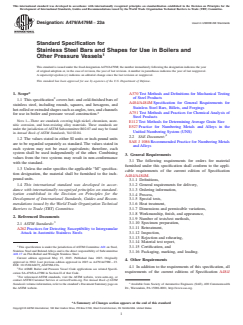
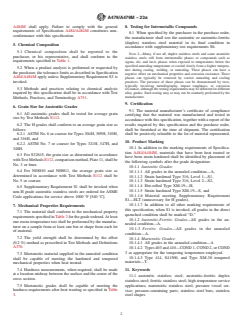
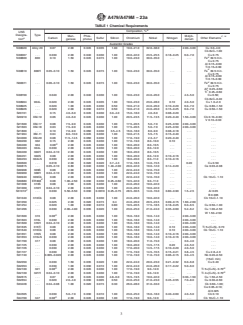
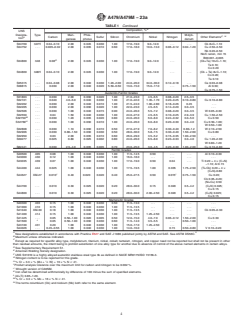
ASTM A479/A479M-23a - Standard Specification for Stainless Steel Bars and Shapes for Use in Boilers and Other Pressure Vessels
REDLINE ASTM A479/A479M-23a - Standard Specification for Stainless Steel Bars and Shapes for Use in Boilers and Other Pressure Vessels
Overview
ASTM A479/A479M-23a: Standard Specification for Stainless Steel Bars and Shapes for Use in Boilers and Other Pressure Vessels is a critical ASTM International standard that covers the requirements for hot- and cold-finished stainless steel bars (including rounds, squares, hexagons) and hot-rolled or extruded shapes (such as angles, tees, and channels). These products are primarily used in the fabrication of boilers and other types of pressure vessels. The standard ensures material consistency, reliability, and safety for high-pressure and high-temperature applications.
This specification addresses material grades, mechanical properties, required tests, marking, and certification, supporting international trade and safety by adhering to globally recognized practices.
Key Topics
- Product Scope: Covers various forms of stainless steel, including rounds, squares, hexagons, angles, tees, and channels.
- Material Grades: Includes austenitic, austenitic-ferritic (duplex), ferritic, and martensitic stainless steels to suit various mechanical and corrosion resistance requirements.
- Mechanical Properties: Specifies essential mechanical criteria such as tensile strength, yield strength, elongation, and hardness. Mechanical property requirements reflect the intended service conditions, including high-temperature and pressure environments.
- Heat Treatment: Details heat treatment processes (normalized, tempered, annealed, quenched) applicable to the specific grade to attain optimal mechanical properties.
- Corrosion Resistance: Austenitic stainless steels are tested for corrosion resistance, including intergranular corrosion, to ensure suitability for boiler and pressure vessel use.
- Testing & Certification: Outlines required tests (mechanical, chemical, grain size) and mandates manufacturer certification of compliance with the standard.
- Product Marking: Requires clear marking to indicate grade, condition, and conformance to relevant supplementary requirements.
Applications
ASTM A479/A479M-23a is widely used in industries requiring durable, corrosion-resistant stainless steel components under high-stress or temperature environments:
- Boilers: Bars and shapes manufactured under this standard are essential parts for boiler pressure boundaries and structural supports.
- Pressure Vessels: Used in the production of tanks, heat exchangers, and reactors subjected to high pressure in chemical, petrochemical, and power generation sectors.
- Petrochemical Equipment: Components that demand high corrosion resistance and strength, such as those found in oil and gas processing.
- Energy and Power Generation: Valves, fittings, and supports for steam turbines and high-pressure piping systems.
- General Industrial Use: Any high-temperature or high-pressure process system where material integrity and resistance to corrosion are crucial.
Related Standards
- ASTM A484/A484M: General requirements for stainless steel bars, billets, and forgings.
- ASTM A262: Practices for detecting intergranular attack in austenitic stainless steels.
- ASTM A370: Test methods and definitions for mechanical testing of steel products.
- ASTM A751: Test methods and practices for chemical analysis of steel products.
- ASTM E112: Test methods for determining average grain size.
- ASTM E527: Practice for numbering metals and alloys in the Unified Numbering System (UNS).
- SAE J1086: Recommended practice for numbering metals and alloys.
- ASME SA-479/SA-479M: Related specification adopted for boiler and pressure vessel code applications.
Practical Value
Adoption of ASTM A479/A479M-23a ensures that stainless steel bars and shapes meet stringent quality and performance standards, offering the following benefits:
- Reliability: Ensures materials provide consistent performance in demanding boiler and pressure vessel environments.
- Safety Compliance: Supports adherence to safety regulations in critical infrastructure and process applications.
- International Trade Facilitation: Enables the use and acceptance of materials in global markets through standardized requirements.
- Versatility: Accommodates a wide range of stainless steel grades suitable for diverse operational demands.
Keywords: ASTM A479, stainless steel bars, boiler pressure vessel standards, austenitic stainless steel, ferritic stainless steel, martensitic stainless steel, duplex stainless steel, mechanical properties, heat treatment, corrosion resistance, industrial applications.
Relations
- Effective Date
- 01-Mar-2024
- Effective Date
- 01-Jan-2024
- Effective Date
- 01-Sep-2023
- Effective Date
- 01-Mar-2023
- Effective Date
- 05-May-2020
- Effective Date
- 01-Sep-2019
- Effective Date
- 01-Jul-2019
- Effective Date
- 01-Nov-2018
- Effective Date
- 01-Jan-2018
- Refers
ASTM A370-17a - Standard Test Methods and Definitions for Mechanical Testing of Steel Products - Effective Date
- 15-Nov-2017
- Effective Date
- 01-Jan-2017
- Effective Date
- 01-Jan-2016
- Effective Date
- 01-Nov-2015
- Effective Date
- 01-Oct-2014
- Effective Date
- 15-May-2014
Buy Documents
ASTM A479/A479M-23a - Standard Specification for Stainless Steel Bars and Shapes for Use in Boilers and Other Pressure Vessels
REDLINE ASTM A479/A479M-23a - Standard Specification for Stainless Steel Bars and Shapes for Use in Boilers and Other Pressure Vessels
Get Certified
Connect with accredited certification bodies for this standard

Element Materials Technology
Materials testing and product certification.

Inštitut za kovinske materiale in tehnologije
Institute of Metals and Technology. Materials testing, metallurgical analysis, NDT.
Sponsored listings
Frequently Asked Questions
ASTM A479/A479M-23a is a technical specification published by ASTM International. Its full title is "Standard Specification for Stainless Steel Bars and Shapes for Use in Boilers and Other Pressure Vessels". This standard covers: ABSTRACT This specification covers hot- and cold-finished bars of stainless steel, including rounds, squares, and hexagons, and hot-rolled or extruded shapes such as angles, tees, and channels for use in boiler and pressure vessel construction. Four grades of the stainless steel are available which includes austenitic, austenitic-ferritic, ferritic, and martensitic grades. Mechanical properties such as tensile strength, yield strength, elongation, and hardness shall be determined for the specimens subjected to normalized, tempered, annealed, and quenched conditions. The austenitic stainless steels shall be subjected to heat treatment and shall undergo corrosion test. SCOPE 1.1 This specification2 covers hot- and cold-finished bars of stainless steel, including rounds, squares, and hexagons, and hot-rolled or extruded shapes such as angles, tees, and channels for use in boiler and pressure vessel construction.2 Note 1: There are standards covering high nickel, chromium, austenitic corrosion, and heat-resisting alloy materials. These standards are under the jurisdiction of ASTM Subcommittee B02.07 and may be found in Annual Book of ASTM Standards, Vol 02.04. 1.2 The values stated in either SI units or inch-pound units are to be regarded separately as standard. The values stated in each system may not be exact equivalents; therefore, each system shall be used independently of the other. Combining values from the two systems may result in non-conformance with the standard. 1.3 Unless the order specifies the applicable “M” specification designation, the material shall be furnished to the inch-pound units. 1.4 This international standard was developed in accordance with internationally recognized principles on standardization established in the Decision on Principles for the Development of International Standards, Guides and Recommendations issued by the World Trade Organization Technical Barriers to Trade (TBT) Committee.
ABSTRACT This specification covers hot- and cold-finished bars of stainless steel, including rounds, squares, and hexagons, and hot-rolled or extruded shapes such as angles, tees, and channels for use in boiler and pressure vessel construction. Four grades of the stainless steel are available which includes austenitic, austenitic-ferritic, ferritic, and martensitic grades. Mechanical properties such as tensile strength, yield strength, elongation, and hardness shall be determined for the specimens subjected to normalized, tempered, annealed, and quenched conditions. The austenitic stainless steels shall be subjected to heat treatment and shall undergo corrosion test. SCOPE 1.1 This specification2 covers hot- and cold-finished bars of stainless steel, including rounds, squares, and hexagons, and hot-rolled or extruded shapes such as angles, tees, and channels for use in boiler and pressure vessel construction.2 Note 1: There are standards covering high nickel, chromium, austenitic corrosion, and heat-resisting alloy materials. These standards are under the jurisdiction of ASTM Subcommittee B02.07 and may be found in Annual Book of ASTM Standards, Vol 02.04. 1.2 The values stated in either SI units or inch-pound units are to be regarded separately as standard. The values stated in each system may not be exact equivalents; therefore, each system shall be used independently of the other. Combining values from the two systems may result in non-conformance with the standard. 1.3 Unless the order specifies the applicable “M” specification designation, the material shall be furnished to the inch-pound units. 1.4 This international standard was developed in accordance with internationally recognized principles on standardization established in the Decision on Principles for the Development of International Standards, Guides and Recommendations issued by the World Trade Organization Technical Barriers to Trade (TBT) Committee.
ASTM A479/A479M-23a is classified under the following ICS (International Classification for Standards) categories: 77.140.30 - Steels for pressure purposes. The ICS classification helps identify the subject area and facilitates finding related standards.
ASTM A479/A479M-23a has the following relationships with other standards: It is inter standard links to ASTM A370-24, ASTM A484/A484M-24, ASTM A484/A484M-23a, ASTM A484/A484M-23, ASTM A484/A484M-20a, ASTM A484/A484M-19, ASTM A370-19, ASTM A484/A484M-18a, ASTM A484/A484M-18, ASTM A370-17a, ASTM A370-17, ASTM A484/A484M-16, ASTM A370-15, ASTM A484/A484M-14a, ASTM A370-14. Understanding these relationships helps ensure you are using the most current and applicable version of the standard.
ASTM A479/A479M-23a is available in PDF format for immediate download after purchase. The document can be added to your cart and obtained through the secure checkout process. Digital delivery ensures instant access to the complete standard document.
Standards Content (Sample)
This international standard was developed in accordance with internationally recognized principles on standardization established in the Decision on Principles for the
Development of International Standards, Guides and Recommendations issued by the World Trade Organization Technical Barriers to Trade (TBT) Committee.
Designation: A479/A479M − 23a Used in USDOE-NE Standards
Standard Specification for
Stainless Steel Bars and Shapes for Use in Boilers and
Other Pressure Vessels
This standard is issued under the fixed designation A479/A479M; the number immediately following the designation indicates the year
of original adoption or, in the case of revision, the year of last revision. A number in parentheses indicates the year of last reapproval.
A superscript epsilon (´) indicates an editorial change since the last revision or reapproval.
This standard has been approved for use by agencies of the U.S. Department of Defense.
1. Scope* A370 Test Methods and Definitions for Mechanical Testing
2 of Steel Products
1.1 This specification covers hot- and cold-finished bars of
A484/A484M Specification for General Requirements for
stainless steel, including rounds, squares, and hexagons, and
Stainless Steel Bars, Billets, and Forgings
hot-rolled or extruded shapes such as angles, tees, and channels
2 A751 Test Methods and Practices for Chemical Analysis of
for use in boiler and pressure vessel construction.
Steel Products
NOTE 1—There are standards covering high nickel, chromium, auste-
E112 Test Methods for Determining Average Grain Size
nitic corrosion, and heat-resisting alloy materials. These standards are
E527 Practice for Numbering Metals and Alloys in the
under the jurisdiction of ASTM Subcommittee B02.07 and may be found
Unified Numbering System (UNS)
in Annual Book of ASTM Standards, Vol 02.04.
2.2 SAE Document:
1.2 The values stated in either SI units or inch-pound units
SAE J 1086 Recommended Practice for Numbering Metals
are to be regarded separately as standard. The values stated in
and Alloys
each system may not be exact equivalents; therefore, each
system shall be used independently of the other. Combining
3. General Requirements
values from the two systems may result in non-conformance
3.1 The following requirements for orders for material
with the standard.
furnished under this specification shall conform to the appli-
1.3 Unless the order specifies the applicable “M” specifica-
cable requirements of the current edition of Specification
tion designation, the material shall be furnished to the inch-
A484/A484M.
pound units.
3.1.1 Definitions,
1.4 This international standard was developed in accor-
3.1.2 General requirements for delivery,
dance with internationally recognized principles on standard-
3.1.3 Ordering information,
ization established in the Decision on Principles for the
3.1.4 Process,
Development of International Standards, Guides and Recom-
3.1.5 Special tests,
mendations issued by the World Trade Organization Technical
3.1.6 Heat treatment,
Barriers to Trade (TBT) Committee.
3.1.7 Dimensions and permissible variations,
3.1.8 Workmanship, finish, and appearance,
2. Referenced Documents
3.1.9 Number of tests/test methods,
3.1.10 Specimen preparation,
2.1 ASTM Standards:
3.1.11 Retreatment,
A262 Practices for Detecting Susceptibility to Intergranular
3.1.12 Inspection,
Attack in Austenitic Stainless Steels
3.1.13 Rejection and rehearing,
3.1.14 Material test report,
This specification is under the jurisdiction of ASTM Committee A01 on Steel,
3.1.15 Certification, and
Stainless Steel and Related Alloys and is the direct responsibility of Subcommittee
3.1.16 Packaging, marking, and loading.
A01.17 on Flat-Rolled and Wrought Stainless Steel.
Current edition approved May 15, 2023. Published June 2023. Originally
4. Other Requirements
approved in 1962. Last previous edition approved in 2023 as A479/A479M – 23.
DOI: 10.1520/A0479_A0479M-23A.
4.1 In addition to the requirements of this specification, all
For ASME Boiler and Pressure Vessel Code applications see related Specifi-
requirements of the current editions of Specification A484/
cation SA-479/SA-479M in Section II of that Code.
For referenced ASTM standards, visit the ASTM website, www.astm.org, or
contact ASTM Customer Service at service@astm.org. For Annual Book of ASTM
Standards volume information, refer to the standard’s Document Summary page on Available from Society of Automotive Engineers (SAE), 400 Commonwealth
the ASTM website. Dr., Warrendale, PA 15096-0001, http://www.sae.org.
*A Summary of Changes section appears at the end of this standard
Copyright © ASTM International, 100 Barr Harbor Drive, PO Box C700, West Conshohocken, PA 19428-2959. United States
A479/A479M − 23a
A484M shall apply. Failure to comply with the general 8. Testing for Intermetallic Compounds
requirements of Specification A484/A484M constitutes non-
8.1 When specified by the purchaser in the purchase order,
conformance with this specification.
the manufacturer shall test the austenitic or austenitic-ferritic
(duplex) stainless steel material in its final condition in
5. Chemical Composition
accordance with supplementary test requirements S6.
5.1 Chemical composition shall be reported to the
NOTE 2—Many, if not all, duplex stainless steels and some austenitic
purchaser, or his representative, and shall conform to the
stainless steels will form intermetallic phases or compounds such as
requirements specified in Table 1.
sigma, chi, and laves phases when exposed to temperatures below the
specified annealing temperature or cooled slowly from a higher tempera-
5.2 When a product analysis is performed or requested by
ture during casting, welding, or annealing. These phases can have a
the purchaser, the tolerance limits as described in Specification
negative effect on mechanical properties and corrosion resistance. These
A484/A484M apply unless Supplementary Requirement S3 is
phases can typically be removed by correct annealing and cooling
practices. The presence of these phases can be demonstrated by tests,
invoked.
typically involving metallography, impact toughness, or corrosion
5.3 Methods and practices relating to chemical analysis
resistance, although the testing requirements may be different for different
required by this specification shall be in accordance with Test
alloy grades. Such testing may or may not be routinely performed by the
manufacturer.
Methods, Practices, and Terminology A751.
9. Certification
6. Grain Size for Austenitic Grades
9.1 The material manufacturer’s certificate of compliance
6.1 All austenitic grades shall be tested for average grain
certifying that the material was manufactured and tested in
size by Test Methods E112.
accordance with this specification, together with a report of the
6.2 The H grades shall conform to an average grain size as results required by this specification and the purchase order,
follows: shall be furnished at the time of shipment. The certification
6.2.1 ASTM No. 6 or coarser for Types 304H, 309H, 310H, shall be positively relatable to the lot of material represented.
and 316H, and
10. Product Marking
6.2.2 ASTM No. 7 or coarser for Types 321H, 347H, and
10.1 In addition to the marking requirements of Specifica-
348H.
tion A484/A484M, materials that have been heat treated or
6.3 For S32615, the grain size as determined in accordance
have been strain hardened shall be identified by placement of
with Test Methods E112, comparison method, Plate 11, shall be
the following symbols after the grade designation:
No. 3 or finer.
10.1.1 Austenitic Grades:
6.4 For N08810 and N08811, the average grain size as
10.1.1.1 All grades in the annealed condition—A,
determined in accordance with Test Methods E112 shall be
10.1.1.2 Strain hardened Type 316, Level 1—S1,
No. 5 or coarser.
10.1.1.3 Strain hardened Type 316, Level 2—S2,
10.1.1.4 Hot-rolled Type XM-19—H,
6.5 Supplementary Requirement S1 shall be invoked when
10.1.1.5 Strain hardened Type XM-19—S, and
non-H grade austenitic stainless steels are ordered for ASME
10.1.1.6 Material meeting Supplementary Requirement
Code applications for service above 1000 °F [540 °C].
S1—ELT (unnecessary for H grades).
10.1.1.7 In addition to all other marking requirements of
7. Mechanical Properties Requirements
this specification, when S1 is invoked, all grades in the direct
7.1 The material shall conform to the mechanical property
quenched condition shall be marked “D.”
requirements specified in Table 2 for the grade ordered. At least
10.1.2 Austenitic-Ferritic Grades—All grades in the an-
one room-temperature test shall be performed by the manufac-
nealed condition—A.
turer on a sample from at least one bar or shape from each lot
10.1.3 Ferritic Grades—All grades in the annealed
of material.
condition—A.
7.2 The yield strength shall be determined by the offset
10.1.4 Martensitic Grades:
(0.2 %) method as prescribed in Test Methods and Definitions
10.1.4.1 All grades in the annealed condition—A.
A370.
10.1.4.2 Types 403 and 410—COND 1, COND 2, or COND
3 as appropriate for the tempering temperature employed.
7.3 Martensitic material supplied in the annealed condition
10.1.4.3 Type 414, S41500, and Type XM-30 tempered
shall be capable of meeting the hardened and tempered
materials—T.
mechanical properties when heat treated.
7.4 Hardness measurements, when required, shall be made 11. Keywords
at a location midway between the surface and the center of the
11.1 austenitic stainless steel; austenitic-ferritic duplex
cross section.
stainless steel; ferritic stainless steel; high temperature service
7.5 Martensitic grades shall be capable of meeting the applications; martensitic stainless steel; pressure vessel ser-
hardness requirements after heat treating as specified in Table vice; pressure-containing parts; stainless steel bars; stainless
3. steel shapes
A479/A479M − 23a
TABLE 1 Chemical Requirements
B
Composition, %
UNS
Designa- Type
Man- Phos- Molyb-
C, N
A Carbon Sulfur Silicon Chromium Nickel Nitrogen Other Elements
tion
ganese phorus denum
Austenitic Grades
N08020 Alloy 20 0.07 2.00 0.045 0.035 1.00 19.0–21.0 32.0–38.0 . . . 2.00–3.00 Cu 3.0–4.0;
Cb 8xC–1.00
N08367 . . . 0.030 2.00 0.040 0.030 1.00 20.0–22.0 23.5–25.5 0.18–0.25 6.0–7.0 Cu 0.75
K
N08800 800 0.10 1.50 0.045 0.015 1.00 19.0–23.0 30.0–35.0 . . . . . . Fe 39.5 min.
Cu 0.75
Al 0.15–0.60
Ti 0.15–0.60
K
N08810 800H 0.05–0.10 1.50 0.045 0.015 1.00 19.0–23.0 30.0–35.0 . . . . . . Fe 39.5 min.
Cu 0.75
Al 0.15–0.60
Ti 0.15–0.60
K
N08811 . . . 0.06–0.10 1.50 0.045 0.015 1.00 19.0–23.0 30.0–35.0 . . . . . . Fe 39.5 min.
Cu 0.75
L
Al 0.25–0.60
L
Ti 0.25–0.60
N08700 . . . 0.040 2.00 0.040 0.030 1.00 19.0–23.0 24.0–26.0 . . . 4.3–5.0 Cu 0.50;
Cb 8xC–0.40
N08904 904L 0.020 2.00 0.045 0.035 1.00 19.0–23.0 23.0–28.0 0.10 4.0–5.0 Cu 1.0–2.0
N08925 . . . 0.020 1.00 0.045 0.030 0.50 19.0–21.0 24.0–26.0 0.10–0.20 6.0–7.0 Cu 0.80–1.50
N08926 . . . 0.020 2.00 0.030 0.010 0.50 19.0–21.0 24.0–26.0 0.15–0.25 6.0–7.0 Cu 0.50–1.50
S20161 . . . 0.15 4.0–6.0 0.045 0.030 3.0–4.0 15.0–18.0 4.0–6.0 0.08–0.20 . . . . . .
S20910 XM-19 0.06 4.0–6.0 0.045 0.030 1.00 20.5–23.5 11.5–13.5 0.20–0.40 1.50–3.00 Cb 0.10–0.30;
V 0.10–0.30
S21600 XM-17 0.08 7.5–9.0 0.045 0.030 1.00 17.5–20.5 5.0–7.0 0.25–0.50 2.00–3.00 . . .
S21603 XM-18 0.03 7.5–9.0 0.045 0.030 1.00 17.5–20.5 5.0–7.0 0.25–0.50 2.00–3.00 . . .
S21800 . . . 0.10 7.0–9.0 0.060 0.030 3.5–4.5 16.0–18.0 8.0–9.0 0.08–0.18 . . . . . .
S21904 XM-11 0.04 8.0–10.0 0.045 0.030 1.00 19.0–21.5 5.5–7.5 0.15–0.40
S24000 XM-29 0.08 11.5–14.5 0.060 0.030 1.00 17.0–19.0 2.3–3.7 0.20–0.40 . . . . . .
S30200 302 0.15 2.00 0.045 0.030 1.00 17.0–19.0 8.0–10.0 0.10 . . . . . .
D
S30400 304 0.08 2.00 0.045 0.030 1.00 18.0–20.0 8.0–10.5 . . . . . . . . .
S30403 304L 0.030 2.00 0.045 0.030 1.00 18.0–20.0 8.0–12.0 . . . . . . . . .
S30409 304H 0.04–0.10 2.00 0.045 0.030 1.00 18.0–20.0 8.0–10.5 . . . . . . . . .
S30451 304N 0.08 2.00 0.045 0.030 1.00 18.0–20.0 8.0–12.0 0.10–0.16 . . . . . .
S30453 304LN 0.030 2.00 0.045 0.030 1.00 18.0–20.0 8.0–11.0 0.10–0.16 . . . . . .
S30600 . . . 0.018 2.00 0.020 0.020 3.7–4.3 17.0–18.5 14.0–15.5 . . . 0.20 Cu 0.50
S30815 . . . 0.05–0.10 0.80 0.040 0.030 1.40–2.00 20.0–22.0 10.0–12.0 0.14–0.20 . . . Ce 0.03–0.08
S30908 309S 0.08 2.00 0.045 0.030 1.00 22.0–24.0 12.0–15.0 . . . . . . . . .
S30909 309H 0.04–0.10 2.00 0.045 0.030 1.00 22.0–24.0 12.0–15.0 . . . . . . . . .
S30940 309Cb 0.08 2.00 0.045 0.030 1.00 22.0–24.0 12.0–16.0 . . . . . . Cb 10×C- 1.10
E
S30880 ER308 0.08 1.00–2.50 0.030 0.030 0.25–0.60 19.5–22.0 9.0–11.0 . . . . . . . . .
S31008 310S 0.08 2.00 0.045 0.030 1.00 24.0–26.0 19.0–22.0 . . . . . . . . .
S31009 310H 0.04–0.10 2.00 0.045 0.030 1.00 24.0–26.0 19.0–22.0 . . . . . . . . .
F
S31010 . . . 0.030 5.50–6.50 0.030 0.0010 0.25–0.75 28.5–30.5 14.0–16.0 0.80–0.90 1.5–2.5 Al 0.05
B 0.005
S31040 310Cb 0.08 2.00 0.045 0.030 1.00 24.0–26.0 19.0–22.0 . . . . . . Cb 10×C-1.10
S31050 . . . 0.025 2.00 0.020 0.015 0.4 24.0–26.0 20.5–23.5 0.09–0.15 1.60–2.60 . . .
S31254 . . . 0.020 1.00 0.030 0.010 0.80 19.5–20.5 17.5–18.5 0.18–0.25 6.0–6.5 Cu 0.50–1.00
S31266 . . . 0.030 2.00–4.00 0.035 0.020 1.00 23.0–25.0 21.0–24.0 0.35–0.60 5.2–6.2 Cu 1.00–2.50
W 1.50–2.50
D
S31600 316 0.08 2.00 0.045 0.030 1.00 16.0–18.0 10.0–14.0 . . . 2.00–3.00 . . .
S31603 316L 0.030 2.00 0.045 0.030 1.00 16.0–18.0 10.0–14.0 . . . 2.00–3.00 . . .
S31609 316H 0.04–0.10 2.00 0.045 0.030 1.00 16.0–18.0 10.0–14.0 . . . 2.00–3.00 . . .
S31635 316Ti 0.08 2.00 0.045 0.030 1.00 16.0–18.0 10.0–14.0 0.10 2.00–3.00 Ti 5×(C+N)- 0.70
S31640 316Cb 0.08 2.00 0.045 0.030 1.00 16.0–18.0 10.0–14.0 0.10 2.00–3.00 Cb 10×C- 1.10
S31651 316N 0.08 2.00 0.045 0.030 1.00 16.0–18.0 10.0–14.0 0.10–0.16 2.00–3.00 . . .
S31653 316LN 0.030 2.00 0.045 0.030 1.00 16.0–18.0 10.0–14.0 0.10–0.16 2.00–3.00 . . .
S31700 317 0.08 2.00 0.045 0.030 1.00 18.0–20.0 11.0–15.0 . . . 3.0–4.0 . . .
S31725 . . . 0.030 2.00 0.045 0.030 1.00 18.0–20.0 13.5–17.5 0.20 4.0–5.0 . . .
S31726 . . . 0.030 2.00 0.045 0.030 1.00 17.0–20.0 14.5–17.5 0.10–0.20 4.0–5.0 . . .
S31727 . . . 0.030 1.00 0.030 0.030 1.00 17.5–19.0 14.5–16.5 0.15–0.21 3.8–4.5 Cu 2.8–4.0
S31740 . . . 0.005–0.020 2.00 0.045 0.030 1.00 17.0–19.0 11.0–15.0 0.06–0.15 3.0–4.5 Nb 0.20–0.50
(15xC min)
S32050 . . . 0.030 1.50 0.035 0.020 1.00 22.0–24.0 20.0–23.0 0.21–0.32 6.0–6.8 Cu 0.40
S32053 . . . 0.030 1.00 0.030 0.010 1.00 22.0–24.0 24.0–26.0 0.17–0.22 5.0–6.0 . . .
D G
S32100 321 0.08 2.00 0.045 0.030 1.00 17.0–19.0 9.0–12.0 . . . . . . Ti 5×(C+N)- 0.70
G
S32109 321H 0.04–0.10 2.00 0.045 0.030 1.00 17.0–19.0 9.0–12.0 . . . . . . Ti 4×(C+N)- 0.70
S32615 . . . 0.07 2.00 0.045 0.030 4.8–6.0 16.5–19.5 19.0–22.0 . . . 0.30–1.50 Cu 1.50–2.50
S32654 . . . 0.020 2.0–4.0 0.030 0.005 0.50 24.0–25.0 21.0–23.0 0.45–0.55 7.0–8.0 Cu 0.30–0.60
S33228 . . . 0.04–0.08 1.00 0.020 0.015 0.30 26.0–28.0 31.0–33.0 . . . . . . Cb 0.60–1.00;
Ce 0.05–0.10;
Al 0.025
S34565 . . . 0.030 5.0–7.0 0.030 0.010 1.00 23.0–25.0 16.0–18.0 0.40–0.60 4.0–5.0 Cb 0.10
D
S34700 347 0.08 2.00 0.045 0.030 1.00 17.0–19.0 9.0–12.0 . . . . . . Cb 10×C–1.10
A479/A479M − 23a
TABLE 1 Continued
B
Composition, %
UNS
Designa- Type
Man- Phos- Molyb-
C, N
A Carbon Sulfur Silicon Chromium Nickel Nitrogen Other Elements
tion
ganese phorus denum
S34709 347H 0.04–0.10 2.00 0.045 0.030 1.00 17.0–19.0 9.0–12.0 . . . . . . Cb 8×C–1.10
S34752 . . . 0.005–0.02 2.00 0.035 0.010 0.60 17.0–18.0 10.0–13.0 0.06.-0.12 0.02–1.20 Cu 2.50–3.50
Nb 0.20–0.50
Nb/C ration, min 15
B00.001–0.005
D
S34800 348 0.08 2.00 0.045 0.030 1.00 17.0–19.0 9.0–12.0 . . . . . . (Cb+Ta) 10×C–1.10;
Ta 0.10;
Co 0.20
S34809 348H 0.04–0.10 2.00 0.045 0.030 1.00 17.0–19.0 9.0–12.0 . . . . . . (Cb + Ta) 8×C–1.10;
Co 0.20;
Ta 0.10
S35315 . . . 0.04–0.08 2.00 0.040 0.030 1.20–2.00 24.0–26.0 34.0–36.0 0.12–0.18 . . . Ce 0.03–0.08
S38815 . . . 0.030 2.00 0.040 0.020 5.50–6.50 13.0–15.0 15.0–17.0 . . . 0.75–1.50 Al 0.30;
Cu 0.75–1.50
Austenitic-Ferritic Grades
S31803 . . . 0.030 2.00 0.030 0.020 1.00 21.0–23.0 4.5–6.5 0.08–0.20 2.5–3.5 . . .
S32101 . . . 0.040 4.0–6.0 0.040 0.030 1.00 21.0–22.0 1.35–1.70 0.20–0.25 0.10–0.80 Cu 0.10–0.80
S32202 . . . 0.030 2.00 0.040 0.010 1.00 21.5–24.0 1.00–2.80 0.18–0.26 0.45 . . .
S32205 . . . 0.030 2.00 0.030 0.020 1.00 22.0–23.0 4.5–6.5 0.14–0.20 3.0–3.5 . . .
S32506 . . . 0.030 1.00 0.040 0.015 0.90 24.0–26.0 5.5–7.2 0.08–0.20 3.0–3.5 W 0.05–0.30
S32550 . . . 0.04 1.50 0.040 0.030 1.00 24.0–27.0 4.5–6.5 0.10–0.25 2.9–3.9 Cu 1.50–2.50
M
S32750 . . . 0.030 1.20 0.035 0.020 0.80 24.0–26.0 6.0–8.0 0.24–0.32 3.0–5.0 Cu 0.50
H
S32760 . . . 0.030 1.00 0.030 0.010 1.00 24.0–26.0 6.0–8.0 0.20–0.30 3.0–4.0 Cu 0.50–1.00;
W 0.50–1.00
S32808 . . . 0.030 1.10 0.030 0.010 0.50 27.0–27.9 7.0–8.2 0.30–0.40 0.80–1.2 W 2.10–2.50
S32906 . . . 0.0
...
This document is not an ASTM standard and is intended only to provide the user of an ASTM standard an indication of what changes have been made to the previous version. Because
it may not be technically possible to adequately depict all changes accurately, ASTM recommends that users consult prior editions as appropriate. In all cases only the current version
of the standard as published by ASTM is to be considered the official document.
Designation: A479/A479M − 23 A479/A479M − 23a Used in USDOE-NE Standards
Standard Specification for
Stainless Steel Bars and Shapes for Use in Boilers and
Other Pressure Vessels
This standard is issued under the fixed designation A479/A479M; the number immediately following the designation indicates the year
of original adoption or, in the case of revision, the year of last revision. A number in parentheses indicates the year of last reapproval.
A superscript epsilon (´) indicates an editorial change since the last revision or reapproval.
This standard has been approved for use by agencies of the U.S. Department of Defense.
1. Scope*
1.1 This specification covers hot- and cold-finished bars of stainless steel, including rounds, squares, and hexagons, and hot-rolled
or extruded shapes such as angles, tees, and channels for use in boiler and pressure vessel construction.
NOTE 1—There are standards covering high nickel, chromium, austenitic corrosion, and heat-resisting alloy materials. These standards are under the
jurisdiction of ASTM Subcommittee B02.07 and may be found in Annual Book of ASTM Standards, Vol 02.04.
1.2 The values stated in either SI units or inch-pound units are to be regarded separately as standard. The values stated in each
system may not be exact equivalents; therefore, each system shall be used independently of the other. Combining values from the
two systems may result in non-conformance with the standard.
1.3 Unless the order specifies the applicable “M” specification designation, the material shall be furnished to the inch-pound units.
1.4 This international standard was developed in accordance with internationally recognized principles on standardization
established in the Decision on Principles for the Development of International Standards, Guides and Recommendations issued
by the World Trade Organization Technical Barriers to Trade (TBT) Committee.
2. Referenced Documents
2.1 ASTM Standards:
A262 Practices for Detecting Susceptibility to Intergranular Attack in Austenitic Stainless Steels
A370 Test Methods and Definitions for Mechanical Testing of Steel Products
A484/A484M Specification for General Requirements for Stainless Steel Bars, Billets, and Forgings
A751 Test Methods and Practices for Chemical Analysis of Steel Products
E112 Test Methods for Determining Average Grain Size
E527 Practice for Numbering Metals and Alloys in the Unified Numbering System (UNS)
2.2 SAE Document:
SAE J 1086 Recommended Practice for Numbering Metals and Alloys
This specification is under the jurisdiction of ASTM Committee A01 on Steel, Stainless Steel and Related Alloys and is the direct responsibility of Subcommittee A01.17
on Flat-Rolled and Wrought Stainless Steel.
Current edition approved March 1, 2023May 15, 2023. Published June 2023. Originally approved in 1962. Last previous edition approved in 20212023 as
A479/A479M – 21.A479/A479M – 23. DOI: 10.1520/A0479_A0479M-23.10.1520/A0479_A0479M-23A.
For ASME Boiler and Pressure Vessel Code applications see related Specification SA-479/SA-479M in Section II of that Code.
For referenced ASTM standards, visit the ASTM website, www.astm.org, or contact ASTM Customer Service at service@astm.org. For Annual Book of ASTM Standards
volume information, refer to the standard’s Document Summary page on the ASTM website.
Available from Society of Automotive Engineers (SAE), 400 Commonwealth Dr., Warrendale, PA 15096-0001, http://www.sae.org.
*A Summary of Changes section appears at the end of this standard
Copyright © ASTM International, 100 Barr Harbor Drive, PO Box C700, West Conshohocken, PA 19428-2959. United States
A479/A479M − 23a
3. General Requirements
3.1 The following requirements for orders for material furnished under this specification shall conform to the applicable
requirements of the current edition of Specification A484/A484M.
3.1.1 Definitions,
3.1.2 General requirements for delivery,
3.1.3 Ordering information,
3.1.4 Process,
3.1.5 Special tests,
3.1.6 Heat treatment,
3.1.7 Dimensions and permissible variations,
3.1.8 Workmanship, finish, and appearance,
3.1.9 Number of tests/test methods,
3.1.10 Specimen preparation,
3.1.11 Retreatment,
3.1.12 Inspection,
3.1.13 Rejection and rehearing,
3.1.14 Material test report,
3.1.15 Certification, and
3.1.16 Packaging, marking, and loading.
4. Other Requirements
4.1 In addition to the requirements of this specification, all requirements of the current editions of Specification A484/A484M
shall apply. Failure to comply with the general requirements of Specification A484/A484M constitutes nonconformance with this
specification.
5. Chemical Composition
5.1 Chemical composition shall be reported to the purchaser, or his representative, and shall conform to the requirements specified
in Table 1.
5.2 When a product analysis is performed or requested by the purchaser, the tolerance limits as described in Specification
A484/A484M apply unless Supplementary Requirement S3 is invoked.
5.3 Methods and practices relating to chemical analysis required by this specification shall be in accordance with Test Methods,
Practices, and Terminology A751.
6. Grain Size for Austenitic Grades
6.1 All austenitic grades shall be tested for average grain size by Test Methods E112.
A479/A479M − 23a
TABLE 1 Chemical Requirements
B
Composition, %
UNS
Designa- Type
Man- Phos- Molyb-
C, N
A Carbon Sulfur Silicon Chromium Nickel Nitrogen Other Elements
tion
ganese phorus denum
Austenitic Grades
N08020 Alloy 20 0.07 2.00 0.045 0.035 1.00 19.0–21.0 32.0–38.0 . . . 2.00–3.00 Cu 3.0–4.0;
Cb 8xC–1.00
N08367 . . . 0.030 2.00 0.040 0.030 1.00 20.0–22.0 23.5–25.5 0.18–0.25 6.0–7.0 Cu 0.75
K
N08800 800 0.10 1.50 0.045 0.015 1.00 19.0–23.0 30.0–35.0 . . . . . . Fe 39.5 min.
Cu 0.75
Al 0.15–0.60
Ti 0.15–0.60
K
N08810 800H 0.05–0.10 1.50 0.045 0.015 1.00 19.0–23.0 30.0–35.0 . . . . . . Fe 39.5 min.
Cu 0.75
Al 0.15–0.60
Ti 0.15–0.60
K
N08811 . . . 0.06–0.10 1.50 0.045 0.015 1.00 19.0–23.0 30.0–35.0 . . . . . . Fe 39.5 min.
Cu 0.75
L
Al 0.25–0.60
L
Ti 0.25–0.60
N08700 . . . 0.040 2.00 0.040 0.030 1.00 19.0–23.0 24.0–26.0 . . . 4.3–5.0 Cu 0.50;
Cb 8xC–0.40
N08904 904L 0.020 2.00 0.045 0.035 1.00 19.0–23.0 23.0–28.0 0.10 4.0–5.0 Cu 1.0–2.0
N08925 . . . 0.020 1.00 0.045 0.030 0.50 19.0–21.0 24.0–26.0 0.10–0.20 6.0–7.0 Cu 0.80–1.50
N08926 . . . 0.020 2.00 0.030 0.010 0.50 19.0–21.0 24.0–26.0 0.15–0.25 6.0–7.0 Cu 0.50–1.50
S20161 . . . 0.15 4.0–6.0 0.045 0.030 3.0–4.0 15.0–18.0 4.0–6.0 0.08–0.20 . . . . . .
S20910 XM-19 0.06 4.0–6.0 0.045 0.030 1.00 20.5–23.5 11.5–13.5 0.20–0.40 1.50–3.00 Cb 0.10–0.30;
V 0.10–0.30
S21600 XM-17 0.08 7.5–9.0 0.045 0.030 1.00 17.5–20.5 5.0–7.0 0.25–0.50 2.00–3.00 . . .
S21603 XM-18 0.03 7.5–9.0 0.045 0.030 1.00 17.5–20.5 5.0–7.0 0.25–0.50 2.00–3.00 . . .
S21800 . . . 0.10 7.0–9.0 0.060 0.030 3.5–4.5 16.0–18.0 8.0–9.0 0.08–0.18 . . . . . .
S21904 XM-11 0.04 8.0–10.0 0.045 0.030 1.00 19.0–21.5 5.5–7.5 0.15–0.40
S24000 XM-29 0.08 11.5–14.5 0.060 0.030 1.00 17.0–19.0 2.3–3.7 0.20–0.40 . . . . . .
S30200 302 0.15 2.00 0.045 0.030 1.00 17.0–19.0 8.0–10.0 0.10 . . . . . .
D
S30400 304 0.08 2.00 0.045 0.030 1.00 18.0–20.0 8.0–10.5 . . . . . . . . .
S30403 304L 0.030 2.00 0.045 0.030 1.00 18.0–20.0 8.0–12.0 . . . . . . . . .
S30409 304H 0.04–0.10 2.00 0.045 0.030 1.00 18.0–20.0 8.0–10.5 . . . . . . . . .
S30451 304N 0.08 2.00 0.045 0.030 1.00 18.0–20.0 8.0–12.0 0.10–0.16 . . . . . .
S30453 304LN 0.030 2.00 0.045 0.030 1.00 18.0–20.0 8.0–11.0 0.10–0.16 . . . . . .
S30600 . . . 0.018 2.00 0.020 0.020 3.7–4.3 17.0–18.5 14.0–15.5 . . . 0.20 Cu 0.50
S30815 . . . 0.05–0.10 0.80 0.040 0.030 1.40–2.00 20.0–22.0 10.0–12.0 0.14–0.20 . . . Ce 0.03–0.08
S30908 309S 0.08 2.00 0.045 0.030 1.00 22.0–24.0 12.0–15.0 . . . . . . . . .
S30909 309H 0.04–0.10 2.00 0.045 0.030 1.00 22.0–24.0 12.0–15.0 . . . . . . . . .
S30940 309Cb 0.08 2.00 0.045 0.030 1.00 22.0–24.0 12.0–16.0 . . . . . . Cb 10×C- 1.10
E
S30880 ER308 0.08 1.00–2.50 0.030 0.030 0.25–0.60 19.5–22.0 9.0–11.0 . . . . . . . . .
S31008 310S 0.08 2.00 0.045 0.030 1.00 24.0–26.0 19.0–22.0 . . . . . . . . .
S31009 310H 0.04–0.10 2.00 0.045 0.030 1.00 24.0–26.0 19.0–22.0 . . . . . . . . .
F
S31010 . . . 0.030 5.50–6.50 0.030 0.0010 0.25–0.75 28.5–30.5 14.0–16.0 0.80–0.90 1.5–2.5 Al 0.05
B 0.005
S31040 310Cb 0.08 2.00 0.045 0.030 1.00 24.0–26.0 19.0–22.0 . . . . . . Cb 10×C-1.10
S31050 . . . 0.025 2.00 0.020 0.015 0.4 24.0–26.0 20.5–23.5 0.09–0.15 1.60–2.60 . . .
S31254 . . . 0.020 1.00 0.030 0.010 0.80 19.5–20.5 17.5–18.5 0.18–0.25 6.0–6.5 Cu 0.50–1.00
S31266 . . . 0.030 2.00–4.00 0.035 0.020 1.00 23.0–25.0 21.0–24.0 0.35–0.60 5.2–6.2 Cu 1.00–2.50
W 1.50–2.50
D
S31600 316 0.08 2.00 0.045 0.030 1.00 16.0–18.0 10.0–14.0 . . . 2.00–3.00 . . .
S31603 316L 0.030 2.00 0.045 0.030 1.00 16.0–18.0 10.0–14.0 . . . 2.00–3.00 . . .
S31609 316H 0.04–0.10 2.00 0.045 0.030 1.00 16.0–18.0 10.0–14.0 . . . 2.00–3.00 . . .
S31635 316Ti 0.08 2.00 0.045 0.030 1.00 16.0–18.0 10.0–14.0 0.10 2.00–3.00 Ti 5×(C+N)- 0.70
S31640 316Cb 0.08 2.00 0.045 0.030 1.00 16.0–18.0 10.0–14.0 0.10 2.00–3.00 Cb 10×C- 1.10
S31651 316N 0.08 2.00 0.045 0.030 1.00 16.0–18.0 10.0–14.0 0.10–0.16 2.00–3.00 . . .
S31653 316LN 0.030 2.00 0.045 0.030 1.00 16.0–18.0 10.0–14.0 0.10–0.16 2.00–3.00 . . .
S31700 317 0.08 2.00 0.045 0.030 1.00 18.0–20.0 11.0–15.0 . . . 3.0–4.0 . . .
S31725 . . . 0.030 2.00 0.045 0.030 1.00 18.0–20.0 13.5–17.5 0.20 4.0–5.0 . . .
S31726 . . . 0.030 2.00 0.045 0.030 1.00 17.0–20.0 14.5–17.5 0.10–0.20 4.0–5.0 . . .
S31727 . . . 0.030 1.00 0.030 0.030 1.00 17.5–19.0 14.5–16.5 0.15–0.21 3.8–4.5 Cu 2.8–4.0
S31740 . . . 0.005–0.020 2.00 0.045 0.030 1.00 17.0–19.0 11.0–15.0 0.06–0.15 3.0–4.5 Nb 0.20–0.50
(15xC min)
S32050 . . . 0.030 1.50 0.035 0.020 1.00 22.0–24.0 20.0–23.0 0.21–0.32 6.0–6.8 Cu 0.40
S32053 . . . 0.030 1.00 0.030 0.010 1.00 22.0–24.0 24.0–26.0 0.17–0.22 5.0–6.0 . . .
D G
S32100 321 0.08 2.00 0.045 0.030 1.00 17.0–19.0 9.0–12.0 . . . . . . Ti 5×(C+N)- 0.70
G
S32109 321H 0.04–0.10 2.00 0.045 0.030 1.00 17.0–19.0 9.0–12.0 . . . . . . Ti 4×(C+N)- 0.70
S32615 . . . 0.07 2.00 0.045 0.030 4.8–6.0 16.5–19.5 19.0–22.0 . . . 0.30–1.50 Cu 1.50–2.50
S32654 . . . 0.020 2.0–4.0 0.030 0.005 0.50 24.0–25.0 21.0–23.0 0.45–0.55 7.0–8.0 Cu 0.30–0.60
S33228 . . . 0.04–0.08 1.00 0.020 0.015 0.30 26.0–28.0 31.0–33.0 . . . . . . Cb 0.60–1.00;
Ce 0.05–0.10;
Al 0.025
S34565 . . . 0.030 5.0–7.0 0.030 0.010 1.00 23.0–25.0 16.0–18.0 0.40–0.60 4.0–5.0 Cb 0.10
D
S34700 347 0.08 2.00 0.045 0.030 1.00 17.0–19.0 9.0–12.0 . . . . . . Cb 10×C–1.10
A479/A479M − 23a
TABLE 1 Continued
B
Composition, %
UNS
Designa- Type
Man- Phos- Molyb-
C, N
A Carbon Sulfur Silicon Chromium Nickel Nitrogen Other Elements
tion
ganese phorus denum
S34709 347H 0.04–0.10 2.00 0.045 0.030 1.00 17.0–19.0 9.0–12.0 . . . . . . Cb 8×C–1.10
S34752 . . . 0.005–0.02 2.00 0.035 0.010 0.60 17.0–18.0 10.0–13.0 0.06.-0.12 0.02–1.20 Cu 2.50–3.50
Nb 0.20–0.50
Nb/C ration, min 15
B00.001–0.005
D
S34800 348 0.08 2.00 0.045 0.030 1.00 17.0–19.0 9.0–12.0 . . . . . . (Cb+Ta) 10×C–1.10;
Ta 0.10;
Co 0.20
S34809 348H 0.04–0.10 2.00 0.045 0.030 1.00 17.0–19.0 9.0–12.0 . . . . . . (Cb + Ta) 8×C–1.10;
Co 0.20;
Ta 0.10
S35315 . . . 0.04–0.08 2.00 0.040 0.030 1.20–2.00 24.0–26.0 34.0–36.0 0.12–0.18 . . . Ce 0.03–0.08
S38815 . . . 0.030 2.00 0.040 0.020 5.50–6.50 13.0–15.0 15.0–17.0 . . . 0.75–1.50 Al 0.30;
Cu 0.75–1.50
Austenitic-Ferritic Grades
S31803 . . . 0.030 2.00 0.030 0.020 1.00 21.0–23.0 4.5–6.5 0.08–0.20 2.5–3.5 . . .
S32101 . . . 0.040 4.0–6.0 0.040 0.030 1.00 21.0–22.0 1.35–1.70 0.20–0.25 0.10–0.80 Cu 0.10–0.80
S32202 . . . 0.030 2.00 0.040 0.010 1.00 21.5–24.0 1.00–2.80 0.18–0.26 0.45 . . .
S32205 . . . 0.030 2.00 0.030 0.020 1.00 22.0–23.0 4.5–6.5 0.14–0.20 3.0–3.5 . . .
S32506 . . . 0.030 1.00 0.040 0.015 0.90 24.0–26.0 5.5–7.2 0.08–0.20 3.0–3.5 W 0.05–0.30
S32550 . . . 0.04 1.50 0.040 0.030 1.00 24.0–27.0 4.5–6.5 0.10–0.25 2.9–3.9 Cu 1.50–2.50
M
S32750 . . . 0.030 1.20 0.035 0.020 0.80 24.0–26.0 6.0–8.0 0.24–0.32 3.0–5.0 Cu 0.50
H
S32760 . . . 0.030 1.00 0.030 0.010 1.00 24.0–26.0 6.0–8.0 0.20–0.30 3.0–4.0 Cu 0.50–1.00;
W 0.50–1.00
S32808 . . . 0.030 1.10 0.030 0.010 0.50 27.0–27.9 7.0–8.2 0.30–0.40 0.80–1.2 W 2.10–2.50
S32906 . . . 0.030 0.80–1.50 0.030 0.030 0.50 28.0–30.0 5.8–7.5 0.30–0.40 1.50–2.60 Cu 0.80
S32950 . . . 0.03 2.00 0.035 0.010 0.60 26.0–29.0 3.5–5.2 0.15–0.35 1.00–2.50 . . .
S39277 . . . 0.025 0.80 0.025 0.002 0.80 24.0–26.0 6.5–8.0 0.23–0.33 3.0–4.0 Cu 1.20–2.00
W 0.80–1.20
S82441 . . . 0.030 2.5–4.0 0.035 0.005 0.70 23.0–25.0 3.0–4.5 0.20–0.30 1.00–2.00 Cu 0.10–0.80
Ferritic Grades
S40500 405 0.08 1.00 0.040 0.030 1.00 11.5–14.5 0.50 . . . . . . Al 0.10–0.30
S43000 430 0.12 1.00 0.040 0.030 1.00 16.0–18.0 . . . . . . . . . . . .
S43035 439 0.07 1.00 0.040 0.030 1.00 17.0–19.0 0.50 0.04 . . . Ti 0.20 + 4 × (C+N)
–1.10; Al 0.15
S44400 444 0.025 1.00 0.040 0.030 1.00 17.5–19.5 1.00 0.035 1.75–2.50 (Ti+Cb) 0.20 + 4 ×
(C+N)-0.80
I I
S44627 XM-27 0.010 0.40 0.020 0.020 0.40 25.0–27.5 0.50 0.015 0.75–1.50 Cu 0.20;
Cb 0.05–0.20;
(Ni+Cu) 0.50
S44700 . . . 0.010 0.30 0.025 0.020 0.20 28.0–30.0 0.15 0.020 3.5–4.2 (C+N) 0.025;
Cu 0.15
S44800 . . . 0.010 0.30 0.025 0.020 0.20 28.0–30.0 2.00–2.50 0.020 3.5–4.2 (C+N) 0.025;
Cu 0.15
Martensitic Grades
S40300 403 0.15 1.00 0.040 0.030 0.50 11.5–13.0 . . . . . . . . . . . .
S41000 410 0.15 1.00 0.040 0.030 1.00 11.5–13.5 . . . . . . . . . . . .
S41040 XM-30 0.18 1.00 0.040 0.030 1.00 11.5–13.5 . . . . . . . . . Cb 0.05–0.30
S41400 414 0.15 1.00 0.040 0.030 1.00 11.5–13.5 1.25–2.50 . . . . . . . . .
S41425 . . . 0.05 0.50–1.00 0.020 0.005 0.50 12.0–15.0 4.0–7.0 0.06–0.12 1.50–2.00 Cu 0.30
J
S41500 0.05 0.50–1.00 0.030 0.030 0.60 11.5–14.0 3.5–5.5 . . . 0.50–1.00 . . .
S43100 431 0.20 1.00 0.040 0.030 1.00 15.0–17.0 1.25–2.50 . . . . . . . . .
S44026 . . . 0.45–0.55 1.00 0.040 0.030 1.00 14.0–16.0 . . . 0.15 0.50–0.80 V 0.10–0.20
A 2
New designations established in accordance with Practice E527 and SAE J 1086 published jointly by ASTM and SAE. See ASTM DS56C.
B
Maximum unless otherwise indicated.
C
Except as required for specific alloy type, molybdenum, titanium, nickel, cobalt, tantalum, nitrogen, and copper need not be reported but shall not be present in other
than residual amounts, the intent being to prohibit substitution of one alloy type for another due to absence of control of the above named elements in certain alloys.
D
See Supplementary Requirement S1.
E
American Welding Society designation.
F
UNS S31010 is a highly alloyed austenitic stainless steel type 3b as defined in NACE MR0175/ISO 15156-3.
G
Nitrogen content is to be reported for this grade.
H
% Cr + 3.3 × % (Mo + ⁄2 W) + 16 × % N $ 41.
I
Product analysis tolerance over the maximum limit for carbon and nitrogen to be 0.002 %.
J
Wrought version of CA6NM.
K
Iron shall be determined arithmetically by difference of 100 minus the sum of specified elements.
L
(Al+Ti) 0.85–1.20.
M
% Cr + 3.3 × % Mo + 16 × % N $ 41.
N
The terms columbium (Cb) and niobium (Nb) both refer to the same element.
6.2 The H grades shall conform to an average grain size as follows:
A479/A479M − 23a
6.2.1 ASTM No. 6 or coarser for Types 304H, 309H, 310H, and 316H, and
6.2.2 ASTM No. 7 or coarser for Types 321H, 347H, and 348H.
6.3 For S32615, the grain size as determined in accordance with Test Methods E112, comparison method, Plate 11, shall be No.
3 or finer.
6.4 For N08810 and N08811, the average grain size as determined in accordance with Test Methods E112 shall be No. 5 or coarser.
6.5 Supplementary Requirement S1 shall be invoked when non-H grade austenitic stainless steels are ordered for ASME Code
applications for service above 1000 °F [540 °C].
7. Mechanical Properties Requirements
7.1 The material shall conform to the mechanical property requirements specified in Table 2 for the grade ordered. At least one
room-temperature test shall be performed by the manufacturer on a sample from at least one bar or shape from each lot of material.
7.2 The yield strength shall be determined by the offset (0.2 %) method as prescribed in Test Methods and Definitions A370.
7.3 Martensitic material supplied in the annealed condition shall be capable of meeting the hardened and tempered mechanical
properties when heat treated.
7.4 Hardness measurements, when required, shall be made at a location midway between the surface and the center of the cross
section.
7.5 Martensitic grades shall be capable of meeting the hardness requirements after heat treating as specified in Table 3.
8. Testing for Intermetallic Compounds
8.1 When specified by the purchaser in the purc
...