

ASTM F919-20
(Specification)Standard Specification for Slicing Machines, Food, Electric
General Information
- Abstract
ABSTRACT
This specification covers commercial food slicers having electrically driven rotating slicing blades. Food slicers covered in this specification are classified into types and classes. Types: type I - fully automatic (powered carriage); and type II - semiautomatic (manually operated carriage). Classes: class A - bench mounted; class B - pedestal mounted; and class C - stand mounted with casters. Gage plate operation test, slicing rate test, uniformity test, slicer knife test, sharpener test, carriage operation test, power transmission test, switch test, and slicer stand loading test shall be performed to meet the requirements prescribed.
SCOPE
1.1 This specification covers commercial food slicers having electrically driven rotating slicing blades.
1.2 The values stated in inch-pound units are to be regarded as standard. The values given in parentheses are mathematical conversions to SI units that are provided for information only and are not considered standard.
1.3 The following precautionary caveat pertains only to the test method portion, Section 9, of this specification: This standard does not purport to address all of the safety concerns, if any, associated with its use. It is the responsibility of the user of this standard to establish appropriate safety, health, and environmental practices and determine the applicability of regulatory limitations prior to use.
1.4 This international standard was developed in accordance with internationally recognized principles on standardization established in the Decision on Principles for the Development of International Standards, Guides and Recommendations issued by the World Trade Organization Technical Barriers to Trade (TBT) Committee.
- Status
- Published
- Publication Date
- 31-May-2020
- Technical Committee
- F26 - Food Service Equipment
- Drafting Committee
- F26.04 - Mechanical Preparation Equipment
Overview
ASTM F919-20 is the internationally recognized standard specification for electrically powered commercial food slicing machines, developed by ASTM International. This standard sets the requirements for design, performance, safety, and marking of food slicers with electrically driven rotating blades. It classifies slicers based on levels of automation (fully automatic and semiautomatic) and mounting options (bench, pedestal, or stand mounted), ensuring consistent performance, user safety, and compatibility with commercial food service operations.
Complying with ASTM F919-20 helps manufacturers, food service equipment suppliers, and professional kitchens ensure that their electric food slicers deliver reliable, uniform results while meeting regulatory and safety expectations in the industry.
Key Topics
Types and Classes of Slicers:
- Type I - Fully automatic (powered carriage)
- Type II - Semiautomatic (manual carriage)
- Class A - Bench mounted
- Class B - Pedestal mounted
- Class C - Stand mounted with casters
Design and Safety Requirements:
- Compliance with NSF/ANSI Standard No. 8 for sanitation and UL 763 for safety
- Corrosion-resistant, nonporous materials, especially for food contact surfaces
- Built-in safety features such as knife guards and switch guards
- Durable identification and hazard warning labels as per UL 969
Performance Testing:
Slicers must pass a series of tests, including:- Gage plate operation
- Slicing rate and uniformity
- Knife sharpness and sharpener durability
- Carriage smoothness
- Power transmission reliability
- Switch endurance
- Stand loading capacity
These tests ensure that machines maintain performance and safety standards under real-world conditions.
User Operation and Maintenance:
- Easy disassembly for cleaning and sanitization
- Accessible controls and safety indicators
- Inclusion of manuals in accordance with ASTM F760
Ordering and Marking:
- Requirements for proper ordering info: machine type, style, rate, class, and electrical characteristics
- Clear product marking for traceability, safety, and quality assurance
Applications
ASTM F919-20 is essential for organizations involved in the manufacture, supply, and maintenance of commercial electric food slicing equipment. Its requirements serve multiple practical applications:
- Professional Kitchens: Ensures slicers are safe, durable, and deliver consistent slicing for meats, cheeses, and vegetables in restaurants, catering, and institutional food service settings.
- Food Service Equipment Manufacturers: Guides the design, assembly, and quality assurance of commercial slicers, ensuring compliance with international health and safety regulations.
- Procurement for Federal and Military Uses: The supplementary requirements provide enhanced durability, labeling, and operational criteria - particularly for shipboard use and other specialized environments.
- Testing Laboratories: Establishes performance and safety benchmarks for independent certification or listing, supporting claims of NSF/ANSI or UL compliance.
- Food Service Equipment Maintenance: Helps technicians and operators understand requirements for safe operation, cleanliness, and regular inspection.
Related Standards
ASTM F919-20 references several other international and industry-specific standards to ensure comprehensive coverage of performance, safety, and maintenance:
- NSF/ANSI Standard No. 8: Commercial Powered Food Preparation Equipment (sanitation compliance)
- UL 763: Motor-Operated Commercial Food Preparing Machines (electrical safety standard)
- ASTM F760: Specification for Food Service Equipment Manuals
- ASTM F1166: Practice for Human Engineering Design for Marine Systems, Equipment, and Facilities
- UL 969: Marking and Labeling Systems
- ANSI Z1.4: Sampling Procedures and Tables for Inspection by Attributes
- MIL-STD-1399/300, MIL-STD-167/1, MIL-STD-461: Military standards for shipboard compatibility, vibration, and EMI control
Keywords: food slicer standard, electric food slicer, ASTM F919-20, food service equipment, food slicer safety, commercial food slicing machine, NSF/ANSI, UL 763, kitchen equipment standards
Relations
- Effective Date
- 01-Oct-2023
- Effective Date
- 01-May-2018
- Effective Date
- 01-Nov-2017
- Effective Date
- 01-Dec-2015
- Effective Date
- 01-May-2012
- Effective Date
- 15-Aug-2010
- Effective Date
- 01-Jan-2007
- Effective Date
- 01-Jun-2006
- Effective Date
- 10-Apr-2006
- Effective Date
- 10-Apr-2000
- Effective Date
- 01-Jan-2000
- Effective Date
- 10-Nov-1998
- Effective Date
- 10-Nov-1998
Frequently Asked Questions
ASTM F919-20 is a technical specification published by ASTM International. Its full title is "Standard Specification for Slicing Machines, Food, Electric". This standard covers: ABSTRACT This specification covers commercial food slicers having electrically driven rotating slicing blades. Food slicers covered in this specification are classified into types and classes. Types: type I - fully automatic (powered carriage); and type II - semiautomatic (manually operated carriage). Classes: class A - bench mounted; class B - pedestal mounted; and class C - stand mounted with casters. Gage plate operation test, slicing rate test, uniformity test, slicer knife test, sharpener test, carriage operation test, power transmission test, switch test, and slicer stand loading test shall be performed to meet the requirements prescribed. SCOPE 1.1 This specification covers commercial food slicers having electrically driven rotating slicing blades. 1.2 The values stated in inch-pound units are to be regarded as standard. The values given in parentheses are mathematical conversions to SI units that are provided for information only and are not considered standard. 1.3 The following precautionary caveat pertains only to the test method portion, Section 9, of this specification: This standard does not purport to address all of the safety concerns, if any, associated with its use. It is the responsibility of the user of this standard to establish appropriate safety, health, and environmental practices and determine the applicability of regulatory limitations prior to use. 1.4 This international standard was developed in accordance with internationally recognized principles on standardization established in the Decision on Principles for the Development of International Standards, Guides and Recommendations issued by the World Trade Organization Technical Barriers to Trade (TBT) Committee.
ABSTRACT This specification covers commercial food slicers having electrically driven rotating slicing blades. Food slicers covered in this specification are classified into types and classes. Types: type I - fully automatic (powered carriage); and type II - semiautomatic (manually operated carriage). Classes: class A - bench mounted; class B - pedestal mounted; and class C - stand mounted with casters. Gage plate operation test, slicing rate test, uniformity test, slicer knife test, sharpener test, carriage operation test, power transmission test, switch test, and slicer stand loading test shall be performed to meet the requirements prescribed. SCOPE 1.1 This specification covers commercial food slicers having electrically driven rotating slicing blades. 1.2 The values stated in inch-pound units are to be regarded as standard. The values given in parentheses are mathematical conversions to SI units that are provided for information only and are not considered standard. 1.3 The following precautionary caveat pertains only to the test method portion, Section 9, of this specification: This standard does not purport to address all of the safety concerns, if any, associated with its use. It is the responsibility of the user of this standard to establish appropriate safety, health, and environmental practices and determine the applicability of regulatory limitations prior to use. 1.4 This international standard was developed in accordance with internationally recognized principles on standardization established in the Decision on Principles for the Development of International Standards, Guides and Recommendations issued by the World Trade Organization Technical Barriers to Trade (TBT) Committee.
ASTM F919-20 is classified under the following ICS (International Classification for Standards) categories: 97.040.50 - Small kitchen appliances. The ICS classification helps identify the subject area and facilitates finding related standards.
ASTM F919-20 has the following relationships with other standards: It is inter standard links to ASTM D3951-18(2023), ASTM D3951-18, ASTM F760-93(2017), ASTM D3951-15, ASTM F760-93(2012), ASTM D3951-10, ASTM F1166-07, ASTM F1166-95a(2006), ASTM F760-93(2006), ASTM F760-93(2000), ASTM F1166-95a(2000), ASTM D3951-98, ASTM D3951-98(2004). Understanding these relationships helps ensure you are using the most current and applicable version of the standard.
ASTM F919-20 is available in PDF format for immediate download after purchase. The document can be added to your cart and obtained through the secure checkout process. Digital delivery ensures instant access to the complete standard document.
Standards Content (Sample)
This international standard was developed in accordance with internationally recognized principles on standardization established in the Decision on Principles for the
Development of International Standards, Guides and Recommendations issued by the World Trade Organization Technical Barriers to Trade (TBT) Committee.
Designation:F919 −20 An American National Standard
Standard Specification for
Slicing Machines, Food, Electric
ThisstandardisissuedunderthefixeddesignationF919;thenumberimmediatelyfollowingthedesignationindicatestheyearoforiginal
adoption or, in the case of revision, the year of last revision.Anumber in parentheses indicates the year of last reapproval.Asuperscript
epsilon (´) indicates an editorial change since the last revision or reapproval.
This standard has been approved for use by agencies of the U.S. Department of Defense.
1. Scope 2.3 Underwriters Laboratories Standards:
UL 763 Motor-Operated Commercial Food Preparing Ma-
1.1 This specification covers commercial food slicers hav-
chines
ing electrically driven rotating slicing blades.
UL 969 Marking and Labeling Systems
1.2 The values stated in inch-pound units are to be regarded
2.4 ANSI Standard:
as standard. The values given in parentheses are mathematical
ANSI Z1.4 Sampling Procedures and Tables for Inspection
conversions to SI units that are provided for information only
by Attributes
and are not considered standard.
2.5 Military Standards:
1.3 The following precautionary caveat pertains only to the
MIL-STD-1399/300 Interface Standard for Shipboard
test method portion, Section 9, of this specification: This
Systems, Section 300A, Electric Power, Alternating Cur-
standard does not purport to address all of the safety concerns,
rent
if any, associated with its use. It is the responsibility of the user
MIL-STD-167/1 Mechanical Vibration of Shipboard Equip-
of this standard to establish appropriate safety, health, and
ment (Type I—Environmental and Type II—Internally
environmental practices and determine the applicability of
Excited)
regulatory limitations prior to use.
MIL-STD-461 Requirements for the Control of Electromag-
1.4 This international standard was developed in accor-
netic Interference Characteristics for Subsystems and
dance with internationally recognized principles on standard-
Equipment
ization established in the Decision on Principles for the
Development of International Standards, Guides and Recom-
3. Terminology
mendations issued by the World Trade Organization Technical
3.1 Definitions:
Barriers to Trade (TBT) Committee.
3.1.1 carriage—device for holding food product that is
2. Referenced Documents
manually or automatically reciprocated to bring the product in
contact with the knife.
2.1 ASTM Standards:
F760 Specification for Food Service Equipment Manuals
3.1.2 feed chute—device that can replace or supplement the
F1166 Practice for Human Engineering Design for Marine
carriage for the purpose of slicing multiple small cross-
Systems, Equipment, and Facilities
sectional food products. This device also includes an end
D3951 Practice for Commercial Packaging
weight or spring to permit slicing of product to within the last
2.2 NSF International Standards:
one-quarter inch.
NSF/ANSI Standard No. 8 Commercial Powered Food
3.1.3 gage plate—device that determines the thickness of an
Preparation Equipment
individual slice of food product.
NSF Listings Food Equipment
3.1.4 gage plate adjuster—manually operated device (usu-
allyadialoralever)thatisusedbytheoperatortosetthegage
This specification is under the jurisdiction of ASTM Committee F26 on Food
Service Equipment and is the direct responsibility of Subcommittee F26.04 on
Mechanical Preparation Equipment.
Current edition approved June 1, 2020. Published June 2020. Originally Available from UL LLC, 333 Pfingsten Rd., Northbrook, IL 60062, http://
approved in 1985. Last previous edition approved in 2015 as F919 – 15. DOI: www.ul.com.
10.1520/F0919-20. Available fromAmerican National Standards Institute (ANSI), 25 W. 43rd St.,
For referenced ASTM standards, visit the ASTM website, www.astm.org, or 4th Floor, New York, NY 10036.
contact ASTM Customer Service at service@astm.org. For Annual Book of ASTM Available from Standardization Documents Order Desk, DODSSP, Bldg. 4,
Standards volume information, refer to the standard’s Document Summary page on Section D, 700 Robbins Ave., Philadelphia, PA 19111-5098, or Acquisition
the ASTM website. Streamlining and Standardization Information System (ASSIST), the official source
Available from NSF International, P.O. Box 130140, 789 N. Dixboro Rd.,Ann of all documents listed in the DOD index of specification and standards. The
Arbor, MI 48113-0140. ASSIST can be located at http://dsp.dla.mil.
Copyright © ASTM International, 100 Barr Harbor Drive, PO Box C700, West Conshohocken, PA 19428-2959. United States
F919−20
plate. Usual practice is to indicate the thickness by a graduated slicer and listing in the NSF Official Listing of Food Service
scale with a 0 (zero) setting to indicate that the gage plate is Equipment, a certified test report from a recognized indepen-
completely closed. dent testing laboratory acceptable to the user, or a certificate
issued by NSF under its special one-time contract evaluation/
3.1.5 sharpener—device for holding the sharpening and
certification service. An alternative is listing by a third party
truing stones.The sharpener can be either attached to the slicer
certification body to NSF/ANSI Standard No. 8.
or removable from the slicer’s sharpener attachment point. If it
is removable, a storage location within the machine structure 6.1.2 Compliance with UL 763—Acceptable evidence of
meetingtherequirementsofUL763shallbeaULListingmark
shall be provided.
on the slicer, or a certified test report from a recognized
4. Classification
independent testing laboratory acceptable to the user. An
alternative is Listing by a third-party certification body to UL
4.1 Food slicers covered in this specification are of the
763.
following types and classes.
6.1.3 Materials—Materials used in the construction of food
4.2 Types:
slicers shall comply with the applicable requirements of
4.2.1 Type I—Fully automatic (powered carriage):
NSF/ANSI Standard No. 8. Housings shall be of corrosion-
4.2.1.1 Style 1—Gravity product feed.
resistant, nonporous materials. Aluminum parts contacting
(1) Rate 1—Single carriage speed.
food shall be anodized.
(2) Rate 2—Variable or multiple carriage speed.
(3) Rate 3—Two-speed carriage.
6.2 Sharpening Device—The slicer shall have a sharpening
4.2.1.2 Style 2—Powered product feed.
device included with and attachable to the machine. The
(1) Rate 1—Single carriage speed.
sharpening device shall be accessible without lifting or tilting
(2) Rate 2—Variable or multiple carriage speed.
the machine. The sharpening device shall be capable of
(3) Rate 3—Two-speed carriage.
sharpening the knife to produce product slices that are smooth
4.2.1.3 Style 3—With grouping and shingling-capability
and free from tears and bruises as required under Section 9.
discharge conveyor attachment, and stand.
6.3 Feet—Class A slicers shall have three or more
4.2.2 Type II—Semiautomatic (manually operated carriage).
nonmetallic, nonskid feet with provisions for attachment to
(1) Style 1—Compact unit.
either a bench or a stand.
(2) Style 2—Standard size unit.
6.4 Motor(s)—The slicer motor(s) shall be of continuous
4.3 Classes:
duty type.
4.3.1 Class A—Bench mounted.
4.3.2 Class B—Pedestal mounted.
6.5 Assembly and Disassembly—The slicer shall be simple
4.3.3 Class C—Stand mounted with casters.
to disassemble and reassemble for cleaning and sanitizing.The
NOTE 1—Classes not applicable to Type I, Style 3. slicer shall not require special tools or equipment to disas-
semble for cleaning.
5. Ordering Information
6.6 Ease of Operation—The slicer, when viewed from the
5.1 Purchasers should select the slicer and any preferred
normal operating position, shall have all controls visible and
options and include the following information in the purchas-
readily accessible.
ing document:
5.1.1 Title, number, and date of this specification. 6.7 Electrical Devices—The slicer shall be furnished with a
5.1.2 Type, style, rate, and class of machine required (see 5-ft (1.52-m) minimum length cord and plug with ground or
4.2 and 4.3). shall be double insulated. The cord and plug shall be appro-
5.1.3 Electrical power supply characteristics; voltage, priate for the specified electrical characteristics.
phase, frequency.
6.7.1 The slicer shall be furnished with manually operated
5.1.4 Labeling requirements (if different from 6.1.1, 6.1.2,
controls that open all motor leads.The slicer shall be furnished
13.1, and 13.2).
with a pilot light or equivalent to indicate when the slicer is
5.1.5 Quantity of slicers to be furnished.
running.
5.1.6 Accessory equipment, spare, and maintenance parts
6.8 Receiving Tray—A receiving tray for sliced product
required.
shall be furnished with the slicer, either built in or as an
5.1.7 Any special requirements or deviation from this speci-
accessory.
fication.
6.9 Product Carriage—The product carriage and any de-
6. Physical Requirements
vices for clamping or pushing the product shall hold the
6.1 Design and Manufacture—Theslicershallmeetthethen product securely in the cutting position. The product carriage
current applicable requirements of NSF/ANSI Standard No. 8 shall employ bearings fabricated from cast iron or steel, oilite
and UL 763. bearing surfaces or roller bearings. Drive gears shall be
6.1.1 Compliance with NSF/ANSI Standard No. gear-grade laminated phenolic or bronze. Parallelism between
8—Acceptable evidence of meeting the requirements of NSF/ knife and carriage shall be maintained within plus and minus
ANSI Standard No. 8 shall be the NSF listing mark on the one degree.
F919−20
6.9.1 The slicer shall be designed to prevent contact be- options under a specific purchase order shall be identical to the
tween the slicing knife and the carriage, the gage plate and the extent necessary to ensure interchangeability of component
spike assembly of the meat grip. parts, assemblies, accessories, and spare parts.
6.13.1 Exception—Parts that are designed to be matched
6.10 Product Feed Limit—The Type I, Style 2 or Style 3
only to the original parent slicer and marked accordingly, such
slicer shall have a meat grip integral with the carriage that
as a carriage assembly, do not need to be interchangeable.
secures the end of the product and allows the product to be
uniformly sliced to within the last 1 in. (25.4 mm).TheType I,
6.14 Slicing Knife—Knives shall be cutlery grade stainless
Style 1, or Type II slicer shall have a toothed product pusher
steel with a hardness, measured ⁄4 in. (6.4 mm) back of the
plate, integral with the carriage, that permits slicing to within
cutting edge, not less than 56 nor more than 60 on the
the last ⁄4 in. (6.4 mm).
Rockwell C scale. The knife shall be driven by gears, a steel
transmission chain, V-belt, or timing belt. If driven by gears,
6.11 Product Size, Rate, Thickness, Knife Diameter, and
the teeth shall be machine cut and deburred and securely
Motor Horsepower—See Table 1.
mounted to the shafts.
6.12 Pedestals and Stands:
6.15 Carriage Handle—Carriage handle shall be all metal
6.12.1 Class B—Slicer shall be identical to equivalent Class
or, if plastic, shall have a metal insert.
A slicer, except that it shall be supplied with and have
provisions for attachment to a pedestal. The pedestal shall be
6.16 Slicer Adjustment Knob—The shaft for the slicer ad-
34 6 1 in. (86.4 6 2.54 cm) high with provisions for securing
justment knob shall have flats for set screws or both knob and
to the floor.
shaft shall have a keyway to prevent rotation or slipping of the
6.12.2 Class C—Slicer shall be identical to equivalent Class
knob on the shaft.
A slicer, except that it shall be supplied with and have
6.17 Bearings—Bearings for cutting knives, idler gears, and
provisions for attachment to a stand. The stand shall be of
rotating drive shafts shall be of the ball, roller, or sleeve-type,
stainlesssteelconstructionandshallbe34 61in.(86.4 62.54
either permanently lubricated or readily accessible for lubrica-
cm) in height when assembled with the casters.The stand shall
tion. Sleeve type bearings shall be a high-grade bearing metal
have a flat stainless steel top of at least 16 gauge. The stand
and shall be replaceable. All bearings requiring lubrication
shallbelistedbyNSF.Thestandshallbecapableofsupporting
shall be readily accessible.
a weight of at least 175 lb (79.4 kg). The casters shall be at
6.18 Lubrication—All moving parts that require lubrication
least4in.(10.16cm)indiameter.Thetwocastersclosesttothe
operator position, shall swivel and lock. The other two casters shall be provided with a means for lubricating and any
lubrication fittings shall be readily accessible.
shall not swivel.
6.13 Interchangeability of Items—All slicers of the same 6.19 Hazard Protection:
model and material list designation furnished with similar 6.19.1 The slicer shall meet the requirements of UL 763.
TABLE 1 Product Size, Rate, Thickness, Knife Diameter, and Motor Horsepower
Minimum Product Minimum Range Minimum Slicing Minimum
Minimum Slices
Type Style Rate Cross Section, Slice Thickness, Knife Diameter, Knife Drive
Per Minute
in. (cm) in. (mm) in. (cm) Motor HP (KW)
3 1 5 3 1
I 1 and 2 1 10 ⁄4 × 3 and 35 ⁄48 to ⁄8 (0.53 to 11 ⁄4 (29.8) ⁄3 (0.25)
7 diameter 15.9)
(27.3 × 7.6 and
17.8)
A
3 1 5 3 1
210 ⁄4 × 3 and 45/80 ⁄48 to ⁄8 (0.53 to 11 ⁄4 (29.8) ⁄3 (0.25)
7 diameter 15.9)
(27.3 × 7.6 and
17.8)
1 5 5 1 1
33 9 ⁄2×5 ⁄8 × 48 up to ⁄32 (0 to 4) 12 ⁄2 (31.75) ⁄3 (0.25)
24 long
(24.1 × 14.3 and
61)
1 1 3 3 1
II 1 8 ⁄2 × 4 and 35 ⁄48 to ⁄8 (0.53 to 9 ⁄4 (24.8) ⁄4 (0.19)
6 diameter 9.5)
(21.6 × 10.2 and
15.2)
3 1 5 3 1
210 ⁄4 × 3 and 35 ⁄48 to ⁄8 (0.53 to 11 ⁄4 (29.8) ⁄4 (0.19)
7 diameter 15.9)
(27.3 × 7.6 and
17.8)
A
A45-slice per minute requirement for product cross section is shown.An 80-slice per minute requirement is based on smaller product cross section and may be met by
use of a fence that allows two pieces of product to be sliced simultaneously.
F919−20
6.19.2 Switch Guard—The ON/OFF controls shall be 7.5 Size and Weight—Type II, Style 1 machines shall not
guardedorfabricatedinsuchamannerastopreventunplanned exceed 20 ⁄4 in. (52.7 cm) in length, 18 in. (45.7 cm) in width,
activation. and 14 in. (35.56 cm) in height, nor weigh more than 60 lb
6.19.3 Knife Protection—The unusable portion of the knife (27.22 kg). Type II, Style 2 machines shall not exceed 175 lb
shall be completely guarded in compliance with UL 763 when (79.38 kg) in weight.
the slicer is ready for operation. In no case shall less than half
7.6 Slicer Stand—The slicer stand shall be capable of
of the blade’s circumference be guarded. The gage plate
supporting the weight of the slicer.
adjuster shall be so constructed such that the knife’s edge can
7.7 The slicer shall be capable of operating without leakage
be completely guarded when not operating.
of lubricants.
7. Performance Requirements
8. Sampling
7.1 Slicing Size, Rate, and Uniformity—The slicer shall
uniformly, and with smooth surfaces, free from tears and
8.1 When specified in the contract or purchase order,
bruises, slice the following items:
sampling for inspection shall be performed in accordance with
7.1.1 Firm cold and hot soft boneless meat.
ANSI Z1.4, which will supersede implied sampling require-
7.1.2 Products of moderate resistance, such as mozzarella
ments stated elsewhere in this specification.
cheese, and
9. Test Methods
7.1.3 Firm and ripe vegetables, such as cucumbers and
tomatoes.
9.1 Gage Plate Operation, Slicing Rate, and Uniformity
7.1.4 The gage plate adjuster shall operate the gage plate
Test:
smoothly and shall be adjusted to indicate zero thickness when
9.1.1 Significance—The purpose of this test is to determine
the gage plate is set at the closed position.
the ability of the slicer to produce uniform slices of mozzarella
cheese,amoderateresistanceproduct,atatemperatureof40 6
7.2 Slicer Knife and Sharpener—The slicer knife shall
function satisfactorily following 300 sharpenings. 5°F (4.4 6 2.8°C) and a thickness of ⁄8 in. (3.2 mm).
Additionally,smoothandconsistentoperationofthegageplate
7.3 Carriage Operation:
adjuster
...
This document is not an ASTM standard and is intended only to provide the user of an ASTM standard an indication of what changes have been made to the previous version. Because
it may not be technically possible to adequately depict all changes accurately, ASTM recommends that users consult prior editions as appropriate. In all cases only the current version
of the standard as published by ASTM is to be considered the official document.
Designation: F919 − 15 F919 − 20 An American National Standard
Standard Specification for
Slicing Machines, Food, Electric
This standard is issued under the fixed designation F919; the number immediately following the designation indicates the year of original
adoption or, in the case of revision, the year of last revision. A number in parentheses indicates the year of last reapproval. A superscript
epsilon (´) indicates an editorial change since the last revision or reapproval.
This standard has been approved for use by agencies of the U.S. Department of Defense.
1. Scope
1.1 This specification covers commercial food slicers having electrically driven rotating slicing blades.
1.2 The values stated in inch-pound units are to be regarded as standard. The values given in parentheses are mathematical
conversions to SI units that are provided for information only and are not considered standard.
1.3 The following precautionary caveat pertains only to the test method portion, Section 9, of this specification: This standard
does not purport to address all of the safety concerns, if any, associated with its use. It is the responsibility of the user of this
standard to establish appropriate safety safety, health, and healthenvironmental practices and determine the applicability of
regulatory limitations prior to use.
1.4 This international standard was developed in accordance with internationally recognized principles on standardization
established in the Decision on Principles for the Development of International Standards, Guides and Recommendations issued
by the World Trade Organization Technical Barriers to Trade (TBT) Committee.
2. Referenced Documents
2.1 ASTM Standards:
F760 Specification for Food Service Equipment Manuals
F1166 Practice for Human Engineering Design for Marine Systems, Equipment, and Facilities
D3951 Practice for Commercial Packaging
2.2 NSF International Standards:
NSF/ANSI Standard No. 8 Commercial Powered Food Preparation Equipment
NSF Listings Food Equipment
2.3 Underwriters Laboratories Standards:
UL 763 Motor-Operated Commercial Food Preparing Machines
UL 969 Marking and Labeling Systems
2.4 ANSI Standard:
ANSI Z1.4 Sampling Procedures and Tables for Inspection by Attributes
2.5 Military Standards:
MIL-STD-1399/300 Interface Standard for Shipboard Systems, Section 300A, Electric Power, Alternating Current
MIL-STD-167/1 Mechanical Vibration of Shipboard Equipment (Type I—Environmental and Type II—Internally Excited)
MIL-STD-461 Requirements for the Control of Electromagnetic Interference Characteristics for Subsystems and Equipment
3. Terminology
3.1 Definitions:
This specification is under the jurisdiction of ASTM Committee F26 on Food Service Equipment and is the direct responsibility of Subcommittee F26.04 on Mechanical
Preparation Equipment.
Current edition approved Aug. 1, 2015June 1, 2020. Published September 2015June 2020. Originally approved in 1985. Last previous edition approved in 20102015 as
F919 – 10.F919 – 15. DOI: 10.1520/F0919-15.10.1520/F0919-20.
For referenced ASTM standards, visit the ASTM website, www.astm.org, or contact ASTM Customer Service at service@astm.org. For Annual Book of ASTM Standards
volume information, refer to the standard’s Document Summary page on the ASTM website.
Available from NSF International, P.O. Box 130140, 789 N. Dixboro Rd., Ann Arbor, MI 48113-0140.
Available from UL LLC, 333 Pfingsten Rd., Northbrook, IL 60062, http://www.ul.com.
Available from American National Standards Institute (ANSI), 25 W. 43rd St., 4th Floor, New York, NY 10036.
Available from Standardization Documents Order Desk, DODSSP, Bldg. 4, Section D, 700 Robbins Ave., Philadelphia, PA 19111-5098, or Acquisition Streamlining and
Standardization Information System (ASSIST), the official source of all documents listed in the DOD index of specification and standards. The ASSIST can be located at
http://dsp.dla.mil.
Copyright © ASTM International, 100 Barr Harbor Drive, PO Box C700, West Conshohocken, PA 19428-2959. United States
F919 − 20
3.1.1 carriage—device for holding food product that is manually or automatically reciprocated to bring the product in contact
with the knife.
3.1.2 feed chute—device that can replace or supplement the carriage for the purpose of slicing multiple small cross-sectional
food products. This device also includes an end weight or spring to permit slicing of product to within the last one-quarter inch.
3.1.3 gage plate—device that determines the thickness of an individual slice of food product.
3.1.4 gage plate adjuster—manually operated device (usually a dial or a lever) that is used by the operator to set the gage plate.
Usual practice is to indicate the thickness by a graduated scale with a 0 (zero) setting to indicate that the gage plate is completely
closed.
3.1.5 sharpener—device for holding the sharpening and truing stones. The sharpener can be either attached to the slicer or
removable from the slicer’s sharpener attachment point. If it is removable, a storage location within the machine structure shall
be provided.
4. Classification
4.1 Food slicers covered in this specification are of the following types and classes.
4.2 Types:
4.2.1 Type I—Fully automatic (powered carriage):
4.2.1.1 Style 1—Gravity product feed.
(1) Rate 1—Single carriage speed.
(2) Rate 2—Variable or multiple carriage speed.
(3) Rate 3—Two-speed carriage.
4.2.1.2 Style 2—Powered product feed.
(1) Rate 1—Single carriage speed.
(2) Rate 2—Variable or multiple carriage speed.
(3) Rate 3—Two-speed carriage.
4.2.1.3 Style 3—With grouping and shingling-capability discharge conveyor attachment, and stand.
4.2.2 Type II—Semiautomatic (manually operated carriage).
(1) Style 1—Compact unit.
(2) Style 2—Standard size unit.
4.3 Classes:
4.3.1 Class A—Bench mounted.
4.3.2 Class B—Pedestal mounted.
4.3.3 Class C—Stand mounted with casters.
NOTE 1—Classes not applicable to Type I, Style 3.
5. Ordering Information
5.1 Purchasers should select the slicer and any preferred options and include the following information in the purchasing
document:
5.1.1 Title, number, and date of this specification.
5.1.2 Type, style, rate, and class of machine required (see 4.2 and 4.3).
5.1.3 Electrical power supply characteristics; voltage, phase, frequency.
5.1.4 Labeling requirements (if different from 6.1.1, 6.1.2, 13.1, and 13.2).
5.1.5 Quantity of slicers to be furnished.
5.1.6 Accessory equipment, spare, and maintenance parts required.
5.1.7 Any special requirements or deviation from this specification.
6. Physical Requirements
6.1 Design and Manufacture—The slicer shall meet the then current applicable requirements of NSF/ANSI Standard No. 8 and
UL 763.
6.1.1 Compliance with NSF/ANSI Standard No. 8—Acceptable evidence of meeting the requirements of NSF/ANSI Standard
No. 8 shall be the NSF listing mark on the slicer and listing in the NSF Official Listing of Food Service Equipment, a certified
test report from a recognized independent testing laboratory acceptable to the user, or a certificate issued by NSF under its special
one-time contract evaluation/certification service. An alternative is listing by a third party certification body to NSF/ANSI Standard
No. 8.
6.1.2 Compliance with UL 763—Acceptable evidence of meeting the requirements of UL 763 shall be a UL Listing mark on
the slicer, or a certified test report from a recognized independent testing laboratory acceptable to the user. An alternative is Listing
by a third-party certification body to UL 763.
F919 − 20
6.1.3 Materials—Materials used in the construction of food slicers shall comply with the applicable requirements of NSF/ANSI
Standard No. 8. Housings shall be of corrosion-resistant, nonporous materials. Aluminum parts contacting food shall be anodized.
6.2 Sharpening Device—The slicer shall have a sharpening device included with and attachable to the machine. The sharpening
device shall be accessible without lifting or tilting the machine. The sharpening device shall be capable of sharpening the knife
to produce product slices that are smooth and free from tears and bruises as required under Section 9.
6.3 Feet—Class A slicers shall have three or more nonmetallic, nonskid feet with provisions for attachment to either a bench
or a stand.
6.4 Motor(s)—The slicer motor(s) shall be of continuous duty type.
6.5 Assembly and Disassembly—The slicer shall be simple to disassemble and reassemble for cleaning and sanitizing. The slicer
shall not require special tools or equipment to disassemble for cleaning.
6.6 Ease of Operation—The slicer, when viewed from the normal operating position, shall have all controls visible and readily
accessible.
6.7 Electrical Devices—The slicer shall be furnished with a 5-ft (1.52-m) minimum length cord and plug with ground or shall
be double insulated. The cord and plug shall be appropriate for the specified electrical characteristics.
6.7.1 The slicer shall be furnished with manually operated controls that open all motor leads. The slicer shall be furnished with
a pilot light or equivalent to indicate when the slicer is running.
6.8 Receiving Tray—A receiving tray for sliced product shall be furnished with the slicer, either built in or as an accessory.
6.9 Product Carriage—The product carriage and any devices for clamping or pushing the product shall hold the product
securely in the cutting position. The product carriage shall employ bearings fabricated from cast iron or steel, oilite bearing surfaces
or roller bearings. Drive gears shall be gear-grade laminated phenolic or bronze. Parallelism between knife and carriage shall be
maintained within plus and minus one degree.
6.9.1 The slicer shall be designed to prevent contact between the slicing knife and the carriage, the gage plate and the spike
assembly of the meat grip.
6.10 Product Feed Limit—The Type I, Style 2 or Style 3 slicer shall have a meat grip integral with the carriage that secures the
end of the product and allows the product to be uniformly sliced to within the last 1 in. (25.4 mm). The Type I, Style 1, or Type
II slicer shall have a toothed product pusher plate, integral with the carriage, that permits slicing to within the last ⁄4 in. (6.4 mm).
6.11 Product Size, Rate, Thickness, Knife Diameter, and Motor Horsepower—See Table 1.
6.12 Pedestals and Stands:
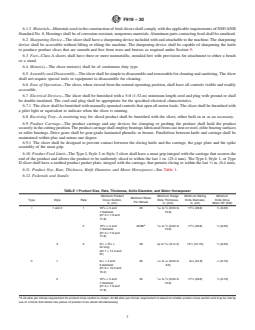
TABLE 1 Product Size, Rate, Thickness, Knife Diameter, and Motor Horsepower
Minimum Product Minimum Range Minimum Slicing Minimum
Minimum Slices
Type Style Rate Cross Section, Slice Thickness, Knife Diameter, Knife Drive
Per Minute
in. (cm) in. (mm) in. (cm) Motor HP (KW)
3 1 5 3 1
I 1 and 2 1 10 ⁄4 × 3 and 35 ⁄48 to ⁄8 (0.53 to 11 ⁄4 (29.8) ⁄3 (0.25)
7 diameter 15.9)
(27.3 × 7.6 and
17.8)
A
3 1 5 3 1
2 10 ⁄4 × 3 and 45/80 ⁄48 to ⁄8 (0.53 to 11 ⁄4 (29.8) ⁄3 (0.25)
7 diameter 15.9)
(27.3 × 7.6 and
17.8)
1 5 5 1 1
3 3 9 ⁄2 × 5 ⁄8 × 48 up to ⁄32 (0 to 4) 12 ⁄2 (31.75) ⁄3 (0.25)
24 long
(24.1 × 14.3 and
61)
1 1 3 3 1
II 1 8 ⁄2 × 4 and 35 ⁄48 to ⁄8 (0.53 to 9 ⁄4 (24.8) ⁄4 (0.19)
6 diameter 9.5)
(21.6 × 10.2 and
15.2)
3 1 5 3 1
2 10 ⁄4 × 3 and 35 ⁄48 to ⁄8 (0.53 to 11 ⁄4 (29.8) ⁄4 (0.19)
7 diameter 15.9)
(27.3 × 7.6 and
17.8)
A
A 45-slice per minute requirement for product cross section is shown. An 80-slice per minute requirement is based on smaller product cross section and may be met by
use of a fence that allows two pieces of product to be sliced simultaneously.
F919 − 20
6.12.1 Class B—Slicer shall be identical to equivalent Class A slicer, except that it shall be supplied with and have provisions
for attachment to a pedestal. The pedestal shall be 34 6 1 in. (86.4 6 2.54 cm) high with provisions for securing to the floor.
6.12.2 Class C—Slicer shall be identical to equivalent Class A slicer, except that it shall be supplied with and have provisions
for attachment to a stand. The stand shall be of stainless steel construction and shall be 34 6 1 in. (86.4 6 2.54 cm) in height when
assembled with the casters. The stand shall have a flat stainless steel top of at least 16 gauge. The stand shall be listed by NSF.
The stand shall be capable of supporting a weight of at least 175 lb (79.4 kg). The casters shall be at least 4 in. (10.16 cm) in
diameter. The two casters closest to the operator position, shall swivel and lock. The other two casters shall not swivel.
6.13 Interchangeability of Items—All slicers of the same model and material list designation furnished with similar options
under a specific purchase order shall be identical to the extent necessary to ensure interchangeability of component parts,
assemblies, accessories, and spare parts.
6.13.1 Exception—Parts that are designed to be matched only to the original parent slicer and marked accordingly, such as a
carriage assembly, do not need to be interchangeable.
6.14 Slicing Knife—Knives shall be cutlery grade stainless steel with a hardness, measured ⁄4 in. (6.4 mm) back of the cutting
edge, not less than 56 nor more than 60 on the Rockwell C scale. The knife shall be driven by gears, a steel transmission chain,
V-belt, or timing belt. If driven by gears, the teeth shall be machine cut and deburred and securely mounted to the shafts.
6.15 Carriage Handle—Carriage handle shall be all metal or, if plastic, shall have a metal insert.
6.16 Slicer Adjustment Knob—The shaft for the slicer adjustment knob shall have flats for set screws or both knob and shaft
shall have a keyway to prevent rotation or slipping of the knob on the shaft.
6.17 Bearings—Bearings for cutting knives, idler gears, and rotating drive shafts shall be of the ball, roller, or sleeve-type, either
permanently lubricated or readily accessible for lubrication. Sleeve type bearings shall be a high-grade bearing metal and shall be
replaceable. All bearings requiring lubrication shall be readily accessible.
6.18 Lubrication—All moving parts that require lubrication shall be provided with a means for lubricating and any lubrication
fittings shall be readily accessible.
6.19 Hazard Protection:
6.19.1 The slicer shall meet the requirements of UL 763.
6.19.2 Switch Guard—The ON/OFF controls shall be guarded or fabricated in such a manner as to prevent unplanned activation.
6.19.3 Knife Protection—The unusable portion of the knife shall be completely guarded in compliance with UL 763 when the
slicer is ready for operation. In no case shall less than half of the blade’s circumference be guarded. The gage plate adjuster shall
be so constructed such that the knife’s edge can be completely guarded when not operating.
7. Performance Requirements
7.1 Slicing Size, Rate, and Uniformity—The slicer shall uniformly, and with smooth surfaces, free from tears and bruises, slice
the following items:
7.1.1 Firm cold and hot soft boneless meat.
7.1.2 Products of moderate resistance, such as mozzarella cheese, and
7.1.3 Firm and ripe vegetables, such as cucumbers and tomatoes.
7.1.4 The gage plate adjuster shall operate the gage plate smoothly and shall be adjusted to indicate zero thickness when the
gage plate is set at the closed position.
7.2 Slicer Knife and Sharpener—The slicer knife shall function satisfactorily following 300 sharpenings.
7.3 Carriage Operation:
7.3.1 Type I—The slicer shall be designed to permit manual operation of the carriage if desired or in the event that the powered
carriage feature becomes inoperative.
7.3.2 Type I, Styles 1 and 2, Rates 2 and 3—The slicer shall have a speed selector to produce the number of slices per minute
as specified.
7.3.3 Type I, Styles 2 and 3—The slicer shall have a device that advances the product toward the knife an amount equal to the
slice thickness on each stroke.
7.3.4 Type I, Style 3—The slicer shall have a synchronized discharge conveyor with automatic controls to stop or advance the
belt so that the slices are neatly and uniformly stacked, grouped, or shingled. The machine shall have capability for stacking four,
five, six, seven, eight, ten, or twelve slices and shall have overlapping capability from 0 to 1 ⁄2 in. (0 to 3.81 cm). The spacing
between stack centers shall be 6 ⁄2 to 7 in. (16.5 to 17.78 cm). The belt shall be sufficiently wide to receive the largest slices that
the machine is designed to cut. Th
...