

ASTM B462-18e1
(Specification)Standard Specification for Forged or Rolled Nickel Alloy Pipe Flanges, Forged Fittings, and Valves and Parts for Corrosive High-Temperature Service
General Information
- Abstract
ABSTRACT
This specification covers forged or rolled UNS N06030, UNS N06035, UNS N06022, UNS N06200, UNS N06059, UNS N06686, UNS N08020, UNS N08024, UNS N08026, UNS N08367, UNS N10276, UNS N10665, UNS N10675, UNS N10629, UNS N08031, UNS N06045, UNS N06025, and UNS R20033 alloy pipe flanges, forged fittings, and valves and parts intended for corrosive high temperature service. A sufficient discard shall be made from each ingot to secure freedom from injurious piping and undue segregation. Requirements for forging (done by hammering, pressing, rolling, extruding, or upsetting), hot working, and heat treatment are detailed. The material shall conform to the chemical composition prescribed for carbon, manganese, phosphorus, sulfur, silicon, nickel, chromium, molybdenum, copper, columbium, tantalum, nitrogen, iron, cobalt, tungsten, vanadium, titanium, zirconium, aluminum, yttrium, and cerium. The material shall meet the requirements specified for the mechanical properties including tensile strength, yield strength, and elongation. The forgings shall conform to the specified sizes and shapes. Requirements for chemical and product (check) analyses and hydrostatic, macroetch, and tension tests are given.
SCOPE
1.1 This specification2 covers forged or rolled UNS N06030, UNS N06035, UNS N06022, UNS N06200, UNS N06059, UNS N10362, UNS N06686, UNS N08020, UNS N08367, UNS N10276, UNS N10665, UNS N10675, UNS N10629, UNS N08031, UNS N06045, UNS N06025, UNS N06699, and UNS R200333 pipe flanges, forged fittings, and valves and parts intended for corrosive high-temperature service.
1.2 The values stated in inch-pound units are to be regarded as standard. The values given in parentheses are mathematical conversions to SI units that are provided for information only and are not considered standard.
1.3 This standard does not purport to address all of the safety concerns, if any, associated with its use. It is the responsibility of the user of this standard to become familiar with all hazards including those identified in the appropriate Safety Data Sheet (SDS) for this product/material as provided by the manufacturer, to establish appropriate safety, health, and environmental practices, and determine the applicability of regulatory limitations prior to use.
1.4 This international standard was developed in accordance with internationally recognized principles on standardization established in the Decision on Principles for the Development of International Standards, Guides and Recommendations issued by the World Trade Organization Technical Barriers to Trade (TBT) Committee.
- Status
- Published
- Publication Date
- 31-Oct-2018
- Technical Committee
- B02 - Nonferrous Metals and Alloys
- Drafting Committee
- B02.07 - Refined Nickel and Cobalt and Their Alloys
Overview
ASTM B462-18e1 is the standard specification for forged or rolled nickel alloy pipe flanges, forged fittings, valves, and parts designed for use in corrosive high-temperature service environments. Issued by ASTM International, this specification covers a broad range of nickel alloys (including UNS N06030, UNS N06035, UNS N06022, UNS N06200, and others) and sets forth the requirements for their chemical composition, mechanical properties, manufacturing, heat treatment, and testing. This ensures the reliability and performance of components used in industries where severe corrosion and high temperatures are common, such as chemical processing, oil and gas, and power generation.
Key Topics
Material Scope and Grades
- Applicable to multiple UNS-designated nickel alloys, including those with enhanced corrosion and high-temperature resistance.
- Covers pipe flanges, fittings, and valves intended for demanding service conditions.
Manufacturing Practices
- Products are to be forged or rolled by hammering, pressing, rolling, extruding, or upsetting.
- Hot working, followed by proper heat treatment, is required to optimize material properties.
- Macroetch testing ensures uniform material free from harmful defects.
Chemical and Mechanical Requirements
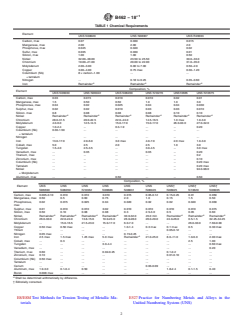
- Strict limits for elements such as carbon, manganese, chromium, molybdenum, copper, and others, as specified in detailed composition tables.
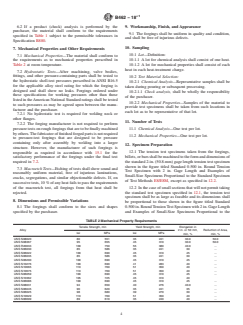
- Mechanical properties such as tensile strength, yield strength, and elongation must be met to ensure durability and safety.
Testing and Inspection
- Hydrostatic, macroetch, and tension tests are specified.
- Requirements for product check analyses, sampling, and lot identification to maintain batch integrity.
- Supplementary requirements include corrosion testing and positive material identification for product verification.
Marking and Certification
- Every forging is marked for traceability, including manufacturer's symbol, material grade, and service rating.
- Certificates and test reports are provided when specified by the purchaser.
Applications
The ASTM B462 specification is essential for manufacturers, engineers, and procurement professionals who require high-performance nickel alloy components for:
- Chemical process piping and equipment - For use in aggressive chemical environments where corrosion resistance is critical.
- Oil and gas industry - Suitable for sour gas service, high-temperature pipelines, and valve assemblies where material integrity under pressure is crucial.
- Power generation - Used in systems exposed to elevated temperatures, including heat exchangers and steam generators.
- Pharmaceutical and food processing - Ensures product purity and system longevity where sanitary conditions and corrosion resistance are essential.
These nickel alloy forgings are valued for their ability to withstand corrosive environments and maintain mechanical strength at high temperatures, making them a preferred choice for long service life and reduced maintenance costs.
Related Standards
- ASTM B166 - Specification for Nickel-Chromium Alloys Rod, Bar, and Wire
- ASTM B335 - Specification for Nickel-Molybdenum Alloy Rod
- ASTM B408 - Specification for Nickel-Iron-Chromium Alloy Rod and Bar
- ASTM B574 - Specification for Low-Carbon Nickel Alloys
- ASTM B649 - Specification for Ni-Fe-Cr-Mo-Cu-N Low-Carbon Alloys Bar and Wire
- ASTM B880 - Specification for General Requirements for Chemical Check Analysis Limits
- ANSI B16.5 - Standard for Steel Pipe Flanges and Flanged Fittings
- MSS SP-25 - Standard Marking System for Valves, Fittings, Flanges, and Unions
For comprehensive corrosion resistance and reliability in high-temperature service, compliance with ASTM B462-18e1 is essential for critical process systems and equipment manufacturing.
Relations
- Effective Date
- 01-Apr-2024
- Refers
ASTM B473-24 - Standard Specification for Nickel-Iron-Chromium-Molybdenum-Copper Alloy Bar and Wire - Effective Date
- 01-Apr-2024
- Effective Date
- 01-Jan-2024
- Effective Date
- 01-Dec-2023
- Effective Date
- 01-Nov-2023
- Effective Date
- 01-Oct-2019
- Effective Date
- 01-Apr-2019
- Effective Date
- 01-Nov-2018
- Effective Date
- 01-Nov-2018
- Effective Date
- 15-Jul-2016
- Effective Date
- 01-Jun-2016
- Effective Date
- 01-May-2015
- Effective Date
- 01-Feb-2015
- Effective Date
- 01-Oct-2013
- Effective Date
- 01-Jun-2013
Get Certified
Connect with accredited certification bodies for this standard

Element Materials Technology
Materials testing and product certification.

Inštitut za kovinske materiale in tehnologije
Institute of Metals and Technology. Materials testing, metallurgical analysis, NDT.
Sponsored listings
Frequently Asked Questions
ASTM B462-18e1 is a technical specification published by ASTM International. Its full title is "Standard Specification for Forged or Rolled Nickel Alloy Pipe Flanges, Forged Fittings, and Valves and Parts for Corrosive High-Temperature Service". This standard covers: ABSTRACT This specification covers forged or rolled UNS N06030, UNS N06035, UNS N06022, UNS N06200, UNS N06059, UNS N06686, UNS N08020, UNS N08024, UNS N08026, UNS N08367, UNS N10276, UNS N10665, UNS N10675, UNS N10629, UNS N08031, UNS N06045, UNS N06025, and UNS R20033 alloy pipe flanges, forged fittings, and valves and parts intended for corrosive high temperature service. A sufficient discard shall be made from each ingot to secure freedom from injurious piping and undue segregation. Requirements for forging (done by hammering, pressing, rolling, extruding, or upsetting), hot working, and heat treatment are detailed. The material shall conform to the chemical composition prescribed for carbon, manganese, phosphorus, sulfur, silicon, nickel, chromium, molybdenum, copper, columbium, tantalum, nitrogen, iron, cobalt, tungsten, vanadium, titanium, zirconium, aluminum, yttrium, and cerium. The material shall meet the requirements specified for the mechanical properties including tensile strength, yield strength, and elongation. The forgings shall conform to the specified sizes and shapes. Requirements for chemical and product (check) analyses and hydrostatic, macroetch, and tension tests are given. SCOPE 1.1 This specification2 covers forged or rolled UNS N06030, UNS N06035, UNS N06022, UNS N06200, UNS N06059, UNS N10362, UNS N06686, UNS N08020, UNS N08367, UNS N10276, UNS N10665, UNS N10675, UNS N10629, UNS N08031, UNS N06045, UNS N06025, UNS N06699, and UNS R200333 pipe flanges, forged fittings, and valves and parts intended for corrosive high-temperature service. 1.2 The values stated in inch-pound units are to be regarded as standard. The values given in parentheses are mathematical conversions to SI units that are provided for information only and are not considered standard. 1.3 This standard does not purport to address all of the safety concerns, if any, associated with its use. It is the responsibility of the user of this standard to become familiar with all hazards including those identified in the appropriate Safety Data Sheet (SDS) for this product/material as provided by the manufacturer, to establish appropriate safety, health, and environmental practices, and determine the applicability of regulatory limitations prior to use. 1.4 This international standard was developed in accordance with internationally recognized principles on standardization established in the Decision on Principles for the Development of International Standards, Guides and Recommendations issued by the World Trade Organization Technical Barriers to Trade (TBT) Committee.
ABSTRACT This specification covers forged or rolled UNS N06030, UNS N06035, UNS N06022, UNS N06200, UNS N06059, UNS N06686, UNS N08020, UNS N08024, UNS N08026, UNS N08367, UNS N10276, UNS N10665, UNS N10675, UNS N10629, UNS N08031, UNS N06045, UNS N06025, and UNS R20033 alloy pipe flanges, forged fittings, and valves and parts intended for corrosive high temperature service. A sufficient discard shall be made from each ingot to secure freedom from injurious piping and undue segregation. Requirements for forging (done by hammering, pressing, rolling, extruding, or upsetting), hot working, and heat treatment are detailed. The material shall conform to the chemical composition prescribed for carbon, manganese, phosphorus, sulfur, silicon, nickel, chromium, molybdenum, copper, columbium, tantalum, nitrogen, iron, cobalt, tungsten, vanadium, titanium, zirconium, aluminum, yttrium, and cerium. The material shall meet the requirements specified for the mechanical properties including tensile strength, yield strength, and elongation. The forgings shall conform to the specified sizes and shapes. Requirements for chemical and product (check) analyses and hydrostatic, macroetch, and tension tests are given. SCOPE 1.1 This specification2 covers forged or rolled UNS N06030, UNS N06035, UNS N06022, UNS N06200, UNS N06059, UNS N10362, UNS N06686, UNS N08020, UNS N08367, UNS N10276, UNS N10665, UNS N10675, UNS N10629, UNS N08031, UNS N06045, UNS N06025, UNS N06699, and UNS R200333 pipe flanges, forged fittings, and valves and parts intended for corrosive high-temperature service. 1.2 The values stated in inch-pound units are to be regarded as standard. The values given in parentheses are mathematical conversions to SI units that are provided for information only and are not considered standard. 1.3 This standard does not purport to address all of the safety concerns, if any, associated with its use. It is the responsibility of the user of this standard to become familiar with all hazards including those identified in the appropriate Safety Data Sheet (SDS) for this product/material as provided by the manufacturer, to establish appropriate safety, health, and environmental practices, and determine the applicability of regulatory limitations prior to use. 1.4 This international standard was developed in accordance with internationally recognized principles on standardization established in the Decision on Principles for the Development of International Standards, Guides and Recommendations issued by the World Trade Organization Technical Barriers to Trade (TBT) Committee.
ASTM B462-18e1 is classified under the following ICS (International Classification for Standards) categories: 77.150.99 - Other products of non-ferrous metals. The ICS classification helps identify the subject area and facilitates finding related standards.
ASTM B462-18e1 has the following relationships with other standards: It is inter standard links to ASTM B166-24, ASTM B473-24, ASTM E8/E8M-24, ASTM B472-23, ASTM B574-23, ASTM E1916-11(2019), ASTM B166-19, ASTM B473-07(2018), ASTM B335-03(2018), ASTM E8/E8M-16, ASTM B649-06(2016), ASTM B472-10(2015), ASTM E8/E8M-15, ASTM B473-07(2013), ASTM E8/E8M-13. Understanding these relationships helps ensure you are using the most current and applicable version of the standard.
ASTM B462-18e1 is available in PDF format for immediate download after purchase. The document can be added to your cart and obtained through the secure checkout process. Digital delivery ensures instant access to the complete standard document.
Standards Content (Sample)
This international standard was developed in accordance with internationally recognized principles on standardization established in the Decision on Principles for the
Development of International Standards, Guides and Recommendations issued by the World Trade Organization Technical Barriers to Trade (TBT) Committee.
´1
Designation:B462 −18
Standard Specification for
Forged or Rolled Nickel Alloy Pipe Flanges, Forged Fittings,
and Valves and Parts for Corrosive High-Temperature
Service
This standard is issued under the fixed designation B462; the number immediately following the designation indicates the year of
original adoption or, in the case of revision, the year of last revision. A number in parentheses indicates the year of last reapproval. A
superscript epsilon (´) indicates an editorial change since the last revision or reapproval.
ε NOTE—Editorial corrections were made to Table 1 in January 2021.
1. Scope* 2. Referenced Documents
2.1 ASTM Standards:
1.1 This specification covers forged or rolled UNS
A262 Practices for Detecting Susceptibility to Intergranular
N06030, UNS N06035, UNS N06022, UNS N06200, UNS
Attack in Austenitic Stainless Steels
N06059, UNS N10362, UNS N06686, UNS N08020, UNS
B166 Specification for Nickel-Chromium-Aluminum Alloy,
N08367, UNS N10276, UNS N10665, UNS N10675, UNS
Nickel-Chromium-IronAlloys,Nickel-Chromium-Cobalt-
N10629, UNS N08031, UNS N06045, UNS N06025, UNS
3 Molybdenum Alloy, Nickel-Iron-Chromium-Tungsten
N06699, and UNS R20033 pipe flanges, forged fittings, and
Alloy, and Nickel-Chromium-Molybdenum-CopperAlloy
valves and parts intended for corrosive high-temperature ser-
Rod, Bar, and Wire
vice.
B335 Specification for Nickel-Molybdenum Alloy Rod
1.2 The values stated in inch-pound units are to be regarded
B408 Specification for Nickel-Iron-Chromium Alloy Rod
as standard. The values given in parentheses are mathematical and Bar
conversions to SI units that are provided for information only B472 Specification for Nickel Alloy Billets and Bars for
Reforging
and are not considered standard.
B473 Specification for UNS N08020, UNS N08024, and
1.3 This standard does not purport to address all of the
UNS N08026 Nickel Alloy Bar and Wire
safety concerns, if any, associated with its use. It is the
B574 Specification for Low-Carbon Nickel-Chromium-
responsibility of the user of this standard to become familiar
Molybdenum, Low-Carbon Nickel-Molybdenum-
with all hazards including those identified in the appropriate
Chromium, Low-Carbon Nickel-Molybdenum-
Safety Data Sheet (SDS) for this product/material as provided
Chromium-Tantalum, Low-Carbon Nickel-Chromium-
by the manufacturer, to establish appropriate safety, health,
Molybdenum-Copper, and Low-Carbon Nickel-
and environmental practices, and determine the applicability
Chromium-Molybdenum-Tungsten Alloy Rod
of regulatory limitations prior to use.
B581 Specification for Nickel-Chromium-Iron-
1.4 This international standard was developed in accor-
Molybdenum-Copper Alloy Rod
dance with internationally recognized principles on standard-
B649 Specification for Ni-Fe-Cr-Mo-Cu-N Low-CarbonAl-
ization established in the Decision on Principles for the
loys (UNS N08925, UNS N08031, UNS N08034, UNS
Development of International Standards, Guides and Recom- N08354,andUNSN08926),andCr-Ni-Fe-NLow-Carbon
mendations issued by the World Trade Organization Technical Alloy (UNS R20033) Bar and Wire, and Ni-Cr-Fe-Mo-N
Alloy (UNS N08936) Wire
Barriers to Trade (TBT) Committee.
B691 Specification for Iron-Nickel-Chromium-
Molybdenum Alloys (UNS N08367) Rod, Bar, and Wire
B880 Specification for General Requirements for Chemical
This specification is under the jurisdiction of ASTM Committee B02 on
Check Analysis Limits for Nickel, Nickel Alloys and
Nonferrous Metals and Alloys and is the direct responsibility of Subcommittee
B02.07 on Refined Nickel and Cobalt and Their Alloys.
Cobalt Alloys
Current edition approved Nov. 1, 2018. Published November 2018. Originally
approved in 1967. Last previous edition approved in 2015 as B462 – 15. DOI:
10.1520/B0462-18E01.
2 4
For ASME Boiler and Pressure Vessel Code applications see related Specifi- For referenced ASTM standards, visit the ASTM website, www.astm.org, or
cation SB-462 in Section II of that Code. contact ASTM Customer Service at service@astm.org. For Annual Book of ASTM
New designation established in accordance with Practice E527 and SAE J1086, Standards volume information, refer to the standard’s Document Summary page on
Practice for Numbering Metals and Alloys (UNS). the ASTM website.
*A Summary of Changes section appears at the end of this standard
Copyright © ASTM International, 100 Barr Harbor Drive, PO Box C700, West Conshohocken, PA 19428-2959. United States
´1
B462−18
TABLE 1 Chemical Requirements
Element
UNS N08020 UNS N08367 UNS R20033
Carbon, max 0.07 0.030 0.015
Manganese, max 2.00 2.00 2.0
Phosphorus, max 0.045 0.040 0.02
Sulfur, max 0.035 0.030 0.01
Silicon, max 1.00 1.00 0.50
Nickel 32.00–38.00 23.50 to 25.50 30.0–33.0
Chromium 19.00–21.00 20.00 to 22.00 31.0–35.0
Molybdenum 2.00–3.00 6.00 to 7.00 0.50–2.0
Copper 3.00–4.00 0.75 max 0.30–1.20
Columbium (Nb) 8 × carbon–1.00 . .
+ tantalum
Nitrogen . 0.18 to 0.25 0.35–0.60
A A A
Iron Remainder Remainder Remainder
Composition, %
Element
UNS N06030 UNS N06022 UNS N06200 UNS N10276 UNS10665 UNS N10675
Carbon, max 0.03 0.015 0.010 0.010 0.02 0.01
Manganese, max 1.5 0.50 0.50 1.0 1.0 3.0
Phosphorous, max 0.04 0.02 0.025 0.04 0.04 0.030
Sulphur, max 0.02 0.02 0.010 0.03 0.03 0.010
Silicon. max 0.8 0.08 0.08 0.08 0.10 0.10
A A A A A A
Nickel Remainder Remainder Remainder Remainder Remainder Remainder
Chromium 28.0-31.5 20.0-22.5 22.0–24.0 14.5-16.5 1.0 max 1.0-3.0
Molybdenum 4.0-6.0 12.5-14.5 15.0-17.0 15.0-17.0 26.0-30.0 27.0-32.0
Copper 1.0-2.4 . 0.3-1.9 . . 0.20
Columbium (Nb) 0.30-1.50 . . . . .
+ tantalum
Nitrogen . . . . . .
Iron 13.0-17.0 2.0-6.0 3.0 max 4.0-7.0 2.0 max 1.0-3.0
Cobalt, max 5.0 2.5 2.0 2.5 1.0 3.0
Tungsten 1.5-4.0 2.5-3.5 . 3.0-4.5 . 3.0 max
Vanadium, max . 0.35 . 0.35 . 0.20
Titanium, max . . . . . 0.2
Zirconium, max . . . . . 0.10
Columbium (Nb) . . . . . 0.20 max
Tantalum . . . . . 0.20 max
Nickel . . . . . 94.0-98.0
+ Molybdenum
Aluminum, max . . 0.50 . . 0.50
Composition, %
Element
UNS UNS UNS UNS UNS UNS UNS† UNS† UNS†
N06699 N06059 N10362 N06686 N08031 N06045 N06025 N10629 N06035
Carbon, max 0.005-0.10 0.010 0.010 0.010 0.015 0.05-0.12 0.15-0.25 0.01 0.050
Manganese, max 0.50 0.5 0.60 0.75 2.0 1.0 0.15 1.5 0.50
Phosphorous, 0.02 0.015 0.025 0.04 0.020 0.02 0.02 0.040 0.030
max
Sulphur, max 0.01 0.010 0.010 0.02 0.010 0.010 0.010 0.010 0.015
Silicon, max 0.50 0.10 0.08 0.08 0.3 2.5-3.0 0.5 0.05 0.60
A A A A A A A
Nickel, Remainder Remainder Remainder Remainder 30.0-32.0 45.0 min Remainder Remainder Remainder
Chromium 26.0-30.0 22.0-24.0 13.8-15.6 19.0-23.0 26.0-28.0 26.0-29.0 24.0-26.0 0.5-1.5 32.25-34.25
Molybdenum . 15.0-16.5 21.5-23.0 15.0-17.0 6.0-7.0 . . 26.0-30.0 7.60-9.00
Copper 0.50 max 0.50 max . . 1.0-1.4 0.3 max 0.1 max 0.5 0.30 max
Yttrium . . . . . . 0.05-0.12 . .
Nitrogen 0.05 max . . . 0.15-0.25 . . . .
A
Iron 2.5 max 1.5 max 1.25 max 5.0 max Remainder 21.0-25.0 8.0–11.0 1.0-6.0 2.00 max
Cobalt, max . 0.3 . . . . . 2.5 1.00
Tungsten . . . 3.0-4.4 . . . . 0.60 max
Vanadium, max . . . . . . . . 0.20
Titanium, max 0.60 . . 0.02-0.25 . . 0.1-0.2 . .
Zirconium, max 0.10 . . . . . 0.01-0.10 . .
Columbium (Nb) 0.50 max . . . . . . . .
Tantalum . . . . . . . . .
Cerium . . . . . 0.03-0.09 . . .
Aluminum, max 1.9-3.0 0.1-0.4 0.50 . . . 1.8-2.4 0.1-1.5 0.40
Boron 0.008 max . . . . . . . .
A
Shall be determined arithmetically by difference.
† Editorially corrected.
E8/E8M Test Methods for Tension Testing of Metallic Ma- E527 Practice for Numbering Metals and Alloys in the
terials Unified Numbering System (UNS)
´1
B462−18
E1473 Test Methods for Chemical Analysis of Nickel, Co- 5.2.1 Material for forging shall consist of a billet, bar, or
balt and High-Temperature Alloys forging produced in accordance with Specifications B166,
E1916 Guide for Identification of Mixed Lots of Metals B335, B408, B462, B472, B473, B574, B581, B649,or B691.
5.2.2 The material shall be forged by hammering, pressing,
2.2 ANSI Standard:
rolling, extruding, or upsetting; it shall be brought as nearly as
B16.5 Steel Pipe Flanges and Flanged Fittings (for appli-
practicable to the finished shape and size by hot working; and
cable alloy UNS N08020)
shall be so processed as to cause metal flow during the
2.3 Manufacturers’Standardization Society of the Valve and
hot-working operation in the direction most favorable for
Fittings Industry Standard:
resisting the stresses encountered in service.
SP-25 Standard Marking System for Valves, Fittings,
5.2.3 When specified in the order, a sample forging may be
Flanges, and Unions
sectioned and etched to show flow lines and the condition as
regards internal imperfections. In such cases, the question of
3. Terminology
acceptable and unacceptable character of metal flow shall be a
3.1 Definitions of Terms Specific to This Standard:
subject for agreement between the manufacturer and the
3.1.1 forgings, n—the term forgings as used in this specifi-
purchaser.
cation shall be understood to cover one or all of the products
5.2.4 When specified in the order, the manufacturer shall
mentioned in 1.1, either forged or rolled.
submit for approval of the purchaser a sketch showing the
shape of the rough forging before machining.
4. Ordering Information
5.3 Heat Treatment:
4.1 It is the responsibility of the purchaser to specify all
5.3.1 The product of UNS N08020 alloy shall be furnished
requirements that are necessary for material ordered under this
in the stabilized-annealed condition. The product of UNS
specification. Examples of such requirements include, but are
N06022, UNS N06035, UNS N06030, UNS N06200, UNS
not limited to, the following:
N10362, UNS N10276, UNS N10665, UNS N10675, UNS
4.1.1 Quantity (weight or number of pieces),
N06699, and UNS R20033 alloys shall be furnished in the
4.1.2 Name of material or UNS number,
solution annealed condition.
4.1.3 Forging sketch when required (5.2.4),
NOTE 2—The recommended annealing temperatures all followed by
4.1.4 Forging sectioning, if required (5.2.3),
water quenching or rapidly cooling by other means are: UNS
4.1.5 ASTM designation and year of issue,
N06030–2125to2175°F(1163to1191°C),UNSN06022–2025to2075°F
4.1.6 Inspection (14.1),
(1107 to 1135°C), UNS N06035–2025–2075°F (1107–1135°C), UNS
4.1.7 Supplementary requirements, if any, and
N06200–2075to2125°F(1135to1163°C),UNSN06059–2025to2125°F
(1107 to 1163°C), UNS N10362–2075 to 2125°F (1135 to 1163°C), UNS
4.1.8 If possible, the intended end use.
N06686–2125to2225°F(1163to1218°C),UNSN08020–1700to1850°F
NOTE 1—A typical ordering description is as follows: 200 forgings,
(927 to 1010°C), UNS N10276–2025 to 2075°F (1107 to 1135°C), UNS
UNS N08020, in accordance with the attached drawing and Specification
N10665–1925to2000°F(1052to109
...