

ASTM B779-22
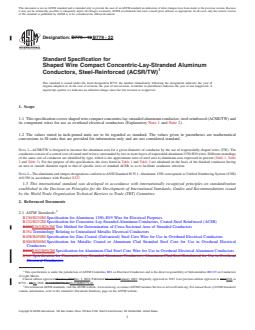
(Specification)Standard Specification for Shaped Wire Compact Concentric-Lay-Stranded Aluminum Conductors, Steel-Reinforced (ACSR/TW)
General Information
- Abstract
ABSTRACT
This specification covers shaped wire compact concentric-lay-stranded aluminum conductor, steel-reinforced (ACSR/TW) and its component wires for use as overhead electrical conductors. Requirements for (1) wire stranding (2) tensile strength and elongation, (3) joints such as electric-butt welds, electric-butt cold-upset welds, or cold-pressure welds, and (4) lay length, diameter, direction, and factor are detailed. The construction requirements include: nominal aluminum cross sectional area, conductor type, nominal number of aluminum wires, number of layers, number and diameter of the steel core wire, mass per unit length, rated strength, and outside diameter of the shaped wire compact. The methods of determining mass per unit length, cross-section, and electrical resistance of the stranded conductor are given. Mechanical and electrical tests shall be performed before stranding.
SCOPE
1.1 This specification covers shaped wire compact concentric-lay-stranded aluminum conductor, steel-reinforced (ACSR/TW) and its component wires for use as overhead electrical conductors (Explanatory Note 1 and Note 2).
1.2 The values stated in inch-pound units are to be regarded as standard. The values given in parentheses are mathematical conversions to SI units that are provided for information only and are not considered standard.
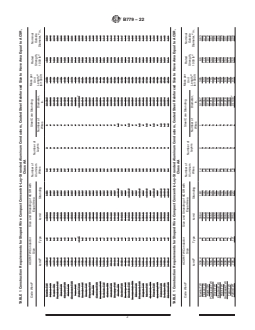
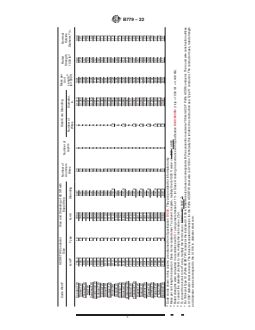
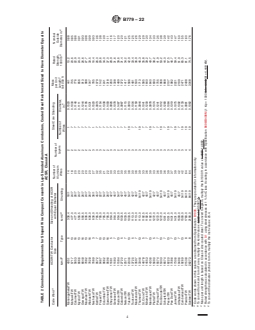
Note 1: ACSR/TW is designed to increase the aluminum area for a given diameter of conductor by the use of trapezoidally shaped wires (TW). The conductors consist of a central core of round steel wire(s) surrounded by two or more layers of trapezoidal aluminum 1350-H19 wires. Different strandings of the same size of conductor are identified by type, which is the approximate ratio of steel area to aluminum area expressed in percent (Table 1, Table 2 and Table 3). For the purpose of this specification, the sizes listed in Table 1 and Table 2 are tabulated on the basis of the finished conductor having an area or outside diameter equal to that of specific sizes of standard ACSR so as to facilitate conductor selection.
Note 2: The aluminum and temper designations conform to ANSI Standard H 35.1. Aluminum 1350 corresponds to Unified Numbering System (UNS) A91350 in accordance with Practice E527.
1.3 This international standard was developed in accordance with internationally recognized principles on standardization established in the Decision on Principles for the Development of International Standards, Guides and Recommendations issued by the World Trade Organization Technical Barriers to Trade (TBT) Committee.
- Status
- Published
- Publication Date
- 30-Nov-2022
- Technical Committee
- B01 - Electrical Conductors
- Drafting Committee
- B01.07 - Conductors of Light Metals
Buy Documents
ASTM B779-22 - Standard Specification for Shaped Wire Compact Concentric-Lay-Stranded Aluminum Conductors, Steel-Reinforced (ACSR/TW)
REDLINE ASTM B779-22 - Standard Specification for Shaped Wire Compact Concentric-Lay-Stranded Aluminum Conductors, Steel-Reinforced (ACSR/TW)
Overview
ASTM B779-22 is the international standard specifying requirements for Shaped Wire Compact Concentric-Lay-Stranded Aluminum Conductors, Steel-Reinforced (ACSR/TW). Developed by ASTM, this standard outlines the construction, material, testing, and packaging specifications for ACSR/TW conductors and their component wires, which are widely used as overhead electrical conductors in power transmission and distribution.
ACSR/TW conductors are designed to maximize the aluminum area for a given conductor diameter by using trapezoidally shaped wires. These conductors comprise a central steel core surrounded by layers of trapezoidal aluminum 1350-H19 wires. The combined structure offers both high electrical conductivity and mechanical strength, making these conductors essential for efficient, reliable overhead transmission.
Key Topics
Key requirements and attributes covered by ASTM B779-22 include:
- Wire Stranding: Details stranding patterns and the arrangement of aluminum and steel wires to ensure structural integrity and optimal electrical performance.
- Mechanical Properties: Minimum requirements for tensile strength and elongation of aluminum and steel wires prior to stranding. Only specific methods for wire joints are allowed to maintain performance.
- Lay Length and Direction: Mandates the preferred and acceptable lay length ratios of the outer and inner aluminum layers, as well as the alternation of lay direction for different layers.
- Conductor Construction: Specifies nominal aluminum cross-sectional area, the number of aluminum and steel wires, number of layers, and mass per unit length. Tables provided in the standard facilitate conductor selection based on area or diameter equivalency with traditional ACSR conductors.
- Testing Methods: Defines procedures for determining mass per unit length, cross-sectional area, and electrical resistance. Mechanical and electrical tests for component wires must be performed prior to stranding.
- Dimensional Tolerances: Establishes permissible tolerances for conductor area and diameter, ensuring compatibility with industry requirements.
- Packaging and Marking: Outlines the requirements for packaging, handling, shipping, and identification of conductors.
Applications
ASTM B779-22 ACSR/TW conductors are primarily used in:
- Overhead Power Transmission Lines: The enhanced aluminum area within a fixed conductor diameter allows for increased current-carrying capacity and reduced electrical losses.
- Utility and Grid Upgrades: Ideal for reconductoring projects where improving transmission efficiency is required without changing support structures.
- Distribution Networks: Applied in main lines, branches, and critical feeders where high strength and conductivity are vital.
Industry stakeholders-including utilities, EPC contractors, engineers, and cable manufacturers-leverage ASTM B779-22 to ensure reliable, standardized ACSR/TW conductor procurement and installation practices.
Related Standards
ASTM B779-22 references and aligns with several key standards relevant to aluminum conductors and component materials:
- ASTM B230/B230M: Aluminum 1350–H19 Wire for Electrical Purposes
- ASTM B232/B232M: Concentric-Lay-Stranded Aluminum Conductors, Coated-Steel Reinforced (ACSR)
- ASTM B498/B498M: Zinc-Coated (Galvanized) Steel Core Wire for Overhead Electrical Conductors
- ASTM B500/B500M, B502/B502M, B606/B606M, B802/B802M, B803/B803M: Specifications covering various steel core wire coatings and types used in ACSR/TW conductors
- ASTM B549: Concentric-Lay-Stranded Aluminum Conductors, Aluminum-Clad Steel Reinforced
- ANSI H35.1: Alloy and Temper Designation Systems for Aluminum
Compliance with ASTM B779-22 ensures that shaped wire ACSR/TW conductors meet recognized performance, dimensional, and quality criteria, supporting safe and efficient long-distance power transmission.
Relations
- Effective Date
- 01-Apr-2024
- Effective Date
- 01-Apr-2024
- Refers
ASTM B1006-17(2023) - Standard Specification for Electrical Overhead Conductor Code Word Names - Effective Date
- 01-Oct-2023
- Effective Date
- 01-Oct-2023
- Effective Date
- 01-Oct-2023
- Effective Date
- 01-Oct-2023
- Effective Date
- 01-Jan-2020
- Effective Date
- 01-Oct-2019
- Effective Date
- 01-Apr-2017
- Effective Date
- 01-Apr-2017
- Effective Date
- 01-Oct-2016
- Effective Date
- 01-Oct-2016
- Effective Date
- 01-Oct-2016
- Effective Date
- 01-Oct-2016
- Effective Date
- 01-Sep-2016
Buy Documents
ASTM B779-22 - Standard Specification for Shaped Wire Compact Concentric-Lay-Stranded Aluminum Conductors, Steel-Reinforced (ACSR/TW)
REDLINE ASTM B779-22 - Standard Specification for Shaped Wire Compact Concentric-Lay-Stranded Aluminum Conductors, Steel-Reinforced (ACSR/TW)
Get Certified
Connect with accredited certification bodies for this standard

IMQ S.p.A. (Certification)
Italian electrical product certification.

SLG Prüf- und Zertifizierungs GmbH
German testing and certification body.

UL Solutions
Global safety science company with testing, inspection and certification.
Sponsored listings
Frequently Asked Questions
ASTM B779-22 is a technical specification published by ASTM International. Its full title is "Standard Specification for Shaped Wire Compact Concentric-Lay-Stranded Aluminum Conductors, Steel-Reinforced (ACSR/TW)". This standard covers: ABSTRACT This specification covers shaped wire compact concentric-lay-stranded aluminum conductor, steel-reinforced (ACSR/TW) and its component wires for use as overhead electrical conductors. Requirements for (1) wire stranding (2) tensile strength and elongation, (3) joints such as electric-butt welds, electric-butt cold-upset welds, or cold-pressure welds, and (4) lay length, diameter, direction, and factor are detailed. The construction requirements include: nominal aluminum cross sectional area, conductor type, nominal number of aluminum wires, number of layers, number and diameter of the steel core wire, mass per unit length, rated strength, and outside diameter of the shaped wire compact. The methods of determining mass per unit length, cross-section, and electrical resistance of the stranded conductor are given. Mechanical and electrical tests shall be performed before stranding. SCOPE 1.1 This specification covers shaped wire compact concentric-lay-stranded aluminum conductor, steel-reinforced (ACSR/TW) and its component wires for use as overhead electrical conductors (Explanatory Note 1 and Note 2). 1.2 The values stated in inch-pound units are to be regarded as standard. The values given in parentheses are mathematical conversions to SI units that are provided for information only and are not considered standard. Note 1: ACSR/TW is designed to increase the aluminum area for a given diameter of conductor by the use of trapezoidally shaped wires (TW). The conductors consist of a central core of round steel wire(s) surrounded by two or more layers of trapezoidal aluminum 1350-H19 wires. Different strandings of the same size of conductor are identified by type, which is the approximate ratio of steel area to aluminum area expressed in percent (Table 1, Table 2 and Table 3). For the purpose of this specification, the sizes listed in Table 1 and Table 2 are tabulated on the basis of the finished conductor having an area or outside diameter equal to that of specific sizes of standard ACSR so as to facilitate conductor selection. Note 2: The aluminum and temper designations conform to ANSI Standard H 35.1. Aluminum 1350 corresponds to Unified Numbering System (UNS) A91350 in accordance with Practice E527. 1.3 This international standard was developed in accordance with internationally recognized principles on standardization established in the Decision on Principles for the Development of International Standards, Guides and Recommendations issued by the World Trade Organization Technical Barriers to Trade (TBT) Committee.
ABSTRACT This specification covers shaped wire compact concentric-lay-stranded aluminum conductor, steel-reinforced (ACSR/TW) and its component wires for use as overhead electrical conductors. Requirements for (1) wire stranding (2) tensile strength and elongation, (3) joints such as electric-butt welds, electric-butt cold-upset welds, or cold-pressure welds, and (4) lay length, diameter, direction, and factor are detailed. The construction requirements include: nominal aluminum cross sectional area, conductor type, nominal number of aluminum wires, number of layers, number and diameter of the steel core wire, mass per unit length, rated strength, and outside diameter of the shaped wire compact. The methods of determining mass per unit length, cross-section, and electrical resistance of the stranded conductor are given. Mechanical and electrical tests shall be performed before stranding. SCOPE 1.1 This specification covers shaped wire compact concentric-lay-stranded aluminum conductor, steel-reinforced (ACSR/TW) and its component wires for use as overhead electrical conductors (Explanatory Note 1 and Note 2). 1.2 The values stated in inch-pound units are to be regarded as standard. The values given in parentheses are mathematical conversions to SI units that are provided for information only and are not considered standard. Note 1: ACSR/TW is designed to increase the aluminum area for a given diameter of conductor by the use of trapezoidally shaped wires (TW). The conductors consist of a central core of round steel wire(s) surrounded by two or more layers of trapezoidal aluminum 1350-H19 wires. Different strandings of the same size of conductor are identified by type, which is the approximate ratio of steel area to aluminum area expressed in percent (Table 1, Table 2 and Table 3). For the purpose of this specification, the sizes listed in Table 1 and Table 2 are tabulated on the basis of the finished conductor having an area or outside diameter equal to that of specific sizes of standard ACSR so as to facilitate conductor selection. Note 2: The aluminum and temper designations conform to ANSI Standard H 35.1. Aluminum 1350 corresponds to Unified Numbering System (UNS) A91350 in accordance with Practice E527. 1.3 This international standard was developed in accordance with internationally recognized principles on standardization established in the Decision on Principles for the Development of International Standards, Guides and Recommendations issued by the World Trade Organization Technical Barriers to Trade (TBT) Committee.
ASTM B779-22 is classified under the following ICS (International Classification for Standards) categories: 29.240.20 - Power transmission and distribution lines. The ICS classification helps identify the subject area and facilitates finding related standards.
ASTM B779-22 has the following relationships with other standards: It is inter standard links to ASTM B500/B500M-24, ASTM B232/B232M-24, ASTM B1006-17(2023), ASTM B802/B802M-23, ASTM B502/B502M-23, ASTM B606/B606M-23, ASTM B263/B263M-14(2020), ASTM B502/B502M-19, ASTM B502/B502M-10(2017), ASTM B1006-17, ASTM B606/B606M-08(2016), ASTM B498/B498M-08(2016), ASTM B802/B802M-10(2016), ASTM B803/B803M-08(2016), ASTM B354-16. Understanding these relationships helps ensure you are using the most current and applicable version of the standard.
ASTM B779-22 is available in PDF format for immediate download after purchase. The document can be added to your cart and obtained through the secure checkout process. Digital delivery ensures instant access to the complete standard document.
Standards Content (Sample)
This international standard was developed in accordance with internationally recognized principles on standardization established in the Decision on Principles for the
Development of International Standards, Guides and Recommendations issued by the World Trade Organization Technical Barriers to Trade (TBT) Committee.
Designation: B779 −22
Standard Specification for
Shaped Wire Compact Concentric-Lay-Stranded Aluminum
Conductors, Steel-Reinforced (ACSR/TW)
This standard is issued under the fixed designation B779; the number immediately following the designation indicates the year of
original adoption or, in the case of revision, the year of last revision.Anumber in parentheses indicates the year of last reapproval.A
superscript epsilon (´) indicates an editorial change since the last revision or reapproval.
1. Scope B232/B232M Specification for Concentric-Lay-Stranded
Aluminum Conductors, Coated-Steel Reinforced (ACSR)
1.1 This specification covers shaped wire compact
B263/B263MTest Method for Determination of Cross-
concentric-lay-stranded aluminum conductor, steel-reinforced
Sectional Area of Stranded Conductors
(ACSR/TW) and its component wires for use as overhead
B354Terminology Relating to Uninsulated Metallic Electri-
electrical conductors (Explanatory Note 1 and Note 2).
cal Conductors
1.2 Thevaluesstatedininch-poundunitsaretoberegarded
B498/B498MSpecification for Zinc-Coated (Galvanized)
as standard. The values given in parentheses are mathematical
Steel Core Wire for Use in Overhead Electrical Conduc-
conversions to SI units that are provided for information only
tors
and are not considered standard.
B500/B500MSpecification for Metallic Coated or Alumi-
num Clad Stranded Steel Core for Use in Overhead
NOTE 1—ACSR/TW is designed to increase the aluminum area for a
given diameter of conductor by the use of trapezoidally shaped wires Electrical Conductors
(TW). The conductors consist of a central core of round steel wire(s)
B502/B502MSpecification for Aluminum-Clad Steel Core
surrounded by two or more layers of trapezoidal aluminum 1350-H19
Wire for Use in Overhead Electrical Aluminum Conduc-
wires. Different strandings of the same size of conductor are identified by
tors
type, which is the approximate ratio of steel area to aluminum area
B606/B606MSpecification for High-Strength Zinc-Coated
expressedinpercent(Table1,Table2andTable3).Forthepurposeofthis
specification, the sizes listed in Table 1 and Table 2 are tabulated on the
(Galvanized) Steel Core Wire for Aluminum and
basisofthefinishedconductorhavinganareaoroutsidediameterequalto
Aluminum-Alloy Conductors, Steel Reinforced
that of specific sizes of standard ACSR so as to facilitate conductor
B802/B802M Specification for Zinc–5 % Aluminum-
selection.
MischmetalAlloy-Coated Steel Core Wire forAluminum
NOTE 2—The aluminum and temper designations conform to ANSI
Standard H35.1. Aluminum 1350 corresponds to Unified Numbering Conductors, Steel Reinforced (ACSR)
System (UNS) A91350 in accordance with Practice E527.
B803/B803M Specification for High-Strength Zinc–5 %
Aluminum-MischmetalAlloy-Coated Steel Core Wire for
1.3 This international standard was developed in accor-
dance with internationally recognized principles on standard- Use in Overhead Electrical Conductors
B1006Specification for Electrical Overhead Conductor
ization established in the Decision on Principles for the
Development of International Standards, Guides and Recom- Code Word Names
E29Practice for Using Significant Digits in Test Data to
mendations issued by the World Trade Organization Technical
Barriers to Trade (TBT) Committee. Determine Conformance with Specifications
E527Practice for Numbering Metals and Alloys in the
2. Referenced Documents
Unified Numbering System (UNS)
2.2 Other Documents:
2.1 ASTM Standards:
ANSIH35.1AmericanNationalStandardAlloyandTemper
B230/B230MSpecification for Aluminum 1350–H19 Wire
Designation Systems for Aluminum
for Electrical Purposes
NBS Handbook 100— Copper Wire Tables of the National
Bureau of Standards
This specification is under the jurisdiction of ASTM Committee B01 on
Electrical Conductors and is the direct responsibility of Subcommittee B01.07 on
3. Terminology
Conductors of Light Metals.
3.1 Definitions of Terms Specific to This Standard:
Current edition approved Dec. 1, 2022. Published January 2023. Originally
approved in 1987. Last previous edition approved in 2018 as B779– 18. DOI:
10.1520/B0779-22.
2 3
For referenced ASTM standards, visit the ASTM website, www.astm.org, or Available fromAmerican National Standards Institute (ANSI), 25 W. 43rd St.,
contact ASTM Customer Service at service@astm.org. For Annual Book of ASTM 4th Floor, New York, NY 10036, http://www.ansi.org.
Standards volume information, refer to the standard’s Document Summary page on Available from National Technical Information Service (NTIS), 5285 Port
the ASTM website. Royal Rd., Springfield, VA 22161, http://www.ntis.gov.
Copyright © ASTM International, 100 Barr Harbor Drive, PO Box C700, West Conshohocken, PA 19428-2959. United States
B779 − 22
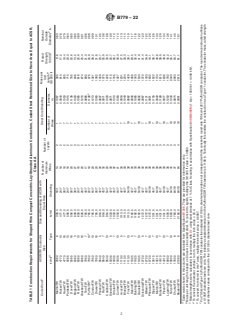
TABLE 1 Construction Requirements for Shaped Wire Compact Concentric-Lay-Stranded Aluminum Conductors, Coated Steel Reinforced Size to Have Area Equal to ACSR,
Class AA
ACSR/TW Conductor Size and Stranding of ACSR with
A
Mass per
Code Word Steel Core Stranding
Number of Rated Nominal
Size Equal Area
Number of
Unit
Aluminum Strength, Outside
B
Layers
Length,
Number of Diameter, C E
D
Wires 1000 lb Diameter, in.
kcmil Type kcmil Stranding
lb/1000 ft
Wires in.
Merlin/TW 336.4 6 336.4 18/1 14 2 1 0.1367 365 8.6 0.63
Flicker/TW 477.0 13 477.0 24/7 18 2 7 0.0940 613 17.2 0.78
Hawk/TW 477.0 16 477.0 26/7 18 2 7 0.1053 655 19.4 0.79
Parakeet/TW 556.5 13 556.5 24/7 18 2 7 0.1015 715 20.0 0.84
Dove/TW 556.5 16 556.5 26/7 20 2 7 0.1138 765 22.6 0.85
Kingbird/TW 636.0 3 636.0 36/1 27 3 1 0.1329 646 13.5 0.85
Rook/TW 636.0 13 636.0 24/7 18 2 7 0.1085 816 22.9 0.89
Grosbeak/TW 636.0 16 636.0 26/7 20 2 7 0.1216 874 25.4 0.91
Tern/TW 795.0 7 795.0 45/7 17 2 7 0.0886 892 21.0 0.96
F F F
Puffin/TW 795.0 10 795.0 22/7 18 2 7 0.1108 975 25.9 0.98
Condor/TW 795.0 13 795.0 54/7 20 2 7 0.1213 1021 28.2 0.99
Drake/TW 795.0 16 795.0 26/7 20 2 7 0.1360 1092 31.8 1.01
Phoenix/TW 954.0 5 954.0 42/7 30 3 7 0.0837 1029 23.7 1.05
Rail/TW 954.0 7 954.0 45/7 32 3 7 0.0971 1075 25.9 1.06
Cardinal/TW 954.0 13 954.0 54/7 20 2 7 0.1329 1226 33.5 1.08
Snowbird/TW 1033.5 5 1033.5 42/7 30 3 7 0.0871 1115 25.7 1.09
Ortolan/TW 1033.5 7 1033.5 45/7 32 3 7 0.1010 1165 28.1 1.10
Curlew/TW 1033.5 13 1033.5 54/7 21 2 7 0.1383 1327 36.3 1.13
Avocet/TW 1113.0 5 1113.0 42/7 30 3 7 0.0904 1201 27.5 1.13
Bluejay/TW 1113.0 7 1113.0 45/7 33 3 7 0.1049 1254 30.3 1.14
Finch/TW 1113.0 13 1113.0 54/19 38 3 19 0.0862 1429 39.1 1.19
Oxbird/TW 1192.5 5 1192.5 42/7 30 3 7 0.0936 1286 29.5 1.17
Bunting/TW 1192.5 7 1192.5 45/7 33 3 7 0.1085 1343 32.4 1.18
Grackle/TW 1192.5 13 1192.5 54/19 38 3 19 0.0892 1530 41.9 1.22
Scissortail/TW 1272.0 5 1272.0 42/7 30 3 7 0.0967 1372 31.4 1.20
Bittern/TW 1272.0 7 1272.0 45/7 35 3 7 0.1121 1433 34.6 1.22
Pheasant/TW 1272.0 13 1272.0 54/19 39 3 19 0.0921 1632 44.1 1.26
Dipper/TW 1351.5 7 1351.5 45/7 35 3 7 0.1155 1522 36.7 1.26
Martin/TW 1351.5 13 1351.5 54/19 39 3 19 0.0949 1734 46.8 1.30
Bobolink/TW 1431.0 7 1431.0 45/7 36 3 7 0.1189 1613 38.9 1.29
Plover/TW 1431.0 13 1431.0 54/19 39 3 19 0.0977 1836 49.6 1.34
Lapwing/TW 1590.0 7 1590.0 45/7 36 3 7 0.1253 1792 42.2 1.36
Falcon/TW 1590.0 13 1590.0 54/19 42 3 19 0.1030 2040 55.1 1.41
Chukar/TW 1780.0 8 1780.0 84/19 37 3 19 0.0874 2063 50.7 1.45
Bluebird/TW 2156.0 8 2156.0 84/19 64 4 19 0.0961 2515 61.1 1.61
A
Code words shown in this column are obtained from Specification B1006. They are provided for information only.
B
Mass per unit length is based on Class A zinc-coated steel. To convert to kg/km, multiply the lb/1000 ft value × 1.4882.
C
Rated strengths were calculated in accordance with 9.1 using steel stresses at 1 % for Class A coating in accordance with Specification B498/B498M (1 kip = 1000 lbf = 4.448 kN).
D
To convert the diameter (inches) to mm, multiply the inch value × 25.4.
E 2
To convert from kcmil to mm area, multiply the kcmil value × 0.5067.
F
For795kcmilType10(PuffinACSRTW)conductortheindicated0.1108in.steelwiresizedoesnotcorrespondwiththeconcentricroundwire795kcmil22/7PuffinACSRconductor.Theroundwireconstructionutilizes
a 0.1056” diameter steel core wire.The industry accepted dimension for the PuffinACSRTW steel wire is 0.1108 in.Technically this renders the construction as aType 11 conductor.The conductor mass, rated strength
and diameter values correspond to the 0.1108 in. diameter steel core.
B779 − 22
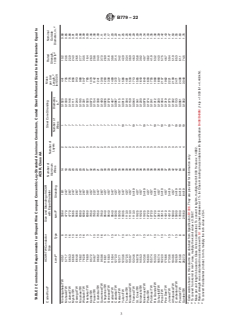
TABLE 2 Construction Requirements for Shaped Wire Compact Concentric-Lay-Stranded Aluminum Conductors, Coated Steel Reinforced Sized to Have Diameter Equal to
ACSR, Class AA
ACSR/TW Conductor Size and Stranding of ACSR
A
Mass
Code Word Steel Core Stranding
Number of Rated Nominal
Size with Equal Diameter
Number of per Unit
Aluminum Strength, Outside
C
Layers
Length,
Number of Diameter, D E
B B
Wires 1000 lb Diameter, in.
kcmil Type kcmil Stranding
E
lb/1000 ft
Wires in.
Monongahela/TW 405.1 6 336.4 18/1 14 2 1 0.1520 441 10.2 0.68
Mohawk/TW 571.7 13 477.0 24/7 18 2 7 0.1030 735 20.6 0.85
Calumet/TW 565.3 16 477.0 26/7 20 2 7 0.1146 776 22.9 0.86
Mystic/TW 666.6 13 556.5 24/7 20 2 7 0.1111 856 24.0 0.91
Oswego/TW 664.8 16 556.5 26/7 20 2 7 0.1244 913 26.6 0.93
Maumee/TW 768.2 13 636.0 24/7 20 2 7 0.1195 988 27.7 0.98
Wabash/TW 762.8 16 636.0 26/7 20 2 7 0.1331 1047 30.5 0.99
Nechako/TW 768.9 3 636.0 36/1 27 3 1 0.1520 785 16.4 0.93
Kettle/TW 957.2 7 795.0 45/7 32 3 7 0.0973 1079 26.0 1.06
Fraser/TW 946.7 10 795.0 22/7 35 3 7 0.1154 1142 29.6 1.08
Columbia/TW 966.2 13 795.0 54/7 21 2 7 0.1338 1241 34.0 1.09
Suwannee/TW 959.6 16 795.0 26/7 22 2 7 0.1493 1318 37.0 1.11
Cheyenne/TW 1168.1 5 954.0 42/7 30 3 7 0.0926 1260 28.9 1.16
Genesee/TW 1158.0 7 954.0 45/7 33 3 7 0.1078 1308 31.6 1.17
Hudson/TW 1158.4 13 954.0 54/7 25 2 7 0.1467 1489 39.6 1.20
Catawba/TW 1272.0 5 1033.5 42/7 30 3 7 0.0967 1372 31.4 1.20
Nelson/TW 1257.1 7 1033.5 45/7 35 3 7 0.1115 1417 34.2 1.21
Yukon/TW 1233.6 13 1033.5 54/7 38 3 19 0.0910 1586 42.9 1.25
Truckee/TW 1372.5 5 1113.0 42/7 30 3 7 0.1004 1481 33.4 1.25
Mackenzie/TW 1359.7 7 1113.0 45/7 36 3 7 0.1159 1530 36.9 1.26
Thames/TW 1334.6 13 1113.0 54/19 39 3 19 0.0944 1713 46.3 1.29
St. Croix/TW 1467.8 5 1192.5 42/7 33 3 7 0.1041 1585 35.8 1.29
Miramichi/TW 1455.3 7 1192.5 45/7 36 3 7 0.1200 1640 39.2 1.30
Merrimack/TW 1433.6 13 1192.5 54/19 39 3 19 0.0978 1840 49.7 1.34
Platte/TW 1569.0 5 1272.0 42/7 33 3 7 0.1074 1693 38.2 1.33
Potomac/TW 1557.4 7 1272.0 45/7 36 3 7 0.1241 1755 41.9 1.35
Rio Grande/TW 1533.3 13 1272.0 54/19 39 3 19 0.1012 1968 53.2 1.38
Schuylkill/TW 1657.4 7 1351.5 45/7 36 3 7 0.1280 1868 44.0 1.39
Pecos/TW 1622.0 13 1351.5 54/19 39 3 19 0.1064 2107 57.5 1.42
Pee Dee/TW 1758.6 7 1431.0 45/7 37 3 7 0.1319 1982 46.7 1.43
James/TW 1730.6 13 1431.0 54/19 39 3 19 0.1075 2221 59.4 1.47
Athabaska/TW 1949.6 7 1590.0 45/7 42 3 7 0.1392 2199 51.9 1.50
Cumberland/TW 1926.9 13 1590.0 54/19 42 3 19 0.1133 2471 65.3 1.55
Powder/TW 2153.8 8 1780.0 84/19 64 4 19 0.0961 2498 61.1 1.60
Santee/TW 2627.3 8 2156.0 84/19 64 4 19 0.1062 3048 74.5 1.76
A
Code words shown in this column are obtained from Specification B1006. They are provided for information only.
B 2
To convert from kcmil to mm area, multiply the kcmil value x 0.5067.
C
Mass per unit length is based on Class A zinc-coated steel. To convert to kg/km, multiply the lb/1000 ft value x 1.4882.
D
Rated strength was calculated in accordance with 9.1 using steel stresses at 1 % for Class A coating in accordance with Specification B498/B498M (1 kip = 1000 lbf = 4.448 kN).
E
To convert the diameter (inches) to mm, multiply the inch value x 25.4.
B779 − 22
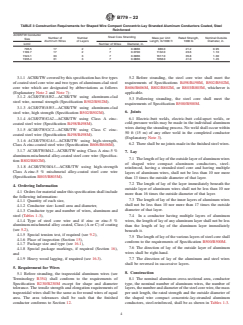
TABLE 3 Construction Requirements for Shaped Wire Compact Concentric-Lay Stranded Aluminum Conductors Coated, Steel
Reinforced
ACSR/TW Conductor
Steel Core Stranding
Number of Number Mass per Unit Rated Strength, Nominal Outside
Size
Aluminum Wires of Layers Length, lb/1000 ft 1000 lb Diameter, in.
kcmil Number of Wires Diameter, in.
795.5 17 2 7 0.0866 886.0 21.2 0.95
1109.7 17 2 7 0.0700 1132.0 23.6 1.10
1524.1 33 3 7 0.0966 1617.0 35.8 1.30
1935.4 31 3 7 0.0866 1958.0 41.0 1.45
3.1.1 ACSR/TWcoveredbythisspecificationhasfivetypes 5.2 Before stranding, the steel core wire shall meet the
of coated steel core wire and two types of aluminum-clad steel requirements of Specifications B498/B498M, B502/B502M,
core wire which are designated by abbreviations as follows B606/B606M, B802/B802M,or B803/B803M, whichever is
(Explanatory Note 2 and Note 7): applicable.
3.1.2 ACSR/TW/AW2—ACSR/TW using aluminum-clad
5.3 Following stranding, the steel core shall meet the
steel wire, normal strength (Specification B502/B502M).
requirements of Specification B500/B500M.
3.1.3 ACSR/TW/AW3—ACSR/TW using aluminum-clad
6. Joints
steel wire, high strength (Specification B502/B502M).
6.1 Electric-butt welds, electric-butt cold-upset welds, or
3.1.4 ACSR/TW/GA2—ACSR/TW using Class A zinc-
cold-pressure welds may be made in the individual aluminum
coated steel wire (Specification B498/B498M).
wires during the stranding process. No weld shall occur within
3.1.5 ACSR/TW/GC2—ACSR/TW using Class C zinc-
50 ft (15 m) of any other weld in the completed conductor
coated steel wire (Specification B498/B498M).
(Explanatory Note 3).
3.1.6 ACSR/TW/GA3—ACSR/TW using high-strength,
6.2 Thereshallbenojointsmadeinthefinishedsteelwires.
Class Azinc-coated steel wire (Specification B606/B606M).
3.1.7 ACSR/TW/MA2—ACSR/TW using Class A zinc-5 %
7. Lay
aluminum-mischmetal alloy-coated steel core wire (Specifica-
7.1 Thelengthoflayoftheoutsidelayerofaluminumwires
tion B802/B802M).
of shaped wire compact aluminum conductors, steel-
3.1.8 ACSR/TW/MA3—ACSR/TW using high-strength
reinforced, having a strandedsteel core and having multiple
Class Azinc-5 % mischmetal alloy-coated steel core wire
layers of aluminum wires, shall not be less than 10 nor more
(Specification B803/B803M).
than 13 times theoutside diameter of that layer.
7.2 The length of lay of the layer immed
...
This document is not an ASTM standard and is intended only to provide the user of an ASTM standard an indication of what changes have been made to the previous version. Because
it may not be technically possible to adequately depict all changes accurately, ASTM recommends that users consult prior editions as appropriate. In all cases only the current version
of the standard as published by ASTM is to be considered the official document.
Designation: B779 − 18 B779 − 22
Standard Specification for
Shaped Wire Compact Concentric-Lay-Stranded Aluminum
Conductors, Steel-Reinforced (ACSR/TW)
This standard is issued under the fixed designation B779; the number immediately following the designation indicates the year of
original adoption or, in the case of revision, the year of last revision. A number in parentheses indicates the year of last reapproval. A
superscript epsilon (´) indicates an editorial change since the last revision or reapproval.
1. Scope
1.1 This specification covers shaped wire compact concentric-lay-stranded aluminum conductor, steel-reinforced (ACSR/TW) and
its component wires for use as overhead electrical conductors (Explanatory Note 1 and Note 2).
1.2 The values stated in inch-pound units are to be regarded as standard. The values given in parentheses are mathematical
conversions to SI units that are provided for information only and are not considered standard.
NOTE 1—ACSR/TW is designed to increase the aluminum area for a given diameter of conductor by the use of trapezoidally shaped wires (TW). The
conductors consist of a central core of round steel wire(s) surrounded by two or more layers of trapezoidal aluminum 1350-H19 wires. Different strandings
of the same size of conductor are identified by type, which is the approximate ratio of steel area to aluminum area expressed in percent (Table 1, Table
2 and Table 3). For the purpose of this specification, the sizes listed in Table 1 and Table 2 are tabulated on the basis of the finished conductor having
an area or outside diameter equal to that of specific sizes of standard ACSR so as to facilitate conductor selection.
NOTE 2—The aluminum and temper designations conform to ANSI Standard H 35.1. Aluminum 1350 corresponds to Unified Numbering System (UNS)
A91350 in accordance with Practice E527.
1.3 This international standard was developed in accordance with internationally recognized principles on standardization
established in the Decision on Principles for the Development of International Standards, Guides and Recommendations issued
by the World Trade Organization Technical Barriers to Trade (TBT) Committee.
2. Referenced Documents
2.1 ASTM Standards:
B230/B230M Specification for Aluminum 1350–H19 Wire for Electrical Purposes
B232/B232M Specification for Concentric-Lay-Stranded Aluminum Conductors, Coated-Steel Reinforced (ACSR)
B263B263/B263M Test Method for Determination of Cross-Sectional Area of Stranded Conductors
B354 Terminology Relating to Uninsulated Metallic Electrical Conductors
B498/B498M Specification for Zinc-Coated (Galvanized) Steel Core Wire for Use in Overhead Electrical Conductors
B500/B500M Specification for Metallic Coated or Aluminum Clad Stranded Steel Core for Use in Overhead Electrical
Conductors
B502B502/B502M Specification for Aluminum-Clad Steel Core Wire for Use in Overhead Electrical Aluminum Conductors
B549 Specification for Concentric-Lay-Stranded Aluminum Conductors, Aluminum-Clad Steel Reinforced for Use in Overhead
Electrical Conductors
This specification is under the jurisdiction of ASTM Committee B01 on Electrical Conductors and is the direct responsibility of Subcommittee B01.07 on Conductors
of Light Metals.
Current edition approved March 1, 2018Dec. 1, 2022. Published March 2018January 2023. Originally approved in 1987. Last previous edition approved in 20142018 as
B779 – 14.18. DOI: 10.1520/B0779-18.10.1520/B0779-22.
For referenced ASTM standards, visit the ASTM website, www.astm.org, or contact ASTM Customer Service at service@astm.org. For Annual Book of ASTM Standards
volume information, refer to the standard’s Document Summary page on the ASTM website.
Copyright © ASTM International, 100 Barr Harbor Drive, PO Box C700, West Conshohocken, PA 19428-2959. United States
B779 − 22
TABLE 1 Construction Requirements for Shaped Wire Compact Concentric-Lay-Stranded Aluminum Conductors, Coated Steel Reinforced Size to Have Area Equal to ACSR,
Class AA
ACSR/TW Conductor Size and Stranding of ACSR with
A
Mass per
Code Word Steel Core Stranding
Number of Rated Nominal
Size Equal Area
Number of
Unit
Aluminum Strength, Outside
B
Layers
Number of Diameter, Length, C E
D
Wires 1000 lb Diameter, in.
kcmil Type kcmil Stranding
lb/1000 ft
Wires in.
Merlin TW 336.4 6 336.4 18/1 14 2 1 0.1367 365 8.6 0.63
Flicker TW 477.0 13 477.0 24/7 18 2 7 0.0940 613 17.2 0.78
Hawk TW 477.0 16 477.0 26/7 18 2 7 0.1053 655 19.4 0.79
Parakeet TW 556.5 13 556.5 24/7 18 2 7 0.1015 715 20.0 0.84
Dove TW 556.5 16 556.5 26/7 20 2 7 0.1138 765 22.6 0.85
Kingbird TW 636.0 3 636.0 36/1 27 3 1 0.1329 646 13.5 0.85
Rook TW 636.0 13 636.0 24/7 18 2 7 0.1085 816 22.9 0.89
Grosbeak TW 636.0 16 636.0 26/7 20 2 7 0.1216 874 25.4 0.91
Tern TW 795.0 7 795.0 45/7 17 2 7 0.0886 892 21.0 0.96
F F F
Puffin TW 795.0 10 795.0 22/7 18 2 7 0.1108 975 25.9 0.98
Condor TW 795.0 13 795.0 54/7 20 2 7 0.1213 1021 28.2 0.99
Drake TW 795.0 16 795.0 26/7 20 2 7 0.1360 1092 31.8 1.01
Phoenix TW 954.0 5 954.0 42/7 30 3 7 0.0837 1029 23.7 1.05
Rail TW 954.0 7 954.0 45/7 32 3 7 0.0971 1075 25.9 1.06
Cardinal TW 954.0 13 954.0 54/7 20 2 7 0.1329 1226 33.5 1.08
Snowbird TW 1033.5 5 1033.5 42/7 30 3 7 0.0871 1115 25.7 1.09
Ortolan TW 1033.5 7 1033.5 45/7 32 3 7 0.1010 1165 28.1 1.10
Curlew TW 1033.5 13 1033.5 54/7 21 2 7 0.1383 1327 36.3 1.13
Avocet TW 1113.0 5 1113.0 42/7 30 3 7 0.0904 1201 27.5 1.13
Bluejay TW 1113.0 7 1113.0 45/7 33 3 7 0.1049 1254 30.3 1.14
Finch TW 1113.0 13 1113.0 54/19 38 3 19 0.0862 1429 39.1 1.19
Oxbird TW 1192.5 5 1192.5 42/7 30 3 7 0.0936 1286 29.5 1.17
Bunting TW 1192.5 7 1192.5 45/7 33 3 7 0.1085 1343 32.4 1.18
Grackle TW 1192.5 13 1192.5 54/19 38 3 19 0.0892 1530 41.9 1.22
Scissortail TW 1272.0 5 1272.0 42/7 30 3 7 0.0967 1372 31.4 1.20
Bittern TW 1272.0 7 1272.0 45/7 35 3 7 0.1121 1433 34.6 1.22
Pheasant TW 1272.0 13 1272.0 54/19 39 3 19 0.0921 1632 44.1 1.26
Dipper TW 1351.5 7 1351.5 45/7 35 3 7 0.1155 1522 36.7 1.26
Martin TW 1351.5 13 1351.5 54/19 39 3 19 0.0949 1734 46.8 1.30
Bobolink TW 1431.0 7 1431.0 45/7 36 3 7 0.1189 1613 38.9 1.29
Plover TW 1431.0 13 1431.0 54/19 39 3 19 0.0977 1836 49.6 1.34
Lapwing TW 1590.0 7 1590.0 45/7 36 3 7 0.1253 1792 42.2 1.36
Falcon TW 1590.0 13 1590.0 54/19 42 3 19 0.1030 2040 55.1 1.41
Chukar TW 1780.0 8 1780.0 84/19 37 3 19 0.0874 2063 50.7 1.45
Bluebird TW 2156.0 8 2156.0 84/19 64 4 19 0.0961 2515 61.1 1.61
TABLE 1 Construction Requirements for Shaped Wire Compact Concentric-Lay-Stranded Aluminum Conductors, Coated Steel Reinforced Size to Have Area Equal to ACSR,
Class AA
ACSR/TW Conductor Size and Stranding of ACSR with
A Mass per
Code Word Steel Core Stranding
Number of Rated Nominal
Size Equal Area
Number of
Unit
Aluminum Strength, Outside
B
Layers Length,
Number of Diameter, C E
D
Wires 1000 lb Diameter, in.
kcmil Type kcmil Stranding
lb/1000 ft
Wires in.
Merlin/TW 336.4 6 336.4 18/1 14 2 1 0.1367 365 8.6 0.63
Flicker/TW 477.0 13 477.0 24/7 18 2 7 0.0940 613 17.2 0.78
Hawk/TW 477.0 16 477.0 26/7 18 2 7 0.1053 655 19.4 0.79
Parakeet/TW 556.5 13 556.5 24/7 18 2 7 0.1015 715 20.0 0.84
Dove/TW 556.5 16 556.5 26/7 20 2 7 0.1138 765 22.6 0.85
Kingbird/TW 636.0 3 636.0 36/1 27 3 1 0.1329 646 13.5 0.85
Rook/TW 636.0 13 636.0 24/7 18 2 7 0.1085 816 22.9 0.89
Grosbeak/TW 636.0 16 636.0 26/7 20 2 7 0.1216 874 25.4 0.91
Tern/TW 795.0 7 795.0 45/7 17 2 7 0.0886 892 21.0 0.96
F F F
Puffin/TW 795.0 10 795.0 22/7 18 2 7 0.1108 975 25.9 0.98
B779 − 22
ACSR/TW Conductor Size and Stranding of ACSR with
A
Mass per
Code Word Steel Core Stranding
Number of Rated Nominal
Size Equal Area
Number of
Unit
Aluminum Strength, Outside
B
Layers
Length,
Number of Diameter, C E
D
Wires 1000 lb Diameter, in.
kcmil Type kcmil Stranding
lb/1000 ft
Wires in.
Condor/TW 795.0 13 795.0 54/7 20 2 7 0.1213 1021 28.2 0.99
Drake/TW 795.0 16 795.0 26/7 20 2 7 0.1360 1092 31.8 1.01
Phoenix/TW 954.0 5 954.0 42/7 30 3 7 0.0837 1029 23.7 1.05
Rail/TW 954.0 7 954.0 45/7 32 3 7 0.0971 1075 25.9 1.06
Cardinal/TW 954.0 13 954.0 54/7 20 2 7 0.1329 1226 33.5 1.08
Snowbird/TW 1033.5 5 1033.5 42/7 30 3 7 0.0871 1115 25.7 1.09
Ortolan/TW 1033.5 7 1033.5 45/7 32 3 7 0.1010 1165 28.1 1.10
Curlew/TW 1033.5 13 1033.5 54/7 21 2 7 0.1383 1327 36.3 1.13
Avocet/TW 1113.0 5 1113.0 42/7 30 3 7 0.0904 1201 27.5 1.13
Bluejay/TW 1113.0 7 1113.0 45/7 33 3 7 0.1049 1254 30.3 1.14
Finch/TW 1113.0 13 1113.0 54/19 38 3 19 0.0862 1429 39.1 1.19
Oxbird/TW 1192.5 5 1192.5 42/7 30 3 7 0.0936 1286 29.5 1.17
Bunting/TW 1192.5 7 1192.5 45/7 33 3 7 0.1085 1343 32.4 1.18
Grackle/TW 1192.5 13 1192.5 54/19 38 3 19 0.0892 1530 41.9 1.22
Scissortail/TW 1272.0 5 1272.0 42/7 30 3 7 0.0967 1372 31.4 1.20
Bittern/TW 1272.0 7 1272.0 45/7 35 3 7 0.1121 1433 34.6 1.22
Pheasant/TW 1272.0 13 1272.0 54/19 39 3 19 0.0921 1632 44.1 1.26
Dipper/TW 1351.5 7 1351.5 45/7 35 3 7 0.1155 1522 36.7 1.26
Martin/TW 1351.5 13 1351.5 54/19 39 3 19 0.0949 1734 46.8 1.30
Bobolink/TW 1431.0 7 1431.0 45/7 36 3 7 0.1189 1613 38.9 1.29
Plover/TW 1431.0 13 1431.0 54/19 39 3 19 0.0977 1836 49.6 1.34
Lapwing/TW 1590.0 7 1590.0 45/7 36 3 7 0.1253 1792 42.2 1.36
Falcon/TW 1590.0 13 1590.0 54/19 42 3 19 0.1030 2040 55.1 1.41
Chukar/TW 1780.0 8 1780.0 84/19 37 3 19 0.0874 2063 50.7 1.45
Bluebird/TW 2156.0 8 2156.0 84/19 64 4 19 0.0961 2515 61.1 1.61
A
Code words shown in this column are obtained from Specification B1006. They are provided for information only.
B
Mass per unit length is based on Class A zinc-coated steel. To convert to kg/km, multiply the lb/1000 ft value × 1.4887.1.4882.
C
Rated strengths were calculated in accordance with 9.1 using steel stresses at 1 % for Class A coating in accordance with Specification B498/B498M (1 kip = 1000 lbf = 4.448 kN).
D
To convert the diameter (inches) to mm, multiply the inch value × 25.4.
E 2 -4
To convert from kcmil to mm area, multiply the kcmil value × 5.067 × 100.5067. .
F
For 795 kcmil Type 10 (Puffin ACSR TW) conductor the indicated 0.1108 in. steel wire size does not correspond with the concentric round wire 795 kcmil 22/7 Puffin ACSR conductor. The round wire construction utilizes
a 0.1056” diameter steel core wire. The industry accepted dimension for the Puffin ACSR TW steel wire is 0.1108 in. Technically this renders the construction as a Type 11 conductor. The conductor mass, rated strength
and diameter values correspond to the 0.1108 in. diameter steel core.
B779 − 22
TABLE 2 Construction Requirements for Shaped Wire Compact Concentric-Lay-Stranded Aluminum Conductors, Coated Steel Reinforced Sized to Have Diameter Equal to
ACSR, Class AA
ACSR/TW Conductor Size and Stranding of ACSR
A Mass
Code Word Steel Core Stranding
Number of Rated Nominal
Size with Equal Diameter
Number of
per Unit
Aluminum Strength, Outside
C
Layers Length,
Number of Diameter, D E
B B
Wires 1000 lb Diameter, in.
kcmil Type kcmil Stranding
E lb/1000 ft
Wires in.
Monongahela/TW 405.1 6 336.4 18/1 14 2 1 0.1520 441 10.2 0.68
Mohawk/TW 571.7 13 477.0 24/7 18 2 7 0.1030 735 20.6 0.85
Calumet/TW 565.3 16 477.0 26/7 20 2 7 0.1146 776 22.9 0.86
Mystic/TW 666.6 13 556.5 24/7 20 2 7 0.1111 856 24.0 0.91
Oswego/TW 664.8 16 556.5 26/7 20 2 7 0.1244 913 26.6 0.93
Maumee/TW 768.2 13 636.0 24/7 20 2 7 0.1195 988 27.7 0.98
Wabash/TW 762.8 16 636.0 26/7 20 2 7 0.1331 1047 30.5 0.99
Nechako/TW 768.9 3 636.0 36/1 27 3 1 0.1520 785 16.4 0.93
Kettle/TW 957.2 7 795.0 45/7 32 3 7 0.0973 1079 26.0 1.06
Fraser/TW 946.7 10 795.0 22/7 35 3 7 0.1154 1142 29.6 1.08
Columbia/TW 966.2 13 795.0 54/7 21 2 7 0.1338 1241 34.0 1.09
Suwannee/TW 959.6 16 795.0 26/7 22 2 7 0.1493 1318 37.0 1.11
Cheyenne/TW 1168.1 5 954.0 42/7 30 3 7 0.0926 1260 28.9 1.16
Genesee/TW 1158.0 7 954.0 45/7 33 3 7 0.1078 1308 31.6 1.17
Hudson/TW 1158.4 13 954.0 54/7 25 2 7 0.1467 1489 39.6 1.20
Catawba/TW 1272.0 5 1033.5 42/7 30 3 7 0.0967 1372 31.4 1.20
Nelson/TW 1257.1 7 1033.5 45/7 35 3 7 0.1115 1417 34.2 1.21
Yukon/TW 1233.6 13 1033.5 54/7 38 3 19 0.0910 1586 42.9 1.25
Truckee/TW 1372.5 5 1113.0 42/7 30 3 7 0.1004 1481 33.4 1.25
Mackenzie/TW 1359.7 7 1113.0 45/7 36 3 7 0.1159 1530 36.9 1.26
Thames/TW 1334.6 13 1113.0 54/19 39 3 19 0.0944 1713 46.3 1.29
St. Croix/TW 1467.8 5 1192.5 42/7 33 3 7 0.1041 1585 35.8 1.29
Miramichi/TW 1455.3 7 1192.5 45/7 36 3 7 0.1200 1640 39.2 1.30
Merrimack/TW 1433.6 13 1192.5 54/19 39 3 19 0.0978 1840 49.7 1.34
Platte/TW 1569.0 5 1272.0 42/7 33 3 7 0.1074 1693 38.2 1.33
Potomac/TW 1557.4 7 1272.0 45/7 36 3 7 0.1241 1755 41.9 1.35
Rio Grande/TW 1533.3 13 1272.0 54/19 39 3 19 0.1012 1968 53.2 1.38
Schuylkill/TW 1657.4 7 1351.5 45/7 36 3 7 0.1280 1868 44.0 1.39
Pecos/TW 1622.0 13 1351.5 54/19 39 3 19 0.1064 2107 57.5 1.42
Pee Dee/TW 1758.6 7 1431.0 45/7 37 3 7 0.1319 1982 46.7 1.43
James/TW 1730.6 13 1431.0 54/19 39 3 19 0.1075 2221 59.4 1.47
Athabaska/TW 1949.6 7 1590.0 45/7 42 3 7 0.1392 2199 51.9 1.50
Cumberland/TW 1926.9 13 1590.0 54/19 42 3 19 0.1133 2471 65.3 1.55
Powder/TW 2153.8 8 1780.0 84/19 64 4 19 0.0961 2498 61.1 1.60
Santee/TW 2627.3 8 2156.0 84/19 64 4 19 0.1062 3048 74.5 1.76
A
Code words shown in this column are obtained from Specification B1006. They are provided for information only.
B 2 -4
To convert from kcmil to mm area, multiply the kcmil value x 5.067 x 100.5067. .
C
Mass per unit length is based on Class A zinc-coated steel. To convert to kg/km, multiply the lb/1000 ft value x 1.4887.1.4882.
D
Rated strength was calculated in accordance with 9.1 using steel stresses at 1 % for Class A coating in accordance with Specification B498/B498M (1 kip = 1000 lbf = 4.445lbf = 4.448 kN).
E
To convert the diameter (inches) to mm, multiply the inch value x 25.4.
B779 − 22
TABLE 3 Construction Requirements for Shaped Wire Compact Concentric-Lay Stranded Aluminum Conductors Coated, Steel
Reinforced
ACSR/TW Conductor
Steel Core Stranding
Number of Number Mass per Unit Rated Strength, Nominal Outside
Size
Aluminum Wires of Layers Length, lb/1000 ft 1000 lb Diameter, in.
kcmil Number of Wires Diameter, in.
795.5 17 2 7 0.0866 886.0 21.2 0.95
1109.7 17 2 7 0.0700 1132.0 23.6 1.10
1524.1 33 3 7 0.0966 1617.0 35.8 1.30
1935.4 31 3 7 0.0866 1958.0 41.0 1.45
B606B606/B606M Specification for High-Strength Zinc-Coated (Galvanized) Steel Core Wire for Aluminum and Aluminum-
Alloy Conductors, Steel Reinforced
B802/B802M Specification for Zinc–5 % Aluminum-Mischmetal Alloy-Coated Steel Core Wire for Aluminum Conductors,
Steel Reinforced (ACSR)
B803B803/B803M Specification for High-Strength Zinc–5 % Aluminum-Mischmetal Alloy-Coated Steel Core Wire for Use in
Overhead Electrical Conductors
B1006 Specification for Electrical Overhead Conductor Code Word Names
E29 Practice for Using Significant Digits in Test Data to Determine Conformance with Specifications
E527 Practice for Numbering Metals and Alloys in the Unified Numbering System (UNS)
2.2 Other Documents:
ANSI H35.1 American National Standard Alloy and Temper Designation Systems for Aluminum
NBS Handbook 100 — Copper Wire Tables of the National Bureau of Standards
3. Terminology
3.1 Definitions of Terms Specific to This Standard:
3.1.1 ACSR/TW covered by this specification has five types of coated steel core wire and one typetwo types of aluminum-clad
steel core wire which are designated by abbreviations as follows (Explanatory Note 2 and Note 87):
3.1.2 ACSR/TW/AW2—ACSR/TW using aluminum-clad steel wire, normal strength (Specification B502B502/B502M).
3.1.3 ACSR/TW/AW3—ACSR/TW using aluminum-clad steel wire, high strength (Specification B502B502/B502M).
3.1.4 ACSR/TW/GA2—ACSR/TW using Class A zinc-coated steel wire (Specification B498/B498M).
3.1.5 ACSR/TW/GC2—ACSR/TW using Class C zinc-coated steel wire (Specification B498/B498M).
3.1.6 ACSR/TW/GA3—ACSR/TW using high-strength, zinc-coated Class A zinc-coated steel wire (Specification B606B606/
B606M).
3.1.7 ACSR/TW/MA2—ACSR/TW using Class A zinc-5 % aluminum-mischmetal alloy-coated steel core wire (Specification
B802/B802M).
3.1.8 ACSR/TW/MA3—ACSR/TW using high-strength zinc-5 Class A zinc-5 % mischmetal alloy-coated steel core wire
(Specification B803B803/B803M).
4. Ordering Information
4.1 Orders for material under this specification shall include the following information:
4.1.1 Quantity of each size,
4.1.2 Conductor size: kcmil area and diameter,
Available from American National Standards Institute (ANSI), 25 W. 43rd St., 4th Floor, New York, NY 10036, http://www.ansi.org.
Available from National Technical
...