

ASTM B174-17
(Specification)Standard Specification for Bunch-Stranded Copper Conductors for Electrical Conductors
General Information
- Abstract
ABSTRACT
This specification covers bare bunch-stranded conductors made from round copper wires, either uncoated or coated with tin, lead, or lead-alloy for use as electrical conductors. Coated wires shall include only those wires with finished diameters and densities substantially equal to the respective diameters and densities of uncoated wires. Bunch-stranded conductors are classified as Class I, Class J, Class K, Class L, Class M, Class O, Class P, and Class Q, according to wire diameter. Requirements for conductor joints, lay length, wires, and strand construction are given. Electrical and elongation tests of wires composing the conductors shall be performed. If a tinning, lead-coating, or lead-alloy-coating test is required, it shall be made on the wires prior to stranding. The methods of determining mass, cross sections, and electrical resistance are detailed. The density of copper to be taken in the calculations is prescribed.
SCOPE
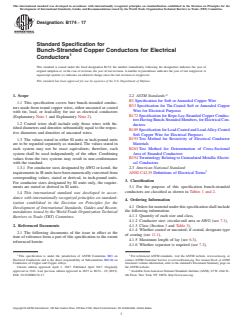
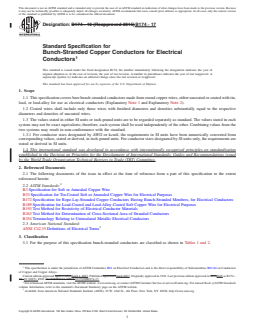
1.1 This specification covers bare bunch-stranded conductors made from round copper wires, either uncoated or coated with tin, lead, or lead-alloy for use as electrical conductors (Explanatory Note 1 and Explanatory Note 2).
1.2 Coated wires shall include only those wires with finished diameters and densities substantially equal to the respective diameters and densities of uncoated wires.
1.3 The values stated in either SI units or inch-pound units are to be regarded separately as standard. The values stated in each system may not be exact equivalents; therefore, each system shall be used independently of the other. Combining values from the two systems may result in non-conformance with the standard.
1.3.1 For conductor sizes designated by AWG or kcmil, the requirements in SI units have been numerically converted from corresponding values, stated or derived, in inch-pound units. For conductor sizes designated by SI units only, the requirements are stated or derived in SI units.
1.4 This international standard was developed in accordance with internationally recognized principles on standardization established in the Decision on Principles for the Development of International Standards, Guides and Recommendations issued by the World Trade Organization Technical Barriers to Trade (TBT) Committee.
- Status
- Published
- Publication Date
- 31-Mar-2017
- Technical Committee
- B01 - Electrical Conductors
- Drafting Committee
- B01.04 - Conductors of Copper and Copper Alloys
Buy Documents
ASTM B174-17 - Standard Specification for Bunch-Stranded Copper Conductors for Electrical Conductors
REDLINE ASTM B174-17 - Standard Specification for Bunch-Stranded Copper Conductors for Electrical Conductors
Overview
ASTM B174-17 is an internationally recognized standard developed by ASTM International that specifies the requirements for bunch-stranded copper conductors used in electrical applications. This standard covers both bare and coated (tin, lead, or lead-alloy) copper conductors made from round wires. The document establishes guidelines for dimensional characteristics, physical and electrical testing, classification by wire diameter, and construction requirements. Its primary aim is to ensure the quality, consistency, and reliability of bunch-stranded copper conductors for use in electrical installations, wiring, and cables.
Key Topics
Scope and Coverage
- Applies to both uncoated (bare) and coated copper wires
- Includes conductors coated with tin, lead, or lead-alloy
- Specifies that coated wires must have finished diameters and densities substantially equivalent to uncoated wires
Classification
- Conductors are classified by wire diameter into Classes I, J, K, L, M, O, P, and Q
- Classification provides industry standardization for various sizes and applications
Physical and Electrical Requirements
- Lays out requirements for conductor joints, lay length, and strand construction
- Requires electrical and elongation tests for the wires making up the conductors
- Specifies methods for determining mass, cross-sectional area, and electrical resistance
- Defines copper density for calculation purposes
Testing and Inspection
- Requires tests of physical and electrical properties prior to and after stranding
- Mandates that coating tests, if necessary, be performed before stranding
- Specifies inspection protocols, including place of inspection and facilities for inspectors
Packaging and Marking
- Details packaging sizes and markings required for identification and traceability
- Emphasizes protection of conductors during shipping and handling
Applications
The ASTM B174-17 standard is essential for the electrical and power transmission industries. Key applications include:
Electrical Wiring and Cabling
- Used as a core material for insulated wires and cables in residential, commercial, and industrial settings
Flexible Power and Control Cables
- Bunch-stranded copper conductors offer enhanced flexibility, making them ideal for applications requiring repeated motion or vibration
Electrical Equipment Manufacturing
- Ensures the production of high-reliability copper conductors for generators, transformers, panels, and other electrical assemblies
Utility and Infrastructure Projects
- Supports the infrastructure sector by standardizing the quality of copper conductors used in power distribution systems
Related Standards
ASTM B174-17 references and complements several other important standards, including:
- ASTM B3: Standard Specification for Soft or Annealed Copper Wire
- ASTM B33: Standard Specification for Tin-Coated Soft or Annealed Copper Wire for Electrical Purposes
- ASTM B172: Standard Specification for Rope-Lay-Stranded Copper Conductors Having Bunch-Stranded Members
- ASTM B189: Standard Specification for Lead-Coated and Lead-Alloy-Coated Soft Copper Wire for Electrical Purposes
- ASTM B193: Test Method for Resistivity of Electrical Conductor Materials
- ASTM B263: Test Method for Determination of Cross-Sectional Area of Stranded Conductors
- ASTM B354: Terminology Relating to Uninsulated Metallic Electrical Conductors
- ANSI C42.35: Definitions of Electrical Terms
These related standards are often used in conjunction with ASTM B174-17 to ensure consistent material properties, manufacturing processes, and terminology across the electrical conductor industry.
Keywords: bunch-stranded copper conductors, ASTM B174-17, copper electrical conductor, electrical conductor specification, stranded copper wire, electrical wiring standards, tin-coated copper, lead-coated copper, flexible copper conductor, ASTM copper standards
Relations
- Effective Date
- 01-Apr-2017
- Effective Date
- 01-Apr-2024
- Effective Date
- 01-Jan-2020
- Effective Date
- 01-Oct-2018
- Effective Date
- 01-Apr-2017
- Effective Date
- 01-Sep-2016
- Effective Date
- 01-Apr-2016
- Effective Date
- 01-Apr-2015
- Effective Date
- 01-Sep-2014
- Effective Date
- 01-Apr-2014
- Effective Date
- 01-Oct-2013
- Effective Date
- 01-Dec-2012
- Effective Date
- 15-Nov-2012
- Effective Date
- 01-Oct-2010
- Effective Date
- 01-Oct-2010
Buy Documents
ASTM B174-17 - Standard Specification for Bunch-Stranded Copper Conductors for Electrical Conductors
REDLINE ASTM B174-17 - Standard Specification for Bunch-Stranded Copper Conductors for Electrical Conductors
Get Certified
Connect with accredited certification bodies for this standard

IMQ S.p.A. (Certification)
Italian electrical product certification.

SLG Prüf- und Zertifizierungs GmbH
German testing and certification body.

UL Solutions
Global safety science company with testing, inspection and certification.
Sponsored listings
Frequently Asked Questions
ASTM B174-17 is a technical specification published by ASTM International. Its full title is "Standard Specification for Bunch-Stranded Copper Conductors for Electrical Conductors". This standard covers: ABSTRACT This specification covers bare bunch-stranded conductors made from round copper wires, either uncoated or coated with tin, lead, or lead-alloy for use as electrical conductors. Coated wires shall include only those wires with finished diameters and densities substantially equal to the respective diameters and densities of uncoated wires. Bunch-stranded conductors are classified as Class I, Class J, Class K, Class L, Class M, Class O, Class P, and Class Q, according to wire diameter. Requirements for conductor joints, lay length, wires, and strand construction are given. Electrical and elongation tests of wires composing the conductors shall be performed. If a tinning, lead-coating, or lead-alloy-coating test is required, it shall be made on the wires prior to stranding. The methods of determining mass, cross sections, and electrical resistance are detailed. The density of copper to be taken in the calculations is prescribed. SCOPE 1.1 This specification covers bare bunch-stranded conductors made from round copper wires, either uncoated or coated with tin, lead, or lead-alloy for use as electrical conductors (Explanatory Note 1 and Explanatory Note 2). 1.2 Coated wires shall include only those wires with finished diameters and densities substantially equal to the respective diameters and densities of uncoated wires. 1.3 The values stated in either SI units or inch-pound units are to be regarded separately as standard. The values stated in each system may not be exact equivalents; therefore, each system shall be used independently of the other. Combining values from the two systems may result in non-conformance with the standard. 1.3.1 For conductor sizes designated by AWG or kcmil, the requirements in SI units have been numerically converted from corresponding values, stated or derived, in inch-pound units. For conductor sizes designated by SI units only, the requirements are stated or derived in SI units. 1.4 This international standard was developed in accordance with internationally recognized principles on standardization established in the Decision on Principles for the Development of International Standards, Guides and Recommendations issued by the World Trade Organization Technical Barriers to Trade (TBT) Committee.
ABSTRACT This specification covers bare bunch-stranded conductors made from round copper wires, either uncoated or coated with tin, lead, or lead-alloy for use as electrical conductors. Coated wires shall include only those wires with finished diameters and densities substantially equal to the respective diameters and densities of uncoated wires. Bunch-stranded conductors are classified as Class I, Class J, Class K, Class L, Class M, Class O, Class P, and Class Q, according to wire diameter. Requirements for conductor joints, lay length, wires, and strand construction are given. Electrical and elongation tests of wires composing the conductors shall be performed. If a tinning, lead-coating, or lead-alloy-coating test is required, it shall be made on the wires prior to stranding. The methods of determining mass, cross sections, and electrical resistance are detailed. The density of copper to be taken in the calculations is prescribed. SCOPE 1.1 This specification covers bare bunch-stranded conductors made from round copper wires, either uncoated or coated with tin, lead, or lead-alloy for use as electrical conductors (Explanatory Note 1 and Explanatory Note 2). 1.2 Coated wires shall include only those wires with finished diameters and densities substantially equal to the respective diameters and densities of uncoated wires. 1.3 The values stated in either SI units or inch-pound units are to be regarded separately as standard. The values stated in each system may not be exact equivalents; therefore, each system shall be used independently of the other. Combining values from the two systems may result in non-conformance with the standard. 1.3.1 For conductor sizes designated by AWG or kcmil, the requirements in SI units have been numerically converted from corresponding values, stated or derived, in inch-pound units. For conductor sizes designated by SI units only, the requirements are stated or derived in SI units. 1.4 This international standard was developed in accordance with internationally recognized principles on standardization established in the Decision on Principles for the Development of International Standards, Guides and Recommendations issued by the World Trade Organization Technical Barriers to Trade (TBT) Committee.
ASTM B174-17 is classified under the following ICS (International Classification for Standards) categories: 29.060.20 - Cables. The ICS classification helps identify the subject area and facilitates finding related standards.
ASTM B174-17 has the following relationships with other standards: It is inter standard links to ASTM B174-10(2015), ASTM B3-13(2024), ASTM B33-10(2020)e1, ASTM B3-13(2018), ASTM B172-17, ASTM B354-16, ASTM B193-16, ASTM B172-10(2015), ASTM B33-10(2014), ASTM B193-02(2014), ASTM B3-13, ASTM B354-12, ASTM B3-12, ASTM B189-05(2010), ASTM B263-04(2010). Understanding these relationships helps ensure you are using the most current and applicable version of the standard.
ASTM B174-17 is available in PDF format for immediate download after purchase. The document can be added to your cart and obtained through the secure checkout process. Digital delivery ensures instant access to the complete standard document.
Standards Content (Sample)
This international standard was developed in accordance with internationally recognized principles on standardization established in the Decision on Principles for the
Development of International Standards, Guides and Recommendations issued by the World Trade Organization Technical Barriers to Trade (TBT) Committee.
Designation:B174 −17
Standard Specification for
Bunch-Stranded Copper Conductors for Electrical
Conductors
This standard is issued under the fixed designation B174; the number immediately following the designation indicates the year of
original adoption or, in the case of revision, the year of last revision. A number in parentheses indicates the year of last reapproval. A
superscript epsilon (´) indicates an editorial change since the last revision or reapproval.
This standard has been approved for use by agencies of the U.S. Department of Defense.
1. Scope 2.2 ASTM Standards:
B3 Specification for Soft or Annealed Copper Wire
1.1 This specification covers bare bunch-stranded conduc-
B33 Specification for Tin-Coated Soft or Annealed Copper
tors made from round copper wires, either uncoated or coated
Wire for Electrical Purposes
with tin, lead, or lead-alloy for use as electrical conductors
B172 Specification for Rope-Lay-Stranded Copper Conduc-
(Explanatory Note 1 and Explanatory Note 2).
torsHavingBunch-StrandedMembers,forElectricalCon-
1.2 Coated wires shall include only those wires with fin-
ductors
ished diameters and densities substantially equal to the respec-
B189 Specification for Lead-Coated and Lead-Alloy-Coated
tive diameters and densities of uncoated wires.
Soft Copper Wire for Electrical Purposes
B193 Test Method for Resistivity of Electrical Conductor
1.3 The values stated in either SI units or inch-pound units
are to be regarded separately as standard. The values stated in Materials
B263 Test Method for Determination of Cross-Sectional
each system may not be exact equivalents; therefore, each
system shall be used independently of the other. Combining Area of Stranded Conductors
B354 Terminology Relating to Uninsulated Metallic Electri-
values from the two systems may result in non-conformance
with the standard. cal Conductors
2.3 American National Standard:
1.3.1 For conductor sizes designated byAWG or kcmil, the
requirements in SI units have been numerically converted from ANSI C42.35 Definitions of Electrical Terms
corresponding values, stated or derived, in inch-pound units.
3. Classification
For conductor sizes designated by SI units only, the require-
ments are stated or derived in SI units. 3.1 For the purpose of this specification bunch-stranded
conductors are classified as shown in Tables 1 and 2.
1.4 This international standard was developed in accor-
dance with internationally recognized principles on standard-
4. Ordering Information
ization established in the Decision on Principles for the
4.1 Orders for material under this specification shall include
Development of International Standards, Guides and Recom-
the following information:
mendations issued by the World Trade Organization Technical
4.1.1 Quantity of each size and class,
Barriers to Trade (TBT) Committee.
4.1.2 Conductor size: circular-mil area or AWG (see 7.1),
4.1.3 Class (Section 3 and Table 3),
2. Referenced Documents
4.1.4 Whether coated or uncoated; if coated, designate type
2.1 The following documents of the issue in effect at the
of coating (see 11.1),
time of reference form a part of this specification to the extent
4.1.5 Maximum length of lay (see 6.3),
referenced herein:
4.1.6 Whether separator is required (see 7.2),
1 2
This specification is under the jurisdiction of ASTM Committee B01 on For referenced ASTM standards, visit the ASTM website, www.astm.org, or
Electrical Conductors and is the direct responsibility of Subcommittee B01.04 on contact ASTM Customer Service at service@astm.org. For Annual Book of ASTM
Conductors of Copper and Copper Alloys. Standards volume information, refer to the standard’s Document Summary page on
Current edition approved April 1, 2017. Published April 2017. Originally the ASTM website.
approved in 1941. Last previous edition approved in 2015 as B174 – 10 (2015). Available fromAmerican National Standards Institute (ANSI), 25 W. 43rd St.,
DOI: 10.1520/B0174-17. 4th Floor, New York, NY 10036, http://www.ansi.org.
Copyright © ASTM International, 100 Barr Harbor Drive, PO Box C700, West Conshohocken, PA 19428-2959. United States
B174−17
A
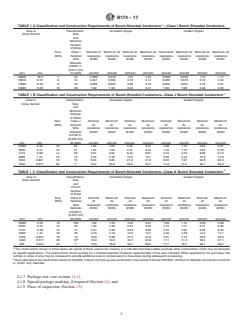
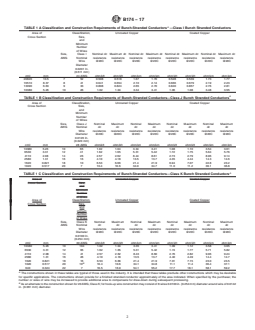
TABLE 1 A Classification and Construction Requirements of Bunch-Stranded Conductors —Class I Bunch Stranded Conductors
Area of Classification, Uncoated Copper Coated Copper
Cross Section Size,
and
Minimum
Number
of Wires
Size, Class I Nominal dc Maximum dc Nominal dc Maximum dc Nominal dc Maximum dc Nominal dc Maximum dc
AWG Nominal resistance resistance resistance resistance resistance resistance resistance resistance
Wire @20C @20C @20C @20C @20C @20C @20C @20C
Diameter
0.0201 In.
(0.511 mm)
cmil mm 24 AWG ohm/kft ohm/kft ohm/km ohm/km ohm/kft ohm/kft ohm/km ohm/km
20820 10.5 7 52 0.508 0.518 1.67 1.70 0.528 0.539 1.73 1.77
16510 8.37 8 41 0.641 0.654 2.10 2.14 0.666 0.679 2.19 2.23
13090 6.63 9 33 0.808 0.824 2.65 2.70 0.840 0.857 2.76 2.81
10380 5.26 10 26 1.02 1.04 3.34 3.41 1.06 1.08 3.48 3.55
A
TABLE1BClassification and Construction Requirements of Bunch-Stranded Conductors—Class J Bunch Stranded Conductors
Area of Classification, Uncoated Copper Coated Copper
Cross Section Size,
and
Minimum
Number
of Wires
Size, Class J Nominal Maximum Nominal Maximum Nominal Maximum Nominal Maximum
AWG Nominal dc dc dc dc dc dc dc dc
Wire resistance resistance resistance resistance resistance resistance resistance resistance
Diameter @20C @20C @20C @20C @20C @20C @20C @20C
0.0126 In.
(0.320 mm)
cmil mm 28 AWG ohm/kft ohm/kft ohm/km ohm/km ohm/kft ohm/kft ohm/km ohm/km
10380 5.26 10 65 1.02 1.04 3.34 3.41 1.08 1.10 3.54 3.61
6530 3.31 12 41 1.62 1.65 5.31 5.42 1.72 1.75 5.64 5.76
4110 2.08 14 26 2.57 2.62 8.44 8.61 2.73 2.79 8.96 9.14
2580 1.31 16 16 4.10 4.18 13.5 13.7 4.35 4.44 14.3 14.6
1620 0.821 18 10 6.53 6.66 21.4 21.9 6.94 7.07 22.8 23.2
1020 0.517 20 7 10.4 10.6 34.0 34.7 11.0 11.2 36.1 36.8
A
TABLE1CClassification and Construction Requirements of Bunch-Stranded Conductors—Class K Bunch Stranded Conductors
Area of Classification, Uncoated Copper Coated Copper
Cross Section Size,
and
inimum
Number
of Wires
Size, Class K Nominal Maximum Nominal Maximum Nominal Maximum Nominal Maximum
AWG Nominal dc dc dc dc dc dc dc dc
Wire resistance resistance resistance resistance resistance resistance resistance resistance
Diameter @20C @20C @20C @20C @20C @20C @20C @20C
0.0100 In.
(0.254 mm)
cmil mm 30 AWG ohm/kft ohm/kft ohm/km ohm/km ohm/kft ohm/kft ohm/km ohm/km
10380 5.26 10 104 1.02 1.04 3.35 3.41 1.09 1.12 3.58 3.65
6530 3.31 12 65 1.62 1.65 5.31 5.42 1.74 1.77 5.71 5.82
4110 2.08 14 41 2.57 2.62 8.43 8.60 2.76 2.82 9.06 9.24
2580 1.31 16 26 4.10 4.18 13.5 13.7 4.40 4.49 14.4 14.7
1620 0.821 18 16 6.53 6.66 21.4 21.9 7.01 7.15 23.0 23.5
B
1020 0.517 20 10 10.4 10.6 34.1 34.8 11.1 11.4 36.4 37.1
640 0.324 22 7 16.5 16.9 54.1 55.2 17.7 18.1 58.1 59.2
A
The constructions shown in these tables are typical of those used in the industry. It is intended that these tables preclude other constructions which may be desirable
for specific applications. The constructions shown provide for a finished stranded conductor approximately of the area indicated. When specified by the purchaser, the
number or sizes of wire may be increased to provide additional area to compensate for draw-down during subsequent processing.
B
Asanalternatetotheconstructionshownfor20AWG,ClassK;forhook-upwireconstructionmayconsistof8wires0.0100in.(0.254mm)diameteraroundwireof0.0142
in. (0.361 mm) diameter.
4.1.7 Package size (see section 14.1),
4.1.8 Specialpackagemarking,ifrequired(Section14),and
4.1.9 Place of inspection (Section 13).
B174−17
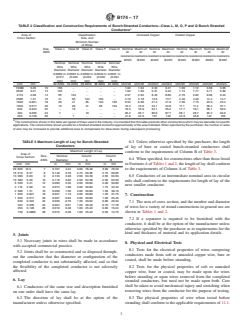
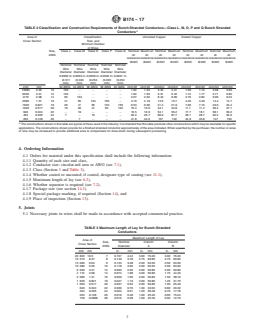
TABLE 2 Classification and Construction Requirements of Bunch-Stranded Conductors—Class L, M, O, P and Q Bunch Stranded
A
Conductors
Area of Classification, Uncoated Copper Coated Copper
Cross Section Size, and
Minimum Number
of Wires
Size, Class L Class M Class O Class P Class Q Nominal Maximum Nominal Maximum Nominal Maximum Nominal Maximum
AWG dc dc dc dc dc dc dc dc
resistanceresistanceresistanceresistanceresistanceresistanceresistanceresistance
@20C @20C @20C @20C @20C @20C @20C @20C
Nominal Nominal Nominal Nominal Nominal
Wire Wire Wire Wire Wire
Diameter Diameter Diameter Diameter Diameter
0.0080 In.0.0063 In.0.0050 In.0.0040 In.0.0031 In.
(0.511 (0.320 (0.254 (0.320 (0.254
mm) mm) mm) mm) mm)
cmil mm 32 AWG 34 AWG 36 AWG 38 AWG 40 AWG ohm/kft ohm/kft ohm/km ohm/km ohm/kft ohm/kft ohm/km ohm/km
10380 5.26 10 165 . . . . 1.02 1.04 3.34 3.41 1.09 1.12 3.58 3.65
6530 3.31 12 104 . . . . 1.62 1.65 5.31 5.42 1.74 1.77 5.71 5.82
4110 2.08 14 65 104 . . . 2.57 2.62 8.43 8.60 2.76 2.82 9.06 9.24
2580 1.31 16 41 65 104 165 . 4.10 4.18 13.5 13.7 4.40 4.49 14.4 14.7
1620 0.821 18 26 41 65 104 165 6.53 6.66 21.4 21.9 7.00 7.15 23.0 23.4
1020 0.517 20 16 26 41 65 104 10.4 10.6 34.1 34.8 11.1 11.4 36.4 37.1
640 0.324 22 . 19 . . . 16.5 16.9 54.1 55.2 17.7 18.1 58.1 59.2
404 0.205 24 7 . 19 . . 26.2 26.7 86.0 87.7 28.1 28.7 92.2 94.0
253 0.128 26 . 7 . . . 41.8 42.6 137 140 44.9 45.8 147 150
A
Theconstructionsshowninthistablearetypicalofthoseusedintheindustry.Itisintendedthatthistableprecludeotherconstructionswhichmaybedesirableforspecific
applications.Theconstructionsshownprovideforafinishedstrandedconductorapproximatelyoftheareaindicated.Whenspecifiedbythepurchaser,thenumberorsizes
of wire may be increased to provide additional area to compensate for draw-down during subsequent processing.
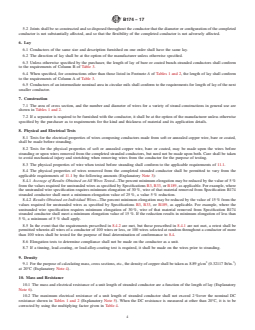
TABLE 3 Maximum Length of Lay for Bunch-Stranded
6.3 Unless otherwise specified by the purchaser, the length
Conductors
of lay of bare or coated bunch-stranded conductors shall
Maximum Length of Lay
conform to the requirements of Column B of Table 3.
Area of
Size, Nominal Column Column
Cross Section
6.4 When specified, for constructions other than those listed
AWG Diameter A B
inFootnoteAofTables1and2,thelengthoflayshallconform
cmil mm in. mm in. mm in. mm
to the requirements of Column A of Table 3.
20 820 10.5 7 0.167 4.24 3.00 76.20 3.00 76.20
16 510 8.37 8 0.149 3.78 2.75 69.85 2.75 69.85
6.5 Conductors of an intermediate nominal area in circular
13 090 6.63 9 0.133 3.38 2.50 63.50 2.50 63.50
10 380 5.26 10 0.118 3.00 2.50 63.50 2.50 63.50
mils shall conform to the requirements for length of lay of the
6 530 3.31 12 0.093 2.36 2.00 50.80 2.00 50.80
next smaller conductor.
4 110 2.08 14 0.074 1.88 2.00 50.80 1.75 44.45
2 580 1.31 16 0.059 1.50 2.00 50.80 1.50 38
...
This document is not an ASTM standard and is intended only to provide the user of an ASTM standard an indication of what changes have been made to the previous version. Because
it may not be technically possible to adequately depict all changes accurately, ASTM recommends that users consult prior editions as appropriate. In all cases only the current version
of the standard as published by ASTM is to be considered the official document.
Designation: B174 − 10 (Reapproved 2015) B174 − 17
Standard Specification for
Bunch-Stranded Copper Conductors for Electrical
Conductors
This standard is issued under the fixed designation B174; the number immediately following the designation indicates the year of
original adoption or, in the case of revision, the year of last revision. A number in parentheses indicates the year of last reapproval. A
superscript epsilon (´) indicates an editorial change since the last revision or reapproval.
This standard has been approved for use by agencies of the U.S. Department of Defense.
1. Scope
1.1 This specification covers bare bunch-stranded conductors made from round copper wires, either uncoated or coated with tin,
lead, or lead-alloy for use as electrical conductors (Explanatory Note 1 and Explanatory Note 2).
1.2 Coated wires shall include only those wires with finished diameters and densities substantially equal to the respective
diameters and densities of uncoated wires.
1.3 The values stated in either SI units or inch-pound units are to be regarded separately as standard. The values stated in each
system may not be exact equivalents; therefore, each system shall be used independently of the other. Combining values from the
two systems may result in non-conformance with the standard.
1.3.1 For conductor sizes designated by AWG or kcmil, the requirements in SI units have been numerically converted from
corresponding values, stated or derived, in inch-pound units. For conductor sizes designated by SI units only, the requirements are
stated or derived in SI units.
1.4 This international standard was developed in accordance with internationally recognized principles on standardization
established in the Decision on Principles for the Development of International Standards, Guides and Recommendations issued
by the World Trade Organization Technical Barriers to Trade (TBT) Committee.
2. Referenced Documents
2.1 The following documents of the issue in effect at the time of reference form a part of this specification to the extent
referenced herein:
2.2 ASTM Standards:
B3 Specification for Soft or Annealed Copper Wire
B33 Specification for Tin-Coated Soft or Annealed Copper Wire for Electrical Purposes
B172 Specification for Rope-Lay-Stranded Copper Conductors Having Bunch-Stranded Members, for Electrical Conductors
B189 Specification for Lead-Coated and Lead-Alloy-Coated Soft Copper Wire for Electrical Purposes
B193 Test Method for Resistivity of Electrical Conductor Materials
B263 Test Method for Determination of Cross-Sectional Area of Stranded Conductors
B354 Terminology Relating to Uninsulated Metallic Electrical Conductors
2.3 American National Standard:
ANSI C42.35 Definitions of Electrical Terms
3. Classification
3.1 For the purpose of this specification bunch-stranded conductors are classified as shown in Tables 1 and 2.
This specification is under the jurisdiction of ASTM Committee B01 on Electrical Conductors and is the direct responsibility of Subcommittee B01.04 on Conductors
of Copper and Copper Alloys.
Current edition approved April 1, 2015April 1, 2017. Published April 2015April 2017. Originally approved in 1941. Last previous edition approved in 20102015 as B174 –
10. 10 (2015). DOI: 10.1520/B0174-10R15.10.1520/B0174-17.
For referenced ASTM standards, visit the ASTM website, www.astm.org, or contact ASTM Customer Service at service@astm.org. For Annual Book of ASTM Standards
volume information, refer to the standard’s Document Summary page on the ASTM website.
Available from American National Standards Institute (ANSI), 25 W. 43rd St., 4th Floor, New York, NY 10036, http://www.ansi.org.
Copyright © ASTM International, 100 Barr Harbor Drive, PO Box C700, West Conshohocken, PA 19428-2959. United States
B174 − 17
A
TABLE 1 A Classification and Construction Requirements of Bunch-Stranded Conductors —Class I Bunch Stranded Conductors
Area of Classification, Uncoated Copper Coated Copper
Cross Section Size,
and
Minimum
Number
of Wires
Size, Class I Nominal dc Maximum dc Nominal dc Maximum dc Nominal dc Maximum dc Nominal dc Maximum dc
AWG Nominal resistance resistance resistance resistance resistance resistance resistance resistance
Wire @20C @20C @20C @20C @20C @20C @20C @20C
Diameter
0.0201 In.
(0.511 mm)
cmil mm 24 AWG ohm/kft ohm/kft ohm/km ohm/km ohm/kft ohm/kft ohm/km ohm/km
20820 10.5 7 52 0.508 0.518 1.67 1.70 0.528 0.539 1.73 1.77
16510 8.37 8 41 0.641 0.654 2.10 2.14 0.666 0.679 2.19 2.23
13090 6.63 9 33 0.808 0.824 2.65 2.70 0.840 0.857 2.76 2.81
10380 5.26 10 26 1.02 1.04 3.34 3.41 1.06 1.08 3.48 3.55
A
TABLE 1 B Classification and Construction Requirements of Bunch-Stranded Conductors—Class J Bunch Stranded Conductors
Area of Classification, Uncoated Copper Coated Copper
Cross Section Size,
and
Minimum
Number
of Wires
Size, Class J Nominal Maximum Nominal Maximum Nominal Maximum Nominal Maximum
AWG Nominal dc dc dc dc dc dc dc dc
Wire resistance resistance resistance resistance resistance resistance resistance resistance
Diameter @20C @20C @20C @20C @20C @20C @20C @20C
0.0126 In.
(0.320 mm)
cmil mm 28 AWG ohm/kft ohm/kft ohm/km ohm/km ohm/kft ohm/kft ohm/km ohm/km
10380 5.26 10 65 1.02 1.04 3.34 3.41 1.08 1.10 3.54 3.61
6530 3.31 12 41 1.62 1.65 5.31 5.42 1.72 1.75 5.64 5.76
4110 2.08 14 26 2.57 2.62 8.44 8.61 2.73 2.79 8.96 9.14
2580 1.31 16 16 4.10 4.18 13.5 13.7 4.35 4.44 14.3 14.6
1620 0.821 18 10 6.53 6.66 21.4 21.9 6.94 7.07 22.8 23.2
1020 0.517 20 7 10.4 10.6 34.0 34.7 11.0 11.2 36.1 36.8
A
TABLE 1 C Classification and Construction Requirements of Bunch-Stranded Conductors—Class K Bunch Stranded Conductors
Area of Classification, Uncoated Copper Coated Copper
Cross Section Size,
and
Minimum
Number
of Wires
Area of Classification, Uncoated Copper Coated Copper
Cross Section Size,
and
inimum
Number
of Wires
Size, Class K Nominal Maximum Nominal Maximum Nominal Maximum Nominal Maximum
AWG Nominal dc dc dc dc dc dc dc dc
Wire resistance resistance resistance resistance resistance resistance resistance resistance
Diameter @20C @20C @20C @20C @20C @20C @20C @20C
0.0100 In.
(0.254 mm)
cmil mm 30 AWG ohm/kft ohm/kft ohm/km ohm/km ohm/kft ohm/kft ohm/km ohm/km
10380 5.26 10 104 1.02 1.04 3.35 3.41 1.09 1.12 3.58 3.65
6530 3.31 12 65 1.62 1.65 5.31 5.42 1.74 1.77 5.71 5.82
4110 2.08 14 41 2.57 2.62 8.43 8.60 2.76 2.82 9.06 9.24
2580 1.31 16 26 4.10 4.18 13.5 13.7 4.40 4.49 14.4 14.7
1620 0.821 18 16 6.53 6.66 21.4 21.9 7.01 7.15 23.0 23.5
B
1020 0.517 20 10 10.4 10.6 34.1 34.8 11.1 11.4 36.4 37.1
640 0.324 22 7 16.5 16.9 54.1 55.2 17.7 18.1 58.1 59.2
A
The constructions shown in these tables are typical of those used in the industry. It is intended that these tables preclude other constructions which may be desirable
for specific applications. The constructions shown provide for a finished stranded conductor approximately of the area indicated. When specified by the purchaser, the
number or sizes of wire may be increased to provide additional area to compensate for draw-down during subsequent processing.
B
As an alternate to the construction shown for 20 AWG, Class K; for hook-up wire construction may consist of 8 wires 0.0100 in. (0.254 mm) diameter around wire of 0.0142
in. (0.361 mm) diameter.
B174 − 17
TABLE 2 Classification and Construction Requirements of Bunch-Stranded Conductors—Class L, M, O, P and Q Bunch Stranded
A
Conductors
Area of Classification, Uncoated Copper Coated Copper
Cross Section Size, and
Minimum Number
of Wires
Size, Class L Class M Class O Class P Class Q Nominal Maximum Nominal Maximum Nominal Maximum Nominal Maximum
AWG dc dc dc dc dc dc dc dc
resistanceresistanceresistanceresistance resistance resistanceresistanceresistance
@20C @20C @20C @20C @20C @20C @20C @20C
Nominal Nominal Nominal Nominal Nominal
Wire Wire Wire Wire Wire
Diameter Diameter Diameter Diameter Diameter
0.0080 In. 0.0063 In. 0.0050 In. 0.0040 In. 0.0031 In.
(0.511 (0.320 (0.254 (0.320 (0.254
mm) mm) mm) mm) mm)
cmil mm 32 AWG 34 AWG 36 AWG 38 AWG 40 AWG ohm/kft ohm/kft ohm/km ohm/km ohm/kft ohm/kft ohm/km ohm/km
10380 5.26 10 165 . . . . 1.02 1.04 3.34 3.41 1.09 1.12 3.58 3.65
6530 3.31 12 104 . . . . 1.62 1.65 5.31 5.42 1.74 1.77 5.71 5.82
4110 2.08 14 65 104 . . . 2.57 2.62 8.43 8.60 2.76 2.82 9.06 9.24
2580 1.31 16 41 65 104 165 . 4.10 4.18 13.5 13.7 4.40 4.49 14.4 14.7
1620 0.821 18 26 41 65 104 165 6.53 6.66 21.4 21.9 7.00 7.15 23.0 23.4
1020 0.517 20 16 26 41 65 104 10.4 10.6 34.1 34.8 11.1 11.4 36.4 37.1
640 0.324 22 . 19 . . . 16.5 16.9 54.1 55.2 17.7 18.1 58.1 59.2
404 0.205 24 7 . 19 . . 26.2 26.7 86.0 87.7 28.1 28.7 92.2 94.0
253 0.128 26 . 7 . . . 41.8 42.6 137 140 44.9 45.8 147 150
A
The constructions shown in this table are typical of those used in the industry. It is intended that this table preclude other constructions which may be desirable for specific
applications. The constructions shown provide for a finished stranded conductor approximately of the area indicated. When specified by the purchaser, the number or sizes
of wire may be increased to provide additional area to compensate for draw-down during subsequent processing.
4. Ordering Information
4.1 Orders for material under this specification shall include the following information:
4.1.1 Quantity of each size and class,
4.1.2 Conductor size: circular-mil area or AWG (see 7.1),
4.1.3 Class (Section 3 and Table 3),
4.1.4 Whether coated or uncoated; if coated, designate type of coating (see 11.1),
4.1.5 Maximum length of lay (see 6.3),
4.1.6 Whether separator is required (see 7.2),
4.1.7 Package size (see section 14.1),
4.1.8 Special package marking, if required (Section 14), and
4.1.9 Place of inspection (Section 13).
5. Joints
5.1 Necessary joints in wires shall be made in accordance with accepted commercial practice.
TABLE 3 Maximum Length of Lay for Bunch-Stranded
Conductors
Maximum Length of Lay
Area of
Size, Nominal Column Column
Cross Section
AWG Diameter A B
cmil mm in. mm in. mm in. mm
20 820 10.5 7 0.167 4.24 3.00 76.20 3.00 76.20
16 510 8.37 8 0.149 3.78 2.75 69.85 2.75 69.85
13 090 6.63 9 0.133 3.38 2.50 63.50 2.50 63.50
10 380 5.26 10 0.118 3.00 2.50 63.50 2.50 63.50
6 530 3.31 12 0.093 2.36 2.00 50.80 2.00 50.80
4 110 2.08 14 0.074 1.88 2.00 50.80 1.75 44.45
2 580 1.31 16 0.059 1.50 2.00 50.80 1.50 38.10
1 620 0.821 18 0.047 1.19 2.00 50.80 1.25 31.75
1 020 0.517 20 0.037 0.94 2.00 50.80 1.00 25.40
640 0.324 22 0.030 0.76 1.30 33.02 0.80 20.32
404 0.205 24 0.024 0.61 1.20 30.48 0.70 17.78
253 0.128 26 0.019 0.48 1.00 25.40 0.60 15.24
159 0.0806 28 0.015 0.38 1.00 25.40 0.5
...