

SIST EN 301 842-1 V1.4.1:2015
VHF air-ground Digital Link (VDL) Mode 4 radio equipment;Technical characteristics and methods of measurement for ground-based equipment;Part 1: EN for ground equipment
General Information
- Abstract
• clause 8 covers general test conditions, environmental tests and calibration;
• clause 9 provides detailed test procedures for the physical layer;
• annex A provides a detailed cross-reference to the relevant requirements contained in reference [1];
• annex B provides a Bibliography;
The full physical layer tests are provided which correspond closely to the standard set of tests used for other VDL
systems.
Mandating and Recommendation Phrases
a) "Shall"
The use of the word "Shall" indicates a mandated criterion; i.e. compliance with the particular procedure or
specification is mandatory and no alternative may be applied.
b) "Should"
The use of the word "Should" (and phrases such as "It is recommended that...", etc.) indicate that though the
procedure or criterion is regarded as the preferred option, alternative procedures, specifications or criteria may
be applied, provided that the manufacturer, installer or tester can provide information or data to adequately
support and justify the alternative.
- Status
- Published
- Public Enquiry End Date
- 30-Mar-2015
- Publication Date
- 09-Sep-2015
- Technical Committee
- MOC - Mobile Communications
- Current Stage
- 6060 - National Implementation/Publication (Adopted Project)
- Start Date
- 09-Jun-2015
- Due Date
- 14-Aug-2015
- Completion Date
- 10-Sep-2015
Buy Documents
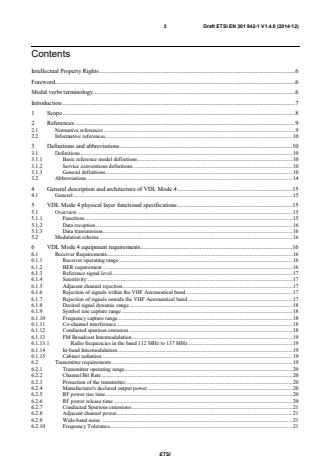
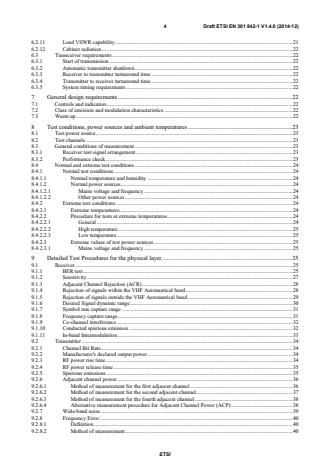
ETSI EN 301 842-1 V1.4.0 (2014-12) - VHF air-ground Digital Link (VDL) Mode 4 radio equipment; Technical characteristics and methods of measurement for ground-based equipment; Part 1: EN for ground equipment
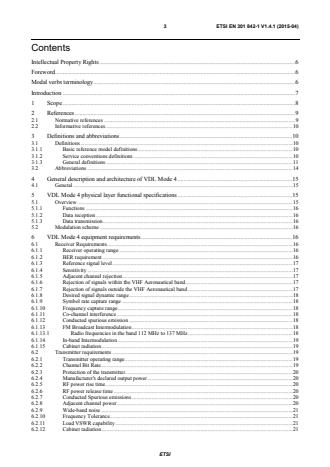
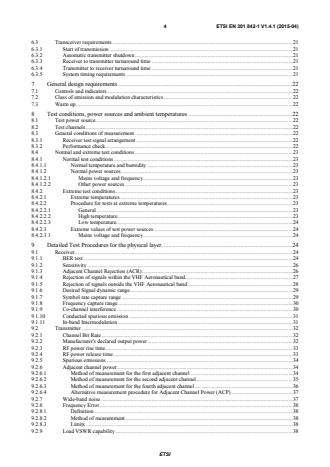
ETSI EN 301 842-1 V1.4.1 (2015-04) - VHF air-ground Digital Link (VDL) Mode 4 radio equipment; Technical characteristics and methods of measurement for ground-based equipment; Part 1: EN for ground equipment

Overview
SIST EN 301 842-1 V1.4.1:2015 outlines the essential technical characteristics and test methods for Very High Frequency (VHF) air-ground Digital Link (VDL) Mode 4 ground-based radio equipment. Developed by SIST (Slovenski inštitut za standardizacijo) and harmonized with the European standard EN 301 842-1, this document establishes requirements and measurement techniques that ensure ground equipment used in air-ground digital communication meets strict performance, interoperability, and safety criteria.
The standard details comprehensive physical layer testing for ground-based radio equipment, reflects updates recommended by international aviation entities such as ICAO, and is vital for ensuring reliable, safe, and interference-free communication between ground stations and aircraft operating within the VHF band.
Key Topics
- General Test Conditions and Calibration: Specifies the standard environmental conditions, calibration procedures, and test preparation to ensure accurate, repeatable measurement results.
- Physical Layer Test Procedures: Provides detailed instructions for testing radio transmitter and receiver characteristics in the ground equipment, closely aligning with ICAO specifications for VDL systems.
- Mandating and Recommendation Language: Carefully distinguishes between mandatory ("shall") requirements and preferred, but optional ("should"), practices with clear criteria for justification of alternatives.
- Annexes and Cross-referencing:
- Annex A: Cross-reference matrix mapping standard’s requirements to ICAO and referenced standards.
- Annex B: Bibliography of key documents relevant to aeronautical digital links.
- Performance Alignment: Ensures test methods are consistent with other VDL systems, supporting interoperability and safety in aeronautical communications.
Applications
SIST EN 301 842-1 V1.4.1:2015 has significant practical value for a variety of stakeholders in the aviation and radiocommunications sectors:
- Manufacturers: Enables dependable design and type approval of ground-based VDL Mode 4 equipment, ensuring compatibility with European and international regulatory frameworks.
- Aviation Authorities and Regulators: Provides a robust basis for equipment certification, network planning, airspace management, and safety oversight.
- System Integrators and Installers: Supplies reference procedures and calibration guides to ensure correct field deployment and ongoing system reliability.
- Test Laboratories: Delivers clear and detailed measurement methods for physical layer testing, environmental testing, and calibration, supporting consistent equipment assessment and market entry.
This standard is especially critical for equipment that supports both broadcast and point-to-point VHF air-ground communication, including applications like Automatic Dependent Surveillance-Broadcast (ADS-B), air traffic services, and surveillance communications in the European and global aviation environment.
Related Standards
Organizations and professionals involved with VHF air-ground communications should also refer to the following related standards and documents for comprehensive compliance and design integration:
- ICAO VDL Mode 4 Technical Standards and Recommended Practices: Foundational international baseline for VDL communications.
- EN 301 842-2: Companion specification for airborne VDL Mode 4 equipment.
- EN 300 113: Technical characteristics for land mobile service radio equipment.
- EN 301 489 Series: Electromagnetic compatibility and radio spectrum matters (EMC) standards for radio equipment.
- OSI Reference Model (ISO/IEC 7498): Provides network architecture principles referenced in protocol definitions.
Compliance with SIST EN 301 842-1 V1.4.1:2015 assures a reliable, interoperable foundation for ground-based digital communication systems in the VHF aviation band-crucial for both current operations and emerging services in global air navigation.
Buy Documents
ETSI EN 301 842-1 V1.4.0 (2014-12) - VHF air-ground Digital Link (VDL) Mode 4 radio equipment; Technical characteristics and methods of measurement for ground-based equipment; Part 1: EN for ground equipment
ETSI EN 301 842-1 V1.4.1 (2015-04) - VHF air-ground Digital Link (VDL) Mode 4 radio equipment; Technical characteristics and methods of measurement for ground-based equipment; Part 1: EN for ground equipment
Get Certified
Connect with accredited certification bodies for this standard

BUREAU VERITAS Certification Germany
Bureau Veritas certification in Germany.

Element Materials Technology
Materials testing and product certification.

ANCE
Mexican certification and testing association.
Sponsored listings
Frequently Asked Questions
SIST EN 301 842-1 V1.4.1:2015 is a standard published by the Slovenian Institute for Standardization (SIST). Its full title is "VHF air-ground Digital Link (VDL) Mode 4 radio equipment;Technical characteristics and methods of measurement for ground-based equipment;Part 1: EN for ground equipment". This standard covers: • clause 8 covers general test conditions, environmental tests and calibration; • clause 9 provides detailed test procedures for the physical layer; • annex A provides a detailed cross-reference to the relevant requirements contained in reference [1]; • annex B provides a Bibliography; The full physical layer tests are provided which correspond closely to the standard set of tests used for other VDL systems. Mandating and Recommendation Phrases a) "Shall" The use of the word "Shall" indicates a mandated criterion; i.e. compliance with the particular procedure or specification is mandatory and no alternative may be applied. b) "Should" The use of the word "Should" (and phrases such as "It is recommended that...", etc.) indicate that though the procedure or criterion is regarded as the preferred option, alternative procedures, specifications or criteria may be applied, provided that the manufacturer, installer or tester can provide information or data to adequately support and justify the alternative.
• clause 8 covers general test conditions, environmental tests and calibration; • clause 9 provides detailed test procedures for the physical layer; • annex A provides a detailed cross-reference to the relevant requirements contained in reference [1]; • annex B provides a Bibliography; The full physical layer tests are provided which correspond closely to the standard set of tests used for other VDL systems. Mandating and Recommendation Phrases a) "Shall" The use of the word "Shall" indicates a mandated criterion; i.e. compliance with the particular procedure or specification is mandatory and no alternative may be applied. b) "Should" The use of the word "Should" (and phrases such as "It is recommended that...", etc.) indicate that though the procedure or criterion is regarded as the preferred option, alternative procedures, specifications or criteria may be applied, provided that the manufacturer, installer or tester can provide information or data to adequately support and justify the alternative.
SIST EN 301 842-1 V1.4.1:2015 is classified under the following ICS (International Classification for Standards) categories: 33.060.99 - Other equipment for radiocommunications; 49.090 - On-board equipment and instruments. The ICS classification helps identify the subject area and facilitates finding related standards.
SIST EN 301 842-1 V1.4.1:2015 is available in PDF format for immediate download after purchase. The document can be added to your cart and obtained through the secure checkout process. Digital delivery ensures instant access to the complete standard document.
Standards Content (Sample)
Draft ETSI EN 301 842-1 V1.4.0 (2014-12)
EUROPEAN STANDARD
VHF air-ground Digital Link (VDL) Mode 4 radio equipment;
Technical characteristics and methods of measurement
for ground-based equipment;
Part 1: EN for ground equipment
2 Draft ETSI EN 301 842-1 V1.4.0 (2014-12)
Reference
REN/AERO-00020-1
Keywords
aeronautical, digital, radio, testing, VHF
ETSI
650 Route des Lucioles
F-06921 Sophia Antipolis Cedex - FRANCE
Tel.: +33 4 92 94 42 00 Fax: +33 4 93 65 47 16
Siret N° 348 623 562 00017 - NAF 742 C
Association à but non lucratif enregistrée à la
Sous-Préfecture de Grasse (06) N° 7803/88
Important notice
The present document can be downloaded from:
http://www.etsi.org
The present document may be made available in electronic versions and/or in print. The content of any electronic and/or
print versions of the present document shall not be modified without the prior written authorization of ETSI. In case of any
existing or perceived difference in contents between such versions and/or in print, the only prevailing document is the
print of the Portable Document Format (PDF) version kept on a specific network drive within ETSI Secretariat.
Users of the present document should be aware that the document may be subject to revision or change of status.
Information on the current status of this and other ETSI documents is available at
http://portal.etsi.org/tb/status/status.asp
If you find errors in the present document, please send your comment to one of the following services:
http://portal.etsi.org/chaircor/ETSI_support.asp
Copyright Notification
No part may be reproduced or utilized in any form or by any means, electronic or mechanical, including photocopying
and microfilm except as authorized by written permission of ETSI.
The content of the PDF version shall not be modified without the written authorization of ETSI.
The copyright and the foregoing restriction extend to reproduction in all media.
© European Telecommunications Standards Institute 2014.
All rights reserved.
TM TM TM
DECT , PLUGTESTS , UMTS and the ETSI logo are Trade Marks of ETSI registered for the benefit of its Members.
TM TM
3GPP and LTE are Trade Marks of ETSI registered for the benefit of its Members and
of the 3GPP Organizational Partners.
GSM® and the GSM logo are Trade Marks registered and owned by the GSM Association.
ETSI
3 Draft ETSI EN 301 842-1 V1.4.0 (2014-12)
Contents
Intellectual Property Rights . 6
Foreword . 6
Modal verbs terminology . 6
Introduction . 7
1 Scope . 8
2 References . 9
2.1 Normative references . 9
2.2 Informative references . 10
3 Definitions and abbreviations . 10
3.1 Definitions . 10
3.1.1 Basic reference model definitions . 10
3.1.2 Service conventions definitions . 10
3.1.3 General definitio ns . 10
3.2 Abbreviations . 14
4 General description and architecture of VDL Mode 4 . 15
4.1 General . 15
5 VDL Mode 4 physical layer functional specifications . 15
5.1 Overview . 15
5.1.1 Functions . 15
5.1.2 Data reception . 16
5.1.3 Data transmission . 16
5.2 Modulation scheme . 16
6 VDL Mode 4 equipment requirements . 16
6.1 Receiver Requirements . 16
6.1.1 Receiver operating range . 16
6.1.2 BER requirement . 16
6.1.3 Reference signal level . 17
6.1.4 Sensitivity . 17
6.1.5 Adjacent channel rejection . 17
6.1.6 Rejection of signals within the VHF Aeronautical band. 17
6.1.7 Rejection of signals outside the VHF Aeronautical band . 17
6.1.8 Desired signal dynamic range . 18
6.1.9 Symbol rate capture range . 18
6.1.10 Frequency capture range . 18
6.1.11 Co-channel interference . 18
6.1.12 Conducted spurious emission . 18
6.1.13 FM Broadcast Intermodulation . 19
6.1.13.1 Radio frequencies in the band 112 MHz to 137 MHz . 19
6.1.14 In-band Intermodulation . 19
6.1.15 Cabinet radiation . 19
6.2 Transmitter requirements . 19
6.2.1 Transmitter operating range . 20
6.2.2 Channel Bit Rate . 20
6.2.3 Protection of the transmitter. 20
6.2.4 Manufacturer's declared output power . 20
6.2.5 RF power rise time . 20
6.2.6 RF power release time . 20
6.2.7 Conducted Spurious emissions . 21
6.2.8 Adjacent channel power . 21
6.2.9 Wide-band noise . 21
6.2.10 Frequency Tolerance. 21
ETSI
4 Draft ETSI EN 301 842-1 V1.4.0 (2014-12)
6.2.11 Load VSWR capability . 21
6.2.12 Cabinet radiation . 22
6.3 Transceiver requirements . 22
6.3.1 Start of transmission . 22
6.3.2 Automatic transmitter shutdown . 22
6.3.3 Receiver to transmitter turnaround time . 22
6.3.4 Transmitter to receiver turnaround time . 22
6.3.5 System timing requirements . 22
7 General design requirements . 22
7.1 Controls and indicators . 22
7.2 Class of emission and modulation characteristics . 22
7.3 Warm up . 22
8 Test conditions, power sources and ambient temperatures . 23
8.1 Test power source . 23
8.2 Test channels . 23
8.3 General conditions of measurement . 23
8.3.1 Receiver test signal arrangement . 23
8.3.2 Performance check . 23
8.4 Normal and extreme test conditions . 24
8.4.1 Normal test conditions . 24
8.4.1.1 Normal temperature and humidity . 24
8.4.1.2 Normal power sources . 24
8.4.1.2.1 Mains voltage and frequency . 24
8.4.1.2.2 Other power sources . 24
8.4.2 Extreme test conditions . 24
8.4.2.1 Extreme temperatures . 24
8.4.2.2 Procedure for tests at extreme temperatures . 24
8.4.2.2.1 General . 24
8.4.2.2.2 High temperature . 25
8.4.2.2.3 Low temperature . 25
8.4.2.3 Extreme values of test power sources . 25
8.4.2.3.1 Mains voltage and frequency . 25
9 Detailed Test Procedures for the physical layer . 25
9.1 Receiver . 25
9.1.1 BER test . 25
9.1.2 Sensitivity . 27
9.1.3 Adjacent Channel Rejection (ACR) . 28
9.1.4 Rejection of signals within the VHF Aeronautical band. 28
9.1.5 Rejection of signals outside the VHF Aeronautical band . 29
9.1.6 Desired Signal dynamic range . 30
9.1.7 Symbol rate capture range . 31
9.1.8 Frequency capture range . 31
9.1.9 Co-channel interference . 32
9.1.10 Conducted spurious emission . 32
9.1.11 In-band Intermodulation . 33
9.2 Transmitter . 34
9.2.1 Channel Bit Rate . 34
9.2.2 Manufacturer's declared output power . 34
9.2.3 RF power rise time . 34
9.2.4 RF power release time . 35
9.2.5 Spurious emissions . 35
9.2.6 Adjacent channel power . 36
9.2.6.1 Method of measurement for the first adjacent channel . 36
9.2.6.2 Method of measurement for the second adjacent channel . 37
9.2.6.3 Method of measurement for the fourth adjacent channel . 38
9.2.6.4 Alternative measurement procedure for Adjacent Channel Power (ACP) . 38
9.2.7 Wide-band noise . 39
9.2.8 Frequency Error . 40
9.2.8.1 Definition . 40
9.2.8.2 Method of measurement . 40
ETSI
5 Draft ETSI EN 301 842-1 V1.4.0 (2014-12)
9.2.8.3 Limits . 40
9.2.9 Load VSWR capability . 40
9.3 Physical layer, system parameters . 41
9.3.1 Receiver to Transmitter turn-around time . 41
9.3.2 Transmitter to Receiver turn-around time . 42
9.3.3 Tuning Time . 42
Annex A (informative): Cross reference matrix . 43
Annex B (informative): Bibliography . 45
History . 46
ETSI
6 Draft ETSI EN 301 842-1 V1.4.0 (2014-12)
Intellectual Property Rights
IPRs essential or potentially essential to the present document may have been declared to ETSI. The information
pertaining to these essential IPRs, if any, is publicly available for ETSI members and non-members, and can be found
in ETSI SR 000 314: "Intellectual Property Rights (IPRs); Essential, or potentially Essential, IPRs notified to ETSI in
respect of ETSI standards", which is available from the ETSI Secretariat. Latest updates are available on the ETSI Web
server (http://ipr.etsi.org).
Pursuant to the ETSI IPR Policy, no investigation, including IPR searches, has been carried out by ETSI. No guarantee
can be given as to the existence of other IPRs not referenced in ETSI SR 000 314 (or the updates on the ETSI Web
server) which are, or may be, or may become, essential to the present document.
Foreword
This draft European Standard (EN) has been produced by ETSI Technical Committee Aeronautics (AERO), and is now
submitted for the combined Public Enquiry and Vote phase of the ETSI standards EN Approval Procedure.
The present document is part 1 of a multi-part deliverable covering the VHF air-ground Digital Link (VDL) Mode 4
radio equipment; Technical characteristics and methods of measurement for ground-based equipment, as identified
below:
Part 1: "EN for ground equipment";
Part 2: "General description and data link layer";
Part 3: "Additional broadcast aspects";
Part 4: "Point-to-point functions";
Part 5: "Harmonized EN covering the essential requirements of article 3.2 of the R&TTE Directive".
The present document is accompanied by an equivalent airborne standard, ETSI EN 302 842 [i.1] parts 1 to 4, covering
the VHF air-ground Digital Link (VDL) Mode 4 radio equipment; Technical characteristics and methods of
measurement for airborne equipment.
Proposed national transposition dates
Date of latest announcement of this EN (doa): 3 months after ETSI publication
Date of latest publication of new National Standard
or endorsement of this EN (dop/e): 6 months after doa
Date of withdrawal of any conflicting National Standard (dow): 18 months after doa
Modal verbs terminology
In the present document "shall", "shall not", "should", "should not", "may", "may not", "need", "need not", "will",
"will not", "can" and "cannot" are to be interpreted as described in clause 3.2 of the ETSI Drafting Rules (Verbal forms
for the expression of provisions).
"must" and "must not" are NOT allowed in ETSI deliverables except when used in direct citation.
ETSI
7 Draft ETSI EN 301 842-1 V1.4.0 (2014-12)
Introduction
The present document states the technical specifications for Very High Frequency (VHF) Digital Link (VDL) Mode 4
ground-based radio transmitters, transceivers and receivers for air-ground communications operating in the VHF band,
using Gaussian-filtered Frequency Shift Keying (GFSK) Modulation with 25 kHz channel spacing and capable of
tuning to any of the 25 kHz channels from 112,000 MHz to 136,975 MHz as defined in ICAO VHF Digital Link (VDL)
Standards and Recommended Practices (SARPs) [2].
The present document may be used to produce tests for the assessment of the performance of the equipment.
ETSI
8 Draft ETSI EN 301 842-1 V1.4.0 (2014-12)
1 Scope
The present document applies to the following radio equipment types:
• Very High Frequency (VHF) Digital Link (VDL) Mode 4 ground-based radio transmitters and receivers for
air-ground communications operating in the VHF band, using Gaussian-filtered Frequency Shift Keying
(GFSK) Modulation with 25 kHz channel spacing and capable of tuning to any of the 25 kHz channels from
112,000 MHz to 136,975 MHz as defined in ICAO VHF Digital Link (VDL) Standards and Recommended
Practices (SARPs) [2].
The present document provides part 1 of the technical specification.
The present document is designed to ensure that equipment certified to it will be compatible with the relevant ICAO
VHF Digital Link (VDL) Standards and Recommended Practices (SARPs) [2] and VDL Mode 4 Technical Manual
(TM) [1].
Manufacturers should note that in future the tuning range for the ground transceivers may also cover any 25 kHz
channel from 108,000 MHz to 111,975 MHz.
The scope of the present document is limited to ground stations. The equivalent specification for airborne stations is
ETSI EN 302 842 [i.1].
The VDL Mode 4 system provides digital communication exchanges between aircraft and ground-based systems and
other aircraft supporting surveillance and communication applications. The supported modes of communication include:
• broadcast and point-to-point communication;
• broadcast services including Automatic Dependent Surveillance-broadcast (ADS-B), Traffic Information
Service - Broadcast (TIS-B) and Flight Information Service - Broadcast (FIS-B) capabilities;
• air-air, air-to-ground, and ground-to-air services;
• operation without ground infrastructure.
The present document is derived from the specifications:
• VDL Mode 4 standards produced under the auspices of the International Civil Aviation Organization
(ICAO) [1] and [2];
• other relevant standards as defined in clause 2.
It is envisaged that manufacturers may provide equipment supporting:
• broadcast services only;
• point-to-point services only;
• both broadcast and point-to-point services.
The present document deals with tests of the physical layer necessary to support all types of equipment.
The present document includes:
• clause 2 provides references to relevant documents;
• clause 3 provides general definitions, abbreviations and symbols used;
• clause 4 refers to a general description and architecture of VDL Mode 4 contained in ETSI EN 301 842-2 [6];
• clause 5 provides functional specifications applicable to the physical layer including transmitter/receiver
requirements and the modulation scheme;
• clause 6 provides general equipment requirements;
ETSI
9 Draft ETSI EN 301 842-1 V1.4.0 (2014-12)
• clause 7 provides general design requirements;
• clause 8 covers general test conditions, environmental tests and calibration;
• clause 9 provides detailed test procedures for the physical layer;
• annex A provides a detailed cross-reference to the relevant requirements contained in reference [1];
• annex B provides a Bibliography;
The full physical layer tests are provided which correspond closely to the standard set of tests used for other VDL
systems.
Mandating and Recommendation Phrases
a) "Shall"
The use of the word "Shall" indicates a mandated criterion; i.e. compliance with the particular procedure or
specification is mandatory and no alternative may be applied.
b) "Should"
The use of the word "Should" (and phrases such as "It is recommended that.", etc.) indicate that though the
procedure or criterion is regarded as the preferred option, alternative procedures, specifications or criteria may
be applied, provided that the manufacturer, installer or tester can provide information or data to adequately
support and justify the alternative.
2 References
References are either specific (identified by date of publication and/or edition number or version number) or
non-specific. For specific references, only the cited version applies. For non-specific references, the latest version of the
reference document (including any amendments) applies.
Referenced documents which are not found to be publicly available in the expected location might be found at
http://docbox.etsi.org/Reference.
NOTE: While any hyperlinks included in this clause were valid at the time of publication, ETSI cannot guarantee
their long term validity.
2.1 Normative references
The following referenced documents are necessary for the application of the present document.
[1] ICAO Doc 9816 (First Edition 2004): "Manual on VHF Digital Link (VDL) Mode 4, Part 2:
Detailed Technical Specifications".
[2] ICAO Annex 10 to the Convention on International Civil Aviation: "Aeronautical
Telecommunications, Volume III: Communication Systems, Part I: Digital Data Communication
Systems, chapter 6", including Amendment 88 (applicable 14/11/13).
[3] ISO/IEC 7498-1 (1994): "Information technology - Open Systems Interconnection - Basic
Reference Model: The Basic Model".
[4] ISO/IEC 10731 (1994): "Information technology - Open Systems Interconnection - Basic
Reference Model - Conventions for the definition of OSI services".
[5] ETSI EN 300 113-1 (V1.7.1): "Electromagnetic compatibility and Radio spectrum Matters (ERM);
Land mobile service; Radio equipment intended for the transmission of data (and/or speech) using
constant or non-constant envelope modulation and having an antenna connector; Part 1: Technical
characteristics and methods of measurement".
[6] ETSI EN 301 842-2 (V1.7.0): "VHF air-ground Digital Link (VDL) Mode 4 radio equipment;
Technical characteristics and methods of measurement for ground-based equipment;
Part 2: General description and data link layer".
ETSI
10 Draft ETSI EN 301 842-1 V1.4.0 (2014-12)
2.2 Informative references
The following referenced documents are not necessary for the application of the present document but they assist the
user with regard to a particular subject area.
[i.1] ETSI EN 302 842 (all parts): "VHF air-ground and air-air Digital Link (VDL) Mode 4 radio
equipment; Technical characteristics and methods of measurement for aeronautical mobile
(airborne) equipment".
3 Definitions and abbreviations
3.1 Definitions
3.1.1 Basic reference model definitions
The present document is based on the concepts developed in the open systems interconnect basic reference model and
makes use of the following terms defined in ISO/IEC 7498-1 [3]:
• layer;
• sublayer;
• entity;
• service;
• service access point;
• service data unit;
• physical layer;
• data link layer.
3.1.2 Service conventions definitions
The present document makes use of the following terms defined in ISO/IEC 10731 [4]:
• service provider;
• service user;
• service primitive;
• request;
• indication;
• confirm.
3.1.3 General definitions
For the purposes of the present document, the following terms and definitions apply:
adjacent channel power: amount of the modulated RF signal power which falls within a given adjacent channel
NOTE: Adjacent channel power includes discrete spurious, signal sidebands, and noise density (including phase
noise) at the transmitter output.
ETSI
11 Draft ETSI EN 301 842-1 V1.4.0 (2014-12)
Adjacent Channel Rejection (ACR): receiver's ability to demodulate the desired signal and meet the BER requirement
in the presence of an interfering signal in an adjacent channel
NOTE: The ratio (in dB) between the adjacent interfering signal level and the desired signal level necessary to
achieve the specified minimum BER, is the adjacent channel rejection (ACR) ratio.
Aeronautical Mobile Service (AMS): mobile service between aeronautical stations and aircraft stations, or between
aircraft stations, in which survival craft stations may participate
Aeronautical Telecommunications Network (ATN): internetwork architecture that allows ground, air/ground, and
aircraft data subnetworks to interoperate by adopting common interface services and protocols based on the
International Organization for Standardization Open Systems Interconnection (OSI) Reference Model
aircraft address: unique combination of 24 bits available for assignment to an aircraft for the purpose of air-ground
communications, navigation and surveillance
NOTE: An aircraft may choose not to use this unique address and can use instead a non-unique address.
Automatic Dependent Surveillance-Broadcast (ADS-B): surveillance application transmitting parameters, such as
position, track and ground speed, via a broadcast mode data link for use by any air and ground users requiring it
NOTE: ADS-B is a surveillance service based on aircraft self-determination of position/velocity/time and
automatic, periodic or random, broadcast of this information along with auxiliary data such as aircraft
identity (ID), communications control parameters, etc. ADS-B is intended to support multiple high-level
applications and associated services such as cockpit display of traffic information, traffic alert and
collision avoidance functionality, enhanced traffic management in the air and on the ground, search and
rescue support and others.
autotune function: function, performed by the Link Management Entity, that allows a ground VDL Mode 4 station to
command an aircraft to change the operating characteristics of synchronization burst transmissions
Bit Error Rate (BER): expressed as the ratio between the number of erroneous bits received and the total number of
bits received
burst length: number of slots across which the VDL Mode 4 burst is transmitted
Co-Channel Interference (CCI): co-channel interference protection defines the capability of a receiver to demodulate
the desired signal and achieve the minimum specified BER performance in the presence of an unwanted signal at the
same assigned frequency
NOTE: The ratio (in dB) between the wanted signal level and the unwanted signal level is the co-channel
interference ratio. The co-channel interference ratio has a major impact on frequency re-use planning
criteria.
conducted measurements: measurements which are made using a direct RF connection to the equipment under test
current slot: slot in which a received transmission begins
Data Link Entity (DLE): protocol state machine capable of setting up and managing a single data link connection
Data Link Service (DLS) sublayer: sublayer that resides above the VDL Mode 4 Specific Services (VSS) and the
MAC sublayers
NOTE: The Data Link Service (DLS) manages the transmit queue, creates and destroys Data Link Entities
(DLEs) for connection-oriented communications, provides facilities for the Link Management Entity
(LME) to manage the DLS, and provides facilities for connection-less communications.
data rate: Mode 4 nominal data rate is 19 200 bits/s
delayed burst: VDL Mode 4 burst that begins sufficiently after the beginning of a slot so that the transmitting VDL
Mode 4 station is confident that no other VDL Mode 4 station that it could receive from and is within the guard range is
transmitting in the slot
NOTE: The delayed VDL Mode 4 burst terminates by the end of the slot in which it began (its length is shortened
to ensure completion by the nominal time).
ETSI
12 Draft ETSI EN 301 842-1 V1.4.0 (2014-12)
DLS system: VDL system that implements the DLS and subnetwork protocols to carry Aeronautical
Telecommunications Network (ATN) or other packets
frame: link layer frame is composed of a sequence of address, control, information and FCS fields, bracketed by
opening and closing flag sequences
NOTE: A valid frame is at least 11 octets in length and contains an address field (8 octets), a link control field
(1 octet) and a frame check sequence (2 octets). A frame may or may not include a variable-length
information field.
Global Signalling Channel (GSC): channel available on a world wide basis which provides for communication control
ground base station: aeronautical station equipment, in the aeronautical mobile service, for use with an external
antenna and intended for use at a fixed location
ground station coordination: coordination of transmissions from two or more ground stations uses the UTC-minute
time frame
hand held: radio equipment with integral batteries, designed to be hand portable and operated hand held
NOTE: Provisions may be made for external connections and temporary installation into vehicles.
integral antenna equipment: radio communications equipment with an antenna integrated into the equipment without
the use of an external connector and considered to be part of the equipment
NOTE: An integral antenna may be internal or external to the equipment. In equipment of this type, a 50 Ω RF
connection point should be provided for test purposes.
link: connects a mobile DLE and a ground DLE and is uniquely specified by the combination of mobile DLS address
and the ground DLS address
NOTE: A different subnetwork entity resides above every link endpoint.
link establishment: process by which two stations discover each other, determine to communicate with each other,
decide upon the communication parameters, create a link and initialize its state before beginning communications
link handoff: process by which peer LMEs, already in communication with each other, create a link between an aircraft
and a new ground station before disconnecting the old link between the aircraft and the current ground station
link layer: layer that lies immediately above the physical layer in the Open Systems Interconnection protocol model
NOTE: The link layer provides for the reliable transfer of information across the physical media. It is subdivided
into the data link sublayer and the media access control sublayer.
Link Management Entity (LME): protocol state machine capable of acquiring, establishing, and maintaining a
connection to a single peer system
NOTE: An LME establishes data link and subnetwork connections, "hands-off" those connections, and manages
the media access control sublayer and physical layer. An aircraft LME tracks how well it can
communicate with the ground stations of a single ground system. An aircraft VDL management entity
(VME) instantiates an LME for each ground station that it monitors. Similarly, the ground VME
instantiates an LME for each aircraft that it monitors. An LME is deleted when communication with the
peer system is no longer viable.
Media Access Control (MAC): sublayer that acquires the data path and controls the movement of bits over the data
path
mobile: radio equipment designed for installation into vehicles
non-integral antenna equipment: radio communications equipment with a connector intended for connection to an
antenna
physical layer: lowest level layer in the Open Systems Interconnection protocol model
NOTE: The physical layer is concerned with only the transmission of binary information over the physical
medium (e.g. VHF radio).
ETSI
13 Draft ETSI EN 301 842-1 V1.4.0 (2014-12)
primary time source: normal operation timing mode in which a VDL Mode 4 station maintains time synchronization
to Universal Coordinated Time (UTC) second to within a two-sigma value of 400 ns
private parameters: parameters that are contained in exchange identity (XID) frames and that are unique to the VHF
digital link environment
radiated measurements: measurements which involve the measurement of a radiated field
reference bit sequence: sequence of bits used in the transmitter performance specifications
reference signal level: signal level used in the receiver performance specifications except otherwise stated
secondary time source: timing source used in a failure mode, which applies when the primary time source fails, in
which a VDL Mode 4 station maintains time synchronization to UTC second to within a two-sigma value of 15 µs
Self-organizing Time Division Multiple Access (STDMA): multiple access scheme based on time-shared use of a
radio frequency (RF) channel employing:
1) discrete contiguous time slots as the fundamental shared resource; and
2) a set of operating protocols that allows users to mediate access to these time slots without reliance on a master
control station.
slot: In VDL Mode 4, time is divided into a series of time slots of equal period
NOTE: Each VDL Mode 4 burst transmission starts at the beginning of a slot.
station: VDL Mode 4 Specific Services (VSS)-capable entity
NOTE: A station may be either a mobile station or a ground station. A station is a physical entity that transmits
and receives bursts over the RF interface (either A/G or Air-to-Air (A/A)) and comprises, at a minimum:
a physical layer, media access control sublayer, and a unique VSS address. A station which is also a DLS
station has the same address.
subnetwork layer: layer that establishes, manages, and terminates connections across a subnetwork
superframe: group of 4 500 slots that span a period of one UTC minute
NOTE: The start of the current superframe is aligned with the start of the slot that is currently being used for
transmission. The next superframe starts one minute after the current slot.
synchronization burst (or "sync" burst): VDL Mode 4 burst which announces, as a minimum, existence and position
NOTE: Ground stations announce existence, position, and the current time. Mobile stations lacking timing
information can then derive the slot structure from ground synchronization bursts. Mobile stations lacking
position information can derive position from both mobile and ground synchronization bursts. This
periodic information is used in various ways including ADS-B, secondary navigation, and simplifying the
LME algorithms.
Time Division Multiple Access (TDMA): multiple access scheme based on time-shared use of an RF channel
employing:
1) discrete contiguous time slots as the fundamental shared resource; and
2) a set of operating protocols that allows users to interact with a master control station to mediate access to the
channel.
unicasted transmission: transmission addressed to a single station
VDL Management Entity (VME): VDL-specific entity that provides the quality of service requested by the
ATN-defined subnetwork system management entity
NOTE: A VME uses the LMEs (that it creates and destroys) to acquire the quality of service available from peer
systems.
VDL Mode 2: VHF data link using a differentially encoded 8 phase shift keying modulation scheme and carrier sense
multiple access
ETSI
14 Draft ETSI EN 301 842-1 V1.4.0 (2014-12)
VDL Mode 4: VHF data link using a Gaussian-filtered Frequency Shift Keying (GFSK) modulation scheme and self
organizing time division multiple access
VDL Mode 4 burst: sequence of source address, burst ID, information, slot reservation, and Frame Check Sequence
(FCS) fields, bracketed by opening and closing flag sequences, and preceded by a preamble
NOTE 1: The start of a burst may occur only at quantized time intervals and this constraint allows the propagation
delay between the transmission and reception to be derived.
NOTE 2: The burst definitions contained within the present document consider the link layer data only (and
exclude the preamble).
VDL Mode 4 Specific Services (VSS) sublayer: sublayer that resides above the MAC sublayer and provides VDL
Mode 4 specific access protocols including reserved, random and fixed protocols
VSS user: user of the VDL Mode 4 Sp
...
EUROPEAN STANDARD
VHF air-ground Digital Link (VDL) Mode 4 radio equipment;
Technical characteristics and methods of measurement
for ground-based equipment;
Part 1: EN for ground equipment
2 ETSI EN 301 842-1 V1.4.1 (2015-04)
Reference
REN/AERO-00020-1
Keywords
aeronautical, digital, radio, testing, VHF
ETSI
650 Route des Lucioles
F-06921 Sophia Antipolis Cedex - FRANCE
Tel.: +33 4 92 94 42 00 Fax: +33 4 93 65 47 16
Siret N° 348 623 562 00017 - NAF 742 C
Association à but non lucratif enregistrée à la
Sous-Préfecture de Grasse (06) N° 7803/88
Important notice
The present document can be downloaded from:
http://www.etsi.org/standards-search
The present document may be made available in electronic versions and/or in print. The content of any electronic and/or
print versions of the present document shall not be modified without the prior written authorization of ETSI. In case of any
existing or perceived difference in contents between such versions and/or in print, the only prevailing document is the
print of the Portable Document Format (PDF) version kept on a specific network drive within ETSI Secretariat.
Users of the present document should be aware that the document may be subject to revision or change of status.
Information on the current status of this and other ETSI documents is available at
http://portal.etsi.org/tb/status/status.asp
If you find errors in the present document, please send your comment to one of the following services:
https://portal.etsi.org/People/CommiteeSupportStaff.aspx
Copyright Notification
No part may be reproduced or utilized in any form or by any means, electronic or mechanical, including photocopying
and microfilm except as authorized by written permission of ETSI.
The content of the PDF version shall not be modified without the written authorization of ETSI.
The copyright and the foregoing restriction extend to reproduction in all media.
© European Telecommunications Standards Institute 2015.
All rights reserved.
TM TM TM
DECT , PLUGTESTS , UMTS and the ETSI logo are Trade Marks of ETSI registered for the benefit of its Members.
TM
3GPP and LTE™ are Trade Marks of ETSI registered for the benefit of its Members and
of the 3GPP Organizational Partners.
GSM® and the GSM logo are Trade Marks registered and owned by the GSM Association.
ETSI
3 ETSI EN 301 842-1 V1.4.1 (2015-04)
Contents
Intellectual Property Rights . 6
Foreword . 6
Modal verbs terminology . 6
Introduction . 7
1 Scope . 8
2 References . 9
2.1 Normative references . 9
2.2 Informative references . 10
3 Definitions and abbreviations . 10
3.1 Definitions . 10
3.1.1 Basic reference model definitions . 10
3.1.2 Service conventions definitions . 10
3.1.3 General definitio ns . 11
3.2 Abbreviations . 14
4 General description and architecture of VDL Mode 4 . 15
4.1 General . 15
5 VDL Mode 4 physical layer functional specifications . 15
5.1 Overview . 15
5.1.1 Functions . 16
5.1.2 Data reception . 16
5.1.3 Data transmission . 16
5.2 Modulation scheme . 16
6 VDL Mode 4 equipment requirements . 16
6.1 Receiver Requirements . 16
6.1.1 Receiver operating range . 16
6.1.2 BER requirement . 16
6.1.3 Reference signal level . 17
6.1.4 Sensitivity . 17
6.1.5 Adjacent channel rejection . 17
6.1.6 Rejection of signals within the VHF Aeronautical band. 17
6.1.7 Rejection of signals outside the VHF Aeronautical band . 17
6.1.8 Desired signal dynamic range . 18
6.1.9 Symbol rate capture range . 18
6.1.10 Frequency capture range . 18
6.1.11 Co-channel interference . 18
6.1.12 Conducted spurious emission . 18
6.1.13 FM Broadcast Intermodulation . 18
6.1.13.1 Radio frequencies in the band 112 MHz to 137 MHz . 18
6.1.14 In-band Intermodulation . 19
6.1.15 Cabinet radiation . 19
6.2 Transmitter requirements . 19
6.2.1 Transmitter operating range . 19
6.2.2 Channel Bit Rate . 19
6.2.3 Protection of the transmitter. 20
6.2.4 Manufacturer's declared output power . 20
6.2.5 RF power rise time . 20
6.2.6 RF power release time . 20
6.2.7 Conducted Spurious emissions . 20
6.2.8 Adjacent channel power . 20
6.2.9 Wide-band noise . 21
6.2.10 Frequency Tolerance. 21
6.2.11 Load VSWR capability . 21
6.2.12 Cabinet radiation . 21
ETSI
4 ETSI EN 301 842-1 V1.4.1 (2015-04)
6.3 Transceiver requirements . 21
6.3.1 Start of transmission . 21
6.3.2 Automatic transmitter shutdown . 21
6.3.3 Receiver to transmitter turnaround time . 21
6.3.4 Transmitter to receiver turnaround time . 21
6.3.5 System timing requirements . 21
7 General design requirements . 22
7.1 Controls and indicators . 22
7.2 Class of emission and modulation characteristics . 22
7.3 Warm up . 22
8 Test conditions, power sources and ambient temperatures . 22
8.1 Test power source . 22
8.2 Test channels . 22
8.3 General conditions of measurement . 22
8.3.1 Receiver test signal arrangement . 22
8.3.2 Performance check . 22
8.4 Normal and extreme test conditions . 23
8.4.1 Normal test conditions . 23
8.4.1.1 Normal temperature and humidity . 23
8.4.1.2 Normal power sources . 23
8.4.1.2.1 Mains voltage and frequency . 23
8.4.1.2.2 Other power sources . 23
8.4.2 Extreme test conditions . 23
8.4.2.1 Extreme temperatures . 23
8.4.2.2 Procedure for tests at extreme temperatures . 23
8.4.2.2.1 General . 23
8.4.2.2.2 High temperature . 23
8.4.2.2.3 Low temperature . 24
8.4.2.3 Extreme values of test power sources . 24
8.4.2.3.1 Mains voltage and frequency . 24
9 Detailed Test Procedures for the physical layer . 24
9.1 Receiver . 24
9.1.1 BER test . 24
9.1.2 Sensitivity . 26
9.1.3 Adjacent Channel Rejection (ACR) . 26
9.1.4 Rejection of signals within the VHF Aeronautical band. 27
9.1.5 Rejection of signals outside the VHF Aeronautical band . 28
9.1.6 Desired Signal dynamic range . 29
9.1.7 Symbol rate capture range . 29
9.1.8 Frequency capture range . 30
9.1.9 Co-channel interference . 30
9.1.10 Conducted spurious emission . 31
9.1.11 In-band Intermodulation . 31
9.2 Transmitter . 32
9.2.1 Channel Bit Rate . 32
9.2.2 Manufacturer's declared output power . 32
9.2.3 RF power rise time . 33
9.2.4 RF power release time . 33
9.2.5 Spurious emissions . 34
9.2.6 Adjacent channel power . 34
9.2.6.1 Method of measurement for the first adjacent channel . 34
9.2.6.2 Method of measurement for the second adjacent channel . 35
9.2.6.3 Method of measurement for the fourth adjacent channel . 36
9.2.6.4 Alternative measurement procedure for Adjacent Channel Power (ACP) . 37
9.2.7 Wide-band noise . 37
9.2.8 Frequency Error . 38
9.2.8.1 Definition . 38
9.2.8.2 Method of measurement . 38
9.2.8.3 Limits . 38
9.2.9 Load VSWR capability . 38
ETSI
5 ETSI EN 301 842-1 V1.4.1 (2015-04)
9.3 Physical layer, system parameters . 39
9.3.1 Receiver to Transmitter turn-around time . 39
9.3.2 Transmitter to Receiver turn-around time . 39
9.3.3 Tuning Time . 40
Annex A (informative): Cross reference matrix . 41
Annex B (informative): Bibliography . 43
History . 44
ETSI
6 ETSI EN 301 842-1 V1.4.1 (2015-04)
Intellectual Property Rights
IPRs essential or potentially essential to the present document may have been declared to ETSI. The information
pertaining to these essential IPRs, if any, is publicly available for ETSI members and non-members, and can be found
in ETSI SR 000 314: "Intellectual Property Rights (IPRs); Essential, or potentially Essential, IPRs notified to ETSI in
respect of ETSI standards", which is available from the ETSI Secretariat. Latest updates are available on the ETSI Web
server (http://ipr.etsi.org).
Pursuant to the ETSI IPR Policy, no investigation, including IPR searches, has been carried out by ETSI. No guarantee
can be given as to the existence of other IPRs not referenced in ETSI SR 000 314 (or the updates on the ETSI Web
server) which are, or may be, or may become, essential to the present document.
Foreword
This European Standard (EN) has been produced by ETSI Technical Committee Aeronautics (AERO).
The present document is part 1 of a multi-part deliverable covering the VHF air-ground Digital Link (VDL) Mode 4
radio equipment; Technical characteristics and methods of measurement for ground-based equipment, as identified
below:
Part 1: "EN for ground equipment";
Part 2: "General description and data link layer";
Part 3: "Additional broadcast aspects";
Part 4: "Point-to-point functions";
Part 5: "Harmonized EN covering the essential requirements of article 3.2 of the R&TTE Directive".
The present document is accompanied by an equivalent airborne standard, ETSI EN 302 842 [i.1] parts 1 to 4, covering
the VHF air-ground Digital Link (VDL) Mode 4 radio equipment; Technical characteristics and methods of
measurement for airborne equipment.
National transposition dates
Date of adoption of this EN: 6 April 2015
Date of latest announcement of this EN (doa): 31 July 2015
Date of latest publication of new National Standard
or endorsement of this EN (dop/e): 31 January 2016
Date of withdrawal of any conflicting National Standard (dow): 31 January 2017
Modal verbs terminology
In the present document "shall", "shall not", "should", "should not", "may", "need not", "will", "will not", "can" and
"cannot" are to be interpreted as described in clause 3.2 of the ETSI Drafting Rules (Verbal forms for the expression of
provisions).
"must" and "must not" are NOT allowed in ETSI deliverables except when used in direct citation.
ETSI
7 ETSI EN 301 842-1 V1.4.1 (2015-04)
Introduction
The present document states the technical specifications for Very High Frequency (VHF) Digital Link (VDL) Mode 4
ground-based radio transmitters, transceivers and receivers for air-ground communications operating in the VHF band,
using Gaussian-filtered Frequency Shift Keying (GFSK) Modulation with 25 kHz channel spacing and capable of
tuning to any of the 25 kHz channels from 112,000 MHz to 136,975 MHz as defined in ICAO VHF Digital Link (VDL)
Standards and Recommended Practices (SARPs) [2].
The present document may be used to produce tests for the assessment of the performance of the equipment.
ETSI
8 ETSI EN 301 842-1 V1.4.1 (2015-04)
1 Scope
The present document applies to the following radio equipment types:
• Very High Frequency (VHF) Digital Link (VDL) Mode 4 ground-based radio transmitters and receivers for
air-ground communications operating in the VHF band, using Gaussian-filtered Frequency Shift Keying
(GFSK) Modulation with 25 kHz channel spacing and capable of tuning to any of the 25 kHz channels from
112,000 MHz to 136,975 MHz as defined in ICAO VHF Digital Link (VDL) Standards and Recommended
Practices (SARPs) [2].
The present document provides part 1 of the technical specification.
The present document is designed to ensure that equipment certified to it will be compatible with the relevant ICAO
VHF Digital Link (VDL) Standards and Recommended Practices (SARPs) [2] and VDL Mode 4 Technical Manual
(TM) [1].
Manufacturers should note that in future the tuning range for the ground transceivers may also cover any 25 kHz
channel from 108,000 MHz to 111,975 MHz.
The scope of the present document is limited to ground stations. The equivalent specification for airborne stations is
ETSI EN 302 842 [i.1].
The VDL Mode 4 system provides digital communication exchanges between aircraft and ground-based systems and
other aircraft supporting surveillance and communication applications. The supported modes of communication include:
• broadcast and point-to-point communication;
• broadcast services including Automatic Dependent Surveillance-broadcast (ADS-B), Traffic Information
Service - Broadcast (TIS-B) and Flight Information Service - Broadcast (FIS-B) capabilities;
• air-air, air-to-ground, and ground-to-air services;
• operation without ground infrastructure.
The present document is derived from the specifications:
• VDL Mode 4 standards produced under the auspices of the International Civil Aviation Organization
(ICAO) [1] and [2];
• other relevant standards as defined in clause 2.
It is envisaged that manufacturers may provide equipment supporting:
• broadcast services only;
• point-to-point services only;
• both broadcast and point-to-point services.
The present document deals with tests of the physical layer necessary to support all types of equipment.
The present document includes:
• clause 2 provides references to relevant documents;
• clause 3 provides general definitions, abbreviations and symbols used;
• clause 4 refers to a general description and architecture of VDL Mode 4 contained in ETSI EN 301 842-2 [6];
• clause 5 provides functional specifications applicable to the physical layer including transmitter/receiver
requirements and the modulation scheme;
• clause 6 provides general equipment requirements;
• clause 7 provides general design requirements;
ETSI
9 ETSI EN 301 842-1 V1.4.1 (2015-04)
• clause 8 covers general test conditions, environmental tests and calibration;
• clause 9 provides detailed test procedures for the physical layer;
• annex A provides a detailed cross-reference to the relevant requirements contained in reference [1];
• annex B provides a Bibliography;
The full physical layer tests are provided which correspond closely to the standard set of tests used for other VDL
systems.
Mandating and Recommendation Phrases
a) "Shall"
The use of the word "Shall" indicates a mandated criterion; i.e. compliance with the particular procedure or
specification is mandatory and no alternative may be applied.
b) "Should"
The use of the word "Should" (and phrases such as "It is recommended that.", etc.) indicate that though the
procedure or criterion is regarded as the preferred option, alternative procedures, specifications or criteria may
be applied, provided that the manufacturer, installer or tester can provide information or data to adequately
support and justify the alternative.
2 References
2.1 Normative references
References are either specific (identified by date of publication and/or edition number or version number) or
non-specific. For specific references, only the cited version applies. For non-specific references, the latest version of the
reference document (including any amendments) applies.
Referenced documents which are not found to be publicly available in the expected location might be found at
http://docbox.etsi.org/Reference.
NOTE: While any hyperlinks included in this clause were valid at the time of publication, ETSI cannot guarantee
their long term validity.
The following referenced documents are necessary for the application of the present document.
[1] ICAO Doc 9816 (First Edition 2004): "Manual on VHF Digital Link (VDL) Mode 4, Part 2:
Detailed Technical Specifications".
[2] ICAO Annex 10 to the Convention on International Civil Aviation: "Aeronautical
Telecommunications, Volume III: Communication Systems, Part I: Digital Data Communication
Systems, chapter 6", including Amendment 88 (applicable 14/11/13).
[3] ISO/IEC 7498-1 (1994): "Information technology - Open Systems Interconnection - Basic
Reference Model: The Basic Model".
[4] ISO/IEC 10731 (1994): "Information technology - Open Systems Interconnection - Basic
Reference Model - Conventions for the definition of OSI services".
[5] ETSI EN 300 113-1 (V1.7.1): "Electromagnetic compatibility and Radio spectrum Matters (ERM);
Land mobile service; Radio equipment intended for the transmission of data (and/or speech) using
constant or non-constant envelope modulation and having an antenna connector; Part 1: Technical
characteristics and methods of measurement".
[6] ETSI EN 301 842-2 (V1.7.1): "VHF air-ground Digital Link (VDL) Mode 4 radio equipment;
Technical characteristics and methods of measurement for ground-based equipment;
Part 2: General description and data link layer".
ETSI
10 ETSI EN 301 842-1 V1.4.1 (2015-04)
2.2 Informative references
References are either specific (identified by date of publication and/or edition number or version number) or
non-specific. For specific references, only the cited version applies. For non-specific references, the latest version of the
reference document (including any amendments) applies.
NOTE: While any hyperlinks included in this clause were valid at the time of publication, ETSI cannot guarantee
their long term validity.
The following referenced documents are not necessary for the application of the present document but they assist the
user with regard to a particular subject area.
[i.1] ETSI EN 302 842 (all parts): "VHF air-ground and air-air Digital Link (VDL) Mode 4 radio
equipment; Technical characteristics and methods of measurement for aeronautical mobile
(airborne) equipment".
3 Definitions and abbreviations
3.1 Definitions
3.1.1 Basic reference model definitions
The present document is based on the concepts developed in the open systems interconnect basic reference model and
makes use of the following terms defined in ISO/IEC 7498-1 [3]:
• layer;
• sublayer;
• entity;
• service;
• service access point;
• service data unit;
• physical layer;
• data link layer.
3.1.2 Service conventions definitions
The present document makes use of the following terms defined in ISO/IEC 10731 [4]:
• service provider;
• service user;
• service primitive;
• request;
• indication;
• confirm.
ETSI
11 ETSI EN 301 842-1 V1.4.1 (2015-04)
3.1.3 General definitions
For the purposes of the present document, the following terms and definitions apply:
adjacent channel power: amount of the modulated RF signal power which falls within a given adjacent channel
NOTE: Adjacent channel power includes discrete spurious, signal sidebands, and noise density (including phase
noise) at the transmitter output.
Adjacent Channel Rejection (ACR): receiver's ability to demodulate the desired signal and meet the BER requirement
in the presence of an interfering signal in an adjacent channel
NOTE: The ratio (in dB) between the adjacent interfering signal level and the desired signal level necessary to
achieve the specified minimum BER, is the adjacent channel rejection (ACR) ratio.
Aeronautical Mobile Service (AMS): mobile service between aeronautical stations and aircraft stations, or between
aircraft stations, in which survival craft stations may participate
Aeronautical Telecommunications Network (ATN): internetwork architecture that allows ground, air/ground, and
aircraft data subnetworks to interoperate by adopting common interface services and protocols based on the
International Organization for Standardization Open Systems Interconnection (OSI) Reference Model
aircraft address: unique combination of 24 bits available for assignment to an aircraft for the purpose of air-ground
communications, navigation and surveillance
NOTE: An aircraft may choose not to use this unique address and can use instead a non-unique address.
Automatic Dependent Surveillance-Broadcast (ADS-B): surveillance application transmitting parameters, such as
position, track and ground speed, via a broadcast mode data link for use by any air and ground users requiring it
NOTE: ADS-B is a surveillance service based on aircraft self-determination of position/velocity/time and
automatic, periodic or random, broadcast of this information along with auxiliary data such as aircraft
identity (ID), communications control parameters, etc. ADS-B is intended to support multiple high-level
applications and associated services such as cockpit display of traffic information, traffic alert and
collision avoidance functionality, enhanced traffic management in the air and on the ground, search and
rescue support and others.
autotune function: function, performed by the Link Management Entity, that allows a ground VDL Mode 4 station to
command an aircraft to change the operating characteristics of synchronization burst transmissions
Bit Error Rate (BER): expressed as the ratio between the number of erroneous bits received and the total number of
bits received
burst length: number of slots across which the VDL Mode 4 burst is transmitted
Co-Channel Interference (CCI): co-channel interference protection defines the capability of a receiver to demodulate
the desired signal and achieve the minimum specified BER performance in the presence of an unwanted signal at the
same assigned frequency
NOTE: The ratio (in dB) between the wanted signal level and the unwanted signal level is the co-channel
interference ratio. The co-channel interference ratio has a major impact on frequency re-use planning
criteria.
conducted measurements: measurements which are made using a direct RF connection to the equipment under test
current slot: slot in which a received transmission begins
Data Link Entity (DLE): protocol state machine capable of setting up and managing a single data link connection
Data Link Service (DLS) sublayer: sublayer that resides above the VDL Mode 4 Specific Services (VSS) and the
MAC sublayers
NOTE: The Data Link Service (DLS) manages the transmit queue, creates and destroys Data Link Entities
(DLEs) for connection-oriented communications, provides facilities for the Link Management Entity
(LME) to manage the DLS, and provides facilities for connection-less communications.
ETSI
12 ETSI EN 301 842-1 V1.4.1 (2015-04)
data rate: Mode 4 nominal data rate is 19 200 bits/s
delayed burst: VDL Mode 4 burst that begins sufficiently after the beginning of a slot so that the transmitting VDL
Mode 4 station is confident that no other VDL Mode 4 station that it could receive from and is within the guard range is
transmitting in the slot
NOTE: The delayed VDL Mode 4 burst terminates by the end of the slot in which it began (its length is shortened
to ensure completion by the nominal time).
DLS system: VDL system that implements the DLS and subnetwork protocols to carry Aeronautical
Telecommunications Network (ATN) or other packets
frame: link layer frame is composed of a sequence of address, control, information and FCS fields, bracketed by
opening and closing flag sequences
NOTE: A valid frame is at least 11 octets in length and contains an address field (8 octets), a link control field
(1 octet) and a frame check sequence (2 octets). A frame may or may not include a variable-length
information field.
Global Signalling Channel (GSC): channel available on a world wide basis which provides for communication control
ground base station: aeronautical station equipment, in the aeronautical mobile service, for use with an external
antenna and intended for use at a fixed location
ground station coordination: coordination of transmissions from two or more ground stations uses the UTC-minute
time frame
hand held: radio equipment with integral batteries, designed to be hand portable and operated hand held
NOTE: Provisions may be made for external connections and temporary installation into vehicles.
integral antenna equipment: radio communications equipment with an antenna integrated into the equipment without
the use of an external connector and considered to be part of the equipment
NOTE: An integral antenna may be internal or external to the equipment. In equipment of this type, a 50 Ω RF
connection point should be provided for test purposes.
link: connects a mobile DLE and a ground DLE and is uniquely specified by the combination of mobile DLS address
and the ground DLS address
NOTE: A different subnetwork entity resides above every link endpoint.
link establishment: process by which two stations discover each other, determine to communicate with each other,
decide upon the communication parameters, create a link and initialize its state before beginning communications
link handoff: process by which peer LMEs, already in communication with each other, create a link between an aircraft
and a new ground station before disconnecting the old link between the aircraft and the current ground station
link layer: layer that lies immediately above the physical layer in the Open Systems Interconnection protocol model
NOTE: The link layer provides for the reliable transfer of information across the physical media. It is subdivided
into the data link sublayer and the media access control sublayer.
Link Management Entity (LME): protocol state machine capable of acquiring, establishing, and maintaining a
connection to a single peer system
NOTE: An LME establishes data link and subnetwork connections, "hands-off" those connections, and manages
the media access control sublayer and physical layer. An aircraft LME tracks how well it can
communicate with the ground stations of a single ground system. An aircraft VDL management entity
(VME) instantiates an LME for each ground station that it monitors. Similarly, the ground VME
instantiates an LME for each aircraft that it monitors. An LME is deleted when communication with the
peer system is no longer viable.
Media Access Control (MAC): sublayer that acquires the data path and controls the movement of bits over the data
path
ETSI
13 ETSI EN 301 842-1 V1.4.1 (2015-04)
mobile: radio equipment designed for installation into vehicles
non-integral antenna equipment: radio communications equipment with a connector intended for connection to an
antenna
physical layer: lowest level layer in the Open Systems Interconnection protocol model
NOTE: The physical layer is concerned with only the transmission of binary information over the physical
medium (e.g. VHF radio).
primary time source: normal operation timing mode in which a VDL Mode 4 station maintains time synchronization
to Universal Coordinated Time (UTC) second to within a two-sigma value of 400 ns
private parameters: parameters that are contained in exchange identity (XID) frames and that are unique to the VHF
digital link environment
radiated measurements: measurements which involve the measurement of a radiated field
reference bit sequence: sequence of bits used in the transmitter performance specifications
reference signal level: signal level used in the receiver performance specifications except otherwise stated
secondary time source: timing source used in a failure mode, which applies when the primary time source fails, in
which a VDL Mode 4 station maintains time synchronization to UTC second to within a two-sigma value of 15 µs
Self-organizing Time Division Multiple Access (STDMA): multiple access scheme based on time-shared use of a
radio frequency (RF) channel employing:
1) discrete contiguous time slots as the fundamental shared resource; and
2) a set of operating protocols that allows users to mediate access to these time slots without reliance on a master
control station.
slot: In VDL Mode 4, time is divided into a series of time slots of equal period
NOTE: Each VDL Mode 4 burst transmission starts at the beginning of a slot.
station: VDL Mode 4 Specific Services (VSS)-capable entity
NOTE: A station may be either a mobile station or a ground station. A station is a physical entity that transmits
and receives bursts over the RF interface (either A/G or Air-to-Air (A/A)) and comprises, at a minimum:
a physical layer, media access control sublayer, and a unique VSS address. A station which is also a DLS
station has the same address.
subnetwork layer: layer that establishes, manages, and terminates connections across a subnetwork
superframe: group of 4 500 slots that span a period of one UTC minute
NOTE: The start of the current superframe is aligned with the start of the slot that is currently being used for
transmission. The next superframe starts one minute after the current slot.
synchronization burst (or "sync" burst): VDL Mode 4 burst which announces, as a minimum, existence and position
NOTE: Ground stations announce existence, position, and the current time. Mobile stations lacking timing
information can then derive the slot structure from ground synchronization bursts. Mobile stations lacking
position information can derive position from both mobile and ground synchronization bursts. This
periodic information is used in various ways including ADS-B, secondary navigation, and simplifying the
LME algorithms.
Time Division Multiple Access (TDMA): multiple access scheme based on time-shared use of an RF channel
employing:
1) discrete contiguous time slots as the fundamental shared resource; and
2) a set of operating protocols that allows users to interact with a master control station to mediate access to the
channel.
ETSI
14 ETSI EN 301 842-1 V1.4.1 (2015-04)
unicasted transmission: transmission addressed to a single station
VDL Management Entity (VME): VDL-specific entity that provides the quality of service requested by the
ATN-defined subnetwork system management entity
NOTE: A VME uses the LMEs (that it creates and destroys) to acquire the quality of service available from peer
systems.
VDL Mode 2: VHF data link using a differentially encoded 8 phase shift keying modulation scheme and carrier sense
multiple access
VDL Mode 4: VHF data link using a Gaussian-filtered Frequency Shift Keying (GFSK) modulation scheme and self
organizing time division multiple access
VDL Mode 4 burst: sequence of source address, burst ID, information, slot reservation, and Frame Check Sequence
(FCS) fields, bracketed by opening and closing flag sequences, and preceded by a preamble
NOTE 1: The start of a burst may occur only at quantized time intervals and this constraint allows the propagation
delay between the transmission and reception to be derived.
NOTE 2: The burst definitions contained within the present document consider the link layer data onl
...
2003-01.Slovenski inštitut za standardizacijo. Razmnoževanje celote ali delov tega standarda ni dovoljeno.KQLþQHVHF air-ground Digital Link (VDL) Mode 4 radio equipment;Technical characteristics and methods of measurement for ground-based equipment;Part 1: EN for ground equipment49.090On-board equipment and instruments33.060.99Druga oprema za radijske komunikacijeOther equipment for radiocommunicationsICS:Ta slovenski standard je istoveten z:EN 301 842-1 V1.4.1SIST EN 301 842-1 V1.4.1:2015en,fr,de01-oktober-2015SIST EN 301 842-1 V1.4.1:2015SLOVENSKI
STANDARD
wwwwwETSI EN 301 842-1 V1.4.1 (2015-04) VHF air-ground Digital Link (VDL) Mode 4 radio equipment; Technical characteristics and methods of measurement for ground-based equipment; Part 1: EN for ground equipment
EUROPEAN STANDARD SIST EN 301 842-1 V1.4.1:2015
ETSI ETSI EN 301 842-1 V1.4.1 (2015-04) 2 wwwoeferencewREN/AERO-00020-1 heywordswaeronautical, digital, radio, testing, VHF ETSI 650 Route des Lucioles F-06921 Sophia Antipolis Cedex - FRANCEw Tel.: +33 4 92 94 42 00
Fax: +33 4 93 65 47 16
Siret N° 348 623 562 00017 - NAF 742 C Association à but non lucratif enregistrée à la Sous-Préfecture de Grasse (06) N° 7803/88
Important notice The present document can be downloaded from: http://www.etsi.org/standards-search The present document may be made available in electronic versions and/or in print. The content of any electronic and/or print versions of the present document shall not be modified without the prior written authorization of ETSI. In case of any existing or perceived difference in contents between such versions and/or in print, the only prevailing document is the print of the Portable Document Format (PDF) version kept on a specific network drive within ETSI Secretariat. Users of the present document should be aware that the document may be subject to revision or change of status. Information on the current status of this and other ETSI documents is available at http://portal.etsi.org/tb/status/status.asp If you find errors in the present document, please send your comment to one of the following services: https://portal.etsi.org/People/CommiteeSupportStaff.aspx Copyright Notification No part may be reproduced or utilized in any form or by any means, electronic or mechanical, including photocopying and microfilm except as authorized by written permission of ETSI. The content of the PDF version shall not be modified without the written authorization of ETSI. The copyright and the foregoing restriction extend to reproduction in all media.
© European Telecommunications Standards Institute 2015. All rights reserved.
DECTTM, PLUGTESTSTM, UMTSTM and the ETSI logo are Trade Marks of ETSI registered for the benefit of its Members. 3GPPTM and LTE™ are Trade Marks of ETSI registered for the benefit of its Members and of the 3GPP Organizational Partners. GSM® and the GSM logo are Trade Marks registered and owned by the GSM Association. SIST EN 301 842-1 V1.4.1:2015
ETSI ETSI EN 301 842-1 V1.4.1 (2015-04) 3 Contents fntellectualwmropertywoightswhhhhhhhhhhhhhhhhhhhhhhhhhhhhhhhhhhhhhhhhhhhhhhhhhhhhhhhhhhhhhhhhhhhhhhhhhhhhhhhhhhhhhhhhhhhhhhhhhhhhhhhhhhhhhhhhhhhhhhhhhhhhhhhhwp corewordwhhhhhhhhhhhhhhhhhhhhhhhhhhhhhhhhhhhhhhhhhhhhhhhhhhhhhhhhhhhhhhhhhhhhhhhhhhhhhhhhhhhhhhhhhhhhhhhhhhhhhhhhhhhhhhhhhhhhhhhhhhhhhhhhhhhhhhhhhhhhhhhhhhhhhhhhhhhhhwp jodalwverbswterminologywhhhhhhhhhhhhhhhhhhhhhhhhhhhhhhhhhhhhhhhhhhhhhhhhhhhhhhhhhhhhhhhhhhhhhhhhhhhhhhhhhhhhhhhhhhhhhhhhhhhhhhhhhhhhhhhhhhhhhhhhhhhhhhhhhhhhwp fntroductionwhhhhhhhhhhhhhhhhhhhhhhhhhhhhhhhhhhhhhhhhhhhhhhhhhhhhhhhhhhhhhhhhhhhhhhhhhhhhhhhhhhhhhhhhhhhhhhhhhhhhhhhhhhhhhhhhhhhhhhhhhhhhhhhhhhhhhhhhhhhhhhhhhhhhhhhhwq kwpcopewhhhhhhhhhhhhhhhhhhhhhhhhhhhhhhhhhhhhhhhhhhhhhhhhhhhhhhhhhhhhhhhhhhhhhhhhhhhhhhhhhhhhhhhhhhhhhhhhhhhhhhhhhhhhhhhhhhhhhhhhhhhhhhhhhhhhhhhhhhhhhhhhhhhhhhhhwr lwoeferenceswhhhhhhhhhhhhhhhhhhhhhhhhhhhhhhhhhhhhhhhhhhhhhhhhhhhhhhhhhhhhhhhhhhhhhhhhhhhhhhhhhhhhhhhhhhhhhhhhhhhhhhhhhhhhhhhhhhhhhhhhhhhhhhhhhhhhhhhhhhhhhhhhws lhkwkormativewreferenceswhhhhhhhhhhhhhhhhhhhhhhhhhhhhhhhhhhhhhhhhhhhhhhhhhhhhhhhhhhhhhhhhhhhhhhhhhhhhhhhhhhhhhhhhhhhhhhhhhhhhhhhhhhhhhhhhhhhhhhhhhhhhhhhhhhhhhhhhhws lhlwfnformativewreferenceswhhhhhhhhhhhhhhhhhhhhhhhhhhhhhhhhhhhhhhhhhhhhhhhhhhhhhhhhhhhhhhhhhhhhhhhhhhhhhhhhhhhhhhhhhhhhhhhhhhhhhhhhhhhhhhhhhhhhhhhhhhhhhhhhhhhhhhwkj mwaefinitionswandwabbreviationswhhhhhhhhhhhhhhhhhhhhhhhhhhhhhhhhhhhhhhhhhhhhhhhhhhhhhhhhhhhhhhhhhhhhhhhhhhhhhhhhhhhhhhhhhhhhhhhhhhhhhhhhhhhhhhhhhwkj mhkwaefinitionswhhhhhhhhhhhhhhhhhhhhhhhhhhhhhhhhhhhhhhhhhhhhhhhhhhhhhhhhhhhhhhhhhhhhhhhhhhhhhhhhhhhhhhhhhhhhhhhhhhhhhhhhhhhhhhhhhhhhhhhhhhhhhhhhhhhhhhhhhhhhhhhhhhhhhhhhwkj mhkhkwBasicwreferencewmodelwdefinitionswhhhhhhhhhhhhhhhhhhhhhhhhhhhhhhhhhhhhhhhhhhhhhhhhhhhhhhhhhhhhhhhhhhhhhhhhhhhhhhhhhhhhhhhhhhhhhhhhhhhhhhhhhhhhhhhwkj mhkhlwpervicewconventionswdefinitionswhhhhhhhhhhhhhhhhhhhhhhhhhhhhhhhhhhhhhhhhhhhhhhhhhhhhhhhhhhhhhhhhhhhhhhhhhhhhhhhhhhhhhhhhhhhhhhhhhhhhhhhhhhhhhhhhhhwkj mhkhmwdeneralwdefinitionswhhhhhhhhhhhhhhhhhhhhhhhhhhhhhhhhhhhhhhhhhhhhhhhhhhhhhhhhhhhhhhhhhhhhhhhhhhhhhhhhhhhhhhhhhhhhhhhhhhhhhhhhhhhhhhhhhhhhhhhhhhhhhhhhhhhhhhwkk mhlwAbbreviationswhhhhhhhhhhhhhhhhhhhhhhhhhhhhhhhhhhhhhhhhhhhhhhhhhhhhhhhhhhhhhhhhhhhhhhhhhhhhhhhhhhhhhhhhhhhhhhhhhhhhhhhhhhhhhhhhhhhhhhhhhhhhhhhhhhhhhhhhhhhhhhhhhhhwkn nwdeneralwdescriptionwandwarchitecturewofwsaiwjodewnwhhhhhhhhhhhhhhhhhhhhhhhhhhhhhhhhhhhhhhhhhhhhhhhhhhhhhhhhhhhhhhhhhhhhhhhhhhhwko nhkwdeneralwhhhhhhhhhhhhhhhhhhhhhhhhhhhhhhhhhhhhhhhhhhhhhhhhhhhhhhhhhhhhhhhhhhhhhhhhhhhhhhhhhhhhhhhhhhhhhhhhhhhhhhhhhhhhhhhhhhhhhhhhhhhhhhhhhhhhhhhhhhhhhhhhhhhhhhhhhhhhhwko owsaiwjodewnwphysicalwlayerwfunctionalwspecificationswhhhhhhhhhhhhhhhhhhhhhhhhhhhhhhhhhhhhhhhhhhhhhhhhhhhhhhhhhhhhhhhhhhhhhhhhhhhwko ohkwlverviewwhhhhhhhhhhhhhhhhhhhhhhhhhhhhhhhhhhhhhhhhhhhhhhhhhhhhhhhhhhhhhhhhhhhhhhhhhhhhhhhhhhhhhhhhhhhhhhhhhhhhhhhhhhhhhhhhhhhhhhhhhhhhhhhhhhhhhhhhhhhhhhhhhhhhhhhhhhwko ohkhkwcunctionswhhhhhhhhhhhhhhhhhhhhhhhhhhhhhhhhhhhhhhhhhhhhhhhhhhhhhhhhhhhhhhhhhhhhhhhhhhhhhhhhhhhhhhhhhhhhhhhhhhhhhhhhhhhhhhhhhhhhhhhhhhhhhhhhhhhhhhhhhhhhhhhhhhhhwkp ohkhlwaatawreceptionwhhhhhhhhhhhhhhhhhhhhhhhhhhhhhhhhhhhhhhhhhhhhhhhhhhhhhhhhhhhhhhhhhhhhhhhhhhhhhhhhhhhhhhhhhhhhhhhhhhhhhhhhhhhhhhhhhhhhhhhhhhhhhhhhhhhhhhhhhhhhhwkp ohkhmwaatawtransmissionwhhhhhhhhhhhhhhhhhhhhhhhhhhhhhhhhhhhhhhhhhhhhhhhhhhhhhhhhhhhhhhhhhhhhhhhhhhhhhhhhhhhhhhhhhhhhhhhhhhhhhhhhhhhhhhhhhhhhhhhhhhhhhhhhhhhhhhhhwkp ohlwjodulationwschemewhhhhhhhhhhhhhhhhhhhhhhhhhhhhhhhhhhhhhhhhhhhhhhhhhhhhhhhhhhhhhhhhhhhhhhhhhhhhhhhhhhhhhhhhhhhhhhhhhhhhhhhhhhhhhhhhhhhhhhhhhhhhhhhhhhhhhhhhhhwkp pwsaiwjodewnwequipmentwrequirementswhhhhhhhhhhhhhhhhhhhhhhhhhhhhhhhhhhhhhhhhhhhhhhhhhhhhhhhhhhhhhhhhhhhhhhhhhhhhhhhhhhhhhhhhhhhhhhhhhhhwkp phkwoeceiverwoequirementswhhhhhhhhhhhhhhhhhhhhhhhhhhhhhhhhhhhhhhhhhhhhhhhhhhhhhhhhhhhhhhhhhhhhhhhhhhhhhhhhhhhhhhhhhhhhhhhhhhhhhhhhhhhhhhhhhhhhhhhhhhhhhhhhhhhhhwkp phkhkwoeceiverwoperatingwrangewhhhhhhhhhhhhhhhhhhhhhhhhhhhhhhhhhhhhhhhhhhhhhhhhhhhhhhhhhhhhhhhhhhhhhhhhhhhhhhhhhhhhhhhhhhhhhhhhhhhhhhhhhhhhhhhhhhhhhhhhhhhhwkp phkhlwBbowrequirementwhhhhhhhhhhhhhhhhhhhhhhhhhhhhhhhhhhhhhhhhhhhhhhhhhhhhhhhhhhhhhhhhhhhhhhhhhhhhhhhhhhhhhhhhhhhhhhhhhhhhhhhhhhhhhhhhhhhhhhhhhhhhhhhhhhhhhhhhwkp phkhmwoeferencewsignalwlevelwhhhhhhhhhhhhhhhhhhhhhhhhhhhhhhhhhhhhhhhhhhhhhhhhhhhhhhhhhhhhhhhhhhhhhhhhhhhhhhhhhhhhhhhhhhhhhhhhhhhhhhhhhhhhhhhhhhhhhhhhhhhhhhhhhwkq phkhnwpensitivitywhhhhhhhhhhhhhhhhhhhhhhhhhhhhhhhhhhhhhhhhhhhhhhhhhhhhhhhhhhhhhhhhhhhhhhhhhhhhhhhhhhhhhhhhhhhhhhhhhhhhhhhhhhhhhhhhhhhhhhhhhhhhhhhhhhhhhhhhhhhhhhhhhhhwkq phkhowAdjacentwchannelwrejectionwhhhhhhhhhhhhhhhhhhhhhhhhhhhhhhhhhhhhhhhhhhhhhhhhhhhhhhhhhhhhhhhhhhhhhhhhhhhhhhhhhhhhhhhhhhhhhhhhhhhhhhhhhhhhhhhhhhhhhhhhhhwkq phkhpwoejectionwofwsignalswwithinwthewsecwAeronauticalwbandhhhhhhhhhhhhhhhhhhhhhhhhhhhhhhhhhhhhhhhhhhhhhhhhhhhhhhhhhhhhhhhhhhhhhhhhhhhhhwkq phkhqwoejectionwofwsignalswoutsidewthewsecwAeronauticalwbandwhhhhhhhhhhhhhhhhhhhhhhhhhhhhhhhhhhhhhhhhhhhhhhhhhhhhhhhhhhhhhhhhhhhhhhhhhhhwkq phkhrwaesiredwsignalwdynamicwrangewhhhhhhhhhhhhhhhhhhhhhhhhhhhhhhhhhhhhhhhhhhhhhhhhhhhhhhhhhhhhhhhhhhhhhhhhhhhhhhhhhhhhhhhhhhhhhhhhhhhhhhhhhhhhhhhhhhhhhwkr phkhswpymbolwratewcapturewrangewhhhhhhhhhhhhhhhhhhhhhhhhhhhhhhhhhhhhhhhhhhhhhhhhhhhhhhhhhhhhhhhhhhhhhhhhhhhhhhhhhhhhhhhhhhhhhhhhhhhhhhhhhhhhhhhhhhhhhhhhhhwkr phkhkjwcrequencywcapturewrangewhhhhhhhhhhhhhhhhhhhhhhhhhhhhhhhhhhhhhhhhhhhhhhhhhhhhhhhhhhhhhhhhhhhhhhhhhhhhhhhhhhhhhhhhhhhhhhhhhhhhhhhhhhhhhhhhhhhhhhhhhhhhhwkr phkhkkwCogchannelwinterferencewhhhhhhhhhhhhhhhhhhhhhhhhhhhhhhhhhhhhhhhhhhhhhhhhhhhhhhhhhhhhhhhhhhhhhhhhhhhhhhhhhhhhhhhhhhhhhhhhhhhhhhhhhhhhhhhhhhhhhhhhhhhhhhwkr phkhklwConductedwspuriouswemissionwhhhhhhhhhhhhhhhhhhhhhhhhhhhhhhhhhhhhhhhhhhhhhhhhhhhhhhhhhhhhhhhhhhhhhhhhhhhhhhhhhhhhhhhhhhhhhhhhhhhhhhhhhhhhhhhhhhhhhwkr phkhkmwcjwBroadcastwfntermodulationwhhhhhhhhhhhhhhhhhhhhhhhhhhhhhhhhhhhhhhhhhhhhhhhhhhhhhhhhhhhhhhhhhhhhhhhhhhhhhhhhhhhhhhhhhhhhhhhhhhhhhhhhhhhhhhhhhhhwkr phkhkmhkwoadiowfrequencieswinwthewbandwkklwjezwtowkmqwjezwhhhhhhhhhhhhhhhhhhhhhhhhhhhhhhhhhhhhhhhhhhhhhhhhhhhhhhhhhhhhhhhhhhhhhhhhhhhwkr phkhknwfngbandwfntermodulationwhhhhhhhhhhhhhhhhhhhhhhhhhhhhhhhhhhhhhhhhhhhhhhhhhhhhhhhhhhhhhhhhhhhhhhhhhhhhhhhhhhhhhhhhhhhhhhhhhhhhhhhhhhhhhhhhhhhhhhhhhhhhhwks phkhkowCabinetwradiationwhhhhhhhhhhhhhhhhhhhhhhhhhhhhhhhhhhhhhhhhhhhhhhhhhhhhhhhhhhhhhhhhhhhhhhhhhhhhhhhhhhhhhhhhhhhhhhhhhhhhhhhhhhhhhhhhhhhhhhhhhhhhhhhhhhhhhhhhhwks phlwqransmitterwrequirementswhhhhhhhhhhhhhhhhhhhhhhhhhhhhhhhhhhhhhhhhhhhhhhhhhhhhhhhhhhhhhhhhhhhhhhhhhhhhhhhhhhhhhhhhhhhhhhhhhhhhhhhhhhhhhhhhhhhhhhhhhhhhhhhhhwks phlhkwqransmitterwoperatingwrangewhhhhhhhhhhhhhhhhhhhhhhhhhhhhhhhhhhhhhhhhhhhhhhhhhhhhhhhhhhhhhhhhhhhhhhhhhhhhhhhhhhhhhhhhhhhhhhhhhhhhhhhhhhhhhhhhhhhhhhhhwks phlhlwChannelwBitwoatewhhhhhhhhhhhhhhhhhhhhhhhhhhhhhhhhhhhhhhhhhhhhhhhhhhhhhhhhhhhhhhhhhhhhhhhhhhhhhhhhhhhhhhhhhhhhhhhhhhhhhhhhhhhhhhhhhhhhhhhhhhhhhhhhhhhhhhhhhwks phlhmwmrotectionwofwthewtransmitterhhhhhhhhhhhhhhhhhhhhhhhhhhhhhhhhhhhhhhhhhhhhhhhhhhhhhhhhhhhhhhhhhhhhhhhhhhhhhhhhhhhhhhhhhhhhhhhhhhhhhhhhhhhhhhhhhhhhhhhhwlj phlhnwjanufactureraswdeclaredwoutputwpowerwhhhhhhhhhhhhhhhhhhhhhhhhhhhhhhhhhhhhhhhhhhhhhhhhhhhhhhhhhhhhhhhhhhhhhhhhhhhhhhhhhhhhhhhhhhhhhhhhhhhhhhhhwlj phlhowocwpowerwrisewtimewhhhhhhhhhhhhhhhhhhhhhhhhhhhhhhhhhhhhhhhhhhhhhhhhhhhhhhhhhhhhhhhhhhhhhhhhhhhhhhhhhhhhhhhhhhhhhhhhhhhhhhhhhhhhhhhhhhhhhhhhhhhhhhhhhhhhhhwlj phlhpwocwpowerwreleasewtimewhhhhhhhhhhhhhhhhhhhhhhhhhhhhhhhhhhhhhhhhhhhhhhhhhhhhhhhhhhhhhhhhhhhhhhhhhhhhhhhhhhhhhhhhhhhhhhhhhhhhhhhhhhhhhhhhhhhhhhhhhhhhhhhhwlj phlhqwConductedwppuriouswemissionswhhhhhhhhhhhhhhhhhhhhhhhhhhhhhhhhhhhhhhhhhhhhhhhhhhhhhhhhhhhhhhhhhhhhhhhhhhhhhhhhhhhhhhhhhhhhhhhhhhhhhhhhhhhhhhhhhhhwlj phlhrwAdjacentwchannelwpowerwhhhhhhhhhhhhhhhhhhhhhhhhhhhhhhhhhhhhhhhhhhhhhhhhhhhhhhhhhhhhhhhhhhhhhhhhhhhhhhhhhhhhhhhhhhhhhhhhhhhhhhhhhhhhhhhhhhhhhhhhhhhhhhwlj phlhswtidegbandwnoisewhhhhhhhhhhhhhhhhhhhhhhhhhhhhhhhhhhhhhhhhhhhhhhhhhhhhhhhhhhhhhhhhhhhhhhhhhhhhhhhhhhhhhhhhhhhhhhhhhhhhhhhhhhhhhhhhhhhhhhhhhhhhhhhhhhhhhhhhhwlk phlhkjwcrequencywqolerancehhhhhhhhhhhhhhhhhhhhhhhhhhhhhhhhhhhhhhhhhhhhhhhhhhhhhhhhhhhhhhhhhhhhhhhhhhhhhhhhhhhhhhhhhhhhhhhhhhhhhhhhhhhhhhhhhhhhhhhhhhhhhhhhhhhwlk phlhkkwioadwsptowcapabilitywhhhhhhhhhhhhhhhhhhhhhhhhhhhhhhhhhhhhhhhhhhhhhhhhhhhhhhhhhhhhhhhhhhhhhhhhhhhhhhhhhhhhhhhhhhhhhhhhhhhhhhhhhhhhhhhhhhhhhhhhhhhhhhhwlk phlhklwCabinetwradiationwhhhhhhhhhhhhhhhhhhhhhhhhhhhhhhhhhhhhhhhhhhhhhhhhhhhhhhhhhhhhhhhhhhhhhhhhhhhhhhhhhhhhhhhhhhhhhhhhhhhhhhhhhhhhhhhhhhhhhhhhhhhhhhhhhhhhhhhhhwlk SIST EN 301 842-1 V1.4.1:2015
ETSI ETSI EN 301 842-1 V1.4.1 (2015-04) 4 phmwqransceiverwrequirementswhhhhhhhhhhhhhhhhhhhhhhhhhhhhhhhhhhhhhhhhhhhhhhhhhhhhhhhhhhhhhhhhhhhhhhhhhhhhhhhhhhhhhhhhhhhhhhhhhhhhhhhhhhhhhhhhhhhhhhhhhhhhhhhhhwlk phmhkwptartwofwtransmissionwhhhhhhhhhhhhhhhhhhhhhhhhhhhhhhhhhhhhhhhhhhhhhhhhhhhhhhhhhhhhhhhhhhhhhhhhhhhhhhhhhhhhhhhhhhhhhhhhhhhhhhhhhhhhhhhhhhhhhhhhhhhhhhhhhhhwlk phmhlwAutomaticwtransmitterwshutdownwhhhhhhhhhhhhhhhhhhhhhhhhhhhhhhhhhhhhhhhhhhhhhhhhhhhhhhhhhhhhhhhhhhhhhhhhhhhhhhhhhhhhhhhhhhhhhhhhhhhhhhhhhhhhhhhhhwlk phmhmwoeceiverwtowtransmitterwturnaroundwtimewhhhhhhhhhhhhhhhhhhhhhhhhhhhhhhhhhhhhhhhhhhhhhhhhhhhhhhhhhhhhhhhhhhhhhhhhhhhhhhhhhhhhhhhhhhhhhhhhhhhhhwlk phmhnwqransmitterwtowreceiverwturnaroundwtimewhhhhhhhhhhhhhhhhhhhhhhhhhhhhhhhhhhhhhhhhhhhhhhhhhhhhhhhhhhhhhhhhhhhhhhhhhhhhhhhhhhhhhhhhhhhhhhhhhhhhhwlk phmhowpystemwtimingwrequirementswhhhhhhhhhhhhhhhhhhhhhhhhhhhhhhhhhhhhhhhhhhhhhhhhhhhhhhhhhhhhhhhhhhhhhhhhhhhhhhhhhhhhhhhhhhhhhhhhhhhhhhhhhhhhhhhhhhhhhhhwlk qwdeneralwdesignwrequirementswhhhhhhhhhhhhhhhhhhhhhhhhhhhhhhhhhhhhhhhhhhhhhhhhhhhhhhhhhhhhhhhhhhhhhhhhhhhhhhhhhhhhhhhhhhhhhhhhhhhhhhhhhhhhhhhhhhwll qhkwControlswandwindicatorswhhhhhhhhhhhhhhhhhhhhhhhhhhhhhhhhhhhhhhhhhhhhhhhhhhhhhhhhhhhhhhhhhhhhhhhhhhhhhhhhhhhhhhhhhhhhhhhhhhhhhhhhhhhhhhhhhhhhhhhhhhhhhhhhhhhhhwll qhlwClasswofwemissionwandwmodulationwcharacteristicswhhhhhhhhhhhhhhhhhhhhhhhhhhhhhhhhhhhhhhhhhhhhhhhhhhhhhhhhhhhhhhhhhhhhhhhhhhhhhhhhhhhhhhhhhhhhwll qhmwtarmwupwhhhhhhhhhhhhhhhhhhhhhhhhhhhhhhhhhhhhhhhhhhhhhhhhhhhhhhhhhhhhhhhhhhhhhhhhhhhhhhhhhhhhhhhhhhhhhhhhhhhhhhhhhhhhhhhhhhhhhhhhhhhhhhhhhhhhhhhhhhhhhhhhhhhhhhhhhhhwll rwqestwconditionsfwpowerwsourceswandwambientwtemperatureswhhhhhhhhhhhhhhhhhhhhhhhhhhhhhhhhhhhhhhhhhhhhhhhhhhhhhhhhhhhhhhhhhhhhwll rhkwqestwpowerwsourcewhhhhhhhhhhhhhhhhhhhhhhhhhhhhhhhhhhhhhhhhhhhhhhhhhhhhhhhhhhhhhhhhhhhhhhhhhhhhhhhhhhhhhhhhhhhhhhhhhhhhhhhhhhhhhhhhhhhhhhhhhhhhhhhhhhhhhhhhhhhhhwll rhlwqestwchannelswhhhhhhhhhhhhhhhhhhhhhhhhhhhhhhhhhhhhhhhhhhhhhhhhhhhhhhhhhhhhhhhhhhhhhhhhhhhhhhhhhhhhhhhhhhhhhhhhhhhhhhhhhhhhhhhhhhhhhhhhhhhhhhhhhhhhhhhhhhhhhhhhhhhhwll rhmwdeneralwconditionswofwmeasurementwhhhhhhhhhhhhhhhhhhhhhhhhhhhhhhhhhhhhhhhhhhhhhhhhhhhhhhhhhhhhhhhhhhhhhhhhhhhhhhhhhhhhhhhhhhhhhhhhhhhhhhhhhhhhhhhhhwll rhmhkwoeceiverwtestwsignalwarrangementwhhhhhhhhhhhhhhhhhhhhhhhhhhhhhhhhhhhhhhhhhhhhhhhhhhhhhhhhhhhhhhhhhhhhhhhhhhhhhhhhhhhhhhhhhhhhhhhhhhhhhhhhhhhhhhhhwll rhmhlwmerformancewcheckwhhhhhhhhhhhhhhhhhhhhhhhhhhhhhhhhhhhhhhhhhhhhhhhhhhhhhhhhhhhhhhhhhhhhhhhhhhhhhhhhhhhhhhhhhhhhhhhhhhhhhhhhhhhhhhhhhhhhhhhhhhhhhhhhhhhhhhwll rhnwkormalwandwextremewtestwconditionswhhhhhhhhhhhhhhhhhhhhhhhhhhhhhhhhhhhhhhhhhhhhhhhhhhhhhhhhhhhhhhhhhhhhhhhhhhhhhhhhhhhhhhhhhhhhhhhhhhhhhhhhhhhhhhhhhwlm rhnhkwkormalwtestwconditionswhhhhhhhhhhhhhhhhhhhhhhhhhhhhhhhhhhhhhhhhhhhhhhhhhhhhhhhhhhhhhhhhhhhhhhhhhhhhhhhhhhhhhhhhhhhhhhhhhhhhhhhhhhhhhhhhhhhhhhhhhhhhhhhhwlm rhnhkhkwkormalwtemperaturewandwhumiditywhhhhhhhhhhhhhhhhhhhhhhhhhhhhhhhhhhhhhhhhhhhhhhhhhhhhhhhhhhhhhhhhhhhhhhhhhhhhhhhhhhhhhhhhhhhhhhhhhhhhhhhhwlm rhnhkhlwkormalwpowerwsourceswhhhhhhhhhhhhhhhhhhhhhhhhhhhhhhhhhhhhhhhhhhhhhhhhhhhhhhhhhhhhhhhhhhhhhhhhhhhhhhhhhhhhhhhhhhhhhhhhhhhhhhhhhhhhhhhhhhhhhhhhhhhwlm rhnhkhlhkwjainswvoltagewandwfrequencywhhhhhhhhhhhhhhhhhhhhhhhhhhhhhhhhhhhhhhhhhhhhhhhhhhhhhhhhhhhhhhhhhhhhhhhhhhhhhhhhhhhhhhhhhhhhhhhhhhhhhhhhhhhwlm rhnhkhlhlwltherwpowerwsourceswhhhhhhhhhhhhhhhhhhhhhhhhhhhhhhhhhhhhhhhhhhhhhhhhhhhhhhhhhhhhhhhhhhhhhhhhhhhhhhhhhhhhhhhhhhhhhhhhhhhhhhhhhhhhhhhhhhhhhhhhwlm rhnhlwbxtremewtestwconditionswhhhhhhhhhhhhhhhhhhhhhhhhhhhhhhhhhhhhhhhhhhhhhhhhhhhhhhhhhhhhhhhhhhhhhhhhhhhhhhhhhhhhhhhhhhhhhhhhhhhhhhhhhhhhhhhhhhhhhhhhhhhhhhhwlm rhnhlhkwbxtremewtemperatureswhhhhhhhhhhhhhhhhhhhhhhhhhhhhhhhhhhhhhhhhhhhhhhhhhhhhhhhhhhhhhhhhhhhhhhhhhhhhhhhhhhhhhhhhhhhhhhhhhhhhhhhhhhhhhhhhhhhhhhhhhhhhwlm rhnhlhlwmrocedurewforwtestswatwextremewtemperatureswhhhhhhhhhhhhhhhhhhhhhhhhhhhhhhhhhhhhhhhhhhhhhhhhhhhhhhhhhhhhhhhhhhhhhhhhhhhhhhhhhhhhhhhhhhwlm rhnhlhlhkwdeneralwhhhhhhhhhhhhhhhhhhhhhhhhhhhhhhhhhhhhhhhhhhhhhhhhhhhhhhhhhhhhhhhhhhhhhhhhhhhhhhhhhhhhhhhhhhhhhhhhhhhhhhhhhhhhhhhhhhhhhhhhhhhhhhhhhhhhhhhhhhhhwlm rhnhlhlhlweighwtemperaturewhhhhhhhhhhhhhhhhhhhhhhhhhhhhhhhhhhhhhhhhhhhhhhhhhhhhhhhhhhhhhhhhhhhhhhhhhhhhhhhhhhhhhhhhhhhhhhhhhhhhhhhhhhhhhhhhhhhhhhhhhhhhhwlm rhnhlhlhmwiowwtemperaturewhhhhhhhhhhhhhhhhhhhhhhhhhhhhhhhhhhhhhhhhhhhhhhhhhhhhhhhhhhhhhhhhhhhhhhhhhhhhhhhhhhhhhhhhhhhhhhhhhhhhhhhhhhhhhhhhhhhhhhhhhhhhhhwln rhnhlhmwbxtremewvalueswofwtestwpowerwsourceswhhhhhhhhhhhhhhhhhhhhhhhhhhhhhhhhhhhhhhhhhhhhhhhhhhhhhhhhhhhhhhhhhhhhhhhhhhhhhhhhhhhhhhhhhhhhhhhhhhhwln rhnhlhmhkwjainswvoltagewandwfrequencywhhhhhhhhhhhhhhhhhhhhhhhhhhhhhhhhhhhhhhhhhhhhhhhhhhhhhhhhhhhhhhhhhhhhhhhhhhhhhhhhhhhhhhhhhhhhhhhhhhhhhhhhhhhwln swaetailedwqestwmrocedureswforwthewphysicalwlayerwhhhhhhhhhhhhhhhhhhhhhhhhhhhhhhhhhhhhhhhhhhhhhhhhhhhhhhhhhhhhhhhhhhhhhhhhhhhhhhhhhhhhhwln shkwoeceiverwhhhhhhhhhhhhhhhhhhhhhhhhhhhhhhhhhhhhhhhhhhhhhhhhhhhhhhhhhhhhhhhhhhhhhhhhhhhhhhhhhhhhhhhhhhhhhhhhhhhhhhhhhhhhhhhhhhhhhhhhhhhhhhhhhhhhhhhhhhhhhhhhhhhhhhhhhhhhwln shkhkwBbowtestwhhhhhhhhhhhhhhhhhhhhhhhhhhhhhhhhhhhhhhhhhhhhhhhhhhhhhhhhhhhhhhhhhhhhhhhhhhhhhhhhhhhhhhhhhhhhhhhhhhhhhhhhhhhhhhhhhhhhhhhhhhhhhhhhhhhhhhhhhhhhhhhhhhhhhhwln shkhlwpensitivitywhhhhhhhhhhhhhhhhhhhhhhhhhhhhhhhhhhhhhhhhhhhhhhhhhhhhhhhhhhhhhhhhhhhhhhhhhhhhhhhhhhhhhhhhhhhhhhhhhhhhhhhhhhhhhhhhhhhhhhhhhhhhhhhhhhhhhhhhhhhhhhhhhhhwlp shkhmwAdjacentwChannelwoejectionwbACocwhhhhhhhhhhhhhhhhhhhhhhhhhhhhhhhhhhhhhhhhhhhhhhhhhhhhhhhhhhhhhhhhhhhhhhhhhhhhhhhhhhhhhhhhhhhhhhhhhhhhhhhhhhhhwlp shkhnwoejectionwofwsignalswwithinwthewsecwAeronauticalwbandhhhhhhhhhhhhhhhhhhhhhhhhhhhhhhhhhhhhhhhhhhhhhhhhhhhhhhhhhhhhhhhhhhhhhhhhhhhhhwlq shkhowoejectionwofwsignalswoutsidewthewsecwAeronauticalwbandwhhhhhhhhhhhhhhhhhhhhhhhhhhhhhhhhhhhhhhhhhhhhhhhhhhhhhhhhhhhhhhhhhhhhhhhhhhhwlr shkhpwaesiredwpignalwdynamicwrangewhhhhhhhhhhhhhhhhhhhhhhhhhhhhhhhhhhhhhhhhhhhhhhhhhhhhhhhhhhhhhhhhhhhhhhhhhhhhhhhhhhhhhhhhhhhhhhhhhhhhhhhhhhhhhhhhhhhhwls shkhqwpymbolwratewcapturewrangewhhhhhhhhhhhhhhhhhhhhhhhhhhhhhhhhhhhhhhhhhhhhhhhhhhhhhhhhhhhhhhhhhhhhhhhhhhhhhhhhhhhhhhhhhhhhhhhhhhhhhhhhhhhhhhhhhhhhhhhhhhwls shkhrwcrequencywcapturewrangewhhhhhhhhhhhhhhhhhhhhhhhhhhhhhhhhhhhhhhhhhhhhhhhhhhhhhhhhhhhhhhhhhhhhhhhhhhhhhhhhhhhhhhhhhhhhhhhhhhhhhhhhhhhhhhhhhhhhhhhhhhhhhwmj shkhswCogchannelwinterferencewhhhhhhhhhhhhhhhhhhhhhhhhhhhhhhhhhhhhhhhhhhhhhhhhhhhhhhhhhhhhhhhhhhhhhhhhhhhhhhhhhhhhhhhhhhhhhhhhhhhhhhhhhhhhhhhhhhhhhhhhhhhhhhwmj shkhkjwConductedwspuriouswemissionwhhhhhhhhhhhhhhhhhhhhhhhhhhhhhhhhhhhhhhhhhhhhhhhhhhhhhhhhhhhhhhhhhhhhhhhhhhhhhhhhhhhhhhhhhhhhhhhhhhhhhhhhhhhhhhhhhhhhhwmk shkhkkwfngbandwfntermodulationwhhhhhhhhhhhhhhhhhhhhhhhhhhhhhhhhhhhhhhhhhhhhhhhhhhhhhhhhhhhhhhhhhhhhhhhhhhhhhhhhhhhhhhhhhhhhhhhhhhhhhhhhhhhhhhhhhhhhhhhhhhhhhwmk shlwqransmitterwhhhhhhhhhhhhhhhhhhhhhhhhhhhhhhhhhhhhhhhhhhhhhhhhhhhhhhhhhhhhhhhhhhhhhhhhhhhhhhhhhhhhhhhhhhhhhhhhhhhhhhhhhhhhhhhhhhhhhhhhhhhhhhhhhhhhhhhhhhhhhhhhhhhhhhhwml shlhkwChannelwBitwoatewhhhhhhhhhhhhhhhhhhhhhhhhhhhhhhhhhhhhhhhhhhhhhhhhhhhhhhhhhhhhhhhhhhhhhhhhhhhhhhhhhhhhhhhhhhhhhhhhhhhhhhhhhhhhhhhhhhhhhhhhhhhhhhhhhhhhhhhhhwml shlhlwjanufactureraswdeclaredwoutputwpowerwhhhhhhhhhhhhhhhhhhhhhhhhhhhhhhhhhhhhhhhhhhhhhhhhhhhhhhhhhhhhhhhhhhhhhhhhhhhhhhhhhhhhhhhhhhhhhhhhhhhhhhhhwml shlhmwocwpowerwrisewtimewhhhhhhhhhhhhhhhhhhhhhhhhhhhhhhhhhhhhhhhhhhhhhhhhhhhhhhhhhhhhhhhhhhhhhhhhhhhhhhhhhhhhhhhhhhhhhhhhhhhhhhhhhhhhhhhhhhhhhhhhhhhhhhhhhhhhhhwmm shlhnwocwpowerwreleasewtimewhhhhhhhhhhhhhhhhhhhhhhhhhhhhhhhhhhhhhhhhhhhhhhhhhhhhhhhhhhhhhhhhhhhhhhhhhhhhhhhhhhhhhhhhhhhhhhhhhhhhhhhhhhhhhhhhhhhhhhhhhhhhhhhhwmm shlhowppuriouswemissionswhhhhhhhhhhhhhhhhhhhhhhhhhhhhhhhhhhhhhhhhhhhhhhhhhhhhhhhhhhhhhhhhhhhhhhhhhhhhhhhhhhhhhhhhhhhhhhhhhhhhhhhhhhhhhhhhhhhhhhhhhhhhhhhhhhhhhwmn shlhpwAdjacentwchannelwpowerwhhhhhhhhhhhhhhhhhhhhhhhhhhhhhhhhhhhhhhhhhhhhhhhhhhhhhhhhhhhhhhhhhhhhhhhhhhhhhhhhhhhhhhhhhhhhhhhhhhhhhhhhhhhhhhhhhhhhhhhhhhhhhhwmn shlhphkwjethodwofwmeasurementwforwthewfirstwadjacentwchannelwhhhhhhhhhhhhhhhhhhhhhhhhhhhhhhhhhhhhhhhhhhhhhhhhhhhhhhhhhhhhhhhhhhhhhhhhhwmn shlhphlwjethodwofwmeasurementwforwthewsecondwadjacentwchannelwhhhhhhhhhhhhhhhhhhhhhhhhhhhhhhhhhhhhhhhhhhhhhhhhhhhhhhhhhhhhhhhhhhhhhwmo shlhphmwjethodwofwmeasurementwforwthewfourthwadjacentwchannelwhhhhhhhhhhhhhhhhhhhhhhhhhhhhhhhhhhhhhhhhhhhhhhhhhhhhhhhhhhhhhhhhhhhhhhwmp shlhphnwAlternativewmeasurementwprocedurewforwAdjacentwChannelwmowerwbACmcwhhhhhhhhhhhhhhhhhhhhhhhhhhhhhhhhhhhhhhhhhhhhwmq shlhqwtidegbandwnoisewhhhhhhhhhhhhhhhhhhhhhhhhhhhhhhhhhhhhhhhhhhhhhhhhhhhhhhhhhhhhhhhhhhhhhhhhhhhhhhhhhhhhhhhhhhhhhhhhhhhhhhhhhhhhhhhhhhhhhhhhhhhhhhhhhhhhhhhhhwmq shlhrwcrequencywbrrorwhhhhhhhhhhhhhhhhhhhhhhhhhhhhhhhhhhhhhhhhhhhhhhhhhhhhhhhhhhhhhhhhhhhhhhhhhhhhhhhhhhhhhhhhhhhhhhhhhhhhhhhhhhhhhhhhhhhhhhhhhhhhhhhhhhhhhhhhhhwmr shlhrhkwaefinitionwhhhhhhhhhhhhhhhhhhhhhhhhhhhhhhhhhhhhhhhhhhhhhhhhhhhhhhhhhhhhhhhhhhhhhhhhhhhhhhhhhhhhhhhhhhhhhhhhhhhhhhhhhhhhhhhhhhhhhhhhhhhhhhhhhhhhhhhhhhhhhhwmr shlhrhlwjethodwofwmeasurementwhhhhhhhhhhhhhhhhhhhhhhhhhhhhhhhhhhhhhhhhhhhhhhhhhhhhhhhhhhhhhhhhhhhhhhhhhhhhhhhhhhhhhhhhhhhhhhhhhhhhhhhhhhhhhhhhhhhhhhhhwmr shlhrhmwiimitswhhhhhhhhhhhhhhhhhhhhhhhhhhhhhhhhhhhhhhhhhhhhhhhhhhhhhhhhhhhhhhhhhhhhhhhhhhhhhhhhhhhhhhhhhhhhhhhhhhhhhhhhhhhhhhhhhhhhhhhhhhhhhhhhhhhhhhhhhhhhhhhhhhhhwmr shlhswioadwsptowcapabilitywhhhhhhhhhhhhhhhhhhhhhhhhhhhhhhhhhhhhhhhhhhhhhhhhhhhhhhhhhhhhhhhhhhhhhhhhhhhhhhhhhhhhhhhhhhhhhhhhhhhhhhhhhhhhhhhhhhhhhhhhhhhhhhhwmr SIST EN 301 842-1 V1.4.1:2015
ETSI ETSI EN 301 842-1 V1.4.1 (2015-04) 5 shmwmhysicalwlayerfwsystemwparameterswhhhhhhhhhhhhhhhhhhhhhhhhhhhhhhhhhhhhhhhhhhhhhhhhhhhhhhhhhhhhhhhhhhhhhhhhhhhhhhhhhhhhhhhhhhhhhhhhhhhhhhhhhhhhhhhhhhhhwms shmhkwoeceiverwtowqransmitterwturngaroundwtimewhhhhhhhhhhhhhhhhhhhhhhhhhhhhhhhhhhhhhhhhhhhhhhhhhhhhhhhhhhhhhhhhhhhhhhhhhhhhhhhhhhhhhhhhhhhhhhhhhhhwms shmhlwqransmitterwtowoeceiverwturngaroundwtimewhhhhhhhhhhhhhhhhhhhhhhhhhhhhhhhhhhhhhhhhhhhhhhhhhhhhhhhhhhhhhhhhhhhhhhhhhhhhhhhhhhhhhhhhhhhhhhhhhhhwms shmhmwquningwqimewhhhhhhhhhhhhhhhhhhhhhhhhhhhhhhhhhhhhhhhhhhhhhhhhhhhhhhhhhhhhhhhhhhhhhhhhhhhhhhhhhhhhhhhhhhhhhhhhhhhhhhhhhhhhhhhhhhhhhhhhhhhhhhhhhhhhhhhhhhhhhhhwnj Annex A (informative): Cross reference matrix . 41 Annex B (informative): Bibliography . 43 eistorywhhhhhhhhhhhhhhhhhhhhhhhhhhhhhhhhhhhhhhhhhhhhhhhhhhhhhhhhhhhhhhhhhhhhhhhhhhhhhhhhhhhhhhhhhhhhhhhhhhhhhhhhhhhhhhhhhhhhhhhhhhhhhhhhhhhhhhhhhhhhhhhhhhhhhhhhhhhhhhwnn wSIST EN 301 842-1 V1.4.1:2015
ETSI ETSI EN 301 842-1 V1.4.1 (2015-04) 6 Intellectual Property Rights fmoswessentialworwpotentiallywessentialwtowthewpresentwdocumentwmaywhavewbeenwdeclaredwtowbqpfhwqhewinformationwpertainingwtowthesewessentialwfmosfwifwanyfwiswpubliclywavailablewforwETSI members and non-membersfwandwcanwbewfoundwinwbqpfwpowjjjwmkntw"Intellectual Property Rights (IPRs); Essential, or potentially Essential, IPRs notified to ETSI in respect of ETSI standards"fwwhichwiswavailablewfromwthewbqpfwpecretariathwiatestwupdateswarewavailablewonwthewbqpfwtebwserverwbhttptiiiprhetsihorgchwmursuantwtowthewbqpfwfmowmolicyfwnowinvestigationfwincludingwfmowsearchesfwhaswbeenwcarriedwoutwbywbqpfhwkowguaranteewcanwbewgivenwaswtowthewexistencewofwotherwfmoswnotwreferencedwinwbqpfwpowjjjwmknwborwthewupdateswonwthewbqpfwtebwservercwwhichwarefworwmaywbefworwmaywbecomefwessentialwtowthewpresentwdocumenthwForeword qhiswburopeanwptandardwbbkcwhaswbeenwproducedwbywbqpfwqechnicalwCommitteewAeronauticswbAbolchwqhewpresentwdocumentwiswpartwkwofwawmultigpartwdeliverablewcoveringwthewsecwairggroundwaigitalwiinkwbsaicwjodewnwradiowequipmentuwqechnicalwcharacteristicswandwmethodswofwmeasurementwforwgroundgbasedwequipmentfwaswidentifiedwbelowtwPart 1: "EN for ground equipment"; martwltw"deneralwdescriptionwandwdatawlinkwlayer"uwmartwmtw"Additionalwbroadcastwaspects"uwmartwntw"mointgtogpointwfunctions"uwmartwotw"earmonizedwbkwcoveringwthewessentialwrequirementswofwarticlewmhlwofwthewoCqqbwairective"hwqhewpresentwdocumentwiswaccompaniedwbywanwequivalentwairbornewstandardfwbqpfwbkwmjlwrnlwxihkzwpartswkwtownfwcoveringwthewsecwairggroundwaigitalwiinkwbsaicwjodewnwradiowequipmentuwqechnicalwcharacteristicswandwmethodswofwmeasurementwforwairbornewequipmenthwwNational transposition dates aatewofwadoptionwofwthiswbktwpwAprilwljkowaatewofwlatestwannouncementwofwthiswbkwbdoactwmkwgulywljkowaatewofwlatestwpublicationwofwnewwkationalwptandardworwendorsementwofwthiswbkwbdopiectwwmkwganuarywljkpwaatewofwwithdrawalwofwanywconflictingwkationalwptandardwbdowctwmkwganuarywljkqwwModal verbs terminology fnwthewpresentwdocumentw"shall"fw"shall not"fw"should"fw"should not"fw"may"fw"need not"fw"will"fw"will not"fw"can"wandw"cannot"warewtowbewinterpretedwaswdescribedwinwclausewmhlwofwthewbqpfwaraftingwouleswbserbalwformswforwthewexpressionwofwprovisionschw"must"wandw"must not"warewNOTwallowedwinwbqpfwdeliverableswexceptwwhenwusedwinwdirectwcitationhwSIST EN 301 842-1 V1.4.1:2015
ETSI ETSI EN 301 842-1 V1.4.1 (2015-04) 7 Introduction qhewpresentwdocumentwstateswthewtechnicalwspecificationswforwseryweighwcrequencywbseccwaigitalwiinkwbsaicwjodewnwgroundgbasedwradiowtransmittersfwtransceiverswandwreceiverswforwairggroundwcommunicationswoperatingwinwthewsecwbandfwusingwdaussiangfilteredwcrequencywphiftwheyingwbdcphcwjodulationwwithwlowkezwchannelwspacingwandwcapablewofwtuningwtowanywofwthewlowkezwchannelswfromwkklfjjjwjezwtowkmpfsqowjezwaswdefinedwinwfCAlwsecwaigitalwiinkwbsaicwptandardswandwoecommendedwmracticeswbpAomscwxlzhwqhewpresentwdocumentwmaywbewusedwtowproducewtestswforwthewassessmentwofwthewperformancewofwthewequipmenthwwSIST EN 301 842-1 V1.4.1:2015
ETSI ETSI EN 301 842-1 V1.4.1 (2015-04) 8 1 Scope qhewpresentwdocumentwapplieswtowthewfollowingwradiowequipmentwtypestw• seryweighwcrequencywbseccwaigitalwiinkwbsaicwjodewnwgroundgbasedwradiowtransmitterswandwreceiverswforwairggroundwcommunicationswoperatingwinwthewsecwbandfwusingwdaussiangfilteredwcrequencywphiftwheyingwbdcphcwjodulationwwithwlowkezwchannelwspacingwandwcapablewofwtuningwtowanywofwthewlowkezwchannelswfromwkklfjjjwjezwtowkmpfsqowjezwaswdefinedwinwfCAlwsecwaigitalwiinkwbsaicwptandardswandwoecommendedwmracticeswbpAomscwxlzhwqhewpresentwdocumentwprovideswpartwkwofwthewtechnicalwspecificationhwqhewpresentwdocumentwiswdesignedwtowensurewthatwequipmentwcertifiedwtowitwwillwbewcompatiblewwithwthewrelevantwfCAlwsecwaigitalwiinkwbsaicwptandardswandwoecommendedwmracticeswbpAomscwxlzwandwsaiwjodewnwqechnicalwjanualwbqjcwxkzhwjanufacturerswshouldwnotewthatwinwfuturewthewtuningwrangewforwthewgroundwtransceiverswmaywalsowcoverwanywlowkezwchannelwfromwkjrfjjjwjezwtowkkkfsqowjezhwqhewscopewofwthewpresentwdocumentwiswlimitedwtowgroundwstationshwqhewequivalentwspecificationwforwairbornewstationswiswbqpfwbkwmjlwrnlwxihkzhwqhewsaiwjodewnwsystemwprovideswdigitalwcommunicationwexchangeswbetweenwaircraftwandwgroundgbasedwsystemswandwotherwaircraftwsupportingwsurveillancewandwcommunicationwapplicationshwqhewsupportedwmodeswofwcommunicationwincludetw• broadcastwandwpointgtogpointwcommunicationuw• broadcastwserviceswincludingwAutomaticwaependentwpurveillancegbroadcastwbAapgBcfwqrafficwfnformationwpervicewgwBroadcastwbqfpgBcwandwclightwfnformationwpervicewgwBroadcastwbcfpgBcwcapabilitiesuw• airgairfwairgtoggroundfwandwgroundgtogairwservicesuw• operationwwithoutwgroundwinfrastructurehwqhewpresentwdocumentwiswderivedwfromwthewspecificationstww• saiwjodewnwstandardswproducedwunderwthewauspiceswofwthewfnternationalwCivilwAviationwlrganizationwbfCAlcwxkzwandwxlzuw• otherwrelevantwstandardswaswdefinedwinwclausewlhwftwiswenvisagedwthatwmanufacturerswmaywprovidewequipmentwsupportingtw• broadcastwserviceswonlyuw• pointgtogpointwserviceswonlyuw• bothwbroadcastwandwpointgtogpointwserviceshwqhewpresentwdocumentwdealswwithwtestswofwthewphysicalwlayerwnecessarywtowsupportwallwtypeswofwequipmenthwqhewpresentwdocumentwincludestww• clausewlwprovideswreferenceswtowrelevantwdocumentsuw• clausewmwprovideswgeneralwdefinitionsfwabbreviationswandwsymbolswuseduw• clausewnwreferswtowawgeneralwdescriptionwandwarchitecturewofwsaiwjodewnwcontainedwinwbqpfwbkwmjkwrnlglwxpzuw• clausewowprovideswfunctionalwspecificationswapplicablewtowthewphysicalwlayerwincludingwtransmitterireceiverwrequirementswandwthewmodulationwschemeuw• clausewpwprovideswgeneralwequipmentwrequirementsuw• clausewqwprovideswgeneralwdesignwrequirementsuwSIST EN 301 842-1 V1.4.1:2015
ETSI ETSI EN 301 842-1 V1.4.1 (2015-04) 9 • clausewrwcoverswgeneralwtestwconditionsfwenvironmentalwtestswandwcalibrationuw• clausewswprovideswdetailedwtestwprocedureswforwthewphysicalwlayeruw• annexwAwprovideswawdetailedwcrossgreferencewtowthewrelevantwrequirementswcontainedwinwreferencewxkzuw• annexwBwprovideswawBibliographyuwqhewfullwphysicalwlayerwtestswarewprovidedwwhichwcorrespondwcloselywtowthewstandardwsetwofwtestswusedwforwotherwsaiwsystemshwMandating and Recommendation Phrases ac "Shall"wqhewusewofwthewwordw"phall"windicateswawmandatedwcriterionuwihehwcompliancewwithwthewparticularwprocedureworwspecificationwiswmandatorywandwnowalternativewmaywbewappliedhwbc "Should"wqhewusewofwthewwordw"phould"wbandwphraseswsuchwasw"ftwiswrecommendedwthathhh"fwetchcwindicatewthatwthoughwthewprocedureworwcriterionwiswregardedwaswthewpreferredwoptionfwalternativewproceduresfwspecificationsworwcriteriawmaywbewappliedfwprovidedwthatwthewmanufacturerfwinstallerworwtesterwcanwprovidewinformationworwdatawtowadequatelywsupportwandwjustifywthewalternativehw2 References 2.1 Normative references oeferenceswareweitherwspecificwbidentifiedwbywdatewofwpublicationwandiorweditionwnumberworwversionwnumbercworwnongspecifichwcorwspecificwreferencesfwonlywthewcitedwversionwapplieshwcorwnongspecificwreferencesfwthewlatestwversionwofwthewreferencewdocumentwbincludingwanywamendmentscwapplieshwoeferencedwdocumentswwhichwarewnotwfoundwtowbewpubliclywavailablewinwthewexpectedwlocationwmightwbewfoundwatwhttptiidocboxhetsihorgioeferencehwklqbtwthilewanywhyperlinkswincludedwinwthiswclausewwerewvalidwatwthewtimewofwpublicationfwbqpfwcannotwguaranteewtheirwlongwtermwvalidityhwqhewfollowingwreferencedwdocumentswarewnecessarywforwthewapplicationwofwthewpresentwdocumenthwxkzwfCAlwaocwsrkpwbcirstwbditionwljjnctw"janualwonwsecwaigitalwiinkwbsaicwjodewnfwmartwltwaetailedwqechnicalwppecifications"hwxlzwfCAlwAnnexwkjwtowthewConventionwonwfnternationalwCivilwAviationtw"AeronauticalwqelecommunicationsfwsolumewffftwCommunicationwpystemsfwmartwftwaigitalwaatawCommunicationwpystemsfwchapterwp"fwincludingwAmendmentwrrwbapplicablewknikkikmchwxmzwfplifbCwqnsrgkwbkssnctw"fnformationwtechnologywgwlpenwpystemswfnterconnectionwgwBasicwoeferencewjodeltwqhewBasicwjodel"hwxnzwfplifbCwkjqmkwbkssnctw"fnformationwtechnologywgwlpenwpystemswfnterconnectionwgwBasicwoeferencewjodelwgwConventionswforwthewdefinitionwofwlpfwservices"hwxozwbqpfwbkwmjjwkkmgkwbskhqhkctw"blectromagneticwcompatibilitywandwoadiowspectrumwjatterswbbojcuwiandwmobilewserviceuwoadiowequipmentwintendedwforwthewtransmissionwofwdatawbandiorwspeechcwusingwconstantworwnongconstantwenvelopewmodulationwandwhavingwanwantennawconnectoruwmartwktwqechnicalwcharacteristicswandwmethodswofwmeasurement"hwxpzwbqpfwbkwmjkwrnlglwbskhqhkctw"secwairggroundwaigitalwiinkwbsaicwjodewnwradiowequipmentuwqechnicalwcharacteristicswandwmethodswofwmeasurementwforwgroundgbasedwequipmentuwmartwltwdeneralwdescriptionwandwdatawlinkwlayer"hwSIST EN 301 842-1 V1.4.1:2015
ETSI ETSI EN 301 842-1 V1.4.1 (2015-04) 10 2.2 Informative references oeferenceswareweitherwspecificwbidentifiedwbywdatewofwpublicationwandiorweditionwnumberworwversionwnumbercworwnongspecifichwcorwspecificwreferencesfwonlywthewcitedwversionwapplieshwcorwnongspecificwreferencesfwthewlatestwversionwofwthewreferencewdocumentwbincludingwanywamendmentscwapplieshwklqbtwthilewanywhyperlinkswincludedwinwthiswclausewwerewvalidwatwthewtimewofwpublicationfwbqpfwcannotwguaranteewtheirwlongwtermwvalidityhwqhewfollowingwreferencedwdocumentswarewnotwnecessarywforwthewapplicationwofwthewpresentwdocumentwbutwtheywassistwthewuserwwithwregardwtowawparticularwsubjectwareahwxihkzwbqpfwbkwmjlwrnlwballwpartsctw"secwairggroundwandwairgairwaigitalwiinkwbsaicwjodewnwradiowequipmentuwqechnicalwcharacteristicswandwmethodswofwmeasurementwforwaeronauticalwmobilewbairbornecwequipment"hw3 Definitions and abbreviations 3.1 Definitions 3.1.1 Basic reference model definitions qhewpresentwdocumentwiswbasedwonwthewconceptswdevelopedwinwthewopenwsystemswinterconnectwbasicwreferencewmodelwandwmakeswusewofwthewfollowingwtermswdefinedwinwfplifbCwqnsrgkwxmztw• layeruw• sublayeruw• entityuw• serviceuw• servicewaccesswpointuw• servicewdatawunituw• physicalwlayeruw• datawlinkwlayerhw3.1.2 Service conventions definitions qhewpresentwdocumentwmakeswusewofwthewfollowingwtermswdefinedwinwfplifbCwkjqmkwxnztw• servicewprovideruw• servicewuseruw• servicewprimitiveuw• requestuw• indicationuw• confirmhwSIST EN 301 842-1 V1.4.1:2015
ETSI ETSI EN 301 842-1 V1.4.1 (2015-04) 11 3.1.3 General definitions corwthewpurposeswofwthewpresentwdocumentfwthewfollowingwtermswandwdefinitionswapplytwadjacent channel power:wamountwofwthewmodulatedwocwsignalwpowerwwhichwfallswwithinwawgivenwadjacentwchannelwklqbtwAdjacentwchannelwpowerwincludeswdiscretewspuriousfwsignalwsidebandsfwandwnoisewdensitywbincludingwphasewnoisecwatwthewtransmitterwoutputhwAdjacent Channel Rejection (ACR):wreceiveraswabilitywtowdemodulatewthewdesiredwsignalwandwmeetwthewBbowrequirementwinwthewpresencewofwanwinterferingwsignalwinwanwadjacentwchannelwklqbtwqhewratiowbinwdBcwbetweenwthewadjacentwinterferingwsignalwlevelwandwthewdesiredwsignalwlevelwnecessarywtowachievewthewspecifiedwminimumwBbofwiswthewadjacentwchannelwrejectionwbACocwratiohwAeronautical Mobile Service (AMS):wmobilewservicewbetweenwaeronauticalwstationswandwaircraftwstationsfworwbetweenwaircraftwstationsfwinwwhichwsurvivalwcraftwstationswmaywparticipatewAeronautical Telecommunications Network (ATN):winternetworkwarchitecturewthatwallowswgroundfwairigroundfwandwaircraftwdatawsubnetworkswtowinteroperatewbywadoptingwcommonwinterfacewserviceswandwprotocolswbasedwonwthewfnternationalwlrganizationwforwptandardizationwlpenwpystemswfnterconnectionwblpfcwoeferencewjodelwaircraft address:wuniquewcombinationwofwlnwbitswavailablewforwassignmentwtowanwaircraftwforwthewpurposewofwairggroundwcommunicationsfwnavigationwandwsurveillancewklqbtwAnwaircraftwmaywchoosewnotwtowusewthiswuniquewaddresswandwcanwusewinsteadwawnonguniquewaddresshwAutomatic Dependent Surveillance-Broadcast (ADS-B):wsurveillancewapplicationwtransmittingwparametersfwsuchwaswpositionfwtrackwandwgroundwspeedfwviawawbroadcastwmodewdatawlinkwforwusewbywanywairwandwgroundwuserswrequiringwitwklqbtwAapgBwiswawsurveillancewservicewbasedwonwaircraftwselfgdeterminationwofwpositionivelocityitimewandwautomaticfwperiodicworwrandomfwbroadcastwofwthiswinformationwalongwwithwauxiliarywdatawsuchwaswaircraftwidentitywbfacfwcommunicationswcontrolwparametersfwetchwAapgBwiswintendedwtowsupportwmultiplewhighglevelwapplicationswandwassociatedwserviceswsuchwaswcockpitwdisplaywofwtrafficwinformationfwtrafficwalertwandwcollisionwavoidancewfunctionalityfwenhancedwtrafficwmanagementwinwthewairwandwonwthewgroundfwsearchwandwrescuewsupportwandwothershwautotune function:wfunctionfwperformedwbywthewiinkwjanagementwbntityfwthatwallowswawgroundwsaiwjodewnwstationwtowcommandwanwaircraftwtowchangewthewoperatingwcharacteristicswofwsynchronizationwburstwtransmissionswBit Error Rate (BER):wexpressedwaswthewratiowbetweenwthewnumberwofwerroneouswbitswreceivedwandwthewtotalwnumberwofwbitswreceivedwburst length:wnumberwofwslotswacrosswwhichwthewsaiwjodewnwburstwiswtransmittedwCo-Channel Interference (CCI):wcogchannelwinterferencewprotectionwdefineswthewcapabilitywofwawreceiverwtowdemodulatewthewdesiredwsignalwandwachievewthewminimumwspecifiedwBbowperformancewinwthewpresencewofwanwunwantedwsignalwatwthewsamewassignedwfrequencywklqbtwqhewratiowbinwdBcwbetweenwthewwantedwsignalwlevelwandwthewunwantedwsignalwlevelwiswthewcogchannelwinterferencewratiohwqhewcogchannelwinterferencewratiowhaswawmajorwimpactwonwfrequencywregusewplanningwcriteriahwconducted measurements:wmeasurementswwhichwarewmadewusingwawdirectwocwconnectionwtowthewequipmentwunderwtestwcurrent slot:wslotwinwwhichwawreceivedwtransmissionwbeginswData Link Entity (DLE):wprotocolwstatewmachinewcapablewofwsettingwupwandwmanagingwawsinglewdatawlinkwconnectionwData Link Service (DLS) sublayer:wsublayerwthatwresideswabovewthewsaiwjodewnwppecificwperviceswbsppcwandwthewjACwsublayerswklqbtwqhewaatawiinkwpervicewbaipcwmanageswthewtransmitwqueuefwcreateswandwdestroyswaatawiinkwbntitieswbaibscwforwconnectiongorientedwcommunicationsfwprovideswfacilitieswforwthewiinkwjanagementwbntitywbijbcwtowmanagewthewaipfwandwprovideswfacilitieswforwconnectionglesswcommunicationshwSIST EN 301 842-1 V1.4.1:2015
ETSI ETSI EN 301 842-1 V1.4.1 (2015-04) 12 data rate:wjodewnwnominalwdatawratewiswkswljjwbitsiswdelayed burst:wsaiwjodewnwburstwthatwbeginswsufficientlywafterwthewbeginningwofwawslotwsowthatwthewtransmittingwsaiwjodewnwstationwiswconfidentwthatwnowotherwsaiwjodewnwstationwthatwitwcouldwreceivewfromwandwiswwithinwthewguardwrangewiswtransmittingwinwthewslotwklqbtwqhewdelayedwsaiwjodewnwburstwterminateswbywthewendwofwthewslotwinwwhichwitwbeganwbitswlengthwiswshortenedwtowensurewcompletionwbywthewnominalwtimechwDLS system:wsaiwsystemwthatwimplementswthewaipwandwsubnetworkwprotocolswtowcarrywAeronauticalwqelecommunicationswketworkwbAqkcworwotherwpacketswframe:wlinkwlayerwframewiswcomposedwofwawsequencewofwaddressfwcontrolfwinformationwandwcCpwfieldsfwbracketedwbywopeningwandwclosingwflagwsequenceswklqbtwAwvalidwframewiswatwleastwkkwoctetswinwlengthwandwcontainswanwaddresswfieldwbrwoctetscfwawlinkwcontrolwfieldwbkwoctetcwandwawframewcheckwsequencewblwoctetschwAwframewmayworwmaywnotwincludewawvariableglengthwinformationwfieldhwGlobal Signalling Channel (GSC):wchannelwavailablewonwawworldwwidewbasiswwhichwprovideswforwcommunicationwcontrolwground base station:waeronauticalwstationwequipmentfwinwthewaeronauticalwmobilewservicefwforwusewwithwanwexternalwantennawandwintendedwforwusewatwawfixedwlocationwground station coordination:wcoordinationwofwtransmissionswfromwtwoworwmorewgroundwstationswuseswthewrqCgminutewtimewframewhand held:wradiowequipmentwwithwintegralwbatteriesfwdesignedwtowbewhandwportablewandwoperatedwhandwheldwklqbtwmrovisionswmaywbewmadewforwexternalwconnectionswandwtemporarywinstallationwintowvehicleshwintegral antenna equipment:wradiowcommunicationswequipmentwwithwanwantennawintegratedwintowthewequipmentwwithoutwthewusewofwanwexternalwconnectorwandwconsideredwtowbewpartwofwthewequipmentwklqbtwAnwintegralwantennawmaywbewinternalworwexternalwtowthewequipmenthwfnwequipmentwofwthiswtypefwawojwΩwocwconnectionwpointwshouldwbewprovidedwforwtestwpurposeshwlink:wconnectswawmobilewaibwandwawgroundwaibwandwiswuniquelywspecifiedwbywthewcombinationwofwmobilewaipwaddresswandwthewgroundwaipwaddresswklqbtwAwdifferentwsubnetworkwentitywresideswaboveweverywlinkwendpointhwlink establishment:wprocesswbywwhichwtwowstationswdiscoverweachwotherfwdeterminewtowcommunicatewwithweachwotherfwdecidewuponwthewcommunicationwparametersfwcreatewawlinkwandwinitializewitswstatewbeforewbeginningwcommunicationswlink handoff:wprocesswbywwhichwpeerwijbsfwalreadywinwcommunicationwwithweachwotherfwcreatewawlinkwbetweenwanwaircraftwandwawnewwgroundwstationwbeforewdisconnectingwthewoldwlinkwbetweenwthewaircraftwandwthewcurrentwgroundwstationwlink layer:wlayerwthatwlieswimmediatelywabovewthewphysicalwlayerwinwthewlpenwpystemswfnterconnectionwprotocolwmodelwklqbtwqhewlinkwlayerwprovideswforwthewreliablewtransferwofwinformationwacrosswthewphysicalwmediahwftwiswsubdividedwintowthewdatawlinkwsublayerwandwthewmediawaccesswcontrolwsublayerhwLink Management Entity (LME):wprotocolwstatewmachinewcapablewofwacquiringfwestablishingfwandwmaintainingwawconnectionwtowawsinglewpeerwsystemwklqbtwAnwijbwestablisheswdatawlinkwandwsubnetworkwconnectionsfw"handsgoff"wthosewconnectionsfwandwmanageswthewmediawaccesswcontrolwsublayerwandwphysicalwlayerhwAnwaircraftwijbwtrackswhowwwellwitwcanwcommunicatewwithwthewgroundwstationswofwawsinglewgroundwsystemhwAnwaircraftwsaiwmanagementwentitywbsjbcwinstantiateswanwijbwforweachwgroundwstationwthatwitwmonitorshwpimilarlyfwthewgroundwsjbwinstantiateswanwijbwforweachwaircraftwthatwitwmonitorshwAnwijbwiswdeletedwwhenwcommunicationwwithwthewpeerwsystemwiswnowlongerwviablehwMedia Access Control (MAC):wsublayerwthatwacquireswthewdatawpathwandwcontrolswthewmovementwofwbitswoverwthewdatawpathwSIST EN 301 842-1 V1.4.1:2015
ETSI ETSI EN 301 842-1 V1.4.1 (2015-04) 13 mobile:wradiowequipmentwdesignedwforwinstallationwintowvehicleswnon-integral antennawequipment:wradiowcommunicationswequipmentwwithwawconnectorwintendedwforwconnectionwtowanwantennawphysical layer:wlowestwlevelwlayerwinwthewlpenwpystemswfnterconnectionwprotocolwmodelwklqbtwqhewphysicalwlayerwiswconcernedwwithwonlywthewtransmissionwofwbinarywinformationwoverwthewphysicalwmediumwbehghwsecwradiochwprimary time source:wnormalwoperationwtimingwmodewinwwhichwawsaiwjodewnwstationwmaintainswtimewsynchronizationwtowrniversalwCoordinatedwqimewbrqCcwsecondwtowwithinwawtwogsigmawvaluewofwnjjwnswprivate parameters:wparameterswthatwarewcontainedwinwexchangewidentitywbufacwframeswandwthatwarewuniquewtowthewsecwdigitalwlinkwenvironmentwradiated measurements:wmeasurementswwhichwinvolvewthewmeasurementwofwawradiatedwfieldwreference bit sequence:wsequencewofwbitswusedwinwthewtransmitterwperformancewspecificationswreference signal level:wsignalwlevelwusedwinwthewreceiverwperformancewspecificationswexceptwotherwisewstatedwsecondary time source:wtimingwsourcewusedwinwawfailurewmodefwwhichwapplieswwhenwthewprimarywtimewsourcewfailsfwinwwhichwawsaiwjodewnwstationwmaintainswtimewsynchronizationwtowrqCwsecondwtowwithinwawtwogsigmawvaluewofwkowµswSelf-organizing Time Division Multiple Access (STDMA):wmultiplewaccesswschemewbasedwonwtimegsharedwusewofwawradiowfrequencywboccwchannelwemployingtwwkcwdiscretewcontiguouswtimewslotswaswthewfundamentalwsharedwresourceuwandwwlcwawsetwofwoperatingwprotocolswthatwallowswuserswtowmediatewaccesswtowthesewtimewslotswwithoutwreliancewonwawmasterwcontrolwstationhwslot:wfnwsaiwjodewnfwtimewiswdividedwintowawserieswofwtimewslotswofwequalwperiodwklqbtwbachwsaiwjodewnwburstwtransmissionwstartswatwthewbeginningwofwawslothwstation:wsaiwjodewnwppecificwperviceswbsppcgcapablewentitywklqbtwAwstationwmaywbeweitherwawmobilewstationworwawgroundwstationhwAwstationwiswawphysicalwentitywthatwtransmitswandwreceiveswburstswoverwthewocwinterfacewbeitherwAidworwAirgtogAirwbAiAccwandwcomprisesfwatwawminimumtwawphysicalwlayerfwmediawaccesswcontrolwsublayerfwandwawuniquewsppwaddresshwAwstationwwhichwiswalsowawaipwstationwhaswthewsamewaddresshwsubnetwork layer:wlayerwthatwestablishesfwmanagesfwandwterminateswconnectionswacrosswawsubnetworkwsuperframe:wgroupwofwnwojjwslotswthatwspanwawperiodwofwonewrqCwminutewklqbtwqhewstartwofwthewcurrentwsuperframewiswalignedwwithwthewstartwofwthewslotwthatwiswcurrentlywbeingwusedwforwtransmissionhwqhewnextwsuperframewstartswonewminutewafterwthewcurrentwslothwsynchronization burst (or "sync" burst):wsaiwjodewnwburstwwhichwannouncesfwaswawminimumfwexistencewandwpositionwklqbtwdroundwstationswannouncewexistencefwpositionfwandwthewcurrentwtimehwjobilewstationswlackingwtimingwinformationwcanwthenwderivewthewslotwstructurewfromwgroundwsynchronizationwburstshwjobilewstationswlackingwpositionwinformationwcanwderivewpositionwfromwbothwmobilewandwgroundwsynchronizationwburstshwqhiswperiodicwinformationwiswusedwinwvariouswwayswincludingwAapgBfwsecondarywnavigationfwandwsimplifyingwthewijbwalgorithmshwTime Division Multiple Access (TDMA):wmultiplewaccesswschemewbasedwonwtimegsharedwusewofwanwocwchannelwemployingtwwkcwdiscretewcontiguouswtimewslotswaswthewfundamentalwsharedwresourceuwandwwlcwawsetwofwoperatingwprotocolswthatwallowswuserswtowinteractwwithwawmasterwcontrolwstationwtowmediatewaccesswtowthewchannelhwSIST EN 301 842-1 V1.4.1:2015
ETSI ETSI EN 301 842-1 V1.4.1 (2015-04) 14 unicasted transmission:wtransmissionwaddressedwtowawsinglewstationwVDL Management Entity (VME):wsaigspecificwentitywthatwprovideswthewqualitywofwservicewrequestedwbywthewAqkgdefinedwsubnetworkwsystemwmanagementwentitywklqbtwAwsjbwuseswthewijbswbthatwitwcreateswandwdestroyscwtowacquirewthewqualitywofwservicewavailablewfromwpeerwsystemshwVDL Mode 2:wsecwdatawlinkwusingwawdifferentiallywencodedwrwphasewshiftwkeyingwmodulationwschemewandwcarrierwsensewmultiplewaccesswVDL Mode 4:wsecwdatawlinkwusingwawdaussiangfilteredwcrequencywphiftwheyingwbdcphcwmodulationwschemewandwselfworganizingwtimewdivisionwmultiplewaccesswVDL Mode 4 burst:wsequencewofwsourcewaddressfwburstwfafwinformationfwslotwreservationfwandwcramewCheckwpequencewbcCpcwfieldsfwbracketedwbywopeningwandwclosingwflagwsequencesfwandwprecededwbywawpreamblewklqbwktwqhewstartwofwawburstwmaywoccurwonlywatwquantizedwtimewintervalswandwthiswconstraintwallowswthewpropagationwdelaywbetweenwthewtransmissionwandwreceptionwtowbewderivedhwklqbwltwqhewburstwdefinitionswcontainedwwithinwthewpresentwdocumentwconsiderwthewlinkwlayerwdatawonlywbandwexcludewthewpreamblechwVDL Mode 4 Specific Services (VSS) sublayer:wsublayerwthatwresideswabovewthewjACwsublayerwandwprovideswsaiwjodewnwspecificwaccesswprotocolswincludingwreservedfwrandomwandwfixedwprotocolswVSS use
...