

ISO 1741:1980
(Main)Dextrose — Determination of loss in mass on drying — Vacuum oven method
General Information
- Abstract
The method is applicable to the anhydrous product and to the monohydrat. It consists in drying of a test portion at 100 °C and a pressure not exceeding 135 mbar.
- Status
- Published
- Publication Date
- 31-Jul-1980
- Technical Committee
- ISO/TC 93 - Starch (including derivatives and by-products)
- Drafting Committee
- ISO/TC 93 - Starch (including derivatives and by-products)
- Current Stage
- 9060 - Close of review
- Completion Date
- 02-Sep-2031
Buy Documents
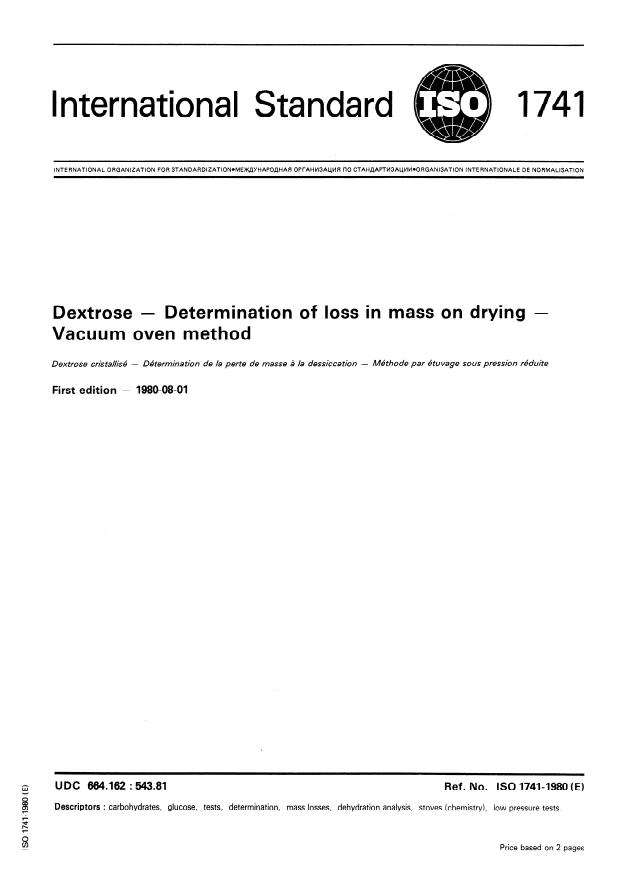

ISO 1741:1980 - Dextrose -- Determination of loss in mass on drying -- Vacuum oven method
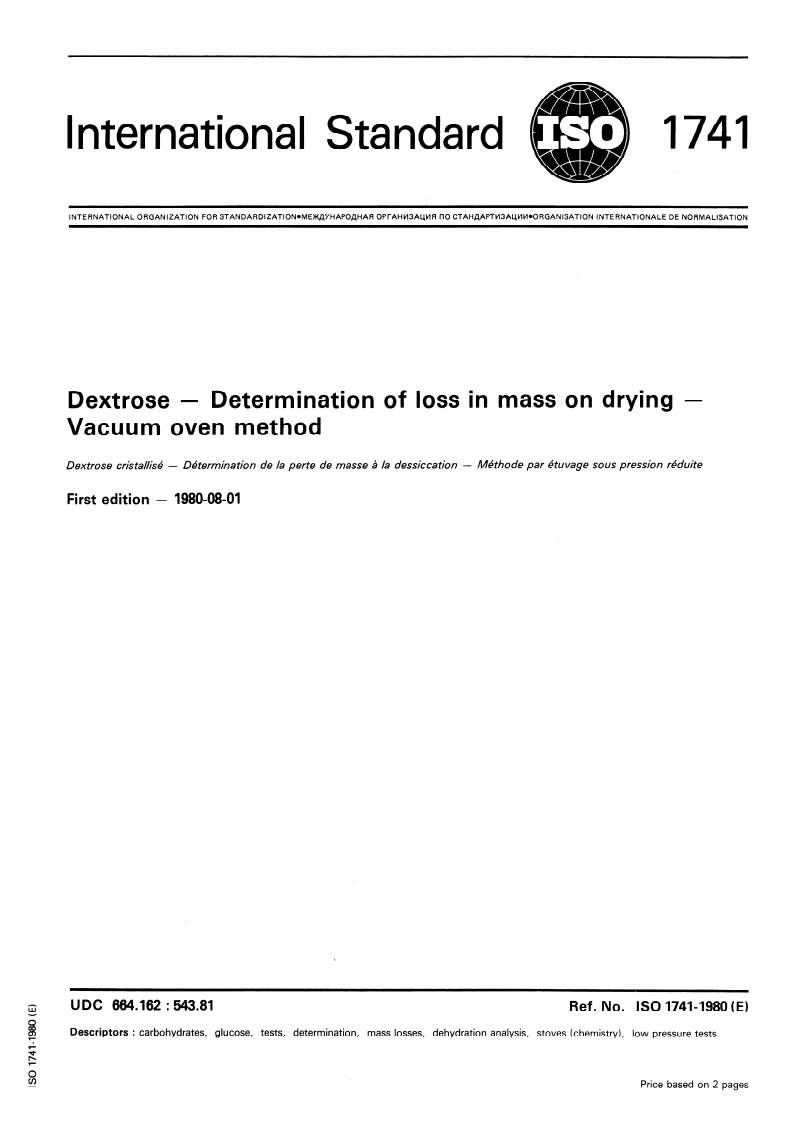
ISO 1741:1980 - Dextrose — Determination of loss in mass on drying — Vacuum oven method/1/1980

ISO 1741:1980 - Dextrose cristallisé -- Détermination de la perte de masse a la dessiccation -- Méthode par étuvage sous pression réduite

ISO 1741:1980 - Dextrose cristallisé -- Détermination de la perte de masse a la dessiccation -- Méthode par étuvage sous pression réduite
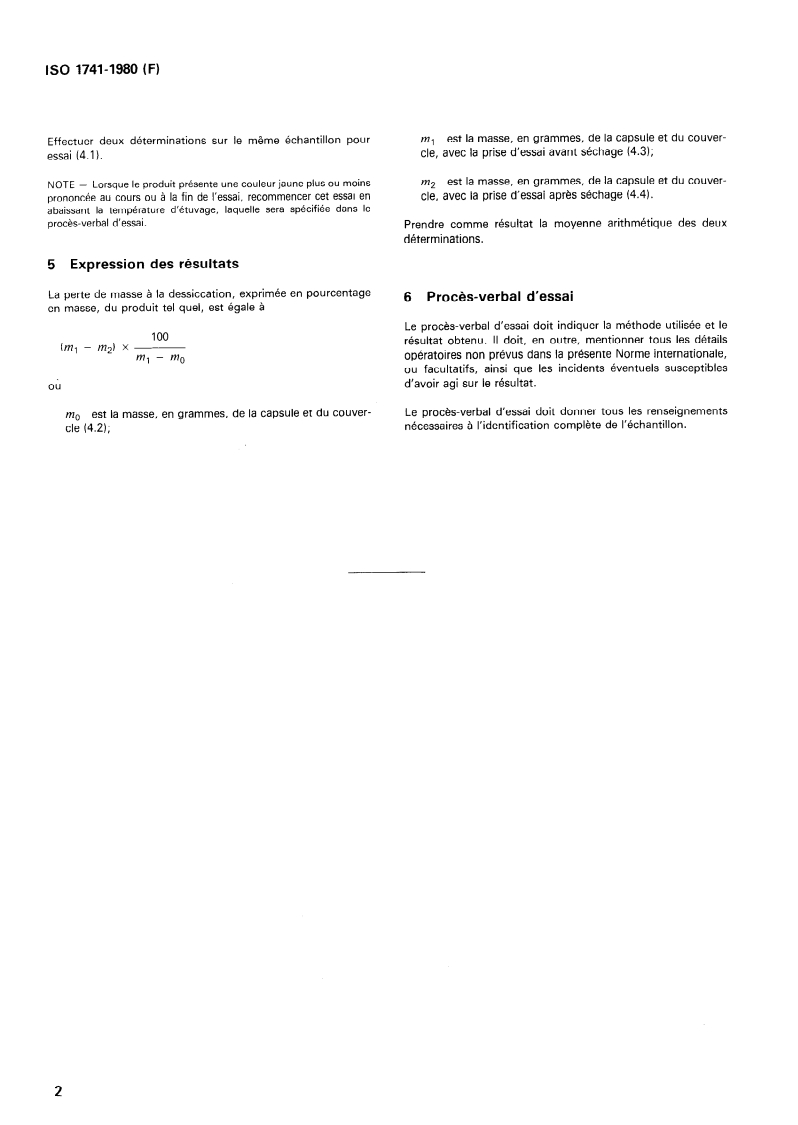
ISO 1741:1980 - Dextrose cristallisé — Détermination de la perte de masse à la dessiccation — Méthode par étuvage sous pression réduite/1/1980
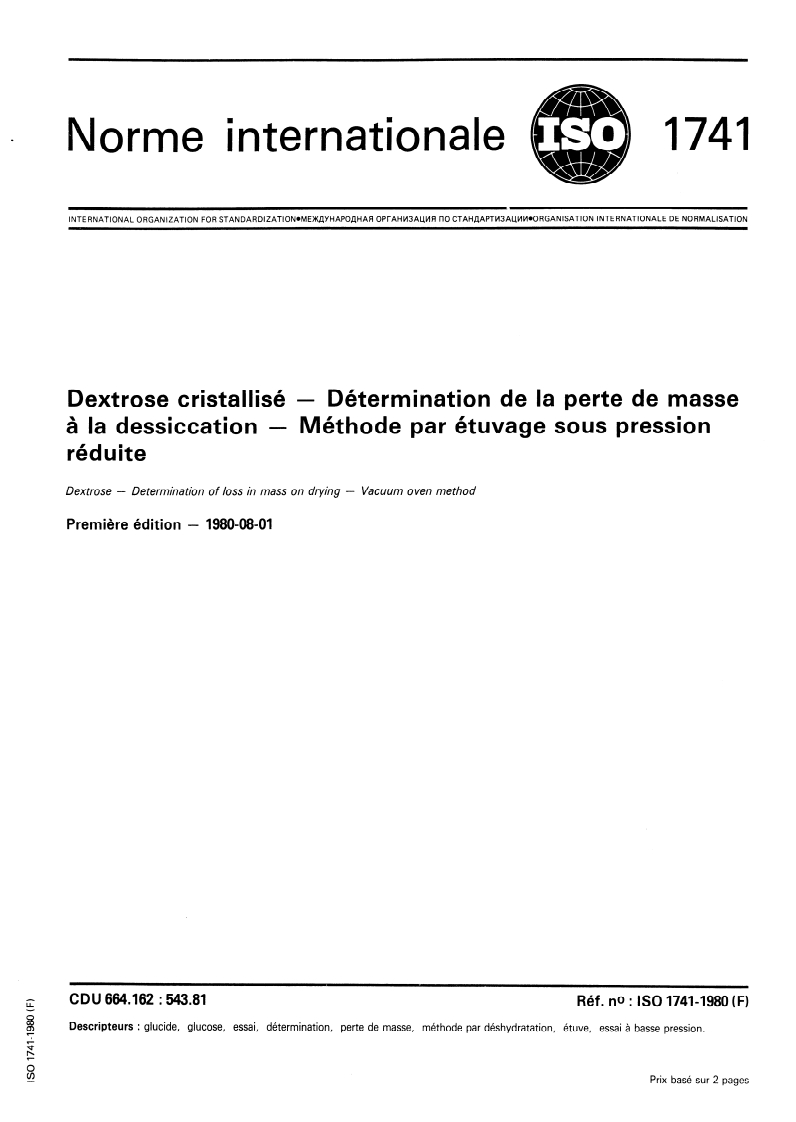
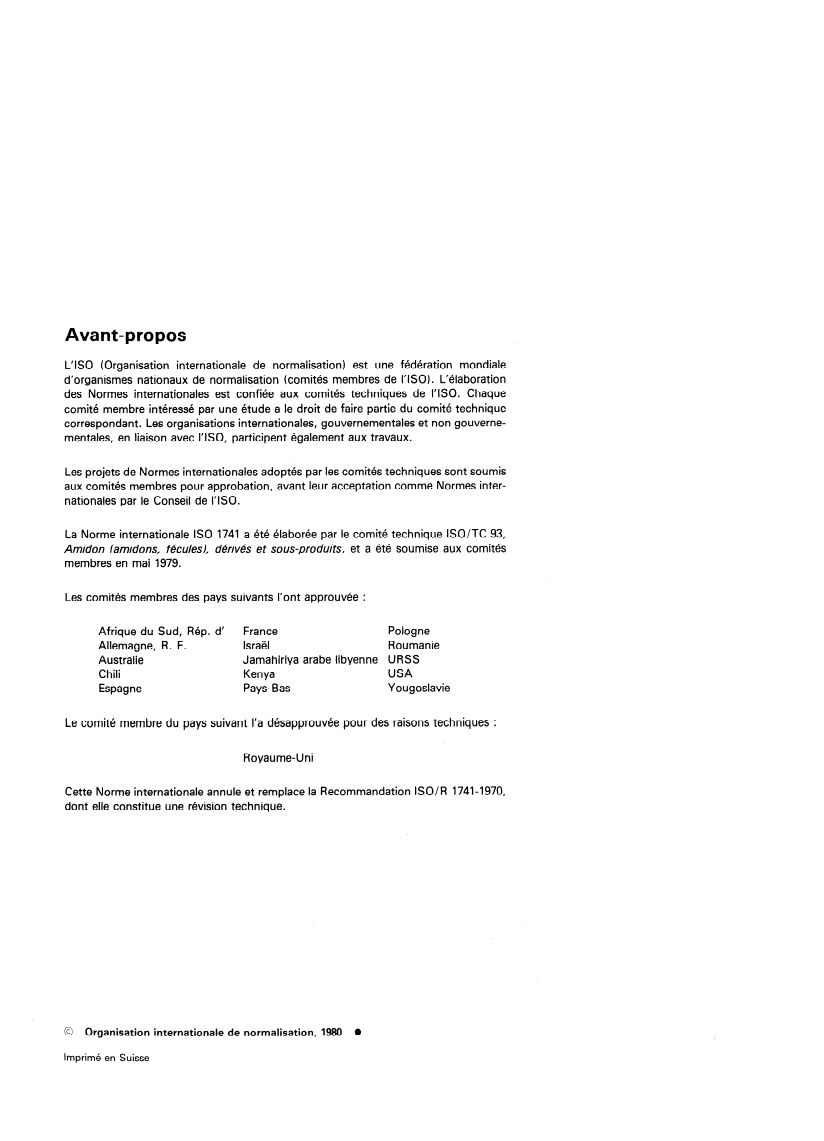
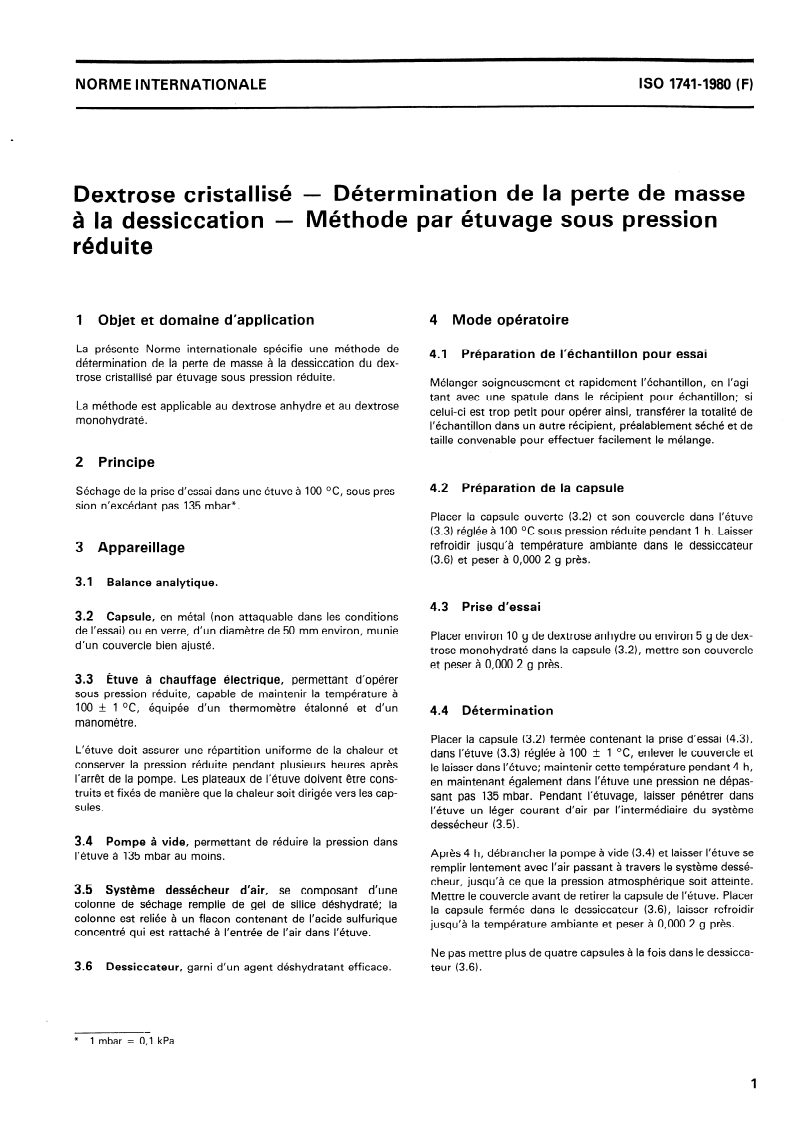
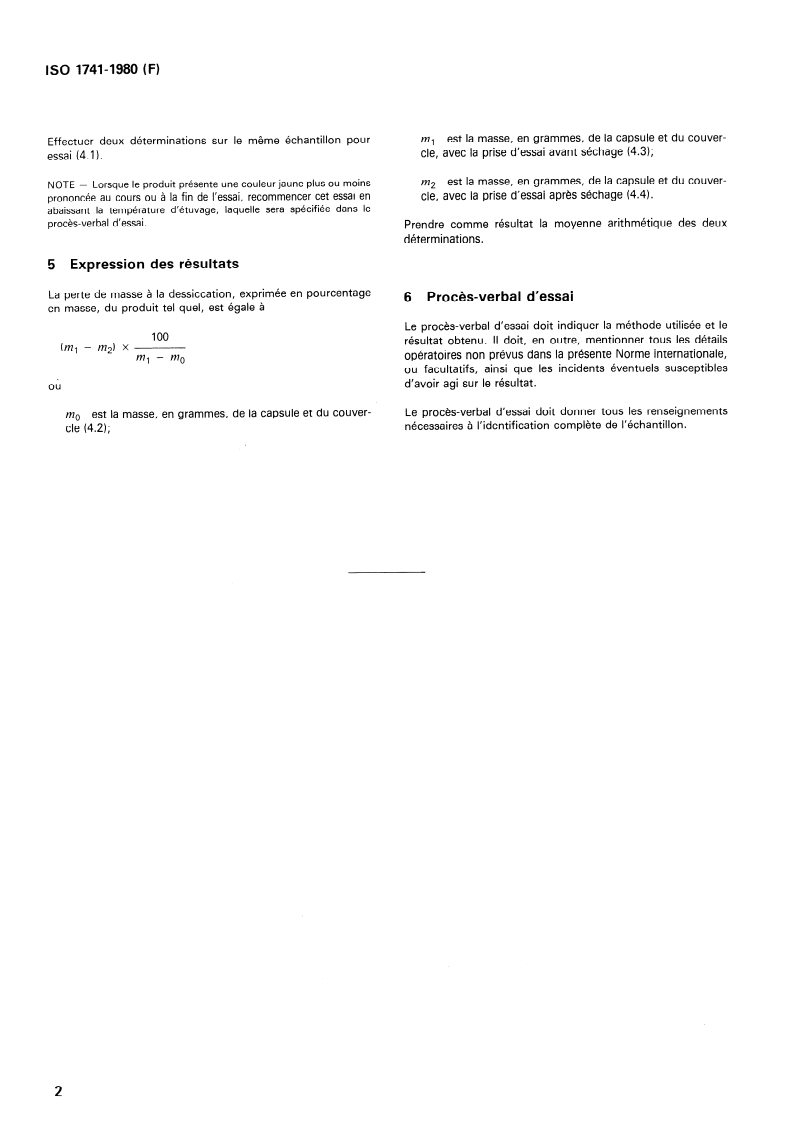
ISO 1741:1980 - Dextrose cristallisé — Détermination de la perte de masse à la dessiccation — Méthode par étuvage sous pression réduite/1/1980
Overview
ISO 1741:1980 specifies a vacuum oven method for determining the loss in mass on drying of dextrose products. This standard applies to both anhydrous dextrose and dextrose monohydrate. The method involves drying a precise test portion of the sample at 100 °C under a reduced pressure not exceeding 135 mbar, allowing for accurate measurement of moisture and volatile content.
This standardized procedure ensures reliable and reproducible results for quality control, product specification, and compliance testing in industries handling carbohydrate products like glucose and dextrose.
Key Topics
Scope and Applicability
- Suitable for both anhydrous and monohydrate forms of dextrose
- Focus on accurate determination of moisture content through mass loss
Principle of the Method
- Drying the sample in a vacuum oven at 100 °C
- Reduced pressure (<135 mbar) facilitates removal of moisture without thermal degradation
Required Apparatus
- Analytical balance with precision up to 0.0002 g
- Metal or glass dish with tight-fitting lid
- Electrically heated vacuum oven with temperature and pressure control
- Vacuum pump and drying train to maintain pressure and remove moisture
- Desiccator with efficient desiccant for cooling and weighing
Test Procedure
- Homogenize and prepare the test sample (approx. 5-10 g)
- Pre-dry and weigh the sample container and lid
- Dry the sample uncovered in the vacuum oven for 4 hours at specified conditions
- Cool in desiccator and determine loss in mass
Calculations and Reporting
- Results calculated as percentage loss by mass from initial weight
- Average of two determinations reported for accuracy
- Include detailed operating conditions, deviations, and sample identification in test report
Applications
- Quality Control in Food Industry
Ensuring moisture levels in dextrose products meet regulatory and safety standards. - Pharmaceutical Manufacturing
Validating moisture content to maintain stability and shelf life of glucose-based formulations. - Chemical and Carbohydrate Analysis
Determining accurate water content in dextrose powders for research and production efficiency. - Supply Chain and Raw Material Verification
Confirming supplier consistency by standard moisture measurement of carbohydrate ingredients.
This vacuum oven method is critical in minimizing errors introduced by air-drying techniques, enhancing precision in moisture or volatile content evaluation.
Related Standards
- ISO 712:2019 – Methods for moisture determination in general foods, for comparison with alternative moisture testing procedures.
- ISO 787-13:1981 – General methods of chemical analysis for carbohydrates, complementary to specific drying methods.
- ISO 2171:2007 – Determination of moisture content by drying for starch, relevant for carbohydrate product testing.
- AOAC Official Methods – Additional test methods for moisture and volatile content in food substances, useful for cross-validation.
These related standards help laboratories choose appropriate moisture determination techniques based on sample type and required accuracy.
Keywords: dextrose, loss in mass on drying, vacuum oven method, moisture determination, ISO 1741, carbohydrate analysis, glucose testing, anhydrous dextrose, dextrose monohydrate, vacuum drying, moisture content measurement, quality control, pharmaceutical testing, food safety standards.
Buy Documents
ISO 1741:1980 - Dextrose -- Determination of loss in mass on drying -- Vacuum oven method
ISO 1741:1980 - Dextrose — Determination of loss in mass on drying — Vacuum oven method/1/1980
ISO 1741:1980 - Dextrose cristallisé -- Détermination de la perte de masse a la dessiccation -- Méthode par étuvage sous pression réduite
ISO 1741:1980 - Dextrose cristallisé -- Détermination de la perte de masse a la dessiccation -- Méthode par étuvage sous pression réduite
ISO 1741:1980 - Dextrose cristallisé — Détermination de la perte de masse à la dessiccation — Méthode par étuvage sous pression réduite/1/1980
ISO 1741:1980 - Dextrose cristallisé — Détermination de la perte de masse à la dessiccation — Méthode par étuvage sous pression réduite/1/1980
Get Certified
Connect with accredited certification bodies for this standard

BSI Group
BSI (British Standards Institution) is the business standards company that helps organizations make excellence a habit.

Bureau Veritas
Bureau Veritas is a world leader in laboratory testing, inspection and certification services.

DNV
DNV is an independent assurance and risk management provider.
Sponsored listings
Frequently Asked Questions
ISO 1741:1980 is a standard published by the International Organization for Standardization (ISO). Its full title is "Dextrose — Determination of loss in mass on drying — Vacuum oven method". This standard covers: The method is applicable to the anhydrous product and to the monohydrat. It consists in drying of a test portion at 100 °C and a pressure not exceeding 135 mbar.
The method is applicable to the anhydrous product and to the monohydrat. It consists in drying of a test portion at 100 °C and a pressure not exceeding 135 mbar.
ISO 1741:1980 is classified under the following ICS (International Classification for Standards) categories: 67.180.20 - Starch and derived products. The ICS classification helps identify the subject area and facilitates finding related standards.
ISO 1741:1980 is available in PDF format for immediate download after purchase. The document can be added to your cart and obtained through the secure checkout process. Digital delivery ensures instant access to the complete standard document.
Standards Content (Sample)
International Standard
INTERNATIONAL ORGANIZATION FOR STANDARDIZATION.MEIK~YHAPO~HAR OPI-AHM3AL&lR l-IO CTAH~APTkl3ALWl~ORGANISATION INTERNATIONALE DE NORMALISATION
Dextrose - Determination of loss in mass on drying -
Vacuum oven method
Mthode par bvage sous Pression rbduite
Dextrose cris Tallist - Dbtermina tion de Ia perte de masse A Ia dessicca tion -
First edition - 1980-08-01
UDC 664.162 : 543.81
Ref. No. ISO 1741-1980 (E)
w
-
Descriptors : carbohydrates, glucose, tests, determination, mass losses, dehydration analysis, stoves (chemistry), low pressure tests.
I
a
Price based on 2 pages
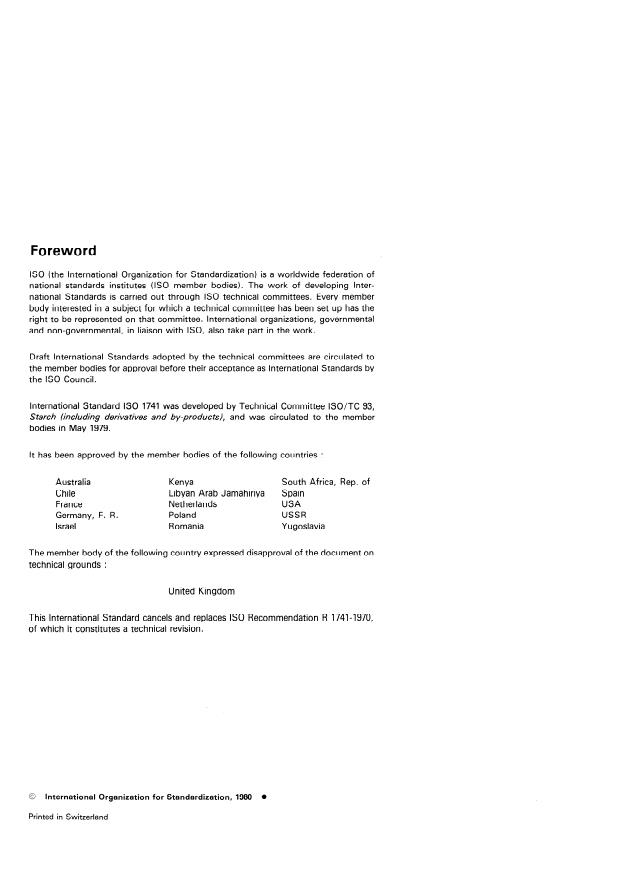
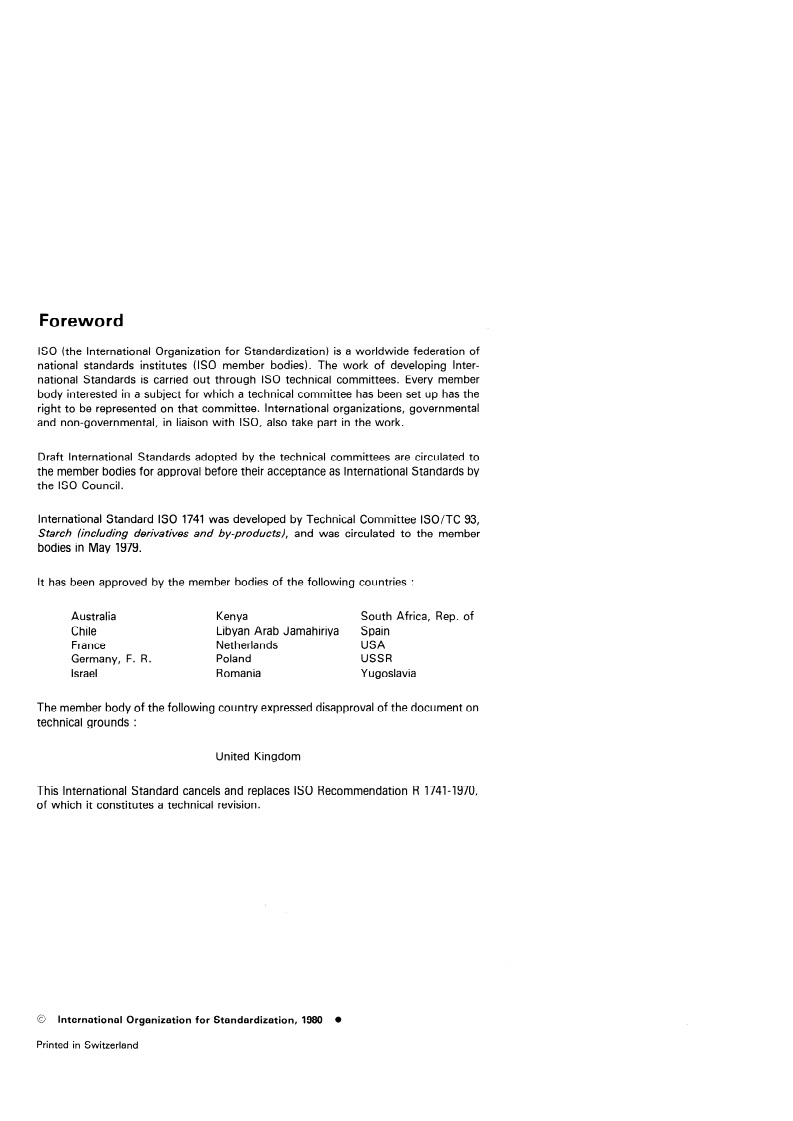
Foreword
ISO (the International Organization for Standardization) is a worldwide federation of
national Standards institutes (ISO member bedies). The work of developing Inter-
national Standards is carried out through ISO technical committees. Every member
body interested in a subject for which a technical committee has been set up has the
right to be represented on that committee. International organizations, governmental
and non-governmental, in liaison with ISO, also take part in the work.
Draft International Standards adopted by the technical committees are circulated to
the member bodies for approval before their acceptance as International Standards by
the ISO Council.
International Standard ISO 1741 was developed by Technical Committee ISO/TC 93,
Star& (including derivatives and by-productsl, and was circulated to the member
bodies in May 1979.
lt has been approved by the member bodies of the following countries :
Australia Kenya South Africa, Rep. of
Chile Libyan Arab Jamahiriya Spain
France Netherlands USA
Germany, F. R. Poland USSR
Israel Romania Y ugoslavia
The mem ber body following country expressed disapproval of the document on
of the
technical grounds
United Kingdom
Th is International Stan dard cancels and replaces ISO Recommendation R 1741-1970,
of which it constitutes a technical revisi on.
0 International Organkation for Standardkation, 1980
Printed in Switzerland
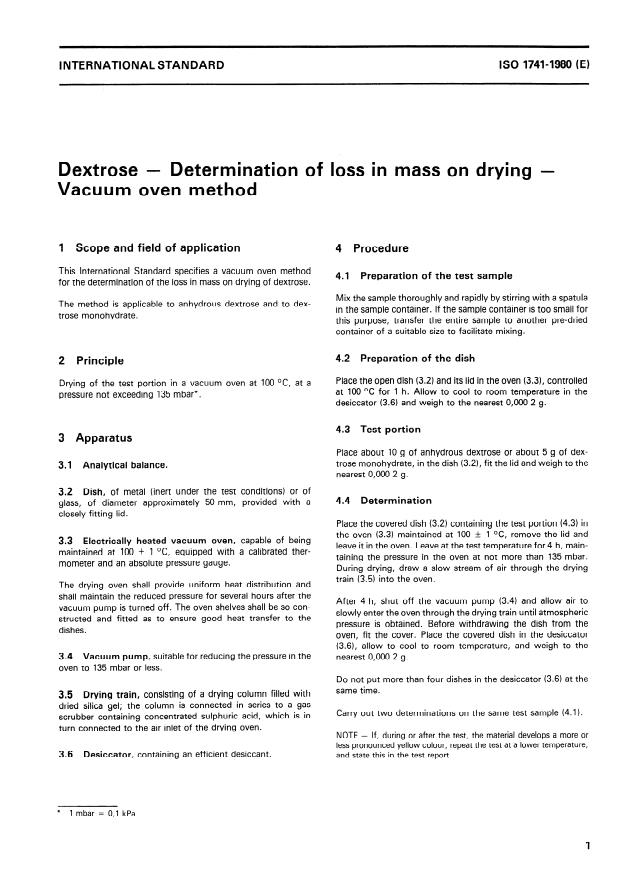
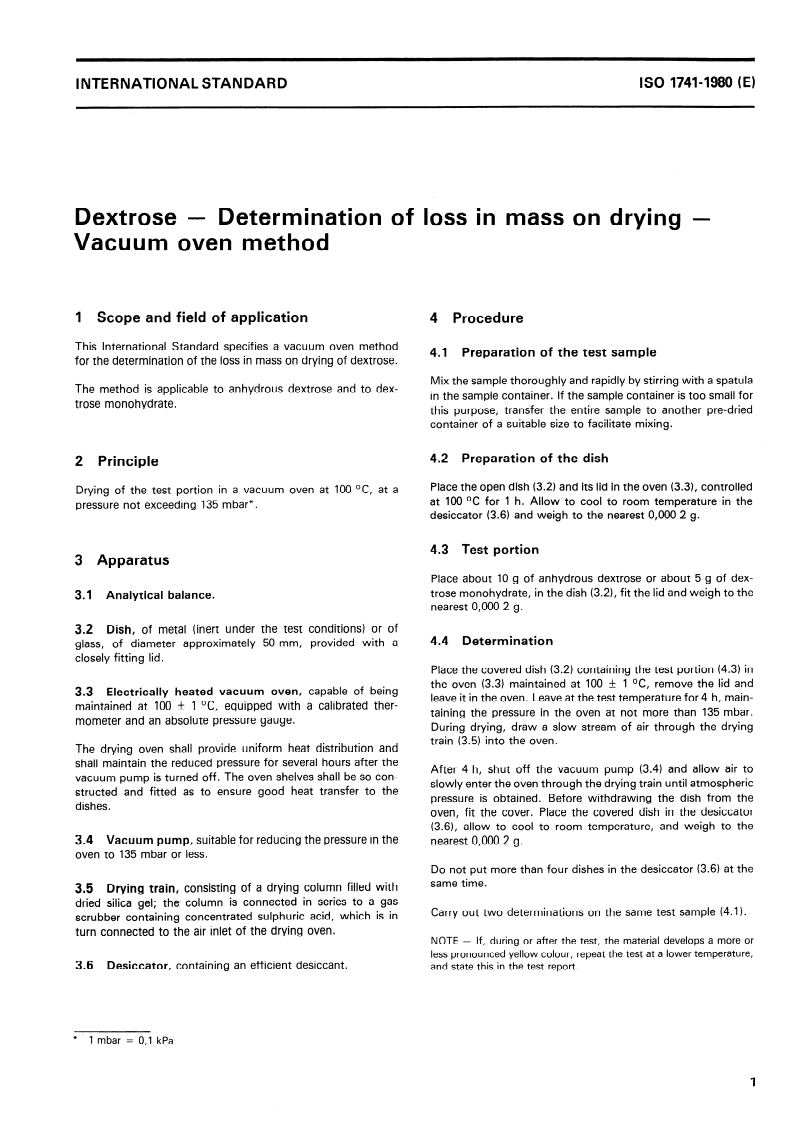
INTERNATIONAL STANDARD ISO 1741-1980 (E)
Dextrose - Determination of loss in mass on drying -
Vacuum oven method
1 Scope and field of application
4 Procedure
This International Standard specifies a vacuum oven method
4.1 Preparation of the test Sample
for the determination of the loss in mass on drying of dextrose.
Mix the Sample thoroughly and rapidly by stirring with a spatula
The method is applicable to anhydrous dextrose and to dex-
in the Sample Container. If the Sample Container is too small for
trose monohydrate.
this purpose, transfer the entire Sample to another pre-dried
Container of a suitable size to facilitate mixing.
4.2 Preparation of the dish
2 Principle
Place the open dish (3.2) and its lid in the oven (3.31, controlled
Drying of the test Portion in a vacuum oven at 100 OC, at a
at 100 OC for 1 h. Allow to cool to room temperature in the
pressure not exceeding 135 mbar”.
desiccator (3.6) and weigh to the nearest 0,000 2 g.
4.3
...
International Standard
INTERNATIONAL ORGANIZATION FOR STANDARDIZATION.MEIK~YHAPO~HAR OPI-AHM3AL&lR l-IO CTAH~APTkl3ALWl~ORGANISATION INTERNATIONALE DE NORMALISATION
Dextrose - Determination of loss in mass on drying -
Vacuum oven method
Mthode par bvage sous Pression rbduite
Dextrose cris Tallist - Dbtermina tion de Ia perte de masse A Ia dessicca tion -
First edition - 1980-08-01
UDC 664.162 : 543.81
Ref. No. ISO 1741-1980 (E)
w
-
Descriptors : carbohydrates, glucose, tests, determination, mass losses, dehydration analysis, stoves (chemistry), low pressure tests.
I
a
Price based on 2 pages
Foreword
ISO (the International Organization for Standardization) is a worldwide federation of
national Standards institutes (ISO member bedies). The work of developing Inter-
national Standards is carried out through ISO technical committees. Every member
body interested in a subject for which a technical committee has been set up has the
right to be represented on that committee. International organizations, governmental
and non-governmental, in liaison with ISO, also take part in the work.
Draft International Standards adopted by the technical committees are circulated to
the member bodies for approval before their acceptance as International Standards by
the ISO Council.
International Standard ISO 1741 was developed by Technical Committee ISO/TC 93,
Star& (including derivatives and by-productsl, and was circulated to the member
bodies in May 1979.
lt has been approved by the member bodies of the following countries :
Australia Kenya South Africa, Rep. of
Chile Libyan Arab Jamahiriya Spain
France Netherlands USA
Germany, F. R. Poland USSR
Israel Romania Y ugoslavia
The mem ber body following country expressed disapproval of the document on
of the
technical grounds
United Kingdom
Th is International Stan dard cancels and replaces ISO Recommendation R 1741-1970,
of which it constitutes a technical revisi on.
0 International Organkation for Standardkation, 1980
Printed in Switzerland
INTERNATIONAL STANDARD ISO 1741-1980 (E)
Dextrose - Determination of loss in mass on drying -
Vacuum oven method
1 Scope and field of application
4 Procedure
This International Standard specifies a vacuum oven method
4.1 Preparation of the test Sample
for the determination of the loss in mass on drying of dextrose.
Mix the Sample thoroughly and rapidly by stirring with a spatula
The method is applicable to anhydrous dextrose and to dex-
in the Sample Container. If the Sample Container is too small for
trose monohydrate.
this purpose, transfer the entire Sample to another pre-dried
Container of a suitable size to facilitate mixing.
4.2 Preparation of the dish
2 Principle
Place the open dish (3.2) and its lid in the oven (3.31, controlled
Drying of the test Portion in a vacuum oven at 100 OC, at a
at 100 OC for 1 h. Allow to cool to room temperature in the
pressure not exceeding 135 mbar”.
desiccator (3.6) and weigh to the nearest 0,000 2 g.
4.3
...
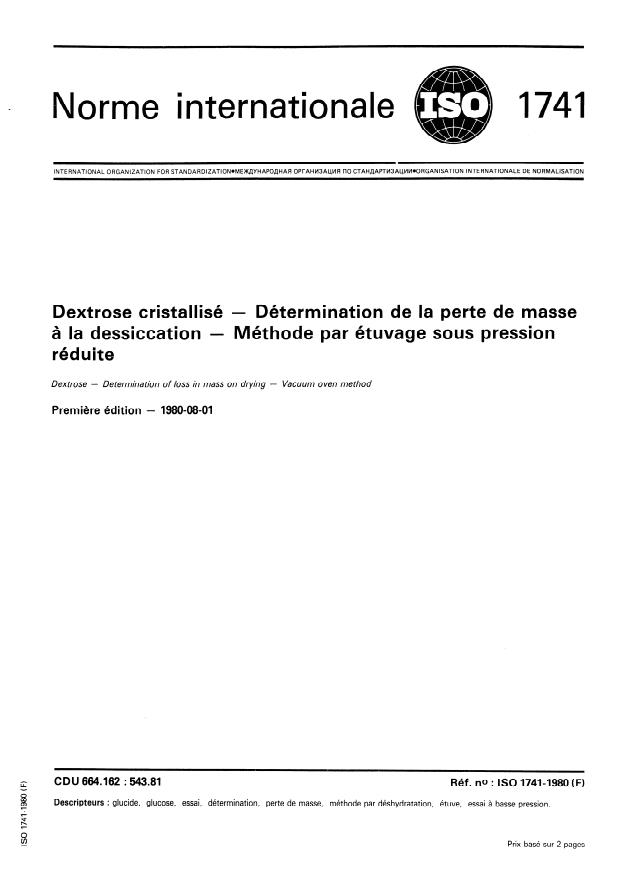
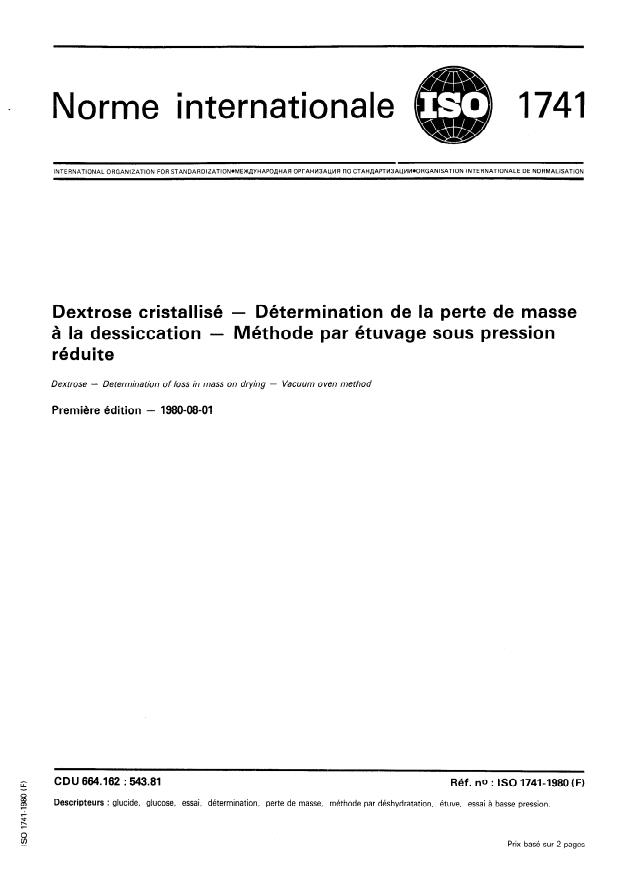
Norme internationale
INTERNATIONAL ORGANIZATION FOR STANDARDIZATION.MEXJlYHAPOfiHAR OPrAHl43A~MR fl0 CTAH~APTM3ALl,MM.ORGANISATlON INTERNATIONALE DE NORMALISATION
- Détermination de la perte de masse
Dextrose cristallisé
à la dessiccation - Méthode par étuvage sous pression
réduite
Dextrose - Determination of Ioss in mass on drying - Vacuum oven method
Première édition - 1980-08-01
CDU 664.162 : 543.81
Réf. no : ISO 1741-1980 (F)
Descripteurs : glucide, glucose, essai, détermination, perte de masse, méthode par déshydratation, étuve, essai à basse pression.
Prix basé sur 2 pages
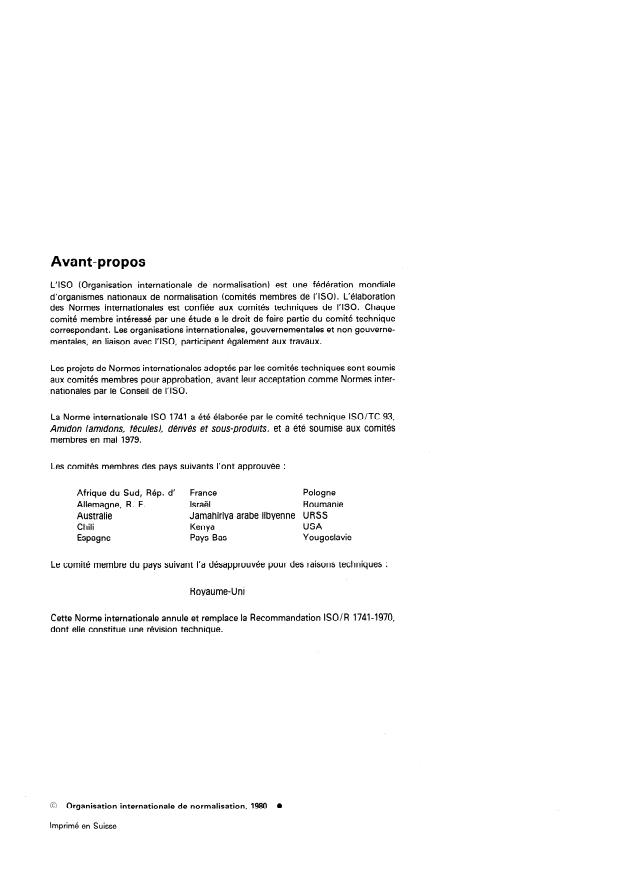
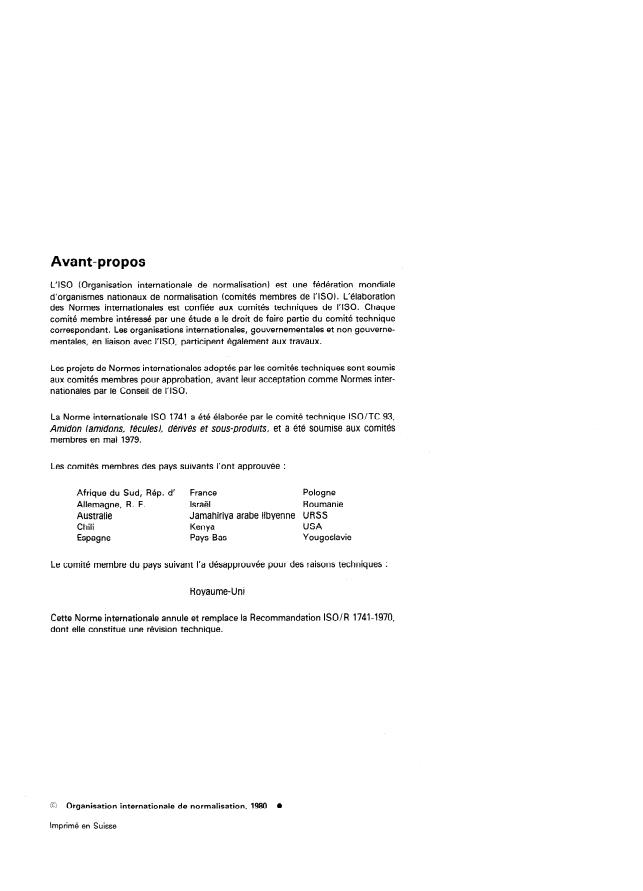
Avant-propos
LIS0 (Organisation internationale de normalisation) est une fédération mondiale
d’organismes nationaux de normalisation (comités membres de I’ISO). L’élaboration
des Normes internationales est confiée aux comités techniques de I’ISO. Chaque
comité membre intéressé par une étude a le droit de faire partie du comité technique
correspondant. Les organisations internationales, gouvernementales et non gouverne-
mentales, en liaison avec I’ISO, participent également aux travaux.
Les projets de Normes internationales adoptés par les comités techniques sont soumis
aux comités membres pour approbation, avant leur acceptation comme Normes inter-
nationales par le Conseil de I’ISO.
La Norme internationale ISO 1741 a été élaborée par le comité technique ISO/TC 93,
Amidon (amidons, fécules), dérivés et sous-produits, et a été soumise aux comités
membres en mai 1979.
Les comités membres des pays suivants l’ont approuvée :
Afrique du Sud, Rép. d’ France Pologne
Allemagne, R. F. Roumanie
Israël
Australie Jamahiriya arabe libyenne URSS
Chili Kenya USA
Espagne Pays- Bas Yougoslavie
Le comité membre du pays suivant l’a désapprouvée pour des raisons techniques :
Royaume-Uni
Cette Norme internationale annule et remplace la Recommandation ISO/R 1741-1970,
dont elle constitue une révision technique.
@ Organisation internationale de normalisation, 1980 0
Imprimé en Suisse
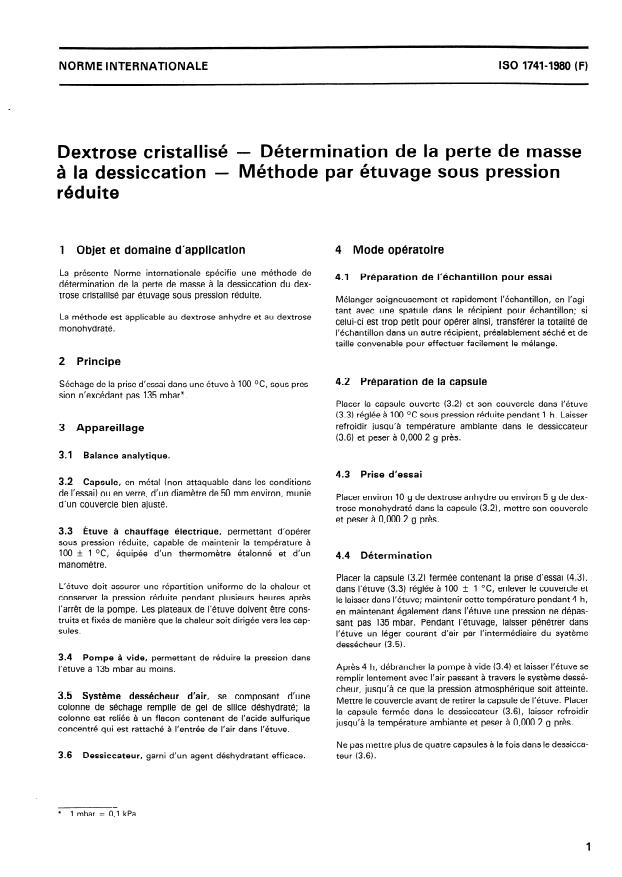
ISO 1741-1980 (F)
NORME INTERNATIONALE
Détermination de la perte de masse
Dextrose cristallisé -
- Méthode par étuvage sous pression
à la dessiccation
réduite
4 Mode opératoire
1 Objet et domaine d’application
La présente Norme internationale spécifie une méthode de
4.1 Préparation de l’échantillon pour essai
détermination de la perte de masse à la dessiccation du dex-
trose cristallisé par étuvage sous pression réduite.
Mélanger soigneusement et rapidement l’échantillon, en I’agi-
tant avec une spatule dans le récipient pour échantillon; si
La méthode est applicable au dextrose anhydre et au dextrose
celui-ci est trop petit pour opérer ainsi, transférer la totalité de
monohydraté.
l’échantillon dans un autre récipient, préalablement séché et de
taille convenable pour effectuer facilement le mélange.
2 Principe
4.2 Préparation de la capsule
Séchage de la prise d’essai dans une étuve à 100 OC, sous pres-
sion n’excédant pas 135 mbar”.
Placer la capsule ouverte (3.2) et son couvercle dans l’étuve
(3.3) réglée à 100 OC sous pression réduite pendant 1 h. Laisser
refroidir jusqu’à température ambiante dans le dessiccateur
3 Appareillage
(3.6) et peser à 0,000 2 g près.
3.1 Balance analytique.
4.3 Prise d’essai
3.2 Capsule, en métal (non attaquable d
...
Norme internationale
INTERNATIONAL ORGANIZATION FOR STANDARDIZATION.MEXJlYHAPOfiHAR OPrAHl43A~MR fl0 CTAH~APTM3ALl,MM.ORGANISATlON INTERNATIONALE DE NORMALISATION
- Détermination de la perte de masse
Dextrose cristallisé
à la dessiccation - Méthode par étuvage sous pression
réduite
Dextrose - Determination of Ioss in mass on drying - Vacuum oven method
Première édition - 1980-08-01
CDU 664.162 : 543.81
Réf. no : ISO 1741-1980 (F)
Descripteurs : glucide, glucose, essai, détermination, perte de masse, méthode par déshydratation, étuve, essai à basse pression.
Prix basé sur 2 pages
Avant-propos
LIS0 (Organisation internationale de normalisation) est une fédération mondiale
d’organismes nationaux de normalisation (comités membres de I’ISO). L’élaboration
des Normes internationales est confiée aux comités techniques de I’ISO. Chaque
comité membre intéressé par une étude a le droit de faire partie du comité technique
correspondant. Les organisations internationales, gouvernementales et non gouverne-
mentales, en liaison avec I’ISO, participent également aux travaux.
Les projets de Normes internationales adoptés par les comités techniques sont soumis
aux comités membres pour approbation, avant leur acceptation comme Normes inter-
nationales par le Conseil de I’ISO.
La Norme internationale ISO 1741 a été élaborée par le comité technique ISO/TC 93,
Amidon (amidons, fécules), dérivés et sous-produits, et a été soumise aux comités
membres en mai 1979.
Les comités membres des pays suivants l’ont approuvée :
Afrique du Sud, Rép. d’ France Pologne
Allemagne, R. F. Roumanie
Israël
Australie Jamahiriya arabe libyenne URSS
Chili Kenya USA
Espagne Pays- Bas Yougoslavie
Le comité membre du pays suivant l’a désapprouvée pour des raisons techniques :
Royaume-Uni
Cette Norme internationale annule et remplace la Recommandation ISO/R 1741-1970,
dont elle constitue une révision technique.
@ Organisation internationale de normalisation, 1980 0
Imprimé en Suisse
ISO 1741-1980 (F)
NORME INTERNATIONALE
Détermination de la perte de masse
Dextrose cristallisé -
- Méthode par étuvage sous pression
à la dessiccation
réduite
4 Mode opératoire
1 Objet et domaine d’application
La présente Norme internationale spécifie une méthode de
4.1 Préparation de l’échantillon pour essai
détermination de la perte de masse à la dessiccation du dex-
trose cristallisé par étuvage sous pression réduite.
Mélanger soigneusement et rapidement l’échantillon, en I’agi-
tant avec une spatule dans le récipient pour échantillon; si
La méthode est applicable au dextrose anhydre et au dextrose
celui-ci est trop petit pour opérer ainsi, transférer la totalité de
monohydraté.
l’échantillon dans un autre récipient, préalablement séché et de
taille convenable pour effectuer facilement le mélange.
2 Principe
4.2 Préparation de la capsule
Séchage de la prise d’essai dans une étuve à 100 OC, sous pres-
sion n’excédant pas 135 mbar”.
Placer la capsule ouverte (3.2) et son couvercle dans l’étuve
(3.3) réglée à 100 OC sous pression réduite pendant 1 h. Laisser
refroidir jusqu’à température ambiante dans le dessiccateur
3 Appareillage
(3.6) et peser à 0,000 2 g près.
3.1 Balance analytique.
4.3 Prise d’essai
3.2 Capsule, en métal (non attaquable d
...
Norme internationale
INTERNATIONAL ORGANIZATION FOR STANDARDIZATION.MEXJlYHAPOfiHAR OPrAHl43A~MR fl0 CTAH~APTM3ALl,MM.ORGANISATlON INTERNATIONALE DE NORMALISATION
- Détermination de la perte de masse
Dextrose cristallisé
à la dessiccation - Méthode par étuvage sous pression
réduite
Dextrose - Determination of Ioss in mass on drying - Vacuum oven method
Première édition - 1980-08-01
CDU 664.162 : 543.81
Réf. no : ISO 1741-1980 (F)
Descripteurs : glucide, glucose, essai, détermination, perte de masse, méthode par déshydratation, étuve, essai à basse pression.
Prix basé sur 2 pages
Avant-propos
LIS0 (Organisation internationale de normalisation) est une fédération mondiale
d’organismes nationaux de normalisation (comités membres de I’ISO). L’élaboration
des Normes internationales est confiée aux comités techniques de I’ISO. Chaque
comité membre intéressé par une étude a le droit de faire partie du comité technique
correspondant. Les organisations internationales, gouvernementales et non gouverne-
mentales, en liaison avec I’ISO, participent également aux travaux.
Les projets de Normes internationales adoptés par les comités techniques sont soumis
aux comités membres pour approbation, avant leur acceptation comme Normes inter-
nationales par le Conseil de I’ISO.
La Norme internationale ISO 1741 a été élaborée par le comité technique ISO/TC 93,
Amidon (amidons, fécules), dérivés et sous-produits, et a été soumise aux comités
membres en mai 1979.
Les comités membres des pays suivants l’ont approuvée :
Afrique du Sud, Rép. d’ France Pologne
Allemagne, R. F. Roumanie
Israël
Australie Jamahiriya arabe libyenne URSS
Chili Kenya USA
Espagne Pays- Bas Yougoslavie
Le comité membre du pays suivant l’a désapprouvée pour des raisons techniques :
Royaume-Uni
Cette Norme internationale annule et remplace la Recommandation ISO/R 1741-1970,
dont elle constitue une révision technique.
@ Organisation internationale de normalisation, 1980 0
Imprimé en Suisse
ISO 1741-1980 (F)
NORME INTERNATIONALE
Détermination de la perte de masse
Dextrose cristallisé -
- Méthode par étuvage sous pression
à la dessiccation
réduite
4 Mode opératoire
1 Objet et domaine d’application
La présente Norme internationale spécifie une méthode de
4.1 Préparation de l’échantillon pour essai
détermination de la perte de masse à la dessiccation du dex-
trose cristallisé par étuvage sous pression réduite.
Mélanger soigneusement et rapidement l’échantillon, en I’agi-
tant avec une spatule dans le récipient pour échantillon; si
La méthode est applicable au dextrose anhydre et au dextrose
celui-ci est trop petit pour opérer ainsi, transférer la totalité de
monohydraté.
l’échantillon dans un autre récipient, préalablement séché et de
taille convenable pour effectuer facilement le mélange.
2 Principe
4.2 Préparation de la capsule
Séchage de la prise d’essai dans une étuve à 100 OC, sous pres-
sion n’excédant pas 135 mbar”.
Placer la capsule ouverte (3.2) et son couvercle dans l’étuve
(3.3) réglée à 100 OC sous pression réduite pendant 1 h. Laisser
refroidir jusqu’à température ambiante dans le dessiccateur
3 Appareillage
(3.6) et peser à 0,000 2 g près.
3.1 Balance analytique.
4.3 Prise d’essai
3.2 Capsule, en métal (non attaquable d
...
Norme internationale
INTERNATIONAL ORGANIZATION FOR STANDARDIZATION.MEXJlYHAPOfiHAR OPrAHl43A~MR fl0 CTAH~APTM3ALl,MM.ORGANISATlON INTERNATIONALE DE NORMALISATION
- Détermination de la perte de masse
Dextrose cristallisé
à la dessiccation - Méthode par étuvage sous pression
réduite
Dextrose - Determination of Ioss in mass on drying - Vacuum oven method
Première édition - 1980-08-01
CDU 664.162 : 543.81
Réf. no : ISO 1741-1980 (F)
Descripteurs : glucide, glucose, essai, détermination, perte de masse, méthode par déshydratation, étuve, essai à basse pression.
Prix basé sur 2 pages
Avant-propos
LIS0 (Organisation internationale de normalisation) est une fédération mondiale
d’organismes nationaux de normalisation (comités membres de I’ISO). L’élaboration
des Normes internationales est confiée aux comités techniques de I’ISO. Chaque
comité membre intéressé par une étude a le droit de faire partie du comité technique
correspondant. Les organisations internationales, gouvernementales et non gouverne-
mentales, en liaison avec I’ISO, participent également aux travaux.
Les projets de Normes internationales adoptés par les comités techniques sont soumis
aux comités membres pour approbation, avant leur acceptation comme Normes inter-
nationales par le Conseil de I’ISO.
La Norme internationale ISO 1741 a été élaborée par le comité technique ISO/TC 93,
Amidon (amidons, fécules), dérivés et sous-produits, et a été soumise aux comités
membres en mai 1979.
Les comités membres des pays suivants l’ont approuvée :
Afrique du Sud, Rép. d’ France Pologne
Allemagne, R. F. Roumanie
Israël
Australie Jamahiriya arabe libyenne URSS
Chili Kenya USA
Espagne Pays- Bas Yougoslavie
Le comité membre du pays suivant l’a désapprouvée pour des raisons techniques :
Royaume-Uni
Cette Norme internationale annule et remplace la Recommandation ISO/R 1741-1970,
dont elle constitue une révision technique.
@ Organisation internationale de normalisation, 1980 0
Imprimé en Suisse
ISO 1741-1980 (F)
NORME INTERNATIONALE
Détermination de la perte de masse
Dextrose cristallisé -
- Méthode par étuvage sous pression
à la dessiccation
réduite
4 Mode opératoire
1 Objet et domaine d’application
La présente Norme internationale spécifie une méthode de
4.1 Préparation de l’échantillon pour essai
détermination de la perte de masse à la dessiccation du dex-
trose cristallisé par étuvage sous pression réduite.
Mélanger soigneusement et rapidement l’échantillon, en I’agi-
tant avec une spatule dans le récipient pour échantillon; si
La méthode est applicable au dextrose anhydre et au dextrose
celui-ci est trop petit pour opérer ainsi, transférer la totalité de
monohydraté.
l’échantillon dans un autre récipient, préalablement séché et de
taille convenable pour effectuer facilement le mélange.
2 Principe
4.2 Préparation de la capsule
Séchage de la prise d’essai dans une étuve à 100 OC, sous pres-
sion n’excédant pas 135 mbar”.
Placer la capsule ouverte (3.2) et son couvercle dans l’étuve
(3.3) réglée à 100 OC sous pression réduite pendant 1 h. Laisser
refroidir jusqu’à température ambiante dans le dessiccateur
3 Appareillage
(3.6) et peser à 0,000 2 g près.
3.1 Balance analytique.
4.3 Prise d’essai
3.2 Capsule, en métal (non attaquable d
...