


ISO 4915:1981
(Main)Textiles — Stitch types — Classification and terminology
Textiles — Stitch types — Classification and terminology
Textiles — Types de points — Classification et terminologie
General Information
- Status
- Withdrawn
- Publication Date
- 30-Nov-1981
- Withdrawal Date
- 30-Nov-1981
- Technical Committee
- ISO/TC 38 - Textiles
- Drafting Committee
- ISO/TC 38 - Textiles
- Current Stage
- 9599 - Withdrawal of International Standard
- Start Date
- 01-Aug-1991
- Completion Date
- 12-Feb-2026
Relations
- Effective Date
- 15-Apr-2008
Get Certified
Connect with accredited certification bodies for this standard

Control Union Certifications
Global certification for agriculture and sustainability.

Bureau Veritas Bangladesh
Bureau Veritas certification services in Bangladesh.

ECOCERT France
Leader in organic and sustainability certification worldwide.
Sponsored listings
Frequently Asked Questions
ISO 4915:1981 is a standard published by the International Organization for Standardization (ISO). Its full title is "Textiles — Stitch types — Classification and terminology". This standard covers: Textiles — Stitch types — Classification and terminology
Textiles — Stitch types — Classification and terminology
ISO 4915:1981 is classified under the following ICS (International Classification for Standards) categories: 59.080.01 - Textiles in general. The ICS classification helps identify the subject area and facilitates finding related standards.
ISO 4915:1981 has the following relationships with other standards: It is inter standard links to ISO 4915:1991. Understanding these relationships helps ensure you are using the most current and applicable version of the standard.
ISO 4915:1981 is available in PDF format for immediate download after purchase. The document can be added to your cart and obtained through the secure checkout process. Digital delivery ensures instant access to the complete standard document.
Standards Content (Sample)
International Standard
Norme internationale
INTERNATIONAL ORGANIZATION FOR STANDARDIZATION*MEWLlY”POAHAR OPTAHM3AUMR no CTAH/lAf’TM3AUMMOORGANlSATlON INTERNATIONALE DE NORMALISATION
.() Textiles - Stitch types - Classification and terminology
First edition - 1981-12-01
Textiles - Types de points - Classification et terminologie
Première édition - 1981-12-01
,
$ - UDC/CDU 677.641.01 Ref. No./Réf. no : ISO4915-1981 (E/F)
@
Descriptors : textiles, classifications, designations, definitions./Descripteurs : textile, classification, désignation, définition.
;k
O
E
Price based on 47 pages/Prix basé sur 47 pages
Foreword
IS0 (the International Organization for Standardization) is a worldwide federation of
national standards institutes (IS0 member bodies), The work of developing Inter-
national Standards is carried out through IS0 technical committees. Every member
body interested in a subject for which a technical committee has been set up has the
right to be represented on that committee. International organizations, governmental
and non-governmental, in liaison with ISO, also take part in the work.
Draft International Standards adopted by the technical committees are circulated to
the member bodies for approval before their acceptance as International Standards by
the IS0 Council.
International Standard IS0 4915 was developed by Technical Committee ISO/TC 38,
Textiles, and was circulated to the member bodies in October 1979.
It has been approved by the member bodies of the following countries :
Australia France Poland
Ghana Portugal
Belgium
Brazil Hungary Romania
Canada Israel
South Africa, Rep. of
China Italy Spain
Cyprus Japan Sweden
Czechoslovakia
Korea, Rep. of Switzerland
Denmark Netherlands
Turkey
Egypt, Arab Rep. of New Zealand United Kingdom
Finland Norway USSR
The member bodies of the following countries expressed disapproval of the document
on technical grounds :
Germany, F. R.
USA
O International Organization for Standardization, 1981 0
Printed in Switzerland
ii
Avant-propos
VISO (Organisation internationale de normalisation) est une fédération mondiale
d’organismes nationaux de normalisation (comités membres de I’ISO). L‘élaboration
des Normes internationales est confiée aux comités techniques de I’ISO. Chaque
comité membre intéressé par une étude a le droit de faire partie du comité technique
O
correspondant. Les organisations internationales, gouvernementales et non gouverne-
mentales, en liaison avec I’ISO, participent également aux travaux.
Les projets de Normes internationales adoptés par les comités techniques sont soumis
aux comités membres pour approbation, avant leur acceptation comme Normes inter-
nationales par le Conseil de I‘ISO.
La Norme internationale is0 4915 a été élaborée par le comité technique ISO/TC 38,
Textiles, et a été soumise aux comités membres en octobre 1979.
Les comités membres des pays suivants l‘ont approuvée :
Afrique du Sud, Rép. d’ Espagne Pays- Bas
Australie
Finlande Pologne
Belgique
France Portugal
Brésil Ghana Roumanie
Canada
Hongrie Royaume-Uni
Chine
Israël Suède
Chypre Italie Suisse
Corée, Rép. de
Japon Tchécoslovaquie
e
Danemark Turquie
Norvège
Égypte, Rép. arabe d
Nouvelle-Zélande URSS
Les comités membres des pays suivants l’ont désapprouvée pour des raisons techni-
ques :
Allemagne, R. F.
USA
O Organisation internationale de normalisation, 1981 0
imprimé en Suisse
...
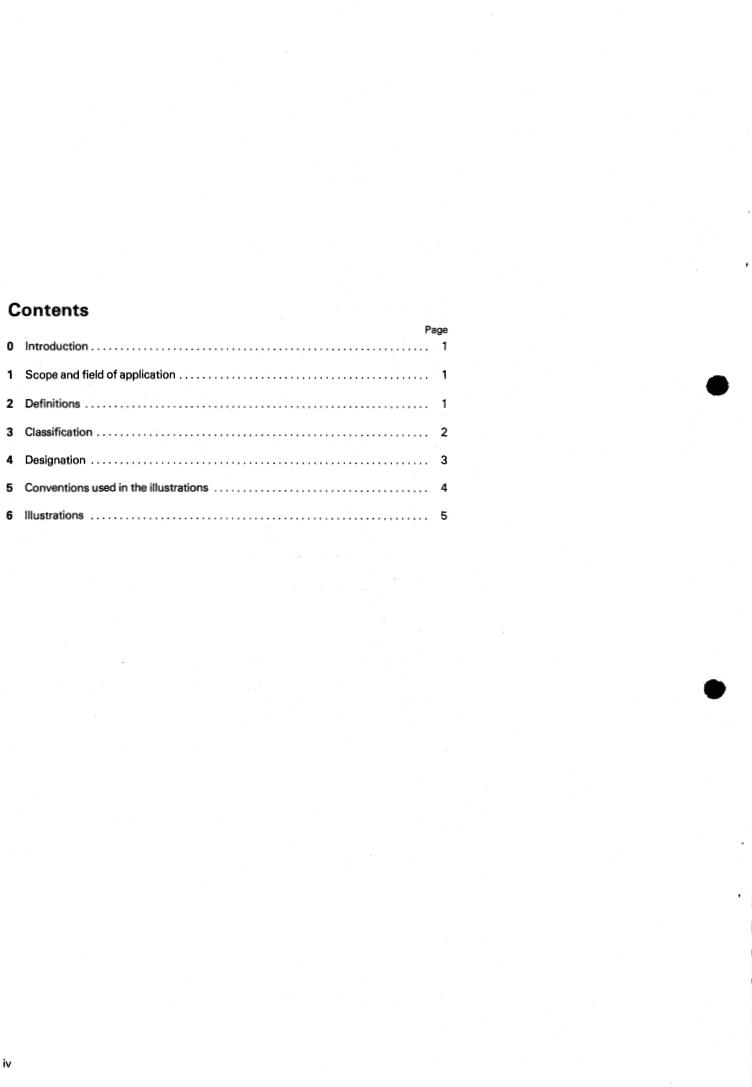
Contents
Page
O Introduction. . . . . . . . . . . . . . *. . . 1
1 Scope and field of application . , . . . . . . . . . , . . . . . . . . , . . . . . . . . . . , . . . . . . . . . . . 1
2 Definitions , . . . . . . . . . . . , . . . . . . , . . . , . . . . . . . . . . 1
3 Classification . . , . . . . . . . . . . . . . . . . . . . . . . . . . . . . . 2
4 Designation . . . . . . . . . . . . . . . . . . . . . . . . . . . . . . . . . . . . . . . . , . . . . . . . . . . . . . . . . . 3
5 Conventions used in the illustrations . . . . . . . . . . . . . . . . . . . . . . . . . . . . . . . . . . . . . 4
6 Illustrations . . . . . . . . . . . . . . . . . . . . . . . . . , . . . , . . . . 5
iv
Som maire
Introduction .
Objet et domaine d'application .
....... 1
a
Définitions .
....... 1
Classification .
....... 2
Désignation . 3
Convention de représentation graphique . 4
Illustrations . 5
O
V
INTERNATIONAL STANDARD
IS0 4915-1981 IE/F)
NORME INTERNATIONALE
Textiles - Stitch types - Textiles - Types de points -
Classification and
Classification et
terminology
terminologie
O Introduction
O Introduction
For the analysis of stitch types used in the fabrication of sewn
Pour l’analyse des types de points utilisés dans la fabrication
articles, a clear understanding of the terms employed is essen-
d’articles cousus, une claire compréhension des termes
tial. The following standard nomenclature, descriptions of
employés est essentielle. La nomenclature normalisée ci-aprés,
stitch types and the system of identifying symbols should pro-
la description des types de points et le système de symbolisa-
(I)
vide valuable information for purchasing officers, garment
tion pour l’identification devraient fournir une information
manufacturers, machine manufacturers, students and others,
valable aux services d‘achat des administrations, aux fabricants
a reference book on this subject. This International
who require de machines, aux étudiants et à tous ceux qui désirent un docu-
Standard is not intended to be a specification but primarily a
ment de référence à ce sujet. La présente Norme internationaie
descriptive guide for purposes of identification and ease of à être une spécification mais, avant tout, un
n’est pas destinée
reference. A separate International Standard is being prepared guide descriptif visant à faciliter les identifications et à simplifier
on the classification of stitched seams.
les références. Une Norme internationale séparée est en
préparation pour la classification des coutures par fil.
NOTE - Further stitch types which may be developed in future should
NOTE - Pour I’adjonction de nouveaux types de points, s’adresser au
be notified to the secretariat of ISO/TC 38 in order to obtain the cor-
secrétariat du comité technique ISO/TC 38 de facon à obtenir la
rect classification.
classification qui convient.
1 Scope and field of application
1 Objet et domaine d’application
This International Standard classifies, designates, describes La présente Norme internationale classifie, désigne, décrit et
and illustrates the various kinds of stitch types used in hand-
illustre les divers types de points utilisés dans les opérations de
and machine-sewn seams. couture réalisées à la main et à la machine.
2 Definitions 2 Définitions
2.1 stitch : One unit of conformation resulting from one or 2.1 point : Unité de structure résultant d‘un ou plusieurs
more strands or loops of thread intralooping, interlooping or brins de fil ou boucles de fil s’entrebouclant, ou s’entrelacant,
passing into or through material.
OU passant dans ou au travers dun matériau.
A stitch may be formed Un point peut être formé
-
- without material; sans matériau;
- inside material; - dans le matériau;
- through material; - à travers le matériau;
- on material.
- sur le matériau.
2.1.1
intralooping : The passing of a loop of thread through 2.1.1 entrebouclage avec le même fil : Passage d’une bou-
another loop by the same thread.
cle de fil à travers une autre boucle formée à partir du même fil.
IS0 4915-1981 (E/F)
2.1.2 entrebouclage avec un fil différent : Passage d'une
2.1.2 interlooping : The passing of a loop of thread through
boucle de fil à travers une autre boucle formée à partir d'un fil
another loop formed by a different thread.
différent.
2.1.3 entrelacement : Passage d'un fil sur ou autour d'un
2.1.3 interlacing : The passing of a thread over or around
autre fil, ou d'une boucle d'un autre fil.
another thread or loop of another thread.
2.2 stitch type : An assembly of recurring stitches, relating 2.2 type de point : Série de points répétés, liée à un maté-
riau et qui peut être caractérisée par un changement de direc-
to the material and which may be characterized by a change in
direction. The minimum number of stitches that describe a tion. Le nombre minimal de points décrivant un type de point
stitch type are indicated.
est indiqué.
groupe de fils : Nombre de fils remplissant une fonction
group of threads : A number of threads fulfilling an 2.3
2.3
identique, par exemple aiguille ou boucleur.
identical function, for example needle or looper.
3 Classification
3 Classification
Les types de points sont divisés en six classes. Les caractéristi-
Stitch types are divided into six classes. The characteristics of
these classes are indicated below. ques de ces classes sont indiquées ci-dessous.
100 - Chain stitches 3.1 Classe 100 - Points de chaînette
3.1 Class
Dans cette classe, les types de points sont formés avec un ou
In this class, stitch types are formed with one or more needle
plusieurs fil(s) d'aiguille et sont caractérisés par I'entrebouclage
threads, and are characterized by intralooping. One or more
du fil avec lui-même. Une ou plusieurs boucleis) de fil estisont)
loops of thread are passed through the material and secured by
intralooping with a succeeding loop or loops after they are passée(s) à travers le matériau et fixéeis) par entrebouclage
passed through the material. avec une ou plusieurs boucle(s) suivanteb) (du même fil) ayant
eiie(s)-même(s) traversé le matériau.
Class 200 (originated as hand stitches) 3.2 Classe 200 (originellement points faits à la main)
3.2
Dans cette classe, les types de points, à l'origine faits à la main,
In this class, stitch types which originated as hand stitches are
characterized by a single thread, which is passed through the sont caractérisés par un simple fil, qui est passé à travers le maté-
material as a single line of thread and the stitch is secured by the riau comme une seule ligne de fil et dont le point est fixé par cette
single line of thread passing in and out of the material. seule ligne de fil pénétrant dans le matériau et en sortant,
IS0 4915-1981 (E/F)
5 Conventions used in the illustrations 5 Conventions de représentation graphique
The drawing conventions used in the stitch type illustrations Les conventions de représentation utilisées dans les schémas
(see clause 6) are as follows :
de types de points (voir chapitre 6) sont les suivantes :
5.1 All the illustrations are in perspective for clarity and at an 5.1 Tous les schémas sont faits en perspective pour la clarté
I
angle chosen to show all threads as clearly as possible. et sous un angle choisi de facon à montrer tous les fils aussi
clairement que possible.
5.2 The direction of successive stitch formation is from right 5.2 La direction de formation des points est de droite à gau-
to left.
che.
5.3 Each stitch type starts and finishes with only one end of
5.3 Chaque point commence et finit en montrant seulement
each thread shown, and with the needle threads leaving the une extrémité de chaque fil, les fils d’aiguille quittant verticale-
ment le matériau.
material vertically.
All needle threads are clear, all other threads hatched.
5.4 5.4 Tous les fils d’aiguille sont clairs, tous les autres fils sont
hachurés.
O
5.5 All needle threads are numbered 1, 2, 3, . . .; all under 5.5 Tous les fils d‘aiguille sont désignés par un chiffre 1, 2, 3,
threads, a, b, c, . . ., all cover threads 2, Y, X, . . . . . ., tous les fils de complément par une lettre minuscule a, b,
c, . . ., tous les fils de recouvrement par une lettre majuscule 2,
Y, x, . . .
5.6 The material is shown only where it assists clarity, for
5.6 Le matériau n’apparaît que lorsque cela est nécessaire
example in class 500. pour plus de clarté, par exemple dans la classe 500.
NOTE - In a few cases where the above drawing conventions do not NOTE - Dans les quelques cas où les conventions de représentation
give a clear indication of the stitch, a plan diagram is used. de point, une vue en plan
ne donnent pas une claire indication du type
est utilisée.
IS0 4915-1981 (E/F)
3.3 Classe 300 - Points noués
3.3 Class 300 - Lockstitches
Dans cette classe, les types de points sont formés avec deux ou
In this class, stitch types are formed with two or more groups
plusieurs groupes de fils et ont pour caractéristique générale
of threads, and have for a general characteristic the interlacing
l'entrelacement de deux groupes ou davantage. Les boucles
of the two or more groups. Loops of one group are passed
d'un groupe sont passées à travers le matériau et sont fixées
through the material and are secured by the thread or threads
r
par le ou les fil(s) d'un deuxième groupe.
of a second group.
3.4 Classe 400 - Points de chaînette à plusieurs fils
3.4 Class 400 - Multi-thread chain stitches
Dans cette classe, les types de points sont formés avec deux ou
In this class, stitch types are formed with two or more groups
of threads, and have for a general characteristic the interloop- davantage de groupes de fils et ont pour caractéristique géné-
rale l'entrelacement ou I'entrebouclage de deux ou davantage
ing of the two groups. Loops of one group of threads are
de groupes. Les boucles d'un groupe de fils sont passées à tra-
passed through the material and are secured by interlacing and
vers le matériau et sont fixées par entrelacement et entrebou-
interlooping with loops of another group.
clage avec des boucles d'un autre groupe.
3.5 Classe 500 - Points de surjet
3.5 Class 500 - Overedge chain stitches
Dans cette classe, les types de points sont formés avec un ou
In this class, stitch types are formed with one or more groups of
plusieurs groupes de fils et ont pour caractéristique générale le
threads, and have for a general characteristic that loops from at
passage des boucles d'au moins un groupe de fils autour du
least one group of thread pass around the edge of the material.
bord du matériau. Les boucles d'un groupe de fils sont passées
Loops of one group of threads are passed through the material
à travers le matériau et sont fixées par entrebouclage avec
and are secured by intralooping before succeeding loops are
passed through the material, or secured by interlooping with d'autres boucles du même fil, avant que les boucles suivantes
ne traversent le matériau, ou sont fixées par entrebouclage
loops of one or more interlooped groups of threads before suc-
ceeding groups of the first group are again passed through the avec les boucles d'un ou plusieurs autrek) groupe(s) de fils déjà
entrebouclées, avant que les boucles suivantes du premier
material.
groupe ne soient passées à nouveau à travers le matériau.
3.6 Classe 600 - Points de recouvrement
3.6 Class 600 - Covering chain stitches
Dans cette classe, les types de points sont formés avec deux ou
In this class, stitch types are formed with two or more groups
davantage de groupes de fils et ont pour caractéristique géné-
of threads, and have for a general characteristic that two of the
rale le recouvrement des bords des deux surfaces d'un matériau
groups cover both surfaces of the material. Loops of the first
group of thread are passed through loops of the third group par deux des groupes. Les boucles du premier groupe de fils
sont passées à travers les boucles du troisième groupe déjà
already cast on the surface of the material and then through the
material where they are interlooped with loops of the second posées sur une face du matériau, puis traversent le matériau où
elles sont entrebouclées avec les boucles du second groupe de
group of thread on the underside of the material. The one
fils sur l'autre face du matériau. La seule exception est consti-
exception to this procedure is stitch type 601 where only two
the third group tuée par le type de point 601, où ne sont employés que deux
groups of threads are used and the function of
groupes de fils et où la fonction du troisième groupe est remplie
is performed by one of the threads in the first group.
par un des fils du premier.
4 Designation 4 Désignation
4.1 Types de points
4.1 Stitch types
Les classes de types de points sont désignées et identifiées par
Stitch type classes are designated and identified by the first
le premier des trois chiffres d'un nombre.
digit of 3-digit numerals.
Dans chaque classe, les types de points sont désignés et identi-
Stitch types within each class are designated and identified by
the second and third digits. fiés par le second et le troisième chiffres.
4.2 Combinaison de types de points
4.2 Combination stitch type
La combinaison des types de points doit être représentée par la
The combination of stitch types shall be represented by the
désignation individuelle de chaque type de point séparée par un
designation of the individual stitch types separated by a full
point, par exemple : 401.502. Si la combinaison est effectuée
stop, for example 401.502. If the combination stitch type is
en une opération, les désignations individuelles sont mises
achieved in one operation, it is to be enclosed in brackets, for
entre parenthèses, par exemple : (401.502).
example (401.502).
ISO4915-1981 (E/F)
6 Illustrations 6 illustrations
Illustrations are included of the following stitch types :
Les illustrations des types de points suivants sont incluses :
Class 100
Class 400 Classe 100 Classe 400
101 105 401 406 411 416
101 105 401 406 411 416
1 02 402 407 412 417 1 02
402 407 412 417
103 107 403 408 413
103 107 403 408 413
104 108 404 409 414 108
104 404 409 414
405 410 415
405 410 415
Class 200 Class 500
Classe 200 Classe 500
201 213 501 508 521 201 213
501 508 521
202 214
502 509 202 214 502 509
204 215 503 510
204 215 503 510
205 217 504 511 205 217 504 511
206 219
505 512 206 219 505 512
209 220 506 513
209 220 506 513
c 211 507 514 21 1
507 514
Class 300 Class 600
Classe 300 Classe 600
301 311 321 601 606
301 311 321 601 606
302 312 322 602 607
302 312 322 602 607
303 313 323 603 608 303 313 323 603 608
304 314 324 604 609
304 314 324 604609
305 315 325 605 305 315 325
306 316 326
306 316 326
307 317 327
307 317 327
308 318 308 318
309 319
309 319
310 320
310 320
NOTE - Illustrations show a number of needle penetrations the first of
NOTE - Les illustrations montrent un certain nombre de pénétrations
which may not produce a stitch of the stitch type. The written descrip-
de l'aiguille, dont la première peut ne pas produire un point du type de
tions in all cases refer to the stitches of the stitch type.
point. Les descriptions indiquées se réfèrent, dans tous les cas, aux
points du type de point.
IS0 4915-1981 (E/F)
Class 100 Classe 100
I01
t
r
Ce type de point est formé avec un fil d’aiguille ( , dont une
This stitch type is formed with one needle thread (I), a loop
boucle est passée à travers le matériau par le c6té de
of which is passed through the material from the needle side
l’aiguille, le fil étant entrebouclé avec lui-même de l‘autre
and intralooped in the other side.
côté.
A minimum of two stitches describes this stitch type.
Un minimum de deux points décrit ce type de point.
Ce type de point est formé avec deux fils d‘aiguille (1 et 2J,
Phis stitch type is formed with two needle threads (1 and 21,
dont les boucles sont passées à travers le matériau par le
loops of which are passed through the material from the
côté de l’aiguille. Le fil (2) est entrebouclé avec lui-même et
needle side. Thread 2 is intralooped with thread 1 on the
avec le fil (1) sur l’autre côté du matériau.
other side of the material.
A minimum of two stitches describes this stitch type. Un minimum de deux points décrit ce type de point.
IS0 4915-1981 (E/F)
Ce type de point est formé avec un fil d'aiguille (I), dont une
This stitch type is formed with one needle thread (I), a loop
boucle pénètre dans le matériau du côté de l'aiguille, tra-
of which is passed into the material from the needle side,
verse une partie du matériau, ressort du côté de l'aiguille où
through portions of the material, emerging on the needle
side where it is intralooped at the next point of needle pene- le fil est entrebouclé avec lui-même au point suivant de
tration. pénétration de l'aiguille.
A minimum of two stitches describes this stitch type. Un minimum de deux points décrit ce type de point.
Ce type de point est formé avec un fil d'aiguille (I), dont une
This stitch type is formed with one needle thread (I), a loop
of which is passed through the material from the needle boucle est passée par le côté de l'aiguille à travers le maté-
à travers le matériau vers le côté de l'aiguille à
side, passed back through the material to the needle side at riau, repassée
une certaine distance et, au point suivant de pénétration de
a distance, and intralooped on the needle side of the ma-
terial at the next point of needle penetration. l'aiguille, le fil étant entrebouclé de ce côté.
A minimum of two stitches describes this stitch type. Un minimum de deux points décrit ce type de point.
IS0 4915-1981 (E/F)
Ce type de point est formé avec un fil d’aiguille (I), dont une
This stitch type is formed with one needle thread (I), a loop
boucle pénètre dans le matériau par le côté de l‘aiguille, tra-
of which is passed into the material from the needle side,
verse une partie du matériau, ressort du côte de l’aiguille où
through portions of the material, emerging on the needle
le fil est entrebouclé avec lui-même au point suivant de
side where it is intralooped at the next point of needle pene-
tration on the axis of stitch formation. pénétration de l’aiguille, dans l’axe de formation des points.
Un minimum de deux points décrit ce type de point.
A minimum of two stitches describes this stitch type.
Ce type de point est formé avec un fil d’aiguille (I), dont une
This stitch type is formed with one needle thread (I), a loop
boucle est passée à travers le matériau du côté de l‘aiguille,
of which is passed through the material from the needle side
and intralooped on the other side. This stitch type is the le fil étant entrebouclé avec lui-même de l’autre côté. Ce
same as 101 except that successive single stitches form a type de point est le même que le type 101, excepté que la
suite des points pris un à un forme un motif symétrique en
symmetrical zigzag pattern.
zigzag.
A minimum of two stitches describes this stitch type.
Un minimum de deux points décrit ce type de point.
IS0 4915-1981 IE/F)
This stitch type is formed with one needle thread (I), a loop Ce type de point est formé avec un fil d'aiguille (I), dont une
boucle est passée à travers le matériau du côté de l'aiguille
of which is passed through the material from the needle side
vers l'autre côté, repassée à travers le matériau vers le côté
to the other side and passed back through the material to
the needle side at a distance. The thread is intralooped de l'aiguille à une certaine distance. Le fil est entrebouclé où
where the next loop is passed through the material. la boucle suivante est passée à travers le matériau.
A minimum of two stitches describes this stitch type. Un minimum de deux points décrit ce type de point.
ISO4915-1981 (E/F)
Class 200 Classe 200
du tissu
Fabric
Ce type de point est formé avec deux fils d'aiguille (1 et 2)
This stitch type is formed with two needle threads (1 and 21,
qui sont passés à travers le matériau dans la même perfora-
which are passed through the material, through the same
perforation from opposite directions, without interlacing or tion, suivant deux directions opposées sans nouage ni
entrebouclage, puis avancés d'une longueur appropriée et
interlooping. They are then brought forward a suitable
length and passed back through the material, from opposite repassés à travers le matériau dans une nouvelle perfora-
directions, through another perforation without interlacing tion, suivant deux directions opposées sans nouage ni
or interlooping. entrebouclage.
A minimum of two stitches describes this stitch type. Un minimum de deux points décrit ce type de point.
Ce type de point est formé avec un fil d'aiguille (1) qui est
This stitch type is formed with one needle thread (I), which
pasSe à travers le matériau, avancé d'une longueur appro-
is passed through the material, brought forward a suitable
length, passed back through the material, and, brought priée, repassé à travers le matériau et, ramené en arrière de
back half the initial length before passing back through the la moitié de la longueur initiale, est repassé A travers le maté-
material at the point of emergence of the previous thread. riau au point précédent de sortie du fil. Ce point est souvent
This stitch type is often used at the beginning or end of utilisé au début ou à la fin de la formation d'autres points.
other stitch formations.
Un minimum de deux points décrit ce type de point.
A minimum of two stitches describes this stitch type.
IS0 4915-1981 (E/F)
This stitch type is formed with one needle thread (I), which Ce type de point est formé avec un fil d’aiguille (1) qui est
is passed through the material twice, emerging in a position passé deux fois à travers le matériau, sorti perpendiculaire
at right-angles to the direction of successive stitch for-
ment à la direction de formation successive des points, en
mation, and passing over the thread from the previous
passant par dessus le fil du point précédent formant une
stitch forming a loop. boucle.
Successive stitches are spaced at chosen intervals, and can Les points successifs sont espacés à intervalles choisis et
be worked open or close. (When done by hand, this stitch peuvent être lâches ou serrés. (Fait à la main, ce type de
type is normally worked from left to right.) point est formé généralement de gauche à droite.)
A minimum of two stitches describes this stitch type. Un minimum de deux points décrit ce type de point.
h
This stitch type is formed with one needle thread (I), which Ce type de point est formé avec un fil d’aiguille (1) qui est
is passed through the material, brought forward a suitable passé à travers le matériau, avancé d‘une longueur appro-
length and passed back through the material.
priée et repassé à travers le matériau.
The points of needle penetration may be close together and Les points de pénétration de l’aiguille peuvent être rappro-
used for gathering material or gauging, or widely spaced, or
chés et servir au fronçage ou réglage du matériau, ou être
alternatively with varied spacing. écartés largement, ou alternativement à intervalles diffé-
rents.
A minimum of two stitches describes this stitch type.
Un minimum de deux points décrit ce type de point.
IS0 4915-1981 (E/F)
This stitch type is formed with one needle thread (I), which Ce type de point est formé avec un fil d‘aiguille (1) qui est
is passed through the material, moved diagonally across the passé à travers le matériau, déplacé en diagonale en travers
material the width of the stitch, passed back through the du matériau de la largeur d’un point, passé a travers le
a suitable length before passing
material and brought back matériau et ramené en arrière d‘une longueur appropriée,
again through the material. It is then returned diagonally
avant de retraverser le matériau. II passe ensuite en diago-
across the material the width of the stitch, passed through nale en travers du matériau de la largeur d‘un point, passe à
the material and back through the material a similar length travers le matériau et repasse à travers le matériau à une lon-
gueur semblable en arrière. Ce processus se répète pour for-
behind. This process is repeated to form parallel rows of
separated and offset stitches on the needle side and a criss- mer des rangées parallèles de points séparés et décalés sur un
cross pattern on the other side. (When done by hand, this côtéet un dessin entrecroisésur I’autrecôté. (Faità la main, ce
stitch type is normally worked from left to right.) type de point est formé généralement de gauche à droite.)
A minimum of two stitches describes this stitch type.
Un minimum de deux points décrit ce type de point.
a
This stitch type is formed with one needle thread (I), which
Ce type de point est formé avec un fil d’aiguille (1) qui est
is passed through the material, brought forward a suitable passe à travers le matériau, amené en avant d’une longueur
length, passed back through the material, and brought back
appropriée et repassé à travers le matériau, ramené en
one-third of the initial length before passing again through
arrière d’un tiers de la longueur initiale, avant de passer à
the material. nouveau à travers le matériau.
A minimum of two stitches describes this stitch type.
Un minimum de deux points décrit ce type de point.
IS0 4915-1981 (E/F)
21 I
This stitch type is formed with one needle thread (11, which
Ce type de point est formé avec un fil d’aiguille (1) qui est
is passed through the material, cast over the rolled edge of passé à travers le matériau, amené autour du bord roulé du
the material and brought forward through the material, in matériau et avancé à travers le matériau, sur la même ligne
line with the previous thread emergence. que la première sortie du fil.
This stitch type is used as an edge finish, usually on fine Ce type de point est utilisé pour la finition des bords, géné-
left to right, the main use of ralement dans les matériaux fins; s‘il est fait de gauche à
material; when worked from
the stitch is for neatening edges, seams, etc. droite, il sert principalement pour la finition des bords, cou-
tures, etc.
The stitch type can be worked with variable spacing.
Le point peut être fait à des intervalles variables.
A minimum of two stitches describes this stitch type.
Un minimum de deux points décrit ce type de point.
This stitch type is formed with one needle thread (11, which Ce type de point est formé avec un fil d‘aiguille (11 qui est
is passed through the single material, passed forward passé à travers une épaisseur du matériau, passé en avant à
through the turned over edge of the hem (turned back for travers le bord remplié de l’ourlet (relevé dans ce but), sorti
the purpose), emerging slightly in front, in line with the pre- légèrement en avant, dans l’alignement de la première péné-
vious thread penetration and taking up a very small amount
tration du fil, et en prenant une très petite quantité de maté-
of the material; the thread is then brought forward and
riau; le fil est ensuite amené en avant et à travers le matériau
through the material below the hem to repeat the stitch.
au-dessous de l‘ourlet pour répéter le point. De très petites
Very small amounts of material are taken up.
quantités de matériau sont prises.
This stitch type is used when it is particularly desirable that
Ce type de point est utilisé lorsque l’on désire particulière-
no stitch should finally be visible.
ment qu‘aucun point ne soit finalement visible.
A minimum of two stitches describes this stitch type.
Un minimum de deux points décrit ce type de point.
IS0 4915-1981 (E/F)
This stitch type is formed with one needle thread (I), which Ce type de point est formé avec un fil d'aiguille (1) qui est
is passed through the fold of material and into the single passé à travers le pli du matériau, passé à travers une épais-
seur du matériau à une courte distance au-dessus et Iégère-
material a short distance above and slightly to the right. The
thead is then passed diagonally back through both material ment à droite. Le fil est ensuite passé en diagonale vers
layers to a point in line with the previous point of thread l'arrière à travers les deux épaisseurs de matériau, en un
point aligné avec le point de sortie précédente du fil.
emergence.
Ce type de point est utilisé pour réunir une épaisseur de
This stitch type is used for sewing one material to another
etc. matériau à une autre, par exemple les doublures aux vête-
such as linings to garments,
ments, etc.
A minimum of two stitches describes this stitch type.
Un minimum de deux points décrit ce type de point.
This stitch type is formed with one needle thread (I), which Ce type de point est formé avec un fil d'aiguille (1) qui est
is passed through the folded edge of a material and brought passé à travers le bord remplié du matériau, avancé d'une
forward a suitable length in the fold before emerging from longueur appropriée dans le pli avant de sortir du matériau.
II est ensuite passé à travers le bord remplié opposé du
the material. It is then passed through an opposite folded
edge of material at a point slightly behind the point of thread matériau, en un point légèrement en arrière du point de sor-
emergence. tie du premier rempli.
It is brought forward a suitable length in the fold, before II est avancé dans le second rempli à une distance appro-
priée avant d'en ressortir. Le fil est tendu, de préférence.
emerging from the material. The thread is drawn rather taut.
This is a stitch type which is used by tailors to draw together Ce type de point est utilisé par les tailleurs pour réunir deux
bords rempliés, par exemple le col et les revers.
two folded edges, for example collar and lapel.
A minimum of two stitches describes this stitch type. Un minimum de deux points décrit ce type de point.
IS0 4915-198
This stitch type is formed with one needle thread (I), which Ce type de point est formé avec un fil d'aiguille (1) qui, sor-
is passed from the material near the cut edge and forward tant du matériau, passe près du bord coupé et est avancé
under the material at right-angles to the line of the button-
sous le matériau perpendiculairement à l'axe de la bouton-
hole, emerging through the material and through a loop of
nière, sort du matériau et traverse une boucle de fil du point
the thread from the previous stitch. The thread is then précédent. Le fil est alors tiré fortement, amenant la boucle
pulled tight drawing the loop towards the cut edge where vers le bord coupé où un nœud est formé.
the knot is formed.
Ce point est utilisé pour finir les bords coupés des bouton-
This stitch is used to finish the cut edges of buttonholes. It nières. II peut être effectué de différentes facons, de gauche
may be worked in a variety of ways, from the left or the à droite ou vice versa avec un fil inséré dessus ou dessous,
right, with the thread inserted from below or above and may
et il peut être fait sur une ganse pour obtenir un effet de ren-
be worked over a gimp to give a firmer effect.
forcement.
A minimum of two stitches describes this stitch type.
Un minimum de deux points décrit ce type de point.
IS0 4915-1981 (E/F)
I
This stitch type is formed with one needle thread (I), which Ce type de point est formé avec un fil d’aiguille (1) qui est
passé en diagonale à travers les épaisseurs de matériau,
is passed diagonally through the material layers, brought
back a suitable length behind the point of emergence, and amené en arrière d’une longueur appropriée derrière le point
passed diagonally back through the material, crossing the de sortie et repassé en diagonale à travers le matériau, en
croisant la première diagonale.
first diagonal.
Ce type de point fait apparaître de petits creux des deux
This stitch type is seen only as small dints on both sides,
and is used for securing edges in tailored garments. côtés et est utilisé pour réunir les bords des vêtements,
facon tailleur.
A minimum of two stitches describes this stitch type.
Un minimum de deux points décrit ce type de point.
This stitch type is formed with one needle thread (I), which Ce type de point est formé avec un fil d’aiguille (1) qui est
is passed horizontally through the material or through por- passé horizontalement au travers du matériau, ou dans
tions of the material and emerges on the same side. All l’épaisseur du matériau, et ressort du même côté. Tous les
passes of the thread are at an acute angle to the direction of passages du fil se font à angle aigu par rapport à la direction
successive needle penetrations, which are in line with the des pénétrations successives de l’aiguille, qui suivent la
direction of stitching. direction de couture (axe).
Alternate rows of stitches are formed in opposite directions Des rangées alternées de points sont formées en directions
and staggered. opposées et en quinconce.
This stitch type is used to attach interlinings to the outer Ce type de point est utilisé pour fixer les entoilages sur les
materials of collars and lapels in the process of shaping matériaux externes des cols et revers, en les formant par la
them by the manipulation of these two materials. It is also manipulation de ces deux matériaux. II est également utilisé
used to fasten chest canvas to the interlining, the thread
pour fixer le plastron sur un entoilage, le fil traversant tou-
always passing completely through the two materials. jours complètement les deux matériaux.
A minimum of two stitches describes this stitch type. Un minimum de deux points décrit ce type de point.
IS0 4915-1981 (E/F)
Class 300 Classe 300
This stitch type is formed with two threads : one needle
Ce type de point est formé avec deux fils : un fil d'aiguille (1)
thread (11, and one bobbin thread (a). A loop of thread 1 is
et un fil de canette (a). Une boucle de fil 1 est passée à tra-
passed through the material from the needle side and is in- le matériau par le côté de l'aiguille et est entrelacée avec
vers
terlaced with thread a on the other side . Thread 1 is pulled
le fil a sur l'autre côté. Le fil 1 est ramené en arrière de
back so that the interlacing comes midway between the sur-
manière que l'entrelacement se situe à mi-chemin des faces
faces of the material being sewn.
du matériau cousu.
This stitch type is sometimes produced from a single thread,
Ce type de point est quelquefois formé à partir d'un fil,
in which case the first stitch differsfrom subsequent stitches. auquel cas le premier point diffère des points suivants.
A minimum of two stitches describes this stitch type. Un minimum de deux points décrit ce type de point.
a
This stitch type is formed with three threads : two needle
Ce type de point est formé avec trois fils : deux fils d'aiguille
threads (1 and 2) and one bobbin thread (a). Loops of
(1 et 2) et un fil de canette (a). Les boucles des fils 1 et 2
threads 1 and 2 are passed through the material from the
sont passées à travers le matériau par le côté de l'aiguille et
needle side and interlaced with thread a on the other side. entrelacées avec le fil a sur l'autre côté.
A minimum of two stitches describes this stitch type.
Un minimum de deux points décrit ce type de point.
IS0 4915-1981 (E/F)
a
This stitch type is formed with four threads : three needle Ce type de point est formé avec quatre fils : trois fils
threads (1, 2 and 3) and one bobbin thread (a). Loops of d’aiguille (1, 2 et 31 et un fil de canette (a). Les boucles des
threads 1, 2 and 3 are passed through the material from the fils 1,2 et 3 sont passées à travers le matériau par le côté de
needle side and interlaced with thread a on the other side. l‘aiguille et entrelacées avec le fil a de l‘autre côté.
A minimum of two stitches describes this stitch type. Un minimum de deux points décrit ce type de point.
This stitch type is formed with two threads : one needle Ce type de point est formé avec deux fils : un fil d’aiguille (1)
thread (1) and one bobbin thread (a). A loop of thread 1 is et un fil de canette (a). Une boucle du fil 1 est passée au tra-
passed through the material from the needle side and is vers du matériau par le côté de l’aiguille et est entrelacée
interlaced with thread a on the other side. Thread 1 is pulled avec le fil a de l’autre côté. Le fil 1 est tiré en arrière de
back so that the interlacing comes midway between the sur- manière que l’entrelacement se situe à mi-chemin entre les
faces of the material being sewn.
faces du matériau cousu.
This stitch type is the same as 301 except that successive 301, excepté que la
Ce type de point est le même que le type
single stitches form a symmetrical zig-zag pattern. suite de points pris un à un forme un motif symétrique en
zigzag.
A minimum of two stitches describes this stitch type.
Un minimum de deux points décrit ce type de point.
IS0 4915-1981 (E/F)
This stitch type is formed with three threads : two needle Ce type de point est formé avec trois fils : deux fils d’aiguille
threads (1 and 2) and one bobbin thread (a). Loops of (1 and 2) et un fil de canette (a). Les boucles des fils 1 et 2
threads 1 and 2 are passed through the material from the
sont passées à travers le matériau par le côté de l’aiguille et
needle side and interlaced with thread a on the other side. entrelacées avec le fil a sur l’autre côté.
302 except that successive
This stitch type is the same as Ce type de point est le même que le type 302, excepté que la
single stitches form a symmetrical zig-zag pattern. suite de points forme un motif symétrique en zigzag.
A minimum of two stitches describes this stitch type.
Un minimum de deux points décrit ce type de point.
a
This stitch type is formed with two threads : one needle Ce type de point est formé avec deux fils : un fil d‘aiguille (1)
et un fil de canette (a). Une boucle du fil 1 pénètre dans le
thread (1) and one bobbin thread (a). A loop of thread 1 is
passed into the material from the needle side, through por- matériau du côté de l’aiguille, traverse une partie du maté-
tions of the material, emerging on the needle side, where it riau, ressort du côté de l’aiguille où elle est entrelacée avec
is interlaced with thread a. le fil a.
The needle penetration is perpendicular to the direction of
La pénétration de l‘aiguille est perpendiculaire à la direction
successive stitch formation. de formation successive des points.
A minimum of two stitches describes this stitch type.
Un minimum de deux points décrit ce type de point.
IS0 4915-1981 (E/F)
Ce type de point est formé avec cinq fils : quatre fils
This stitch type is formed with five threads : four needle
d’aiguille (1, 2, 3 et 4) et un fil de canette (a). Les boucles
threads (1, 2, 3 and 4) and one bobbin thread (a). Loops of
des fils 1, 2, 3 et 4 sont passées a travers le matériau venant
threads 1, 2, 3 and 4 are passed through the material from
du côté de l’aiguille et entrelacées avec le fil a sur l’autre
a on the other
the needle side and interlaced with thread
side. côté.
Un minimum de deux points décrit ce type de point.
A minimum of two stitches des
...
Questions, Comments and Discussion
Ask us and Technical Secretary will try to provide an answer. You can facilitate discussion about the standard in here.
Loading comments...