

EN 1904:2000
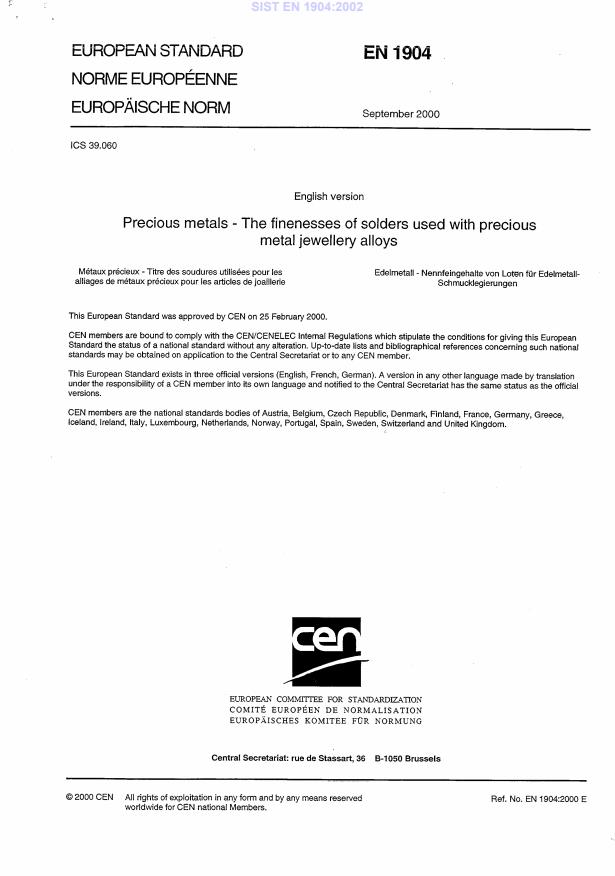
(Main)Precious metals - The finenesses of solders used with precious metal jewellery alloys
- Abstract
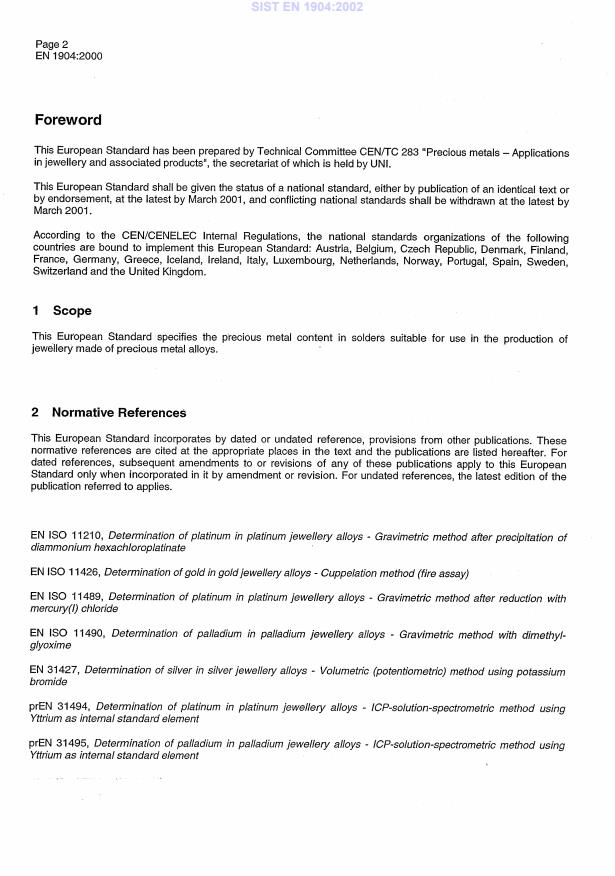
This European Standard specifies the precious metal content in solders suitable for use in the production of jewellery made of precious metal alloys.
- Status
- Published
- Publication Date
- 19-Sep-2000
- Withdrawal Date
- 30-Mar-2001
- Technical Committee
- CEN/TC 410 - Project Committee - Consumer confidence and nomenclature in the diamond industry
- Drafting Committee
- CEN/TC 283/WG 1 - Sampling and analysis
- Current Stage
- 9093 - Decision to confirm - Review Enquiry
- Start Date
- 08-Jun-2022
- Completion Date
- 30-Sep-2026

Overview
EN 1904:2000 is a European Standard developed by CEN that defines the fineness requirements for solders used with precious metal jewellery alloys. This standard specifies the minimum precious metal content in solders, ensuring compatibility and quality in the production of jewellery made from gold, silver, platinum, and other precious metals. The primary purpose of EN 1904:2000 is to maintain the integrity and hallmarking accuracy of precious metal jewellery through controlled solder compositions.
By adhering to this standard, manufacturers and jewellers can ensure that solders used in assembly processes do not compromise the precious metal content or the overall value of the jewellery pieces.
Key Topics
- Precious Metal Content: Specifies the minimum fineness or purity levels for solders compatible with different precious metal alloys used in jewellery.
- Solder Types: Covers solders suitable for gold, silver, platinum, and palladium alloys, addressing their specific fineness requirements.
- Quality Control: Ensures solders meet strict criteria to avoid contamination or dilution of the precious metals in final jewellery products.
- Compatibility: Focuses on solder compositions that blend seamlessly with jewellery alloys without affecting color, durability, or hallmarking.
- Regulatory Compliance: Supports compliance with hallmarking laws and enhances consumer trust by guaranteeing precious metal authenticity.
Applications
EN 1904:2000 serves as a critical guideline for:
- Jewellery Manufacturers: Ensuring solders meet purity standards for crafting high-quality precious metal jewellery.
- Solder Producers: Helping manufacturers formulate solders with precise precious metal contents suitable for various jewellery alloys.
- Quality Assurance Teams: Establishing standard testing and inspection methods to verify solder fineness during production.
- Hallmarking Authorities: Providing benchmark criteria to verify that assembled jewellery meets declared precious metal content.
- Retailers and Consumers: Guaranteeing the authenticity and value of precious metal jewellery products through adherence to recognized standards.
By applying this standard, the jewellery industry benefits from consistent product quality, reduced risk of alloy contamination, and enhanced market reputation.
Related Standards
- EN 1811 – Reference test method for release of nickel from products intended to come into direct and prolonged contact with the skin.
- EN 1652 – Copper and copper alloys – Sheet, strip and plate.
- ISO 9202-2 – Solid precious metals – Vocabulary and general rules.
- EN 611 – Jewellery alloys - Technical standards for classification and marking.
- Hallmarking Regulations – National and European regulations governing precious metal content and marking on jewellery.
Integration of EN 1904:2000 with these standards ensures a comprehensive approach to the design, production, testing, and certification of precious metal jewellery, supporting industry best practices and consumer protection.
Keywords: EN 1904:2000, precious metals, solder fineness, jewellery alloys, gold solder, silver solder, platinum solder, hallmarking, jewellery manufacturing standards, precious metal content, CEN standards, European jewellery standard.
Relations
- Effective Date
- 28-Jan-2026
- Effective Date
- 28-Jan-2026
Frequently Asked Questions
EN 1904:2000 is a standard published by the European Committee for Standardization (CEN). Its full title is "Precious metals - The finenesses of solders used with precious metal jewellery alloys". This standard covers: This European Standard specifies the precious metal content in solders suitable for use in the production of jewellery made of precious metal alloys.
This European Standard specifies the precious metal content in solders suitable for use in the production of jewellery made of precious metal alloys.
EN 1904:2000 is classified under the following ICS (International Classification for Standards) categories: 39.060 - Jewellery. The ICS classification helps identify the subject area and facilitates finding related standards.
EN 1904:2000 has the following relationships with other standards: It is inter standard links to EN ISO 8442-8:2000, EN ISO 8442-7:2000. Understanding these relationships helps ensure you are using the most current and applicable version of the standard.
EN 1904:2000 is available in PDF format for immediate download after purchase. The document can be added to your cart and obtained through the secure checkout process. Digital delivery ensures instant access to the complete standard document.
Standards Content (Sample)
2003-01.Slovenski inštitut za standardizacijo. Razmnoževanje celote ali delov tega standarda ni dovoljeno.QDNLWDEdelmetall - Nennfeingehalte von Loten für Edelmetall-SchmucklegierungenMétaux précieux - Titre des soudures utilisées pour les alliages de métaux précieux pour les articles de joailleriePrecious metals - The finenesses of solders used with pre
...