


EN 16350:2014
(Main)Protective gloves - Electrostatic properties
Protective gloves - Electrostatic properties
This European Standard provides additional requirements for protective gloves that are worn in areas where flammable or explosive areas exist or might be present (see IEC 60079-32-1). It specifies a test method and requirements for performance, marking and information for electrostatic dissipative protective gloves to minimize explosion risks.
This European Standard does not cover:
- protection of electronic devices;
- protection against mains voltages;
- insulative protective gloves for live working (EN 60903);
- protective gloves for welders (EN 12477).
The requirements may not be sufficient in oxygen enriched flammable atmospheres.
This European Standard should be used with the specific standards applicable to the risks for which the glove is designed.
NOTE The electrostatic dissipative protective gloves are effective only if the wearer is earthed through a resistance lower than108 Ω.
Schutzhandschuhe - Elektrostatische Eigenschaften
Diese Europäische Norm stellt zusätzliche Anforderungen an Schutzhandschuhe auf, die in Bereichen getragen werden, in denen brennbare oder explosionsfähige Atmosphären existieren oder existieren können (siehe IEC 60079-32-1). Sie legt ein Prüfverfahren sowie Anforderungen an die Leistung, Kennzeichnung und Informationen zu elektrostatisch ableitfähigen Schutzhandschuhen fest, um das Risiko einer Explosion so gering wie möglich zu halten.
Diese Europäische Norm behandelt nicht:
- Schutz elektronischer Geräte;
- Schutz vor Netzspannungen;
- isolierende Schutzhandschuhe für Arbeiten unter Spannung (EN 60903);
- Schutzhandschuhe für Schweißer (EN 12477).
Die Anforderungen sind möglicherweise für mit Sauerstoff angereicherte, brennbare Atmosphären nicht ausreichend.
Diese Europäische Norm sollte gemeinsam mit den speziellen Normen angewendet werden, die auf die Risiken zutreffen, für die die Handschuhe entwickelt wurden.
ANMERKUNG Elektrostatisch ableitfähige Schutzhandschuhe sind nur wirksam, wenn der Träger über einen Wider-stand von weniger als 108 geerdet ist.
Gants de protection - Propriétés électrostatiques
La présente Norme européenne fournit des exigences supplémentaires pour les gants de protection qui sont portés dans un environnement comprenant ou susceptible de comprendre des zones inflammables ou explosives (voir IEC 60079-32-1). Elle spécifie une méthode d'essai et des exigences concernant les performances, le marquage et des informations applicables aux gants de protection à dissipation électrostatique pour réduire le plus possible les risques d'explosion.
La présente Norme européenne ne traite pas :
- de la protection des dispositifs électroniques ;
- de la protection contre les tensions du réseau ;
- des gants de protection isolants pour travaux sous tension (EN 60903) ;
- des gants de protection pour soudeurs (EN 12477).
Ces exigences peuvent se révéler insuffisantes dans les atmosphères inflammables enrichies en oxygène.
Il convient que la présente Norme européenne soit utilisée en association avec les normes spécifiques applicables aux autres risques pour lesquels le gant est conçu.
NOTE Les gants de protection à dissipation électrostatique ne sont efficaces que si le porteur est relié à la terre par une résistance inférieure à 108 Ω.
Varovalne rokavice - Elektrostatične lastnosti
Standard EN 16350 določa dodatne zahteve za zaščitne rokavice, ki se uporabljajo na območjih, kjer na določenih področjih morda obstaja nevarnost ognja ali eksplozije (glej IEC 60079-32-1). Določa preskusne metode in zahteve za lastnosti, označevanje in informacije za elektrostatične disipativne zaščitne rokavice za zmanjšanje nevarnosti eksplozije. Ta evropski standard ne zajema: - zaščite elektronskih naprav; - zaščite pred omrežnimi napetostmi; - izolacijske zaščitne rokavice za delo pod napetostjo (EN 60903); - zaščitne rokavice za varilce (EN 12477). Zahteve morda ne zadostujejo za področja, obogatena s kisikom in z vnetljivim ozračjem. Ta evropski standard naj se uporablja s posebnimi standardi, ki veljajo za nevarnosti, za katere so te rokavice zasnovane.
General Information
- Status
- Published
- Publication Date
- 29-Apr-2014
- Withdrawal Date
- 30-Oct-2014
- Technical Committee
- CEN/TC 162 - Protective clothing including hand and arm protection and lifejackets
- Drafting Committee
- CEN/TC 162/WG 8 - Protective gloves
- Current Stage
- 9060 - Closure of 2 Year Review Enquiry - Review Enquiry
- Start Date
- 02-Dec-2019
- Completion Date
- 02-Dec-2019
- Directive
- Harmonized Standard2016/425 - Regulation (EU) 2016/425 of the European Parliament and of the Council of 9 March 2016 on personal protective equipment and repealing Council Directive 89/686/EECOJ Ref: C, C 113 OJ Date: 27-Mar-2018
Not Harmonized89/686/EEC - Personal protective equipment (PPE)OJ Ref: C, C 445 OJ Date: 12-Dec-2014
Relations
- Effective Date
- 09-Feb-2026
- Effective Date
- 28-Jan-2026
- Effective Date
- 28-Jan-2026
- Effective Date
- 28-Jan-2026
- Referred By
EN ISO 21420:2020 - Protective gloves - General requirements and test methods (ISO 21420:2020) - Effective Date
- 28-Jan-2026
Overview
EN 16350:2014 is a European standard published by CEN specifying the electrostatic properties of protective gloves designed for use in environments where flammable or explosive atmospheres may be present. The standard outlines performance requirements, testing methods, marking, and manufacturer information necessary to ensure that electrostatic dissipative gloves help minimize the risk of ignition due to static electricity. This standard applies only to protective gloves intended to dissipate static and does not cover gloves for other purposes, such as protection against electric shock, electronic devices, or welding.
Key Topics
- Electrostatic Dissipative Gloves: Gloves intended to reduce explosion risks in potentially hazardous areas by controlling static electricity.
- Test Methods: EN 16350 sets procedures for measuring the vertical resistance of glove materials, ensuring they meet stringent criteria for electrostatic dissipation.
- Performance Requirements: Includes limits for material resistance (vertical resistance), design mandates, and restrictions on conductive materials.
- Marking and Information: Details the manufacturer’s responsibilities regarding labeling and usage instructions for end users.
- Limitations: Gloves compliant with EN 16350:2014 are only effective if the wearer is properly earthed and may not be suitable in oxygen-enriched environments.
Applications
EN 16350:2014 is critical for workplaces where static discharge could ignite flammable or explosive atmospheres. Typical applications and sectors include:
- Chemical Industry: Handling of volatile chemicals or powders in processing environments with explosion risks.
- Oil and Gas Production: Onsite handling and maintenance activities in refineries or gas plants.
- Pharmaceutical Manufacturing: Powder operations where dust explosions must be prevented.
- Explosive Storage and Munitions: Warehousing, logistics, and production involving potentially explosive materials.
- Agriculture: Handling of dusts or fine powders in silos or grain storage.
Employers in these environments rely on electrostatic dissipative protective gloves to meet occupational health and safety requirements and comply with relevant EU Directives (PPE Regulation/Directive 89/686/EEC).
Related Standards
EN 16350:2014 references and should be used in conjunction with other key standards, including:
- EN 420: Protective gloves - General requirements and test methods. Defines general properties for all protective gloves.
- EN 1149-2: Protective clothing - Electrostatic properties. Describes test methods for measuring electrical resistance on fabrics/materials.
- EN 61340-2-3: Electrostatics - Methods for testing resistance of solid planar materials to avoid charge accumulation.
- IEC 60079-32-1: Explosive atmospheres - Electrostatic hazards guidance.
- EN 60903 & EN 12477: Standards for insulated gloves for live working and welding gloves, marked as not covered by EN 16350.
Practical Value
The adoption of EN 16350:2014 enables organizations to:
- Ensure employee safety in high-risk environments by mitigating the hazard of electrostatic discharge.
- Demonstrate compliance with European Occupational Safety and PPE regulations.
- Facilitate procurement and risk assessment by providing clear, testable criteria for glove selection.
- Promote best practices in hazardous environments, reducing the likelihood of incidents and associated costs.
For optimal safety and compliance, EN 16350:2014 gloves should only be used when comprehensive grounding protocols are in place, and should not be relied on in oxygen-enriched atmospheres or for protection against electrical hazards not specified in the standard. Always refer to manufacturer guidance and relevant risk assessments before use.

Get Certified
Connect with accredited certification bodies for this standard

CIS Institut d.o.o.
Personal Protective Equipment (PPE) certification body. Notified Body NB-2890 for EU Regulation 2016/425 PPE.

Kiwa BDA Testing
Building and construction product certification.
Kmetijski inštitut Slovenije
Agricultural Institute of Slovenia. Soil testing, plant health, agricultural product analysis.
Sponsored listings
Frequently Asked Questions
EN 16350:2014 is a standard published by the European Committee for Standardization (CEN). Its full title is "Protective gloves - Electrostatic properties". This standard covers: This European Standard provides additional requirements for protective gloves that are worn in areas where flammable or explosive areas exist or might be present (see IEC 60079-32-1). It specifies a test method and requirements for performance, marking and information for electrostatic dissipative protective gloves to minimize explosion risks. This European Standard does not cover: - protection of electronic devices; - protection against mains voltages; - insulative protective gloves for live working (EN 60903); - protective gloves for welders (EN 12477). The requirements may not be sufficient in oxygen enriched flammable atmospheres. This European Standard should be used with the specific standards applicable to the risks for which the glove is designed. NOTE The electrostatic dissipative protective gloves are effective only if the wearer is earthed through a resistance lower than108 Ω.
This European Standard provides additional requirements for protective gloves that are worn in areas where flammable or explosive areas exist or might be present (see IEC 60079-32-1). It specifies a test method and requirements for performance, marking and information for electrostatic dissipative protective gloves to minimize explosion risks. This European Standard does not cover: - protection of electronic devices; - protection against mains voltages; - insulative protective gloves for live working (EN 60903); - protective gloves for welders (EN 12477). The requirements may not be sufficient in oxygen enriched flammable atmospheres. This European Standard should be used with the specific standards applicable to the risks for which the glove is designed. NOTE The electrostatic dissipative protective gloves are effective only if the wearer is earthed through a resistance lower than108 Ω.
EN 16350:2014 is classified under the following ICS (International Classification for Standards) categories: 13.340.40 - Hand and arm protection. The ICS classification helps identify the subject area and facilitates finding related standards.
EN 16350:2014 has the following relationships with other standards: It is inter standard links to EN 61340-2-3:2016, EN 1149-2:1997, CEN/CLC/TR 16832:2015, EN ISO 8253-2:2009, EN ISO 21420:2020. Understanding these relationships helps ensure you are using the most current and applicable version of the standard.
EN 16350:2014 is associated with the following European legislation: EU Directives/Regulations: 2016/425, 89/686/EEC; Standardization Mandates: M/031. When a standard is cited in the Official Journal of the European Union, products manufactured in conformity with it benefit from a presumption of conformity with the essential requirements of the corresponding EU directive or regulation.
EN 16350:2014 is available in PDF format for immediate download after purchase. The document can be added to your cart and obtained through the secure checkout process. Digital delivery ensures instant access to the complete standard document.
Standards Content (Sample)
2003-01.Slovenski inštitut za standardizacijo. Razmnoževanje celote ali delov tega standarda ni dovoljeno.Schutzhandschuhe - Elektrostatische EigenschaftenGants de protection - Propriétés électrostatiquesProtective gloves - Electrostatic properties13.340.40Varovanje dlani in rokHand and arm protectionICS:Ta slovenski standard je istoveten z:EN 16350:2014SIST EN 16350:2014en,fr,de01-julij-2014SIST EN 16350:2014SLOVENSKI
STANDARD
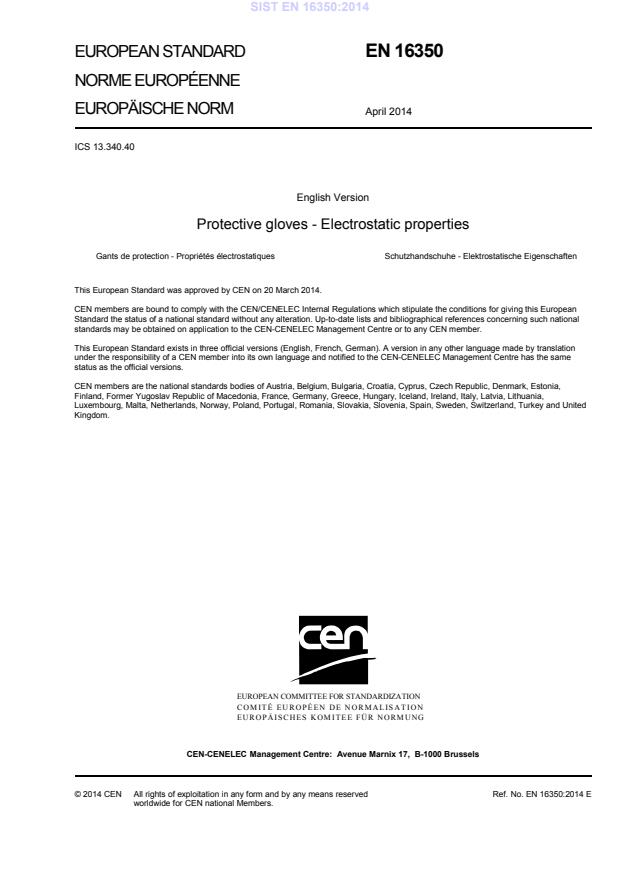
EUROPEAN STANDARD NORME EUROPÉENNE EUROPÄISCHE NORM
EN 16350
April 2014 ICS 13.340.40 English Version
Protective gloves - Electrostatic properties
Gants de protection - Propriétés électrostatiques
Schutzhandschuhe - Elektrostatische Eigenschaften This European Standard was approved by CEN on 20 March 2014.
CEN members are bound to comply with the CEN/CENELEC Internal Regulations which stipulate the conditions for giving this European Standard the status of a national standard without any alteration. Up-to-date lists and bibliographical references concerning such national standards may be obtained on application to the CEN-CENELEC Management Centre or to any CEN member.
This European Standard exists in three official versions (English, French, German). A version in any other language made by translation under the responsibility of a CEN member into its own language and notified to the CEN-CENELEC Management Centre has the same status as the official versions.
CEN members are the national standards bodies of Austria, Belgium, Bulgaria, Croatia, Cyprus, Czech Republic, Denmark, Estonia, Finland, Former Yugoslav Republic of Macedonia, France, Germany, Greece, Hungary, Iceland, Ireland, Italy, Latvia, Lithuania, Luxembourg, Malta, Netherlands, Norway, Poland, Portugal, Romania, Slovakia, Slovenia, Spain, Sweden, Switzerland, Turkey and United Kingdom.
EUROPEAN COMMITTEE FOR STANDARDIZATION
COMITÉ EUROPÉEN DE NORMALISATION EUROPÄISCHES KOMITEE FÜR NORMUNG
CEN-CENELEC Management Centre:
Avenue Marnix 17,
B-1000 Brussels © 2014 CEN All rights of exploitation in any form and by any means reserved worldwide for CEN national Members. Ref. No. EN 16350:2014 ESIST EN 16350:2014
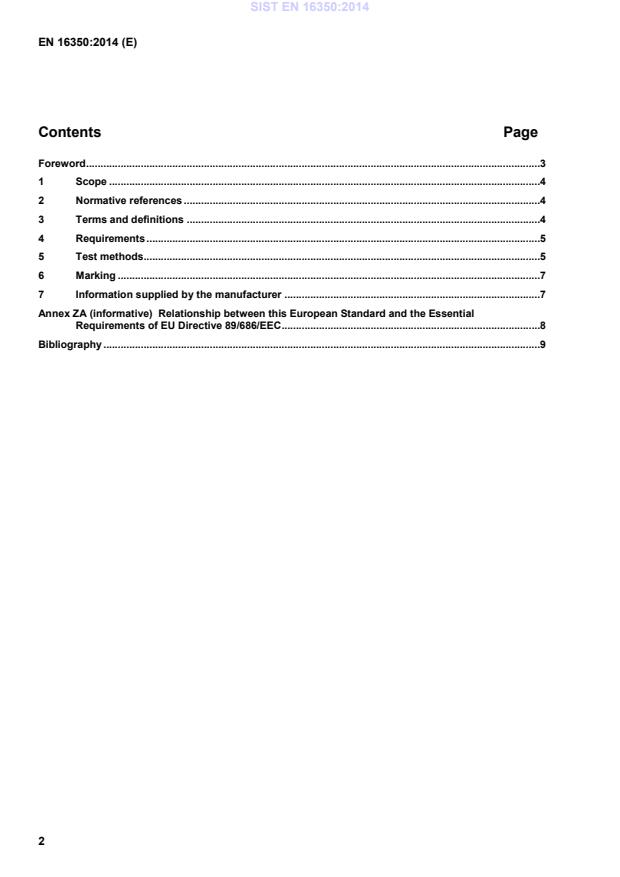
Relationship between this European Standard and the Essential Requirements of EU Directive 89/686/EEC .8 Bibliography .9
1 Scope This European Standard provides additional requirements for protective gloves that are worn in areas where flammable or explosive areas exist or might be present (see IEC 60079-32-1). It specifies a test method and requirements for performance, marking and information for electrostatic dissipative protective gloves to minimize explosion risks. This European Standard does not cover: — protection of electronic devices; — protection against mains voltages; — insulative protective gloves for live working (EN 60903); — protective gloves for welders (EN 12477). The requirements may not be sufficient in oxygen enriched flammable atmospheres. This European Standard should be used with the specific standards applicable to the risks for which the glove is designed. NOTE The electrostatic dissipative protective gloves are effective only if the wearer is earthed through a resistance lower than108 Ω. 2 Normative references The following documents, in whole or in part, are normatively referenced in this document and are indispensable for its application. For dated references, only the edition cited applies. For undated references, the latest edition of the referenced document (including any amendments) applies. EN 420, Protective gloves — General requirements and test methods EN 1149-2:1997, Protective clothing — Electrostatic properties — Part 2: Test method for measurement of the electrical resistance through a material (vertical resistance) EN 61340-2-3, Electrostatics — Part 2-3: Methods of test for determining the resistance and resistivity of solid planar materials used to avoid electrostatic charge
...
Questions, Comments and Discussion
Ask us and Technical Secretary will try to provide an answer. You can facilitate discussion about the standard in here.
Loading comments...