


EN 196-5:1994
(Main)Methods of testing cement - Part 5: Pozzolanicity test for pozzolanic cement
Methods of testing cement - Part 5: Pozzolanicity test for pozzolanic cement
This European standard describes the method of measuring the pozzolanicity of pozzolanic cements conforming to the definition in EN 197-1. This standard does not apply to Portland pozzolana cements or to pozzolanas. This method constitutes the reference procedure.
Prüfverfahren für Zement - Teil 5: Prüfung der Puzzolanität von Puzzolanzementen
Diese europäische Norm beschreibt das Verfahren zur Prüfung der Puzzolanität von Puzzolanzementen, die der Begriffsbestimmung in der europäischen Vornorm ENV 197-1 entsprechen. Die Norm gilt nicht für Portlandpuzzolanzemente und nicht für Puzzolane. Dieses Verfahren ist das Referzneverfahren.
Méthodes d'essais des ciments - Partie 5: Essai de pouzzolanicité des ciments pouzzolaniques
La présente norme européenne décrit la méthode de mesure de la pouzzolanicité des ciments pouzzoloniques répondant à la définition de la norme européenne EN 197-1. La norme n'est pas applicable aux ciments portlands à la pouzzolane ni aux pouzzolanes. Cette méthode constitue le mode opératoire de référence.
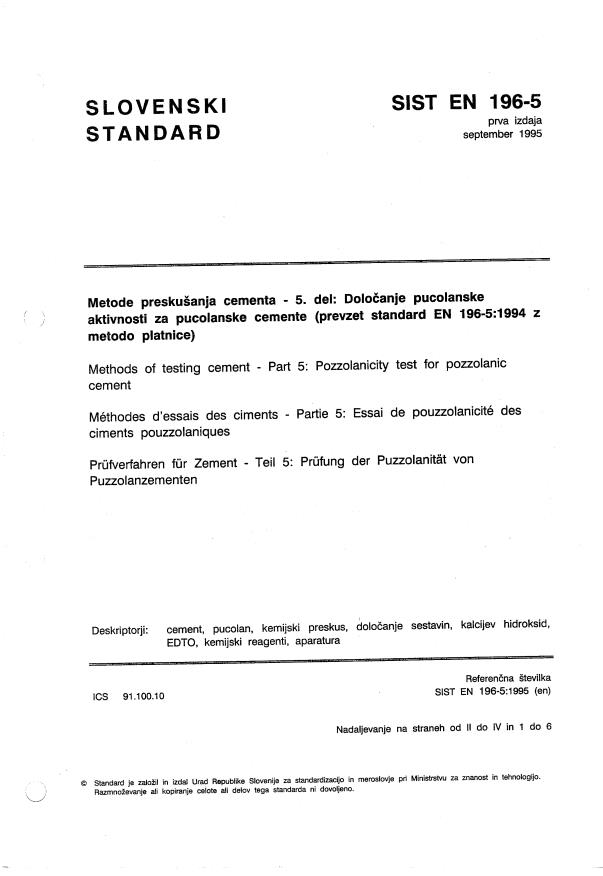
Metode preskušanja cementa - 5. del: Določanje pucolanske aktivnosti za pucolanske cemente
General Information
- Status
- Withdrawn
- Publication Date
- 15-Dec-1994
- Withdrawal Date
- 15-Feb-2005
- Technical Committee
- CEN/TC 51 - Cement and building limes
- Drafting Committee
- CEN/TC 51 - Cement and building limes
- Current Stage
- 9960 - Withdrawal effective - Withdrawal
- Start Date
- 16-Feb-2005
- Completion Date
- 16-Feb-2005
- Directive
- 89/106/EEC - Construction products
Relations
- Replaced By
EN 196-5:2005 - Methods of testing cement - Part 5: Pozzolanicity test for pozzolanic cement - Effective Date
- 22-Dec-2008
EN 196-5:1995
Get Certified
Connect with accredited certification bodies for this standard

ICC Evaluation Service
Building products evaluation and certification.

QAI Laboratories
Building and construction product testing and certification.

Aboma Certification B.V.
Specialized in construction, metal, and transport sectors.
Sponsored listings
Frequently Asked Questions
EN 196-5:1994 is a standard + national annex and/or foreword published by the European Committee for Standardization (CEN). Its full title is "Methods of testing cement - Part 5: Pozzolanicity test for pozzolanic cement". This standard covers: This European standard describes the method of measuring the pozzolanicity of pozzolanic cements conforming to the definition in EN 197-1. This standard does not apply to Portland pozzolana cements or to pozzolanas. This method constitutes the reference procedure.
This European standard describes the method of measuring the pozzolanicity of pozzolanic cements conforming to the definition in EN 197-1. This standard does not apply to Portland pozzolana cements or to pozzolanas. This method constitutes the reference procedure.
EN 196-5:1994 is classified under the following ICS (International Classification for Standards) categories: 91.100.10 - Cement. Gypsum. Lime. Mortar. The ICS classification helps identify the subject area and facilitates finding related standards.
EN 196-5:1994 has the following relationships with other standards: It is inter standard links to EN 196-5:2005. Understanding these relationships helps ensure you are using the most current and applicable version of the standard.
EN 196-5:1994 is associated with the following European legislation: EU Directives/Regulations: 305/2011, 89/106/EEC; Standardization Mandates: M/114. When a standard is cited in the Official Journal of the European Union, products manufactured in conformity with it benefit from a presumption of conformity with the essential requirements of the corresponding EU directive or regulation.
EN 196-5:1994 is available in PDF format for immediate download after purchase. The document can be added to your cart and obtained through the secure checkout process. Digital delivery ensures instant access to the complete standard document.
Questions, Comments and Discussion
Ask us and Technical Secretary will try to provide an answer. You can facilitate discussion about the standard in here.
Loading comments...