

ASTM F1910-98(2022)
(Specification)Standard Specification for Long Barbed Tape Obstacles
General Information
- Abstract
ABSTRACT
This specification covers barbed tape materials and configurations used for security barriers. Barbed tape shall be manufactured from stainless and galvanized steel. Stainless steel strip shall be either ferretic or austenitic. Coil loops shall not be kinked, unless it is part of the design.
SCOPE
1.1 This specification covers barbed tape materials and configurations used for security barriers.
1.2 This international standard was developed in accordance with internationally recognized principles on standardization established in the Decision on Principles for the Development of International Standards, Guides and Recommendations issued by the World Trade Organization Technical Barriers to Trade (TBT) Committee.
- Status
- Published
- Publication Date
- 31-Oct-2022
- Technical Committee
- F14 - Fences
- Drafting Committee
- F14.40 - Chain Link Fence and Wire Accessories


Overview
ASTM F1910-98(2022), Standard Specification for Long Barbed Tape Obstacles, establishes requirements for barbed tape materials and configurations designed for use as security barriers. This specification, developed by ASTM International, outlines standards for both stainless steel and galvanized steel barbed tapes commonly used for perimeter protection, intrusion deterrence, and related safety applications. The standard supports international best practices per the World Trade Organization Technical Barriers to Trade (TBT) principles.
Key Topics
Barbed Tape Materials:
The standard covers barbed tapes manufactured from both ferritic and austenitic stainless steel, as well as galvanized steel. Materials must conform to relevant ASTM specifications to ensure durability and performance.Configurations:
Several barbed tape obstacle designs are included, such as single coil helical, single coil concertina, double coil concertina, and double coil helical. Each configuration is specified according to diameter, barb clusters, coil loops, and attachment points.Dimensional and Mechanical Requirements:
Barbed tape must meet minimum barb length, coil loop spacing, and permissible diameter variations as outlined in referenced tables.
The tape and core wire specifications address requirements like minimum tensile strength and cross-sectional details.Workmanship and Finish:
Coil loops must not be kinked unless deliberately designed. Surfaces should be smooth, free of rust, and absent of serious defects that could affect product integrity.Ordering Information:
Purchasers must specify key details such as material type, configuration, coil diameter, barb length, and attachment points to ensure the correct product is supplied.
Applications
Security Fencing:
Barbed tape obstacles are widely used for high-security installations, including prisons, military facilities, borders, critical infrastructure, and utility sites.Perimeter Protection:
Facilities employ barbed tape as a deterrent to unauthorized access, often installed atop conventional fencing or as standalone barriers.Temporary and Permanent Installations:
The standard accommodates both fixed and modular/barrier obstacles for situations requiring rapid deployment or permanent solutions.Custom Security Solutions:
The specification enables organizations to design tailored solutions by selecting the most suitable materials and coil types for their application, ensuring optimal strength and security.
Related Standards
- ASTM A240/A240M: Chromium and Chromium-Nickel Stainless Steel Plate, Sheet, and Strip for Pressure Vessels and General Applications
- ASTM A666: Annealed or Cold-Worked Austenitic Stainless Steel Sheet, Strip, Plate, and Flat Bar
- ASTM A764: Metallic Coated Carbon Steel Wire for Mechanical Springs
- ASTM F1379: Terminology Relating to Barbed Tape
- ASTM A370: Mechanical Testing of Steel Products
Practical Value
Implementing ASTM F1910-98(2022) ensures that barbed tape obstacles meet recognized international standards for safety, effectiveness, and durability. Selecting barbed tape that meets these specifications helps secure valuable assets, protects personnel, and demonstrates compliance with global security requirements. This standard is essential for specifiers, facility managers, security consultants, and manufacturers involved in physical security and fencing solutions. By adhering to ASTM F1910-98(2022), organizations optimize perimeter defense strategies and reduce risk through proven, standardized practices.
Relations
- Effective Date
- 01-Mar-2024
- Effective Date
- 01-Nov-2023
- Effective Date
- 01-Jul-2019
- Refers
ASTM A370-17a - Standard Test Methods and Definitions for Mechanical Testing of Steel Products - Effective Date
- 15-Nov-2017
- Effective Date
- 01-Nov-2017
- Effective Date
- 01-Jan-2017
- Effective Date
- 01-Dec-2016
- Effective Date
- 01-May-2016
- Effective Date
- 01-Nov-2015
- Effective Date
- 01-Nov-2015
- Effective Date
- 01-Mar-2015
- Effective Date
- 01-Jan-2015
- Effective Date
- 15-May-2014
- Effective Date
- 01-May-2014
- Effective Date
- 15-Nov-2013
Get Certified
Connect with accredited certification bodies for this standard

DIBt (Deutsches Institut für Bautechnik)
German Institute for Building Technology.
DIN CERTCO
DIN Group product certification.

Aboma Certification B.V.
Specialized in construction, metal, and transport sectors.
Sponsored listings
Frequently Asked Questions
ASTM F1910-98(2022) is a technical specification published by ASTM International. Its full title is "Standard Specification for Long Barbed Tape Obstacles". This standard covers: ABSTRACT This specification covers barbed tape materials and configurations used for security barriers. Barbed tape shall be manufactured from stainless and galvanized steel. Stainless steel strip shall be either ferretic or austenitic. Coil loops shall not be kinked, unless it is part of the design. SCOPE 1.1 This specification covers barbed tape materials and configurations used for security barriers. 1.2 This international standard was developed in accordance with internationally recognized principles on standardization established in the Decision on Principles for the Development of International Standards, Guides and Recommendations issued by the World Trade Organization Technical Barriers to Trade (TBT) Committee.
ABSTRACT This specification covers barbed tape materials and configurations used for security barriers. Barbed tape shall be manufactured from stainless and galvanized steel. Stainless steel strip shall be either ferretic or austenitic. Coil loops shall not be kinked, unless it is part of the design. SCOPE 1.1 This specification covers barbed tape materials and configurations used for security barriers. 1.2 This international standard was developed in accordance with internationally recognized principles on standardization established in the Decision on Principles for the Development of International Standards, Guides and Recommendations issued by the World Trade Organization Technical Barriers to Trade (TBT) Committee.
ASTM F1910-98(2022) is classified under the following ICS (International Classification for Standards) categories: 91.090 - External structures. The ICS classification helps identify the subject area and facilitates finding related standards.
ASTM F1910-98(2022) has the following relationships with other standards: It is inter standard links to ASTM A370-24, ASTM A240/A240M-23a, ASTM A370-19, ASTM A370-17a, ASTM A240/A240M-17, ASTM A370-17, ASTM A240/A240M-16a, ASTM A240/A240M-16, ASTM A240/A240M-15b, ASTM A370-15, ASTM A240/A240M-15a, ASTM A240/A240M-15, ASTM A370-14, ASTM A240/A240M-14, ASTM A370-13. Understanding these relationships helps ensure you are using the most current and applicable version of the standard.
ASTM F1910-98(2022) is available in PDF format for immediate download after purchase. The document can be added to your cart and obtained through the secure checkout process. Digital delivery ensures instant access to the complete standard document.
Standards Content (Sample)
This international standard was developed in accordance with internationally recognized principles on standardization established in the Decision on Principles for the
Development of International Standards, Guides and Recommendations issued by the World Trade Organization Technical Barriers to Trade (TBT) Committee.
Designation: F1910 −98 (Reapproved 2022)
Standard Specification for
Long Barbed Tape Obstacles
This standard is issued under the fixed designation F1910; the number immediately following the designation indicates the year of
original adoption or, in the case of revision, the year of last revision. A number in parentheses indicates the year of last reapproval. A
superscript epsilon (´) indicates an editorial change since the last revision or reapproval.
1. Scope 5. Ordering/Specifying Information
5.1 Ordering or specifying barbed tape shall include the
1.1 This specification covers barbed tape materials and
following information as per sample specification, or by
configurations used for security barriers.
referencingitemnumbersinTables1and2(indicatenumberof
1.2 This international standard was developed in accor-
loops,ifapplicable).Materialfurnishedunderthisspecification
dance with internationally recognized principles on standard-
shall conform to applicable requirements of current editions of
ization established in the Decision on Principles for the
ASTM Standards.
Development of International Standards, Guides and Recom-
NOTE 1—The following sample specification is provided to assist when
mendations issued by the World Trade Organization Technical
specifyingororderingbarbedtapematerial.Actualsizeandstylewillvary
Barriers to Trade (TBT) Committee.
by individual job requirements.
Sample Specification Only—Barbed tape obstacle shall be 30 in.
2. Referenced Documents
diameter (62 in.). Each loop shall consist of 24 (61) clusters of four
2 needle-sharp barbs on 4 in. centers, each barb measuring a minimum of
2.1 ASTM Standards:
1.2 in. in length. The barbed tape shall be fabricated from Series 430
A176 Specification for Stainless and Heat-Resisting Chro-
stainless steel with optional hardness. The barbed tape shall be perma-
mium Steel Plate, Sheet, and Strip (Withdrawn 2015)
nently cold–clenched over an austenitic mechanical spring core wire. The
wire shall have a diameter of 0.098 in. with a minimum tensile strength of
A240/A240M Specification for Chromium and Chromium-
approximately 140 psi. The barbed tape shall have a minimum 230° wrap
Nickel Stainless Steel Plate, Sheet, and Strip for Pressure
about the core wire. Adjacent alternate loops shall be clipped together in
Vessels and for General Applications
five (5) locations around the circumference to obtain the concertina effect.
A370 Test Methods and Definitions for Mechanical Testing
Clipspacingoftheextendedcoilshallbe12 62in.Clipsshallbecapable
of Steel Products of withstanding a minimum pull load of 200 lb. Each coil shall contain 51
loops and cover 25 6 1 ft.
A666 Specification forAnnealed or Cold-WorkedAustenitic
Stainless Steel Sheet, Strip, Plate, and Flat Bar
5.1.1 Quantity—The number of units of barbed tape re-
A764 Specification for Metallic Coated Carbon Steel Wire,
quired. For fixed length units, the length per unit should be
Coated at Size and Drawn to Size for Mechanical Springs
specified.
F1379 Terminology Relating to Barbed Tape
5.1.2 Description— Barbed tape shall be described as single
coil helical, single coil concertina, double coil concertina, or
3. Terminology double coil helical.
5.1.3 Diameter—The purchaser shall specify the packaged
3.1 Refer to Terminology F1379.
diameter. When double coil products are specified, the inner
and outer coil packaged diameters shall be given.
4. Classification
5.1.4 Barb Length—RefertoTerminologyF1379andTables
4.1 Refer to 5.1.8.
1 and 2.
5.1.5 Coil Loops—The number of coil loops shall be speci-
fied by the purchaser.
5.1.6 Unit Length—The purchaser shall specify the installed
This specification is under the jurisdiction ofASTM Committee F14 on Fences
and is the direct responsibility of Subcommittee F14.40 on Chain Link Fence and length and coil spacing, including the coil spacing tolerance.
Wire Accessories.
5.1.7 Number of attachment points, in accordance with
Current edition approved Nov. 1, 2022. Published November 2022. Originally
Terminology F1379 and Tables 1 and 2.
approved in 1998. Last previous edition approved in 2018 as F1910 – 98(2018).
5.1.8 Cross Sections—The purchaser shall specify the cross
DOI: 10.1520/F1910-98R22.
For referenced ASTM standards, visit the ASTM website, www.astm.org, or
sections in accordance with Terminology F1379.
contact ASTM Customer Service at service@astm.org. For Annual Book of ASTM
Standards volume information, refer to the standard’s Document Summary page on 6. Material
the ASTM website.
6.1 Composition—Barbed tape shall be manufactured from
The last approved version of this historical standard is referenced on
www.astm.org. stainless and galvanized steel in accordance with the ASTM
Copyright © ASTM International, 100 Barr Harbor Drive, PO Box C700, West Conshohocken, PA 19428-2959. United States
F1910 − 98 (2022)
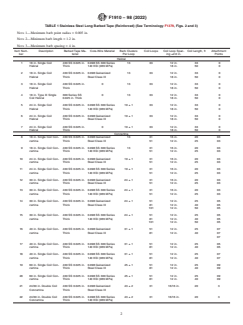
TABLE 1 Stainless Steel Long Barbed Tape (Reinforced) (See Terminology F1379, Figs. 2 and 3)
NOTE 1—Maximum barb point radius = 0.005 in.
NOTE 2—Minimum barb length = 1.2 in.
NOTE 3—Maximum barb spacing=4in.
Item Num- Description Barbed Tape Ma- Core-Wire Material Barb Clusters Coil Loops Coil Loop Spac- Coil Length, ft Attachment
ber terial Per Loop ing ±2.0 in. Points
Helical
1 18 in. Single Coil 430 SS 0.025 in. 0.098 SS 300 Series 13 33 12 in. 33 0
Helical Thick 140 KSI (965 MPa) 18 in. 50 0
2 18 in. Single Coil 430 SS 0.025 in. 0.098 Galvanized 13 33 12 in. 33 0
Helical Thick Steel Class III 18 in. 50 0
3 18 in. Single Coil 430 SS 0.025 in. 013 33 12in. 33 0
Helical Thick 18 in. 50 0
4 18 in. Type III Single 300 Series SS 013 33 12in. 33 0
Coil Helical 0.025 in. Thick 18 in. 50 0
5 24 in. Single Coil 430 SS 0.025 in. 0.098 SS 300 Series 19 ± 1 33 12 in. 33 0
Helical Thick 140 KSI (965 MPa) 18 in. 50 0
6 24 in. Sing
...