

ASTM C1244/C1244M-20
(Test Method)Standard Test Method for Concrete Sewer Manholes by the Negative Air Pressure (Vacuum) Test Prior to Backfill
General Information
- Abstract
SIGNIFICANCE AND USE
5.1 This is not a routine test. The values recorded are applicable only to the manhole being tested and at the time of testing.
SCOPE
1.1 This test method covers procedures for testing precast concrete manhole sections when using the vacuum test method to demonstrate the integrity of the installed materials and the construction procedures. This test method is used for testing concrete manhole sections utilizing mortar, mastic, or gasketed joints.
1.2 This test method is intended to be used as a preliminary test to enable the installer to demonstrate the condition of the concrete manholes prior to backfill. Users are hereby cautioned that misuse or misapplication of the test criteria contained herein can cause permanent damage to the system being tested.
Note 1: Vacuum test criteria presented in this test method are similar to those in general use. The test and criteria have been widely and successfully used in testing manholes.
Note 2: The user of this test method is advised that no correlation has been found between vacuum (air) and hydrostatic tests.
1.3 The values stated in inch pound or SI units are to be regarded separately as standard. The SI units are shown in brackets. The values stated in each system may not be exact equivalents; therefore, each system shall be used independently of the other. Combining values from the two systems may result in nonconformance with the standard.
1.4 This standard does not purport to address all of the safety concerns, if any, associated with its use. It is the responsibility of the user of this standard to establish appropriate safety, health, and environmental practices and determine the applicability of regulatory limitations prior to use.
1.5 This international standard was developed in accordance with internationally recognized principles on standardization established in the Decision on Principles for the Development of International Standards, Guides and Recommendations issued by the World Trade Organization Technical Barriers to Trade (TBT) Committee.
- Status
- Published
- Publication Date
- 31-Oct-2020
- Technical Committee
- C13 - Concrete Pipe
- Drafting Committee
- C13.06 - Manholes and Specials
Buy Documents

ASTM C1244/C1244M-20 - Standard Test Method for Concrete Sewer Manholes by the Negative Air Pressure (Vacuum) Test Prior to Backfill
REDLINE ASTM C1244/C1244M-20 - Standard Test Method for Concrete Sewer Manholes by the Negative Air Pressure (Vacuum) Test Prior to Backfill
Overview
ASTM C1244/C1244M-20 is the Standard Test Method for Concrete Sewer Manholes by the Negative Air Pressure (Vacuum) Test Prior to Backfill. Developed by ASTM International, this standard specifies procedures for evaluating the integrity and construction quality of precast concrete manhole sections. The test method is applicable to manholes constructed using mortar, mastic, or gasketed joints, and is conducted before backfilling. Its primary objective is to ensure that newly installed concrete manholes meet specific acceptance criteria by subjecting them to a negative air pressure, commonly known as a vacuum test.
Key Topics
- Preliminary Testing: This method serves as a preliminary test, allowing installers to verify the watertightness and overall condition of concrete manholes prior to backfilling.
- Applicability: The results of the vacuum test are valid only for the specific manhole being tested and at the time of testing.
- Units of Measurement: This standard recognizes both inch-pound and SI units. These measurement systems must be used independently to avoid nonconformance.
- Procedure Highlights:
- All lift holes and pipes entering the manhole are adequately braced and temporarily plugged.
- A test head is fitted to the manhole, and a vacuum is created inside the structure.
- The acceptability is determined by monitoring the vacuum drop over a specific time period.
- Criteria and Limitations:
- The standard does not establish a correlation between vacuum (air) tests and hydrostatic tests.
- Misapplication of the method can result in permanent damage to the manhole.
- Safety and Compliance: Users are responsible for observing all relevant safety, health, and environmental practices and for determining the applicability of regulatory constraints.
Applications
ASTM C1244/C1244M-20 is widely utilized by civil engineers, contractors, and installers-primarily in the construction and quality assessment of wastewater infrastructure. Key applications include:
- Quality Assurance in Sewer Construction: Assisting contractors and inspectors in demonstrating the integrity and leak-resistance of concrete manholes before covering them with backfill.
- Municipal Sewer System Installation: Supporting municipalities and public works agencies in adhering to reliability and durability standards for newly installed infrastructure, particularly sewer manhole sections.
- Precast Concrete Manufacturers: Used during factory or onsite acceptance testing of precast concrete manhole components featuring mortar, mastic, or gasketed joints.
This method is not a substitute for infiltration or exfiltration testing, which may be required for system acceptance but serves as an effective screening tool prior to further work.
Related Standards
For comprehensive manhole and pipeline testing, the following related ASTM standards are commonly referenced:
- ASTM C822 - Terminology Relating to Concrete Pipe and Related Products
- ASTM C924 / C924M (Withdrawn) - Practice for Testing Concrete Pipe Sewer Lines by Low-Pressure Air Test Method
- ASTM C969 / C969M - Practice for Infiltration and Exfiltration Acceptance Testing of Installed Precast Concrete Pipe Sewer Lines
These documents provide additional terminology, guidance, and procedures for air pressure and water leakage testing of concrete pipes and related structures.
Keywords: ASTM C1244, vacuum test, negative air pressure, concrete sewer manholes, precast concrete, quality assurance, manhole integrity, leak resistance, sewer infrastructure standards.
Relations
- Effective Date
- 01-Jan-2018
- Effective Date
- 15-Apr-2017
- Effective Date
- 15-Apr-2017
- Effective Date
- 01-Feb-2013
- Effective Date
- 01-Nov-2011
- Effective Date
- 01-Dec-2010
- Effective Date
- 01-Jun-2009
- Effective Date
- 01-Jun-2009
- Effective Date
- 01-Jun-2009
- Effective Date
- 01-Jun-2009
- Effective Date
- 01-Nov-2008
- Effective Date
- 02-Jul-2008
- Effective Date
- 15-Feb-2006
- Effective Date
- 01-Oct-2005
- Effective Date
- 15-May-2005
Buy Documents
ASTM C1244/C1244M-20 - Standard Test Method for Concrete Sewer Manholes by the Negative Air Pressure (Vacuum) Test Prior to Backfill
REDLINE ASTM C1244/C1244M-20 - Standard Test Method for Concrete Sewer Manholes by the Negative Air Pressure (Vacuum) Test Prior to Backfill
Get Certified
Connect with accredited certification bodies for this standard

Institut za varilstvo d.o.o. (Welding Institute)
Slovenia's leading welding institute since 1952. ISO 3834, EN 1090, pressure equipment certification, NDT personnel, welder qualification. Only IIW Au
Sponsored listings
Frequently Asked Questions
ASTM C1244/C1244M-20 is a standard published by ASTM International. Its full title is "Standard Test Method for Concrete Sewer Manholes by the Negative Air Pressure (Vacuum) Test Prior to Backfill". This standard covers: SIGNIFICANCE AND USE 5.1 This is not a routine test. The values recorded are applicable only to the manhole being tested and at the time of testing. SCOPE 1.1 This test method covers procedures for testing precast concrete manhole sections when using the vacuum test method to demonstrate the integrity of the installed materials and the construction procedures. This test method is used for testing concrete manhole sections utilizing mortar, mastic, or gasketed joints. 1.2 This test method is intended to be used as a preliminary test to enable the installer to demonstrate the condition of the concrete manholes prior to backfill. Users are hereby cautioned that misuse or misapplication of the test criteria contained herein can cause permanent damage to the system being tested. Note 1: Vacuum test criteria presented in this test method are similar to those in general use. The test and criteria have been widely and successfully used in testing manholes. Note 2: The user of this test method is advised that no correlation has been found between vacuum (air) and hydrostatic tests. 1.3 The values stated in inch pound or SI units are to be regarded separately as standard. The SI units are shown in brackets. The values stated in each system may not be exact equivalents; therefore, each system shall be used independently of the other. Combining values from the two systems may result in nonconformance with the standard. 1.4 This standard does not purport to address all of the safety concerns, if any, associated with its use. It is the responsibility of the user of this standard to establish appropriate safety, health, and environmental practices and determine the applicability of regulatory limitations prior to use. 1.5 This international standard was developed in accordance with internationally recognized principles on standardization established in the Decision on Principles for the Development of International Standards, Guides and Recommendations issued by the World Trade Organization Technical Barriers to Trade (TBT) Committee.
SIGNIFICANCE AND USE 5.1 This is not a routine test. The values recorded are applicable only to the manhole being tested and at the time of testing. SCOPE 1.1 This test method covers procedures for testing precast concrete manhole sections when using the vacuum test method to demonstrate the integrity of the installed materials and the construction procedures. This test method is used for testing concrete manhole sections utilizing mortar, mastic, or gasketed joints. 1.2 This test method is intended to be used as a preliminary test to enable the installer to demonstrate the condition of the concrete manholes prior to backfill. Users are hereby cautioned that misuse or misapplication of the test criteria contained herein can cause permanent damage to the system being tested. Note 1: Vacuum test criteria presented in this test method are similar to those in general use. The test and criteria have been widely and successfully used in testing manholes. Note 2: The user of this test method is advised that no correlation has been found between vacuum (air) and hydrostatic tests. 1.3 The values stated in inch pound or SI units are to be regarded separately as standard. The SI units are shown in brackets. The values stated in each system may not be exact equivalents; therefore, each system shall be used independently of the other. Combining values from the two systems may result in nonconformance with the standard. 1.4 This standard does not purport to address all of the safety concerns, if any, associated with its use. It is the responsibility of the user of this standard to establish appropriate safety, health, and environmental practices and determine the applicability of regulatory limitations prior to use. 1.5 This international standard was developed in accordance with internationally recognized principles on standardization established in the Decision on Principles for the Development of International Standards, Guides and Recommendations issued by the World Trade Organization Technical Barriers to Trade (TBT) Committee.
ASTM C1244/C1244M-20 is classified under the following ICS (International Classification for Standards) categories: 23.040.50 - Pipes and fittings of other materials. The ICS classification helps identify the subject area and facilitates finding related standards.
ASTM C1244/C1244M-20 has the following relationships with other standards: It is inter standard links to ASTM C822-18, ASTM C969M-17, ASTM C969-17, ASTM C822-13, ASTM C822-11, ASTM C822-10, ASTM C969-02(2009), ASTM C969M-02(2009), ASTM C924M-02(2009), ASTM C924-02(2009), ASTM C822-08b, ASTM C822-08a, ASTM C822-06, ASTM C822-05b, ASTM C822-05a. Understanding these relationships helps ensure you are using the most current and applicable version of the standard.
ASTM C1244/C1244M-20 is available in PDF format for immediate download after purchase. The document can be added to your cart and obtained through the secure checkout process. Digital delivery ensures instant access to the complete standard document.
Standards Content (Sample)
This international standard was developed in accordance with internationally recognized principles on standardization established in the Decision on Principles for the
Development of International Standards, Guides and Recommendations issued by the World Trade Organization Technical Barriers to Trade (TBT) Committee.
Designation: C1244/C1244M −20
Standard Test Method for
Concrete Sewer Manholes by the Negative Air Pressure
(Vacuum) Test Prior to Backfill
This standard is issued under the fixed designation C1244/C1244M; the number immediately following the designation indicates the
year of original adoption or, in the case of revision, the year of last revision. A number in parentheses indicates the year of last
reapproval. A superscript epsilon (´) indicates an editorial change since the last revision or reapproval.
1. Scope 2. Referenced Documents
2.1 ASTM Standards:
1.1 This test method covers procedures for testing precast
C822Terminology Relating to Concrete Pipe and Related
concretemanholesectionswhenusingthevacuumtestmethod
Products
to demonstrate the integrity of the installed materials and the
C924Practice for Testing Concrete Pipe Sewer Lines by
construction procedures. This test method is used for testing
Low-Pressure Air Test Method (Withdrawn 2013)
concretemanholesectionsutilizingmortar,mastic,orgasketed
C924MPractice for Testing Concrete Pipe Sewer Lines by
joints.
Low-Pressure Air Test Method (Metric) (Withdrawn
1.2 This test method is intended to be used as a preliminary
2013)
test to enable the installer to demonstrate the condition of the
C969Practice for Infiltration and Exfiltration Acceptance
concretemanholespriortobackfill.Usersareherebycautioned
Testing of Installed Precast Concrete Pipe Sewer Lines
that misuse or misapplication of the test criteria contained
C969MPractice for Infiltration and Exfiltration Acceptance
hereincancausepermanentdamagetothesystembeingtested.
Testing of Installed Precast Concrete Pipe Sewer Lines
(Metric)
NOTE 1—Vacuum test criteria presented in this test method are similar
to those in general use. The test and criteria have been widely and
3. Terminology
successfully used in testing manholes.
NOTE 2—The user of this test method is advised that no correlation has 3.1 For definitions of terms relating to manholes, see
been found between vacuum (air) and hydrostatic tests.
Terminology C822.
1.3 The values stated in inch pound or SI units are to be
4. Summary of Practice
regarded separately as standard. The SI units are shown in
4.1 All lift holes and any pipes entering the manhole are to
brackets. The values stated in each system may not be exact
equivalents;therefore,eachsystemshallbeusedindependently beplugged.Avacuumwillbedrawnandthevacuumdropover
aspecifiedtimeperiodisusedtodeterminetheacceptabilityof
of the other. Combining values from the two systems may
the manhole.
result in nonconformance with the standard.
1.4 This standard does not purport to address all of the
5. Significance and Use
safety concerns, if any, associated with its use. It is the
5.1 This is not a routine test. The values recorded are
responsibility of the user of this standard to establish appro-
applicable only to the manhole being tested and at the time of
priate safety, health, and environmental practices and deter-
testing.
mine the applicability of regulatory limitations prior to use.
1.5 This international standard was developed in accor-
6. Preparation of the Manhole
dance with internationally recognized principles on standard-
6.1 All lift holes shall be plugged.
ization established in the Decision on Principles for the
6.2 All pipes entering the manhole shall be temporarily
Development of International Standards, Guides and Recom-
plugged, taking care to securely brace the pipes and plugs to
mendations issued by the World Trade Organization Technical
prevent them from being drawn into the manhole.
Barriers to Trade (TBT) Committee.
For referenced ASTM standards, visit the ASTM website, www.astm.org, or
This test method is under the jurisdiction of ASTM Committee C13 on contact ASTM Customer Service at service@astm.org. For Annual Book of ASTM
Manholes and Specials. Standards volume information, refer to the standard’s Document Summary page on
Current edition approved Nov. 1, 2020. Published November 2020. Originally the ASTM website.
approved in 1993. Last previous edition approved in 2017 as C1244–11(2017). The last approved version of this historical standard is referenced on
DOI: 10.1520/C1244_C1244M-20. www.astm.org.
Copyright © ASTM International, 100 Barr Harbor Drive, PO Box C700, West Conshohocken, PA 19428-2959. United States
C1244/C1244M − 20
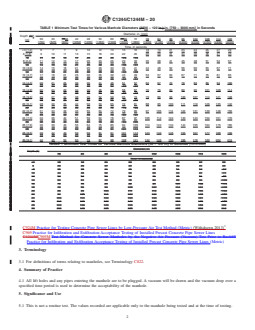
TABLE 1 Minimum Test Times for Various Manhole Diameters 30 – 120 in. [750 – 3000 mm] in Seconds
Diameter, in. [mm]
Depth ft
30 33 36 42 48 54 60 66 72 78 84 90 96 102 108 114 120
[m]
[750] [825] [900] [1050] [1200] [1350] [1500] [1650] [1800] [1950] [2100] [2250] [2400] [2550] [2700] [2850] [3000]
Time, in seconds
<4[1.2] 6779 10 12 13 15 16 18 19 21 23 24 25 27 29
6[1.8] 9 10 11 13151820222526 29 31 34 36 38 41 43
8 [2.4] 11 12 14 17 20 23 26 29 33 35 38 41 45 48 51 54 57
10[3.0] 14151821252933364144 48 52 56 60 63 67 71
12[3.7] 17182125303539434953 57 62 67 71 76 81 85
14[4.3] 20212530354146515762 67 72 78 83 89 94 100
16[4.9] 22242934404652586770 76 83 89 95 101 108 114
18[5.5] 25273238455259657379 86 93 100 107 114 121 128
20[6.1] 28303542505365728188 95 103 111 119 126 135 142
22 [6.7] 31 33 39 46 55 64 72 79 89 97 105 114 122 131 139 148 156
24 [7.3] 33 36 42 51 59 64 78 87 97 106 114 124 133 143 152 161 170
26 [7.9] 36 39 46 55 64 75 85 94 105 114 124 134 144 155 164 175 185
28 [8.5] 39 42 49 59 69 81 91 101 113 123 133 145 155 167 177 188 199
30 [9.1] 42 45 53 63 74 87 98 108 121 132 143 155 166 178 189 202 213
7. Procedure 7.5 Use or failure of this vacuum test shall not preclude
acceptance by appropriate water infiltration or exfiltration
7.1 The test head shall be placed at the top of the manhole
testing, (see Practice C969 [C969M]), or other means.
in accordance with the manufacturer’s recommendations.
7.2 Avacuum of 10 in. [254 mm] Hg shall be drawn on the
8. Precision and Bias
manhole, the valve on the vacuum line of the test head closed,
and the vacuum pump shut off.The time shall be measured for 8.1 No justifiable statement is presently capable of being
the vacuum to drop
...
This document is not an ASTM standard and is intended only to provide the user of an ASTM standard an indication of what changes have been made to the previous version. Because
it may not be technically possible to adequately depict all changes accurately, ASTM recommends that users consult prior editions as appropriate. In all cases only the current version
of the standard as published by ASTM is to be considered the official document.
Designation: C1244 − 11 (Reapproved 2017) C1244/C1244M − 20
Standard Test Method for
Concrete Sewer Manholes by the Negative Air Pressure
(Vacuum) Test Prior to Backfill
This standard is issued under the fixed designation C1244;C1244/C1244M; the number immediately following the designation indicates
the year of original adoption or, in the case of revision, the year of last revision. A number in parentheses indicates the year of last
reapproval. A superscript epsilon (´) indicates an editorial change since the last revision or reapproval.
1. Scope
1.1 This test method covers procedures for testing precast concrete manhole sections when using the vacuum test method to
demonstrate the integrity of the installed materials and the construction procedures. This test method is used for testing concrete
manhole sections utilizing mortar, mastic, or gasketed joints.
1.2 This test method is intended to be used as a preliminary test to enable the installer to demonstrate the condition of the concrete
manholes prior to backfill. Users are hereby cautioned that misuse or misapplication of the test criteria contained herein can cause
permanent damage to the system being tested.
NOTE 1—Vacuum test criteria presented in this test method are similar to those in general use. The test and criteria have been widely and successfully
used in testing manholes.
NOTE 2—The user of this test method is advised that no correlation has been found between vacuum (air) and hydrostatic tests.
1.3 This test method is the companion to metric Test MethodThe values stated in inch pound or SI units are to be regarded
separately C1244M; therefore, no SI equivalentsas standard. The SI units are shown in this test method. brackets. The values stated
in each system may not be exact equivalents; therefore, each system shall be used independently of the other. Combining values
from the two systems may result in nonconformance with the standard.
1.4 This standard does not purport to address all of the safety problems,concerns, if any, associated with its use. It is the
responsibility of the user of this standard to establish appropriate safety safety, health, and healthenvironmental practices and
determine the applicability of regulatory limitations prior to use.
1.5 This international standard was developed in accordance with internationally recognized principles on standardization
established in the Decision on Principles for the Development of International Standards, Guides and Recommendations issued
by the World Trade Organization Technical Barriers to Trade (TBT) Committee.
2. Referenced Documents
2.1 ASTM Standards:
C822 Terminology Relating to Concrete Pipe and Related Products
C924 Practice for Testing Concrete Pipe Sewer Lines by Low-Pressure Air Test Method (Withdrawn 2013)
This test method is under the jurisdiction of ASTM Committee C13 on Manholes and Specials.
Current edition approved April 1, 2017Nov. 1, 2020. Published April 2017November 2020. Originally approved in 1993. Last previous edition approved in 20112017 as
C1244 – 11.C1244 – 11(2017). DOI: 10.1520/C1244-11R17.10.1520/C1244_C1244M-20.
For referenced ASTM standards, visit the ASTM website, www.astm.org, or contact ASTM Customer Service at service@astm.org. For Annual Book of ASTM Standards
volume information, refer to the standard’s Document Summary page on the ASTM website.
The last approved version of this historical standard is referenced on www.astm.org.
Copyright © ASTM International, 100 Barr Harbor Drive, PO Box C700, West Conshohocken, PA 19428-2959. United States
C1244/C1244M − 20
TABLE 1 Minimum Test Times for Various Manhole Diameters (3030 – 120 in.) in. [750 – 3000 mm] in Seconds
Diameter, in. [mm]
Depth (ft)ft
30 33 3636 42 48 54 60 6666 72 78 84 90 96 102 108 114 120
[m]
[750] [825] [900] [1050] [1200] [1350] [1500] [1650] [1800] [1950] [2100] [2250] [2400] [2550] [2700] [2850] [3000]
Time, in seconds
<4 [1.2] 6 7 7 9 10 12 13 15 16 18 19 21 23 24 25 27 29
6 [1.8] 9 10 11 13 15 18 20 22 25 26 29 31 34 36 38 41 43
8 11 12 14 17 20 23 26 29 33
8 [2.4] 11 12 14 17 20 23 26 29 33 35 38 41 45 48 51 54 57
10 14 15 18 21 25 29 33 36 41
10 [3.0] 14 15 18 21 25 29 33 36 41 44 48 52 56 60 63 67 71
12 17 18 21 25 30 35 39 43 49
12 [3.7] 17 18 21 25 30 35 39 43 49 53 57 62 67 71 76 81 85
14 20 21 25 30 35 41 46 51 57
14 [4.3] 20 21 25 30 35 41 46 51 57 62 67 72 78 83 89 94 100
16 22 24 29 34 40 46 52 58 67
16 [4.9] 22 24 29 34 40 46 52 58 67 70 76 83 89 95 101 108 114
18 25 27 32 38 45 52 59 65 73
18 [5.5] 25 27 32 38 45 52 59 65 73 79 86 93 100 107 114 121 128
20 28 30 35 42 50 53 65 72 81
20 [6.1] 28 30 35 42 50 53 65 72 81 88 95 103 111 119 126 135 142
22 31 33 39 46 55 64 72 79 89
22 [6.7] 31 33 39 46 55 64 72 79 89 97 105 114 122 131 139 148 156
24 33 36 42 51 59 64 78 87 97
24 [7.3] 33 36 42 51 59 64 78 87 97 106 114 124 133 143 152 161 170
26 36 39 46 55 64 75 85 94 105
26 [7.9] 36 39 46 55 64 75 85 94 105 114 124 134 144 155 164 175 185
28 39 42 49 59 69 81 91 101 113
28 [8.5] 39 42 49 59 69 81 91 101 113 123 133 145 155 167 177 188 199
30 42 45 53 63 74 87 98 108 121
30 [9.1] 42 45 53 63 74 87 98 108 121 132 143 155 166 178 189 202 213
TABLE 1 Minimum Test Times for Various Manhole Diameters (30 – 120 in.) in Seconds (continued)
Diameter, in.
Depth (ft)
78 84 90 96 102 108 114 120
Time, in seconds
<4 18 19 21 23 24 25 27 29
6 26 29 31 34 36 38 41 43
8 35 38 41 45 48 51 54 57
10 44 48 52 56 60 63 67 71
12 53 57 62 67 71 76 81 85
14 62 67 72 78 83 89 94 100
16 70 76 83 89 95 101 108 114
18 79 86 93 100 107 114 121 128
20 88 95 103 111 119 126 135 142
22 97 105 114 122 131 139 148 156
24 106 114 124 133 143 152 161 170
26 114 124 134 144 155 164 175 185
28 123 133 145 155 167 177 188 199
30 132 143 155 166 178 189 202 213
C924M Practice for Testing Concrete Pipe Sewer Lines by Low-Pressure Air Test Method (Metric) (Withdrawn 2013)
C969 Practice for Infiltration and Exfiltration Acceptance Testing of Installed Precast Concrete Pipe Sewer Lines
C1244MC969M Test Method for Concrete Sewer Manholes by the Negative Air Pressure (Vacuum) Test Prior to Backfill
Practice for Infiltration and Exfiltration Acceptance Testing of Installed Precast Concrete Pipe Sewer Lines (Metric)
3. Terminology
3.1 For definitions of terms relating to manholes, see Terminology C822.
4. Summary of Practice
4.1 All lift holes and any pipes entering the manhole are to be plugged. A vacuum will be drawn and the vacuum drop over a
specified time period is used to determine the acceptability of the manhole.
5. Significance and Use
5.1 This is not a routine test. The values recorded are applicable only to the manhole being tested and at the time of testing.
C1244/C1244M − 20
6. Preparation of the Manhole
6.1 All lift holes shall be plugged.
6.2 All pipes entering the manhole shall be temporarily plugged, taking care to securely brace the pipes and plugs to prevent them
from being drawn into the manhole.
7. Procedure
7.1 The test head shall be placed at the top of the manhole in accordance with the manufacturer’s recommendations.
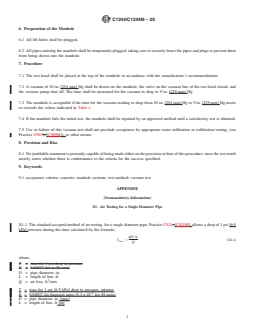
7.2 A vacuum of 10 in. [254 mm] Hg shall be drawn on the manhole, the valve on the vacuum line of the test head closed, and
the vacuum pump shut off. The time shall be measured for the vacuum to drop to 9 in. [229 mm] Hg.
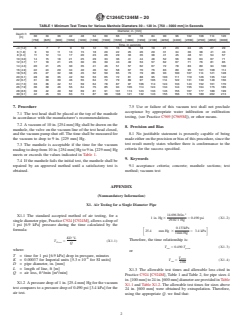
7.3 The manhole is acceptable if the time for the vacuum reading to drop from 10 in. [254 mm] Hg to 9 in. [229 mm] Hg meets
or exceeds the values indicated in Table 1.
7.4 If the manhole fails the initial test, the manhole shall be repaired by an approved method until a satisfactory test is obtained.
7.5 Use or failure of this vacuum test shall not preclude acceptance by appropriate water infiltration or ex
...