

ASTM C1926-23
(Test Method)Standard Test Method for Measurement of Glass Dissolution Rate Using Stirred Dilute Reactor Conditions on Monolithic Samples
General Information
- Abstract
SIGNIFICANCE AND USE
5.1 This test method provides a description of the design of the Stirred Reactor Coupon Analysis (SRCA) apparatus and identifies aspects of the performance of the SRCA tests and interpretation of the test results that must be addressed by the experimenter to provide confidence in the measured dissolution rate.
5.2 The SRCA methods described in this test method can be used to characterize several aspects of glass corrosion that can be included in mechanistic models of long-term durability of glasses, including nuclear waste glasses.
5.3 Depending on the test parameters investigated, the SRCA results can be used to measure the intrinsic dilute glass dissolution rate, as well as the effects of conditions such as temperature, pH, and solution chemistry on the dissolution rate.
5.4 Due to the scalable nature of the method, it is particularly applicable to studies of the impact of glass composition on dilute-condition corrosion. Models of glass behavior can be parameterized by testing glass composition matrices and establishing quantitative structure-property relationships.
5.5 The step heights present on the corroded sample can be measured by a variety of techniques including profilometry (optical or stylus), atomic force microscopy, interferometry or other techniques capable of determining relative depths on a sample surface. The sample can also be interrogated with other techniques such as scanning electron microscopy to characterize the corrosion behavior. These further analyses can determine if the sample corroded homogenously and possible formation of secondary phases or leached layers. Occurrence of these features may impact the accuracy of glass dissolution. This test method does not address these solid-state characterizations.
SCOPE
1.1 This test method describes a test method in which the dissolution rate of a homogenous silicate glass is measured through corrosion of monolithic samples in stirred dilute conditions.
1.2 Although the test method was designed for simulated nuclear waste glass compositions per Guide C1174, the method is applicable to glass compositions for other applications including, but not limited to, display glass, pharmaceutical glass, bioglass, and container glass compositions.
1.3 Various test solutions can be used at temperatures less than 100 °C. While the durability of the glass can be impacted by dissolving species from the glass, and thus the test can be conducted in dilute conditions or concentrated condition to determine the impact of such species, care must be taken to avoid, acknowledge, or account for the production of alteration layers which may confound the step height measurements.
1.4 The dissolution rate measured by this test is, by design, an average of all corrosion that occurs during the test. In dilute conditions, glass is assumed to dissolve congruently and the dissolution rate is assumed to be constant.
1.5 Tests are carried out via the placement of the monolithic samples in a large well-mixed volume of solution, achieving a high volume to surface area ratio resulting in dilute conditions with agitation of the solution.
1.6 This test method excludes test methods using powdered glass samples, or in which the reactor solution saturates with time. Glass fibers may be used without a mask if the diameter is known to high accuracy before the test.
1.7 Tests may be conducted with ASTM Type I water (see Specification D1193 and Terminology D1129), buffered water or other chemical solutions, simulated or actual groundwaters, biofluids, or other dissolving solutions.
1.8 Tests are conducted with monolithic glass samples with at least a single flat face. Although having two plane-parallel faces is helpful for certain step height measurements, it is not required. The geometric dimensions of the monolith are not required to be known. The reacted monolithic sample is to be analyzed following the reaction to measure a corroded d...
- Status
- Published
- Publication Date
- 31-Jan-2023
- Technical Committee
- C26 - Nuclear Fuel Cycle
- Drafting Committee
- C26.13 - Spent Fuel and High Level Waste
Overview
ASTM C1926-23 is the internationally recognized standard test method for measuring the dissolution rate of homogeneous silicate glass using stirred dilute reactor conditions with monolithic samples. Developed by ASTM International, this standard outlines the design, use, and analytic approach for the Stirred Reactor Coupon Analysis (SRCA) method. It provides guidance for evaluating glass corrosion performance, which is vital to assessing the long-term chemical durability of glasses in a variety of critical applications, including nuclear waste glass containment, display glass, pharmaceutical glass, bioglass, and container glass.
Key Topics
- SRCA Apparatus Design: Describes the use of an agitated reaction vessel to maintain dilute conditions for the glass coupon, ensuring the accurate measurement of glass dissolution rates.
- Test Conditions: Tests are performed in well-mixed solutions at temperatures below 100°C, using ASTM Type I water, buffered solutions, simulated groundwaters, biofluids, or similar solvents.
- Glass Sample Requirements: Monolithic glass samples with at least one flat face are required; power-based or saturated systems are excluded.
- Step Height Measurement: The recession of the glass surface is quantified by measuring the step height between a masked (protected) and unmasked (exposed) area after testing, using techniques such as profilometry, atomic force microscopy, or interferometry.
- Influence of Test Parameters: Explores how factors such as temperature, pH, and solution chemistry impact the intrinsic glass dissolution rate.
- Quality Assurance and Reporting: Details the need for comprehensive documentation of sample preparation, test conditions, calculation methods, and results reporting.
Applications
ASTM C1926-23 is utilized for:
- Nuclear Waste Glass Evaluation: The test method is extensively applied in the nuclear industry to assess the long-term leaching behavior and chemical durability of vitrified radioactive waste glass, informing safety cases for geological disposal.
- Performance Modeling: SRCA data can be used to parameterize mechanistic models, supporting structure-property relationship development for glass corrosion.
- Material Development and Quality Control: Manufacturers of display glass, pharmaceutical packaging, bioglass, and container glass use the method to verify product stability and optimize compositions for resistance to corrosion under dilute conditions.
- Academic and Industrial Research: Researchers employ ASTM C1926-23 to study fundamental glass dissolution mechanisms, validate corrosion models, and investigate the impact of compositional changes on durability.
Related Standards
This standard interfaces with a suite of relevant ASTM documents, including:
- ASTM C1174: Guide for Evaluation of Long-Term Behavior of Materials Used in Engineered Barrier Systems for High-Level Radioactive Waste.
- ASTM C1662: Practice for Measurement of Glass Dissolution Rate Using the Single-Pass Flow-Through Test Method.
- ASTM C1220: Test Method for Static Leaching of Monolithic Waste Forms.
- ASTM D1193: Specification for Reagent Water.
- ASTM D1293: Test Methods for pH of Water.
- ASTM D859: Test Method for Silica in Water.
- ASTM C693: Test Method for Density of Glass by Buoyancy.
Practical Value
Adherent use of ASTM C1926-23 ensures reproducible, high-confidence measurements of glass dissolution rates that are critical for safety, product development, and regulatory compliance. The test method delivers clear procedures for the consistent evaluation of corrosion resistance, supports regulatory submissions, and enhances quality assurance for industries reliant on glass durability. Its proven repeatability and reproducibility, demonstrated through interlaboratory studies, make ASTM C1926-23 an essential method for material scientists, environmental engineers, and industry stakeholders concerned with the long-term integrity of glass materials.
Keywords: glass dissolution rate, ASTM C1926-23, glass corrosion, SRCA test method, nuclear waste glass, chemical durability, glass performance testing, glass leaching, corrosion resistance.
Relations
- Effective Date
- 01-Jan-2024
- Effective Date
- 01-May-2020
- Effective Date
- 15-Feb-2020
- Effective Date
- 01-Aug-2019
- Effective Date
- 01-Sep-2018
- Effective Date
- 15-Nov-2017
- Effective Date
- 01-Jul-2017
- Effective Date
- 15-Jun-2014
- Effective Date
- 01-May-2014
- Effective Date
- 15-Jan-2014
- Effective Date
- 01-Oct-2013
- Effective Date
- 01-Jun-2013
- Effective Date
- 01-May-2013
- Effective Date
- 01-May-2013
- Effective Date
- 01-May-2013
Frequently Asked Questions
ASTM C1926-23 is a standard published by ASTM International. Its full title is "Standard Test Method for Measurement of Glass Dissolution Rate Using Stirred Dilute Reactor Conditions on Monolithic Samples". This standard covers: SIGNIFICANCE AND USE 5.1 This test method provides a description of the design of the Stirred Reactor Coupon Analysis (SRCA) apparatus and identifies aspects of the performance of the SRCA tests and interpretation of the test results that must be addressed by the experimenter to provide confidence in the measured dissolution rate. 5.2 The SRCA methods described in this test method can be used to characterize several aspects of glass corrosion that can be included in mechanistic models of long-term durability of glasses, including nuclear waste glasses. 5.3 Depending on the test parameters investigated, the SRCA results can be used to measure the intrinsic dilute glass dissolution rate, as well as the effects of conditions such as temperature, pH, and solution chemistry on the dissolution rate. 5.4 Due to the scalable nature of the method, it is particularly applicable to studies of the impact of glass composition on dilute-condition corrosion. Models of glass behavior can be parameterized by testing glass composition matrices and establishing quantitative structure-property relationships. 5.5 The step heights present on the corroded sample can be measured by a variety of techniques including profilometry (optical or stylus), atomic force microscopy, interferometry or other techniques capable of determining relative depths on a sample surface. The sample can also be interrogated with other techniques such as scanning electron microscopy to characterize the corrosion behavior. These further analyses can determine if the sample corroded homogenously and possible formation of secondary phases or leached layers. Occurrence of these features may impact the accuracy of glass dissolution. This test method does not address these solid-state characterizations. SCOPE 1.1 This test method describes a test method in which the dissolution rate of a homogenous silicate glass is measured through corrosion of monolithic samples in stirred dilute conditions. 1.2 Although the test method was designed for simulated nuclear waste glass compositions per Guide C1174, the method is applicable to glass compositions for other applications including, but not limited to, display glass, pharmaceutical glass, bioglass, and container glass compositions. 1.3 Various test solutions can be used at temperatures less than 100 °C. While the durability of the glass can be impacted by dissolving species from the glass, and thus the test can be conducted in dilute conditions or concentrated condition to determine the impact of such species, care must be taken to avoid, acknowledge, or account for the production of alteration layers which may confound the step height measurements. 1.4 The dissolution rate measured by this test is, by design, an average of all corrosion that occurs during the test. In dilute conditions, glass is assumed to dissolve congruently and the dissolution rate is assumed to be constant. 1.5 Tests are carried out via the placement of the monolithic samples in a large well-mixed volume of solution, achieving a high volume to surface area ratio resulting in dilute conditions with agitation of the solution. 1.6 This test method excludes test methods using powdered glass samples, or in which the reactor solution saturates with time. Glass fibers may be used without a mask if the diameter is known to high accuracy before the test. 1.7 Tests may be conducted with ASTM Type I water (see Specification D1193 and Terminology D1129), buffered water or other chemical solutions, simulated or actual groundwaters, biofluids, or other dissolving solutions. 1.8 Tests are conducted with monolithic glass samples with at least a single flat face. Although having two plane-parallel faces is helpful for certain step height measurements, it is not required. The geometric dimensions of the monolith are not required to be known. The reacted monolithic sample is to be analyzed following the reaction to measure a corroded d...
SIGNIFICANCE AND USE 5.1 This test method provides a description of the design of the Stirred Reactor Coupon Analysis (SRCA) apparatus and identifies aspects of the performance of the SRCA tests and interpretation of the test results that must be addressed by the experimenter to provide confidence in the measured dissolution rate. 5.2 The SRCA methods described in this test method can be used to characterize several aspects of glass corrosion that can be included in mechanistic models of long-term durability of glasses, including nuclear waste glasses. 5.3 Depending on the test parameters investigated, the SRCA results can be used to measure the intrinsic dilute glass dissolution rate, as well as the effects of conditions such as temperature, pH, and solution chemistry on the dissolution rate. 5.4 Due to the scalable nature of the method, it is particularly applicable to studies of the impact of glass composition on dilute-condition corrosion. Models of glass behavior can be parameterized by testing glass composition matrices and establishing quantitative structure-property relationships. 5.5 The step heights present on the corroded sample can be measured by a variety of techniques including profilometry (optical or stylus), atomic force microscopy, interferometry or other techniques capable of determining relative depths on a sample surface. The sample can also be interrogated with other techniques such as scanning electron microscopy to characterize the corrosion behavior. These further analyses can determine if the sample corroded homogenously and possible formation of secondary phases or leached layers. Occurrence of these features may impact the accuracy of glass dissolution. This test method does not address these solid-state characterizations. SCOPE 1.1 This test method describes a test method in which the dissolution rate of a homogenous silicate glass is measured through corrosion of monolithic samples in stirred dilute conditions. 1.2 Although the test method was designed for simulated nuclear waste glass compositions per Guide C1174, the method is applicable to glass compositions for other applications including, but not limited to, display glass, pharmaceutical glass, bioglass, and container glass compositions. 1.3 Various test solutions can be used at temperatures less than 100 °C. While the durability of the glass can be impacted by dissolving species from the glass, and thus the test can be conducted in dilute conditions or concentrated condition to determine the impact of such species, care must be taken to avoid, acknowledge, or account for the production of alteration layers which may confound the step height measurements. 1.4 The dissolution rate measured by this test is, by design, an average of all corrosion that occurs during the test. In dilute conditions, glass is assumed to dissolve congruently and the dissolution rate is assumed to be constant. 1.5 Tests are carried out via the placement of the monolithic samples in a large well-mixed volume of solution, achieving a high volume to surface area ratio resulting in dilute conditions with agitation of the solution. 1.6 This test method excludes test methods using powdered glass samples, or in which the reactor solution saturates with time. Glass fibers may be used without a mask if the diameter is known to high accuracy before the test. 1.7 Tests may be conducted with ASTM Type I water (see Specification D1193 and Terminology D1129), buffered water or other chemical solutions, simulated or actual groundwaters, biofluids, or other dissolving solutions. 1.8 Tests are conducted with monolithic glass samples with at least a single flat face. Although having two plane-parallel faces is helpful for certain step height measurements, it is not required. The geometric dimensions of the monolith are not required to be known. The reacted monolithic sample is to be analyzed following the reaction to measure a corroded d...
ASTM C1926-23 is classified under the following ICS (International Classification for Standards) categories: 81.040.10 - Raw materials and raw glass. The ICS classification helps identify the subject area and facilitates finding related standards.
ASTM C1926-23 has the following relationships with other standards: It is inter standard links to ASTM C859-24, ASTM D1129-13(2020)e2, ASTM C1174-20, ASTM C693-93(2019), ASTM C1662-18, ASTM C1662-17, ASTM C1174-17, ASTM C859-14a, ASTM E177-14, ASTM C859-14, ASTM C693-93(2013), ASTM C859-13a, ASTM E177-13, ASTM C859-13, ASTM E691-13. Understanding these relationships helps ensure you are using the most current and applicable version of the standard.
ASTM C1926-23 is available in PDF format for immediate download after purchase. The document can be added to your cart and obtained through the secure checkout process. Digital delivery ensures instant access to the complete standard document.
Standards Content (Sample)
This international standard was developed in accordance with internationally recognized principles on standardization established in the Decision on Principles for the
Development of International Standards, Guides and Recommendations issued by the World Trade Organization Technical Barriers to Trade (TBT) Committee.
Designation: C1926 − 23
Standard Test Method for
Measurement of Glass Dissolution Rate Using Stirred Dilute
Reactor Conditions on Monolithic Samples
This standard is issued under the fixed designation C1926; the number immediately following the designation indicates the year of
original adoption or, in the case of revision, the year of last revision. A number in parentheses indicates the year of last reapproval. A
superscript epsilon (´) indicates an editorial change since the last revision or reapproval.
1. Scope faces is helpful for certain step height measurements, it is not
required. The geometric dimensions of the monolith are not
1.1 This test method describes a test method in which the
required to be known. The reacted monolithic sample is to be
dissolution rate of a homogenous silicate glass is measured
analyzed following the reaction to measure a corroded depth to
through corrosion of monolithic samples in stirred dilute
determine dissolution rate.
conditions.
1.9 Tests may be performed with radioactive samples.
1.2 Although the test method was designed for simulated
However, safety concerns working with radionuclides are not
nuclear waste glass compositions per Guide C1174, the method
addressed in this test method.
is applicable to glass compositions for other applications
including, but not limited to, display glass, pharmaceutical 1.10 Data from these tests can be used to determine the
glass, bioglass, and container glass compositions. value of kinetic rate model parameters needed to predict glass
corrosion behavior over long periods of time. For an example,
1.3 Various test solutions can be used at temperatures less
see Practice C1662, section 9.5.
than 100 °C. While the durability of the glass can be impacted
by dissolving species from the glass, and thus the test can be 1.11 This test method must be performed in accordance with
conducted in dilute conditions or concentrated condition to all quality assurance requirements for acceptance of the data.
determine the impact of such species, care must be taken to
1.12 Units—The values stated in SI units are regarded as the
avoid, acknowledge, or account for the production of alteration
standard. Any values given in parentheses are for information
layers which may confound the step height measurements.
only.
1.4 The dissolution rate measured by this test is, by design,
1.13 This standard does not purport to address all of the
an average of all corrosion that occurs during the test. In dilute
safety concerns, if any, associated with its use. It is the
conditions, glass is assumed to dissolve congruently and the
responsibility of the user of this standard to establish appro-
dissolution rate is assumed to be constant.
priate safety, health, and environmental practices and deter-
mine the applicability of regulatory limitations prior to use.
1.5 Tests are carried out via the placement of the monolithic
1.14 This international standard was developed in accor-
samples in a large well-mixed volume of solution, achieving a
dance with internationally recognized principles on standard-
high volume to surface area ratio resulting in dilute conditions
ization established in the Decision on Principles for the
with agitation of the solution.
Development of International Standards, Guides and Recom-
1.6 This test method excludes test methods using powdered
mendations issued by the World Trade Organization Technical
glass samples, or in which the reactor solution saturates with
Barriers to Trade (TBT) Committee.
time. Glass fibers may be used without a mask if the diameter
is known to high accuracy before the test.
2. Referenced Documents
1.7 Tests may be conducted with ASTM Type I water (see 2
2.1 ASTM Standards:
Specification D1193 and Terminology D1129), buffered water
C693 Test Method for Density of Glass by Buoyancy
or other chemical solutions, simulated or actual groundwaters,
C859 Terminology Relating to Nuclear Materials
biofluids, or other dissolving solutions.
C1174 Guide for Evaluation of Long-Term Behavior of
1.8 Tests are conducted with monolithic glass samples with Materials Used in Engineered Barrier Systems (EBS) for
at least a single flat face. Although having two plane-parallel
Geological Disposal of High-Level Radioactive Waste
This test method is under the jurisdiction of ASTM Committee C26 on Nuclear
Fuel Cycle and is the direct responsibility of Subcommittee C26.13 on Spent Fuel For referenced ASTM standards, visit the ASTM website, www.astm.org, or
and High Level Waste. contact ASTM Customer Service at service@astm.org. For Annual Book of ASTM
Current edition approved Feb. 1, 2023. Published April 2023. DOI: 10.1520/ Standards volume information, refer to the standard’s Document Summary page on
C1926-23. the ASTM website.
Copyright © ASTM International, 100 Barr Harbor Drive, PO Box C700, West Conshohocken, PA 19428-2959. United States
C1926 − 23
C1220 Test Method for Static Leaching of Monolithic Waste where:
Forms for Disposal of Radioactive Waste
rate = dissolution rate of the glass, g/m ·d,
C1662 Practice for Measurement of the Glass Dissolution
h = depth of surface recession, m,
Rate Using the Single-Pass Flow-Through Test Method p = density of the glass (that is, by Test Method C693),
D859 Test Method for Silica in Water
g/m , and
t = experimental duration in days, d.
D1129 Terminology Relating to Water
D1193 Specification for Reagent Water
4.2 The step height measurements are to be collected from
D1293 Test Methods for pH of Water
samples where the dilution of species dissolving from the glass
D7778 Guide for Conducting an Interlaboratory Study to
remain at concentration below which they can impact the
Determine the Precision of a Test Method
dissolution of the glass. In doing so, the forward glass
E177 Practice for Use of the Terms Precision and Bias in
dissolution rate at infinite dilution can be determined.
ASTM Test Methods
E691 Practice for Conducting an Interlaboratory Study to
5. Significance and Use
Determine the Precision of a Test Method
5.1 This test method provides a description of the design of
the Stirred Reactor Coupon Analysis (SRCA) apparatus and
3. Terminology
identifies aspects of the performance of the SRCA tests and
3.1 Definitions:
interpretation of the test results that must be addressed by the
3.1.1 chemical durability, n—the resistance of a glass to
experimenter to provide confidence in the measured dissolution
dissolution under particular test conditions.
rate.
3.1.2 forward glass dissolution rate, n—the rate at which
5.2 The SRCA methods described in this test method can be
glass dissolves into solution at specific values of the tempera-
used to characterize several aspects of glass corrosion that can
ture and pH in the absence of condensation reactions.
be included in mechanistic models of long-term durability of
3.1.3 glass coupon, n—a mechanically sectioned monolith
glasses, including nuclear waste glasses.
of glass containing at least one flat surface; the flat surface
5.3 Depending on the test parameters investigated, the
should be polished to a finish of 3000 nm or better.
SRCA results can be used to measure the intrinsic dilute glass
3.1.4 gravimetric, adj—measured by change in mass.
dissolution rate, as well as the effects of conditions such as
3.1.5 intrinsic rate constant, n—the component of the for- temperature, pH, and solution chemistry on the dissolution
ward rate constant that depends only on the glass composition. rate.
3.1.6 reaction vessel, n—a sealed container made of an inert
5.4 Due to the scalable nature of the method, it is particu-
material containing the contacting solution and glass sample.
larly applicable to studies of the impact of glass composition
on dilute-condition corrosion. Models of glass behavior can be
3.1.7 step height, n—the difference in height between an
parameterized by testing glass composition matrices and es-
un-corroded portion of a glass monolith sample and the bulk
tablishing quantitative structure-property relationships.
corroded surface.
5.5 The step heights present on the corroded sample can be
3.1.8 test solution, n—the solution contacting the glass
measured by a variety of techniques including profilometry
during the experiment.
(optical or stylus), atomic force microscopy, interferometry or
3.2 Definitions not listed here can be found in Terminology
other techniques capable of determining relative depths on a
C859.
sample surface. The sample can also be interrogated with other
techniques such as scanning electron microscopy to character-
4. Summary of Test Method
ize the corrosion behavior. These further analyses can deter-
4.1 Based on Test Method C1220, Practice C1662, and the
mine if the sample corroded homogenously and possible
work of Icenhower and Steefel (2015) (1) , monolithic glass
formation of secondary phases or leached layers. Occurrence
specimens are contacted by a solution by suspending the glass
of these features may impact the accuracy of glass dissolution.
coupon in a well-agitated reaction vessel at a low surface area
This test method does not address these solid-state character-
to volume ratio, to maintain dilute conditions. A portion of the
izations.
glass coupon surface is masked with an inert material during
the solution exposure. Following the exposure, the inert
6. Procedure
material is removed from the surface or accounted for in the
6.1 Sample Preparation:
height measurement. The height difference between the
6.1.1 Monolithic glass samples are used in SRCA testing
protected, un-corroded surface and the receded corroded sur-
and require at least one flat face for surface recession measure-
face is then measured. This step height is used to calculate the
ments. The dimensions and shape of the monolith are
dissolution rate of the glass by using Eq 1:
irrelevant, although it must be able to fit though the sample
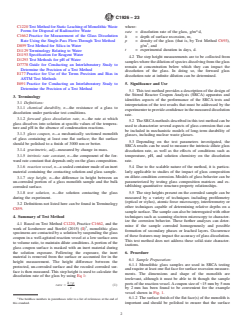
h × p
ports of the reaction vessel. A coupon size of ~15 mm by 5 mm
rate 5 (1)
t
by 2 mm has been found to be convenient for the example
vessel shown in Fig. 1.
6.1.2 The surface finish of the flat face(s) of the monolith is
The boldface numbers in parentheses refer to a list of references at the end of
this standard. important and should be polished to ensure that the surface
C1926 − 23
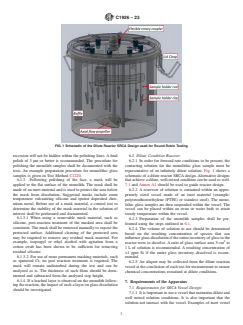
FIG. 1 Schematic of the Dilute Reactor SRCA Design used for Round Robin Testing
recession will not be hidden within the polishing lines. A final 6.2 Dilute Condition Reactor:
polish of 3 μm or better is recommended. The procedure for 6.2.1 In order for forward rate conditions to be present, the
polishing the monolith samples shall be documented with the
contacting solution for the monolithic glass sample must be
tests. An example preparation procedure for monolithic glass representative of an infinitely dilute solution. Fig. 1 shows a
samples is given in Test Method C1220.
schematic of a dilute reactor SRCA design. Alternative designs
6.1.3 Following polishing of the face, a mask will be that achieve a dilute, well-mixed condition can be used as well.
applied to the flat surface of the monolith. The mask shall be 7.1 and Annex A1 should be used to guide reactor design.
made of an inert material and is used to protect the area below 6.2.2 A reservoir of solution is contained within an appro-
the mask from dissolution. Suggested masks include room
priately sized vessel made of an inert material (example:
temperature vulcanizing silicone and sputter deposited chro-
polytetrafluoroethylene (PTFE) or stainless steel). The mono-
mium metal. Before use of a mask material, a control test to
lithic glass samples are then suspended within the vessel. The
determine the stability of the mask material in the solution of
vessel can be placed within an oven or water bath to attain
interest shall be performed and documented.
steady temperature within the vessel.
6.1.3.1 When using a removable mask material, such as
6.2.3 Preparation of the monolith samples shall be per-
silicone, post-reaction treatment of the masked area shall be
formed using the steps outlined in 6.1.
consistent. The mask shall be removed manually to expose the
6.2.4 The volume of solution to use should be determined
protected surface. Additional cleaning of the protected area
based on the resulting concentration of species that can
may be required to remove any residual mask material. For
influence glass dissolution if the entire inventory of glass in the
example, isopropyl or ethyl alcohol with agitation from a
reactor were to dissolve. A ratio of glass surface area 5 cm to
cotton swab has been shown to be sufficient for removing
1 L of solution is recommended. A resulting concentration of
residual silicone.
<1 ppm Si if the entire glass inventory dissolved is recom-
6.1.3.2 For use of more permanent masking materials, such
mended.
as sputtered Cr, no post reaction treatment is required. The
6.2.5 An aliquot may be collected from the dilute reaction
mask will remain undisturbed during the test and can be
vessel at the conclusion of each test for measurement to ensure
analyzed as is. The thickness of such films should be docu-
chemical concentrations remained at dilute conditions.
mented and subtracted from the analyzed step height.
6.1.4 If a leached layer is observed on the monolith follow-
7. Requirements of the Apparatus
ing the reaction, the impact of such a layer on glass dissolution
7.1 Requirements for SRCA Vessel Design:
should be investigated.
7.1.1 It is important to use a vessel that maintains dilute and
well mixed solution conditions. It is also important that the
solution not interact with the vessel. Examples of inert vessel
C1926 − 23
materials may include polypropylene, polytetrafluoroethylene 7.2.7 The solution within the reaction vessel requires light
(PTFE), or stainless steel, but the vessel material should be agitation through use of an impeller, ensuring turbulent flow
chosen to be inert with respect to the individual solution/glass (Reynold’s number > 10 000), but preventing vortex formation
combination to be tested and to remain stable at the desired test in the reactor to disturb any potential diffusion layers near the
temperature. glass monolith surface.
7.2.8 At higher temperatures, evaporation of the solution is
7.1.2 The solution volume should be such that at least 1 L of
possible. It suggested that the solution level be monitored
solution will be present for every 5 cm of exposed glass
through manual observation. Suggested methods include com-
surface area for all samples. An exact measurement is not
paring level to a known mark in the chamber, an inert dipstick,
required, with conservatism suggested to ensure that the limit
or the use of a sight tube. Lost solution can be replaced with
is not reached. The vessel size should be chosen such that with
ASTM Type I water. Unreplaced evaporation of >10 % of the
typical coupon sizes (15 mm by 5 mm by 2 mm), the volume
original volume shall result in termination of the test.
required to fulfill the requirement can be safely contained with
a reasonable head space to allow for safe handling of the
8. Test Method
vessel.
7.1.3 The vessel should be designed such that turbulent
8.1 Stirred Reactor Test Protocol:
mixing is achieved. Mixing calculations to aid in this design
8.1.1 The reactor parts (vessel, baffles, sample holders,
are found in Annex A1.
agitator), shall be cleaned by rinsing with dilute nitric acid
(~0.1 mol ⁄L) and demineralized water, in that order, before
7.2 Requirements for Test Solution and Monitoring:
use.
7.2.1 Although the instructions here are targeted towards
8.1.2 Add the calculated volume of reaction solution to the
dilute aqueous systems, other fluids, such as groundwaters or
reaction vessel.
biofluids, could conceivably be used. In all cases, the test
8.1.3 Place reactor vessel in oven or water bath, if being
solution should not interact with any part of the test apparatus,
used, to establish consistent temperature before glass sample
including sample hangers, baffles, and the mixing apparatus. If
introduction. Temperature shall be monitored by a thermo-
a change in material of the system components is made, a
couple or other temperature recording device.
control test to ensure no interactions occur must be performed.
8.1.4 Begin agitation of the reaction vessel solution.
Any interactions leading to a change in system material shall
8.1.5 When the target temperature has been reached, mea-
be documented.
sure solution pH (see Test Methods D1293).
7.2.2 It is important to note that the pH of the contacting
8.1.6 Suspend the masked glass monolith samples in the
solution is a highly impactful variable to the test. It is important
reaction vessel solution with an inert rigid hanging system or
that the pH of the solution at test temperature be well
placement on a rack made of inert material.
understood through testing or modeling, or both. Any incon-
8.1.6.1 Monolithic glass samples are to be suspended such
sistency or drift in pH should be monitored or adjusted, or both,
that 100 % of the surface to be investigated for height recession
throughout the test.
is exposed to the contacting solution. Attachment with a
7.2.3 It is recommended that the pH be monitored for a
hanging design made of an inert material is recommended, Fig.
period of one day or for the expected test duration, whichever
1, but this can also be achieved by placement of the monolith
is shorter, to establish or correct any drift before test initiation.
on a rack made of inert material.
The solutions may be purged with an inert gas, such as N , to
8.1.7 During testing, particularly for tests lasting longer
prevent drifting of the pH due to ingress of CO .
than 2 days, the temperature and pH (see Test Methods D1293)
7.2.4 If a pH series is being done, it is recommended that the
of the contacting solution should be monitored on a regular
effect of any change in buffering agent over the series should
basis. The pH should be measured with a recently calibrated
be evaluated by performing measurements at the same pH with
pH meter on an aliquot of solution removed from the vessel
both buffering agents.
and discarded following measurement to avoid any contami-
7.2.5 The temperature of the reaction vessel solution shall
nation from the pH meter. The aliquot can be cooled to room
be measured and monitored with a thermocouple or similar
temperature to maintain a consistent baseline temperature for
device. Within a large oven, a representative solution in a
pH monitoring. If solution pH drifts, careful adjustment of the
separate vessel may be monitored if there are concerns about
pH with the same buffer system is allowed.
thermocouple materials interacting with the test solution. At a
8.1.8 It is important to acknowledge that the pH measure-
minimum, temperature should be recorded at the beginning of
ment taken at room temperature will differ from that at the
the test immediately before glass addition and at the conclusion
testing temperature. Geochemical modeling or measuring the
of the test before removal of the glass samples. For longer tests,
pH at test temperature can be used to establish the conditions
a daily temperature check regimen or on
...