

ASTM D5426-19
(Practice)Standard Practices for Visual Inspection and Grading of Fabrics Used for Inflatable Restraints
General Information
- Abstract
SIGNIFICANCE AND USE
5.1 These practices are suitable for incorporation in a specification. Any reference to material or cushion specification in these practices shall mean any similar agreement between the purchaser and supplier relating to the inspection and acceptance of fabric intended for inflatable restraint use.
5.2 These practices constitute the terminology, conditions, equipment, and procedures by which rolls of inflatable restraint fabrics or cut parts are inspected and graded.
5.3 A specification incorporating these practices may deviate from them to account for considerations of fabric property, material handling equipment, or inflatable restraint cushion design, or a combination thereof. Whenever such deviations from standard occur, they are recorded in the report.
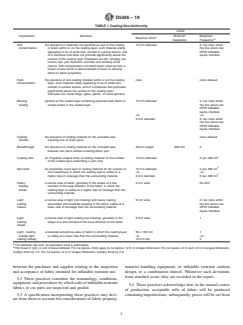
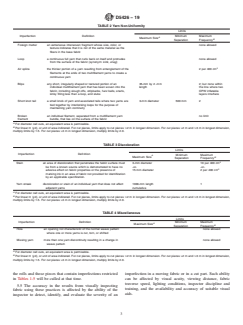
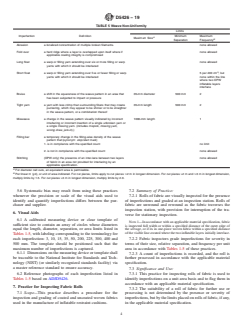
5.4 These practices acknowledge that, in the normal course of production, acceptable rolls of fabric will be produced containing imperfections; subsequently, pieces will be cut from the rolls and those pieces that contain imperfections restricted in Tables 1-5 will be culled at that time.
5.5 The accuracy in the results from visually inspecting fabric using these practices is affected by the ability of the inspector to detect, identify, and evaluate the severity of an imperfection in a moving fabric or in a cut part. Such ability can be affected by visual acuity, viewing distance, fabric traverse speed, lighting conditions, inspector discipline and training, and the availability and accuracy of suitable visual aids.
5.6 Systematic bias may result from using these practices whenever the precision or scale of the visual aids used to identify and quantify imperfections differs between the purchaser and supplier.
SCOPE
1.1 These practices cover procedures for the inspection and grading of coated and uncoated woven flat and one-piece woven (OPW) fabrics, and for the inspection and culling of cut parts made of such fabrics, all of which are used in the manufacture of inflatable restraint cushions.
1.2 For ease of reference, the scope, summary of practice, significance and use, apparatus, sampling, procedure, and report sections are listed separately for each inspection practice.
Inspection Practice
Section
Fabric Rolls
7
Cut Pieces & OPW
8
1.3 These practices can be used to distinguish those fabric imperfections that may adversely affect inflatable restraint cushion fabrication or performance from those imperfections that will not.
1.4 Procedures and apparatus other than those stated in these practices may be used by agreement of the purchaser and supplier with the specific deviations from these practices acknowledged in the report.
1.5 The values stated in SI units are to be regarded as the standard. The values given in parentheses are for information only.
1.6 This standard does not purport to address all of the safety concerns, if any, associated with its use. It is the responsibility of the user of this standard to establish appropriate safety, health, and environmental practices and determine the applicability of regulatory limitations prior to use.
1.7 This international standard was developed in accordance with internationally recognized principles on standardization established in the Decision on Principles for the Development of International Standards, Guides and Recommendations issued by the World Trade Organization Technical Barriers to Trade (TBT) Committee.
- Status
- Published
- Publication Date
- 31-Jan-2019
- Technical Committee
- D13 - Textiles
- Drafting Committee
- D13.20 - Inflatable Restraints
Buy Documents
ASTM D5426-19 - Standard Practices for Visual Inspection and Grading of Fabrics Used for Inflatable Restraints
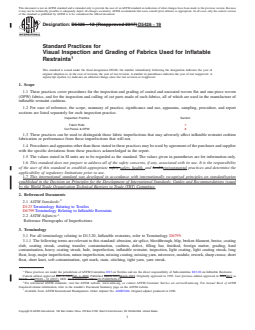
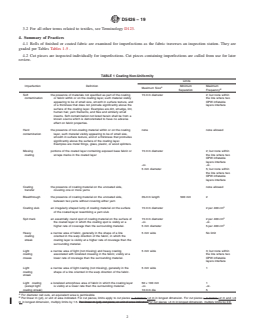
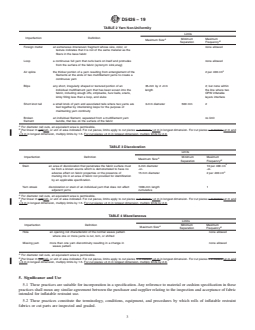
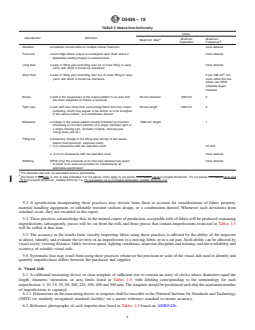
REDLINE ASTM D5426-19 - Standard Practices for Visual Inspection and Grading of Fabrics Used for Inflatable Restraints
Overview
ASTM D5426-19: Standard Practices for Visual Inspection and Grading of Fabrics Used for Inflatable Restraints provides comprehensive procedures and guidelines for inspecting and grading woven fabrics-including coated, uncoated, flat, and one-piece woven (OPW) types-used in the manufacture of inflatable restraint cushions such as automotive airbags. Developed by ASTM Committee D13 on Textiles, this standard establishes terminology, inspection conditions, equipment requirements, and detailed procedures to ensure fabric quality and suitability for safety-critical inflatable restraint applications.
Utilizing these practices helps distinguish fabric imperfections that may negatively affect the fabrication, durability, or performance of inflatable restraint cushions from minor flaws that do not impact safety or function. The standard is designed for use in both production and quality assurance contexts, supporting supply agreements and specifications between purchasers and suppliers.
Key Topics
Inspection Methods
- Visual inspection of fabric rolls and individual cut parts
- Identification and classification of fabric imperfections using reference photographs and calibrated templates
- Grading criteria based on imperfection size, frequency, and location (as detailed in associated tables)
Types of Imperfections Evaluated
- Coating non-uniformity (e.g., soft/hard contamination, missing coating, bleedthrough)
- Yarn non-uniformity (e.g., foreign matter, loops, blips, broken filaments)
- Discoloration (e.g., stains, yarn streaks)
- Weave non-uniformity (e.g., abrasion, float, tight yarn, misweave)
- Structural defects (e.g., holes, missing yarns)
Inspection Equipment and Conditions
- Use of fabric inspection machines with proper lighting (minimum 1075 lux, color temperature 4100-4500 K)
- Calibrated measuring devices and clear templates for evaluating and documenting imperfections
Reporting and Traceability
- Detailed documentation of imperfections and roll or cut part identifiers
- Agreements between purchaser and supplier for deviations or specific acceptance criteria
Inspector Expertise
- Emphasis on the impact of inspector skills, visual acuity, and training on the accuracy of the inspection and grading process
Applications
The ASTM D5426-19 standard is primarily applied in the automotive and transportation industries where inflatable restraints are integral to occupant safety. Key applications include:
Airbag Fabric Manufacturing
- Ensuring fabrics made for driver, passenger, and side-impact airbags meet strict quality and performance criteria through 100% inspection
Quality Assurance in Textiles
- Supporting supply chain agreements by providing objective criteria for fabric acceptance or rejection
Product Development and R&D
- Assisting engineers and designers in evaluating new fabric types or manufacturing methods for inflatable restraints
Process Control
- Enhancing production processes by enabling early detection of recurring defects and facilitating root-cause analysis
Related Standards
Organizations involved in the inspection, grading, and acceptance of fabrics for inflatable restraints should also consider these related ASTM standards:
- ASTM D123 – Terminology Relating to Textiles
- ASTM D6799 – Terminology Relating to Inflatable Restraints
- ASTM D5426 Adjunct – Reference Photographs of Imperfections
These documents support consistent terminology and visual criteria, helping industry professionals maintain quality and compliance across the supply chain.
Keywords: ASTM D5426-19, inflatable restraint fabric inspection, airbag fabric grading, textile standards, automotive safety, visual inspection, fabric imperfections, quality assurance.
Relations
- Effective Date
- 01-Feb-2019
- Effective Date
- 01-Mar-2017
- Effective Date
- 15-Sep-2015
- Effective Date
- 01-Sep-2015
- Effective Date
- 01-Apr-2015
- Effective Date
- 15-Jun-2013
- Effective Date
- 15-Jun-2013
- Effective Date
- 15-May-2013
- Effective Date
- 01-Jan-2013
- Effective Date
- 01-Jan-2013
- Effective Date
- 01-Feb-2012
- Effective Date
- 01-Feb-2012
- Effective Date
- 15-Jan-2009
- Effective Date
- 15-Jan-2009
- Effective Date
- 15-Jan-2009
Buy Documents
ASTM D5426-19 - Standard Practices for Visual Inspection and Grading of Fabrics Used for Inflatable Restraints
REDLINE ASTM D5426-19 - Standard Practices for Visual Inspection and Grading of Fabrics Used for Inflatable Restraints
Get Certified
Connect with accredited certification bodies for this standard

Control Union Certifications
Global certification for agriculture and sustainability.

Hohenstein Institut
Textile testing and certification.

Bureau Veritas Bangladesh
Bureau Veritas certification services in Bangladesh.
Sponsored listings
Frequently Asked Questions
ASTM D5426-19 is a standard published by ASTM International. Its full title is "Standard Practices for Visual Inspection and Grading of Fabrics Used for Inflatable Restraints". This standard covers: SIGNIFICANCE AND USE 5.1 These practices are suitable for incorporation in a specification. Any reference to material or cushion specification in these practices shall mean any similar agreement between the purchaser and supplier relating to the inspection and acceptance of fabric intended for inflatable restraint use. 5.2 These practices constitute the terminology, conditions, equipment, and procedures by which rolls of inflatable restraint fabrics or cut parts are inspected and graded. 5.3 A specification incorporating these practices may deviate from them to account for considerations of fabric property, material handling equipment, or inflatable restraint cushion design, or a combination thereof. Whenever such deviations from standard occur, they are recorded in the report. 5.4 These practices acknowledge that, in the normal course of production, acceptable rolls of fabric will be produced containing imperfections; subsequently, pieces will be cut from the rolls and those pieces that contain imperfections restricted in Tables 1-5 will be culled at that time. 5.5 The accuracy in the results from visually inspecting fabric using these practices is affected by the ability of the inspector to detect, identify, and evaluate the severity of an imperfection in a moving fabric or in a cut part. Such ability can be affected by visual acuity, viewing distance, fabric traverse speed, lighting conditions, inspector discipline and training, and the availability and accuracy of suitable visual aids. 5.6 Systematic bias may result from using these practices whenever the precision or scale of the visual aids used to identify and quantify imperfections differs between the purchaser and supplier. SCOPE 1.1 These practices cover procedures for the inspection and grading of coated and uncoated woven flat and one-piece woven (OPW) fabrics, and for the inspection and culling of cut parts made of such fabrics, all of which are used in the manufacture of inflatable restraint cushions. 1.2 For ease of reference, the scope, summary of practice, significance and use, apparatus, sampling, procedure, and report sections are listed separately for each inspection practice. Inspection Practice Section Fabric Rolls 7 Cut Pieces & OPW 8 1.3 These practices can be used to distinguish those fabric imperfections that may adversely affect inflatable restraint cushion fabrication or performance from those imperfections that will not. 1.4 Procedures and apparatus other than those stated in these practices may be used by agreement of the purchaser and supplier with the specific deviations from these practices acknowledged in the report. 1.5 The values stated in SI units are to be regarded as the standard. The values given in parentheses are for information only. 1.6 This standard does not purport to address all of the safety concerns, if any, associated with its use. It is the responsibility of the user of this standard to establish appropriate safety, health, and environmental practices and determine the applicability of regulatory limitations prior to use. 1.7 This international standard was developed in accordance with internationally recognized principles on standardization established in the Decision on Principles for the Development of International Standards, Guides and Recommendations issued by the World Trade Organization Technical Barriers to Trade (TBT) Committee.
SIGNIFICANCE AND USE 5.1 These practices are suitable for incorporation in a specification. Any reference to material or cushion specification in these practices shall mean any similar agreement between the purchaser and supplier relating to the inspection and acceptance of fabric intended for inflatable restraint use. 5.2 These practices constitute the terminology, conditions, equipment, and procedures by which rolls of inflatable restraint fabrics or cut parts are inspected and graded. 5.3 A specification incorporating these practices may deviate from them to account for considerations of fabric property, material handling equipment, or inflatable restraint cushion design, or a combination thereof. Whenever such deviations from standard occur, they are recorded in the report. 5.4 These practices acknowledge that, in the normal course of production, acceptable rolls of fabric will be produced containing imperfections; subsequently, pieces will be cut from the rolls and those pieces that contain imperfections restricted in Tables 1-5 will be culled at that time. 5.5 The accuracy in the results from visually inspecting fabric using these practices is affected by the ability of the inspector to detect, identify, and evaluate the severity of an imperfection in a moving fabric or in a cut part. Such ability can be affected by visual acuity, viewing distance, fabric traverse speed, lighting conditions, inspector discipline and training, and the availability and accuracy of suitable visual aids. 5.6 Systematic bias may result from using these practices whenever the precision or scale of the visual aids used to identify and quantify imperfections differs between the purchaser and supplier. SCOPE 1.1 These practices cover procedures for the inspection and grading of coated and uncoated woven flat and one-piece woven (OPW) fabrics, and for the inspection and culling of cut parts made of such fabrics, all of which are used in the manufacture of inflatable restraint cushions. 1.2 For ease of reference, the scope, summary of practice, significance and use, apparatus, sampling, procedure, and report sections are listed separately for each inspection practice. Inspection Practice Section Fabric Rolls 7 Cut Pieces & OPW 8 1.3 These practices can be used to distinguish those fabric imperfections that may adversely affect inflatable restraint cushion fabrication or performance from those imperfections that will not. 1.4 Procedures and apparatus other than those stated in these practices may be used by agreement of the purchaser and supplier with the specific deviations from these practices acknowledged in the report. 1.5 The values stated in SI units are to be regarded as the standard. The values given in parentheses are for information only. 1.6 This standard does not purport to address all of the safety concerns, if any, associated with its use. It is the responsibility of the user of this standard to establish appropriate safety, health, and environmental practices and determine the applicability of regulatory limitations prior to use. 1.7 This international standard was developed in accordance with internationally recognized principles on standardization established in the Decision on Principles for the Development of International Standards, Guides and Recommendations issued by the World Trade Organization Technical Barriers to Trade (TBT) Committee.
ASTM D5426-19 is classified under the following ICS (International Classification for Standards) categories: 59.080.01 - Textiles in general. The ICS classification helps identify the subject area and facilitates finding related standards.
ASTM D5426-19 has the following relationships with other standards: It is inter standard links to ASTM D5426-12(2017), ASTM D123-17, ASTM D123-15b, ASTM D123-15a, ASTM D123-15, ASTM D123-13a, ASTM D123-13ae1, ASTM D123-13, ASTM D6799-13, ASTM D6799-13e1, ASTM D123-12, ASTM D123-12e1, ASTM D123-09e1, ASTM D123-09, ASTM D123-09e2. Understanding these relationships helps ensure you are using the most current and applicable version of the standard.
ASTM D5426-19 is available in PDF format for immediate download after purchase. The document can be added to your cart and obtained through the secure checkout process. Digital delivery ensures instant access to the complete standard document.
Standards Content (Sample)
This international standard was developed in accordance with internationally recognized principles on standardization established in the Decision on Principles for the
Development of International Standards, Guides and Recommendations issued by the World Trade Organization Technical Barriers to Trade (TBT) Committee.
Designation:D5426 −19
Standard Practices for
Visual Inspection and Grading of Fabrics Used for Inflatable
Restraints
This standard is issued under the fixed designation D5426; the number immediately following the designation indicates the year of
original adoption or, in the case of revision, the year of last revision. A number in parentheses indicates the year of last reapproval. A
superscript epsilon (´) indicates an editorial change since the last revision or reapproval.
1. Scope 2. Referenced Documents
1.1 These practices cover procedures for the inspection and 2.1 ASTM Standards:
grading of coated and uncoated woven flat and one-piece D123 Terminology Relating to Textiles
woven (OPW) fabrics, and for the inspection and culling of cut D6799 Terminology Relating to Inflatable Restraints
parts made of such fabrics, all of which are used in the 2.2 ASTM Adjuncts:
manufacture of inflatable restraint cushions. Reference Photographs of Imperfections
1.2 For ease of reference, the scope, summary of practice,
3. Terminology
significance and use, apparatus, sampling, procedure, and
3.1 For all terminology relating to D13.20, Inflatable
report sections are listed separately for each inspection prac-
restraints, refer to Terminology D6799.
tice.
3.1.1 The following terms are relevant to this standard:
Inspection Practice Section
abrasion,airsplice,bleedthrough,blip,brokenfilament,bruise,
coating slub, coating streak, coating transfer, contamination,
Fabric Rolls 7
Cut Pieces & OPW 8
cushion, defect, filling bar, finished, foreign matter, grading,
1.3 These practices can be used to distinguish those fabric hard contamination, heavy coating streak, hole, imperfection,
imperfections that may adversely affect inflatable restraint inflatable restraint, inspection, light coating, light coating
cushion fabrication or performance from those imperfections streak, long float, loop, major imperfection, minor
imperfection, missing coating, missing yarn, misweave,
that will not.
module, rework, sharp crease, short float, short knot, soft
1.4 Procedures and apparatus other than those stated in
contamination, spit mark, stain, stitching, tight yarn, yarn
these practices may be used by agreement of the purchaser and
streak.
supplier with the specific deviations from these practices
acknowledged in the report. 3.2 For all other terms related to textiles, see Terminology
D123.
1.5 The values stated in SI units are to be regarded as the
standard. The values given in parentheses are for information
4. Summary of Practices
only.
4.1 Rolls of finished or coated fabric are examined for
1.6 This standard does not purport to address all of the
imperfections as the fabric traverses an inspection station.
safety concerns, if any, associated with its use. It is the
They are graded per Tables Tables 1-5 .
responsibility of the user of this standard to establish appro-
4.2 Cut pieces are inspected individually for imperfections.
priate safety, health, and environmental practices and deter-
Cut pieces containing imperfections are culled from use for
mine the applicability of regulatory limitations prior to use.
later review.
1.7 This international standard was developed in accor-
dance with internationally recognized principles on standard-
5. Significance and Use
ization established in the Decision on Principles for the
5.1 These practices are suitable for incorporation in a
Development of International Standards, Guides and Recom-
specification. Any reference to material or cushion specifica-
mendations issued by the World Trade Organization Technical
tion in these practices shall mean any similar agreement
Barriers to Trade (TBT) Committee.
For referenced ASTM standards, visit the ASTM website, www.astm.org, or
These practices are under the jurisdiction ofASTM Committee D13 on Textiles contact ASTM Customer Service ast service@astm.org. For Annual Book of ASTM
and are the direct responsibility of Subcommittee D13.20 on Inflatable Restraints. Standardsvolume information, refer to the standrd’s Document Summary page on
Current edition approved Feb. 1, 2019. Published March 2019. Originally the ASTM website.
approved in 1993. Last previous edition approved in 2017 as D5426 – 12 (2017). Available from: ASTM International Headquarters. Order Adjunct No.
DOI: 10.1520/D5426-19. ADJD5426. Original adjunct produced in 1996.
Copyright © ASTM International, 100 Barr Harbor Drive, PO Box C700, West Conshohocken, PA 19428-2959. United States
D5426−19
TABLE 1 Coating Non-Uniformity
Limits
Imperfection Definition
Minimum Maximum
A
Maximum Size
B
Separation Frequency
Soft the presence of materials not specified as part of the coating 15 mm diameter 2; but none within
contamination or fabric within or on the coating layer, such material visibly the line where two
appearing to be of small size, smooth in surface texture, and OPW inflatable
of a thickness that does not protrude significantly above the layers interface
surface of the coating layer. Examples are dirt, smudge, lint,
human hair, yarn filaments, and flies and similarly small
insects. Soft contamination not listed herein shall be from a
known source which is demonstrated to have no adverse
effect on fabric properties.
Hard the presence of non-coating material within or on the coating none none allowed
contamination layer, such material visibly appearing to be of small size,
smooth in surface texture, and of a thickness that protrudes
significantly above the surface of the coating layer.
Examples are metal filings, glass, plastic, or wood splinters.
Missing portions of the coated layer containing exposed base fabric or 15 mm diameter 2; but none within
coating scrape marks in the coated layer the line where two
OPW inflatable
layers interface
-or- -or-
5 mm diameter 5; but none within
the line where two
OPW inflatable
layers interface
Coating the presence of coating material on the uncoated side, none allowed
transfer covering one or more yarns
Bleedthrough the presence of coating material on the uncoated side, 35-mm length 500 mm 2
between two yarns without covering either yarn
Coating slub an irregularly shaped lump of coating material on the surface 15 mm diameter 2 per 400 cm
of the coated layer resembling a yarn slub
Spit mark an essentially round spot of coating material on the surface of 15 mm diameter 2 per 400 cm
the coated layer in which the coating spot is visibly at a -or- -or-
higher rate of coverage than the surrounding material. 5 mm diameter 5 per 400 cm
Heavy a narrow area of fabric, generally in the shape of a line 5 mm wide No limit
coating oriented in the warp direction of the fabric, in which the
streak coating layer is visibly at a higher rate of coverage than the
surrounding material.
Light a narrow area of light (not missing) and heavy coating 5 mm wide 3; but none within
coating associated with localized creasing in the fabric, visibly at a the line where two
crease lower rate of coverage than the surrounding material. OPW inflatable
layers interface
Light a narrow area of light coating (not missing), generally in the 5mmwide 1
coating shape of a line oriented in the warp direction of the fabric.
streak
Light coating a localized amorphous area of fabric in which the coating layer 50 × 100 mm 1
(except light is visibly at a lower rate than the surrounding material. -or- -or-
coating streak) 10 mm dia 5
A
For diameter call outs, an equivalent area is permissible
B
Per linear m (yd), or unit of area indicated. For cut pieces, limits apply to cut pieces#2 m in longest dimension. For cut pieces >2 m and#3 m in longest dimension,
multiply limits by 1.5. For cut pieces >3 m in longest dimension, multiply limits by 2.0.
between the purchaser and supplier relating to the inspection material handling equipment, or inflatable restraint cushion
and acceptance of fabric intended for inflatable restraint use.
design, or a combination thereof. Whenever such deviations
from standard occur, they are recorded in the report.
5.2 These practices constitute the terminology, conditions,
equipment,andproceduresbywhichrollsofinflatablerestraint
5.4 These practices acknowledge that, in the normal course
fabrics or cut parts are inspected and graded.
of production, acceptable rolls of fabric will be produced
5.3 A specification incorporating these practices may devi-
containingimperfections;subsequently,pieceswillbecutfrom
ate from them to account for considerations of fabric property,
D5426−19
TABLE 2 Yarn Non-Uniformity
Limits
Imperfection Definition
Minimum Maximum
A
Maximum Size
B
Separation Frequency
Foreign matter an extraneous interwoven fragment whose size, color, or none allowed
texture indicates that it is not of the same material as the
fibers in the base fabric
Loop a continuous full yarn that curls back on itself and protrudes none allowed
from the surface of the fabric (synonym: kink, snag)
Air splice the thicker portion of a yarn resulting from entanglement of the 2 per 400 cm
filaments at the ends of two multifilament yarns to create a
continuous yarn
Blips any short, irregularly shaped or textured portion of an 35-mm by 2 -mm 2; but none within
individual multifilament yarn that has been woven into the length the line where two
fabric, including slough offs, stripbacks, fuzz balls, snarls, OPW inflatable
kinky filling less than a loop, and slubs layers interface
Short knot tail a small knob of yarn and associated tails where two yarns are 3-mm diameter 500 mm 2
tied together by interlocking loops for the purpose of
maintaining yarn continuity
Broken an individual filament, separated from a multifilament yarn no limit
filament bundle, that lies on the surface of the fabric
A
For diameter call outs, an equivalent area is permissible.
B
Per linear m (yd), or unit of area indicated. For cut pieces, limits apply to cut pieces#2 m in longest dimension. For cut pieces >2 m and#3 m in longest dimension,
multiply limits by 1.5. For cut pieces >3 m in longest dimension, multiply limits by 2.0.
TABLE 3 Discoloration
Limits
Imperfection Definition
Minimum Maximum
A
Maximum Size
B
Separation Frequency
Stain an area of discoloration that penetrates the fabric surface must 3-mm diameter 10 per 400 cm
be from a known source which is demonstrated to have no -or- -or-
adverse effect on fabric properties or the presence of 15 mm diameter 2 per 400 cm
marking ink in an area of fabric not provided for identification
by an applicable specification.
Yarn streak discoloration or stain of an individual yarn that does not affect 1000-mm length 1
adjacent yarns cumulative
A
For diameter call outs, an equivalent area is permissible.
B
Per linear m (yd), or unit of area indicated. For cut pieces, limits apply to cut pieces#2 m in longest dimension. For cut pieces >2 m and#3 m in longest dimension,
multiply limits by 1.5. For cut pieces >3 m in longest dimension, multiply limits by 2.0.
TABLE 4 Miscellaneous
Limits
Imperfection Definition Minimum Maximum
A
Maximum Size
B
Separation Frequency
Hole an opening not characteristic of the normal weave pattern none allowed
where one or more yarns is cut, torn, or shifted
Missing yarn more than one yarn discontinuity resulting in a change in none allowed
weave pattern
A
For diameter call outs, an equivalent area is permissible.
B
Per linear m (yd), or unit of area indicated. For cut pieces, limits apply to cut pieces#2 m in longest dimension. For cut pieces >2 m and#3 m in longest dimension,
multiply limits by 1.5. For cut pieces >3 m in longest dimension, multiply limits by 2.0.
the rolls and those pieces that contain imperfections restricted imperfection in a moving fabric or in a cut part. Such ability
in Tables 1-5 will be culled at that time.
can be affected by visual acuity, viewing distance, fabric
traverse speed, lighting conditions, inspector discipline and
5.5 The accuracy in the results from visually inspecting
training, and the availability and accuracy of suitable visual
fabric using these practices is affected by the ability of the
aids.
inspector to detect, identify, and evaluate the severity of an
D5426−19
TABLE 5 Weave Non-Uniformity
Limits
Imperfection Definition
Minimum Maximum
A
Maximum Size
B
Separation Frequency
Abrasion a localized concentration of multiple broken filaments. none allowed
Fold over a hard ridge where a layer is overlapped upon itself where if none allowed
applicable coating integrity is compromised
Long float a warp or filling yarn extending over six or more filling or warp none allowed
yarns with which it should be interlaced
Short float a warp or filling yarn extending over five or fewer filling or warp 5 per 400 cm ; but
yarns with which it should be interlaced none within the line
where two OPW
inflatable layers
interface
Bruise a shift in the squareness of the weave pattern in an area that 35-mm diameter 500 mm 2
has been subjected to impact or pressure
Tight yarn a yarn with less crimp than surrounding fibers that may create 35-mm length 500 mm 2
puckering, which may appear to be shinier or to lie straighter
in the weave pattern, or a combination thereof
Misweave a change in the weave pattern visually indicated by incorrect 1000-mm length 1
interlacing or incorrect insertion of a single unbroken yarn or
a single missing yarn. (includes mispick,
...
This document is not an ASTM standard and is intended only to provide the user of an ASTM standard an indication of what changes have been made to the previous version. Because
it may not be technically possible to adequately depict all changes accurately, ASTM recommends that users consult prior editions as appropriate. In all cases only the current version
of the standard as published by ASTM is to be considered the official document.
Designation: D5426 − 12 (Reapproved 2017) D5426 − 19
Standard Practices for
Visual Inspection and Grading of Fabrics Used for Inflatable
Restraints
This standard is issued under the fixed designation D5426; the number immediately following the designation indicates the year of
original adoption or, in the case of revision, the year of last revision. A number in parentheses indicates the year of last reapproval. A
superscript epsilon (´) indicates an editorial change since the last revision or reapproval.
1. Scope
1.1 These practices cover procedures for the inspection and grading of coated and uncoated woven flat and one-piece woven
(OPW) fabrics, and for the inspection and culling of cut parts made of such fabrics, all of which are used in the manufacture of
inflatable restraint cushions.
1.2 For ease of reference, the scope, summary of practice, significance and use, apparatus, sampling, procedure, and report
sections are listed separately for each inspection practice.
Inspection Practice Section
Fabric Rolls 7
Cut Pieces & OPW 8
1.3 These practices can be used to distinguish those fabric imperfections that may adversely affect inflatable restraint cushion
fabrication or performance from those imperfections that will not.
1.4 Procedures and apparatus other than those stated in these practices may be used by agreement of the purchaser and supplier
with the specific deviations from these practices acknowledged in the report.
1.5 The values stated in SI units are to be regarded as the standard. The values given in parentheses are for information only.
1.6 This standard does not purport to address all of the safety concerns, if any, associated with its use. It is the responsibility
of the user of this standard to establish appropriate safety safety, health, and healthenvironmental practices and determine the
applicability of regulatory limitations prior to use.
1.7 This international standard was developed in accordance with internationally recognized principles on standardization
established in the Decision on Principles for the Development of International Standards, Guides and Recommendations issued
by the World Trade Organization Technical Barriers to Trade (TBT) Committee.
2. Referenced Documents
2.1 ASTM Standards:
D123 Terminology Relating to Textiles
D6799 Terminology Relating to Inflatable Restraints
2.2 ASTM Adjuncts:
Reference Photographs of Imperfections
3. Terminology
3.1 For all terminology relating to D13.20, Inflatable restraints, refer to Terminology D6799.
3.1.1 The following terms are relevant to this standard: abrasion, air splice, bleedthrough, blip, broken filament, bruise, coating
slub, coating streak, coating transfer, contamination, cushion, defect, filling bar, finished, foreign matter, grading, hard
contamination, heavy coating streak, hole, imperfection, inflatable restraint, inspection, light coating, light coating streak, long
float, loop, major imperfection, minor imperfection, missing coating, missing yarn, misweave, module, rework, sharp crease, short
float, short knot, soft contamination, spit mark, stain, stitching, tight yarn, yarn streak.
These practices are under the jurisdiction of ASTM Committee D13 on Textiles and are the direct responsibility of Subcommittee D13.20 on Inflatable Restraints.
Current edition approved Feb. 1, 2017Feb. 1, 2019. Published March 2017March 2019. Originally approved in 1993. Last previous edition approved in 20122017 as
D5426 – 12.D5426 – 12 (2017). DOI: 10.1520/D5426-12R17.10.1520/D5426-19.
For referenced ASTM standards, visit the ASTM website, www.astm.org, or contact ASTM Customer Service ast service@astm.org. For Annual Book of ASTM
Standardsvolume information, refer to the standrd’s Document Summary page on the ASTM website.
Available from: ASTM International Headquarters. Order Adjunct No. ADJD5426. Original adjunct produced in 1996.
Copyright © ASTM International, 100 Barr Harbor Drive, PO Box C700, West Conshohocken, PA 19428-2959. United States
D5426 − 19
3.2 For all other terms related to textiles, see Terminology D123.
4. Summary of Practices
4.1 Rolls of finished or coated fabric are examined for imperfections as the fabric traverses an inspection station. They are
graded per Tables Tables 1-5 .
4.2 Cut pieces are inspected individually for imperfections. Cut pieces containing imperfections are culled from use for later
review.
TABLE 1 Coating Non-Uniformity
Limits
Imperfection Definition
Minimum Maximum
A
Maximum Size
B
Separation Frequency
Soft the presence of materials not specified as part of the coating 15 mm diameter 2; but none within
contamination or fabric within or on the coating layer, such material visibly the line where two
appearing to be of small size, smooth in surface texture, and OPW inflatable
of a thickness that does not protrude significantly above the layers interface
surface of the coating layer. Examples are dirt, smudge, lint,
human hair, yarn filaments, and flies and similarly small
insects. Soft contamination not listed herein shall be from a
known source which is demonstrated to have no adverse
effect on fabric properties.
Hard the presence of non-coating material within or on the coating none none allowed
contamination layer, such material visibly appearing to be of small size,
smooth in surface texture, and of a thickness that protrudes
significantly above the surface of the coating layer.
Examples are metal filings, glass, plastic, or wood splinters.
Missing portions of the coated layer containing exposed base fabric or 15 mm diameter 2; but none within
coating scrape marks in the coated layer the line where two
OPW inflatable
layers interface
-or- -or-
5 mm diameter 5; but none within
the line where two
OPW inflatable
layers interface
Coating the presence of coating material on the uncoated side, none allowed
transfer covering one or more yarns
Bleedthrough the presence of coating material on the uncoated side, 35-mm length 500 mm 2
between two yarns without covering either yarn
Coating slub an irregularly shaped lump of coating material on the surface 15 mm diameter 2 per 400 cm
of the coated layer resembling a yarn slub
Spit mark an essentially round spot of coating material on the surface of 15 mm diameter 2 per 400 cm
the coated layer in which the coating spot is visibly at a -or- -or-
higher rate of coverage than the surrounding material. 5 mm diameter 5 per 400 cm
Heavy a narrow area of fabric, generally in the shape of a line 5 mm wide No limit
coating oriented in the warp direction of the fabric, in which the
streak coating layer is visibly at a higher rate of coverage than the
surrounding material.
Light a narrow area of light (not missing) and heavy coating 5 mm wide 3; but none within
coating associated with localized creasing in the fabric, visibly at a the line where two
crease lower rate of coverage than the surrounding material. OPW inflatable
layers interface
Light a narrow area of light coating (not missing), generally in the 5 mm wide 1
coating shape of a line oriented in the warp direction of the fabric.
streak
Light coating a localized amorphous area of fabric in which the coating layer 50 × 100 mm 1
(except light is visibly at a lower rate than the surrounding material. -or- -or-
coating streak) 10 mm dia 5
A
For diameter call outs, an equivalent area is permissible
B
Per linear m (yd), or unit of area indicated. For cut pieces, limits apply to cut pieces # 2 meters #2 m in longest dimension. For cut pieces > 2 meters >2 m and #3
m in longest dimension, multiply limits by 1.5. Per linear m (yd), cut piece, or unit of area indicated.For cut pieces >3 m in longest dimension, multiply limits by 2.0.
D5426 − 19
TABLE 2 Yarn Non-Uniformity
Limits
Imperfection Definition
Minimum Maximum
A
Maximum Size
B
Separation Frequency
Foreign matter an extraneous interwoven fragment whose size, color, or none allowed
texture indicates that it is not of the same material as the
fibers in the base fabric
Loop a continuous full yarn that curls back on itself and protrudes none allowed
from the surface of the fabric (synonym: kink,snag)
Air splice the thicker portion of a yarn resulting from entanglement of the 2 per 400 cm
filaments at the ends of two multifilament yarns to create a
continuous yarn
Blips any short, irregularly shaped or textured portion of an 35-mm by 2 -mm 2; but none within
individual multifilament yarn that has been woven into the length the line where two
fabric, including slough offs, stripbacks, fuzz balls, snarls, OPW inflatable
kinky filling less than a loop, and slubs layers interface
Short knot tail a small knob of yarn and associated tails where two yarns are 3-mm diameter 500 mm 2
tied together by interlocking loops for the purpose of
maintaining yarn continuity
Broken an individual filament, separated from a multifilament yarn no limit
filament bundle, that lies on the surface of the fabric
A
For diameter call outs, an equivalent area is permissible.
B
Per linear m (yd)(yd), or unit of area indicated. For cut pieces, limits apply to cut pieces # 2 meters #2 m in longest dimension. For cut pieces > 2 meters >2 m and
#3 m in longest dimension, multiply limits by 1.5. For cut pieces >3 m in longest dimension, multiply limits by 2.0.
TABLE 3 Discoloration
Limits
Imperfection Definition
Minimum Maximum
A
Maximum Size
B
Separation Frequency
Stain an area of discoloration that penetrates the fabric surface must 3-mm diameter 10 per 400 cm
be from a known source which is demonstrated to have no -or- -or-
adverse effect on fabric properties or the presence of 15 mm diameter 2 per 400 cm
marking ink in an area of fabric not provided for identification
by an applicable specification.
Yarn streak discoloration or stain of an individual yarn that does not affect 1000-mm length 1
adjacent yarns cumulative
A
For diameter call outs, an equivalent area is permissible.
B
Per linear m (yd)(yd), or unit of area indicated. For cut pieces, limits apply to cut pieces # 2 meters #2 m in longest dimension. For cut pieces > 2 meters >2 m and
#3 m in longest dimension, multiply limits by 1.5. For cut pieces >3 m in longest dimension, multiply limits by 2.0.
TABLE 4 Miscellaneous
Limits
Imperfection Definition Minimum Maximum
A
Maximum Size
B
Separation Frequency
Hole an opening not characteristic of the normal weave pattern none allowed
where one or more yarns is cut, torn, or shifted
Missing yarn more than one yarn discontinuity resulting in a change in none allowed
weave pattern
A
For diameter call outs, an equivalent area is permissible.
B
Per linear m (yd)(yd), or unit of area indicated. For cut pieces, limits apply to cut pieces # 2 meters #2 m in longest dimension. For cut pieces > 2 meters >2 m and
#3 m in longest dimension, multiply limits by 1.5. For cut pieces >3 m in longest dimension, multiply limits by 2.0.
5. Significance and Use
5.1 These practices are suitable for incorporation in a specification. Any reference to material or cushion specification in these
practices shall mean any similar agreement between the purchaser and supplier relating to the inspection and acceptance of fabric
intended for inflatable restraint use.
5.2 These practices constitute the terminology, conditions, equipment, and procedures by which rolls of inflatable restraint
fabrics or cut parts are inspected and graded.
D5426 − 19
TABLE 5 Weave Non-Uniformity
Limits
Imperfection Definition
Minimum Maximum
A
Maximum Size
B
Separation Frequency
Abrasion a localized concentration of multiple broken filaments. none allowed
Fold over a hard ridge where a layer is overlapped upon itself where if none allowed
applicable coating integrity is compromised
Long float a warp or filling yarn extending over six or more filling or warp none allowed
yarns with which it should be interlaced
Short float a warp or filling yarn extending over five or fewer filling or warp 5 per 400 cm ; but
yarns with which it should be interlaced none within the line
where two OPW
inflatable layers
interface
Bruise a shift in the squareness of the weave pattern in an area that 35-mm diameter 500 mm 2
has been subjected to impact or pressure
Tight yarn a yarn with less crimp than surrounding fibers that may create 35-mm length 500 mm 2
puckering, which may appear to be shinier or to lie straighter
in the weave pattern, or a combination thereof
Misweave a change in the weave pattern visually indicated by incorrect 1000-mm length 1
interlacing or incorrect insertion of a single unbroken yarn or
a single missing yarn. (includes mispick, missing yarn,
wrong draw, jerk-in).)
Filling bar a temporary change in the filling-wise density of the weave
pattern that:(synonym: stop/start mark)
1. is in compliance with the specified count no limit
2. is not in compliance with the specified count none allowed
Stitching (OPW only) the presence of an inter-lace between two layers none allowed
of fabric in an area not provided for interlacing by an
applicable specification.
A
For diameter call outs, an equivalent area is permissible.
B
Per linear m (yd)(yd), or unit of area indicated. For cut pieces, limits apply to cut pieces # 2 meters #2 m in longest dimension. For cut pieces > 2 meters >2 m and
#3 m in longest dimension, multiply limits by 1.5. For cut pieces >3 m in longest dimension, multiply limits by 2.0.
5.3 A specification incorporating these practices may deviate from them to account for considerations of fabric property,
...