

ASTM F3584-22
(Test Method)Standard Test Method for Exoskeleton Use: Obstacle Avoidance: Walking
General Information
- Abstract
SIGNIFICANCE AND USE
5.1 Obstacles can vary greatly in, for example: length, width, height, quantity, geometry, and for a variety of industries. Fig. 2 shows examples of various obstacles.
FIG. 2 Example Obstacles in: (a) Road Construction; (b) Warehouse; (c) Manufacturing: Floor; (d) Manufacturing: Overhead; (e) Military Obstacle Course
5.2 Exoskeletons are being used in the industrial/occupational, military, response, medical, and recreational sectors to enhance safety and effectiveness of the user to perform tasks. Many tasks involve avoiding obstacles, and may include for example, upper, lower, or full body movement in order to complete the task. As there are infinite obstacles and ways that obstacle courses can be designed, this test method addresses obstacle avoidance while walking through a standard set of obstacles. Dependent upon the task, it may require people to traverse various environmental conditions (for example, ground) and avoid obstacles while wearing an exoskeleton. For example, an exoskeleton may be used to help during construction or in medical facilities where workers in exoskeletons avoid obstacles with and without carrying loads as part of their daily activities. In military, manufacturing, and response areas, exoskeleton users may for example, step over or under, side-step between, or walk around obstacles, or combinations thereof, to perform the task at hand. Variations to obstacle avoidance may include, for example, increased user speed/momentum, load handling, and distractions that may change user performance when avoiding obstacles. The testing results of exoskeletons shall describe, in a statistically significant way (see guidance in Appendix X1), how reliably the exoskeleton is able to support tasks within the specified types of environments, confinements, and terrains, and thus provide sufficiently high levels of confidence to determine the applicability of the exoskeleton.
5.3 This test method addresses exoskeleton safety and performance require...
SCOPE
1.1 Purpose:
1.1.1 The purpose of this test method, as a part of a suite of exoskeleton use test methods, is to quantitatively evaluate an exoskeleton’s (see Terminology F3323) safety (see 1.4) or performance, or both, when avoiding obstacles.
1.1.2 Exoskeletons shall possess a certain set of allowable exoskeleton user movement capabilities, including user-motion adaptability, to suit operations such as: industrial/occupational, military, response, medical, or recreational.
1.1.3 Environments in these typical sectors often pose constraints to exoskeleton user movement to various degrees. Being able to avoid obstacles while walking, as intended by the user or test requestor, while using an exoskeleton is essential for exoskeleton deployment for a variety of tasks (for example, ascending/descending stairs, crossing gaps and hurdles, balancing on a beam). This test method specifies test setup, procedure, and recording to standardize this obstacle avoidance task for testing exoskeleton user movement.
1.1.4 Exoskeletons need to function as intended, regardless of types of tasks and terrain complexities (for example, carpet, metal, masonry, rock, wood). Required movement capabilities may include, for example: walking, running, crawling, climbing; traversing gaps, hurdles, stairs, slopes; avoiding obstacles, on various types of floor surfaces or terrains, or within confined spaces, or combinations thereof. Standard test methods are required to evaluate whether or not exoskeletons meet these requirements while also allowing test repeatability.
1.1.5 ASTM Subcommittee F48.03 develops and maintains international standards for task performance and environmental considerations that include but are not limited to, standards for safety, quality, and efficiency. This subcommittee aims to develop standards for any exoskeleton application as exemplified as in 1.1.2. The F48.03 test suite consists of a set of test methods ...
- Status
- Published
- Publication Date
- 14-Nov-2022
- Technical Committee
- F48 - Exoskeletons and Exosuits
- Drafting Committee
- F48.03 - Task Performance and Environmental Considerations
Overview
ASTM F3584-22 is the international standard test method developed by ASTM for evaluating the safety and performance of exoskeletons during obstacle avoidance while walking. With exoskeleton applications expanding rapidly across industrial, military, medical, emergency response, and recreational sectors, a standardized approach for testing performance in realistic, obstacle-filled environments is essential. This test method defines clear procedures, reporting, and metrics to quantitatively assess how reliably and effectively an exoskeleton supports a user traversing various obstacles, ensuring repeatability and comparability across manufacturers and user settings.
Key Topics
- Purpose & Scope: The standard method quantitatively evaluates the exoskeleton user's safety and performance as they walk and avoid obstacles, simulating common operational environments.
- Applicable Environments: The test can be performed in laboratories, designated field test areas, or representative in-situ workplace environments (e.g., construction sites, warehouses, healthcare facilities, and military courses).
- Obstacle Variability: Obstacles may vary in length, width, height, quantity, and geometry, representing diverse real-world scenarios.
- Movement Capabilities Assessed: Walking, side-stepping, stepping over and under, ducking, and walking around obstacles; tests may also include distractions, speed changes, and load handling.
- Test Metrics:
- Number of obstacles avoided
- Completion time
- User stability and balance (e.g., stumbles, missed steps, near-falls)
- Physiological response (e.g., heart rate and fatigue)
- Contact with obstacles
- Variability in clearance from obstacles
- Repeatability & Statistical Reliability: The procedure supports multiple repetitions and allows statistical evaluation of exoskeleton capability in obstacle avoidance.
- Documentation: Thorough reporting guidelines ensure that all environmental, equipment, and user conditions are recorded for traceability and reproducibility.
Applications
- Industrial and Occupational Health & Safety: Assists manufacturers and employers in evaluating exoskeleton suitability for tasks like construction, warehouse work, and assembly line operations, where navigating obstacles is routine.
- Medical and Rehabilitation: Enables clinicians and developers to assess exoskeletons designed for patient mobility enhancement or physical rehabilitation, focusing on ability to safely negotiate common obstacles.
- Military and First Responders: Quantifies performance for personnel using exoskeletons in unpredictable, physically demanding environments where obstacle negotiation is critical to mission success.
- Procurement and Acceptance Testing: Provides objective, statistically valid performance data to inform purchasing decisions, acceptance criteria, and user training program development.
- Research and Development: Serves as a benchmark for new exoskeleton models, helping developers hone movement adaptability and enhance safety systems.
- Training and Proficiency: The standard test apparatus and methods can be used to establish minimum user proficiency for various environments and to develop best practices for safe exoskeleton operation.
Related Standards
- ASTM F3323: Terminology for Exoskeletons and Exosuits
- ASTM F3443: Practice for Load Handling When Using an Exoskeleton
- ASTM F3444/F3444M: Practice for Training Exoskeleton Users
- ASTM F3474: Practice for Establishing Exoskeleton Functional Ergonomic Parameters and Test Metrics
- ASTM F3517: Practice for Movement Tests When Using an Exoskeleton
- ASTM F3527: Guide for Assessing Risks Related to Implementation of Exoskeletons in Task-Specific Environments
- ISO 13482: Robots and Robotic Devices-Safety Requirements for Personal Care Robots
ASTM F3584-22 is part of the broader ASTM F48.03 suite, ensuring consistent, repeatable, and statistically valid assessment of exoskeletons across a wide range of applications and environmental conditions. Following this standard enhances confidence in exoskeleton deployment and supports global best practices in safety, quality, and efficiency.
Relations
- Effective Date
- 01-Dec-2023
- Effective Date
- 15-Jun-2020
- Effective Date
- 01-Jun-2020
- Effective Date
- 01-Mar-2020
- Effective Date
- 15-Nov-2019
- Effective Date
- 01-Oct-2019
- Effective Date
- 01-Apr-2019
- Effective Date
- 01-Sep-2018
- Effective Date
- 01-Apr-2018
- Effective Date
- 01-Feb-2018
- Effective Date
- 15-Aug-2017
- Effective Date
- 01-Jun-2017
- Effective Date
- 15-May-2017
- Effective Date
- 15-Oct-2016
Get Certified
Connect with accredited certification bodies for this standard

BSI Group
BSI (British Standards Institution) is the business standards company that helps organizations make excellence a habit.

TÜV Rheinland
TÜV Rheinland is a leading international provider of technical services.

TÜV SÜD
TÜV SÜD is a trusted partner of choice for safety, security and sustainability solutions.
Sponsored listings
Frequently Asked Questions
ASTM F3584-22 is a standard published by ASTM International. Its full title is "Standard Test Method for Exoskeleton Use: Obstacle Avoidance: Walking". This standard covers: SIGNIFICANCE AND USE 5.1 Obstacles can vary greatly in, for example: length, width, height, quantity, geometry, and for a variety of industries. Fig. 2 shows examples of various obstacles. FIG. 2 Example Obstacles in: (a) Road Construction; (b) Warehouse; (c) Manufacturing: Floor; (d) Manufacturing: Overhead; (e) Military Obstacle Course 5.2 Exoskeletons are being used in the industrial/occupational, military, response, medical, and recreational sectors to enhance safety and effectiveness of the user to perform tasks. Many tasks involve avoiding obstacles, and may include for example, upper, lower, or full body movement in order to complete the task. As there are infinite obstacles and ways that obstacle courses can be designed, this test method addresses obstacle avoidance while walking through a standard set of obstacles. Dependent upon the task, it may require people to traverse various environmental conditions (for example, ground) and avoid obstacles while wearing an exoskeleton. For example, an exoskeleton may be used to help during construction or in medical facilities where workers in exoskeletons avoid obstacles with and without carrying loads as part of their daily activities. In military, manufacturing, and response areas, exoskeleton users may for example, step over or under, side-step between, or walk around obstacles, or combinations thereof, to perform the task at hand. Variations to obstacle avoidance may include, for example, increased user speed/momentum, load handling, and distractions that may change user performance when avoiding obstacles. The testing results of exoskeletons shall describe, in a statistically significant way (see guidance in Appendix X1), how reliably the exoskeleton is able to support tasks within the specified types of environments, confinements, and terrains, and thus provide sufficiently high levels of confidence to determine the applicability of the exoskeleton. 5.3 This test method addresses exoskeleton safety and performance require... SCOPE 1.1 Purpose: 1.1.1 The purpose of this test method, as a part of a suite of exoskeleton use test methods, is to quantitatively evaluate an exoskeleton’s (see Terminology F3323) safety (see 1.4) or performance, or both, when avoiding obstacles. 1.1.2 Exoskeletons shall possess a certain set of allowable exoskeleton user movement capabilities, including user-motion adaptability, to suit operations such as: industrial/occupational, military, response, medical, or recreational. 1.1.3 Environments in these typical sectors often pose constraints to exoskeleton user movement to various degrees. Being able to avoid obstacles while walking, as intended by the user or test requestor, while using an exoskeleton is essential for exoskeleton deployment for a variety of tasks (for example, ascending/descending stairs, crossing gaps and hurdles, balancing on a beam). This test method specifies test setup, procedure, and recording to standardize this obstacle avoidance task for testing exoskeleton user movement. 1.1.4 Exoskeletons need to function as intended, regardless of types of tasks and terrain complexities (for example, carpet, metal, masonry, rock, wood). Required movement capabilities may include, for example: walking, running, crawling, climbing; traversing gaps, hurdles, stairs, slopes; avoiding obstacles, on various types of floor surfaces or terrains, or within confined spaces, or combinations thereof. Standard test methods are required to evaluate whether or not exoskeletons meet these requirements while also allowing test repeatability. 1.1.5 ASTM Subcommittee F48.03 develops and maintains international standards for task performance and environmental considerations that include but are not limited to, standards for safety, quality, and efficiency. This subcommittee aims to develop standards for any exoskeleton application as exemplified as in 1.1.2. The F48.03 test suite consists of a set of test methods ...
SIGNIFICANCE AND USE 5.1 Obstacles can vary greatly in, for example: length, width, height, quantity, geometry, and for a variety of industries. Fig. 2 shows examples of various obstacles. FIG. 2 Example Obstacles in: (a) Road Construction; (b) Warehouse; (c) Manufacturing: Floor; (d) Manufacturing: Overhead; (e) Military Obstacle Course 5.2 Exoskeletons are being used in the industrial/occupational, military, response, medical, and recreational sectors to enhance safety and effectiveness of the user to perform tasks. Many tasks involve avoiding obstacles, and may include for example, upper, lower, or full body movement in order to complete the task. As there are infinite obstacles and ways that obstacle courses can be designed, this test method addresses obstacle avoidance while walking through a standard set of obstacles. Dependent upon the task, it may require people to traverse various environmental conditions (for example, ground) and avoid obstacles while wearing an exoskeleton. For example, an exoskeleton may be used to help during construction or in medical facilities where workers in exoskeletons avoid obstacles with and without carrying loads as part of their daily activities. In military, manufacturing, and response areas, exoskeleton users may for example, step over or under, side-step between, or walk around obstacles, or combinations thereof, to perform the task at hand. Variations to obstacle avoidance may include, for example, increased user speed/momentum, load handling, and distractions that may change user performance when avoiding obstacles. The testing results of exoskeletons shall describe, in a statistically significant way (see guidance in Appendix X1), how reliably the exoskeleton is able to support tasks within the specified types of environments, confinements, and terrains, and thus provide sufficiently high levels of confidence to determine the applicability of the exoskeleton. 5.3 This test method addresses exoskeleton safety and performance require... SCOPE 1.1 Purpose: 1.1.1 The purpose of this test method, as a part of a suite of exoskeleton use test methods, is to quantitatively evaluate an exoskeleton’s (see Terminology F3323) safety (see 1.4) or performance, or both, when avoiding obstacles. 1.1.2 Exoskeletons shall possess a certain set of allowable exoskeleton user movement capabilities, including user-motion adaptability, to suit operations such as: industrial/occupational, military, response, medical, or recreational. 1.1.3 Environments in these typical sectors often pose constraints to exoskeleton user movement to various degrees. Being able to avoid obstacles while walking, as intended by the user or test requestor, while using an exoskeleton is essential for exoskeleton deployment for a variety of tasks (for example, ascending/descending stairs, crossing gaps and hurdles, balancing on a beam). This test method specifies test setup, procedure, and recording to standardize this obstacle avoidance task for testing exoskeleton user movement. 1.1.4 Exoskeletons need to function as intended, regardless of types of tasks and terrain complexities (for example, carpet, metal, masonry, rock, wood). Required movement capabilities may include, for example: walking, running, crawling, climbing; traversing gaps, hurdles, stairs, slopes; avoiding obstacles, on various types of floor surfaces or terrains, or within confined spaces, or combinations thereof. Standard test methods are required to evaluate whether or not exoskeletons meet these requirements while also allowing test repeatability. 1.1.5 ASTM Subcommittee F48.03 develops and maintains international standards for task performance and environmental considerations that include but are not limited to, standards for safety, quality, and efficiency. This subcommittee aims to develop standards for any exoskeleton application as exemplified as in 1.1.2. The F48.03 test suite consists of a set of test methods ...
ASTM F3584-22 is classified under the following ICS (International Classification for Standards) categories: 11.180.10 - Aids and adaptation for moving; 25.040.30 - Industrial robots. Manipulators. The ICS classification helps identify the subject area and facilitates finding related standards.
ASTM F3584-22 has the following relationships with other standards: It is inter standard links to ASTM F3200-23, ASTM F3443-20, ASTM F3444/F3444M-20, ASTM F3427-20, ASTM F3200-19, ASTM F3323-19a, ASTM F3323-19, ASTM F3323-18, ASTM F3200-18a, ASTM F3200-18, ASTM F3200-17b, ASTM F3200-17a, ASTM F3200-17, ASTM F3200-16. Understanding these relationships helps ensure you are using the most current and applicable version of the standard.
ASTM F3584-22 is available in PDF format for immediate download after purchase. The document can be added to your cart and obtained through the secure checkout process. Digital delivery ensures instant access to the complete standard document.
Standards Content (Sample)
This international standard was developed in accordance with internationally recognized principles on standardization established in the Decision on Principles for the
Development of International Standards, Guides and Recommendations issued by the World Trade Organization Technical Barriers to Trade (TBT) Committee.
Designation: F3584 − 22
Standard Test Method for
Exoskeleton Use: Obstacle Avoidance: Walking
This standard is issued under the fixed designation F3584; the number immediately following the designation indicates the year of
original adoption or, in the case of revision, the year of last revision. A number in parentheses indicates the year of last reapproval. A
superscript epsilon (´) indicates an editorial change since the last revision or reapproval.
1. Scope able ways to facilitate comparison of different exoskeleton
models or exoskeleton capabilities to tasks.
1.1 Purpose:
1.1.6 The test methods quantify elemental exoskeleton use
1.1.1 The purpose of this test method, as a part of a suite of
capabilities necessary for sector applications listed in 1.1.2 and
exoskeleton use test methods, is to quantitatively evaluate an
perhaps other applications. As such, users of this standard
exoskeleton’s (see Terminology F3323) safety (see 1.4) or
should use either the entire suite or a subset based on their
performance, or both, when avoiding obstacles.
particular requirements. Users are also allowed to weigh
1.1.2 Exoskeletons shall possess a certain set of allowable
particular test methods or particular metrics within a test
exoskeleton user movement capabilities, including user-motion
method differently, based on their specific requirements. The
adaptability, to suit operations such as: industrial/occupational,
testing results should collectively represent an exoskeleton’s
military, response, medical, or recreational.
overall safety or performance, or both, as required for the task.
1.1.3 Environments in these typical sectors often pose
These performance data can be used: to guide procurement
constraints to exoskeleton user movement to various degrees.
specifications, for acceptance testing, and for training to use
Being able to avoid obstacles while walking, as intended by the
exoskeletons intended for specified applications.
user or test requestor, while using an exoskeleton is essential
for exoskeleton deployment for a variety of tasks (for example,
NOTE 1—Additional test methods within the suite are anticipated to be
developed to address additional exoskeleton capability requirements,
ascending/descending stairs, crossing gaps and hurdles, balanc-
including newly identified requirements and for new application domains.
ing on a beam). This test method specifies test setup,
procedure, and recording to standardize this obstacle avoidance 1.2 Exoskeleton—The exoskeleton shall be used as intended
task for testing exoskeleton user movement. by the manufacturer to perform the test described in this test
1.1.4 Exoskeletons need to function as intended, regardless method. If the exoskeleton is not designed for obstacle avoid-
of types of tasks and terrain complexities (for example, carpet, ance while walking and the test requestor intends to use the
metal, masonry, rock, wood). Required movement capabilities exoskeleton to perform an obstacle avoidance test (for
may include, for example: walking, running, crawling, climb- example, for research, development of obstacle avoidance-
ing; traversing gaps, hurdles, stairs, slopes; avoiding obstacles, capable use by a manufacturer, training as in military
on various types of floor surfaces or terrains, or within confined applications), appropriate manufacturer approvals should be
spaces, or combinations thereof. Standard test methods are sought prior to performing the test method.
required to evaluate whether or not exoskeletons meet these
1.3 Performing Location—This test method shall be per-
requirements while also allowing test repeatability.
formed in a testing laboratory or the field where the specified
1.1.5 ASTM Subcommittee F48.03 develops and maintains
apparatus and environmental conditions are implemented.
international standards for task performance and environmental
1.4 Units—The values stated in SI units are to be regarded
considerations that include but are not limited to, standards for
as the standard. The values given in parentheses are not precise
safety, quality, and efficiency. This subcommittee aims to
mathematical conversions to inch-pound units. They are close
develop standards for any exoskeleton application as exempli-
approximate equivalents for the purpose of specifying material
fied as in 1.1.2. The F48.03 test suite consists of a set of test
dimensions or quantities that are readily available to avoid
methods for evaluating exoskeleton capability requirements.
excessive fabrication costs of test apparatuses while maintain-
This obstacle avoidance test method is a part of the test suite.
ing repeatability and reproducibility of the test method results.
The setup, procedure, and apparatuses associated with the test
These values given in parentheses are provided for information
methods challenge specific exoskeleton capabilities in repeat-
only and are not considered standard.
1.5 This standard does not purport to address all of the
This test method is under the jurisdiction of ASTM Committee F48 on
safety concerns, if any, associated with its use. It is the
Exoskeletons and Exosuits and is the direct responsibility of Subcommittee F48.03
responsibility of the user of this standard to establish appro-
on Task Performance and Environmental Considerations.
priate safety, health, and environmental practices and deter-
Current edition approved Nov. 15, 2022. Published February 2023. DOI:
10.1520/F3584-22. mine the applicability of regulatory limitations prior to use.
Copyright © ASTM International, 100 Barr Harbor Drive, PO Box C700, West Conshohocken, PA 19428-2959. United States
F3584 − 22
1.6 This international standard was developed in accor- forming an obstacle avoidance test, including a number of
dance with internationally recognized principles on standard- repetitions as set by the test requestor. The test includes only
ization established in the Decision on Principles for the stationary objects to avoid and covers all forms of obstacle
Development of International Standards, Guides and Recom- avoidance while walking: agility, step-over, side-step, walk-
mendations issued by the World Trade Organization Technical around, and duck-under. Guidance on number of repetitions for
Barriers to Trade (TBT) Committee. the test is shown in Appendix X1. In-situ obstacles (for
example, boxes, trees, logs) can be used for this test method.
2. Referenced Documents
For ideal test replication, standard obstacle avoidance test
apparatuses (for example, foam blocks, 2 by 2 nominal wooden
2.1 ASTM Standards:
bars, cloth and post crowd control) can be used for this test
F3200 Terminology for Robotics, Automation, and Autono-
method. See Fig. 1 for an illustration.
mous Systems
F3323 Terminology for Exoskeletons and Exosuits
4.2 The test is described as follows:
F3427 Practice for Documenting Environmental Conditions
4.2.1 This test can be used to assess aerobic function,
for Utilization with Exoskeleton Test Methods
endurance, obstacle avoidance capability and speed, balance,
F3443 Practice for Load Handling When Using an Exoskel-
or other parameters, or combinations thereof, as required by the
eton
test requestor.
F3444/F3444M Practice for Training Exoskeleton Users
4.2.2 The test metrics can include, for example, the follow-
F3474 Practice for Establishing Exoskeleton Functional Er-
ing:
gonomic Parameters and Test Metrics
4.2.2.1 Completion of the full or phased test;
F3517 Practice for Movement Tests When Using an Exo-
4.2.2.2 Number of obstacles avoided;
skeleton
4.2.2.3 Completion time;
F3523 Test Method for Exoskeleton Use: Confined Space:
4.2.2.4 Change(s) in user (for example, heart rate, fatigue,
Horizontal Movement
toe drag) by a specified amount;
F3527 Guide for Assessing Risks Related to Implementation
4.2.2.5 Balance, stability, missed steps, near falls/falls (mea-
of Exoskeletons in Task-Specific Environments
sures of dynamic balance can include, for example, Lyapunov
F3528 Test Method for Exoskeleton Use: Gait
exponents, center-of-mass displacement, multivariate multi-
F3613 Practice for Recording the Exoskeleton Fit to the
scale entropy, normalized jerk, and peak-to-peak angular torso
User
momentum);
F3614 Practice for Recording the Exoskeleton User Infor-
4.2.2.6 Contact with obstacles;
mation
4.2.2.7 Changes between the baseline (that is, called No-
2.2 ISO Standards:
EXO when no exoskeleton is used) versus while using the
ISO 13482 Robots and robotic devices — Safety require-
exoskeleton (that is, called EXO when an exoskeleton is used);
ments for personal care robots
4.2.2.8 Clearance from obstacle; and
3. Terminology
4.2.2.9 Variability in the distribution of minimal clearance.
3.1 General terminology for ASTM F48 standards is avail-
4.3 For all tests, the specified START point to the END
able in Terminology F3323. Terminology specific to this
point and TURN point shall be defined by the test requestor
standard are shown in this section.
prior to the test. This test method can be combined with other
3.2 Definitions of Terms Specific to This Standard: test methods, for example, Test Method F3528. The required
apparatuses are described in Section 6.
3.2.1 apparatus, n—a structure, object, test component, or
artifact thereof, found or placed in an environment and used for
4.4 A full obstacle avoidance: walking test is defined as: the
a test.
user begins by standing behind a start marker, walks while
3.2.2 obstacle, n—static or moving object that obstructs the
avoiding obstacles in the agility apparatus, turns around 180°
intended movement. [F3200]
after passing a turn marker, walks while avoiding obstacles in
the agility apparatus again, walks to the continue/end marker,
3.2.3 test suite, n—designed collection of test methods that
traverses the step-over apparatuses, continues to the barriers
are used, collectively, to evaluate an exoskeleton’s safety
and side-steps through the left side of the barriers, walks
and/or performance.
around the barriers, walks while ducking under the height bar
4. Summary of Test Method
past the turn marker, again ducks under the height bar, walks
around and side-steps again through the right side of the
4.1 The task for this test method, “exoskeleton use: obstacle
barriers, walks around and continues to traverse again through
avoidance: walking,” is defined as the exoskeleton-user per-
the step-over apparatuses, and crosses the end line to complete
the test. A phased test includes portions of the full test as
For referenced ASTM standards, visit the ASTM website, www.astm.org, or
follows:
contact ASTM Customer Service at service@astm.org. For Annual Book of ASTM
Standards volume information, refer to the standard’s Document Summary page on
Phased Obstacle Avoidance Test
the ASTM website.
4.4.1 Phase 1—The user begins by standing behind a start
Available from American National Standards Institute (ANSI), 25 W. 43rd St.,
4th Floor, New York, NY 10036, http://www.ansi.org. marker, walks while avoiding obstacles in the agility apparatus,
F3584 − 22
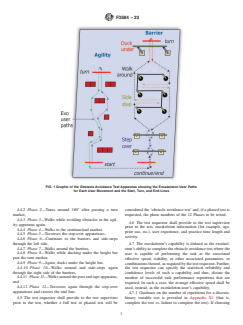
FIG. 1 Graphic of the Obstacle Avoidance Test Apparatus showing the Exoskeleton User Paths
for Each User Movement and the Start, Turn, and End Lines
4.4.2 Phase 2—Turns around 180° after passing a turn considered the ‘obstacle avoidance test’ and, if a phased test is
marker, requested, the phase numbers of the 12 Phases to be tested.
4.4.3 Phase 3—Walks while avoiding obstacles in the agil-
4.6 The test requestor shall provide to the test supervisor
ity apparatus again,
prior to the test, exoskeleton information (for example, age,
4.4.4 Phase 4—Walks to the continue/end marker,
prior use, etc.), user experience, and practice time length and
4.4.5 Phase 5—Traverses the step-over apparatuses,
activity.
4.4.6 Phase 6—Continues to the barriers and side-steps
through the left side,
4.7 The exoskeleton’s capability is defined as the exoskel-
4.4.7 Phase 7—Walks around the barriers,
eton’s ability to complete the obstacle avoidance test where the
4.4.8 Phase 8—Walks while ducking under the height bar
user is capable of performing the task at the associated
past the turn marker,
effective speed, stability, or other associated parameters, or
4.4.9 Phase 9—Again, ducks under the height bar,
combinations thereof, as required by the test requestor. Further,
4.4.10 Phase 10—Walks around and side-steps again
the test requestor can specify the statistical reliability and
through the right side of the barriers,
confidence levels of such a capability and thus, dictate the
4.4.11 Phase 11—Walks around the post and tape apparatus,
number of successful task performance repetitions that are
and
required. In such a case, the average effective speed shall be
4.4.12 Phase 12—Traverses again through the step-over
used, instead, as the exoskeleton-user’s capability.
apparatuses and crosses the end line.
4.7.1 Guidance on the number of repetitions for a discrete,
4.5 The test requestor shall provide to the test supervisor binary variable test is provided in Appendix X1 (that is,
prior to the test, whether a full test or phased test will be complete the test vs. failure to complete the test). If choosing
F3584 − 22
the number of repetitions for continuous variable (for example, 4.11.7 Greater than 1× comfortable gait speed;
speed, distance) tests, consideration should include: variability 4.11.8 Distractions (for example, time pressure, visual,
between subjects, user capability to perform the test, etc. mental, occluded vision, with/without load handling); and
4.11.9 Walking backward.
4.8 The durability of the exoskeleton shall be such that it
can withstand the obstacle avoidance test requirements without
5. Significance and Use
failure, as specified by the manufacturer.
5.1 Obstacles can vary greatly in, for example: length,
4.9 The user is allowed to practice before the test and if
width, height, quantity, geometry, and for a variety of indus-
practice occurs, practice time, activity, and other pertinent
tries. Fig. 2 shows examples of various obstacles.
information shall be documented in the notes section on the test
5.2 Exoskeletons are being used in the industrial/
report as practice can change the user. If practice occurs for one
occupational, military, response, medical, and recreational
subject, all subjects completing the test shall practice for the
sectors to enhance safety and effectiveness of the user to
same time and activity. The user is also allowed to abstain from
perform tasks. Many tasks involve avoiding obstacles, and may
the test before it is started.
include for example, upper, lower, or full body movement in
4.10 Once the test begins, there shall be no verbal commu-
order to complete the task. As there are infinite obstacles and
nication between the exoskeleton user and the test supervisor ways that obstacle courses can be designed, this test method
regarding the performance of a test repetition, other than
addresses obstacle avoidance while walking through a standard
instructions on when to start, notifications of faults, and any set of obstacles. Dependent upon the task, it may require
safety related conditions. The user shall have the full respon-
people to traverse various environmental conditions (for
sibility to determine whether and when they are uncomfortable example, ground) and avoid obstacles while wearing an exo-
with completing the test and notify the test supervisor accord-
skeleton. For example, an exoskeleton may be used to help
ingly. However, it is the test supervisor’s authority to judge the during construction or in medical facilities where workers in
completeness of the repetition. Additionally, while it is the
exoskeletons avoid obstacles with and without carrying loads
user’s responsibility to alert the test supervisor of a safety issue as part of their daily activities. In military, manufacturing, and
they experience, the test supervisor should also alert the user to response areas, exoskeleton users may for example, step over
pause/stop the test if there are observable safety concerns (for or under, side-step between, or walk around obstacles, or
example, too many falls, equipment malfunction, heart rate combinations thereof, to perform the task at hand. Variations to
exceeds recommended heart rate for user’s age (1)). obstacle avoidance may include, for example, increased user
speed/momentum, load handling, and distractions that may
NOTE 2—Practice could help establish the applicability of the exoskel-
change user performance when avoiding obstacles. The testing
eton for the given test method. It allows the operator to gain familiarity
results of exoskeletons shall describe, in a statistically signifi-
with the standard setup, procedure, apparatus, and environmental condi-
tions. It also helps the test supervisor to establish the initial setup,
cant way (see guidance in Appendix X1), how reliably the
procedure, including both the user and testing personnel, or apparatus
exoskeleton is able to support tasks within the specified types
setting for the test, or combinations thereof, when applicable.
of environments, confinements, and terrains, and thus provide
4.11 The test requestor has the authority to select the
sufficiently high levels of confidence to determine the applica-
parameters that may affect the user for the obstacle avoidance
bility of the exoskeleton.
task. The test requestor also has the authority to select test
5.3 This test method addresses exoskeleton safety and
methods that constitute the test event, to select one or more test
performance requirements expressed by manufacturing, emer-
site(s) at which the test methods are implemented, to determine
gency responders, military, or other organizations requesting
the corresponding statistical reliability and confidence levels of
this test. The safety and performance data captured within this
the results for each of the test methods, and to establish the
test method are indicative of the exoskeleton’s and the exo-
participation rules including the testing schedules and the test
skeleton user’s capabilities. Having available direct informa-
environmental conditions. As such, variations to this test
tion from tested exoskeleton(s) with associated performance
method are also described in this standard (see 9.6), including
data to guide procurement and deployment decisions is essen-
obstacle avoidance while/with:
tial to exoskeleton purchasers and users.
4.11.1 Carrying a load(s);
5.4 The testing results of the candidate exoskeleton(s) shall
4.11.2 Various environmental conditions including, for
describe, in a statistically significant way, how reliably the
example, ground surfaces that are hard or soft, dry or wet;
exoskeleton user is able to avoid obstacles while walking. The
temperatures and humidity levels that are normal or extreme;
test apparatus described in 6.7 is intended to be a single
precipitation that is no, low, or high;
obstacle layout where repeatable results between exoskeletons,
4.11.3 Various obstacle heights for step-over, duck-under;
users, and organizations are comparable. The standard test
4.11.4 Various obstacle sizes made from a grid of obstacles;
setup and apparatus can also be used to support training and
4.11.5 Various width between side-stepped obstacles;
establish proficiency of exoskeleton users, as well as provide
4.11.6 Added load handling (for example, evenly distributed
manufacturers with information about the usefulness of their
load, uneven load);
exoskeleton(s) for tasks. For guidance on exoskeleton training,
see Practice F3444/F3444M.
5.5 Although the test method was developed for the sectors
The boldface numbers in parentheses refer to a list of references at the end of
this standard. listed in 5.2, it may be applicable to other operational domains.
F3584 − 22
FIG. 2 Example Obstacles in: (a) Road Construction; (b) Warehouse; (c) Manufacturing: Floor;
(d) Manufacturing: Overhead; (e) Military Obstacle Course
6. Test Course and Apparatus available or the test is to be exactly replicated by others, the
standard test setup and apparatus are described in this section.
6.1 The actual performance space where the exoskeleton is
to be used or apparatus of which will be used, or both, as 6.2 Optional Equipment:
exemplified in Fig. 2, may be used for this test. In the event that 6.2.1 Safety equipment, for example: belay; gait belt; per-
the actual performance space or apparatus, or both, is not sonal protective equipment, such as: knee pads, helmet, gloves;
F3584 − 22
user health monitoring, such as: pulse oximeter, oxygen source, 6.6.2 Obstacle Avoidance Apparatus (see Fig. 1 and Appen-
Borg Breathlessness Scale, sphygmomanometer inertial mea- dix X2),
surement units, joint angle and speed measurement equipment;
6.6.3 Timer (for example, stopwatch) with at least 0.1 s
and other safety equipment, such as: telephone or automated
calibrated time resolution,
electronic defibrillator that can be at the ready as needed.
NOTE 3—Other time-synchronized tools are: clock synchronized to
6.2.2 User measurement devices, for example: walkway or
WWVB radio or computer-based timing synchronized to network time
force plates for obstacle avoidance analysis; step force/contact
protocol.
measurement/detection devices, user tracking system; heart
6.6.4 Repetition Counter,
rate, pulse, oxygen monitors, inertial measurement units, or
6.6.5 Tape or Similar Marking (bright colored), and
joint angle and speed measurement equipment.
6.2.3 Loads, for example: tools, crates, or bags (refer to
6.6.6 Test Report (see Section 10).
Practice F3443).
6.7 Obstacle Avoidance Test Apparatus (if used):
6.3 The test course shall include start, turn, and end mark-
6.7.1 A standard obstacle avoidance test apparatus is sug-
ings as part of the obstacle avoidance apparatus.
gested for use to provide maximum repeatability in test result
6.4 Turn-around space for the user to reverse direction shall comparison between testing organizations, users, or
be provided according to the apparatus being used. A START
exoskeletons, or combinations thereof. The standard obstacle
and END line, which marks the starting and ending of the test avoidance test apparatus is shown in Fig. 3 and is designed
repetition, should be marked on the floor using brightly colored
based on nominal lumber size and materials. The apparatus
tape. dimensions are detailed in Appendix X2.
6.5 The use of exercise equipment (for example, treadmill
NOTE 4—Space permitting, the agility and barrier portions of the test
with automatic moving obstacles) is not recommended to
apparatus may be aligned (that is, not side-by-side) with associated turn
replace the obstacle avoidance apparatus for this test method as and end line markings as shown in Fig. 1.
users are unable to pace themselves on such equipment.
6.7.2 A standard obstacle avoidance test apparatus is to be
Exercise equipment test results, therefore, are not interchange-
constructed from readily available and nominal 2 by materials
able with obstacle avoidance apparatus tests.
made from SPF (spruce, pine, fir) wood, standard and appro-
6.6 Required Apparatus: priately sized fasteners, and can be weighted using weights or
6.6.1 1 m or greater straight, unimpeded path to and from fixtured to the floor or ground surface to minimize apparatus
the obstacle avoidance apparatus, movement. The base, shown in Fig. 3, is intended to only show
FIG. 3 Obstacle Avoidance Test Apparatus
F3584 − 22
a ground surface and the estimated space required for layout of 8.2 Once an exoskeleton user begins a test, by starting to
the obstacle avoidance test apparatus. execute the task as specified in Section 4, the exoskeleton shall
be used to perform the task for the specified number of
6.7.3 The standard obstacle avoidance test apparatus can be
repetitions through completion, without changing the exoskel-
described in parts as follows:
eton or apparatus.
6.7.3.1 The agility apparatus (Fig. 3 left side) includes
300 mm square wood or foam blocks, spaced as shown in
8.3 A battery may be changed or charged between repeti-
Appendix X2.
tions provided that other configurations remain unaltered, and
6.7.3.2 The barrier apparatus (Fig. 3 right side) includes:
if allowed by the test requestor. Unless otherwise stated by the
(1) Step-Over Apparatus—Two pairs of 100 mm high 2 by
requestor, during the test the exoskeleton shall not be allowed
4 blocks fastened to 4.7 cm square bases, separated 1.5 m with
to have the energy/power source replenished nor shall the
a bar (38 mm square by 2 m long) made of wood or other
exoskeleton be allowed any human physical intervention,
lighter material resting on top.
including adjustment, maintenance, or repair. Any such actions
(2) Side-Step and Walk Around Apparatus—Typical crowd
shall be considered a fault condition and the test shall be
control posts/tape or other similar devices (for example, tall
restarted from the beginning.
hazard cones and tape).
8.4 The metric for this test method is the complete and
(3) Duck-Under Apparatus—Two square wood, plastic, or
successful obstacle avoidance test, as outlined in this test
metal tubes with 13 mm diameter holes through two sides and
method, for the specified number of continuous repetitions, as
spaced 10 cm vertically along the tube. The tubes are spaced
set by the test requestor. In addition, the elapsed time for the
1.5 m apart. Two 38 mm square by 100 cm long bars are
user to successfully complete the obstacle avoidance test is a
inserted into the tubes’ tops and supported in height (between
performance proficiency index, reflecting the combination of
100 cm and 150 cm) using a 13 mm diameter by 15 cm long
the exoskeleton’s capability and efficiency, and the user’s skill
dowel inserted into the tubes’ side holes at the same height for
level. Therefore, this temporal aspect is a part of the test and
both tubes. A bar (38 mm square by 2 m long) made of wood
the results shall be recorded on the test form. Metrics shall also
or other lighter material rests on top of the square bar ends.
include any test anomalies or occurrences, such as: stumbles,
6.8 The test course layout for a full test is shown in Fig. 1
trips, falls, rests, variation in step-over or duck-under bars
and, for consistency throughout this test method, illustrates the
throughout the test or from baseline (that is, no exoskeleton
use of the standard test apparatus.
used, called NoEXO) to exoskeleton test (exoskeleton is used,
called EXO). Test anomalies or occurrences shall be noted on
7. Hazards
the test report and may also provide additional statistical
importance to the test requestor.
7.1 Hazards for obstacle avoidance tests when using exo-
skeletons can be as follows: slips, trips, falls, fatigu
...