

ASTM D4350-16(2022)
(Test Method)Standard Test Method for Corrosivity Index of Plastics and Fillers
General Information
- Abstract
SIGNIFICANCE AND USE
4.1 This test method provides a means for comparing the corrosive potential of plastics and fillers in humid atmospheres.
4.2 This test method is intended for use in research and evaluation.
SCOPE
1.1 This test method is designed for use in obtaining the specific conductance of a water extract of plastics and fillers. The magnitude of this conductance, called the corrosivity index, is an index of the likelihood that, in a humid atmosphere, metal surfaces in contact with these materials can be corroded due to galvanic action or direct chemical attack.
Note 1: There is no known ISO equivalent to this standard.
1.2 The values stated in SI units are to be regarded as standard.
1.3 This standard does not purport to address all of the safety concerns, if any, associated with its use. It is the responsibility of the user of this standard to establish appropriate safety, health, and environmental practices and determine the applicability of regulatory limitations prior to use. Specific precautionary statements are given in Section 7.
1.4 This international standard was developed in accordance with internationally recognized principles on standardization established in the Decision on Principles for the Development of International Standards, Guides and Recommendations issued by the World Trade Organization Technical Barriers to Trade (TBT) Committee.
- Status
- Published
- Publication Date
- 31-Oct-2022
- Technical Committee
- D20 - Plastics
- Drafting Committee
- D20.16 - Thermosetting Materials

Overview
ASTM D4350-16(2022) – Standard Test Method for Corrosivity Index of Plastics and Fillers is an internationally recognized ASTM standard developed for evaluating the corrosive potential of plastics and fillers in humid atmospheres. By measuring the specific conductance of a water extract from the material, this test method generates a corrosivity index, which serves as an indicator for the likelihood of corrosion occurring on metal surfaces that come into contact with the plastic or filler material. It is widely used in research and evaluation to compare materials’ tendencies to cause corrosion via galvanic action or direct chemical attack. The standard is maintained by ASTM Committee D20 on Plastics and is approved for use by agencies of the U.S. Department of Defense.
Key Topics
- Corrosivity Index Measurement
The method quantifies the corrosive potential of plastics and fillers by testing the specific conductance of a water extract. - Test Method Scope
It is designed for use in research and evaluation, providing comparative data between different materials under humid conditions. - Galvanic Action and Chemical Attack
The corrosivity index helps predict the risk of corrosion to metal components in contact with plastics or fillers due to galvanic or direct chemical mechanisms. - Material Preparation and Safety
The standard covers best practices for specimen selection and preparation, as well as emphasizing the importance of following safety, health, and regulatory requirements. - Test Conditions
Test specimens are conditioned at standard laboratory atmospheres and exposed for a defined duration and temperature to simulate practical environmental conditions. - Reporting and Precision
The standard includes guidance on reporting results, including test conditions, calculated values, and how to interpret repeatability and reproducibility.
Applications
ASTM D4350 is essential for:
- Material Selection and Product Design
Engineers, designers, and researchers use the corrosivity index to select plastics and fillers with low corrosive potential, ensuring compatibility with metal components in humid environments. - Quality Control and Material Comparison
Manufacturers apply this test method during quality assurance and material evaluation to compare different formulations or batches with regard to their potential to induce metal corrosion. - Research and Development
Scientists utilize ASTM D4350 in developing new plastic and filler materials and understanding their interactions with various metals where liquid and humidity are factors. - Regulatory and Specification Compliance
The standard helps companies meet regulatory and contractual requirements, especially in industries where metal-plastic contact occurs, such as electronics, automotive, and construction.
Related Standards
- ASTM D618 – Practice for Conditioning Plastics for Testing
- ASTM D883 – Terminology Relating to Plastics
- ASTM D1193 – Specification for Reagent Water
- ASTM E11 – Specification for Woven Wire Test Sieve Cloth and Test Sieves
- ASTM E145 – Specification for Gravity-Convection and Forced-Ventilation Ovens
- ASTM E2251 – Specification for Liquid-in-Glass ASTM Thermometers with Low-Hazard Precision Liquids
- ASTM E691 – Practice for Conducting an Interlaboratory Study to Determine the Precision of a Test Method
Note: No known ISO equivalent exists for this test method.
By implementing ASTM D4350-16(2022), organizations can reliably evaluate and mitigate the risk of corrosion when using plastics and fillers with metal components, particularly in humid or moisture-rich environments. This improves product durability, performance, and safety across industries.
Relations
- Effective Date
- 01-Feb-2024
- Effective Date
- 01-Nov-2023
- Effective Date
- 01-Jan-2020
- Effective Date
- 01-Aug-2019
- Effective Date
- 15-Apr-2019
- Effective Date
- 01-Mar-2019
- Effective Date
- 01-Feb-2019
- Effective Date
- 01-Dec-2018
- Effective Date
- 01-Nov-2018
- Effective Date
- 15-Aug-2017
- Effective Date
- 01-Oct-2013
- Effective Date
- 01-May-2013
- Effective Date
- 15-Nov-2012
- Refers
ASTM E145-94(2011) - Standard Specification for Gravity-Convection and Forced-Ventilation Ovens - Effective Date
- 01-Dec-2011
- Effective Date
- 01-Nov-2011
Get Certified
Connect with accredited certification bodies for this standard

DIN CERTCO
DIN Group product certification.

Smithers Quality Assessments
US management systems and product certification.
Sponsored listings
Frequently Asked Questions
ASTM D4350-16(2022) is a standard published by ASTM International. Its full title is "Standard Test Method for Corrosivity Index of Plastics and Fillers". This standard covers: SIGNIFICANCE AND USE 4.1 This test method provides a means for comparing the corrosive potential of plastics and fillers in humid atmospheres. 4.2 This test method is intended for use in research and evaluation. SCOPE 1.1 This test method is designed for use in obtaining the specific conductance of a water extract of plastics and fillers. The magnitude of this conductance, called the corrosivity index, is an index of the likelihood that, in a humid atmosphere, metal surfaces in contact with these materials can be corroded due to galvanic action or direct chemical attack. Note 1: There is no known ISO equivalent to this standard. 1.2 The values stated in SI units are to be regarded as standard. 1.3 This standard does not purport to address all of the safety concerns, if any, associated with its use. It is the responsibility of the user of this standard to establish appropriate safety, health, and environmental practices and determine the applicability of regulatory limitations prior to use. Specific precautionary statements are given in Section 7. 1.4 This international standard was developed in accordance with internationally recognized principles on standardization established in the Decision on Principles for the Development of International Standards, Guides and Recommendations issued by the World Trade Organization Technical Barriers to Trade (TBT) Committee.
SIGNIFICANCE AND USE 4.1 This test method provides a means for comparing the corrosive potential of plastics and fillers in humid atmospheres. 4.2 This test method is intended for use in research and evaluation. SCOPE 1.1 This test method is designed for use in obtaining the specific conductance of a water extract of plastics and fillers. The magnitude of this conductance, called the corrosivity index, is an index of the likelihood that, in a humid atmosphere, metal surfaces in contact with these materials can be corroded due to galvanic action or direct chemical attack. Note 1: There is no known ISO equivalent to this standard. 1.2 The values stated in SI units are to be regarded as standard. 1.3 This standard does not purport to address all of the safety concerns, if any, associated with its use. It is the responsibility of the user of this standard to establish appropriate safety, health, and environmental practices and determine the applicability of regulatory limitations prior to use. Specific precautionary statements are given in Section 7. 1.4 This international standard was developed in accordance with internationally recognized principles on standardization established in the Decision on Principles for the Development of International Standards, Guides and Recommendations issued by the World Trade Organization Technical Barriers to Trade (TBT) Committee.
ASTM D4350-16(2022) is classified under the following ICS (International Classification for Standards) categories: 83.040.30 - Auxiliary materials and additives for plastics. The ICS classification helps identify the subject area and facilitates finding related standards.
ASTM D4350-16(2022) has the following relationships with other standards: It is inter standard links to ASTM D883-24, ASTM D883-23, ASTM D883-20, ASTM D883-19c, ASTM D883-19a, ASTM E145-19, ASTM D883-19, ASTM D883-18a, ASTM D883-18, ASTM D883-17, ASTM E11-13, ASTM E691-13, ASTM D883-12e1, ASTM E145-94(2011), ASTM E691-11. Understanding these relationships helps ensure you are using the most current and applicable version of the standard.
ASTM D4350-16(2022) is available in PDF format for immediate download after purchase. The document can be added to your cart and obtained through the secure checkout process. Digital delivery ensures instant access to the complete standard document.
Standards Content (Sample)
This international standard was developed in accordance with internationally recognized principles on standardization established in the Decision on Principles for the
Development of International Standards, Guides and Recommendations issued by the World Trade Organization Technical Barriers to Trade (TBT) Committee.
Designation:D4350 −16 (Reapproved 2022)
Standard Test Method for
Corrosivity Index of Plastics and Fillers
This standard is issued under the fixed designation D4350; the number immediately following the designation indicates the year of
original adoption or, in the case of revision, the year of last revision.Anumber in parentheses indicates the year of last reapproval.A
superscript epsilon (´) indicates an editorial change since the last revision or reapproval.
This standard has been approved for use by agencies of the U.S. Department of Defense.
1. Scope E691Practice for Conducting an Interlaboratory Study to
Determine the Precision of a Test Method
1.1 This test method is designed for use in obtaining the
E2251Specification for Liquid-in-Glass ASTM Thermom-
specific conductance of a water extract of plastics and fillers.
eters with Low-Hazard Precision Liquids
The magnitude of this conductance, called the corrosivity
index, is an index of the likelihood that, in a humid
3. Terminology
atmosphere, metal surfaces in contact with these materials can
3.1 Definitions of Terms—For definitions of terms used in
be corroded due to galvanic action or direct chemical attack.
this test method associated with plastics issues refer to the
NOTE 1—There is no known ISO equivalent to this standard.
terminology contained in Terminology D883.
1.2 The values stated in SI units are to be regarded as
standard. 4. Significance and Use
1.3 This standard does not purport to address all of the
4.1 This test method provides a means for comparing the
safety concerns, if any, associated with its use. It is the
corrosivepotentialofplasticsandfillersinhumidatmospheres.
responsibility of the user of this standard to establish appro-
4.2 This test method is intended for use in research and
priate safety, health, and environmental practices and deter-
evaluation.
mine the applicability of regulatory limitations prior to use.
Specific precautionary statements are given in Section 7.
5. Apparatus
1.4 This international standard was developed in accor-
5.1 Conductance Bridge, Wheatstone type, with a range
dance with internationally recognized principles on standard-
from 1 to 250 000-Ω measured resistance, a built-in
ization established in the Decision on Principles for the
potentiometer, a 1000 6 50-cycles per second oscillator, and a
Development of International Standards, Guides and Recom-
sensitive null point indicator. The bridge shall be capable of
mendations issued by the World Trade Organization Technical
measuring resistance with an accuracy of 62%.
Barriers to Trade (TBT) Committee.
5.2 Conductivity Cell, dip-type, micro, for solutions of
2. Referenced Documents
medium conductance.The cell needs to have a cell constant of
−1
approximately 1.0 cm . The borosilicate glass shall have a
2.1 ASTM Standards:
maximum outside tube diameter of 12.7 mm, overall length of
D618Practice for Conditioning Plastics for Testing
177.8 mm, chamber inside diameter of 9.5 mm, and chamber
D883Terminology Relating to Plastics
depth of 50.8 mm.
D1193Specification for Reagent Water
E11Specification forWovenWireTest Sieve Cloth andTest
5.3 Drill, electric, capable of holding a 10.54-mm drill bit,
Sieves
and rotating at 500-r/min maximum speed.
E145Specification for Gravity-Convection and Forced-
5.4 Mill,suchaslaboratoryWileycuttingmillorequivalent.
Ventilation Ovens
5.5 Sieves, standard (alternative) sieve designations 425 µm
(No. 40), and 250 µm (No. 60) in accordance with Specifica-
ThistestmethodisunderthejurisdictionofASTMCommitteeD20onPlastics
tion E11.
and is the direct responsibility of Subcommittee D20.16 on Thermosetting Materi-
als.
Current edition approved Nov. 1, 2022. Published November 2022. Originally
approved in 1984. Last previous edition approved in 2016 as D4350-16. DOI: The sole source of supply of the conductivity cell (Model No. 3403) known to
10.1520/D4350-16R22. the committee at this time is Yellow Springs Instrument Co., Inc., P.O. Box 279,
For referenced ASTM standards, visit the ASTM website, www.astm.org, or YellowSprings,OH45387.Ifyouareawareofalternativesuppliers,pleaseprovide
contact ASTM Customer Service at service@astm.org. For Annual Book of ASTM this information toASTM International Headquarters. Your comments will receive
Standards volume information, refer to the standard’s Document Summary page on careful consideration at a meeting of the responsible technical committee, which
the ASTM website. you may attend.
*A Summary of Changes section appears at the end of this standard
Copyright © ASTM International, 100 Barr Harbor Drive, PO Box C700, West Conshohocken, PA 19428-2959. United States
D4350−16 (2022)
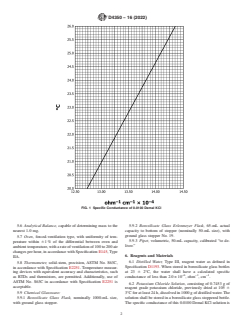
FIG. 1 Specific Conductance of 0.0100 Demal KCl
5.6 Analytical Balance, capable of determining mass to the 5.9.2 Borosilicate Glass Erlenmeyer Flask, 65-mL actual
nearest 1.0 mg. capacity to bottom of stopper (nominally 50-mL size), with
ground glass stopper No. 19.
5.7 Oven, forced-ventilation type, with uniformity of tem-
5.9.3 Pipet, volumetric, 50-mL capacity, calibrated “to de-
perature within 61% of the differential between oven and
liver.”
ambienttemperature,witharateofventilationof100to200air
changesperhour,inaccordancewithSpecificationE145,Type
6. Reagents and Materials
IIA.
6.1 Distilled Water, Type III, reagent water as defined in
5.8 Thermometer, solid-stem, precision, ASTM No. S63C,
Specification D1193. When stored in borosilicate glass bottles
in accordance with Specification E2251. Temperature measur-
at 23 6 2°C, the water shall have a calculated specific
ing devices with equivalent accuracy and characteristics, such
−6 −1 −1
conductance of less than 2.0×10 , ohm ,cm .
as RTDs and thermistors, are permitted. Additionally, use of
ASTM No. S63C in accordance with Specification E2251 is
6.2 Potassium Chloride Solution, consisting of 0.7453 g of
acceptable.
reagent grade potassium chloride, previously dried at 105 6
5.9 Chemical Glassware: 3°Cforatleast24h,dissolvedin1000gofdistilledwater.The
5.9.1 Borosilicate Glass Flask, nominally 1000-mL size, solution shall be stored in a borosilicate glass stoppered bottle.
with ground glass stopper. Thespecificconductanceofthis0.0100DemalKClsolutionis
D4350−16 (2022)
−1 −1 −1 −1
0.0007736 ohm ,cm at 0°C, 0.0012205 ohm ,cm at 12.3 Grease the flask stopper with silicone grease and
−1 −1 4
18°C, and 0.0014087 ohm ,cm at 25°C. Obtain the value stopper flasks tightly. Agitate the flasks until the specimen
k from Fig. 1. particles are thoroughly wetted.
6.3 Grease,silicone,notsolubleinwaternorcontainingany 12.4 Place the stoppered flasks in an oven at 71 6 3°C for
water-soluble constituents. In the control specimens, water a total of 288 h (12 days). At the end of the first day of oven
exposed to the grease on the stopper shall have a specific storage, examine the flasks to determine that no stoppers have
−6 −1 −1
conductance less than 7×10 , ohm ,cm . become loose or blown off, with consequent loss of liquid (in
which event the specimen shall be discarded). Agitate the
7. Safety Hazards flasksinordertobreakuplargeaggregatesofthetestspecimen
andtodislodgeairbubblesthattendtofloatparticlesofthetest
7.1 Some plastics and fillers are known to contain toxic
specimen, thus preventing proper wetting.
components and special precautions are required in handling.
Diligentlyfollowthemanufacturer’sprecautionaryinstructions 12.5 At the end of 288 6 2 h, remove the stoppered flasks
and sound laboratory safety practices. from the oven and allow them to cool to 23 6 2°C. Again
agitate the flasks thoroughly and allow the solids to settle.
8. Sampling
12.6 Determine the cell constant of th
...