

ASTM E1556-20
(Specification)Standard Specification for Epoxy Resin System for Composite Skin, Honeycomb Sandwich Panel Repair
General Information
- Abstract
ABSTRACT
This specification covers the requirements for an epoxy resin system intended for the repair of sandwich panels for durable, rigidwall, relocatable structures. It must be usable in a field environment and shall not require the use of special equipment such as autoclaves or presses. The epoxy system covered by this specification shall be usable for simultaneous impregnation of a wet-layup composite skin and bonding of that skin to a substrate honeycomb core. The inspection and testing of the epoxy system shall be classified as qualification tests and quality conformance tests. The following test methods shall be performed to conform to the requirements specified: tensile lap shear strength; apparent horizontal shear strength; and flatwise tensile strength.
SIGNIFICANCE AND USE
5.1 Epoxy resin systems used in the repair of composite skin sandwich panels for durable, rigidwall, relocatable shelters must have a combination of mechanical property levels and environmental resistance that will assure long-term durability of the skins and the skin-to-core adhesive bonds when exposed to severe climatic exposures. In addition, these epoxy materials must have processability characteristics that permit their use in a variety of repair scenarios and environments.
5.2 Intended Use—Epoxy systems conforming to this specification are intended for use in the repair of honeycomb panels at the maintenance field level. The material is intended for use with SAE-AMS-C-9084 glass cloth.
5.2.1 This is a procurement control document for the procurement of the epoxy system and designers shall be aware that the test values specified herein are based upon tests performed with specific glass-resin composite adherends and shall not be used for design data.
5.2.2 Epoxy systems covered by this specification are not intended for use in production bonding of sandwich construction.
SCOPE
1.1 This specification covers the requirements for an epoxy resin system intended for the repair of sandwich panels for durable, rigidwall, relocatable structures. It must be usable in a field environment and shall not require the use of special equipment such as autoclaves or presses. The epoxy system covered by this specification shall be usable for simultaneous impregnation of a wet-layup composite skin and bonding of that skin to a substrate honeycomb core. The material shall withstand exposure to temperatures from −54 °C to 93 °C (−65 °F to 199 °F) and high relative humidity, and also the combination of stress, temperature, and relative humidity that are expected to be encountered in service.
1.2 The values stated in SI units are to be regarded as standard where only SI units are given or where SI units are given first followed by inch-pound units; where inch-pound units are given first followed by SI units, the inch-pound units are to be regarded as standard.
1.3 The following safety hazards caveat refers only to the test methods described in this specification. This standard does not purport to address all of the safety concerns, if any, associated with its use. It is the responsibility of the user of this standard to establish appropriate safety, health, and environmental practices and determine the applicability of regulatory limitations prior to use.
1.4 This international standard was developed in accordance with internationally recognized principles on standardization established in the Decision on Principles for the Development of International Standards, Guides and Recommendations issued by the World Trade Organization Technical Barriers to Trade (TBT) Committee.
- Status
- Published
- Publication Date
- 31-Aug-2020
- Technical Committee
- E06 - Performance of Buildings
Buy Documents
ASTM E1556-20 - Standard Specification for Epoxy Resin System for Composite Skin, Honeycomb Sandwich Panel Repair
REDLINE ASTM E1556-20 - Standard Specification for Epoxy Resin System for Composite Skin, Honeycomb Sandwich Panel Repair
Overview
ASTM E1556-20 is the standard specification developed by ASTM International for epoxy resin systems intended for the repair of composite skin, honeycomb sandwich panels. This standard is essential for the maintenance of durable, rigidwall, relocatable structures, specifically those panels built with honeycomb cores and composite skins. The epoxy resin system described in this standard is formulated for field repairs, requiring no specialized equipment such as autoclaves or presses, and is designed for simultaneous impregnation and bonding during the wet-layup repair process.
This specification ensures the epoxy resin system can perform reliably across a wide range of temperatures (−54 °C to 93 °C / −65 °F to 199 °F) and high relative humidity conditions, maintaining mechanical integrity and environmental resistance under severe climatic exposures.
Key Topics
Usability in Field Repairs: The epoxy system must be hand-mixed and applicable without specialized curing equipment, making it suitable for use in challenging environments where access to controlled facilities is limited.
Dual Functionality: The system supports both wet-layup impregnation of glass cloth (such as SAE-AMS-C-9084) and effective bonding to the honeycomb core substrate in a single step.
Performance Requirements:
- Mechanical properties are verified by tensile lap shear strength, apparent horizontal shear strength, and flatwise tensile strength tests.
- Environmental resistance to severe stress, temperature, and humidity to assure long-term durability.
- Field-applicable processes including simple application techniques, curing at room temperature, and adequate working and storage life.
Qualification and Conformance Testing: The specification details required qualification and acceptance test procedures, ensuring every batch of epoxy complies with performance standards prior to use.
Procurement and Product Control: As a procurement control document, ASTM E1556-20 aids purchasers in specifying, qualifying, and accepting epoxy systems for field repair, ensuring consistency and traceability from batch to batch.
Applications
- Field Repair of Honeycomb Panels: Used for maintenance and repair of sandwich panel components in rigidwall, relocatable shelters and other structures requiring high durability.
- Military and Civil Use: Its use is recognized by defense agencies, making it a reliable choice for military shelters, mobile offices, field hospitals, and temporary installations subject to relocation and harsh conditions.
- Glass-Resin Composite Systems: Specifically intended for use with SAE-AMS-C-9084 glass cloth, the epoxy’s formulation ensures compatibility and optimized bonding performance.
- Depot and On-Site Maintenance: The epoxy system enables agencies and contractors to restore structural integrity promptly, minimizing downtime and logistical complexity.
Related Standards
Implementing ASTM E1556-20 may require reference to additional standards, including:
- ASTM C297/C297M - Flatwise Tensile Strength of Sandwich Constructions
- ASTM D792 - Density and Specific Gravity (Relative Density) of Plastics
- ASTM D2344/D2344M - Short-Beam Strength of Polymer Matrix Composite Materials and Their Laminates
- ASTM D3165 - Shear Strength of Adhesives
- SAE-AMS-C-9084 - Glass Cloth for Epoxy Resin Laminates
- MIL-I-24768 - Insulation, Thermosetting, Glass-Cloth, Epoxy-Resin
- ASTM E1091 - Nonmetallic Honeycomb Core for Shelter Panels
Practical Value
ASTM E1556-20 ensures that epoxy resin systems used in structural panel repairs deliver consistent, high-quality results under field conditions. By adhering to this standard, organizations can:
- Reduce repair times and ensure structural safety
- Achieve compliance with military and commercial quality assurance requirements
- Streamline procurement and quality validation of repair materials
- Enhance the durability and longevity of vital infrastructure subjected to harsh environments
In summary, ASTM E1556-20 serves as a critical reference for reliable, field-ready epoxy repair systems, supporting high-performance standards in both civilian and defense applications.
Relations
- Effective Date
- 01-Oct-2023
- Effective Date
- 01-Oct-2018
- Effective Date
- 15-Sep-2018
- Effective Date
- 01-Sep-2016
- Refers
ASTM C297/C297M-16 - Standard Test Method for Flatwise Tensile Strength of Sandwich Constructions - Effective Date
- 01-Apr-2016
- Refers
ASTM C297/C297M-15 - Standard Test Method for Flatwise Tensile Strength of Sandwich Constructions - Effective Date
- 01-Apr-2015
- Effective Date
- 01-Mar-2015
- Effective Date
- 01-Nov-2014
- Effective Date
- 01-Oct-2013
- Effective Date
- 15-Oct-2011
- Effective Date
- 01-Nov-2010
- Effective Date
- 01-Oct-2010
- Effective Date
- 01-Sep-2009
- Refers
ASTM E1091-08 - Standard Specification for Nonmetallic Honeycomb Core for Use in Shelter Panels - Effective Date
- 01-Nov-2008
- Effective Date
- 15-Jun-2008
Buy Documents
ASTM E1556-20 - Standard Specification for Epoxy Resin System for Composite Skin, Honeycomb Sandwich Panel Repair
REDLINE ASTM E1556-20 - Standard Specification for Epoxy Resin System for Composite Skin, Honeycomb Sandwich Panel Repair
Get Certified
Connect with accredited certification bodies for this standard

DIN CERTCO
DIN Group product certification.

Smithers Quality Assessments
US management systems and product certification.
Sponsored listings
Frequently Asked Questions
ASTM E1556-20 is a technical specification published by ASTM International. Its full title is "Standard Specification for Epoxy Resin System for Composite Skin, Honeycomb Sandwich Panel Repair". This standard covers: ABSTRACT This specification covers the requirements for an epoxy resin system intended for the repair of sandwich panels for durable, rigidwall, relocatable structures. It must be usable in a field environment and shall not require the use of special equipment such as autoclaves or presses. The epoxy system covered by this specification shall be usable for simultaneous impregnation of a wet-layup composite skin and bonding of that skin to a substrate honeycomb core. The inspection and testing of the epoxy system shall be classified as qualification tests and quality conformance tests. The following test methods shall be performed to conform to the requirements specified: tensile lap shear strength; apparent horizontal shear strength; and flatwise tensile strength. SIGNIFICANCE AND USE 5.1 Epoxy resin systems used in the repair of composite skin sandwich panels for durable, rigidwall, relocatable shelters must have a combination of mechanical property levels and environmental resistance that will assure long-term durability of the skins and the skin-to-core adhesive bonds when exposed to severe climatic exposures. In addition, these epoxy materials must have processability characteristics that permit their use in a variety of repair scenarios and environments. 5.2 Intended Use—Epoxy systems conforming to this specification are intended for use in the repair of honeycomb panels at the maintenance field level. The material is intended for use with SAE-AMS-C-9084 glass cloth. 5.2.1 This is a procurement control document for the procurement of the epoxy system and designers shall be aware that the test values specified herein are based upon tests performed with specific glass-resin composite adherends and shall not be used for design data. 5.2.2 Epoxy systems covered by this specification are not intended for use in production bonding of sandwich construction. SCOPE 1.1 This specification covers the requirements for an epoxy resin system intended for the repair of sandwich panels for durable, rigidwall, relocatable structures. It must be usable in a field environment and shall not require the use of special equipment such as autoclaves or presses. The epoxy system covered by this specification shall be usable for simultaneous impregnation of a wet-layup composite skin and bonding of that skin to a substrate honeycomb core. The material shall withstand exposure to temperatures from −54 °C to 93 °C (−65 °F to 199 °F) and high relative humidity, and also the combination of stress, temperature, and relative humidity that are expected to be encountered in service. 1.2 The values stated in SI units are to be regarded as standard where only SI units are given or where SI units are given first followed by inch-pound units; where inch-pound units are given first followed by SI units, the inch-pound units are to be regarded as standard. 1.3 The following safety hazards caveat refers only to the test methods described in this specification. This standard does not purport to address all of the safety concerns, if any, associated with its use. It is the responsibility of the user of this standard to establish appropriate safety, health, and environmental practices and determine the applicability of regulatory limitations prior to use. 1.4 This international standard was developed in accordance with internationally recognized principles on standardization established in the Decision on Principles for the Development of International Standards, Guides and Recommendations issued by the World Trade Organization Technical Barriers to Trade (TBT) Committee.
ABSTRACT This specification covers the requirements for an epoxy resin system intended for the repair of sandwich panels for durable, rigidwall, relocatable structures. It must be usable in a field environment and shall not require the use of special equipment such as autoclaves or presses. The epoxy system covered by this specification shall be usable for simultaneous impregnation of a wet-layup composite skin and bonding of that skin to a substrate honeycomb core. The inspection and testing of the epoxy system shall be classified as qualification tests and quality conformance tests. The following test methods shall be performed to conform to the requirements specified: tensile lap shear strength; apparent horizontal shear strength; and flatwise tensile strength. SIGNIFICANCE AND USE 5.1 Epoxy resin systems used in the repair of composite skin sandwich panels for durable, rigidwall, relocatable shelters must have a combination of mechanical property levels and environmental resistance that will assure long-term durability of the skins and the skin-to-core adhesive bonds when exposed to severe climatic exposures. In addition, these epoxy materials must have processability characteristics that permit their use in a variety of repair scenarios and environments. 5.2 Intended Use—Epoxy systems conforming to this specification are intended for use in the repair of honeycomb panels at the maintenance field level. The material is intended for use with SAE-AMS-C-9084 glass cloth. 5.2.1 This is a procurement control document for the procurement of the epoxy system and designers shall be aware that the test values specified herein are based upon tests performed with specific glass-resin composite adherends and shall not be used for design data. 5.2.2 Epoxy systems covered by this specification are not intended for use in production bonding of sandwich construction. SCOPE 1.1 This specification covers the requirements for an epoxy resin system intended for the repair of sandwich panels for durable, rigidwall, relocatable structures. It must be usable in a field environment and shall not require the use of special equipment such as autoclaves or presses. The epoxy system covered by this specification shall be usable for simultaneous impregnation of a wet-layup composite skin and bonding of that skin to a substrate honeycomb core. The material shall withstand exposure to temperatures from −54 °C to 93 °C (−65 °F to 199 °F) and high relative humidity, and also the combination of stress, temperature, and relative humidity that are expected to be encountered in service. 1.2 The values stated in SI units are to be regarded as standard where only SI units are given or where SI units are given first followed by inch-pound units; where inch-pound units are given first followed by SI units, the inch-pound units are to be regarded as standard. 1.3 The following safety hazards caveat refers only to the test methods described in this specification. This standard does not purport to address all of the safety concerns, if any, associated with its use. It is the responsibility of the user of this standard to establish appropriate safety, health, and environmental practices and determine the applicability of regulatory limitations prior to use. 1.4 This international standard was developed in accordance with internationally recognized principles on standardization established in the Decision on Principles for the Development of International Standards, Guides and Recommendations issued by the World Trade Organization Technical Barriers to Trade (TBT) Committee.
ASTM E1556-20 is classified under the following ICS (International Classification for Standards) categories: 83.140.20 - Laminated sheets. The ICS classification helps identify the subject area and facilitates finding related standards.
ASTM E1556-20 has the following relationships with other standards: It is inter standard links to ASTM D2734-23, ASTM E1749-18, ASTM D2584-18, ASTM D2734-16, ASTM C297/C297M-16, ASTM C297/C297M-15, ASTM E631-15, ASTM E631-14, ASTM D2344/D2344M-13, ASTM D2584-11, ASTM E1749-10, ASTM C297/C297M-04(2010), ASTM D2734-09, ASTM E1091-08, ASTM D792-08. Understanding these relationships helps ensure you are using the most current and applicable version of the standard.
ASTM E1556-20 is available in PDF format for immediate download after purchase. The document can be added to your cart and obtained through the secure checkout process. Digital delivery ensures instant access to the complete standard document.
Standards Content (Sample)
This international standard was developed in accordance with internationally recognized principles on standardization established in the Decision on Principles for the
Development of International Standards, Guides and Recommendations issued by the World Trade Organization Technical Barriers to Trade (TBT) Committee.
Designation: E1556 −20
Standard Specification for
Epoxy Resin System for Composite Skin, Honeycomb
Sandwich Panel Repair
This standard is issued under the fixed designation E1556; the number immediately following the designation indicates the year of
original adoption or, in the case of revision, the year of last revision.Anumber in parentheses indicates the year of last reapproval.A
superscript epsilon (´) indicates an editorial change since the last revision or reapproval.
This standard has been approved for use by agencies of the U.S. Department of Defense.
1. Scope mendations issued by the World Trade Organization Technical
Barriers to Trade (TBT) Committee.
1.1 This specification covers the requirements for an epoxy
resin system intended for the repair of sandwich panels for
2. Referenced Documents
durable,rigidwall,relocatablestructures.Itmustbeusableina
field environment and shall not require the use of special
2.1 ASTM Standards:
equipment such as autoclaves or presses. The epoxy system
C297/C297MTest Method for Flatwise Tensile Strength of
covered by this specification shall be usable for simultaneous
Sandwich Constructions
impregnation of a wet-layup composite skin and bonding of
D792Test Methods for Density and Specific Gravity (Rela-
that skin to a substrate honeycomb core. The material shall
tive Density) of Plastics by Displacement
withstand exposure to temperatures from −54°C to 93°C
D2344/D2344MTest Method for Short-Beam Strength of
(−65°F to 199°F) and high relative humidity, and also the
PolymerMatrixCompositeMaterialsandTheirLaminates
combination of stress, temperature, and relative humidity that
D2584Test Method for Ignition Loss of Cured Reinforced
are expected to be encountered in service.
Resins
D2734TestMethodsforVoidContentofReinforcedPlastics
1.2 The values stated in SI units are to be regarded as
D3165Test Method for Strength Properties ofAdhesives in
standard where only SI units are given or where SI units are
Shear by Tension Loading of Single-Lap-Joint Laminated
given first followed by inch-pound units; where inch-pound
Assemblies
units are given first followed by SI units, the inch-pound units
E631Terminology of Building Constructions
are to be regarded as standard.
E1091Specification for Nonmetallic Honeycomb Core for
1.3 The following safety hazards caveat refers only to the
Use in Shelter Panels
testmethodsdescribedinthisspecification. This standard does
E1749Terminology Relating to Rigid Wall Relocatable
not purport to address all of the safety concerns, if any,
Shelters
associated with its use. It is the responsibility of the user of this
2.2 Military Specification:
standard to establish appropriate safety, health, and environ-
MIL-I-24768Insulation, Plastic, Laminated, Thermosetting,
mental practices and determine the applicability of regulatory
Glass-Cloth, Epoxy-Resin
limitations prior to use.
1.4 This international standard was developed in accor- 2.3 Military Standards:
dance with internationally recognized principles on standard- MIL-STD-129Military Marking for Shipping and Storage
ization established in the Decision on Principles for the MIL-STD-1916DOD Preferred Methods for Acceptance of
Development of International Standards, Guides and Recom- Product
1 2
This specification is under the jurisdiction of ASTM Committee E06 on For referenced ASTM standards, visit the ASTM website, www.astm.org, or
Performance of Buildings and is the direct responsibility of Subcommittee E06.53 contact ASTM Customer Service at service@astm.org. For Annual Book of ASTM
on Materials and Processes for Durable Rigidwall Relocatable Structures. Standards volume information, refer to the standard’s Document Summary page on
Current edition approved Sept. 1, 2020. Published October 2020. Originally the ASTM website.
approved in 1993. Last previous edition approved in 2012 as E1556–12. DOI: Available from DLA Document Services, Building 4/D, 700 Robbins Ave.,
10.1520/E1556-20. Philadelphia, PA 19111, http://quicksearch.dla.mil.
Copyright © ASTM International, 100 Barr Harbor Drive, PO Box C700, West Conshohocken, PA 19428-2959. United States
E1556 − 20
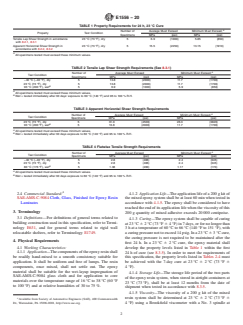
TABLE 1 Property Requirements for 24 h, 23 °C Cure
A
Number of Average Must Exceed Minimum Must Exceed,
Property Test Condition
Specimens MPa (psi) MPa (psi)
Tensile Lap Shear Strength in accordance 23 °C (73 °F), dry 5 6.9 (1000) 5.85 (850)
with 8.2.1, 8.3.1
Apparent Horizontal Shear Strength in 23 °C (73 °F), dry 5 15.5 (2250) 13.15 (1910)
accordance with 8.2.2, 8.3.2
A
All specimens tested must exceed these minimum values.
TABLE 2 Tensile Lap Shear Strength Requirements (See 8.3.1)
A
Number of Average Must Exceed Minimum Must Exceed,
Test Condition
Specimens MPa (psi) MPa (psi)
−40 °C (−40 °F), dry 5 13.8 (2000) 11.7 (1700)
23 °C (73 °F), dry 5 13.8 (2000) 11.7 (1700)
B
93 °C (200 °F), wet 5 6.9 (1000) 5.9 (850)
A
All specimens tested must exceed these minimum values.
B
Wet = tested immediately after 30 days’ exposure to 60 °C (140 °F) and 95 to 100 % R.H.
TABLE 3 Apparent Horizontal Shear Strength Requirements
A
Number of Average Must Exceed Minimum Must Exceed,
Test Condition
Specimens MPa (psi) MPa (psi)
23 °C (73 °F), dry 5 31.0 (4500) 26.3 (3820)
B
93 °C (200 °F), wet 5 13.8 (2000) 11.7 (1700)
A
All specimens tested must exceed these minimum values.
B
Wet = tested immediately after 30 days exposure to 60 °C (140 °F) and 95 to 100 % R.H.
TABLE 4 Flatwise Tensile Strength Requirements
A
Average Must Exceed Minimum Must Exceed,
Number of
Test Condition
Specimens MPa (psi) MPa (psi)
−40 °C (−40 °F), dry 5 2.8 (406) 2.4 (345)
23 °C (73 °F), dry 5 2.8 (406) 2.4 (345)
B
80 °C (176 °F), wet 5 1.38 (200) 1.17 (170)
A
All specimens tested must exceed these minimum values.
B
Wet = tested immediately after 30 days exposure to 60 °C (140 °F) and 95 to 100 % R.H.
2.4 Commercial Standard: 4.1.2 Application Life—Theapplicationlifeofa200gkitof
SAE-AMS-C-9084Cloth, Glass, Finished for Epoxy Resin themixedepoxysystemshallbeatleast60minwhentestedin
Laminates
accordance with 4.1.5. The epoxy shall be considered to have
reachedtheendofitsapplicationlifewhentheviscosityofthis
3. Terminology
200 g quantity of mixed adhesive exceeds 20000 centipoise.
3.1 Definitions—For definitions of general terms related to
4.1.3 Curing—The epoxy system shall be capable of curing
building construction used in this specification, refer toTermi-
at23°C 62°C(73°F 64°F)in7days,orfornolongerthan
nology E631, and for general terms related to rigid wall
3 h at a temperature of 60°C to 66°C (140°F to 151°F), with
relocatable shelters, refer to Terminology E1749.
acuringpressurenottoexceed14psig.Ina23°C 63°Ccure,
the curing pressure is not required to be maintained after the
4. Physical Requirements
first 24 h. In a 23°C 6 2°C cure, the epoxy material shall
4.1 Working Characteristics: develop the property levels listed in Table 1 within the first
4.1.1 Application—Thecomponentsoftheepoxyresinshall 24h of cure (see 8.3.5). In order to meet the requirements of
be readily hand-mixed to a smooth consistency suitable for this specification, the property levels listed in Tables 2-4 must
application. It shall be uniform and free of lumps. The resin
be achieved with the 7-day cure at 23°C 6 2°C (73°F 6
components, once mixed, shall not settle out. The epoxy 4°F).
material shall be suitable for the wet-layup impregnation of
4.1.4 Storage Life—The storage life period of the two parts
SAE-AMS-C-9084 glass cloth and for application to core
of the epoxy resin system, when stored in airtight containers at
materials over the temperature range of 16°C to 38°C (60°F
23°C (73°F), shall be at least 12 months from the date of
to 100°F) and at relative humidities of 30 to 75%.
shipment when tested in accordance with 8.3.5.
4.1.5 Viscosity—The viscosity of a 200 g kit of the mixed
resin system shall be determined at 23°C 6 2°C (73°F 6
Available from Society of Automotive Engineers (SAE), 400 Commonwealth
Dr., Warrendale, PA 15096-0001, http://www.sae.org. 4°F) using a Brookfield viscometer with a No. 3 spindle at
E1556 − 20
20rpm. A viscosity curve shall be determined by taking a impregnated and bonded. It shall have physical characteristics
reading immediately after mixing, and every 5 min thereafter that meet the requirements of Sections 4 and 7.
until the viscosity exceeds 20000 centipoise. The viscosity 6.1.1 Formulation Changes—The epoxy material shall be
immediately after mixing shall not exceed 14000 centipoise. approved only for the formulation that has passed the qualifi-
cation tests and shall be used by the fabricator as approved.
4.2 Mechanical Properties—Mechanical properties of test
Any changes by the manufacturer, such as the adding or
specimens prepared and tested as specified in Section 8 shall
changing of pigments, hardeners, or fillers, or changes in the
meet the respective requirements listed in Tables 2-4.
type or method of manufacture, changes in formulation of the
4.3 Instruction Sheet—The manufacturer shall provide a
basicresin,oranyotherchanges,shallbecausefordesignating
dated, coded, and titled instruction sheet outlining instructions
the adhesive as a new product that shall not be considered
for use of the epoxy system in impregnating and bonding
approved. The changed epoxy resin system shall be given a
SAE-AMS-C-9084 glass composite skins to honeycomb cores
new code number and shall be resubmitted for approval under
(SpecificationE1091,TypesIorII).Theseinstructionsshallbe
thisspecification.Anewinstructionsheetforthisreformulated
supplied by the manufacturer with the test report when
material shall be submitted by the manufacturer to the quali-
requesting qualification (see 7.3) and also with each shipment
fying activity for approval (see 4.3 and 11.2.2.3).
of epoxy material (see 10.2). The following information shall
6.1.2 Identification of Product—The manufacturer shall
be included:
identify each epoxy resin system submitted under this specifi-
4.3.1 All of the information listed in 6.3.1 – 6.3.11.
cation according to the type of container furnished for it (see
4.3.2 The application life of the mixed epoxy system at
Section 10). In addition, the manufacturer shall designate each
23°C 6 2°C (73°F 6 4°F) and 38°C 6 2°C (100°F 6
epoxy system by a trade name and code number that shall be
4°F).
used to identify it.
4.3.3 Mixing instructions shall be stated in detail for the
6.2 Qualification—In the case of epoxy systems for which
epoxy resin system in the particular container supplied.
the purchaser requires qualification, comprehensive testing in
4.3.4 Application, impregnating, and curing instructions,
accordance with Section 8 shall be performed and documented
including the spreading method, thickness range, and
in a test report.
temperature/relative humidity working limitations.
4.3.5 Material Safety Data Sheets and necessary safety
6.3 Procurement Documents—Procurement documents
precautions to be observed throughout all operations.
shall specify the following:
4.3.6 Anyotherpertinentinformationrelativetotheuseand
6.3.1 Title, number, and date of this specification,
storageofthetwo-partsystem(resinandcuringagent)package
6.3.2 Epoxy resin system type and manufacturer’s trade
(see 10.2).
name,
6.3.3 Date of manufacture,
5. Significance and Use
6.3.4 Manufacturer’s name and address,
6.3.5 Manufacturer’s batch/lot designation,
5.1 Epoxyresinsystemsusedintherepairofcompositeskin
6.3.6 Contract number,
sandwich panels for durable, rigidwall, relocatable shelters
6.3.7 Date of shipment,
must have a combination of mechanical property levels and
6.3.8 Expiration dates when stored at 23°C 6 2°C (73°F
environmental resistance that will assure long-term durability
6 4°F),
oftheskinsandtheskin-to-coreadhesivebondswhenexposed
6.3.9 Manufacturer’s recommended storage temperature,
tosevereclimaticexposures.Inaddition,theseepoxymaterials
6.3.10 Quantity required, and
musthaveprocessabilitycharacteristicsthatpermittheirusein
a variety of repair scenarios and environments. 6.3.11 Manufacturer’s certification that the batch and lot
meet the requirements of this specification.
5.2 Intended Use—Epoxysystemsconformingtothisspeci-
fication are intended for use in the repair of honeycomb panels
7. Quality Assurance Provisions
at the maintenance field level. The material is intended for use
with SAE-AMS-C-9084 glass cloth.
7.1 Responsibility for Inspection—Unless otherwise speci-
5.2.1 This is a procurement control document for the fied in the contract or purchase order, the supplier is respon-
procurement of the epoxy system and designers shall be aware
sible for the performance of all inspection requirements as
that the test values specified herein are based upon tests specified herein. Except as otherwise specified in the contract
performed with specific glass-resin composite adherends and
or purchase order, the supplier is permitted to use any facility
shall not be used for design data. suitable for the performance of the inspection requirements
5.2.2 Epoxy systems covered by this specification are not
specified herein, unless disapproved by purchaser. The pur-
intended for use in production bonding of sandwich construc- chaser reserves the right to perform any of the inspections set
tion. forthinthespecificationwheresuchinspectionsarerequiredto
ensure that supplies and services conform to prescribed re-
quirements.
6. Material and Ordering Information
6.1 General Description—The material shall be a two-part 7.2 ClassificationofTests—Theinspectionandtestingofthe
thermosetting epoxy system containing no asbestos, which epoxy system shall be classified as qualification tests (see 7.3)
shall not have a deleterious effect on the components being and quality conformance tests (see 7.4).
E1556 − 20
7.3 Qualification Tests: conducted by an organization approved by the procuring
agency. Any changes shall be subject to the approval of that
7.3.1 Sampling Instruction:
procuring activity.
7.3.1.1 Epoxy Resin System Samples—The manufacturer
shall submit two 1 qt samples of the base epoxy resin, along
7.4 Quality Conformance Tests:
with the necessary curing agent, from a single-numbered
7.4.1 Sampling—Two 200 g kits of epoxy material (see
production batch of material being presented for qualification.
10.1),takenatrandomfromtheproductionbatchsubmittedfor
The manufacturer shall submit two additional 200 g kits of the
qualification, shall be tested. One kit shall be used for
two-part system (resin and curing agent) from the same
acceptance tests and the other shall be retained for retest if
productionbatchforstoragelifetests(8.3.4).Thesefour200g
necessary.The storage conditions for the retained sample shall
kit epoxy resin samples shall each be from a batch of most
not exceed 23°C 6 2°C (73°F 6 4°F) and samples shall not
recentproduction-scalemanufacture,andarenotrequiredtobe
be retained beyond the storage life.
from the same batch as that used in preparing the duplicate
7.4.2 Tests—Samples of each submitted lot of epoxy mate-
panelsspecifiedin7.3.1.3.Allsamplesshallbeidentifiedasto:
rial delivered on contract or purchase order shall be subjected
(1) Name and address of manufacturer,
to the application life test described in 4.1.2. Lots shall be
(2) Manufacturer’s designation (trade name and code
rejectedifoneormoreofthespecimensfailtocomplywiththe
number),
requirements. Test reports, in duplicate, shall be furnished for
(3) Type of epoxy resin,
all quality conformance tests and shall be signed by an
(4) Batch number,
authorized representative of the laboratory performing the test
(5) Date of manufacture,
and by a designated representative of the procuring agency.
(6) Date of submittal,
7.5 Periodic Reevaluation—Unless otherwise specified by
(7) Expiration date, and
the purchaser (see 7.1), epoxy material that has not passed the
(8) Identification of agency submitting the samples.
qualification tests, or that has previously passed the tests but
7.3.1.2 A statement indicating that the products have not
has subsequently been modified in any manner, must be tested
beenrebrandedshallaccompanythesamples.Ifrebranded,the
against this specification and shown to meet its requirements.
names of the original manufacturers and original designations
of the products shall be indicated. All information submitted
8. Test Methods
will be treated as confidential.
8.1 Test Conditions—Unless otherwise specified in the de-
7.3.1.3 Duplicate Panels—The manufacturer shall submit,
tailed test method, all specimens shall be conditioned at 23°C
along with the epoxy material samples called for in 7.3.1.1,a
6 2°C (73°F 6 4°F) and 50 6 5% relative humidity for a
setofthreepanels,preparedinaccordancewiththeprocedures
period of at least 7 days.
describedin8.2.1–8.2.3,respectively.Thesethreepanelsshall
beduplicatesofthoseusedinthegenerationofdataforthetest
8.2 Preparation of Test Panels:
report (7.3.2).These panels shall be prepared with epoxy resin
8.2.1 Preparation of Test Panels for Tensile Lap Shear
samples from the same numbered batch, and shall be code
(Table 2)—A total of two panels shall be prepared as follows
marked the same as the panels from which the data in the test
(see Fig. 1):
report (7.3.2) were obtained.
8.2.1.1 Place a flat base plate, (labelled B in Fig. 1) 38.1cm
7.3.2 Test Report—A dated and numbered report, certified
by35.6cm(15in.by14in.)minimum,uponafilmofbagging
by notarized affidavit, shall be furnished, giving the results of
materialthatisapproximately10cm(4in.)largerthanthebase
all applicable tests listed in Tables 2-4. The individual speci-
plate in each direction (labelled LBF in Fig. 2).
men and average values for each test shall be reported (see
8.2.1.2 Cover the base plate with a sheet of film to act as a
11.2.2). Each value reported shall be shown as being for a
release (labelled RF in Fig. 1).
uniquelynumberedspecimen,thenumberingofwhichshallbe
8.2.1.3 Preparea27.9cmby25.4cm(11in.by10in.)piece
coded in the report in such a manner as to clearly establish the 1
of 0.317 cm ( ⁄8 in.) thick MIL-I-24768, G10 laminate for
particular panel from which the specimen was cut and the
bonding by sanding the bonding surface with 400 grit sand
particular batch of epoxy resin with which said panel was
paper to remove surface gloss. Remove the sanding dust using
prepared and the date of preparation. Coded identification of
a clean cloth saturated with isopropyl alcohol.
the epoxy resin batch shall include the respective dates of
8.2.1.4 Center the MIL-I-24768, G10 laminate section of
manufacture and sizes of batch. Dates on which the different
the panel (labelled P in Figs. 1 and 2) onto the release film on
tests were performed shall be shown in the test report.The test
the base plate.
report shall also cover all the requirements of 7.3 – 7.3.4. The
8.2.1.5 Lay up a laminate of 20 nested plies (approximately
actual pressure, temperature, and time of curing used in the
27.9cm by 25.4 cm (11in. by 10 in.)) of SAE-AMS-C-9084
preparationofthetestpanelsshallbereportedinthetestreport.
Type7781glassclothimpregnatedwiththeepoxyresinsystem
7.3.3 Instruction Sheet—The manufacturer shall submit an
(labelledCinFigs.1and2)directlyontopoftheG10laminate
instruction sheet attached to the test report in accordance with
(P in Figs. 1 and 2). The amount of resin to use to impregnate
4.3.
the glass cloth shall be selected so that the final cured laminate
7.3.4 Tests—The qualification tests
...
This document is not an ASTM standard and is intended only to provide the user of an ASTM standard an indication of what changes have been made to the previous version. Because
it may not be technically possible to adequately depict all changes accurately, ASTM recommends that users consult prior editions as appropriate. In all cases only the current version
of the standard as published by ASTM is to be considered the official document.
Designation: E1556 − 12 E1556 − 20
Standard Specification for
Epoxy Resin System for Composite Skin, Honeycomb
Sandwich Panel Repair
This standard is issued under the fixed designation E1556; the number immediately following the designation indicates the year of
original adoption or, in the case of revision, the year of last revision. A number in parentheses indicates the year of last reapproval. A
superscript epsilon (´) indicates an editorial change since the last revision or reapproval.
This standard has been approved for use by agencies of the U.S. Department of Defense.
1. Scope
1.1 This specification covers the requirements for an epoxy resin system intended for the repair of sandwich panels for durable,
rigidwall, relocatable structures. It must be usable in a field environment and shall not require the use of special equipment such
as autoclaves or presses. The epoxy system covered by this specification shall be usable for simultaneous impregnation of a
wet-layup composite skin and bonding of that skin to a substrate honeycomb core. The material shall withstand exposure to
temperatures from −54−54 °C to 93°C (−6593 °C (−65 °F to 199°F)199 °F) and high relative humidity, and also the combination
of stress, temperature, and relative humidity that are expected to be encountered in service.
1.2 The values stated in SI units are to be regarded as standard where only SI units are given or where SI units are given first
followed by inch-pound units; where inch-pound units are given first followed by SI units, the inch-pound units are to be regarded
as the standard.
1.3 The following safety hazards caveat refers only to the test methods described in this specification. This standard does not
purport to address all of the safety concerns, if any, associated with its use. It is the responsibility of the user of this standard to
establish appropriate safety safety, health, and healthenvironmental practices and determine the applicability of regulatory
limitations prior to use.
1.4 This international standard was developed in accordance with internationally recognized principles on standardization
established in the Decision on Principles for the Development of International Standards, Guides and Recommendations issued
by the World Trade Organization Technical Barriers to Trade (TBT) Committee.
2. Referenced Documents
2.1 ASTM Standards:
C297/C297M Test Method for Flatwise Tensile Strength of Sandwich Constructions
D792 Test Methods for Density and Specific Gravity (Relative Density) of Plastics by Displacement
D2344/D2344M Test Method for Short-Beam Strength of Polymer Matrix Composite Materials and Their Laminates
D2584 Test Method for Ignition Loss of Cured Reinforced Resins
D2734 Test Methods for Void Content of Reinforced Plastics
D3165 Test Method for Strength Properties of Adhesives in Shear by Tension Loading of Single-Lap-Joint Laminated
Assemblies
This specification is under the jurisdiction of ASTM Committee E06 on Performance of Buildings and is the direct responsibility of Subcommittee E06.53 on Materials
and Processes for Durable Rigidwall Relocatable Structures.
Current edition approved Nov. 1, 2012Sept. 1, 2020. Published December 2012October 2020. Originally approved in 1993. Last previous edition approved in 20082012
as E1556 – 08.E1556 – 12. DOI: 10.1520/E1556-12.10.1520/E1556-20.
For referenced ASTM standards, visit the ASTM website, www.astm.org, or contact ASTM Customer Service at service@astm.org. For Annual Book of ASTM Standards
volume information, refer to the standard’s Document Summary page on the ASTM website.
Copyright © ASTM International, 100 Barr Harbor Drive, PO Box C700, West Conshohocken, PA 19428-2959. United States
E1556 − 20
E631 Terminology of Building Constructions
E1091 Specification for Nonmetallic Honeycomb Core for Use in Shelter Panels
E1749 Terminology Relating to Rigid Wall Relocatable Shelters
2.2 Military Specifications:Specification:
MIL-I-24768 Insulation, Plastic, Laminated, Thermosetting, Glass-Cloth, Epoxy-Resin
2.3 Military Standards:
MIL-STD-129 Military Marking for Shipping and Storage
MIL-STD-1916 DOD Preferred Methods for Acceptance of Product
2.4 Commercial Standards:Standard:
SAE-AMS-C-9084 Cloth, Glass, Finished for Epoxy Resin Laminates
3. Terminology
3.1 Definitions—See Terminologies —For definitions of general terms related to building construction used in this specification,
refer to Terminology E631, and E1749 for definitions of general terms used in this specification.for general terms related to rigid
wall relocatable shelters, refer to Terminology E1749.
4. Physical Requirements
4.1 Working Characteristics:
4.1.1 Application—The components of the epoxy resin shall be readily hand-mixed to a smooth consistency suitable for
application. It shall be uniform and free of lumps. The resin components, once mixed, shall not settle out. The epoxy material shall
be suitable for the wet-layup impregnation of SAE-AMS-C-9084 glass cloth and for application to core materials over the
temperature range of 1616 °C to 38°C (6038 °C (60 °F to 100°F)100 °F) and at relative humidities of 30 to 75 %.
4.1.2 Application Life—The application life of a 200-g 200 g kit of the mixed epoxy system shall be at least 60 min when tested
in accordance with 4.1.5. The epoxy shall be considered to have reached the end of its application life when the viscosity of this
200-g 200 g quantity of mixed adhesive exceeds 20 000 centipoise.
4.1.3 Curing—The epoxy system shall be capable of curing at 2323 °C 6 2°C (732 °C (73 °F 6 4°F)4 °F) in 7 days, or for no
longer than 3 h at a temperature of 6060 °C to 66°C (14066 °C (140 °F to 151°F),151 °F), with a curing pressure not to exceed
14 psig. In a 23°6 3°C 23 °C 6 3 °C cure, the curing pressure is not required to be maintained after the first 24 h. In a 2323 °C
6 2°C2 °C cure, the epoxy material shall develop the property levels listed in Table 1 within the first 24 h 24 h of cure (see 8.3.5).
In order to meet the requirements of this specification, the property levels listed in Tables 2-4 must be achieved with the 7-day
cure at 2323 °C 6 2°C (732 °C (73 °F 6 4°F).4 °F).
4.1.4 Storage Life—The storage life period of the two parts of the epoxy resin system, when stored in airtight containers at 23°C
(73°F),23 °C (73 °F), shall be at least 12 months from the date of shipment when tested in accordance with 8.3.5.
TABLE 1 Property Requirements for 24-h, 23°C Cure
A
Number of Average Must Exceed Minimum Must Exceed,
Property Test Condition
Specimens MPa (psi) MPa (psi)
Tensile Lap Shear Strength in accordance 23°C (73°F), dry 5 6.9 (1000) 5.85 (850)
with 8.2.1, 8.3.1
Apparent Horizontal Shear Strength in 23°C (73°F), dry 5 15.5 (2250) 13.15 (1910)
accordance with 8.2.2, 8.3.2
TABLE 1 Property Requirements for 24 h, 23 °C Cure
A
Number of Average Must Exceed Minimum Must Exceed,
Property Test Condition
Specimens MPa (psi) MPa (psi)
Tensile Lap Shear Strength in accordance 23 °C (73 °F), dry 5 6.9 (1000) 5.85 (850)
with 8.2.1, 8.3.1
Apparent Horizontal Shear Strength in 23 °C (73 °F), dry 5 15.5 (2250) 13.15 (1910)
accordance with 8.2.2, 8.3.2
A
All specimens tested must exceed these minimum values.
Available from Standardization Documents Order Desk, DODSSP, Bldg. 4, Section D, DLA Document Services, Building 4/D, 700 Robbins Ave., Philadelphia, PA
19111-5098, http://www.dodssp.daps.mil.19111, http://quicksearch.dla.mil.
Available from Society of Automotive Engineers (SAE), 400 Commonwealth Dr., Warrendale, PA 15096-0001, http://www.sae.org.
E1556 − 20
TABLE 2 Tensile Lap Shear Strength Requirements (See 8.3.1)
A
Number of Average Must Exceed Minimum Must Exceed,
Test Condition
Specimens
MPa (psi) MPa (psi)
−40°C (−40°F), dry 5 13.8 (2000) 11.7 (1700)
23°C (73°F), dry 5 13.8 (2000) 11.7 (1700)
B
93°C (200°F), wet 5 6.9 (1000) 5.9 (850)
TABLE 2 Tensile Lap Shear Strength Requirements (See 8.3.1)
A
Number of Average Must Exceed Minimum Must Exceed,
Test Condition
Specimens MPa (psi) MPa (psi)
−40 °C (−40 °F), dry 5 13.8 (2000) 11.7 (1700)
23 °C (73 °F), dry 5 13.8 (2000) 11.7 (1700)
B
93 °C (200 °F), wet 5 6.9 (1000) 5.9 (850)
A
All specimens tested must exceed these minimum values.
B
Wet = tested immediately after 30 days’ exposure to 60°C (140°F)60 °C (140 °F) and 95 to 100 % R.H.
TABLE 3 Apparent Horizontal Shear Strength Requirements
A
Average Must Exceed Minimum Must Exceed,
Number of
Test Condition
Specimens MPa (psi) MPa (psi)
23°C (73°F), dry 5 31.0 (4500) 26.3 (3820)
B
93°C (200°F), wet 5 13.8 (2000) 11.7 (1700)
TABLE 3 Apparent Horizontal Shear Strength Requirements
A
Number of Average Must Exceed Minimum Must Exceed,
Test Condition
Specimens MPa (psi) MPa (psi)
23 °C (73 °F), dry 5 31.0 (4500) 26.3 (3820)
B
93 °C (200 °F), wet 5 13.8 (2000) 11.7 (1700)
A
All specimens tested must exceed these minimum values.
B
Wet = tested immediately after 30 days exposure to 60°C (140°F)60 °C (140 °F) and 95 to 100 % R.H.
TABLE 4 Flatwise Tensile Strength Requirements
A
Number of Average Must Exceed Minimum Must Exceed,
Test Condition
Specimens MPa (psi) MPa (psi)
−40°C (−40°F), dry 5 2.8 (406) 2.4 (345)
23°C (73°F), dry 5 2.8 (406) 2.4 (345)
B
80°C (176°F), wet 5 1.38 (200) 1.17 (170)
TABLE 4 Flatwise Tensile Strength Requirements
A
Number of Average Must Exceed Minimum Must Exceed,
Test Condition
Specimens MPa (psi) MPa (psi)
−40 °C (−40 °F), dry 5 2.8 (406) 2.4 (345)
23 °C (73 °F), dry 5 2.8 (406) 2.4 (345)
B
80 °C (176 °F), wet 5 1.38 (200) 1.17 (170)
A
All specimens tested must exceed these minimum values.
B
Wet = tested immediately after 30 days exposure to 60°C (140°F)60 °C (140 °F) and 95 to 100 % R.H.
4.1.5 Viscosity—The viscosity of a 200-g 200 g kit of the mixed resin system shall be determined at 2323 °C 6 2°C (732 °C (73 °F
6 4°F)4 °F) using a Brookfield viscometer with a No. 3 spindle at 20 rpm. 20 rpm. A viscosity curve shall be determined by taking
a reading immediately after mixing, and every 5 min thereafter until the viscosity exceeds 20 000 centipoise. The viscosity
immediately after mixing shall not exceed 14 000 centipoise.
4.2 Mechanical Properties—Mechanical properties of test specimens prepared and tested as specified in Section 8 shall meet the
respective requirements listed in Tables 2-4.
4.3 Instruction Sheet—The manufacturer shall provide a dated, coded, and titled instruction sheet outlining instructions for use of
the epoxy system in impregnating and bonding SAE-AMS-C-9084 glass composite skins to honeycomb cores (Specification
E1091, Types I or II). These instructions shall be supplied by the manufacturer with the test report when requesting qualification
(see 7.3) and also with each shipment of epoxy material (see 10.2). The following information shall be included:
4.3.1 All of the information listed in 6.3.1 – 6.3.11.
E1556 − 20
4.3.2 The application life of the mixed epoxy system at 2323 °C 6 2°C (732 °C (73 °F 6 4°F)4 °F) and 3838 °C 6 2°C (1002 °C
(100 °F 6 4°F).4 °F).
4.3.3 Mixing instructions shall be stated in detail for the epoxy resin system in the particular container supplied.
4.3.4 Application, impregnating, and curing instructions, including the spreading method, thickness range, and temperature/
relative humidity working limitations.
4.3.5 Material Safety Data Sheets and necessary safety precautions to be observed throughout all operations.
4.3.6 Any other pertinent information relative to the use and storage of the two-part system (resin and curing agent) package (see
10.2).
5. Significance and Use
5.1 Epoxy resin systems used in the repair of composite skin sandwich panels for durable, rigidwall, relocatable shelters must have
a combination of mechanical property levels and environmental resistance that will assure long-term durability of the skins and
the skin-to-core adhesive bonds when exposed to severe climatic exposures. In addition, these epoxy materials must have
processability characteristics that permit their use in a variety of repair scenarios and environments.
5.2 Intended Use—Epoxy systems conforming to this specification are intended for use in the repair of honeycomb panels at the
maintenance field level. The material is intended for use with SAE-AMS-C-9084 glass cloth.
5.2.1 This is a procurement control document for the procurement of the epoxy system and designers shall be aware that the test
values specified herein are based upon tests performed with specific glass-resin composite adherends and shall not be used for
design data.
5.2.2 Epoxy systems covered by this specification are not intended for use in production bonding of sandwich construction.
6. Material and Ordering Information
6.1 General Description—The material shall be a two-part thermosetting epoxy system containing no asbestos, which shall not
have a deleterious effect on the components being impregnated and bonded. It shall have physical characteristics that meet the
requirements of Sections 4 and 7.
6.1.1 Formulation Changes—The epoxy material shall be approved only for the formulation that has passed the qualification tests
and shall be used by the fabricator as approved. Any changes by the manufacturer, such as the adding or changing of pigments,
hardeners, or fillers, or changes in the type or method of manufacture, changes in formulation of the basic resin, or any other
changes, shall be cause for designating the adhesive as a new product that shall not be considered approved. The changed epoxy
resin system shall be given a new code number and shall be resubmitted for approval under this specification. A new instruction
sheet for this reformulated material shall be submitted by the manufacturer to the qualifying activity for approval (see 4.3 and
11.2.2.3).
6.1.2 Identification of Product—The manufacturer shall identify each epoxy resin system submitted under this specification
according to the type of container furnished for it (see Section 10). In addition, the manufacturer shall designate each epoxy system
by a trade name and code number that shall be used to identify it.
6.2 Qualification—In the case of epoxy systems for which the purchaser requires qualification, comprehensive testing in
accordance with Section 8 shall be performed and documented in a test report.
6.3 Procurement Documents—Procurement documents shall specify the following:
6.3.1 Title, number, and date of this specification,
6.3.2 Epoxy resin system type and manufacturer’s trade name,
6.3.3 Date of manufacture,
E1556 − 20
6.3.4 Manufacturer’s name and address,
6.3.5 Manufacturer’s batch/lot designation,
6.3.6 Contract number,
6.3.7 Date of shipment,
6.3.8 Expiration dates when stored at 2323 °C 6 2°C (732 °C (73 °F 6 4°F),4 °F),
6.3.9 Manufacturer’sManufacturer’s recommended storage temperature,
6.3.10 Quantity required, and
6.3.11 Manufacturer’s certification that the batch and lot meet the requirements of this specification.
7. Quality Assurance Provisions
7.1 Responsibility for Inspection—Unless otherwise specified in the contract or purchase order, the supplier is responsible for the
performance of all inspection requirements as specified herein. Except as otherwise specified in the contract or purchase order, the
supplier is permitted to use any facility suitable for the performance of the inspection requirements specified herein, unless
disapproved by purchaser. The purchaser reserves the right to perform any of the inspections set forth in the specification where
such inspections are required to ensure that supplies and services conform to prescribed requirements.
7.2 Classification of Tests—The inspection and testing of the epoxy system shall be classified as qualification tests (see 7.3) and
quality conformance tests (see 7.4).
7.3 Qualification Tests:
7.3.1 Sampling Instruction:
7.3.1.1 Epoxy Resin System Samples—The manufacturer shall submit two 1-qt 1 qt samples of the base epoxy resin, along with
the necessary curing agent, from a single-numbered production batch of material being presented for qualification. The
manufacturer shall submit two additional 200-g 200 g kits of the two-part system (resin and curing agent) from the same production
batch for storage life tests (8.3.4). These four 200-g 200 g kit epoxy resin samples shall each be from a batch of most recent
production-scale manufacture, and are not required to be from the same batch as that used in preparing the duplicate panels
specified in 7.3.1.3. All samples shall be identified as to:
(1) Name and address of manufacturer,
(2) Manufacturer’s designation (trade name and code number),
(3) Type of epoxy resin,
(4) Batch number,
(5) Date of manufacture,
(6) Date of submittal,
(7) Expiration date, and
(8) Identification of agency submitting the samples.
7.3.1.2 A statement indicating that the products have not been rebranded shall accompany the samples. If rebranded, the names
of the original manufacturers and original designations of the products shall be indicated. All information submitted will be treated
as confidential.
7.3.1.3 Duplicate Panels—The manufacturer shall submit, along with the epoxy material samples called for in 7.3.1.1, a set of
three panels, prepared in accordance with the procedures described in 8.2.1 – 8.2.3, respectively. These three panels shall be
duplicates of those used in the generation of data for the test report (7.3.2). These panels shall be prepared with epoxy resin samples
from the same numbered batch, and shall be code marked the same as the panels from which the data in the test report (7.3.2) were
obtained.
7.3.2 Test Report—A dated and numbered report, certified by notarized affidavit, shall be furnished, giving the results of all
E1556 − 20
applicable tests listed in Tables 2-4. The individual specimen and average values for each test shall be reported (see 11.2.2). Each
value reported shall be shown as being for a uniquely numbered specimen, the numbering of which shall be coded in the report
in such a manner as to clearly establish the particular panel from which the specimen was cut and the particular batch of epoxy
resin with which said panel was prepared and the date of preparation. Coded identification of the epoxy resin batch shall include
the respective dates of manufacture and sizes of batch. Dates on which the different tests were performed shall be shown in the
test report. The test report shall also cover all the requirements of 7.3 – 7.3.4. The actual pressure, temperature, and time of curing
used in the preparation of the test panels shall be reported in the test report.
7.3.3 Instruction Sheet—The manufacturer shall submit an instruction sheet attached to the test report in accordance with 4.3.
7.3.4 Tests—The qualification tests shall consist of all the tests of this specification (Section 8) and shall include approval of the
manufacturer instruction sheet. These tests shall be conducted by an organization approved by the procuring agency. Any changes
shall be subject to the approval of that procuring activity.
7.4 Quality Conformance Tests:
7.4.1 Sampling—Two 200-g 200 g kits of epoxy material (see 10.1), taken at random from the production batch submitted for
qualification, shall be tested. One kit shall be used for acceptance tests and the other shall be retained for retest if necessary. The
storage conditions for the retained sample shall not exceed 2323 °C 6 2°C (732 °C (73 °F 6 4°F)4 °F) and samples shall not be
retained beyond the storage life.
7.4.2 Tests—Samples of each submitted lot of epoxy material delivered on contract or purchase order shall be subjected to the
application life test described in 4.1.2. Lots shall be rejected if one or more of the specimens fail to comply with the requirements.
Test reports, in duplicate, shall be furnished for all quality conformance tests and shall be signed by an authorized representative
of the laboratory performing the test and by a designated representative of the procuring agency.
7.5 Periodic Reevaluation—Unless otherwise specified by the purchaser (see 7.1), epoxy material that has not passed the
qualification tests, or that has previously passed the tests but has subsequently been modified in any manner, must be tested against
this specification and shown to meet its requirements.
8. Test Methods
8.1 Test Conditions—Unless otherwise specified in the detailed test method, all specimens shall be conditioned at 2323 °C 6 2°C
(732 °C (73 °F 6 4°F)4 °F) and 50 6 5 % relative humidity for a period of at least 7 days.
8.2 Preparation of Test Panels:
8.2.1 Preparation of Test Panels for Tensile Lap Shear (Table 2)—A total of two panels shall be prepared as follows (see Fig. 1):
8.2.1.1 Place a flat base plate, (labelled B in Fig. 1) 38.138.1 cm by 35.6 cm (15(15 in. by 14 in.) minimum, upon a film of bagging
material that is approximately 10 cm (4 in.) larger than the base plate in each direction (labelled LBF in Fig. 2).
8.2.1.2 Cover the base plate with a sheet of film to act as a release (labelled RF in Fig. 1).
8.2.1.3 Prepare a 27.927.9 cm by 25.4 cm (11(11 in. by 10 in.) piece of 0.317 cm ( ⁄8 in.) thick MIL-I-2476
...