

ASTM D257-14(2021)e1
(Test Method)Standard Test Methods for DC Resistance or Conductance of Insulating Materials
General Information
- Abstract
SIGNIFICANCE AND USE
5.1 Insulating materials are used to isolate components of an electrical system from each other and from ground, as well as to provide mechanical support for the components. For this purpose, it is generally desirable to have the insulation resistance as high as possible, consistent with acceptable mechanical, chemical, and heat-resisting properties. Since insulation resistance or conductance combines both volume and surface resistance or conductance, its measured value is most useful when the test specimen and electrodes have the same form as is required in actual use. Surface resistance or conductance changes rapidly with humidity, while volume resistance or conductance changes slowly with the total change being greater in some cases.
5.2 Resistivity or conductivity is used to predict, indirectly, the low-frequency dielectric breakdown and dissipation factor properties of some materials. Resistivity or conductivity is often used as an indirect measure of: moisture content, degree of cure, mechanical continuity, or deterioration of various types. The usefulness of these indirect measurements is dependent on the degree of correlation established by supporting theoretical or experimental investigations. A decrease of surface resistance results either in an increase of the dielectric breakdown voltage because the electric field intensity is reduced, or a decrease of the dielectric breakdown voltage because the area under stress is increased.
5.3 All the dielectric resistances or conductances depend on the length of time of electrification and on the value of applied voltage (in addition to the usual environmental variables). These must be known and reported to make the measured value of resistance or conductance meaningful. Within the electrical insulation materials industry, the adjective “apparent” is generally applied to resistivity values obtained under conditions of arbitrarily selected electrification time. See X1.4.
5.4 Volume resistivity or conductivi...
SCOPE
1.1 These test methods cover direct-current procedures for the measurement of dc insulation resistance, volume resistance, and surface resistance. From such measurements and the geometric dimensions of specimen and electrodes, both volume and surface resistivity of electrical insulating materials can be calculated, as well as the corresponding conductances and conductivities.
1.2 These test methods are not suitable for use in measuring the electrical resistance/conductance of moderately conductive materials. Use Test Method D4496 to evaluate such materials.
1.3 These test methods describe several general alternative methodologies for measuring resistance (or conductance). Specific materials can be tested most appropriately by using standard ASTM test methods applicable to the specific material that define both voltage stress limits and finite electrification times as well as specimen configuration and electrode geometry. These individual specific test methodologies would be better able to define the precision and bias for the determination.
1.4 This standard does not purport to address all of the safety concerns, if any, associated with its use. It is the responsibility of the user of this standard to establish appropriate safety, health, and environmental practices and determine the applicability of regulatory limitations prior to use.
1.5 This international standard was developed in accordance with internationally recognized principles on standardization established in the Decision on Principles for the Development of International Standards, Guides and Recommendations issued by the World Trade Organization Technical Barriers to Trade (TBT) Committee.
- Status
- Published
- Publication Date
- 28-Feb-2021
- Technical Committee
- D09 - Electrical and Electronic Insulating Materials
- Drafting Committee
- D09.12 - Electrical Tests
Overview
ASTM D257-14(2021)e1: Standard Test Methods for DC Resistance or Conductance of Insulating Materials specifies direct-current (DC) procedures for assessing the electrical resistance and conductance properties of solid insulating materials. Published by ASTM International, this standard is crucial for industries that depend on the reliability, safety, and performance of electrical insulation, particularly in electrical and electronic systems.
ASTM D257 covers test methods to measure DC insulation resistance, volume resistance, and surface resistance, enabling calculation of volume and surface resistivity and corresponding conductances and conductivities. These measurements help in evaluating how well insulating materials prevent electrical current flow and maintain safe separation between electrical components.
Key Topics
Insulation Resistance and Conductance
- Measures the ability of insulating materials to block or permit DC current between components or to ground.
- High insulation resistance is desirable for safe electrical system operation.
Volume and Surface Resistivity/Conductativity
- Volume resistivity: Resistance to current through the bulk of the material.
- Surface resistivity: Resistance to current along the surface.
- Both values depend on factors like specimen geometry, electrode arrangement, electrification time, and environmental conditions.
Test Specimen and Electrode Configuration
- Accurate results require test specimens and electrodes that reflect real-world usage.
- Common electrode systems include binding-post, taper-pin, metal bars, silver paint, and guarded electrodes for precise measurements.
Environmental Influence
- Surface resistance or conductance reacts rapidly to humidity changes, while volume resistance shifts more slowly.
- Reporting measurement conditions, such as temperature and humidity, is essential for meaningful results.
Indirect Assessment
- Resistivity and conductivity values assist in evaluating dielectric properties, predicting potential dielectric breakdown, tracking moisture content, cure level, and material degradation.
Applications
ASTM D257 is widely applied in:
- Electrical Equipment Manufacturing
- Evaluating insulation in wires, cables, bushings, and electronic components to ensure compliance with safety and performance standards.
- Quality Control
- Verifying the uniformity of insulating materials during production, detecting processing issues, and identifying conductive impurities.
- Material Research and Development
- Comparing new insulating material formulations, optimizing for higher breakdown resistance, and minimizing electrical losses.
- Troubleshooting and Failure Analysis
- Investigating mechanical, chemical, or environmental causes of insulation deterioration through resistance or conductance changes.
- Compliance with Regulations
- Ensuring materials meet international requirements for electrical insulation as referenced by industry and governmental bodies, like the U.S. Department of Defense.
Related Standards
Several ASTM standards complement or are referenced in ASTM D257-14(2021)e1:
- ASTM D150 - Test methods for AC loss characteristics and dielectric constant of solid electrical insulation.
- ASTM D374 - Methods for measuring the thickness of solid electrical insulation.
- ASTM D1169 - Test method for specific resistance (resistivity) of electrical insulating liquids.
- ASTM D4496 - Test method for DC resistance or conductance of moderately conductive materials (used when D257 is not suitable).
- ASTM D1711 - Terminology relating to electrical insulation.
- ASTM D5032 & E104 - Practices for maintaining constant relative humidity during testing.
Practical Value
Utilizing ASTM D257 ensures:
- Reliable and Consistent Test Results: Supports meaningful comparison of insulating materials.
- Enhanced Electrical Safety: Directly correlates with equipment longevity and operational safety.
- Optimized Material Performance: Assists manufacturers in selecting the right insulation for given electrical, mechanical, and environmental demands.
- Global Compliance: Aligns with principles outlined by the World Trade Organization's Technical Barriers to Trade (TBT) Committee, promoting global standardization.
By integrating ASTM D257 into quality assurance, research, and product development processes, stakeholders in the electrical and electronics industries achieve higher standards of safety, efficiency, and market competitiveness.
Relations
- Effective Date
- 01-Mar-2024
- Effective Date
- 01-Oct-2023
- Effective Date
- 01-Oct-2019
- Effective Date
- 01-Apr-2019
- Effective Date
- 01-Mar-2019
- Effective Date
- 01-Nov-2015
- Effective Date
- 01-Nov-2014
- Effective Date
- 01-May-2014
- Effective Date
- 01-Nov-2013
- Effective Date
- 01-Apr-2012
- Effective Date
- 01-Aug-2011
- Effective Date
- 01-Aug-2011
- Effective Date
- 01-May-2011
- Effective Date
- 01-May-2009
- Effective Date
- 01-May-2008
Get Certified
Connect with accredited certification bodies for this standard

IMQ S.p.A. (Certification)
Italian electrical product certification.

SLG Prüf- und Zertifizierungs GmbH
German testing and certification body.

UL Solutions
Global safety science company with testing, inspection and certification.
Sponsored listings
Frequently Asked Questions
ASTM D257-14(2021)e1 is a standard published by ASTM International. Its full title is "Standard Test Methods for DC Resistance or Conductance of Insulating Materials". This standard covers: SIGNIFICANCE AND USE 5.1 Insulating materials are used to isolate components of an electrical system from each other and from ground, as well as to provide mechanical support for the components. For this purpose, it is generally desirable to have the insulation resistance as high as possible, consistent with acceptable mechanical, chemical, and heat-resisting properties. Since insulation resistance or conductance combines both volume and surface resistance or conductance, its measured value is most useful when the test specimen and electrodes have the same form as is required in actual use. Surface resistance or conductance changes rapidly with humidity, while volume resistance or conductance changes slowly with the total change being greater in some cases. 5.2 Resistivity or conductivity is used to predict, indirectly, the low-frequency dielectric breakdown and dissipation factor properties of some materials. Resistivity or conductivity is often used as an indirect measure of: moisture content, degree of cure, mechanical continuity, or deterioration of various types. The usefulness of these indirect measurements is dependent on the degree of correlation established by supporting theoretical or experimental investigations. A decrease of surface resistance results either in an increase of the dielectric breakdown voltage because the electric field intensity is reduced, or a decrease of the dielectric breakdown voltage because the area under stress is increased. 5.3 All the dielectric resistances or conductances depend on the length of time of electrification and on the value of applied voltage (in addition to the usual environmental variables). These must be known and reported to make the measured value of resistance or conductance meaningful. Within the electrical insulation materials industry, the adjective “apparent” is generally applied to resistivity values obtained under conditions of arbitrarily selected electrification time. See X1.4. 5.4 Volume resistivity or conductivi... SCOPE 1.1 These test methods cover direct-current procedures for the measurement of dc insulation resistance, volume resistance, and surface resistance. From such measurements and the geometric dimensions of specimen and electrodes, both volume and surface resistivity of electrical insulating materials can be calculated, as well as the corresponding conductances and conductivities. 1.2 These test methods are not suitable for use in measuring the electrical resistance/conductance of moderately conductive materials. Use Test Method D4496 to evaluate such materials. 1.3 These test methods describe several general alternative methodologies for measuring resistance (or conductance). Specific materials can be tested most appropriately by using standard ASTM test methods applicable to the specific material that define both voltage stress limits and finite electrification times as well as specimen configuration and electrode geometry. These individual specific test methodologies would be better able to define the precision and bias for the determination. 1.4 This standard does not purport to address all of the safety concerns, if any, associated with its use. It is the responsibility of the user of this standard to establish appropriate safety, health, and environmental practices and determine the applicability of regulatory limitations prior to use. 1.5 This international standard was developed in accordance with internationally recognized principles on standardization established in the Decision on Principles for the Development of International Standards, Guides and Recommendations issued by the World Trade Organization Technical Barriers to Trade (TBT) Committee.
SIGNIFICANCE AND USE 5.1 Insulating materials are used to isolate components of an electrical system from each other and from ground, as well as to provide mechanical support for the components. For this purpose, it is generally desirable to have the insulation resistance as high as possible, consistent with acceptable mechanical, chemical, and heat-resisting properties. Since insulation resistance or conductance combines both volume and surface resistance or conductance, its measured value is most useful when the test specimen and electrodes have the same form as is required in actual use. Surface resistance or conductance changes rapidly with humidity, while volume resistance or conductance changes slowly with the total change being greater in some cases. 5.2 Resistivity or conductivity is used to predict, indirectly, the low-frequency dielectric breakdown and dissipation factor properties of some materials. Resistivity or conductivity is often used as an indirect measure of: moisture content, degree of cure, mechanical continuity, or deterioration of various types. The usefulness of these indirect measurements is dependent on the degree of correlation established by supporting theoretical or experimental investigations. A decrease of surface resistance results either in an increase of the dielectric breakdown voltage because the electric field intensity is reduced, or a decrease of the dielectric breakdown voltage because the area under stress is increased. 5.3 All the dielectric resistances or conductances depend on the length of time of electrification and on the value of applied voltage (in addition to the usual environmental variables). These must be known and reported to make the measured value of resistance or conductance meaningful. Within the electrical insulation materials industry, the adjective “apparent” is generally applied to resistivity values obtained under conditions of arbitrarily selected electrification time. See X1.4. 5.4 Volume resistivity or conductivi... SCOPE 1.1 These test methods cover direct-current procedures for the measurement of dc insulation resistance, volume resistance, and surface resistance. From such measurements and the geometric dimensions of specimen and electrodes, both volume and surface resistivity of electrical insulating materials can be calculated, as well as the corresponding conductances and conductivities. 1.2 These test methods are not suitable for use in measuring the electrical resistance/conductance of moderately conductive materials. Use Test Method D4496 to evaluate such materials. 1.3 These test methods describe several general alternative methodologies for measuring resistance (or conductance). Specific materials can be tested most appropriately by using standard ASTM test methods applicable to the specific material that define both voltage stress limits and finite electrification times as well as specimen configuration and electrode geometry. These individual specific test methodologies would be better able to define the precision and bias for the determination. 1.4 This standard does not purport to address all of the safety concerns, if any, associated with its use. It is the responsibility of the user of this standard to establish appropriate safety, health, and environmental practices and determine the applicability of regulatory limitations prior to use. 1.5 This international standard was developed in accordance with internationally recognized principles on standardization established in the Decision on Principles for the Development of International Standards, Guides and Recommendations issued by the World Trade Organization Technical Barriers to Trade (TBT) Committee.
ASTM D257-14(2021)e1 is classified under the following ICS (International Classification for Standards) categories: 29.035.01 - Insulating materials in general. The ICS classification helps identify the subject area and facilitates finding related standards.
ASTM D257-14(2021)e1 has the following relationships with other standards: It is inter standard links to ASTM D1711-24, ASTM D374/D374M-23, ASTM D1169-19a, ASTM D1169-19, ASTM D5032-19, ASTM D1711-15, ASTM D1711-14a, ASTM D1711-14, ASTM D1711-13, ASTM E104-02(2012), ASTM D5032-11, ASTM D1711-11a, ASTM D1169-11, ASTM D1169-09, ASTM D1711-08. Understanding these relationships helps ensure you are using the most current and applicable version of the standard.
ASTM D257-14(2021)e1 is available in PDF format for immediate download after purchase. The document can be added to your cart and obtained through the secure checkout process. Digital delivery ensures instant access to the complete standard document.
Standards Content (Sample)
This international standard was developed in accordance with internationally recognized principles on standardization established in the Decision on Principles for the
Development of International Standards, Guides and Recommendations issued by the World Trade Organization Technical Barriers to Trade (TBT) Committee.
´1
Designation: D257 − 14 (Reapproved 2021)
Standard Test Methods for
DC Resistance or Conductance of Insulating Materials
This standard is issued under the fixed designation D257; the number immediately following the designation indicates the year of
original adoption or, in the case of revision, the year of last revision. A number in parentheses indicates the year of last reapproval. A
superscript epsilon (´) indicates an editorial change since the last revision or reapproval.
This standard has been approved for use by agencies of the U.S. Department of Defense.
ε NOTE—Editorial changes were made to 4.1 (grammar correction) and Table 1 (“p” changed to “ρ”) in March 2021.
1. Scope 2. Referenced Documents
2.1 ASTM Standards:
1.1 These test methods cover direct-current procedures for
D150 Test Methods forAC Loss Characteristics and Permit-
themeasurementofdcinsulationresistance,volumeresistance,
tivity (Dielectric Constant) of Solid Electrical Insulation
and surface resistance. From such measurements and the
D374/D374M Test Methods for Thickness of Solid Electri-
geometric dimensions of specimen and electrodes, both vol-
cal Insulation
ume and surface resistivity of electrical insulating materials
D1169 Test Method for Specific Resistance (Resistivity) of
can be calculated, as well as the corresponding conductances
Electrical Insulating Liquids
and conductivities.
D1711 Terminology Relating to Electrical Insulation
1.2 These test methods are not suitable for use in measuring
D4496 Test Method for D-C Resistance or Conductance of
the electrical resistance/conductance of moderately conductive
Moderately Conductive Materials
materials. Use Test Method D4496 to evaluate such materials. D5032 Practice for Maintaining Constant Relative Humidity
by Means of Aqueous Glycerin Solutions
1.3 These test methods describe several general alternative
D6054 Practice for Conditioning Electrical Insulating Mate-
methodologies for measuring resistance (or conductance). 3
rials for Testing (Withdrawn 2012)
Specific materials can be tested most appropriately by using
E104 Practice for Maintaining Constant Relative Humidity
standardASTMtestmethodsapplicabletothespecificmaterial
by Means of Aqueous Solutions
that define both voltage stress limits and finite electrification
times as well as specimen configuration and electrode geom-
3. Terminology
etry. These individual specific test methodologies would be
3.1 Definitions:
better able to define the precision and bias for the determina-
3.1.1 The following definitions are taken from Terminology
tion.
D1711 and apply to the terms used in the text of these test
methods.
1.4 This standard does not purport to address all of the
3.1.2 conductance, insulation, n—the ratio of the total
safety concerns, if any, associated with its use. It is the
volume and surface current between two electrodes (on or in a
responsibility of the user of this standard to establish appro-
specimen) to the dc voltage applied to the two electrodes.
priate safety, health, and environmental practices and deter-
3.1.2.1 Discussion—Insulation conductance is the recipro-
mine the applicability of regulatory limitations prior to use.
cal of insulation resistance.
1.5 This international standard was developed in accor-
3.1.3 conductance, surface, n—the ratio of the current
dance with internationally recognized principles on standard-
betweentwoelectrodes(onthesurfaceofaspecimen)tothedc
ization established in the Decision on Principles for the
voltage applied to the electrodes.
Development of International Standards, Guides and Recom-
3.1.3.1 Discussion—(Somevolumeconductanceisunavoid-
mendations issued by the World Trade Organization Technical
ably included in the actual measurement.) Surface conductance
Barriers to Trade (TBT) Committee.
is the reciprocal of surface resistance.
1 2
These test methods are under the jurisdiction of ASTM Committee D09 on For referenced ASTM standards, visit the ASTM website, www.astm.org, or
Electrical and Electronic Insulating Materials and are the direct responsibility of contact ASTM Customer Service at service@astm.org. For Annual Book of ASTM
Subcommittee D09.12 on Electrical Tests. Standards volume information, refer to the standard’s Document Summary page on
Current edition approved March 1, 2021. Published May 2021. Originally the ASTM website.
approved in 1925. Last previous edition approved in 2014 as D257 – 14. DOI: The last approved version of this historical standard is referenced on
10.1520/D0257-14R21E01. www.astm.org.
Copyright © ASTM International, 100 Barr Harbor Drive, PO Box C700, West Conshohocken, PA 19428-2959. United States
´1
D257 − 14 (2021)
3.1.4 conductance,volume,n—the ratio of the current in the the measured resistance to that resistance obtained if the
volume of a specimen between two electrodes (on or in the electrodes had formed the opposite sides of a unit cube.
specimen) to the dc voltage applied to the two electrodes. 3.1.12.1 Discussion—Volume resistivity is usually ex-
3.1.4.1 Discussion—Volume conductance is the reciprocal pressed in ohm-centimetres (preferred) or in ohm-metres.
Volume resistivity is the reciprocal of volume conductivity.
of volume resistance.
3.1.5 conductivity, surface, n—the surface conductance
4. Summary of Test Methods
multiplied by that ratio of specimen surface dimensions (dis-
4.1 The resistance or conductance of a material specimen or
tance between electrodes divided by the width of electrodes
of a capacitor is determined from a measurement of current or
defining the current path) which transforms the measured
of voltage drop under specified conditions. By using the
conductance to that obtained if the electrodes had formed the
appropriate electrode systems, surface and volume resistance
opposite sides of a square.
or conductance are measured separately. The resistivity or
3.1.5.1 Discussion—Surface conductivity is expressed in
conductivity is calculated when the known specimen and
siemens. It is popularly expressed as siemens/square (the size
electrode dimensions are known.
of the square is immaterial). Surface conductivity is the
reciprocal of surface resistivity.
5. Significance and Use
3.1.6 conductivity, volume, n—the volume conductance
5.1 Insulatingmaterialsareusedtoisolatecomponentsofan
multiplied by that ratio of specimen volume dimensions
electrical system from each other and from ground, as well as
(distance between electrodes divided by the cross-sectional
to provide mechanical support for the components. For this
area of the electrodes) which transforms the measured conduc-
purpose, it is generally desirable to have the insulation resis-
tance to that conductance obtained if the electrodes had formed
tance as high as possible, consistent with acceptable
the opposite sides of a unit cube.
mechanical, chemical, and heat-resisting properties. Since
3.1.6.1 Discussion—Volume conductivity is usually ex-
insulation resistance or conductance combines both volume
pressed in siemens/centimetre or in siemens/metre and is the
and surface resistance or conductance, its measured value is
reciprocal of volume resistivity.
most useful when the test specimen and electrodes have the
same form as is required in actual use. Surface resistance or
3.1.7 moderatelyconductive,adj—describesasolidmaterial
conductance changes rapidly with humidity, while volume
having a volume resistivity between 1 and 10 000 000 Ω-cm.
resistance or conductance changes slowly with the total change
3.1.8 resistance, insulation, (R), n—the ratio of the dc
i
being greater in some cases.
voltage applied to two electrodes (on or in a specimen) to the
5.2 Resistivity or conductivity is used to predict, indirectly,
total volume and surface current between them.
the low-frequency dielectric breakdown and dissipation factor
3.1.8.1 Discussion—Insulation resistance is the reciprocal
properties of some materials. Resistivity or conductivity is
of insulation conductance.
often used as an indirect measure of: moisture content, degree
3.1.9 resistance, surface, (R ), n—the ratio of the dc voltage
s
of cure, mechanical continuity, or deterioration of various
applied to two electrodes (on the surface of a specimen) to the
types. The usefulness of these indirect measurements is depen-
current between them.
dent on the degree of correlation established by supporting
3.1.9.1 Discussion—(Some volume resistance is unavoid-
theoretical or experimental investigations. A decrease of sur-
ably included in the actual measurement.) Surface resistance is
face resistance results either in an increase of the dielectric
the reciprocal of surface conductance.
breakdown voltage because the electric field intensity is
3.1.10 resistance, volume, (R ), n—the ratio of the dc
v reduced, or a decrease of the dielectric breakdown voltage
voltage applied to two electrodes (on or in a specimen) to the
because the area under stress is increased.
current in the volume of the specimen between the electrodes.
5.3 All the dielectric resistances or conductances depend on
3.1.10.1 Discussion—Volume resistance is the reciprocal of
the length of time of electrification and on the value of applied
volume conductance.
voltage (in addition to the usual environmental variables).
3.1.11 resistivity, surface, (ρ ), n—the surface resistance
Thesemustbeknownandreportedtomakethemeasuredvalue
s
multiplied by that ratio of specimen surface dimensions (width
of resistance or conductance meaningful. Within the electrical
of electrodes defining the current path divided by the distance
insulation materials industry, the adjective “apparent” is gen-
between electrodes) which transforms the measured resistance
erally applied to resistivity values obtained under conditions of
to that obtained if the electrodes had formed the opposite sides
arbitrarily selected electrification time. See X1.4.
of a square.
5.4 Volume resistivity or conductivity is calculated from
3.1.11.1 Discussion—Surface resistivity is expressed in
resistance and dimensional data for use as an aid in designing
ohms.Itispopularlyexpressedalsoasohms/square(thesizeof
an insulator for a specific application. Studies have shown
thesquareisimmaterial).Surfaceresistivityisthereciprocalof
changes of resistivity or conductivity with temperature and
surface conductivity. 4
humidity (1-4). These changes must be known when design-
3.1.12 resistivity, volume, (ρ ), n—the volume resistance
ing for operating conditions.Volume resistivity or conductivity
v
multiplied by that ratio of specimen volume dimensions
(cross-sectional area of the specimen between the electrodes
The boldface numbers in parentheses refer to a list of references at the end of
divided by the distance between electrodes) which transforms this standard.
´1
D257 − 14 (2021)
determinations are often used in checking the uniformity of an insulating material. Resistance or conductance values obtained
insulatingmaterial,eitherwithregardtoprocessingortodetect are highly influenced by the individual contact between each
conductive impurities that affect the quality of the material and pin and the dielectric material, the surface roughness of the
that are not readily detectable by other methods. pins, and the smoothness of the hole in the dielectric material.
21 19 Reproducibility of results on different specimens is difficult to
5.5 Volume resistivities above 10 Ω·cm (10 Ω·m), cal-
obtain.
culated from data obtained on specimens tested under usual
6.1.2 Metal Bars, in the arrangement of Fig. 3, were
laboratory conditions, are of doubtful validity, considering the
primarily devised to evaluate the insulation resistance or
limitations of commonly used measuring equipment.
conductance of flexible tapes and thin, solid specimens as a
5.6 Surface resistance or conductance cannot be measured
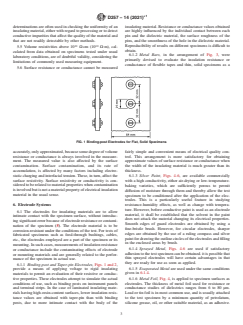
FIG. 1 Binding-post Electrodes for Flat, Solid Specimens
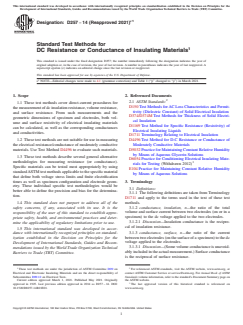
accurately,onlyapproximated,becausesomedegreeofvolume fairly simple and convenient means of electrical quality con-
resistance or conductance is always involved in the measure- trol. This arrangement is more satisfactory for obtaining
ment. The measured value is also affected by the surface approximate values of surface resistance or conductance when
contamination. Surface contamination, and its rate of the width of the insulating material is much greater than its
accumulation, is affected by many factors including electro- thickness.
static charging and interfacial tension.These, in turn, affect the
6.1.3 Silver Paint, Figs. 4-6, are available commercially
surface resistivity. Surface resistivity or conductivity is con-
with a high conductivity, either air-drying or low-temperature-
sidered to be related to material properties when contamination
baking varieties, which are sufficiently porous to permit
isinvolvedbutisnotamaterialpropertyofelectricalinsulation
diffusion of moisture through them and thereby allow the test
material in the usual sense.
specimen to be conditioned after the application of the elec-
trodes. This is a particularly useful feature in studying
6. Electrode Systems
resistance-humidity effects, as well as change with tempera-
ture. However, before conductive paint is used as an electrode
6.1 The electrodes for insulating materials are to allow
material, it shall be established that the solvent in the paint
intimate contact with the specimen surface, without introduc-
does not attack the material changing its electrical properties.
ingsignificanterrorbecauseofelectroderesistanceorcontami-
Smooth edges of guard electrodes are obtained by using a
nation of the specimen (5). The electrode material is to be
fine-bristle brush. However, for circular electrodes, sharper
corrosion-resistant under the conditions of the test. For tests of
edges are obtained by the use of a ruling compass and silver
fabricated specimens such as feed-through bushings, cables,
paintfordrawingtheoutlinecirclesoftheelectrodesandfilling
etc., the electrodes employed are a part of the specimen or its
in the enclosed areas by brush.
mounting.Insuchcases,measurementsofinsulationresistance
6.1.4 Sprayed Metal, Figs. 4-6 are used if satisfactory
or conductance include the contaminating effects of electrode
adhesiontothetestspecimencanbeobtained.itispossiblethat
or mounting materials and are generally related to the perfor-
thin sprayed electrodes will have certain advantages in that
mance of the specimen in actual use.
they are ready for use as soon as applied.
6.1.1 Binding-post and Taper-pin Electrodes, Figs. 1 and 2,
6.1.5 Evaporated Metal are used under the same conditions
provide a means of applying voltage to rigid insulating
given in 6.1.4.
materials to permit an evaluation of their resistive or conduc-
tive properties. These electrodes attempt to simulate the actual 6.1.6 Metal Foil, Fig. 4, is applied to specimen surfaces as
conditions of use, such as binding posts on instrument panels electrodes. The thickness of metal foil used for resistance or
and terminal strips. In the case of laminated insulating mate- conductance studies of dielectrics ranges from 6 to 80 µm.
rials having high-resin-content surfaces, lower insulation resis- Lead or tin foil is in most common use, and is usually attached
tance values are obtained with taper-pin than with binding to the test specimen by a minimum quantity of petrolatum,
posts, due to more intimate contact with the body of the silicone grease, oil, or other suitable material, as an adhesive.
´1
D257 − 14 (2021)
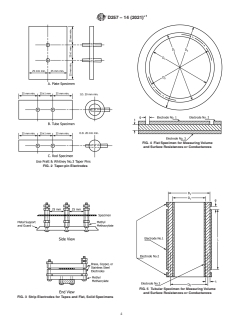
FIG. 4 Flat Specimen for Measuring Volume
and Surface Resistances or Conductances
FIG. 2 Taper-pin Electrodes
FIG. 5 Tubular Specimen for Measuring Volume
and Surface Resistances or Conductances
FIG. 3 Strip Electrodes for Tapes and Flat, Solid Specimens
´1
D257 − 14 (2021)
FIG. 6 Conducting-paint Electrodes
Such electrodes shall be applied under a smoothing pressure 6.1.7.2 The material being tested must not absorb water
sufficient to eliminate all wrinkles, and to work excess adhe- readily, and
sive toward the edge of the foil where it can be wiped off with
6.1.7.3 Conditioning must be in a dry atmosphere (Proce-
a cleansing tissue. One very effective method is to use a hard
dure B, Practice D6054), and measurements made in this same
narrow roller (10 to 15 mm wide), and to roll outward on the
atmosphere.
surfaceuntilnovisibleimprintcanbemadeonthefoilwiththe
6.1.8 Liquid metal electrodes give satisfactory results and
roller. This technique is used satisfactorily only on specimens
are an alternate method to achieving the contact to the
that have very flat surfaces.With care, the adhesive film can be
specimen necessary for effective resistance measurements.The
reduced to 2.5 µm. As this film is in series with the specimen,
liquid metal forming the upper electrodes shall be confined by
it will always cause the measured resistance to be too high. It
stainless steel rings, each of which shall have its lower rim
is possible that this error will become excessive for the
reduced to a sharp edge by beveling on the side away from the
lower-resistivityspecimensofthicknesslessthan250µm.Also
liquid metal. Figs. 7 and 8 show two possible electrode
the hard roller can force sharp particles into or through thin
arrangements.
films (50 µm). Foil electrodes are not porous and will not allow
6.1.9 Flat Metal Plates, Fig. 4, (guarded) are used for
the test specimen to condition after the electrodes have been
testing flexible and compressible materials, both at room
applied. The adhesive loses its effectiveness at elevated tem-
temperature and at elevated temperatures. For tapes, the flat
peratures necessitating the use of flat metal back-up plates
metal plates shall be circular or rectangular.
under pressure. It is possible, with the aid of a suitable cutting
6.1.9.1 A variation of flat metal plate electrode systems is
device, to cut a proper width strip from one electrode to form
found in certain cell designs used to measure greases or filling
a guarded and guard electrode. Such a three-terminal specimen
compounds. Such cells are preassembled and the material to be
normally cannot be used for surface resistance or conductance
tested is either added to the cell between fixed electrodes or the
measurements because of the grease remaining on the gap
electrodes are forced into the material to a predetermined
surface.
electrode spacing. Because the configuration of the electrodes
6.1.7 Colloidal Graphite, Fig. 4, dispersed in water or other
in these cells is such that the effective electrode area and the
suitable vehicle, is brushed on nonporous, sheet insulating
distance between them is difficult to measure, each cell
materials to form an air-drying electrode. This electrode
constant, K, (equivalent to the A/t factor from Table 1)is
materialisrecommendedonlyifallofthefollowingconditions
derived from the following equation:
are met:
6.1.7.1 The material to be tested must accept a graphite
K 5 3.6π C 5 11.3C (1)
coating that will not flake before testing,
´1
D257 − 14 (2021)
NOTE 1—There is evidence that values of conductivity obtained using
conductive-rubber electrodes are always smaller (20 to 70 %) than values
obtained with tinfoil electrodes (6). When only order-of-magnitude
accuracies are required, and these contact errors can be neglected, a
properly designed set of conductive-rubber electrodes can provide a rapid
means for making conductivity and resistivity determinations.
6.1.11 Water is employed as one electrode in testing insu-
lation on wires and cables. Both ends of the specimen must be
out of the water and of such length that leakage along the
insulation is negligible. Refer to specific wire and cable test
methods for the necessity to use guard at each end of a
specimen. For standardization it is desirable to add sodium
chloride to the water to produce a sodium chloride concentra-
tion of 1.0 to 1.1 % NaCl to ensure adequate conductivity.
Measurements at temperatures up to about 100 °C have been
reported.
7. Choice of Apparatus and Test Method
7.1 Power Supply—A source of steady direct voltage is
required (see X1.7.3). Batteries or other stable direct voltage
supplies have been proven suitable for use.
7.2 Guard Circuit—Whether measuring resistance of an
FIG. 7 Liquid Metal Electrodes for Flat, Solid Specimens
insulating material with two electrodes (no guard) or with a
three-terminal system (two electrodes plus guard), consider
how the electrical connections are made between the test
instrument and the test specimen. If the test specimen is at
some distance from the test instrument, or the test specimen is
tested under humid conditions, or if a relatively high (10 to
10 Ω) specimen resistance is expected, spurious resistance
paths can easily exist between the test instrument and test
specimen. A guard circuit must be used to minimize interfer-
ence from these spurious paths (see also X1.9).
7.2.1 With Guard Electrode—Use coaxial cable, with the
core lead to the guarded electrode and the shield to the guard
electrode, to make adequate guarded connections between the
test equipment and test specimen (see Fig. 9).
7.2.2 WithoutGuardElectrode—Use coaxial cable, with the
core lead to one electrode and the shield terminated about 1 cm
from the end of the core lead (see also Fig. 10).
7.3 Direct Measurements—The current through a specimen
at a fixed voltage is measured using equipment that has 610 %
sensitivity and accuracy. Current-measuring devices available
include electrometers, d-c amplifiers with indicating meters,
and galvanometers. Typical methods and circuits are given in
AppendixX3.Whenthemeasuringdevicescaleiscalibratedto
read ohms directly no calculations are required for resistance
measurements.
FIG. 8 Liquid Metal Cell for Thin Sheet Material
7.4 Comparison Methods—A Wheatstone-bridge circuit is
where:
used to compare the resistance of the specimen with that of a
standard resistor (see Appendix X3).
K = has units of centimetres, and
C = has units of picofarads and is the capacitance of the
7.5 Precision and Bias Considerations:
electrode system with air as the dielectric. See Test
7.5.1 General—As a guide in the choice of apparatus, the
Methods D150 for methods of measurement for C.
pertinentconsiderationsaresummarizedinTable2,butitisnot
6.1.10 Conducting Rubber has been used as electrode implied that the examples enumerated are the only ones
material, as in Fig. 4. The conductive-rubber material must be applicable. This table is intended to indicate limits that are
backed by proper plates and be soft enough so that effective distinctly possible with modern apparatus. In any case, such
contact with the specimen is obtained when a reasonable limits can be achieved or exceeded only through careful
pressure is applied. selection and combination of the apparatus employed. It must
´1
D257 − 14 (2021)
A
TABLE 1 Calculation of Resistivity or Conductivity
Effective Area of Measuring
Type of Electrodes or Specimen Volume Resistivity, Ω-cm Volume Conductivity, S/cm
Electrode
A t
ρ 5 R γ 5 G
v v v v
t A
A t π D 1g
Circular (Fig. 4) s d
ρ 5 R γ 5 G A5
v v v v
t A 4
A t
Rectangular A=(a+g)(b+g)
ρ 5 R γ 5 G
v v v v
t A
Square A t A=(a+g)
ρ 5 R γ 5 G
v v v v
t A
A t
Tubes (Fig. 5) A= πD (L+g)
ρ 5 R γ 5 G
v v v v
t A
2πLR D
Cables
v 2
ρ 5 ln
v
D D
2 1
ln γ 5
v
D 2πLR
1 v
Surface Resistivity, Surface Conductivity, Effective Perimeter
Ω (per square) S (per square) of Guarded Electrode
P g
ρ 5 R γ 5 G
s s s s
g P
P g
Circular (Fig. 4) P= πD
ρ 5 R γ 5 G
s s s s
g P
P g
Rectangular P=2(a+b+2g)
ρ 5 R γ 5 G
s s s s
g P
P g
Square P=4(a+g)
ρ 5 R γ 5 G
s s s s
g P
Tubes (Figs. 5 and 6) P g P=2π D
ρ 5 R γ 5 G
s s s s
g P
Nomenclature:
A = the effective area of the measuring electrode for the particular arrangement employed,
P = the effective perimeter of the guarded electrode for the particular arrangement employed,
R = measured volume resistance in ohms,
v
G = measured volume conductance in siemens,
v
R = measured surface resistance in ohms,
s
G = measured surface conductance in siemens,
s
t = average thickness of the specimen,
D ,D ,D ,g,L = dimensions indicated in Figs. 4 and 6 (see Appendix X2 for correction to g),
0 1 2
a, b, = lengths of the sides of rectangular electrodes, and
ln = natural logarithm.
A
All dimensions are in centimetres.
beemphasized,however,thattheerrorsconsideredarethoseof 7.5.2.1 Galvanometer-voltmeter—The maximum percent-
instrumentation only. Errors such as those discussed in Appen- age error in the measurement of resistance by the
dix X1 are an entirely different matter. In this latter connection,
galvanometer-voltmeter method is the sum of the percentage
the last column of Table 2 lists the resistance that is shunted by errors of galvanometer indication, galvanometer readability,
the insulation resistance between the guarded electrode and the
and voltmeter indication. As an example: a galvanometer
guard system for the various methods. In general, the lower
having a sensitivity of 500 pA/scale division will be deflected
such resistance, the less probability of error from undue
25 divisions with 500 V applied to a resistance of 40 GΩ
shunting.
(conductance of 25 pS). If the deflection is read to the nearest
0.5 division, and the calibration error (including Ayrton Shunt
NOTE 2—No matter what measurement method is employed, the
highest precisions are achieved only with careful evaluation of all sources error) is 62 % of the observed value, the resultant galvanom-
of error. It is possible either to set up any of these methods from the
eter error will not exceed 64 %. If the voltmeter has an error
component parts, or to acquire a completely integrated apparatus. In
of 62 % of full scale, this resistance is measured with a
general, the methods using high-sensitivity galvanometers require a more
maximum error of 66 % when the voltmeter reads full scale,
permanentinstallationthanthoseusingindicatingmetersorrecorders.The
and 610 % when it reads one-third full scale. The desirability
methods using indicating devices such as voltmeters, galvanometers, d-c
amplifiers, and electrometers require the minimum of manual adjustment
of readings near full scale are readily apparent.
and are easy to read but the operator is required to make the reading at a
7.5.2.2 Voltmeter-ammeter—The maximum percentage er-
particular time. The Wheatstone bridge (Fig. X1.4) and the potentiometer
ror in the computed value is the sum of the percentage errors
method (Fig. X1.2(b)) require the undivided attention of the operator in
keeping a balance, but allow the setting at a particular time to be read at
in the voltages, V and V , and the resistance, R . The errors in
x s s
leisure.
V and R dependent more on the characteristics of the
s s
7.5.2 Direct Measurements: apparatus used than on the particular method. The most
´1
D257 − 14 (2021)
significant factors that determine the errors in V are indicator
s
errors, amplifier zero drift, and amplifier gain stability. With
modern, well-designed amplifiers or electrometers, gain stabil-
ity is usually not a matter of concern.With existing techniques,
the zero drift of direct voltage amplifiers or electrometers
cannot be eliminated but it can be made slow enough to be
relatively insignificant for these measurements. The zero drift
is virtually nonexistent for carefully designed converter-type
amplifiers. Consequently, the null method of Fig. X1.2(b)is
theoretically less subject to error than those methods employ-
ing an indicating instrument, provided, however, that the
potentiometer voltage is accurately known. The error in R is
s
dependent on the amplifier sensitivity. For measurement of a
given current, the higher the amplifier sensitivity, the greater
likelihood that lower valued, highly precise wire-wound stan-
dard resistors are acceptable for use. Standard resistances of
100 GΩ known to 62 %, are available. If 10-mV input to the
amplifier or electrometer gives full-scale deflection with an
error not greater than 2 % of full scale, with 500 V applied, a
resistance of 5000 TΩ is measured with a maximum error of
6 % when the voltmeter reads full scale, and 10 % when it
reads ⁄3 scale.
7.5.2.3 Comparison-galvanometer—Themaximumpercent-
ageerrorinthecomputedresistanceorconductanceisgivenby
the sum of the percentage errors in R , the galvanometer
s
FIG. 9 Connections to Guarded Electrode for Volume
deflections or amplifier readings, and the assumption that the
and Surface Resistivity Measurements
current sensitivities are independent of the deflections. The
(Volume Resistance Hook-up Shown)
latter assumption is correct within 62 % over the useful range
1 1
(above ⁄10 full-scale deflection) of a modern galvanometer ( ⁄3
scale deflection for a dc current amplifier). The error in R
s
depends on the type of resistor used, but resistances of 1 MΩ
with a limit of error as low as 0.1 % are available. With a
galvanometer or d-c current amplifier having a sensitivity of
10 nAfor full-scale deflection, 500 V applied to a resistance of
5TΩ will produce a 1 % deflection. At this voltage, with the
preceding noted standard resistor, and with F =10 , d would
s s
be about half of full-scale deflection, with a readability error
not more than 61%. If d is approximately ⁄4 of full-scale
x
deflection, the readability error would not exceed 64 %, and a
resistanceoftheorderof200GΩismeasuredwithamaximum
error of 65 ⁄2 %.
7.5.2.4 Voltage Rate-of-change—The accuracy of the mea-
surement is directly proportional to the accuracy of the
measurement of applied voltage and time rate of change of the
electrometer reading. The length of time that the electrometer
switch is open and the scale used shall allow for obtaining an
accurate and full-scale reading obtained. Under these
conditions, the accuracy will be comparable with that of the
other methods of measuring current.
7.5.2.5 Comparison Bridge—When the detector has ad-
equate sensitivity, the maximum percentage error in the com-
puter resistance is the sum of the percentage errors in the arms,
A, B, and N. With a detector sensitivity of 1 mV/scale division,
FIG. 10 Connections to Unguarded Electrodes for Volume
500 V applied to the bridge, and R =1 GΩ, a resistance of
N
and Surface Resistivity Measurements
1000 TΩ will produce a detector deflection of one scale
(Surface Resistance Hook-up Shown)
division.Assuming negligible errors in R and R , with R =1
A B N
GΩknowntowithin 62 %andwiththebridgebalancedtoone
´1
D257 − 14 (2021)
TABLE 2 Apparatus and Conditions for Use
Ohms Shunted by
Reference
Maximum Ohms Maximum Ohms Insulation Resistance
Type of
Method Detectable Measurable to from Guard to
Measurement
at 500 V ±6 % at 500 V Guarded
Section Figure
Electrode
12 11 5
Voltmeter-ammeter (galvanometer) X3.1 Fig. X1.1 10 10 deflection 10 to 10
12 11 5
Comparison (galvanometer) X3.4 Fig. X1.3 10 10 deflection 10 to 10
2 9
Voltmeter-ammeter (dc amplifica- X3.2 Fig. X1.2(a) deflection 10 to 10
15 13
tion, electrometer) (Position 1)10 10
2 3
Fig. X1.2(a) deflection 10 to 10
15 13 3 11
Position 2)10 10 deflection 10 to 10
17 15
Fig. X1.2(b)10 10 null 0 (effective)
17 15
Fig. X1.2(b)10 10
15 14 5 6
Comparison (Wheatstone bridge) X3.5 Fig. X1.4 10 10 null 10 to 10
Voltage rate-of-change X3.3 Fig. X3.1 ;100 MΩ·F deflection unguarded
15 14 4 10
Megohmmeter (typical) commercial instruments 10 10 direct-reading 10 to 10
detector-scale division, a resistance of 100 TΩ is measured a given sensitivity, the larger specimen allows more accurate
with a maximum error of 66%. measurements on materials of higher resistivity.
9.2.2 Measure the average thickness of the specimens in
7.6 Severalmanufacturerssupplythenecessarycomponents
accordance with one of the methods in Test Methods D374/
or dedicated systems that meet the requirements of this
D374M pertaining to the material being tested. The actual
methodology.
points of measurement shall be uniformly distributed over the
8. Sampling
area to be covered by the measuring electrodes.
8.1 Refer to applicable materials specifications for sam- 9.2.3 The guarded electrode (No. 1) shall allow ready
pling instructions. computation of the guarded electrode effective area for volume
resistivity or conductivity determination. The diameter of a
9. Test Specimens
circular electrode, the side of a square electrode, or the shortest
side of a rectangular electrode, shall be at least four times the
9.1 Insulation Resistance or Conductance Determination:
specimenthickness.Thegapwidthshallbelargeenoughsothe
9.1.1 The measurement is of greatest value when the speci-
surface leakage between electrodes No. 1 and No. 2 does not
men has the form, electrodes, and mounting required in actual
use. Bushings, cables, and capacitors are typical examples for cause an error in the measurement (this is particularly impor-
tant for high-input-impedance instruments, such as electrom-
which the test electrodes are a part of the specimen and its
normal mounting means. eters).Ifthegapismadeequaltotwicethespecimenthickness,
as suggested in 9.3.3, so the specimen is used also for surface
9.1.2 For solid materials, the specimen forms most com-
monly used are flat plates, tapes, rods, and tubes.The electrode resistance or conductance determinations, the effective area of
electrode No. 1 is to be determined extending to the center of
arrangements of Fig. 2 are applicable for flat plates, rods, or
rigid tubes whose inner diameter is about 20 mm or more. The the gap. If a more accurate value for the effective area of
electrode arrangement of Fig. 3 is applicable for strips of sheet electrode No. 1 is needed, the correction for the gap width can
materialorforflexibletape.Forrigidstripspecimensthemetal beobtainedfromAppendixX2.ElectrodeNo.3shallextendat
support is not required. The electrode arrangements of Fig. 6 all points beyond the inner edge of electrode No. 2 by at least
are applicable for flat plates, rods, or tubes. twice the specimen thickness.
9.2.4 For tubular specimens, electrode No. 1 shall encircle
9.2 Volume Resistance or Conductance Determination:
the outside of the specimen and its axial length shall be at least
9.2.1 The test specimen form shall allow the use of a third
four times the specimen wall thickness. Considerations regard-
electrode, when necessary, to guard against error from surface
ing the gap width are the same as those given in 9.2.3.
effects.Test specimens in the form of flat plates, tapes, or tubes
Electrode No. 2 consists of an encircling electrode at each end
are acceptable for use. Fig. 4, Fig. 7, and Fig. 8 illustrate the
of the tube, the two parts being electrically connected by
application and arrangement of electrodes for plate or sheet
external means. The axial length of each of these parts is to be
specimens. Fig. 5 is a diametral cross section of three elec-
at least twice the wall thickness of the specimen. Electrode
trodes applied to a tubular specimen, in which electrode No. 1
No. 3mustcovertheinsidesurfaceofthespecimenforanaxial
is the guarded electrode; electrode No. 2 is a guard electrode
lengthextendingbeyondtheoutsidegapedgesbyatleasttwice
consisting of a ring at each end of electrode No. 1, the two
rings being electrically connected; and electrode No. 3 is the the wall thickness. The tubular specimen (Fig. 5) is to take the
form of an insulated wire or cable. If the length of electrode is
unguarded electrode (7, 8). For those materials that have
negligible surface leakage and are being examined for volume more than 100 times the thickness of the insulation, the effects
of the ends of the guarded electrode become negligible, and
resistance only, omit the use of guard rings. Specimen dimen-
sions applicable to Fig. 4 for 3 mm thick specimens are as careful spacing of the guard electrodes is not required. Thus,
the gap between electrodes No. 1 and No. 2 is to be several
follows: D = 100 mm, D = 88 mm, and D = 76 mm, or
3 2 1
alternatively, D = 50 mm, D = 38 mm, and D = 25 mm. For centimetres to permit sufficient surface resistance between
3 2 1
´1
D257 − 14 (2021)
these electrodes when water is used as electrode No. 1. In this 12. Procedure
case, no correction is made for the gap width.
12.1 Insulation Resistance or Conductance—Properly
mountthespecimeninthetestchamber.Ifthetestchamberand
9.3 Surface Resistance or Conductance Determination:
the conditioning chamber are the same (recommended
9.3.1 The test specimen form is to be consistent with the
procedure), the specimens shall be mounted before the condi-
particular objective, such as flat plates, tapes, or tubes.
tioning is started. Make the measurement with a device having
9.3.2 The arrangements of Figs. 2 and 3 were devised for
the required sensitivity and accuracy (see Appendix X3).
those cases where the volume resistance is known to be high
Unless otherwise specified, use 60 s as the time of electrifica-
relative to that of the surface (2). However, the combination of
tion and 500 6 5 V as the applied voltage.
molded and machined surfaces makes the result obtained
generally inconclusive for rigid strip specimens. The arrange-
12.2 Volume Resistivity or Conductivity—Measure and re-
ment of Fig. 3 is more effective when applied to specimens for cord the dimensions of the electrodes and width of guard gap,
which the width is greater than the thickness, with the cut edge
g. Calculate the effective area of the electrode. Make the
effect becoming smaller. Hence, this arrangement is more resistance measurement with a device having the required
suitable for testing thin specimens such as tape. The arrange- sensitivity and accuracy. Unless otherwise specified, use 60 s
ments of Figs. 2 and 3 must not be used for surface resistance as the time of electrification, and 500 6 5 V as the applied
or conductance determinations without due considerations of direct voltage.
the limitations noted.
12.3 Surface Resistance or Conductance:
9.3.3 The three electrode arrangements of Fig. 4, Fig. 6, and
12.3.1 Measure the electrode dimensions and the distance
Fig. 7 shall be used for purposes of material comparison. The
between the electrodes, g. Measure the surface resistance or
resistance or conductance of the surface gap between elec-
conductance between electrodes No. 1 and 2 with a device
trodes No. 1 and No. 2 is determined directly by using
having the required sensitivity and accuracy. Unless otherwise
electrode No. 1 as the guarded electrode, electrode No. 3 as the
specified, use 60 s as the time of electrification, and 500 6 5
guardelectrode,andelectrodeNo.2astheunguardedelectrode
V as the applied direct voltage.
(7, 8). The resistance or conductance is the resultant of the
12.3.2 When the electrode arrangement of Fig. 3 is used, P
surface resistance or conductance between electrodes No. 1
is taken as the perimeter of the cross section of the specimen.
and No. 2 in parallel with some volume resistance or conduc-
For thin specimens, such as tapes, this perimeter effectively
tance between the same two electrodes. For this arrangement
reduces to twice the specimen width.
the surface gap width, g, is to be approximately twice the
12.3.3 When the electrode arrangements of Fig. 6 are used,
specimen thickness, t, except for thin specimens, where g is to
and if the volume resistance is known to be high compared to
be greater than twice the material thickness.
the surface resistance (such as moisture contaminating the
9.3.4 Special techniques and electrode dimensions are re-
surface of a good insulation material), P is taken to be two
quired for very thin specimens having such a low volume
times the length of the electrode or two times the circumfer-
resistivitythattheresultantlowresistancebetweentheguarded
ence of the cylinder.
electrode and the guard system causes excessive error.
13. Calculation
9.4 Liquid Insulation Resistance—The sampling of liquid
13.1 Calculate the volume resistivity, ρ , and the volume
insulating materials, the test cells employed, and the methods
v
conductivity, γ , using the equations in Table 1.
of cleaning the cells shall be in accordance with Test Method
v
D1169.
13.2 Calculate the surface resistivity, ρ , and the surface
s
conductivity, γ , using the equations in Table 1.
s
10. Specimen Mounting
14. Report
10.1 In mounting the specimens for measurements, it is
importantthatnoconductivepathsexistbetweentheelectrodes 14.1 Report all of the following information:
14.1.1 A description and identification of the material
or between the measuring electrodes and ground (9). Avoid
handling insulating surfaces with bare fingers by wearing (name, grade, color, manufacturer, etc.),
14.1.2 Shape and dimensions of the test specimen,
acetate rayon gloves. For referee tests of volume resistance or
conductance, clean the surfaces with a suitable solvent before 14.1.3 Type and dimensions of electrodes,
14.1.4 Conditioning of the specimen (cleaning, predrying,
conditioning. When surface resistance is to be measured,
mutually agree whether or not the surfaces need to be cleaned. hours at humidity and temperature, etc.),
14.1.5 Test conditions (specimen temperature, relative
If cleaning is required, record details of any surface cleaning.
humidity, etc., at time of measurement),
14.1.6 Method of measurement (see Appendix X3),
11. Conditioning
14.1.7 Applied voltage,
11.1 Condition the specimens in accordance with Practice
14.1.8 Time of electrification of measurement,
D6054.
14.1.9 Measured values of the appropriate resistances in
11.2 Circulating-airenvironmentalchambersorthemethods ohms or conductances in siemens,
describedinPracticesE104orD5032areusefulforcontrolling 14.1.10 Computed values when required, of volume resis-
the relative humidity. tivity in ohm-centimetres, volume conductivity in siemens per
´1
D257 − 14 (2021)
centimetre, surface resistivity in ohms (per square), or surface 15. Precision and Bias
conductivity in siemens (per square), and
15.1 Precision and bias are inherently affected by the choice
14.1.11 Statement as to whether the reported values are
of method, apparatus, and specimen. For analysis and details
“apparent” or “steady-state.”
see Sections 7 and 9, and particularly 7.5.1 – 7.5.2.5.
14.1.11.1 A “steady-state” value is obtained only if the
variation in the magnitude of the electric current in a circuit
16. Keywords
remains within 65 % during the latter 75 % of the specific
electrificationtimeusedfortesting.Testsmadeunderanyother 16.1 DCresistance;insulationresistance;surfaceresistance;
circumstances are to be considered as “apparent.” surface resistivity; volume resistance; volume resistivity
APPENDIXES
(Nonmandatory Information)
X1. FACTORS AFFECTING INSULATION RESISTANCE OR CONDUCTANCE MEASUREMENTS
X1.1 Inherent Variation in Materials—Because of the vari- 1 1 ∆T
ln~R /R ! 5 m 2 5 m (X1.3)
S D S D
2 1
T T T T
ability of the resistance of a given specimen under similar test
2 1 1 2
conditions and the nonuniformity of the same material from
These equations are valid over a temperature range only if
specimen to specimen, determinations are usually not repro-
the material does not undergo a transition within this tempera-
ducible to closer than 10 % and often are even more widely
ture range. Extrapolations are seldom safe since transitions are
divergent (a range of values from 10 to 1 may be obtained
seldom obvious or predictable. As a corollary, deviation of a
under apparently identical conditions).
plot of the logarithm of R against 1/T from a straight line is
evidence that a transition is occurring. Furthermore, in making
X1.2 Temperature—The resistance of electrical insulating
comparisons between materials, it is essential that measure-
materials is known to change with temperature, and the
ments be made over the entire range of interest for all
variation often can be represented by a function of the form
materials.
(10):
m/T
NOTE X1.1—The resistance of an electrical insulating material may be
R 5 Be (X1.1)
affected by the time of temperature exposure. Therefore, equivalent
where: temperature conditioning periods are essential for comparative measure-
ments.
R = resistance (or resistivity) of an insulating material or
NOTEX1.2—Iftheinsulatingmaterialshowssigns
...