

SIST EN 2591-209:2001
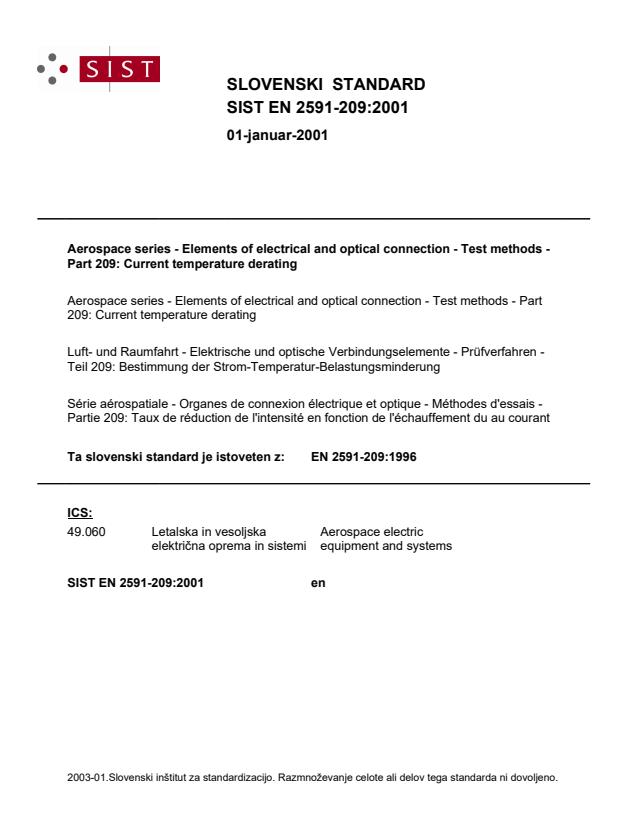
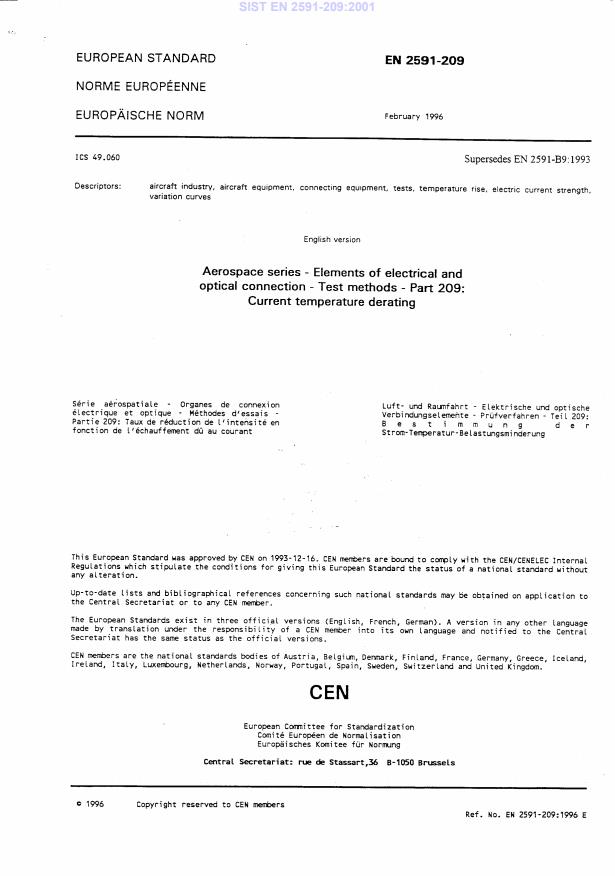
(Main)Aerospace series - Elements of electrical and optical connection - Test methods - Part 209: Current temperature derating
General Information
- Abstract
This standard specifies a method for establishing current-temperature derating curves 1) for elements of connection depending on the various contact arrangements.
It shall be used together with EN 2591.
- Status
- Published
- Publication Date
- 31-Dec-2000
- Technical Committee
- SS SPL - Technical Board for the general field
- Current Stage
- 6060 - National Implementation/Publication (Adopted Project)
- Start Date
- 01-Jan-2001
- Due Date
- 01-Jan-2001
- Completion Date
- 01-Jan-2001

Overview
EN 2591-209:1996 is a CEN (European) aerospace standard titled Aerospace series - Elements of electrical and optical connection - Test methods - Part 209: Current temperature derating. It specifies a method for establishing current–temperature derating curves for electrical and optical connection elements, taking into account different contact arrangements. This part is intended to be used together with the broader EN 2591 series and supports safe, reliable connector selection and qualification in aerospace applications.
Key Topics
- Current–temperature derating curves: Methodology to determine how allowable current varies with temperature for connector contacts and assemblies.
- Contact arrangements: Assessment of various contact geometries and configurations that influence thermal performance and derating characteristics.
- Test method framework: Standardized approach to measure thermal response and define derating behavior (used in conjunction with EN 2591 general requirements).
- Aerospace applicability: Focus on electrical and optical connection elements used in aircraft and spacecraft systems where thermal limits and reliability are critical.
- Traceability and repeatability: Emphasis on consistent test conditions and reporting so derating data can be compared and relied upon for design and certification.
Applications
EN 2591-209 is practical for engineers and organizations involved in:
- Connector design and qualification: Electrical and optical connector manufacturers use derating curves to set safe current limits and to optimize contact designs.
- System electrical design: Aerospace electrical system designers apply derating data to size wiring harnesses, select connectors, and define operational limits across temperature ranges.
- Thermal management and reliability engineering: Teams assessing overheating risks, mission reliability, and failure modes use standardized derating methods to quantify margins.
- Test laboratories and certification bodies: Independent test houses and certification authorities use the standard’s methods when validating connector performance for aerospace approval.
- Maintenance and procurement: Fleet maintainers and procurement specialists reference derating curves to ensure replacement components meet temperature/current performance requirements.
Related Standards
- EN 2591 (series) - general requirements and other parts covering test methods for electrical and optical connection elements.
- Other aerospace connector and electrical equipment standards (refer to applicable EN, ISO or IEC documents for system-level requirements and environmental/climatic tests).
Using EN 2591-209 helps ensure consistent, repeatable determination of connector current limits across temperatures - a key element in designing reliable aerospace electrical and optical interconnect systems. Keywords: EN 2591-209, current temperature derating, aerospace connectors, test methods, contact arrangements, connector derating curves.
Relations
- Effective Date
- 18-Mar-2026
- Effective Date
- 28-Jan-2026
- Effective Date
- 28-Jan-2026
- Effective Date
- 28-Jan-2026
- Effective Date
- 28-Jan-2026
- Effective Date
- 28-Jan-2026
- Effective Date
- 28-Jan-2026
- Effective Date
- 28-Jan-2026
- Effective Date
- 28-Jan-2026
- Effective Date
- 28-Jan-2026
- Effective Date
- 28-Jan-2026
- Effective Date
- 28-Jan-2026
- Effective Date
- 28-Jan-2026
- Effective Date
- 28-Jan-2026
- Effective Date
- 28-Jan-2026
Get Certified
Connect with accredited certification bodies for this standard

BUREAU VERITAS Certification Germany
Bureau Veritas certification in Germany.

Element Materials Technology
Materials testing and product certification.

AQMS Ltd.
AQMS provides ISO certification to SMEs across the UK.
Sponsored listings
Frequently Asked Questions
SIST EN 2591-209:2001 is a standard published by the Slovenian Institute for Standardization (SIST). Its full title is "Aerospace series - Elements of electrical and optical connection - Test methods - Part 209: Current temperature derating". This standard covers: This standard specifies a method for establishing current-temperature derating curves 1) for elements of connection depending on the various contact arrangements. It shall be used together with EN 2591.
This standard specifies a method for establishing current-temperature derating curves 1) for elements of connection depending on the various contact arrangements. It shall be used together with EN 2591.
SIST EN 2591-209:2001 is classified under the following ICS (International Classification for Standards) categories: 49.060 - Aerospace electric equipment and systems. The ICS classification helps identify the subject area and facilitates finding related standards.
SIST EN 2591-209:2001 has the following relationships with other standards: It is inter standard links to SIST EN 3646-002:2026, SIST EN 3155-076:2020, SIST EN 3660-012:2008, SIST EN 3155-024:2009, SIST EN 3155-071:2019, SIST EN 4644-001:2012, SIST EN 3660-004:2023, SIST EN 3155-077:2020, SIST EN 3155-076:2012, SIST EN 4639-102:2008, SIST EN 3155-081:2019, SIST EN 3646-001:2009, SIST EN 3155-071:2008, SIST EN 3645-002:2015, SIST EN 3155-027:2019. Understanding these relationships helps ensure you are using the most current and applicable version of the standard.
SIST EN 2591-209:2001 is available in PDF format for immediate download after purchase. The document can be added to your cart and obtained through the secure checkout process. Digital delivery ensures instant access to the complete standard document.
Standards Content (Sample)
2003-01.Slovenski inštitut za standardizacijo. Razmnoževanje celote ali delov tega standarda ni dovoljeno.Aerospace series - Elements of electrical and optical connection - Test methods - Part 209: Current temperature deratingLuft- und Raumfahrt - Elektrische und optische Verbindungselemente - Prüfverfahren - Teil 209: Bestimmung der Strom-Temperatur-BelastungsminderungSérie aérospatiale - Organes de connexion électrique et optique - Méthodes d'essais - Partie 209: Taux de réduction de l'intensité en fon
...