

ISO 20688-2:2024
(Main)Biotechnology — Nucleic acid synthesis — Part 2: Requirements for the production and quality control of synthesized gene fragments, genes, and genomes
General Information
- Abstract
This document specifies the requirements for the production and quality control of synthesized double-stranded DNA. It describes requirements for quality management, resource management, biosafety and biosecurity, quality control in production, product quality, and delivered product specifications for synthesized gene fragments, genes and genomes. This document is applicable to synthetic gene fragments, genes and genomes with a length below 10 Mbp (base pairs) in the forms of non-clonal fragments (linear) and clonal genes in plasmids (circular). This document does not provide specific requirements for materials used solely for diagnostic purposes. When the synthesized nucleic acids are procured and used for diagnostic purposes, the user can take ISO 15189, ISO 13485 and other related clinical standards into account.
- Status
- Published
- Publication Date
- 14-Mar-2024
- Technical Committee
- ISO/TC 276 - Biotechnology
- Drafting Committee
- ISO/TC 276/WG 3 - Analytical methods
- Current Stage
- 6060 - International Standard published
- Start Date
- 15-Mar-2024
- Due Date
- 15-Jan-2024
- Completion Date
- 15-Mar-2024
Overview
ISO 20688-2:2024 is an international standard that specifies comprehensive requirements for the production and quality control of synthesized double-stranded DNA, including gene fragments, genes, and genomes. The standard encompasses best practices for quality management, resource management, biosafety, biosecurity, and delivered product specifications within the biotechnology sector. It applies to synthetic DNA products up to 10 megabase pairs (Mbp) in length, covering both non-clonal (linear) and clonal (circular) forms. While ISO 20688-2 focuses on DNA for general biotechnological use, it defers specific requirements for materials used solely in diagnostics to related clinical standards such as ISO 15189 and ISO 13485.
Key Topics
Quality Management
- Establishment and documentation of order processing, biosafety and biosecurity risk assessment, synthesis processes, and product quality control.
- Maintenance of a robust quality policy and objectives relevant to each production process and final DNA product form.
- Procedures for controlling and safeguarding customer and order information, including electronic data security and document management.
Resource Management
- Requirements for appropriate facilities, environmental controls (temperature, humidity, cleanliness), and measures to prevent contamination of synthetic DNA.
- Use of calibrated and well-maintained equipment operated by trained personnel.
- Strict control over raw materials, suppliers, and reagent qualification to ensure consistent synthesis quality.
Biosafety and Biosecurity
- Adoption of risk- and evidence-based approaches for laboratory biosafety and biosecurity (referencing ISO 35001 and WHO guidance).
- DNA sequence screening mechanisms to assess and mitigate risks of synthesizing regulated or sensitive genetic elements.
- Recordkeeping and verification of intended use for regulated sequences and customer identities.
Production Quality Control
- Clearly defined quality control procedures for gene fragments, genes, and genomes, including design, assembly, purification, and preservation practices.
- Requirements for product yield, purity, sequence accuracy, and integrity at each stage of DNA synthesis.
- Specific protocols for sequence verification and impurity analysis for end products.
Delivered Product Specifications
- Clear documentation of delivered materials, including product information, sequence details, quality control data, and shipment records.
- Guidance on preservation and storage suitable for different forms of synthetic DNA.
Applications
ISO 20688-2:2024 plays a critical role in biotechnology research, industrial applications, and commercial DNA synthesis. Key application areas include:
- Protein engineering: Enabling the production of synthetic genes for protein expression.
- Metabolic pathway engineering: Supporting the assembly of complex genetic circuits for optimized microbial or cellular production.
- Antibody and vaccine development: Ensuring high-quality synthesized genes and fragments for biopharmaceutical research and manufacturing.
- Environmental biotechnology: Facilitating the creation of synthetic genomes for bioremediation organisms.
- Synthetic biology: Standardizing the production of custom genomes and libraries for foundational research and product development.
The standard supports manufacturers, academic laboratories, and end users in verifying and ensuring the consistent quality of synthesized double-stranded DNA. By complying with ISO 20688-2, organizations improve reliability, biosafety, and facilitate fair trade of synthetic genetic materials globally.
Related Standards
For specialized or additional requirements, the following ISO standards are relevant:
- ISO 20688-1: Biotechnology – Nucleic acid synthesis – Terminology and classification.
- ISO 15189: Medical laboratories – Requirements for quality and competence (for diagnostic applications).
- ISO 13485: Medical devices – Quality management systems (applicable for clinical diagnostics).
- ISO 35001: Biorisk management for laboratories and related organizations.
- ISO 20397 series: Biotechnology – Massively parallel sequencing.
ISO 20688-2:2024 provides a unified framework to ensure global standards in the production and quality control of synthetic gene fragments, genes, and genomes, reinforcing trust and reliability in biotechnological innovations.
Frequently Asked Questions
ISO 20688-2:2024 is a standard published by the International Organization for Standardization (ISO). Its full title is "Biotechnology — Nucleic acid synthesis — Part 2: Requirements for the production and quality control of synthesized gene fragments, genes, and genomes". This standard covers: This document specifies the requirements for the production and quality control of synthesized double-stranded DNA. It describes requirements for quality management, resource management, biosafety and biosecurity, quality control in production, product quality, and delivered product specifications for synthesized gene fragments, genes and genomes. This document is applicable to synthetic gene fragments, genes and genomes with a length below 10 Mbp (base pairs) in the forms of non-clonal fragments (linear) and clonal genes in plasmids (circular). This document does not provide specific requirements for materials used solely for diagnostic purposes. When the synthesized nucleic acids are procured and used for diagnostic purposes, the user can take ISO 15189, ISO 13485 and other related clinical standards into account.
This document specifies the requirements for the production and quality control of synthesized double-stranded DNA. It describes requirements for quality management, resource management, biosafety and biosecurity, quality control in production, product quality, and delivered product specifications for synthesized gene fragments, genes and genomes. This document is applicable to synthetic gene fragments, genes and genomes with a length below 10 Mbp (base pairs) in the forms of non-clonal fragments (linear) and clonal genes in plasmids (circular). This document does not provide specific requirements for materials used solely for diagnostic purposes. When the synthesized nucleic acids are procured and used for diagnostic purposes, the user can take ISO 15189, ISO 13485 and other related clinical standards into account.
ISO 20688-2:2024 is classified under the following ICS (International Classification for Standards) categories: 07.080 - Biology. Botany. Zoology. The ICS classification helps identify the subject area and facilitates finding related standards.
ISO 20688-2:2024 is available in PDF format for immediate download after purchase. The document can be added to your cart and obtained through the secure checkout process. Digital delivery ensures instant access to the complete standard document.
Standards Content (Sample)
International
Standard
ISO 20688-2
First edition
Biotechnology — Nucleic acid
2024-03
synthesis —
Part 2:
Requirements for the production
and quality control of synthesized
gene fragments, genes, and
genomes
Reference number
© ISO 2024
All rights reserved. Unless otherwise specified, or required in the context of its implementation, no part of this publication may
be reproduced or utilized otherwise in any form or by any means, electronic or mechanical, including photocopying, or posting on
the internet or an intranet, without prior written permission. Permission can be requested from either ISO at the address below
or ISO’s member body in the country of the requester.
ISO copyright office
CP 401 • Ch. de Blandonnet 8
CH-1214 Vernier, Geneva
Phone: +41 22 749 01 11
Email: copyright@iso.org
Website: www.iso.org
Published in Switzerland
ii
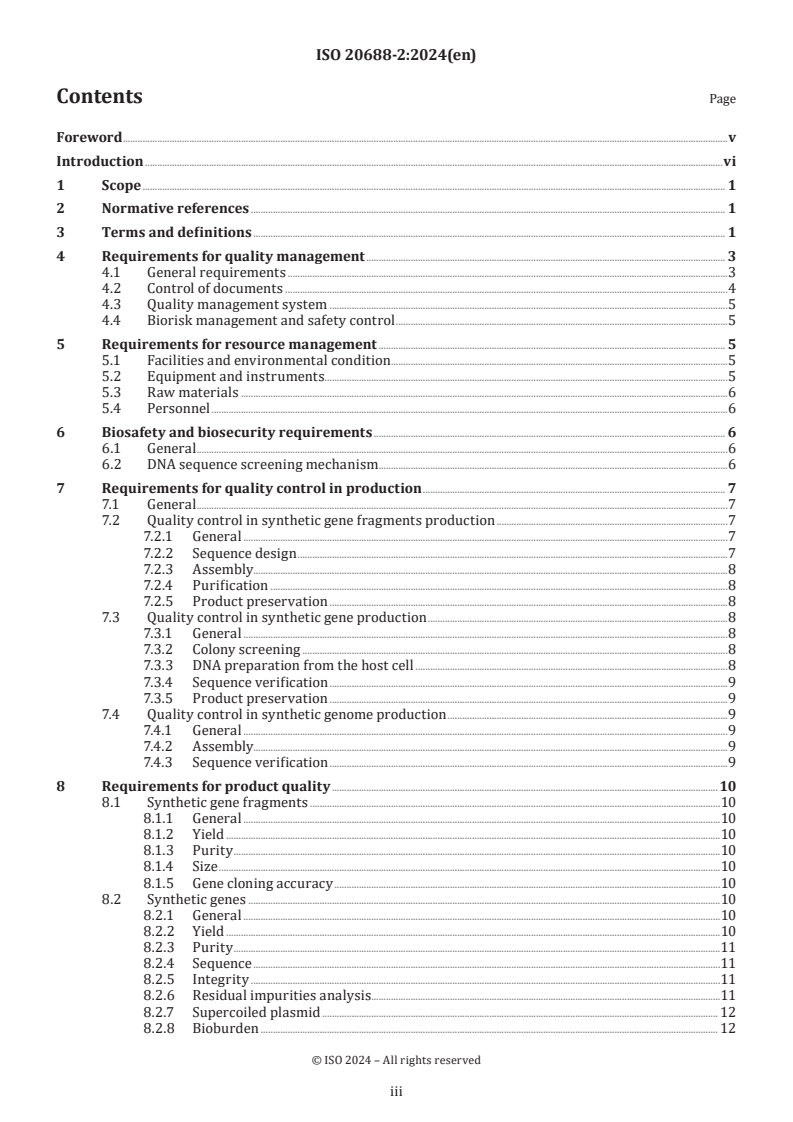
Contents Page
Foreword .v
Introduction .vi
1 Scope . 1
2 Normative references . 1
3 Terms and definitions . 1
4 Requirements for quality management . 3
4.1 General requirements .3
4.2 Control of documents .4
4.3 Quality management system .5
4.4 Biorisk management and safety control .5
5 Requirements for resource management . 5
5.1 Facilities and environmental condition . .5
5.2 Equipment and instruments.5
5.3 Raw materials .6
5.4 Personnel .6
6 Biosafety and biosecurity requirements . 6
6.1 General .6
6.2 DNA sequence screening mechanism .6
7 Requirements for quality control in production . 7
7.1 General .7
7.2 Quality control in synthetic gene fragments production .7
7.2.1 General .7
7.2.2 Sequence design .7
7.2.3 Assembly.8
7.2.4 Purification .8
7.2.5 Product preservation .8
7.3 Quality control in synthetic gene production .8
7.3.1 General .8
7.3.2 Colony screening .8
7.3.3 DNA preparation from the host cell .8
7.3.4 Sequence verification .9
7.3.5 Product preservation .9
7.4 Quality control in synthetic genome production .9
7.4.1 General .9
7.4.2 Assembly.9
7.4.3 Sequence verification .9
8 Requirements for product quality . 10
8.1 Synthetic gene fragments .10
8.1.1 General .10
8.1.2 Yield .10
8.1.3 Purity .10
8.1.4 Size .10
8.1.5 Gene cloning accuracy .10
8.2 Synthetic genes .10
8.2.1 General .10
8.2.2 Yield .10
8.2.3 Purity .11
8.2.4 Sequence .11
8.2.5 Integrity .11
8.2.6 Residual impurities analysis . .11
8.2.7 Supercoiled plasmid . 12
8.2.8 Bioburden . 12
iii
8.2.9 Specific quality indicators for synthetic DNA libraries . 12
8.3 Synthetic genome . 12
8.3.1 General . 12
8.3.2 Sequence . 12
9 Delivered/synthesized material specifications .13
9.1 Main information . . 13
9.2 Other information . 13
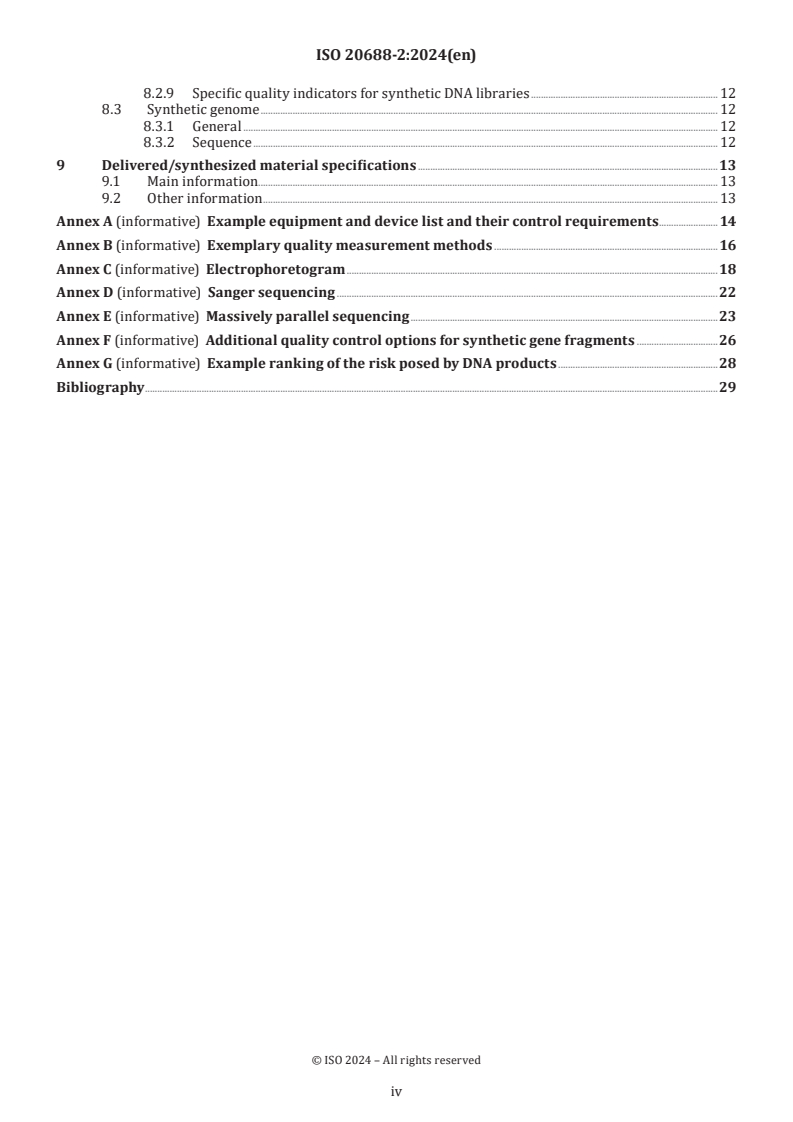
Annex A (informative) Example equipment and device list and their control requirements . 14
Annex B (informative) Exemplary quality measurement methods .16
Annex C (informative) Electrophoretogram .18
Annex D (informative) Sanger sequencing .22
Annex E (informative) Massively parallel sequencing .23
Annex F (informative) Additional quality control options for synthetic gene fragments .26
Annex G (informative) Example ranking of the risk posed by DNA products .28
Bibliography .29
iv
Foreword
ISO (the International Organization for Standardization) is a worldwide federation of national standards
bodies (ISO member bodies). The work of preparing International Standards is normally carried out through
ISO technical committees. Each member body interested in a subject for which a technical committee
has been established has the right to be represented on that committee. International organizations,
governmental and non-governmental, in liaison with ISO, also take part in the work. ISO collaborates closely
with the International Electrotechnical Commission (IEC) on all matters of electrotechnical standardization.
The procedures used to develop this document and those intended for its further maintenance are described
in the ISO/IEC Directives, Part 1. In particular, the different approval criteria needed for the different types
of ISO document should be noted. This document was drafted in accordance with the editorial rules of the
ISO/IEC Directives, Part 2 (see www.iso.org/directives).
ISO draws attention to the possibility that the implementation of this document may involve the use of (a)
patent(s). ISO takes no position concerning the evidence, validity or applicability of any claimed patent
rights in respect thereof. As of the date of publication of this document, ISO had not received notice of (a)
patent(s) which may be required to implement this document. However, implementers are cautioned that
this may not represent the latest information, which may be obtained from the patent database available at
www.iso.org/patents. ISO shall not be held responsible for identifying any or all such patent rights.
Any trade name used in this document is information given for the convenience of users and does not
constitute an endorsement.
For an explanation of the voluntary nature of standards, the meaning of ISO specific terms and expressions
related to conformity assessment, as well as information about ISO’s adherence to the World Trade
Organization (WTO) principles in the Technical Barriers to Trade (TBT), see www.iso.org/iso/foreword.html.
This document was prepared by Technical Committee ISO/TC 276, Biotechnology.
A list of all parts in the ISO 20688 series can be found on the ISO website.
Any feedback or questions on this document should be directed to the user’s national standards body. A
complete listing of these bodies can be found at www.iso.org/members.html.
v
Introduction
Gene fragment, gene and genome synthesis refer to producing synthetic double-stranded DNA in the form
of non-clonal fragments (that can be linear) and clonal genes in plasmids (that would be circular) by using
appropriate biochemical methods.
Synthesized gene fragments, genes and genomes are important biotechnological products and are widely
used in biotechnology, e.g. protein engineering, metabolic engineering, antibody and vaccine development,
environmental bioremediation and natural product discovery.
The production and quality control of the synthesized gene fragment, gene and genome products are
essential for ensuring the quality and their downstream applications in biotechnology. This document
provides requirements for the production and quality control of synthetic gene fragment, gene and genome
products, including biosecurity, purity, yield, size, gene cloning accuracy, integrity, sequences, residual
impurities and other quality indicators. This document provides a uniform general guideline for the quality
control of gene fragment, gene and genome synthesis. It is intended to help to improve and ensure the quality
of products and fair trade based on a unified standard.
This document is intended to be used by synthetic DNA producers during the manufacturing process for
quality control to improve the quality of their products, by academic laboratories to evaluate the quality
of DNA synthesized in their facilities, and by end users to verify the quality of synthesized gene fragments,
genes and genomes provided by manufacturers as required.
In this document, the following verbal forms are used:
— “shall” indicates a requirement;
— “should” indicates a recommendation;
— “may” indicates a permission;
— “can” indicates a possibility or a capability.
vi
International Standard ISO 20688-2:2024(en)
Biotechnology — Nucleic acid synthesis —
Part 2:
Requirements for the production and quality control of
synthesized gene fragments, genes, and genomes
1 Scope
This document specifies the requirements for the production and quality control of synthesized double-
stranded DNA. It describes requirements for quality management, resource management, biosafety
and biosecurity, quality control in production, product quality, and delivered product specifications for
synthesized gene fragments, genes and genomes.
This document is applicable to synthetic gene fragments, genes and genomes with a length below 10 Mbp
(base pairs) in the forms of non-clonal fragments (linear) and clonal genes in plasmids (circular).
This document does not provide specific requirements for materials used solely for diagnostic purposes.
When the synthesized nucleic acids are procured and used for diagnostic purposes, the user can take
ISO 15189, ISO 13485 and other related clinical standards into account.
2 Normative references
There are no normative references in this document.
3 Terms and definitions
For the purposes of this document, the following terms and definitions apply.
ISO and IEC maintain terminology databases for use in standardization at the following addresses:
— ISO Online browsing platform: available at https:// www .iso .org/ obp
— IEC Electropedia: available at https:// www .electropedia .org/
3.1
biosafety
practices and controls that reduce the risk of unintentional exposure or release of biological materials
Note 1 to entry: Biological materials refer to any material comprised of, containing, or that may contain biological
agents and/or their harmful products, such as toxins and allergens (see ISO 35001:2019, 3.14).
Note 2 to entry: Biological agents refer to any microbiological entity, cellular or non-cellular, naturally occurring or
engineered, capable of replication or of transferring genetic material that may be able to provoke infection, allergy,
toxicity or other adverse effects in humans, animals, or plants (see ISO 35001:2019, 3.13).
[SOURCE: ISO 35001:2019, 3.22, modified — Notes to entry were added.]
3.2
biosecurity
practices and controls that reduce the risk of loss, theft, misuse, diversion of, or intentional unauthorized
release of biological materials
[SOURCE: ISO 35001:2019, 3.23, modified — Notes to entry were deleted.]
3.3
colony polymerase chain reaction
colony PCR
PCR method used to screen for plasmids containing a desired insert directly from microbial colonies without
plasmid extraction and purification steps
3.4
DNA assembly
joining oligonucleotides or smaller gene fragments via regions of complementarity to form a longer double-
stranded DNA fragment step by step in vitro or in vivo
3.5
DNA sequencing
determining the order of nucleotide bases (adenine, guanine, cytosine and thymine) in a molecule of DNA
Note 1 to entry: Sequence is generally described from the 5′ end.
[SOURCE: ISO 17822:2020, 3.19]
3.6
gene cloning
process of introducing a particular gene or DNA sequence using genetic engineering techniques into a host
cell and replicating it by asexual reproduction into many identical copies of the gene
3.7
massively parallel sequencing
MPS
sequencing technique based on the determination of incremental template-based polymerization of many
independent DNA molecules simultaneously
Note 1 to entry: Massively parallel sequencing technology can provide millions/billions of short reads per run or long
reads based on amplification.
[SOURCE: ISO 20397-2:2021, 3.30, modified — Note to entry was edited by adding "or long reads based on
amplification.]
3.8
plasmid vector
extrachromosomal DNA molecule in cells physically separated from the chromosome and capable of
autonomous replication that can be used as vehicle to carry new genes into cells
[SOURCE: ISO 16577:2022, 3.4.37, modified — “vector” added to the term, and “that can be used as vehicle to
carry new genes into cells” added to the definition (from ISO 16577:2022, 3.4.58). Notes to entry have been
deleted.]
3.9
quality score
Q score
measure of the sequencing quality of a given nucleotide base
Note 1 to entry: Q is defined by the following formula:
Q=–10log (p)
where p is the estimated probability of the base call being wrong.
Note 2 to entry: A quality score of 20 represents an error rate of 1 in 100, with a corresponding call accuracy of 99 %.
Note 3 to entry: Higher quality scores indicate a smaller probability of error. Lower quality scores can result in a
significant portion of the reads being unusable. Low quality scores can also indicate false-positive variant calls,
resulting in inaccurate conclusions.
[SOURCE: ISO 20397-2:2021, 3.32]
3.10
sequence alignment
arrangement of nucleic acid sequences according to regions of similarity
Note 1 to entry: Sequence alignment may not require a reference genome/reference targeted nucleic acid region and
its aim might not produce an assembly.
[SOURCE: ISO 20397-2:2021, 3.20]
3.11
sequence of concern
SOC
sequence of 50 bp or greater that either encode for biological functions or directly endow or enhance toxicity
or pathogenicity
3.12
synthetic DNA library
double-stranded DNA fragments synthesized with targeted genetic diversity that have been inserted into a
specific cloning vector(s)
Note 1 to entry: Genetic diversity refers to the number of unique sequences in a DNA library. Diverse libraries can
permit high-throughput evaluation of genetic designs or functional variants.
3.13
synthetic gene
synthetic, cloned, double-stranded DNA fragment containing necessary biological parts
Note 1 to entry: Linear plasmid by restriction enzyme digestion is a kind of delivered product form of synthetic gene.
3.14
synthetic gene fragment
synthetic, non-cloned, double-stranded linear DNA fragments, assembled from synthetic oligo nucleotides
3.15
synthetic genome
synthetically-built genome containing all necessary genetic information for a living organism, produced by
the assembly of oligonucleotides or smaller gene fragments in vitro or in vivo
4 Requirements for quality management
4.1 General requirements
The producer, as an entity synthesizing double-stranded DNA and distributing double-stranded DNA to one
or more customer(s), shall establish and implement a system in which the following processes are described
and documented:
a) order receiving process;
b) biosafety and biosecurity risk assessment process;
c) gene synthesis process;
d) final product quality control process.
A quality policy and quality objectives shall be determined in the order receiving process. The quality
requirements are different depending on the synthetic production process, the form of the final synthetic
double-stranded DNA, the quality control method and its end application. Necessary actions should be
taken in the synthetic processes in order to achieve the planned results and quality by analysis of the
characteristics of synthetic nucleic acids that are produced.
4.2 Control of documents
The producer of synthetic double-stranded DNA should have a procedure ensuring the control of documented
information including the following points:
a) customer information:
1) point-of-contact name;
2) organization;
3) address;
4) phone number;
5) email;
b) order sequence information:
1) nucleotide sequences ordered;
2) vector used;
c) sequence screening protocol;
d) sequence screening report;
e) standard operation procedure of synthesis;
f) quality control method;
g) product form;
h) data and report;
i) shipment information:
1) date placed and shipped;
2) shipping address;
3) receiver name;
4) transport storage conditions, etc.
The producer shall ensure that the unintended use of any obsolete document is prevented. The producer
shall ensure the integrity and security of synthetic gene order and customer information and prevent
unauthorized access to these data.
When the documented information including records is retained in electronic media, the producer shall
ensure the control of those electronic media. Adequate cybersecurity measures shall be implemented to
protect the intellectual property and identity of customers.
4.3 Quality management system
The producer can adopt and establish a quality management system to document necessary procedures,
ensure control of production processes, and regularly monitor and document the production and quality
control of synthetic double-stranded DNA.
4.4 Biorisk management and safety control
The producer can establish a biorisk management system (e.g. based on ISO 35001, the World Health
[10]
Organization’s (WHO’s) Laboratory Biosafety Manual and the WHO’s Global guidance framework for the
[11]
responsible use of the life sciences ) to effectively identify, assess, control, and evaluate the biosafety and
biosecurity risks inherent in its activities.
The producer can establish an occupational health and safety management system (e.g. ISO 45001) in order
to reduce or eliminate possible risks associated with performing double-stranded DNA synthesis and quality
control as specified by this document.
The sequence of the synthetic double-stranded DNA should be screened against a list of pathogens and
toxins. The biosafety and biosecurity risk level of the synthetic gene should be assessed according to the
appropriate reference standard and documents of biosafety and biosecurity. An example of ranking risk
levels can be referred to in Annex G.
The producer should have a procedure to ensure the legitimacy of customers, principal users and end users
of synthetic genes containing sequences of concern (SOCs). Providers and third-party vendors of synthetic
genes should:
a) know to whom they are distributing a product;
b) know if the product that they are synthesizing and/or distributing contains, in part or in whole, SOCs;
c) notify customers and end-users when their order contains SOCs.
5 Requirements for resource management
5.1 Facilities and environmental condition
Facilities, including sources of energy, lighting and environmental conditions (temperature, humidity,
cleanness and atmospheric pressure) shall be functional and reliable for double-stranded DNA synthesis
and quality control. Facilities and environmental conditions shall not adversely affect the synthesis and
quality control of synthetic double-stranded DNA. Influences that can adversely affect the product quality
can include, but are not limited to, other nucleic acid contamination, microbial contamination, dust,
electromagnetic disturbances, radiation, humidity, inconsistent electrical supply, temperature and vibration.
Synthetic gene fragments, genes and genomes shall not be contaminated by other nucleic acids from the
manufacturing environment and shall not be released into the exterior environment without proper
treatment.
The producer shall monitor, control and record environmental conditions in accordance with relevant
specifications, methods or procedures.
5.2 Equipment and instruments
Equipment and instruments used in the production and quality control of synthetic gene fragments, genes
and genomes shall be properly controlled, maintained and calibrated.
The records of the control, maintenance and calibration shall be retained according to documented record
retention policies.
The equipment and instruments shall be operated by suitably trained and qualified personnel.
The equipment for the production and quality control may include automated oligonucleotide synthesizers
based on, but not limited to, column-based, microfluidics- and microarray-based devices. Additional necessary
equipment may include polymerase chain reaction thermocyclers, gel electrophoresis apparatus, microchip
capillary electrophoresis analysers, ultraviolet spectrophotometers, fluorescence spectrophotometers, DNA
sequencers, centrifuges, incubators, refrigerators, freezers, pure water production systems, pH meters,
weighing devices, pipettes, automated pipetting systems, dryers, constant temperature incubators, constant
temperature shakers, etc.
An example of equipment and device list and their control requirements for the production and quality
control of synthetic gene fragments, genes and genomes is given in Annex A.
5.3 Raw materials
Raw materials include synthetic substrates, auxiliary materials (such as reaction container, pipette tips, etc.),
auxiliary reagents (such as oligonucleotides, enzymes, vector, culture medium, buffer, etc.) and pure water.
Their quality will affect the quality of synthetic gene fragments, genes and genomes and the consistency and
stability of manufacturing processes.
The producer shall control raw materials used in the production and quality control of synthetic gene
fragments, genes and genomes.
The producer shall evaluate raw material suppliers to minimize the influences of the provided raw material
on the synthesis requirements, such as purity of synthetic substrates, activity of enzymes, and so on.
The producer shall establish procedures for purchasing raw materials and evaluating suppliers against
predetermined criteria. The producer should establish a process of reagent lot qualification to ensure that
each reagent lot meets the requirements of the producer before use in manufacturing.
Only chemicals and materials of molecular biology grade shall be used.
5.4 Personnel
The producer should develop training programmes designed to ensure the competency required for
manufacturing roles. The producer should provide training for all personnel according to the responsibilities
assumed. The training programmes can include, but are not limited to, knowledge of chemistry, molecular
biology and cellular biology.
6 Biosafety and biosecurity requirements
6.1 General
A risk- and evidence-based approach to biosafety shall be established and applied to ensure that laboratory
facilities, safety equipment and work practices are locally relevant, proportionate and sustainable while
maintaining appropriate control of biosafety.
Laboratory biosecurity measures should be taken based on a comprehensive programme of accountability
for biological materials used in the production and quality control of synthetic gene fragments, genes and
genomes.
In order to prevent the intentional or inadvertent misuse of DNA synthesis technologies and products,
producers should make use of a DNA sequence screening mechanism.
[10]
For biosafety considerations, ISO 35001 and the WHO’s Laboratory Biosafety Manual can be used.
6.2 DNA sequence screening mechanism
All DNA producers should use a sequence screening mechanism to evaluate ordered sequences. This
screening mechanism may be constructed in-house by producers or acquired from a third party. Screening
systems can rely on an internationally recognized database of sequences of pathogen and toxin DNA and
algorithms to screen ordered DNA sequences against that set of sequences. Screening should be conducted
for sequences longer than 50 bp or in accordance with regional guidelines. If the screening system returns a
hit for an ordered DNA sequence, the DNA producer shall choose whether to conduct follow-up screening or
to reject the order. Where follow-up screening does not resolve concerns about an order, the producer may
choose to refuse the order or to report the order to authorities according to the particular case. For DNA
[13]
producers that choose not to synthesize pathogen or toxin DNA, the synthesis should not proceed .
If a DNA producer chooses to synthesize pathogen or toxin DNA (i.e. sequences that are hits according to
their screening mechanism), the producer shall follow legitimate use guidelines. Evidence for legitimate use
may include institutional affiliation, evidence of a legitimate research programme, customer publication
history or marketed products (e.g. detection and test).
If a DNA producer chooses to synthesize pathogen or toxin DNA, the producer shall establish the
corresponding capacity and facility for maintaining an appropriate control of biosafety and biosecurity.
When a customer orders DNA sequences from a regulated pathogen or toxin, the producer shall obtain a
written description of the intended use for the synthetic DNA from the customer.
Whenever possible, the producer shall verify that the information obtained, including the intended use, is
consistent with the customer’s activities. The result of the evaluation shall be documented.
It is recommended that producers document and retain for at least eight years the following information for
orders about DNA sequences from a regulated pathogen or toxin:
a) customer information (point-of-contact name, organization, address, email, and phone number);
b) order sequence information (nucleotide sequences ordered, vector used);
c) order information (date placed and shipped, shipping address, receiver name).
d) intended use information (description from the customer, evaluation result)
7 Requirements for quality control in production
7.1 General
The producer shall establish a quality control system for the manufacturing of synthetic gene fragments,
synthetic genes and synthetic genomes to ensure reliability and reproducibility. The quality control system
shall establish a quality policy, quality objectives and necessary procedures to ensure the execution of
manufacturing and quality control based on the established procedures.
7.2 Quality control in synthetic gene fragments production
7.2.1 General
Synthetic gene fragments are usually synthesized by assembling synthetic oligo nucleotides into double-
stranded linear DNA fragments with appropriate assembly strategy and purified further when necessary.
EXAMPLE Assembly of full-length gene constructs for protein expression and purification, gRNA expression
cassettes for CRISPR/Cas9-based gene editing, donor constructs for gene editing experiments and template for in vitro
transcription.
7.2.2 Sequence design
Ordered sequences shall be evaluated to confirm whether the sequence can be synthesized correctly by
the producer. Criteria to evaluate can include GC content, secondary structure or sequence repetitions.
If sequences contain motifs that create manufacturing risk, codon optimization may be used to reduce
manufacturing risk and/or to optimize protein expression in a desired host.
7.2.3 Assembly
An appropriate assembly strategy (including, but not limited to, polymerase chain reaction assembly (PCA),
ligase chain reaction assembly (LCA), or recombination-based in vitro, in vivo assembly, etc.) can be applied
to gene fragments synthesis to meet requirements of the final ordered sequence.
7.2.4 Purification
Assembly products can be purified by an appropriate method including PCR product purification kits, gel
extraction purification kits, etc. Kits should be selected with the final purity requirements for the ordered
synthetic DNA. Methods shall be validated when developed in-house or modified by the producer. The
performance of purification methods shall be verified before use.
7.2.5 Product preservation
Synthetic gene fragments are shipped in formats including lyophilized powder or suspended in liquid buffer.
For lyophilized powder or product on certain medium such as filter paper, the product should be stored at
4 °C or below and may be temporarily stored at room temperature.
Gene fragments suspended in buffer should be stored below −20 °C. Multiple freezing and thawing cycles
should be avoided.
7.3 Quality control in synthetic gene production
7.3.1 General
In the field of pharmaceutical development (e.g. viral genomes), metabolic engineering, pathway engineering,
humanized antibodies production, or synthetic biology, longer synthetic genes in purified plasmid or glycerol
stock of clonal cells containing the synthesized gene in a plasmid are needed.
Synthesized oligonucleotides serve as building blocks and are assembled into gene-length sequences. Two
or more gene-length sequences can be further assembled into larger constructs. Final constructs may be
inserted into plasmids for cloning. Factors which can affect assembly and plasmid replication, such as gene
toxicity, regulatory elements and background expression, should be considered. If possible, all constructs,
or at least the final plasmid construct, should be sequence-verified. Additional validation approaches such
as enzymatic digestion or specialized DNA sequencing techniques shall be included for synthetic constructs
with repetitive structures or stable secondary structures which are incompatible with common sequencing
validation technologies. Clones containing perfect plasmid DNA (matching the ordered sequence with 100 %
accuracy) may be shipped to customers as glycerol stocks or fresh stocks or may be further extracted to
isolate the plasmid DNA. Plasmid DNA suspended in buffer or lyophilized form should then be delivered
to the customer. Linearization by enzyme digestion may also be performed if customers prefer linearized,
clonal DNA.
7.3.2 Colony screening
To screen colonies quickly, one or more methods may be used including colony PCR and antibiotic resistance
screening to obtain properly transformed colonies.
7.3.3 DNA preparation from the host cell
When the synthesized genes are replicated in a specific host cell, the producer should select appropriate
methods to extract and purify synthesized DNA (options include mini-column purification, magnetic bead-
based purification, ethanol precipitation, phenol-chloroform extraction, etc.) from the host cell.
7.3.4 Sequence verification
The sequence of synthetic genes should be verified. Sequencing results shall be documented. The technology,
such as Sanger sequencing, MPS or other equivalent DNA sequencing technology, should be selected
according to gene features, synthesis throughput and cost considerations.
7.3.5 Product preservation
Synthetic genes may be shipped lyophilized, suspended in buffer solution, as glycerol stock or as fresh stock.
For lyophilized powder or product on certain medium such as filter paper, the product should be stored at
4 °C and may be momentarily stored at room temperature.
For DNA suspended in buffer solution, the product should be stored below −20 °C. Multiple freezing and
thawing cycles should be avoided.
Synthetic genes in glycerol stocks of transformed cells such as Escherichia coli. should be stored below −20 °C
and preferably at −80 °C.
Fresh stocks of transformed cells should be stored at 4 °C.
7.4 Quality control in synthetic genome production
7.4.1 General
Synthetic genome refers to re-designing, copying and the synthesis of an entire genome or all DNA sequences
from a specified target organism. Sequence consistency of synthetic genome products is critical and shall be
sequence-verified.
The entire process of constructing a synthetic genome shall be carried out in the following steps:
— analysing the entire genomic DNA sequence of the target organism;
— synthesizing individual fragments of an entire genome;
— assembling the genomic fragments;
— transplanting the assembled synthetic genome into the target organism;
— booting up the cell to express the genomic content.
Synthetic genome technology is used to create some of economically important microbes such as biofuel- or
alcohol-producing microbes, which are used for decontaminating toxic waste or tracking down tumour cells.
7.4.2 Assembly
An appropriate assembly strategy should be selected according to the length of the genome. For relatively short
sequences, polymerase-based, ligase-based or recombination-based in vitro and in vivo assembly methods can
be used. Efficient assembly requires a high-fidelity enzyme (e.g. DNA polymerase or ligase). For larger DNA
assemblies, seamless assembly methods that do not leave scars at the assembly junctions can be used.
7.4.3 Sequence verification
Due to the inherent potential for errors in each step of gene synthesis, including oligo synthesis and
assembly, internal insertions and deletions as well as premature termination are inevitable in synthetic
DNA sequences. Sequences should be verified before use in genome-scale assembly.
Sequences harbouring mutations shall be identified and removed. For unavoidable mutations, the mutation
information validated by DNA sequencing should be provided to the customer, confirming with the customer
whether the observed mutations affect downstream use or still meet the requirements of the customer.
Synthesized sequences are cloned into a plasmid vector in Escherichia coli or yeast and then sequenced by
Sanger sequencing or MPS method.
8 Requirements for product quality
8.1 Synthetic gene fragments
8.1.1 General
The yield, purity and size of the delivered synthetic linear gene fragments produc
...