

IEC TR 62547:2013
(Main)Guidelines for the measurement of high-power damage sensitivity of single-mode fibre to bends - Guidance for interpretation of results
General Information
- Abstract
IEC/TR 62547:2013(E) describes two methods for the measurement of the sensitivity of single-mode optical fibres to high-power damage at bends:
- test method 1 - Failure time characterisation as a function of the launch power and bend conditions (bend angle and bend diameter);
- test method 2 - Equilibrium temperature measurement. Results from the two methods can only be compared qualitatively. This second edition cancels and replaces the first edition published in 2009, and constitutes a technical revision. The main changes with respect to the previous edition are:
- updates related to B6 (bend-insensitive) category single-mode fibres);
- update to analysis for test method 2: Maximum temperature specification. Key words: sensitivity of single-mode optical fibres to high-power damage at bends
- Status
- Published
- Publication Date
- 15-May-2013
- Technical Committee
- SC 86A - Fibres and cables
- Drafting Committee
- WG 1 - TC 86/SC 86A/WG 1
- Current Stage
- PPUB - Publication issued
- Start Date
- 16-May-2013
- Completion Date
- 31-Jul-2013
Overview
IEC TR 62547:2013 - "Guidelines for the measurement of high‑power damage sensitivity of single‑mode fibre to bends - Guidance for interpretation of results" - defines two laboratory methods to evaluate how single‑mode optical fibres respond when high optical power is launched into bends. The report provides procedural guidance, safety considerations, recommended apparatus, interpretation guidance and example data. This second edition updates guidance for B6 (bend‑insensitive) single‑mode fibres and refines the analysis for test method 2 (maximum temperature specification).
Key topics
- Scope and limits
- Applies mainly to un‑cabled, un‑buffered single‑mode fibres; buffered/cabled fibres may behave differently.
- The methods are not intended as routine production tests nor as specification clauses for standard product datasheets.
- Two complementary test methods
- Test method 1 - Failure time characterisation: measures time‑to‑catastrophic failure as a function of launched power, bend angle, and bend diameter.
- Test method 2 - Equilibrium temperature measurement: measures coating temperature at bends under steady power to assess thermal loading and enable qualitative comparison with failure data. Results from the two methods are only qualitatively comparable.
- Apparatus and measurement elements
- Suggested equipment includes: light source, isolator, bend jig, receiver/attenuator, thermal imaging camera (IR/FLIR), oven (for some conditioning), camera and computer for logging.
- Safety considerations
- Eye safety, risk of fire/flame, coating decomposition products, fibre fuse initiation, and risk to downstream components are explicitly addressed.
- Interpretation and outputs
- Guidance on reporting items, analysis of equilibrium temperatures, and examples (e.g., plots of coating temperature vs launched power and bend radius). The report includes annex material linking equilibrium temperature to long‑term safe power limits.
Applications
- Who uses it: fibre manufacturers, independent test laboratories, research groups, standards committees, and system designers concerned with high‑power deployments (e.g., high‑power amplifiers, specialized sensing or laser delivery systems).
- Practical uses
- Assessing the sensitivity of single‑mode optical fibres to high‑power damage at bends to inform handling limits.
- Estimating maximum safe launched power for a given bend radius and fibre construction (qualitatively).
- Informing product design choices (coating selection, routing, bend mitigation) and laboratory safety procedures.
Related standards
- IEC 60793‑2‑50 (single‑mode fibre specifications) - referenced as a baseline for normal bend‑radius specifications.
- ITU‑T G.654 - cited in examples and comparative plots for certain single‑mode fibre categories.
Keywords: IEC TR 62547:2013, sensitivity of single‑mode optical fibres to high‑power damage at bends, bend‑insensitive fibre, failure time characterisation, equilibrium temperature measurement, bend radius, coating temperature, test method.
Relations
- Effective Date
- 05-Sep-2023
Get Certified
Connect with accredited certification bodies for this standard

ANCE
Mexican certification and testing association.

Intertek Slovenia
Intertek testing, inspection, and certification services in Slovenia.

LNE (Laboratoire National de Métrologie et d'Essais)
French national laboratory for metrology and testing.
Sponsored listings
Frequently Asked Questions
IEC TR 62547:2013 is a technical report published by the International Electrotechnical Commission (IEC). Its full title is "Guidelines for the measurement of high-power damage sensitivity of single-mode fibre to bends - Guidance for interpretation of results". This standard covers: IEC/TR 62547:2013(E) describes two methods for the measurement of the sensitivity of single-mode optical fibres to high-power damage at bends: - test method 1 - Failure time characterisation as a function of the launch power and bend conditions (bend angle and bend diameter); - test method 2 - Equilibrium temperature measurement. Results from the two methods can only be compared qualitatively. This second edition cancels and replaces the first edition published in 2009, and constitutes a technical revision. The main changes with respect to the previous edition are: - updates related to B6 (bend-insensitive) category single-mode fibres); - update to analysis for test method 2: Maximum temperature specification. Key words: sensitivity of single-mode optical fibres to high-power damage at bends
IEC/TR 62547:2013(E) describes two methods for the measurement of the sensitivity of single-mode optical fibres to high-power damage at bends: - test method 1 - Failure time characterisation as a function of the launch power and bend conditions (bend angle and bend diameter); - test method 2 - Equilibrium temperature measurement. Results from the two methods can only be compared qualitatively. This second edition cancels and replaces the first edition published in 2009, and constitutes a technical revision. The main changes with respect to the previous edition are: - updates related to B6 (bend-insensitive) category single-mode fibres); - update to analysis for test method 2: Maximum temperature specification. Key words: sensitivity of single-mode optical fibres to high-power damage at bends
IEC TR 62547:2013 is classified under the following ICS (International Classification for Standards) categories: 33.180.10 - Fibres and cables. The ICS classification helps identify the subject area and facilitates finding related standards.
IEC TR 62547:2013 has the following relationships with other standards: It is inter standard links to IEC TR 62547:2009. Understanding these relationships helps ensure you are using the most current and applicable version of the standard.
IEC TR 62547:2013 is available in PDF format for immediate download after purchase. The document can be added to your cart and obtained through the secure checkout process. Digital delivery ensures instant access to the complete standard document.
Standards Content (Sample)
IEC/TR 62547 ®
Edition 2.0 2013-05
TECHNICAL
REPORT
colour
inside
Guidelines for the measurement of high-power damage sensitivity of single-
mode fibre to bends – Guidance for the interpretation of results
IEC/TR 62547:2013(E)
All rights reserved. Unless otherwise specified, no part of this publication may be reproduced or utilized in any form
or by any means, electronic or mechanical, including photocopying and microfilm, without permission in writing from
either IEC or IEC's member National Committee in the country of the requester.
If you have any questions about IEC copyright or have an enquiry about obtaining additional rights to this publication,
please contact the address below or your local IEC member National Committee for further information.
IEC Central Office Tel.: +41 22 919 02 11
3, rue de Varembé Fax: +41 22 919 03 00
CH-1211 Geneva 20 info@iec.ch
Switzerland www.iec.ch
About the IEC
The International Electrotechnical Commission (IEC) is the leading global organization that prepares and publishes
International Standards for all electrical, electronic and related technologies.
About IEC publications
The technical content of IEC publications is kept under constant review by the IEC. Please make sure that you have the
latest edition, a corrigenda or an amendment might have been published.
Useful links:
IEC publications search - www.iec.ch/searchpub Electropedia - www.electropedia.org
The advanced search enables you to find IEC publications The world's leading online dictionary of electronic and
by a variety of criteria (reference number, text, technical electrical terms containing more than 30 000 terms and
committee,…). definitions in English and French, with equivalent terms in
It also gives information on projects, replaced and additional languages. Also known as the International
withdrawn publications. Electrotechnical Vocabulary (IEV) on-line.
IEC Just Published - webstore.iec.ch/justpublished Customer Service Centre - webstore.iec.ch/csc
Stay up to date on all new IEC publications. Just Published If you wish to give us your feedback on this publication
details all new publications released. Available on-line and or need further assistance, please contact the
also once a month by email. Customer Service Centre: csc@iec.ch.
IEC/TR 62547 ®
Edition 2.0 2013-05
TECHNICAL
REPORT
colour
inside
Guidelines for the measurement of high-power damage sensitivity of single-
mode fibre to bends – Guidance for the interpretation of results
INTERNATIONAL
ELECTROTECHNICAL
COMMISSION
PRICE CODE
W
ICS 33.180.10 ISBN 978-2-83220-801-4
– 2 – TR 62547 © IEC:2013(E)
CONTENTS
FOREWORD . 4
1 Scope . 6
2 Normative references . 6
3 Background . 7
4 Test procedures . 9
4.1 Safety. 9
4.1.1 Safety issues . 9
4.1.2 Eye safe working . 9
4.1.3 Risk of fire/flame . 9
4.1.4 Risk of atmospheric pollution from coating by-products. 9
4.1.5 Risk of fibre fuse initiation . 9
4.1.6 Risk of damage to downstream components . 10
4.1.7 Risk avoidance . 10
4.2 General . 10
4.3 Apparatus . 10
4.3.1 Light source . 10
4.3.2 Isolator . 10
4.3.3 Bend jig . 11
4.3.4 Receiver . 11
4.3.5 Attenuator . 11
4.3.6 Computer . 11
4.3.7 Camera . 11
4.3.8 Thermal imaging camera . 11
4.3.9 Oven . 11
4.3.10 Sample . 12
4.4 Test method 1 – Failure time characterization as a function of the launch
power and bend conditions (bend angle and diameter) . 12
4.4.1 Description and procedure . 12
4.4.2 General comments and conclusions on test method 1 . 13
4.4.3 Reported items for test method 1 . 14
Test method 2 – Equilibrium temperature measurement . 14
4.5
4.5.1 General . 14
4.5.2 Coating heating measurements and power lost at bend . 16
4.5.3 Analysis – test method 2: equilibrium temperature . 17
4.5.4 Test conditions for test method 2 . 18
4.5.5 Conclusions on test method 2 . 19
4.5.6 Reported items for test method 2 . 19
5 Conclusions . 20
Annex A (informative) Robustness of fibres against damage from exposure to high
power at bends . 21
Bibliography . 39
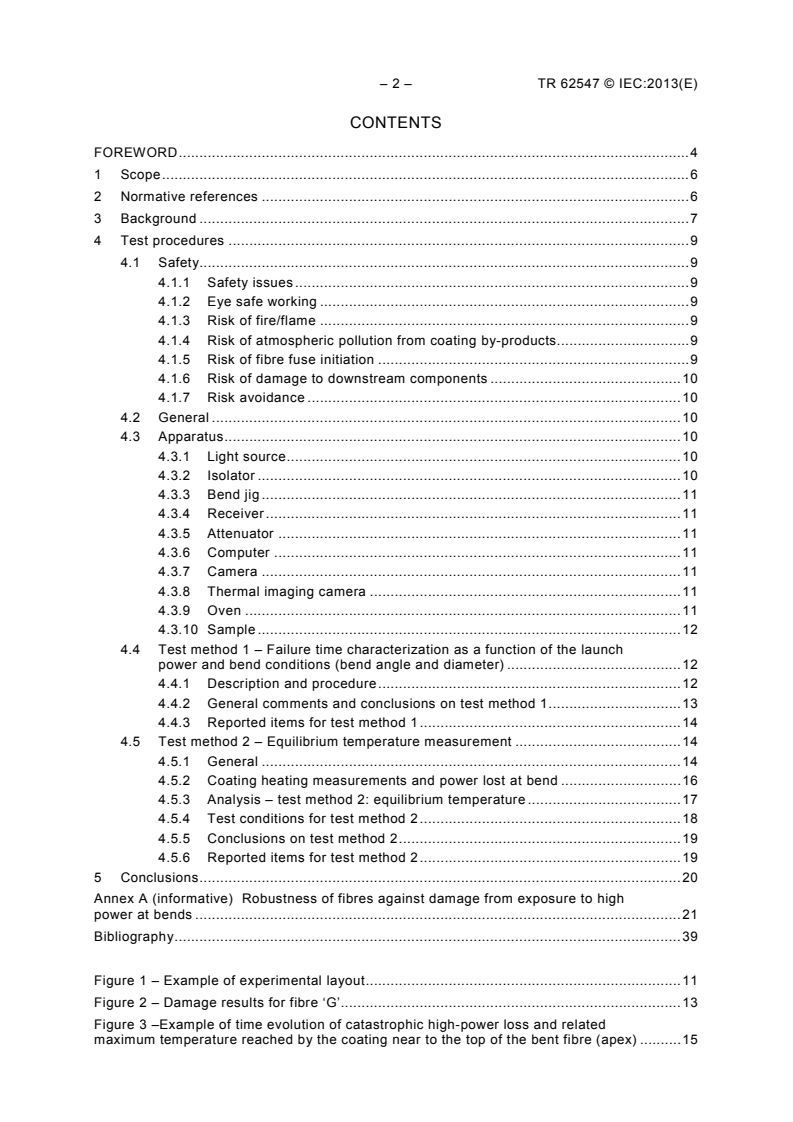
Figure 1 – Example of experimental layout . 11
Figure 2 – Damage results for fibre ‘G’. 13
Figure 3 –Example of time evolution of catastrophic high-power loss and related
maximum temperature reached by the coating near to the top of the bent fibre (apex) . 15
TR 62547 © IEC:2013(E) – 3 –
Figure 4 – Sample FLIR camera output of the fibre bent under high power . 16
Figure 5 – Dependence of the coating equilibrium temperature as a function of
launched power and bend diameter for an IEC B1.2/ITU-T G.654 single-mode fibre
(see reference [10]) . 16
Figure 6a – Calculated from experimental test data at 1 360 nm . 18
Figure 6b – Extrapolated for 1 550 nm . 18
Figure 6c – Extrapolated for 1 625 nm . 18
Figure 6 – Maximum safe powers for 25 year life time as a function of bend radius
enabling a safe coating temperature of ~80 °C for four single-mode fibre (sub-)
categories . 18
Figure A.1 – Clamping arrangements for high-power damage testing in 180° bends . 23
Figure A.2 – Clamping arrangement for high-power damage testing in 90° bends . 23
Figure A.3 – Typical R1 failure characteristics with a loss of greater than 10 dB . 24
Figure A.4 – Typical R2 failure characteristics . 24
Figure A.5 – A schematic illustration of the three regimes . 24
Figure A.6 – Monitor signal changes – Typical for an R1 failure . 25
Figure A.7 – Monitor signal changes – Typical for an R2 failure . 25
Figure A.8 – Damage results for fibre sample ‘D’ . 26
Figure A.9 – High-power damage results at 90° and 180° for fibre ‘D’ . 26
Figure A.10 – Time to failure versus bend diameter at different launched powers . 27
Figure A.11 – Bend loss performance at 180° (and 90° for comparison) for fibre ‘D’ . 28
Figure A.12 – Power limitation for primary coated fibre . 28
Figure A.13 – Comparison of power limitation for primary and secondary coated fibre
‘D’ . 29
Figure A.14 – Maximum optical power ensuring a 25 year lifetime and 180° bend loss
versus bend diameter (from reference [10]). 30
Figure A.15 – Maximum optical power ensuring a 25 year lifetime versus 180° bend
loss . 30
Figure A.16 – 180° 2-point OSA bend loss for fibre ‘D’ . 32
Figure A.17 – 180° 2-point bend loss at 1 480 nm for fibre ‘D’ . 32
Figure A.18 – 2-point bend loss for fibre ‘D’ at various angles . 33
Figure A.19 – 180° 2-point bend loss at 1 480 nm for a range of fibres . 34
Figure A.20 – Time to failure versus inverse of equilibrium temperature using an
IEC B1.2/ITU-T G.654 single-mode fibre for bend diameters varying from 4 mm to
10 mm and launched power in the range 0,8 W to 3,2 W . 35
Figure A.21 – Effect of baking primary coated fibre ‘C’ (reference [15]) in an oven at
constant temperature . 35
Figure A.22 – Time to failure for different coatings as a function of bend radius . 37
Table A.1 – Dependence of high-power damage on power entering coating . 37
– 4 – TR 62547 © IEC:2013(E)
INTERNATIONAL ELECTROTECHNICAL COMMISSION
____________
GUIDELINES FOR THE MEASUREMENT OF HIGH-POWER
DAMAGE SENSITIVITY OF SINGLE-MODE FIBRE TO BENDS –
GUIDANCE FOR THE INTERPRETATION OF RESULTS
FOREWORD
1) The International Electrotechnical Commission (IEC) is a worldwide organization for standardization comprising
all national electrotechnical committees (IEC National Committees). The object of IEC is to promote
international co-operation on all questions concerning standardization in the electrical and electronic fields. To
this end and in addition to other activities, IEC publishes International Standards, Technical Specifications,
Technical Reports, Publicly Available Specifications (PAS) and Guides (hereafter referred to as “IEC
Publication(s)”). Their preparation is entrusted to technical committees; any IEC National Committee interested
in the subject dealt with may participate in this preparatory work. International, governmental and non-
governmental organizations liaising with the IEC also participate in this preparation. IEC collaborates closely
with the International Organization for Standardization (ISO) in accordance with conditions determined by
agreement between the two organizations.
2) The formal decisions or agreements of IEC on technical matters express, as nearly as possible, an international
consensus of opinion on the relevant subjects since each technical committee has representation from all
interested IEC National Committees.
3) IEC Publications have the form of recommendations for international use and are accepted by IEC National
Committees in that sense. While all reasonable efforts are made to ensure that the technical content of IEC
Publications is accurate, IEC cannot be held responsible for the way in which they are used or for any
misinterpretation by any end user.
4) In order to promote international uniformity, IEC National Committees undertake to apply IEC Publications
transparently to the maximum extent possible in their national and regional publications. Any divergence
between any IEC Publication and the corresponding national or regional publication shall be clearly indicated in
the latter.
5) IEC itself does not provide any attestation of conformity. Independent certification bodies provide conformity
assessment services and, in some areas, access to IEC marks of conformity. IEC is not responsible for any
services carried out by independent certification bodies.
6) All users should ensure that they have the latest edition of this publication.
7) No liability shall attach to IEC or its directors, employees, servants or agents including individual experts and
members of its technical committees and IEC National Committees for any personal injury, property damage or
other damage of any nature whatsoever, whether direct or indirect, or for costs (including legal fees) and
expenses arising out of the publication, use of, or reliance upon, this IEC Publication or any other IEC
Publications.
8) Attention is drawn to the Normative references cited in this publication. Use of the referenced publications is
indispensable for the correct application of this publication.
9) Attention is drawn to the possibility that some of the elements of this IEC Publication may be the subject of
patent rights. IEC shall not be held responsible for identifying any or all such patent rights.
The main task of IEC technical committees is to prepare International Standards. However, a
technical committee may propose the publication of a technical report when it has collected
data of a different kind from that which is normally published as an International Standard, for
example "state of the art".
IEC 62547, which is a technical report, has been prepared by subcommittee 86A: Fibres and
cables, of IEC technical committee 86: Fibre optics.
This second edition cancels and replaces the first edition published in 2009, and constitutes a
technical revision.
The main changes with respect to the previous edition are listed below:
– updates related to B6 (bend-insensitive) category single-mode fibres);
– update to analysis for test method 2: Maximum temperature specification.
TR 62547 © IEC:2013(E) – 5 –
The text of this technical report is based on the following documents:
Enquiry draft Report on voting
86A/1494/DTR 86A/1508/RVC
Full information on the voting for the approval of this technical report can be found in the
report on voting indicated in the above table.
This publication has been drafted in accordance with the ISO/IEC Directives, Part 2.
The committee has decided that the contents of this publication will remain unchanged until
the stability date indicated on the IEC web site under "http://webstore.iec.ch" in the data
related to the specific publication. At this date, the publication will be
• reconfirmed,
• withdrawn,
• replaced by a revised edition, or
• amended.
A bilingual version of this publication may be issued at a later date.
IMPORTANT – The 'colour inside' logo on the cover page of this publication indicates
that it contains colours which are considered to be useful for the correct
understanding of its contents. Users should therefore print this document using a
colour printer.
– 6 – TR 62547 © IEC:2013(E)
GUIDELINES FOR THE MEASUREMENT OF HIGH-POWER
DAMAGE SENSITIVITY OF SINGLE-MODE FIBRE TO BENDS –
GUIDANCE FOR THE INTERPRETATION OF RESULTS
1 Scope
This technical report describes two methods for the measurement of the sensitivity of single-
mode optical fibres to high-power damage at bends:
• test method 1 – Failure time characterisation as a function of the launch power and bend
conditions (bend angle and bend diameter);
• test method 2 – Equilibrium temperature measurement.
Results from the two methods can only be compared qualitatively.
The results in this report are predominantly on un-cabled and un-buffered fibres. Cabled and
buffered fibres are expected to respond differently, because the outer layers can affect the
ageing process. Note also that test method 2 testing cannot be applied to buffered or cabled
fibres.
These methods do not constitute a routine test to be used in the evaluation of optical fibre.
The parameters derived from the two methods are not intended to be specified within a
detailed fibre specification.
The catastrophic failure modes arising and which are described in this document in general
occur at bending radii much smaller than specified in the single-mode fibre specification
IEC 60793-2-50 or than would be recommended based on mechanical reliability
considerations alone.
This report includes several annexes, including a discussion on the rationale for the
approaches adopted, metrics for assessment, guidance, examples and some conclusions
from initial studies.
2 Normative references
The following documents, in whole or in part, are normatively referenced in this document and
are indispensable for its application. For dated references, only the edition cited applies. For
undated references, the latest edition of the referenced document (including any
amendments) applies.
IEC 60793-1-47, Optical fibres – Part 1-47: Measurement methods and test procedures –
Macrobending loss
IEC 60793-2-50, Optical fibres – Part 2-50: Product specifications – Sectional specification for
class B single-mode fibres
IEC 60825-1, Safety of laser products – Part 1: Equipment classification and requirements
IEC 60825-2, Safety of laser products – Part 2: Safety of optical fibre communication systems
(OFCS)
TR 62547 © IEC:2013(E) – 7 –
IEC 61300-2-14, Fibre optic interconnecting devices and passive components – Basic test
and measurement procedures – Part 2-14: Tests – High optical power
IEC/TR 61292-4, Optical amplifiers – Part 4: Maximum permissible optical power for the
damage-free and safe use of optical amplifiers, including Raman amplifiers
3 Background
Optical network operators have been considering the use of high-power lasers, for example
fibre Raman amplifiers, in the central office with typical launch powers in the region of
500 mW to ~ 2 W. For standard installation practices where optical fibre minimum bend
diameters are limited to 60 mm, these powers have not constituted a problem. However there
is good evidence that bends tighter than the recommended 50 mm minimum bend diameter
mistakenly occur in practice. It is believed that these generally arise after installation from
maintenance practices which are difficult to mitigate against as the technicians servicing such
networks often work independently and can come from different organizations.
Tight bends arising at system installation stage should generally be identified and eliminated
following provisioning by OTDR testing or from link loss measurements. Experimental
evidence shows that high-power damage can occur relatively quickly at bends less than 15
mm diameter using standard single-mode fibres (e.g. category B1.3). Damage occurs when
the coating temperature increases at tight bends as the coating absorbs the light lost at the
bend. Damage can take the form of coating ageing, pyrolysis and burning and (if the
temperature increases above 700 °C) catastrophic softening of the glass. Burning of the
coating can result in a fire. Background references are available in references [1] to [15] and
in IEC/TR 61292-4.
The rationale for studying the resilience of optical fibre and coatings to high-power damage at
bends is described in Clause A.1. Telecommunications operators can adopt a range of
options to avoid the risk of damage, see Clause A.2. There is now a broad agreement from a
number of laboratories on the catastrophic failure modes of the optical fibre including the
thresholds for damage at high powers in bent optical fibres. Some observations are given in
the following list:
• Research has clearly shown that high optical power at tight fibre bends can cause
catastrophic damage within a few days. Tests on a range of different fibres including B1,
B4 and B6 primary coated fibre categories have shown that catastrophic damage can
conveniently be grouped into two regimes:
– Regime 1. Catastrophic failure of the glass (R1);
– Regime 2. Catastrophic failure to the fibre coating (R2).
A third regime, R3, has been identified in which catastrophic damage does not occur.
Here the temperature does not reach a sufficient level to cause short-term catastrophic
damage but over the longer term, coating ageing and a change in some of the physical
properties of the coating may result.
A further description of the observed regimes of damage is included in Clause A.5.
• R1 and R2 failures have been observed in both primary and secondary coated fibres.
Some single-mode fibre categories and coating types are more resilient than others, See
references [1], [2], [3], [4], [5], [6], [7], [8], [9], [10], [11], and [12].
• Coating ageing can take a considerable time (e.g. reference [2]). However, it is an
indicator of potential R1 or R2 damage. Refer to Clause A.5.
____________
Pyrolysis is a thermochemical decomposition of organic material at elevated temperatures without the
participation of oxygen.
Figures in square brackets refer to the bibliography.
– 8 – TR 62547 © IEC:2013(E)
• Arguably at present, the greatest risk of damage to single-mode fibre systems is due to the
use of high-power Raman pumps at 1 480 nm, hence much of the testing has been carried
out at this wavelength. Whilst there are general indications that the absorption spectra of
cured coating materials are generally flat in the 1 450 nm to 1 625 nm range, in specific
coating formulations absorption features could make a coating especially sensitive at a
particular wavelength.
Also, bend loss in single-mode fibres generally increases with wavelength, so risk of
damage due to high carried power at tight bends may increase at longer wavelengths.
More testing is needed to examine fibre bend loss characteristics and the absorption
spectra of cured coating materials to ensure that wavelength dependent effects are
accounted for.
• For laboratory testing and high-power system operation, there are important safety issues
to be considered including a risk of flame and fire. These issues are addressed in 4.1.
• The subject of high-power damage sensitivity is in development and the following are
areas for further work:
– As discussed above, much of the testing so far has been carried out at or near to
1 360 nm or 1 480 nm and the effect of a significant change to the test wavelength is
not known. Experimental results for damage testing at wavelengths near 1 550 nm and
1 625 nm would be useful; see also reference [11].
– Coating absorption. Some studies have examined the effects of changing coating
composition and the ambient environment, see – references [13] and [14].
– The testing of fibres with different primary coatings (both coloured) and of different
outer diameter (OD), e.g. 200 µm.
– The effect of fibre production variability and for example, testing the effect of fibres
with different MAC (MFD [µm]/cut-off wavelength [µm]) numbers but with the same
profile type. Similarly testing of fibres with small differences in coating uniformity,
composition or degree of coating cure needs to be considered.
– Testing diverse bend geometries; the impact of bend loss variations.
– The impact of ambient temperature.
• For the most sensitive fibre tested so far the threshold for damage (R2) for a bend loss of
4 dB bend is ~ 200 mW, see reference [15].
• The use of different fibre secondary coatings (buffer layers to an OD of ~ 800 µm) can
lower or raise damage thresholds, see reference [15].
NOTE 1 Catastrophic failure occurs when the bend loss and consequent coating absorption drives the fibre
temperature far above the maximum temperature for environmental tests of conventional UV curable acrylate
coatings, as specified in IEC 60793-2-50.
The purpose of this report is to define measurement techniques to characterize the
robustness of optical fibre to damage of this type. However, if new fibres are developed to
minimize the possibilities of high-power damage at bends, other transmission and
compatibility issues shall be considered – see Clause A.3.
NOTE 2 Also in ITU-T, a recommendation associated with high-power optical systems has been developed, see
ITU-T Recommendation L.68 [16].
Throughout this technical report, illustrative data is presented for particular B1 and B4 fibre
categories identified by letter from A to G from studies documented in references [2], [3], [7],
[15]. Data on B6 category fibres is present in reference [11].
TR 62547 © IEC:2013(E) – 9 –
4 Test procedures
4.1 Safety
4.1.1 Safety issues
There are a number of important issues both for testing and for operational systems use:
• eye safe working;
• risk of fire/flame;
• risk of atmospheric pollution from coating by-products;
• risk of fibre fuse initiation;
• risk of damage to downstream components.
Some discussion on these issues is covered. However, an individual assessment of risk
should be carried out prior to commencing a programme of tests depending on previous
experience with high-power lasers, the local working practices and the test laboratory
configuration. Also, it is recommended for first tests that an operator monitors the experiment
continually so that the failure conditions with specific fibre categories and/or coating types can
be correctly determined. The use of a video camera to monitor the fibre bend at high power
can provide a safer working environment.
4.1.2 Eye safe working
All necessary safety procedures shall be taken in accordance with IEC 60825-1 and
IEC 60825-2. These test procedures involve the use of optical powers that can constitute
potential ocular and skin hazards for test personnel.
At 1 480 nm, the risk of retinal damage is much reduced compared with shorter wavelengths,
as incoming radiation will mainly be absorbed in the cornea, see reference [17]. Nevertheless,
care shall be taken to ensure that accidental exposure cannot occur and that high powers are
only switched on once the fibre (and test condition) has been set up. Also, the use of optical
instruments for viewing can be more hazardous than not.
Laser light blocks should also be used to trap and mask radiation leaking from the test bend.
4.1.3 Risk of fire/flame
WARNING In the case of samples that can sustain a flame, care shall be taken to ensure
that sample holders are non-flammable and robust clamps are used to hold the fibres in
position during testing.
4.1.4 Risk of atmospheric pollution from coating by-products
At high powers and elevated coating temperatures, volatile components in the fibre coating
will be driven off. As this occurs, and with time, the coating volume reduces, oxidation occurs
and the coating discolours. The aged or damaged coating volumes involved are small as the
damage region at a fibre bend is generally extremely localized. To reduce the risk of local
atmospheric pollution, it is recommended that the fibre bend test zone is hooded and an
extract fan is run continuously to capture particulate and purge potentially hazardous air
borne coating by-products.
4.1.5 Risk of fibre fuse initiation
At high optical powers and with appropriate triggering, it is possible to initiate the ‘fibre fuse
effect’ (see reference [18]). Generally, launch powers of ~ 2 W to 3 W are required to trigger
this effect and the laser supply can be protected from such a risk by incorporating an optical
isolator or a fibre taper just after the laser source.
– 10 – TR 62547 © IEC:2013(E)
4.1.6 Risk of damage to downstream components
With some fibre samples and with the high power being lost from the fibre at a bend, there
may be a risk to downstream components, for example where a test fibre is jointed to a
different fibre category or at a further bend. To mitigate this risk, all components used shall be
rated at the power to which they could be exposed.
4.1.7 Risk avoidance
A number of steps can be taken to reduce identified risks:
• Access to the test laboratory can be restricted to authorized users.
• Warning lights external to the laboratory can alert visitors of the high-power laser hazard.
Laser safety spectacles can be made available for lab users and visitors.
• A video camera can be used to monitor the test bend and reduce the need to view the test
fibre directly. This reduces the risk of exposure to high-power radiation.
• The laser control system could incorporate optical monitoring for the duration of the
experiment. This can allow the driving PC to auto-shutdown the laser when a failure event
is identified.
• Fibres can be carefully clamped and/or taped in position in robust clamps for the duration
of the tests.
• Fire extinguishing equipment should be on-hand.
4.2 General
A suitable experimental arrangement for high-power damage testing is illustrated in Figure 1.
The apparatus description applies to both test methods. However, in test method 1 the infra-
red (IR) camera is not necessary and can be replaced by a normal colour camera – useful for
experimental monitoring purposes. The test condition suggested is as follows:
• two-point bend geometry (where the fibre is fixed at two points and allowed to form a bend
in free space);
• 180° configuration.
Other test conditions are discussed in Clause A.4.
4.3 Apparatus
4.3.1 Light source
A suitable high-power source at 1 360 nm or 1 480 nm is proposed for the nominal test
wavelength (although the performance at other, typically longer, wavelengths needs to be
considered as discussed in Clause 3). Launch powers from 100 mW to 1 500 mW or even to
5 W (reference [15]) need to be considered.
4.3.2 Isolator
An optical isolator or fibre taper that can act as a ‘fuse’, protecting the laser shall be used.
TR 62547 © IEC:2013(E) – 11 –
Straight fibre
arrangement 1
Isolator
Raman pump
source
Splice
IR
Shutdown
Two-point bend
camera
Computer
Optical Optical
power meter attenuator
Straight fibre
arrangement 2
IEC 408/09
Figure 1 – Example of experimental layout
4.3.3 Bend jig
The fibre is constrained according to the two-point bend method, forcing the fibre into an oval
configuration (see A.7.3 and reference [19] for a detailed discussion), of 180° although, the
performance in other bend geometries and angles needs to be considered, see A.5.3. Detail
on the clamping of fibres is described in A.4.2.
4.3.4 Receiver
Optical power monitoring device, which ensures stability and consistency between tests.
4.3.5 Attenuator
A 99:1 fused fibre coupler and/or a variable attenuator can be used to reduce the power level
for conventional optical detectors. Alternatively a suitable high-power detector could be used
for monitoring purposes.
4.3.6 Computer
Supervisory software on the controlling computer can be used to automatically shut down the
laser within a few seconds in the event of signal loss and/or fibre failure.
4.3.7 Camera
The use of a video camera to monitor the fibre bend at high power can provide a safer
working environment.
4.3.8 Thermal imaging camera
The maximum fibre temperature near to the bend apex can be measured using a forward
TM
looking infrared (FLIR) camera. Suitable cameras include the Thermacam PM695 from FLIR
Systems with a sensitivity of ~1 °C.
4.3.9 Oven
A temperature controlled oven can provide a high temperature ageing environment for fibre
and coatings.
– 12 – TR 62547 © IEC:2013(E)
4.3.10 Sample
Several tens of metres of test fibre before the test bend position to provide a supply of fibre
for testing. After the test bend position, the fibre is spliced to a further length of test fibre and
then via the attenuator to a monitoring detector.
The primary coating colouring material used to identify individual fibres in a bundle provides
an additional variable when it comes to high-power assessment. So far, most reported results
have been on uncoloured fibres. Knowledge of the absorption spectra of the pigments used to
colour fibre coatings could be valuable in helping to identify potentially sensitive colorants.
Most work has been conducted on primary coated fibres (to ~ 245 µm OD) where coating or
fibre damage can readily be observed. For buffered or secondary coated fibres (to ~ 900 µm
OD) where the outer coating may be opaque and/or inflexible, the experimental set-up needs
further consideration particularly regarding fibre clamping.
Because presence of dusts or impurities located at the surface of the coating can modify its
power absorption or its thermal aging, it is recommended to clean surface of the coated fibre
over the length that will be placed into the clamping arrangement.
4.4 Test method 1 – Failure time characterization as a function of the launch power
and bend conditions (bend angle and diameter)
4.4.1 Description and procedure
As illustrated in Figure 2, the evaluation of the high-power damage performance of a
particular fibre sample consists of a number of individual tests of the time to failure
determined for a range of combinations of bend diameter and input power. For the most
efficient use of experimental time, it is recommended that testing begins at the smallest
diameters (~4 mm) and at high powers. The power level at the test point – which may be
different from that output from the laser – can be determined using a standard calibration
technique. Alternatively, power measurements can be made just before the test bend is set-up
and a splice is made to the monitoring photo-detector. The required fibre bend is set up in a
suitable holder and the optical power switched on.
Experimental progress can be monitored using a photo-detector and a controlling computer to
log the received power as a function of time as described in Figure 1 and illustrated in the
results shown in Figure A.6 and Figure A.7. Regime 1 failures (R1) are recorded – see Clause
A.5 for a description of the various failure conditions – usually within tens of minutes for
standard category B1 or B4 fibres. The power can then be reduced for a new test and the
experiment repeated. Regime 2 failures (R2) can then be identified, generally with longer
times to failure. Then if the power is further reduced in a new test(s), a point is reached at
which R2 failure does not occur – even at three or more times the exposure time seen for the
latest R2 failure. When this time is reached, the test at this bend diameter can be stopped
and, if the coating properties are found to have been changed as a result of the test, the
condition are defined as sub-catastrophic damage, R3 (see Clause A.5 for an additional
discussion and a description of the three failure regimes). Additional tests follow at larger
bend diameters as illustrated below. Damage results can then be plotted, as for example in
Figure 2.
TR 62547 © IEC:2013(E) – 13 –
Fibre G 180° results
Fibre G 180° results
R1
R1
2 000
10 000
R2
R2
R3
1 500
R3
1 000
1 000
4 6 8 10 12
4 6 8 10 12
Bend diameter (mm)
Bend diameter (mm)
IEC 409/09 IEC 410/09
Figure 2 – Damage results for fibre ‘G’
In a set of tests, the damage trends for R1, and R2 failure types can be observed over a
range of diameters giving confidence that the definition of the R1-R2 and R2-R3 boundaries is
consistent and reliable. All of the R3 results that are reported here are for real experimental
tests, with some exceeding several days.
Note also that
• The minimum time to failure seems to grow exponentially with bend diameter. For a given
bend diameter, if the optical power is increased, the minimum time to failure does not
seem to decrease. This is likely to be due to increased heat transfer by radiation as the
temperature increases but the effect can also be explained by a drop of both primary and
secondary coating refractive indices as temperature increases whereas the refractive
index change of silica is negligible. Then a much smaller fraction of light is dissipated in
the coating, see reference [20].
• Not all fibre categories show the same trends or damage phenomena at all bend
diameters. For example, for 180° bends in fibre ‘D’ see A.5.2 and Figure A.8.
• At smaller bend angles e.g. 90°, the failure power is higher and the failure times are
extended compared with similar diameter bend at 180° – see A.5.3 and Figure A.9.
• Some failure time trend inconsistencies have been observed in at least one fibre category
– see A.5.4 and reference [10].
• Bend-insensitive fibres (e.g. IEC B6/ITU-T G.657 fibres) are expected to offer improved
resilience and different relationships from those results shown in Figure 2 (see also
4.5.3.3 and reference [11]).
4.4.2 General comments and conclusions on test method 1
General comments and conclusions on Test Method 1 are:
• Test method 1 can be arduous; Regime 1 and Regime 2 failures in conventional category
B1 and B4 fibres have been observed after more than 3 days exposure for bend diameters
in excess of 10 mm. The complete characterization of a conventional B1 or B4 optical fibre
category can take several months. With more resilient fibres and coatings, testing will take
more time.
• The use of buffer or secondary coatings can lower or raise the threshold for high-power
damage depending on the coating type – see references [5] and [15].
• The effect of different coloured primary coatings requires research.
Failure power (mW)
Failure time (min)
– 14 – TR 62547 © IEC:2013(E)
• The impact of ambient temperature on high-power damage thresholds requires
investigation.
• Smaller angle bends (than 180°) generally require higher powers to create the same
damage effects, see A.5.3 and Figure A.9.
• Test method 1 can allow thresholds for catastrophic high-power fibre damage to be
established, see A.6.2 and e.g. Figure A.13. These thresholds can give a system operator
a benchmark of resilience to catastrophic damage depending on the available system
margin (which limits the allowable bend loss).
• It has been reported that consistent and repeatable failure power and failure time results
can be obtained for similar tests on the same fibre, see reference [2]. However, fibres with
different MAC numbers but of the same profile type and manufacturer are likely to have
slightly different failure powers and times to failure for similar test circumstances as a
difference in bend loss is expected for the same test bend condition. Similarly, small
differences in manufacturing tolerances, for example in coating uniformity, composition or
degree of coating cure, could provide an inconsistency in results. More work is required to
determine the significance of such variations.
• An alternative evaluation criterion could be established using this technique as a method
for assessment of fibre resilience to failure under bending and high power for a particular
test geometry and duration, if agreed between supplier and customer. Then, if the fibre
survives the test duration, the fibre performance is acceptable. However, such a criterion
does not give a complete picture as the test geometry (bend diameter and angle) only
gives a snapshot of performance and it is known that extrapolation may be difficult, see
references [10] and [14]. Also, the test duration is likely to be much less than the normal
lifetime of a fibre and damage effects are known to be non-linear and cumulative.
• The preferred test procedure is a full characterization.
• Users should be aware that time-to-failure tests for 2-point, 180° bends with a diameter of
less than ~6 mm may not allow differentiation between the high-power damage sensitivity
of different fibre and coating types, see references [10] and [24].
NOTE The thresholds determined by test method 1 generally occur at smaller bending radii and higher coating
temperatures than described in the single-mode fibre specification IEC 60793-2-50.
4.4.3 Reported items for test method 1
The items reported are as follows:
• fibre (sub-)category; fibre identification;
• launch power and wavelength;
• bend diameter;
• macrobend loss with time;
• failure condition R1, R2, or R3;
• time to failure.
4.5 Test method 2 – Equilibrium temperature measurement
4.5.1 General
The experimental arrangement for test method 2 is as described in Figure 1. It has been
observed that as soon as the power is launched into the fibre the coating temperature at the
bend quickly reaches a plateau, see Clause A.8 and reference [10] for a complete discussion.
The maximum coating temperature near to the bend apex has been observed to remain
relatively stable during the maj
...